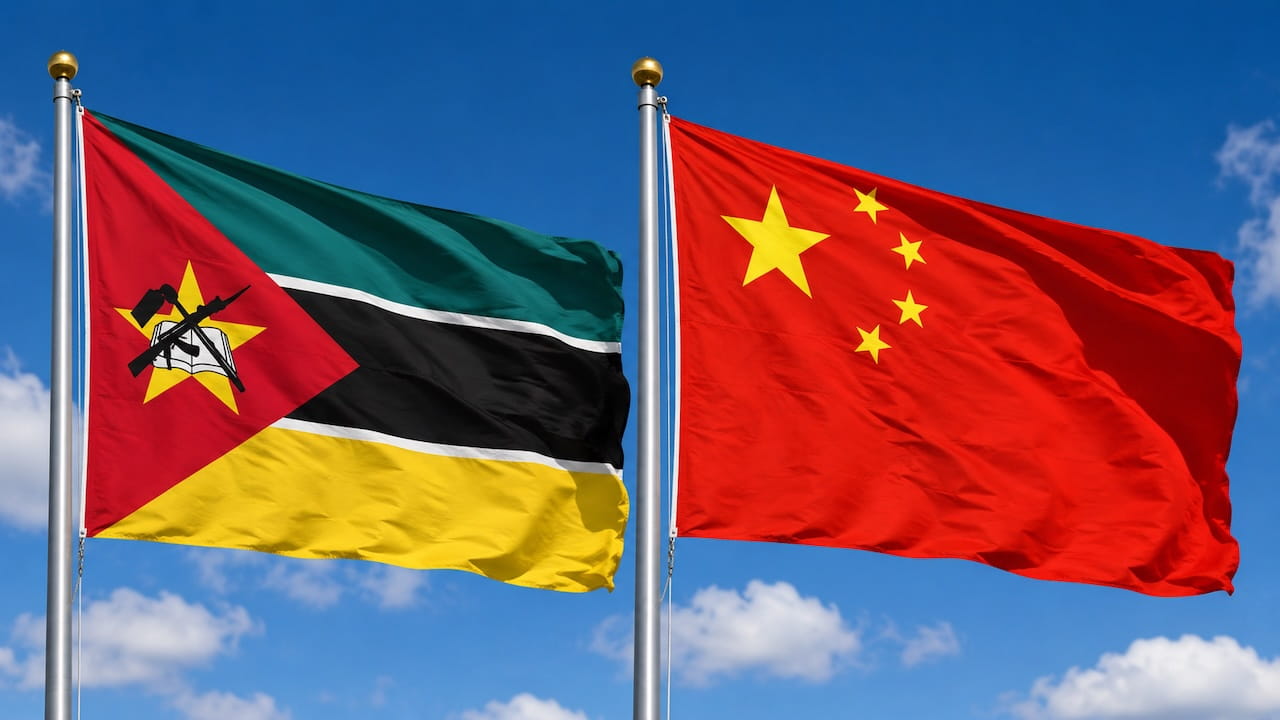
(Mike Maharrey, Money Metals News Service) Mozambique officials are considering converting $1.4 billion in debt it owes China into yuan loans as part of a debt restructuring plan.
This is yet another sign of ongoing de-dollarization.
A spokesperson from the country’s finance ministry hinted that the Chinese suggested the move.
“In this specific case, it was a valid possibility that was put on the table.”
Mozambique faces a significant liquidity crunch. The IMF and the World Bank recently warned that the country’s debt situation is “unsustainable.” Fitch ratings indicate a default is likely.
According to Bloomberg, “Moving dollar debt into yuan would be the latest African example of China’s efforts to internationalize its currency and make inroads into the dollar’s dominance.”
Other African countries have already converted some of their debt to renminbi. Last year, Kenya flipped three loans totaling $5 billion from the Export-Import Bank of China into yuan. Analysts say such a move lowers debt servicing costs and helps “ease currency pressures.”
According to Bloomberg, Ethiopia is considering a similar deal. Meanwhile, Zambia recently held talks with Chinese officials about a potential currency swap. Zambia has already started accepting mine payments in yuan.
In the big scheme of things, the Chinese currency still plays a bit part in global finance. However, the fact that some countries are considering doing business in yuan would have been virtually unthinkable not too long ago.
The yuan’s share of global reserves is still less than 2 percent. That compares to the dollar’s 56.8 percent share of reserves. However, the yuan is slowly gaining ground, having picked up three basis points of the total share in Q4 2025.
The dollar isn’t in any danger of losing its reserve status, and it will likely continue to have a dominant role in global finance. However, there is a clear de-dollarization trend with many countries looking to diversify away from the greenback. Many analysts believe the world is heading toward a “multipolar” financial system with several currencies, along with gold, playing a key role. The rapid expansion of central bank gold reserves reflects this trend.
Even a modest global de-dollarization spells trouble for the U.S. economy.
The only reason the U.S. can borrow, spend, and run massive budget deficits to the extent that it does is the dollar’s role as the world reserve currency. It creates a built-in global demand for dollars and dollar-denominated assets. This absorbs the Federal Reserve’s money creation and helps maintain dollar strength despite the Federal Reserve’s inflationary policies. It also supports a global Treasury Market. Without foreign investors, demand for Treasuries would crater, sending interest rates into the stratosphere.
A de-dollarization of the world economy would cause a dollar glut. The value of the U.S. currency would further depreciate. At the extreme, global de-dollarization could spark a currency crisis. You and I would feel the impact through more price inflation, eating away at the purchasing power of the dollar. In the worst-case scenario, it could lead to hyperinflation.
Again, the world doesn’t have to completely abandon the dollar to create negative impacts. Even a modest drop in the demand for the greenback will ripple through the U.S. economy.
VanEck analysts Imaru Casanova and Joe Foster argue that we’re already seeing some economic tremors due to de-dollarization, noting that despite its continued dominance, “The dollar has been devaluing relative to gold—an unprecedented trend.”
It is unprecedented because it has happened during a period of relative dollar strength and the absence of any economic crisis. They say the current gold bull market is being driven by an erosion in confidence in the dollar.
“[P]eople and nations that have long used, coveted and hoarded the U.S. dollar are now losing faith and trust in the currency as a store of wealth. This shift began in 2008 when the global financial crisis led many to question the efficacy of the banking system and Western economic hegemony. It escalated with sanctions and freezing of assets imposed on Russia by the U.S. Other countries fear that similar retribution or ‘weaponization of the dollar’ is possible for lesser infractions than the hostile invasion of another country.”
Mike Maharrey is a journalist and market analyst for Money Metals with over a decade of experience in precious metals. He holds a BS in accounting from the University of Kentucky and a BA in journalism from the University of South Florida.