

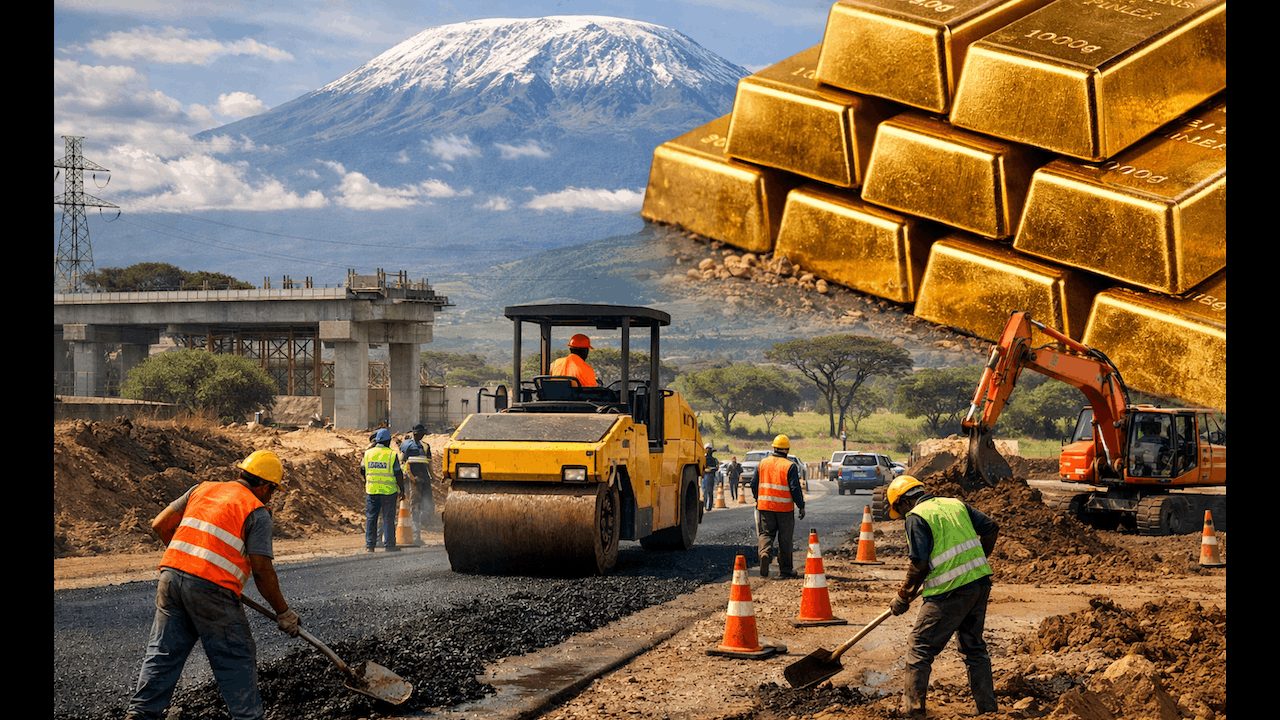
(Mike Maharrey, Money Metals News Service) Underscoring the fact that gold is money, Tanzania plans to use part of its gold reserves to finance infrastructure development.
Late last month, President Samia Suluhu Hassan directed the Tanzanian central bank to liquidate a portion of its $1.3 billion in gold reserves.
The move comes as foreign development aid for African countries declines.
According to data from the OECD, the dismantling of USAID by the Trump administration resulted in a 17 percent drop in international foreign aid last year.
According to official data, Official Development Assistance (ODA) to Tanzania has plunged by 84 percent since 2013, with further reductions of 9–17 percent projected for 2025–2026.
“Governments are no longer interested in providing aid to Africa, so we are reorganizing ourselves,” Minister of State Kitila Mkumbo said.
A disputed election that resulted in violent protests also disrupted the flow of funds into the East African nation. Security forces reportedly killed hundreds of people during the unrest. This prompted the EU to suspend implementation of a €156 million ($185 million) support program.
Tanzania has been increasing its gold reserves since 2023 through a domestic buying program. The country ranks as Africa’s third-largest gold producer, and accounts for about 1.3 percent of the annual global gold mine output.
According to an analysis by the Tanzania Investment and Consultant Group (TICGL), liquidating 15 to 50 percent of the country’s gold reserves could unlock $260 to $650 million in immediate liquidity.
However, TICGL analysts note the move isn’t without risks, pointing out that the country’s gold reserves “traditionally acted as a strategic buffer for Tanzania, offering protection against external shocks, currency depreciation, and inflation.”
Today, “unprecedented” fiscal pressures have “pushed the government toward monetizing this long-term asset to meet short-term financing needs.”
“Tanzania’s gold reserve sale encapsulates a classic development challenge—whether to prioritize immediate fiscal relief to sustain growth and infrastructure delivery, or to preserve long-term economic security in an era of heightened global uncertainty. This decision will shape Tanzania’s macroeconomic stability, policy credibility, and resilience for years to come.”
Tanzania has also been seeking to reduce its dependence on the U.S. dollar. A directive issued last summer mandates that all transactions in the country must be advertised and conducted in Tanzanian shillings. The policy took effect on July 1.
“Henceforth, all such payments were to be made in shillings, promoting financial stability and compliance with the law.”
Visitors will be encouraged to exchange foreign currency for Tanzanian shillings to facilitate transactions that support the local economy.
Tanzania’s plan to use part of its gold reserves to fund infrastructure development underscores gold’s value as a store of value and a source of financial security. Gold is money. It is liquid and easy to exchange for any other currency. It also comes without counterparty risk, meaning a country’s gold holdings are its own and not subject to the whims of any other government’s monetary policies.
Russia has used its extensive gold reserves to support its economy in the midst of economic sanctions imposed after it invaded Ukraine.
When you have gold, you have options. It remains to be seen how the Tanzanian move will play out in the long term, but there is no question that the fact that the country has gold reserves opens the door for it to solve its own problems when the world seems less inclined to lend a hand.
Mike Maharrey is a journalist and market analyst for Money Metals with over a decade of experience in precious metals. He holds a BS in accounting from the University of Kentucky and a BA in journalism from the University of South Florida.
, liquidating 15 to 50 percent of the country’s gold reserves could unlock $260 to $650 million in immediate liquidity.)