

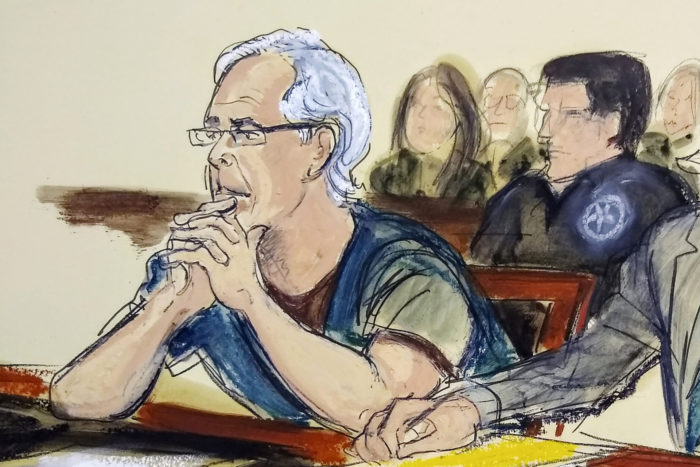
(Ken Silva, Headline USA) In 2007, the Justice Department and Jeffrey Epstein agreed on what’s been widely criticized as a sweetheart plea deal to settle sex crime charges, including a charge for soliciting a minor. Epstein received a 13-month sentence in 2008 and 2009, serving much of it on work release.
According to newly unearthed documents, Epstein’s plea deal also allowed him to escape an investigation into possession of child pornography. The new documents, including an affidavit from an FBI agent who investigated Epstein, come from the “Epstein Files”—a trove of records released by the DOJ pursuant to congressional legislation passed last year.
The FBI agent’s July 2007 affidavit recounts how the Palm Beach Police Department first searched Epstein’s home in October 2005. Tipped off about the impending search, Epstein had already removed three computers and other electronic equipment by the time detectives arrived.
When the DOJ launched its own case into Epstein, FBI agents found that he had given the computers to the private investigative firm Riley Kiraly. Suspecting that the computers contained evidence of Epstein’s crimes, the DOJ subpoenaed both the devices and the owners of the firm, William Riley and Riley Kiraly.
Particularly, the FBI suspected that Epstein may have had child pornography on the computers. One FBI agent said in his affidavit that he suspected this because he found other sexually charge photos of minors at Epstein’s house.
“Exhibit A is a photograph which depicts a prepubescent female toddler exposing her genitalia. Attached hereto as Exhibit B is a photograph which depicts a prepubescent female pulling down her underwear exposing her left buttock. Attached hereto as Exhibit C is a photograph which depicts Mr. Epstein attempting to bite the clothed buttocks of a prepubescent female (the prepubescent female’s skirt is raised exposing her underwear),” the agent, whose name is redacted, said.
“Based upon this information, I believe a review of Mr. Epstein’s computers may reveal images depicting crime victims and/or child pornography.”
Epstein’s lawyers, for their part, opposed the DOJ’s subpoena for his computers. They filed a motion to quash the subpoenas on the grounds that they violated Epstein’s privacy rights.
The motion was set to be argued before a judge in September 2007. But at the last minute, the hearing was canceled. A DOJ lawyer said in a Sept. 17, 2007, email that if a plea deal could reached, then prosecutors would withdraw their subpoenas.
That’s exactly what happened. The parties signed the non-prosecution agreement on Sept. 24, 2007. While the deal wasn’t finalized until nine months later, it effectively sidelined the subpoenas.
Nearly 20 years later, the country is still dealing with the fallout of the Epstein scandal. The DOJ still has some 3 million files to release, and some members of Congress are now calling for the CIA to release its own set of Epstein files.
Ken Silva is the editor of Headline USA. Follow him at x.com/jd_cashless.
