SCOOP: Not a Single Doctor in Indiana is Willing to Give Sex Change to Baby-Killing Trans Inmate

(Ken Silva, Headline USA) Last September, a federal judge ordered the Indiana Department of Correction to provide “gender‐affirming surgery” to self-purported Muslim transgender inmate Jonathan C. Richardson, who now goes by the name “Autumn Cordellionè” and is serving a 55-year sentence for killing Richardson’s infant stepdaughter.

However, no doctor in Indiana is willing to conduct such a surgery, parties to the lawsuit revealed in a status report Wednesday.

According to the status report, the Indiana DOC referred Richardson to IU Health’s Dr. Joshua Roth, but he declined to move forward with the procedure. Headline USA revealed last month that the Indiana DOC had been pressuring Dr. Roth to conduct the surgery, even though psychologist Dr. Kelsey Beers filed a report recommending against it.

Dr. Roth was apparently the only possible option in Indiana. Wednesday’s joint status report said that the DOC had also reached out to two other surgeons who were known to provide sexual reassignment surgeries in the past—Dr. Michelle Jones Singer and Dr. Ashley Robey—but they said they no longer perform those types of surgeries.

Richardson’s attorney, Kenneth Falk, also provided DOC with a reference to Dr. Jonathan Witten, a surgeon who practices in Kentucky and Indiana—but Dr. Witten, too, said he no longer conducts sex changes.

“Despite DOC’s diligent efforts to refer the Plaintiff to Dr. Roth and identify another surgeon with the state, it has been unable to identify a surgeon in Indiana who is willing to perform a sex change surgery on a prisoner,” the status report said.

The Indiana DOC said it even contacted 21 other states that it has interstate compacts with, to see if they would be able to facilitate Richardson’s gender-reassignment surgery. Those states are Alabama, Alaska, Colorado, Delaware, Hawaii, Illinois, Kansas, Maine, Maryland, Massachusetts, Mississippi, Montana, Nevada, New Hampshire, New Jersey, North Carolina, Ohio, Oklahoma, South Dakota, Virginia, Wyoming.

According to the status report, 15 of the states declined to even consider the matter. The remaining six—Alabama, Illinois, Maine, Massachusetts, New Jersey, and Oklahoma—said they would need to review material further before deciding.

The DOC opposes being forced to send Richardson out of the state for a sex change.

“The Court lacks jurisdiction to alter a preliminary injunction currently on appeal, and the Plaintiff has not cited any authority supporting a finding that the Eighth Amendment requires DOC to transfer a prisoner out of state for the purpose of a sex change,” the status report said.

It’s not clear whether Richardson’s sex change will still move forward now that Donald Trump is President, given Trump’s executive order to cease federally funded sex changes for prisoners.

And even though Richardson’s lawsuit is against a state institution that isn’t subject to Trump’s order, the Indiana DOC successfully motioned on Jan. 29 to have Richardson undergo a mental health evaluation. The DOC said in its motion that such an evaluation is necessary because Richardson’s gender dysphoria diagnosis is questionable, given his “history of lying to and manipulating doctors.”

District Judge Richard L Young granted the DOC’s motion on Tuesday.

Ken Silva is a staff writer at Headline USA. Follow him at x.com/jd_cashless.

Despite FDA Ban on Red Dye No. 3, Demand for Colorful Food Engrained in U.S. Psyche

(Headline USA) You know you’ve said it. We all have. “Mmm, that looks so delicious — I want to try some!” That’s because when it comes to what we eat, it’s not just a matter of taste.

What foods and drinks look like—the colors we see before the first morsels or sips hit our tastebuds—have mattered to people for millennia.

And nowhere has that been more blatant than the American food palate, where the visual spectrum we choose from includes not only the primary colors but artificial ones that nature couldn’t even dream up.

For well over a century, food manufacturers in the United States have used synthetic dyes in their products as part of their production and marketing efforts.

Often, it’s been in hopes of making a mass-produced food look as fresh and natural as possible, reminiscent of the raw ingredients used in its production.

In other cases, it’s been about making an item look interesting or distinctive from competitors, like candies or desserts in an electric blue or neon pink. Think “blue raspberry Slurpee” or “Flamin’ Hot Cheetos.”

It hasn’t been without controversy. Over the decades, there have been pushback and government regulation over just HOW food and drink have been colored, most recently with the decision last month from the federal Food and Drug Administration to ban red dye No. 3 from foods and oral-ingested drugs because of concerns over a possible cancer risk. But no one’s calling for food NOT to be colorful.

That’s because there’s no escaping the importance of what we see when it comes to what we eat, said Devina Wadhera, faculty associate at the College of Integrative Sciences and Arts of Arizona State University.

“Your first sensory contact, if your eyes are open, is going to be sight,” she said. “That’s going to be the first judgment we’re going to make.”

The food manufacturers of the late 19th century knew they had to get the visual appeal right. It was part of their marketing, as a shorthand to encourage brand recognition, to make consumers feel comfortable about quality and overcome worries (or realities) about spoilage as food production became industrialized, says Ai Hisano, author of “Visualizing Taste: How Business Changed the Look of What You Eat.”

Synthetic dyes helped overcome problems like foods losing color in the production process and helped make foods look more “natural,” she said. Then, over time, dyes were deployed to make foods look “fun” and appealing to audiences like young children. (That doesn’t mean manufacturers didn’t sometimes use colorants that could even be deadly — hence the reason there’s regulation.)

She pointed to the mid-20th century example of cake mixes, which reduced the amount of effort required to bake a cake at home because most of the ingredients were already included. Food companies began promoting colorful icing for the cakes as a way women baking at home “could kind of present their personality even though they are making a pre-mixed cake,” Hisano said.

The connections we make between colors and foods are learned, Wadhera says. “Throughout our lives, we make associations which mean things. Cake is associated with birthdays. Ice cream is associated with parties and good times, so everything is associative learning. Color is one of those things that we have this tendency to learn about different flavor pairings.”

She gave the example of the spate of products like chips and other snacks that are marketed as having an extra kick. Often, “they’re super red because (companies are) trying to say, ‘Hey, this is going to be spicy’ because they’re trying to get to this sensation or perception that this is going to be really spicy — buy it.”

The connections that we make between color and taste can also change according to the context, said Charles Spence, professor of experimental psychology at the University of Oxford. A blue liquid in a plastic cup in a bathroom? Could be minty mouthwash. The exact same color liquid, in a bar, held in a rocks glass? Could be bitter gin. Different cultures around the world also have different color associations, he says, although it’s fairly constant across geographies that the more vivid a color is, the more intense people assume the flavor will be.

It can even extend past the food itself to the colors involved in its presentation, Wadhera says, pointing to research showing people eating different amounts or preferring certain foods linked to the colors of the dishes used to serve them. And much of the time, she says, people aren’t necessarily aware they’re doing it.

“There’s a lot of things with color that you can manipulate and affect judgments,” she said. “You don’t think of it, though. … We make automatic judgments on the food and we don’t even realize it.”

Adapted from reporting by the Associated Press

‘Pocahontas’ Gets on the Trump Train, Will Work w/ White House to Curb De-Banking

(Ken Silva, Headline USA) President Donald Trump has an unlikely ally in its fight to stop financial instructions from arbitrarily closing customers’ accounts over their political views—a process known as “de-banking.”

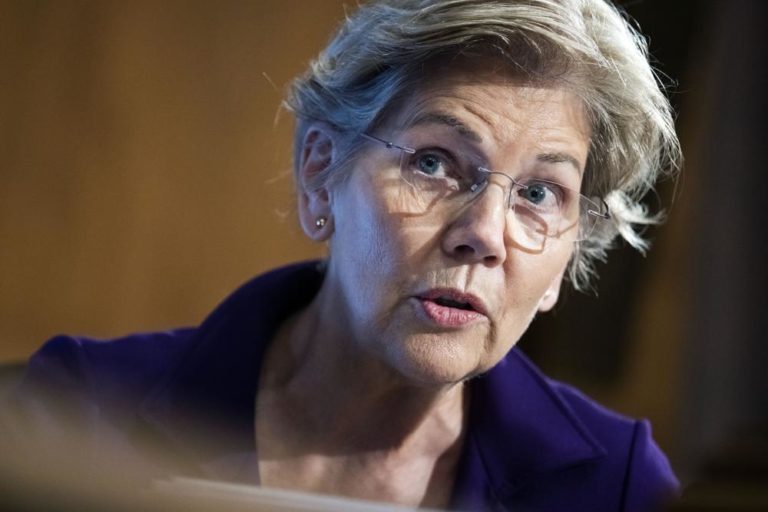
Indeed, Sen. Elizabeth Warren, D-Mass., whom Trump nicknamed “Pocahontas” over her dubious claims to be of Native American heritage, wrote to the White House on Tuesday, offering to work together on de-banking.

“Dear President Trump, I write to request that you take action on preventing the debanking of too many Americans across the country, including consumers unfairly locked out of the financial system due to overdraft fees, religious affiliation, or political beliefs,” Warren wrote to Trump on Tuesday.

“You share what appears to be a bipartisan interest in addressing debanking,” Warren added, referencing Trump’s recent comments at the World Economic Forum, where he blasted Bank of America for de-banking conservatives.

“I strongly agree that debanking is a serious issue, and it is unfortunately a practice not confined to Bank of America. My staff has identified thousands of debanking-related complaints lodged by consumers in the last three years alone,” she said, listing four main de-banking culprits: Bank of America, JPMorgan Chase, Wells Fargo, and Citigroup.

Warren said she’s willing to work with Senate Banking Committee Chairman Tim Scott, R-SC, to establish clear disclosure rules and appeals processes if an account is closed, and to increase penalties on large banks that unlawfully infringe upon people’s right to a bank account.

“But this effort should not stand in the way of your Administration using all of its available tools to address unfair debanking,” Warren told Trump. “I hope you and your Administration will act quickly to address this problem.”

Warren’s letter to Trump came the night before the Senate Banking Committee’s scheduled hearing on de-banking. Warren and her committee also submitted a memorandum ahead of the hearing that details the problem.
According to the committee memo, 8,056 consumers filed complaints with the Consumer Financial Protection Bureau against a financial institution for improperly closing checking, savings, or other deposit accounts. In the same period, 3,899 consumers filed complaints related to being “unable to open” a deposit account, the memo said.

The memo listed numerous examples of de-banking from anonymous complainants. Some of the more high-profile examples of de-banking in recent years include Dr. Joseph Mercola’s, whose bank accounts were deactivated by JP Morgan Chase in 2023. Mercola achieved public prominence for his opposition to the COVID-19 vaccine.

Additionally, last May journalist Christina Urso, who’s making a documentary about the 2020 plot to kidnap Michigan’s governor, had her account closed by Bank of America.

Victims of de-banking have noted the irony that financial institutions de-bank political dissidents, but have no problem doing business with notorious criminals such as Jeffrey Epstein. The attorney general for the U.S. Virgin Islands revealed last year that JP Morgan Chase had a relationship with Epstein until mere months before his death in 2019.

Ken Silva is a staff writer at Headline USA. Follow him at x.com/jd_cashless.

Pro-MAGA Salvadoran Leader Bukele Offers to Take Deported Criminals from U.S.

(Headline USA) El Salvador has offered to take in people deported from the U.S. for entering the country illegally and to house some of the country’s violent criminals—even if they’re American citizens.

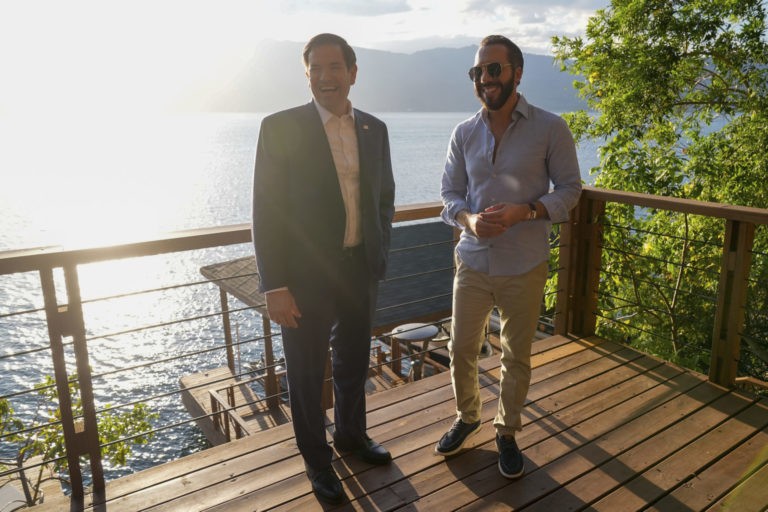
U.S. Secretary of State Marco Rubio, after a meeting Monday with El Salvador President Nayib Bukele, proclaimed it the most “unprecedented, extraordinary” offer the country has yet received during the ongoing wave of global migration.

Bukele, who took office in 2019, said he’s offering a release valve for America’s vast prison system.

Writing on X, he said the Central American nation will allow the U.S. to “outsource” part of its inmate population, but it will only take in convicted criminals.

The U.S. would have to pay El Salvador to house the prisoners, though he did not disclose an asking price.

Bukele said the going rate would be “relatively low” for the U.S., but significant for his country—enough to make its “entire prison system sustainable.”

Bukele has proposed housing U.S. criminals in the mega-prison his administration opened in 2023 to tame MS-13 and other powerful street gangs.

The maximum-security facility is about 45 miles southeast of the capital city of San Salvador and is known as CECOT, a Spanish acronym that translates to “terrorism confinement center.”

The facility can house up to 40,000 people across eight sprawling pavilions, where each cell holds up to 70 prisoners.

Human rights organizations say the bare-bones setting is overly harsh. Inmates are not allowed visitors or time outside.

They are served just one meal a day and are not offered educational or reintegration programs typically found at other prisons, save for the occasional motivational talk or exercise regimen under strict supervision.

The prison’s dining halls, break rooms, gym and board games are for guards only, and administration officials have said inmates will never return to their communities.

Deporting foreign nationals to countries other than their native land is legal, but deporting American citizens is almost certainly not.

Under U.S. immigration law, a country such as El Salvador can accept someone deported from the U.S. who isn’t a citizen of that country if the person’s homeland refuses to accept them, says Theresa Cardinal Brown, a former homeland security official under the administrations of Presidents George W. Bush and Barack Obama.

What’s more, she noted, deportation is a legal term that applies only to someone physically removed from the country because they have violated some provision of the immigration act, which applies only to “aliens.”

Naturalized U.S. citizens, in rare cases, can be denaturalized and revert to green-card status, such as if they lied on their initial immigration forms or committed a serious crime such as funding a terrorist group, according to Stephen Yale-Loehr, an immigration law expert and retired Cornell Law School professor.

Green card holders can then be deported if they’re convicted of any number of crimes, including murder, assault, burglary, tax evasion, domestic violence and illegal firearms possession, he said.

Natural-born U.S. citizens, however, maintain their citizenship through the U.S. Constitution’s 14th Amendment, which outlines the rights guaranteed to all citizens, such as due process and equal protection under the law.

“So, just as President Trump can’t eliminate birthright citizenship by himself, so too the U.S. government cannot deport U.S. citizens, even if they have committed crimes,” Yale-Loehr said.

El Salvador is attempting to turn the page on decades of civil war and violence from MS-13 and other street gangs that long made it one of the most dangerous countries in the world.

Under Bukele, the country of 6 million residents declared a state of emergency in 2022, suspending constitutional rights and launching a fierce crackdown on gangs that’s led to the arrest of more than 80,000 people.

Bukele’s popularity has soared as crime plummeted to a record low of 114 homicides last year, but human rights groups have complained that many people are being unjustly detained without due process rights.

The U.S. and other nations have reached deals to deal with migrants but nothing quite like what El Salvador’s leader proposes.

Britain has an agreement with Rwanda to send asylum-seekers to the East African country, though the accord has been stymied in the U.K. courts.

Trump also struck agreements with El Salvador, Guatemala and Honduras to take in U.S. asylum seekers in 2019, during his first term as president.

Guatemala was the only one of the three agreements that took effect. More than 900 people from El Salvador and Honduras were sent, but few sought asylum and instead continued on to their own countries in what became known as ” deportation with a layover.”

President Joe Biden canceled the three agreements in 2021.

Trump praised the offer Tuesday, saying it would serve as “great deterrent” but acknowledged it might not pass legal muster.

“I’m just saying if we had a legal right to do it, I would do it in a heartbeat,” he said in the Oval Office. “I don’t know if we do or not. We’re looking at that.”

Rubio similarly called El Salvador’s offer “generous,” but stressed that the Republican administration will need to study the proposal before making any commitments.

“There are obviously legalities involved,” he said Tuesday at a news conference in San Jose, Costa Rica, with Costa Rican President Rodrigo Chaves. “We have a constitution. We have all sorts of things.”

That hasn’t stopped Bukele from making the most of the renewed attention.

He’s joked El Salvador would even take in disgraced former U.S. Sen. Bob Menendez, who was sentenced last week to 11 years in federal prison for accepting bribes of gold and cash and acting as an agent of Egypt.

“Yes,” Bukele wrote on X, “we’ll gladly take him in.”

Adapted from reporting by the Associated Press

Bondi Officially Confirmed as Attorney General in Bipartisan Vote

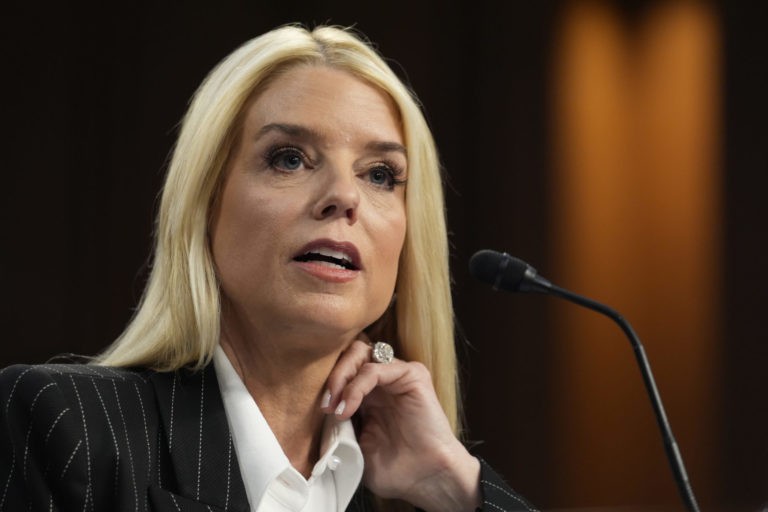
(Headline USA) The Senate confirmed Pam Bondi as U.S. attorney general Tuesday evening, putting a longtime ally of Donald Trump at the helm of a Justice Department that has already been rattled by the firings of disloyal “resistance” operatives in the deep-state who spent the past eight years trying to undermine—and even incarcerate—the Republican leader.

An recently released estimate revealed that nearly 40% of the FBI under the purview of ex-Attorney General Merrick Garland and FBI Director Christopher Wray had been assigned to target Trump supporters—particularly those involved in prosecuting the newly pardoned Jan. 6 political dissidents.

The vote to confirm Bondi fell almost entirely along party lines, with only Sen. John Fetterman, a Pennsylvania Democrat, joining with all Republicans to pass her confirmation 54-46.

Bondi, a former Florida attorney general, is expected to oversee a radical reshaping of the department that has been sharply criticized over its weaponization during the previous administration—and before that, dating back at least to the presidency of Barack Obama.

Republicans have praised Bondi as a highly qualified leader they contend will bring much-needed change to a department they believe unfairly pursued Trump through investigations resulting in two federal indictments by special counsel Jack Smith as part of a broader anti-Trump lawfare campaign.

“Pam Bondi has promised to get the department back to its core mission: prosecuting crime and protecting Americans from threats to their safety and their freedoms,” said Senate Majority Leader John Thune, R-S.D.

During his first term in office, Trump fired then-FBI Director James Comey, who ultimately acknowledged, under oath, his efforts to spy on the incoming president and wage a campaign of deception that would ensnare him in a political trap that he seditiously helped plot with Obama, Biden and others at a Jan. 5, 2016 meeting.

Comey’s firing helped trigger the multi-year Mueller investigation into the Russia-collusion hoax that was conceived and planted by Hillary Clinton’s campaign. The investigation, which reportedly cost $32 million in tax dollars, resulted in no charges against Trump but was effective in damaging his public perception, undermining his ambitious agenda and helping Democrats take over Congress in the 2018 midterms, which gave way almost immediately into a bogus impeachment effort.

Trump also forced out his first attorney general, Jeff Sessions, after recused himself from the Mueller probe and allowed Obama plant Rod Rosenstein to oversee it instead.

While Bondi has sought to reassure Democrats that politics would play no part in her decision-making, she also refused at her confirmation hearing last month to rule potential investigations into Trump’s conspirators.

The Justice Department “had been weaponized for years and years and years, and it’s got to stop,” Bondi said during interrogation, noting that prosecutions against Trump amounted to political persecution .

“They targeted Donald Trump,” Bondi told lawmakers.

“They went after him—actually starting back in 2016, they targeted his campaign,” she added. “They have launched countless investigations against him. If I am attorney general, I will not politicize that office.”

Sen. Peter Welch, D-Vt., praised Bondi as “accomplished and competent” but said his “grave concern is really about President Trump and what he is clearly demanding.”

Democrats raised no such objections to former President Joe Biden’s demands on Garland, nor those of former Obama “wingman” Eric Holder and his successor, Loretta Lynch, all of whom did the bidding of the White House without hesitation or reproach.

Bondi’s defense of investigating the prior administration’s corruption of the DOJ “clearly is a loyalty oath to [Trump] as opposed to a demand for straightforward, candid advice, including if the president is asking for something to be done like the prosecution of a political adversary,” Welch claimed.

Bondi’s confirmation vote came just hours after FBI agents sued the Justice Department over efforts to develop a list of employees involved in the Jan. 6 prosecutions, which agents fear could be a precursor to mass firings.

Acting Deputy Attorney General Emil Bove last week ordered the acting FBI director to provide the names, titles and offices of all FBI employees who worked on the Jan. 6 cases—which Trump has described as a “grave national injustice.”

Bove, who defended Trump in his criminal cases before joining the administration, said Justice Department officials would carry out a “review process to determine whether any additional personnel actions are necessary.”

Justice Department officials have also recently forced out senior FBI executives, fired prosecutors on Smith’s team who investigated Trump and terminated a group of prosecutors in the D.C. U.S. attorney’s office who were hired to help with the massive Jan. 6 investigation.

Trump nominated Bondi for attorney general after it became clear that his initial pick, former Rep. Matt Gaetz, could not win enough support from Republican senators to be confirmed.

Bondi has been a fixture in Trump’s orbit for years, and a regular defender of the president-elect on news programs amid his legal woes.

In a 2023 Fox News appearance, she suggested that “bad” Justice Department prosecutors would be investigated under the Trump administration.

“The investigators will be investigated,” she said.

Adapted from reporting by the Associated Press

Trump’s Idea to Turn Gaza into Mideast ‘Riviera’ Gains Traction, as Well as Trepidation

(Headline USA) President Donald Trump’s bold suggestion that the U.S. take “ownership” in redeveloping the Gaza Strip into “the Riviera of the Middle East” garnered support from some top military experts and political officials, even as many cautiously approached what could potentially be another nation-building quagmire and terrorism magnet in the war-torn region.

Among those speaking out in support was Gen. Wesley Clark, who defended the plan in a NewsNation segment with host Chris Cuomo and Stephen A. Smith, noting that he had proposed something similar in the past and that it “makes some common sense.”

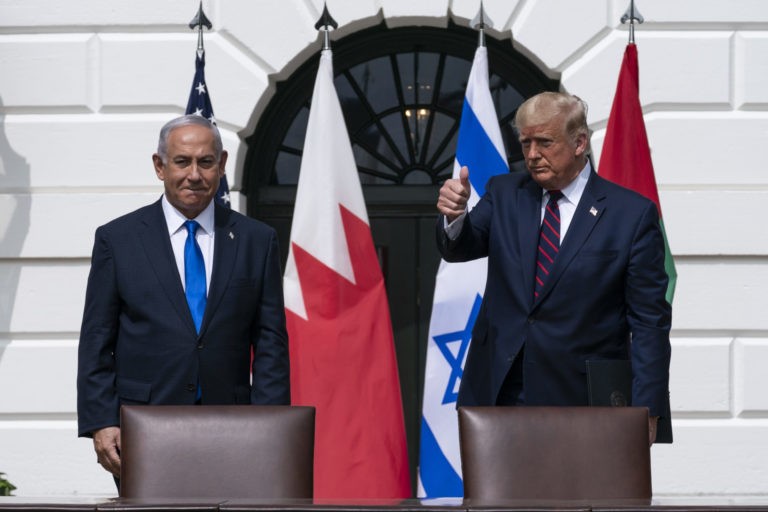
The idea came during a bilateral meeting Tuesday with Israeli Prime Minister Benjamin Netanyahu, during which Trump also suggested that roughly 1.8 million Palestinians in Gaza be permanently resettled outside the conflict zone.

The White House subsequently sent a press release touting broad support among the MAGA faithful, including former Israeli ambassador David Friedman.

“Trump’s proposed USA takeover of the Gaza Strip may sound out of the box, but it is brilliant, historic and the only idea I have heard in 50 years that has a chance of bringing security, peace and prosperity to this troubled region,” Friedman said.

Some suspected that the extreme solution was intended to put additional pressure on Hamas as the terrorist organization continues its negotiations with Israel over a tenuous ceasefire that is tied to the release of the remaining Oct. 7 hostages held in Gaza.

“The U.S. will take over the Gaza Strip, and we will do a job with it too,” Trump said at an evening news conference with Netanyahu by his side.

The president who made his name as a New York real estate developer added: “We’ll make sure that it’s done world-class. It’ll be wonderful for the people—Palestinians, Palestinians mostly, we’re talking about.”

Trump said the U.S. would redevelop the territory after Palestinians were resettled elsewhere and turn the territory into a place where the “world’s people”—including Palestinians—would live. He offered no immediate detail about what authority the U.S. would use to take the land and develop it.

Egypt, Jordan and other Mideast neighbors of Israel have threatened to go to war with Israel if Palestinians are resettled in their counties, potentially expanding the conflict and undermine a decades-long push by the U.S. and allies for a two-state solution.

Saudi Arabia’s foreign ministry issued a sharply worded reaction to Trump, noting their long call for an independent Palestinian state was a “firm, steadfast and unwavering position.”

Saudi Arabia has been in negotiations with the U.S. over a deal echoing the previously signed Abraham Accords to diplomatically recognize Israel in exchange for a security pact and other terms.

“The duty of the international community today is to work to alleviate the severe human suffering endured by the Palestinian people, who will remain committed to their land and will not budge from it,” the Saudi statement said.

Still, Trump insists the Palestinians “have no alternative” but to leave the “big pile of rubble” that is Gaza.

He spoke out as his top aides stressed that a three-to-five-year timeline for reconstruction of the war-torn territory, as laid out in a temporary truce agreement,  was not viable.

Last week, both Egyptian President Abdel Fattah el-Sissi and Jordanian King Abdullah II dismissed Trump’s calls to resettle Palestinians in Gaza.

But Trump said he believes Egypt and Jordan—as well as other countries, which he did not name—would ultimately agree to take in Palestinians.

“You look over the decades, it’s all death in Gaza,” Trump said. “This has been happening for years. It’s all death. If we can get a beautiful area to resettle people, permanently, in nice homes where they can be happy and not be shot and not be killed and not be knifed to death like what’s happening in Gaza.”

Trump also said he wasn’t ruling out deploying U.S. troops to support reconstruction of Gaza. He said he envisioned “long-term” U.S. ownership of a redevelopment of the territory.

The president’s proposal was greeted with alarm by Democrats and a measure of skepticism by some Republican allies.

“He’s completely lost it,” said Sen. Chris Murphy, D-Conn. “He wants a U.S. invasion of Gaza, which would cost thousands of American lives and set the Middle East on fire for 20 years? It’s sick.”

“We’ll see what our Arab friends say about that,” said Sen. Lindsey Graham, a South Carolina Republican and a Trump ally. “And I think most South Carolinians are probably not excited about sending Americans to take over Gaza. I think that might be problematic, but I’ll keep an open mind.”

The White House’s focus on the future of Gaza comes as the nascent truce between Israel and Hamas hangs in the balance.

Netanyahu is facing competing pressure from his right-wing coalition to end a temporary truce against Hamas militants in Gaza and from war-weary Israelis who want the remaining hostages home and for the 15-month conflict to end.

Trump may be betting he can persuade Egypt and Jordan to come around to accept displaced Palestinians because of the significant aid that the U.S. provides Cairo and Amman.

Conservative members of Netanyahu’s government have embraced the call to move displaced Palestinians out of Gaza.

“To me, it is unfair to explain to Palestinians that they might be back in five years,” Trump’s Mideast envoy, Steve Witkoff, said. “That’s just preposterous.”

Trump also signaled that he may be reconsidering an independent Palestinian state as part of a broader two-state solution to the decades-long Israel–Palestinian conflict.

“Well, a lot of plans change with time,” he told reporters when asked if he was still committed to a plan like the one he laid out in 2020 that called for a Palestinian state. “A lot of death has occurred since I left and now came back.”

Netanyahu’s arrival in Washington for the first foreign leader visit of Trump’s second term coincides with the prime minister’s popular support sagging.

The prime minister is in the middle of weekslong testimony in an ongoing corruption trial that centers on allegations he exchanged favors with media moguls and wealthy associates. He has decried the accusations and said he is the victim of a “witch hunt.”

Being seen with Trump, who is popular in Israel, could help distract the public from the trial and boost Netanyahu’s standing.

“We have the right leader of Israel who’s done a great job,” Trump said of Netanyahu.

Netanyahu praised Trump’s leadership in getting the hostage and ceasefire deal. The prime minister also spoke glowingly of Trump thinking outside the box.

“You say things others refuse to say. And after the jaws drop, people scratch their heads and they say, ‘You know he’s right.'”

Hamas in a statement decried Trump’s comments.

“We reject Trump’s statements in which he said that the residents of the Gaza Strip have no choice but to leave, and we consider them a recipe for creating chaos and tension in the region,” the group said.

Netanyahu met with White House national security adviser Mike Waltz and Witkoff on Monday to begin the daunting work of brokering the next phase of a ceasefire agreement.

The Israeli leader said he would send a delegation to Qatar to continue indirect talks with Hamas that are being mediated by the Gulf Arab country, the first confirmation that those negotiations would continue. Netanyahu also said he would convene his security Cabinet to discuss Israel’s demands for the next phase of the ceasefire when he returns to Israel at the end of the week.

Witkoff, meanwhile, said he plans to meet with Qatar’s prime minister, Sheikh Mohammed bin Abdulrahman Al Thani, in Florida on Thursday to discuss the next phase in the ceasefire. Qatar and Egypt have served as key intermediaries with Hamas throughout the conflict.

Netanyahu is under intense pressure from hard-right members of his governing coalition to abandon the ceasefire and resume fighting in Gaza to eliminate Hamas. Bezalel Smotrich, one of Netanyahu’s key partners, has vowed to topple the government if the war isn’t relaunched, a step that could lead to early elections.

Hamas, which has reasserted control over Gaza since the ceasefire began last month, has said it will not release hostages in the second phase without an end to the war and Israeli forces’ full withdrawal.

Netanyahu, meanwhile, maintains that Israel is committed to victory over Hamas and the return of all hostages captured in the Oct. 7, 2023, attack that triggered the war.

Adapted from reporting by the Associated Press

Unhinged Dems Rage Against Trump’s Effort to Purge Waste 

(Luis Cornelio, Headline USA) Democrats are struggling to come to terms with President Donald Trump granting Elon Musk and the Department of Government Efficiency access to the Treasury Department and its payment systems. 

A group of Democrats from both chambers of Congress held what critics online described as an unhinged rally outside the Treasury headquarters in Washington. Their demand? That Trump abandon his promise to end wasteful spending from the federal government—something voters elected him to fulfill. 

Rep. Jasmine Crockett, D-Texas, was among the rally’s leaders, shouting and lobbing threats against Trump and Musk. 

“You gonna learn a few lessons from us, and Imma be the first one. You and your little friend off of Twitter. Y’all about to find out, alright?” Crockett shouted, addressing Trump. These threats come just months after Trump survived two assassination attempts. 

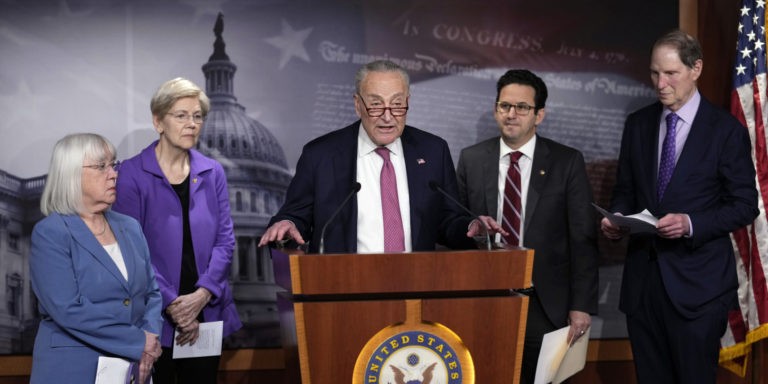
Senate Minority Leader Chuck Schumer, D-N.Y., made a seemingly awkward attempt to start a chant.  

“We cannot allow Elon Musk and a small group of people to secretly, behind closed doors, take away our privacy, take away our dollars. … We will win!” Schumer declared, repeating the last phrase several times. 

“We won’t rest! We won’t rest!” he continued, this time with nearly no one joining in. 

Another protester, Rep. Ayanna Pressley, D-Mass., took a more aggressive tone, urging hecklers to “agitate” in the streets. 

“We will see you in the courts, in Congress, in the streets,” Pressley exclaimed. She then called Elon Musk a “Nazi nepo-baby.”  

It is unclear what Pressley, a member of the infamous Squad, was referring to, as Musk has stated his fortune was self-made. He is currently the world’s richest man.

Not to be outdone by his colleagues, Rep. Dave Min, D-Calif., called for Musk’s incarceration. The crimes? Min did not say. 

“He has broken the law time and time again,” Min claimed. “This cannot stand. He must be held accountable. He must be made to pay. We must enforce the law.” 

The Democrats’ grievances are striking, coming less than two weeks after most Americans voted Trump back into the White House, effectively endorsing his plan to purge corruption and wasteful spending from the government. 

Trump tapped Musk to lead the DOGE, an initiative that has since saved taxpayers millions of dollars by making bureaucrats resign and recommending the shutdown of USAID, a controversial federal agency acting as the world’s charity organization.

In contrast to Trump’s electoral victory, Democrats lost control of the Senate and failed to retake the House. Earlier this month, over 50 Democrats admitted in interviews with The New York Times that they lacked both a leader and a coherent message. 

In Just Two Weeks, Trump Delivers Big Wins—Here Are Some of Them

(Luis Cornelio, Headline USA) Remember when Donald Trump promised America would “win so much, you’re going to be so sick and tired of winning?” Less than two weeks into his second term, Trump is already racking up victory after victory that might leave Americans… sick and tired. 

On Monday, the White House released a video highlighting some of Trump’s greatest accomplishments, including closing the southern border, driving America toward greater energy independence and restoring law and order. 

“On the border, President Trump declared a national emergency, deployed the military, ended catch-and-release and reinstated ‘Remain in Mexico’ and already illegal crossings are down 95%,” White House Press Secretary Karoline Leavitt narrated in the video. 

With a trumpet rendition of the Star-Spangled Banner playing in the background, Leavitt went on to announce Trump’s resumption of border wall construction and declared that Colombia agreed to take back deported illegal aliens. Venezuela also entered a similar agreement with Trump. 

“On the economy and energy: President Trump unleashed American energy, declared a national energy emergency and killed Joe Biden’s radical electric vehicle mandate,” Leavitt added. “Wall Street is booming, AI investment skyrocketed $500 billion and there’s $20 billion flowing into US data centers.” 

Leavitt also spotlighted Trump’s initiatives to restore law and order: designating Mexican cartels as foreign terrorist organizations and signing the Laken Riley Act. This bill mandates the detention of illegal aliens accused of violent crimes. 

“Draining the swamp, President Trump signed more than 45 executive orders, DEI has been purged from the government and our military, and lazy federal workers have been ordered back to the office,” Leavitt stated. 

In a blunt move to restore the First Amendment, Trump fielded 12 times the amount of press questions in one week than Biden did in the entire final years of his one-term presidency. 

Most popularly, the White House lauded an executive order ending government censorship, effectively banning federal workers from colluding with Big Tech to suppress free speech. 

These monumental actions represent a sharp contrast to the chaos of the Biden administration. Biden led the disastrous withdrawal from Afghanistan, which resulted in the tragic deaths of 13 servicemen. 

Biden also allowed an unprecedented influx of illegal aliens, enabling violent criminals to sneak into the country and commit some of the most horrific crimes in recent years. Meanwhile, Biden’s energy policies hindered innovation, with radical leftist initiatives like an electric vehicle mandate facing scathing rebuke from major automakers and dealers. 

And according to the Media Research Center’s CensorTrack database, the Biden administration colluded with social media giants to silence Americans whose online speech touched on inconvenient truths —whether it was COVID-19 or transgenderism.

Vance to Attend AI Summit in Paris, Security Conference in Munich for 1st Overseas Trip as VP

(Headline USA) Vice President JD Vance will attend a two-day high-level summit focusing on artificial intelligence in Paris next week and the annual Munich Security Conference in Germany in his first scheduled trip abroad since taking office.

The AI Action Summit on Feb. 10-11 will gather heads of state and top government officials, CEOs and other people involved in the tech sector, which has been shaken up by galloping advances.

The Munich summit is a regular forum for global international security discussions which has taken on new significance amid Russia’s ongoing war against Ukraine and other challenges.

The White House confirmed Vance’s travel after a French diplomatic official said he would attend the Paris summit. It will be his first public foray into foreign policy matters since taking office on Jan. 20, as the new Trump administration promises a return to an “America First” agenda.

It comes as the Trump administration weighs whether to sustain U.S. security and economic assistance to Ukraine, how to constrain the burgeoning partnership between Russia and Iran and contain a more assertive China, all while pursuing a protectionist economic policy that threatens tariffs on friends and foes alike.

China’s Vice Premier Ding Xuexiang is among those expected to attend the summit, which will be co-presided by French President Emmanuel Macron and Indian Prime Minister Narendra Modi.

The summit will take place at the Grand Palais, last year’s Olympic venue for the fencing and taekwondo competitions. A dinner with top officials and CEOs is also scheduled at the Elysee presidential palace.

Vance’s trip comes after U.S. President Donald Trump last month talked up a joint venture investing up to $500 billion for infrastructure tied to artificial intelligence by a new partnership of OpenAI, Oracle and SoftBank.

The new entity, Stargate, will start building data centers and the electricity generation needed for the further development of the fast-evolving AI in Texas, according to the White House.

Meanwhile, Chinese AI model DeepSeek’s emergence has shaken up the tech sector, offering companies access to the technology at a fraction of the previous cost and providing the potential to push other AI companies to improve their models and bring down prices.

Vance in the past has acknowledged some harmful AI applications, but said at a July Senate hearing that he worries that concern is justifying “some preemptive overregulation attempts that would frankly entrench the tech incumbents that we already have.”

Adapted from reporting by the Associated Press

Trump, Netanyahu Meet as Internal Pressure to End Truce Mounts for Israeli PM

(Headline USA) President Donald Trump’s Middle East envoy said Tuesday that a three to five year timeline for reconstruction of Gaza, as set out in a temporary truce agreement, is not a viable post-war plan for the battle-torn territory.

Trump’s top envoy, Steve Witkoff, made the case as the U.S administration renewed its call on Arab nations to relocate displaced Palestinians and as Trump prepared to meet with Israeli Prime Minister Benjamin Netanyahu at the White House later Tuesday.

“To me, it is unfair to explain to Palestinians that they might be back in five years,” Witkoff told reporters. “That’s just preposterous.”

Egypt and Jordan, as well other Arab nations, have flatly rejected calls by Trump to relocate the territory’s 2.3 million Palestinians during post-war rebuilding of the territory.

But senior administration officials continue to press the case for relocation of Palestinians on humanitarian grounds.

“At some point we have to look realistically. How do you rebuild Gaza,” said White House national security adviser Mike Waltz. “What does that look like? What’s the timeline? These people are sitting with literally thousands of unexploded ordnance, in piles of rubble.″

The White House’s focus on reconstruction comes as the nascent truce between Israel and Hamas hangs in the balance.

The Israeli prime minister is facing competing pressure from his coalition to end a temporary truce against Hamas militants in Gaza and from war-weary Israelis who want the remaining hostages home and for the 15-month conflict to end.

Trump, meanwhile, remains guarded about the long-term prospects for the truce.

“I have no guarantees that the peace is going to hold,” Trump told reporters Monday.

The leaders’ talks are expected to touch on a long-sought Israel-Saudi Arabia normalization deal and concerns about Iran’s nuclear program, but hammering out the second phase of the hostage deal will be at the top of the agenda.

Since returning to office, Trump has called for relocating Palestinians from Gaza to neighboring Egypt and Jordan, even as Egyptian President Abdel Fattah el-Sissi and Jordanian King Abdullah II have rejected it.

Saudi Arabia, the United Arab Emirates, Qatar, the Palestinian Authority and the Arab League have joined Egypt and Jordan in rejecting plans to move Palestinians out of their territories in Gaza and the occupied West Bank.

Netanyahu arrived in Washington for the first foreign leader visit of Trump’s second term.

Netanyahu met with Waltz and Witkoff on Monday began the daunting work of brokering the next phase of a ceasefire agreement.

Netanyahu said in a statement that the meeting with Witkoff and Waltz was “positive and friendly.”

The Israeli leader said he would send a delegation to Qatar to continue indirect talks with Hamas that are being mediated by the Gulf Arab country, the first confirmation that those negotiations would continue. Netanyahu also said he would convene his security Cabinet to discuss Israel’s demands for the next phase of the ceasefire when he returns to Israel at the end of the week.

Witkoff, meanwhile, said he plans to meet with Qatar’s prime minister, Sheikh Mohammed bin Abdulrahman Al Thani, in Florida on Thursday to discuss the next phase in the ceasefire. Qatar and Egypt have served as key intermediaries with Hamas throughout the conflict.

Adapted from reporting by the Associated Press