(Ken Silva, Headline USA) Former Capitol Police officer Tarik Johnson said Saturday that a congressional staffer with a gun gained entry into one of the House office buildings that leads to the U.S. Capitol on Tuesday—the same day as President Donald Trump’s congressional address.
According to Johnson, the staffer was arrested.
“This is the fourth instance of a gun being brought in a building policed by USCP Chief J Thomas Manger since Trump was elected President,” Johnson said.
“What is frightening to me is that both dates that President Trump attended events at the Capitol it was on a date where a gun made it in one of the buildings and I’m told one of the guns made it in a room where President Trump was actually in and only feet away from him.”
🚨Emergency Update!!!!!!!
I was going to wait until Monday for this but things are developing rapidly so I must inform the public now in a series of tweets. Here is what’s happening:
On Tuesday (SOTU) a House staffer gained entry into one of the House office buildings that… https://t.co/dHgVUDKwA2
The Capitol Police have not commented on Johnson’s allegations.
Johnson’s claims were followed by more drama early Sunday morning, when Secret Service agents shot an armed man believed to be traveling from Indiana to the White House.
No one else was injured in the shooting that happened around midnight about a block from the White House, according to a Secret Service statement. Trump was in Florida at the time of the shooting.
The Secret Service received information from local police about an alleged “suicidal individual” who was traveling from Indiana and found the man’s car and a person matching his description nearby.
“As officers approached, the individual brandished a firearm and an armed confrontation ensued, during which shots were fired by our personnel,” the Secret Service said in a statement.
The man was hospitalized. The Secret Service said his condition was “unknown.”
The Metropolitan Police Department will investigate because the shooting involved law enforcement officers. A message left Sunday for the police department wasn’t immediately returned.
The Associated Press contributed to this report.
Ken Silva is the editor of Headline USA. Follow him at x.com/jd_cashless.
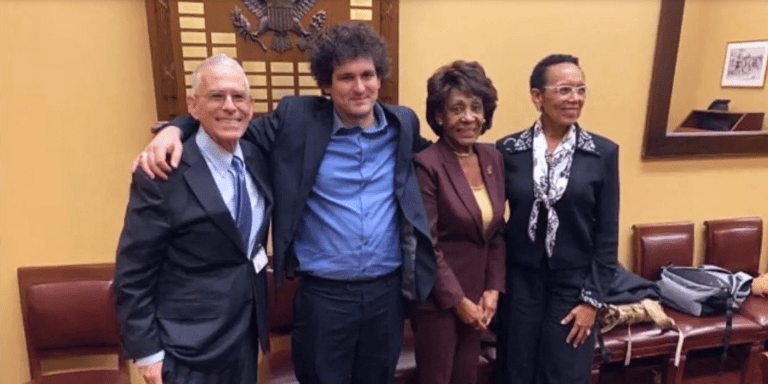
(Luis Cornelio, Headline USA) Sam Bankman-Fried, the crypto fraudster and longtime Democratic donor, is conveniently aligning himself with the Republican Party as he positions himself as a victim of government weaponization in a bid to receive a pardon from President Donald Trump.
SBF made damning comments about his former allies in the Democratic Party—including former President Joe Biden—during a Thursday interview on the Tucker Carlson Show. His comments are puzzling, given he was the second-largest donor to Biden’s 2020 presidential campaign, trailing only Michael Bloomberg.
“In 2020, I was center-left and I gave to Biden’s campaign. I was optimistic he would be a center-left president,” SBF claimed. “I spent the next few years in D.C. a lot. I was really, really shocked by what I saw there… and not in a good direction from the administration.”
His comments came after Carlson asked him why Democrats did not rescue him from prosecution as they had done for controversial figures, like Tony Podesta—the infamous brother of former Clinton official John Podesta.
“By late 2022, I was giving to Republicans privately as much as Democrats, and that started becoming known right around after FTX’s collapse—so, that probably played a role,” SBF added.
SBF was a crypto billionaire who donated heavily to the Democratic party.
He made dozens of trips to D.C. — and quickly, he'd met with everyone who mattered.
— Thoughtleadr Branding Mastery (@TL_branding) March 7, 2025
SBF’s interview on Carlson appears to be part of a longshot effort to persuade Trump to either pardon or commute his sentence.
“Bankman-Fried has told associates that he has been interested in seeking a Trump pardon since November’s election,” the Wall Street Journal reported Friday, citing a source familiar with the matter.
Other individuals involved in this pardon-seeking effort include SBF’s parents, Joe Bankman and Barbara Fried, while other allies have contacted Trump himself or spoken to White House advisors.
SBF was sentenced to 25 years after orchestrating several fraudulent schemes related to cryptocurrency. He was also sentenced to three years of supervised release and ordered to pay $11 billion in forfeiture.
He was the owner of FTX, a crypto exchange company that illegally stole customers’ funds for his own crypto trading firm, Alameda Research, in a bid to enrich himself.
He used those funds to support a lavish lifestyle—purchasing real estate, donating to Democrats and even renaming the Miami Heat area to FTX Arena. His crimes amounted to one of the largest Ponzi schemes in modern history.
(Luis Cornelio, Headline USA) For years, the CIA has categorically denied the existence of secret prisons—or black sites—on U.S. soil. However, a now-deleted list of government-owned properties suggests that the agency may have indeed owned a facility used for secretive operations.
The list included government properties that the General Services Administration, at the direction of the Trump administration’s DOGE, planned to sell. Among the properties on the list was a highly sensitive complex in Northern Virginia long tied to CIA operations.
The GSA published the list on Thursday but quickly took it down the next day, according toWiredand Bloomberg.
“Obviously, someone did no research about the long and well-documented history of this property,” said Jeff McKay, chair of the Fairfax County Board of Supervisors. “Normally a site like this wouldn’t be outed, so to speak, but everyone knows it’s here except, apparently, the people who put this list together.”
A GSA source told Wired that DOGE’s inclusion of the building was surprising. “There have been rumors swirling that some of the buildings identified house classified CIA space,” the source said, adding: “the release of ‘non-core properties’ was especially surprising, as this nebulous language has not been historically used.”
The government complex is located at 6810 Loisdale Road in Springfield, Virginia, and includes a U-shaped building tied to the CIA—its specific address is 6801 Springfield Center Drive, according to Wired. The 6810 building was proposed to be put up for sale.
The 6801 building was first exposed in 2012 by the Washington Business Journal, which described the CIA’s presence in the area as “perhaps the worst-kept secret in Springfield.”
The building has allegedly been used for clandestine training operations, according to Catherine Collins and Duglas Frantz, authors of the nonfiction bookFallout: The True Story of the CIA’s Secret War on Nuclear Trafficking.
“There were two pick-and-lock specialists from the agency’s secret facility in Springfield, Virginia. In a warehouse-like building there, the CIA trains a cadre of technical officers to bug offices, break into houses, and penetrate computer systems,” Collins and Frantz wrote, according to Wire.
While some critics have characterized the release of this information as a failure of the Trump administration, others have praised it as part of an effort to expose secret government operations that could be used against Americans.
Neither the CIA nor GSA responded to Wired’s questions about the facility.
The Trump cabinet met on Thursday to discuss best practices for reducing government waste and fraud. The meeting allegedly turned fiery when Musk singled out Secretary Marco Rubio for his alleged failure to fire bureaucrats within his agency. The Times’s Jonathan Swan and Maggie Haberman reported the exchange on Friday.
Musk reportedly said Rubio had fired “nobody.” In response, Rubio countered that over 1,500 State Department employees had taken early retirement buyouts. He sarcastically asked whether Musk wanted to rehire them for a performative mass firing and then detailed his goals to reorganize the State Department.
“Mr. Musk was unimpressed,” Swan and Haberman reported. “He told Mr. Rubio he was ‘good on TV,’ with the clear subtext being that he was not good for much else.” The reporters noted that Trump stood silent while observing his two officials debate.
The clash was not limited to Musk and Rubio, with Transportation Secretary Sean Duffy also bumping heads with Musk and DOGE, the federal initiative aimed at cutting government waste and fraud.
Duffy reportedly pushed back against Musk’s team and their attempt to fire air traffic controllers. “What am I supposed to do? Mr. Duffy said. I have multiple plane crashes to deal with now, and your people want me to fire air traffic controllers?” Swan and Haberman claimed.
Musk dismissed Duffy’s comment as a “lie” and demanded to know who had asked for air traffic controllers to be fired. Duffy affirmed there were no names because he had already halted the proposed firings.
Musk further said that control towers might have been infiltrated by workers hired under so-called diversity, equity and inclusion programs—an assertion that Duffy also pushed back against.
Following the heated exchange, Trump concluded that Musk would continue as an advisor to federal agencies, with final termination decisions resting with the respective secretaries.
White House press secretary Karoline Leavitt described the meeting as “great and productive,” noting that cabinet members met to “discuss cost-cutting measures and staffing across the federal government.”
She added, “Everyone is working as one team to help President Trump deliver on his promise to make our government more efficient.”
Trump tapped Musk—the wealthiest man in the world—to help lead DOGE. To date, DOGE has saved taxpayers billions by canceling wasteful leftist initiatives and grants.
🚨 NEW: Elon Musk walks out of the Oval Office with Trump Chief of Staff Susie Wiles, on their way to board Marine One
If Elon is laughing along with Susie, you KNOW the New York Times article about tension between Musk and the Trump administration are bullsht.
(Dave DeCamp, Antiwar.com) Secretary of State Marco Rubio is launching an AI-driven effort to revoke the visas of foreigners in the US who “appear pro-Hamas” in a crackdown targeting pro-Palestine protests on college campuses, Axios reported on Thursday.
The report said the effort will involve AI-assisted reviews of social media accounts of tens of thousands of foreign students in the US on visas that will look for “evidence of alleged terrorist sympathies expressed after Hamas’s Oct. 7, 2023, attack on Israel.”
The language in the report suggests that any foreign students who attend pro-Palestine demonstrations or express sympathy for Palestinians online could be swept up in the crackdown since opponents of the Israeli siege on Gaza or US military support for Israel are often labeled “pro-Hamas.”
Civil liberty groups have strongly criticized President Trump’s promises to deport foreign students who attend pro-Palestine protests since the speech of foreigners inside the US is supposed to be protected under the First Amendment.
“If we open the door to expelling foreign students who peacefully express ideas out of step with the current administration about the Israeli-Palestinian conflict, we should expect it to swing wider to encompass other viewpoints too,” Sarah McLaughlin, senior scholar at the Foundation for Individual Rights and Expression (FIRE), said in an op-ed for MSNBC in January.
“Today it may be alleged ‘Hamas sympathizers’ facing threats of deportation for their political expression. Who could it be in four years? In eight?” McLaughlin added.
Abed Ayoub, head of the American-Arab Anti-Discrimination Committee, told Axios that Americans won’t like the State Department’s effort because they’ll view it as “capitulating free speech rights for a foreign nation.”
The new State Department project is part of a broader administration effort against protests that are critical of Israel, which includes threats from President Trump that universities that allow what he called “illegal protests” would lose federal funding. The Department of Justice also launched a new task force investigating alleged incidents of “antisemitism” on college campuses.
(José Niño, Headline USA) A staffer of the Tucker Carlson Network has apparently foiled a bomb plot against the Nashville Federal Courthouse.
Alexander Thompson, a 35-year-old male of Brentwood, Tennessee, was arrested on Wednesday by federal agents for making threats to damage or destroy a building or property by means of fire or an explosive, according to an announcement made by Acting United States Attorney Robert E. McGuire for the Middle District of Tennessee.
“We take dangerous threats to public spaces and public servants extremely seriously and will always act swiftly to hold those responsible accountable for their actions,” declared McGuire. “People who work in courthouses, and citizens who attend proceedings there, should be free from threatening behavior.”
According to the complaint, the Metropolitan Nashville Police Department (“MNPD”) was notified by TCN of the threats on Tuesday. TCN allegedly received an email from address allegedly connected to Thompson, which stated:
I wanted to update you. Within 1-2 weeks, I will firebomb the Fred D Thompson Federal building and Courthouse in downtown Nashville. Beyond this singular act of violence, I bear no hostility towards America itself, and would be calm and peaceful to arrest prior to this act (and afterwards). I do not wish to shoot or kill law enforcement, I am rational, nonsuicidal, and would like to live a long life, but the attacks, harassment, torture against myself at the hands of a bunch of criminals has become unbearable. But, the current American Government is no longer lawful and legitimate and must therefore be exposed and overthrown pursuant to Founding documents of the United States. Despite informing thousands of politicians, local and federal law-enforcement, and various other parties, the nightly torture via targeted dream incubation, attacks, harassment, etc. continue. There is a surveillance&control backdoor present on every device in the Country, likely the It is my duty as both a person and as an American to not only stop horrendous physical and digital attacks against myself, but also inform my nation that it is on the brink of totalitarianism. I view my actions through the lens of necessity as I have tried every other available means to cease the torture, attacks, and to inform my Country that it is in the midst of a coup against it(but not by me).
Thank you, Alex
The threatening email was linked to a X/Twitter account with the username @cryptokeeper434, which has a display name of “Alex.” Thompson has been suspected of using this account owing to recent posts he allegedly published showing the production and testing of a device resembling a “Molotov cocktail.”
The @cryptokeeper434 account made several posts that got on law enforcement’s radar. Those posts were still online as of the publication of this article.
Ive sent an email informing that I will firebomb Fred D Thompson federal building&courthouse to:
According to law enforcement’s review of @cryptokeeper434’s X page, the X user posted photos of Fred D. Thompson Federal Building and Courthouse, located in Nashville. The Thompson Courthouse is home to several employees of various government agencies, which includes employees of the United States District Court for the Middle District of Tennessee, the Office of Probation and Pretrial Services for the Middle District of Tennessee, the United States Marshals Service, and the United States Attorney’s Office for the Middle District of Tennessee.
On Wednesday, MNPD officers obtained a warrant to search for Thompson’s residence to look for bomb making materials and other pieces of evidence pointing to criminal conduct. When the warrant was executed, investigators discovered several empty jars, wicks, and wax, resembling the items depicted in the aforementioned X posts. Investigators also discovered a Molotov cocktail that was assembled but was only lacking a fuel source.
MNPD officers arrested Thompson at his place of employment in Goodlettsville, Tennessee on the same day. An MNPD officer and a mental health co-op crisis intervention team member would subsequently speak with Thompson.
According to a press release from the U.S. Attorney’s Office, Middle District of Tennessee, the suspect supposedly told another law enforcement officer: “You read the email, I was going to bomb the building, I couldn’t change the system from the outside and I need to be arrested to effect change from the inside.”
Thompson faces a maximum penalty of 10 years in federal prison.
José Niño is the deputy editor of Headline USA. Follow him at x.com/JoseAlNino
(Headline USA) A South Carolina man who killed his ex-girlfriend’s parents with a baseball bat was executed by firing squad Friday, the first U.S. prisoner in 15 years to die by that method, which he saw as preferable to the electric chair or lethal injection.
Three volunteer prison employees used rifles to carry out the execution of Brad Sigmon, 67, who was pronounced dead at 6:08 p.m.
Sigmon killed David and Gladys Larke in their Greenville County home in 2001 in a botched plot to kidnap their daughter. He told police he planned to take her for a romantic weekend, then kill her and himself.
Sigmon’s lawyers said he chose the firing squad because the electric chair would “cook him alive,” and he feared that a lethal injection of pentobarbital into his veins would send a rush of fluid and blood into his lungs and drown him.
The details of South Carolina’s lethal injection method are kept secret in South Carolina, and Sigmon unsuccessfully asked the state Supreme Court on Thursday to pause his execution because of that.
On Friday, Sigmon wore a black jumpsuit with a hood over his head and a white target with a red bullseye over his chest.
The armed prison employees stood 15 feet from where he sat in the state’s death chamber — the same distance as the backboard is from the free-throw line on a basketball court. Visible in the same small room was the state’s unused electric chair. The gurney used to carry out lethal injections had been rolled away.
The volunteers all fired at the same time through openings in a wall. They were not visible to about a dozen witnesses in a room separated from the chamber by bullet-resistant glass. Sigmon made several heavy breaths during the two minutes that elapsed from when the hood was placed to the shots being fired.
The shots, which sounded like they were fired at the same time, made a loud, jarring bang that caused witnesses to flinch. His arms briefly tensed when he was shot, and the target was blasted off his chest. He appeared to give another breath or two with a red stain on his chest, and small amounts of tissue could be seen from the wound during those breaths.
A doctor came out about a minute later and examined Sigmon for 90 seconds before declaring him dead.
Witnesses included three family members of the Larkes. Also present were Sigmon’s attorney and spiritual advisor, a representative from the prosecuting solicitor’s office, a sheriff’s investigator and three members of the news media.
Sigmon’s lawyer read a closing statement that he said was “one of love and a calling to my fellow Christians to help us end the death penalty.”
Prison spokeswoman Chrysti Shain said Sigmon’s last meal was four pieces of fried chicken, green beans, mashed potatoes with gravy, biscuits, cheesecake and sweet tea.
The firing squad is an execution method with a long history in the U.S. and around the world. Death in a hail of bullets has been used to punish mutinies and desertion in armies, as frontier justice in America’s Old West and as a tool of terror and political repression in the former Soviet Union and Nazi Germany.
Since 1977 only three other prisoners in the U.S. have been executed by firing squad. All were in Utah, most recently Ronnie Lee Gardner in 2010. Another Utah man, Ralph Menzies, could be next; he is awaiting the result of a hearing in which his lawyers argued that his dementia makes him unfit for execution.
In South Carolina on Friday, a group of protesters holding signs with messages such as “All life is precious” and “Execute justice not people” gathered outside the prison before Sigmon’s execution.
Supporters and lawyers for Sigmon asked Republican Gov. Henry McMaster to commute his sentence to life in prison. They said he was a model prisoner trusted by guards and worked every day to atone for the killings and also that he committed the killings after succumbing to severe mental illness.
But McMaster denied the clemency plea. No governor has ever commuted a death sentence in the state, where 46 other prisoners have been executed since the death penalty resumed in the U.S. in 1976. Seven have died in the electric chair and 39 others by lethal injection.
Gerald “Bo” King, chief of the capital habeas unit in the federal public defender’s office, said Sigmon “used his final statement to call on his fellow people of faith to end the death penalty and spare the lives of the 28 men still locked up on South Carolina’s death row.”
In the early 2000s, South Carolina was among the busiest death penalty states, carrying out an average of three executions a year. But officials suspended executions for 13 years, in part because they were unable to obtain lethal injection drugs.
The state Supreme Court cleared the way to resume them in July. Freddie Owens was the first to be put to death, on Sept. 20, after McMaster denied him clemency. Richard Moore was executed on Nov. 1 and Marion Bowman Jr. on Jan. 31.
Going forward the court will allow an execution every five weeks.
South Carolina now has 28 inmates on its death row including two who have exhausted their appeals and are awaiting execution, most likely this spring. Just one man has been added to death row in the past decade.
Before executions were paused, more than 60 people faced death sentences. Many of those have either had their sentences reduced to life or died in prison.
(Headline USA) President Barack Obama’s White House recognized Amy Gleason as a “Champion of Change” in the industry. When the coronavirus struck in 2020, she was a health care technologist in the first Trump White House who worked grueling hours building data systems to guide the federal response.
Now, her journey has improbably led to President Donald Trump naming her the acting administrator of the U.S. DOGE Service, a position that seems to convey extraordinary power. Except almost no one has heard of her and everyone knows the man the president says is actually leading the unparalleled effort to gut the federal workforce and shutter agencies: Elon Musk.
Gleason’s Role at DOGE is Unclear
While Musk has claimed his Department of Government Efficiency is fully transparent, until last week the White House press secretary would not even say Gleason’s name — which does not appear on the DOGE website.
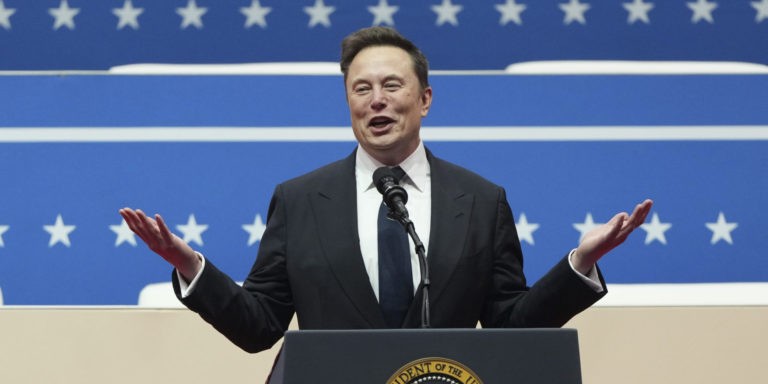
In his address to Congress Tuesday, Trump made clear that Musk is in charge, saluting him as the head of DOGE, with Musk smiling down on the president from the visitors’ gallery. Yet government lawyers have argued in court that Gleason and not Musk is the agency’s leader.
The confusion has added to the mystery around the role of Gleason, who did not respond to a phone call or text message for comment.
“I don’t think anyone really knows for sure what her role is and whether she actually has any oversight of any of the people doing the work, or is she just there as a punching bag and a distraction to keep their actual activities shielded from the public,” said Brett Hartl, government affairs director for the Center for Biological Diversity, an environmental group that sued the DOGE Service and Gleason seeking access to records that would shed light on their operations.
DOGE claims credit for saving more than $100 billion through mass firings, cancellations of contracts and grants, office closures and other cuts that have paralyzed entire agencies. Many of those claimed savings have turned out to be overstated.
Gleason is Known as a Behind-the-Scenes Operator
On one level, Gleason fits the mold of a Musk employee, one willing to work arduous hours to meet his goals. Former colleagues say she is an effective behind-the-scenes operator and say her rise is the story of a former nurse who got into health care technology to help patients and doctors and climbed through merit.
“From my perspective, I can’t imagine somebody I’d rather have there,” said Jamie Grant, a former Republican lawmaker in Florida who worked with Gleason to start a health care company. “Somebody saying yes to that job right now better believe in the mission and better have a spine and be talented and she’s that in spades.”
White House press secretary Karoline Leavitt told reporters that Gleason had served as the acting administrator at DOGE for weeks. But that was not the widely held understanding of her position internally, according to three people with knowledge of the office’s operation who spoke on condition of anonymity out of fear of retribution.
While the exact nature of Gleason’s portfolio was not well defined, what was clear is that she was working closely with DOGE leaders. She attempted to push civil service staffers in the office to hire at least two people who failed screening reviews for prospective hires; both were later hired by DOGE, according to two of the people who spoke to The Associated Press.
The uncertainty over her role — and when she was appointed to it — could have far-reaching implications in a series of ongoing lawsuits filed to blunt the impact of Musk’s radical paring of the government workforce.
Under questioning from U.S. District Court Judge Colleen Kollar-Kotelly recently, government attorneys struggled to explain who was in charge of DOGE or Musk’s precise role. That led Kollar-Kotelly to wonder if the office was running afoul of the Constitution’s appointments clause because Musk had not been nominated to lead the office, or received confirmation from the Senate.
The Trump administration announced the following day that Gleason was DOGE’s acting administrator, a question they had previously refused to answer.
Gleason Has Ties to Trump World
Unlike many DOGE workers, Gleason has no prior ties to Musk. She recently worked as chief products officer at Nashville-based health care firms founded by Brad Smith, who worked in the prior Trump administration on health care and is also a DOGE adviser.
Smith and Gleason began working on Trump’s transition after the November election, and her role in Trump’s orbit has grown. In December, she rejoined the United States Digital Service, where she had previously worked from 2018 through 2021 on high-level government health care technology initiatives.
On his first day back in office, Trump signed an executive order rebranding USDS as the US DOGE Service and giving it a mandate to help Musk’s cost-cutting initiative. Soon, dozens of Musk acolytes associated with DOGE began arriving at agencies across the government demanding access to sensitive data systems and pushing for drastic changes.
While 21 others in the office resigned in protest rather than carry out Musk’s initiatives, Gleason accepted a position that thrust her into an unfamiliar spotlight.
Health care entrepreneur Travis Bond, Gleason’s colleague over two decades at companies in Florida, said Gleason will hate the public attention but excel in her new role.
“I’m not sure they could have picked a better person. She just thinks, eats and breathes this stuff,” he said.
Gleason Helped Build CareSync
Bond, Gleason and Grant in 2011 launched CareSync Inc., which developed an app to allow patients suffering from chronic disease to keep their medical records in one place. After benefiting from a $7.25 million grant from one Florida county, CareSync found it hard to attract buyers for subscriptions that cost up to $199 annually.
CareSync pivoted in 2015, taking advantage of a new federal rule that allowed Medicare providers to bill for chronic care management services delivered remotely. The company raised millions of dollars from investors and began rapidly adding staff and serving more than 20,000 patients nationwide. By summer 2018, CareSync ran out of cash and closed without notice, firing 300 workers and leaving creditors owed millions.
Gleason recalled later that she was “trying to figure out what in the world to do in life” after that experience and applied for the USDS with encouragement from Aneesh Chopra, U.S. chief technology officer under Obama. Chopra declined comment.
She focused on improving technology systems at the Centers for Disease Control and Prevention and the Centers for Medicare and Medicaid Services. During the pandemic, she worked under White House response coordinator Dr. Deborah Birx to develop laboratory and hospital data reporting systems. Birx praised Gleason last week in an interview with CNN as a “really competent, hardworking, focused woman who understands the value of data.”
Near the end of her three-year stint in 2021, Gleason reflected on her work in a podcast interview, saying the digital service sought to “empower the civil servants and to bring new approaches in technology to the government and to help modernize their efforts.”
“Our mission is really to do the greatest good, for the greatest number of people, in the greatest need,” she said.
(Money Metals News Service) The gold and silver markets have been riding a strong bullish trend, and according to Jordan Roy-Byrne, a Chartered Market Technician (CMT) and Master of Financial Technical Analysis (MFTA), the best is yet to come.
In a recent interview on the Money Metals podcast with host Mike Maharrey, Roy-Byrne shared his insights on the trajectory of gold and silver, the role of technical analysis, and why he believes silver will soon outperform gold in the ongoing bull market.
(Interview Starts Around the 6:54 Mark)
Who Is Jordan Roy-Byrne?
Jordan Roy-Byrne
Jordan Roy-Byrne is a seasoned market analyst specializing in technical analysis of the gold and silver markets. Roy-Byrne is a CMT (Chartered Market Technician) and MFTA (Master of Financial Technical Analysis), credentials that underscore his expertise in analyzing financial markets through technical indicators and historical patterns.
He is the editor and publisher ofThe Daily Gold and The Daily Gold Premium, where he provides in-depth research on precious metals trends and mining stocks.
With decades of experience, Roy-Byrne has built a reputation for his data-driven approach to analyzing market cycles, intermarket trends, and historical price patterns. His insights are sought after by investors looking to navigate the complex world of gold, silver, and mining equities.
Beyond technical analysis, he integrates fundamental and macroeconomic trends into his research, allowing him to anticipate major shifts in the financial landscape. His expertise is particularly valuable in the current economic environment, where gold and silver are poised for a significant long-term bull market.
A New Book for a New Bull Market
Jordan Roy-Byrne recently released his book, Gold and Silver: The Greatest Bull Market Has Begun, in January 2024. While currently available as a free digital download, the book will soon be released as a hardcover on Amazon.
He emphasized the importance of a hardcover edition, given the book’s heavy reliance on charts and visuals that may not hold up as well in paperback format.
The timing of the book’s release couldn’t be better. Gold has already broken past the $2,100 per ounce level, signaling the start of a major secular bull market.
According to Roy-Byrne, this is only the beginning, and investors should expect much larger moves in the coming years.
The Case for a Continued Bull Market
When asked for an “elevator pitch” on why the gold bull market will continue, Roy-Byrne explained that major asset classes—stocks, commodities, bonds, and gold—tend to move in secular trends lasting decades.
Stocks generally move in cycles of 15–20 years, while bonds can trend for as long as 30–40 years. Historically, gold’s last two secular bull markets lasted about 10–11 years.
Right now, the bond market is in a secular bear phase, which is a rare event—only one such period has occurred in the past 100 years (1965–1982). Stocks are nearing the end of their long-term bull market, creating a setup reminiscent of the late 1960s and 1970s when gold and silver soared.
Gold has already confirmed its breakout from a 13-year cup-and-handle pattern, and once the stock market finally rolls over, we can expect an explosive move in gold, silver, and commodities.
The Power of Technical Analysis
Roy-Byrne, an expert in technical analysis, acknowledges that it often gets a bad reputation due to the overuse of flawed chart interpretations. However, he emphasizes that, at its core, technical analysis is simply the study of price trends, supply, and demand.
A key aspect of his approach is intermarket analysis, which examines relationships between different asset classes, such as gold versus stocks, gold versus bonds, and the gold-to-silver ratio. He noted that while fundamental analysis is essential, it can be highly unpredictable, whereas technical analysis provides a data-driven framework to assess market trends and turning points.
For example, by analyzing historical market cycles, Roy-Byrne can identify the conditions that typically precede recessions or inflationary periods—critical information for investors positioning themselves ahead of major macroeconomic shifts.
Silver’s Time to Shine
Silver investors have been eagerly awaiting a breakout, as the metal has been relatively range-bound for years. The gold-to-silver ratio remains high, sitting above 90:1, reinforcing silver’s relative undervaluation. However, Roy-Byrne believes silver is poised to outperform gold as the bull market progresses.
His reasoning is based on historical precedent: in every previous secular bull market in precious metals, silver has eventually outperformed gold.
But so far, gold has not yet broken out significantly against the stock market or the traditional 60/40 portfolio (60% stocks, 40% bonds), a crucial indicator of where capital is flowing.
This year could mark a turning point. Once gold decisively outperforms conventional investments, more capital will flow into precious metals, benefiting silver in particular.
Roy-Byrne downplays industrial demand’s role in silver’s price action, asserting that silver is ultimately a monetary metal, driven by investment demand and its correlation with gold. However, he acknowledges that industrial demand is accelerating.
David Morgan, a well-known silver analyst, has pointed to data suggesting that within the next decade, silver’s industrial demand could become so tight that a major squeeze—or even an attempt to corner the market—could emerge.
From a technical standpoint, silver is forming a 45-year-long base, one of the longest in history. When it finally breaks above $50 per ounce, Roy-Byrne predicts an explosive move higher, potentially reaching $90–$95 per ounce within 12–14 months.
Since 1965, bonds have only experienced one other secular bear phase, meaning that for 85 out of the past 100 years, bonds have trended higher or remained stable. Most investors today have never experienced a sustained bond market downturn, making this transition particularly significant.
He notes that while a near-term recession could spark a countertrend rally in bonds, the longer-term trend is clear: higher bond yields and declining bond values, which historically correlate with rising gold prices.
Inflation and the Federal Reserve’s Tightrope
Discussing monetary policy, Roy-Byrne agrees with Maharrey that the Federal Reserve is in a difficult position. On one hand, it needs to maintain higher interest rates to combat inflation. On the other hand, the economy is saddled with decades of easy-money-driven debt, making rate hikes unsustainable in the long run.
He doesn’t believe inflation is under control.
Even if CPI moderates in the short term, the broader trend remains inflationary. Drawing parallels to the late 1960s and 1970s, he suggests that inflation will come in waves, retreating temporarily but surging again in the years ahead.
He also points to commodity markets as a leading indicator.
Copper, for example, is on the verge of breaking out from a 12–13-year base, signaling inflationary pressures building up for the next decade.
The Key Indicator to Watch: Gold vs. 60/40 Portfolio
When asked about a market trend most investors are missing, Roy-Byrne highlights gold’s performance against the 60/40 portfolio, which represents the traditional mix of stocks and bonds.
Despite gold’s recent rise, it has yet to decisively break out against this benchmark. However, it is on the verge of a 10-year breakout, which would signal a major shift in capital flows—out of conventional assets and into gold.
Where to Learn More
Roy-Byrne’s book, Gold and Silver: The Greatest Bull Market Has Begun, is available as a free digital download atthedailygold.com/book, with a hardcover version coming soon to Amazon.
He is also active on X (formerly Twitter) at @TheDailyGold, where he shares ongoing market analysis.
Final Thoughts
Roy-Byrne’s analysis paints a clear picture: gold and silver are in the early stages of a major bull market. With stocks nearing the end of their secular uptrend, bonds in a rare bear phase, and inflationary pressures building, the stage is set for an extended run in hard assets.
Key Questions & Answers
The following are the key questions and answers from the Money Metals podcast with host Mike Maharrey interviewing precious metals market analyst Jordan Roy-Byrne:
When was Jordan Roy-Byrne’s book released, and why did he choose a hardcover version?
Jordan Roy-Byrne released his book Gold and Silver: The Greatest Bull Market has Begun in January. He initially made it available for free but mentioned that it would soon be available on Amazon as a hardcover. He opted for a hardcover instead of a paperback because the book contains many charts and images, and he wanted to ensure their longevity without fading over time.
What is the elevator pitch for why the gold and silver bull market will continue?
Jordan explains that major asset classes—stocks, commodities, bonds, and gold—move in long-term secular trends. Historically, stocks trend for 15-20 years, bonds for even longer, and gold’s past two bull markets lasted around 10-11 years. Currently, bonds have entered a rare secular bear market, a phenomenon that has only happened once in the past 100 years (1965-1982). Stocks are also nearing the end of a secular bull market. This mirrors conditions from the late 1960s and 1970s when gold and silver performed extremely well. Since gold has already broken out above $2,100 per ounce after a 13-year consolidation, he believes it is entering a new secular bull market. Once the stock market downturn becomes more evident, capital is likely to rotate into hard assets like gold and silver, fueling further gains.
What is technical analysis, and why is it valuable?
Technical analysis is the study of price trends and market action, primarily assessing supply and demand dynamics. While it sometimes gets a bad reputation due to misinformation spread via social media, true technical analysis offers valuable insights. Jordan describes intermarket analysis as particularly useful, which involves studying relationships between various asset classes—such as comparing gold against stocks or bonds. He believes that while fundamental analysis is useful, technical analysis can provide predictive insights, helping investors recognize trend changes before they fully materialize. He also emphasizes that technical analysis is most powerful when combined with fundamental data to create a comprehensive market outlook.
Why has silver underperformed gold, and why does Jordan believe silver will eventually outperform?
Historically, silver outperforms gold during secular bull markets in precious metals. However, silver has lagged behind because gold has not yet fully outperformed conventional assets like stocks and bonds. Jordan uses his proprietary “60/40 indicator,” which tracks gold’s performance relative to a traditional investment portfolio (60% stocks, 40% bonds). Once gold decisively outperforms this benchmark, capital is more likely to flow into the entire precious metals sector, including silver and mining stocks. Additionally, silver’s long-term technical setup is significant—when silver eventually breaks above $50 per ounce, he expects a major breakout, potentially sending prices dramatically higher. While industrial demand for silver is increasing, Jordan believes the primary driver of silver’s future gains will be its role as a monetary metal.
What is the significance of bonds being in a secular bear market?
Bonds are the largest asset class, and their long-term cycles are extremely important for financial markets. Historically, bonds have been in a bull market for roughly 85 of the past 100 years, with only one prolonged bear market (1965-1982). Most investors today have never experienced a true secular bond bear market, making it an underappreciated risk. While bonds may experience temporary rallies—especially if a recession occurs—Jordan believes the overall trend is downward. This shift has major implications, as it signals a transition away from traditional financial assets toward hard assets like gold and silver.
Does Jordan closely follow Federal Reserve monetary policy?
Jordan follows the Fed’s actions but does not get too deep into the details. He acknowledges that monetary policy plays a significant role in markets but prefers to focus on long-term macro and technical factors rather than short-term Fed decisions.
Is inflation under control, or should we expect more inflation in the future?
Jordan believes that inflation may temporarily decline if a recession occurs, but over the long run, inflation is not under control. He compares the current environment to the late 1960s and 1970s, where inflation came in waves rather than a single, sustained increase. While inflation metrics might decline in the short term, structural factors—including commodity cycles and fiscal policy—suggest that inflationary pressures will resurface. He also argues that even if inflation slows to 1.5% or 2%, the damage has already been done because prices remain significantly higher than pre-COVID levels. Inflation is now embedded in the economy, making it a persistent issue in the years ahead.
What is something significant that most mainstream analysts are missing?
Jordan believes that gold’s performance against the 60/40 portfolio is one of the most critical yet overlooked indicators. This ratio, which compares gold against a balanced stock-bond portfolio, has been in a 10-year base and is close to breaking out. If gold decisively outperforms this benchmark, it signals a major shift in capital away from conventional financial assets and into hard assets like gold and silver. Historically, such breakouts have marked the beginning of major moves higher in gold. He also notes that gold’s performance against the stock market is approaching a four-year resistance level, which, if broken, would further validate the ongoing secular bull market in precious metals.
Where can people get Jordan’s book and follow his work?
Jordan’s book is available for free as a PDF at TheDailyGold.com/book, and he plans to upload an EPUB version soon. A hardcover edition will also be available on Amazon shortly. His website, TheDailyGold.com, offers market analysis, stock recommendations, and insights into junior mining companies. He focuses on small- to mid-tier mining firms with strong management teams and growth potential rather than the largest miners or speculative exploration stocks. He is also active on X (Twitter) under @TheDailyGold, where he shares market insights and analysis.
(Luis Cornelio, Headline USA) Capital One may soon face consequences for unilaterally debanking Republican accounts after the Trump Organization and members of the Trump family filed a lawsuit for shutting down their accounts in 2021.
Following the protests of Jan. 6, Capital One abruptly closed roughly 300 accounts belonging to several Trump family members and their affiliated entities. These accounts held millions of dollars, according to Eric Trump, who shared the lawsuit with Fox News on Friday.
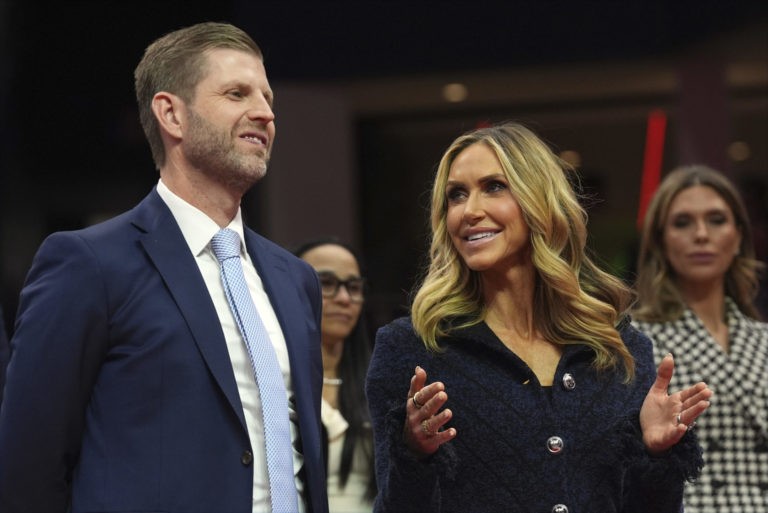
“By filing this lawsuit, we seek to hold Capital One accountable for the millions of dollars in damages they caused, not just to our company, but to the many dozens of properties, hundreds of tenants and thousands of Trump Organization employees who relied on these accounts for their livelihoods,” Trump wrote on X.
He described the debanking as a major assault on free speech and free enterprise, which “flies in the face of the bedrock principles and freedoms that define our country.”
Trump noted that the financial censorship occurred despite the Trump Organization playing no role in the violence of Jan. 6.
Today, the Trump Organization filed a lawsuit in Miami-Dade County against @CapitalOne to hold the bank accountable for their egregious conduct in unjustifiably terminating over 300 of the company’s bank accounts without cause, in 2021.
Capital One informed the Trump family on March 8, 2021, that their bank accounts would be closed on June 7, 2021. The financial institution allegedly offered no “recourse, remedy, or alternative — its decision was final.”
“Businesses should not be targeted or punished for their political affiliations,” Trump added. “The actions taken by Capital One and other major financial institutions represents [sic] a dangerous precedent that could threaten the operations of countless businesses across the nation, particularly those with a strong and independent voice.”
The lawsuit was filed in the Circuit Court of the Eleventh Judicial Circuit for Miami-Dade County in Florida. The plaintiffs include Trump, Donald J. Trump Revocable Trust, DJT Holdings, DJT Holdings Managing Member and DTTM Operations.
The lawsuit comes in the wake of social media companies settling lawsuits filed by President Donald Trump after they censored him following Jan. 6. Meta and X settled their Trump lawsuit for $25 million and $10 million, respectively.