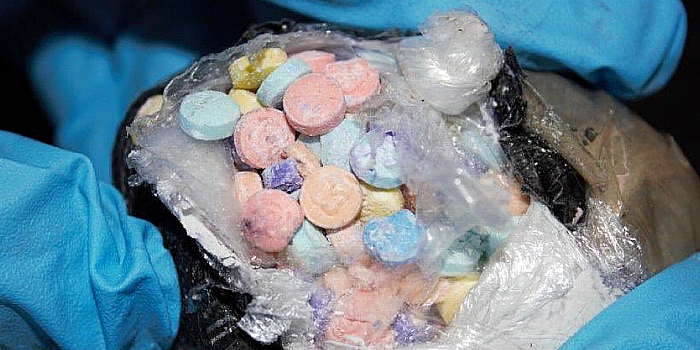
(José Niño,Headline USA) A chemical manufacturing company based in India and three leading employees were charged in federal court in Washington, D.C. in connection to illegally importing precursor chemicals used to make fentanyl.
On Thursday, Vasudha Pharma Chem Limited (VPC) and three of its top executives were charged with multiple counts of manufacturing and distributing a List I fentanyl precursor chemical for illegal importation into the United States.
Those charged include VPC’s Chief Global Business Officer, Tanweer Ahmed Mohamed Hussain Parkar, 63, a citizen of both India and the United Kingdom; Marketing Director Venkata Naga Madhusudhan Raju Manthena, 48, of India; and Marketing Representative Krishna Vericharla, 40, of India.
The defendants are also accused of conspiring and attempting to facilitate the unlawful importation of these chemicals.
VPC is accused of promoting fentanyl precursor chemicals for sale globally through its website, marketing materials, and international trade shows.
From last March to November, the defendants conspired to distribute a fentanyl precursor chemical with the knowledge it would be illegally imported into the United States and used to make fentanyl that would be illegally imported into the United States, according to the indictment.
In two instances, between last March and August, the defendants allegedly sold an undercover agent 25 kilograms of the fentanyl precursor chemical 1-(tert-Butoxycarbonyl)-4-piperidone, also known as N-BOC-4-piperidone (N-BOC-4P), which is classified as a List I chemical.
On top of that, between last August and September, the defendants allegedly negotiated with an undercover agent to purchase four metric tons of N-BOC-4P.
The deal included shipping two metric tons of the aforementioned contraband to Sinaloa, Mexico, and another two metric tons to the United States for a total price of approximately $380,000. The defendants were reportedly aware that the chemical would be illegally imported into the U.S. and used in the production of fentanyl.
If they are found guilty, the individual defendants could face up to 10 years in prison, while VPC may be fined $500,000 on each count.
Federal agents arrested Parkar and Manthena in New York City on Thursday morning.
Matthew R. Galeotti, Head of the Justice Department’s Criminal Division and Special Agent in Charge Deanne L. Reuter of the Drug Enforcement Administration’s Miami Field Division made the announcement of the arrests.
The investigation is being conducted by the DEA Miami Field Division’s Counternarcotic Cyber Investigations Task Force, a multi-agency unit led by the DEA that includes members from Homeland Security Investigations, the Internal Revenue Service-Criminal Investigations, and several state and local agencies across South Florida.
The Special Operations Unit of the Narcotic and Dangerous Drug Section provided additional support in this investigation.
Acting Deputy Chief Melanie Alsworth and Trial Attorneys Jayce Born and Lernik Begian from the Criminal Division’s Narcotic and Dangerous Drug Section are prosecuting this case.
José Niño is the deputy editor of Headline USA. Follow him at x.com/JoseAlNino
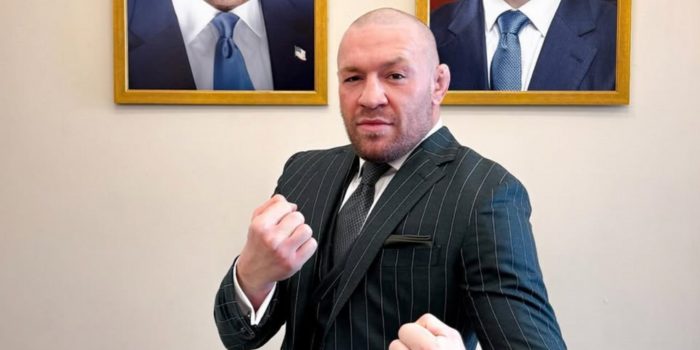
(Maire Clayton, Headline USA) UFC fighter Conor McGregor announced he plans to run for the Ireland presidency.
In a lengthy Thursday Instagram post, McGregor outlined his vision for his homeland.
“Ireland must fully implement the EU Migration Pact by June 12, 2026,” he wrote. “So between now and 12 June 2026, several pieces of legislation have to be passed by both Houses of the Oireachtas & then signed by the President.”
European Union immigration bill is a set of rules regarding immigration, which McGregor is highly against.
“Who else will stand up to Government and oppose this bill? Any other Presidential candidate they attempt to put forward will be of no resistance to them. I will!” the legend added on his social media post.
He reiterated that while he strongly opposes the bill, the people of Ireland need to make the decision regarding whether or not it passes.
“For clarity also, as President, I would put forth this bill to referendum. Although I oppose greatly this pact, it is neither mine nor governments choice to make,” he added. “It is the people of Irelands choice! Always! That is a true democracy!”
The move to run for office came just days after McGregor visited the White House. While spending time with President Donald Trump, the athlete commented on how he disproves of his current country.
He said the government has “abandoned the voices of the people of Ireland,” according to the Associated Press.
He noted there is “zero action with zero accountability” and also discussed their illegal immigration problems.
Irish Prime Minister Micheál Martin took issue with McGregor publicly criticizing Ireland.
“St. Patrick’s Day around the world is a day rooted in community, humanity, friendship and fellowship,” Martin wrote on social media. “Conor McGregor’s remarks are wrong, and do not reflect the spirit of St Patrick’s Day, or the views of the people of Ireland.”
St. Patrick’s Day around the world is a day rooted in community, humanity, friendship and fellowship.
Conor McGregor’s remarks are wrong, and do not reflect the spirit of St. Patrick’s Day, or the views of the people of Ireland.
(José Niño,Headline USA) Trump’s Justice Department might not be fighting for greater domestic surveillance powers after all—at least when it comes to cell tower data.
The DOJ on Thursday requested a 90-day stay of proceedings in a legal matter, in which a judge has ruled that the practice of obtaining extensive cell tower data, commonly referred to as “tower dumps,” was a violation of the Fourth Amendment.
In his original ruling, the presiding judge wrote, “The Government is essentially asking the Court to allow it access to an entire haystack because it may contain a needle…The Fourth Amendment does not permit law enforcement to rummage through troves of data and themselves determine the existence of probable cause to support the seizure of that data.”
The DOJ initially signaled that it would appeal the Feb. 21 decision, but its request for a 90-day delay suggests that the Trump administration is now having second thoughts.
Cell tower data collection, a controversial investigative method, involves law enforcement agencies obtaining information from all mobile devices connected to a particular cellular tower within a specified timeframe.
This approach, often implemented without a warrant, enables authorities to gather data from an extensive number of cell phones in a targeted area.
The scale of these operations can range from collecting details on hundreds of devices to potentially accessing information from hundreds of thousands of phones, depending on the location and duration of the data collection.
José Niño is the deputy editor of Headline USA. Follow him at x.com/JoseAlNino
(Sound Money Defense League, Money Metals News Service) For the second time this month, new sound money legislation has become law in Idaho.
Faced with the overwhelming likelihood of a veto override from the legislature, liberal Idaho Governor Brad Little signed the Idaho Constitutional Money Act of 2025 reaffirming gold and silver as legal tender and making a symbolic statement in favor of sound money principles.
House Bill 177, sponsored by Rep. Steve Miller, marks the third pro-sound money bill enacted this year, highlighting a sustained national trend that continues to grow.
HB 177 simply affirms that gold or silver coin and specie issued by the United States government are considered legal tender whenever voluntarily agreed upon by both parties to a contract. The measure enjoyed popular support, earning approval in the state House with a 66-3-1 vote and unanimous passage, 35-0, in the Idaho Senate.
This concept is consistent with the U.S. Constitution. In fact, Article 1 Section 10 reads: “No state shall…coin Money; emit Bills of Credit; [or] make any Thing but gold and silver Coin a Tender in Payment of Debts…”
America’s 54-year experiment in a purely fiat currency system has gone poorly. Without backing of gold or silver, the Federal Reserve note “dollar” has continuously declined in purchasing power. The nation has faced a series of Fed-created booms caused by interest-rate manipulation, followed by busts and an explosive growth in government spending.
When savers, wage earners, and investors seek ways to protect their savings from the ravages of inflation, they often choose precious metals over fiat currency because precious metals have preserved purchasing power over time.
This bill provides symbolic support to Idaho citizens making this choice, and it is a modest step toward establishing sound money policies in the state.
“States all over the country, most recently Idaho, are reaffirming what the U.S. Constitution already says: gold and silver are money,” said Jp Cortez, executive director of the Sound Money Defense League.
Political observers have noted that Governor Little appears worried about the potential of a conservative primary challenger in the upcoming 2026 election and also faces a high likelihood of veto overrides, so he has signed bills this session that the liberal Republican might normally be expected to veto.
Last year, Little violated his fiduciary duty to taxpayers by vetoing a bill that would have merely permitted, not required, the State Treasurer to hold physical gold to hedge risks endemic to the state’s large debt paper holdings. Idaho’s $12 billion debt paper holdings have continued to lose real value as a result.
Alabama, Utah, Wisconsin, Nebraska, and Louisiana passed legislation in 2024 ending sales and capital gains taxes on precious metals, declaring that Central Bank Digital Currencies are not valid money in their state, or empowering state treasurers to invest state funds in gold and silver.
This year, in addition to this legal tender bill, Wyoming has established a $10 million gold reserve for the state and Idaho has ended capital gains taxes on gold and silver.
The Sound Money Defense League and Money Metals Exchange are actively working on nearly 20 other sound money bills in more than a dozen states this year.
(Bethany Blankley, The Center Square) According to the most recently available data, there were nearly 50,000 border crime arrests reported statewide in Texas in 2023 by local law enforcement agencies.
Eighty percent of arrests occurred in 20 counties, according to an annual Texas border crime report published by the Texas Department of Public Safety.
The majority of border crime arrests, 8,621, were reported in Harris County, the largest county in Texas, where Houston, the county seat, is a primary destination for illegal border crossers and hub for cartel and gang activity, The Center Square has reported.
The next greatest number of arrests were reported in Dallas County (6,247), followed by El Paso County (3,245); Tarrant County (3,144) and Hidalgo County (2,611), rounding out the top five.
Arrests in Travis (2,300), Bexar (1,717), Collin (1,520), Denton (1,313) and Cameron (1,171) counties rounded out the top 10 with the greatest number of reported border crime arrests.
Of the top 20 counties reporting the most border crime arrests, only five are located at the Texas-Mexico border.
The majority of reported border crime arrests were in counties where the largest cities are located: Houston, Dallas, Fort Worth, Austin and San Antonio – all considered hubs and gateways for drug and human trafficking and smuggling, law enforcement officers have explained to The Center Square. The cities are also home to employers who hire illegal foreign nationals for cheap labor, often at restaurants, hotels, laundromats, in the construction and hospitality industries, officials have told to The Center Square.
Arrest offenses totaled 46,793 statewide in 2023, according to the report.
The greatest number of arrest offenses were traffic offenses and DWIs (12,338), assault (8,122), dangerous drugs (4,043), obstructing police (3,365), larceny (3,160), federal offenses (2,708), public order crimes (1,617), trafficking and smuggling (1,251), invading privacy (882), burglary (753) and weapon offenses (740).
“Border crime impacts all areas of Texas,” the Texas Department of Public Safety states. “As the data contained in these pages demonstrates, criminal illegal aliens account for a significant number of serious offenses in Texas. These criminals harm Texans and affect our safety and security.”
The report compiles data submitted by local law enforcement agencies for offenses and arrests reported to DPS using data collected through Texas’ Uniform Crime Reporting program.
Texas Government Code defines “Border crime” as “(a)ny crime involving transnational criminal activity that undermines public safety or security … committed by a person who is not a citizen or national of the United States and is not lawfully present in the United States” or that “is coordinated with or related to activities or crimes that occur or are committed in the United Mexican States.”
A border crime arrest refers to criminal offenses committed by foreign nationals who are in the U.S. illegally, as identified by the U.S. Department of Homeland Security. The report doesn’t include all arrests of illegal foreign nationals because not everyone arrested is in the DHS database. An individual’s lawful status is determined by matching fingerprints to a DHS database. If the arrestee’s fingerprints aren’t yet in the DHS database at the time of their Texas arrest, DHS isn’t able to biometrically verify their status and that information isn’t included in the report, DPS explains.
The data covers Jan. 1 through Dec. 31, 2023, with data updated as of March 30, 2024.
State law requires DPS to prepare and submit an annual report on border crime to the state legislature every year.
“Texas is fortunate to have a high number of law enforcement agencies that contribute to the UCR program,” DPS said; 1,401 Texas agencies contributed data to the UCR program. “Without their participation, reports such as this would not be meaningful.”
Tesla cars, showrooms, lots and dealerships have become targets for those frustrated with Musk’s efforts to reshape the federal government under the direction of President Donald Trump.
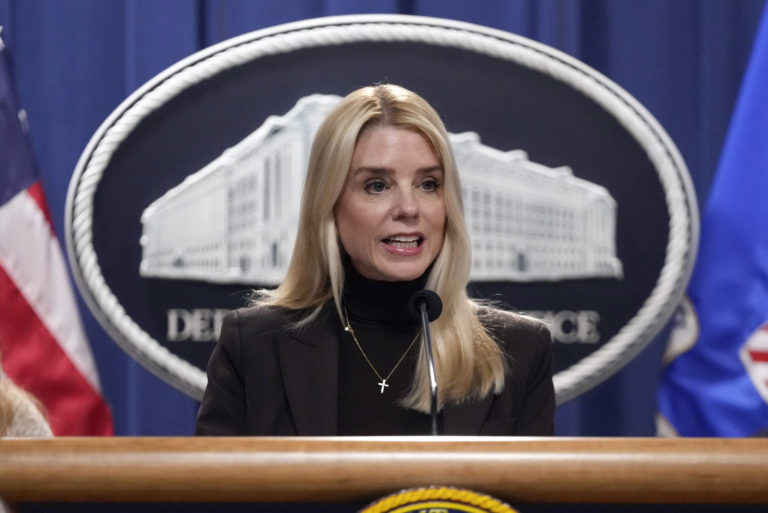
U.S. Attorney General Pamela Bondi announced federal charges against three people on Thursday for attacks on Tesla properties. All three people attempted to use Molotov cocktails to set fire to Tesla cars and charging stations.
“The days of committing crimes without consequence have ended,” Bondi said Thursday. “Let this be a warning: if you join this wave of domestic terrorism against Tesla properties, the Department of Justice will put you behind bars.”
One person, armed with a suppressed AR-15 rifle, was arrested after throwing several Molotov cocktails at a Tesla dealership in Salem, Oregon.
Another was arrested in Loveland, Colorado, after attempting to set Teslas on fire with Molotov cocktails.
In Charleston, South Carolina, a third person wrote profane messages about Trump around Tesla charging stations before lighting the charging stations on fire with Molotov cocktails.
Each faces charges carrying a minimum penalty of five years in prison.
The Department of Justice “is committed to ending all acts of violence and arson directed at Tesla properties and otherwise,” according to the agency.
Earlier this week, Bondi said the Justice Department will investigate the spate of recent attacks on Tesla property as “domestic terrorism.”
“The swarm of violent attacks on Tesla property is nothing short of domestic terrorism,” she said. “The Department of Justice has already charged several perpetrators with that in mind, including in cases that involve charges with five-year mandatory minimum sentences.”
Bondi also hinted at organizers behind the attacks.
“We will continue investigations that impose severe consequences on those involved in these attacks, including those operating behind the scenes to coordinate and fund these crimes,” she said.
Since Musk took up the top cost-cutting position in Trump’s government, some have graffitied their feelings about Musk on Tesla vehicle chargers. Other have gone after the cars with keys or other forms of vandalism. The same goes for dealerships, car lots and showrooms. No injuries have been reported during the attacks.
Trump is aware of the problem. He recently invited a parade of Tesla vehicles to the White House for some personal car shopping. The president even invited reporters along for the event.
DOGE, with help from Trump’s cabinet, has directed cuts at agencies across the federal government. Musk initially suggested DOGE could cut $2 trillion in spending. Musk more recently said the group will aim for $2 trillion but likely come up with half that amount.
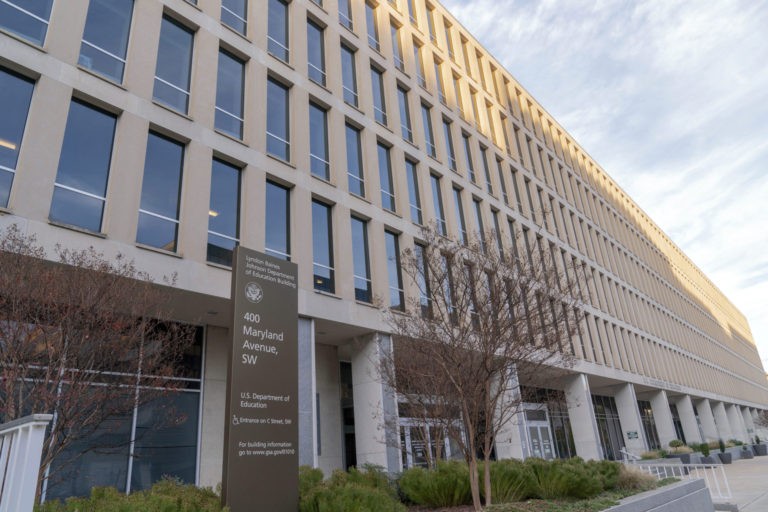
The long-promised, controversial order preserves and redistributes the Education department’s responsibilities to other federal agencies and departments. Education Secretary Linda McMahon will facilitate the closure process.
“After 45 years, the United States spends more money on education, by far, than any other country,” Trump said in a pre-signing speech. “But yet, we rank near the bottom of the list in terms of success. It’s an amazing stat. Those are the two stats you don’t want: the most money spent per pupil and you’re at the bottom of the list. And that’s where we are, like it or not, and we’ve been there for a long time.”
Since its founding in 1979, the Education department has spent $3 trillion taxpayer dollars. Meanwhile, U.S. students rank 28 out of 37 member countries in the Organization for Economic Cooperation and Development (OECD), and standardized test scores have remained flat for decades.
Trump claimed that education costs “probably will be half” after the closure process completes, though that is in question depending on how many of the agencies’ programs Trump retains.
Legal experts say that approval from Congress is needed to fully close the department or cut program funding, since the department was codified in 1979 via congressional legislation signed by President Jimmy Carter.
The department ensures compliance with Title IX and federal civil rights laws, collects school data, and oversees the massive federal student loan and grant programs for higher education, including Pell Grants and $1 trillion in outstanding FAFSA loans.
It is also responsible for roughly 10% of the nation’s funding of public education, with the vast majority of funding coming from state and local taxes.
Supporters of the action say Trump is returning education to states, local governments, and parents, rather than mandating a one-size-fits-all approach to childhood education.
“This is the natural, unstoppable evolution of the parental empowerment movement sparked amid the pandemic lockdowns. The states are ready for it, and they’ve been clamoring for it,” American Legislative Exchange Council CEO Lisa Nelson said Thursday. “By putting the states back in charge of this funding, students, families, and teachers will be put first – rather than the bloated bureaucracy in Washington, DC.”
But opponents of the order blasted it as an unconstitutional, reckless move that will cause property taxes to spike in every state and could cause struggling schools to close.
Democratic Whip Katherine Clark, D-Mass., accused Trump of “betraying” students and teachers.
“The ripple effects will be devastating: school budgets will be slashed, academic and extracurricular programs will be cut, classroom sizes will grow larger, school libraries will have fewer resources, and students will fall behind,” Clark said. “This twisted version of the Republican Party will stop at nothing to help the rich get richer. And this time, it’s our children who are paying the price.”
A Marist poll in early March showed that 63% of U.S. residents either oppose or strongly oppose getting rid of the U.S. Department of Education, while 37% of residents either strongly support or support abolishing the department.
(Doc Dixon, Money Metals News Service) Did you know the Federal Reserve ruined the world’s greatest coin trick? It’s true!
I’ll tell you the story.
Thomas Nelson Downs (1867-1938) was a star of the vaudeville stage. Known as the King of Koins, he was skilled in sleight of hand, but like most successful magicians, what really made him stand out was the ability to showcase his skill in an entertaining way.
His most famous routine was known as the The Miser’s Dream. It’s a classic trick that was already old when Downs started performing it.
During the trick, the magician holds a receptacle, something like a top hat or champagne bucket. With the other hand, he reaches in the air and appears to pluck a silver coin from the ether, then tosses it into the hat or bucket.
Downs was a master of this trick due to his flamboyant performance. After pulling a few coins from thin air, Downs would walk into the crowd and start plucking coins from audience members. Silver would magically appear from behind ears, whiskers, and elbows – few people were safe from his quest for silver coins. Dozens of coins appeared.
It was dazzling!
The Miser’s Dream is still a great piece of magic, but it no longer has the dramatic impact it did over one hundred years ago.
Why?
As is true for any other performance art, magic trends come and go. That’s true of any trick. But the Miser’s Dream has a vulnerability in it that most tricks don’t have.
The Miser’s Dream is about making money appear out of thin air, and that money just ain’t what it used to be.
The first five dollars in silver coins Downs made to appear are worth about $150 in today’s dollars. That kind of value resonates with average audience members. After all, that’s enough for a few steak dinners. But when I perform the trick today, the first five dollars (no longer silver) are worth … five dollars.
That is not quite enough to buy a Big Mac.
I can imagine adults over a hundred years ago being swept up in the illusion of a man making hundreds of dollars appear in a few seconds. Audiences would react the same way today.
But five bucks?
It ain’t the same feeling.
Measured by the underrated meat monetary system, in a hundred years we have gone the scale of the Miser’s Dream went from tomahawk steaks to a couple of cheeseburgers.
And who is responsible for the shrinking value trick?
It wasn’t Tommy Downs.
It wasn’t the magicians – myself included – who have performed this classic.
So who made the dollar’s value disappear?
You guessed it, sound money fans. The Federal Reserve performed this horrendous trick – and it’s doing so now even as you read this.
Tommy Downs made silver appear.
The Fed, with its printing press, made the value disappear.
Before I wrap this up, I’ll do a little mind-reading. You, dear reader, are thinking, “How do you pull silver out of the air?”
I can’t tell you the secret, but I can tell you the first step.
Ready?
Get some silver!
Doc Dixon is a professional magician, comedian, writer, and speaker with over 25 years of experience entertaining audiences at corporate events, cruise lines, and comedy clubs. Known for his sharp humor and expert sleight-of-hand, he blends classic magic with interactive, high-energy performance. He gained national recognition after fooling Penn & Teller on Fool Us and is also a respected creator of magic routines, as well as a sought-after speaker and contributor to the magic community.
(Mike Maharrey, Money Metals News Service) Federal Reserve Chairman Jerome Powell doesn’t think you should be worried about a recession.
If history is any indication, you should probably be worried about a recession.
During his press conference following the March FOMC meeting, Powell called the economy “strong overall,” and he brushed aside rising concerns about a recession, saying, “We don’t make such a forecast.”
Everybody isn’t convinced.
Recession worries have swelled over the last month as the trade war kicked off in earnest. The Atlanta Fed’s GDPNow forecast plunged from a 2.3 percent growth rate in late February to -2.8 percent within a matter of weeks. It is currently at -1.8 percent.
And despite Powell’s sanguine talking points, the Fed lowered its growth forecast to a 1.7 percent pace this year, down 0.4 percentage points from what it projected in December. Granted, that’s nowhere near recession territory, but it does indicate the central bankers aren’t quite as optimistic as Powell made it sound.
Regardless, the chairman of the Federal Reserve thinks the economy is going to be just fine. Shouldn’t that ease our worries?
Well, maybe not.
A Trip Back In Time
Let me take you back to early 2007. It was becoming hard to ignore the cracks forming in the subprime mortgage market. Some analysts were starting to warn that there could be bigger problems on the horizon.
At the time, the U.S. economy was still enjoying the boom created by the artificially low interest rates imposed by the Fed after the dot-com bubble burst. The central bank drove interest rates down to a low of 1 percent in 2002 (the lowest on record). Credit was easy, and money was flowing – especially into residential real estate.
In late 2005 and into 2006, the Fed started “normalizing” monetary policy to keep price inflation at bay. By June 2006, rates were at 5.25 percent, and they would stay at that level until the first cut in September 2007. By April 2008, rates were down to 2 percent.
And then in October 2008, Lehman Brothers failed.
The financial crisis was on.
If we overlay the interest rate history leading up to the Great Recession with the recent trajectory of rate policy, we’re currently somewhere in late 2007 or early 2008.
At that time, a few people were warning about the looming subprime crisis and the possibility of a recession, but by and large, the mainstream insisted everything was fine.
So, what was the Federal Reserve Chairman saying at the time?
Ben Bernanke said there was nothing to be concerned about. Everything was fine!
A New York Times report on Bernanke’s testimony before a congressional committee in February 2007 was headlined “Fed chairman projects ‘soft landing for U.S. economy.”
Soft landing. Where have we heard that term?
During that testimony, Bernanke said unemployment was likely to remain low over the next two years even as inflation declined slightly.
The NYT reported that his comments suggested that he was “comfortable with interest rates at current levels.” (Just like Jerome Powell is comfortable with rates at the current level today!)
As for the economy more broadly, Bernanke said it “appears to be making a transition from the rapid rate of expansion experienced over the preceding several years to a more sustainable average pace of growth.”
A month later, former Fed chair Alan Greenspan suggested the economic expansion that started in 2001 might be “running out of steam.” Bernanke thought otherwise, asserting the was no recession on the horizon.
“I would make a point, there seems to be a sense that expansions die of old age. …I don’t think the evidence supports that.”
But what about the percolating subprime crisis?
Bernanke insisted it was “contained.”
“At this juncture … the impact on the broader economy and financial markets of the problems in the subprime markets seems likely to be contained.”
“Given the fundamental factors in place that should support the demand for housing, we believe the effect of the troubles in the subprime sector on the broader housing market will likely be limited.”
Most of the mainstream media followed Bernanke’s lead. In fact, most people insisted everything was fine as late as the summer of 2008.
Of course, we all know how the story ends.
History Doesn’t Repeat…
The saying goes, “History doesn’t repeat, but it often rhymes.” Well, we can easily hear echoes of 2008 in the trajectory of today’s economy.
We had a massive injection of easy money into the economy, just like after the dot-com bubble burst. Powell had to raise rates to keep a lid on price inflation, just like Bernanke did in the early ’00s. The Fed started easing monetary policy, promising a soft landing, just like Bernanke promised in 2007.
And we have the same kinds of people telling us there’s nothing to worry about.
Maybe it’s time to worry.
Mike Maharrey is a journalist and market analyst for Money Metals with over a decade of experience in precious metals. He holds a BS in accounting from the University of Kentucky and a BA in journalism from the University of South Florida.
(Money Metals News Service) In a powerful and timely interview, Francis Hunt of The Market Sniper sat down with Jp Cortez, Executive Director of the Sound Money Defense League, to discuss the accelerating legislative efforts to restore gold and silver as constitutional money across the United States.
Founded in 2014 as a project of Money Metals Exchange, the Sound Money Defense League is a nonpartisan policy organization that works state-by-state to remove legal and tax barriers preventing Americans from using gold and silver as money.
Cortez emphasized that the current monetary system—reliant on fiat currency, debt, and endless money printing—has led to financial instability, inflation, and a massive loss of purchasing power for ordinary citizens.
Legislative Momentum: A Banner Year for Sound Money
2024 marked the most successful year in the League’s history. Over 60 pro-sound money bills were introduced across 27 states—meaning more than half the nation actively considered legislation to reduce or eliminate sales taxes, capital gains taxes, and other regulatory burdens on precious metals.
As Cortez noted:
“The largest reason gold and silver can’t be used as money today is not because they’re not good money—but because the government has saddled all the good alternatives with taxes and regulations.”
States like Wyoming, South Dakota, and Alaska top the 2025 Sound Money Index, published on the Money Metals website. Wyoming recently established a $10 million gold reserve, while Utah set up a $180 million physical gold fund.
Other leading states include:
Texas – home to a state government-run bullion depository and vocal supporter of sound money principles.
Meanwhile, states like California, Maine, and Vermont rank among the worst for their punitive tax and regulatory approaches.
California’s “threshold tax,” for instance, only exempts large bullion purchases above $2,000 from sales tax, penalizing small investors. The state also imposes both state and federal capital gains taxes, creating a triple-taxation scenario for precious metals holders.
Grassroots Power and Citizen Engagement
One of the League’s most effective strategies is activating grassroots supporters—particularly customers of Money Metals Exchange. JP explained that state legislators, unlike their federal counterparts, are highly responsive to just 15–20 phone calls or emails.
Through SoundMoneyDefense.org, users can sign up with their ZIP code to receive targeted action alerts and pre-written messages to send their legislators.
“You have an unbelievable amount of power at the state level,” Cortez stressed. “Use it.”
Combating Regulatory Overreach
Cortez described burdensome laws in some states that require precious metals dealers to report every physical feature—tattoos, scars, eye color—of sellers, uploading the data into police databases. Not only is this invasive, but it discourages participation in a transparent, free-market metals economy.
“If you walk into a gas station and exchange a dollar bill for four quarters, and they charge you tax, you’d say they’re crazy. That’s exactly what’s happening in some places when people buy or sell gold and silver.”
Fort Knox and the Call for an Audit
Cortez also advocated for transparency at the federal level. Working with Congressman Alex Mooney, the League helped introduce the Gold Reserve Transparency Act, which calls for a full audit of U.S. gold holdings—including those at Fort Knox, Denver, and New York. The legislation also seeks to verify the gold’s authenticity and investigate if it’s been leased, hypothecated, or otherwise encumbered.
“It’s not just about opening the vault,” Cortez said. “We need serial numbers, assays, and a full transaction history. Who owns it? Who pledged it?”
This builds on earlier, unsuccessful efforts by former Congressman Ron Paul, whom Cortez calls “The Best President Of Our Lifetime That Unfortunately Never Was” and a personal inspiration for his work.
Global De-Dollarization and the Rise of Gold
The conversation also touched on the global monetary shift. Nations like China, Russia, and Turkey are increasing their gold reserves while shedding U.S. Treasuries. Even U.S. allies are exploring alternatives to the dollar.
“The government has normalized theft and fraud through inflation. Sound money is the antidote.”
Innovation in Money: Goldbacks and Barter Systems
Hunt and Cortez celebrated innovations like Goldbacks—tangible bills embedded with small amounts of gold. These are not only inflation-resistant but also psychologically shift people’s understanding of what real money looks and feels like.
Hunt personally revealed that his own Goldbacks have appreciated in value by over 50% since purchase, outperforming most fiat currencies. He called on small businesses and service providers to start accepting physical bullion or Goldbacks for goods and services.
“If you’re a baker or a carpenter, start telling customers you’ll accept silver and gold. Show them it’s real money.”
Tennessee is currently debating legislation to give consumers a discount for paying with gold and silver—another step toward restoring transactional utility to sound money.
While Money Metals does sell Goldbacks, Money Metals also offers comparable options for lower-premium gold investments of similar weight in gold. If you are looking to invest in gold at various weights with low premiums, visit Money Metals online.
Final Message: Decentralize and Reclaim the Future
As Jp Cortez passionately concluded:
“The gold standard didn’t fail. It was killed—by dishonest politicians. What we’re doing is about decentralizing power and returning monetary choice to the people.”
Through legislative action, public education, and community involvement, the Sound Money Defense League is building a bottom-up revolution to challenge fiat dominance and restore financial freedom.
Support the Cause: Visit SoundMoneyDefense.org to join the movement, sign up for alerts, or support legislative initiatives in your state.
Buy from the Right Dealer: Support Money Metals Exchange—the only major dealer actively funding the sound money movement. Learn more at MoneyMetals.com.