CPI Cools, But Inflation Isn’t Gone: The Story Behind the Headlines

(Money Metals News Service) The latest Consumer Price Index (CPI) report for June sparked optimism across financial markets, with inflation coming in significantly cooler than expected. Headlines quickly celebrated what appeared to be another victory in the Federal Reserve’s battle against inflation.

But according to Money Metals Midweek Memo host Mike Maharrey, the CPI tells only part of the story.

Drawing on broadcaster Paul Harvey’s famous phrase, Maharrey argued that investors need to understand “the rest of the story”—one that includes runaway federal spending, continued money supply expansion, and shifting global demand for gold.

Deficits Continue to Explode

Before diving into inflation, Maharrey highlighted another troubling trend: America’s rapidly growing fiscal imbalance.

The June Treasury Statement showed the federal budget deficit growing by another $120 billion, bringing the fiscal year 2026 deficit to nearly $1.37 trillion—even with three months remaining in the government’s fiscal year.

Maharrey pointed out that trillion-dollar deficits were once considered extraordinary, occurring during the Great Recession under the Obama administration. Today’s deficits, however, are occurring despite what many characterize as a strong economy.

Federal spending continues climbing. The Trump administration spent approximately $616 billion in June alone, roughly 23% more than during the same month last year. Maharrey argued the United States does not suffer from a revenue problem, but rather a chronic spending problem that continues regardless of which party controls Washington.

He warned that America’s growing “debt black hole” continues to distort the broader economy and will ultimately limit how long the Federal Reserve can maintain higher interest rates.

June CPI Comes in Better Than Expected

Financial markets reacted immediately to the inflation report.

Gold surged sharply after the Bureau of Labor Statistics released June CPI data, signaling that inflation had come in below expectations.

Overall consumer prices declined 0.4% during June, compared to expectations for only a 0.2% decline. It marked the largest monthly drop in prices since the COVID-19 economic shutdown in 2020.

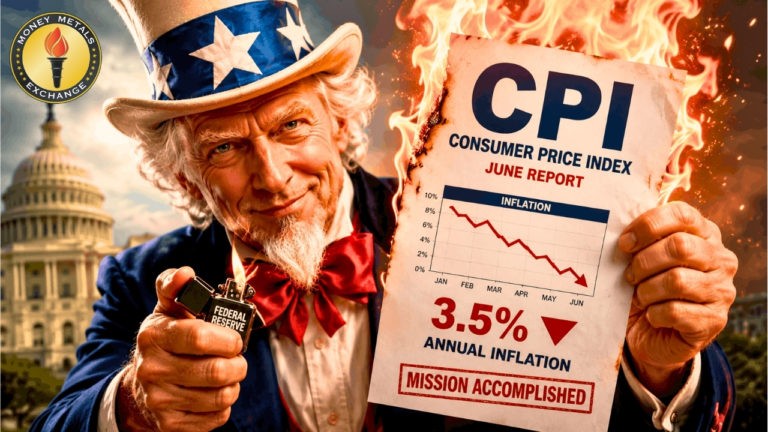
Annual CPI fell to 3.5%, beating forecasts of 3.8% and dropping significantly from May’s 4.2% reading.

Core CPI—which excludes food and energy—also surprised to the downside. Instead of rising 0.2% as economists expected, core prices were unchanged for the month. Annual core CPI declined to 2.6%, down from 2.9%.

The three-month annualized inflation rate now stands at just 2.8%, reinforcing the perception that inflationary pressures are easing.

Falling Energy Prices Drove the Improvement

Maharrey emphasized that much of the improvement stemmed from collapsing energy prices rather than broad-based disinflation.

The energy index fell 5.7% during June, while gasoline prices plunged 9.7%.

Apparel prices also declined by 0.6%, and service-sector prices were essentially flat. Food prices, however, continued rising, increasing 0.2% during the month.

While these figures created an encouraging headline, Maharrey cautioned that inflation remains well above the Federal Reserve’s stated 2% target. He also argued that the government’s CPI methodology understates actual inflation compared to older formulas used during the 1970s, suggesting today’s inflation rate would appear substantially higher under previous calculations.

Inflation Is More Than Rising Prices

A central theme throughout the episode was Maharrey’s distinction between consumer price inflation and monetary inflation.

Historically, economists defined inflation as an expansion of the money supply—not simply rising consumer prices.

By that measure, Maharrey argued inflation remains alive and well.

Federal Reserve M2 money supply increased from $21.83 trillion in May 2025 to $23.05 trillion in May 2026, representing a 5.6% annual increase.

That newly created money may eventually appear in consumer prices, asset prices, stocks, real estate, or other markets. Even if consumer price inflation temporarily moderates, Maharrey argued that monetary inflation continues building beneath the surface.

He warned that focusing solely on CPI ignores the root cause of inflation: continued expansion of money and credit.

The Fed May Already Be Easing

Although Federal Reserve officials continue emphasizing their commitment to returning inflation to 2%, Maharrey argued that the central bank’s actions tell a different story.

He noted that the Fed’s balance sheet has quietly begun expanding again after increasing since December, suggesting the central bank is effectively conducting quantitative easing by purchasing U.S. Treasury securities.

Those purchases inject newly created money into the financial system while supporting Treasury markets and helping suppress interest rates.

Maharrey believes this reflects the difficult position facing policymakers.

The Federal Reserve wants to control inflation, but it must also manage an economy burdened by enormous debt and dependent on easy money. As a result, he believes officials will ultimately choose monetary easing over prolonged economic pain if conditions deteriorate.

Ironically, the latest favorable CPI report may provide policymakers with political cover to cut interest rates should economic weakness emerge later this year or in early 2027.

Gold Fundamentals Remain Intact

Despite recent weakness in precious metals prices, Maharrey maintained a long-term bullish outlook.

He cited comments from Money Metals CEO Stefan Gleason, who recently noted that central banks continue accumulating gold despite short-term market pullbacks.

Recent data showed central banks adding more than 40 metric tons of gold to official reserves during May alone, continuing a multi-year trend of nations diversifying away from U.S. dollar holdings.

Maharrey argued that persistent currency debasement remains one of the strongest long-term drivers supporting both gold and silver ownership.

Asian Investors Continue Buying Gold

The second half of the program examined a striking trend highlighted in the World Gold Council’s first-half 2026 market report.

According to the data, nearly all of gold’s gains this year have occurred during Asian trading hours.

Gold rose 12.9% during Asian trading sessions through the first six months of 2026. During North American trading hours, however, the metal fell approximately 15%. European trading produced a modest 1.3% decline.

The World Gold Council described Asia as the “engine of price support” for gold, noting that many pullbacks occur during U.S. trading hours while rebounds typically develop during Asian sessions.

Maharrey said the data confirms an observation he had made simply by watching daily price action: Asian investors consistently buy weakness while North American investors often sell into rallies.

Decades of Trading Data Tell the Same Story

Maharrey also discussed research from precious metals analyst Ed Steer.

Steer’s historical analysis examined hypothetical investments beginning in January 1970 using London’s daily gold fixes.

An investor who bought gold each morning at 10:30 a.m. London Gold Fix, and sold at the afternoon fix every trading day for 54 years, would have turned an initial $100 investment into just $6.97.

By contrast, buying at the afternoon fix and selling the following morning—effectively capturing overnight and Asian trading—would have grown that same $100 investment into approximately $112,274 by November 1, 2024.

Steer argues that this long-running pattern suggests large Western financial institutions actively influence gold prices during Western trading hours. Maharrey acknowledged the possibility of short-term price manipulation but said differences in regional demand likely explain much of the divergence.

Gold’s Center of Gravity Continues Moving East

Maharrey argued that the global gold market increasingly revolves around Asia.

Chinese buying helped push global bar and coin demand above 1,374 metric tons last year, with worldwide retail demand reaching a record $154 billion. More than half of global bar and coin purchases came from China and India alone.

He also pointed to Hong Kong’s recently launched gold settlement infrastructure, designed to compete with London’s pricing dominance by establishing a new regional benchmark.

As Asian markets place greater emphasis on physical bullion rather than paper contracts, Maharrey believes global price discovery may gradually shift eastward, potentially reducing Western influence over precious metals pricing.

He also noted the cultural differences surrounding gold ownership, citing a 2018 survey showing that 87% of Indian households own gold, including more than 75% of families in the country’s lowest income decile.

According to Maharrey, that long-standing appreciation for gold as money contrasts sharply with attitudes in the United States.

The Bottom Line

Maharrey concluded that investors should resist celebrating inflation’s apparent defeat.

While lower gasoline prices have improved recent CPI readings, continued money supply growth, persistent federal deficits, and ongoing Federal Reserve intervention suggest inflationary pressures remain embedded in the financial system.

At the same time, central banks continue accumulating gold, Asian investors continue buying on price dips, and the long-term fundamentals supporting precious metals remain intact.

For investors concerned about the continued erosion of purchasing power, Maharrey argued that periods of price weakness in gold and silver should be viewed not as reasons to panic, but as opportunities to accumulate sound money.

Homeland Security Delays Work Permit Expiration For Haiti

(José Niño, Headline USA) Federal bureaucrats rewrote a deadline on their own timetable, and hundreds of thousands of foreign workers kept their paychecks.

U.S. Citizenship and Immigration Services delayed the day that immigrants from seven countries wracked by violence and disaster may lawfully work here, The Connecticut Mirror reported. The move salvaged a cutoff that had sprinted past federal judges who have yet to sync their orders with a Supreme Court decision opening the door to swift removals.

Fresh guidance tells employers that Haitians with Temporary Protected Status keep authorization through July 24, per a USCIS press release. Nationals of Burma, Ethiopia, Somalia, South Sudan, Syria, and Yemen keep theirs through July 17. Prior instructions would have cut them off last Friday, according to an update on E-Verify..

Everything hinges on June 25, when the justices ruled six to three in Mullin v. Doe that the administration may finish terminating TPS for Haiti and Syria even as lawsuits proceed. The majority read the statute to strip judges of authority over most challenges to a secretary’s call. District courts had not adjusted their orders by Friday, so existing deportation bars hold.

High court decisions ordinarily bite 32 days after release. USCIS leapt ahead of that schedule on July 1, and the Mirror observes that July 24 still lands inside the window, inviting another slip.

President Donald Trump has revoked TPS from roughly 1 million immigrants this term. Judges below keep probing whether race steered those choices. Justice Samuel Alito rejected the premise. “None of the cited statements by either the President or the Secretary was overtly racial, and in substance all expressed policy views that could rest on race neutral justifications,” he wrote for the majority.

Providers see trouble coming. Haitian TPS holders occupy more than 50,000 healthcare jobs, and almost half of nursing homes nationwide already run short on staff, per a report by the American Health Care Association. Rep. Mike Lawler, R-N.Y. warned that “immediately shutting off TPS will create a crisis in our hospitals, nursing homes, and in the (intellectual disabilities) community.”

1199SEIU members packed a Manhattan press conference Friday. “If TPS ends, we will face a caregiver crisis, the likes of which we’ve never seen,” said executive vice president Andy Cassagnol. “This is a cruel, heartless, and inhumane policy that will rip parents away from their children and devastate whole communities.”

Haitian recipients cluster in Florida, New York, Massachusetts, New Jersey, Pennsylvania and Ohio, fwd.us reports

José Niño is the deputy editor of Headline USA. Follow him at x.com/JoseAlNino 

CNBC Ranks 10 GOP-Led States as Worst to Live In

(The Center Square) The national news outlet CNBC ranked 10 Republican-led states as the worst to live in its 2026 America’s Top States for Business rankings.

Officials from Republican-led Texas, which ranked second to worst for quality of life in CNBC’s report, scoffed at the rankings.

In its business ranking it also included a new quality of life category in which crime rates, air quality, healthcare access, worker protections and civil rights laws were considered. This includes childcare costs, taxpayer-funded healthcare and Medicaid expansion, “inclusiveness of state laws” related to gender and LGBTQ, and access to abortion.

“With more states touting their quality of life when trying to attract business, CNBC is giving [quality of life] more weight in the 2026 America’s Top States for Business rankings. Based on the data, quality of life in some states does not make the grade,” it said.

Tennessee is listed as the worst state to live for quality of life, according to CNBC, followed by Texas. Rounding out the 10 worst states for quality of life are Indiana, ranking third worst, followed by Louisiana, Georgia, Utah, Missouri, Alabama, Oklahoma and Arkansas.

Tennessee ranks the worst for quality of life because of its support for the nuclear heterosexual family, CNBC says.

Republican Gov. Bill Lee makes “no apologies for a rash of state laws targeting the LGBTQ+ community, including a so-called ‘bathroom law’ requiring transgender people to use the facilities designated for their sex at birth,” CNBC says. “The state also explicitly bars localities from adopting their own antidiscrimination ordinances. To underscore the point, Lee signed a resolution earlier this year designating June ‘Nuclear Family Month.’”

Texas ranks second worst because CNBC says Texans don’t have access to healthcare. In May, Republican Gov. Greg Abbott announced $56 million in federal grants to rural hospitals. His administration has also advanced a range of free healthcare programs to support pregnant women and families, The Center Square has reported. On Monday, he announced three Statewide Preceptorship Program grants totaling $5.5 million to professional medical societies in Texas.

Ohio tops the states as the best state for business, according to the CNBC ranking. North Carolina ranks second, followed by Virginia, Texas, Minnesota, Michigan, Georgia, Florida and Tennessee, rounding out the top ten.

The ranking comes as Texas continues to lead the U.S. as the top state for business in multiple rankings for two decades.

Texas also leads the country in population growth, economic growth, job growth, and its GDP surpasses all other states.

Texas is also leading a Boom Belt economic growth record in 11 southern states, The Center Square reported. U.S. Census data also regularly reports that southern states are leading the country in population growth. Blue states are consistently losing population.

Businesses are also relocating and redomiciling to Texas, leaving blue states like Delaware, referred to as DEXIT. This year, Texas ranked first for having the most Fortune 500 company headquarters in the U.S.

When Texas again ranked first as the best state for business last fall, Site Selection magazine said it was because “from the governor’s office in Austin to economic development offices in communities large and small across the Lone Star State, those charged with marketing Texas know they have an easy sell – no corporate tax, sensible business regulations, business-dedicated courts, unbeatable logistics infrastructure and a huge labor force, among other factors. Their challenge is to keep it that way.”

Texas is also consecutively ranked the top state for business, job creation and capital investment for more than a decade by Area Development magazine. Texas received the top ranking again last year because of “an astonishing $10.6 billion in total capital investment across a dozen high-impact projects,” the magazine said.

Since 2015, every year that Abbott’s been governor, Texas has ranked first as the best state for economic development, as well as the best state for business 20 years in a row, including a few years preceding Abbott, The Center Square reported.

Abbott’s press secretary, Andrew Mahaleris, told The Center Square CNBC’s ranking “is flawed and doesn’t reflect reality.” Texas’ “low taxes, strong economy, abundant energy, and commitment to freedom deliver the quality of life and opportunity that millions of Americans choose every year. The Governor will continue working to keep Texas the best place to live, work, and raise a family.”

U.S. Rep. Lance Gooden, a Republican from North Texas, also weighed in, saying, “If you hate not paying income taxes, law and order, parental rights, smaller government, school choice, the Second Amendment, and criminal illegal aliens being arrested… Here’s another garbage list from the mainstream media!”

Hegseth Announces New Policy to Test Troops for Low Testosterone

(Headline USADefense Secretary Pete Hegseth announced Wednesday that he is rolling out a new screening program for “testosterone deficiency” among troops, calling it necessary to allow them to operate at their “absolute best.”

The new screenings will be conducted annually as part of service members’ required medical screenings for those 30 and older, he said. Troops under 30 can volunteer to be tested. In a video released on social media, Hegseth simply refers to troops, though it appears he is referring only to testing men in uniform for hormone irregularities.

The move comes as other Trump administration officials have begun to advocate for men to have easier access to testosterone replacement therapies, but the messaging from Hegseth and others blends known science on the hormone with broader, and less substantiated, claims.

When asked about what conditions Hegseth was looking to address with the new policy, the Pentagon referred to Hegseth’s remarks in the video that talked about keeping troops “strong, resilient and capable” and that the rigors of the modern battlefield demand “maximum psychological and mental readiness.”

The Pentagon would not offer specific conditions or diseases that were being targeted by the policy. In his video, Hegseth said receiving testosterone replacement therapy will be voluntary.

Hegseth said his new initiative is “not about artificial enhancement.”

Testosterone levels in men decline naturally with age and have long been linked to issues like erectile dysfunction, low libido, mood changes and weight gain.

Hegseth’s announcement comes as Health Secretary Robert F. Kennedy Jr. and other Trump administration officials are moving to make it easier for doctors to prescribe testosterone. Last month, the Food and Drug Administration proposed easing prescribing limits on testosterone gels, pills, patches and injections.

The current FDA label specifies that the medications are only for men with hypogonadism, a medical condition that causes drastically low testosterone.

But many influencers and proponents of Kennedy’s “Make America Healthy Again” movement tout testosterone as a way to look younger, build muscle and stay mentally sharp.

Recent studies have bolstered the case for testosterone’s benefits, for certain conditions, while allaying worries about its safety — particularly concerns about heart safety.

Last year, the FDA removed a boxed warning about possible risks of heart attack and stroke from the drugs.

Separately, a series of studies by the National Institutes of Health in older men found that taking testosterone improved erectile dysfunction, libido and other sexual measures and had a small effect on mood. But there was little or no improvement in other measures like fatigue, memory or overall well-being.

Other studies have shown potential improvements in muscle-building, strength and bone density.

However, current medical guidelines generally recommend against blanket testing of testosterone levels. Typically, doctors are advised to discuss testosterone therapy with men who have troubling symptoms and documented low levels of the hormone on two separate blood tests.

Testing for testosterone is challenging because levels of the hormone fluctuate throughout the day. Accurate testosterone readings are typically measured in the morning after fasting.

Adapted from reporting by the Associated Press

Biden DOJ Snooped Through Lawmakers’ Texts Despite Claiming Otherwise

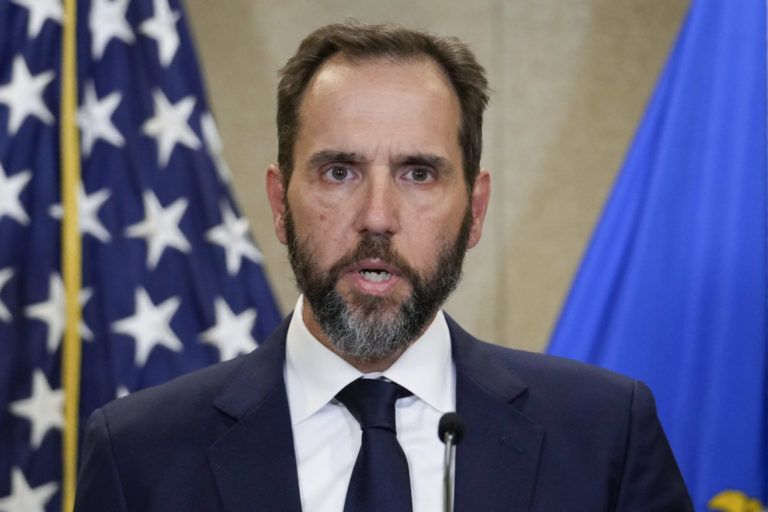
(Luis CornelioHeadline USA) Special Counsel Jack Smith “secretly” obtained and reviewed the text messages tied to at least 44 members of Congress as part of his investigation into President Donald Trump, according to records released by the Senate Judiciary Committee.

The newly released documents appear to conflict with Smith’s sworn congressional testimony from December 2025, when he indicated that the contents of lawmakers’ text messages obtained during the investigation were not reviewed.

According to Senate Judiciary Committee Chairman Grassley, R-Iowa, the text messages were obtained through a series of subpoenas as part of the Biden Justice Department’s broad investigation into Trump after he left office in 2021.

Grassley argued that reviewing the communications may have violated DOJ protocols designed to protect congressional communications.

Grassley and Sen. Ron Johnson, R-Wis., said whistleblowers brought the matter to their attention. According to the senators, communications involving both Republican and Democratic lawmakers were swept into the investigation.

Records released by Grassley and reviewed by Headline USA include email exchanges between former Biden DOJ prosecutor Thomas Windom and employees at Deloitte, a federal contractor, dated May 27, 2022.

Among the records is a PowerPoint presentation instructing personnel reviewing the seized data to sort communications using a series of search filters.

Grassley said that the review also encompassed communications related to lawmakers’ official legislative duties, which are protected under the Constitution’s Speech or Debate Clause.

“Jack Smith’s criminal investigation of President Trump was a runaway train that had no brakes,” Grassley said in a statement.

Grassley accused the DOJ of “apparently” ignoring “their own routine investigative protocols to obtain and review work-related messages from me and dozens of my Republican and Democrat colleagues who were outside the scope of the government’s investigation.”

Johnson echoed Grassley’s criticism, calling the findings “yet another grotesque example of the Biden administration’s weaponization of the Justice Department.”

“Jack Smith’s team acted with impunity as they disregarded their own protocols to obtain and access White House text messages, including messages to and from 44 Members of Congress,” Johnson added. “At this point, no one should be shocked by Jack Smith’s recklessness and blatant abuse of power, but they should be outraged.”

According to documents released by Grassley, the communications reportedly swept into the investigation included those of Grassley and Johnson themselves, along with several current and former members of Congress.

The other current Republican senators reportedly identified in the records are John Cornyn, Texas; Lindsey Graham, S.C.; Josh Hawley, Mo.; Mike Lee, Utah; Cindy Hyde-Smith, Miss.; Dan Sullivan, Alaska; Rand Paul, Ky.; Rick Scott, Fla.; Susan Collins, Maine; Tim Scott, S.C., and Tom Cotton, Ark.

Current Democratic senators include Cory Booker, N.J.

Former GOP senators include David Perdue, Ga.; Lamar Alexander, Tenn.; Martha McSally, Ariz.; Rob Portman, Ohio; Roy Blunt, Mo.; and Cory Gardner, Colo.

The records also identify several House members, including Republicans Kevin McCarthy, Calif.; Steve Scalise, La.; Jim Jordan, Ohio; Devin Nunes, Calif.; Andy Biggs, Ariz.; Mark Walker, N.C.; Bryan Steil, Wis.; Dan Newhouse, Wash.; Doug Collins, Ga.; Dusty Johnson, S.D.; Elise Stefanik, N.Y.; John Katko, N.Y.; Ken Buck, Colo.; Lee Zeldin, N.Y.; Mario Diaz-Balart, Fla.; Mo Brooks, Ala.; Morgan Griffith, Va.; Rodney Davis, Ill.; Russ Fulcher, Idaho; Scott Perry, Pa.; and Thomas Massie, Ky.

Democratic House members identified in the records include Adam Smith, Wash.; Josh Gottheimer, N.J.; and Karen Bass, Calif.


Widow of Man Killed in Butler Shooting Thinks It Was An ‘Inside Job’

(Ken Silva, Headline USA) The widow of the man killed during the July 13, 2024, assassination attempt on Donald Trump in Butler, Pennsylvania says she thinks that the attack was an inside job.

“I don’t believe there was another shooter there, but I believe he was working with somebody. I believe it was an inside job. Inside the government somewhere,” said the widow, Helen Comperatore, speaking to News Nation for the two-year anniversary of the event.

When asked for evidence of an inside job, Comperatore—whose husband, Corey Comperatore, died in the attack—said she’s been told things privately that raise her suspicions.

“I’ve been told things. But I’ve had something that happened with me that just—afterwards and you’re starting to put the pieces together—it just made total sense,” she said.

Comperatore pleaded with Trump to address the unanswered questions from that day. She met with the Secret Service and former FBI Deputy Director Dan Bongino last year, but apparently wasn’t convinced that the alleged gunman, Thomas Crooks, acted alone. In a separate interview, she told The Epoch Times that the Secret Service had her sign a nondisclosure agreement that limits what she can say publicly.

“Don’t forget us and remember what we went through that day. We’re still here and we need answers,” she said in a message to Trump.

Comperatore has made similar comments before. In May, she told the New York Times that she believed former President Joe Biden was involved.

“That’s why I didn’t take Biden’s call: I thought he set something up,” Comperatore said, referencing the fact that she declined to speak to Biden after Butler.

“I do not believe that this kid just got out of bed that day and decided to come over there and kill the president,” she said at another point during the interview. “I believe that he was involved with someone greater than him, that worked with him and probably offered him money to do this, and I would like to know what that entailed.”

Before that, last year Bongino told her Crooks acted alone. According to Comperatore, Bongino said the bureau was about to release more information on the event. Bongino didn’t keep his promise—the FBI has released a few dozen pages of documents in response to a lawsuit from the transparency group Judicial Watch, but that’s about it.

Headline USA has published more information about the assassination attempt than any other outlet in the world—including Crooks’s autopsy and toxicology reports, his some of his online metadata, and his college emails, along with police radio communications and much more—and has uncovered no evidence that Biden was directly involved in the assassination attempt. This author has also published a book on the subject—the most complete picture of the evidence to date.

However, numerous questions from that event linger. Along with the fact that the Secret Service left the rooftop used by alleged gunman, Crooks, wide open, there’s the fact that the Butler rally was the first time Secret Service snipers protected someone who wasn’t in office. Those same snipers waited 15 seconds before responding to the would-be assassin’s gunfire (it was a local cop who shot him in the first six seconds).

There’s also the fact that the Secret Service allowed Trump to take the stage despite knowing that there was a suspicious person with a rangefinder on the loose, as well as the fact that the Secret Service didn’t say anything over the radios about someone being on the rooftop—despite being informed of this by local police.

Then, there’s the would-be assassin himself. The FBI initially said that Crooks did not interact with others online, but conservative media personality Tucker Carlson proved otherwise late last year, when he released correspondence between Crooks and a neo-Nazi. The two were talking in a YouTube comments section about committing violence against the government, which Carlson and others argue should have put Crooks on the government’s radar. It’s also unclear how Crooks learned to make anfo bombs.

FBI Director Kashyap Patel has said there’s not much more to know about what happened at Butler, but the bureau has declined Headline USA’s interview request.

While Comperatore and others still have suspicions that others were involved, she has denounce those who think that Trump “staged” the event.

“Like any of that’s staged. I mean, how? Why would you think that the president would stage taking a bullet? I mean, that’s insane,” she told the Times earlier this year. “I’m not an actress, I never was. I’m a small town country girl.”

“That scream you hear the entire time,” she added, “that was my daughter.”

To Comperatore’s point, the bullets, blood, bodies and shrapnel were all very much real. As for questions about Trump’s ear, plastic surgeons have explained that yes, it could have healed without a scar if it were just grazed. Meanwhile, Butler truthers have yet to articulate a cogent explanation for how Trump could have staged his own assassination attempt with the complicity of the Biden Justice Department, Secret Service and FBI, as well as with state and local authorities.

Ken Silva is the editor of Headline USA. Follow him at x.com/jd_cashless.

King: Man Killed in Maine ICE Shooting Not Subject of Investigation

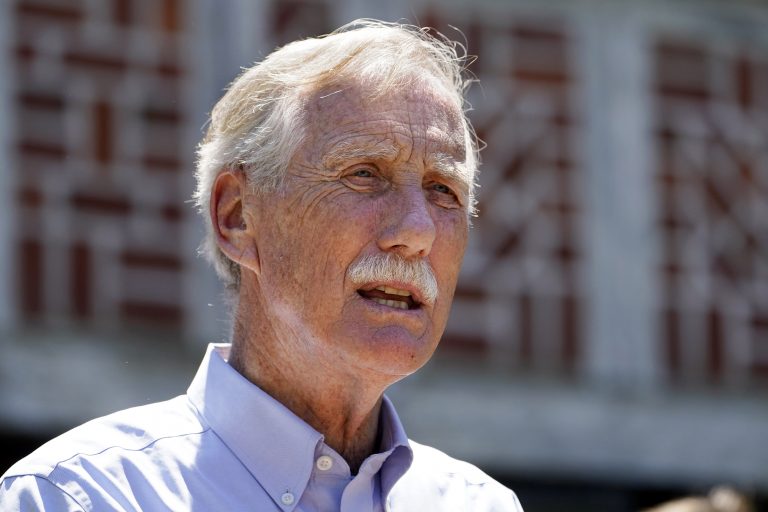
(Chris Wade, The Center Square) A Colombian man shot by ICE agents Monday in Maine was not the intended target of the immigration enforcement operation, Sen. Angus King said.

On Monday morning, U.S. Immigration and Customs Enforcement agents shot and killed the 26-year-old migrant, identified as Joan Sebastian Guerrero, as they were conducting surveillance for immigration enforcement. 

The fatal shooting — the second by ICE agents in a week — has prompted federal state law enforcement investigations and renewed criticism of the Trump administration’s immigration crackdown. 

King, Maine’s independent senator, said Homeland Security Secretary Markwayne Mullin initially told him on Monday the man was the target of the investigation and that one of the ICE officers opened fire on him after he tried to use his vehicle as a weapon against ICE agents. 

But in an interview with Fox News and other media outlets, King said Mullin called him back later in the day to clarify that the man was not the intended target of the arrest warrant the officers were serving at the time of the shooting. 

“When I first talked to him, he said the person was the target of the warrant. He called me back. He initiated a call to me to say he had learned subsequently that he was not the target of the warrant,” King told Fox. “He had given me incorrect information. Once he learned it was incorrect, he let me know, which I respect.”

King said a major concern for him is that the ICE agents were not wearing body cameras which means there is no officer-facing video evidence of the shooting. 

In a statement, the U.S. Department of Homeland Security said ICE agents were looking for a person at the address with a final deportation removal order. When authorities tried to stop a vehicle driven by someone leaving that address, the driver “attempted to flee the scene and, fearing for public safety, an officer discharged his weapon, DHS said.

“An illegal alien departed the residence in a vehicle. ICE law enforcement attempted to conduct a vehicle stop,” ICE posted on X. “The vehicle attempted to flee the scene and fearing for public safety an officer discharged his weapon. The driver of the vehicle was struck, and emergency services were immediately contacted. He passed away from his injuries.”

Maine’s Attorney General Aaron Frey is conducting an investigation into the shooting and said the state is cooperating with federal authorities. 

Sen. Susan Collins, R-Maine, said the FBI is investigating and called for “a full and impartial investigation of what happened” in the Biddeford shooting. 

On Tuesday, Collins was targeted by anti-ICE demonstrators who gathered outside her Biddeford office, calling on her to step down over support for a $70 billion spending bill to fund ICE and Border Patrol for the next two years. Collins, 73, is seeking a sixth consecutive term in the upcoming midterms.

King said during his conversations Monday, Mullin pledged that the investigation would be “fair and transparent” and said he is taking him on his word.

“I have no reason to think that he’s not telling me the truth,” King told Fox. “But my motto, as with Ronald Reagan, is trust but verify,” King said. “And I intend to stay on this. And to be sure that we can verify what happened and also whether the investigation is proceeding in a full, comprehensive and transparent way.”

New York Imposes Temporary Ban on Data Centers

(Chris Wade, The Center Square) New York became the first state to pause on energy-hungry data centers under an executive order signed by Gov. Kathy Hochul Tuesday, which comes in response to concerns about rising utility bills and the regional electric grid.

The directive signed by Hochul sets a one-year moratorium on permits issued by the state Department of Environmental Conservation for artificial intelligence data centers requiring 20 megawatts or more of electricity.

“New York has always been at the forefront of innovation and change but we’ve also always guaranteed that New Yorkers benefit,” Hochul said in remarks Tuesday. “As data center development threatens to hike up utility bills, deplete our natural resources, and create uncertainty for New Yorkers, it’s my responsibility to take action and lead.” 

Hochul said New York “will lead the way in creating the strongest standards in the nation for data center development, ensuring that when companies succeed because of New York, New Yorkers succeed too.” 

The order also calls for creating a New York Grid Acceleration Fund that would require data centers to invest in the state’s aging grid infrastructure to lower energy costs. 

Like many states, New York is struggling to balance the energy demands of the artificial intelligence industry without driving up electricity costs or disrupting regional power grids. Lawmakers in at least five other states — Georgia, Maryland, Oklahoma, Vermont, and Virginia — have filed bills to set proposed moratoriums on new data centers. No state had set a total ban, until now.

New York Democrats approved a similar moratorium proposal during the recent legislative session, but Hochul opted to go with her own plan, which goes into effect immediately. 

The moratorium was opposed by Republican lawmakers, high-tech companies and economic development advocates. They argued that even a temporary ban would eliminate jobs and trample on local governments’ rights to enter into agreements with companies to build data centers in their communities.

“Data centers are the essential backbone of the modern economy, supporting financial services, cloud computing, university research, advanced manufacturing, and the continued growth of artificial intelligence,” Justin Wilcox, executive director of the group Upstate United, said in a statement. “A moratorium on data centers is fundamentally inconsistent with New York’s stated objective of becoming a national leader in artificial intelligence.” 

Organized labor also opposed the temporary moratorium, arguing that it will hinder economic development in upstate regions that are struggling to attract new businesses and taxpayers.

In a recent op-ed, Daniel Kuntz, business manager of Laborers’ Local 435, which represents hundreds of union workers in the Rochester and Finger Lakes region, ripped lawmakers for supporting legislation “that sends a clear message to employers and investors that New York State is closed for business.” 

“Every data center built in New York means thousands of hours of work for laborers and the entire building trades,” he wrote. “It means apprentices getting their first opportunity to enter a registered apprenticeship program. It means veterans, young people, and working families gaining access to good-paying, middle-class careers. Your vote puts those opportunities at risk.” 

$1 Million in Taxpayer Funds Going Toward Child Endangerment Case

(David Beasley, The Center Square)  An Ohio state board has approved $1 million in taxpayer emergency funding for child protection services in Vinton County, where 16 children were recently taken into custody in one day in what has been described as “an unprecedented child welfare crisis.”

Vinton County, with a population of 12,600 residents, is one of the poorest in the state, with the seventh lowest median income in Ohio.

Earlier this month, law enforcement agencies investigating allegations of domestic abuse executed search warrants at a local house and found 16 children inside. All 16 were removed from the house and taken to local hospitals for health evaluations. Some required medical treatment.

“Some were treated and released, while others were transported to elevated medical care and remain hospitalized in serious condition,” according to a news release.

Four people have been charged with endangering children, a felony, authorities said.

“The conditions these children lived in were horrific, and we are sickened by it,” Vinton County Sheriff Ryan Cain said in a statement. “Fortunately, this tragic chapter has closed, but their recovery will take time. Our investigators will continue following the evidence wherever it leads.”

The Ohio Department of Children and Youth asked the Ohio Controlling Board approved an emergency $1 million appropriation to cover expenses related to the case.

The board approved the funding.

“This situation requires immediate state contingency funding to protect vulnerable children and address needs not covered under current budget planning,” the Department of Children and Youth said in its request.

Placing the children in new homes will cost an estimated $150-$250 per child per day, which could amount to a year’s cost of up to $850,000, the request said.

U.S. Inflation Cools to 3.5% in Better than Expected June Report

(Andrew Rice, The Center Square)  U.S. inflation decreased by 0.4% in June, for a seasonally adjusted total of 3.5% over the year, driven by rapidly falling energy costs, according to a new report released by the U.S. Bureau of Labor Statistics. 

Inflation rose by 0.5% in May before declining 0.4% in June. The dramatic change is the largest one-month shift in prices since April 2020, BLS reported. The overall May inflation rate was 4.2%, showing a dramatic fall in June. 

Heather Long, chief economist at Navy Federal, said the June inflation rate cooled “more than expected.” She attributed gas prices to the overall lower rate. 

“This was the biggest one-month decline since April 2020,” Long said. “Falling gas prices were the biggest factor.”

Energy prices dropped by 5.7% in June after rising 3.9% in May, 3.8% in April and 10.9% in March, due to the U.S. conflict in Iran. A ceasefire announced in June appeared to slow market tensions in the energy industry. 

Overall, energy prices have increased by 15.7% over the last year, showing a volatile market since the U.S. conflict in Iran started. Gas prices rose by 26.7% over the last 12 month period as well. 

The index for food and shelter also increased in June. Food prices rose by 0.2% and shelter prices rose by 0.1%. 

Core inflation, which excludes prices for food and energy, eased to 2.6%, down from 2.9% in May. 

Long warned that flaring tensions with Iran may mean the cooled inflation numbers are only temporary. 

“The renewed war with Iran with almost certainly push inflation back up,” Long said. “This should give the Federal Reserve some time to wait and see for a while.”