(Mike Maharrey, Money Metals News Service) Despite record gold prices in rupee terms, gold imports into India rebounded in March after two months of decline.
India is the second-largest gold market in the world.
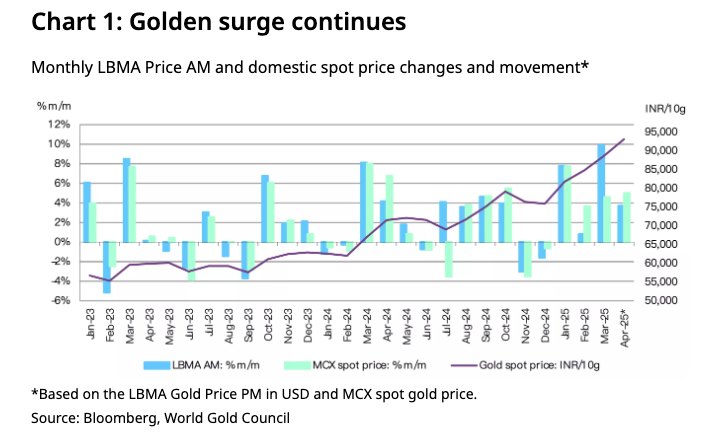
As of last week, the price of gold was up 23 percent so far this year in rupee terms and has set multiple records during its climb.
Nevertheless, gold imports rose sharply last month.
Based on data from India’s Ministry of Commerce, imports climbed to $4.4 billion. That was nearly double the previous month’s figure and significantly higher than the $1.53 billion recorded in March 2024.
Based on this data, an estimated 47 to 52 tonnes of gold flowed into India last month.
According to the World Gold Council, “The sharp uptick suggests a resurgence in demand and underscores a continued interest in gold, even at elevated prices.”
Price Pressure
The rapidly rising gold price has created what the World Gold Council calls “demand realignment,” with buyers becoming much more selective.
“Gold’s steep climb and ongoing volatility are keeping many consumers on the sidelines, with demand for jewelry continuing to be limited to need-based purchases, particularly for weddings. There has been a noticeable shift in consumer behavior in response to soaring prices, with more buyers opting to trade in old jewelry for new: anecdotal reports suggest that 40–45 percent of purchases now involve some form of exchange.”
On the other side of the demand equation, the investment appeal of gold is “gaining prominence” with anecdotal evidence suggesting gold bar and coin demand is robust despite the high prices.
“Amid broader financial market turmoil and uncertainty, gold’s role as a store of value is becoming more pronounced, reflecting a shift in consumer behavior from consumption-driven purchases to wealth preservation.”
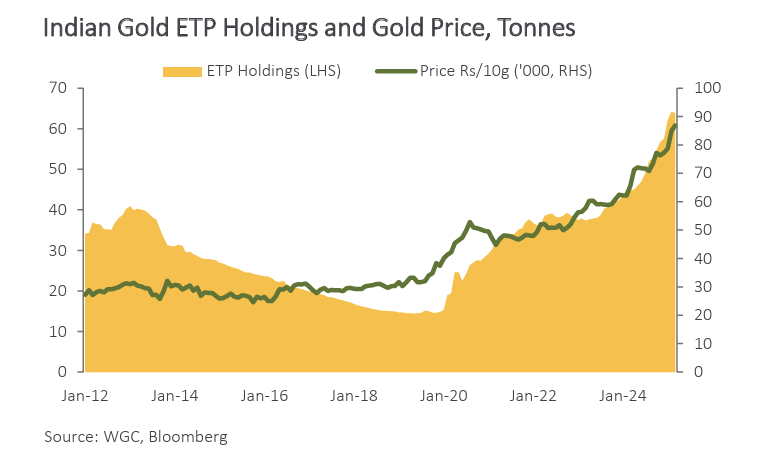
For the first time in 10 months, India-based ETFs reported modest outflows of gold as investors did some profit-taking and portfolio rebalancing with record-high prices. Even with the outflow of metal, assets under management by Indian gold-backed funds climbed to a record high.
There has also been an increase in ETF investing. According to the most recent data, there were 130,000 new investor accounts (or folios) added during March, bringing the total number of gold ETF investor accounts to a record 7 million.
According to the World Gold Council, the trend of festival and wedding purchases will likely persist, supported by gold’s safe-haven appeal.
India’s Love Affair With Gold
Indians historically have an affinity for gold. While it’s hard to know for sure exactly how much gold Indians hold because of the amount of metal circulating in the underground economy, the best estimate is that Indian households own more than 25,000 tons of gold.
Gold is deeply interwoven into the country’s marriage ceremonies, along with its religious and cultural rituals. Festival seasons typically boost gold demand.
Indians have long valued the yellow metal as a store of wealth, especially in poorer rural regions. Around two-thirds of India’s gold demand comes from beyond the urban centers, where large numbers of people operate outside the tax system. Many Indians use gold jewelry not only as adornment but as a way to preserve wealth.
Gold jewelry is viewed differently in India than in the West. It is seen as not only an adornment but also an investment. Much Indian jewelry is made from pure 24-carat gold, as opposed to the 14- and 18-karat pieces more common in the U.S. and Europe. Many Indian families use gold jewelry as savings.
In the West, gold is generally viewed as a luxury item. Not in India. Even poor Indians buy gold. According to a 2018 ICE360° survey, one in every two households in India had purchased gold within the last five years. Overall, 87 percent of Indian households own some gold. Even households at the lowest income levels in India hold some of the yellow metal. According to the survey, more than 75 percent of families in the bottom 10 percent of income managed to buy some gold.
The yellow metal was a lifeline for Indians buffeted by the economic storm caused by the government’s response to COVID-19. After the Indian government locked down the country, banks tightened credit to mitigate the default risk. Unable to secure traditional loans, Indians used gold to secure financing. As Indians endured a second wave of lockdowns, many Indians resorted to selling gold outright to make ends meet.
Mike Maharrey is a journalist and market analyst for Money Metals with over a decade of experience in precious metals. He holds a BS in accounting from the University of Kentucky and a BA in journalism from the University of South Florida.
(Casey Harper, The Center Square) The U.S. Department of Education in February warned colleges and universities that if they did not eliminate programs, they could risk losing federal funding.
Now, two months later, many universities around the country still boast of their DEI programs and employ DEI staff, raising questions about whether the Department of Education has the staff, and the political will, to enforce its threat.
Notably, in its legal battle with Harvard University, the Trump administration cited ongoing DEI practices as one of multiple reasons for freezing federal funding.
Harvard is hardly alone. Defending Education keeps an online database showing hundreds of schools who have kept their DEI stance intact, at least for now.
In one example, Stanford University’s website boasts its DEI policies, from the Doerr School of Sustainability, which hosted a “sustaining black futures” event in late February, after the DOE’s warning.
That event was sponsored by the school’s Office of Diversity, Equity and Inclusion and centered around Aida Mariam Davis, who touts creating an alternative to DEI called “Belonging, Dignity, Justice, and Joy,” though Davis’ language appears similar to the language of other DEI programs and speakers.
“May today be filled with gratitude and joy for food, friends and family,” Davis wrote on Twitter, now known as X, on Thanksgiving Day in 2021. “May it also be filled with mourning for deceit, theft, torture, exploitation and murder so that ‘thanksgiving’ can exist.”
Davis’ book, which was the center of the conversation with with Lupe Carrillo, Assistant Dean for Diversity, Equity, and Inclusion at the Stanford Doerr School of Sustainability.
“Drawing on African epistemologies and an embodied African beingness, Kindred Creation is a call and response to dream and design worlds rooted in African lifeways. It is a path to Black freedom, a love letter to Black futures, and a blueprint for intergenerational Black joy and dignity — always on Black terms. A vital path home.”
Stanford reports receiving hundreds of millions of dollars in federal funding, much of it for research.
Stanford’s leadership initially said they would review DEI programs in light of Trump’s order, but like many other universities and colleges, DEI so far remains intact.
Hundreds of other schools have their DEI webpages intact and the status quo for DEI departments. Many DEI staffers are still prominently featured on school websites, even at public universities.
The Department of Education sent a “Dear Colleague” letter to universities on Feb. 14 advising the nation’s universities of the “potential loss of federal funding.
“All educational institutions are advised to: (1) ensure that their policies and actions comply with existing civil rights law; (2) cease all efforts to circumvent prohibitions on the use of race by relying on proxies or other indirect means to accomplish such ends; and (3) cease all reliance on third-party contractors, clearinghouses, or aggregators that are being used by institutions in an effort to circumvent prohibited uses of race,” the letter reads. “Institutions that fail to comply with federal civil rights law may, consistent with applicable law, face potential loss of federal funding.”
Other universities have complied with the Department of Education’s new guidance and nixed their DEI programs.
Others appear to have rebranded, slightly changing the wording of previous programs, subbing out “Diversity, Equity and Inclusion” for alternatives like “inclusion and belonging,” or “inclusive excellence.”
It remains unclear whether those rebrands will be enough to satisfy the DOE guidance, but DOE’s warnings so far have suggested that they are on the look out for sidestepping the new rules.
“When schools agree to receive federal funding, they are legally obligated to comply with federal antidiscrimination law,” Julie Hartman, a Department of Education spokeswoman, told The Center Square.
Hartman pointed to Students for Fair Admissions v. Harvard, a case where the Supreme Court ruled in 2023 that affirmative action admissions policies were discriminatory and violate the Equal Protection Clause of the U.S. Constitution.
“The Equal Protection Clause and Title VI have been the law of the land for decades and SFFA was handed down over a year ago – yet, schools continue to knowingly and willingly flout the law to which they are subjected. Not any longer. The Trump Department of Education has been clear on its guidance pursuant to the law: We will not allow educational entities to segregate, discriminate, and give preferential treatment on the basis of race.”
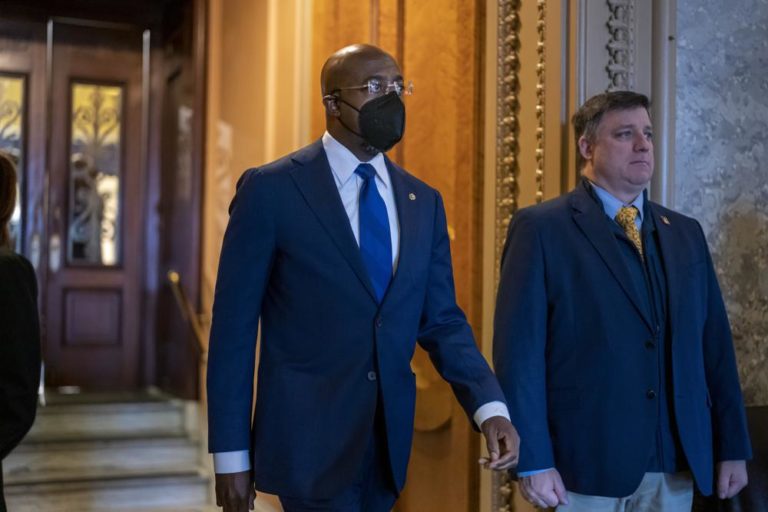
A conservative nonprofit in Washington is asking the U.S. Senate Select Committee on Ethics for an investigation. The Foundation for Accountability and Civic Trust says information on his housing provided by Atlanta’s Ebenezer Baptist Church, where he’s been senior pastor since 2005, hasn’t been disclosed and his outside earned income is in question.
In an email to The Center Square, a statement from Warnock’s office says, “Reverend Warnock sought and received explicit approval from the bipartisan Senate Ethics Committee on this matter. The ministry-owned housing is not income. Rather, it is a customary benefit provided to the senator because of his ongoing position as senior pastor of Ebenezer Baptist Church, a position he has held for the past 20 years.”
The nonprofit said before moving into a $989,000 luxury home in Georgia provided by the church, he was receiving $7,400 in monthly housing allowance. It also said he sold his previous home to buy one in the Washington area.
Kendra Arnold, executive director of the Foundation for Accountability and Civic Trust, said she is hoping the committee will act promptly on the request.
“There are tax laws and ethics rules which allow for a senator to accept reasonable lodging or housing, but they are only applicable in a narrow set of circumstances – they are not an open-ended loophole that can be abused,” Arnold said in a statement. “Among other factors, it’s critical that the value of the housing provided be commensurate to the work done – and then the value be disclosed. It’s difficult to fathom any citizen could look at this situation (a U.S. Senator that is a part-time employee of an organization, which pays him a salary and then happens to buy him a million-dollar house to live in for free after he was elected to Congress) and not think something potentially wrong is afoot.”
(Joshua D Glawson, Money Metals News Service) Investing in gold is a timeless strategy for preserving wealth, protecting against inflation, and diversifying financial portfolios.
At Money Metals Exchange®, investors can access real-time pricing, competitive premiums, and a wide range of physical gold products — making it one of the most trusted sources for precious metals in the United States.
Money Metals® is one of the leading online precious metals dealers in the United States and holds an A+ rating with the BBB. Founded in 2010 by CEO Stefan Gleason , Money Metals has served over 750,000 customers, with gold and silver being the primary products.
This article explores how the Money Metals gold price is determined and how it applies across different product types, including gold bars, gold coins, gold rounds, and investment-grade gold jewelry.
How the Gold Spot Price Works
The gold spot price is the current market price for one troy ounce of pure gold, available for immediate delivery. It serves as the foundation for nearly all gold transactions around the world and reflects the real-time value of gold in wholesale markets. There are also other precious metal spot prices, including silver spot price, platinum spot price, palladium spot price, and rhodium spot price.
This spot price, e.g., gold spot price, is determined by continuous trading activity on global commodity exchanges such as the COMEX in New York and the London Bullion Market Association (LBMA). Factors influencing the spot price include global supply and demand, interest rates, inflation expectations, geopolitical instability, and currency fluctuations.
The Money Metals gold price is directly tied to this global spot price and is updated in real time to reflect accurate market conditions. It is important to understand that while the spot price represents the base market value of gold, it does not account for additional costs associated with physical ownership.
Products like gold coins, bars, and rounds typically include dealer premiums, minting and fabrication fees, and shipping or insurance charges.
The gold price Money Metals displays on its website incorporates real-time feeds from global markets, ensuring that customers can buy and sell based on the most accurate and competitive pricing available.
This transparency empowers investors to make well-informed decisions, whether they are purchasing a gold asset for wealth preservation, savings, inflation hedge protection in a questionable economy, or portfolio diversification.
By relying on the live Money Metals gold price, buyers and sellers can confidently transact using a trustworthy reference and rate grounded in global financial data.
Ultimately, the gold price Money Metals provides is more than just a number — it is a dynamic reflection of global economic conditions and investor sentiment.
Whether you’re monitoring short-term movements or planning a long-term investment, understanding the role of the spot price and how it translates into retail pricing is essential for anyone participating in the gold market.
Fabrication Costs — The expense of minting or refining gold into bars, coins, or jewelry
Premiums — Applied to cover logistics, insurance, storage, and dealer overhead
Scarcity and Collectibility — Products with historical significance or limited mintage may carry additional value
Market Demand — Certain products experience higher premiums based on popularity and investor interest
The Money Metals gold price for each product is clearly listed on every product page, offering full transparency into what you’re paying above the spot.
Fractional Gold: Affordable Access to Precious Metals
Available in smaller weights such as 1/2 oz, 1/4 oz, 1/10 oz, 1 gram, and ½ gram, these gold pieces allow for greater flexibility and affordability while still offering the historical melt value and security of physical gold.
Whether you’re buying on a budget, diversifying your portfolio, or seeking easily tradable assets, fractional gold products provide a practical entry point into precious metals investing. Every listing reflects the real-time gold price Money Metals uses, helping investors make informed, cost-effective decisions.
Gold Bars at Money Metals Exchange
Gold bars are one of the most efficient ways to accumulate gold bullion at low premiums. These products are favored by investors who prioritize gold bullion content over collectible numismatic features.
Popular sizes offered by Money Metals include, but not limited to:
1 Gram Gold Bar — Ideal for small, flexible investments
5 Gram & 10 Gram Bars — Portable and divisible for easier liquidity (sometimes referred to as ingots)
1 oz Gold Bar — The industry standard and most liquid bar for investors
100 Gram & 1 Kilo Bars — Best suited for long-term storage and larger investment portfolios
Some of the most popular brands that manufacture gold bars include PAMP Suisse, Credit Suisse, Valcambi, Royal Canadian Mint, Perth Mint, Johnson Matthey, Geiger Edelmetalle, Argor-Heraeus, AgaBullion, MintID, Sunshine Minting, Republic Metals, Baird & Co., and Asahi Refining. These names are widely recognized in the global gold market and are commonly offered by reputable dealers like Money Metals.
All gold bars offered by Money Metals are .999 or .9999 fine gold and sourced from trusted mints. They are also eligible for inclusion in a Self-Directed IRA. Each product page displays the current Money Metals gold price, giving buyers clarity on costs and market timing.
Money Metals also offers exclusive, branded gold bars, which provide additional savings for customers.
Gold Coins Available Through Money Metals
For those seeking government-backed authenticity along with bullion value, gold coins remain a preferred choice. Money Metals Exchange offers a broad selection of internationally recognized coins.
Canadian Gold Maple Leaf — Minted in .9999 purity and equipped with security features by the Royal Canadian Mint (RCM)
Australian Kangaroo — Minted by the Perth Mint and loved around the world for its use of kangaroo imagery
Austrian Philharmonic — Celebrated for both its artistry and high purity, and minted by the Austrian Mint
South African Krugerrand — Known for durability and global liquidity, and minted by the South African Mint
Gold coins are available in fractional sizes as well, and each listing on the site shows the corresponding Money Metals gold price for that specific denomination.
Gold Rounds — Bullion Without the Legal Tender
Gold rounds offer the same precious metal value and design features as gold coins, but gold rounds are privately minted and do not carry a legal currency face value. This makes them a more affordable choice while maintaining .999 or higher gold purity.
Advantages of gold rounds:
Lower premiums compared to sovereign coins
Artistic and thematic designs, often tied to liberty or American heritage
Great for stacking and budget-conscious investing
Whether you’re buying one gold round or a full tube, you’ll see the gold price Money Metals uses to calculate your total, adjusted daily to reflect market movement.
Investment-Grade Gold Jewelry
Gold jewelry from Money Metals allows customers to combine personal style with tangible wealth. Unlike most retail jewelry, which is often overpriced and made of lower karat gold, Money Metals focuses on investment-grade pieces made from high-purity bullion.
Investment-grade gold jewelry is typically 24 karat gold (24k), but can be as low as 22 karat (22k). 24k gold is at least 99.9% pure gold, while 22k gold is around 91.6% pure gold.
Selections include:
.999 Fine Gold Bracelets and Bangles
Classic Gold Rings, Pendants, Charms, Cufflinks, and Earrings
22k Gold Chains
Each product page transparently displays the current Money Metals gold price, helping you assess both the aesthetic and financial value of your purchase.
Why Choose Money Metals for Gold?
Money Metals Exchange has built a reputation for honest pricing, educational content, and high-quality service. The company was named “Dealer of the Year” by several industry watchdogs and continues to be a preferred choice for both new and seasoned investors.
Benefits include:
Live gold pricing that reflects the true gold price Money Metals uses internally
A diverse inventory of gold bullion products in all popular formats
Competitive premiums and volume discounts
Excellent customer support and secure ordering
IRA-eligible options and allocated storage services in a fortified depository
Selling Your Gold to Money Metals
In addition to offering a wide selection of investment-grade products, Money Metals Exchange also buys gold bars, rounds, and coins from customers.
Whether you’re looking to liquidate your holdings, rebalance your portfolio, or take profits during a market upswing, Money Metals provides a reliable and transparent buyback process.
It’s important to note that the gold price for buybacks can differ from the gold spot price. The amount paid to sellers — known as the bid price — is influenced not only by the spot market but also by supply and demand dynamics. When there is a high number of active buybacks, Money Metals may pay less than the current spot price in order to manage inventory and market risk.
Key points about the buyback process:
The bid price is updated in real time based on market conditions
Customers can contact Money Metals for a live quote before selling
All items are shipped securely and insured, with tracking and confirmation
Once received and verified, payment is issued promptly
By using the real-time Money Metals gold price to inform both retail and buyback rates, Money Metals maintains a fair, transparent, efficient, and trustworthy two-way market for investors across the country.
Final Thoughts
Understanding the Money Metals gold price goes beyond checking a daily chart. It requires insight into how product types, market premiums, bid prices, and investor goals all intersect.
Whether you’re looking to make your first fractional gold purchase (such as a gold coin, a gold round, or a gold bar), sell gold back into the market, or acquire kilo bars for long-term storage, Money Metals Exchange provides the clarity, pricing, and service you need to invest confidently.
Explore the full range of gold products and check the real-time Money Metals gold price at www.MoneyMetals.com.
You can also call 1–800–800–1865 to speak with a customer service representative about the gold price Money Metals is currently showing.
Joshua D. Glawson is Content Manager for Money Metals and is writer on such topics as politics, economics, philosophy, finance, and personal development. He has a Bachelor’s in Political Science from the University of California Irvine.
(Money Metals News Service) In this episode of the Money Metals Midweek Memo, host Mike Maharrey analyzes the surging gold market, the lagging performance of silver, and the broader economic forces fueling both trends.
From skyrocketing bullion prices to the Federal Reserve’s no-win monetary policy, Maharrey explains why now may be the most opportune time in years to invest in silver — before history repeats itself.
Gold Charges Ahead: Best Performing Asset of 2025
Gold has been on a tear in 2025, continuing the powerful momentum it gained last year. On a particularly wild trading day, the spot price hit the low $3,480s, and gold futures briefly touched a record $3,500 per ounce before mild corrections took place. Year-to-date, the yellow metal is up over 25%, building on a 26.5% rise in 2024, making it the best-performing asset of the year so far.
Supporting the rally is a convergence of forces:
Central bank gold buying
Global de-dollarization efforts
Geopolitical tensions and active wars
Persistent inflation and fiat currency instability
Maharrey quotes analyst Brien Lundin, who said: “Gold has been telling us it’s not one thing, it’s everything.” In other words, gold is reacting to the system-wide erosion of confidence in fiat currencies.
The Fed’s Monetary Catch-22
The episode highlights the Federal Reserve’s ongoing trap — needing to fight inflation without triggering a recession. Former President Donald Trump reignited the conversation by urging rate cuts, claiming inflation is nearly gone. But Maharrey disagrees, pointing out that money supply growth is back, signaling underlying inflationary pressures that have not been resolved.
The Fed’s dilemma is stark:
Rates must stay high to tame inflation
But lowering rates may be needed to avoid recession
Decades of easy money — especially post-2008 and during COVID — have left no good options
Maharrey calls this a “dead-end street” for the economy, warning that the bust from this monetary cycle is likely still ahead.
Silver Lags Behind — But History Says It Won’t for Long
While gold is smashing records, silver is trailing behind — for now. In 2025, silver is up just over 12%, a respectable gain, but far behind gold. The gold-silver ratio recently hit 104:1, meaning it takes 104 ounces of silver to buy one ounce of gold. That’s well above the historical average of 60:1, and even higher than the 1991 peak.
Historically, such extreme ratios have triggered silver surges. For example, in March 2020, the ratio hit 123:1, and silver doubled in five months. Maharrey argues we’re in a similar setup — a strong gold rally, followed by silver playing catch-up.
Why Silver Remains a Monetary Metal
Even with its industrial applications, silver remains a fundamentally monetary asset. Maharrey illustrates this with a personal story: years ago, he was paid $200 in pre-1965 silver coins. Today, those coins are worth over $4,700 in melt value, revealing just how much fiat currency has depreciated since the 1960s.
Even though it’s no longer official legal tender, silver is widely accepted in barter and crisis situations — a signal of its enduring monetary role.
Industrial Demand and Price Volatility
Silver is unique because it’s both a monetary metal and an industrial commodity. About 60% of global silver demand comes from industries like electronics, solar energy, and green tech. This dual role makes silver more volatile than gold.
According to the Silver Institute:
2024 saw a 148.9 million ounce supply deficit
It marked the fourth consecutive year of deficits
The cumulative shortfall since 2020 is 678 million ounces, or 10 months of mining output
These persistent deficits, driven by record industrial demand, are forming a bullish foundation for future price gains.
Investment Demand May Soon Join the Party
Ironically, silver’s recent gains have occurred despite weak investor participation. In 2024:
Investment demand dropped 22%, hitting a five-year low
In the U.S., silver investment demand fell 46%
Western markets saw double-digit declines across the board
Most of silver’s strength has come from industrial demand and investment from Asia. Maharrey emphasizes that if Western investors return, the demand spike could send silver soaring.
He also cites Keith Neumeyer, CEO of First Majestic Silver, who believes the Silver Institute is underestimating the supply shortfall, and that we may need triple-digit silver prices to restore balance.
The Gold-Silver Ratio: A Signal, Not a Relic
Some skeptics claim the gold-silver ratio no longer matters.
Maharrey strongly disagrees.
He challenges critics to name any fundamental change that would justify its breakdown — and none can. He maintains that the ratio remains a critical indicator of undervaluation.
Analyst Lobo Tiggre explains that if the ratio simply reverts to its average of 60:1, silver would need to rise 70%, or $23 per ounce — putting it above its all-time high. If gold keeps climbing, silver’s upside becomes even more explosive.
Why the ratio still matters:
Silver’s market is 1/10 the size of gold’s, amplifying price swings
Silver tends to behave like a leveraged version of gold in bull markets
Industrial demand boosts prices as economies rebound
In short, extremes in the ratio usually precede sharp reversals — and Maharrey believes we’re on the cusp of another.
Final Thoughts: Opportunity Knocking
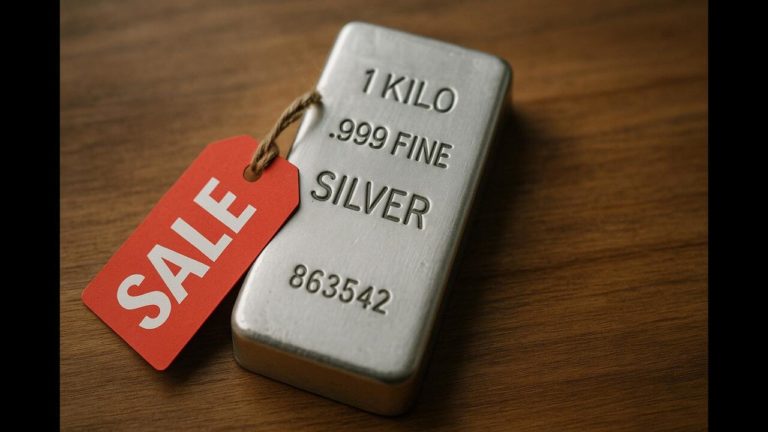
Maharrey ends the show with a clear message: silver is on sale.
The combination of:
Historically high gold-silver ratios
Long-term supply deficits
Dormant investment demand
A strengthening gold bull market
…makes for a compelling case. Investors still sitting on the sidelines may miss their window if silver’s rebound is as rapid as history suggests.
He encourages listeners to act now by visiting MoneyMetals.com or calling 1-800-800-1865 to speak with a precious metals specialist.
“Smart investing is buy low and sell high,” Maharrey concludes. “And the gold-silver ratio is telling you silver is low.”
For those seeking a store of value and a hedge against monetary instability, silver may be next in line for a breakout.
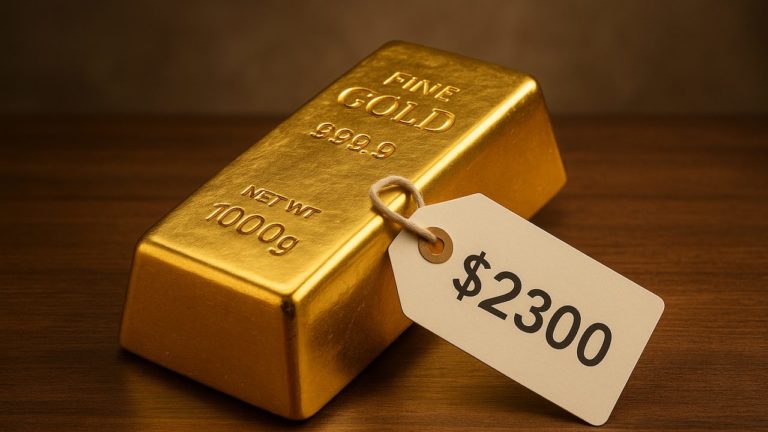
(Mike Maharrey, Money Metals News Service) You won’t likely come across a gold bar with a price tag hanging off it, but of course, it does have a price.
From the fast-moving spot market to formal benchmarks and futures contracts, each price tells a different part of gold’s daily story. But how do we untangle this web of pricing and make sense out of it?
To get the full picture, we need to understand how each price is derived and how it is used.
The Spot Price
When you visit MoneyMetals.com and check the price ticker, you’re seeing the “spot price” of gold. That reflects the current market price for immediate delivery and serves as the benchmark for real-time pricing and trading activity.
The spot price isn’t “set” by any single entity. It is determined by decentralized, global market activity. The spot price you see quoted on various financial news platforms is a composite derived from real-time trades across multiple exchanges and trading platforms.
The data is compiled using both over-the-counter (OTC) markets and formal exchanges, and it includes private trades between institutions, dealers, and banks. Major dealers such as JPMorgan, HSBC, and UBS also influence the spot price by continuously quoting buy/sell offers.
Financial news outlets and pricing services aggregate the data and update the spot price continuously. Given that different feeds pull data from different sources, you will find the spot price can vary a few dollars at any given moment, depending on which news platform you use.
Retail investors, dealers, and traders rely on the spot price as their primary reference. If you buy gold coins from Money Metals, the spot price will serve as the starting point.
The Futures Price
You will often see news outlets quoting the “futures price” instead of the spot price. This represents the agreed-upon contracted price for gold delivered at some future date, and it reflects the market’s expectation of the price of gold at the time the contract expires.
A gold futures contract is a legal agreement to buy or sell a set amount of gold at a predetermined price on a specified future date. Most standard contracts are based on 100 ounces of gold. Futures contracts primarily trade on the COMEX division of theChicago Mercantile Exchange (CME Group).
The futures price serves as a key indicator of sentiment around the gold market.
While most futures contracts are closed out before expiration through offsetting trades, some are settled by physical delivery, depending on the contract holder’s intent.
The futures price can differ significantly from the spot price due to factors including interest rates, storage costs, and market expectations.
Speculators, institutions, and hedge funds primarily operate within the futures market.
LBMA Gold Price
The London gold price, sometimes referred to as the London gold fix, sets a globally recognized benchmark price used by financial institutions, central banks, and investors.
This price is set by twice-daily auctions held by the London Bullion Market Association (LBMA) at 10:30 a.m. and 3 p.m. London time.
A group of large, LBMA-accredited financial institutions, including JPMorgan, HSBC, and UBS, submit buy and sell orders during the auction, thereby “fixing” a price.
Here’s how it works:
The auction opens with a proposed price.
Participants determine the amount of gold they want to buy or sell at that price.
If buying and selling volumes match within a tight tolerance (±10,000 ounces), the price is “fixed.”
If not, the price is adjusted, and the process repeats until equilibrium is reached.
The final price is published and used globally for gold contracts, ETFs, mining deals, and other financial instruments.
The LBMA isn’t the only organization that sets a benchmark gold price. For instance, the Shanghai Gold Exchange sets a regional benchmark for the Chinese and broader Asian markets.
To sum it up:
The spot price is the go-to quote for buying or selling bullion at any given moment.
The futures price reflects price expectations.
The LBMA price is a formal benchmark for contracts and other purposes, but is not used in real-time pricing.
Mike Maharrey is a journalist and market analyst for Money Metals with over a decade of experience in precious metals. He holds a BS in accounting from the University of Kentucky and a BA in journalism from the University of South Florida.
“President Trump’s insane tariff scheme is not only economically reckless – it is illegal,” said Arizona Attorney General Kris Mayes, who was joined in the suit against Trump Wednesday by Democratic attorneys general from Colorado, Connecticut, Delaware, Illinois, Maine, Minnesota, Nevada, New Mexico, New York and Vermont.
“Arizona cannot afford President Trump’s massive tax increase,” Mayes said in a news release. “No matter what the White House claims, tariffs are a tax that will be passed on to Arizona consumers.”
Studies of tariffs from Trump’s first term showed 95% of their cost was paid by Americans, according to Mayes’ office. Her office also noted the Federal Reserve and the International Monetary Fund predict the current round of tariffs will cause inflation.
If fully realized, Trump’s campaign tariffs could cost the average American household an additional $2,600 per year, according to the Arizona Center for Economic Progress.
The Oregon Attorney General’s Office cites a higher number, noting tariffs are expected to raise the cost of living for the average family in Oregon by more than $3,800 a year.
“When a president pushes an unlawful policy that drives up prices at the grocery store and spikes utility bills, we don’t have the luxury of standing by – especially when so many Oregonians live on fixed incomes,” said Oregon Attorney General Dan Rayfield.
“These tariffs hit every corner of our lives – from the checkout line to the doctor’s office – and we have a responsibility to push back,” Rayfield said Wednesday.
The suit was filed in the U.S. Court of International Trade and named Trump, the United States, Homeland Security Secretary Kristi Noem, and U.S. Customs and Border Protection and its acting commissioner, Peter Flores, as defendants.
The lawsuit challenges the Republican president’s executive orders calling for higher tariffs on most products around the world. The tariffs include a 145% one of most goods from China, a 25% tariff on most products from Canada and Mexico, and 10% tariffs on most products from the rest of the world.
It also seeks to block Trump’s plan to raise tariffs on imports from 46 other trading partners on July 9.
The suit contended Congress, not the president, has the power to impose tariffs under Article I, Section 8, of the U.S. Constitution.
“Yet over the last three months, the President has imposed, modified, escalated, and suspended tariffs by executive order, memoranda, social media post, and agency decree,” according to the suit. “These edicts reflect a national trade policy that now hinges on the President’s whims rather than the sound exercise of his lawful authority.”
The lawsuit contended the International Emergency Economic Powers Act, which Trump is using to impose the tariffs, doesn’t give him that power. The suit also noted that no other president has tried to use the IEEPA to impose tariffs.
The suit accused Trump of upending the constitutional order and bringing chaos to the U.S. economy.
But Trump has argued that tariffs are necessary to balance the federal budget, support U.S. manufacturing, and stop illegal immigration, human trafficking and the flow of fentanyl into America.
Earlier this month, California filed its lawsuit to stop Trump’s tariffs. Gov. Gavin Newsom told reporters the Golden State has more to lose than any other in the nation because of a disproportionate impact on its manufacturing and agricultural sectors.
Oscar Eduardo Ortega-Anguiano was convicted of killing two Southern California teens while he was drunk, high and speeding over 100 miles per hour. He is set to be released three years into his 10-year sentence.
Federal officials have since placed a detainer on the convict to prevent his release back into the public. They have said they are prosecuting Ortega-Anguiano with charges that could send him to federal prison for up to 20 years. The U.S. Department of Justice filed the charges Wednesday.
Fox News immigration correspondent Bill Melugin reported on the pending release of Ortega-Anguiano, who was convicted in 2022 for gross vehicular manslaughter for killing two U.S. citizens in Seal Beach: the American 19-year-olds, Anya Varfolomeev and Nikolay Osokin, who were dating, burned to death after Ortega-Anguinano crashed into them.
Ortega-Anguinano had a lengthy rap sheet, including multiple felony convictions, time in state prison and “multiple convictions for driving without a license.”
On Easter Sunday, the California Department of Corrections notified the teens’ parents that Ortega-Anguiano would be released in July, just three and a half years into his 10-year sentence.
“Twice deported illegal alien from Mexico, Oscar Eduardo Ortega-Anguiano, is serving time after being convicted of gross vehicular manslaughter while intoxicated, which resulted in the deaths of an American couple. His previous criminal convictions include burglary in 2005, vehicle theft in 2007, and battery on a spouse with kidnapping in 2014,” announced the U.S. Department of Homeland Security. “After serving just three years of a 10-year sentence, [ICE] has placed a detainer with the California Department of Corrections upon his release.”
However, because California often does not comply with ICE detainers, and in many cases, the state’s sanctuary laws prevent ICE from being notified of the imminent release of illegal immigrant convicts, the teens’ families fear Ortega-Anguiano may still end up back in the United States.
“They hope the CA Dept. of Corrections will honor the detainer request and transfer him to their custody upon his release, which they often do,” wrote Melugin, who spoke to the teens’ families. “But the families fear, even if he is deported, he will just re-enter the US as a gotaway, as he’s done twice before.”
U.S. Attorney Bill Essayli has since announced he is prosecuting Ortega-Anguiano under federal felony immigration charges.
“My office has filed a felony immigration charge against this defendant. He faces up to 20 years in federal prison if convicted for 8 USC 1326,” said Essayli. “If the State of California will not seek the full measure of justice against this individual, the [U.S. Department of Justice] will.”
(Dave DeCamp, Antiwar.com) Secretary of State Marco Rubio said in an interview released on Wednesday that Iran cannot enrich uranium under any deal with the US, an idea Tehran has said is “unacceptable.”
Rubio said that Iran could maintain a civilian nuclear program but that it would have to import enriched uranium to use as fuel. “If Iran wants a civil nuclear program, they can have one just like many other countries in the world have one, and that is they import enriched material,” he said on the podcast Honestly with Bari Weiss.
Last week, Iranian Foreign Minister Abbas Aragchi said Iran’s right to enrich uranium was non-negotiable. In response to Rubio’s comments, a senior Iranian official told Reuters that “zero enrichment is unacceptable.”
Steve Witkoff, President Trump’s envoy, who has been leading the negotiations with Iran, previously suggested the US would be happy with a deal that would cap Iran’s nuclear enrichment at 3.67%, the same limit set by the 2015 Iran nuclear deal, known as the JCPOA. But after backlash from Iran hawks, Witkoff walked back the comments, saying Iran must end its enrichment program.
Rubio said that when Witkoff mentioned the 3.67% limit, he was “talking about the level of enrichment that they would be allowed, the level of enriched material that they would be allowed to import from outside.”
While Trump administration officials are making maximalist demands publicly, diplomacy between the US and Iran continues to advance, suggesting the US is not actually demanding zero enrichment in the talks.
“Rubio once again indicates that zero-enrichment is the US objective. So far, however, this has not been the US position inside the talks,” Trita Parsi, an Iran expert and Executive Vice President of the Quincy Institute, said in a post on X.
“Rubio is either saying this to play bad cop (with Trump’s blessing) to keep that option open, or he is seeking to sabotage the talks,” Parsi added.
Witkoff and Aragchi are set to hold another round of negotiations in Oman this Saturday. At the same time, a meeting will be held at the expert level to discuss technical details of a potential deal.
President Trump has threatened to bomb Iran if a deal isn’t reached, even though his intelligence agencies recently reaffirmed that there’s no evidence that Tehran is building a nuclear bomb or that Iranian Supreme Leader Ali Khamenei has reversed his 2003 fatwah that banned the production of weapons of mass destruction.
(Ken Silva, Headline USA) A former FBI analyst who hunted protestors from the Jan. 6, 2021, Capitol Hill uprising is now running for Congress.
“For 17 years, I was an FBI intelligence analyst, working in secret to keep us safe from global threats and the insurrectionists who stormed our Capitol,” said ex-FBI analyst John Sullivan, who resigned from the bureau weeks ago. “Now, I’m stepping out of the shadows to run for Congress.”
Sullivan, who is apparently gay with an adopted son, said he’s running in the district represented by Rep. Mike Lawler, R-N.Y., whom the former analyst deemed “Elon Musk’s top Congressman.”
For 17 years, I served in secret, protecting us from threats like Russia, foreign terrorists and drug cartels, and eventually the insurrectionists who stormed our Capitol.
Sullivan’s announcement comes weeks after he publicly resigned. Sullivan started a Substack blog to explain his decision.
“I’ve served my country and supported the mission of the FBI under presidents of both parties and directors with many different ideas. These include Chris Wray and during the first Trump Administration. Now, I promise you, it’s different. The current director -– aided by a deputy who lacks any past FBI experience -– wants to transform the organization into Trump’s personal detective agency, investigating and harassing people that Trump and Elon disagree with,” he said, referring to FBI Director Kashyap Patel.
“I believe I can better serve the agency’s mission from the outside. Everyday Americans who are concerned can do their part by asking members of Congress to act as a check and balance and demand hearings to make sure FBI leadership is doing its job.”
Ken Silva is the editor of Headline USA. Follow him at x.com/jd_cashless.