Police Bodycam Exposes Deported ‘Maryland Man’ Apparently Smuggling Illegals

(Luis Cornelio, Headline USA) Newly released bodycam footage revealed that Kilmar Abrego-Garcia had been stopped inside a vehicle suspected of being used for human trafficking. The viral video contradicts the liberal media, which has rallied around the “Maryland man,” who is in fact an El Salvador national who was deported in March on the grounds that he’s a suspected MS-13 gang member.

Released by the Tennessee Highway Patrol, the video showed Garcia being pulled over on Nov. 30, 2022. While the traffic stop was initially for speeding, officers quickly discovered the vehicle contained eight individuals who had been allegedly smuggled into the U.S. 

“How many rows have you got in here? Four seats? Four rows of seats?” a state trooper said, according to the video. “Did y’all put an extra one in? Huh? Did y’all put another one in, no? They come like this, I’ve never seen one with that many seats in it.” 

Another trooper added, “He’s hauling these people for money.” 

According to Fox News, which obtained the footage through a public records request, a source confirmed that troopers discussed contacting U.S. Immigration and Customs Enforcement (ICE). That portion of the video was redacted.  The Biden-led ICE never showed up to the scene. 

Even worse, the source affirmed that when Garcia’s name was entered into the National Crime Information Center, it triggered a warning flagging him as a suspected gang member or terrorist. 

Garcia was reportedly carrying $1,400 in cash, which troopers believed was his payment for the smuggling trip. His Maryland driver’s license was also invalid and he failed to show proof of insurance. 

“This is a good stop,” a trooper remarked, according to Fox News, suspecting they had interrupted a human trafficking operation. 

In the video, a state trooper is seen confronting Garcia about his shifting story. Initially, he claimed he was traveling from Missouri to Maryland because their work was done—but then mentioned a different city. 

Garcia gained national attention after legacy media and Democrats painted him as a victim of an unlawful deportation order. Garcia was issued a deportation order in 2019, after entering the country in 2011. 

He was removed from the U.S. under President Donald Trump’s illegal immigration crackdown. Two separate judges had concluded that Garcia was likely tied to the violent MS-13 gang. 

Despite that, a federal judge later granted him special protection from removal. Nonetheless, he was deported in March to his native El Salvador.  

He is currently detained in El Salvador’s maximum-security prison, Terrorist Confinement Center, or CECOT. 

Still, a judge—described by Republicans as a judicial activist—ruled that the Trump administration must take steps to bring Garcia back to the U.S., based on the earlier court order. 

Employers Added 177,000 Jobs as Job Market Shows Resilience

(Headline USA) American employers added a 177,000 jobs in April as the job market showed resilience in the face of President Donald Trump’s trade wars.

Hiring fell slightly from a revised 185,000 in March, but that is above economist projections of 135,000 jobs. The unemployment rate remained at a low 4.2%, the Labor Department reported Friday.

Friday’s report showed employment, one of the strongest aspects of the U.S. economy, remains solid, yet many economists anticipate that a negative impact from trade wars will materialize this year for American workers.

“Politicians can count their lucky stars that companies are holding on to their workers despite the storm clouds forming that could slow the economy further in the second half of the year,” said Christopher Rupkey, chief economist at fwdbonds, a financial markets research firm.

Transportation and warehousing companies added 29,000 jobs last month, suggesting companies have built up inventory before imported goods are hit with new tariffs. Healthcare companies added nearly 51,000 jobs and bars, restaurants almost 17,000 and construction firms 11,000. Factories lost 1,000 jobs.

Labor Department revisions shaved 58,000 jobs from February and March payrolls.

Average hourly earnings ticked up 0.2% from March and 3.8% from a year ago, nearing the 3.5% that economists view as consistent with the 2% inflation the Federal Reserve wants to see.

Trump’s massive taxes on imports to the U.S. are likely to raise costs for Americans and American businesses that depend on supplies from overseas. They also threaten to slow economic growth. 

The drastic changes have shaken markets and consumers. The Conference Board, a business group, reported Tuesday that Americans’ confidence in the economy fell for the fifth straight month to the lowest level since the onset of the COVID-19 pandemic.

Bill Adams, chief economist at Comerica Bank, called the jobs report “reassuringly normal. The fears of a softer labor market due to tariff uncertainty went unrealized last month … There are signs that businesses are reining in plans for hiring and capital spending and that consumers are turning more cautious toward discretionary spending.’’

“For now, the unemployment rate and the number of people filing claims for jobless benefits every week remain low by historical standards,” Boston College economist Brian Bethune said this week.

After the jobs numbers were released, Trump repeated his call for the Federal Reserve to lower its benchmark short-term interest rate, which it raised to combat inflation. Trump said on social media platform Truth Social that there is “NO INFLATION” and “employment strong.”

Yet as long as the job market remains healthy, the Fed will likely stay on the sidelines as it takes time to evaluate the impact of tariffs. Fed chair Jerome Powell has underscored that the duties are likely to push up prices in the coming months, making the central bank wary of the potential for higher inflation.

The Fed typically fights inflation with higher interest rates, so it is unlikely to cut its key short-term rate anytime soon. It may change course if layoffs spike and unemployment rises.

Some U.S. companies stand to benefit from Trump’s protectionist policies.

Allen Jacoby, executive vice president of textile division at Milliken & Co., said that cheap Chinese imports have hurt business at the Spartanburg, South Carolina, manufacturer. His division makes Polartec fabric for brands such as North Face and Patagonia and has closed six plants and reduced its payrolls 12% since 2019.

Trump’s tariffs, he said, could improve Milliken’s sales and hiring. “It’s too early to tell, but there’s more optimism than pessimism,” he said.

Adapted from reporting by the Associated Press.

Defense Department Designates a Second Military Zone on US Border, Extending into Texas

(Headline USA) The Defense Department said Thursday that it has designated a second stretch on the U.S. border with Mexico as a military zone to enforce immigration laws.

The newest area is in Texas and is attached to the Fort Bliss Army base in El Paso. Like the first zone established last month in New Mexico, military personnel are authorized to take custody of migrants who illegally cross the border until they are transferred to civilian authorities in the U.S. Department of Homeland Security.

“The establishment of a second National Defense Area increases our operational reach and effectiveness in denying illegal activity along the southern border,” said Gen. Gregory Guillot, commander of the U.S. Northern Command.

In New Mexico, people who entered the U.S. illegally were charged Monday with breaching a national defense area after the Army assumed oversight of a 170-mile (274-kilometer) strip that is treated as an extension of U.S. Army Garrison Fort Huachuca, Arizona.

Border crossers in the military zones face potential prosecutions on two federal crimes — entering the U.S. illegally and trespassing on military property. The moves come as President Donald Trump’s administration has deployed thousands of troops to the border and arrests have plunged to the lowest levels since the mid-1960s.

The military zones have allow the federal government to escape the reach of an 1878 law that prohibits military involvement in civilian law enforcement.

“Any illegal attempting to enter that zone is entering a military base, a federally protected area,” Defense Secretary Pete Hegseth said on a recent visit to New Mexico. “You will be interdicted by U.S. troops and Border Patrol.”

Adapted from reporting by the Associated Press.

Netanyahu Says Freeing Hostages Is Not His Priority

(Dave DeCamp, Antiwar.com) Israeli Prime Minister Benjamin Netanyahu said on Thursday that freeing Israeli captives in Gaza was not his top priority, comments that angered the family members of hostages.

“We have many objectives, many goals in this war. We want to bring back all of our hostages,” Netanyahu said.

“That is a very important goal. In war, there is a supreme objective. And that supreme objective is victory over our enemies. And that is what we will achieve,” he added.

It’s been clear for a long time that freeing the hostages was not Netanyahu’s primary goal, especially since he broke a ceasefire agreement that would have released them all, but these comments appear to be the first time he said so publicly.

The Hostages and Missing Families Forum said in a statement that freeing the captives should be Israel’s main goal. “Prime minister, the return of the hostages is not ‘less’ important – it is the supreme goal that should guide the government of Israel,” the forum said. “The families of the hostages are concerned.”

Netanyahu’s comments came not long after Israeli Finance Minister Bezalel Smotrich said that freeing the hostages was not Israel’s “most important goal” and said the “Gaza problem” must be “eliminated.”

Hamas has repeatedly offered to free all remaining Israeli hostages in exchange for a permanent ceasefire, but according to Israeli media, the Israeli government has a “longstanding rejection” of the proposal.

In recent months, Netanyahu has said that his long-term plans for Gaza include indefinite Israeli military occupation and the ethnic cleansing of the Palestinian population, which he frames as “voluntary migration.”

This article originally appeared at Antiwar.com.

4th Native American Dies from Gang-Related Mass Shooting, While 5th Killed in Retaliation

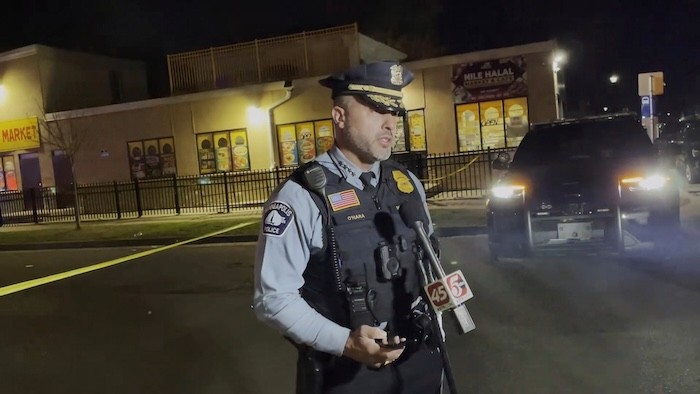
(Headline USA) A fourth person has died from a mass shooting in Minneapolis earlier this week, and investigators believe a fifth person was killed hours late in retaliation, police said Friday.

The 28-year-old man had been hospitalized in grave condition since the shootings late Tuesday, and died Thursday shortly after federal authorities arrested a 34-year-old suspect, the Minneapolis Police Department said in a statement.

The murder charges allege the suspect was in a vehicle with five other people when he shot them all in the head before fleeing. One of them survived and was able to identify the suspect to police.

Police say the victims were Native American. The shootings have shaken the large Indigenous community in the Phillips neighborhood south of downtown Minneapolis.

Police say the shootings were gang-related

Newly unsealed murder charges against the Minneapolis man allege he and members of his family are associated with a gang known as the Native Mob. It operates in the city’s south and other parts of Minnesota, the charges say.

The gang was the subject of a multiyear federal investigation over a decade ago that resulted in the convictions of 28 people. Its alleged leader at the time was sentenced in 2014 to 43 years in prison.

The motive is still unknown

The complaint gave no details on what might have prompted the shootings. Police Chief Brian O’Hara said during a news conference Thursday that authorities were still investigating.

“This is a bittersweet day,” O’Hara said in Friday’s statement. “While this arrest represents meaningful progress toward justice, that progress is overshadowed by the heartbreaking loss of another life. Our thoughts remain with the victims’ families, their loved ones, and a community that continues to grieve.”

What do we know about the victims?

A 20-year-old woman, a 17-year-old boy and a 27-year-old man died at the scene in the first shooting, which happened on Tuesday just before midnight in a vehicle parked in a mixed residential and commercial neighborhood.

A 20-year-old woman was shot in the face and hospitalized in critical condition, the complaint said. She said the shooter was sitting in the back seat when he opened fire on all four other people in the vehicle before fleeing on foot.

A second shooting the next day

Police have released few details about that homicide.

About 13 hours later and roughly three blocks away, a 30-year-old man was killed outside an apartment building. The police chief said it was “entirely probable” this second shooting was revenge for the first.

The suspect is now charged with murder

The U.S. Marshals Service said its local fugitive task force and an FBI SWAT team arrested the suspect on Thursday afternoon. Newly unsealed court records show he was charged Wednesday with second-degree murder and being a felon in possession of a firearm.

The suspect has at least one felony on his record, an assault conviction from 2021, which prohibits him from possessing guns or ammunition. Court records show he completed his probation in 2023. When police interviewed him in 2023 in a separate homicide investigation, the complaint said, he acknowledged that his street name was “Baby James.”

He remained jailed Friday, and court records didn’t list an attorney who could comment on his behalf. His first court appearance is scheduled for Monday.

What was the suspect’s relationship to the victims?

According to the complaint, the victim who survived told police the shooter went by the street names “Baby J,” “Little J” and “Little James,” and was a friend of one of the victims.

Relatives of one victim told police that the victims were all together at a family friend’s residence in Minneapolis but left around 9:30 p.m. with plans to pick up “Baby J,” who was known to be a “close family friend” of the victims. The family member identified “Baby J” as the defendant.

Other law enforcement sources told investigators the defendant was “an associate” of more than one victim, the complaint said.

The survivor told police on Wednesday morning that “Little James” was the person who shot them, that they knew him, and that he and was the only shooter, the complaint said.

A surveillance video was consistent with the survivor’s account, the complaint filed in Hennepin County District Court said. It shows one person matching the suspect’s description exiting the vehicle and fleeing before police arrived.

How have Minnesota’s Native American communities reacted?

According to the Minnesota Star Tribune, community members gathered Thursday at a park a few blocks from the shooting scenes for a prayer and drum circle.

The state’s 11 sovereign tribal nations issued a joint statement Thursday, mourning the deaths and urging anyone with information to contact Minneapolis police, Crime Stoppers or their own tribal police.

“As native peoples, we have always known grief,” the statement said. “But we have also always experienced the strength that comes afterward. We are here because our ancestors cared for one another. That is how you are even here — because someone before you chose love, protection, and community over despair.”

Adapted from reporting by the Associated Press


California Population Grew Due to Undercounted Mass Migration

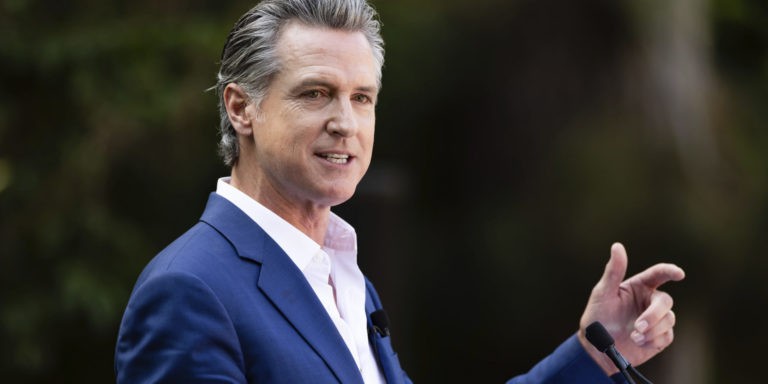
(The Center Square) California Gov. Gavin Newsom announced the state’s population estimates have been heavily revised upward, with data showing sustained outmigration by Americans was offset by large amounts of international migration.

“People from across the nation and the globe are coming to the Golden State to pursue the California Dream, where rights are protected and people are respected,” said Newsom in a statement.

California’ Department of Finance Thursday reported that 277,468 more immigrants came between 2021 and 2024 than previously estimated, resulting in greater net population growth in 2024 and a swing from negative to positive reported population growth in 2023.

The state estimates California now has 39,529,000 residents, up 108,000 from the year prior.

DOF’s outmigration report from December 2024 shows that net domestic outmigration slowed from a loss of 249,308 Californians in 2023 to 197,016 in 2024.

Natural increase — subtracting deaths from births — remained largely steady, rising from 105,550 in 2023 to 114,805 in 2024.

Two hundred and forty California cities lost residents, while 241 gained residents, and one city — Morro Bay — had no change in population.

Of California’s 10 most populous counties, only Contra Costa in the East Bay area lost population in 2024, losing a net 24 residents.

Earlier Census reports have found that those coming to California tend to be much poorer than those coming in, with outmigration in from just mid-2021 to mid-2022 resulting in a net loss of $24 billion in personal income. This suggests population growth may not necessarily translate to tax revenue growth, which could put further strain on the state budget.

In November 2024, California’s state-funded Legislative Analyst’s Office reported the state has “no capacity” for new spending and would face annual residents rising to $30 billion in 2026 as spending growth outpaces weak revenue growth.

Kentucky Man Who Won Powerball Jackpot Lands in Florida Jail Days Later

(Headline USA) A Kentucky Powerball winner was arrested and charged with kicking a police officer in Florida days after he won a $167 million jackpot.

James S. Farthing, who goes by Shannon, found out Sunday that he won the state’s biggest ever jackpot after his mother called him, according to a media release from the Kentucky Lottery. The lottery said Farthing and his mother were splitting the winnings.

But Farthing, 50, was in a Florida jail by midweek, according to media reports. He has been charged with battery of a police officer and resisting arrest after a Pinellas County Sheriff’s deputy was attempting to break up a fight between Farthing and another person in a hotel when Farthing kicked the officer in the face, according to a police report written Tuesday. The officer told Farthing to turn around put his hands behind his back, but Farthing attempted to flee, the police report said.

Farthing was booked into jail early Wednesday morning and remained in custody Friday, according to the county’s online jail records.

Farthing went to lottery headquarters in Louisville, Kentucky, on Monday with his mother, Linda Grizzle, to claim their winnings.

“It’s going to be a good Mother’s Day,” Grizzle told lottery officials. “This is going to pay off my debt.” Grizzle said she called her son Sunday saying she thought they had the winning ticket. They rushed to the gas station where he bought the ticket to confirm it, the lottery said.

“I would have never dreamed it. It hasn’t sunken in yet,” she said.

In an interview with WKYT-TV that Sunday, Farthing said the winnings would help his mother.

“I’ve caused a lot of stress on her, you know, I’ve made some bad decisions in life and, you know, God’s been good because I’ve kept my faith and done right,” he told the news station.

The winning numbers were 1-12-14-18-69 and the Powerball was 2. The family was told they could take a cash option of $77.3 million or receive 30 graduated annual payments for the winnings. Lottery officials said the total was the largest Powerball jackpot ever won in Kentucky, topping a $128 million jackpot in 2009.

Online court records in Kentucky show Farthing has been arrested several times in recent years on various charges, including assault and domestic violence.

An attorney for Farthing listed in court records did not immediately respond to an email message Friday.

Adapted from reporting by the Associated Press


Visa Wants to Give AI ‘Agents’ Your Credit Card

(Headline USA) Artificial intelligence “agents” are supposed to be more than chatbots. The tech industry has spent months pitching AI personal assistants that know what you want and can do real work on your behalf.

So far, they’re not doing much.

Visa hopes to change that by giving them your credit card. Set a budget and some preferences and these AI agents — successors to ChatGPT and its chatbot peers — could find and buy you a sweater, weekly groceries or an airplane ticket.

“We think this could be really important,” said Jack Forestell, Visa’s chief product and strategy officer, in an interview. “Transformational, on the order of magnitude of the advent of e-commerce itself.”

Visa announced Wednesday it is partnering with a group of leading AI chatbot developers — among them U.S. companies Anthropic, Microsoft, OpenAI and Perplexity, and France’s Mistral — to connect their AI systems to Visa’s payments network. Visa is also working with IBM, online payment company Stripe and phone-maker Samsung on the initiative. Pilot projects begin Wednesday, ahead of more widespread usage expected next year.

The San Francisco payment processing company is betting that what seems futuristic now could become a convenient alternative to our most mundane shopping tasks in the near future. It has spent the past six months working with AI developers to address technical obstacles that must be overcome before the average consumer is going to use it.

For emerging AI companies, Visa’s backing could also boost their chances of competing with tech giants Amazon and Google, which dominate digital commerce and are developing their own AI agents.

The tech industry is already full of demonstrations of the capabilities of what it calls agentic AI, though few are yet found in the real world. Most are still refashioned versions of large language models — the generative AI technology behind chatbots that can write emails, summarize documents or help people code. Trained on huge troves of data, they can scour the internet and bring back recommendations for things to buy, but they have a harder time going beyond that.

“The early incarnations of agent-based commerce are starting to do a really good job on the shopping and discovery dimension of the problem, but they are having tremendous trouble on payments,” Forestell said. “You get to this point where the agents literally just turn it back around and say, ‘OK, you go buy it.’

Visa sees itself as having a key role in giving AI agents easier and trusted access to the cash they need to make purchases.

“The payments problem is not something the AI platforms can solve by themselves,” Forestell said. “That’s why we started working with them.”

The new AI initiative comes nearly a year after Visa revealed major changes to how credit and debit cards will operate in the U.S., making physical cards and their 16-digit numbers increasingly irrelevant.

Many consumers are already getting used to digital payment systems such as Apply Pay that turn their phones into a credit card. A similar process of vetting someone’s digital credentials would authorize AI agents to work on a customer’s behalf, in a way Forestell says must assure buyers, banks and merchants that the transactions are legitimate and that Visa will handle disputes.

Forestell said that doesn’t mean AI agents will take over the entire shopping experience, but it might be useful for errands that either bore some people — like groceries, home improvement items or even Christmas lists — or are too complicated, like travel bookings. In those situations, some people might want an agent that “just powers through it and automatically goes and does stuff for us,” Forestell said.

Other shopping experiences, such as for luxury goods, are a form of entertainment and many customers still want to immerse themselves in the choices and comparisons, Forestell said. In that case, he envisions AI agents still offering assistance but staying in the background.

And what about credit card debt? The credit card balances of American consumers hit $1.21 trillion at the end of last year, according to the Federal Reserve of New York.

Forestell says consumers will give their AI agents clear spending limits and conditions that should give them confidence that the human is still in control. At first, the AI agents are likely to come back to buyers to make sure they are OK with a specific airplane ticket. Over time, those agents might get more autonomy to “go spend up to $1,500 on any airline to get me from A to B,” he said.

Part of what is attracting some AI developers to the Visa partnership is that, with a customer’s consent, an AI agent can also tap into a lot of data about past credit card purchases.

“Visa has the ability for a user to consent to share streams of their transaction history with us,” said Dmitry Shevelenko, Perplexity’s chief business officer. “When we generate a recommendation — say you’re asking, ‘What are the best laptops?’ — we would know what are other transactions you’ve made and the revealed preferences from that.”

Perplexity’s chatbot can already book hotels and make other purchases, but it’s still in the early stages of AI commerce, Shevelenko says. The San Francisco startup has also, along with ChatGPT maker OpenAI, told a federal court it would consider buying Google’s internet browser, Chrome, if the U.S. forces a breakup of the tech giant in a pending antitrust case.

Adapted from reporting by the Associated Press

Iraqi Man Charged w/ Illegally Voting in the 2020 Election

(Headline USA) An Iraqi man living in upstate New York has been charged with illegally voting in the 2020 election, according to U.S. prosecutors, who said Elon Musk’s Department of Government Efficiency assisted in the investigation.

Akeel Abdul Jamiel, 45, was living in South Glens Falls, about 50 miles north of Albany, when he voted in Saratoga County “fully knowing he was not a United States citizen,” according to an April 25 charging document.

He is charged with voting by aliens, a misdemeanor punishable by up to one year in prison.

“Election security is and will continue to be one of the FBI’s highest national security priorities,” Craig Tremaroli, special agent in charge of the FBI’s Albany field office, said in a Justice Department news release.

Attempts to reach Jamiel were unsuccessful. Messages emailed to addresses used by Jamiel in the past either bounced back or didn’t result in an immediate response. A message was also left at a phone number listed for Jamiel in a court filing in an unrelated lawsuit. Court records did not indicate whether he has an attorney.

President Donald Trump has blamed widespread voter fraud for his loss to Joe Biden in the 2020 election. Public records indicate Jamiel registered as a member of New York’s Conservative Party the month before the election.

“Only American citizens can vote in American elections,” the Justice Department post said. “Thanks to our partnership @DOGE, this DOJ has charged an Iraqi man for illegal voting in the 2020 election.”

It isn’t clear who Jamiel voted for in the election. In a 2019 lawsuit, however, he identified himself as a Trump supporter.

In the suit against New York City Mayor Bill de Blasio, Jamiel claimed his rights were being violated because New York was too tolerant of illegal immigration. He included several letters in the suit that he had sent to the White House complaining that America was “under invasion” by people entering the country illegally. Jamiel also included a letter he had received from the White House in response, signed by Trump, thanking him for his correspondence.

Since DOGE was established by Trump to reduce waste and fraud in government, its staffers have scrutinized departments managing the government workforce and federal properties. The prosecutor’s office did not elaborate on DOGE’s role in the investigation of Jamiel.

Adapted from reporting by the Associated Press

Homan Says More Wisconsin Arrests Could Come for Harboring Illegal Aliens

(Jon Syf, The Center Square) The arrest of a Wisconsin judge could be just the start.

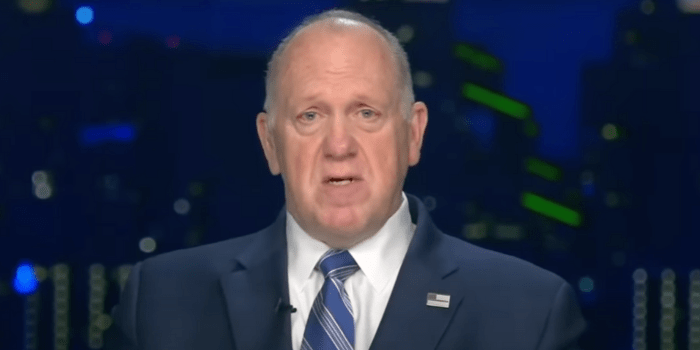
Former Acting Immigration and Customs Enforcement Director and border czar Tom Homan said  “wait to see what’s coming” when he was asked Thursday what should happen to sanctuary cities and specifically what should occur in, where Gov. Tony Evers and the state Department of Administration sent out a memo asking state employees not to answer questions from federal agents, give access to systems or information, and to call the state Office of Legal Counsel if approached.

“You cannot support what we’re doing and you can support sanctuary cities if that’s what you want to do,” Homan said. “But if you cross that line of impediment or knowingly harboring and concealing an illegal alien, that is a felony. And we are treating it as such.”

A group of 41 Wisconsin Assembly Republicans sent a letter this week to Evers requesting that he rescind the memo.

“As the Trump administration continues its efforts to deport thousands of non-citizens who entered our country illegally during the Biden administration, our caucus believes it is imperative that our laws reflect the need for local law enforcement to comply with these efforts,” the letter said.

The letter also referenced the Friday arrest of Milwaukee County Judge Hannah Dugan on accusations that she helped a defendant who was illegally in the country escape from immigration officials.

Dugan is accused of concealing Eduardo Flores Ruiz, who was previously deported and came back to the U.S., where he was facing charges in Milwaukee of domestic battery and abuse.

Dugan was suspended this week by the Wisconsin Supreme Court after being charged with obstruction of a federal proceeding and concealing an individual to prevent discovery or arrest. The obstruction charge could result in up to a $100,000 fine and a year in prison, while the second concealment charge can result in up to five years in prison and a $250,000 fine.