WATCH: Footage Reveals 1st Public Glimpse Inside Epstein’s Private Island Mansion 

(Luis CornelioHeadline USA) Journalist James O’Keefe has released alleged footage from inside Jeffrey Epstein’s former mansion, revealing unsettling details—including a disturbing image hung in a room where girls were presumably abused.

The video purports to show the main residence on Little St. James, a private island in the U.S. Virgin Islands. Epstein owned the property from 1998 until he died in 2019. 

O’Keefe said the footage revealed “the first on-site images from within the now-infamous compound since his arrest in 2019 and subsequent death.” 

An undisclosed source filmed it after Epstein’s 2019 arrest but before authorities secured the premises. 

The footage showed a small white kitchen with steel appliances and a disturbing photo of a nude toddler hanging on one of the walls. 

The photo “begs the question why did Jeffrey Epstein choose to place this image inside of a kitchen, where visitors would eat, cook and entertain?” O’Keefe asked. 

The release came days after O’Keefe published an undercover interview with former royal adviser John Bryan, who accused Prince Andrew of “f***ing underage girls.” 

“I knew he [Prince Andrew] saw him [Jeffrey Epstein],” Bryan reportedly told undercover reporters. “But he lied to me that he was such a close friend.” Bryan clarified that Andrew had lied about his sexual abuse of minors. 

O’Keefe said the kitchen video was “a part of a larger series that will include more materials related to Epstein’s residences, associates, and previously unreleased evidence.” 

O’Keefe’s media company addressed potential doubts about the footage’s authenticity, affirming the “interior scenes align with elements faintly visible through windows in earlier drone footage shots.” 

The Logic of Debt Under Fiat: The Student Edition

(Joakim Book, Money Metals News Service) Anyone who looks at fiat currency long enough, eyes wide open, usually comes to the conclusion that this is an upside-down world.

Unlike gold or silver as sound money, under fiat currency thrift is penalized, financial surpluses are burdens, and losses are good. With tax write-offs, loss harvesting, and interest deductions, more debt is (almost) always better.

Absurdities abound, ranging from debt-fueled corporate buyouts ruling America’s capital markets to “negative gearing,” a political hot potato in countries like Australia: income-generating assets are intentionally acquired, with maximum debt loads, to run at a loss (point being to offset relatively high tax liabilities on incomes earned elsewhere).

Under ever-depreciating fiat currency, the universal, natural-order virtues of thrift, of creating a little something for one’s future self, or living below one’s means, become replaced by their exact inverse. Borrowing becomes not primarily a means for making productive, entrepreneurial investments or smoothing out consumption across periods of volatile incomes — but to short the currency.

Most people believe that mortgages are either something of a human right or a convenient way to reduce the expenses associated with renting — building capital, as my octogenarian grandpa says. His large, mostly unmortgaged house with a sea view (recently sold for an impressively inflated number) is “literally clouding this vision on this topic,” as I’ve put it before.

In late-stage fiat, the prime benefit of a mortgage isn’t said stability of owning one’s home… but to be short dollars, in the safest, most accessible way there is.

What you’re doing when you put down, say, 18% for a house, is to have a bank front you a 5.5x-leveraged-short position on the currency — with slow re-pricing and conveniently low risks for liquidation or margin calls.

Here’s another version of that: student debt.

If you look through the commentariat’s opinion on student debt, they fall somewhere between profligacy for worthless degrees and a necessary evil to get ahead in a credentially inflated modern economy.

Looking into my own student debt finances recently, I noticed something else. I am shorting the currency.

By financing my college education via cheap debt that depreciated in real terms, I acquired an asset that keeps paying financial dividends in terms of professional opportunities; all it saddled me with were liabilities that become easier to carry the more our monetary overlords inflate the money. Safe bet.

We can call it a personalized university-degree carry trade.

A carry trade — itself a fiat monstrosity — is a trading strategy that, according to Investopedia, “involves borrowing from a lower interest rate currency to fund the purchase of a higher interest rate currency.”

You take advantage of financing conditions in one currency to acquire assets in another, with an FX option that appreciates in case the currency pair in question should move against you.

I didn’t set out to do this. I wasn’t exactly a financial literature genius when a decade and a half ago, I saw the incentives written on these fiat walls: next to zero interest rates for most of the ZIRP-decade of the 2010s and statutorily capped repayment schedules tied directly to my income.

This was unbelievably low for an unsecured loan, backed by an otherwise questionable asset. (For university degrees, today scare quotes around “asset” are usually warranted… but I suspect that my Oxford degree qualifies as something of the positive-value sort.)

What I hadn’t foreseen was the depreciation of the currency itself. Servicing SEK-denominated student debt with dollars that I currently earn becomes easier and easier when the USD/SEK rate continues higher. And if you’ve been paying attention to global currencies in the last decade or so, there’s only ever been one direction for the world’s reserve currency: up. To Americans, Europe is perpetually on sale.

Between the time I saw my first funds and I received my last payout, the Swedish krona had depreciated against dollars by 32%.

In the years since, while I have had to make minimum payments of interest and principal, it has depreciated a further 11% (more if I had run these numbers before the recent Trump tariff announcements).

The debt I took out to attend some of the world’s elite universities and pay my bills while doing so is melting away before my eyes. There were entire college semesters in the 2010s where, while I kept increasing the nominal SEK debt, my debt pile fell in dollar terms.

In effect, the world’s currency markets rewarded me for attending university… but really for shorting the currency. Fiat logic at its best.

One obvious objection here is that this was just a lucky currency windfall and that the dollar could have depreciated instead. Not quite.

In a carry trade, you have another asset (option) that appreciates in value in case the relevant currency pair moves against you. In my case, to service SEK debts, I could always get a job in my native Sweden, which would pay me in SEK. Thus, had the world been situated differently — had America not been the world’s money center or the monetary policy of Sweden been more like Switzerland’s — I could always have exercised that option.

What’s worse is that at every level of Fiat Land, this same tendency is repeated. Almost nobody “pays off their house” — not even my grandpa, whose house was practically speaking paid for by an appreciating real estate market. Combined, rising housing prices and pay rises, real and nominal, make the debts easier and easier to carry.

The U.K. and the U.S. never “paid off” their truly massive World War II debts.

Instead, their economies outgrew the debts while they were modestly inflating their currencies and using financial repression (forcing financial institutions to hold debts at below-zero real rates) to ensure that there were always buyers to roll over debt coming due.

The current U.S. federal debt of $36.2 trillion won’t be paid off either; a combination of growth, repression, inflation, and default will once more make it manageable.

No matter how hard you’re working, how smart and prudent you are with your finances, you can’t outwork the monetary tide rising against you.

That makes savings a burden since they must out-earn the most powerful monetary force ever created (fiat currency printing) and pay capital gains taxes on top of that fake “profit.”

In contrast, debt usually comes with interest deductions, which are highly efficient when taken against taxable incomes in the higher brackets.

The perverse conclusion of our fiat times is to never, ever hold fiat currency. Which is in contrast to holding sound money like gold and silver, being the very object whose social-economic function is to move economic value across time and place.

Fiat currency turns monetary civilization upside down.

Happy borrowing.


Joakim Book is a professional editor and writer with a passion for monetary economics and financial history, and a 2025 Sound Money Fellow, conducting advanced comparative analyses of economic history and financial behavior under a gold standard in 19th-century Britain and America versus current times.


ICE-D.C. Sweep: 189 Arrests, Notices to 187 Local Businesses

(Bethany Blankley, The Center Square) U.S. Immigration and Customs Enforcement-District of Columbia agents arrested 189 illegal foreign nationals and served notices of inspection to 187 local businesses during an enhanced targeted enforcement operation focused on finding “criminal alien offenders” illegally living in the Washington, D.C. area.

“The District of Columbia is exponentially safer today because of countless hours of investigative work and dedication to duty displayed by ICE Washington, D.C. and our law enforcement partners,” ICE Enforcement and Removal Operations Washington, D.C. Field Office Director Russell Hott said.

The ICE operation was part of ongoing Trump administration efforts to target the most violent offenders and with removal orders from federal immigration judges.

The multi-agency operation focused on finding “the most dangerous alien offenders in some of the most crime-infested neighborhoods in the city of Washington, D.C.,” Hott said. “Evil is powerless if the good are unafraid. I commend the efforts of everyone involved, as all were truly committed to the success of this operation.”

Agencies involved in the four-day operation included ICE-ERO, Homeland Security Investigations, the U.S. Attorney’s Office for the District of Columbia, Virginia Department of Corrections, FBI, ATF, DEA, U.S. Marshals Service and U.S. State Department’s Diplomatic Security Service.

They focused on targeting “criminal alien offenders including members of transnational criminal organizations known to operate in and around Washington, D.C.,” including MS-13, Tren de Aragua and 18th Street Gang, ICE announced Tuesday. TdA and MS-13 were designated as Foreign Terrorist Organizations by the Trump administration in February.

“The success of this enhanced operation highlights the resolve of ICE and our federal partners in keeping our country safe from criminal alien offenders,” ICE Homeland Security Investigations Washington, D.C. Acting Special Agent in Charge Christopher Heck said. “Many of the aliens arrested have egregious criminal histories to include violent crimes against residents of our Washington, D.C. communities.”

Many arrests were made after local jurisdictions and so-called sanctuary cities refused to honor immigration detainers and released illegal foreign nationals onto the streets, ICE said.

After District of Columbia officials implemented a wide range of so-called sanctuary policies and as the border crisis worsened, the mayor declared a public emergency in 2022. Her repeated requests for assistance from the National Guard were rejected by the Biden administration, The Center Square reported.

Last month, President Donald Trump issued an executive order to implement consequences for local jurisdictions that refuse to comply with federal immigration enforcement, including losing federal funding, The Center Square reported.

In addition to finding and arresting criminal offenders at large, ICE also served 187 notices of inspection to Washington, D.C.-area businesses to ensure they comply with federal immigration and employment law.

“Thanks to President Trump’s leadership and this administration’s focus on law and order, these arrests represent a major step forward in making Washington, D.C., safer for legal citizens and their families,” U.S. Attorney Edward Martin Jr. said. “These arrests make clear that violating our nation’s immigration laws will not be ignored.”

Examples of violent offenders arrested are all men illegally in the country. They either illegally reentered after previously being deported or illegally entered as a gotaway, those who illegally enter between ports of entry, don’t make asylum or other immigration claims and evade capture.

They include a 47-year-old Guatemala national with a criminal history of drug possession, illegal reentry, aggravated assault, trespassing, disorderly conduct and sexual assault. His current criminal charges include “unlawful reentry of a previously deported alien, lewd acts, sex abuse, assault with a dangerous weapon,” among others. He also appears to have gang-affiliated tattoos on his arms, leg and chest, according to images posted by ICE.

Others were charged with “alien present without admission or parole,” meaning they illegally entered as a gotaway. They include a 25-year-old Guatemala national with a criminal history of “threat to kidnap, attempted possession of a prohibited weapon, threats to bodily harm and simple assault;” a 30-year-old Salvadoran national with a criminal history of driving while intoxicated, brandishing a machete and unauthorized use of a vehicle; a 36-year-old Mexican national with a criminal history of larceny, indecent exposure, theft and possession of a prohibited weapon-knife, among others.

Under the Biden administration, more than two million gotaways were reported, the most in U.S. history, The Center Square exclusively reported.

70% of Americans Support a Nuclear Deal with Iran

(Kyle Anzalone, Antiwar.com) A new poll finds a large majority of Americans across the political spectrum support reaching a deal with Iran that allows Tehran to maintain a peaceful nuclear program.

According to the University of Maryland’s Critical Issues Poll, 69% of Americans favor reaching a nuclear deal with Iran. Nearly two-thirds of Republicans and over three-quarters of Democrats said they want a “negotiated agreement limiting Iran’s nuclear program to peaceful ends, with stringent monitoring.”

Under a quarter of Republicans, and just five percent of Democrats, support using the military to take out Iran’s nuclear program.

Ensuring that Tehran did not decide to break out and build a nuclear weapon was the purpose of the 2015 Iran Nuclear Deal negotiated by President Barack Obama. During his first term, Donald Trump withdrew from that agreement, arguing that it did not place enough limits on Iran’s missile program and its support for political and military movements in the Middle East.

While American politicians often hype the threat presented by Iran’s nuclear program, the US intelligence community has repeatedly stated that Tehran is not pursuing a nuclear weapon. Iran’s program is within the limits of the Non-Proliferation Treaty (NPT) and is similar to that of Japan, Germany, and Brazil.

Since returning to office, Trump has engaged with Tehran on developing a new nuclear agreement that restricts Iran’s program beyond the limits imposed by the NPT. However, Trump’s demands have been unclear.

At times, White House officials have said they are willing to allow Tehran to keep its ability to enrich uranium. Other officials have stated that any deal will require Iran to give up its entire enrichment program.

Tehran views its enrichment program as central to its sovereignty, but is willing to consider caps and additional inspections to give Washington and Tel Aviv assurance that it is not weaponizing its civilian program.

The Critical Issues Poll also asked Americans if Israel and Iran having nuclear weapons would lead to a more stable Middle East, with 69% saying they preferred neither country having a nuclear weapon.

However, Israel currently possesses a large strategic stockpile. Only 10% of Americans believe that the status quo will create peace in the Middle East.

This article originally appeared at Antiwar.com.

Israel Will Finish War in Gaza, Drive Out 50% of Palestinians

(Kyle Anzalone, Antiwar.com) Israeli Prime Minister Benjamin Netanyahu declared that Israel would complete its military objectives in Gaza and force out at least 50% of the population.

On Tuesday, Netanyahu said even if Israel agrees to a temporary pause for the release of hostages, it will resume its military operations in Gaza. “We in the coming days will be entering with all our strength to complete the process… to subdue Hamas,” he said, adding that “it could be that Hamas will say ‘pause, we want to release another 10 hostages.’ Ok, release them. We will receive them and after that enter. But there will not be a situation where we stop the war.”

Hamas has long sought a deal with Tel Aviv to release the hostages in exchange for a permanent end to the conflict. Israel has repeatedly rejected this proposal and often sabotaged diplomatic efforts to stop the fighting and free the Israeli captives.

Last week, Haaretz reported that freeing the captives was the least important Israeli military objective in Gaza. Removing the Palestinians from the Strip was listed as a higher priority.

In his remarks, Netanyahu confirmed that Tel Aviv was working to fund countries to take in Palestinian refugees, believing that at least half could be forced out of their homeland. “But there is one problem, we need countries to receive them,” he continued. “This is what we are working on right now. If you give them an exit, I am telling you that more than 50 percent will leave, in my opinion much more.”

Many top Israeli officials have said throughout the military campaign that a result of the conflict must be the removal of the civilian population from Gaza. Washington and Tel Aviv have approached a number of countries about taking the Palestinians. However, so far, no country has publicly stated a willingness to accept Palestinian refugees.

While Tel Aviv has framed the removal of Palestinians from Gaza as voluntary migration, the reality is that Israel has used a massive bombing and starvation campaign to create a famine in the Strip. The World Health Organization reports 57 Palestinian children have starved to death since early March.

Gaza is currently under a full Israeli blockade with no food, fuel or medicine entering the Strip since March 2. Community kitchens and aid organizations have shuttered due to a lack of supplies, leaving millions without access to food.

At the same time, Israel has unleashed a ruthless air war on Gaza. On Tuesday, Israeli war planes pummeled the European Hospital and the surrounding area, killing at least 16.

This article originally appeared at Antiwar.com.

US Charges High-Ranking Mexican Drug Cartel Suspects With Narco-Terrorism

(Headline USA)  U.S. officials unveiled an indictment Tuesday against two alleged Mexican drug cartel leaders on narco-terrorism charges.

The indictment comes after the Trump administration in February designated the Sinaloa Cartel and seven other Latin American crime organizations as “foreign terrorist organizations,” upping its pressure on cartels operating in the U.S. and on anyone aiding them. President Donald Trump called for the designation in an executive order on Jan. 20, the day he took office in his second term.

The “foreign terrorist organization” label is unusual because it deploys a terrorist designation normally reserved for groups like al-Qaida or the Islamic State group that use violence for political ends — not for money-focused crime rings such as the drug cartels.

“If you act like a terrorist, you shouldn’t be surprised if you are charged as one,” said Adam Gordon, U.S. attorney for the Southern District of California.

Those charged were described as key leaders of the Beltrán Leyva Organization, according to the indictment. The organization is one of a number of warring criminal groups that once formed part of the Sinaloa Cartel and have since split off and warred for territory and power, fueling bloodshed in large swathes of Mexico.

Pedro Inzunza Noriega and his son, Pedro Inzunza Coronel, were also charged with providing material support of terrorism in connection with the trafficking of massive amounts of fentanyl, cocaine, methamphetamine and heroin into the United States, according to court documents. Five other high-ranking members were charged with drug trafficking and money laundering.

All remain fugitives, officials said.

The father and son have overseen “one of the largest and most sophisticated fentanyl production networks in the world,” Gordon said. The organization is accused of trafficking tens of thousands of kilograms (pounds) of fentanyl into the United States.

Mexican authorities in December raided multiple sites controlled by the father and son that resulted in the world’s largest seizure of fentanyl, totaling 1,500 kilograms (more than 1.65 tons), according to court documents.

The group is also known for its violence, engaging in shootouts, kidnappings, torture and murders and targeting officials. It controls the drug trade in various parts of Central America and in many areas of Mexico – including in the border city of Tijuana, across from San Diego, according to the indictment.

The elder Pedro is paralyzed after being shot by a rival cartel member. His group has been one of the top distributors of cocaine and now fentanyl since 2006, Gordon said.

Adapted from reporting by the Associated Press.

Report: Minnesota Preparing for Possible Pardon of Derek Chauvin

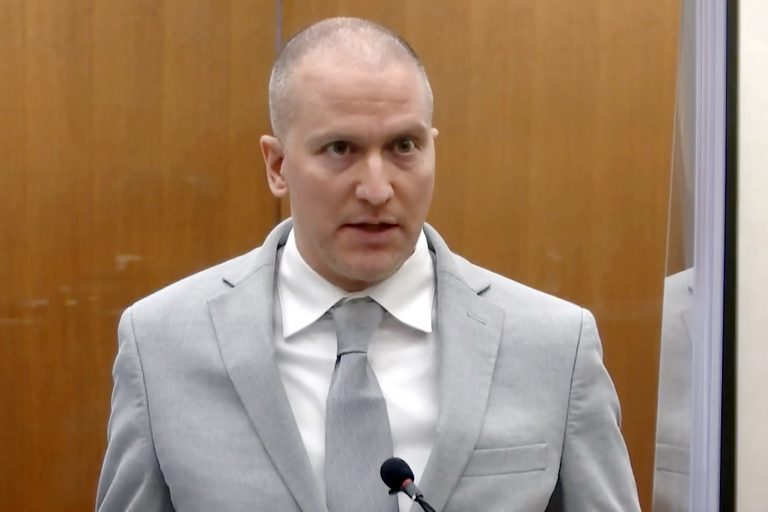
(Ken Silva, Headline USA) Minnesota’s local ABC News affiliate reported Tuesday that Minnesota state officials are preparing for the possibility that President Donald Trump pardons former police officer Derek Chauvin, who was convicted of murder after George Floyd died of an overdose while in his custody in 2020.

“Gov. Tim Walz, the Minnesota National Guard, Mayor Jacob Frey and Hennepin County Sheriff Dawanna Witt have all been briefed on preparations for possible civil unrest if [Trump pardons Chauvin],” 5 EYEWITNESS NEWS reported.

If Trump were to pardon Chauvin, he still wouldn’t go free. He’s serving a federal sentence now, but would still have to face what the state gave him.

“He still owes Minnesota 22-and-a-half years. And he’s going to do it either in Minnesota or somewhere, but he’s not getting out,” the state’s attorney general reportedly told MSNBC.

Trump’s most recent statement on Chauvin was from March, when he said he hadn’t heard of any rumors about a pardon.

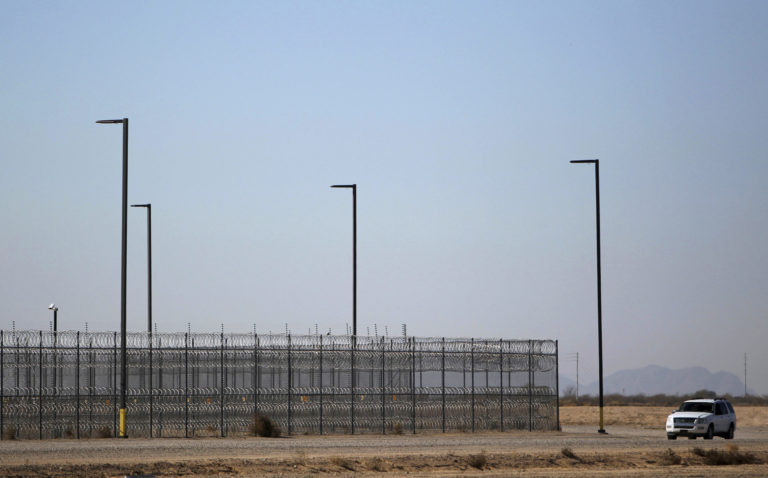
Chauvin is currently sitting in the Texas low-security prison FCI Big Spring after being stabbed 22 times in an Arizona correctional facility in 2023.

Chauvin’s alleged stabber, 54-year-old former Mexican mafia member John Turscak, is set to stand trial in July over that incident.

Tursack allegedly stabbed Chauvin at the Federal Correctional Institution, Tucson, a medium-security prison that has been plagued by security lapses and staffing shortages.

According to a 2001 article from the Los Angeles Times, Tursack is a former FBI informant who admitted to committing numerous crimes while working as an undercover FBI informant.

Ken Silva is a staff writer at Headline USA. Follow him at twitter.com/jd_cashless.

El Chapo’s Family Allowed into the U.S. as Part of Cooperation Agreement w/ DOJ

(Ken Silva, Headline USA) U.S. authorities have reportedly allowed the family of notorious drug lord Joaquín “El Chapo” Guzmán to immigrate to America as part of a cooperation deal between his son and the Justice Department.

Mexico’s security chief confirmed Tuesday that 17 family members of cartel leaders crossed into the U.S. last week as part of that deal. Mexican Security Secretary Omar García Harfuch confirmed a report by independent journalist Luis Chaparro that family members of cartel boss Ovidio Guzman Lopez, who was extradited to the U.S. in 2023, had entered the country.

Guzmán Lopez is one of the brothers left running a faction of the Sinaloa Cartel after “El Chapo” was imprisoned in the U.S. Recent video footage shows the family members walking across the border from Tijuana with their suitcases to waiting U.S. agents.

Rumors had circulated last week that the younger Guzmán would plead guilty to avoid trial for several drug trafficking charges in the U.S. after being extradited in 2023.

García Harfuch confirmed the family members’ crossing in a radio interview and said it was clear to Mexican authorities that they were doing so after negotiations between Guzmán López and the U.S. government.

He believed that was the case because the former cartel boss, whose lawyer said in January he had entered negotiations with U.S. authorities, had been pointing fingers at members of other criminal organizations likely as part of a cooperation agreement.

“It is evident that his family is going to the U.S. because of a negotiation or an offer that the Department of Justice is giving him,” Garcia Harfuch said.

He said that none of the family members were being pursued by Mexican authorities and that the government of U.S. President Donald Trump “has to share information” with Mexican prosecutors, something it has not yet done.

The confirmation by García Harfuch comes the same day that the U.S. Attorney General’s Office announced it was charging a number of top cartel leaders with “narcoterrorism” for the first time since the Trump administration declared a number of cartels as foreign terrorist organizations.

While the immigration of the Guzmáns represents a new development in the relationship between them and the U.S. government, that family has likely been providing information to the U.S. government for years. Last year, American and Mexican authorities captured a fugitive, David DeWayne Young, who was wanted in the U.S. as part of a massive drug conspiracy case—and it was revealed soon thereafter that his capture was likely due to intelligence from the Sinaloas.

“As for El Chapo’s sons, they knew that an American fugitive was hiding in one of their strongholds. They decided they would score points with the FBI and hand him over as a goodwill offering,” Mexican journalist Óscar Balmen said last April, according to a report in the UK Daily Star.

“Giving his [Young’s] head on a platter would be convenient for them, because after the surprise arrest and express extradition of Ovidio [Guzmán] they started an operation to remove the label of ‘Uncle Sam’s priority targets for trafficking fentanyl’.”

The notion that the Sinaloa cartel helping the DOJ might seem preposterous, given that El Chapo is serving a life prison sentence in the U.S., and one of his sons might soon be doing the same.

However, the Sinaloa cartel has a long history of cooperating with federal authorities as part of a self-preservation strategy.

Newsweek detailed Sinaloa’s strategy of working with the U.S. in 2013, when the news organization interviewed an informant from the cartel.

The informant reportedly said an Immigration and Customs Enforcement told him that  they were here to help [the Sinaloa cartel]—”and to fuck the Vicente Carrillo cartel. Sorry for the language. That’s exactly what they said,” the informant told Newsweek.

The same year as Newsweek’s investigation, an anonymous Mexican government official reportedly accused the US government of helping the Sinaloa cartel in an internal email leaked in 2012. The Mexican official reportedly alleged that US authorities told the Juarez Cartel in 2010 that it should recognize the superiority of the Sinaloa Cartel and called on both groups to cut down on violence in the area.

And in 2014, another outlet, Business Insider, revealed in 2014 that the DEA was exchanging intelligence with the Sinaloa cartel.

More recently, an ATF whistleblower has come forward with information suggesting that the U.S. is still funneling guns to Mexican cartels in an operation similar to the Obama-era Fast and Furious scandal.

The Associated Press contributed to this report.

Ken Silva is a staff writer at Headline USA. Follow him at twitter.com/jd_cashless.

Biden Reveals Major Development in Prostate Following Physical Exam

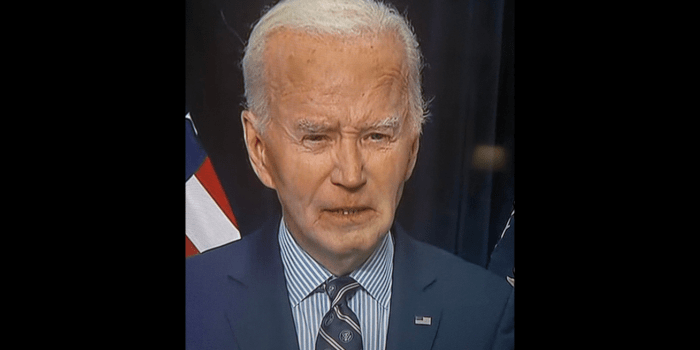
(Luis CornelioHeadline USA) Disgraced former President Joe Biden disclosed new medical findings from a recent physical exam, just months before leaving office as the oldest president in U.S. history. 

According to a spokesperson, doctors found a “small nodule” in Biden’s prostate. His office declined to provide further details, including whether any tests or treatment were planned. 

“In a routine physical exam a small nodule was found in the prostate which necessitated further evaluation,” the spokesperson told ABC News on Tuesday. 

Biden previously had a carcinoma removed from his skin in 2023 following a biopsy.  

The announcement comes as Biden mounts a reputation rehab tour, months after Democratic Party leaders forced him out of the 2024 race over concerns about his age. 

Biden continues to claim—without evidence—that he would have defeated President Donald Trump had he stayed in the race. 

Some of Biden’s own allies disagreed.  

Former President Barack Obama, former House Speaker Nancy Pelosi and Senate Minority Leader Chuck Schumer all urged Biden to step aside and make room for a younger candidate. 

Their concerns began after Biden’s disastrous debate against Trump—confirming what outlets like Headline USA had reported for years: he was mentally unfit to serve. 

Shortly after exiting the race, Biden endorsed Vice President Kamala Harris as his chosen successor.  

Harris, who spent years dismissing questions about Biden’s decline, went on to lose the election. 

During a soft-ball interview on ABC News’s The View, Biden defended his mental acuity, claiming critics were “wrong” and that “there’s nothing to sustain” their accusations. 

GOP Budget Plan Limits SNAP Work Requirement Waivers, Tells States to Help Pay

(Thérèse Boudreaux, The Center Square) Republican lawmakers are prepared to defend their budget plan that shifts some of the costs of the Supplemental Nutrition Assistance Program to the states and better enforces SNAP work requirements.

Under the Republican budget reconciliation framework, the House Committee on Agriculture must find savings of at least $230 billion over the next decade through reforms to programs under its jurisdiction, such as SNAP.

Since 2019, the number of SNAP recipients has increased by 17%, going from roughly 36 million beneficiaries monthly to more than 42 million people monthly now.

The committee’s bill draft, which is subject to change and will undergo markup beginning Tuesday, complies with the reconciliation instructions mainly by closing SNAP work requirement loopholes and incentivizing states to crack down on improper payments.

The U.S. government spent $112.8 billion taxpayer dollars on SNAP in 2023, covering 100% of the cost of benefits and 50% of states’ administrative costs. 

Unlike all other federal entitlement programs, including Medicaid, SNAP does not receive any contributions from states. But the committee’s bill would change that, making states cover 5% of their benefit cost share in the SNAP program by fiscal year 2028, with their contribution increasing the higher the state’s payment error rate.

States have an average payment error rate of 11.68% as of 2023. Republicans’ plan would require states with error rates at or above 10% to pay a 25% share of their SNAP benefits cost.

Among other reforms, the proposed bill would also make all noncitizens aside from legal permanent residents ineligible for food stamps and close “waiver gimmicks” used by states to exempt large numbers of able-bodied beneficiaries from work requirements.

Although the SNAP program has included 20 hour per-week work requirements for able-bodied adult beneficiaries without dependents since 1996, dozens of states have effectively waived work requirements for these people by manipulating data.

States will recategorize or manipulate unemployment data to claim that some or all geographic areas do not have a “sufficient number of jobs,” thereby obtaining work requirement waivers for all SNAP recipients in those areas. 

Roughly 128 million people across the nation, or almost a third of the U.S. population, live in areas where SNAP work requirements are waived. California, Illinois, Nevada, and Washington, D.C., have universally waived SNAP work requirements, while 25 other states have waived work requirements in some parts. 

This tactic has resulted in only 16% of the roughly 3.6 million of able-bodied adult beneficiaries without dependents fulfilling SNAP work requirements.

The ‘waiver states’ also have disproportionately more SNAP beneficiaries, and able-bodied ones, than their share in the overall U.S. population, according to the USDA and Economic Policy Innovation Center.

“For far too long, the SNAP program has drifted from a bridge to support American households in need to a permanent destination riddled with bureaucratic inefficiencies, misplaced incentives, and limited accountability,” House Agriculture Committee Chairman Glenn Thompson, R-Pa., said in a statement.

“This portion of the One Big, Beautiful Bill restores the program’s original intent, offering a temporary helping hand while encouraging work, cracking down on loopholes exploited by states, and protecting taxpayer dollars while supporting the hardworking men and women of American agriculture.”

But Democrats have called the budget plan “catastrophic” and pledged to oppose it. 

“With American families feeling anxious about the economy and so much uncertainty in farm country, this is not the time to make reckless cuts to basic needs programs,” Ranking Member Angie Craig, D-Minn., said Monday. “We should make food assistance work better for those it was designed to protect – like children and moms – not cut it so Republicans can fund more tax breaks for those at the very top.”