Mexican Tall Ship Strikes Brooklyn Bridge, Snapping Masts and Killing 2

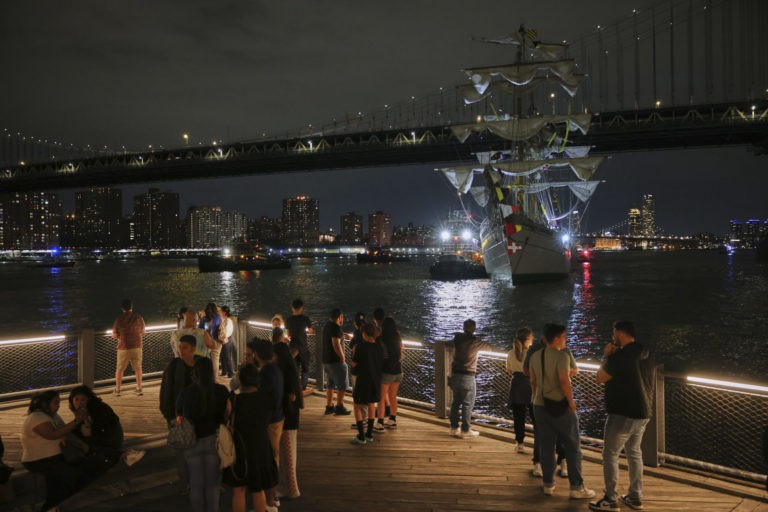
(Headline USAA Mexican navy sailing ship on a global goodwill tour struck the Brooklyn Bridge in New York on Saturday, snapping its three masts, killing two crew members and leaving some sailors dangling from harnesses high in the air waiting for help.

New York City Mayor Eric Adams said the 142-year-old bridge was spared major damage but at least 19 people aboard the ship needed medical treatment.

Two of the four people who suffered serious injuries later died, Adams announced on social media early Sunday.

The cause of the collision was under investigation.

In a scene captured in multiple eyewitness videos, the ship, called the Cuauhtemoc, could be seen traveling swiftly in reverse toward the bridge near the Brooklyn side of the East River. Then, its three masts struck the bridge’s span and snapped, one by one, as the ship kept moving.

Videos showed heavy traffic on the span at the time of the 8:20 p.m. collision. No one on the bridge was reported injured.

The vessel, which was flying a giant Mexican flag and had 277 people aboard, then drifted into a pier on the riverbank as onlookers scrambled away.

Sailors could be seen aloft in the rigging on the damaged masts but, remarkably, no one fell into the water, officials said.

Sydney Neidell and Lily Katz told The Associated Press they were sitting outside to watch the sunset when they saw the vessel strike the bridge.

“We saw someone dangling, and I couldn’t tell if it was just blurry or my eyes, and we were able to zoom in on our phone and there was someone dangling from the harness from the top for like at least like 15 minutes before they were able to rescue them,” Katz said.

Just before the collision, Nick Corso, 23, took his phone out to capture the backdrop of the ship and the bridge against a sunset, Instead, he heard what sounded like the loud snapping of a “big twig.” Several more snaps followed.

People in his vicinity began running and “pandemonium” erupted aboard the ship, he said. He later saw a handful of people dangling from a mast.

“I didn’t know what to think, I was like, is this a movie?” he said.

The Mexican navy said in a post on the social platform X that the Cuauhtemoc was an academy training vessel. It said a total of 22 people were injured, 19 of whom needed medical treatment.

Mexican President Claudia Sheinbaum regretted the loss of the two crew members.

“Our solidarity and support go out to their families,” Sheinbaum said on X.

The Brooklyn Bridge, which opened in 1883, has a nearly 1,600-foot (490-meter) main span supported by two masonry towers. More than 100,000 vehicles and an estimated 32,000 pedestrians cross every day, according to the city’s transportation department. Its walkway is a major tourist attraction.

Traffic was halted after the collision but was allowed to resume after an inspection, city officials said.

It was unclear what caused the ship to veer off course. New York Police Department Special Operations Chief Wilson Aramboles said the ship had just left a Manhattan pier and was supposed to have been headed out to sea, not toward the bridge.

He said an initial report was that the pilot of the ship had lost power due to a mechanical problem, though officials cautioned that information was preliminary. Videos show a tugboat was close to the Cuauhtemoc at the time of the crash.

The Cuauhtemoc — about 297 feet long and 40 feet wide (90.5 meters long and 12 meters wide), according to the Mexican navy — sailed for the first time in 1982.

The vessel’s main mast has a height of 160 feet (48.9 meters), according to the Mexican government.

As midnight approached, the broken boat was moved slowly up the East River, going under and past the Manhattan Bridge, aided by a series of tugboats, before docking at a pier. Onlookers continued to gather on the waterfront to watch the spectacle.

Each year the Cuauhtemoc sets out at the end of classes at the naval military school to finish cadets’ training. This year it left the Mexican port of Acapulco, on the Pacific coast, on April 6, the navy said.

It arrived in New York City on May 13, where visitors were welcome for several days, the Mexican consulate said. The ship was scheduled to visit 22 ports in 15 nations over 254 days, 170 of them at sea.

Adapted from reporting by the Associated Press


Ex-Clinton Aide, FBI Agent Sues James O’Keefe for Defamation

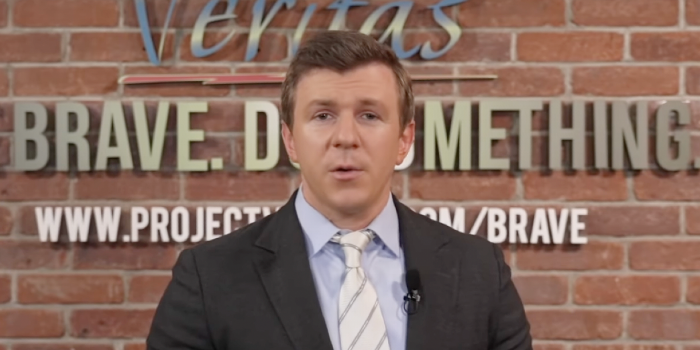
(Luis CornelioHeadline USA) The former FBI agent and Pentagon contractor whose anti-Trump bias was exposed in undercover footage by James O’Keefe is now suing for defamation. 

Jamie Mannina claims in a federal civil lawsuit against O’Keefe that his remarks were “manipulated” and published online to suggest he was plotting a coup against President Donald Trump. He filed the lawsuit on Wednesday.

Mannina does not deny making the statements, which were all captured on video. Instead, he contends that O’Keefe and an undercover journalist identified only as “Heidi” allegedly “conspired” for the purpose of “entrapping him into making inflammatory and damaging remarks.”

Mannina admitted on video that he had teamed up with a “couple of retired generals to explore what we can do.” O’Keefe said these comments appear to refer to efforts to block Trump’s return to the White House. 

Mannina’s LinkedIn profile reveals a long career with the government, beginning with none other than Hillary Clinton, the twice-failed presidential candidate. He worked for her when she was a senator. 

He followed her to the State Department in 2009, first serving as a special assistant and ultimately becoming a senior foreign affairs advisor. He then moved on to the Office of the Director of National Intelligence, the FBI and eventually to the government contractor giant Booz Allen Hamilton. 

Mannina confessed to feeling “depressed” after Trump won the 2024 election and claimed the election cost him a major job opportunity he would have received had Trump’s opponent, former Vice President Kamala Harris, become president. 

Now, Mannina wants a judge to find O’Keefe and others liable for damages over the comments he made himself. He is seeking the profits made by the video, along with punitive damages and even attorney’s fees.  

He described the defamation as “deliberate” and “outrageous.” Notably, Mannina is represented by attorney Mark Zaid, the same man whose security clearance Trump revoked and who is now suing over it. 

O’Keefe rebuked the lawsuit as an attempt to chill his First Amendment rights. “He said what he said. We did not take him out of context. The words that we reported came out of his mouth,” O’Keefe told the leftist Associated Press. “We stand by our reporting.” 

In a post on his website, O’Keefe added: “They’re arguing that we made a defamation by implication, but we just quoted this man and reported the words that came out of his mouth.” 

Secret Service Interviews James Comey in Trump Probe

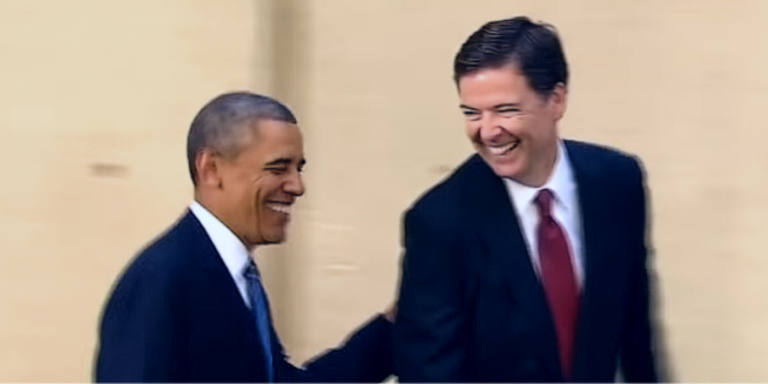
(Luis CornelioHeadline USA) Disgraced former FBI Director James Comey went to the Secret Service’s Washington, DC, field office for an interview about his alleged death threat against President Donald Trump. 

Federal agents did not arrest him but instead gave him a chance to explain himself, Fox News reporters Bill Melugin and David Spunt announced on X. 

No details have emerged about what Comey told federal investigators. 

The interview came a day after he shared on Instagram a photo of seashells arranged to read “8647,” which Trump officials saw as a violent threat.

The numbers “86” are colloquially used to refer to getting rid of someone and Trump is the 47th U.S. president. 

Comey deleted the post amid mounting backlash, conveniently claiming he didn’t know what the numbers meant. 

“I didn’t realize some folks associate those numbers with violence,” he wrote on Instagram. “It never occurred to me but I oppose violence of any kind so I took the post down.” 

Trump dismissed that excuse, affirming Comey knew what the numerical figure meant. 

“A child knows what that meant,” Trump told Fox News on Friday. “If you’re FBI director and don’t know what that meant, that meant assassination. And it says it loud and clear. He wasn’t very competent, but competent enough to know what that meant.”  

Trump added, “He did it for a reason. And he was hit so hard because people like me and like what was happening with our country. All this — he is calling for assassination of the president.” 

It’s unclear whether Comey will face charges or if the case remains under investigation. 

Comey made the alleged threat amid rising political violence, less than a year after Trump survived two assassination attempts and won the 2024 election. 

Astroturfed Scandal? Trump’s $400M Qatari Jet Sparks Outrage from Zionist Influencers

(José Niño, Headline USA) A diplomatic gift from Qatar to the U.S. — a Boeing 747-8 jet — has sparked criticism from both foes and ostensible allies of President Donald Trump as he attempts to navigate an increasingly tumultuous political landscape in the Middle East.

On Monday, Trump announced plans to accept a Qatari-donated Boeing 747-8 jet, initially designated as Air Force One, according to a report by Reuters. 

Valued at roughly $400 million, the aircraft would later be retired to Trump’s presidential library. While Qatari Prime Minister Mohammed bin Abdulrahman bin Jassim Al-Thani insists the deal is a government-to-government transaction, critics argue it violates the Foreign Emoluments Clause, which bars federal officials from accepting gifts from foreign states without congressional approval.  

In an interview with NPR, Columbia Law School professor Richard Briffault warned the gift could constitute a personal emolument if it goes to Trump’s post-presidency library, thereby creating a clear violation of the Constitution. 

Republican Senators Mike Rounds and John Cornyn have likened the jet to a “Trojan horse,” while Democrats fear it sets a precedent for foreign powers to buy influence. Al-Jazeera reported that the deal has united lawmakers in rare bipartisan opposition, with a Senate coalition seeking to block it.

Zionist Outrage

The Trump jet controversy has galvanized a network of pro-Israel commentators and institutions framing Qatar as a destabilizing force in Middle Eastern geopolitics.  

Bari Weiss, outspoken Zionist and founder of The Free Press, amplified an investigative report penned by Frannie Block and Jay Solomon alleging that Qatar spent “almost $100 billion to establish its legitimacy in Congress, American colleges and universities, U.S. newsrooms, think tanks, and corporations.” 

Weiss previously linked Qatar to anti-Israel activism in a November 2023 article, citing a study by the Network Contagion Research Institute that found universities accepting donations from Middle Eastern countries, especially from Qatar, had “300 percent more antisemitic incidents than those institutions that did not.” 

Similarly, Daily Wire host Ben Shapiro, a staunch Israel supporter, condemned Trump’s jet acceptance as antithetical to “America First” principles. On his podcast episode on Tuesday, he stated: “Taking sacks of goodies from people who support Hamas, Muslim Brotherhood, Al-Jazeera, all the rest-that’s not America first.”

Fox News host Mark Levin, who is vocal about his support for the Jewish state, used the jet controversy to revive 9/11-era grievances, tweeting on Wednesday:  

“Qatar protected the leader of the 9/11 attack from the FBI…The debate about whether the plane is a legal gift is beside the point. Qatar is a terrorist regime that has murdered Americans.”

Prominent America First influence Laura Loomer tweeted that she would “take a bullet” for Trump, yet she criticized Trump’s acceptance of a gift from Qatar.

“How are we supposed to ever see the US under the Trump admin designate the Muslim Brotherhood as a terrorist organization if the US is now going to accept a $400 million jet from Qatar to fly the US President and his staff around on?” Loomer wrote on X. 


The White House continues to dismiss the idea that Qatar wanted to influence Trump.

“They know President Trump, and they know he only works with the interests of the American public in mind,” press secretary Karoline Leavitt told Fox News on Monday.

José Niño is the deputy editor of Headline USA. Follow him at x.com/JoseAlNino 

Tornado Storms Kill At Least 23, Including 14 in Kentucky

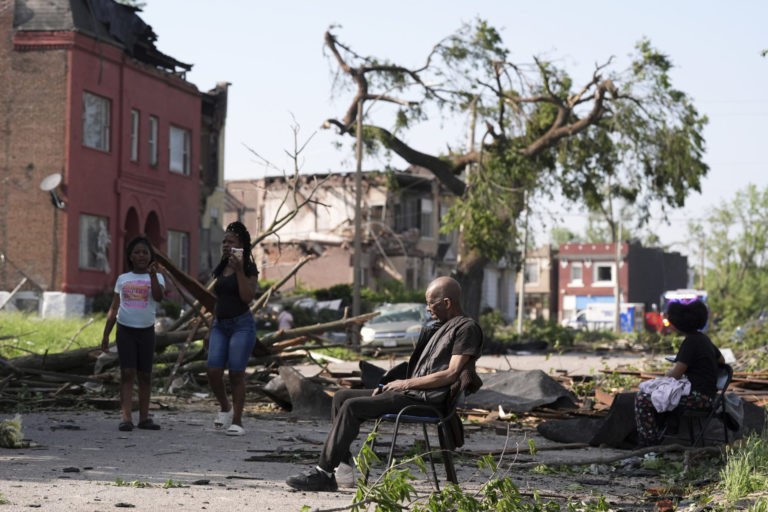
(Headline USAStorm systems sweeping across parts of the U.S. Midwest and South have left at least 23 people dead, many of them in Kentucky, where what appeared to be a devastating tornado crumbled buildings and flipped over a car on an interstate.

In Kentucky, some 14 people were killed by severe weather, and the death toll is likely to rise, according to Gov. Andy Beshear. Local authorities in Laurel County, in the state’s southeast, said nine people were killed after a tornado touched down.

Laurel County resident Chris Cromer said he got the first of two tornado alerts on his phone around 11:30 p.m. or so, about a half-hour before the tornado struck. He and his wife grabbed their dog, jumped in their car, went to a relative’s nearby home and got into a crawlspace.

“We could hear and feel the vibration of the tornado coming through,” said Cromer, 46.

His home is intact, though a piece of the roof got ripped off and windows were broken. A house two doors down is destroyed, along with others in the Sunshine Hills neighborhood, Cromer said.

“It’s one of those things that you see on the news in other areas, and you feel bad for people — then, when it happens, it’s just surreal,” he said, describing a landscape of destruction. “It makes you be thankful to be alive, really.”

Rescuers were searching for survivors all night and into the morning, the sheriff’s office said. An emergency shelter was set up at a local high school and donations of food and other necessities were arriving.

The National Weather Service hadn’t yet confirmed that a tornado struck, but meteorologist Philomon Geertson said it was likely. It ripped across the largely rural area and extended to the London Corbin Airport shortly before midnight.

“Lives have been changed forever here tonight. This is a time we come together, and we pray for this community,” London Mayor Randall Weddle told WKYT-TV.

It’s the latest severe weather to cause deaths and widespread damage in Kentucky. Two months ago, at least 24 people died in a round of storms that swelled creeks and submerged roads. Hundreds of people were rescued, and most of the deaths were caused by vehicles getting stuck in high water.

A storm in late 2021 spawned tornadoes that killed 81 people and leveled portions of towns in western Kentucky. The following summer, historic floodwaters inundated parts of eastern Kentucky, leaving dozens more dead.

Missouri pounded by storms, with deaths confirmed in St. Louis

About 1,200 tornadoes strike the U.S. annually, and they have been reported in all 50 states over the years. Researchers found in 2018 that deadly tornadoes were happening less frequently in the traditional “Tornado Alley” of Oklahoma, Kansas and Texas and more frequently in parts of the more densely populated and tree-filled mid-South area.

The latest Kentucky storms were part of a weather system Friday that killed seven in Missouri and two in northern Virginia, authorities said. The system also spawned tornadoes in Wisconsin, brought a punishing heat wave to Texas and temporarily enveloped parts of Illinois — including Chicago — in a pall of dust on an otherwise sunny day.

“Well that was…..something,” the weather service’s Chicago office wrote on X after issuing its first-ever dust storm warning for the city. Thunderstorms in central Illinois had pushed strong winds over dry, dusty farmland and northward into the Chicago area, the weather agency said.

In Missouri, St. Louis Mayor Cara Spencer on Friday confirmed five deaths in her city and said more than 5,000 homes were affected.

“This is truly, truly devastating,” Spencer said. An overnight curfew was imposed Friday in the most damaged neighborhoods. Hospitals in the area reported receiving dozens of patients, with some in serious condition.

Weather service radar indicated a likely tornado touched down between 2:30 p.m. and 2:50 p.m. in Clayton, Missouri, in the St. Louis area. The apparent tornado touched down in the area of Forest Park, home to the St. Louis Zoo and the site of the 1904 World’s Fair and Olympic Games the same year.

Three people needed aid after part of the Centennial Christian Church crumbled, St. Louis Fire Battalion Chief William Pollihan told The Associated Press.

Stacy Clark said his mother-in-law, Patricia Penelton, died in the church. He described her as a very active church volunteer who had many roles, including being part of the choir.

John Randle said he and his girlfriend were at the St. Louis Art Museum during the storm and were hustled into the basement with about 150 other people.

“You could see the doors flying open, tree branches flying by and people running,” he said. “A lot of people were caught outside.”

At the Saint Louis Zoo, falling trees severely damaged the roof of a butterfly facility. Staffers quickly corralled most of the butterflies, the zoo said on social media, and a conservatory in suburban Chesterfield is caring for the displaced creatures.

A tornado struck in Scott County, about 130 miles (209 kilometers) south of St. Louis, killing two people, injuring several others and destroying multiple homes, Sheriff Derick Wheetley wrote on social media.

Forecasters say severe weather could batter southern Plains

The National Weather Service’s Storm Prediction Center said on its website Saturday that severe thunderstorms, large hail and “a couple of tornadoes” were expected across the southern Plains, with especially high risk in north Texas.

Adapted from reporting by the Associated Press


Escaped New Orleans Inmates, Who are Still on the Run, Likely Had Inside Help

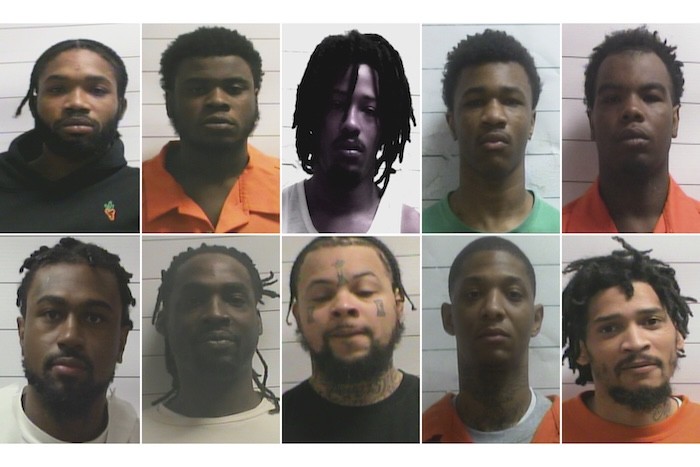
(Headline USATen men broke out of a New Orleans jail Friday in an audacious overnight escape by fleeing through a hole behind a toilet and scaling a wall while the lone guard assigned to their cell pod was away getting food, authorities said.

Seven of the escapees, including suspects charged with murder, remain on the lam following the breakout that the local sheriff says may have been aided by members within the department.

Surveillance footage, shared with media during a news conference, showed the escapees sprinting out of the facility — some wearing orange clothing and others in white. They scaled a fence, using blankets to avoid being cut by barbed wire, and then some could be seen sprinting across the nearby interstate and into a neighborhood.

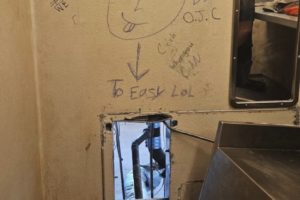
A photograph obtained by The Associated Press from law enforcement shows the opening behind a toilet in a cell that the men escaped through. Above the hole are scrawled messages that include “To Easy LoL” with an arrow pointing at the gap.

This photo obtained by The Associated Press on Friday, May 16, 2025, shows an opening inside a cell at the Orleans Justice Center in New Orleans. (AP Photo)

The absence of the 10 men, who also utilized facility deficiencies that officials have long complained about in their escape, went unnoticed for hours. It was not until a routine morning headcount, more than seven hours later, that law enforcement learned of the escape.

Officials from the sheriff’s office say no deputy was at the pod where the fugitives had been held. There was a technician, a civilian there to observe the pod, but she had stepped away to get food, they said.

Soon after the escape, one of the men, Kendall Myles, 20, was apprehended after a brief foot chase through the French Quarter. He had previously escaped twice from juvenile detention centers.

By Friday evening, two more fugitives had been captured. Officials found Robert Moody, 21, in New Orleans thanks to a Crimestoppers tip, according to Orleans Parish Sheriff’s Office. Dkenan Dennis was found near the Chef Menteur Highway, Louisiana Attorney General Liz Murrill announced on the social platform X.

Louisiana State Police say search is active

Seven escaped inmates remain at large, Louisiana State Police said in an update Saturday morning.

State police used a helicopter to transport the captured inmates to a state correctional facility outside the New Orleans area, the agency said.

The search remains active with numerous local, state, and federal agencies working together around the clock to locate and apprehend the remaining individuals, police said.

Sheriff blames ‘defective locks’ and possibly inside help

Orleans Parish Sheriff Susan Hutson said the men were able to get out of the Orleans Justice Center because of “defective locks.” Hutson said she has continuously raised concerns about the locks to officials and, as recently as this week, advocated for money to fix the ailing infrastructure.

Hutson said there are indications that people inside her department helped the fugitives escape.

“It’s almost impossible, not completely, but almost impossible for anybody to get out of this facility without help,” she said of the jail, where 1,400 people are being held.

The escapees yanked open a door to enter the cell with the hole around 1 a.m.

At least one of the steel bars protecting plumbing fixtures “appeared to have been intentionally cut using a tool,” according to a statement from the Orleans Parish Sheriff’s Office on Friday night.

The men shed their jail uniforms once out of the facility, and it is still unclear how some of them obtained regular clothing so quickly, officials said.

Authorities did not notice the men were missing until 8:30 a.m. Authorities initially said 11 had escaped, but at a Friday afternoon news conference said one man thought to have escaped was in a different cell.

Three employees have been placed on suspension pending the outcome of the investigation. It was not immediately clear whether any of the employees were suspected of helping with the escape. Officials also didn’t say if the guard who left to get food was among the three suspended.

Who are the fugitives?

The escapees range in age from 19 to 42. Most of the men are in their 20s.

One of the fugitives, Derrick Groves, was convicted on two charges of second-degree murder and two charges of attempted second-degree murder last year for his role in the 2018 Mardi Gras Day shootings of two men. He also faces a charge of battery against a correctional facility employee, court records show. Law enforcement warned that he may attempt to locate witnesses in the murder trial.

Another escapee, Corey Boyd, had pled not guilty to a pending second-degree murder charge.

Hutson said the police department was actively working with local, state and federal law enforcement agencies to search for the fugitives.

Police relied on facial recognition technology to identify and capture one fugitive, said Bryan LaGarde, executive director of Project NOLA, a nonprofit operating more than 5,000 cameras around New Orleans. His organization, which partners with Louisiana authorities, entered the escapees’ images into the system and quickly found two in the French Quarter.

“They were walking openly in the street. They were keeping their heads down and checking over their shoulder.” LaGarde said, adding that the other fugitive walked out of sight of the cameras.

State and local officials blast jail authorities

“This represents a complete failure of the most basic responsibilities entrusted to a sheriff or jail administrator,” said Orleans Parish District Attorney Jason Williams. He blasted the sheriff’s office for a multi-hour delay in notifying authorities and the public of the escape. “These inexcusable failures have put lives in danger.”

Murrill, the state’s attorney general, called the escape “beyond unacceptable” and said local authorities waited too long to inform the public. She said she reached out to surrounding states to alert them about the escape.

New Orleans Police Department Superintendent Anne Kirkpatrick said her agency has put “a full court effort” to respond to the escape and is working with the FBI and U.S. marshals.

Officers were focused on identifying and providing protection for people who may have testified in their cases or may be in danger. One family has been “removed” from their home, Kirkpatrick said.

“If there is anyone helping or harboring these escapees, you will be charged,” Kirkpatrick added.

Turmoil at New Orleans’ jail

New Orleans’ jail has for more than a decade been subject to federal monitoring and a consent decree intended to improve conditions.

Security problems and violence persisted even after the city opened the Orleans Justice Center in 2015, replacing the decaying Orleans Parish Prison, which had seen its own string of escapes and dozens of in-custody deaths.

A federal judge declared in 2013 that the lockup had festered into an unconstitutional setting for people incarcerated there.

Orleans Parish Sheriff Susan Hutson said staff is “stretched thin” at the facility, which is around 60% staffed.

Bianka Brown, chief financial officer of the Orleans Parish Sheriff’s Office, said they can’t afford a maintenance and service contract to fix problems such as broken doors, lock replacements and other ailing infrastructure.

The jail contained numerous “high security” people convicted of violent offenses who required a “restrictive housing environment that did not exist,” said Jay Mallett, Orleans Parish Sheriff’s Office chief of corrections. The sheriff’s office was in the process of transferring dozens to more secure locations.

Adapted from reporting by the Associated Press


White House Working on Plan to Send 1 Million Palestinians to Libya

(Kyle Anzalone, Antiwar.comThe Donald Trump administration is attempting to bribe one of the warring parties in Libya to accept 1 million Palestinians that Israel is attempting to cleanse from Gaza. Libya became a failed state after the US-led regime change war against longtime dictator Muammar Gaddafi in 2011.

According to NBC News, multiple US officials confirmed that the Trump administration was in negotiations with one of Libya’s competing governments. “In exchange for the resettling of Palestinians, the administration would potentially release to Libya billions of dollars of funds that the U.S. froze more than a decade ago,” the report explains.

The NBC News report did not specify if the US was talking with the Tripoli-based government led by Abdul Hamid Dbeibah, or the eastern government led by Khalifa Haftar. Libya has been in a state of civil war since the US-backed jihadist-linked rebels overthrew and murdered Gaddafi in 2011.

Fighting has erupted in the areas around Tripoli in recent weeks. Both Libyan governments are accused of serious human rights abuses, and the State Department directs Americans not to travel to the North African state “due to crime, terrorism, unexploded landmines, civil unrest, kidnapping, and armed conflict.”

NBC News noted that representatives from the US, Israel, Dbeibah, and Haftar did not respond to requests for comment.

The report comes as both Netanyahu and Trump have discussed proposals for the massive displacement of Palestinians in recent days. On Friday, the American leader said, “I have concepts for Gaza that I think are very good: Make it a freedom zone. Let the United States get involved, and make it just a freedom zone.”

He added, “I’d be proud to have the United States have it, take it, make it a freedom zone, let some good things happen. Put people in homes where they can be safe, and Hamas is going to have to be dealt with.”

Trump floated a similar proposal earlier in his administration. At the time, he said the Palestinians would be removed from the Strip and sent to live in refugee cities in third countries.

Discussing the war in Gaza earlier in the week, Netanyahu said Israel was prepared to force about 1 million Palestinians to leave Gaza, but was still seeking a country willing to take the refugees. “But there is one problem, we need countries to receive them,” he continued. “This is what we are working on right now. If you give them an exit, I am telling you that more than 50 percent will leave, in my opinion, much more.”

He also told the Knesset’s Foreign Affairs and Defense Committee, “We are destroying more and more homes, and Gazans have nowhere to return to. The only inevitable outcome will be the wish of Gazans to emigrate outside of the Gaza Strip.”

Throughout the war in Gaza, Tel Aviv and Washington have reached out to a number of states to take Palestinians that Israel has cleansed from Gaza. Many of those states face numerous internal issues or active civil wars, such as Somalia, Sudan, Congo, Chad, and Syria.

NBC News noted that the talks between Washington and Damascus about accepting Palestinians forced from Gaza were ongoing.

On Thursday, Trump met with the new Syrian leader, Abu Mohammad al-Jolani, who now goes by Ahmed al-Shara. Jolani is a veteran of al-Qaeda in Iraq and founded the Syrian al-Qaeda affiliate. Since taking power, Jolani’s government has engaged in mass killings of Syrian minority sects.

Kyle Anzalone is the opinion editor of Antiwar.com and news editor of the Libertarian Institute. He hosts The Kyle Anzalone Show and is co-host of Conflicts of Interest with Connor Freeman.

This article originally appeared at Antiwar.com.

Audio of Biden’s Interview w/ Special Counsel Confirms His Senility

(Luis CornelioHeadline USA) The long-sought audio of Joe Biden’s October 2023 interview with Special Counsel Robert Hur has finally surfaced, confirming the worst about the disgraced former president. 

The audio, released Friday by Axios, revealed a cognitively impaired Biden, who even struggled to recall key memories, including when his son, Beau Biden, died. 

Asked where he stored documents related to his book Promise Me, Dad and the Penn Biden Center, Biden stuttered: “Well, um, I, I, I, I, I, I don’t know.” 

When pressed about his work after serving as vice president in the Obama-Biden administration, he asked: “This is what, 2017, 18, in that area.” 

“Yes, sir,” Hur confirmed.  

Despite the reminder, Biden confused 2009, when he left the Senate to become vice president, with 2015, when Beau died, and 2017: 

“Remember, in this time frame, my son is… uh… would’ve been deployed or is dying and so … it was … and by the way there were still a lot of people at the time, when I got out of the Senate, that were encouraging me to run in this period — except the president.” 

Biden’s confusion about Beau’s death date did not end there. 

Asked about former President Barack Obama’s reluctance to endorse him in 2016, Biden replied: “What was happening, though, was… what month did Beau die? Oh god, May 30…” 

“2015,” Biden’s attorney interjected. 

“Was it 2015 he had died?” Biden asked again, to which his attorney answered: “It was.” 

“I think it was 2015,” Biden concluded, still confused. 

Biden also appeared lost in Trump’s election in 2016 and subsequent inauguration in 2017. 

“And what happened in the meantime is that… as… and… Trump gets elected in November of 2017?” Biden questioned. 

Still mixing the date, Biden added, “2016, alright so… Why do I have 2017 here?” 

His attorney reminded that Biden’s tenure as vice president ended on Jan. 20, 2017. “That’s when you left office, in January of 2017,” the attorney replied. 

The audio’s release comes after the Biden administration fought tooth and nail to block it. Congress even held Attorney General Merrick Garland in contempt after the White House dubiously cited executive privilege to keep the tape sealed. 

In his final report, Hur declined to recommend prosecution, claiming he expected Biden to present himself to a jury as a “sympathetic, well-meaning, elderly man with a poor memory.” 

But the audio directly contradicts Biden’s own protestations that he did not need reminders about his son’s death. 

“How in the hell dare he raise that? I don’t need anyone to remind me when he passed away,” Biden snapped, referring to Hur’s report noting the then-president couldn’t recall Beau’s death date.

The full audio is expected to be released in the upcoming weeks, Politico and the New York Post reported. 

Report: Colombian Drug Kingpin Was a U.S. Government Asset

(Headline USAIn the sordid annals of Colombia’s underworld, Diego Marín stood out as the ultimate survivor.

Time and again, the reputed henchman for the Cali cartel evaded capture — or worse fates — as he built a money-laundering network stretching across four continents. He did so, authorities have alleged, with ruthlessness, street smarts and a willingness to bribe a slew of South American police officers and politicians.

All the while, Marín had an even more powerful ally in his corner: the U.S. Drug Enforcement Administration.

For years, the elite narcotics agency claimed it was investigating the Colombian importer, telling the U.S. Justice Department he was among DEA’s top targets. In reality, the relationship was more fraught, with Marín briefly signed up as an informant even as he assiduously corrupted agents with a movable feast of prostitutes, fine dining and expensive gifts, an Associated Press investigation found.

In return, at least one of those agents helped Marín launder money and smuggle contraband — throwing law enforcement off his tracks. As the DEA looked the other way, Marín’s business flourished into a criminal empire that generated up to $100 million a year, according to the Internal Revenue Service.

The AP’s findings — based on interviews with current and former agents, as well as a trove of highly sensitive Justice Department files — offer an unprecedented glimpse into the fraud, shoddy oversight and profligate DEA spending that enabled Marín’s ascent. The corruption was so extensive, the officials said, that it reminded them of one of the most infamous law enforcement scandals in U.S. history — the FBI’s unscrupulous dealings with Whitey Bulger, the Boston mob boss.

“It’s an embarrassment for the DEA,” said retired Colombian Gen. Juan Carlos Buitrago, who spent years trying to take down Marín only to see his own career derailed by the pursuit. “They ended up creating a monster.”

After decades in the shadows, Marín has recently become front-page news in Colombia, where he’s been dubbed the “Contraband Czar” over bribery charges that led to his arrest last year in Spain. Among the revelations aired in Colombian media: Marín provided a private plane and an illegal $125,000 campaign donation to President Gustavo Petro.

Marín attorneys declined to comment. The DEA did not respond to requests for comment.

The revelations are the latest stain for an agency at a crossroads under President Donald Trump. DEA agents already have been redirected to assist in immigration enforcement, and the Justice Department is considering merging the DEA with the Bureau of Alcohol, Tobacco, Firearms and Explosives — a restructuring that could change how the U.S. fights the drug war.

‘Untouchable’

Marín, 62, learned to hustle from an early age. He was raised in Palestina, a western frontier town settled by devout Catholics who eked out a modest existence from the surrounding coffee farms. To help provide for his family, as a kid he sold candies in the town’s plaza.

It’s not precisely known how he got into the drug business. But it was sometime during Colombia’s bloody cocaine wars, an era popularized by drug lord Pablo Escobar’s infamous phrase of “plata o plomo”: money or bullets.

His first brush with the law came in 1993, when he was arrested on accusations of hiding dope money in Colombia-bound home appliances for the leaders of the Cali cartel, Gilberto and Miguel Rodríguez Orejuela, Escobar’s main rivals. The evidence, obtained through wiretapped phone calls, tracked with DEA’s own intelligence at the time that Marín was involved in drug trafficking, according to Colombian court records.

Colombian authorities declined to charge him and the case fell apart when a police officer — himself later convicted of leaking confidential information to the cartel — recanted his testimony against Marín.

In the ensuing years, the U.S. government records show, Marín sought to line the pockets of law enforcement. An FBI report from 2020 said Marín “paid everyone off” as he developed a niche in what’s known as trade-based money laundering, a complex method of hiding and moving drug proceeds through the use of offshore shell companies and misvalued cargo shipments.

Even as he amassed a fortune, Marín was careful to eschew the narco bling of infamous drug lords. Few photographs are known to exist of him. He carefully avoided opening bank accounts and limited his electronic communications.

“He was pretty much untouchable,” said Luis Sierra, a longtime U.S. criminal investigator who served as the Homeland Security Investigations attaché to Bogota. “His tradecraft was compromising and corrupting Colombian — and even a few U.S. — officials.”

Buitrago, the Colombian general who investigated Marín, said he obtained reliable intelligence that Marín had offered $5 million to officials to have him ousted. Buitrago retired rather than accept an unwanted transfer.

“The message was clear: I had to get out of the way or I had to get out of the way,” Buitrago said. “It’s incalculable the number of institutions he co-opted.”

Over time, authorities said, those relationships helped Marín emerge as a key money launderer to remnants of the defunct Cali cartel.

In that role, they said, contraband he smuggled would end up converted into pesos at Colombia’s ubiquitous “San Andresitos”: informal shopping areas packed full of budget-priced electronics and appliances. The name is a play on the Colombian island of San Andres, a duty-free zone in the Caribbean.

That sophisticated system was starting to draw scrutiny from law enforcement when Marín befriended an impressionable, up-and-coming DEA agent.

The corrupt agent

Special Agent José Irizarry — a former air marshal from Puerto Rico hired by the DEA in 2009 despite failing a polygraph — landed a coveted overseas post in Cartagena, Colombia, in part because he was bilingual. He met Marín in 2011, not long after the head of Colombia’s police publicly identified Marín as a major smuggler.

The DEA’s elite Special Operations Division also had pegged Marín as a major player. The agency even sought to classify him as a so-called Consolidated Priority Target, reserved for the most prolific drug traffickers and money launderers, according to hundreds of pages of Justice Department reports obtained by the AP. The investigative records, which include FBI interview notes, internal DEA memos and private text messages among agents, show Marín had been on the radar of at least five federal law enforcement agencies by the time Irizarry was charged.

But Irizarry believed Marín could be more valuable as an informant. “Marín would come over and they would play cards and have girls over,” according to an investigative IRS report. The meetings in Colombia were the first of many that would flout DEA rules forbidding agents from socializing with informants.

Soon, the government records show, Marín tried to compromise the DEA, showering Irizarry with expensive Hublot watches, luxury cars and a $750,000 condo.

Instead of providing Irizarry with intelligence, Marín gave him a Tiffany ring for his Colombian wife, as well as $5,000 in cash so the agent could buy a gift for his mistress. One internal government record said Marín “viewed Irizarry like a son.”

Irizarry began protecting Marín and his organization, signing him up as an informant in 2013. “He would pay me,” Irizarry told the AP, “and if he ever needed me, he had me.”

Irizarry helped Marín expand his empire, the government records show, by steering undercover DEA wire transfers to his associates, providing safe passage for containers full of contraband and even seeking to throw off other federal agencies.

Once, the records show, Irizarry told a suspicious federal investigator that “people make up stories about Marín,” calling him an “open book.”

‘White Wash’

Irizarry avoided suspicion in part by exploiting a powerful Justice Department tool that long lacked proper oversight.

That tool, known as an Attorney General Exempt Operation, or AGEO, gives DEA authority to launder money on behalf of cartels with the goal of carrying out major seizures and arrests. Like actual money launderers, the DEA charges hefty commissions for the transactions — money that agents can spend more freely than government funds.

The DEA has long refused to discuss the stings, which involve setting up front companies, buying property and making wire transfers on behalf of cartels. But internal records show the number of such money laundering operations ballooned at one point to 53 around the country.

In 2011, Irizarry and other agents launched an AGEO to target Marín. In a memo spelling out the operation, they wrote to top Justice Department officials that they hoped to strike “a devastating blow” against Marín, whom they described as a “primary launderer” and investor in cocaine shipments leaving Colombia. They gave the operation a now-ironic name: White Wash.

Marín, however, was only a target on paper. And two years later, Irizarry and his Miami-based colleagues quietly converted him to an informant, a process that typically involves careful vetting and supervisory sign-off.

All the while, income generated by White Wash allowed Irizarry and other agents to party around the world with Marín in what the agents described as a blur of booze, drugs, prostitutes and high-end dining.

“It was a very fun game that we were playing,” Irizarry said.

The debauchery also included tickets to premier tennis and soccer matches in Spain, Caribbean cruises on a yacht seized from drug traffickers and lap dances at a strip club in the Dominican Republic paid for by a hitman nicknamed Iguana. The same “sicario,” Irizarry told authorities, boasted of killing 15 people on Marín’s behalf.

The atmosphere was captured in a 42-second video clip obtained by the AP in which Marín can be seen lording over booze-filled revelry at a Madrid restaurant.

“It’s your birthday, bro,” an agent shouts to a colleague as a cellphone camera pans the private salon and a reggaeton beat livens the mood.

Also captured on camera is a longtime DEA informant who was charged last year in Texas with failing to pay taxes on more than $3.8 million in snitch money.

The clip was shot in April 2018, at the apex of Marín’s power, when he had even become the godfather of Irizarry’s twins.

The agents running White Wash ultimately claimed that the operation generated 125 arrests and the seizure of $107 million in assets and nearly 9 tons of cocaine. However, a 216-page DEA audit in 2020 found White Wash’s statistics were wildly inflated, and a memo prepared for then-DEA Administrator Anne Milgram described the operation as a “mirage.”

For instance, a large chunk of the operation’s total seized assets — some $30 million — was attributed to two stolen Van Gogh paintings recovered by Italian investigators in the villa of notorious drug trafficker Raffaele Imperiale. In the end, the audit attributed just five convictions to White Wash.

White Wash seized only $1.3 million in illicit funds — a little more than the $900,000 tab DEA agents racked up in travel, according to the audit. Paid DEA informants helped hide much of the partying, as agents would falsely book unneeded hotel rooms and charge alcohol and dinners to them.

To this day, the U.S. government is unable to account for another $19 million in DEA-laundered funds tied to White Wash.

The fall

After so many years with so little oversight, Irizarry grew overconfident.

In 2016, he tried to block authorities in Colombia from seizing a container of Marín’s that was later revealed to contain $3 million in contraband liquor, cigarettes and clothing. Irizarry falsely told U.S. customs officials the shipment was part of an undercover DEA operation, the government records show.

Within days, the U.S. ambassador to Colombia kicked him out of the country. Irizarry was indicted in 2020 and pleaded guilty to 19 counts of money laundering. He’s now serving a more than 12-year federal sentence. None of his colleagues was charged, but more than a dozen were either disciplined or investigated.

“I messed up,” Irizarry told the AP. “The indictment paints a picture of me, the corrupt agent that did this entire scheme. But it doesn’t talk about the rest of DEA. I wasn’t the mastermind.”

Marín’s good fortune also appears to have run out. Last year, he was arrested in Spain on a Colombian warrant over bribes he allegedly paid to three public officials to provide safe passage for dozens of containers arriving each week, some of them from China. After being released on bail, he fled to Portugal, where he was rearrested and is seeking asylum.

The allegations tying him to Petro, the Colombian president, recall some of the darkest episodes of that country’s long fight against cocaine and corruption. The money he’s accused of giving Petro’s 2022 presidential campaign was received by a close aide, though the president has said he later ordered it returned.

“I know how hard Marín fought to get to me,” Petro said on X in February, “thinking I was like the others.”

Adapted from reporting by the Associated Press

 

Founder of Ukraine-Linked USAID Contractor Busted for Massive Bribery Scheme

(Ken Silva, Headline USA) The founder of a government contracting firm has pled guilty to bribing a USAID officer to receive some $500 million in contracts. The USAID officer he bribed pled guilty, too.

The government contractor, Walter Barnes, is the founder of PM Consulting Group, which now goes by the name Vistant. Earlier this year, as the Trump administration started its work gutting USAID, online sleuths found that Vistant received numerous contracts to work in Ukraine under the Biden administration—including to be a “technical advisor” for “human rights.”

It’s unclear whether any of the Ukraine contracts were linked to the bribery scheme.

Court records state that Barnes’s bribery scheme ran from 2013 to 2023. At least two other uncharged co-conspirators and two other companies were also involved, according to court records.

According to the DOJ, Barnes paid “various bribes” to receive the USAID contracts, including cash, iPhones, laptops, tickets to an NBA game, as well as benefits such as jobs for relatives.

For instance, in June 2015, Barnes hired USAID contractor Roderick Watson’s relative as a bribe to receive a nearly $46 million contract.

In another instance in 2018, Barnes bribed Watson with tickets to a Washington Wizards basketball game in exchange for sensitive procurement information.

According to the Baltimore Sun, the scheme was uncovered by USAID’s Office of Inspector General during the Biden administration.

Watson reportedly faces up to 15 years in prison for taking the bribes, while Barnes faces up to 5 years for conspiracy to bribe a public official and securities fraud.

The news about the guilty pleas comes days after the DOJ filed a criminal charge Friday against Yusuf Akoll, a former USAID senior procurement contract specialist.

According to the DOJ, Akoll formed a shell company in November 2020 to fraudulently obtained $16,666 in loans through the Paycheck Protection Program—the COVID-era program designed to help small businesses stay afloat.

Ken Silva is the editor of Headline USA. Follow him at x.com/jd_cashless.