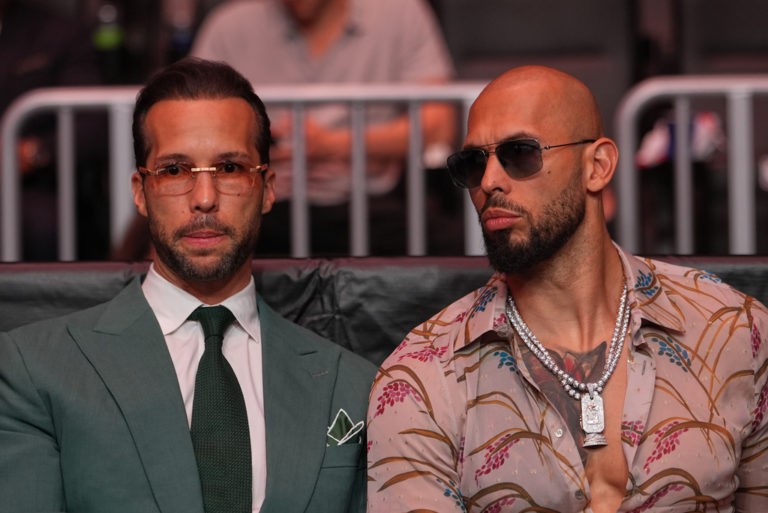
(Headline USA) Social media influencers Andrew and Tristan Tate will fight extradition to the United Kingdom where the brothers are accused of rape and sex trafficking, their lawyer said Monday, suggesting their arrest in Miami was politically motivated.
The Tates appeared in federal court Monday for the first time since their arrest on Saturday and are being held in federal detention. In the coming weeks, a U.S. district judge will consider whether they meet the conditions for extradition. U.S. Magistrate Lauren Louis set another hearing for Monday July 27.
The brothers, normally photographed in tailored suits and fitted shirts, wore tan jail uniforms and handcuffs during the brief hearing.
An attorney for the brothers, Joseph McBride, insisted they should remain in the U.S.
“We are of course objecting to extradition because Andrew and Tristan are innocent, McBride said after the heading. “They’ve never done nothing wrong. They shouldn’t be extradited for crimes they did not commit.”
The brothers were surprised when they were arrested, McBride said, adding that the attempt to have them extradited was politically motivated. “There’s no question about it,” he told reporters.
He suggested the Tates case “had a lot to do with” former British Prime Minister Keir Starmer’s decision to step down and said it was no coincidence that the brothers were arrested after meeting “friends in Washington, D.C.”
“We went to see our Congress people in D.C. and now we’re getting arrested. This feels political,” McBride said.
On Sunday, McBride said he was confident the extradition request would be denied.
Prosecutors in Britain said the new charges relate to four new victims and were brought after authorities received evidence from Bedfordshire Police in southeastern England.
The allegations, spanning 2010 to 2017, include rape, assault, trafficking and offenses relating to “indecent images of a child and extreme pornography.”
The brothers are already charged with rape, bodily harm, human trafficking and controlling prostitution for gain relating to three other alleged victims in the U.K. between 2012 and 2015.
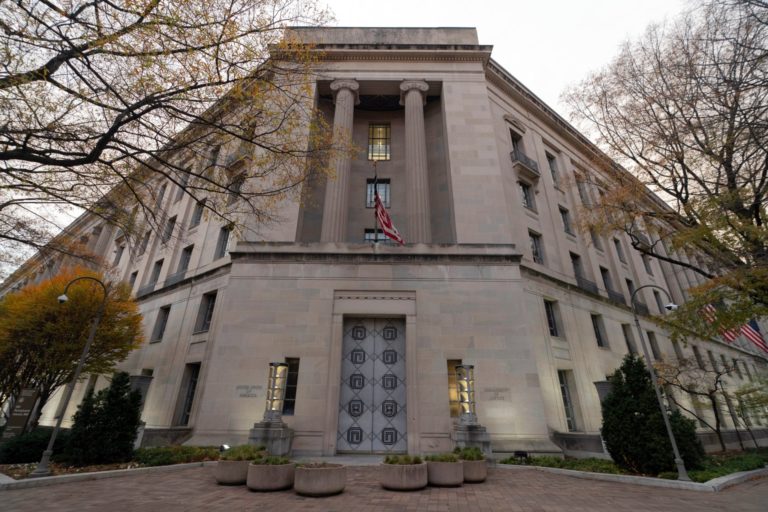
Their lawyer said in a statement Saturday that he believed the arrests were “greenlighted by a low-level functionary” at the Justice Department without input from leadership.
But the Justice Department told The Associated Press that the arrests were approved by leadership of its Criminal Division.
The new allegations are the latest in a long-running international legal saga involving the Tates that has spanned the U.S., Britain and Romania. The brothers have repeatedly denied wrongdoing.
Their social media empire promoting wealth, male dominance and misogyny has made them among the world’s most polarizing internet personalities.
The dual U.S. and British citizens moved to Romania in 2016. They were arrested there in 2022, accused of participating in schemes to lure women for sexual exploitation.
They denied those allegations and the Romanian case hasn’t gone forward because of legal and procedural problems.
Last year, they were allowed to leave Romania and flew to Florida.
(Headline USA) The Trump administration has filed a first-ever petition to a secretive and dormant court created 30 years ago to consider government requests to deport so-called “alien terrorists” from the United States.
The Alien Terrorist Removal Court was established in 1996 but had never received a petition until this past Wednesday, when the Justice Department filed an application seeking the removal of an individual whose name is withheld from the single-page document posted on the court’s website.
The chief judge of the five-member court, Joan Ericksen, said in a written response to the petition that a hearing was held on Thursday during which the court had “questions about the nexus that the government alleges between the actions of the respondent and the specific sections and subsections it invokes with respect to those actions.
“The answers persuaded the Court that the Government could benefit from the opportunity for more thoughtful consideration,” wrote Ericksen, a federal judge in Minnesota.
She directed the Justice Department to provide more information by Wednesday.
The court’s authorities emerged from the Antiterrorism and Effective Death Penalty Act of 1996, which permits the attorney general to file under seal applications for the deportation of a suspected “alien terrorist.” If an application is granted, the court must hold a public hearing at which the government has the burden to prove that the individual satisfies that definition. Applications must be approved by the attorney general or deputy attorney general.
Federal law says that an individual could qualify as an “alien terrorist” by, among other factors, having “engaged in a terrorist activity,” endorsing or espousing terrorist activities and by belonging to a political or social group that encourages terrorist activity.
The court has been dormant since its creation, having received — until last week — no applications and conducting no hearings, according to a summary posted on the Federal Judicial Center website. It is comprised of five judges selected by Chief Justice John Roberts.
The Trump administration has moved aggressively over the last year to carry out deportations, including invoking a 1798 wartime law, the Alien Enemies Act, to remove Venezuelan migrants who officials accuse of being part of a terrorist gang. During a hearing in that case last year, the Washington judge presiding over it, James Boasberg, indicated that the Alien Terrorist Removal Court would be the natural forum to consider a request for deportation on national security grounds.
“In fact, Congress has an answer for us, doesn’t it? Because they created the Alien Terrorist Removal Court,” he said. “So if there’s a national security concern with having these hearings…you can always go to the ATRC, which would be a first, but that’s what it’s there for, right?”
(Headline USA) A person set off fireworks and started a fire Monday morning outside a New York building housing an immigration court and other government offices, according to federal authorities.
A low IQ suspected left-wing terrorist attempted to set a federal government building on fire before being apprehended. pic.twitter.com/rWTctxtRQd
As the flames erupted outside an entrance to the building at 26 Federal Plaza, the person was tackled by a security officer and taken into custody, video shows. Their name has not been released and no charges have been announced.
The lower Manhattan building, 26 Federal Plaza, has become a focal point for demonstrations against the immigration policies of President Donald Trump’s administration.
The individual in custody was carrying anti-ICE material, according to preliminary information gathered by law enforcement and described by a person familiar with the matter who was not authorized to discuss an ongoing investigation by name.
The Department of Homeland Security accused the person of being an “anti-ICE rioter” and said the incident took place around 8:20 a.m., when the person allegedly launched fireworks outside the building and then poured what’s believed to be gasoline on the stairs to an entrance and set it on fire.
DHS said the person had what appeared to be two pellet guns in their bag.
A bystander was grazed by the fireworks, and the security officer who tackled the person sustained minor injuries, the agency said. The New York Fire Department said one person was transported to the hospital, but their injuries weren’t life-threatening.
“What occurred outside 26 Federal Plaza this morning was deeply disturbing,” New York Mayor Zohran Mamdani said on social media. “I’m relieved no one was seriously injured and that a suspect is in custody.”
Mamdani said his team was in touch with police and will support the federal investigation. The FBI said its New York Joint Terrorism Task Force was investigating.
The building houses several government offices — including the New York office of the FBI — and the immigration court where agents have carried out chaotic and sometimes violent arrests in the hallway as migrants leave hearings.
Videos and photos from the scene showed a fire with a plume of smoke on the sidewalk outside the building, as well as officers restraining a person and taking them away.
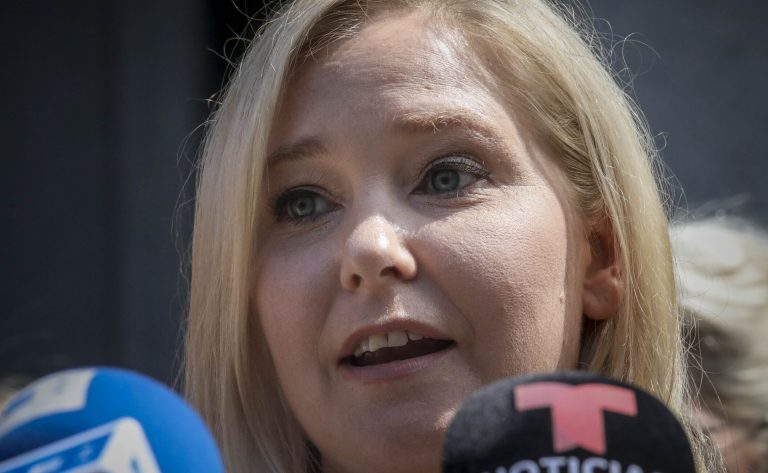
Giuffre’s memoir, which was published last October, accuses her father, Sky Roberts Sr., of molesting her when she was a girl. The book also says Roberts knowingly gave Giuffre, who died in April 2025 of a reported drug overdose, to another man to molest.
In his July 9 lawsuit, Roberts strenuously denies the allegations. He further accused Penguin Random House and Giuffre’s co-author, Amy Wallace, of journalism malpractice for failing to present any corroborating evidence against him.
“There exists no corroborating facts supporting the defamatory statements made in the Memoir about Sky Roberts purported sexual abuse,” says the lawsuit, which was first released by CourtWatch. “Moreover, Defendants never requested, demanded, or even provided Plaintiff with the opportunity prior to publication to provide commercially reasonable, exculpatory information that Defendant A. Wallace either was lying or elicited false memories.”
Additionally, Roberts attached to his lawsuit results from a polygraph test he took. That report said there was “no deception indicated” when he denied molesting his daughter.
Roberts seeks compensation for the damages he says he suffered due to the book’s allegations. Neither Random House nor Wallace have responded to the lawsuit in court.
His lawsuit is the latest legal action stemming from Giuffre’s accusations.
Giuffre, formerly Virginia Roberts, alleged that Epstein and his associate Ghislaine Maxwell groomed her, starting at 16 years old, for Epstein’s “pleasure, including lessons in Epstein’s preferences during oral sex.” Giuffre said she was trafficked to prominent figures such as Prince Andrew, attorney Alan Dershowitz, politician Bill Richardson, and others.
She settled a lawsuit with Maxwell in 2017 and Prince Andrew in 2022, while dropping her lawsuit against Dershowitz—saying she may have made a “mistake” in accusing him of sexual assault.
Epstein was reportedly found dead in his prison cell in August 2019—allegedly of suicide. His accomplice, Maxwell, is serving a 20-year sentence after being found guilty of conspiring with Epstein in 2021.
Ken Silva is the editor of Headline USA. Follow him at x.com/jd_cashless.
(Money Metals News Service) Gold and silver spent another week under pressure, extending the pullback that has frustrated many precious metals investors over the past several weeks.
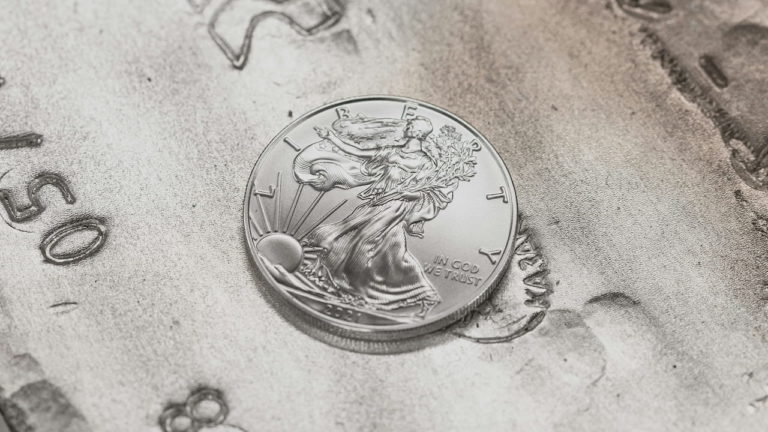
Gold finished the week just above $4,010 an ounce, while silver fell more sharply to around $56, continuing its recent streak of underperformance.
Even so, both metals stabilized as trading opened Monday, suggesting investors are waiting for the next major catalyst.
At first glance, the weakness may seem surprising. After all, geopolitical tensions remain elevated as conflict between the United States and Iran continues to threaten shipping through the Strait of Hormuz, a vital artery for global oil supplies.
Historically, that type of uncertainty has been bullish for gold.
This time, however, markets have focused more on what higher oil prices could mean for inflation. If energy costs continue climbing, the Federal Reserve may feel compelled to keep interest rates higher for longer—or even consider another rate hike later this year.
Higher rates tend to strengthen the U.S. dollar and increase the opportunity cost of holding non-yielding assets like gold and silver, creating near-term headwinds for precious metals.
Silver’s decline has been steeper than gold’s, reflecting its dual role as both a precious and an industrial metal.
Concerns that higher borrowing costs could slow manufacturing have weighed on sentiment, even though the longer-term outlook for silver remains supported by growing demand from solar energy, electrification, artificial intelligence infrastructure, and power grid expansion.
Meanwhile, one important long-term trend hasn’t changed: central banks continue adding gold to their reserves.
While official-sector buying wasn’t enough to offset last week’s selling pressure, it remains a powerful source of underlying demand and reinforces gold’s role as a strategic monetary asset rather than simply another commodity.
For long-term precious metals investors, periods like this are nothing new. Short-term price swings are often driven by changing expectations for interest rates and investor sentiment.
But the fundamental reasons for owning physical gold and silver—portfolio diversification, protection against currency debasement, and insurance against economic and geopolitical uncertainty—remain firmly in place.
(Mike Maharrey, Money Metals News Service) Silver is becoming increasingly discounted relative to gold, as indicated by the widening of the gold-silver ratio.
In other words, silver is on sale once again.
Both silver and gold are down sharply since their record peaks in January. However, silver’s downward trajectory was even steeper than gold’s. While the yellow metal has dipped around 30 percent from its record, silver has plunged by more than 50 percent.
This widening spread between the two metals is reflected in the gold-silver ratio, which appears to indicate another bullish setup for silver.
What Is the Gold-Silver Ratio?
The gold-silver ratio tells you how many ounces of silver it takes to buy one ounce of gold given the current spot price of both metals. In other words, it tells you the price of gold in ounces of silver.
The price relationship between these two metals can help technical analysts anticipate price moves.
From a historical perspective, when you see gold-silver ratios well above their historical average, it tells you that silver is underpriced compared to gold, and there is a strong possibility that silver will go on a bull run to close that gap.
This has often happened in the midst of a gold bull rally, with silver outperforming gold. (Of course, past performance does not guarantee future results.)
In the modern era, the gold-silver ratio has averaged between 40-1 and 60-1. When the gold-silver ratio gets far above the high end of that historical average, it tends to return to the mean with a vengeance.
For instance, in 2020, the gold-silver ratio set a record of 123-1 as Covid hysteria gripped the world, then plunged to around 60-1 as central banks cranked up the money-creation machine to cope with governments shutting down economies.
In another example of this snap-back, the gold-silver ratio fell to 30-1 in 2011 after rising to over 80-1 during the money creation of the Great Recession in the wake of the 2008 financial crisis.
Gold-Silver Ratio Flips Bullish
The gold-silver ratio recently went through a similar swing. For months before the October silver squeeze that drove the price over $50 for the first time, the gold-silver ratio was running between 80-1 and 80-1. In fact, it rose to over 100-1 in March 2025. At the time, I wrote that the wide ratio signaled significant upside for silver, and forecast that the price would ultimately rise to close the gap.
Sure enough, as silver spiked in January, the gold-silver ratio plunged to 43-1, at the low end of the historical average.
Now, it appears we are setting up for yet another silver rally.
As of Friday, the gold-silver ratio had crept back up to over 70-1, indicating that silver is once again historically underpriced compared to gold.
That doesn’t mean that another price surge is imminent. As we saw last year, the ratio can stay historically wide for long periods of time before correcting to the mean. However, the widening gold-silver ratio is a bullish indicator for silver, and at some point, it will return to the historical average (if history is any indication).
Mike Maharrey is a journalist and market analyst for Money Metals with over a decade of experience in precious metals. He holds a BS in accounting from the University of Kentucky and a BA in journalism from the University of South Florida.
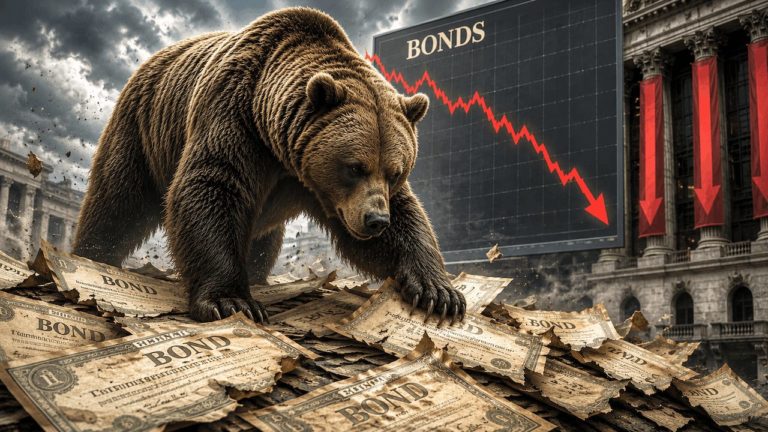
(Mike Maharrey, Money Metals News Service) There is evidence that underlying bond market dynamics have shifted toward a long-term bearish setup that will mean higher long-term interest rates despite central bank mechanizations. This has ramifications for an economy that is addicted to cheap, easy money and may alter traditional portfolio balancing.
A paper published by Massif Capital argues that over the last 20 years or so, interest rates were primarily driven by monetary policy expectations. Today, things are shifting, with long-term interest rates more dependent on geopolitical and fiscal risks. As a result, the bond market is being increasingly driven by investors seeking return instead of official-sector buyers such as central banks.
“The compensation component of the long yield, not the expected-path component (the average of expected future short rates over the life of the bond, essentially the path the market thinks the central bank will set policy along), is doing the work; the marginal price-setter has shifted from a price-insensitive official-sector buyer to a private, return-sensitive one; and the duration that used to absorb equity drawdowns now amplifies them when the shock is supply-side rather than demand-side. The implication is that the level of the long yield is no longer a clean read on policy expectations, and that lowering the policy rate cannot, by itself, restore either the term premium or the portfolio hedge.”
A Secular Bond Bear Market
For several years, economic analyst Jim Grant has forecast a secular bear market in bonds.
Grant laid out his view in a 2023 interview, saying he thought we were about to enter “a long cycle of rising interest rates” and a “generational” bear market in bonds. He bases his forecast on historical trends, noting that interest rates move through “generation-length phasing.” He frames his analytical process as “pattern recognition.”
“Interest rates fell for the last quarter of the 19th century, rose for the first 20 years of the 20th, fell from 1920, ‘46 rose in ‘46 to ‘81, fell from ‘81 to call it 2021. So, at each juncture, there was some mark of excess, some mark of speculative excess blow-off. Certainly, in 1981, you know, a 20 percent-plus funds rate seemed excessive. A 14 percent yield in 1984 in long bond when the CPI was printing at four or five that seemed excessive. 10 percentage points of real yield — that seemed a lot.”
In the 90s, things shifted, and we entered a long period of lower rates, capped off by nearly a decade of zero percent interest rates in the wake of the 2008 financial crisis. At the peak, there were nearly $18 trillion in debt securities “priced to yield less than nothing.”
“[It was] the most extraordinary expression of unqualified bullishness on an asset class because it had the name of ‘bonds’ which had been falling in yield, rising in price. So no, it would not surprise me at all if we were embarked on something resembling a generation-length bear market in bonds, meaning rising yields and falling prices that would fit the form.”
Changing Dynamics Support Bond Bears
Grant forecasts a long-term bear market in bonds based on historical patterns. Massif Capital analysts take it a step further and identify the changing dynamics in the U.S. Treasury market that could drive this long-term bearish trend into the future.
Keep in mind that yields are inversely correlated with bond prices. When demand for Treasuries drops, the price falls, and yields go up. Conversely, yields fall, and prices rise when demand picks up.
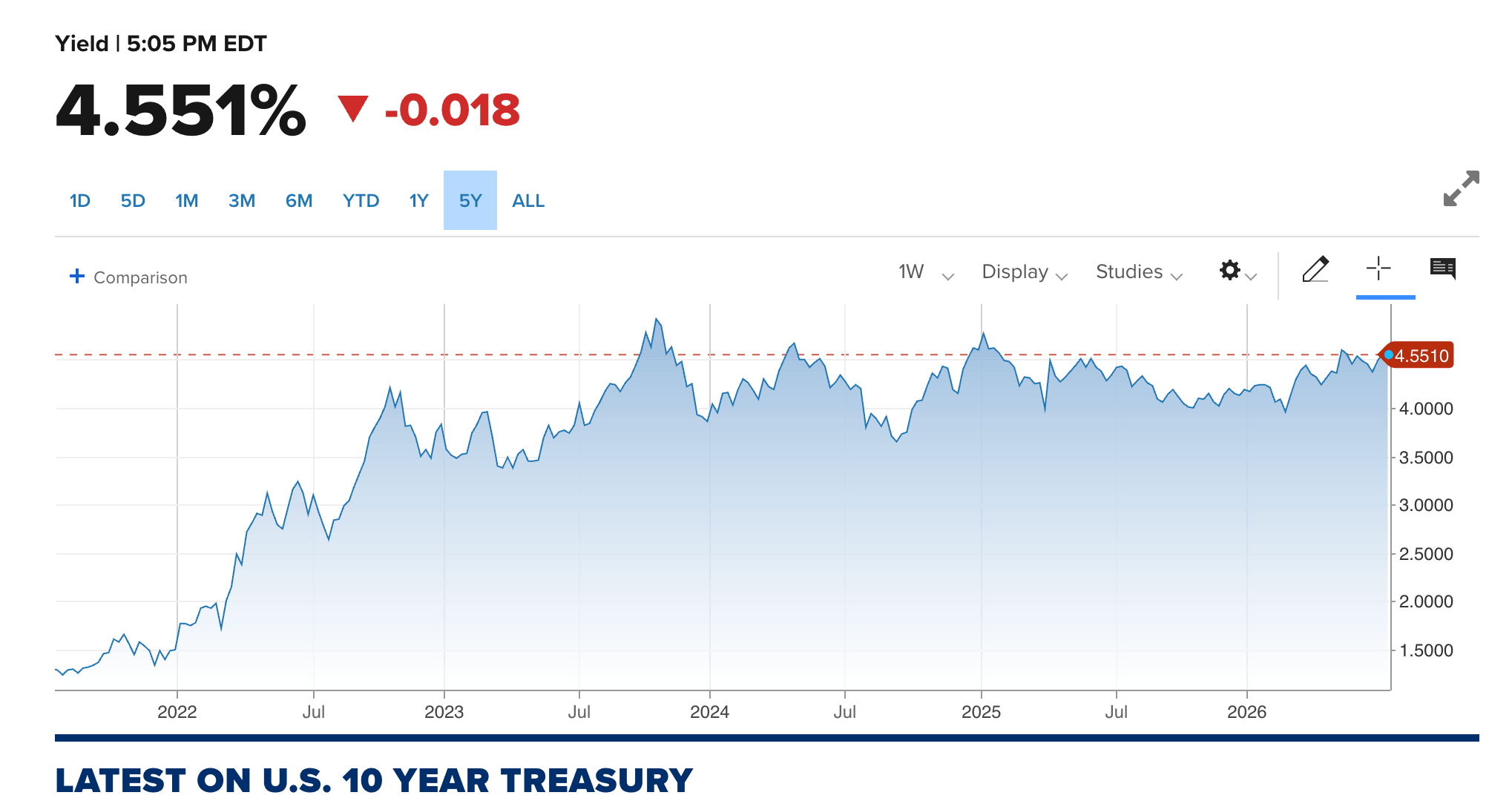
Over the last couple of years, there has been persistent upward pressure on long-term yields. The 10-year yield spiked in 2022, rising from around 1.5 percent in late 2021 to a high of nearly 5 percent in the fall of 2023. Since then, yields have remained at those elevated levels despite the Fed cutting rates and geopolitical events that would have historically created significant safe-haven demand for Treasuries.
We like to imagine that the Federal Reserve controls the interest rate. However, it can only reliably move the short end of the curve. As Massif notes, rates went up on the long end of the curve even as the central bank began tightening policy to battle price inflation a couple of years ago.
“At its September 2024 meeting, the Federal Open Market Committee cut its target range for the federal funds rate by 50 points, marking the beginning of a new easing cycle. In the months after, the 10-year Treasury yield rose from 3.65 percent on September 17, 2024, to a recent peak of 4.79 percent on January 13, 2025.”
As Massif noted, an increase in long-term interest rates, such as the 10-year Treasury yield, is highly unusual at the beginning of a Fed easing cycle.
“The Fed cut, and the long end sold off. The expectations channel said yields should fall; the term-premium channel overwhelmed it. By the time of writing, with the March 2026 dot plot median implying roughly two 25-basis-point cuts between now and year-end, the ten-year sat near 4.45 percent, a modest move higher that reinforces an underlying assumption throughout this piece that central banks can lose tight control of rates and that the dot plot has stopped steering the long end. That is the regime change in one sentence.”
(Sign up for Massif Capital’s free email newsletter here.)
It is also telling that bonds have sold off during recent periods of geopolitical uncertainty, meaning they have lost their safe-haven status.
In fact, Treasuries have behaved more like a risk asset over the last couple of years. For instance, interest rates have tended to rise on negative news in the U.S.- Iran military conflict with Iran, indicating investors are selling bonds on bad news.
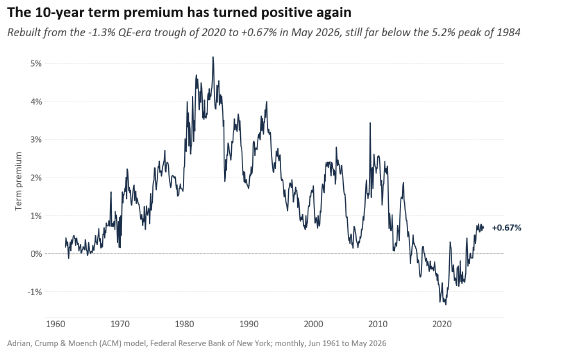
Massif noted that 10-year term premiums have reflected this selling with their upward trend.
“The New York Fed’s Adrian-Crump-Moench model put the ten-year term premium at roughly 0.6 percent in late May 2026, positive and rising, after a decade in which it spent most of its time trending down, and either negative or near zero. On January 13, 2025, the 10-year term premium reached its highest level since 2011, surpassing 0.8 percent. The higher term premium accounts for more than half of the recent rise in 10-year U.S. Treasury yields, suggesting investors associate greater risk and uncertainty with investing in longer-term debt.”
This reflects a fundamental shift in the Treasury market that would seem to confirm Grant’s belief that we are entering into a long-term bear market in bonds that will manifest in a period of higher average interest rates.
New Bond Buyers with New Priorities
The Massif paper argues that there has been a fundamental shift in the parties driving the Treasury market from official sector buyers who are relatively price insensitive, to private investors who are chasing yield.
For decades, governments and central banks have held U.S. government debt as a “safe” asset. That is starting to shift because many governments no longer view U.S. debt as “safe.” They are concerned about the U.S.’s fiscal position with constant deficit spending piling onto nearly $40 trillion in debt, along with the weaponization of the dollar. Notably, de-dollarization went into overdrive after the U.S. and its Western allies froze Russia’s dollar-denominated assets after the invasion of Ukraine.
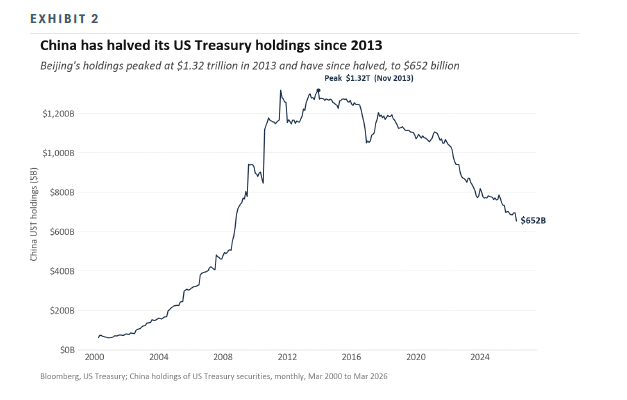
Massif notes that many foreign government buyers have been slowly selling U.S. Treasuries over the last several years.
“Players like China are changing their approach and have been doing so for several years. China recently reduced its holdings to $652.3 billion, the lowest level since September 2008.”
China isn’t the only country spurning U.S. Treasuries. Earlier this year, gold replaced U.S. Treasuries as the top global reserve asset.
This means private investors, who care a whole lot more about yield, are driving the Treasury market. This difference in investor priorities could shift the entire market into a new direction that will require lower prices and higher yields to maintain demand.
(Sign up for Massif Capital’s free email newsletter here.)
In effect, Massif argues that the compensation investors demand for holding long-term Treasuries. It’s no longer just about inflation and interest rate policy.
“What has structurally repriced is the compensation investors demand for holding duration risk, for holding one country’s paper rather than another’s, and forbearing the risk that the next macroeconomic shock is a supply shock rather than a demand shock, and that the dispersion this produces across sovereign curves and across the duration exposures embedded in areal-asset portfolio is now a larger and more persistent feature of the landscape than at any point since the early 1980s.”
The Inflation Machine
When price inflation spiked after the pandemic interventions, the Federal Reserve raised rates. It also began decreasing its balance sheet (quantitative tightening or QT). In practice, it began selling some of the Treasuries it bought during its quantitative easing (QE) operations. This increased the supply of bonds available in the open market, pushing yields higher.
Foreign investors hold about 30 percent of outstanding U.S. Treasuries. On top of that, the Fed has served as a significant source for Treasury demand. Massif paper notes that the Fed’s share of the Treasury market peaked at 23 percent in 2022 during pandemic-era QE. That means foreign investors and the Fed held more than half of all Treasuries issued.
However, the Fed’s holdings have also declined since the beginning of the tightening cycle.
“Foreign official accumulation, which absorbed a rising share of issuance through the 2000s and 2010s, has stalled and reversed for the largest buyers. The fiscal trajectory that the market tolerated at near-zero policy rates has become conspicuous at a 4 percent funds rate. Each of these is a withdrawal of demand or an expansion of supply at the long end, and each pushes the term premium in the same direction.”
However, late last year, the Fed pivoted back to QE.
Why?
Because the federal government is struggling under the weight of increasing borrowing costs. So far in fiscal 2026, the U.S. Treasury has spent $1.05 trillion on interest expense. That was up 14.23 percent compared to the same period in fiscal ’25. Interest on the national debt cost $1.2 trillion in fiscal 2025. That was up 7.3 percent over 2024.
Simply put, the federal government can’t afford higher interest rates.
If foreign governments aren’t interested in Treasuries, and private investors demand higher yields, the Fed stands as the only source of possible relief. The U.S. central bank can step in and buy Treasuries. It can fill the demand gap. It can drive rates lower. It can even engage in “yield curve control” by targeting Treasuries of a certain duration. For instance, it can buy 10-year Treasuries specifically and lower that yield.
However, QE requires money printing, and money printing means inflation.
This underscores the Catch-22 the Fed currently finds itself in. It must choose. It can tackle inflation and risk popping the debt bubble and toppling the economy, or it can try to keep the economy limping along by looser monetary policy.
It can’t do both.
A New Portfolio Approach
If we are moving into a secular bear market in bonds, it will likely require a change in the traditional portfolio approach.
Historically, the conventional wisdom on Wall Street was a 60/40 portfolio, with 60 percent of the holdings in equities and 40 percent in fixed-income investments, primarily bonds. The theory is that these asset classes balance each other, with stocks strengthening in a strong economy and bonds creating a hedge during downturns.
But as already noted, bonds are increasingly correlating with equities. In fact, both are behaving more like risk assets. Massif noted the changing relationship between these two asset classes and the ramifications of this change in market dynamics.
“The rolling correlation between U.S. equities and an aggregate bond index, moderately negative for most of the period from 2003 to 2021, spiked to +0.50, the highest in the sample, in 2022, and has averaged near +0.6 since. The correlation regime (based on interest rate expectations) depends on the source of the shock: demand shocks and flight-to-quality episodes produce negative correlation; monetary policy shocks and inflation surprises produce positive correlation. A geography-first regime (focused on the quality of debt) is, mechanically, a regime of supply shocks. When the dominant shock is a closed strait or an embargoed mineral, the duration ballast in a portfolio fails precisely when it is needed.”
As Massif notes, this is what central banks are doing in effect.
“The revealed preference of the official buyer is now gold: central banks have bought more than 1,000 tonnes annually for four years.”
Last year was the fourth-largest expansion of central bank gold reserves on record, at 863 tonnes. That was down 21 percent year-on-year, but still well above the 2010-2021 annual average of 473 tonnes.
The all-time high was set in 2022 (1,136 tonnes). It was the highest level of net purchases on record, dating back to 1950, including since the suspension of dollar convertibility into gold in 1971.
This is because, with bonds behaving more like risk assets, gold is the last haven standing. You can’t depend on bonds to hedge your portfolio. You need hard assets like gold.
Mike Maharrey is a journalist and market analyst for Money Metals with over a decade of experience in precious metals. He holds a BS in accounting from the University of Kentucky and a BA in journalism from the University of South Florida.
(Headline USA) U.S. gas prices jumped to an average of $4 a gallon again Monday as the U.S. and Iran launched more attacks.
According to motor club federation AAA, the national average for a gallon of regular gasoline is now back to $4. The average price a year ago was $3.14 a gallon.
The price is a national average, meaning drivers in some states have been paying well over $4 a gallon for a while now, while others pay less. Prices vary between states due to factors ranging from nearby supply to differing tax rates.
People around the world are also dealing with high gas prices as a result of the war.
Gas prices first went over $4 a gallon on average at the end of March. They dipped below that in mid-June and continued to fall as crude oil prices eased when the U.S. and Iran reached an interim deal. Even then, President Donald Trump expressed frustration that gas prices weren’t falling as quickly as oil prices.
Affordability is likely to be a key issue for voters in the U.S. midterm elections, and higher gas and oil prices can help push up prices for groceries and other goods.
Oil prices have climbed again in recent days as the U.S. and Iran move closer to resuming an all-out war.
Brent crude, the international standard, rose 3.2% to $90.95 per barrel Monday and benchmark U.S. crude climbed 2.8% to $84.04 per barrel.
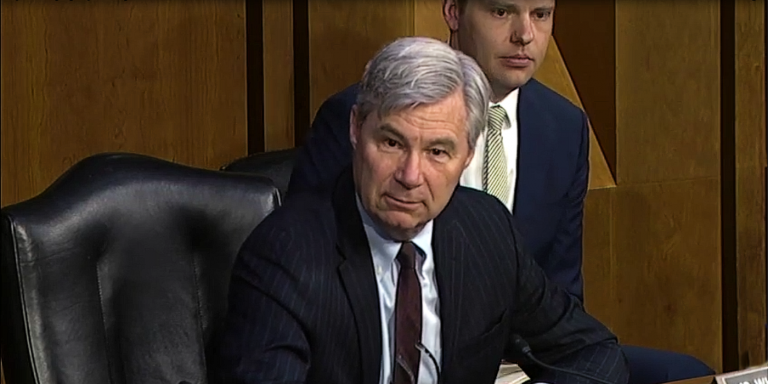
Such is the apparent mantra of Sen. Sheldon Whitehouse, D-R.I., who last week flouted his former demand to believe all women — even when they were implausibly recounting decades-old rape allegations to advance a political narrative.
Senator Sheldon Whitehouse (D-RI) says he still doesn’t believe Graham Platner’s first accuser who was a Republican
Whitehouse: “When looking at allegations you have to evaluate things like if there is corroboration, she was involved in a Koch-brothers operation”
— Politics & Poll Tracker 📡 (@PollTracker2024) July 16, 2026
Even after the implosion of Maine senatorial candidate Graham Platner’s campaign, following a graphic account in Politico involving forcible rape, Whitehouse doubled down on his past insistence that an earlier Platner accuser was lying, because she wasn’t a Democrat.
“I think it’s important when you’re looking at allegations to — and I’ve done this as a prosecutor for years — to evaluate things like whether there is corroboration, and with respect to the first allegation, there was none,” Whitehouse falsely claimed in an interview Wednesday with CNN’s Jake Tapper.
Senator Sheldon Whitehouse thinks that domestic abuse victims should not be believed if they're Republican:
Q: Why did you dismiss Fifield?
A: When looking at allegations you have to evaluate things like if there is corroboration, she was involved in a Koch-brothers operation. pic.twitter.com/62Hhpbz7nx
Tapper, who wrote an entire book about the media’s failure to scrutinize false claims concerning former President Joe Biden’s cognitive decline, once again rediscovered his journalistic objectivity after plummeting poll numbers led Democrat party elites to force Platner’s resignation, just in time to replace him on the ballot.
But while Tapper’s contrition was dubious at best, Whitehouse’s continued attacks on Platner victim Lyndsey Fifield were downright callous and utterly lacking in self-awareness.
“Whether there’s motive to mislead or fabricate, there was plenty,” Whitehouse claimed.
“The woman was involved in basically a Koch brothers funded political operation and had been specifically involved in main political activities against Platner,” he added. “So, yes, there came a point when the straw broke the camel’s back. But if we don’t look with some professional skepticism at allegations, then I think we have not done our duties.”
The claim was a far cry from the rhetoric Whitehouse used as one of the shrillest supporters for Christine Blasey Ford, the discredited accuser who sought to derail Supreme Court Justice Brett Kavanaugh’s 2018 confirmation hearing.
In that case, Whitehouse framed his professional duty as the obligation to ruthlessly grill Kavanaugh over what Democrats claimed were “credible” allegations.
Moreover, Whitehouse insisted that his political opponents do the same by bending over backward to accommodate the curiously timed 11th-hour claims of a decades-old drunken encounter at a high school party.
“Republicans should respect Dr. Blasey Ford’s wishes, as they should respect the wishes of all victims of sexual assault,” Whitehouse said at the time.
An FBI investigation into the matter ultimately found no one willing to corroborate Blasey Ford’s claim.
Whitehouse’s flip-flopping notion of duty regarding rape victims is not the only example of his shameless hypocrisy, however.
He used a contrived scandal surrounding a patriotic flag in the yard of Supreme Court Justice Samuel Alito to push a demand for Senate oversight of the judicial branch — in direct violation of the separation of powers outlined under the U.S. Constitution.
All the while, Whitehouse brushed off the need for similar ethical guardrails in the Senate, turning a blind eye to the dark-money politics of leftist advocacy and lobbying groups.
Whitehouse also faced particularly sharp criticism for his membership in Bailey’s Beach Club — an elite, whites-only establishment — even as he routinely deployed race-baiting rhetoric against his Republican opponents.
“I think it would be nice if they changed a little bit, but it’s not my position,” he said of his segregated retreat, while arguing that club membership had been a long-running family tradition.
Ben Sellers is a freelance writer and former editor of Headline USA. Follow him atx.com/realbensellers.
(Headline USA) Vice President JD Vance and his wife, second lady Usha Vance, on Sunday announced the birth of their fourth child, the first born to a sitting vice president in more than 150 years.
Born Sunday, Alec Neel Vance joins older siblings Ewan, 9; Vivek, 6; and Mirabel, 4.
Vance announced the birth on social media with a statement signed by him and his wife.
“We are excited to announce that our baby boy, Alec Neel Vance, was born this morning. Usha and the baby are happy and healthy, and our kids are overjoyed to meet their little brother,” the statement said.
They thanked doctors and staff at the Walter Reed National Military Medical Center and with the White House medical team.
The Republican vice president’s growing family is in keeping with his passionate advocacy for Americans to have more children. He has also suggested that the 2025 killing of conservative activist Charlie Kirk, who was his friend, factored into the decision to have another child.
Vance, a former U.S. Marine, repeatedly expressed alarm about declining birth rates in America as he launched his political career in 2021 with a bid for a U.S. Senate seat from Ohio. As vice president, he said in Washington at the 2025 March for Life anti-abortion rally, “I want more babies in the United States of America.”
The vice president, who’s 41, has been accompanied on overseas trips by Usha Vance, 40, and their children, with the kids often pajama-clad as they board Air Force Two for the overnight flights.
Usha Vance, the daughter of immigrants from India, had already been the subject of some public fascination because of her husband. Her pregnancy, which was announced in January, amplified that spotlight since it is rare for occupants of the United States’ highest public offices to add to their families while serving.
The last time a sitting vice president became a new father was in the 1800s.
Schuyler Colfax and his second wife, Ellen Wade, had a son, Schuyler Colfax III, in 1870 when Colfax was serving as vice president, according to the White House Historical Association. Decades before that, John C. Calhoun and his wife, Floride Bonneau, had a son, William, in 1829 when Calhoun was vice president, the association said.
The newest addition to Vance’s family was part of a recent mini baby boom among top members of President Donald Trump’s administration. White House deputy chief of staff Stephen Miller’s wife, Katie Miller, recently gave birth to the couple’s fourth child, and White House press secretary Karoline Leavitt had her second child with her husband, Nicholas Riccio, in May.
The second lady responded on social media, writing, “Now that we know the political significance of my $8.75 coral maternity dress from Old Navy, can’t wait to hear what the New York Times has to say about my elastic-waistband pants and compression socks! In the meantime, enjoy my pregnancy fashion (or lack thereof) and a good story with your kids on Storytime with the Second Lady.” She later shared the receipt for the dress, and her husband applauded her frugality.
“She bought a $50 dress for $8.75. America: meet your next director of the federal budget!” the vice president wrote on social media.
JD Vance has said it was Kirk’s widow, Erika Kirk, telling them that she wished she’d had more than two children with her husband before he was assassinated last September in Utah that led him and the second lady to decide to grow their family. Usha Vance, a former attorney who once clerked for Supreme Court Chief Justice John Roberts, concurred — in part.
“It was very powerful, what (Erika) said about her own family, and certainly very moving to both of us. I think I had already started to open my mind to the possibility,” Usha Vance said during a joint interview with her husband for “CBS Sunday Morning” that aired in June. “I wouldn’t say that this was, for me in any way, the decisive factor. But it came in the middle of a conversation that we were already having.”