Nearly 8 Years Later, Body Cam Footage Emerges of 1st Officer to Enter Las Vegas Shooter’s Hotel

(Ken Silva, Headline USA) For years after the Oct. 1, 2017, Las Vegas mass shooting, officials said that body cam footage of the first officer to enter gunman Stephen Paddock’s hotel room didn’t exist. But earlier this month, such footage was published by the YouTube channel Las Vegas Shooting Archive, which explained on its page how it found the video.

The new footage is from Las Vegas Metro Police officer Levi Hancock, who located Paddock on the floor with an apparent head wound. Hancock’s newly released footage shows him reading a casino player’s card for Paddock’s longtime girlfriend, Marilou Danley.

According to the YouTube channel Las Vegas Shooting Archive, the Hancock body cam was thought to not have existed until police provided it to Paramount+ for its 2022 documentary, titled 11Minutes. And it wasn’t for another roughly three years that an investigator noticed the footage on the Paramount+ doc.

Researchers then requested the footage through a formal records request, finally obtaining it earlier this year after a lengthy legal battle.

“Why the LVMPD withheld the footage back then, lied to the public and ignored a court order to release it, is anyone’s guess,” Las Vegas Shooting Archive said on its page.

Ultimately, the footage doesn’t provide any additional clarity to what happened on Oct. 1, 2017. The Las Vegas shooting killed 60 people and injured 850 others in what remains the deadliest mass shooting in U.S. history.

Neither the FBI nor local police have even determined a motive for Paddock’s actions.

In the immediate aftermath of the 2017 Las Vegas shooting, there were reports that gunman Stephen Paddock had told people around him he was a “government experiment,” and would often lie in bed “moaning and screaming” in mental anguish.

There were also media reports from 2017 about Paddock being prescribed Diazepam, a sedative-hypnotic drug. Additionally, Paddock reportedly told an acquaintance, Jim Nixon, that he had been having deranged dreams telling him to go on a killing spree.

“My friend it sounds like you are going to kill or murder someone or some people. Please whatever it is I would like to talk to you about it and we can discuss it,” Nixon reportedly told Paddock on June 1, 2017. “Please don’t go on any shooting rampage like some fool.”

And in March 2023, Headline USA broke a story about the FBI investigating rumors that Paddock had been a psych patient at Mesa View Hospital in Mesquite, Nevada.

However, little attention has been paid to Paddock’s mental health woes.

In the wake of the FBI releasing documents in 2023, most media outlets have concentrated on records about a possible motive for his killing spree: some $38,000 in gambling losses—a dubious reason, considering that Paddock was reportedly a multimillionaire.

Ken Silva is the editor of Headline USA. Follow him at x.com/jd_cashless.

Florida Sheriff’s Office Using Gold to Catch Crooks

(Mike Maharrey, Money Metals News Service) Every once in a while, you’ll hear somebody claim that gold is “a useless metal.” You may think I’m exaggerating, but I assure you, I’m not. I heard a commentator on MSNBC say it with my own two ears a few years ago.

Warren Buffett has even disparaged the yellow metal in such a way.

“[Gold] gets dug out of the ground in Africa, or someplace. Then we melt it down, dig another hole, bury it again and pay people to stand around guarding it. It has no utility. Anyone watching from Mars would be scratching their head.”

Gold has no utility. Just goes to show that even smart people say dumb things.

Of course, gold has utility. It is one of the most useful metals in the world. Due to its utility, coupled with its scarcity, gold is also one of the most valuable metals in the world.

When you mention gold, most people immediately think of jewelry. That’s because the metal is strikingly beautiful. About 44 percent of gold demand is for jewelry production. About 1,877 tons of gold were used in jewelry fabrication last year.

Fundamentally, gold is money. It possesses all the characteristics inherent in sound money. It is durable, portable, divisible, scarce, and has intrinsic value.

But that’s not all. Gold is also utilized in a wide range of technical and industrial applications, from electronics to medicine. Industry and technology used 326 tons of gold last year, propelled by the strongest fourth quarter since 2021.

Here in Pinellas County, Florida (St. Petersburg and Clearwater), law enforcement is using gold to help catch crooks.

The Pinellas County Sheriff’s Office (PCSO) uses vaporized gold to discover fingerprints that are invisible to the naked eye.

Technicians place evidence into a Vacuum Metal Deposition Chamber (VMD) along with very fine particles of metal. Gold is the most popular because it works the best.

PCSO forensic science specialist Heather Temple explained to Fox News 13 how it works.

“We place metal, different kinds of metals, it could be gold, silver, copper, into boats, heat them up thermally until they turn into a gas, if you will, and they adhere to the background of the evidence that we either magnet or suspend with different wires and fishing wire, that kind of thing. So, all of those metals travel upward, and then we finish out with zinc because it helps with contrast for the background.”

The machine can process almost anything that will fit in the chamber, except pressurized items or things that are wet. Techs frequently use the VMD to process bullet casings.

Temple called the machine “vital.”

“It’s an expensive piece of equipment, so not a lot of agencies in Florida actually have this. We’re able to solve crime, so that makes it invaluable.”

Most law enforcement agencies can’t afford this technology. Only 9 percent of the sheriff’s offices in Florida have it. Being good neighbors, the PCSO often processes evidence from other agencies, some outside the state of Florida.

The PCSO got its first VMD in 2000. It was relatively small. This year, the agency obtained a National Institute of Justice grant to purchase a VMD the size of a walk-in freezer.

So, the next time you hear somebody say “gold is useless,” just think about the fact that the yellow metal is putting bad guys in jail. I’d call that pretty useful!


Mike Maharrey is a journalist and market analyst for Money Metals with over a decade of experience in precious metals. He holds a BS in accounting from the University of Kentucky and a BA in journalism from the University of South Florida.

Insurrection? Leftists Storm Capitol over Trump Bill

(Luis CornelioHeadline USA) More than two dozen individuals were arrested Wednesday after unlawfully storming the U.S. Capitol in protest of President Donald Trump’s “Big Beautiful Bill,” prompting demands that prosecutors treat the chaos with the zero-tolerance approach used after Jan. 6.

Capitol Police said 34 people were taken into custody, including several in wheelchairs. They were protesting leftist claims that the Trump-backed bill would cut Medicaid.

Some of the rowdy demonstrators wore t-shirts reading “Healthcare Cuts Will Kill”—while chanting “No cuts to Medicaid!”

Several others lay on the floor, clinging to protest signs as police struggled to escort them out. Video shared by Fox News showed Capitol officers attempting to rip signs from their hands.

On X, the popular page “Libs of TikTok” mocked the left’s rhetoric around Jan. 6 defendants, whom they called so-called insurrectionists.

“Leftists staged an insurrection today at the Capitol,” the page posted. “Arrest all of them, throw them in gulags, and sentence them to 17 years in prison. Those are the rules.” 

The sarcastic post appeared to reference the Biden administration’s aggressive targeting of Trump supporters who entered the U.S. Capitol on Jan. 6, 2021, to protest the certification of the 2020 election. 

From 2021 to 2025, the DOJ charged more than 1,500 Americans for actions tied to Jan 6. Many of the defendants did not even set foot in the Capitol and included elderly grandmothers, veterans, and others with no prior criminal record. 

President Donald Trump walked back those charges by pardoning anyone involved in the protests, effectively ending what Republicans have long rebuked as lawfare. 

Democrats briefly called the pardons an “abuse of power,” though the outrage quickly fell flat given former President Joe Biden had previously issued blanket pardons for a decade’s worth of offenses protecting political allies, his own son and siblings. 

This marked the first time in U.S. history that a president used the pardon power to shield his immediate family. 

New Plan Proposed to Sell Public Lands, Following Opposition

(Elyse S. Papel, The Center Square) Following push back from a growing coalition of politicians and public interest groups, U.S. Sen. Mike Lee, R-Utah, proposed an amended version of his plan to sell off public lands.

While the previous proposal would have required the government to auction off between 2.2 million and 3.3 million acres of land owned by the Bureau of Land Management and the U.S. Forest Service, the new plan backtracks that to between 612,500 to 1.2 million acres of just the bureau’s land.

Lee, chair of the Senate Energy and Natural Resources Committee, said he is taking into consideration how the American people are responding to the proposal.

“I’m still listening,” Lee said on social media. “I’m working closely with the Trump administration to ensure that any federal land sales serve the American people — not foreign governments, not the Chinese Communist Party, and not massive corporations looking to pad their portfolios. This land must go to American families. Period.”

Supporters of the legislation, which is a provision to the One Big Beautiful Bill Act, argue this move will help address a nationwide housing crisis, while providing more money to help the federal government pay off debt.

For opponents of the proposal, selling any of the nation’s public lands is too much.

“Don’t come for our public lands,” said U.S. Sen. John Hickenlooper, D-Colorado.

There are several other guardrails included in the new version of the bill, which was obtained on Wednesday by Politico.

These include the following requirements:

• Parcels can only be sold within five miles of the “border of a population center.”

• Land that is sold can only be used for housing development.

• Federal authorities should consult with state, local and tribal governments to decide what to sell.

• For each sale, 5% of the proceeds will go to local governments, while 10% will go to “hunting, fishing, and recreational amenities.”

• Underutilized land tracks will be prioritized for sale.

In total, the federal government owns roughly 640 million acres throughout the United States, or nearly one in three acres. That means that, while the bureau would be required to sell off 0.25% to 0.5% of its land, that is only 0.2% of all federal lands.

Leaders from some western states affected are in favor of the sale and the benefits it would bring to local communities.

“These are important, commonsense policies for better energy and public lands strategy,” said Utah Gov. Spencer Cox. “Sen. Lee deserves enormous credit for championing the use of certain federal lands for housing — especially in rural communities surrounded by federal land, and even in cases where federal land sits within city boundaries and could be better used for homes.”

If the proposal is passed, land eligible for sale would come from 11 states: Alaska, Arizona, California, Colorado, Idaho, Nevada, New Mexico, Oregon, Utah, Washington and Wyoming.

There was bipartisan opposition to the previous proposal, and opposition is already growing to this new one.

“Hunters and anglers need to continue to reach out to lawmakers urging them to remove all public land sales from this legislation,” said the Theodore Roosevelt Conservation Partnership, a hunting and fishing group. “We have their attention, and we must see this through.”

Many businesses have also jumped on the bandwagon, with a coalition of 45 national hunting brands signing on to a letter stating their opposition to the sale of any public lands.

“Selling public land at the scale of millions of acres will result in a loss of public access to the outdoors, which will have a negative impact to the undersigned businesses,” the letter said. “We strongly urge you to consider these businesses and our employees by not including any public lands sale provisions in the budget reconciliation process.”

‘Iranian Army Sniper’ Arrested in Alabama; Wife Says He’s a Trump Fan Here Legally

(Ken Silva, Headline USA) The Department of Homeland Security announced this week that someone who served as an “Iranian Army sniper” was among the 11 Iran nationals recently rounded up by Immigration and Customs Enforcement. However, the purported sniper’s wife says he’s a supporter of President Donald Trump and is here legally.

According to a Tuesday DHS press release, Iranian national Ribvar Karimi served as an Iranian Army sniper from 2018 to 2021. He entered the U.S. in October 2024 on a marriage visa.

Karimi was arrested on June 22 in Alabama, and the DHS says he had an Islamic Republic of Iran Army identification card on his person.

But according to Karimi’s wife, Morgan Karimi, the two did marry within 90 days of the Iranian obtaining a visa—as required by law.

“He came to the U.S. LEGALLY on a K1 fiancé visa. We followed all the rules—got married within the 90-day window just like we were supposed to,” Morgan Karimi, who is pregnant, said of her husband in a Facebook plea, according to reporting from The Independent. “We’ve done everything by the book.”

To the wife’s point, the notion that an Iranian operative would carry a document identifying himself as such in the U.S. seems bizarre, if not unlikely. And the DHS has promoted false information about some of its recent arrests.

Last month, for instance, the DHS announced the arrest of an illegal immigrant allegedly planning to kill Trump. It turned out, that immigrant was framed so that he would get arrested and be deported from the U.S. before he got a chance to testify in a trial as a victim of assault. The perpetrator of that hoax now faces his own charges.

Meanwhile, as the Karimis continue to fight Ribvar’s deportation proceedings, 10 other Iranians are also facing the prospect of returning to Iran. Read about those other Iranians here.

“Under Secretary Noem, DHS has been full throttle on identifying and arresting known or suspected terrorists and violent extremists that illegally entered this country, came in through Biden’s fraudulent parole programs or otherwise,” said DHS Assistant Secretary Tricia McLaughlin. “We have been saying we are getting the worst of the worst out—and we are. We don’t wait until a military operation to execute; we proactively deliver on President Trump’s mandate to secure the homeland.”

Ken Silva is the editor of Headline USA. Follow him at x.com/jd_cashless.
Analysis: Operation Midnight Hammer Likely Cost Taxpayers at Least $200M

(Steve Wilson, The Center Square) The cost for the U.S. strike against Iranian nuclear facilities, known as Operation Midnight Hammer, likely cost taxpayers more than $200 million, according to analysis by The Center Square of open-source data on flight hours, per-weapon costs and other expenses.

The strikes, which used B-2 Spirit bombers to drop 30,000-pound “bunker buster” bombs along with other supporting aircraft and submarine-launched Tomahawk cruise missiles, were carried out on Saturday night against three Iranian nuclear targets, which President Donald Trump said was a “spectacular military success.”

 Download PDF25_IRN_Fordow_Public_Release_25June2025

Each one of the GBU-57 Massive Ordnance Penetrators, which are 30,000 pound bombs guided by the Global Positioning System and can smash through an unknown amount of rock and concrete to destroy hardened targets buried deep underground, cost about $3.5 million apiece, according to a 2011 Air Force contract that purchased eight of them for $28 million. With 14 dropped for Midnight Hammer, just the ordnance alone added up to $49 million.

The Air Force, in coordination with the Defense Threat Reduction Agency, conducts testing of the GBU-57 Massive Ordinance Penetrator weapon system, a precision-guided, bunker-busting munition purpose-built to defeat deeply buried and hardened targets on Dec. 11, 2020 and June 6, 2024.

The B-2 Spirit isn’t cheap to operate, as the stealth bomber dating back from the early 1990s requires special care to its radar-deflecting surface coatings that must be protected from the weather in hangars.

According to the U.S. General Accountability Office, each flying hour on a B-2, which includes fuel and maintenance, costs $150,741. With the strike taking 37 hours, each B-2 cost nearly $5.58 million to fly on the mission and $39 million total.

Trump said 52 tankers, plus F-22 and F-35 fighters were involved in the strike. Maximum fuel transfer for a KC-135 refueling plane is 150,000 pounds, while the newer KC-46 can transfer up to 212,000 pounds.

Multiple refuelings of the B-2s were required since the maximum takeoff weight of a B-2 is 336,500 pounds and they had to take off with a smaller fuel load than their maximum capacity (167,000 pounds).

This was due to carrying 60,000 pounds of two MOPs per airframe, which would put the Spirits 50,500 pounds over their maximum takeoff weight if fully loaded with fuel.

KC-135s cost $27,801 per flight hour to operate, while the newer KC-46s cost about $13,810 per flight hour. Assuming 12 hours flight time per tanker as they refueled the strikers three times, that would be $333,612 for each KC-135 and $165,720 for each KC-46.

Since the KC-135 is the majority of the U.S. Air Force’s tanker fleet (396 aircraft or 82% of the fleet), having 80% of the tankers, about 42, being KC-135s on Midnight Hammer, would cost about $14 million, while 10 KC-46s would be about $1.66 million. That leaves about $15.66 million for the tanker component of the mission.

According to data on Flightradar24, five KC-135s were spotted in the Mediterranean, while 10 tankers, a mixed flight of KC-135s and KC-46s, temporarily based out of Lajes Air Base in Portugal were orbiting in the Atlantic.

Added to that were the 25 Tomahawk cruise missiles fired from U.S. submarines, which according to the Navy, cost about $2.4 million apiece or $60 million for the strike.

Chairman of the Joint Chiefs of Staff Gen. Dan Caine said that 75 precision-guided munitions were used in the strike, which included the 14 MOPs and 25 Tomahawk cruise missiles. According to a 2024 contract, the cost of a Joint Directed Attack Munition, a GPS-guided guidance kit added to the U.S. military’s 2,000-pound BLU-109/MK 84, the 1,000-pound BLU-110/MK 83 or the 500-pound BLU-111/MK 82 bombs, can range from $24,000 to $85,000 per weapon. Going with the lower number and assuming 30 weapons were dropped, that adds up to $720,000, or $2.55 million with the higher figure.

With the mention of “high-speed suppression weapons” designed to strike Iran’s surface to air missiles and their associated radars, those would be the targets of the AGM-88G missile, an advanced derivative of the original High Speed Antiradiation Missiles that debuted in 1983 and can be carried internally by the Air Force’s F-35A fighters.

According to the DOD, each AGM-88G costs $1.65 million per copy. If nine were expended by the B-2’s F-35 and likely F-16 escorts, that would be about $14.9 million.

The Air Force had moved F-22s, F-35s and F-16s to the Middle East, but the Defense Department didn’t say how many of each type was involved in the strike, only that “fourth generation (F-15Es and F-16s) and fifth generation (F-22s and F-35s) aircraft” were involved.

An F-22 costs $85,325 per flight hour, while F-35s ($41,986) and F-16s ($26,927) are cheaper. With 52 tankers, seven B-2 strike aircraft and an unknown number of surveillance and electronic warfare aircraft, that leaves anywhere from about 50 to 60 fighters involved in the strike.

Assuming that all 12 F-22s and 12 F-35s deployed to the theater recently participated in the strikes and their missions were about six hours apiece, each F-35 mission would cost about $251,916, while each F-22 one would cost $511,950. The total for the U.S. stealth fighters is $9.16 million.

Supreme Court Rules On Planned Parenthood Medicaid Coverage, Others

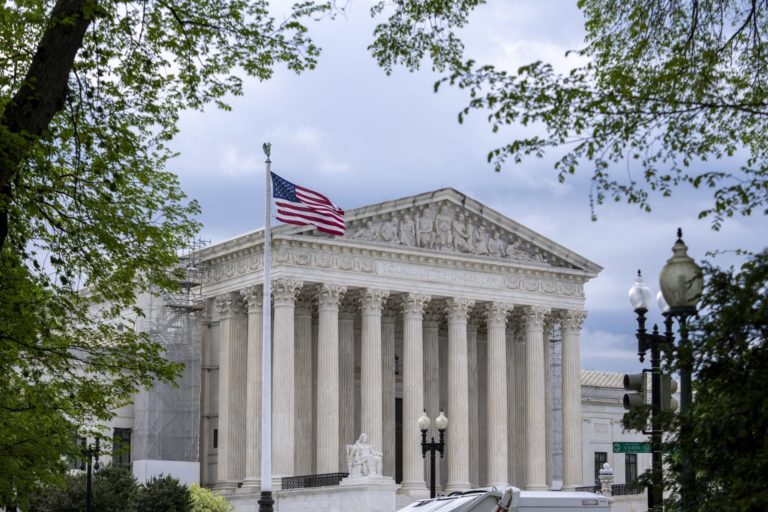
(Caroline Boda, Andrew Rice, The Center Square) The U.S. Supreme Court handed down four more rulings Thursday, including a 6-3 decision solidifying states’ right to block abortion services from receiving Medicaid funding.

The justices also gave opinions on challenging a deportation ruling, DNA testing in a capital murder case and interpretation of the First Step Act.

Medicaid abortion coverage

Medina v. Planned Parenthood South Atlantic

6-3 ruling

The nation’s top court voted along ideological lines to support South Carolina’s 2018 decision prohibiting abortion clinics from receiving reimbursement under Medicaid.

A South Carolina Planned Parenthood sued the state alongside a patient, saying the ban infringed upon the patient’s right to choose her medical provider.

Writing for the majority, Justice Neil Gorsuch argued that the power to decide who is deemed an eligible medical provider under a state’s Medicaid program should lie with the states.

This power “belongs to the people’s elected representatives, not unelected judges charged with applying the law as they find it,” Gorsuch wrote.

The court’s decision lays the groundwork for other states to follow suit in defunding Planned Parenthood under their respective Medicaid programs.

Illinois Planned Parenthood Interim President Tonya Tucker responded to Thursday’s ruling, saying it “sets a troubling precedent that extends far beyond South Carolina.”

Deportation challenge

Riley v. Bondi

5-4 ruling

The Supreme Court ordered, in a 5-4 decision, for a lower court to reconsider its decision denying a man’s deportation challenge due to threats of violence in his home country.

One immigration judge initially granted the man relief, while another ordered for him to be deported to Jamaica. His appeal of the decision was blocked by a circuit court because he did not appeal in the 30-day deadline.

However, the 30-day deadline from his original ruling to stay in the country had passed by the time a separate court ruled he should be deported. Since he did not file within 30 days of the original ruling, a circuit court dismissed his case.

Justice Samuel Alito’s opinion primarily took issue with the lower court’s reversal of the man’s deportation appeal on claims that the case was jurisdictional, because of the 30-day window for appeal of a deportation case.

“Courts should treat a ‘statutory limitation’ as jurisdictional only if Congress ‘clearly states’ that the provision has jurisdictional consequences,” Alito wrote. “Our cases have almost uniformly found that the provisions at issue failed to meet this very demanding test,” he added.

The court’s instruction in the matter means the 30-day deadline can be subject to certain circumstances, including if a plaintiff is not able to file an appeal in time.

DNA testing in murder trial

Gutierrez v. Saenz

6-3 ruling

The Supreme Court backed a man on death row in Texas on Thursday, ruling that a lawsuit over DNA testing can proceed.

The court overturned a lower court’s opinion that Ruben Gutierrez cannot sue a district attorney after his request for DNA testing pertaining to his 1998 murder case was denied. Gutierrez maintains that this testing will prove his innocence.

Justice Sonia Sotomayor defended Gutierrez’s right to challenge the district attorney under the Constitution’s right to due process in the court’s majority opinion.

First Step Act provision

Hewitt v. United States

5-4 ruling

In a ruling largely dependent on interpreting grammar, the justices ruled in favor of criminal defendants seeking a sentence reduction under the First Step Act.

The court was tasked with determining if the law’s mandatory-minimum sentence provision applies to a defendant who was initially sentenced before the law was adopted but then whose sentence was vacated, resulting in a resentence taking place after the law’s enactment.

Justice Ketanji Brown Jackson upheld the First Step Act sentencing in the majority opinion.

What’s coming next?

The justices are pushing to clear their docket before the scheduled summer recess. They will release all six of the remaining decisions Friday morning.

The most notable of these cases involves President Donald Trump’s Jan. 20 executive order ending birthright citizenship. The court will decide if federal district judges have the authority to block implementation of Trump’s ruling across the country through what is known as a “nationwide injunction.”

GOP Subpoenas Jill Biden ‘Work Husband’ to Testify on Biden’s Fitness

(Brett Rowland, The Center Square) The Republican-led House Oversight Committee issued a subpoena to a man described as former First Lady Jill Biden’s “work husband” to determine how sharp former President Joe Biden was in office.

House Committee on Oversight and Government Reform Chairman James Comer, R-Ky., issued the subpoena to Anthony Bernal, the former First Lady’s former senior advisor. The document calls for Bernal to appear for a deposition on July 16 as part of the committee’s investigation into allegations of a cover-up of President Joe Biden’s “mental decline and potentially unauthorized executive actions,” according to the chairman.

Bernal declined to appear at a voluntary transcribed interview after the White House Counsel waived executive privilege for the Oversight Committee’s investigation, Comer said. After a back-and-forth over when and how Bernal would appear before the committee dating back to May, Bernal’s attorney on Wednesday withdrew his client’s scheduled appearance for Thursday.

Comer said he wasn’t willing to wait much longer.

“To avoid any further delays, your appearance before the Committee is now compelled,” he wrote in the letter.

The letter said the committee wants to know what Bernal saw in the White House during Biden’s tenure.

“The Committee seeks information about your assessment of and relationship with former President Biden to explore whether the time has come for Congress to revisit potential legislation to address the oversight of presidents’ fitness to serve pursuant to its authority under Section 4 of the Twenty-Fifth Amendment or to propose changes to the Twenty-Fifth Amendment itself,” Comer wrote.

Comer also ordered Dr. Kevin O’Connor, former president Joe Biden’s physician, to appear for a deposition on July 9 as part of the investigation into Biden’s physical and mental fitness.

O’Connor and Bernal’s attorneys did not immediately respond to The Center Square’s request for comment. 

New Census Data: Immigration Fueling U.S. Population Growth as the Country Ages

(José Niño, Headline USA) Immigration accounts for recent population growth in the U.S. as its native population ages, according to a Thursday article in the Washington Post. While children still outnumber older adults nationwide, the share of older adults is rapidly increasing, according to the Post, whose reporting was underpinned by the new U.S. Census Bureau data.

From 2023 to 2024, the number of Americans aged 65 and older grew by 3.1 percent, while the population under 18 declined by 0.2 percent. This trend is especially pronounced in sparsely populated areas, with nearly half of U.S. counties now home to more older adults than children.

“The gap between the two groups ‘is narrowing,’ in part because of a decline in births this decade,” explained Lauren Bowers, chief of the Census Bureau’s population estimates branch.

Amidst this demographic transformation, a historic surge in immigration—particularly among Hispanic and Asian populations—has helped offset some of the decline in the younger population. The Hispanic population in the United States increased by about 9.7 percent from April 2020 to July 2024, while the Asian population grew by approximately 13 percent.

“This past year, the population gain was bigger than it’s ever been before,” noted Bill Frey, a senior demographer at the Brookings Institution. “Overall, it’s because of immigration.” Frey emphasized that the sharp drop in the number of White children has been partially balanced by the rising number of non-White youth.

White Americans made up 57.5 percent of the total population in 2024, but only 47.5 percent of those under 18. In contrast, Hispanics accounted for 20 percent of the total population and 26.9 percent of children. Still, the median age is rising across all racial groups.

“There is a gradual change in the racial and ethnic profile of America’s children,” said Steven Martin, a senior research associate at the Urban Institute. “But a more useful way of thinking about it is the age structure of the population is changing for everybody, and it’s changing in a way that the retired population is increasing rapidly for everybody.”

The debate over how to address the nation’s aging population and declining birth rates continues, with some policymakers proposing incentives to boost fertility. However, Frey argued, “I’d like to make the case that immigration could help us have a bigger younger population or a smaller decline in the younger population. It’s not all about having women have more fertility, but it also can mean we should have more immigration.”

The demographic shift is evident across the country: the number of metro areas with more older adults than children jumped from 58 in 2020 to 112 in 2024, and eleven states now have more older adults than children, up from just three in 2020. Regional differences persist, with the West and South maintaining the lowest median ages, and the Asian and Hispanic populations experiencing the fastest growth.

This recent findings from the Census Bureau align with a previous report from the Congressional Budget Office that found that starting in 2033, all U.S. population growth will be driven entirely by immigration, as the national deathrate surpasses the birthrate due to persistently low fertility levels.

As Headline USA reported in January, native-born Americans having fewer children, immigration is projected to sustain the country’s demographic and economic trajectory for decades to come.

José Niño is the deputy editor of Headline USA. Follow him at x.com/JoseAlNino 

Jewish New Yorkers Stranded in Israel amid Iran Conflict

(The Center Square) Jewish New Yorkers stranded in Israel need the state’s help evacuating the war-torn region, according to a group of legislative Republicans who want Gov. Kathy Hochul to do something about it.

In a letter to Hochul, Senate Republican Leader Rob Ortt and members of the Senate Republican Antisemitism Working Group called for immediate action to bring home New Yorkers residing, studying, or traveling in Israel. They argued that thousands of U.S. citizens are stranded since the war with Iran disrupted commercial flights.

“New York’s connection to Israel is unmatched, and so is our responsibility,” they wrote. “Our state should lead in standing with Israel, supporting Jewish communities under threat, and providing help to New Yorkers caught in harm’s way.”

The lawmakers pointed to international relief flights organized by Florida Gov. Ron DeSantis, a Republican who has deployed wide-body planes to Cyprus to bring 1,500 Jewish Americans back to the U.S. after they were evacuated to Ashdod on a repurposed cruise ship.

“The Florida government’s coordination with nonprofit groups and emergency management teams offers a blueprint New York can and should follow,” they wrote.

Although data estimates suggest as many as 200,000 Americans live in Israel, some with dual citizenship, it’s hard to estimate how many would be served by the rescue flights. Israel is also home to 2 million Muslims and 187,000 Christians, though The Center Square was unable to locate data about how many are American citizens.

In response to the letter, a Hochul spokesperson said the governor is in “active conversations” with other states with large Jewish populations, including New Jersey and Connecticut, about how they would coordinate commercial flights out of Israel to rescue U.S. citizens, if needed. The statement said Hochul is a “steadfast ally to Israel and to New York’s Jewish community.”

The Israel-Iran conflict and U.S. intervention have disrupted commercial flights in the Middle East. Delays, suspensions and cancellations by multiple airlines continued this week after Iran launched a limited missile attack on Qatar’s Al Udeid Air Base Monday in retaliation for U.S. strikes on Sunday at three Iranian nuclear sites.

DeSantis announced last week that he was organizing flights of U.S. citizens out of Israel, saying over the weekend Florida has helped “effectuate” more than 1,500 people’s exit from the country.

The order signed by DeSantis said the state is also “surging” law enforcement around the state, citing demonstrations in Florida “intended to intimidate and threaten the Jewish population and to support Hamas, a U.S. Secretary of State-designated foreign terrorist organization.”

In New York, Hochul announced Monday that state police would conduct patrols outside synagogues, mosques and other “at risk” houses of worship in response to the Israel-Iran conflict. The New York City Police Department said in a statement that it was putting additional officers at “sensitive” locations across the city, home to the nation’s largest Jewish population.

“We’re tracking the situation unfolding in Iran,” the NYPD’s statement said. “Out of an abundance of caution, we’re deploying additional resources to religious, cultural, and diplomatic sites across NYC and coordinating with our federal partners.”