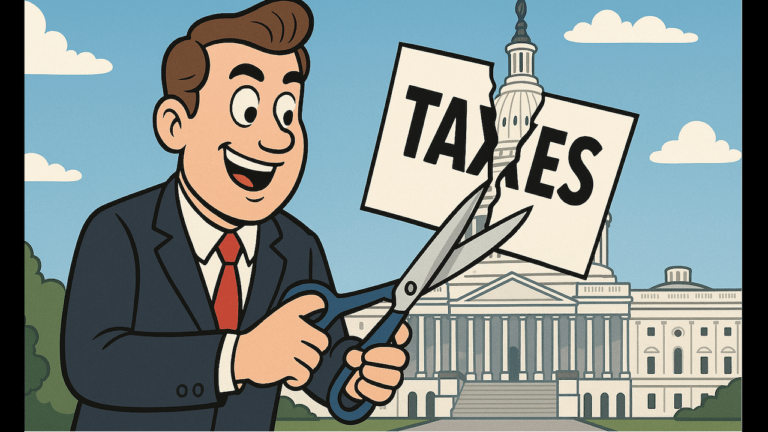
(Thérèse Boudreaux, The Center Square) The White House is touting a new economic analysis that estimates taxpayers will see an average $3,752 tax cut in 2026, due to provisions in the One Big Beautiful Bill Act.
According to the nonpartisan Tax Foundation report, taxpayers in every state will see reduced federal taxes next year and though there is “considerable geographic variation” in tax benefits.
“President Trump’s One Big Beautiful Bill is the largest, most consequential tax cut on the middle class ever,” White House Deputy Press Secretary Anna Kelly said Friday. “Between lower inflation, massive investments, and historic tax cuts, all Americans are reaping the benefits of the Trump Economy – and the Golden Age has just begun.”
Republicans’ multitrillion-dollar OBBBA, among other things, made permanent the expiring 2017 Tax Cuts and Jobs Act’s across-the-board reduced tax rates; $15,000 standard deduction; $2,000 Child Tax Credit; 20% QBI deduction for small businesses; and $750,000 home mortgage interest deduction cap.
Three key business tax credits were made permanent as well – full reimbursement for new capital investments like machinery and equipment, an expanded deduction for corporation’s interest on debt, and immediate deductions for companies’ research costs.
The OBBBA also implemented a host of temporary tax provisions set to expire in 2030, including a quadrupling of the $10,000 state and local tax (SALT) deduction cap; a $6,000 deduction for seniors; and temporary tax deductions for tips and overtime pay, capped for single filers at $25,000 and $12,500, respectively.
Taken together, the Tax Foundation analysis estimates that the OBBBA’s tax provisions will lower individuals’ taxes in every state and create 938,000 full-time jobs in the long run.
Individuals in Wyoming, Washington, and Massachusetts will see the largest average tax cuts in 2026 – hovering around $5,100 – while residents of West Virginia and Mississippi will see the smallest average tax cuts that year, around $2,400. On a more local level, taxpayers in mountain resort towns will receive the highest average tax benefits while taxpayers in rural counties will receive the lowest tax benefits.
Once the temporary tax provisions expire, however, the average tax cut will fall to $2,505 in 2030, then climb to $3,301 by 2035 due to inflation.
Although individual households will benefit from the tax cuts, the country’s fiscal health likely won’t, according to budget watchdogs like the Congressional Budget Office. CBO estimates that the trillions in lost federal revenue will add an extra $4.1 trillion to the national debt by 2034.
The U.S. national debt just topped $37 trillion, as The Center Square reported.
(Money Metals News Service) In a recent Money Metals podcast, host Mike Maharrey spoke with Jeff Clark, a veteran gold and silver analyst and founder of TheGoldAdvisor.com, about the state of the precious metals markets, mining stocks, and the forces shaping investor sentiment.
Jeff Clark is a seasoned authority in the precious metals sector, combining decades of industry experience, deep sector knowledge, published expertise, and a proven track record. He has worked with renowned investor Doug Casey, advised multiple bullion dealers, and contributed to top-tier investment newsletters. His insight is grounded in real-world exposure to mining through his father, an independent gold prospector with claims in California, Nevada, and Arizona.
As the author of Pay Dirt, Clark blends his own analysis with contributions from 17 respected industry figures, offering investors practical guidance on both physical bullion and mining equities. His history of navigating multiple bull and bear cycles gives added weight to the perspectives he shares in this discussion.
While gold hit all-time highs in April before consolidating, he notes the pullback has been unusually mild—less than 6% versus an average 10.1% correction during the 2001–2011 bull run.
This recent correction, he argues, has been “more in time than price,” with sideways trading serving as the cooling-off period before another potential leg higher.
Historically, September is gold’s best month, and Clark is preparing for possible upside in the medium term.
Why Miners Lagged—and What’s Next
When gold prices first broke out, uncertainty from Fed policy shifts, geopolitical tensions, and tariff rumors pushed investors toward physical gold and silver rather than mining stocks. Miners only began breaking out later, a normal dynamic in bull markets.
Today, producers are “printing cash,” but Clark points out that Main Street and Wall Street still haven’t piled into mining equities.
The ratio of mining stocks to the S&P 500 remains historically low, suggesting significant upside once broader markets weaken and capital rotates into the sector.
U.S. Skepticism vs. Eastern Gold Appetite
Clark contrasts the cultural attitudes toward gold in the U.S. and the East.
In China, the government has even encouraged citizens to buy gold—something unheard of in Washington. U.S. investor interest has been soft, with recent price strength driven largely by Asian demand and central bank purchases.
He believes a breakout in silver above $50 could spark a buying frenzy in both metals across the West, potentially leading to gains of 50% to 100% or more.
The Politics of Gold
Clark argues that a runaway gold price is the last thing U.S. policymakers want, as it threatens the dollar’s reserve currency status.
While he stops short of predicting a formal return to a gold standard, he maintains that only such a shift could rein in unsustainable deficit spending.
Until then, inflation, money printing, and fiscal irresponsibility “force” him to remain a so-called “gold bug.”
Mining Stocks vs. Physical Bullion
Clark stresses that gold is money—a form of portfolio insurance best held in physical form for emergencies.
Mining stocks, by contrast, are speculative bets on company performance and offer leverage of 2–4x gold’s price moves, with juniors capable of even higher gains if they make major discoveries.
His three key evaluation criteria for mining companies are people, project, and politics.
People – The quality and track record of the company’s management team, geologists, and board of directors. In mining, experienced and reputable leadership is critical to making good exploration decisions, securing financing, and executing projects efficiently.
Project – The strength and potential of the mining asset itself. This includes the size and grade of the resource, how economical it is to extract, the stage of development (exploration, development, production), and its potential to grow through new discoveries.
Politics – The jurisdiction and regulatory environment in which the mine operates. Political stability, mining laws, environmental regulations, permitting processes, and even local community relations can make or break a mining project.
Clark’s point is that all three factors need to be strong for a mining stock to have a good chance of success. Weakness in any one of them can create serious risks for investors.
Mergers, Acquisitions, and a Healthy Sector
Mergers and acquisitions are accelerating in the mining sector, fueled by two factors:
Debt reduction—industry net debt is projected to be zero this year, down sharply from the overleveraged peak in 2011–2012.
Producers must replace the ounces they mine, making juniors and developers prime takeover targets.
Financing for small companies has surged, with firms that struggled to raise $1 million last year now securing $5–10 million in oversubscribed rounds—an indicator of robust market health.
The Overlooked Opportunity
Clark says the biggest blind spot in mainstream coverage is the mining stock opportunity. Despite some miners doubling or tripling year-to-date, broad investor participation is minimal.
“The big gains are still ahead,” he insists, predicting a powerful rally once generalist investors enter the space.
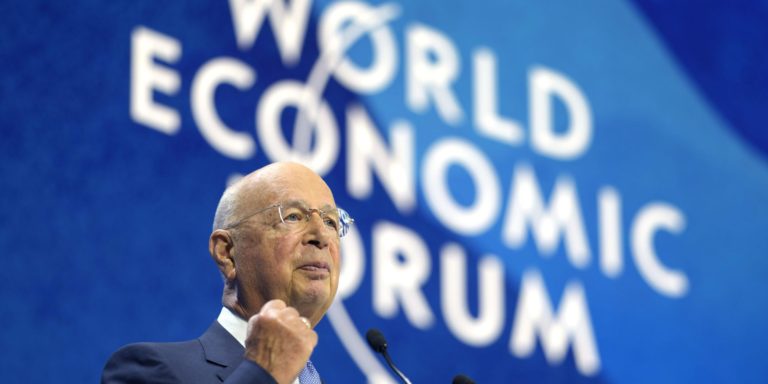
(Ken Silva, Headline USA) In April, the World Economic Forum opened an investigation into Klaus Schwab for allegedly defrauding the globalist organization that he created more than a half-century ago.
However, the WEF has cleared Schwab of any wrongdoing, the Wall Street Journal reported Friday.
“Minor irregularities, stemming from blurred lines between personal contributions and Forum operations, reflect deep commitment rather than intent of misconduct,” the Forum reportedly said.
Instead of punishing Schwab, the WEF reshuffled its new leadership. The interim chairman, Peter Brabeck-Letmathe, reportedly resigned this week. He did raise concerns about a “toxic” work environment in his resignation letter, according to the Journal.
In April, Shwab abruptly retired as WEF chairman “with immediate effect.” According to the Wall Street Journal, Schwab’s retirement was sparked by an anonymous whistleblower allegation that the Schwab family used the Forum’s resources for their personal affairs. The WEF has appointed two interim co-chairs: BlackRock CEO Larry Fink and Swiss billionaire André Hoffmann.
Larry Fink is the Chief DEI Officer of the World Economic Forum. Infamously known for stating, “We force people to change their behaviours”, Fink is solely responsible for the Global DEI Disasters.
“[The letter] included allegations that Klaus Schwab asked junior employees to withdraw thousands of dollars from ATMs on his behalf and used Forum funds to pay for private, in-room massages at hotels. It also alleged that his wife Hilde, a former Forum employee, scheduled ‘token’ Forum-funded meetings in order to justify luxury holiday travel at the organization’s expense,” the Journal reported.
“The letter also raises concerns about how Klaus Schwab treated female employees and how his leadership over decades allegedly allowed instances of sexual harassment and other discriminatory behavior to go unchecked in the workplace.”
According to the Journal, Schwab argued against an investigation in the days leading up to his ouster. He reportedly has denied the allegations against him, and has threatened to file a lawsuit over the matter.
Against his protestations, the WEF board reportedly decided to open a probe during an emergency meeting on Easter Sunday. Schwab resigned immediately thereafter. He previously planned to stay in power until January 2027.
The annual WEF gathering, typically in January, has hosted a long list of world leaders under Schwab’s 55-year tenure, including President Xi Jinping of China, Vladimir Putin of Russia, Donald Trump of the United States, and many more heads of state and government.
The WEF has been heavily criticized for promoting anti-liberty and anti-human policies, including lockdowns, vaccine mandates and trans-humanism—as summarized by its slogan: “Welcome to 2030. I own nothing, have no privacy, and life has never been better.”
Ken Silva is the editor of Headline USA. Follow him at x.com/jd_cashless.
(Kyle Anzalone, Antiwar.com) Following a three-hour meeting between Russian President Vladimir Putin and President Donald Trump, the leaders delivered brief statements at a press conference, stating that the talks were productive and constructive.
Putin spoke first, telling the press that the talks were in a “constructive atmosphere of mutual respect. We had very thorough negotiations.” He added that he hoped European governments and Ukraine would receive the agreements made with Trump “constructively” and that they would not interfere with the progress.
The Russian leader also blamed former US President Joe Biden for starting the war in Ukraine and argued that the invasion would not have happened if Trump had been the president. Trump has often claimed the conflict in Ukraine was Biden’s war, and he could have prevented the war from breaking out.
Putin noted that before the start of the war in 2022, Moscow sent Washington a proposal that would have stopped the Russian invasion of Ukraine. A core issue for the Kremlin was the growing ties between NATO and Ukraine. However, the Biden administration refused to negotiate on this point, and Putin ordered the invasion.
The Russian President said that during the Biden administration, US and Russian relations hit a post-Cold War low point. Putin expressed hope that the summit would be the start of the process to repair the ties and resolve the Ukrainian crisis.
“I believe we had a very productive meeting. There were many, many points we agreed on, I would say most of them,” Trump said. “A couple of big ones we haven’t quite gotten there, but we made some headway.”
Trump explained that no final agreement was made. “So there’s no deal until there’s a deal,” he added. He went on to say he would call European leaders and Ukrainian President Zelensky. He added that it was ultimately up to the Ukrainians to accept any agreement.
The President did not specify what issues were left unresolved, but later in his statement, he mentioned that the “most significant” issue remains unsettled.
At the end of the press conference, Putin extended an invitation to Trump to attend a summit in Moscow. “That is an interesting one. I will get a little heat on that one. But I can see it possibly happening,” Trump replied.
Friday’s meeting in Alaska also included Secretary of State Marco Rubio, envoy Steve Witkoff, Foreign Minister Sergei Lavrov, and aide Yury Ushakov.
(Headline USA) Smash-and-grab thieves in Seattle made off with an estimated $2 million in diamonds, luxury watches, gold and other items in a daring midday jewelry store robbery that took just about 90 seconds, police said Friday.
Video from the West Seattle store’s surveillance cameras shows four masked suspects shattering the locked glass front door with hammers and then ransacking six display cases Thursday.
One display held around $750,000 worth in Rolex watches, police said in a statement, and another had an emerald necklace valued at $125,000.
NEW: Surveillance video shows the robbery of a jewelry store in West Seattle yesterday.
The suspects made off with more than $2-million in watches and jewels in 90 seconds. I'll talk with the owners on @komonews at 6.
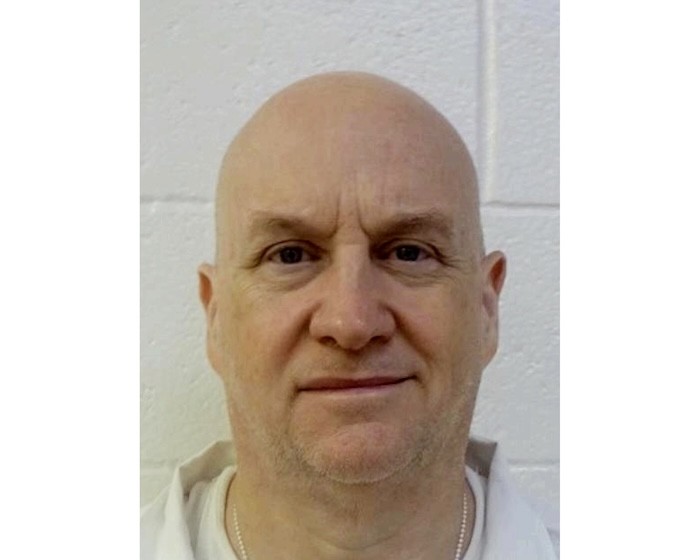
(Headline USA) A former police chief known as the “Devil in the Ozarks” spent months planning his escape from an Arkansas prison, and said lax security in the kitchen where he worked allowed the convicted murderer to gather the supplies he needed, an internal review by prison officials released Friday said.
The Department of Corrections’ critical incident review of Grant Hardin’s May 25 escape from the Calico Rock prison provides the most detailed description so far of his planning and the issues that allowed him to walk out of the facility.
Hardin was captured 1.5 miles northwest of the Calico Rock prison on June 6. Authorities said he escaped by donning an outfit he designed to look like a law enforcement uniform.
The prison break of Grant Hardin, known as the "Devil of the Ozarks,"
Grant Hardin, a former sheriff and convicted murderer, planned his escape for about six months before escaping from the Calico Rock prison in Arkansas on May 25, 2025.
Hardin, who worked in the prison’s kitchen, said he spent six months planning his escape and used black Sharpie markers and laundry he found lying around the kitchen to create the fake uniform, according to the report. Hardin fashioned a fake badge using the lid of a can.
“Hardin stated he would hide the clothes and other items he was going to need in the bottom of a trash can in the kitchen due to no one ever shaking it down,” the report says.
Two prison employees have been fired for procedure violations that led to Hardin’s escape. They include a kitchen employee who allowed Hardin on a back dock unsupervised and a tower guard who unlocked the back gate that Hardin walked through without confirming his identity. Several other employees have been suspended and one demoted, lawmakers were told this week.
The kitchen’s staff was “very lax on security,” Hardin told investigators, allowing him to gather what he needed for his escape. Hardin said he didn’t have any help from staff or other inmates. Hardin had constructed a ladder from wooden pallets in case he needed to scale the prison fence but didn’t need it.
“(Hardin) stated when he walked up to the gate, he just directed the officer to ‘open the gate,’ and he did,” the report says.
After he escaped from the prison, Hardin survived on food he had smuggled out of the prison along with distilled water from his CPAP machine. Hardin also drank creek water and ate berries, bird eggs and ants.
“He said his plan was to hide in the woods for six months if need be and begin moving west out of the area,” the report says.
Hardin, a former police chief in the small town of Gateway, near the Arkansas-Missouri border, is serving lengthy sentences for murder and rape. He was the subject of the TV documentary “Devil in the Ozarks.”
The report is one of two reviews into Hardin’s escape, which is also being investigated by the Arkansas State Police. A legislative subcommittee has also been holding hearings about the escape.
Republican Rep. Howard Beaty, who co-chairs the Legislative Council’s Charitable, Penal and Correctional Institutions Subcommittee, said the panel hoped to discuss both reports with officials at a hearing next month.
Republican Sen. Ben Gilmore, who sits on the panel, said he didn’t think the department’s review took a thorough enough look at the systemic issues that enabled Hardin’s escape.
“They have focused on the final failure instead of all of the things that led up to it,” he said.
The report also cites confusion among corrections officials in the early stages of Hardin’s escape about which law enforcement agencies had been notified, the report says.
“It is obvious there was a lot of confusion during the beginning stages of opening the command center and of notifications being made,” the report says.
Hardin had been misclassified and shouldn’t have been held at the primarily medium-security prison, according to the review. After he was captured, Hardin was moved to a maximum-security prison. He has pleaded not guilty to escape charges, and his trial is set for November.
Hardin’s custody classification hadn’t been reviewed since October 2019, the report says.
The Department of Corrections’ review says officials had taken several steps since Hardin’s escape, including removing the electric locks from the gates to prevent someone from walking out without an officer present.
The report also calls for additional cameras after finding a blind spot on the dock Hardin used, and for any “shakedown” searches for contraband to include mechanical rooms and side rooms.
(Headline USA) New Orleans Mayor LaToya Cantrell was indicted Friday in what prosecutors called a yearslong scheme to hide a romantic relationship with her bodyguard, who is accused of being paid as if he was working even when they met alone in apartments and traveled to vineyards for wine tasting.
Cantrell faces charges of conspiracy, fraud and obstruction, less than five months before she leaves office due to term limits. The first female mayor in New Orleans’ 300-year history was elected twice but now becomes the city’s first mayor to be charged while in office.
“Public corruption has crippled us for years and years,” Acting U.S. Attorney Michael Simpson said, referring to Louisiana’s notorious history. “And this is extremely significant.”
Cantrell’s bodyguard, Jeffrey Vappie, was already facing charges of wire fraud and making false statements. He has pleaded not guilty. A grand jury returned an 18-count indictment Friday that added Cantrell to the case.
They are accused of exchanging encrypted messages through WhatsApp to avoid detection and then deleting the conversations. The mayor and Vappie have said their relationship was strictly professional, but the indictment portrayed it as “personal and intimate.”
App captured dreamy chats
The City of New Orleans said in a statement that it was aware of the indictment and that the mayor’s attorney is reviewing it.
“Until his review is complete, the City will not comment further on this matter,” the statement said.
Cantrell hasn’t sent out a message on her official social media feed on X since July 15, when she said the city was experiencing historic declines in crime.
In a WhatsApp exchange, the indictment says, Vappie reminisced about accompanying Cantrell to Scotland in October 2021, saying that was “where it all started.”
Cantrell and Vappie used WhatsApp for more than 15,000 messages, including efforts to harass a citizen, delete evidence, make false statements to FBI agents, “and ultimately to commit perjury before a federal grand jury,” Simpson said.
They met in an apartment while Vappie claimed to be on duty, and she arranged for him to attend 14 trips, Simpson said. The trips, he added, were described by her as times “when they were truly alone.”
New Orleans taxpayers paid more than $70,000 for Vappie’s travel, the prosecutor said.
Together on an island
Authorities cited a September 2022 rendezvous on Martha’s Vineyard, a trip Cantrell took instead of attending a conference in Miami. Vappie’s travel to the island was covered by the city to attend a separate conference. “The times when we are truly (traveling) is what spoils me the most,” the mayor wrote to him that month.
Simpson said Cantrell lied in an affidavit that she activated a function on her phone that automatically deleted messages in 2021 when she really didn’t activate that feature until December 2022, a month after the media began speculating on the pair’s conduct.
When a private citizen took photos of them dining together and drinking wine, Cantrell filed a police report and sought a restraining order, Simpson said.
Vappie retired from the police department in 2024.
(Thérèse Boudreaux, The Center Square) With deregulation-focused Republicans in Congress reluctant to fulfill the industry-wary goals of the Make America Healthy Again initiative, some Democrats are taking up the torch.
Health and environmental activists have sounded the alarm for decades over the considerable leeway the Food and Drug Administration gives American corporations who profit from adding their chemical products to a host of consumer goods, including food.
Rep. Frank Pallone’s, D-N.J., newly introduced legislation would close the Generally Recognized As Safe (GRAS) loophole, a voluntary disclosure system which allows companies to self-certify the safety of their own food and cosmetic additives, bypassing FDA’s pre-market testing and review.
Pallone’s Grocery Reform And Safety Act (GRAS Act) would require companies to provide the FDA with scientific evidence of their products’ safety before release onto the market or in consumer products. It would also authorize updated safety evaluations of food additives, color additives and substances currently labeled as GRAS every three years. Companies would have to shoulder at least part of FDA’s reassessment expenses.
“With kids across the country heading back to school, parents shouldn’t have to worry that the food in their lunch boxes or in their cafeterias contains chemicals that were never reviewed for safety. Parents deserve to know the food they’re buying for their families is safe,” Pallone said.
“Unfortunately, a law that is more than fifty years old is being used as a loophole by companies to evade scrutiny of the chemicals they’re putting in our food,” he added. “That’s not how food safety should work, especially when it comes to products our kids eat every day.”
Some food additives of concern that would fall under the legislation’s purview include BHA, BHT and ADA, all banned in the European Union.
ADA, or azodicarbonamide, is added to flour and bread as a whitening agent or dough conditioner, respectively. It is also used to make yoga mats and foam insulation. ADA fully breaks down into the chemicals semicarbazide and urethane, both suspected carcinogens.
Consumer protection and health advocates praised Pallone’s legislation, which Rutgers University Professor of Biostatistics and Epidemiology, Emily Barrett, saying the bill will shift the burden of avoiding harmful dietary exposures from the consumer to companies.
“Food is a leading source of exposure to numerous chemicals that can harm our health including forever chemicals, phthalates, pesticides, and more,” Barrett said. “It is time to enact policies that can protect everyone’s health by keeping harmful chemicals out of our food.”
While some MAHA-supportive Republicans may vote for the bill, many others will likely object to the legislation due to the regulatory burden it would place on companies. Federal website GovTrack, which monitors U.S. legislation, predicts the bill has only a 3% chance of becoming law.
(The Center Square) Days after President Donald Trump declared “Liberation Day” by federalizing the Washington, D.C. Metropolitan Police Department and deploying hundreds of National Guard members to curb crime, D.C. Attorney General Brian Schwalb is filing a lawsuit against the Trump administration claiming the federal takeover is unlawful.
Schwalb describes the Trump administration’s federal takeover of MPD as “brazenly unlawful” and a “hostile takeover,” adding that Trump has “limited authority” in invoking Section 740 of the Home Rule Act.
“The federal government’s power over DC is not absolute, and it should not be exercised as such. Section 740 of the Home Rule Act permits the President to request MPD’s services. But it can only be done temporarily, for special emergencies, and solely for federal purposes,” the attorney general posted on X Friday morning.
He claims the Home Rule Act “keeps operational control of MPD with the Mayor and Chief.”
“This is an affront to the dignity and autonomy of the 700,000 Americans who call DC home. Our office will go to court to defend Home Rule, block the unlawful orders, and maintain MPD under District control. We have no choice but to stand up for DC residents’ rights and safety,” Schwalb wrote.
The lawsuit comes on the heels of U.S. Attorney General Pam Bondi issuing an order to replace MPD Chief Pamela Smith with Drug Enforcement Administration Administrator Terry Cole to serve as the agency’s “emergency police commissioner.” In addition, the Trump administration rescinded the district’s “sanctuary policies,” allowing law enforcement to cooperate with Immigration and Customs Enforcement officials.
Trump tapped Bondi to take operational control of the Metropolitan Police as part of an executive order, citing “out of control” violence in the nation’s capital.
Trump claims the district has “crime, bloodshed, bedlam and squalor and worse” in defense of his reasoning to invoke the act.
Prior to declaring “Liberation Day” in the district, the president described the city’s crime as “out of control,” citing youth violence.
“Crime in Washington, D.C., is totally out of control. Local ‘youths’ and gang members, some only 14, 15, and 16-years-old, are randomly attacking, mugging, maiming, and shooting innocent Citizens, at the same time knowing that they will be almost immediately released,” Trump lamented.
“They are not afraid of Law Enforcement because they know nothing ever happens to them, but it’s going to happen now! The Law in D.C. must be changed to prosecute these ‘minors’ as adults, and lock them up for a long time, starting at age 14.”
As the law currently stands, Section 740 of the Home Rule Act only allows the president to federalize MPD for up to 30 days.
However, a group of Republicans in Congress is trying to alter or rescind the Home Rule Act. Rep. Andy Ogles, R-Tenn., is proposing a resolution to remove the 30-day limit.
In February, U.S. Sen. Mike Lee, R-Utah, and Ogles introduced legislation to repeal the Home Rule Act, claiming the district is plagued by violence and crime.
The duo tied the title of the legislation to Democratic Mayor Muriel Bowser. The Bringing Oversight to Washington and Safety to Every Resident Act can be shortened to the BOWSER Act.
The District of Columbia Home Rule Act of 1973 was enacted by Congress and ratified by D.C. voters. The act gave the district residents limited autonomy over local affairs, allowing them to elect local leaders, including mayors and council members.
Office of Personnel Management director Scott Kupor said 80% of those employees would leave voluntarily and 20% would be fired. Kupor provided the figures to Reuters on Thursday. That’s a 12.5% reduction in the federal workforce since January.
The U.S. government employs about 2.4 million federal workers, excluding the military (about 1.3 million active-duty military personnel) and U.S. Postal Service (about 600,000 employees), according to 2024 Pew Research report. That report noted that the federal government employed 1.87% of the entire civilian workforce. That percentage includes postal employees, according to Bureau of Labor Statistics data.
President Donald Trump promised Americans a more efficient government when he took office for his second term. At first, his Department of Government Efficiency, with Elon Musk at the helm, led the charge. Musk has since left DOGE and had a public feud with the president.
When Trump created DOGE, he said it would be the government cost-cutting equivalent of the “Manhattan Project.” Both Trump and Musk promised Americans would get a more efficient government after DOGE addressed government waste, reduced regulations and reduced the federal workforce.
Musk initially said DOGE would aim to cut $2 trillion from the federal budget, but he later cut that in half. At a Cabinet meeting in April, Musk said DOGE was on pace to cut $150 billion from the federal budget.