Legislation to End Cashless Bail in D.C., Nationwide Introduced in Senate

(Sarah Roderick-Fitch, The Center Square) Nearly two weeks after President Donald Trump issued executive orders to take steps to eliminate cashless bail nationwide, some lawmakers have introduced legislation to codify the orders.

The Ending Cashless Bail in Our Nation’s Capital Act and Keep Violent Criminals Off Our Streets Act were introduced in the Senate by Sens. Marsha Blackburn, R-Tenn., and John Cornyn, R-Texas. The pair argues the legislation “would keep violent criminals” off the streets by ending the controversial policy that critics claim creates a revolving door for criminals.

Like the president’s executive orders, the legislation would restrict certain federal funds for states and localities with cashless bail policies.

Blackburn says the policies ‘empower’ criminals, echoing similar sentiments from the White House.

“Cashless bail and other soft-on-crime policies have empowered violent criminals across our country, putting the lives of law-abiding citizens at risk,” said Blackburn.

Cornyn voiced concerns, saying cashless bail policies strain law enforcement.

“Cashless bail is a soft-on-crime policy that not only endangers innocent Americans, but also erodes trust in the justice system and drains law enforcement resources by forcing police to play a game of catch-and-release with repeat offenders,” said Cornyn. “Washington, D.C. should be a shining city the world looks to as a model for safety and security.”

The legislation further clarifies Trump’s orders, specifically outlining funding restrictions.

“The Ending Cashless Bail in Our Nation’s Capital Act would require Washington, D.C. to use the highest level of cash bail necessary for dangerous offenders as a condition of pretrial release and ensure anyone charged with violent crimes like murder, rape, carjacking, and sexual abuse of a minor, robbery, or burglary stay behind bars while awaiting trial,” according to a release from Blackburn’s office. “The Keep Violent Criminals Off Our Streets Act would prohibit the award of Edward Byrne Memorial Justice Assistance Grants to states or localities that limit the use of cash bail.”

The district’s controversial cashless bail policy has been in effect since 1992.

If passed, the legislation could significantly impact states like California and Illinois, where cash bail is banned under most circumstances.

Supporters of cashless bail argue that the practice of cash bail unfairly harms low-income and minority communities.

Rep. Elise Stefanik, R-N.Y., is expected to introduce companion legislation in the House.

Illegal Immigration Investigation Nets 475 Arrests

(Kim Jarrett, The Center Square) An operation at the HL-GA battery site in south Georgia’s Bryan County netted 475 arrests of mostly Koreans, Steven Schrank, special agent in charge of Homeland Security Investigations for Georgia and Alabama, said Friday. 

The arrests are the largest single-site investigation in the history of Homeland Security, Schrank said. 

The arrests are the result of a months-long investigation into the hiring practices at a construction site of a battery facility that is jointly owned by Hyundai and LG Energy Solutions. 

“This was not a immigration operation where agents went onto the premises, rounded up folks and put them on buses,” Schrank said. “This has been a multi-month criminal investigation where we have developed evidence, conducted interviews, gathered documents and presented that evidence to the court in order to obtain a judicial search warrant.”

No criminal charges have been filed but the investigation is ongoing, Schrank said in a press conference streamed on Savannah’s WTOC.

“As we had determined through our investigation in advance and certainly yesterday, there was a network of subcontractors and subcontractors for the subcontractors there, so the employees worked for a variety of different companies that were on the site,” Schrank said. “It was not just for the parent company but also the subcontractors.” 

The Hyundai Motor Group and LG Energy Solution announced the battery plant in 2023. The plant will produce batteries for vehicles produced by the Hyundai Motor Group Metaplant America. 

The FBI, the Drug Enforcement Administration, U.S. Immigration and Customs Enforcement and the Georgia State Patrol were also involved, the Bureau of Alcohol, Tobacco, Firearms and Explosives said in a social media post that included a photo of the operations.

South Korean officials acknowledged that Koreans were detained.

“The economic activities of Korean investment companies and the rights and interests of Korean citizens must not be unfairly infringed upon during U.S. law enforcement operations,” the foreign ministry said in a statement reported by the BBC.

South Korean officials are on their way to the site, according to the statement.


Chicago Ranks Near Bottom in Survey of Best and Worst Run Cities

(Glenn Minnis, The Center Square) The city of Chicago ranks near the bottom in the new Best & Worst-run cities in America survey of 148 different locations.

With researchers comparing the operating efficiency of each city, Chicago lands at No. 136 in the WalletHub survey after finishing 102nd in quality of city services and 140th in total budget per capita.

State Rep. Martin McLaughlin, R-Barrington Hills, isn’t shy about voicing his displeasure with Chicago’s dismal showing.

“Chicago has been known as The Second City, but we have dropped quite precipitously down to 136, and that is based on one thing and one thing alone, and that is progressive policies from people who are producing painful results for the residents and for those like my community who are living adjacent to the city,” McLaughlin told The Center Square. “It is no longer the place it was 30 years ago. It is no longer the financial capital of commodities in the world and no longer a place that you will go to and feel safe.”

Researchers weighed “quality of services” metrics that included health, safety and economy rank, measuring each category against the city’s per-capita budget.

As bad as things have gotten, McLaughlin still sees a way out for the city.

“I think Chicago has an opportunity, particularly with those who have recognized that the governor and the mayor have put illegal migrants ahead of citizens and the neighborhoods who have been underserved now recognize that they have been overlooked,” he said. “They just have to change who they’re voting for and they have a chance to do that every two years.”

McLaughlin said he’s long been calling for the kind of change now happening in Washington and he’s convinced it will make all the difference.

“Eight years ago on Facebook before I was in statewide office I called for National Guard troops to come into neighborhoods in Chicago that were being punished by gangs,” he said. “I believe that if it requires that to make sure that a Chicago citizen can send their child to the grocery store and they come home safe and alive we should have done that 10 years ago. There’s no reason that I should be safe in Barrington and someone should not feel just as safe in Pilsen or Englewood.”

The city of Provo, Utah, ranks tops in the survey with San Francisco at the bottom.

‘Operation Hydra’ Nets Largest Meth Seizure in US History

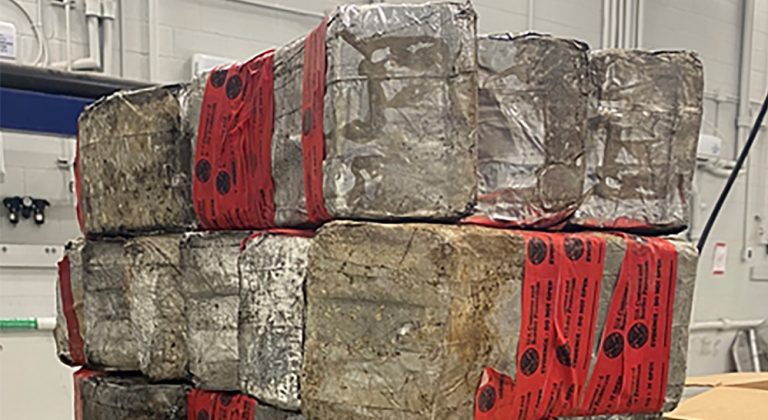
(Bethany Blankley, The Center Square) Federal agents made history by seizing the largest volume of precursors used to produce methamphetamine after interdicting two shipments from two ships on the high seas.

U.S. Department of Homeland Security’s Homeland Security Investigations (HSI) agents working overseas seized more than 300,000 kilograms (nearly 700,000 pounds) from two ships that departed Shanghai, China. They were headed to Mexico to be used in clandestine labs run by the Sinaloa Cartel, federal authorities said.

“We intercepted them on the high seas and now the Sinaloa Cartel will not be able to use them to make methamphetamine,” U.S. Attorney for the District of Columbia Jeanine Ferris Pirro said.

Because the Trump administration designated the Sinaloa Cartel as a Foreign Terrorist Organization, the designation “gave us the ability to move quicker and seize quicker,” Piro said.

The precursors were seized as part of the administration’s efforts to target terrorist organizations.

“Every day, tons of chemicals that are used to create synthetic drugs like methamphetamine and fentanyl are shipped from China to Mexico in China’s undeclared war against America and her citizens,” Piro said. Those aiding and abetting the Chinese and Mexican cartels are providing material support to terrorism, she said.

The seizure is the largest volume of precursor chemicals used to manufacture methamphetamine ever seized in U.S. history, authorities said.

By comparison, in fiscal 2024, CPB agents seized 78,925 kilos (nearly 174,000 pounds) of methamphetamine at the southwest border alone, according to CBP data.

Piro’s office obtained the seizure warrant under the terrorism forfeiture provision of federal law after Secretary of State Marco Rubio designated the cartels and others as foreign terrorist organizations in February.

It was the first time a warrant was issued for HSI agents to seize chemicals under a charge of material support for terrorism, U.S. Immigration and Customs Enforcement Acting Director Todd Lyons said.

HSI international agents seized two shipments from the same vendor, including six shipping containers of benzyl alcohol, a solvent used to manufacture pharmaceuticals, weighing a combined 164,880 kilos (roughly 363,000 pounds). They also seized six shipping containers of N-methyl formamide, another liquid organic solvent, weighing 151,560 kilos (roughly 334,000 pounds), authorities said.

The chemicals could have been used to produce nearly 190,000 kilos (nearly 420,000 pounds) of methamphetamine, with an estimated street value of $569 million, Piro and Lyons said.

HSI international agents in Guatemala, Panama and Mexico worked closely with foreign law enforcement partners to consolidate shipments in Panama and divert them to the Port of Houston, Lyons said. Their efforts through HSI Operation Hydra prioritize interdiction and seizing precursors used to manufacture fentanyl and methamphetamine, Lyons said.

“Since President Trump took office, his number one priority has been to take weapons of mass destruction” off of American streets, Lyons said. “HSI Operation Hydra is unique from our other approaches to combating drug trafficking because it targets the supply line chemical precursors used to manufacture illicit narcotics rather than the finished products. As a result, it’s possible for HSI to prevent much larger volume of narcotics entering the international and the domestic drug supply lines.

“HSI used sophisticated analytical tools and techniques as well as our extensive investigative tools and our deep knowledge about cross-border trade to ensure that we identify these shipments before they got to any illicit hands,” he said.

HSI agents in Houston and others working in Operation Hydra continue to make “tremendous success to bolster our efforts to combat drug trafficking operations,” he added.

Once the shipment arrived in Houston, the chemicals were transported using two dozen 18-wheeler trucks from the Port of Houston to an HSI storage facility. Piro said the 1,300 barrels could have instead resulted in dead Americans killed by the chemicals inside of them.

“Whenever there is an effort on the part of foreign terrorist organizations to create drugs that are killing Americans we will seize them,” Piro said. “Whether it’s on the high seas or whether it’s in the [United States] or a foreign country. … We’re doing it in Washington, D.C. We’re doing it in Houston … and you never know where we’re going to be tomorrow.”

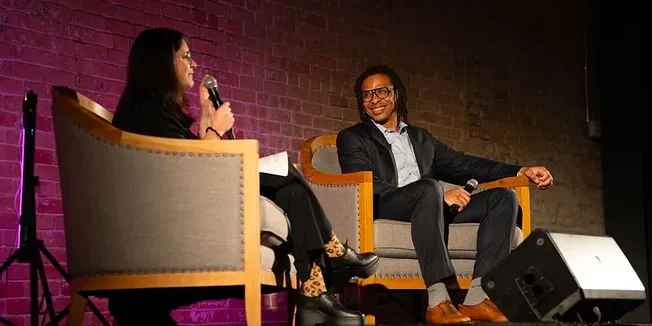
Paramount Eyes $100 Million Deal for Journalist Bari Weiss’s Website

(José Niño, Headline USA) Paramount is reportedly preparing to purchase The Free Press, the news site founded by journalist Bari Weiss, for more than $100 million, according to online outlet Puck.

The Times of Israel reported that David Ellison, who leads Paramount, first approached Weiss in July about acquiring The Free Press. Since then, the two sides have reached an agreement in principle and are now finalizing terms, Puck reported, citing “a source with knowledge of the negotiations.”

Neither Paramount nor Weiss has confirmed the report.

Ellison is said to be offering “well above” $100 million. The deal would also give Weiss a prominent role at CBS News, which falls under the Paramount media umbrella, per the report.

Weiss, a sharp critic of the far left, resigned from The New York Times in 2020 after claiming she was bullied by colleagues who allegedly branded her a “Nazi and a racist” and objected to her coverage of Jewish issues.

She went on to launch The Free Press in 2022, which has since gained traction as an alternative to the perceived left-wing bias of legacy outlets such as The New York Times.

Weiss is a committed advocate for the state of Israel and broader Jewish interests. In addition to her media work, Weiss has also spotlighted foreign influence operations in American institutions.

As Headline USA previously covered, she recently promoted an investigative report by Frannie Block and Jay Solomon alleging that Qatar spent “almost $100 billion to establish its legitimacy in Congress, American colleges and universities, U.S. newsrooms, think tanks, and corporations.”

Weiss previously linked Qatar to campus antisemitism in a November 2023 article, citing a study by the Network Contagion Research Institute that found universities accepting donations from Middle Eastern countries—particularly Qatar—had “300 percent more antisemitic incidents than those institutions that did not.”

José Niño is the deputy editor of Headline USA. Follow him at x.com/JoseAlNino 

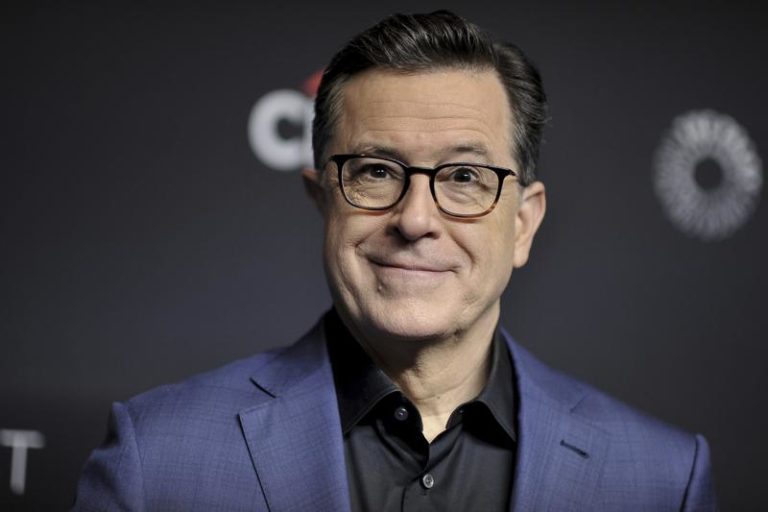
‘F*** You:’ Stephen Colbert Curses at Trump for Exposing Chicago Crime

(Luis Cornelio, Headline USA) Soon-to-be-ousted Late Show host Stephen Colbert cursed at President Donald Trump for threatening a federal takeover of crime-plagued Chicago, which the president called “the worst and most dangerous city in the world.”

“Two words, f*** you,” Colbert shouted on Wednesday’s episode of his CBS show, insisting visits to the Windy City served as evidence crime was not that bad.

“Fun fact: No. According to the FBI, 22 major cities have higher rates of murder than Chicago,” Colbert claimed. But the Media Research Center quickly fact-checked him, noting that the Newsweek article Colbert cited manipulated data.

“Fun fact: no. Colbert was citing a Newsweek article headlined ‘Full List of Major Cities With Higher Murder Rates Than Chicago.’ However, the list Newsweek provided was ‘of cities with more than 100,000 residents that have higher crime rates than Chicago, per the FBI report,’” the MRC noted.

In reality, Trump was referring to murder rates. FBI data ranks Chicago as the 8th most murderous city in the nation, according to Newsweek’s own reporting.

Despite these unsettling figures, Colbert painted the city as safe, going as far as reminiscing about the years he lived there.

He continued, “This is a scary time for the people of Chicago. And I love the people of Chicago. I used to be a people of Chicago. In fact, I lived there 11 years—I lived there seven years.”

“In fact, we took our show to Chicago last summer, had an amazing time, but come to think of it, you know what, a lot of us did come home murdered. That’s on me,” Colbert quipped.

Colbert’s tirade came as Trump weighed deploying the National Guard to Chicago, which suffered seven shooting deaths and over 50 injuries over Labor Day weekend.

Democrats have largely dismissed these grim numbers, but even MSNBC host Joe Scarborough urged local leaders to work with Trump to rein in the crime.

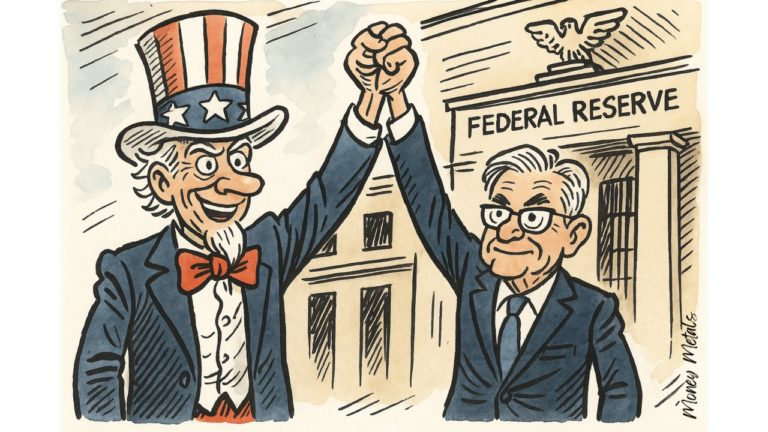
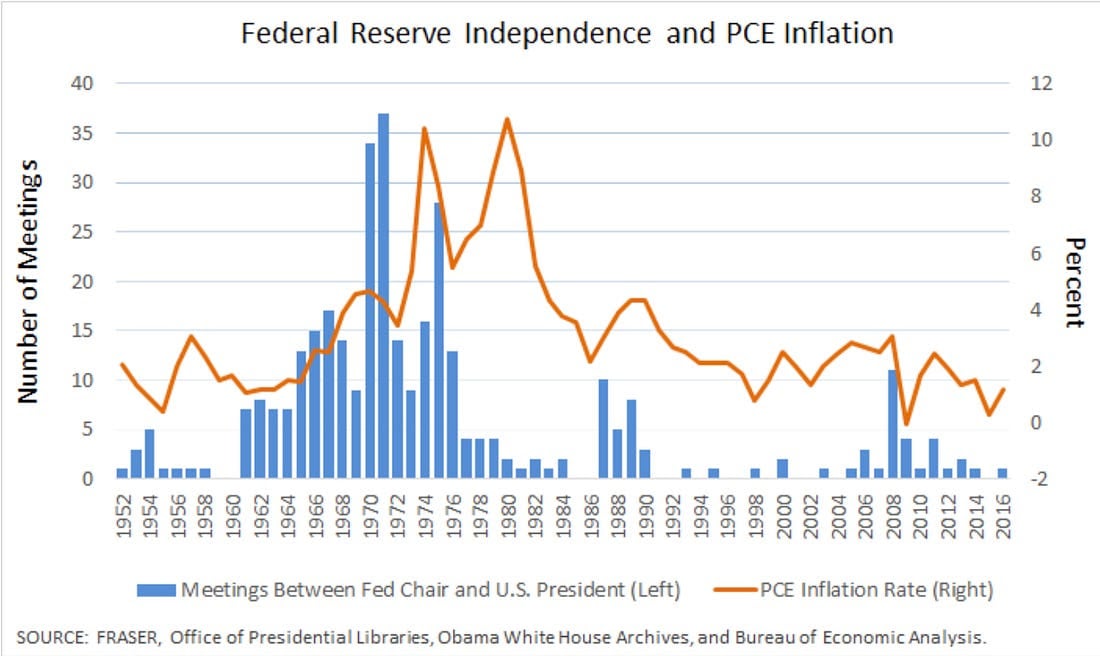
Does an Independent Fed *Raise* Inflation?

(Peter St Onge, Money Metals News Service) If Trump takes over the Fed will inflation get even worse?

Or is the Fed the heroic defender of hard money that its defenders claim?

Last week, Donald Trump fired Fed member Lisa Cook for alleged mortgage fraud — the first time in the Fed’s 112 years a member has been fired.

Cook apparently has zero expertise in monetary policy — her academic career consists of cooking data to claim racism. Still, she’s hired a lawyer and is suing to keep her job, so depending on how the Supremes swing, she could stick around.

This sent our mainstream Keynesian oligarchy into full panic mode at the prospect of the Fed coming under the control of the elected President instead of the unelected banker junta.

Voters. Running Countries. Insanity.

The Myth of Fed Independence

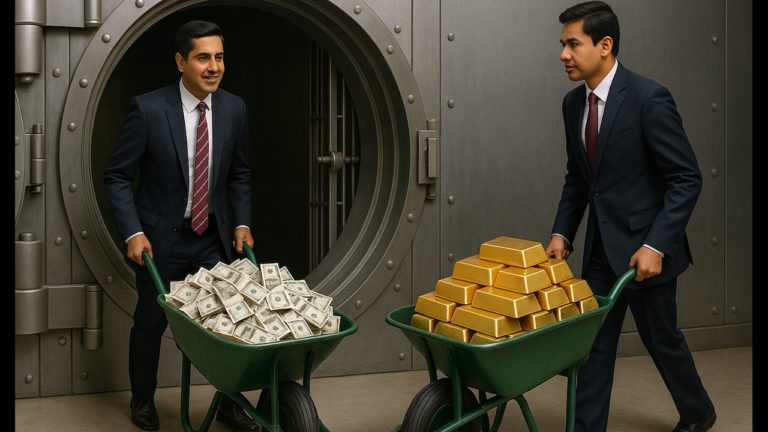
To hear Keynesians tell it, we’re going straight to Weimar, wheelbarrows of money and all.

To be fair, we’re going to Weimar anyway since Congress spends like a crackhead with a trillion-dollar visa. But they claim it’ll go faster once voters get a hold of the Fed.

Now, this debate’s been around for decades, with people like Murray Rothbard and Ron Paul arguing fed independence is a myth, propaganda for an organization that will always serve the dark alliance of government and banks it was built to serve, while acting as an engineered scapegoat to insulate elected representatives from voters.

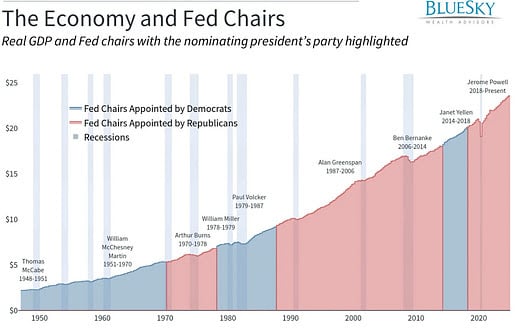
It’s actually worse; I tallied up monetary policy under Democrat and Republican presidents and found Democrats get much lower rates — they get the cheap money boom. While Republicans get recession-inducing rates.

In case you wonder about those charts showing the economy does better under Democrats.

Still, Keynesian professors and financial journalists argue voters would make it even worse because they’ll demand easy money booms that inevitably cause inflation.

Lisa Cook’s Natural Experiment

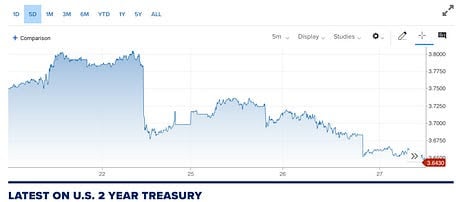
Well, we just had a fantastic natural experiment from Trump’s firing of Cook in the form of bond yields. Which tells us what markets — not pundits — think will happen to inflation.

So Trump floated firing Cook at 10 am on August 22nd, saying, “I’ll fire her if she doesn’t resign.”

The comments immediately sent 2-year bond yields plunging — meaning markets expect lower short-term rates. This is what you’d expect, since Trump’s been pretty clear that he wants rate cuts to goose the economy.

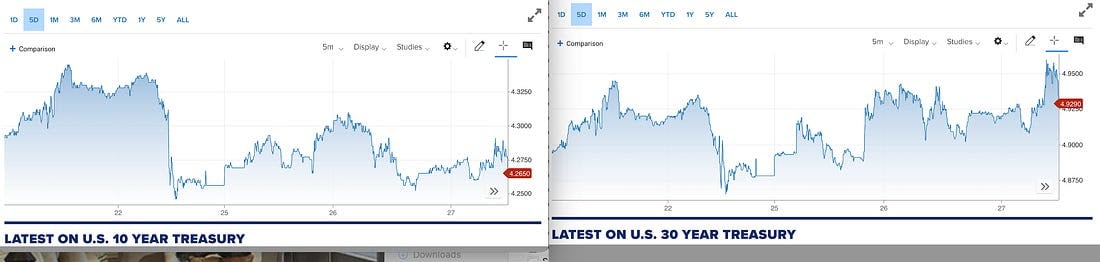
But what was interesting is that yields also plunged on both the 10-year and 30-year treasury bonds, which are key measures of inflation.

As in, inflation will be lower if Trump takes over the Fed.

In fact, the 10-year dropped almost 10 basis points in 90 minutes, which is close to what it normally moves in a month.

In other words, taking the data at face value, markets think an independent Fed raises long-term inflation.

This would be counter to the overwhelming consensus of monetary economists who claim the Fed lowers inflation. It’s worth noting that many are paid by the Fed in academic grants, so they would say that.

If I had to guess, what’s driving the numbers is that the Fed has already lowered rates to print as much inflation as it can get away with — what I call the Pitchfork Standard. As in, voter anger at high inflation or low jobs.

But greater Presidential control reduces the other half of Fed inflation, the trillions quietly flooded to bankers in so-called Quantitative Easing.

So rates don’t change with Presidential control. But the automatic bailouts to Wall Street shrink since they’re unpopular.

What’s Next

Ideally, Trump can break the Fed and let the economy run itself. Like Andrew Jackson did in abolishing the central bank for manipulating the economy into booms and busts.

But the next best thing is to break the economic oligarchy and hand control — and accountability — back to the people.

At which point, politicians will actually have to answer for the inflation, the recessions, the bailouts, and the lost jobs.


Peter St. Onge writes articles about Economics and Freedom. He’s an economist at the Heritage Foundation, a Fellow at the Mises Institute, and a former professor at Taiwan’s Feng Chia University.

India Is Trading In U.S. Treasuries for Gold

(Mike Maharrey, Money Metals News Service) India is swapping U.S. Treasuries for gold, providing a concrete example of de-dollarization.

As Times of India report put it, U.S. Treasuries “seem to be losing favor.”

Meanwhile, the Indian central bank has been rapidly increasing its gold reserves.

“India’s central bank has shown a preference for increasing gold reserves instead of U.S. Treasury bills to strengthen its foreign exchange holdings. This is part of a broader global shift towards diversifying national reserves beyond dollar-based assets.”

As of the end of June, the Reserve Bank of India held 879.98 tonnes of gold, a 4.7 percent, 39.22-tonne increase in 12 months.

This reflects a longer trend. The RBI has been buying gold since 2017. Over that period, it has increased its gold reserves by over 270 tons.

In the midst of this buying spree, an Indian economist told the Times of India that the push to accumulate gold was based on both political and economic reasons. He said that the “reliability” of the U.S. dollar has “diminished, and noted the “noticeable decline” in confidence in U.S. dollar assets.

Another economist told the Times, “It makes a lot of sense (to invest in gold), given the increased volatility in the FX market, elevated interest rates in the U.S., and, of course, also as the central banks in each economy would like to diversify the asset classes in which they are parking their reserves.

Meanwhile, India’s share of U.S. Treasuries has dipped. In June 2024, the U.S. Treasury reported that the Indian central bank held $241.9 billion in U.S. Treasury holdings. By June of this year, the level had dipped to $227.4 billion, a 6 percent decrease.

India ranks as the 14th largest foreign holder of U.S. debt.

An economist at IDFC First Bank told The Times of India that it’s clear the Indian central bank has been diversifying its reserve holdings away from U.S. Treasuries.

“Over the same period, there has been a rise in gold reserve holdings. This shift reflects and effort to diversify forex reserves and reduce the risk of revaluation loss due to U.S.-specific factors. For instance, worsening fiscal metrics of the U.S. government have kept yields elevated.”

The Times of India notes that this is part of a broader global trend.

 “The declining share of dollar holdings indicates a widespread international trend towards diversifying foreign exchange reserves, driven by geopolitical tensions and trade disputes.”

The data bears this out.

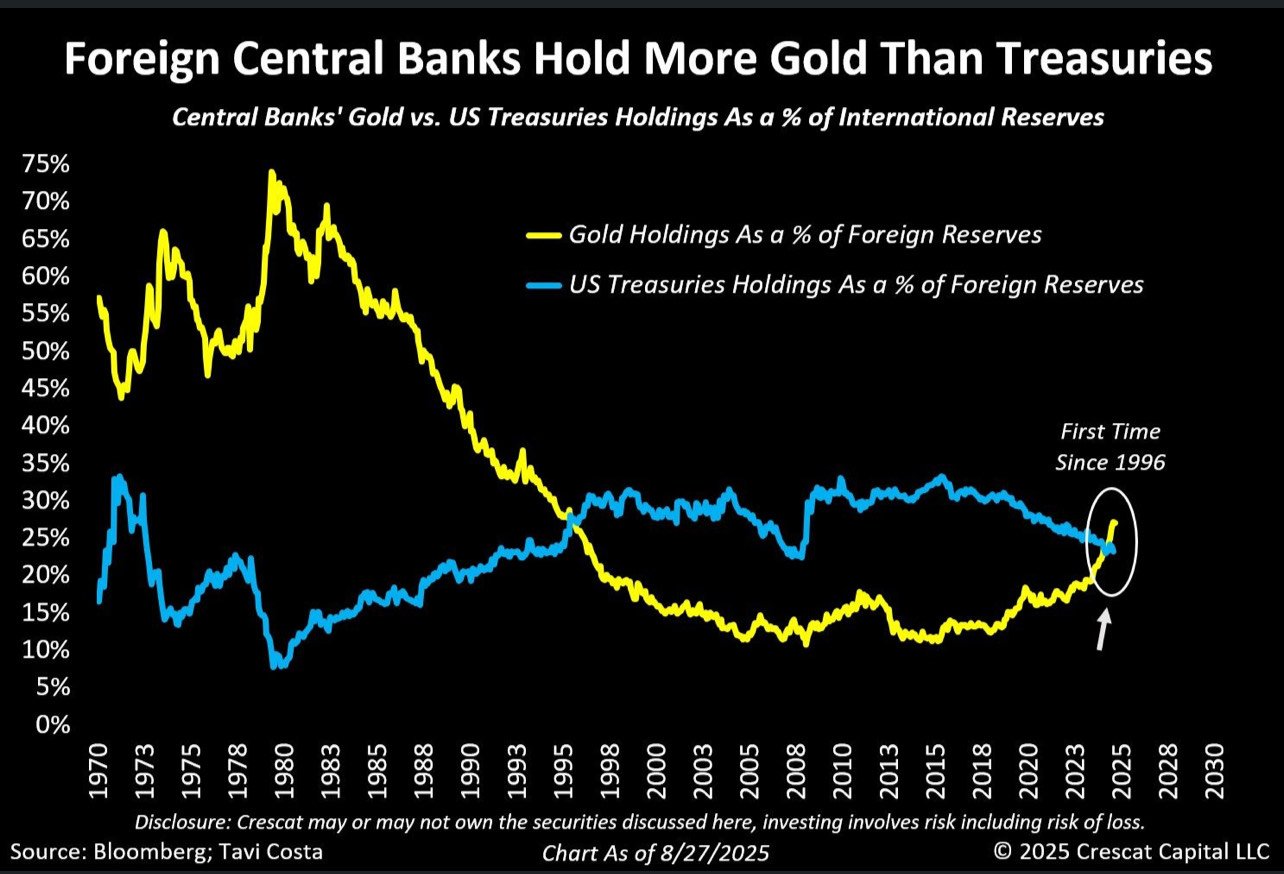
For the first time in nearly 30 years, foreign central banks hold more gold than U.S. Treasuries.

Why are so many countries spurning the dollar?

Many are concerned about the weaponization of the U.S. currency. In an article published by the Atlantic Council, Kimberly Donovan and Maia Nikoladze point out that “central banks that are worried about getting sanctioned, want to protect themselves from a potential global financial crisis, or both have been stacking up gold at record levels.

There are also growing worries about the U.S. government’s fiscal irresponsibility. Earlier this month, the national debt surpassed $37 trillion, and there is no indication that borrowing and spending will slow down anytime soon.

As analyst Artis Shepherd explained, “The bond market is sending a message to the U.S. government that its spending is out of control and the reserve currency ‘privilege’ it has abused for the last 80 years is running out.”

So What?

The dollar isn’t in danger of collapsing or even losing its reserve status – at least not yet. However, even a modest de-dollarization spells trouble for the federal government and the U.S. economy.

In a nutshell, the United States needs the world to need dollars.

The U.S. depends on this global demand for dollars supported by its reserve status to underpin its massive government. The only reason Uncle Sam can borrow, spend, and run massive budget deficits to the extent that it does is the dollar’s role as the world’s reserve currency. It creates a built-in global demand for dollars and dollar-denominated assets. This absorbs the Federal Reserve’s money creation and helps maintain dollar strength despite the Federal Reserve’s inflationary policies.

WolfStreet summed up the risk the U.S. faces as the dollar’s status continues to erode.

“The status of the U.S. dollar as the dominant global reserve currency has helped the U.S. fund its twin deficits and thereby has enabled them: the huge fiscal deficit every year and the massive trade deficit every year. The reserve currency status comes from other central banks (not the Fed) having purchased trillions of USD-denominated assets such as Treasury securities, other government securities, corporate bonds, and even stocks. The dollar’s status as the dominant reserve currency has been crucial for the U.S., and as that dominance declines ever so slowly, risks pile up ever so slowly.”

While the threat isn’t immediate, a slowly growing pile eventually turns into a giant pile.

But again, even a modest de-dollarization will have significant impacts. If the world needs fewer dollars, they will begin to return to the U.S., causing a dollar glut. This will increase inflationary pressure domestically as the value of the U.S. currency further depreciates. In the worst-case scenario, the dollar could collapse completely, leading to hyperinflation.


Mike Maharrey is a journalist and market analyst for Money Metals with over a decade of experience in precious metals. He holds a BS in accounting from the University of Kentucky and a BA in journalism from the University of South Florida.


The Gold Bugs Are Right!

(Mike Maharrey, Money Metals News Service) The gold bugs are right. Gold is an important asset that everybody should hold.

And yet, the mainstream looks at these so-called gold bugs with derision.

Let me tell you in an illustrative story.

I almost didn’t get into reporting and writing about precious metals because I was worried about being labeled a “gold bug.” I didn’t want people to think I was some kind of weirdo.

I had done a little bit of freelance work relating to the gold and silver markets in the past, but when a precious metals company approached me and offered the opportunity to handle their website content, I was reticent. I thought, ‘If I do this, there’s going to be a certain perception of me that I don’t want to generate.’

Looking back, it seems kind of silly. Or maybe immature is a better word. My mom always told me I shouldn’t worry about what other people think if I’m doing the right thing. But here I was – worrying.

You see, I had been exposed to a lot of the mainstream reporting on gold. I’d heard it called a “barbaric relic” and a “useless metal.” I’d learned in history that the gold standard caused busts and bank runs. While I had some sense that mainstream narratives were often false, I was still indoctrinated enough to believe in the power of the good ol’ dollar. And I had been exposed to prepper circles. They loved gold, but I’m not gonna lie, some of those folks were – eccentric.

I finally decided I would high-ball my salary requirements and hope they rejected them so I could move on with my life.

They didn’t.

And here we are, well over a decade later. I’m a gold bug. And I’ll wear that label proudly.

Because, at the end of the day, I’d rather be right than popular.

Nevertheless, negative perceptions of gold dominate the mainstream landscape. If you watch the financial networks closely, you’ll find they are generally badmouthing gold as an investment or simply ignoring it.

With gold at record highs right now and a bull run that has driven the yellow metal up 34 percent this year alone, it’s hard to badmouth it. So, they are opting to ignore it as much as they can.

I’ll give you an example. On Tuesday, when gold was blowing through its previous record high and running to $3,550, the CNBC X feed mentioned the metal exactly once – and that was in the context of a Bitcoin article.

This apathy towards gold is evident in the investment data as well.

While gold bar and coin demand increased by 11 percent globally through the first half of this year, year-on-year bar and coin demand in the U.S. plummeted by 53 percent. American investors bought a paltry 9 tonnes of gold coins and bars in Q2, the lowest quarterly total since 2019.

Keep in mind, gold touched $3,500 an ounce for the first time during Q2.

Meanwhile, in China, bar and coin demand grew by 44 percent year-on-year in H1. Chinese investors snapped up 115 tonnes of gold bars and coins in the second quarter alone. It was the strongest H1 for physical gold buying since 2013.

This reflects the general trend during the totality of this gold bull run. Emerging market central banks and investment in the East have dominated. European demand has picked up in recent months, but most Americans continue to wait – for who knows what.

Maybe there are a lot of people out there thinking, ‘Man, gold is doing pretty good. But I don’t want to be a gold bug, and the guy on Fox Business said gold is pretty useless.’

But why do we see this prevailing negativity about gold here in the U.S.? I mean, this is a country that was built on gold and silver. It is enshrined right in the Constitution.

I think some of it is cultural. Compare Americans’ attitudes about gold compared to people in India.

Indians have a veritable love affair with gold. The metal is woven into the country’s religious and cultural life. Indians have traditionally held physical gold. They valued the yellow metal as a store of wealth, especially in poorer rural regions. Many Indians use gold jewelry not only as an adornment but to preserve their wealth. Overall, 87 percent of Indian households own some gold. Even households at the lowest income levels in India hold some of the yellow metal.

This attitude is prevalent in many Asian countries.

But I think there is more to American negativity about gold than cultural differences. I think the political class and their support system in corporate media and academia intentionally downplay gold because they need you to love their fiat dollars.

I sounded like a gold bug right there, didn’t I?

But it’s true.

Why did the U.S. abandon the gold standard to begin with?

Because it was limiting money creation. Franklin D. Roosevelt wanted the government to spend more. That required money creation. The gold standard blocked that.

By untethering dollars from gold, the government can create money at will. The simple fact of the matter is that if our monetary system were still constrained by gold, government would be smaller, less powerful, and less involved in – everything.

You will often hear me say the Federal Reserve is the engine that drives the biggest, most powerful government in the world. If it weren’t for the Fed’s monetary machinations and its ability to create money out of thin air, we wouldn’t have the welfare/warfare state that exists today.

Sound money restrains government.

If you believe government should have limits, you should be a gold bug.

On the other side of the coin, unsound money steals your wealth. Rep. Thomas Massie hit the nail on the head in this Labor Day quote:

“As we celebrate Labor Day, consider your wages are given in U.S. dollars. Money is a store of labor, and the U.S. government has been robbing you of it since 1913.”

Obviously, the powers that be don’t want you to understand any of this. They want you to have full faith in their paper money. They want you to think inflation is caused by greedy corporations, or Putin’s price hikes, or magic ferries, not by government malfeasance. They don’t want you to care about sound money because, quite frankly, fiat gives them control over you.

So, the downplay and ignore gold. They laud the actions of the Fed, claiming the central bank keeps the economy stable. They make fun of “gold bugs.”

But the gold bugs are right.

And I’m happy to be one!


Mike Maharrey is a journalist and market analyst for Money Metals with over a decade of experience in precious metals. He holds a BS in accounting from the University of Kentucky and a BA in journalism from the University of South Florida.

LAPD Pulled From Streets to Protect Kamala Harris after Secret Service Cancelation

(José Niño, Headline USAKamala Harris is now being protected by Los Angeles Police Department officers after President Donald Trump revoked her Secret Service detail, according to a report by the New York Post.

Local outlet FOX 11 revealed Wednesday that up to 14 members of the LAPD’s elite Metro Division have been reassigned from casework and crime-suppression duties to guard the former vice president. 

One of the outlet’s crews even recorded an unmarked LAPD SUV with two plainclothes officers parked outside Harris’ Brentwood residence, where she lives with her husband Doug Emhoff after leaving Washington, D.C.

Trump officially terminated Harris’ Secret Service protection effective Sept. 1, signing an order last week to that effect. Normally, former vice presidents receive six months of protection after leaving office, meaning Harris’ coverage should have ended July 21. But just before his own departure on Jan. 20, President Joe Biden quietly extended her detail for a full year.

It remains unclear why Biden granted Harris the extra time, but local Democratic leaders sharply criticized Trump’s move.

“This is another act of revenge following a long list of political retaliation in the form of firings, the revoking of security clearances and more,” Los Angeles Mayor Karen Bass told FOX 11 in a statement. “This puts the former vice president in danger, and I look forward to working with the governor to make sure Vice President Harris is safe in Los Angeles.”

In addition to LAPD protection, the California Highway Patrol has also been tapped to potentially assist Harris, according to the Los Angeles Times. Any such deployment, however, would need the approval of Gov. Gavin Newsom.

As Headline USA previously reported, the clash over Harris’ security detail is part of a broader tit-for-tat between Donald Trump and Joe Biden that stretches back to 2021, when Biden revoked Trump’s intelligence briefings and security clearances, citing his “erratic behavior.” 

Four years later, Trump returned the favor — stripping Biden and a host of Democratic allies of their clearances and access to federal buildings.

Those impacted by Trump’s sweeping order included Harris herself, Hillary Clinton, and former Reps. Liz Cheney and Adam Kinzinger, along with New York Attorney General Letitia James and Manhattan District Attorney Alvin Bragg, both of whom spearheaded lawfare campaigns against Trump. Former Biden officials Antony Blinken, Jake Sullivan, and Lisa Monaco were also affected, as well as Alexander Vindman and certain Biden family members.

Trump said at the time that allowing these figures continued access to classified material was “no longer in the national interest,” blasting Biden’s “poor memory” as a national security risk and declaring: “I will always protect our National Security — JOE, YOU’RE FIRED.”

José Niño is the deputy editor of Headline USA. Follow him at x.com/JoseAlNino