(Dave DeCamp, Antiwar.com) President Trump has signed an executive order pledging to provide Qatar with a security guarantee similar to NATO’s Article 5, a step that came after Israel bombed the country, which is a major regional ally of the US and hosts about 10,000 US troops.
Trump’s order says that the US shall “regard any armed attack on the territory, sovereignty, or critical infrastructure of the State of Qatar as a threat to the peace and security of the United States.”
It states that the US “shall take all lawful and appropriate measures — including diplomatic, economic, and, if necessary, military — to defend the interests of the United States and of the State of Qatar and to restore peace and stability.”
The order marks the first time an Arab country is receiving such a strong security guarantee from the US, something that Saudi Arabia has long sought. “Saudi Arabia thought that to get a defense pact with the United States, it would require normalizing relations with Israel. Qatar managed to get a partial defense pact with the United States by getting attacked by Israel,” a former US official told Axios.
According to the White House, the order was signed on Monday, September 29, the same day Trump hosted Israeli Prime Minister Benjamin Netanyahu and had him apologize to Qatari Prime Minister Mohammed bin Abdulrahman al-Thani for the strikes on Doha, which killed six people, including five low-level Hamas officials and one Qatari security officer.
Trump has claimed that he was unaware of Israel’s plans to bomb, but according to Israeli officials, Trump was notified about the plan beforehand and did not oppose the strikes.
While Trump’s executive order is seen as a response to the Israeli attack on Qatar, it could also be an effort to shore up the alliance with Doha ahead of another potential war with Iran. During the 12-Day War, Iran attacked the US’s Al Udeid Air Base in Qatar in retaliation for the US bombing of its nuclear facilities.
Iran had given the US notice about the attack, and there were no casualties among US or Qatari personnel. But in the event of another war, Iran’s attacks could be more significant and likely come without warning.
(Dave DeCamp, Antiwar.com) Secretary of State Marco Rubio announced on Wednesday that the US was imposing more sanctions on Iran to support the UN Security Council sanctions that were reimposed after the UK, France, and Germany triggered the so-called “snapback” mechanism of the 2015 nuclear deal, an agreement the US withdrew from back in 2018.
“Today, we are designating 44 individuals and entities involved in Iran’s nuclear program and weapons procurement networks supporting ballistic missile and military aircraft programs,” Rubio said in a statement.
The US secretary of state said the snapback sanctions were imposed due to Iran’s “significant non-performance” of its nuclear commitments, but the sanctions came just a few months after the US bombed Iranian nuclear facilities as part of a war that was launched amid nuclear negotiations between Washington and Tehran.
Also on Wednesday, Russia stated that it doesn’t recognize the reimposition of UN sanctions on Iran, signaling that it won’t abide by the measures, which include an arms embargo.
“We do not recognize the snapback as coming into force,” said Russia’s UN Ambassador Vassily Nebenzia. “We’ll be living in two parallel realities, because for some snapback happened, for us it didn’t. That creates a problem. How we will get out of it – let’s see.”
Nebenzia said the reactivation of the sanctions is “really fraught with a major escalation around Iran, because it opens the door for those countries who want to finish Iran’s nuclear program,” referring to the potential for more US and Israeli military action against Iran.
Russia and Iran have both slammed the reimposition of the sanctions as “illegal” since the US was the party that violated the JCPOA in the first place. The European powers took the step to trigger the sanctions before the mechanism was due to expire on October 18.
He argues you wouldn’t notice a real shutdown if Washington stayed within its constitutional lane. The $37 trillion debt is the tell that it hasn’t.
He reaches for Federalist No. 45. James Madison promised federal powers would be “few and defined,” centered on war, peace, diplomacy, and foreign commerce. States would handle “the lives, liberties, and properties of the people.” Today’s reality, he says, is flipped—and the Anti-Federalists foresaw consolidation smothering state sovereignty.
Thomas Jefferson warned against concentrating power “into one body.” George Mason called consolidation “totally subversive.” Maharrey’s verdict: prophetic—and visible in everything from toilet-water rules to light-bulb mandates.
Shutdown Theater vs. Real Spending
A “shutdown,” he says, leaves the war machine warring, the surveillance state spying, and the IRS collecting. What stops are the highly visible conveniences that maximize irritation and partisan blame.
He recalls Obama-era antics: Mount Rushmore closed, “website is not available” banners, and an elderly couple told to leave their Lake Mead home. Pain without logic, designed to score political points.
Don’t fixate on sound bites. Watch the deal-making. The final act ends the same way: more spending, more borrowing, more debt.
What’s Actually in Play: CR, Obamacare Subsidies, and the Senate Math
The fiscal year ended yesterday without a blueprint for FY 2026. The House passed a Continuing Resolution to hold funding at FY 2025 levels through November 21st.
But the Senate needs 60 votes. Chuck Schumer and Democrats want the CR to restore Obamacare tax subsidies that expired on October 1st and add other health-care tweaks. Mike Johnson calls it a partisan “laundry list.” Hakeem Jeffries counters: “Cancel the cuts. Lower the cost. Save healthcare.”
Republicans frame it as benefits for illegal immigrants; Maharrey calls that oversimplified. About 90% of exchange enrollees receive tax credits because coverage is extremely expensive. Politics, not prudence, is steering the vehicle.
Even “Clean” Keeps Growing
The House CR still tucked in hikes: security for federal officials, higher rates for the Treasury’s terrorism and financial-intelligence account, and boosts for some SBA guarantees. The CBO flagged these as targeted increases while mandatory programs roll on autopilot.
Flat funding isn’t good news, he adds. With one month left in FY 2025, Washington had already spent $6.73 trillion, up 5.9% from FY 2024 year-to-date.
The pattern is iron-clad: “cuts” usually trim the increase—baseline budgeting in action. The FY 2026 bill will still spend more than this year.
The Engine: Federal Reserve Policy and Perpetual Inflation
Spending at this scale demands money creation. The Federal Reserve props up the Treasury market with suppressed rates and, in crises, direct buying—demand conjured with new money.
He traces the break from gold—FDR’s severing and Nixon’s 1971 final cut—as necessary to let the Fed expand the money supply fast enough to finance Leviathan.
Interest expense now runs around $1 trillion per year, the second-largest line item—bigger than defense and Medicaid, trailing only Social Security. Foreign appetite for Treasuries is fading. You can’t claim inflation is conquered when inflation is the plan.
CPI Isn’t the Whole Story
The CPI is a basket-pricing tool, not a measure of monetary inflation. Its 1990s formula changes roughly halve what 1970s math would report. A 2% target quietly shaves about 10% of purchasing power every five years.
Yesterday, the Dow was just over 46,300, and gold was around $3,800/oz—about 12 ounces. That’s a 37% decline in the Dow when priced in gold over 96 years.
Gold exposes what fiat hides. A fine suit cost a bit over an ounce of gold a century ago; it’s still about an ounce today.
Silver’s Setup and the Case for Junk Silver
Silver nearly touched $48/oz, slipped, and rebounded above $47—knocking on $47.50. The all-time high is $50. With the gold-silver ratio over 80:1, silver screens are undervalued versus gold.
Supply is tight. Industrial demand is hot. Investment demand is rising. Many technicians think a decisive break above $50 could run quickly.
He highlights junk silver—pre-1965 U.S. quarters, dimes, and half dollars at 90% silver. A 1964 quarter holds melt value of over $8 today, far above face value. Premiums are unusually low—“as low as 49 cents per troy ounce” for dimes and quarters—compared to peaks near $15 over spot in 2023. He likes it for barter resilience and wealth preservation.
What You Can Control
You can’t vote away structural incentives to spend and print, Maharrey argues. Politics is power first, prudence later—if ever. Expect more can-kicking.
Shield yourself instead. Hold real money—gold and silver—that can’t be printed. Buy what you understand, ask questions, and think in purchasing power, not just dollar price.
Housekeeping, Links, and What’s Next
Maharrey plugs his book, Constitution Owner’s Manual, a clause-by-clause tour guided by ratification-era meaning.
He asks listeners to review and share the show on Apple Podcasts, Spotify, and elsewhere. For news and market coverage, he points to MoneyMetals.com/news and the weekly Market Wrap.
This Friday, he teases a conversation with economist Daniel Lacalle.
(Ken Silva, Headline USA) FBI Director Kashyap Patel has repeatedly insisted that there’s no evidence of deceased sex trafficker Jeffrey Epstein sexually blackmailing anyone—but a top Trump official who was neighbors with Epstein says otherwise.
Commerce Secretary Howard Lutnick, who was neighbors with Epstein in Manhattan for years, told New York Post reporter Miranda Devine that he believes Epstein used videos of other powerful men receiving sexual favors to secure his sweetheart plea deal with the Justice Department in 2008. Lutnick was referring to Epstein’s massage room, which was wired with cameras.
“I assume way back when they traded those videos in exchange for him getting that 18-month sentence, which allowed him to have visits and be out of jail. I mean, he’s a serial sex offender. How could he get 18 months and be able to go to his office during the day and have visitors and stuff? There must have been a trade,” he reportedly said on Devine’s podcast, Pod Force One.
“So, my assumption, I have no knowledge, but my assumption is there was a trade for the videos, because there were people on those videos.”
Lutnick named billionaire Bill Gates and Prince Andrew as likely recipients of sexual massages. Gates strongly denied the allegation.
“This is absolutely false. Gates met with Epstein to discuss philanthropy and nothing else,” a Gates spokesperson told the Post.
Lutnick’s comments come off the heels of the House Oversight Committee releasing documents about Epstein paying someone for massages—possibly for Prince Andrew. Epstein’s heavily redacted ledger shows that he cut a $200 check in February 2000 for a “massage for Andrew.” Another $200 check was cut in May of that year for the same reason. The rest of the ledger is redacted.
Probably the most interesting records from this limited dump come from Epstein's ledger, which lists 2 $200 checks for someone to "massage Andrew." The DOJ says Epstein didn't traffic girls to anyone else, but this seems to be evidence to the contrary. https://t.co/bogAu2X1nJpic.twitter.com/VIHE1DetXa
Multiple teenagers have said Epstein paid them for massages that often included sexual activities.
Epstein was reportedly found dead in his prison cell in August 2019—allegedly of suicide. His accomplice, Ghislaine Maxwell, is serving a 20-year sentence after being found guilty of conspiring with Epstein in 2021.
The Oversight Committee says it’s received over 8,000 records from the Epstein estate so far.
Ken Silva is the editor of Headline USA. Follow him at x.com/jd_cashless.
(Dave DeCamp, Antiwar.com) The US Department of War has confirmed that US troops will remain in Iraq indefinitely under a deal signed with the Iraqi government last year that called for an end to the US-led anti-ISIS mission in the country.
According to Stars & Stripes, a senior Pentagon official has said that the US is slightly reducing its troop presence, bringing the total number of US military personnel from 2,500 to under 2,000. The majority of the remaining troops will be based in Erbil in the northern Kurdistan region.
The War Department official said that US troops were in the process of leaving the Al-Asad Air Base in western Iraq. The US will be keeping some military personnel in Baghdad who will be tasked with “bilateral security cooperation.”
While the US is keeping troops in Iraq, the official claimed that the drawdown was ending the “forever war” in the country. “First, we’re ending the forever war in Iraq,” the official said.
“Second, we’re shifting the burden of responsibility for combating ISIS in Iraq, from US and coalition forces to our Iraqi partners. We’ve trained them for a decade and they have the capability to counter ISIS and they have the will. And third, high credit to the Iraqis themselves,” the official added.
The Pentagon is also consolidating its presence in neighboring Syria, where it plans to reduce troop numbers to under 1,000. It has closed some bases in northeastern Syria, handing them over to the US-backed Kurdish-led SDF. The majority of the US troops in Syria are expected to be based at al-Tanf Garrison in the south, which is situated where the borders of Syria, Iraq, and Jordan converge.
For years, the Pentagon claimed there were only 900 US troops occupying Syria, but the Biden administration revealed late last year that the real number was 2,000. Media reports have suggested that the US may formalize its presence in Syria by signing a deal with the new Syrian government that’s led by Ahmed al-Sharaa, the former al-Qaeda commander who took power after his group of jihadists ousted former President Bashar al-Assad.
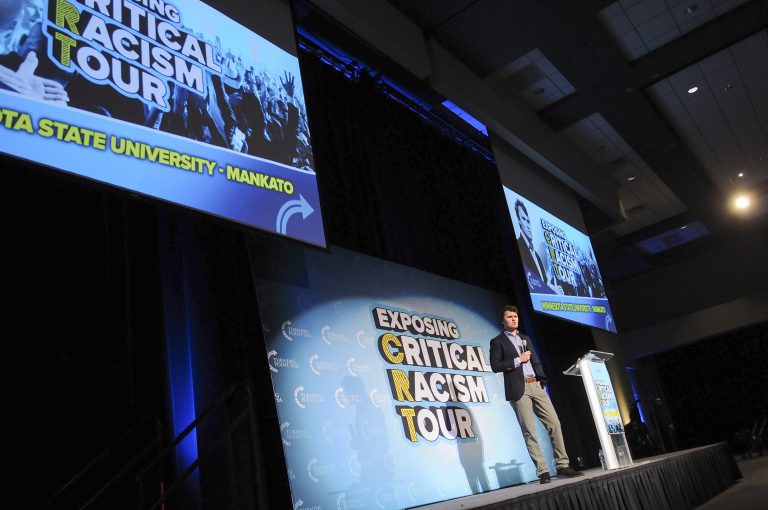
(Headline USA) Thousands of supporters came together to honor Charlie Kirk Tuesday night as Turning Point USA’s college tour returned to Utah for the first time since its founder was assassinated on a college campus in the state earlier this month.
Thousands of supporters came together to honor Charlie Kirk Tuesday night as Turning Point USA’s college tour returned to Utah for the first time since its founder was assassinated on a college campus in the state earlier this month.
The event at Utah State University in Logan was about two hours north of Utah Valley University, where Kirk was killed Sept. 10 by a gunman who fired a single shot through the crowd while Kirk was answering student questions.
Conservative podcast host Alex Clark kicked off the event, which she described as the the group’s largest on-campus tour stop.
“I’m not here to eulogize Charlie Kirk,” she said, but to “pass the torch on to every single one of you.”
Hours before the event, the Logan campus temporarily evacuated a building but later deemed it safe after a “non-explosive” device was found.
Authorities are investigating but the university does not believe the package was a threat or related to the Turning Point event, school spokesperson Amanda DeRito told The Associated Press.
Security at the event was tight, with a heavy law enforcement presence surrounding the arena, a no-bag policy, metal detectors and drones overhead.
The assassination of a top ally of President Donald Trump and a significant figure in his Make America Great Again movement has galvanized conservatives, who have vowed to carry on Kirk’s mission of encouraging young voters to embrace conservatism and moving American politics further right. Kirk has been celebrated as a “martyr” by many on the right, and Turning Point USA has seen tens of thousands of requests to create new chapters in high schools and colleges.
Tuesday’s event, scheduled before Kirk’s death, showcased how Turning Point has been pressing forward without its charismatic leader, who headlined many of its events and drew crowds. The national tour includes some of the biggest conservative names, including Tucker Carlson, Megyn Kelly and Glenn Beck.
The event featured a panel with three prominent Republicans, Utah Gov. Spencer Cox, Rep. Andy Biggs of Arizona and former Rep. Jason Chaffetz of Utah, who urged students to turn their anger into action.
Chaffetz spoke with emotion about being there Sept. 10 when Kirk was killed.
“Nobody should have to witness and go through what I went through, what my family and those 3,000 people went through at UVU,” he said, choking up. “I will never unsee that. I will always feel it.”
The school’s basketball arena was filled with red and white “MAGA” hats, chants of “USA,” and blaring country music before the event kicked off Tuesday. Volunteers handed out posters reading, “I am Charlie Kirk” and “In honor of Charlie Kirk, this is the Turning Point.”
Attendees said they’d come to pay tribute to Kirk alongside others he’d inspired and to try to heal together.
“I feel like the tension is super high, especially being in the same state where it happened. But I’m super excited for it,” said Jada Chilton, from Salt Lake City. “It’s kind of just healing my soul, kind of being that I actually get to come to a Turning Point event even though the main spirit of it isn’t here.”
Chilton said listening to Kirk on TV, in debates and on his podcast had been her “daily regimen.” She’d bought tickets to the event 30 minutes before the assassination, which left her shattered.
“I was on the floor sobbing,” she said.
She described Tuesday’s security as “insane,” with police officers “everywhere.”
“It makes you feel more comfortable, but it just is sad and disappointing, honestly, that we have to,” she said.
Susan Goldsberry, 75, of Cache Valley, Utah, didn’t know much about Kirk before the assassination, but loves everything she’s found out about him since.
“Everything he says, I just love,” she said, breaking down in tears. “It was a horrible thing that happened. I think he could have done so much more, but I hope, I hope people keep his message going.”
Kirk’s widow, Erika Kirk, has pledged to continue the organization’s work. She now oversees Turning Point and said she will lead the group as her late husband intended, closely following plans he laid out to her and to staff.
“We’re not going anywhere. We have the blueprints. We have our marching orders,” she said last week on Kirk’s podcast, which she also vowed would continue with rotating hosts and decades of clips of her husband.
(Thérèse Boudreaux, The Center Square) The federal government partially shut down early Wednesday after U.S. Senators failed to pass a funding stopgap Tuesday evening. Democrats withheld the votes necessary for Republicans’ Continuing Resolution to pass, triggering the shutdown at 12:01 a.m.
It’s the first time in six years that lawmakers have let money for federal agencies lapse.
“This is not a shutdown that makes any sense at all to the American people,” U.S. Sen. Jerry Moran, R-Kan., told lawmakers after the 55-45 vote. “A shutdown means uncertainty. A shutdown means dysfunction.”
Republicans’ CR, which already passed the House, would have extended current government funding levels until Nov. 21. This would buy lawmakers time to pass all 12 annual appropriations bills for fiscal year 2026. It also included $30 million for additional lawmaker security and $58 million for U.S. Supreme Court judges and members of the executive branch.
Despite the nonpartisan nature of the bill, almost all Democrats voted against the CR because it neglected to address the upcoming expiration of the enhanced Obamacare Premium Tax Credit.
Democrats’ counter-proposal – which never passed the House and also failed to pass the Senate Tuesday evening – included health care-related policy riders costing up to $1.4 trillion. Democrats argued that by rejecting those policy proposals, Republicans were choosing to “gut” health care and shut the government down.
“I just voted NO on the Republican funding bill that does NOTHING to address premiums more than doubling next year,” Sen. Patty Murray, D-Wash., posted on X. “Republicans REFUSED to negotiate with Democrats and now they’re forcing a shutdown rather than working with us to fix the health care crisis THEY created.”
Only Sens. John Fetterman, D-Pa.; Catherine Cortez Masto, D-Nev.; and Angus King, I-Maine, (who caucuses with Democrats) voted for both the Democratic and Republican CRs. Sen. Rand Paul, R-Ky., voted no on both.
The Congressional Budget Office has estimated that “about 750,000 federal employees could be furloughed each day” during the shutdown, with the total daily cost of their compensation totaling $400 million.
(José Niño, Headline USA) Israeli Prime Minister Benjamin Netanyahu openly acknowledged paying social media influencers up to $7,372 per post to shape American public opinion about Gaza operations, according to Foreign Agents Registration Act filings revealed in late September.
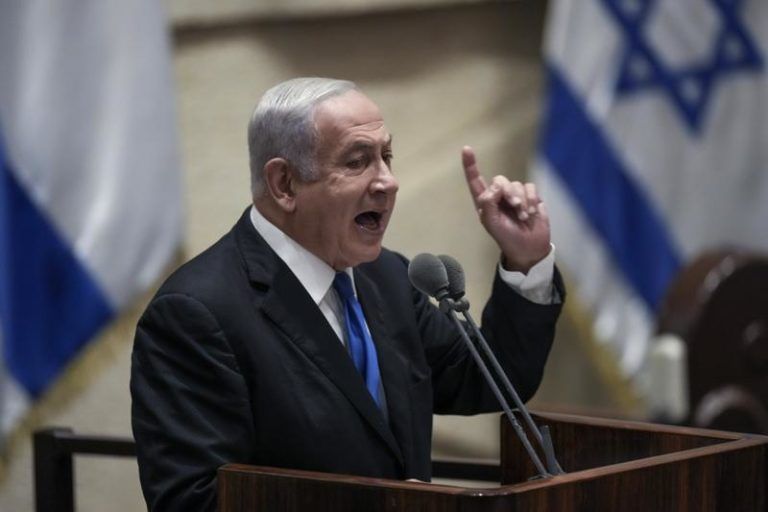
According to a report by Responsible Statecraft of Nick Cleveland-Scout, Netanyahu openly defended the strategy during a Friday meeting with American influencers at the Israeli Consulate General in New York. “We have to fight back. How do we fight back? Our influencers. I think you should also talk to them if you have a chance, to that community, they are very important,” Netanyahu declared in recorded footage
The Prime Minister provocatively described social media as Israel’s new battlefield weapon. “We cannot fight with swords anymore, that doesn’t work very well. We have to fight with weapons that apply to the battlefields in which we’re engaged in and the most important ones are on social media,” Netanyahu proclaimed, according to a report by Press TV.
Responsible Statecraft reported that Bridge Partners LLC, a Washington D.C.-based firm contracted by the Israeli Ministry of Foreign Affairs, manages the covert operation through invoices sent to Havas Media Group Germany.
The campaign, running from June through November 2025, allocates $900,000 for a network of 14-18 social media influencers creating content across TikTok and Instagram.
After accounting for administrative costs including legal fees, banking fees, and marketing expenses through the middle of September, approximately $552,946 flows directly to influencer payments between June and September 2025.
With the firm estimating 75-90 posts during this timeframe, the mathematics reveals payments ranging from $6,143 per post on the low end to $7,372 per post on the high end.
The campaign operates under the codename “Esther Project,” though its connection to the Heritage Foundation’s similarly named “Project Esther” remains unclear. The Heritage Foundation’s Project Esther, launched in October 2024, aims to dismantle pro-Palestinian movements by labeling Israel critics as part of a “terrorist support network.”
Bridge Partners founders Yair Levi and Uri Steinberg, who each own 50% stakes in the firm, describe their work as “promoting cultural interchange between the United States and Israel,” per a report by The Times of Israel.
The Capitol Hill-based company enlisted former IDF spokesperson unit major Nadav Shtrauchler and retained Pillsbury Winthrop Shaw Pittman for legal counsel—the same firm that previously represented controversial Israeli spyware company NSO Group, as Responsible Statecraft noted.
This influencer operation represents one component of Israel’s dramatically expanded digital propaganda efforts, known as “hasbara.” According to Jewish Insider, the Israeli government’s public diplomacy budget increased to $150 million in 2025—over 20 times its pre-October 2023 war allocation.
The revelation about the Jewish state’s influencer scheme follows earlier exposed Israeli influence operations, including a $2 million Ministry of Diaspora Affairs initiative in 2024 that utilized hundreds of fake accounts to target U.S. lawmakers, particularly Black Democrats, encouraging continued military funding for Israel, as the New York Times reported.
The timing of Israel’s influencer scheme coincides with the U.S. government-backed deal transferring TikTok operations to an American consortium led by Oracle co-founder Larry Ellison, a Netanyahu ally and major Israeli military donor.
José Niño is the deputy editor of Headline USA. Follow him at x.com/JoseAlNino
The FBI’s supposed breakup with the ADL stems from the latter organization labeling the late conservative activist Charlie Kirk’s organization, Turning Point USA, a “hate group.” In comments made to Fox News, Patel portrayed the ADL-FBI relationship as a product of former director James Comey.
“James Comey disgraced the FBI by writing ‘love letters’ to the ADL and embedding agents with an extreme group functioning like a terrorist organization and the disgraceful operation they ran spying on Americans. That was not law enforcement, it was activism dressed up as counterterrorism, and it put Americans in danger,” Patel reportedly said.
“That era is finished. This FBI formally rejects Comey’s policies and any partnership with the ADL.”
The FBI’s relationship with the ADL goes all the way back to Hoover, who was the first and longest-tenured director in the bureau’s history. In 1968, he ordered the FBI’s field offices to establish liaisons with the ADL’s regional counterparts.
This would be big if Kashyap were telling the truth, but I don't believe it for a second. The FBI's relationship with the ADL long predates Comey. It goes all the way back to Hoover, who in 1968 ordered all his field offices to work with the ADL. https://t.co/UeAMjfV8W3pic.twitter.com/D4H8viNX03
“This organization, like the Bureau, is opposed to groups and individuals espousing bigotry, prejudice and extremism,” Hoover wrote in a January 1968 directive.
“The Anti-Defamation League receives considerable information of interest to this Bureau and has been very cooperative in the past in referring such data to us,” he added.
The FBI’s relationship with the ADL has only strengthened since then, with the bureau often using ADL undercover informants to spy on groups—a tactic that the FBI uses to circumvent the Constitution.
Headline USA also reported revealed year that the ADL honored an undercover FBI bomb tech who infiltrated the Outlaw bikers in Florda—helping entrap the Outlaws in a dubious bomb plot. That bomb tech, Kelly Boaz, was honored despite a scandal-plagued career with the Orange County Sheriff’s Office, where he was the subject of more than a dozen internal investigations since joining in 1989, several involving allegations of excessive force.
Boaz also caused the FBI to arrest the wrong person in the undercover operation against the Outlaws, which resulted in a $30,000 civil lawsuit. That saga can be read about here.
One of the more recent examples of an FBI-ADL partnership is related to the bureau’s investigation into the right-wing group Patriot Front. A 2018 FBI report shows that agents relied on information from the ADL in a report about the Patriot Front.
Ken Silva is the editor of Headline USA. Follow him at x.com/jd_cashless.
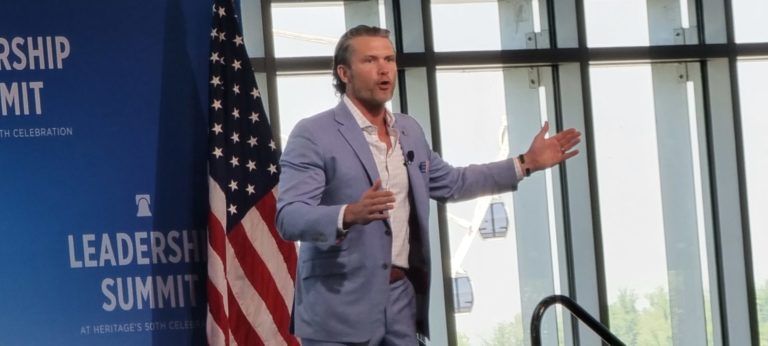
(Sarah Roderick-Fitch, The Center Square) In an unprecedented and historic gathering of the military’s top leaders at Virginia’s Quantico Marine Base, War Secretary Pete Hegseth and President Donald Trump touted the military’s war ethos, stating that the days of the “woke department” are over, returning the military to a merit-based approach.
During Hegseth’s speech, he emphasized that a new era is dawning for the Department of War, beginning with a return to its roots.
“Good morning and welcome to the War Department, because the era of the Department of Defense is over,” the secretary told military leaders.
The war secretary underscored the need to raise and enforce the highest standards, returning the military to a merit-based system and ending the woke culture.
“This is a moment of urgency, mounting urgency. Enemies gather, threats grow. There is no time for games. We must be prepared. We’re going to prevent and avoid war. We must prepare. We are strength, part of peace through strength, and either we’re ready to win or we are not,” said Hegseth.
Hegseth acknowledged the need for more troops, weapons, and ships to win wars, with the president stressing the need to build more ships – pointing to the staggering number during World War II.
Much of the secretary’s speech centered around returning to their highest combat standards, doing away with an emphasis on diversity, equity and inclusion.
“For too long we have promoted leaders for the wrong reasons,” he stressed. “We became the woke department.”
Hegseth pressed the need to enforce high standards as part of the secretary’s 10 Department of Board directives, realigning the mission of the military.
“Standards must be uniform, gender neutral and high, if not, they’re not standards,” he said. “This is not about preventing women from serving…If women can make it, excellent. If not, it is what it is … It will also mean that weak mean won’t qualify – because we’re not playing games. This is combat. This is life or death.”
He emphasized the importance of returning to the highest male standards.
“Simply put, if you do not meet the male level physical standards for a combat position, cannot pass a PT test or don’t want to shave and look professional. It’s time for a new position,” said the secretary. “The era of unprofessionalism is over.”
“War does not care if you’re a man or woman. Neither does the enemy. Nor does the weight of your rucksack, the size of an artillery round, or the body weight of the casualty on the battlefield … This is not about preventing women from serving,” said Hegseth.
The secretary briefly addressed his firing of several military leaders since taking the job.
“I have fired a number of senior officers since taking over … It is nearly impossible to change the culture with the same people who helped create it,” the secretary explained.
As part of reshaping the military, the secretary is doing away with “identity months, DEI offices and dudes in dresses. No more climate change.”
The president echoed Hegseth’s message, stressing combat readiness and eliminating woke policies.
“We’re back,” said the president. “We have awakened the warrior spirit.”
“We are bringing back a focus on fitness, ability, character, and strength … We will not be politically correct when it comes to defending American freedom,” said the president.
The president has been increasingly using the military stateside to protect the borders and fight crime, as he has deployed the National Guard in three cities, adding that Chicago will be next.
“We’ve brought back the fundamental principle that defending the homeland is the military’s first and most important priority. Only in recent decades did politicians somehow come to believe that our job is to police the far-reaches of Kenya and Somalia, while America is under invasion,” said the president. “We are under invasion from within.”
Trump cited the historic use of the military by previous presidents to maintain law and order, justifying his own use in enforcing law and order in cities across the country.
“George Washington, Abraham Lincoln, Grover Cleveland … and others all used the Armed Forces to keep domestic order and peace … So today, I want to thank every servicemember who has bravely helped us secure the nation’s capital and make America safe for the people,” the president told the leaders.
The president told the leaders that he is with them and has their backs “100%,” adding that he has secured $1 trillion for the war budget, while touting a 3.8% pay raise for service members.
While much of the military’s attention has been focused on Europe, the Middle East and the Pacific for decades, the president stressed the need to focus on threats within the West.
“Together with the leaders here today, we’re also restoring a needed focus on defeating threats in the Western Hemisphere. Throughout this region, cartel terrorists have been allowed to wage a relentless campaign of death and destruction on our country,” said the president.
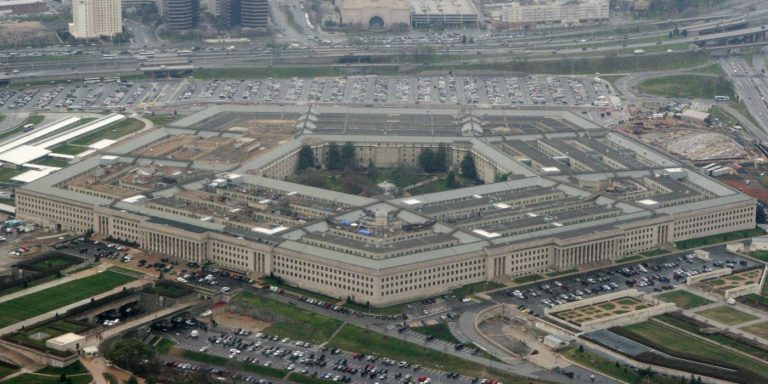
The site of the gathering at Quantico, home of the Marine Corps, as well as headquarters for military intelligence services and the FBI Academy, the setting could be seen as a reflection of the speeches, as several other locations, including the Pentagon, were bypassed for the event.