US To Provide Ukraine With Intelligence for Long-Range Missile Strikes Inside Russia

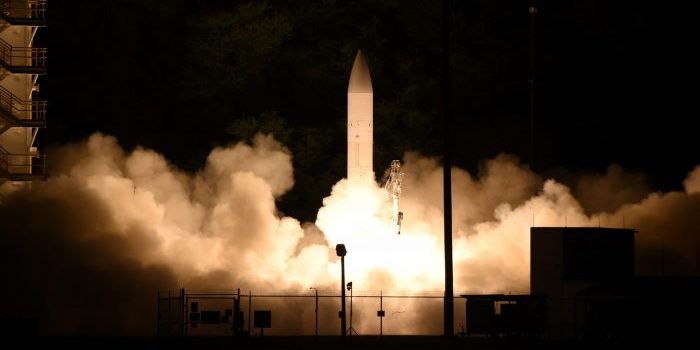
(Dave DeCamp, Antiwar.com) The US will provide Ukraine with intelligence to carry out long-range missile strikes to target energy infrastructure inside Russia, The Wall Street Journal reported on Wednesday.

The report said that President Trump recently signed off on the Pentagon providing such support for Ukraine, and said that it’s the first time the Trump administration will aid such Ukrainian strikes deep inside Russia, which always risks a major escalation from Moscow.

The report said that while the US has long backed Ukrainian drone and missile strikes, the intelligence sharing means Ukraine will be better able to hit refineries, pipelines, power stations, and other energy infrastructure far from its borders.

Last year, the Biden administration backed Ukrainian strikes inside Russia using US-provided ATACMS missiles, which have a range of up to 190 miles. In response, Russia altered its nuclear doctrine to lower the threshold for the use of nuclear weapons.

The news of Trump backing the long-range strikes comes as the administration is considering arming Ukraine with Tomahawk missiles, which have a range of over 1,000 miles, though it’s unclear if providing Ukraine with a launcher for Tomahawks is realistic, and sources told Reuters that the transfer of the missiles is unlikely.

The Journal report said that the Trump administration is also considering arming Ukraine with Barracudas, air-launched missiles produced by Anduril, and other munitions that have a range of about 500 miles. Providing such weapons would mark a significant escalation of the proxy war.

In August, the Trump administration announced a weapons deal for Ukraine that will provide the country with Extended Range Attack Munition (ERAM) air-launched missiles, which can hit targets up to 280 miles away, but it’s unclear when the missiles will actually arrive in Ukraine.

News of the US backing long-range missile strikes inside Russia comes as President Trump has adopted the maximalist approach of his special envoy to Ukraine, Keith Kellogg, who insists Ukraine can win the war despite Russia having the clear advantage when it comes to manpower and industrial capacity to produce weapons.

 

US Demands of Iran Make Another War Likely

(Dave DeCamp, Antiwar.com) The Trump administration is committed to ramping up the pressure on Iran, The Washington Post has reported, and the demands that the US is making of Tehran make another US-Israeli war on the country more likely.

According to the report, the US is demanding that Iran accept four conditions as a baseline for negotiations, including committing to “meaningful” and direct talks, agreeing to end its uranium enrichment program, imposing curbs on its ballistic missile program, and ceasing funding of its allies in the region.

Before the 12-Day War, Iran made it clear that it wouldn’t end its uranium enrichment altogether, although it was willing to reduce its enrichment to much lower levels and was exploring the idea of an enrichment consortium involving other regional countries. But those negotiations were abruptly ended when Israel launched the war on June 13, two days before Washington and Tehran were set to hold another round of talks.

In the wake of the US-Israeli bombing campaign, Iran has maintained that it won’t give up its nuclear enrichment program, framing it as a matter of national pride. Iranian officials have also made clear they will never accept a deal that would impose limits on its ballistic missile program since the weapons are the only real deterrent Tehran has.

The Post report comes after the UN Security Council reimposed sanctions on Iran under the “snapback” mechanism under the 2015 Iran nuclear deal, which was triggered by France, the UK, and Germany. Both Iran and Russia have rejected the reimposition of the sanctions as “illegal,” pointing to the fact that the US quit the nuclear deal back in 2018.

Arab officials told the Post that they’re worried another war could be coming. “The region today cannot go through the same Iranian-Israeli war or the other wars of the last two years. The cost is too high,” a senior Arab government official told the paper.

Israeli officials have been threatening that another attack on Iran may come soon. “We are monitoring what is happening across the Middle East and in Iran and are preparing for a variety of scenarios and options; one of them is that we may need to act again against Iran,” a senior IDF official told the Israeli newspaper Maariv on Monday.

This article originally appeared at Antiwar.com.

Trump Declares War on Drug Cartels

(Luis CornelioHeadline USA) President Donald Trump appeared to formally declare war on drug cartels that for decades have freely smuggled narcotics into the U.S.

The Department of War issued the declaration in what it called a 1230” report to Congress, informing lawmakers that the U.S. is engaged in “non-international armed conflict” with the cartels, the New York Post and leftist New York Times reported Thursday.

A White House official told the Post that the report “is legally mandated … following any incident in which the United States Armed Forces are involved in an attack or hostilities.”

The official added that the “report was issued to Congress following the September 15 strike against a Designated Terrorist Organization. It does not convey any new information.”

It is unclear when the report was issued. It followed Trump’s public boasting of several airstrikes that annihilated four drug-filled boats headed to the U.S. from Venezuela.

Videos posted by the president showed the boats speeding through the Caribbean Sea before being blown away by the U.S. military. At least 17 people were reportedly killed in the airstrikes.

Trump bragged of the strikes in a Monday speech before military officials at Marine Corps Base Quantico in Virginia.

“If you try to poison our people, we will blow you out of existence,” Trump said of the boats. “That’s the only language they really understand. That’s why you don’t see any more boats on the ocean.”

The strikes came after Trump’s earlier designation of drug cartels as foreign terrorist organizations.

The White House told Congress that the Sept. 15 strike — the latest of its kind — was made at Trump’s direction and in compliance with the law of armed conflict.

It involved U.S. forces striking an “unflagged vessel at a location beyond the territorial seas of any nation.”

According to the White House, the U.S. intelligence community had assessed the vessel was “affiliated with a designated terrorist organization and, at the time, engaged in trafficking illicit drugs, which could ultimately be used to kill Americans.”

It added, “This strike resulted in the destruction of the vessel, the illicit narcotics, and the death of approximately 3 unlawful combatants.”

Israel-Hamas Peace Deal in Limbo as Clock Ticks Away on Deadline

(Sarah Roderick-Fitch, The Center Square) The clock is ticking for Hamas leaders to respond to the 20-point peace agreement proposed by President Donald Trump and approved by Israeli Prime Minister Benjamin Netanyahu, leaving the president’s aspirations of peace in the region in limbo.

Earlier this week, the president indicated that he was giving the group three to four days to respond after multiple Arab and European leaders gave their seal of approval for the peace plan, which was announced Monday.

Multiple reports claim Hamas is on the cusp of rejecting the deal, refusing to disarm and surrender. However, other reports claim the group is seeking additional time to review the conditions.

During a joint press conference at the White House on Monday, Netanyahu issued a stern warning to Hamas if it refused to agree to the peace plan.

“If Hamas rejects your plan … then Israel will finish the job by itself. This can be done the easy way or it can be done the hard way. But it will be done. We prefer the easy way, but it has to be done,” the prime minister told reporters.

Trump indicated that he would support Israel if Hamas failed to agree to peace.

“All Arab countries have signed, all Muslim countries have signed, Israel has signed. We are just waiting for Hamas, and Hamas will do it or not – and if not, it will be a very sad end,” the president told reporters on Tuesday.

Trump’s 20-point plan to end the war calls for a “terror-free zone” in Gaza, redevelopment of the territory, and the return of all Israeli hostages, including the dead, within 72 hours of Israel accepting the agreement.

To oversee the success of the plan, the president said if it is accepted, he would lead it.

The plan underscores that Hamas will have no role in the governance of Gaza, adding that regional partners will “ensure that Hamas, and the factions, comply with their obligations.” It also ensures that Israel will not occupy or annex Gaza.

At the time of the press conference, the leaders appeared hopeful that the deal would lead to peace in the region. Neither leader agreed to take questions, a possible indication that neither party wanted to risk a misstep that could threaten the deal.

The president has remained silent on the matter since the government shutdown; however, White House Press Secretary Karoline Leavitt responded to questions regarding the deadline during a press briefing on Wednesday.

“I can tell you that there are some very sensitive discussions that are taking place, but I certainly don’t want to get ahead of any announcement at this podium,” Leavitt told reporters.

The president hopes a peace agreement between Israel and Hamas could be the crowning achievement in a list of peace deals between warring nations since the start of his second term.

“So this is a big, big day, a beautiful day, potentially one of the great days ever in civilization, things that have been going on for hundreds of years and thousands of years. Again, at least we’re at a minimum, very, very close. And I think we’re beyond, very close,” the president said on Monday.

Bondi: Memphis Safe Task Force Makes 93 Arrests

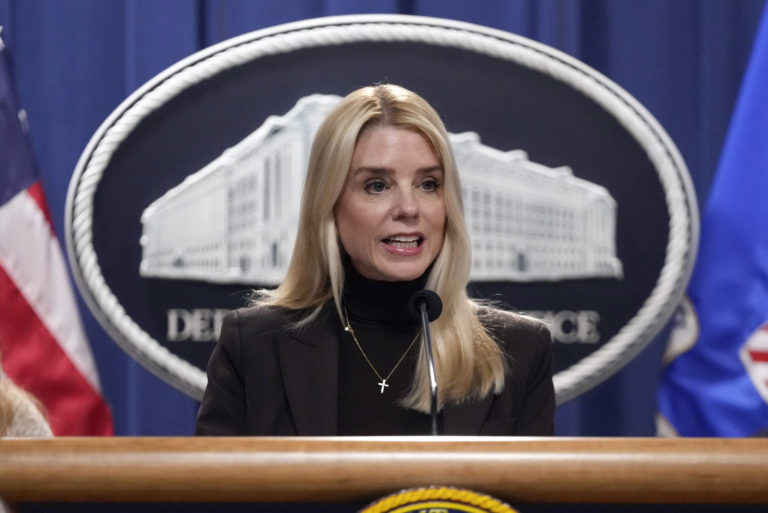
(Kim Jarrett, The Center Square) U.S. Attorney General Pam Bondi said Thursday 93 people were arrested in the first few days of the Memphis Safe Task Force.

The task force includes support from 13 federal agencies, including the FBI and the U.S. Department of Homeland Security.

“Yesterday 40 arrests were made including a Tren de Aragua terrorist, a felon in possession of a firearm, a man wanted for rape of a child, and an arrest for assault on a federal officer,” Bondi said on social media. “To date, there have been 93 arrests and 28 illegal guns seized. Our work is saving lives.”

Bondi and Secretary of War Pete Hegseth stopped in Memphis on Wednesday amid the shutdown of the federal government.

“Even though the Democrats shut down the government and stopped their pay – the Tennessee National Guard will never quit,” Hegseth said on social media.

Tennessee state Sen. Jeff Yarbro, D-Nashville, has challenged the National Guard’s presence in Memphis. He accused Attorney General Jonathan Skrmetti of changing opinions about their presence.

“In short, only circumstances amounting to a rebellion or invasion permit the governor to call out the militia, and even then, the Legislature must declare, by law, that the public safety requires it,” Yarbro said, referring to 2021 and 2024 opinions.

Skrmetti said opinions were not legally binding.

“If the folks at the press conference are insinuating my office withdrew these opinions six months before the election to pave the way for Trump policies a year and a half later, they have bigger problems than this legal question,” Skrmetti said in an email to The Center Square. “If I could see the future like that, I’d be neck deep in Bitcoin and Pokémon cards.”

Trimming the Fat: Trump Boasts of Shuttering Government Agencies Amidst Shutdown

(Morgan Sweeney, The Center Square) President Donald Trump has condemned the shutdown and laid the blame squarely at the feet of the “Radical Left Democrats”— in the meantime, he appears to be making the most of it.

Trump teased on Truth Social that he would be meeting with Director of the Office of Management and Budget Russ Vought to – as he warned Democrats he would do – reevaluate the necessity of various government agencies.

“I have a meeting today with Russ Vought, he of PROJECT 2025 Fame, to determine which of the many Democrat Agencies, most of which are a political SCAM, he recommends to be cut, and whether or not those cuts will be temporary or permanent,” Trump wrote.

As a potential shutdown loomed, the administration cautioned Democrats that if they didn’t sign on to Republicans’ short stopgap funding bill and prevent a shutdown, more federal employees would lose their jobs. The OMB sent a letter to federal agencies last week directing them to take a critical look at where they might be able to shed more employees.

“With respect to those Federal programs whose funding would lapse and which are otherwise unfunded, such programs are no longer statutorily required to be carried out,” the letter reads. “Agencies are directed to use this opportunity to consider Reduction in Force (RIF) notices for all employees in programs, projects, or activities (PPAs) that satisfy all three of the following conditions: (1) discretionary funding lapses on October 1, 2025; (2) another source of funding, such as H.R. 1 (Public Law 119-21) is not currently available; and (3) the PPA is not consistent with the President’s priorities.”

The New York Times reported in August that the federal workforce may have about 300,000 less people by year’s end. Most of the terminations or resignations were reportedly prompted by the Department of Government Efficiency, which was created by an executive order at the start of Trump’s second term.

It’s unclear which “Democrat Agencies” are on the chopping block Tuesday – and whether entire agencies will be eradicated or they’ll merely lose more employees. The administration has previously described the Congressional Budget Office and the Bureau of Labor Statistics as unreliable, “Democrat-controlled,” politically motivated and riddled with “longstanding failures,” to name a few.

The “Project 2025,” which Trump referenced in his social media post, is a strategy for the restructuring of the federal government, crafted by conservatives and published by the Heritage Foundation. The goals of the project, as summarized by the BBC, are to “restore the family as the centrepiece of American life; dismantle the administrative state; defend the nation’s sovereignty and borders; and secure God-given individual rights to live freely.”

Vought was a project co-author, and the president has framed the shutdown as an opportunity to further carry out this initiative.

“I can’t believe the Radical Left Democrats gave me this unprecedented opportunity. They are not stupid people, so maybe this is their way of wanting to, quietly and quickly, MAKE AMERICA GREAT AGAIN! President DJT,” his post concluded.

Gold Still Underowned Despite Surge in Investment Demand

(Mike Maharrey, Money Metals News Service) Even with investment demand for gold surging, it remains “underowned” according to a State Street Investment Management analyst.

That means the yellow metal still has plenty of upside.

Gold is up more than 87 percent since January 2024. Asian investment and central bank gold buying primarily drove the early stages of the bull market.

Asian investors tend to favor physical metal (although there is growing interest in ETFs in the East). Bar and coin demand was up by 11 percent in H1, rising to 582 tonnes, with Chinese and Indian investors leading the way.

Chinese bar and coin demand grew by 44 percent year-on-year in H1. Chinese investors snapped up 115 tonnes of gold bars and coins in the second quarter alone. It was the strongest H1 for physical gold buying since 2013.

India bar and coin demand grew by 7 percent through the first half of the year.

But in the U.S., selling was the dominant theme in the physical bullion market. Year-on-year bar and coin sales plummeted by 53 percent in H1. Demand in the second quarter was only 9 tonnes, the lowest quarterly level since Q4 2019.

However, ETF investing has exploded in recent months, indicating Western investors are starting to hop on the gold bandwagon.

ETFs are a convenient way for investors to play the gold market, but although many Western investors prefer paper gold, owning ETF shares is not the same as holding physical metal.

SPDR Gold Shares, the world’s largest gold ETF, increased its gold holdings by 35.2 tonnes in September. It gobbled up 18.9 tonnes of gold in a single day (Sept. 19), the biggest single-day increase on record.

State Street Investment Management’s head of gold strategy, Aakash Doshi, told Kitco News that even with the big surge in ETF investment, holdings in gold funds remain below the peak in 2020.

“Through most of this rally, gold has been underowned by investors. In January, GLD was still seeing outflows. So, from that standpoint, despite the growth, gold is still not an overowned asset.”

Doshi said he expects investment demand to remain robust, although perhaps not at the torrid pace we saw in September, adding that “It’s a matter of when, not if, gold prices will reach $4,000 an ounce.

He also insisted that the high price is warranted given the risks and structural factors and said it is “sustainable,” although the volatility is not.

Doshi said the Federal Reserve’s pivot to easing could further support gold by weakening the dollar.

He also mentioned that a protracted government shutdown would drag on economic growth, which would be positive for gold.

While Doshi called $4,000 gold “inevitable,” he said it won’t likely get there in a straight line. He said he expects strong support to remain at $3,500 with investors buying the dips.


Mike Maharrey is a journalist and market analyst for Money Metals with over a decade of experience in precious metals. He holds a BS in accounting from the University of Kentucky and a BA in journalism from the University of South Florida.

Gold: It’s Not Just for the Government Shutdown!

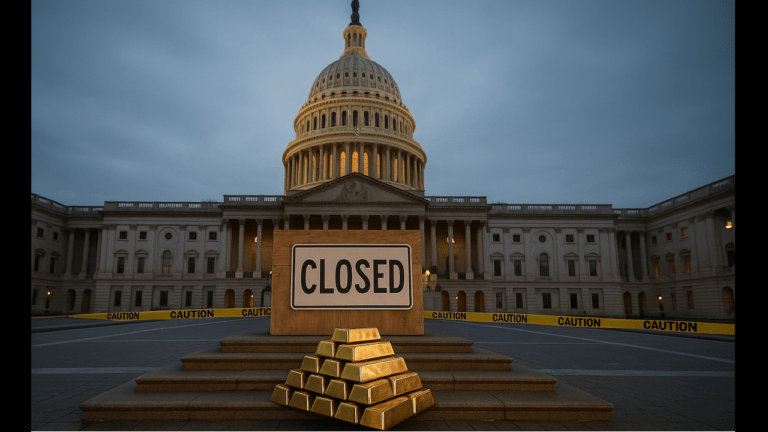
(Mike Maharrey, Money Metals News Service) CNCB says investors should have gold as a hedge if the government shutdown persists. But they miss the real problem. That comes after the government reopens!

At midnight on October 1, the feds shut the doors, turned out the lights, and went home.

Well, some of them did.

We are now in the midst of a partial government shutdown, and Republicans and Democrats fuss over government funding.

Gold and silver both surged higher as investors looked for a safe haven. Gold eclipsed $3,900 an ounce briefly Thursday morning (Oct. 2) morning, and silver was comfortably above $47.

Even with gold rising over 87 percent over the last 21 months, the mainstream financial media has been slow to hype gold. CNBC finally recommended the yellow metal last week, but gave some sketchy investment advice.

With gold pushing toward yet more record highs, the network highlighted gold again on Wednesday, but missed the real reason you need it.

The CNBC report said investors should consider gold as a hedge “if the U.S. government shutdown drags on longer than expected.”

It quoted a USB analyst saying, “Gold continues to serve as an effective hedge against episodes of economic, political, and geopolitical risk and would likely perform well if a U.S. government shutdown proves longer or more disruptive than feared.

In a Wednesday note, Citi analysts pointed out that gold tends to weaken into and out of shorter government shutdowns.

“But in longer shutdowns, gold catches a bid as uncertainty mounts, rallying 2 percent on average and holding that strength for a couple months.”

The CNBC analysis is in the vicinity of the target, but it misses the bullseye. The issue isn’t so much the government shutdown itself. It’s what happens after the shutdown is over.

This impasse is all about spending. And it’s almost certain that when everything is said and done and they unlock the doors in D.C., there will be more of it.

I can say this with complete confidence because spending always increases.

Keep in mind that every president since Calvin Coolidge has left the U.S. with a bigger national debt than when he took office. This includes President Bill Clinton, who enjoyed a few years of budget surpluses.

Even though the bill that Democrats refused to support was advertised as a “clean” continuing resolution (CR) that would merely keep federal agencies funded at current levels until Nov. 21, it still had some spending increases. According to the CBO, the CR would implement a handful of narrow spending increases for specific needs, while mandatory programs keep running on autopilot.

And once the government is open for business again, mark my word, spending is going to increase even more.

And it’s already out of control.

With one month left in fiscal 2025, the federal government had spent $6.73 trillion, a 5.9 percent increase over the same period in fiscal ’24. The Trump administration has already spent more this fiscal year than it did last.

Make no mistake, the 2026 spending bill will raise spending even higher. Oh, they may trim the speed of some of the spending increases. They’ll call that a “cut,” and partisans will cheer. But spending will increase on an absolute level.

It always does.

Uncle Sam is already tapped out. He’s $37 trillion in debt and already spending over $1 trillion annually on interest expense.

In fact, interest expense is the second-largest spending category in the federal budget. It’s more than national defense. It’s even more than Medicaid. The only higher spending category is Social Security.

Meanwhile, a lot of people are becoming wary of buying U.S. Treasuries. Who wants to lend their drunk uncle more money when all his credit cards are already maxed out? Falling demand for Treasuries pushed interest rates even higher.

What does this mean for you?

Inflation.

That’s the only way the federal government and the central bank can keep this Ponzi scheme running. The central bank must intervene by pushing down interest rates. And it will likely have to resume quantitative easing at some point to keep borrowing costs down.

That means money creation – the definition of inflation.

This is why you need gold as a hedge – no matter how long the government shutdown lasts.


Mike Maharrey is a journalist and market analyst for Money Metals with over a decade of experience in precious metals. He holds a BS in accounting from the University of Kentucky and a BA in journalism from the University of South Florida.

59-Year Old Lady Thrown in Prison for Unwitting Role in Trump Assassination Plot

(Ken Silva, Headline USA) WINSTON-SALEM—Greensboro woman Tina Brown Cooper was sentenced to 21 months in prison on Thursday for helping Ryan Routh obtain the rifle that he used in his September 2024 assassination attempt against Donald Trump.

Cooper, 59, played a minor and unwitting role in Routh’s plot, according to courtroom statements from her, the Justice Department and Judge Thomas Schroeder.

In July 2024, Routh contacted Cooper about procuring a rifle. Routh told Cooper, who was his employee at his roofing business in the early 2000s, that the rifle was for his son, Oran Routh. Cooper did know that Routh was a felon who wasn’t allowed to possess firearms.

Cooper, who hadn’t spoken to Routh since 2022, declined to help him at first. But then she agreed to introduce him to her current boss, construction worker Ronnie Jay Oxendine.

When they all showed up to his business on Aug. 2, 2024, Oxendine was surprised to see Routh, whom he thought was living in Hawaii.

“I haven’t seen you since you tried to blow up the police station,” Oxendine told Routh—referring to a standoff he had with Greensboro police in the early 2000s (Routh had been caught with a stick of dynamite from a construction site, and Judge Schroeder said Thursday that the failed assassin’s threats against the police weren’t taken seriously).

Despite his surprise, Oxendine sold Routh an SKS-style rifle for $350 in cash. Cooper collected $100 for arranging the sale.

Later that day, Routh asked Cooper to inquire about the location of the rifle’s serial numbers so he could obliterate them.

Cooper and Oxendine were charged earlier this year. Cooper pled guilty to one count of firearms trafficking. Oxendine, who hasn’t been sentenced yet, also struck a deal to plead guilty for possessing an unregistered firearm (agents found a sawed-off shotgun at his business).

Before Judge Schroeder handed down his sentence, Cooper’s lawyer, Mark Edwards, asked for probation for his client.

Edwards recounted Cooper’s hardscrabble life, starting when she had her first child at the age of 16. Cooper still managed to graduate high school and accumulate a few community college credits before entering the construction business, where she typically cleaned up debris but also occasionally climbed on roofs to lay shingles.

Edwards argued that the negative attention his client has received due to Routh’s assassination plot is punishment enough.

“One thing that will follow her for the rest of her life is the involvement in this case. She is worried that the president’s supporters think she’s involved in the assassination plot,” he said.

However, DOJ prosecutor Eric Iverson argued that Cooper’s crime was more egregious than simply introducing Routh to the gun seller, Oxendine. Iverson noted that Cooper also sought to cover up her crime after she saw what Routh did in the news.

Iverson was referring to the fact that after Routh was arrested on Sept. 15, 2024, Cooper told Oxendine: “Do not admit to anything.” When Cooper was interviewed by FBI agents, she initially denied concealing her links to Routh until agents showed her the text messages from her phone.

Iverson said Cooper may have been used a witness against Routh if she was more forthright with the FBI from the beginning. Oxendine was used as a witness instead, and Routh was convicted of trying to kill Trump last month.

Cooper, for her part, said she deleted text messages from her phone because she was afraid of Routh’s “crazy wife” in Hawaii. She said she was worried the wife, Kathleen Shaffer, thought they might be having an affair.

Cooper further said that Routh owed her $3,000, and that he was supposed to pay her that money when he showed up for the gun deal. Instead, she received a measly $100, she said.

In any event, Judge Schroeder agreed with the DOJ’s request for a stiffer sentence. Along with the 21 months in jail, Cooper was fined $2,000.

Cooper was set to report to prison on Dec. 2, but she said that she was going to turn herself in that afternoon “to get this over with.”

Cooper’s sister wept outside the courtroom.

“I don’t know what I’m going to do without you,” the sister told Tina.

Oxendine is set to be sentenced on Oct. 23.

Ken Silva is the editor of Headline USA. Follow him at x.com/jd_cashless.

Trump Signs Order Giving Security Guarantee To Qatar After Israeli Attack

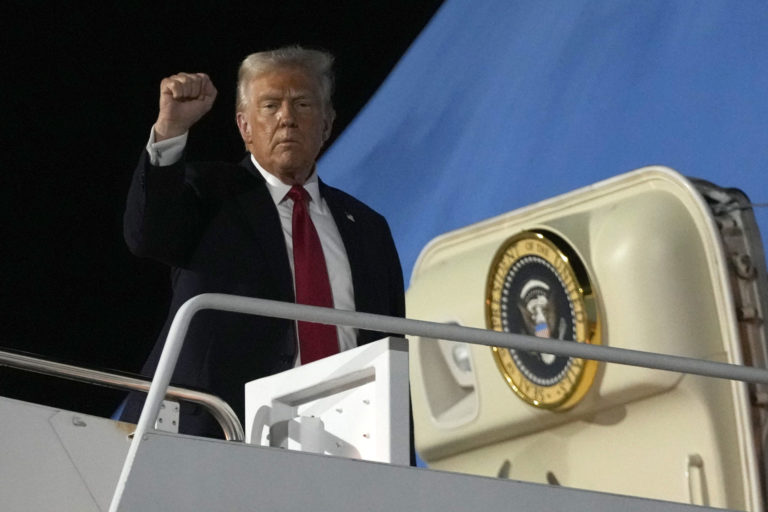
(Dave DeCamp, Antiwar.com) President Trump has signed an executive order pledging to provide Qatar with a security guarantee similar to NATO’s Article 5, a step that came after Israel bombed the country, which is a major regional ally of the US and hosts about 10,000 US troops.

Trump’s order says that the US shall “regard any armed attack on the territory, sovereignty, or critical infrastructure of the State of Qatar as a threat to the peace and security of the United States.”

It states that the US “shall take all lawful and appropriate measures — including diplomatic, economic, and, if necessary, military — to defend the interests of the United States and of the State of Qatar and to restore peace and stability.”

The order marks the first time an Arab country is receiving such a strong security guarantee from the US, something that Saudi Arabia has long sought. “Saudi Arabia thought that to get a defense pact with the United States, it would require normalizing relations with Israel. Qatar managed to get a partial defense pact with the United States by getting attacked by Israel,” a former US official told Axios.

According to the White House, the order was signed on Monday, September 29, the same day Trump hosted Israeli Prime Minister Benjamin Netanyahu and had him apologize to Qatari Prime Minister Mohammed bin Abdulrahman al-Thani for the strikes on Doha, which killed six people, including five low-level Hamas officials and one Qatari security officer.

Trump has claimed that he was unaware of Israel’s plans to bomb, but according to Israeli officials, Trump was notified about the plan beforehand and did not oppose the strikes.

While Trump’s executive order is seen as a response to the Israeli attack on Qatar, it could also be an effort to shore up the alliance with Doha ahead of another potential war with Iran. During the 12-Day War, Iran attacked the US’s Al Udeid Air Base in Qatar in retaliation for the US bombing of its nuclear facilities.

Iran had given the US notice about the attack, and there were no casualties among US or Qatari personnel. But in the event of another war, Iran’s attacks could be more significant and likely come without warning.

 This article originally appeared at Antiwar.com.