Tens of Thousands of People Evacuate as Wildfires Spread

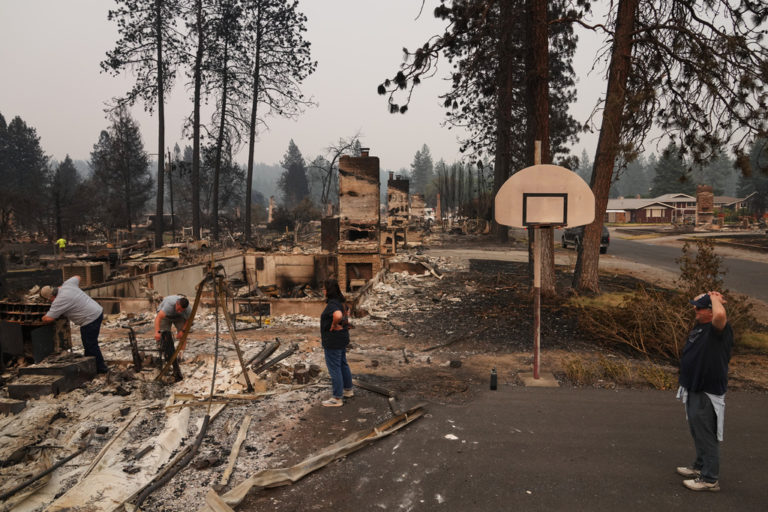
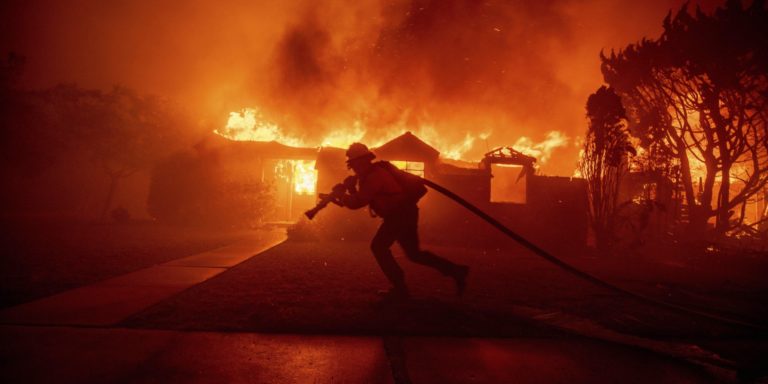
(Headline USAWildfires burning across the western U.S. and Canada on Sunday left some residents keeping a wary eye out for possible evacuation orders while others already forced to flee their homes waited to see what would be left on their return.

In western Canada, over 20,000 people were forced to flee communities along Okanagan Lake in British Columbia over the weekend as a fast-moving wildfire destroyed homes and dozens had to be rescued by aircraft. In the U.S., crews in Washington that have been fighting three wildfires that began burning in the Spokane area for over a week continued clean-up near containment lines.

Laurie Allen left her home in Nine Mile Falls, a community north of Spokane, last weekend, fleeing with her husband, dog and two kittens as a wildfire burned a short distance away. The roads into her neighborhood were still closed Sunday but she said she’d learned from a friend that while covered in ashes, her house and others nearby were intact.

“I’ve been here 65 years. It’s never happened,” Allen said. “We didn’t think about anything but grabbing our animals and leaving. But now it’s affected so many of our friends and family around. So it’s pretty dang devastating.”

Over 20,000 flee Canadian wildfires

In Canada, Anette Boulet was among residents who fled Summerland, home to about 12,000 people along Okanagan Lake in British Columbia. As she and her family left around 4:30 a.m. Saturday, their home was shrouded in smoke.

“You couldn’t see barely. It was, it was just dark, and the ridge, the ridge of fire just coming towards you,” said Boulet, who evacuated to a center in Penticton.

“There’s no words to express it,” she said. “The fear.”

Later Sunday, the Royal Canadian Mounted Police said an 80-year-old woman died while trying to escape the wildfire that forced evacuations in the Okanagan Lake region.

Besides the evacuations in Summerland, the Bald Range fire, first reported Friday evening, has also led to the evacuation of about 8,000 people in and around nearby Peachland. British Columbia declared a state of emergency Saturday.

Eleanor Olszewski, Canada’s minister of emergency management and community resilience, said Sunday on social media that she’d approved a request for federal assistance from British Columbia to provide shelter and accommodations for those forced to flee.

Spokane-area fires leave residents on edge

Crews fighting three wildfires in the Spokane area continued “mop-up operations” on Sunday near containment lines, and none of the fires were growing, according to a news release from the team managing those wildfires. The fires, which have burned over the last week, have damaged or destroyed about 920 structures.

Earlier in the week a man was arrested and charged with intentionally setting the biggest of the three Spokane-area blazes.

Residents in the tiny rural town of Malden, located about 35 miles south of Spokane, had been urged Saturday to evacuate immediately. By Sunday, however, their evacuation level was downgraded to be ready to quickly leave if necessary.

“The wind is fairly calm. The fire is not progressing,” said John Goyke, whose company operates Malden’s water under contract, “but we’re using social media and Facebook to keep in contact with everyone.”

Goyke, who is the mayor of nearby Rosalia, said Malden’s residents have been told to conserve water so it can be saved for fire trucks if needed, and Malden’s fire department has been trucking water from Rosalia.

In 2020, Malden was was mostly destroyed by a wildfire, losing its fire station, post office, city hall and library.

Two killed fighting wildfire when helicopter crashes

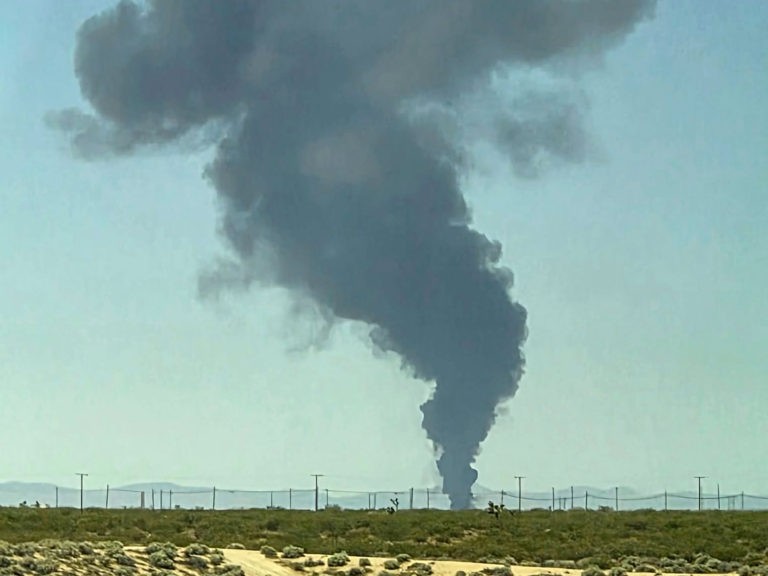
In Utah, two helicopter pilots were killed when their aircraft crashed while they were fighting a wildfire Friday morning in the Fishlake National Forest. Crews were finally able to get to the site Saturday to confirm the deaths.

Officials said Sunday that fire activity had prevented them from quickly reaching the area amid steep, rough terrain.

“When we first got there we could see two different plumes of smoke, one from the crash site, one from an active fire coming towards us,” Sevier County Sheriff Nathan Curtis said.

The National Transportation Safety Board is investigating the cause of the crash.

Adapted from reporting by the Associated Press
One Year Later: Trump’s D.C. ‘Liberation Day’ Cuts Crime, Reshapes the Capital

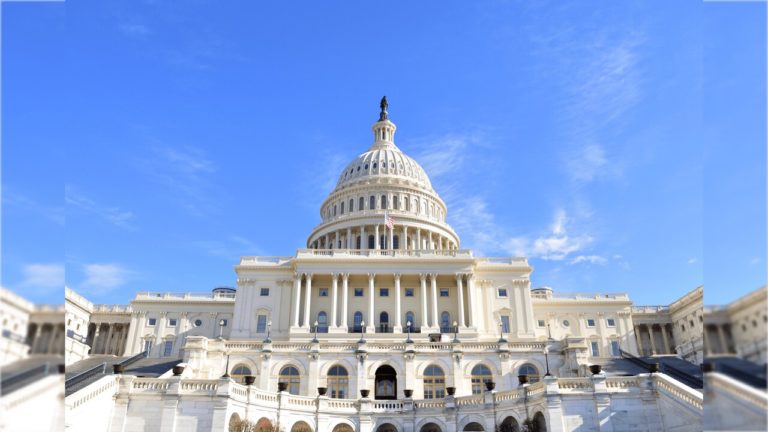
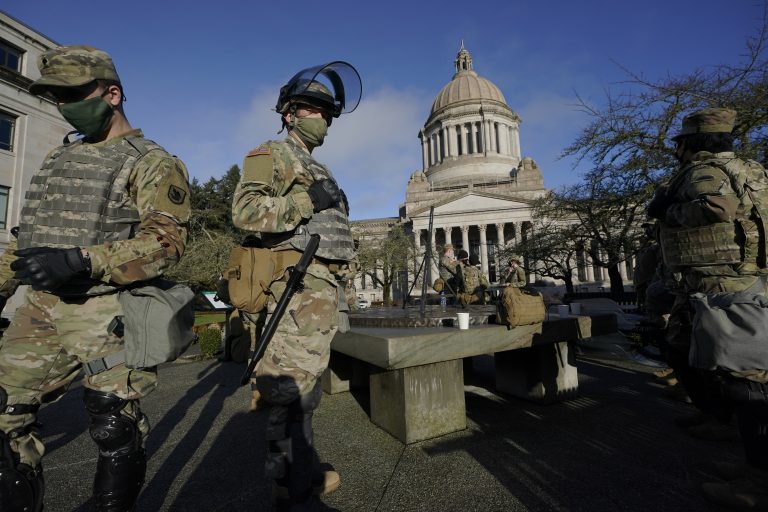
(The Center Square) Tuesday marks one year since President Donald Trump declared “Liberation Day” in Washington, D.C., leading to the deployment of the National Guard and the beautification of the nation’s capital.

On a typical, hot and humid Washington morning in August 2025, The Center Square was present in the White House briefing room that day, noting it was jammed packed with journalists stacked on top of each other awaiting the president’s briefing, as murmurs from some journalists in the room recounted personal and secondhand encounters with crime in the district, including muggings and property theft.

Trump entered the room, flanked by some of his top cabinet secretaries and administrators, including Secretary of War Pete Hegseth, then-Attorney General Pam Bondi, Secretary of the Interior Doug Bergum, and FBI Director Kash Patel, declaring a crime emergency in the district, announcing the deployment of the National Guard to curb crime.

The president claimed the city had been plagued with “crime, bloodshed, bedlam and squalor, and worse.” The president appeared to have had enough, expressing embarrassment as world leaders visited the district, with eyes fixed on homeless encampments, deteriorating infrastructure, and graffiti.

The president held up charts comparing the district’s homicide rate to other cities around the world, noting it was higher than that of other capital cities. The White House released a fact sheet showing the district’s 2024 murder rate per 100,000 in comparison to other nations’ capitals. America led the pack, nearly double second-place Bogota, Colombia, followed by Mexico City, Mexico, and Islamabad, Pakistan.

“This is Liberation Day in D.C., and we’re going to take our capital back,” said the president. “We’re taking it back under the authorities vested in me as the President of the United States. I’m officially invoking section 740 of the District of Columbia Rule Act.”

The president pointed to several examples of violence, including former Trump administration official Mike Gill, who was shot and killed in D.C. as part of a carjacking spree in 2024.

Since the Aug. 11, 2025, “Liberation Day” announcement, streets across the district continue to be patrolled by the National Guard, with the president saying he would like them to remain through his term, with the Department of War estimating it could cost $1.4 billion to extend the deployment through January 2029.

The crime crackdown in D.C. appears to be working, as evidenced by the numbers. The Metropolitan Police Department reports that overall crime is down 20% in the last year, with homicide rates down 32%; robbery down 16%; motor vehicle thefts down 53%; theft from auto down 36%; and total property crime down 22%.

In a snapshot from the Washington Metropolitan Area Transit Authority, ridership is up from one year ago. On July 30, 2025, Metro rail logged 492,689 boardings; on July 30, 2026, it logged 518,390 boardings. Metro bus also saw a rise, with 352,249 riders on July 30, 2025, compared to 360,031 on July 30, 2026.

Weeks before the “Liberation Day” announcement, the president laid the foundation for cracking down on homeless encampments across the district through the signing of an executive order aimed at cracking down on homelessness.

Since the crime emergency was declared and the executive order was signed, Washington, D.C. has seen a 9.3% decrease in unsheltered residents, as reported by Street Sense Media, noting the “decline may reflect the impact of President Donald Trump’s federal takeover. Despite the decrease in the number of unsheltered individuals, D.C. reportedly saw a 4.4% increase in homeless individuals from 2025.

In addition to cracking down on crime, the president’s “Liberation Day” announcement paved the way for a Trump renaissance in the district, aiming to beautify the city by clearing out homeless encampments, restoring some of the city’s forgotten about landmarks, and setting out to construct monuments and additions to the White House.

Columbus Circle Fountain Outside Union Station
The newly renovated Columbus Circle fountain outside Union Station in Washington, D.C., June 6, 2026. Photo: Andrew Rice / The Center Square

Leading up to the nation’s 250th birthday celebration, the Trump administration oversaw the restoration of 22 fountains and 28 statues across the nation’s capital.

In August 2025, the president told reporters that he was requesting about $2 billion from Congress to clean up the city. However, he’s claimed private funds will also be used to build one of the White House’s most significant additions, the ballroom and a helipad currently under construction on the South Lawn.

However, the Trump administration is seeking $1 billion in taxpayer funds for security enhancements to the ballroom, including a landing pad for drones and an extensive underground military complex.

Trump also plans to build a 250-foot Triumphal Arch between Memorial Bridge and Arlington National Cemetery, described by the National Park Service as a “monumental structure honoring the nation’s 250th anniversary.”

“Drawing on the historic Roman precedent of erecting freestanding arches to celebrate civic achievement, the Arch is envisioned as a prominent addition to the capitals architectural landscape in the monumental core,” the park service added.

Axios estimates the arch could cost as much as $100 million to construct.

While Trump has touted the crime turnaround and beautification of the district in the last year, he hasn’t ruled out the possibility of seeking to rescind the District of Columbia Home Rule Act of 1973, which was enacted by Congress and ratified by D.C. voters. The act gave the district residents limited autonomy over local affairs, allowing them to elect local leaders, including mayors and council members.

The president remains uncertain about the district’s political future as Washington, D.C., prepares to elect a new mayor, with Democratic candidate Janeese Lewis George, a self-described democratic socialist, a likely favorite to win the race, as the district is heavily Democratic.

U.S. Senate Candidates Debate Minnesota Fraud

(The Center Square) Voters in Minnesota head to the polls Tuesday to pick party nominees to fill Sen. Tina Smith’s seat.

The primary election has drawn competition from both sides with several candidates. Thirty-three of 100 U.S. Senate seats are up for election in 2026, and Minnesota’s race will go toward determining the chamber’s partisan makeup.

Democrats hold 13 seats up for reelection and Republicans hold 22. Minnesota is one of 11 seats iwhere an incumbent candidate is not running for reelection.

Among Democrats, Rep. Angie Craig and Lt. Gov. Peggy Flanagan are leading in the polls among the six candidates.

Craig has repeatedly criticized Flanagan for her lack of an aggressive fraud pursuit during her time as lieutenant governor.

“The lieutenant governor, even as we sit here today, continues to take absolutely no accountability for any of the fraud issues, and she continues to blame the governor,” Craig said in a debate ahead of the primary.

Flanagan, the more progressive candidate, criticized Craig’s vote for the Laken Riley Act, legislation requiring the U.S. Department of Homeland Security to detain undocumented individuals who have been arrested, charged or convicted of crimes.

“Voting three days into the second Trump administration for Donald Trump’s immigration bill that allowed him to terrorize our communities, the loss of life, the economic impact, the trauma — it’s horrific,” Flanagan said in the same debate.

Sens. Bernie Sanders, I-VT, and Elizabeth Warren, D-Mass., and Tina Smith, D-Minn., who currently holds the seat, have endorsed Flanagan.

Both Democrats said they support plans to achieve universal healthcare. Flanagan supported expanding Medicare whereas Craig voiced support for a public healthcare option to compete with private insurers.

“I also believe that folks are ready for Medicare for All. We need to ensure that we’re not just paying for health insurance, but that people receive actual healthcare,” Flanagan said.

Craig introduced the Medicare-X Choice Act in July, legislation that would create a public option for individuals on the Affordable Care Act to be supported.

Three Republicans have emerged at the top of the ticket for the party’s nomination. Adam Schwarze, a former Navy SEAL; Michele Tafoya, a reporter and sports broadcaster; and Royce White, a former NBA player, are seeking the GOP nomination to flip Smith’s seat.

Tafoya has focused her campaign on fighting against fraud in Minnesota, which has gained national attention over the past several months. She supported the Deport Fraudsters Act, legislation that would immediately deport a noncitizen convicted of fraud in federal programs.

“Michele will fight for tough new mandatory minimum sentences that put fraudsters in federal prison and keep them there,” Tafoya’s website reads.

She also supported pulling federal funds from states that do not implement anti-fraud controls.

Schwarze, who was endorsed by the Republican Party of Minnesota, has criticized the state’s spending practices and pushed for lower taxes.

“Americans have seen the consequences of the far-left’s agenda firsthand, including their disastrous open borders policy,” Schwarze’s website reads. “We need policies that increase the safety of everyone, protect our citizens from drugs and crime, and increase our national security.”

White, who made waves entering the race as a former NBA player, has focused his campaign on lowering the national debt, securing the southern border and stopping “forever war” conflicts. He also called on implementing 12 year term limits for members of Congress.

“As a United States senator, the first bill I hope to bring is one that will limit my own ability to become a career politician,” White said. “The term limit should be a maximum of 12 years in either body. The ability to move from or graduate from one body to another is still constrained by the total amount of years and members of that body.”

Craig leads all other candidates in the race with more than $3.5 million in cash on hand, according to the Federal Elections Commission.

Tafoya follows with $1.3 million, and Flanagan has more than $1 million. Additionally, Schwarze has more than $183,000 in cash on hand and White has $35,000.

Craig has received more than $43,000 from the Amalgamated Bank; $5,000 from Blackrock Funds Services Group PAC; and $10,000 from the National Corn Growers Association PAC.

Tafoya has received $10,000 from the Jobs Opportunity Now PAC and $2,500 from the Salem Media Group PAC. Flanagan received $2,500 from the Dirt Road Democrats PAC; $4,000 from Shannon Finley, a lobbyist at Capitol Counsel LLC; and $3,500 from the Yocha Dehe Wintun Nation in California.

Schwarze received $1,500 from John Hammond, a partner at Taft Law Firm; $1,700 from Avery Appelman, a criminal trial lawyer; and $1,200 from Daniel Eckerline, an investment banker at Skyview Partners. White received more than $3,000 from Kathleen Hagen, an engineering project manager at Medtronic

Polls in Minnesota will be open from 7 a.m. to 8 p.m. on Tuesday. For more information, visit the Minnesota Secretary of State at sos.mn.gov. For early results on Election Day, visit thecentersquare.com/minnesota.

Obama Meets w/ Leftist Senate Candidate in Michigan

(Headline USAAbdul El-Sayed, the Democratic nominee for U.S. Senate in Michigan, said Sunday he has spoken with Barack Obama and hopes the former president campaigns with him as the party tries to unite after a bitter primary that exposed deep rifts between its progressive and moderate wings.

El-Sayed said his Friday conversation with Obama was “really warm and inspiring.” The candidate did not provide details.

“I was grateful for his advice. It was very warm, very inviting, and I know that he knows the critical role that Michigan is going to play,” El-Sayed told NBC’s “Meet the Press.”

Asked if he would like to see Obama come to Michigan to drum up support for Democrats before the midterm elections in November, El-Sayed said he “really” hoped so and that Obama “knows a lot about winning Michigan” after carrying the state in the 2008 and 2012 presidential races.

An Obama spokesperson confirmed the call.

The discussion came the same day that a group of Michigan nominees and other notable national Democrats tried to present a united front at a rally in Detroit. The crowd cheered loudest for El-Sayed, a former public health official who last week narrowly beat establishment-backed U.S. Rep. Haley Stevens in a contentious and closely watched primary. A Democratic victory in the fall is crucial to the party’s chances of regaining a Senate majority.

Democratic Sen. Gary Peters is not seeking reelection in the perennial swing state, which Republican Donald Trump won in 2016 and 2024, while Democrat Joe Biden carried in 2020.

El-Sayed faces Republican Mike Rogers, a former congressman who narrowly lost the Senate race to Democrat Elissa Slotkin in 2024 and has tried to court moderates who feel pushed away by the Democratic Party.

Rogers has released a video message attempting to appeal to Democrats who feel their party may be moving too far to the left with El-Sayed. “You have a home with us,” Rogers says in the video.

Adapted from reporting by the Associated Press

Kellogg to Remove Artificial Dyes From Cereals by Year’s End

(Headline USAWK Kellogg said Thursday that it will remove artificial colors from all its cereals by the end of this year.

The change comes a year ahead of schedule. Kellogg said last August that it would remove synthetic dyes from its cereals by the end of 2027.

But the company said Thursday it has identified fruit- and vegetable-based juices that will give cereals like Froot Loops and Apple Jacks their distinctive colors. The Battle Creek, Michigan-based company said it has also invested in equipment that will allow it to transition to natural colors.

The company said it is also removing BHT, an artificial preservative, from the small number of cereals that still contain it.

“More and more consumers are looking for foods made with simple, recognizable ingredients and we are proud to meet those expectations even sooner than planned,” Kellogg’s Chief Growth Officer Doug VanDeVelde said in a statement.

Kellogg has faced pressure for years to remove artificial ingredients from its cereals, which it has already done in other countries like Canada. In 2024, dozens of people rallied outside Kellogg’s headquarters and delivered petitions with 400,000 signatures asking the company to remove artificial dyes and BHT.

That pressure has grown under President Donald Trump’s health secretary, Robert F. Kennedy Jr., who has urged food companies to phase out petroleum-based artificial dyes. Last August, Kellogg also signed an agreement with Texas Attorney General Ken Paxton saying it would “permanently remove toxic dyes” from its cereals by the end of 2027.

Retailers are also forcing companies to act. Earlier this year, Target said it would stop selling cereals that contain artificial colors by the end of May. Walmart has also said it will remove artificial colors from its store brands by January 2027.

Adapted from reporting by the Associated Press
Helicopter Pilots Die in Crash While Fighting Wildfire in Utah

(Headline USATwo helicopter pilots who crashed while they were fighting a wildfire in Utah are dead, officials confirmed Saturday.

The pilots were killed when their Sikorsky Skycrane helicopter went down Friday morning, according to the Sevier County Sheriff.

The helicopter was among those fighting a fire in the Fishlake National Forest. The crash ignited a new fire that spread to connect with the existing blaze, which has now scorched nearly 174 square miles.

Officials did not identify the pilots but said they were employed by Helicopter Transport Services, which was contracted by the U.S. Forest Service.

Initially officials said they were unable to reach the crash site because of the fire. Then, on Saturday, crews were able to enter the area and confirmed the deaths, according to the Sevier County sheriff and coroner.

The National Transportation Safety Board will investigate once its team can examine the wreckage. It will likely take the NTSB a year or more to determine the cause.

Numerous fires also were burning in other parts of the West, including one that closed part of Mount Rainier National Park in Washington.

The National Park Service shut down access to the Sunrise and White River areas of the park after a new wildfire burned less than a third of a square mile. Firefighters were working to gain control of it.

Larger fires near Spokane, Washington, have now burned more than 15.63 square miles, but firefighters constructed more than 75 miles of containment line to help control those flames.

Meanwhile in Oregon, hot and dry conditions helped an uncontrolled fire spread beyond 30 square miles.

Firefighters were still trying to identify the best places to set up containment lines around the Wrights Spring fire as they mourned the death of 47-year-old Jason Ensign, who was killed while operating a bulldozer for a timber company. The blaze grew rapidly Thursday and cut off Ensign’s escape route.

And north of the border in British Columbia, more than 20,000 people had to evacuate ahead of another fast-moving wildfire.

Adapted from reporting by the Associated Press
Officials Discover a ‘Devil Worship Group’ in a Tennessee Jail

(Ken Silva, Headline USA) In March 2024, Kyle Spitze, a member of the Satanic-themed pedophile cult “764,” was arrested for heinous crimes against children—crimes that were exposed by Headline USA in February 2024, when Spitze was still a free man.

According to the Justice Department, Spitze’s Satanic activities have continued while he’s in jail. Federal prosecutors disclosed last week that he started a “devil worship group” called “Colts Harmnation” while incarcerated at Blount County Jail.

There appears to have been at least two other inmates involved in Spitze’s group, one of them also a convicted pedophile, according to court records. The inmates were performing sexual acts on each other in an area in the jail known as the “cave.” Records say they were also cutting themselves with razor blades—just like what Spitze would have his underage female victims do.

“One of the inmates involved in the sexual activities with the defendant in the ‘cave’ had a Colt Harmnation symbol cut into his chest with a razor blade, and the same symbol was found on the wall in the ‘cave,’” federal prosecutors said in a filing Monday. “Law enforcement discovered that several of the inmates in Defendant’s cell block had hidden razor blades.”

Prosecutors disclosed Spitze’s jailhouse activities as a supplement to a sentencing memorandum they filed in June, asking a judge to sentence him to 77 years in prison. Prosecutors said Monday that Spitze’s continued sadistic behavior shows that he’s beyond rehabilitation.

“This defendant need not utter a sound; his actions show what a dangerous human being he is. There is nothing to show Defendant wants to be or can be rehabilitated,” argued Assistant U.S. Attorney Jennifer Kolman. “The safety of all children is paramount, and the only way to do that is a stringent sentence. A sentence of nine hundred and twenty-four (924) months followed by a lifetime of supervised release is the only punishment.”

Spitze is set to be sentenced on August 18.

Headline USA first reported on Spitze in February 2024, before he had been arrested. This publication had received information that Kyle—who had recently achieved internet fame when a video of his mom’s boyfriend shooting him went viral—was involved in the Satanic pedophile cult “764.”

The DOJ’s June sentencing memorandum also details Spitze’s crimes, which were estimated to be committed against more than 30 female victims. Only 19 have been identified so far, while two of them have committed suicide, according to the DOJ.

“Both killed themselves after the defendant contacted them from jail. The final proof needed that they would never be rid of his evil. The raw vulnerability they must have felt knowing their terrorizer could reach them even from jail,” the DOJ’s memorandum says.

“The defendant made each victim believe she was the defendant’s only girlfriend, or in some way special to him, over the other girls on the channel. Those who provided CP and self-harm content as demanded by the defendant were rewarded with attention and praise. The victims who did not comply with the defendant’s content demands knew they would be threatened and extorted using techniques such as swatting, doxing and publishing their CP,” the memo says.

Meanwhile, Spitze’s father, Michael Spitze—whom Headline USA interviewed for its original February 2024 article—is serving a 70 month sentence for tampering with some of his son’s victims.

Ken Silva is the editor of Headline USA. Follow him at x.com/jd_cashless.

Democrats Try to Make Amends after Nasty Primaries

(Headline USAMichigan Democrats on Friday urged voters to rally behind their statewide candidates, three days after a bitter U.S. Senate contest highlighted divisions between the party’s progressive and moderate wings.

A slate of nominees and other notable Democrats emphasized unity to a crowd of more than 1,000, who cheered loudest for Abdul El-Sayed, a former public health official. He narrowly beat establishment-backed Rep. Haley Stevens in a contentious, closely watched primary for an open U.S. Senate seat.

“Michigan, we will fight to build the America that we are proud to hand off to our kids and our grandkids,” El-Sayed said at a podium beneath a scoreboard in a Detroit high school gym.

With less than three months before the general election where El-Sayed will face Republican Mike Rogers, the Democratic Party is under pressure to close ranks in a race that will help determine control of the Senate.

“In the spirit of coming together, I want to thank both of my colleagues who ran, Haley Stevens and Mallory McMorrow, for an incredible race,” El-Sayed said. McMorrow, a state senator, suspended her campaign in July and appeared alongside El-Sayed at a Wednesday event after his victory.

Current Democratic Sen. Gary Peters’ decision to not seek reelection left the seat open. Michigan is a perennial battleground state, having voted for President Donald Trump in 2016, Joe Biden in 2020 and Trump again in 2024.

The messy primary between El-Sayed and Stevens occasionally got personal. El-Sayed told Semafor in early July that Stevens couldn’t “string together two coherent sentences.” In a separate interview, he called Stevens “the least capable candidate in America.”

Stevens, in turn, accused El-Sayed of chasing publicity.

“I’m the only one on this stage who doesn’t have a talent agent trying to pitch me for paid speeches,” she said during a debate against El-Sayed. “And unlike my opponent, I’m not running at the first mic or camera I see.”

Stevens, who lost the primary by just under 1 percentage point, told CBS News on Thursday that she was willing to campaign with El-Sayed.

“Whatever he wants me to do,” she said. Stevens appeared Thursday with El-Sayed at a breakfast hosted by the Michigan Democratic Party.

Adapted from reporting by the Associated Press

Most B-52 Upgrades Behind Schedule or Over Budget, GAO Finds

(The Center Square) Ten of the 13 programs meant to keep the B-52 flying into the 2050s are over budget, behind schedule or underperforming, a federal watchdog found, including new engines and radar.

The findings, in a new report from the Government Accountability Office, come as the Air Force spends an estimated $21 billion to keep the 76 aging bombers flying decades past their planned lifespan. The two costliest programs, new engines and radar, are running over on all three counts.

The engine program is the biggest. Costs have risen 38% since 2018, to more than $15 billion. Development has slipped 32 months. Flight testing is now four years late. The Air Force plans to start building engines the same quarter it starts testing them.

The radar program is smaller, but costs are up more than 30%, to $2.9 billion. In May 2025, the Air Force told Congress it had breached a federal cost limit. It also cut five of 25 performance requirements. GAO concluded the Air Force will get less capability while paying more.

In June, a B-52 supporting the radar effort crashed on takeoff at Edwards Air Force Base, killing all eight aboard and destroying one of just two planned test aircraft. Air Force officials said the cause was not yet known; the investigation can take up to six months. In July, the Air Force said it was modifying a second jet to resume testing and that the program remained on cost and schedule.

GAO’s central recommendation is that the Air Force delay its decision to begin engine production until it studies the recent cost and schedule problems. The Air Force only partly agreed.

A cost increase of that size would normally require the Air Force to notify Congress. But that trigger applies only once a program sets a formal cost baseline. The engine program has not set one. As of January, it still had not, GAO noted.

GAO said building engines before flight testing is complete raises the risk of costly rework on a plane the Air Force says it cannot afford to lose.

For all the risk, the B-52 is a small line in the Pentagon’s budget. The Air Force’s 2027 request seeks about $480 million for B-52 modernization. It asks for $6.1 billion for the B-21, the stealth bomber meant to eventually replace it, and $1.5 billion for a new nuclear cruise missile the B-52 is being modified to carry.

GAO warned that continued engine delays could leave the Air Force with “too few B-52s to support operational requirements.” The 2027 request, meanwhile, would fund the modernization keeping that fleet aloft at a fraction of what the Air Force is spending to field its replacement.

The Air Force’s plans also collide with how Washington is funding the government. With full-year 2027 spending bills unfinished, Congress is preparing to keep agencies running on a stopgap measure into December, one that bars the Pentagon from starting new programs or ramping production above last year’s levels.

The strain is already showing at the depot. B-52s now spend an average of 340 days there for scheduled maintenance, up 55% since 2020, as mechanics wait on parts for engines the Air Force is struggling to keep running. The bomber has roughly 76,000 distinct parts, and the industry that once made many of them has gone cold. A single engine has more than 6,000 unique parts; the Air Force found in 2017 that keeping the current engines going would be unsustainable after 2030 without replacement.

The Air Force is also short on equipment it needs to service the plane. As of July 2025, it had only 63% of the specialized support gear specific to the B-52, and GAO found no office clearly responsible for managing it over the aircraft’s remaining decades.

Ann Stefanek, an Air Force spokeswoman, said the service would not comment beyond the statement it provided in the report. In its written response to GAO, the Air Force partially agreed with the recommendation to delay the engine production decision and agreed with five others. The Office of the Secretary of Defense referred questions to the Air Force.

Congress is still weighing how much of the modernization to fund. The House-passed version of the 2027 defense policy bill would authorize money to speed construction of a new maintenance hangar the B-52 depot needs to absorb the added work. The Senate has not passed its version; a July effort to bring it to the floor stalled.

Joe Biden’s Cancer Has Spread Into His Bones, Hunter Says

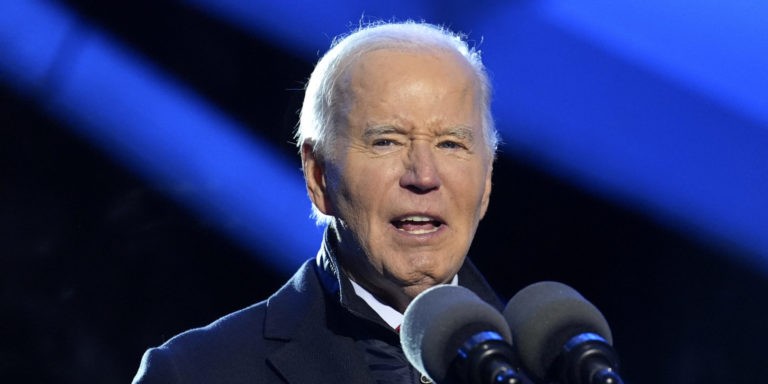
(Headline USAFormer U.S. President Joe Biden’s prostate cancer has spread to other parts of his body and is causing him pain, even as he continues to speak out on public issues, his son Hunter said in an interview.

In a wide-ranging interview with the BBC broadcast late on Friday, Hunter Biden grew emotional as he discussed his father’s condition, describing it as very sad to watch.

“The cancer has spread, metastasized into his bones and further,” he said. “It’s very painful and it’s very debilitating in many respects.”

Joe Biden, 83, was the oldest man to serve as U.S. president and his age was a source of concern for much of his four years in office. He and his White House advisers have faced intense criticism for allegedly concealing the extent of his problems, especially after he was forced to abandon his bid for re-election after a disastrous debate with his eventual successor, Donald Trump.

The former president revealed his cancer diagnosis in May of last year, less than four months after he left the White House.

Hunter Biden said the diagnosis had been tough on the family.

“It’s really sad to watch,” Biden said. “The only thing that I’d say about my dad, about his health right now, is I wish he would complain more, because it’s not good.”

But Biden said his father remains “out there,” speaking publicly about the issues that are important to him.

“He’s still doing his thing,” he said. “He so believes in this country.”

The former president will publish a memoir, “Promise Me, America,” after the mid-term elections.

Adapted from reporting by the Associated Press