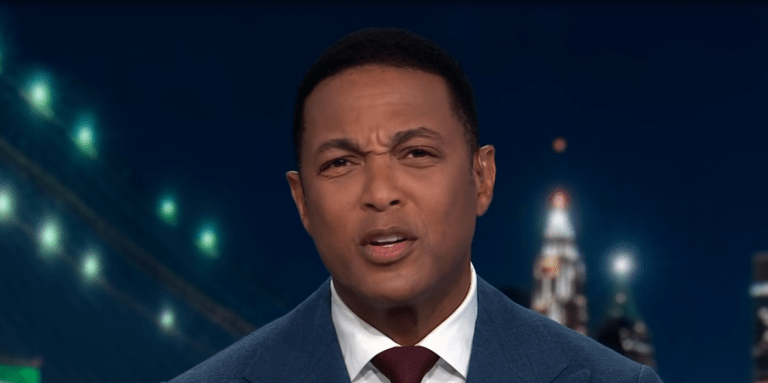
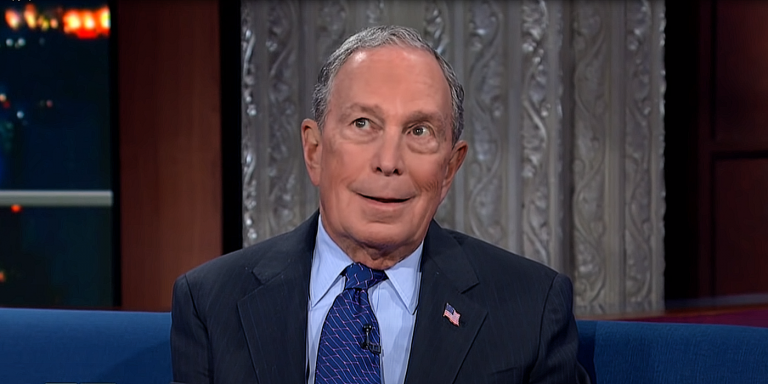
CNN’s Don Lemon said Monday night that Democrats must go to extreme measures if the Supreme Court nominee of President Donald Trump is confirmed by the Senate, and Democrats take back the Senate and White House in November.
Deranged Don Lemon threatens to “blow up the entire system” including smashing the Electoral College and stacking the Court.
“We’re going to have to blow up the entire system,” Lemon told fellow CNN host Chris Cuomo.
“I don’t know about that,” Cuomo replied. “You’re just going to have to vote.”
Lemon, however, continued to insist that Democrats would have to upend our institutions to make sure that Republicans cannot win power ever again.
“You’re going to have to get rid of the Electoral College,” Lemon continued. “Because the minority in this country get to decide who our judges are and who our president is. Is that fair?”
“You need a constitutional amendment to do that,” Cuomo replied. “You need two-thirds vote in the Congress and three-quarters of the state legislatures.”
“They may be able to do that,” Lemon argued, adding that Democrats should “stack the courts” as well.
This is just the latest in a string of radical proposals Democrats have floated after Justice Ruth Bader Ginsburg’s death.
Several top Democrats have already embraced court-packing, and have threatened to end the filibuster as well.
House Judiciary Chairman Jerry Nadler, D-N.Y., urged Democrats to “immediately move to expand the Supreme Court” if the Senate confirms Trump’s nominee:
If Sen. McConnell and @SenateGOP were to force through a nominee during the lame duck session—before a new Senate and President can take office—then the incoming Senate should immediately move to expand the Supreme Court. 1/2 https://t.co/BDYQ0KVmJe
Mitch McConnell set the precedent. No Supreme Court vacancies filled in an election year. If he violates it, when Democrats control the Senate in the next Congress, we must abolish the filibuster and expand the Supreme Court.
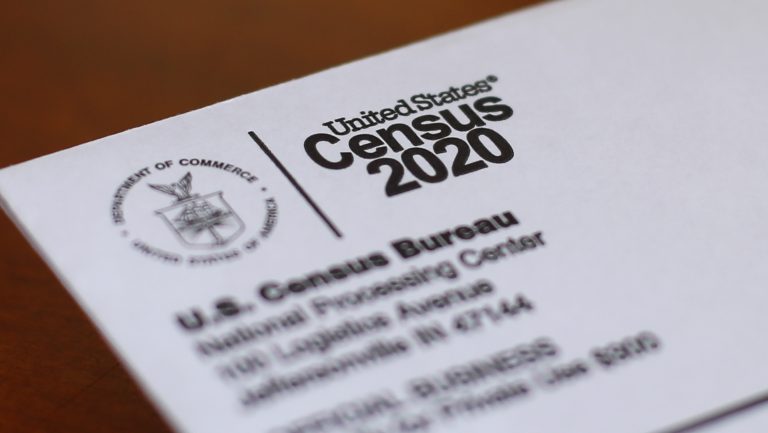
(Associated Press) The Trump administration is asking the Supreme Court for fast action on its effort, blocked by a lower court, to exclude people in the U.S. illegally from the numbers used to determine how many congressional seats each state gets.
In court papers filed Tuesday, the administration suggested the court hear arguments in the case in December, potentially with a new justice appointed by President Donald Trump in place.
That would allow for a final decision before the Jan. 10, 2021, deadline in federal law to transmit census numbers that will determine each state’s allotment of seats in the House of Representatives for the next 10 years.
Trump said he would reveal his pick Saturday to replace Justice Ruth Bader Ginsburg, who died last week.
Senate Republicans plan to move quickly to confirm Ginsburg’s replacement, over the objections of Democrats who say the winner of the presidential election should name the new justice.
In early September, a panel of three federal judges in New York said Trump’s order was unlawful.
The judges prohibited Commerce Secretary Wilbur Ross, whose agency oversees the U.S. Census Bureau, from excluding people in the country illegally when handing in 2020 census figures used to calculate how many congressional seats each state gets in a process known as apportionment.
The judges said that those in the country illegally qualify as people to be counted in the states they reside.
The administration’s appeal contends the panel was wrong to even consider the case and also came to the wrong conclusion about whether people living in the U.S. illegally must be counted for purposes of apportionment.
The court could reverse the lower-court ruling without even hearing arguments, the administration said.
It asked the court to decide how to proceed by mid-October and said it would also ask the justices to put the lower-court ruling on hold, if the three judges don’t themselves do so.
Opponents of Trump’s order said it was an effort to suppress the growing political power of Latinos in the U.S. and to discriminate against immigrant communities of color.
They also said undocumented residents use the nation’s roads, parks and other public amenities and should be taken into account for any distribution of federal resources.
The numbers used for apportionment are derived from the once-a-decade head count of every U.S. resident that is set to end in two weeks, although there is separate litigation to extend the count because of the coronavirus pandemic.
The census also helps determine the distribution of $1.5 trillion in federal funding annually.
(Headline USA) The “H” word — hypocrisy — is suddenly in vogue at the Capitol as lawmakers debate how quickly to fill a vacancy on the Supreme Court following the death of liberal Justice Ruth Bader Ginsburg.
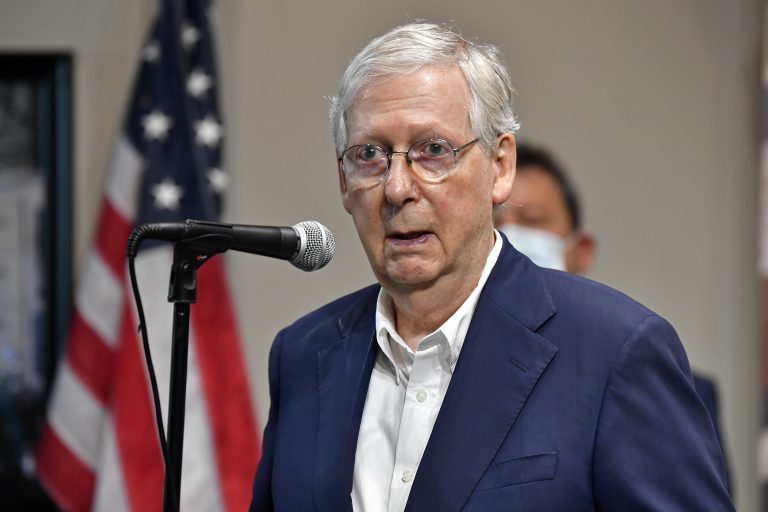
Senate Majority Leader Mitch McConnell has vowed that President Donald Trump’s as-yet unnamed nominee will receive a vote on the Senate floor “this year,” but has been careful not to say exactly when that will happen.
Democrats accuse the Kentucky Republican of hypocrisy after McConnell refused to consider President Barack Obama’s Supreme Court nominee, Judge Merrick Garland, eight months before the 2016 election.
Senate Democratic leader Chuck Schumer took to the Senate floor Monday to remind McConnell of his own words hours after the February 2016 death of conservative Justice Antonin Scalia.
“The American people,” McConnell said then, “should have a voice in the selection of their next Supreme Court justice.”
The vacancy created by Scalia’s death should not be filled until the election of a new president, he added.
“No amount of sophistry can change what McConnell said then, and it applies even more so now — so much closer we are to an election,” Schumer said Monday — while leaving out a key part of McConnell’s speech from 2016.
But the Majority Leader said it is Democrats who are being hypocritical. What Republicans did in 2016 — blocking a nominee of the opposing party — was “precisely what Democrats had indicated they would do themselves” when they were in the majority, McConnell said in his own floor speech Monday. He and other Republicans cited a 1992 speech by then-Sen. Joe Biden — now the Democratic nominee for president — indicating that a vacancy occurring in an election year should not be filled.
Biden, Schumer and other Democrats flip-flopped in 2016, in McConnell’s telling, because they urged the Senate to act on Obama’s nominee.
McCONNELL IN 2016
McConnell stunned politicos in 2016 with his declaration that the Senate would not consider a replacement for Scalia until after the presidential election nearly nine months away. McConnell said his action was justified by history.
“Remember that the Senate has not filled a vacancy arising in an election year when there was divided government since 1888, almost 130 years ago,” he declared again and again that year, frequently citing what Republicans called the “Biden Rule.”
That ”rule” — never adopted in any formal sense by the Senate — urged the Senate to delay action on a Supreme Court vacancy until after the presidential election.
“President Obama was asking Senate Republicans for an unusual favor that had last been granted nearly 130 years prior. But voters had explicitly elected our majority to check and balance the end of his presidency. So we stuck with the historical norm,” McConnell said Monday as he recounted past fights over the Supreme Court.
2019 McCONNELL STATEMENT
By 2019, with Trump in office and a continued GOP Senate majority, McConnell said Senate action on a court opening close to the election would not be an issue.
“Yes, we would certainly confirm a new justice if we had that opportunity,” he told talk show host Hugh Hewitt in December. ”And we’re going to continue, obviously, to fill the circuit and district court vacancies as they occur right up until the end of next year.”
The main difference? Unlike 2016, when the White House and Senate were controlled by different parties, both are now under Republican control, McConnell said.
“I’d also remind everybody what I just told you, which is the Senate is of the same party as the president of the United States,” McConnell told Fox News in February of this year. “And in that situation we would confirm” a new justice.
Schumer wasn’t buying it. He cited a 2016 op-ed co-written by McConnell — again leaving out historical precedent and context — imploring that the American people be given the opportunity to “weigh in on whom they trust to nominate the next person for a lifetime appointment to the Supreme Court.”
“Now these words don’t apply?” Schumer asked. “It doesn’t pass the smell test in any way. No wonder Leader McConnell was so defensive in his comments.”
Schumer and other Democrats urged McConnell to abide by his own standard.
“What’s fair is fair. A senator’s word must count for something,” Schumer said.
But McConnell, in his speech, said that at a time when “the American people have elected a Senate majority to work closely with the sitting president, the historical record is even more overwhelming — in favor of confirmation.”
Eight times in the nation’s history vacancies have arisen during an election year when the White House and Senate were controlled by the same party. Seven of those times the justice was confirmed. The sole exception was in 1968, when President Lyndon Johnson tried to elevate Justice Abe Fortas to become chief justice. The nomination faced a filibuster due in part to ethics problems that later led Fortas to resign from the court.
“Apart from that one strange exception, no Senate has failed to confirm a nominee in the circumstances that face us now,” McConnell said.
“The American people reelected our majority in 2016 and strengthened it further in 2018 because we pledged to work with President Trump on the most critical issues facing our country. The federal judiciary was right at the top of that list,” he said.
On that final point — the importance of the judiciary — Schumer agreed.
“That’s what this (fight) is all about,” he said. “All the rights enshrined in our Constitution that are supposed to be protected by the Supreme Court of the United States” are at stake.
“The right to join a union, marry who you love, freely exercise your right to vote … (and) proper health care. If you care about these things and the kind of country we live in, this election — and this vacancy — mean everything,” Schumer said.
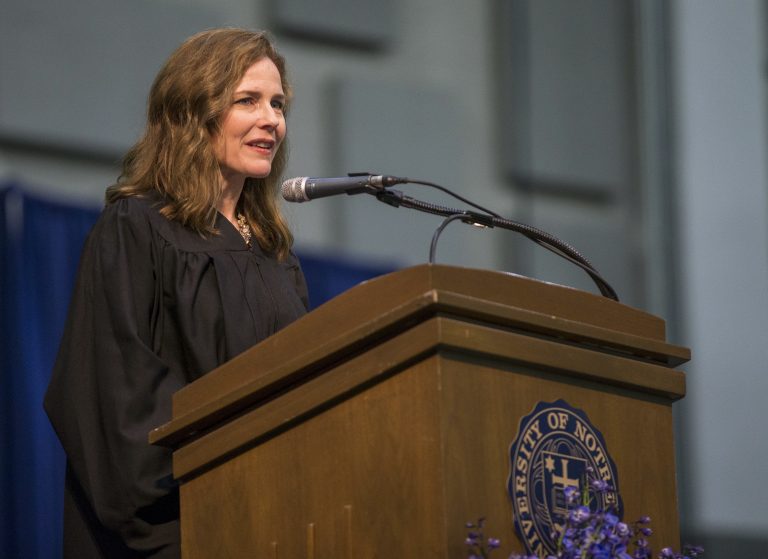
(Headline USA) President Donald Trump met with Judge Amy Coney Barrett at the White House as the conservative jurist emerged as a favorite to replace the late Ruth Bader Ginsburg on the Supreme Court, the start of a monumental Senate confirmation fight over objections from Democrats it’s too close to the November election.
Trump said Monday he expects to announce his choice by week’s end, before the burial next week of Ginsburg, the court’s liberal icon, at Arlington National Cemetery. Democrats, but few Republicans, argue that her replacement should be decided by the winner on Nov. 3.
The president told reporters he would interview other candidates and might meet with Judge Barbara Lagoa when he travels to Florida later this week. Conversations in the White House and Senate Majority Leader Mitch McConnell’s office have been increasingly focused on Barrett and Lagoa, according to a person granted anonymity to discuss the private deliberations.
Barrett has long been favored by conservatives, and those familiar with the process said interest inside the White House seemed to be waning for Lagoa amid concerns by some that she did not have a proven record as a conservative jurist. Lagoa has been pushed by some aides who tout her political advantages of being Hispanic and hailing from the key political battleground state of Florida.
Barrett, 48, a judge on the U.S. Court of Appeals for the 7th Circuit, was a strong contender for the seat that eventually went to Brett Kavanaugh in 2018. At the time, Trump told confidants he was “saving” Barrett for Ginsburg’s seat.
Before joining the 7th Circuit, she had made her mark in law primarily as an academic at the University of Notre Dame, where she received a law degree and later began teaching at age 30. She clerked at the U.S. Court of Appeals for the District of Columbia Circuit, clerked at the Supreme Court for Justice Antonin Scalia, worked at the Miller, Cassidy, Larroca & Lewin law firm in Washington, D.C., then returned to Notre Dame.
Barrett has long expressed sympathy with a mode of interpreting the Constitution, called originalism, in which justices decipher original meanings of texts in deciding cases. Many liberals say that approach doesn’t allow the Constitution to change with the times.
Trump has said he would choose a woman, and he admitted that politics may play a role. He gave a nod to another election battleground state, Michigan, and White House officials confirmed he was referring to Joan Larsen, a federal appeals court judge there.
The president also indicated that Allison Jones Rushing, a 38-year-old appellate judge from North Carolina, is on his short list. His team is also actively considering Kate Todd, the White House deputy counsel who has never been a judge but was a clerk for Justice Clarence Thomas.
Democrats, led by presidential nominee Joe Biden, are protesting the Republicans’ rush to replace Ginsburg, saying voters should speak first, on Election Day, and the winner of the White House should fill the vacancy.
Democrats allege, without convincing evidence, that Republicans are trying to rush through a pick so close to the election after McConnell led the GOP in refusing to vote on a nominee of President Barack Obama in February 2016, long before that year’s election.
Biden is appealing to GOP senators to “uphold your constitutional duty, your conscience” and wait until after the election.
Trump said he is planning to name his pick by Friday or Saturday, ahead of the first presidential election debate. With just over a month before the election, McConnell said the Senate has “more than sufficient time.”
Both sides are mobilizing for a wrenching confirmation fight punctuated by crucial issues before the court — healthcare, abortion access and even the potential outcome of the coming presidential election. Some protesters showed up early Monday morning outside the homes of key GOP senators to harass them.
At a Trump rally later Monday in Ohio, people chanted, “Fill the seat!”
As the Senate returned to Washington on Monday, several key GOP senators, including Mitt Romney of Utah, declined to say whether they would agree to a swift vote.
Four Republicans could halt a quick confirmation and Trump criticized Republican Sens. Susan Collins of Maine and Lisa Murkowski of Alaska for opposing a vote before elections. The president warned they would be “very badly hurt” by voters.
Others, including GOP Sens. Chuck Grassley of Iowa and Cory Gardner of Colorado, declined to join in opposing the president’s plan.
Senate Democratic leader Chuck Schumer objected to what he called McConnell’s “utterly craven” pursuit of Supreme Court confirmation under current circumstances, warning — without providing evidence — that it would shatter Senate norms.
(Headline USA) Just days after after Florida Gov. Ron DeSantis won a court victory to keep felons from voting until they’ve paid off fines, restitution and court fees, Democratic billionaire and former presidential candidate Michael Bloomberg has stepped in to help them pay off the debts.
Bloomberg is part of an effort that raised more than $20 million dollars to help felons who have completed their prison sentences vote in the presidential election.
A federal appellate court ruled on Sept. 11 that in addition to serving their sentences, Florida felons must pay all fines, restitution and legal fees before they can regain their right to vote.
The case could have broad implications for the November elections.
Under Amendment 4, which Florida voters passed overwhelmingly in 2018, felons who have completed their sentences would have voting rights restored.
Republican lawmakers then moved to define what it means to complete a sentence.
In addition to prison time served, lawmakers directed that all legal financial obligations, including unpaid fines and restitution, would also have to be settled before a felon could be eligible to vote.
With Bloomberg’s help, the Florida Rights Restitution Council is trying to get this accomplished.
The group had raised about $5 million before Bloomberg made calls to raise almost $17 million more, according to Bloomberg advisers who weren’t authorized to speak on the record because the announcement hadn’t been made yet.
The money is targeted for felons who registered to vote while the law was in question and who owe $1,500 or less.
That accounts for about 31,100 people, Bloomberg advisers say.
In a state that decided the 2000 presidential election by 537 votes, that could be critical in a year when polls show Trump and former Vice President Joe Biden in a dead heat.
Organizers for the group say they aren’t targeting people registered with a particular political party.
“To hell with politics, to hell with any other implications or inuations, at the end of the day it’s about real people, real lives, American citizens who want to be a part of this,” said Desmond Meade, the group’s executive director. “People with felony convictions have had their voices silenced for so long.”
The Florida Rights Restitution Council said other donors include John Legend, LeBron James, Michael Jordan, MTV, Comedy Central, VH1, Ben & Jerry’s, Levi Strauss & Co., the Miami Dolphins, the Orlando Magic, the Miami Heat and Stephen Spielberg.
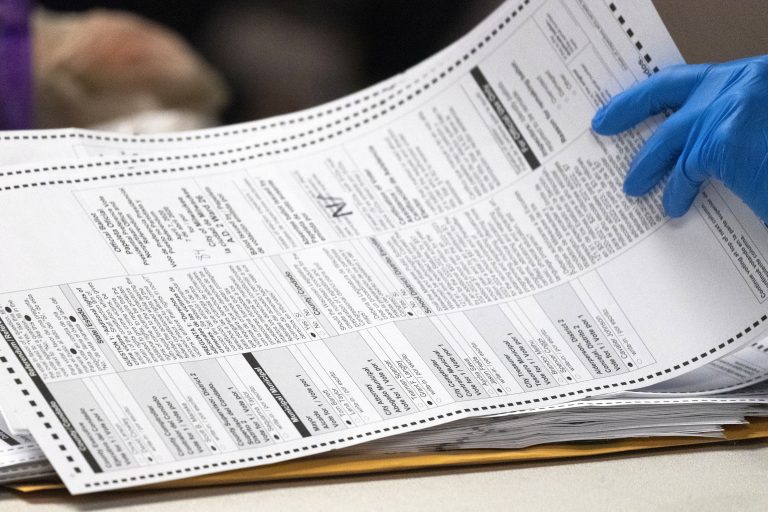
(Headline USA) A federal judge ruled Monday that absentee ballots in battleground Wisconsin can be counted up to six days after the Nov. 3 presidential election as long as they are postmarked by Election Day.
The highly anticipated ruling, unless overturned, means that the outcome of the presidential race in Wisconsin might not be known for days after polls close. Under current law, the deadline for returning an absentee ballot to have it counted is 8 p.m. on Election Day.
The decision is just the latest example of activist judges trying to create law rather than interpret it.
Democrats and their allies sued to extend the deadline in the key swing state after the April presidential primary saw long lines, fewer polling places, a shortage of workers and thousands of ballots mailed days after the election.
U.S. District Judge William Conley granted a large portion of their requests, issuing a preliminary injunction that was expected to be appealed all the way to the U.S. Supreme Court.
He put the ruling on hold for seven days to give the other side a chance to seek an emergency appeal.
In Wisconsin’s April presidential primary, Conley also extended the deadline for returning absentee ballots for a week. Democrats typically favor tactics making voting rules expansive and vague, so that it is easier to “find” needed votes.
In that election, nearly 7% of all ballots cast were returned the week after polls closed.
In 2016, the presidential race was decided in Wisconsin by less than 1 percentage point — fewer than 23,000 votes.
Both sides expect another tight race. Biden wrapped up a campaign stop in northeast Wisconsin about an hour before the ruling was released. Trump held a rally in the state last week.
The Republican National Committee, the Wisconsin GOP and Wisconsin’s Republican legislators argued that current absentee voting regulations should be left in place, saying people have plenty of time to obtain ballots and get them back to clerks by Election Day.
Wisconsin Republican Party Chairman Andrew Hitt said they were reviewing the order and working with others to determine next steps.
The Democratic National Committee, the state Democratic Party and groups including the League of Women Voters and Disability Rights Wisconsin filed a series of lawsuits to make absentee voting and registration easier so people won’t have to go to the polls and risk catching the coronavirus.
“This ruling is a victory for democracy,” said Jonathan Manes, an attorney with the MacArthur Justice Center, which represented the plaintiffs along with Protect Democracy. “Every voter should be able to vote easily, safely, and accessibly, no matter where they live or who they are. Today’s decision brings us closer to that goal.”
Conley, an appointee of former President Barack Obama, also agreed with Democrats to lift the Oct. 14 deadline for by-mail and electronic voter registration. The judge extended it until Oct. 21. Conley further ruled that poll workers can work in any county, not just in the one where they live. Clerks have reported a shortage of poll workers due to the pandemic, and loosening the residency rules could make it easier to fill slots.
Wisconsin Democratic Party spokeswoman Courtney Beyer said the party welcomes Conley’s decision and it expands the opportunity to vote.
Even though he extended the deadlines to register and return ballots, Conley urged voters to cast them as soon as possible.
While more than 1 million absentee ballots have been requested to date, the Wisconsin Elections Commission anticipates as many as 2 million will eventually be cast. That would be three times more than any other previous election, which threatens to overwhelm election officials, Conley said.
The U.S. Postal Service will also “undoubtedly be overwhelmed again with ballots in November, as they were in April,” Conley wrote.
There’s little doubt that tens of thousands of voters risk not being able to vote without expanding the deadlines, Conley said, without providing evidence.
“While the Legislature would opt to disregard the voting rights of these so-called procrastinators, Wisconsin’s election system sets them up for failure in light of the near certain impacts of this ongoing pandemic,” he wrote.
The judge also said he expects that in-person voting in November will continue to pose a health risk due to COVID-19.
“While the exact trajectory of COVID-19 in Wisconsin is unknown, the unrebutted public health evidence in the record demonstrates that COVID-19 will continue to persist, and may worsen, through November,” Conley wrote, again without offering specific evidence that projections are “unrebutted.”
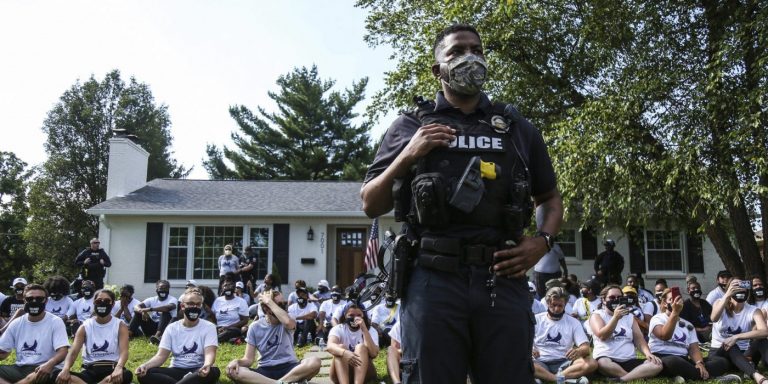
(Headline USA) Offering perhaps a sneak preview of what to expect with the outcomes of cases involving other Black Lives Matter “martyrs” like George Floyd, Louisville, Ky., declared a state of emergency in anticipation of an announcement regarding charges in the killing of Breonna Taylor.
Police shot Taylor eight times on March 13 while executing a no-knock raid on her boyfriend, who was implicated in a drug ring. Evidence has suggested that Taylor was aware of his alleged criminal activity and may have been complicit in it.
However, the warrant used was connected to a suspect who did not live there, and no drugs were found inside.
The use of no-knock warrants has since been banned by Louisville’s Metro Council.
Louisville, Kentucky, police said Monday that they had canceled vacations and were setting up barricades in preparation for the state attorney general’s announcement about whether he will charge officers in Breonna Taylor’s shooting death.
That may offer a strong hint as to the likely outcome from Attorney General Daniel Cameron‘s decision.
Cameron, who is black, was one of the notable speakers at the recent Republican National Convention, where he denounced the cancel culture and soft racism from Democrats in assuming the African-American community lacks the agency to think for themselves.
A statement from the department said all requests for vacation and days off were being canceled “until further notice” as the city awaits Cameron’s announcement.
“It is important to note that [Cameron] has said there is no timetable for the announcement,” the statement added.
Cameron said earlier this month that “an investigation, if done properly, cannot follow a certain timeline.”
“When the investigation concludes and a decision is made, we will provide an update about an announcement,” he said.
Large protests over Taylor’s death that at times became violent erupted in late May in the city, including a massive march outside the Kentucky Derby earlier this month.
Celebrities, athletes, activists and Taylor’s family have for months pushed Cameron to criminally charge the officers involved in the raid.
Last week, the city of Louisville settled a lawsuit from Taylor’s family for $12 million and pledged several police reforms as part of the agreement.
Police said in the statement that they are erecting some barricades in the downtown area. Many of the protests have been at a downtown park and city hall.
Federal officials have closed the federal courthouse and other federal buildings for the week.
Twitter finally apologized to New York’s Conservative Party two months after the technology platform suspended its account “by mistake,” the New York Post reported.
“We’re writing to let you know that we’ve unsuspended your account. We’re sorry for the inconvenience and hope to see you back on Twitter soon,” Twitter wrote in an email to NY Conservatives on Sept. 10.
“We have systems that find and remove multiple automated spam accounts in bulk, and yours was flagged as spam by mistake,” Twitter said.
Conservative Party Chairperson Gerard Kassar said this is the third time Twitter has targeted the party’s account this year, even though it has not violated any rules.
The last two suspensions were overturned in about a week after successful appeals.
It is unclear why the most recent suspension took two months to overturn.
And, since the account has been reactivated, Twitter has again begun to censor its content.
Twitter blocked users from accessing the Conservative Party’s page on Sept. 16, informing those who wanted to view its tweets that “this account is temporarily restricted.”
“You’re seeing this warning because there has been some unusual activity from this account,” the message continued.
Kassar said the NY Conservative Party uses the page to post news, not to stir controversy.
“Twitter creates more red flags for conservative organizations that ultimately result in suspensions,” Kassar said.
“As we got closer to the Democratic convention, I started to get really, really concerned because we don’t really use this in an extremely emotional hot-headed type way,” he said. “We use this as a matter-of-fact account about things that are occurring.”
The Conservative Party has not received Twitter’s verified “blue-check,” while the state’s progressive third-party, the Working Families Party, has received the verifying symbol.
Twitter’s double-standard remains in full force: conservatives failing to refer to someone by their transgender pronouns is hate speech that warrants suspension while leftists calling for actual violence is protected.
The new guidance, uploaded to the CDC’s website on Friday, stated that small airborne transmissions of COVID-19 were “thought to be the main way the virus spreads.”
This contradicted previous guidance from the CDC that stated the coronavirus is transmitted through large droplets spread among people in close proximity to each other.
“There is growing evidence that droplets and airborne particles can remain suspended in the air and be breathed in by others, and travel distances beyond 6 feet (for example, during choir practice, in restaurants, or in fitness classes),” the agency said in its update, according to CNN. “In general, indoor environments without good ventilation increase this risk.”
After this new guidance was discovered, the CDC removed it and said it was a mistake.
“A draft version of proposed changes to these recommendations was posted in error to the agency’s official website,” the CDC said on Monday. “CDC is currently updating its recommendations regarding airborne transmission of SARS-CoV-2 (the virus that causes COVID-19).”
The guidance no longer says COVID-19 can be spread through the air, and the agency said it will update the language once its review process “has been completed.”
Earlier this month, the agency changed its website to say that people who have been exposed to the coronavirus but are not showing symptoms should not be tested.
After facing backlash, the CDC reversed course and said that all persons who have been exposed to the virus, regardless of whether they are symptomatic, should be tested.
The Federal Reserve last week reiterated its commitment to an unprecedented inflation-raising campaign.
Specifically, the Fed aims to push the inflation rate above 2% for an extended period.
The risk for investors is that central bankers succeed in their mission to depreciate the currency more rapidly – perhaps even more rapidly than intended or acknowledged in the official (understated) inflation data.
Inflation is a corrosive force that eats away at the real value of savings and investments.
It is perhaps the biggest threat looming on the horizon for millions of retirees who have been steered into assets marketed as “conservative” – such as dollar-denominated money market accounts, bonds, and fixed annuities.
Investors who are savvy about the inflation threat know that low-yielding financial instruments are especially vulnerable to losing value in real terms. But those seeking protection from inflation can still run into trouble by venturing into flawed “inflation protected” assets.
Beware of the following:
Treasury Inflation Protected Securities (TIPS). Though they could fare relatively better than conventional fixed-rate bonds, TIPS are flawed. They are pegged to the federal government’s self-serving Consumer Price Index gauge which tends to understate real-world consumer prices.
Foreign currencies. Assets denominated in foreign currencies may benefit from a decline in the U.S. dollar on foreign exchange markets. But foreign fiat currencies are no safe haven from inflation.
There are no truly sound national currencies out there. The fact that one is gaining against another over any given period doesn’t mean it’s not also depreciating in real terms.
Central banks around the world are engaged in competitive devaluation, and lll fiat currencies have been falling against gold.
If one currency is strengthening against others at any given time, that doesn’t mean it’s gaining purchasing power – it’s probably just performing less bad than the others.
Cryptocurrencies. Some Bitcoin bugs tout the cryptocurrency as “digital gold.” They are mistaken, however.
While there is certainly utility and value, Bitcoin is a purely digital asset with no tangible backing. Moreover, there is no limit on the number of competing digital currencies that can be created.
Cryptocurrencies may have explosive upside potential, but they also carry huge downside risk – irrespective of the inflation rate.
Commodity Instruments. In theory, owning a basket of commodities is a good hedge against inflation. In practice, you probably don’t want to store barrels of oil and bushels of wheat in your basement!
That means you’d have to own speculative derivative instruments that often fail horribly at tracking the price movements of the underlying commodities. Commodity futures, ETFs, and the like are suitable only for short-term speculation, not long-term inflation protection.
Gold and silver mining stocks. Mining companies stand to benefit greatly from rising metal prices. But they are also vulnerable to rising energy and labor cost, carry political risk and the risk of poor management, and can become unstable during a financial crisis.
To be sure, miners can play a role in an aggressive investor’s inflation protection portfolio, they are no substitute for a core holding in physical precious metals.
Numismatic coins. Investors who grasp the need to hold some physical precious metals as part of an inflation protection strategy can still make a big mistake if they buy pricey numismatic coins. The large collectible premium attached to numismatics will not necessarily rise with inflation or match the gains on spot metal prices.
Hard Money Is the Ultimate Inflation Hedge
Gold is a timeless, immutable monetary asset, still widely held by central banks.
In former Federal Reserve chairman Alan Greenspan’s words:
“For more than two millennia, gold has had virtually unquestioned acceptance as payment. It has never required the credit guarantee of a third party… Today, the acceptance of fiat money — currency not backed by an asset of intrinsic value — rests on the credit guarantee of sovereign nations endowed with effective taxing power, a guarantee that in crisis conditions has not always matched the universal acceptability of gold.”
For these reasons, gold and its junior partner silver are an indispensable long-term hedges against inflation and political/financial turmoil.
“According to the World Gold Council, in years when the inflation rate has exceeded 3%, the price of gold has increased 15% on average.”
Over a period of decades and even centuries, the purchasing power of gold and silver tends to remain relatively constant.
The catch is that precious metals markets don’t always track inflation well in the near term.
They can suffer large cyclical declines over periods when other asset classes may be gaining.
Of course, they can also post huge gains when conventional markets are falling – that’s what makes them essential for proper portfolio diversification.
According to the World Gold Council, in years when the inflation rate has exceeded 3%, the price of gold has increased 15% on average.
Silver has the potential to do even better in an environment of rising inflation – delivering holders huge gains in real purchasing power.
When the purchasing power of the U.S. Federal Reserve note takes a dive, hard money will ultimately shine…Original Source…
Stefan Gleason is President of Money Metals Exchange, a precious metals dealer recently named “Best in the USA” by an independent global ratings group. A graduate of the University of Florida, Gleason is a seasoned business leader, investor, political strategist, and grassroots activist. Gleason has frequently appeared on national television networks such as CNN, FoxNews, and CNBC and in hundreds of publications such as the Wall Street Journal, The Street, and Seeking Alpha.