YouTube Makes Outrageous Censorship Play Under Auspices of ‘Age Restrictions’

YouTube stealthily moved to censor what is sure to be damning footage of violent leftist race-riots in the lead-up to the November election, claiming it was doing so to protect the children.

The video platform, owned by the left-skewed Google‘s parent company, Alphabet, announced that it was changing its policy on age-restricted content effective Tuesday.

“With greater safeguards in place, you may see videos on your channel placed behind an age-restriction, which limits the content to viewers who are at least 18 years old,” the site claimed in its announcement.

“… We’re also adjusting the way our age-restriction works off YouTube, prohibiting age-restricted videos to be viewable when embedded on most third-party sites,” it continued. “Users that click on an age-restricted video on another website will be redirected to YouTube, where they will only be able to view the content when logged-in.”

Notably included among YouTube’s subjective guidelines for what constitutes “age-restricted” content are depictions of violence, much like the radical riots that have consumed far-left cities in recent months.

The violent unrest threatens to be amplified even further in the lead-up and aftermath of the November election, with some Democrats using the death of Supreme Court Justice Ruth Bader Ginsburg to call for arson and other undemocratic forms of extremist protest.

Meanwhile, one of Alphabet’s top decision-makers, Chairman John Hennessy, endorsed Democrat hopeful Joe Biden in an open letter penned by two-dozen leaders of the tech industry who favor looser US immigration policies and chummier relations with China.

YouTube’s spontaneous policy change amounts to a de facto censorship of conservative media, who have been among the few to report on the riots in cities like Seattle and Portland, refuting and debunking the false claims that they are largely “peaceful protests.”

In September, for example, YouTube restricted a video taken exclusively from a House Judiciary Committee hearing in which Rep. Jim Jordan, R-Ohio, had juxtaposed gas-lighting media and Democrat officials with images of the shocking violence committed by domestic-terrorism groups like Antifa.

“We’re going to look into this for sure,” Russell Dye, senior communications counsel for Jordan’s office, told Headline USA in an email. “I’ve already got someone on it.”

While YouTube asserted that the policy shift would not impact monetization of videos that use in-video advertising from its site, its blocking of embedded videos will almost certainly harm outlets that rely on their own sites for advertising.

The new rule also seems specifically intended to flout an executive order issued in May by President Donald Trump that reaffirmed Section 230 of the 1996 Communications Decency Act.

The law stipulates that platforms deemed a public utility may be exempt from certain publishing regulations, such as defamation laws, provided the content originates with users who are protected by the First Amendment.

Increasingly, however, as platforms exert control over the content through their own arbitrary guidelines, particularly in terms of political bias, they are asserting the role of editors instead of publishers.

“In a country that has long cherished the freedom of expression, we cannot allow a limited number of online platforms to hand-pick the speech that Americans may access and convey online,” said the executive order.

“This practice is fundamentally un-American and anti-democratic,” it continued. “When large, powerful social media companies censor opinions with which they disagree, they exercise a dangerous power.”

Even so, online media platforms have been given broader discretion when it comes to filtering content that is considered “obscene, lewd, lascivious, filthy, excessively violent, harassing or otherwise objectionable.”

The fact that many of those attributes have come to characterize leftist anti-Trump resistance efforts thus allows dishonest companies a back-door avenue to censoring the same sort of ugliness that they tacitly—or explicitly—condone elsewhere.

In addition to YouTube, Facebook also has come out to announce that it planned to restrict content related to social unrest that might be of political significance. Others are likely to follow suit.

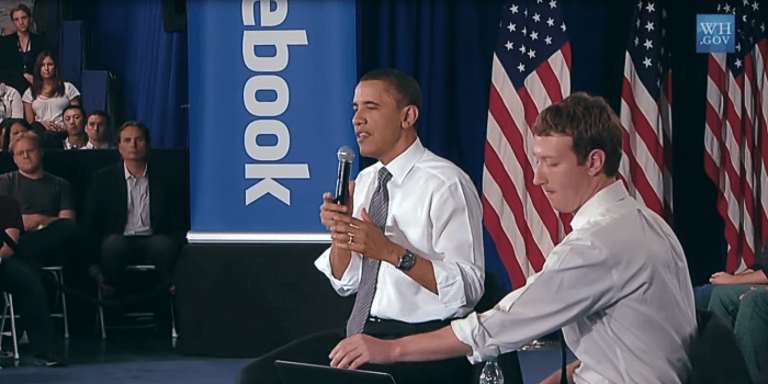
“This election is not going to be business as usual,” CEO Mark Zuckerberg said in a Sept. 3 blog post.

“We all have a responsibility to protect our democracy,” he continued. “That means helping people register and vote, clearing up confusion about how this election will work, and taking steps to reduce the chances of violence and unrest.”

Minnesota Democrat: Ilhan Omar ‘Doesn’t Belong in Our Party’

Rep. Ilhan Omar, D-Minn., who has courted repeated controversies during her freshman congressional term for anti-Semitic rhetoric and a series of ethical scandals, has no place in the Democratic Party, according to one of her fellow Minnesota Democrats.

“I don’t defend her. She doesn’t belong in our party,” said Democratic Rep. Collin Peterson, who represents Minnesota’s 7th Congressional District, when asked about Omar, who represents Minnesota’s 5th District.

“She doesn’t belong in our party,” Peterson reiterated when asked to clarify, according to the New York Post.

Peterson’s comments this week are far different than previous remarks he made in defense of Omar when he argued that her controversial 9/11 remarks had been misconstrued.

Omar downplayed the 2001 terrorist attacks while addressing the radical Council on American–Islamic Relations by characterizing them as “some people did something.”

Peterson said back in April that “she was trying to say that some people in her community feel like they’re being targeted.”

But recent indications suggest that Republican President Donald Trump has gained ground among Minnesota’s rural residents—including those in the massive 7th district that spans much of the western part of the state—as race-riots have consumed its biggest city, Minneapolis.

Omar, whose district comprises much of Minneapolis, has become a polarizing figure in Minnesota politics over the past two years.

Her string of anti-Semitic comments created tension between her and the Jewish community in the state, and her calls to disband the Minneapolis Police Department have rubbed many on-the-fence voters the wrong way.

As a result, many establishment Democrats are trying to distance themselves from Omar’s radicalism.

They feel the same way about the other members of the “Squad,” as well, the Post reported.

Omar and Reps. Alexandria Ocasio–Cortez, D-N.Y.; Rashida Tlaib, D-Mich.; and Ayanna Pressley, D-Mass., are nothing more than “activists” posing as legislators, according to these Democrats.

Omar was close to being ousted during her primary election, but managed to hold off her opponent.

The vast amount of money her opponent was able to raise proved that many Minnesotans no longer feel that Omar represents them.

Omar, however, argued that her victory means that support for her and her radical agenda has grown.

“Tonight, our movement didn’t just win,” Omar tweeted. “We earned a mandate for change. Despite outside efforts to defeat us, we once again broke turnout records. Despite the attacks, our support has only grown.”

Facebook Vows to Restrict ‘Circulation of Content’ if Election Becomes Chaotic

Facebook is already planning to “restrict,” as in, censor, “the circulation of content” on its platform if the 2020 election becomes too chaotic, according to the Financial Times.

Nick Clegg, Facebook’s head of global affairs, said that the social-media giant is prepared to limit what is shared if the election results throw the U.S. into civic unrest.

There are several “political dilemmas” Facebook is preparing for, he said—and many of them involve unrest, especially since the final results won’t be clear until weeks after Election Day.

Clegg did not explain how Facebook would restrict content, but he did cite the company’s “aggressive” actions in other countries and said that the company is willing to go take “exceptional measures” to prevent chaotic and violent circumstances from arising.

Clegg was likely referring to Facebook’s role during periods of unrest in Sri Lanka and Myanmar, when the social-media platform reduced the reach of content shared by rule-breakers and limited the distribution of content deemed “sensationalist.”

CEO Mark Zuckerberg, COO Sheryl Sandberg, Clegg, and several other top executives will be on the team making the decision come Election Day, Clegg added.

This isn’t the first time Facebook has involved itself in the election.

Earlier this month, the platform announced it would ban political advertisements in the week ahead of the election to prevent misinformation from spreading after earlier pledging to allow them.

Such actions were an attempt to “secure the integrity of this year’s election,” the company explained.

“This election is not going to be business as usual,” Zuckerberg aid in a Sept. 3 Facebook post.

“We all have a responsibility to protect our democracy,” he continued. “That means helping people register and vote, clearing up confusion about how this election will work, and taking steps to reduce the chances of violence and unrest.”
Major Tech Company Execs Endorse Biden; Hate Trump’s ‘American Jobs First’ Agenda

High-level officials at Google, Microsoft and Facebook oppose President Donald Trump’s reelection because he does not support the unlimited legal and illegal immigration necessary to sustain their monopolistic technocracy.

The group endorsed Democratic presidential candidate Joe Biden and vice presidential candidate Kamala Harris in a public letter, the New York Post reported.

All 24 people signatories of the letter have received the Turing Award, an accolade considered by computer programmers to be on par with the Noble Peace Prize.

“Information technology is thoroughly globalized,” the group wrote. “Academic computer science departments attract talented students, many of whom immigrate and become American inventors and captains of industry.”

They also oppose Trump’s efforts to keep valuable technological and scientific information within the United States. They would rather the information spread unchecked throughout the globe.

“We celebrate open source projects, the lifeblood of our field, as exemplars of international collaboration,” they wrote. “Computer Science is at its best when its learnings and discoveries are shared freely in the spirit of progress.”

China, in particular, has long bolstered US corporate and political elites on the Left—including Biden—with major investments, while itself benefiting from a trade imbalance that funneled US dollars back into the communist regime.

However, Trump’s America-first trade policies have thrown the arrangement into disarray.

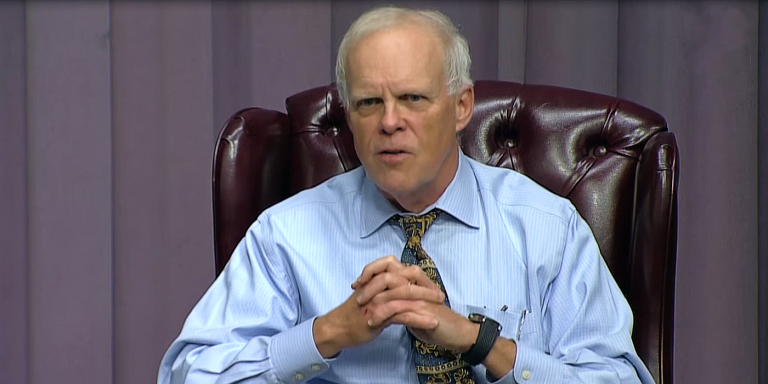
The letter’s signers include John Hennessy, executive chairman of Alphabet, which owns Google; Ed Catmull, who co-founded Pixar; Vinton Cerf, Google vice president and co-inventor of the internet; and Yann LeCun, Facebook’s vice president and chief AI scientist.

Google Engineer David Patterson said Trump’s immigration policies are pushing talented people away from the United States.

“The most brilliant people in the world want to come here and be grad students, but now they are being discouraged from coming here, and many are going elsewhere,” he said.

Biden and Harris have promised to effectively eliminate the American border and all pretense of immigration enforcement.

“Joe Biden and Kamala Harris listen to experts before setting public policy, essential
when science and technology may help with many problems facing our nation today,” they wrote.

“As American computer scientists and as US citizens, we enthusiastically endorse Joe Biden for President and Kamala Harris for Vice President.”

Court Papers: Woman Wrote ‘Give Up’ in Ricin Note to Trump

0

(Associated Press) A Canadian woman accused of mailing a package containing ricin to the White House included a threatening letter in which she told President Donald Trump to “give up and remove your application for this election,” according to court papers filed Tuesday.

Pascale Ferrier, of Quebec, was arrested Sunday at the New York-Canada border and is due to make her first court appearance Tuesday afternoon in federal court in Buffalo, New York.

She faces a charge of threatening the president.

The envelope containing the toxic substance and the threatening letter was addressed to the White House but intercepted at a mail sorting facility on Friday.

The package, postmarked from Canada, included a letter in which she referred to Trump as “The Ugly Tyrant Clown” and directed him to “give up and remove your application for this election,” according to an FBI affidavit filed in the case.

“So I made a ‘special gift’ for you to make a decision. This gift is in this letter,” she wrote, according to the affidavit. “If it doesn’t work, I’ll find better recipe for another poison, or I might use my gun when I’ll be able to come.”

It wasn’t immediately clear if Ferrier had a lawyer.

During the investigation, the FBI discovered that six additional similar letters appeared to have been received in Texas in September and also had stamps indicating that they’d been mailed from Canada, according to court papers.

Those letters “contained similar language” to the letter that was sent to Trump and were sent to people affiliated with facilities where Ferrier had been jailed in 2019.

Investigators also matched Ferrier’s fingerprints from four of the letters, the complaint said.

In Facebook and Twitter posts in September, Ferrier also wrote “#killTrump” and used similar wording as she did in the letter, calling him an “Ugly Clown Tyrant,” according to the document.

When she was arrested Sunday while trying to enter a border crossing in Buffalo, Ferrier told Customs and Border Patrol agents that she was “wanted by the FBI for the ricin letters,” the complaint said.

Officers found a loaded gun in her waistband and said she was also carrying a knife.

Ferrier was booked into the Hidalgo County jail in March of 2019 on two charges of unlawfully carrying a weapon and one charge of tampering with government records, according to online jail records.

Ferrier is listed as living in Quebec, and was released in May of last year.

The records state the charges against her were ordered dismissed.

Florida Gov. DeSantis Introduces Bill to Increase Penalties For Violent Protesters

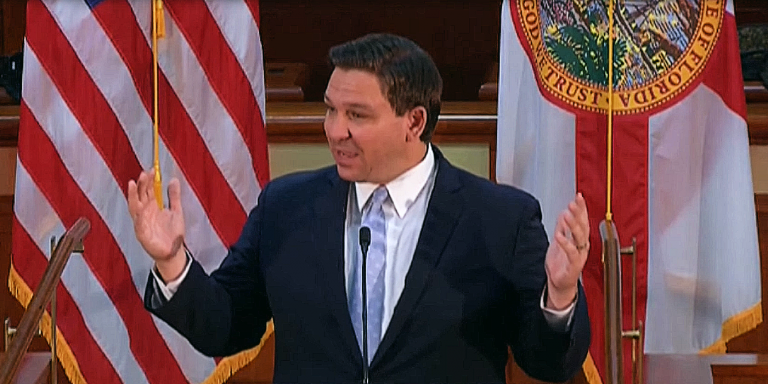
Florida Gov. Ron DeSantis unveiled legislation on Monday that would increase penalties for violent rioters as his state, yet again, looks to be one of the key battlegrounds in the coming presidential election.

“We’re not going to go down the road that other places have gone,” DeSantis said, according to Politico.

“If you do it, and you know that a ton of bricks will rain down on you, then I think people will think twice about engaging in this type of conduct,” he added.

The bill would provide mandatory six-month jail sentence for those who hit law enforcement officers.

It also would permit felony charges against protesters who damage property—including monuments—or injure others.

Moreover, it would prevent violent rioters from being employed by the state or receiving state benefits.

Anyone arrested during the protests would not be eligible for bail before their initial court hearing, and anyone convicted from outside Florida would receive extra penalties under the new law.

The bill also includes a provision that any municipality that tries to defund the police will not receive state funding.

“This is a very robust package,” the governor said. “I think what it is saying is we’re not going to let Florida go down the road where some of these places have gone.”

The bill now heads to Florida’s Republican-controlled state legislature and will be taken up during its 2021 session.

State Senate President-elect Wilton Simpson said this week that it will pass easily.

“If you own a business and someone is looting your business, you’re going to call law enforcement,” he said. “They deserve the backing to the fullest extent of the law.”

Other Republican-controlled parts of the country have passed similar penalties to prevent the sort of chaos that has consumed liberal cities like Portland, Seattle and New York City from spreading.

In Salt Lake City, for example, city officials charged protesters with “gang enhancement” for smashing the windows of the district attorney’s building and painting a road.

Because of these enhanced charges, the protesters could face up to life in prison.

Vengeful Democrats Talk of Packing Supreme Court

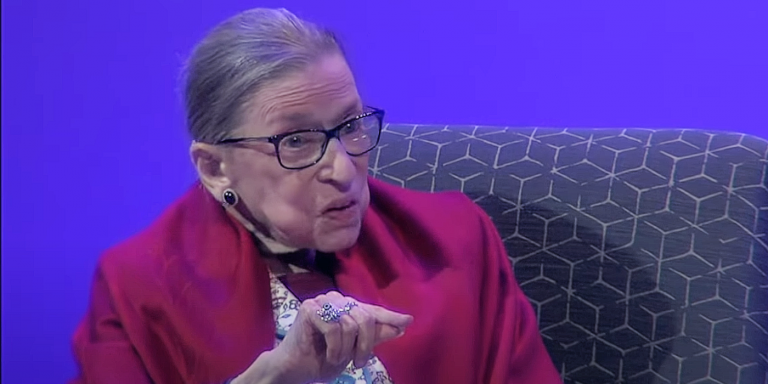
(Headline USA) The prospect that President Donald Trump and Senate Republicans will fill the Supreme Court seat once held by Justice Ruth Bader Ginsburg before the year is out has ignited a call by vengeance-seeking leftists for major changes on the court, including expanding the number of justices.

Some Democratic senators, who had been averse to increasing the size of the nine-member court, said in the wake of Ginsburg’s death that the Republican “rush” to fill the high court vacancy could be a breaking point.

Massachusetts Sen. Ed Markey said on Twitter that if Republicans don’t allow the winner of the Nov. 3 presidential election to select the next justice, “we must abolish the filibuster and expand the Supreme Court.”

But the sudden vacancy also is fueling tensions among Democrats. While some progressives are urging presidential nominee Joe Biden to embrace reforms including adding justices to the court, he has remained silent on the idea so far.

Another worry is that changing the size of the court for the first time in 150 years would come back to bite the Democrats, leading to further expansion when Republicans next control both Congress and the White House.

Democrats said almost nothing about the Supreme Court at their convention in August. That changed in an instant over the weekend.

“Nothing is off the table” for Senate rules changes if Republicans quickly confirm a new justice, Senate Democratic leader Chuck Schumer of New York warned in conference call Saturday with Democratic senators, according to a person on the private call who was not authorized to discuss it publicly and spoke on condition of anonymity.

If Democrats win control of the Senate in the November elections, they probably would need to get rid of the filibuster, the Senate rule that requires 60 votes rather than a simple majority for most legislation, before they could move on legislative changes that might include the size of the court.

The Democratic platform does include support for amorphous “structural court reforms to increase transparency and accountability.”

Biden believes such a major change would only contribute to further “escalation” surrounding the courts, said a top Biden aide granted anonymity to speak about internal conversations.

In the Democratic primaries, Biden prevailed over candidates who supported big changes for the court, including former South Bend, Indiana, Mayor Pete Buttigieg.

Buttigieg proposed expanding the high court to 15, but not simply by allowing the sitting president to amplify his or her ideology on the bench. His plan would have five justices preferred by Democrats and five by Republicans. Those 10 justices then would select their other five colleagues.

Like Biden, leaders of several progressive groups said their focus is on stopping a Trump nominee. But several said in a conference call this weekend that they’d consider all options if they fail.

“Nothing is off the table. The legitimacy of the court and our democracy is at stake,” said Vanita Gupta, president of the Leadership Conference on Civil and Human Rights.

It’s been more than 80 years since expanding the size of the court has received serious discussion. In 1937, President Franklin Roosevelt tried and failed to add seats to a court on which conservative justices had struck down several New Deal programs. Roosevelt lost the fight in Congress over court expansion, though retirements soon eliminated FDR’s need for legislation.

One of the attractions of court expansion is that it does not require amending the Constitution, as imposing term limits on justices might.

The court’s size can be changed by legislation. The number of seats varied during its first 80 years from a low of six at the time the Constitution took effect in 1789 to a high of 10 during the Civil War. The current tally of nine justices was set in an 1869 law.

Congress might also act to impose term limits, but any change is likely to draw a legal challenge because the only limit set by the Constitution is that federal judges “shall hold their Offices during good Behaviour.” They can be impeached, but otherwise decide for themselves when to retire.

Several progressive groups have pushed structural court changes essentially since Trump took office and appointed Justice Neil Gorsuch to fill a vacancy created by Justice Antonin Scalia’s death in 2016. President Barack Obama nominated Judge Merrick Garland for the seat, but Senate Majority Leader Mitch McConnell refused to act on the nomination in the 2016 election year.

McConnell has said he will press to confirm Trump’s nominee to fill the latest election-year opening.

Political scientist Aaron Belkin, whose Take Back the Court group also favors court expansion, said the issue will only grow in prominence in the event of Democratic victories this fall if a Supreme Court dominated by conservatives were then to strike down liberal agenda legislation passed by a Democratic Congress and signed by Biden.

“The conversation about court expansion is not so much about the court but restoring democracy. This court is not going to allow a Biden administration to restore democracy,” Belkin said.

Adapted from reporting by Associated Press.

What’s Best for the Country? No, Dems Instead Seek ‘Payback’, Vengeance Over Court Pick

Editor’s note: Tweets may contain extreme profanity.

As with all aspects of Trump-era leftist “resistance,” Democrats’ frustration over losing the Supreme Court seat of late Justice Ruth Bader Ginsburg has taken on a decidedly undemocratic tenor.

The party is trying to sell its case for packing the court with additional liberal justices should Joe Biden win the White House, effectively changing the rules of the system after finding itself unable to compete within the system’s parameters.

To do so, it is using the only rhetoric remaining in its arsenal: a thirst for vengeance.

Bereaved liberals are now reverting to a sort of raw, biblical ‘justice’ to avenge the fallen Ginsburg, whose death after a long battle with pancreatic cancer they, no doubt, will blame Republicans for at some point.

While it is unclear what their exact grievance is, many claim it relates to the “stolen” seat of Judge Merrick Garland, whom President Barack Obama nominated to replace the conservative Justice Antonin Scalia in February 2016.

Senate Majority Leader Mitch McConnell, R-Ky., declined to put Garland up for a vote before the 2016 election—despite the Left’s certainty at the time that Hillary Clinton would prevail.

Ironically, there are numerous historical examples of the Left’s having “stolen” or attempted to steal court seats of its own.

Several Republican-appointed justices in the 20th-century conveniently flipped to become some of the courts most radical liberals.

And starting with Ronald Reagan’s nomination of conservative Robert Bork, Democrats have made judicial smear campaigns a standard practice, often succeeding in blocking confirmations or using unsubstantiated innuendo to undermine the process.

The most prominent—and most recent—example was Justice Brett Kavanaugh, who was broadsided by uncorroborated rape allegations reaching back decades to his school days in a highly-watched, nation-rending confirmation hearing.

Left-wing activists—some appearing to be paid protesters—turned out in full force to oppose Kavanaugh, but to no avail as he narrowly cleared the GOP-led senate with a simple majority.

Now, a number of Democrat super-PACs and activist groups are hoping to cash in on the “eye-for-an-eye” vindictiveness—and then some—in retaliation for their past failures.

While it is not unexpected that groups would seek to use Ginsburg—a liberal icon celebrated for her outspoken fusion of politics and jurisprudence—as a pre-election rallying cry, some, like the Progressive Turnout Project have veered toward messaging that emphasizes punishing McConnell.

The group was collecting names via a “petition” that promised to “Ruin Mitch’s Career” as he vies for re-election in his own Senate race.

Another activist group, Indivisible, founded for the express purpose of “resisting the Trump agenda,” recently launched an initiative called the “Payback Project” that is targeting 12 GOP senators it considers vulnerable.

The project’s website tells its supporters to “Get angry. Then, get even.”

“[A]fter years of Senate Republicans enabling Trump and destroying democracy, we have to do more,” it says.

“…[I]t will take a massive awareness campaign to expose the truth of their complicity [… and] make sure Republicans Senators are held accountable for their actions, their votes, and their enabling of Donald Trump.”

The dark-money-backed Demand Justice, meanwhile, planned an organizing call last weekend to “Honor RGB,” but it also hinted that doing so might involve violence and unrest.

“Justice Ginsburg’s vacancy on the Supreme Court should not be filled until after the inauguration in January,” the group said in an email.

“She left us with these instructions,” it said, referencing a thinly-sourced media narrative about Ginsburg’s dying words to her activist granddaughter, “and we must fight to honor her legacy by ensuring no justice is considered until after inauguration day.”

Other liberal reactions also alluded to violent extremism, such as a tweet from radical Islamic activist Reza Aslan that seemed to endorse arson.

Aslan’s tweet, posted only minutes after the Friday night announcement of Ginsburg’s passing, had since garnered more than 17,000 retweets and 51,000 comments as of Tuesday.

His motto on Twitter: “I’d rather be divisive than indecisive.”

Of course, the rhetoric was not much of a stretch given that activist radicals associated with domestic terrorism groups like Antifa were already being arrested for acts of arson, vandalism and violent crime prior to Ginsburg’s death.

Likewise, many of the “payback” initiatives Democrats are proposing—such as packing the Supreme Court with additional justices, granting statehood to the far-left District of Columbia and Puerto Rico, offering mass amnesty and eliminating the Electoral College—had been promoted as part of the Biden agenda prior to Ginsburg’s death.

But their newfound justification for the brazen attempts to consolidate power and secure permanent blue majorities promised to raise the stakes even further in the upcoming election.

Democrats’ radical leaders did little to lower the level of acrimony among their base.

Senate Minority Leader Charles Schumer, D-NY, stated that “nothing is off the table” in thwarting Trump’s third nominee to the high court.

House Speaker Nancy Pelosi, D-Calif., suggested that Democrats could use a second baseless impeachment proceeding as an effort to forestall a confirmation hearing.

And Rep. Alexandria Ocasio–Cortez, D-NY, once again used the dog-whistle suggestion of arson to underscore the existential imperative of the moment by saying that McConnell was “playing with fire.”

Despite the threats, Republicans remained largely undeterred.

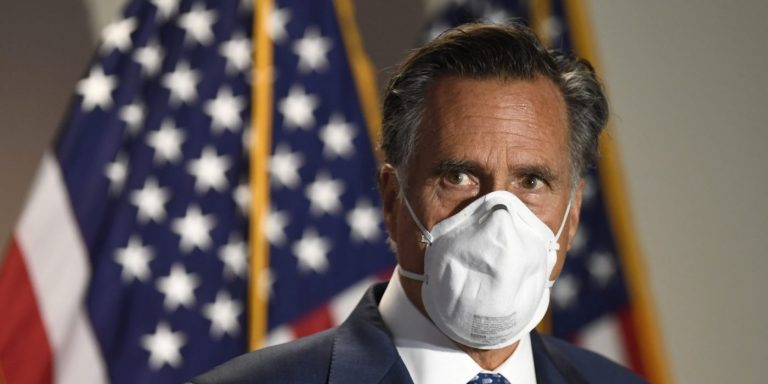
On Tuesday, even Sen. Mitt Romney, R-Utah, the only GOP member of Congress to vote in favor of Trump’s articles of impeachment, indicated that he would support a Supreme Court vote prior to the election.

Meanwhile, at least a few left-wing Twitter users seemed to anticipate that their exhortations to acts of violence might result in a backlash of some kind.

Democrat strategist Katie Connolly expressed concerns over the semantics of using terms like “payback” and “court-packing.”

She continued to support the radical agenda, albeit newly repackaged under the euphemistic banner of “reforms.”

Former Attorney General Eric Holder, who previously endorsed violent opposition to the GOP and has been at the forefront of undemocratic efforts to weaponize the justice system in service of a leftist agenda, also agreed that the messaging was problematic.

Romney OKs Voting on Court Nominee; All but Assures Approval

(Headline USA) Republican Sen. Mitt Romney of Utah said Tuesday he supports voting to fill the Supreme Court seat formerly held by late Justice Ruth Bader Ginsburg, all but ensuring President Donald Trump has the backing to push his choice to confirmation over Democratic objections that it’s too close to the November election.

Romney told reporters that it is not “written in the stars” that the court will have a liberal bent and that with Trump’s nominee — still to be announced — it will become more conservative. The malleability of Chief Justice John Roberts lends credence to that view.

Republicans hold a 53-47 majority in the Senate, and the Democrats would need four GOP defections to block consideration. Two Republicans have said they oppose taking up a nomination at this time, but no others are in sight.

“If the nominee reaches the Senate floor, I intend to vote based upon their qualifications,” Romney said.

Even if he and the other two should eventually vote against Trump’s nominee, Vice President Mike Pence could break a 50-50 tie in Trump’s favor.

Trump is planning to announce his choice to replace the late Ginsburg on Saturday, setting off a quick confirmation process, with early voting for the presidential election is already underway in several states.

Senate Majority Leader Mitch McConnell declined to provide scheduling information as he opened the chamber Tuesday, but he is set to meet privately with GOP senators at their campaign headquarters to assess next steps.

Conservative senators are pushing for a swift vote before Nov. 3. The Senate Judiciary chairman who will shepherd the nomination through the chamber said Republicans have the support they need for confirmation.

“The nominee is going to be supported by every Republican in the Judiciary Committee,” Chairman Lindsey Graham told Fox News late Monday. “We’ve got the votes to confirm the justice on the floor of the Senate before the election and that’s what’s coming.”

The president met with conservative Judge Amy Coney Barrett at the White House on Monday and told reporters he would interview other candidates and might meet with Judge Barbara Lagoa when he travels to Florida later this week. Conversations in the White House and in McConnell’s office have increasingly focused on Barrett and Lagoa, according to a person the Associated Press says they granted anonymity to discuss the private deliberations.

Republicans hold a 53-47 majority in the chamber and can confirm a justice by a simple majority.

Romney would not say whether he supports Barrett or any particular candidate. But he acknowledged the court will shift to become more conservative.

“I recognize that we, we may have a court which has more of a conservative bent than it’s had over the last few decades,” Romney told reporters on Capitol Hill. “But my liberal friends have over many decades gotten very used to the idea of having a liberal court. And that’s not written in the stars.”

Democrats point, without evidence, to “hypocrisy” in Republicans trying to rush through a pick so close to the election after McConnell led the GOP in refusing to vote on a nominee of President Barack Obama in February 2016, long before that year’s election.

Romney dismissed that argument, saying “it was not unfair” of Republicans to refuse to consider Obama’s choice of Merrick Garland.

Barrett has long been favored by conservatives, and those familiar with the process said interest inside the White House seemed to be waning for Lagoa amid concerns by some that she did not have a proven record as a conservative jurist. Lagoa has been pushed by some aides who tout her political advantages of being Hispanic and hailing from the key political battleground state of Florida.

Four Republicans could halt a quick confirmation and Trump criticized Republican Sens. Susan Collins of Maine and Lisa Murkowski of Alaska for opposing a vote before elections. The president warned they would be “very badly hurt” by voters.

Others, including GOP Sens. Chuck Grassley of Iowa and Cory Gardner of Colorado, declined to join in opposing the president’s plan.

Adapted from reporting by Associated Press.

Cockamamie Ranked Choice Voting in Maine a Go for Presidential Election

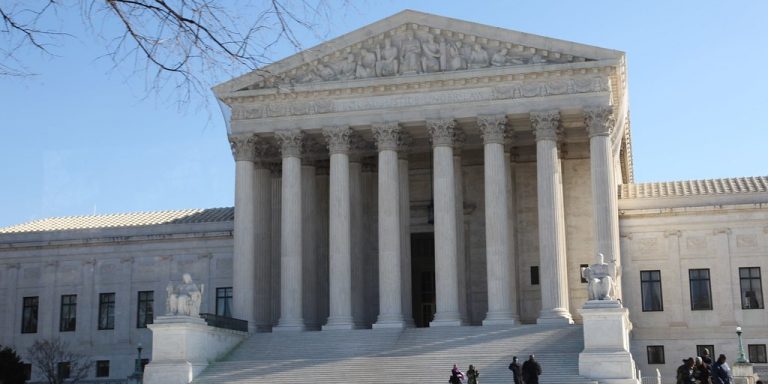
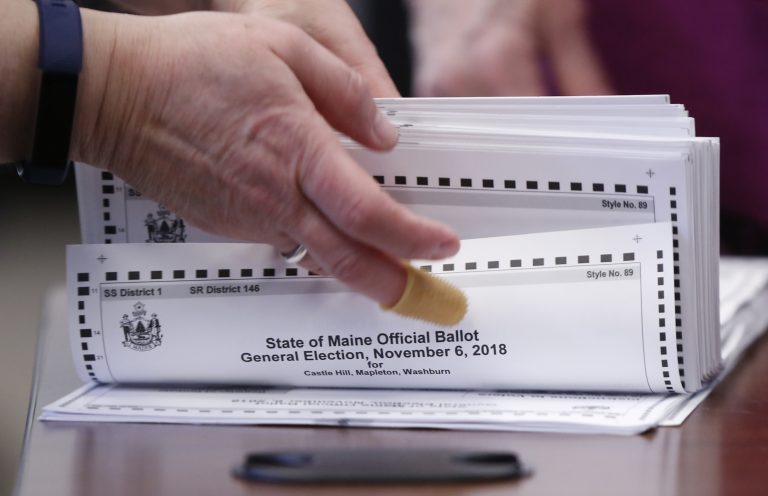
(Headline USA) Ranked choice voting will be used for the first time in a presidential race under a ruling Tuesday by the Maine Supreme Court, which concluded a GOP petition drive came up short.

The Supreme Judicial Court concluded that the Maine Republican Party failed to reach the threshold of signatures needed for a “People’s Veto” referendum aimed at rejecting a state law that expands ranked choice voting to the presidential election.

The GOP collected tens of thousands of signatures but came up shy of the needed level of 67,067 after some were invalidated.

The fast-paced, 11th-hour legal machinations followed the secretary of state’s rejection of the referendum.

The Maine GOP appealed that decision and a state judge reinstated enough signatures to surpass the minimum by 22 signatures.

Another appeal took the matter to the state’s highest court, which issued its decision just six weeks before the election.

The issue that was before the state Supreme Court focused on a narrow question of whether signature gatherers must be registered to vote in the town where they are circulating petitions at the time they started.

The combined number of signatures collected by the two individuals whose status was challenged were enough to lift or sink the referendum.

Maine’s presidential ballot will feature five names, including Republican President Donald Trump and Democratic challenger Joe Biden.

Under the voting system, voters are allowed to rank all five candidates on the ballot.

If no one wins a majority of first-place votes, then there are additional tabulations, aided by computers, in which last-place finishers are eliminated and votes reallocated based on those supporters’ second-place choices.

That adds another wrinkle to the presidential contest in Maine, which already does things differently as one of two states that divide electoral votes.

In the last presidential election, Democrat Hillary Clinton won three electoral votes while Trump won one electoral vote in the 2nd Congressional District, underscoring political divisions between the state’s liberal, urban south and conservative north.

The ranked choice voting system, approved by Maine voters in 2016, has become a partisan issue in the state, where Republican U.S. Rep. Bruce Poliquin was ousted in 2018 despite collecting the most first-place votes.

Supporters say the voting system eliminates the impact of so-called “spoiler candidates” and produces a majority winner.

Critics say it’s unnecessarily complicated.

They have also argued that it disenfranchises voters who don’t understand it.

The constitutionality of the voting system has been twice upheld by a federal judge in Maine.

But ranked voting is not used in the governor’s race or legislative contests because it runs afoul of the Maine Constitution.

Adapted from reporting by Associated Press.