AOC: Leftists Will ‘Likely’ Push Joe Biden Farther Left After He’s Elected

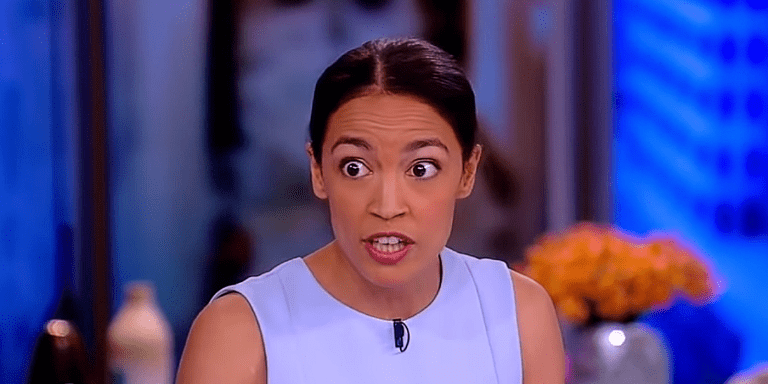
Rep. Alexandria Ocasio–Cortez, D-N.Y., speculated this weekend that presidential candidate Joe Biden will “likely” move farther to the Left once elected due to the influence of the Democratic Party’s left-wing.

When asked if she and Sen. Bernie Sanders, I-Vt., are concerned that Biden is too moderate for their platforms, Ocasio-Cortez said that she “of course” shares Sanders’s concerns.

“We’re different people, and clearly I, in the primary, one of the reasons why I was supportive of Sen. Sanders was because of how progressive his stances are,” she told Just the News.

“But, you know, the primaries are over and right now what is most important is to make sure that we ensure a Democratic victory in November,” she added.

Ocasio–Cortez said that some of the issues she hoped to twist Biden’s arm on were marijuana, climate change and foreign policy.

However, she did not elaborate on what foreign policy she hoped to redirect the fervently pro-China Biden toward.

Historically, there have been strong links between Sanders’s Congressional Progressive Caucus and the International Communist Party, over which China exerts an outsize influence.

“I think, overall, we can likely push Vice President Biden in a more progressive direction across policy issues,” she reiterated. “I think foreign policy is an enormous area where we can improve — immigration is another one.”

Ocasio-Cortez’s comments confirm what President Trump and the GOP have been saying for months: Biden would be a “Trojan horse” for the radical leftists in his party.

Already, he has allowed extremists like Ocasio–Cortez to dictate his environmental platform, and he has caved on several cultural issues too.

After giving Ocasio–Cortez a seat on his campaign’s environmental advisory committee, Biden announced this summer that he would be embracing the Green New Deal in all but name.

His new climate plan now demands that the U.S. achieve net-zero emissions by 2050 at the latest, and it introduces a plan to force coal workers transition into a different line of work.

“Biden believes the Green New Deal is a crucial framework for meeting the climate challenges we face,” his climate plan states.

“It powerfully captures two basic truths,” it says.

The first is that “the United States urgently needs to embrace greater ambition on an epic scale to meet the scope of this challenge,” and the second is that “our environment and our economy are completely and totally connected.”

It was because of this leftist pressure that Biden also embraced a ban on fracking, which he has since denied.

Similarly, Biden reversed his long-standing support for the Hyde Amendment, a law that prohibits taxpayer dollars from being used to fund abortions, after leftists in his party demanded that he disavow it.

“If I believe health care is a right, as I do, I can no longer support an amendment that makes that right dependent on someone’s ZIP code,” he announced last year.

Another area of concern for Ocasio–Cortez is Biden’s health care policy, she said.

She admitted that Biden’s campaign has been “pretty stubborn” on this issue, but said she will continue to push Biden to embrace Sanders’s ‘Medicare for All’ bill, of which Biden’s running mate, Sen. Kamala Harris, D-Calif., was a sponsor.

“There are some areas where we just fundamentally disagree, but that’s OK,” she told Just the News.

“I think it’s important to acknowledge that we can have, in some cases, very large disagreements—it doesn’t mean that we’re trying to undermine the party or undermine each other,” she continued. “It means that we’re trying to do what’s best for people in the country.”
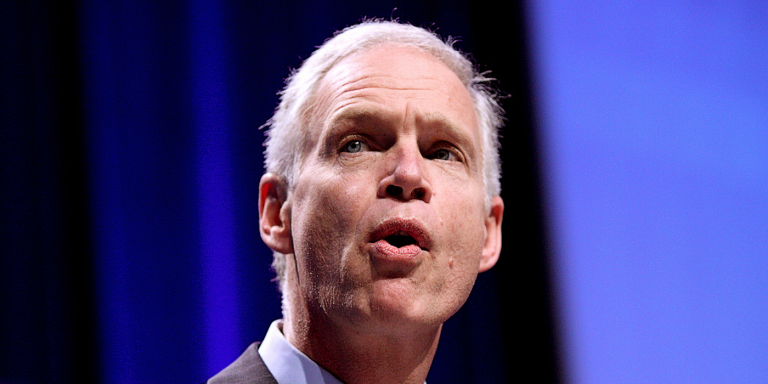
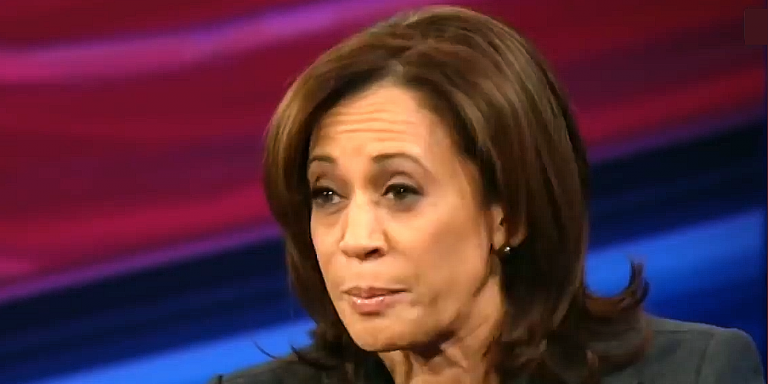
Ron Johnson Teases Release of Biden Investigation Report

In a matter of days, Sen. Ron Johnson, R-Wisc., is set to release his committee’s report on its investigation into the foreign business dealings of presidential candidate Joe Biden and his son Hunter.

Johnson hinted during an interview this weekend that what his committee discovered could disqualify Biden from the 2020 presidential election.

“I think it’s time for the American people to see what we’ve got,” Johnson told local Wisconsin radio station WCLO.

“What our investigations are uncovering, I think, will reveal this is not somebody we should be electing president of the United States.”

The congressional probe was headed by Johnson, who chairs the Senate Homeland Security and Governmental Affairs Committee, and Sen. Chuck Grassley, R-Iowa, who currently chairs the Senate Finance Committee.

It focused largely on Hunter Biden’s work for Burisma, a Ukrainian gas company that was the subject of a corruption investigation.

While Hunter sat on the board of Burisma, drawing a million-dollar annual consulting fee, Joe Biden, as vice president pressured the Ukrainian president to fire a top prosecutor who was investigating allegations of corruption at the company.

Documents have revealed that shortly after Hunter joined the board in 2014, Burisma was able to bribe the prosecutor-general and others connected with the probe to abandon it.

However, pressure from US-Ukrainian envoy George Kent led to the appointment of a new prosecutor-general, Victor Shokin, who resumed the corruption probe.

That’s when Burisma began heavily lobbying the State Department, which led Biden to strong-arm then-President Petro Poroshenko by threatening to withhold a billion-dollar loan guarantee.

A week later, Shokin was out and the corruption probe went dormant—until President Donald Trump broached the issue with Poroshenko’s successor, Volodymyr Zelenskiy in a July 2019 phone call that resulted in Trump’s impeachment.

The forthcoming Senate report will be released just days before the first presidential debate between Joe Biden and President Trump, according to Republicans.

It was supposed to be released earlier this summer, but Johnson said the process took longer than expected due to the hesitance of some members of his committee to uncover the necessary documents and interviews.

“I had a devil of a time just getting the subpoena authority that I got,” Johnson explained in July, noting that he didn’t want to push the envelope too quickly because there were “a number of my committee members that were highly concerned about how this looks politically.”

Sen. Mitt Romney, R-Utah, specifically, has blasted the investigation as a “political exercise.”

“It’s not the legitimate role of government for Congress or for taxpayer expense to be used in an effort to damage political opponents,” Romney said.

Headline USA’s Ben Sellers contributed to this report.

Bail Fund Touted By Kamala Harris Bailed Out Child Rapist

A bail fund touted by vice presidential candidate Kamala Harris contributed to the release of a man accused of raping an 8-year-old girl, according to jail records.

Timothy Wayne Columbus, 36, faces up to 30 years in prison for sexually assaulting an 8-year-old girl in 2015, court records show.

He was released from a Minneapolis jail on $75,000 bail in early July, according to the Daily Caller, and shortly thereafter signed a document saying that all refunded bill money should be directed to the Minnesota Freedom Fund.

This means that the group helped bail him out.

The horrific nature of Columbus’s crimes should have disqualified him from consideration, both from the bail fund and from the court.

“Victim stated ‘Tim’ laid her on the couch and held her down as he unbuckled his pants and pulled down her pants. Victim stated he then ‘put his thing inside me,’” Minnesota prosecutors said in a statement. “Victim stated ‘Tim’ told her not to tell anyone and continued to penetrate her.”

Harris and several other high-profile celebrities and Democratic politicians have endorsed the Minnesota Freedom Fund.

Greg Lewin, the interim executive director of MFF, admitted that the group doesn’t look closely at the records of the individuals they’re bailing out.

“I often don’t even look at a charge when I bail someone out,” Lewin said, according to KMSP.

“The last time we were down there, the clerk said, ‘We hate it when you bail out these sex offenders.’ That is what they said,” continued Lewin

The MFF also bailed out an alleged murderer and a previously convicted rapist, according to Fox 9.

FedEx CEO Who Pushed Redskins to Change Team Name Mocks Shareholder’s Question

CORRECTION: The original version of this article incorrectly represented Scott Shepard as a “business journalist.” He represents the Free Enterprise Project at the National Center for Public Policy Research, a conservative group that is a shareholder in FedEx.

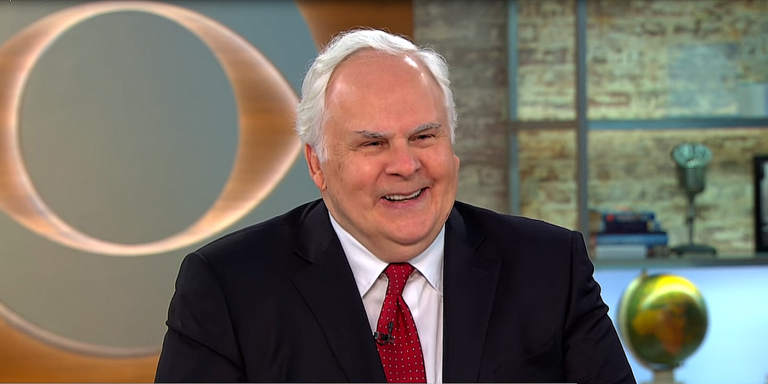
FedEx CEO Frederick Smith mocked a shareholder who questioned the company’s advocacy for changing the name of the Washington Redskins—a goal that puts the wishes of leftist activists ahead of Native Americans.

Scott Shepard, deputy director of the Free Enterprise Project, asked Smith and Executive Vice President Brie Carere if they would set aside their far-left social justice agenda and instead pursue their business interests.

“Respond to this question, if that’s what you can call it,” Smith said to Carere, laughing.

Carere then read a scripted response that showed the company’s dedication to critical race theory.

“We always evaluate all marketing sponsorships through our commitment to diversity, equity and inclusion,” he said.

“We appreciate very much the Washington Football Team’s decision to change its name and its logo,” he continued, “and please remember that it was the team’s decision.”

Shepard’s question included relevant information about FedEx’s social-justice lobbying.

“[FedEx] pushed the Washington Redskins to change their name, even though according to a Washington Post poll, 9 in 10 Native Americans aren’t offended by the Redskins name; it’s hardly a disparaging connotation,” Shepard said.

“By its bumbling, FedEx significantly decreased Native American representation in civic life for the sole benefit of the smug self-regard of ill-informed leftwing activists,” he said.

FedEx owns the naming rights for FedExField, the stadium of the Washington Redskins. The company has signed a contract for $8 million per year through 2025.

Smith also owns part of the Redskins.

FedEx formally requested that the team change its name in July 2020.

Major corporations, like Nike and Pepsi, also threatened to harm the team unless its name was changed.

The decision to change the name was not the result of a grassroots movement.

“Smug, elitist interlopers, who care only about their exquisite sensibilities—largely feigned for the purposes of virtue signaling—don’t give a fig about the real convictions and concerns of the groups whom they pretend to represent,” Shepard said.

Evidence of Trump-Russia Collusion in Senate Intelligence Report is Flimsy at Best, Fraudulent at Worst

0

(Aaron Mate, RealClearInvestigations) The declaration that Donald Trump’s onetime campaign manager employed a Russian intelligence officer was the headline-grabbing finding of the Senate Select Committee on Intelligence’s fifth and final Russian interference report, released Aug. 18 at the time of the Democratic National Convention.

According to the report, Paul Manafort’s 2016 interactions with his longtime associate, Ukraine-born Russian national Konstantin Kilimnik, “represent the single most direct tie between senior Trump Campaign officials and the Russian intelligence services,” and amounted to “a grave counterintelligence threat” to the United States.

To hear Trump-Russia conspiracy advocates tell it, Kilimnik was the elusive missing link that proved the Trump campaign’s complicity in Russian electoral interference.

“Manafort, while he was chairman of the Trump campaign, was secretly communicating with a Russian intelligence officer with whom he discussed campaign strategy and repeatedly shared internal campaign polling data,” five of the committee’s Democratic members wrote in a pointed addendum. “This is what collusion looks like.”

But the plain text of the Senate report contains no concrete evidence to support its conclusions.

Instead, with a heavy dose of caveats and innuendo, reminiscent of much of the torrent of investigative verbiage in the Russiagate affair, the report goes to great lengths to cast a pall of suspicion around Kilimnik, much of which is either unsupported or contradicted by publicly available information.

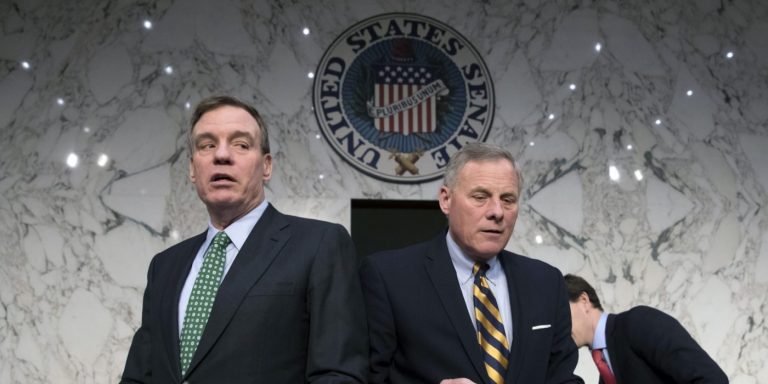
The office of Democrat Mark Warner, the highest-ranking Senator on the committee through the duration of the probe until the report’s release, did not respond to emailed questions about the panel’s work.

Kilimnik: ‘Likely’ Channel to Russia?

Konstantin Kilimnik in 2006: To hear Trump-Russia conspiracy advocates tell it, he was the elusive missing link that proved the Trump campaign’s complicity in Russian interference. But the plain text of the Senate report offers no concrete evidence./AP Photo

For the record, Kilimnik has steadfastly denied that he is a Russian intelligence officer or has ties to Russian intelligence.

Much of the Senate’s portrayal of him relies on information gathered by special counsel Robert Mueller’s team, which prosecuted Manafort on financial and lobbying charges stemming from his work in Ukraine prior to the 2016 campaign.

Kilimnik, a 50-year-old political consultant, was born in Soviet Union-era Ukraine, attended a Soviet military academy, and maintains homes in both Ukraine and Russia.

Starting in 2005, Kilimnik played a central role in Manafort’s political operation in Ukraine, representing powerful oligarchs and helping guide Viktor Yanukovych to the presidency.

The Senate committee’s claim that Kilimnik is a Russian spy goes far beyond the Mueller report, which stated that the FBI believes Kilimnik has unspecified “ties to Russian intelligence.” (A similarly vague formulation was used about the reported spark for the FBI’s Trump-Russia probe, Maltese professor Joseph Mifsud, whom the Mueller report described as having “connections to Russia.”)

The SSCI offers no window into how it went further than the Mueller report for its “assessment.” Multiple sections purporting to contain supporting information are redacted. The Senate report also tacitly concedes it has no hard proof that Kilimnik shared information from Manafort with anyone, let alone officials in the Russian government. Kilimnik, it speculates, “likely served as a channel to Manafort for Russian intelligence services,” an acknowledgment that it has not uncovered definitive proof.

A critical disclosure by the Mueller team during its investigation – but unmentioned in both the final Mueller and Senate reports – directly contradicts the Senate’s assessment. After Mueller accused Kilimnik of having unspecified Russian intelligence “ties” in 2017, Manafort’s legal team made multiple discovery requests for any communication between Manafort and “Russian intelligence officials.” In April 2018, Manafort’s attorneys revealed that the special counsel replied that “there are no materials responsive to [those] requests.” The Mueller team’s response marked a tacit admission that as of 2019, the FBI did not consider Kilimnik a Russian agent.

Peter Strzok: In recently unsealed notes, even this anti-Trump counterintelligence agent wrote: “We are unaware of ANY Trump advisers engaging in conversations with Russian intelligence officials.”/AP Photo

In recently unsealed notes from the FBI’s collusion probe, Peter Strzok – the top FBI counterintelligence agent who opened the investigation – wrote in early 2017: “We are unaware of ANY Trump advisers engaging in conversations with Russian intelligence officials.”

Sam Patten: Kilimnik emailed him a joking reference that the Senate report treated as no laughing matter./AP Photo

The next section reports that “in 2017, Kilimnik denied in private communications with Patten that there was Russian interference in the U.S. elections.” The evidence to support that assertion is that “Kilimnik emailed Patten a Financial Timesarticle on Russian interference in the U.S. elections,” and joked that U.S. intelligence “must be having very little sleep chasing those squirrels who they think exist.”

Beyond those emails, which prove nothing at all, the Senate report delves extensively into the activity of a Twitter account that it alleges Kilimnik used under the pseudonym “Petro Baranenko” (@PBaranenko). The account’s tweets, SSCI says, “centered on efforts to discredit the Russia investigations.” The report discloses the email address used to create the Twitter account but does not explain why it believes that Kilimnik is behind it. In a direct message exchange with RealClearInvestigations, the @PBaranenko account user denied being Kilimnik. “I am not Kilimnik and have nothing to do with him,” the user wrote. “I have no idea why whoever wrote this report made this allegation.”
The account user declined requests for an interview to corroborate that denial. Regardless, even if the account does belong to Kilimnik, the SSCI leaves unexplained how these innocuous emails and tweets amount to evidence that he is a Russian spy.

A ‘Valuable Resource’ for the U.S.

A deep and unresolved tension in the Senate report is that even as it declares that Kilimnik was a Russian intelligence officer, it documents his extensive U.S. government ties and involvement in political efforts hostile to Russian interests.

Victoria Nuland: Kilimnik served as a translator for this Obama-era Assistant Secretary of State. The Senate report does not explain the disconnect between his extensive U.S. government interactions and his supposedly being a Russian spy./CBS
Eric Schultz: The U.S. ambassador was among the American officials who exchanged inside information with Kilimnik./asterslaw.com

FBI and State documents not mentioned in the Senate report, first revealed by investigative journalist John Solomon in 2019, show that U.S. officials described Kilimnik as a “sensitive source” and exchanged inside information with him. In May 2016, the then-U.S. Ambassador to Zambia, Eric Schultz, who knew Kilimnik from a prior stint at the U.S. Embassy in Kiev, shared his personal assessments of then-incoming Ambassador Marie Yovanovitch and her deputy, George Kent.

The previous December, a U.S. Embassy official in Kiev, Alexander “Sasha” Kasanof, told Kilimnik about the Obama administration’s assessment of a meeting between Yuriy Boyko, an associate of Ukrainian oligarch Dmitry Firtash, and Assistant Secretary of State Nuland. “I thought Boyko did quite well, in fact,” Kasanof wrote. “Don’t know that he convinced Nuland on everything (incl. [Firtash’s] intentions), but his performance was much less Soviet and better than I thought would be.”

‘The U.S. Should Not Risk Losing Ukraine to Russia’

Paul Manafort: Kilimnik was deeply involved in Manafort’s efforts to advance the U.S. government’s agenda in Ukraine — during the same period the Senate panel suggests Kilimnik was acting as an intelligence officer on Russia’s behalf./AP Photo

‘Opportunities’ for Innuendo

While it ignores these countervailing facts about Kilimnik, the Senate report devotes dozens of pages to revisiting the controversy surrounding Kilimnik’s alleged receipt of Trump campaign polling data from Manafort in 2016.

The Mueller report ultimately concluded that it “did not identify evidence of a connection between Manafort’s sharing polling data and Russia’s interference in the election,” and, moreover, “did not establish that Manafort otherwise coordinated with the Russian government on its election-interference efforts.”

The SSCI report offers nothing new to change the picture, beyond its own speculation. It has never been established that Kilimnik ever sent the data to anyone, and if he did, the only known alleged recipients were Ukrainians, not Russians. The report notes that it was “unable to obtain direct evidence of what Kilimnik did with the polling data and whether that data was shared further.”

Rather than viewing the polling data incident as a “grave” act of Russian intelligence infiltration, the Senate report, like the Mueller report before it, contains a much simpler – and substantiated – explanation: Manafort shared the data to bolster his business interest. The Senate report notes that Manafort associate Rick Gates testified that he thought Manafort instructed him to share the polling data with Kilimnik “as part of an effort to resolve past business disputes and obtain new work with their past Russian and Ukrainian clients by showcasing Manafort’s success,” and to display “the strength of Manafort’s position on the Campaign.”

The report also recounts that in the immediate aftermath of his hiring as Trump campaign chair, Manafort  reached out to three Ukrainian oligarchs and Russian oligarch Oleg Deripaska in a bid to showcase his new position and float the possibility of future partnerships. Just two weeks after his hiring, Manafort wrote an email in which he “asked Kilimnik how his role with the Trump Campaign could be leveraged to collect the money owed to him by the OB [Opposition Bloc, a Ukrainian political party].” Gates, a key source for the SSCI’s examination of Manafort, also testified that Manafort had told him that “working for the Trump Campaign would be ‘good for business’ and a potential way for Manafort’s firm to be paid for work done in Ukraine for which they were owed.”

It is also unclear how, even if it somehow ended up in the Kremlin’s hands, this polling data could have been of use to an alleged Russian interference operation. As previous Senate reports have found, most of the ads and posts from the Internet Research Agency, the Russian troll farm indicted by Mueller, “were minimally about the candidates,” were written in broken English, mostly ran after the election, and barely reached the battleground states. According to the former SSCI chair Richard Burr, Russian ad spending amounted to $1,979 in Wisconsin – all but $54 of that during the primary – $823 in Michigan, and $300 in Pennsylvania. In addition, as the Mueller team acknowledged in court, it did not possess “any evidence of substantive connections between the [IRA] and the Russian government.”

The Senate report employs more qualified language for another explosive supposition, claiming to have “obtained some information suggestingKilimnik may have beenconnected” to Russia’s alleged hacking and leaking of Democratic Party emails in 2016. All the information that supposedly backs up this speculation is redacted. Meanwhile, the report acknowledges it “has no records of, and extremely limited insight into, Kilimnik’s communications.”

Because Kilimnik worked for Manafort, the Senate report concludes that Manafort’s brief stint as Trump campaign chair “created opportunitiesfor Russian intelligence services to exert influence over, and acquire confidential information on, the Trump Campaign.” But the report does not contain a shred of evidence that any such “opportunities” were realized.

In the absence of concrete evidence, the Senate Select Committee on Intelligence’s reliance on speculation and innuendo shows that it took ample opportunities to paint Kilimnik in a sinister light. That methodology applies to, and undermines, a number of other critical elements of the Senate committee’s investigation, discussed in the second part of this special report…Original Source

House Committee’s Final Report on COVID Origins: China’s Malfeasance ‘Crystal Clear’

0

Rep. Michael McCaul, R-Texas, the ranking minority member of the House Foreign Affairs Committee, released the GOP minority’s final report on its investigation into the origins and spread of the coronavirus pandemic.

The 90-page report, as expected, put a heavy blame on China‘s actions to promote disinformation and lack of transparency on the global state as it mobilized its production of personal protective equipment and stockpiled it.

“Chinese Communist Party (CCP) bears overwhelming responsibility for allowing a local outbreak to become a global pandemic,” said the report. “In sum, the COVID-19 global pandemic could have been prevented if the CCP acted in a transparent and responsible manner.”

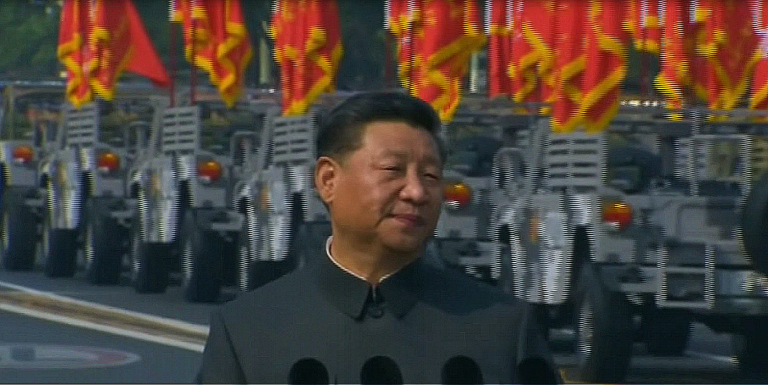
The findings are consistent with criticism that President Donald Trump and several key members of Congress have leveled for months against the Xi Jinping government.

They likewise hold the corrupt World Health Organization and its leader, Director-General Tedros Adhanom Ghebreyesus, to task for as being complicit in the “cover-up by failing to investigate and publicize reports conflicting with the official CCP narrative, while at the same time praising the CCP’s response.”

The report outlines in detail the effort that China took to cover up the pandemic, including the suppression of voices inside its own regime as they tried to warn the outside world.

“It is beyond doubt that the CCP actively engaged in a cover-up designed to obfuscate data, hide relevant public health information, and suppress doctors and journalists who attempted to warn the world,” the report said. “They deliberately, and repeatedly, disregarded their obligations” under global agreements.

It also called on the guilty parties to be held accountable for their actions.

“Revealing the truth is just the first step,” said the report; “we must hold both the CCP and WHO Director General Tedros accountable for the suffering they have allowed the world to endure.”

The report noted that this was not the first time China has unleashed a biological assault on the world.

The recent pandemic bore strong similarities to the 2003 SARS outbreak, both in terms of the virus’s genetic makeup and the Chinese response.

“In the wake of this [2003 SARS] malfeasance, the world demanded reforms to the International Health Regulations (IHR) that govern how countries are required to handle public health emergencies,” the report said.

“Today, it has become clear that the CCP failed to heed these lessons,” it continued. “The ongoing pandemic is a tragic second chapter to their mishandling of the 2003 SARS outbreak.”

Despite the efforts to hold China accountable, though, the Asian superpower has used intimidation tactics against other nations, including “economic manipulation and trade coercion to demand silence.”

Contrary to some claims and theories, the House Foreign Affairs report rejected the idea that the virus had a lab-based origin at the Wuhan Institute for Virology.

“While the source of the virus is currently unknown, it is believed to likely be the result of a zoonotic spillover event,” it said.

It supports the common theory that it was transmitted by an infected bat at the sold by one of the vendors at the Huanan wet market, where said bat is believed to have been consumed.

“According to the Office of the Director of National Intelligence, the intelligence community shares the scientific community’s consensus that the virus is natural and not genetically modified,” the report said.

Although the virus quickly spread for its source, China, in coordination with the WHO, downplayed the virus for roughly two months until Jan. 20 when “General Secretary Xi finally issued a public statement encouraging a strong response,” said the report.

That was the same day China’s National Health Commission confirmed human-to-human transmission, although health officials had warned the CCP a month prior.

“The next day, the first case of COVID-19 in the United States was confirmed,” said the report.

Even so, WHO Director-General Tedros refused to declare COVID-19 a global pandemic until March 11.

Nonetheless, it characterized Tedros as being “nervous” about the designation, in which he “highlighted the severity of the declaration of a pandemic while undermining the
importance of the announcement.”

The report said that Tedros’s remarks “strain credulity and unfortunately, by this
point, the damage was done.”

As part of its deflection efforts, though, rather than accept accountability, China then waged a propaganda campaign suggesting that the virus’s origin was the U.S.

And it continued to tamp down on skeptics within its borders in the most brutal of ways.

“The CCP’s cover-up was not limited to the suppression of data or case numbers but involved, gross violations of human rights as well,” said the report. “Three citizen journalists were disappeared after publishing videos taken in Wuhan of hospitals and crematoriums.”

It also repeatedly detained doctors who tried to warn about the virus, including Dr. Li Wenliang, of Wuhan Central hospital, who attempted in December to warn former classmates via a WeChat message about the growing number of confirmed cases.

After going public, he was threatened with criminal charges and forced to recant his warning in a signed “confession,” but he himself succumbed to the virus on Feb. 7, prompting widespread public outrage.

Even after his death, the Chinese state media attempted to claim Li was still alive but in critical condition.

The report offers reams of evidence while piecing together a thorough timeline to implicate China and the WHO.

It concludes with four proposals:

  •  new leadership at the WHO,
  • Taiwan’s re-admittance to the WHO as an observer,
  • United States engagement in an international investigation with likeminded WHO Member States regarding the early stages of COVID-19
  • concrete reforms to the International Health Regulations

It also notes several instances of Tedros’s failed responses and mismanagement of health crises in calling for new leadership at the WHO.

“In order to restore the faith of WHO Member States and return the WHO to its mandate of providing accurate, technical advice, Director-General Tedros should accept responsibility for his detrimental impact on the COVID-19 response and resign,” the report said.

“The health of the world cannot afford incompetence and poor management,” it added.”

SHOE FITS: Cuomo Rages After Barr Shames NYC for Allowing Destruction, Violence

0

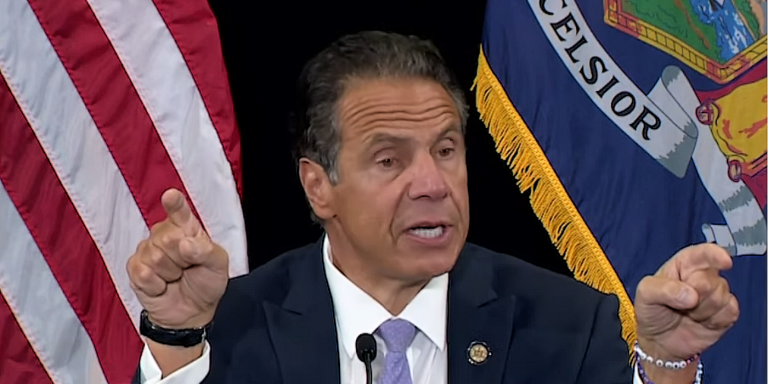
Entitled New York Gov. Andrew Cuomo lashed out against the Justice Department after a report that identified New York City as one of three jurisdictions to encourage anarchist rioting suggested the cities might lose federal funding as a result.

The DOJ published the list using a set criteria for evaluating these Antifa-sanctuaries in response to a memorandum from President Donald Trump requesting a review for funding purposes.

Also making the cut were Seattle, Washington; and Portland, Oregon. The DOJ confirmed last week that it had even considered filing criminal civil-rights charges against Portland Mayor Tim Wheeler and other city officials for their lack of cooperation with federal law enforcement.

“When state and local leaders impede their own law enforcement officers and agencies from doing their jobs, it endangers innocent citizens who deserve to be protected, including those who are trying to peacefully assemble and protest,” said Attorney General William P. Barr in a statement.

“We cannot allow federal tax dollars to be wasted when the safety of the citizenry hangs in the balance,” he continued. “It is my hope that the cities identified by the Department of Justice today will reverse course and become serious about performing the basic function of government and start protecting their own citizens.”

Among the criteria used to determine the cities that were promoting anarchy:

  • Whether a jurisdiction forbids the police force from intervening to restore order amid widespread or sustained violence or destruction
  • Whether a jurisdiction has withdrawn law enforcement protection from a geographical area or structure that law enforcement officers are lawfully entitled to access
  • Whether a jurisdiction disempowers or defunds police departments
  • Whether a jurisdiction unreasonably refuses to accept offers of law enforcement assistance from the Federal Government

Cuomo has frequently clashed with the Trump administration in defiance of federal demands while often blaming it, simultaneously, for his own policy and leadership failures.

New York already has faced a considerable budget crunch of its own doing as its wealthy citizens fled the excessive taxes and the city’s disastrous response to the coronavirus—even before rioters began occupying government property and high-trafficked areas like Times Square.

He also defiantly enacted “green light” laws that would allow illegal immigrants to receive official government IDs—raising concerns that non-citizens could use them to vote improperly in the upcoming election.

After Homeland Security authorities struck back by reducing its presence in airports—thereby throttling the number of passengers screened by the Transportation Safety Administration, Cuomo again threw a tantrum and played the victim.

In response to the DOJ’s inclusion of New York City on its list, he made clear in a lengthy rant that rather than take it as a warning sign to do a better job of supporting law and order, he would seek to weaponize the laws themselves.

Cuomo suggested he might take the fight to the courtroom to defend under the law his state’s right not to enforce the law.

The unhinged political scion insisted Trump had no authority to withhold New York City’s $7 billion in funding, although he did not appear to deny that he was allowing the country’s largest city to succumb to politically motivated anarchy.

“He doesn’t control federal funding,” complained Cuomo.

“The federal law controls federal funding, and the federal law is very specific: Jurisdiction doesn’t get affordable housing money if it does this, jurisdiction gets community development money if it does this, the jurisdiction gets Title I education funding if it does this,” he continued. “And the President is not above the law—that’s the Constitution of the United States.”

Although Cuomo claimed that courts had previously sided with sanctuary cities over the question of federal funding, those verdicts have been mixed at best.

In some situations, courts have determined that the president and his executive agencies cannot withhold money appropriated by Congress.

However, a previous ruling determined that the DOJ was entitled to withhold moneys from law-enforcement grants to cities that refused to meet the expectation of complying and cooperating with federal authorities.

The DOJ outlined the following examples of New York’s failure to comply with the law during recent riots:

  • Shootings in New York City have been on the rise since looting and protests began on or about May 28, 2020.  For July 2020, shootings increased from 88 to 244, an increase of 177% over July 2019.  In August 2020, shootings increased from 91 to 242, a 166% increase over August 2019.
  • While the city faced increased unrest, gun violence, and property damage, the New York City Council cut $1 billion from NYPD’s FY21 budget.
  • The budget resulted in the cancellation of the new police recruiting class, cuts to overtime spending, and the transfer of certain police functions, including school safety, out of the NYPD.
  • Meanwhile, the Manhattan and Brooklyn District Attorneys have declined to prosecute charges of disorderly conduct and unlawful assembly arising from the protests, and the District Attorneys in Queens and the Bronx have declined to prosecute other protest-related charges.
  • Both Mayor de Blasio and Governor Cuomo have forcefully rejected federal law enforcement support.

TRUMP: Court Finalists at 4 or 5, Announcement by Week’s End

0

(Headline USA) President Donald Trump says he expects to announce his pick for the Supreme Court on Friday or Saturday, after funeral services for Ruth Bader Ginsburg.

He told “Fox & Friends” on Monday that he had a list of five finalists, “probably four,” and that he is pushing for a confirmation vote before Election Day.

“I think it will be on Friday or Saturday and we want to pay respect, it looks like we will have services on Thursday or Friday, as I understand it, and I think we should, with all due respect for Justice Ginsburg, wait for services to be over,” the president said.

According to Fox News, Trump’s shortlist is said to include Judge Amy Coney Barrett from the U.S. Court of Appeals for the Seventh Circuit, Judge Barbara Logoa of the U.S. Court of Appeals for the 11th Circuit, and Judge Allison Jones Rushing of the U.S. Court of Appeals for the 4th Circuit, among others.

“No matter how you would look at it, these are the finest people in the nation—young people, pretty young for the most part,” the president said.

Trump said no matter who he chooses, the Democrats will disparage the nominee and attempt to destroy her reputation.

“No matter how great this person is, they will not like the person,” the president said.

Trump dismissed reports that Ginsburg had told her granddaughter it was her wish that a replacement justice not be confirmed until the inauguration of a new president.

Trump said he thought his Democratic political foes were behind the report, including Rep. Adam Schiff, who led the House impeachment probe, House Speaker Nancy Pelosi, and Senate Democratic Leader Chuck Schumer.

“I don’t know that she said that, or was that written out by Adam Schiff and Schumer and Pelosi,” Trump said. “I would be more inclined to the second … But that sounds like a Schumer deal or maybe a Pelosi or Shifty Schiff” — his nickname for the California congressman.

Adapted from reporting by Associated Press.

Front-Runner for Supreme Court Seat Hailed by Right, Feared by Left

0

(Associated Press) A front-runner to fill the Supreme Court seat vacated by the death of Justice Ruth Bader Ginsburg is a federal appellate judge who has established herself as a reliable conservative on hot-button legal issues from abortion to gun control.

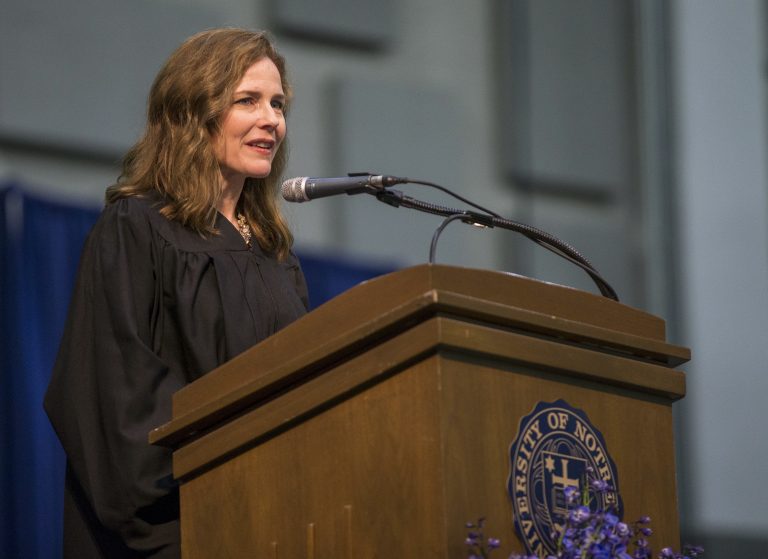
Amy Coney Barrett, a devout Catholic, is hailed by religious conservatives and others on the right as an ideological heir to conservative icon Antonin Scalia, the late Supreme Court justice for whom she clerked.

Liberals say Barrett’s legal views are too heavily influenced by her religious beliefs and fear her ascent to the nation’s highest court could lead to a scaling back of hard-fought abortion rights. She also would replace the justice who is best-known for fighting for women’s rights and equality.

President Donald Trump has said he’ll nominate a woman and Barrett is thought to be at the top of his list of favorites. The Chicago-based 7th U.S. Circuit Court of Appeals judge was considered a finalist in 2018 for Trump’s second nomination to the high court, which eventually went to Brett Kavanaugh after Justice Anthony Kennedy retired. Barrett’s selection now could help Trump energize his base weeks before Election Day.

At just 48, Barrett would be the youngest justice and her tenure could last for decades. She’s made her mark in law primarily as an academic at the University of Notre Dame, where she began teaching at age 30. She first donned judges’ robes in 2017 after Trump nominated her to the 7th Circuit.

But she wouldn’t be the only justice with little prior experience as a judge: Elena Kagan had none when President Barack Obama nominated her in 2009.

Barrett mentioned Kagan when asked in a White House questionnaire in 2017 about which justices she admired most, saying Kagan brought to the bench “the knowledge and skill she acquired as an academic to the practical resolution of disputes.”

When Barrett’s name first arose in 2018 as a possible Trump pick, even some conservatives worried her sparse judicial record made it too hard to predict how she might rule. Nearly three years on, her judicial record now includes the authorship of around 100 opinions and several telling dissents in which Barrett displayed her clear and consistent conservative bent.

She has long expressed sympathy with a mode of interpreting the Constitution, called originalism, in which justices try to decipher original meanings of texts in assessing if someone’s rights have been violated. Many liberals oppose that strict approach, saying it is too rigid and doesn’t allow the Constitution to change with the times.

Barrett’s fondness for original texts was on display in a 2019 dissent in a gun-rights case in which she argued a person convicted of a nonviolent felony shouldn’t be automatically barred from owning a gun. All but a few pages of her 37-page dissent were devoted to the history of gun rules for convicted criminals in the 18th and 19th centuries.

And, all indications are that Barrett is staunchly opposed to abortion, though she has often side-stepped answering questions about the topic.

In the 2017 White House questionnaire, Barrett was asked if it was her view that abortion was always immoral. She didn’t answer the question directly but said: “If I am confirmed (to the 7th Circuit), my views on this or any other question will have no bearing on the discharge of my duties as a judge.”

In a 2013 Texas Law Review article, Barrett listed fewer than 10 cases she said are widely considered “super-precedents,” ones that no justice would dare reverse even if they believed they were wrongly decided. Among them was Brown vs. Board of Education, which declared racial segregation in schools unconstitutional.

One she didn’t include on the list: Roe v. Wade, the 1973 landmark case that affirmed a woman’s right to abortion. Scholars don’t include it, she wrote, because public controversy swirling around it has never abated.

Abortion and women’s rights were the focus of a bruising 2017 confirmation process after Barrett’s nomination to the 7th Circuit.

Others pointed to Barrett’s membership of the University of Notre Dame’s “Faculty for Life” group — and that she had signed a 2015 letter to Catholic bishops affirming the “value of human life from conception to natural death.”

Sen. Dianne Feinstein told Barrett her views suggested religious tenants could guide her thinking on the law, the California Democrat telling Barrett: “The conclusion one draws is that the dogma lives loudly within you.”

Barrett responded that her views had evolved and that she agreed judges shouldn’t “follow their personal convictions in the decision of a case, rather than what the law requires.”

Sen. Chuck Grassley, an Iowa Republican, criticized Democrats for pressing Barrett on her faith, saying it could be seen as a “religious test” for the job.

The Senate eventually confirmed her in a 55-43 vote, with three Democrats joined the majority.

Her nearly three-year stint as a judge has included at least one abortion-related case.

An 2018 ruling by a 7th Circuit panel declared unconstitutional an Indiana law requiring the burial of fetal remains after an abortion or miscarriage, and prohibiting clinics from treating the remains as waste. The law, signed by then-Gov. Mike Pence, also barred abortions on the basis on the race, sex or disabilities of the fetus.

Barrett joined three conservative judges in asking for the ruling to be tossed and for the full court to rehear the case. They didn’t have the votes to force a rehearing. But they issued a joint dissent on the rehearing decision, clearly suggesting they thought the Indiana law was constitutional.

The dissent, written by Judge Frank Easterbrook, argued that Indiana’s law would have been upheld “had it concerned the remains of cats or gerbils.”

Barrett was raised in New Orleans, the eldest child of a lawyer for Shell Oil Co. She earned her undergraduate degree in English literature in 1994 at Rhodes College in Memphis, Tenn. She and her husband, Jesse Barrett, a former federal prosecutor, both graduated from Notre Dame Law School. They have seven children, including two adopted from Haiti and one with special needs.

Before her clerkship with Scalia from 1998 to 1999, Barrett served as law clerk for Laurence Silberman for a year at the U.S. Court of Appeals for the District of Columbia Circuit. Between clerkships and entering academia, she worked from 1999 to 2001 at the Miller, Cassidy, Larroca & Lewin law firm in Washington, D.C.

GOP Hopes Supreme Court Battle Will Help Shape Election in Their Favor

(Headline USA) Four years ago, the allure of conservative Supreme Court appointments helped persuade skeptical Republicans to support Donald Trump for president.

Two years ago, a contentious clash over Trump’s choice of Brett Kavanaugh for the court was credited with bolstering GOP gains in the Senate in an otherwise bad midterm election.

And now, just 44 days before Trump’s reelection will be decided, Republicans are again looking to a Supreme Court nomination fight to motivate their voters as it faces the very real possibility of losing the White House and control of the Senate this fall.

GOP leaders are optimistic they can pull it off. In the turbulent Trump era, nothing has motivated the Republican Party’s disparate factions to come home quite like the prospect of a lifetime appointment to the nation’s highest court.

“This can be an important galvanizing force for President Trump,” said Leonard Leo, co-chairman of the conservative Federalist Society who has advised the Trump administration on its first two confirmations — for Neil Gorsuch and Kavanaugh.

The emerging nomination debate that follows the death Friday of Justice Ruth Bader Ginsburg threatens to reshuffle voter priorities in the closing weeks of an election that had been squarely focused other generational issues: the pandemic, economic decline, and deep civil unrest.

Trump, backed by Senate Majority Leader Mitch McConnell, pledges to replace the liberal Ginsburg with a conservative jurist, promising on Saturday evening that he will announce his nominee “very soon.”

Plans are in motion for a swift nomination and confirmation. Lest there be any questions about the political implications, Trump is expected to make his choice in a matter of days. Those close to the president are encouraging him to announce his pick before the first presidential debate against Democratic challenger Joe Biden on Sept. 29.

Biden said the winner of the Nov. 3 election should choose the next justice. Biden’s team is skeptical that the Supreme Court clash will fundamentally change the contours of a race they think Trump is trailing so close to Election Day. Indeed, five states are already voting.

In fact, Democrats say it could motivate voters to fight harder against Trump and Republicans as the Senate moves forward with confirmation at a time when Americans are deciding crucial elections.

“Everything Americans value is at stake,” Senate Democratic leader Chuck Schumer told fellow Democratic senators on a conference call Saturday, according to a person who was not authorized to publicly discuss the private call and spoke on condition of anonymity.

Biden does not plan to release a full list of potential court nominees, according to a top aide. The aide was not authorized to publicly discuss private deliberations and spoke on condition of anonymity.

Biden’s team suggests that the court fight will heighten the focus on issues that were already at stake in the election: health care, environmental protections, gender equity and abortion.

Democrats claim health care, in particular, has been a top voter concern this pandemic-year election. They will argue that protections for Americans with preexisting conditions are essentially on the ballot as the Supreme Court will hear the administration’s argument to strike down President Barack Obama’s health law shortly after the election. The Affordable Care Act includes such protections and the court is expected to render a verdict next year.

“Make it real,” said Hillary Clinton, urging Democrats to take the fight to the polls, in an interview on MSNBC.

Republicans say voters, particularly those the party needs to win back, are motivated by the chance to name a conservative judge — so much so that it could take some states off the map for Democrats. The focus on the nomination fight could help unify such voters around a common issue in an election season with so many distractions, said Leo of the Federalist Society.

“Going as far back as 2000, poll after poll shows that the Supreme Court is an issue that resonates strongly with Republican and conservative voters, and importantly even with low-propensity voters from those groups,” he said.

Republicans were especially optimistic that the court battle would boost their chances of holding the Senate, particularly in Republican-leaning states such as Montana, Iowa, Kansas, Georgia and South Carolina where GOP candidates are at risk. Democrats need to pick up three seats to claim the Senate majority if Biden wins and four if he doesn’t.

Key GOP senators who face tough reelection contests in such states where Trump is popular quickly linked themselves to his push for a swift vote, embracing the prospect of another conservative on the bench. Among them: Martha McSally in Arizona, Thom Tillis in North Carolina and Lindsey Graham in South Carolina.

Yet other Republicans in more contested battleground states, including Sen. Cory Gardner in Colorado, held back, heeding McConnell’s advice to keep their “powder dry.” Two Republicans, Sens. Susan Collins of Maine and Lisa Murkowski of Alaska, spoke out after Ginsburg’s death to object to the speedy pace, saying the Senate should not vote before the election so the candidate elected on Nov. 3 can decide.

As he left the White House for Saturday evening’s rally in North Carolina, Trump signaled his displeasure with Collins — and a potential warning to other wayward Republicans: “I totally disagree with her,” he said.

Democratic challengers and outside allies seized on what they called “hypocrisy” of Republicans refusing to consider Obama’s nominee before the 2016 election, unearthing past statements from many of the same senators now pushing ahead for Trump.

The Democrats raised more than $71 million in the hours after Ginsburg’s death.

Many Republicans are hopeful the Supreme Court fight will supersede many conservative voters’ concerns about Trump’s inconsistent leadership and controversial rhetoric. But voters in key states are already dealing with unprecedented hardships that will not simply disappear in the coming weeks.

Conservative activist Tim Phillips, president of the group Americans for Prosperity, is doubtful that the court fight will change many votes. He spent much of Saturday canvassing suburban neighborhoods around Kansas City as part of his organization’s massive push to boost down-ballot Republicans in November.

When conservative activists gathered in the morning, the Supreme Court was a prime topic of conversation that “strengthened their resolve to get out and work,” Phillips said. But once they started knocking on voters’ doors, “it didn’t even come up.”

“I just think given the magnitude of the crises — plural — facing swing voters, this is just not going to be a crucial factor in their final decision,” Phillips said.

Adapted from reporting by Associated Press.