12 Democratic Governors Vow that ALL Votes Will Be Counted

0

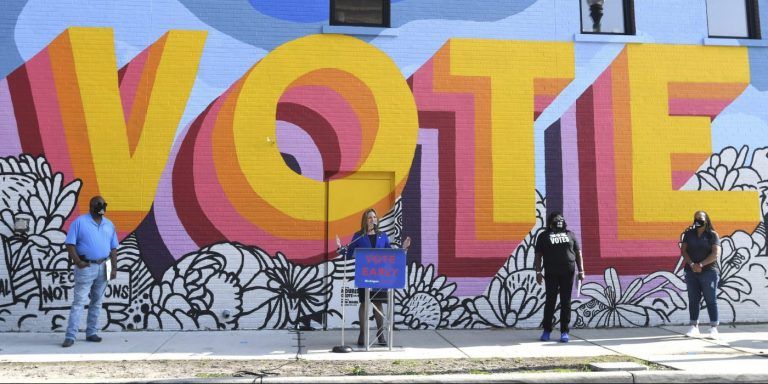
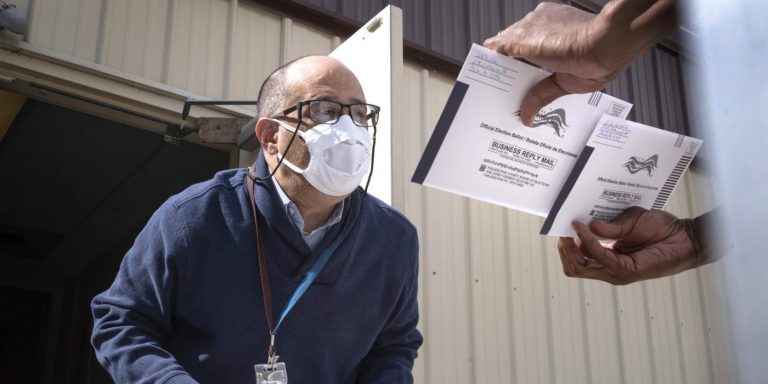
(Headline USA) A dozen Democratic governors issued a joint statement on Wednesday vowing that every valid ballot will be counted in the election, despite deep-seated distrust over their partisan efforts to rewrite the election rules at the last minute and loosen voter integrity safeguards.

In the immediate aftermath of the coronavirus pandemic, even before President Donald Trump had declared a national emergency, leftist operatives were pressing for widespread mail-in voting measures.

That has led to a surge that has raised alarms over the potential for ballot mishandling, vote fraud and the overtaxing of a postal system, as well as questions about the methods used for counting and discounting votes in certain localities

Trump repeated a warning on Tuesday that the election is ripe for fraud.

Following the lead of his Democrat rival, Joe Biden, who has hinted at the possibility of a military coup to dispatch with the incumbent president, Trump refused to say whether he would accept the results of a disputed outcome.

The president also called on his backers to scrutinize voting procedures at the polls, which his leftist critics claimed, without evidence, could cross into voter intimidation.

Without mentioning Trump by name, the governors noted his refusal last week to commit to a peaceful transition of power, although none seem to have questioned similar calls on the Left, including 2016 loser Hillary Clinton’s suggestion that Biden refuse to concede “under any circumstance.”

“Any efforts to throw out ballots or refuse a peaceful transfer of power are nothing less than an assault on democracy,” the grandstanding leftist leaders wrote.

“There is absolutely no excuse for promoting the intimidation or harassment of voters, they continued. “These are all blatant attempts to deny our constituents the right to have their voices heard, as guaranteed in the U.S. Constitution, and to know the will of the people will be carried out.”

Signing the statement were

  • Gretchen Whitmer of Michigan
  • Gavin Newsom of California
  • J.B. Pritzker of Illinois
  • Phil Murphy of New Jersey
  • Ralph Northam of Virginia
  • Jay Inslee of Washington
  • Tony Evers of Wisconsin
  • Tim Walz of Minnesota
  • Kate Brown of Oregon
  • Steve Sisolak of Nevada
  • Michelle Lujan Grisham of New Mexico
  • John Carney of Delaware

In total, there are currently 24 Democrat governors and 26 Republicans.

It is unclear why the other half of the Democrat ones—including notable Trump nemeses like New York’s Andrew Cuomo—withheld their names.

Among the concerns surrounding the partisan governors’ nefarious intent, one has been that the state leaders might refuse to certify a Republican victory and insist on continuing their counts until they reach the desired outcome.

That might result in sets of rival electors being sent, or in delays that would extend past the legal deadlines, potentially punting the decision to a House of Representatives controlled byunabashedly anti-Trump House Speaker Nancy Pelosi, D-Calif.

Despite their efforts to implement last-minute legal changes in their favor—sometimes while circumventing the state legislatures—the governors said all valid ballots cast in accordance with state and local laws must be counted.

If Trump loses, “he must leave office—period,” they threatened.

Demonstrating little self-awareness, they wrote that elections are not “an exercise in controlling power” and that disenfranchising voters “strikes at the very heart” of democracy.

“We call on elected leaders at all levels, from both parties, to speak out loudly against such efforts in the weeks ahead,” they said.

Trump campaign spokesperson Thea McDonald accused Democrats of “working to shred election integrity rules across the country to stack the deck for their lackluster candidate.”

Republicans, she said, “are aiming for an election with results all Americans can trust.”

Adapted from reporting by the Associated Press

American Medical Association Asks SCOTUS to Strike Ban on Tax-Funds for Abortion Clinics

0

(Headline USA) A leading doctors’ trade guild on Thursday asked the Supreme Court to strike down a Trump administration rule prohibiting taxpayer-funded clinics from referring women for abortions.

The American Medical Association acted after two U.S. appeals courts issued conflicting rulings on the legality of restrictions. Medical facilities in violation of the policy must forgo the federal funding, although they may continue to operate as private endeavors.

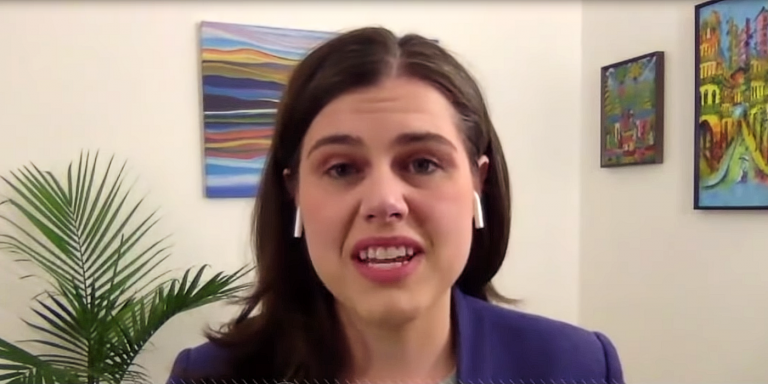
“We do think this conflict needs to be resolved and we need to figure out how to deliver services under a program that has had bipartisan support for decades,” claimed AMA President Dr. Susan Bailey.

The AMA’s move aims to raise the profile of an abortion-related issue overshadowed by bigger election-year battles.

The recent death of liberal Justice Ruth Bader Ginsburg has prompted speculation that a more conservative court could overturn the Roe v. Wade decision that legalized abortion, as well as the Obama health law that expanded coverage and made birth control free for most women.

But the changes to Title X, as the federal family planning program is known, are already in effect—and getting much less attention.

Last year the Trump administration finalized a rule that prohibits funding for clinics like Planned Parenthood that refer pregnant women for abortions.

Among the provisions are a requirement for strict financial and physical separation of family planning facilities from ones that provide abortions.

As a result, more than 900 out of nearly 4,000 clinics receiving federal funds left the program, including Planned Parenthood and its affiliates.

Abortion proponents claim the exodus has disrupted care for women who receive birth control and routine medical attention from the clinics. The program usually serves some 4 million clients, and the AMA says that was down about 20% last year.

The Trump administration’s regulation “warps and decimates” Title X, the AMA said in its petition asking the Supreme Court to take the case.

An appeals court based in San Francisco upheld the Trump administration’s regulations, but a second court based in Richmond, Virginia, ruled in a Maryland case that the restrictions were invalid.

The AMA says that means the administration’s abortion referral rule is in effect everywhere but Maryland.

Casting the case as an issue of free speech and medical ethics, the AMA said the administration’s rule attempts to control communication between clinicians and patients by prohibiting abortion referrals, while at the same time compelling clinics to refer pregnant women for prenatal care, even if a woman has decided that she wants to have an abortion.

“The patient-physician relationship is the cornerstone of good medical care, and patients must be able to believe and completely trust that their physicians are giving them all of their options, and that communication is not being blocked in any way,” said Bailey. “It is frankly against our code of medical ethics.”

In response, the Health and Human Services department rejected the accusation that the regulation amounts to a “gag rule” and noted that the federal appeals court in politically liberal San Francisco upheld it.

HHS also says it is trying to increase the number of patients served and improve quality.

Longstanding laws prohibit the use of federal funds to pay for abortions, although Democrat candidate Joe Biden recently flipped his position to oppose the “Hyde rule” in effect.

However, the family planning rule is part of a broader Republican effort to shut down various streams of taxpayer money still available to Planned Parenthood, the nation’s largest provider of abortions, which also engages in overtly partisan lobbying activities.

Biden promises to rescind the Trump administration’s family planning rule. But the AMA says regardless of who wins the election, it believes the Supreme Court should address the issue and overturn the Trump administration rule.

“Title X has contributed to a 30-year low in unintended pregnancies,” said Bailey. “We can’t afford to walk away from that progress.”

Joining the AMA’s petition are left-wing activist organizations including the ACLU, Planned Parenthood, the National Family Planning & Reproductive Health Association, and Essential Access Health, which administers the Title X family planning program in California.

Adapted from reporting by the Associated Press

Voting Lawsuits Pile Up as Dems Press for Last-Minute Rules Changes in Battleground States

0

(Headline USA) They’ve been fighting in Wisconsin and Pennsylvania over the cutoff date for counting mailed ballots, and in North Carolina over witness requirements.

Ohio is grappling with drop boxes for ballots as Texas faces a court challenge over extra days of early voting.

As Democrat officials at the state and local level, alongside litigious activist organizations, seek to use the coronavirus panic as a means to circumvent the legislative process and loosen election-integrity laws, the term “battleground state” has taken on a new meaning.

Measuring their anxiety over the November election is as simple as tallying the hundreds of voting-related lawsuits filed across the country in recent months.

The lawsuits are all the more important because President Donald Trump has raised the prospect that the election may wind up before a Supreme Court with the likely addition of another conservative justice, Amy Coney Barrett, added to the bench.

“This is a president who has expressed his opposition to access to mail ballots and has also seemed to almost foreshadow the inevitability that this election will be one decided by the courts,” said Kristen Clarke, executive director of the National Lawyers Committee for Civil Rights Under Law.

Pointing to clear evidence of systemic vote fraud in many blue areas—as well as in some red ones like a recent North Carolina ballot harvesting case—Republicans have fought the corrupt attempt to allow regions to mail out ballots with reckless abandon, offering no assurances the the recipients will be eligible voters or—in some cases, even living human beings.

Democrats have been clamoring for the measures to increase voting by mail since early-March, even before Trump had declared a national emergency over the coronavirus pandemic.

Trump has repeatedly indicated that he has no issues with solicited absentee ballots, which undergo a screening process to confirm eligibility.

However, the Left and its liberal media allies have sought misleadingly to portray the president as the one trying to undermine election integrity due to his efforts to preserve normal voting procedures.

Trump’s opposition was on display Tuesday during the first presidential debate when Trump launched into an extended argument warning that the massive influx of mail-in ballots this election made it ripe for fraud and manipulation.

“This is going to be a fraud like you’ve never seen,” the president said.

The lawsuits are a likely precursor for what will come afterward. Republicans say they have retained outside law firms, along with thousands of volunteer lawyers at the ready.

Democrats have announced a legal war room of heavyweights, including a pair of former solicitors general.

The race is already regarded as the most litigated in American history, due in large part to the massive expansion of mail and absentee voting.

Loyola Law School professor Justin Levitt, an Obama-era Justice Department elections official, has tallied some 260 lawsuits arising from the coronavirus.

The Republican National Committee says it’s involved in more than 40 lawsuits, and a website operated by a chief Democrat lawyer lists active cases worth watching in about 15 states.

Democrats are focusing their legal onslaught in multiple core areas:

  • securing free postage for mail ballots
  • relaxing signature-match laws that were designed ensure voters are who they claim to be
  • allowing ballot harvesting by third-parties like activist community organizations—or, in some cases, those affiliated with partisan campaign efforts
  • ensuring that ballots postmarked by Election Day can count, regardless of when they are actually received

Republicans warn that those efforts open the door to voter fraud and confusion, and they are countering efforts to relax rules on how voters cast ballots this November.

“We’re trying to prevent chaos in the process,” RNC chief counsel Justin Riemer said in an interview. “Nothing creates more chaos than rewriting a bunch of rules at the last minute.”

Some of the states being targeted by leftist legal maneuvers are not traditionally thought of as election battlegrounds, such as Montana.

A judge Wednesday rejected an effort by Trump’s reelection campaign and Republican groups to block counties from holding the general election mostly by mail.

In Ohio, a coalition of activist groups and Democrats have sued to force an expansion of ballot drop boxes from more than just one per county.

Separately on Monday, a federal judge rejected changes to Ohio’s signature-matching requirement for ballots and ballot applications, handing a win to the state’s Republican election chief who has been engulfed with litigation this election season.

In Arizona, a judge’s ruling that voters who forget to sign their early ballots have up to five days after the election to fix the problem is now on appeal before the 9th U.S. Circuit Court of Appeals.

A federal appeals court on Tuesday upheld a six-day extension for counting absentee ballots in Wisconsin as long as they are postmarked by Election Day. The ruling gave Democrats in the state at least a temporary victory in a case that could nonetheless by appealed to the U.S. Supreme Court.

In neighboring Michigan, the GOP is suing to try to overturn a judicial fiat that lets the state count absentee ballots up to 14 days after the election.

In North Carolina, with voting already in progress, the state’s board of elections, controlled by corrupt Democrat Gov. Roy Cooper, made shocking last-minute policy changes recently without consulting the GOP legislature.

In response, the RNC and Trump’s campaign committee have sued over the arbitrary and capricious measures, such as one that would permit ballots with incomplete witness information to be fixed by affidavit from the voter without having to fill out a new blank ballot. The rule effectively circumvents the legal requirement for a witness.

In Iowa, the Trump campaign and Republican groups have won a series of sweeping legal victories in their attempts to ensure checks and regulations on absentee voting. Judges have thrown out tens of thousands of invalid absentee ballot applications in three counties.

Pennsylvania has been a particular hive of activity, with much attention on Philadelphia in the wake of a federal probe that exposed a widespread, systemic ballot-stuffing ring led by a corrupt former Democratic congressman.

Nonetheless, the state’s far-left Supreme Court and Democrat Gov. Tom Wolf have brazenly pressed forward with radical rule changes while circumventing the GOP-led legislature.

One new policy change allows mail-in vote counting to happen in specially designated offices where poll-watchers are not permitted.

Republican lawmakers also asked the U.S. Supreme Court on Monday to put a hold on a ruling by the state’s highest court that extends the deadline for receiving and counting mailed-in ballots.

And they have objected to a portion of the state court’s ruling that orders counties to count ballots that arrive during the three-day extension period even if they lack a postmark or legible postmark.

Meanwhile in federal court, Republicans are suing to, among other things, outlaw un-monitored drop boxes or other sites used to collect mail-in ballots.

The Supreme Court itself has already been asked to get involved in several cases, as it did in April, when conservative justices blocked Democratic efforts to extend absentee voting in Wisconsin during the primary.

There is, of course, precedent for an election that ends in the courts. In 2000, the Supreme Court ended a weeks-long recount in several left-leaning Florida counties by allowing the state’s Secretary of State to certify the election. The result was a victory for Republican George W. Bush after his opponent, Al Gore, had pressed to allow previously disputed votes to continue being counted.

Barry Richard, a Florida lawyer who represented Bush during that litigation, said there’s no guarantee the Supreme Court will want to get involved again, or that any lawsuit over the election will present a compelling issue for the bench to address.

One significant difference between then and now, he said, is that neither candidate in the contest between Bush and Gore raised the prospect of not accepting the results, although Gore did retract a concession he had already made when it appeared Florida was within his grasp.

Many partisan leftists remained bitter afterward and claimed that the Bush presidency was invalid since the election was ‘stolen.’

Nonetheless, “there was never any question, in 2000, about the essential integrity of the system. Neither candidate challenged it,” Richard said. “Nobody even talked about whether or not the losing candidate would accept the results of the election. That was just assumed.”

Adapted from reporting by the Associated Press

Sen. Mike Lee Has Coronavirus; Says He’ll Make Supreme Court Vote

(Headline USA) Republican Utah Sen. Mike Lee revealed Friday he was infected with the coronavirus in an announcement that came just hours after President Donald Trump said he had the disease.

The conservative senator plans to isolate for 10 days then return to public life the day the Senate Judiciary Committee is scheduled to begin considering the nomination of Judge Amy Coney Barrett to the Supreme Court.

“I will be back to work in time to join my colleagues in advancing” her nomination, Lee wrote.

Lee said he took the test Thursday after getting medical advice about symptoms similar to longtime allergies, according to a statement posted on Twitter.

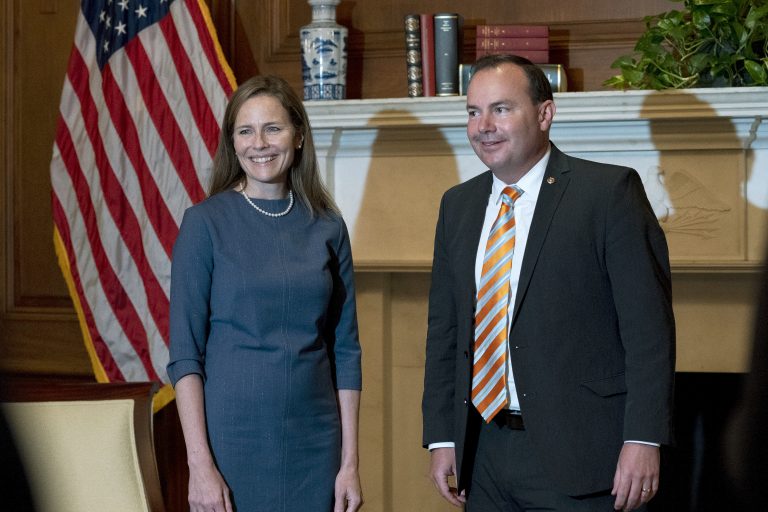
He visited the White House on Saturday as Trump announced Barrett’s nomination, and met with her two days before he started feeling symptoms.

Trump disclosed that he and first lady Melania Trump had tested positive overnight; Lee tweeted his own diagnosis mid-morning Friday.

The isolation period comes on the recommendation of the Senate attending physician, Lee said in his statement.

The cases at the highest levels of government have Senate Democratic leader Chuck Schumer calling for a robust contact tracing effort, including identifying, testing and isolating people who came in close contact with those infected.

It’s unclear when and how the Utah Republican caught the virus, but Lee said he had tested negative ahead of the Saturday visit to the White House.

Lee also met with Barrett in the Capitol on Tuesday.

Lee previously self-quarantined for two weeks in late March and April, after his colleague Republican Sen. Rand Paul of Kentucky tested positive for the coronavirus.

Lee rode back to Utah then with fellow Utah Sen. Mitt Romney on a plane chartered by the former presidential candidate.

Neither senator caught the virus at that time.

Lee will remain in Washington during this isolation period, his spokesman Conn Carroll said.

Romney tweeted that he hopes Lee makes a speedy recovery.

The diagnosis makes Lee the second person in the Utah Congressional delegation to come down with the disease.

Democratic U.S. Rep. Ben McAdams became the second person in Congress diagnosed with coronavirus this spring, and recovered after a hospitalization.

Adapted from reporting by Associated Press.

Officers Knocked 3 Times, Announced Themselves, Before Entering Breonna Taylor’s Apt.

0

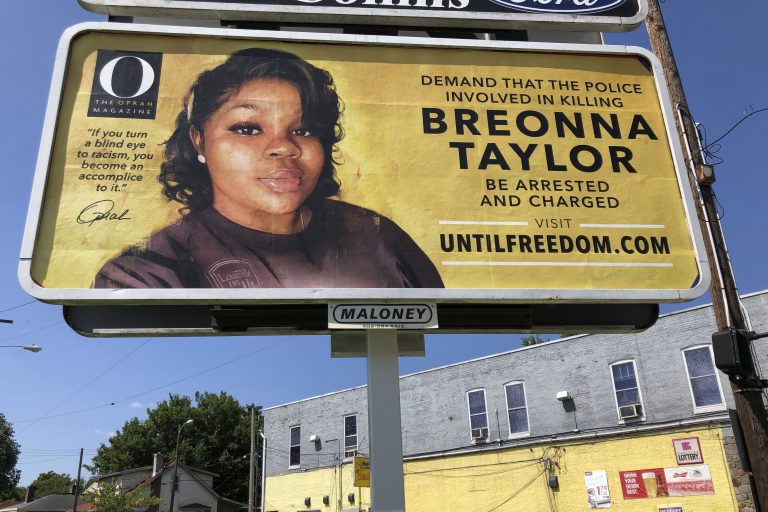
(Headline USA) Police who shot Breonna Taylor announced themselves as law enforcement before entering her apartment, according to grand jury testimony that was among hours of audio recordings released Friday.

“We knocked on the door, said police, waited I don’t know 10 or 15 seconds. Knocked again, said police, waited even longer,” Louisville police Lt. Shawn Hoover said in an interview recorded March 13, the same date Taylor was shot, and later played for the grand jury.

“So it was the third time that we were approaching, it had been like 45 seconds if not a minute,” Hoover said. “And then I said, `Let’s go, let’s breach it.’”

Grand juries typically meet in secret, and releasing testimony and other evidence from their proceedings is rare.

A court ruled that the content of the proceedings, typically kept secret, should be made public.

The grand jury in Taylor’s case brought no criminal charges against the officers for her killing, angering many in Louisville and around the country and setting off renewed protests.

Officers had a “no-knock” warrant to search Taylor’s apartment for drugs. But Attorney General Daniel Cameron later said officers announced themselves.

It’s a key issue because the officers said they opened fire after Taylor’s boyfriend, Kenneth Walker, fired a gunshot at them. Walker said he didn’t know the men who burst into the home were police.

One law enforcement officer testified that police ultimately never executed the warrant to search Taylor’s apartment.

“Were drugs money or paraphernalia recovered from apartment 4? … The answer to that is no,” the officer said on the recording. “They didn’t go forward with executing the initial search warrant that they had for Breonna Taylor’s apartment.”

Cameron, whose office led the investigation into police actions in the Taylor shooting, did not object to the file’s release.

But on Wednesday, his office asked for a week’s extension to edit out personal information from the material. The judge gave him two days.

Cameron, a Republican and the state’s first African American attorney general, has acknowledged that he did not recommend homicide charges for the officers involved.

Police used a narcotics warrant to enter Taylor’s Louisville apartment on March 13. The 26-year-old was shot five times.

Cameron said two officers who fired their guns, hitting Taylor, were justified because Taylor’s boyfriend had shot at them first. The boyfriend has said he thought someone was breaking in.

The grand jury did charge fired Officer Brett Hankison with three counts of wanton endangerment for shooting into a neighboring apartment. No one was hit. He has pleaded not guilty. Cameron said there was no conclusive evidence that any of Hankison’s shots hit Taylor.

The audio recording of the jury proceedings were being added to Hankison’s public court file.

Protesters have taken to the streets to demand more accountability in the case. Activists, Taylor’s family and one of the jurors called for the grand jury file to be released.

The release comes a day after the first woman to lead the Louisiana Metro Police Department, Yvette Gentry, was sworn in as the department’s interim chief.

“I know I’m interim,” Gentry said at a small ceremony streamed on the department’s Facebook page. “But I represent something different to a lot of people being the first woman to take this title, so I’m not going to shortchange that.”

Adapted from reporting by Associated Press.

UPDATE: President Has ‘Mild Symptoms’ After Positive Test for COVID-19

UPDATE VIA AP: The White House said Friday that President Donald Trump was suffering “mild symptoms” of COVID-19.

White House chief of staff Mark Meadows on Friday assured the public that Trump was conducting business as usual while in quarantine.

Vice President Mike Pence tested negative for the virus on Friday morning and “remains in good health,” his spokesman said.

Many White House and senior administration officials were undergoing tests Friday, but the full scale of the outbreak around the president may not be known for some time as it can take days for an infection to be detectable by a test. Officials with the White House Medical Unit were tracing the president’s contacts.

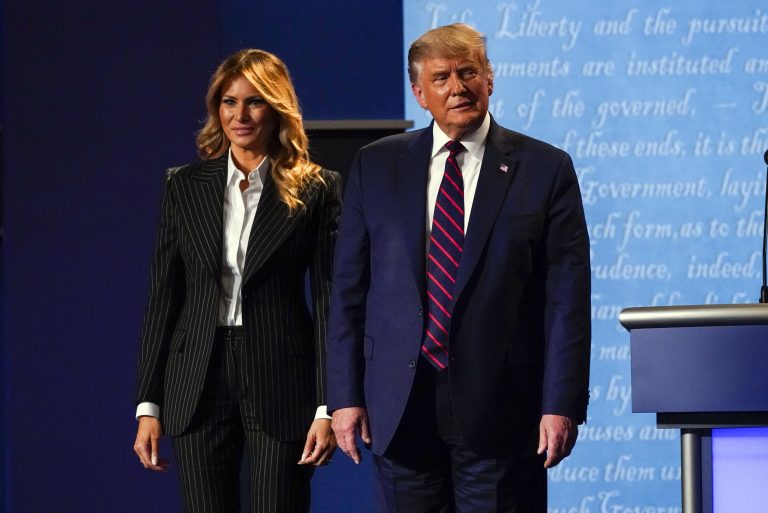
ORIGINAL ARTICLE: (Headline USA) President Donald Trump said early Friday that he and first lady Melania Trump have tested positive for the coronavirus.

Trump, who has downplayed the threat of a virus in recent months because it mostly endangers those with other medical conditions and rarely takes the lives of the young and healthy, said he and Mrs. Trump were quarantining. The White House physician said the president is expected to continue carrying out his duties “without disruption” while recovering.

Still, Trump’s diagnosis was sure to have a destabilizing effect in Washington. Hours before Trump announced he had contracted the virus, the White House said a top aide who had traveled with him during the week had tested positive.

“Tonight, @FLOTUS and I tested positive for COVID-19. We will begin our quarantine and recovery process immediately,” Trump tweeted just before 1 a.m. “We will get through this TOGETHER!”

Trump was last seen by reporters returning to the White House on Thursday evening and did not appear visibly ill. Trump is 74 years old.

The president’s physician said in a memo that Trump and the first lady, who is 50, “are both well at this time” and “plan to remain at home within the White House during their convalescence.”

In the best of cases — if he develops no symptoms, which can include fever, cough and breathing trouble — it will force him off the campaign trail just weeks before the election.

Trump’s handling of the pandemic has already been a major flashpoint in his race against Democrat Joe Biden, who spent much of the summer off the campaign trail and at his home in Delaware because of the virus. Biden has since resumed a more active campaign schedule, but with small, socially distanced crowds. He also regularly wears a mask in public, something Trump mocked him for at Tuesday night’s debate.

“I don’t wear masks like him,” Trump said of Biden. “Every time you see him, he’s got a mask. He could be speaking 200 feet away from me, and he shows up with the biggest mask I’ve ever seen.”

There was no immediate comment from the Biden campaign on whether the former vice president had been tested since appearing at the debate with Trump or whether he was taking any additional safety protocols.

Trump had been scheduled to attend a fundraiser and hold another campaign rally in Sanford, Florida, on Friday evening. But just after 1 a.m., the White House released a revised schedule with only one event: a phone call on “COVID-19 support to vulnerable seniors.”

Trump’s announcement came hours after he confirmed that Hope Hicks, one of his most trusted and longest-serving aides, had been diagnosed with the virus Thursday. Hicks began feeling mild symptoms during the plane ride home from a rally in Minnesota on Wednesday evening, according to an administration official who spoke on condition of anonymity to disclose private information. She was isolated from other passengers aboard the plane, the person said.

Hicks had been with Trump and other senior staff aboard Marine One and Air Force One en route to that rally and had accompanied the president to Tuesday’s presidential debate in Cleveland, along with members of the Trump family. They did not wear masks during the debate, in violation of the venue rules.

Multiple White House staffers have previously tested positive for the virus, including Vice President Mike Pence’s press secretary, Katie Miller, national security adviser Robert O’Brien and one of the president’s personal valets.

Trump has consistently played down concerns about being personally vulnerable, even after White House staff and allies were exposed and sickened. Since the coronavirus emerged earlier this year, Trump has refused to abide by basic public health guidelines — including those issued by his own administration — such as wearing masks in public and practicing social distancing. Instead, he has continued to hold campaign rallies that draw thousands of supporters.

“I felt no vulnerability whatsoever,” he said told reporters back in May.

Pence’s aides had no immediate comment on whether the vice president had been tested or in contact with Trump.

It is unclear where the Trumps and Hicks may have caught the virus, but in his Fox interview, Trump seemed to suggest it may have been spread by someone in the military or law enforcement.

“It’s very, very hard when you are with people from the military or from law enforcement, and they come over to you, and they want to hug you, and they want to kiss you,” he said, “because we really have done a good job for them. And you get close. And things happen.”

Trump is far from the first world leader to test positive for the virus, which previously infected Brazilian President Jair Bolsonaro and British Prime Minister Boris Johnson, who spent a week in the hospital, including three nights in intensive care. Former Italian Prime Minister Silvio Berlusconi was hospitalized last month while fighting what he called a “hellish” case of COVID-19.

While there is currently no evidence that Trump is seriously ill, the positive test raises questions about what would happen if he were to become incapacitated due to illness.

The Constitution’s 25th Amendment spells out the procedures under which the president can declare himself “unable to discharge the powers and duties” of the presidency. If he were to make that call, Trump would transmit a written note to the Senate president pro tempore, Republican Sen. Chuck Grassley of Iowa, and House Speaker Nancy Pelosi, D-Calif. Pence would serve as acting president until Trump transmitted “a written declaration to the contrary.”

The vice president and a majority of either the Cabinet or another body established by law can also declare the president unable to discharge the powers and duties of his office, in which case Pence would “immediately assume the powers and duties of the office as Acting President” until Trump could provide a written declaration to the contrary.

Adapted from reporting by Associated Press.

Colorado Sends Voter Registration Postcards to Non-Citizens, Deceased Woman

Colorado’s Democrat secretary of state sent voter-registration cards to deceased people and non-citizens through an unverified third-party system that identifies unregistered voters, the Denver Post reported.

Secretary of State Jena Griswold mailed 750,000 postcards that advise unregistered people to register and vote. About a dozen people improperly received the postcards.

Karen Anderson of Parker, Colorado sent an email to Griswold’s office that said her deceased mother received a vote registration card. She copied the state Republican Party on the email to alert its members to the situation.

She said her mother “hasn’t lived, voted, owned property, worked, or done anything other than visit Colorado since 1967.”

Six migrants in Otero County received the mailers, as well as a British citizen and a Lebanese citizen.

“Colorado Democrats are willing to go to any length to keep Colorado blue … even if it means encouraging illegal aliens (and the deceased) to vote,” House Minority Leader Patrick Neville said in an email to supporters.

The corporate media largely ignored the story, dismissing it as a Republican-led effort to “cast doubts on the integrity of the upcoming election.”

News organizations dismissed any impropriety on grounds that the Electronic Registration Information Center, a third-party organization that operates in 30 states, identifies unregistered yet eligible voters, not the secretary of state.

And they say that former Republic Secretary of State Scott Gessler admitted Colorado into the ERIC system, as if that overcomes its errors.

There is no oversight for this organization that has supposedly helped register millions of voters. It is run by data scientist Jeff Jonas and funded by a grant from The Pew Charitable Trusts.

Rep. Ken Buck, R-Colo., sent a letter to Attorney General William Barr and Federal Election Commission Chairman James Trainor asking them to investigate the secretary of state.

“Particularly concerning is the unknown quantity and scope of these errors,” Buck wrote.

Regardless of whether Griswold acted in bad faith in allowing the voter-registration cards to be mailed to ineligible residents, she has actively sought media complicity in other ways.

On Thursday, she posted a now-deleted tweet asking national media outlets to revolt against traditional election-night coverage that would likely be favorable to President Donald Trump, CBS Denver reported.

“ATTN NATIONAL MEDIA EXECUTIVES: Our democracy cannot be held hostage to a ratings race. If you care about our democracy, you will protect it. Full Stop.,” she tweeted.

She went on to claim that the extraordinary circumstances of the election—meaning the massive increase in mail-in ballots that Democrats have pushed for despite concerns over vote fraud and ballot mishandling—justified media bending their normal ethical guidelines and collaborating with Democrats for come up with a special coverage plan.

“We are in the middle of a pandemic and the President of the United States has telegraphed that he may claim victory on election night, even when millions of ballots will not have been counted,” Griswold claimed.

“Indisputable facts: 1. This is no normal election. A record number of Americans will be voting by mail,” she continued. “2. Election ‘night’ will be dramatically different than ever before. We need an UNPRECEDENTED plan from the media for how they will cover an unprecedented election.”

Headline USA’s Ben Sellers contributed to this report.

Uber, Lyft Seek Big-Tech Exemption to California Law Targeting Gig Economy

0

(Headline USA) Californians are being asked to decide if Uber, Lyft and other app-based drivers should remain independent contractors or be eligible for the benefits that come with being company employees.

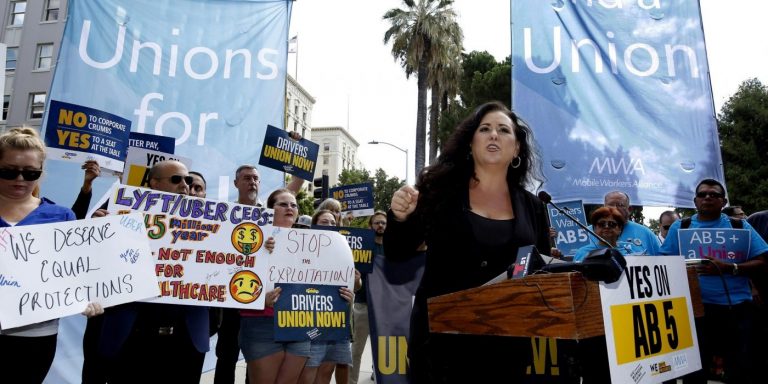
The battle between the powerhouses of the so-called gig economy and labor unions including the International Brotherhood of Teamsters could become the most expensive ballot measure in state history.

Voters are weighing whether to create an exemption to a new state law aimed at providing wage and benefit protections to drivers.

Uber and Lyft have fought a losing battle in the Legislature and courts. So now—with help from app-based food delivery companies DoorDash, Postmates and Instacart—they are spending more than $180 million to take their fight directly to voters in the Nov. 3 election.

Early voting in California starts Monday. Uber and Lyft, both headquartered in San Francisco, have said they may leave the state if the measure fails.

The landmark labor law known known as AB5 threatens to upend the app-based business model, which offers great flexibility to drivers who can work whenever they choose. But they forego protections like minimum wage, overtime, health insurance and reimbursement for expenses.

Unions also stood to benefit heavily from the bill’s designation of most contract workers as employees. Although it aimed to cash in on the app-based gig industry, the law also harmed a variety of sectors such as at-home healthcare workers, musicians and freelance journalists—even potentially sweeping in jobs like babysitting and lawn-mowing.

“What’s at stake is the future of labor, the nature of work, how conditions are changing for households amidst the pandemic and recession,” said David McCuan, chair of California’s Sonoma State University political science department.

Uber and Lyft have maintained that their drivers meet the criteria to be independent contractors, not employees.

They also have argued the law didn’t apply to them because they are technology companies, not transportation companies, and drivers are not a core part of their business.

Attorney General Xavier Becerra took the companies to court, and a San Francisco Superior Court judge ruled the companies are subject to the new employment standards. But that ruling has been put on hold while the companies appeal.

Any ruling could be undone by the outcome of the vote, though further litigation is likely.

If Proposition 22 passes, it would exempt app-based transportation and delivery companies from the labor law and drivers would remain independent contractors exempt from mandates for overtime, sick leave and expense reimbursement.

But it also would put in place policies that require those companies to provide “alternative benefits,” including a guaranteed minimum wage and subsidies for health insurance if they average 25 hours of work a week.

Supporters say drivers enjoy the independence and flexibility of the current model.

“If I want to work four hours and say, ‘I’m done,’ I can do that,” said Doug Mead, a Palm Springs retiree who delivers meals for Uber Eats and Postmates and estimates he makes about $24 an hour. “Where is there an employer on the planet where I can do that?”

Opponents say the companies exploit workers and won’t end up delivering as much pay as proponents claim.

Saori Okawa, who for a year drove 10 hours a day, six days a week for Uber in San Francisco and now delivers food, said she wants more protections for drivers, many of whom are immigrants like her.

She figures she earned closer to $10 an hour after accounting for expenses that included renting a car for $1,000 a month. She said the hours were long and stressful, and she got into an accident that, had it resulted in injury, would have meant hospital bills and unpaid time off work.

“Before I went out to work I always prayed to God … to protect myself,” Okawa said. “The traffic is crazy.”

The ride-hailing and delivery companies have spent more than $180 million, so far, to pass the measure, while labor groups have put up more than $10 million to defeat it.

McCuan said the companies are likely to put up another $100 million or more, making it more expensive in today’s dollars than a 1998 proposition that cleared the way to allow Native American tribes to operate casinos in California.

“Big Tech has joined the big, bad bogeymen of California politics,” McCuan said. “If you’re going to push something and you’re going to have difficulty in the Legislature because Democrats own the Legislature and labor is a 900-pound gorilla in Sacramento, you have to … go around the Legislature.”

Most of the state’s largest newspapers, which benefited from exemptions for freelancers and a temporary reprieve for drivers who deliver their publications, have written editorials in support of the measure.

The San Francisco Chronicle called the measure imperfect but said it attempts to strike a balance between workers and the companies that “will keep the app-based, ride-hail and delivery services operating in California.”

“The legislative recalcitrance and lawsuits from labor-beholden politicians in the state capital, San Francisco and elsewhere give us no confidence that a reasonable solution could be reached if the initiative were to fail,” the paper wrote.

The coronavirus pandemic has hammered Uber and Lyft as more people work from home and don’t travel. On the other hand, more people are ordering food and grocery deliveries from app-based services such as Postmates and Instacart. Some gig workers have switched to those platforms for work, earning what they say are lower wages.

A majority of Uber and Lyft drivers interviewed over the course of an hour recently at Los Angeles International Airport said they support the measure, with all citing the freedom to set their own hours and work other jobs.

Jeff Hodge, a standup comic looking for his big break, sees pros and cons of both sides but being independent is a better fit for him.

“If I was a regular Joe, I’d be an employee,” Hodge said. “It all depends on your lifestyle. If I wasn’t doing anything else, I’d want the benefits. I’d want to be able to come in and guarantee a certain amount of hours, get a certain amount of pay, go home.”

Adapted from reporting by the Associated Press

Trump Campaign Sues Philadelphia over Mail-In Voting Offices

0

(Headline USA) President Donald Trump’s campaign followed through on a threat to sue Philadelphia, filing papers in court Thursday night over city officials preventing campaign representatives from watching people registering to vote or filling out mail-in ballots in election offices there.

The lawsuit comes amid widespread concern over Democrats brazen efforts to cheat, including evidence of suspiciously discarded ballots and an actual vote-fraud ring that was exposed in the city.

Despite having a Republican-led legislature, the state’s radical left Supreme Court has permitted Pennsylvania’s Democrat Gov. Tom Wolf to make outrageous non-legislative revisions to normal voting procedures under the auspices of the coronavirus pandemic.

Although Trump won the crucial battleground state in 2016, Democrats subsequently pressed for court-mandated redistricting changes that allowed Philadelphia to flip some of its congressional seats from red to blue.

The 14-page lawsuit, filed in a state court in Philadelphia, revolves around the question of what rights there are for campaign representatives to watch people in election offices where they can register to vote, apply for mail-in ballots, fill them out or turn them in.

“Bad things are happening in Philadelphia,” the campaign’s lawsuit said.

“While transparency and accountability are hallmarks of election integrity, the actions of Philadelphia election officials to date have undermined election integrity by shrouding the casting of ballots in secrecy,” it continued.

The campaign is asking to be able to assign representatives to observe inside satellite election offices that Philadelphia began opening Tuesday around the city to help collect what is expected to be an avalanche of mail-in ballots in the Nov. 3 presidential election.

But election lawyers, city officials and the state’s top elections official all say that there is no right under Pennsylvania law, even for a certified poll watcher, to watch people do things like register to vote or fill out a mail-in ballot.

Those rights, they say, are limited to certified campaign representatives to observe voting at a polling place on Election Day or the opening of absentee and mail-in ballots in an election office.

In May, a federal investigation exposed a corrupt ballot-stuffing ring led by a disgraced ex-congressman that had involved bribing election officials to brazenly commit fraud in the polling place.

A spokesperson for the city’s election board chairwoman said Thursday night that he had not reviewed the lawsuit, but the board generally does not comment on litigation. The Trump campaign originally threatened to sue Tuesday night.

Philadelphia on Tuesday opened the first seven of what is expected to be 17 satellite election offices.

The offices are a new creation, deemed to be legal under state law last month by the state Supreme Court in a lawsuit brought by the state Democratic Party.

Trump campaign employees promptly showed up, insisting they be allowed to go in and observe the activity inside.

City election officials—including a Republican member of a three-member city election board—prevented them, although they offered the campaign a tour of the facilities to let them see how they operate.

The fight could widen. A number of counties, including the state’s most heavily populated counties, are opening satellite election offices and putting out drop boxes for voters to drop off mail-in ballots.

Philadelphia is home to one in five registered Democratic voters in Pennsylvania, and its turnout is closely watched in presidential elections.

In 2016, Trump won Pennsylvania by about 44,000 votes, or less than 1 percentage point. But he lost Philadelphia to Democrat Hillary Clinton by 67 percentage points, or about 475,000 votes.

It is at least the second lawsuit filed in Pennsylvania by the Trump campaign, in an effort to expand poll watching rights and limit how counties can collect mail-in ballots and which mail-in ballots can be counted.

Adapted from reporting by the Associated Press

Supreme Court to Review Law that Bans Ballot Harvesting in Ariz.

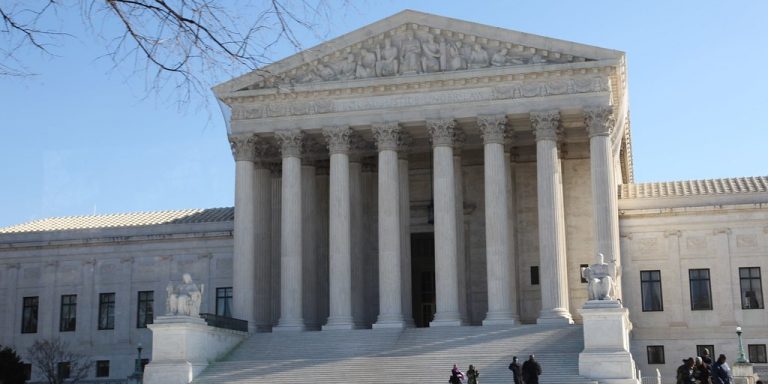
(Associated Press) The Supreme Court said Friday it will review a 2016 Arizona law that bars anyone but a family member or caregiver from returning another person’s early ballot.

The law itself, however, remains in effect through the presidential election and until the justices rule.

The court will begin hearing arguments again next week after a summer break.

The Arizona case was one of four cases the court, now eight justices because of the death of Justice Ruth Bader Ginsburg, agreed to hear in its new term that begins Monday.

As is usual, the justices did not comment in taking the cases.

Because of the coronavirus pandemic, the justices will not be returning to the courtroom to hear arguments but instead will continue hearing arguments by telephone. The court has been closed to the public since March.

In the Arizona case, a federal appeals court ruled in January that Arizona’s law banning so-called “ballot harvesting” violates the Voting Rights Act and the Constitution, but the court put its ruling on hold while the Supreme Court was asked to take the case.

The appeals court also found that Arizona’s policy of discarding ballots if a voter went to the wrong precinct violates the law.

The court said both have a discriminatory impact on minority voters in violation of the Voting Rights Act.

The case began after Republicans in Arizona passed the law making it a felony to return someone else’s ballot to election officials in most cases and Democrats sued.

Both parties had used ballot collection in Arizona to boost turnout during elections by going door to door and asking voters if they have completed their mail-in ballot.

Democrats used the method aggressively in minority communities and argued their success prompted the new GOP-sponsored law.

Republicans argued the law was aimed at preventing election fraud.

Arizona Attorney General Mark Brnovich, a Republican, said in a statement he is pleased the court will hear the case.

The justices also said Friday they will review a longstanding effort by the Federal Communications Commission to relax restrictions in individual media markets on ownership of different forms of media — TV stations and newspapers — over fears that it would leave fewer outlets controlled by minorities.

The court also will take up cases involving how immigration officials evaluate the claims of asylum seekers and a lawsuit by the city of Baltimore against BP Inc. and other energy companies seeking money for their contribution to climate change, although the issue before the justices is a technical one involving where the case should be heard.

The Supreme Court has already filled its argument calendar through December, so none of the cases will be argued before January 2021.