Democrat Senate Nominee in NC Admits to Sexting Wife of Army Veteran

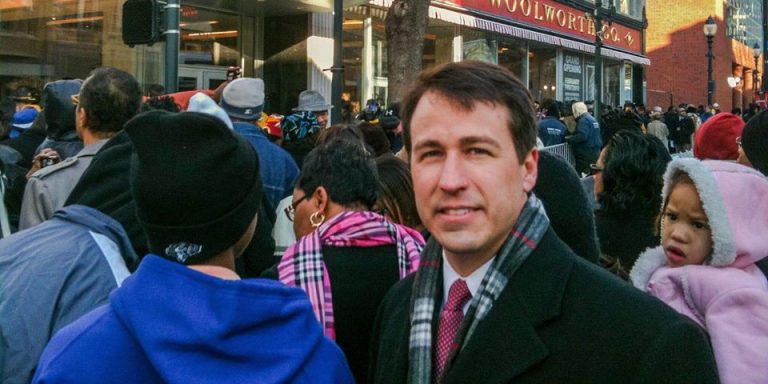
Senate candidate Cal Cunningham, D-N.C., said on Friday that he cheated on his wife by sending sexually explicit text messages to the wife of an army veteran.

Cunningham’s admitted to sexting with Arlene Guzman Todd, a California public relations strategist, the day after an investigative reporter revealed the text messages, National File reported.

The text messages show that Cunningham, a husband and father of two, and Todd planned to commit adultery at some point in the fall, but it is not clear whether they carried through on their plans to “get away for a night soon.”

The disgusting and awkward text messages begin when Cunningham texts Todd, “Hey!! And you are historically sexy [kissy face]…Every day and night,” and she responds, “When can I see you? I want to kiss you.”

“And I kiss back…A lot,” he said.

Then she discusses their plans to cheat on their spouses.

“Get away for a night soon. The longer we wait the crazier fall schedules will get,” Todd said. “In the spirit of ‘I like what I like” quote on your adorable video, I operate under the ‘I want what I want”…approach and I want a night with you.”

“Sounds wonderful — I want that too!!! Very badly,” Cunningham responds.

Cunningham apologized for trying to cheat on his wife and said he will not drop out of the close race against incumbent Sen. Thom Thillis, R-N.C.

“I have hurt my family, disappointed my friends, and am deeply sorry,” he said. “The first step in repairing those relationships is taking complete responsibility, which I do. I ask that my family’s privacy be respected in this personal matter.”

“I remain grateful and humbled by the ongoing support that North Carolinians have extended in this campaign, and in the remaining weeks before this election I will continue to work to earn the opportunity to fight for the people of our state,” he said.

The Democratic Senatorial Campaign Committee said that it stands by its endorsement of Cunningham and will continue to run ads for him.

“We are confident that he will bring the same courage and determination to the Senate as he has while serving our country in uniform,” said Lauren Passalacqua, DSCC communication director.

Todd’s husband is Jeremy Todd, an Army Sergeant First Class who served for 15 years and was deployed five times for combat. He fought in Afghanistan and Iraq.

He credited his wife for his success, USC News reported.

“My wife carried me through. She is really the superhero in all this,” he said in 2016. “The wives are the unsung heroes of the military, the spouses that deal with everything. Without good wives and family, I don’t think soldiers would be successful in their missions and everything they do.”

Guzman Todd works for a marijuana company and as a lecturer at California State University.

Cunningham himself has been a lieutenant colonel in the U.S. Army Reserve since 2002.

He works at the 134th Legal Operations Detachment at Fort Bragg for the U.S. Army Reserve Legal Command, where he is a Judge Advocate General Corps.

If Cunningham were active duty when he sent the text messages more than three months ago, then he could face legal action in military court.

List of COVID Cases in Trump’s Orbit Grows

0

A growing list of people in President Donald Trump’s orbit revealed Friday that they had tested positive for the coronavirus after Trump himself acknowledged it early Friday morning overnight.

Trump adviser Hope Hicks was the first to receive word on Thursday prior to a fundraiser that the president attended.

First Lady Melania Trump also has the virus and was experiencing mild symptoms.

Additionally, Republican National Committee chair Ronna McDaniel, former White House counselor Kellyanne Conway and Trump campaign manager Bill Stepien tested positive.

Sen. Ron Johnson, R-Wisc., was reported early Saturday to have tested positive, making him the third high profile GOP congressman over the past two days.

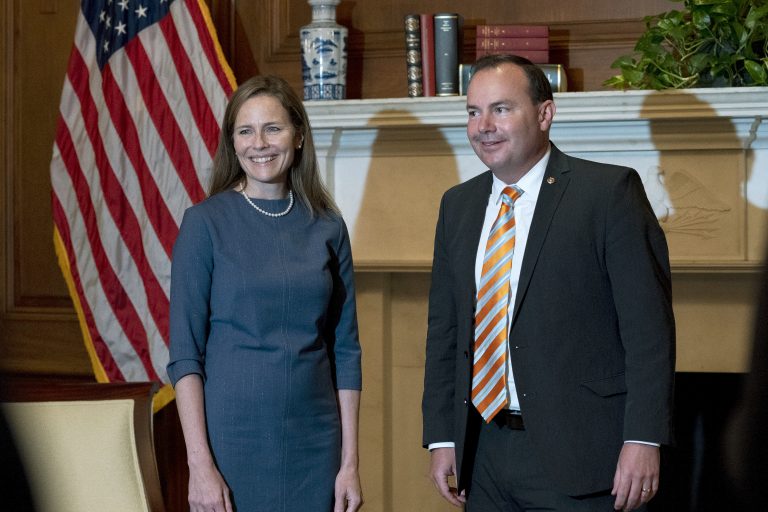
Most intriguing, though, was that two GOP senators on the Judiciary Committee—Mike Lee of Utah and Thom Tillis of North Carolina—reported having it.

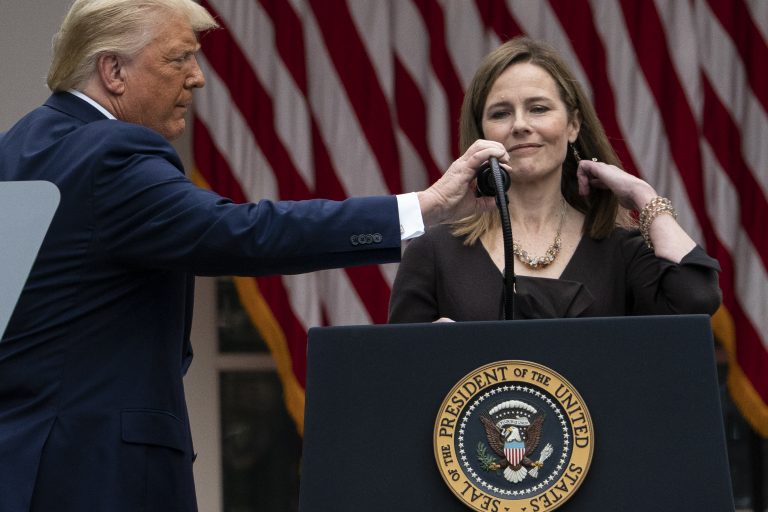
Lee had been present at a Rose Garden event for Supreme Court nominee Amy Coney Barrett earlier in the week.

As more cases emerged from those who were present and in close proximity, it appeared likely that the announcement was what some media were referring to as a ‘superspreader’ event.

Lee also reportedly had met with the nominee and was present at socially distanced committee hearings, raising questions and alarms about the prospects of derailing the confirmation hearings set to begin on Oct. 12.

Barrett herself tested negative. However, Democrats in Congress were quick to call for the delay while the scope of the infection remained unclear.

It remained uncertain also how the contact-tracing process might unfold and who would be conducting it. However, the coincidental timing of the infections was sure to raise questions.

Last month, Senate Minority Leader Charles Schumer declared that “everything [was] on the table” in Democrats’ bid to block the conservative Barrett from assuming the seat previously occupied by the late liberal icon Ruth Bader Ginsburg.

In 2018 it became clear that Sen Dianne Feinstein, D-Calif., and other powerful Democrats in Congress had actively coordinated with—and possibly coached—Christine Blasey Ford, whose unsubstantiated, 11th-hour rape accusations against SCOTUS nominee Brett Kavanaugh threatened to destroy him personally and shatter his confirmation hopes.

Feinstein also, coincidentally, may be among the members of Congress with the deepest ties to China, where the virus originated. Her husband, investor Richard Blum, has managed millions in trans-Pacific accounts and maintained friendly relations there.

In 2018, only weeks before the Kavanaugh debacle, it was also revealed that Feinstein’s longtime driver was a Chimese spy.

Alumni at Amy Barrett’s Alma Mater Condemn Her for Pro-Life, Pro-Family Views

(Associated Press) U.S. Supreme Court nominee Amy Coney Barrett graduated in 1994 with honors from Rhodes College in Memphis, Tennessee.

But more than 1,500 alumni of the small liberal arts school have made it known they are not proud of their ties to the conservative lawyer and judge.

Barrett graduated magna cum laude with an undergraduate degree in English. She was a member of the Honor Council and named to the Student Hall of Fame.

After her next stop at Notre Dame’s law school, Barrett built a career of “professional distinction and achievement,” said Rhodes president Marjorie Hass, in a statement issued after President Donald Trump nominated Barrett to replace the late Justice Ruth Bader Ginsburg.

The statement was dated Sept. 22.

Soon after, Rhodes alumni Rob Marus and Katherine Morgan Breslin wrote a letter criticizing Barrett’s stances on abortion law, the LBGTQ community and the Affordable Care Act.

Signed by 1,513 alumni and posted online, the letter says the alumni are “firmly and passionately opposed to her nomination,” declaring Barrett fails to represent their views and values.

“We are likewise firmly and passionately opposed to Rhodes administrators’ attempts to embrace Amy Coney Barrett as an alumna of our beloved alma mater,” the letter said. “We oppose this embrace because we believe both her record and the process that has produced her nomination are diametrically opposed to the values of truth, loyalty, and service that we learned at Rhodes.”

Barrett’s nomination to replace Ginsburg, an abortion rights supporter and liberal icon who died Sept. 18, swiftly elicited praise from Republicans and conservatives — and dismay from liberals and Democrats.

Opposing sides rained down statements for or against appointing Barrett, currently a Chicago-based federal appeals court judge.

Before Barrett’s time, the school with the stately campus and a total enrollment of about 2,000 students already had a Supreme Court connection.

Abe Fortas, class of 1930, became a justice, and Rhodes graduates have clerked for justices and serve as federal judges, Hass said. Rhodes also has hosted on-campus talks by sitting Justice Stephen Breyer and the late Justice Antonin Scalia.

“Judge Coney Barrett participates in this tradition of academic excellence,” Hass’ statement said.

Barrett’s abortion views are a particular point of contention. Barrett voted at least twice on abortion issues as an appellate judge, both times joining dissenting opinions to decisions that favored abortion rights.

The Rhodes alumni letter was signed by students who graduated as far back as 1959, and some who knew Barrett and were in her graduating class. It expresses concerns that she might vote to overturn or “seriously curtail” Roe v. Wade, the landmark 1973 Supreme Court ruling that declared abortion a constitutional right.

The letter accuses her of sidestepping questions about how she would rule if the abortion case were challenged before the Supreme Court. And it claims she has deflected questions about her stance toward the LGBTQ community and her alleged association with an anti-LBGTQ group.

“Amy Coney Barrett has repeatedly shaded the truth about her own views and past associations,” the letter said.

It added that Barrett “has demonstrated a judicial philosophy and record that fails to serve and protect the vulnerable in our society, including immigrants, those in the criminal justice system, and individuals reliant on the Affordable Care Act.”

In a subsequent statement following the alumni’s letter, Hass encouraged “all members of the Rhodes community to rise to this moment with courage and to speak, act, and vote in the service of justice.”

“I hope that your letter — as well as the support, dissent, and attention it has generated — serves as a spur for robust engagement with the political process,” Hass wrote. She stood by her previous letter and public remarks praising Barrett’s “exceptional record of academic achievement” at Rhodes.

“The college will continue to speak of her with respect and friendship,” Hass wrote. Later, she added, she was “happy to re-affirm my own commitment and the commitment of the college to stand against bigotry and for the rights of minority and marginalized students and alumni.”

Barrett had no public comments on the letter.

Trump said during Tuesday’s debate with Democratic challenger Joe Biden that he doesn’t know Barrett’s views on Roe v. Wade and didn’t discuss them with her when they met at the White House three days after Ginsburg’s death.

Marus, co-author of the alumni letter, told The Associated Press the letter’s signees were upset and concerned the college’s reputation could be diminished in the eyes of potential and current students who disagree with Barrett and Trump.

He called her views “antediluvian,” adding some alumni are terrified of any lifetime appointment for Barrett to the court.

“We thought it was time to speak out,” said Marus. “We never thought we’d change how the Senate voted on her. What we wanted to affect was public perception of Rhodes, the education we received there.”

Trump Goes Walter Reed as Precaution, Gives Thumbs Up while Walking to Marine One

0

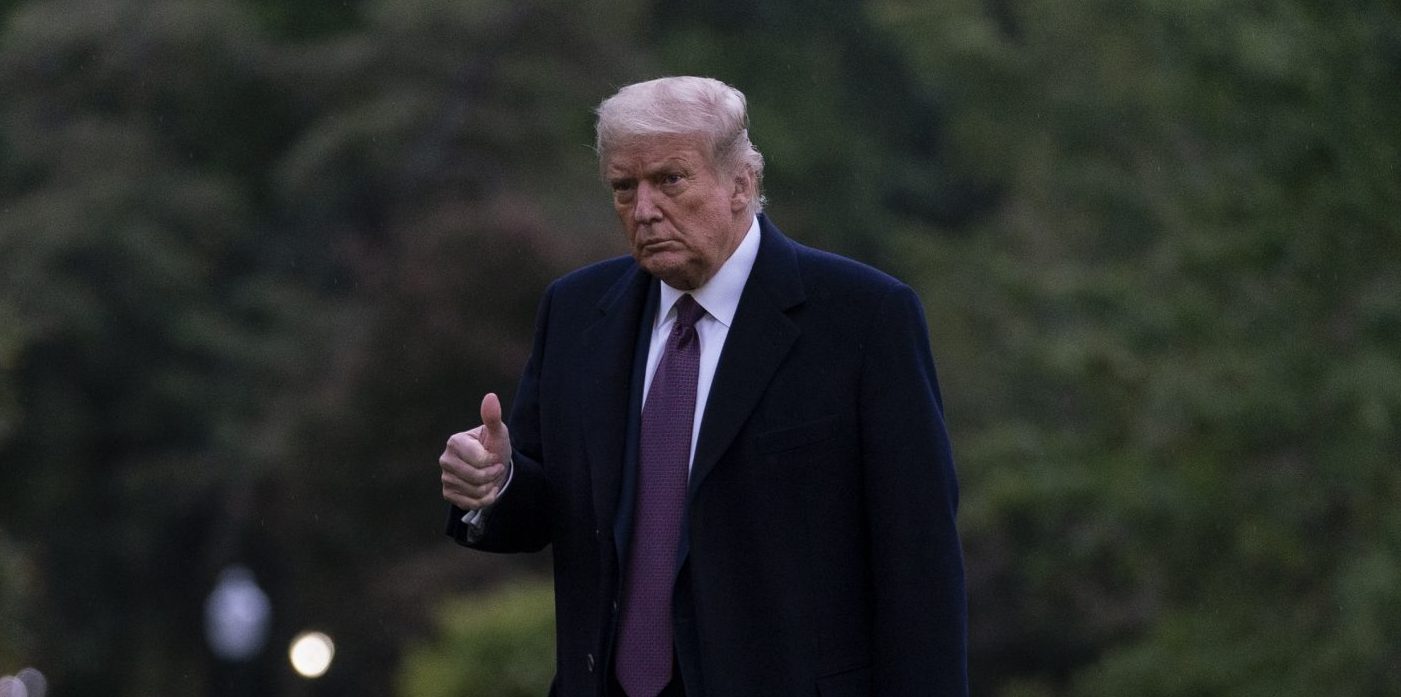
(Headline USA) President Donald Trump appeared in public Friday evening for the first time since being stricken by COVID-19.

Trump walked out of the White House and gave a thumbs-up but did not speak before boarding his Marine One helicopter for a flight to Walter Reed National Military Medical Center.

The White House said the visit of “a few days” was precautionary and that Trump would continue to work from the hospital’s presidential suite, which is equipped to allow him to keep up his official duties.

“President Trump remains in good spirts, has mild symptoms, and has been working throughout the day,” said press secretary Kayleigh McEnany.

“Out of an abundance of caution, and at the recommendation of his physician and medical experts, the president will be working from the presidential offices at Walter Reed for the next few days.”

The president’s physician said in a memo late Friday that Trump received a dose of an experimental antibody cocktail by Regeneron that is in clinical trials.

Navy Commander Dr. Sean Conley said Trump “remains fatigued but in good spirits” and that a team of experts was evaluating both the president and first lady in regard to next steps.

The first lady, who is 50, has a “mild cough and headache,” Conley reported, and the remainder of the first family, including the Trumps’ son Barron, who lives at the White House, tested negative.

Many White House and senior administration officials were undergoing tests Friday, but the full scale of the outbreak around the president may not be known for some time as it can take days for an infection to be detectable by a test.

Officials with the White House Medical Unit were tracing the president’s contacts.

Trump’s reelection campaign said it was putting on hold all events featuring Trump and members of his family but that Pence would resume campaigning since he tested negative.

Trump was last seen by reporters returning to the White House on Thursday evening and did not appear ill.

While House chief of staff Mark Meadows on Friday tried to assure the public that Trump was conducting business as usual, even as he confirmed that the White House knew Hope Hicks, the aide, had tested positive before Trump attended a Thursday fundraiser in New Jersey.

“I can tell you in terms of Hope Hicks, we discovered that right as Marine One was taking off yesterday,” said Meadows.

Several staffers were pulled from the trip, but Trump did not cancel and there was no direct evidence that her illness was connected to his.

As for Trump’s attendance at Thursday’s fundraiser, press secretary Kalleigh McEnany said, “He socially distanced. It was an outdoor event, and it was deemed safe by White House Operations for him to attend that event.”

McEnany and Trump’s social media director Dan Scavino, who were originally set to join him on the trip, were replaced at the last minute by other aides.

McEnany briefed the press Thursday morning and made no mention of any suspected illness, raising anew concern about White House transparency.

It is unclear where the Trumps or Hicks may have caught the virus, but in a Fox interview, Trump seemed to suggest it may have been spread by someone in the military or law enforcement in greetings.

The White House began instituting a daily testing regimen for the president’s senior aides after earlier positive cases close to the president.

Anyone in close proximity to the president or vice president is also tested every day, including reporters.

Trump is far from the first world leader to test positive for the virus, which previously infected Brazilian President Jair Bolsonaro and British Prime Minister Boris Johnson, who spent a week in the hospital, including three nights in intensive care.

Former Italian Prime Minister Silvio Berlusconi was hospitalized last month while fighting what he called a “hellish” case of COVID-19.

Mich. Supreme Court Rules Gov. Whitmer’s Authoritarian Lockdown Rules Unconstitutional

0

The Michigan Supreme Court on Friday struck down months of authoritarian lockdown orders by Gov. Gretchen Whitmer that the power-hungry Democrat claimed were aimed at preventing the spread of the coronavirus.

The court said that the Nazi-era law Whitmer had cited to assert her emergency powers was unconstitutional.

The decision marked an extraordinary development in a monthslong conflict between Whitmer and the Republicans who control the Legislature.

Since Whitmer first moved on her efforts to consolidate power under the auspices of the pandemic, GOP lawmakers in Lansing have been shut out of major orders that have restricted education, the economy and health care while granting special exemptions to marijuana dispensaries, abortion clinics and the recreational pursuits of Whitmer’s boat-loving husband.

Coincidentally, the court’s opinion emerged on the same day that Whitmer’s critics submitted more than 539,000 signatures in a bid to repeal the 1945 law.

For six months, the governor has imposed restrictions on Michigan’s economy, K-12 school system, health care and even visits to state parks.

Amid sharp criticism and mass protests that included an armed takeover of the state capitol, Whitmer subsequently eased the lockdown mandates, but she maintained the discretion to re-implement them at any time, even with the former Trump-backing state poised to play a key role in the upcoming election.

Republicans said Whitmer should have used a 1976 law, which gives lawmakers a say in any emergency declarations after 28 days.

In a 4-3 decision, the Supreme Court said the 1945 public safety law used by Whitmer granted Michigan governors unchecked authority.

“That act is an unlawful delegation of legislative power to the executive branch in violation of the Michigan Constitution,” Justice Stephen Markman wrote. “Accordingly, the executive orders issued by the governor in response to the COVID-19 pandemic now lack any basis under Michigan law.”

Judge Blocks Large Parts of Temporary Work Visa Ban

0

(Headline USA) A George W. Bush-appointed judge on Thursday temporarily lifted a visa ban on a large number of work permits, undercutting a measure that the Trump administration says protects American jobs in a pandemic-wracked economy.

U.S. District Judge Jeffrey White said his ruling applied to members of organizations that sued the administration—the U.S. Chamber of Commerce, National Association of Manufacturers, National Retail Federation, TechNet, a technology industry group, and Intrax Inc., which sponsors cultural exchanges.

White, ruling in Oakland, California, said his order didn’t extend beyond those groups.

But he noted they comprised “hundreds of thousands of American businesses of all sizes from a cross-section of economic sectors,” including tech giants Microsoft Corp. and Amazon.com Inc.

Those companies have been under scrutiny for allegations of preferential hiring practices that favor Chinese guest-workers.

Paul Hughes, an attorney for the associations, said the U.S. Chamber of Commerce alone has “more than 300,000 members of all shapes and sizes across the United States.”

The injunction, which lifts the ban while the case is being litigated, is at least a temporary setback for the administration’s efforts to limit legal immigration during the coronavirus outbreak.

White said President Donald Trump likely acted outside bounds of his authority.

The judge wrote “there must be some measure of constraint on Presidential authority in the domestic sphere in order not to render the executive an entirely monarchical power in the immigration context, an area within clear legislative prerogative.”

The ban, which took effect in June and is scheduled to last until the end of this year, applies to H-1B visas, which are widely used by major American and Indian technology companies, H-2B visas for nonagricultural seasonal workers, J visas for cultural exchanges and L visas for managers and other key employees of multinational corporations.

It was the second time in three days that White blocked a significant change on immigration. On Tuesday, he halted major fee increases for citizenship and other benefits three days before they were to take effect.

The Homeland Security and Justice departments did not immediately respond to requests for comments Thursday night.

The National Association of Manufacturers, which represents 1,400 companies, said the ruling will help with “crucial, hard-to-fill jobs to support economic recovery, growth and innovation when we most need it.”

“Today’s decision is a temporary win for manufacturers committed to building that innovation in the United States,” said Linda Kelly, the group’s senior vice president and general counsel.

“A long-term win for manufacturers requires policymakers to support meaningful reforms to our immigration laws that recognize the critical link between smart immigration policy and America’s competitive advantage,” she said.

With Congress and the White House deadlocked on immigration, Trump has reshaped the system on his own, much as his predecessor, Barack Obama, did, but largely in the opposite direction.

The Migration Policy Institute recently catalogued more than 400 executive actions during his presidency to change policy, including border enforcement, asylum eligibility and vetting for visas.

Unlike Obama, many of Trump’s changes on immigration are being challenged in court by activist groups and other special interest—some of which use tax funding to clog-up the administrative works.

Judges, mostly liberal ones appointed by Obama, have meanwhile sought to expand their own powers by imposing controversial nationwide injunctions to block the actions.

Adapted from reporting by the Associated Press

Dems Exasperated as Working-Class Voters Unmoved by NYTimes Hit Piece on Trump Taxes

0

(Headline USA) Danielle Fairbank closed the tailgate of her fire-engine red pickup truck in a Target parking lot in Oshkosh, Wisconsin and offered a hearty “Fake news!” to dismiss reports that President Donald Trump paid only $750 in income taxes in 2017.

The assembly worker at a nearby military vehicle plant just as swiftly brushed aside the media-backed insistence that Trump’s tiny tax bill put him out of touch with blue-collar workers like herself.

Her job—which she’s held throughout the recession and pandemic—is proof to her that the billionaire president is on the side of the working-class.

“I know in my heart he’s doing more for this economy, for people like me and for me personally, than anyone is giving him credit,” Fairbank said. “That stuff is made up, and it would have come out by now if it were true.”

Trump’s standing with white, working-class voters has proven resilient through federal investigations, impeachment and countless accusations of chaotic governing all orchestrated by his vindictive left-wing adversaries.

Nonetheless, Democrats working within the New York Times and the campaign of presidential rival Joe Biden—which appeared to have coordinated on the leak—hoped that reports about Trump’s tax avoidance might have had the potential to hit closer to home during a time of economic upheaval.

Yet, interviews with voters in swing-voting Wisconsin show scant evidence of damaging impact from reporting in the years-long crusade to uncover Trump’s alleged financial secrets.

The article—estimated to be around some 10,000 words, included plenty of weedy jargon and deep-dives into complex tax code, but ultimately failed to rise to the level long promised of a smoking gun that would be prohibitively damning.

In fact, many—while doubting the accuracy of the number-crunching, which Trump denied—applauded the former business mogul for maximizing his deductions.

In the hub of swing-voting Winnebago County and Milwaukee’s dynamic suburbs, the reactions fit into categories of flat-out disbelief, like Fairbanks, defense of a tax strategy as smart business and an overall fatigue many voters feel with every revelation.

If there is was one common reaction, it’s laughter, though not joyful, at seeing yet another cynical smear attempt fall flat from a mainstream media that has continued to brazenly gaslight the public and hold its own favored candidates to a double standard.

Seth Willer snickered from the front porch of his home in the upscale neighborhood of Bellhaven Estates near the shores of Lake Winnebago on Oshkosh’s east side when asked what he thought about Trump’s income taxes.

“Nah, that’s the game, right?” said the 40-year-old industrial laundry equipment distributor who supports Trump. “We all try to lower our tax burden. You can’t blame him.”

Likewise, Cathy Gerring, a 60-year-old part-time employee from the north Milwaukee suburb of Shorewood echoed, “I just feel he’s a smart business owner.”

Mary Herrick, down the street from Willer in Oshkosh’s upscale subdivision notes Trump’s donation of the president’s salary as a counter to criticism of his tax burden. “That’s giving back to the country,” said Herrick, who works from home.

In fact, Trump donates his salary to charities, and continues to earn income from his real estate interests.

In 2018, he reported making more than $434 million in a federal disclosure. That same year he reported losses to the IRS of $47 million, according to the New York Times report.

Much of that relates to the nature of his property holdings, for which tax loopholes provide a generous depreciation deduction.

National polls have shown the president’s support to be relatively stable at roughly 42 to 45 percent of voters nationally throughout the tumultuous summer and into the fall.

And following the failure of polling during the previous 2016 election to accurately gauge public sentiment in battleground states like Wisconsin, that has many of his Democrat rivals on edge with only a month remaining.

Even those on the Left who wish to see the president fail seemed to shrug off the underwhelming revelation.

Amy Helmers, 49-year-old mental health counselor, laughed out of exasperation about Trump’s tax records while unloading her groceries outside Pick ‘n Save on Oshkosh’s middle-income south side.

“None of it surprises me,” Helmers said. “He’s got supporters thinking he’s a patriot. But it’s another example of the fraud he is.”

Trump campaigned in Oshkosh in mid-August and is expected in Green Bay, the northern end of the valley, on Saturday.

Wendy Taylor says no one she knows in her tiny hometown of Clintonville, east of Oshkosh, trust reports Trump has avoided paying taxes.

“It’s not true,” the 57-year-old retired information technology manager said. “He’s not the miser and cheat the media make him out to be.”

She noted the $72,000 in coronavirus relief her town of about 4,300 received was proof Trump was concerned about the well-being of low and middle-income Americans.

“That was a lot of frickin’ money for our little city,” she said.

Retiree Lee Houk of Pewaukee, a booming exurb west of Milwaukee, was just as dismissive of the tax claims. “I think it’s just games being played by the Democrats,” Houk, 69, said.

Adapted from reporting by the Associated Press

LA Ordered to Pay Six Figures to NRA for Violating Its 1st Amendment Rights

Los Angeles must pay the National Rifle Association $150,000 in damages after a federal court ruled the city violated the organization’s First Amendment rights, the Washington Free Beacon reported.

A federal judge ordered the payment about 10 months after he decided the case in favor of the NRA.

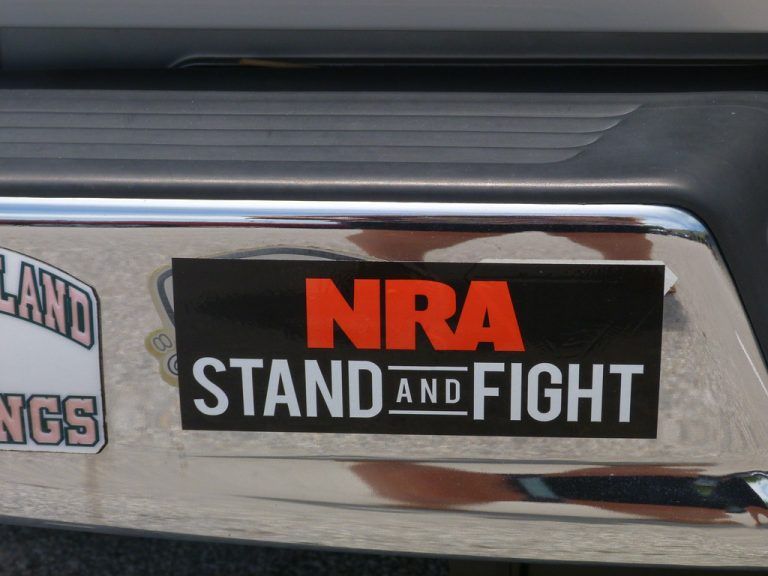
The ruling came in response to a Los Angeles city resolution in April 2019 that declared the NRA a “domestic terrorist organization” and an ordinance that punished city contractors who associated with the Second Amendment advocacy group.

When passing the ordinance, the Los Angeles City Council determined that awarding contracts to NRA-supporting groups would undermine its “efforts to legislate and promote gun safety.”

The NRA quickly responded with a lawsuit in April, calling the ordinance an “unconstitutional ideological litmus test for independent contractors, requiring that they disclose information about their political beliefs and associations,” the Free Beacon reported.

Central California District Court judge Stephen Wilson in December 2019 ruled that the ordinance, by punishing businesses that associate with a group dedicated to defending the Constitution, violated the First Amendment rights to the freedom of speech and the freedom of assembly.

“In this case, the text of the Ordinance, the Ordinance’s legislative history, and the concurrent public statements made by the Ordinance’s primary legislative sponsor evince a strong intent to suppress the speech of the NRA,” Wilson wrote in his opinion.

San Francisco passed a similar ordinance, but Democratic Mayor London Breed — apparently realizing the ordinance’s lack of wisdom — told city employees not to consider whether a business supports the NRA in awarding contracts, the Free Beacon reported.

The Los Angeles City Council said in February that it would repeal the unconstitutional ordinance and tell contractors that their support for the NRA could remain confidential.

Moderator of Second Planned Presidential Debate Worked for Biden

The journalist set to moderate the second presidential debate has close ties to Democratic presidential candidate Joe Biden, according to the Trump campaign.

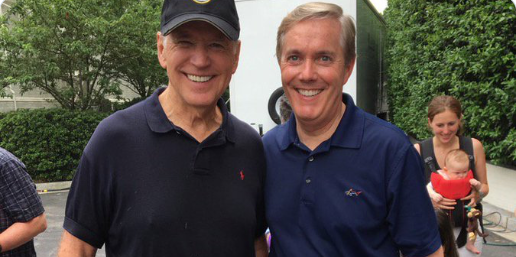
Steve Scully, who hosts C-SPAN’s “Washington Journal,” interned for Biden while he was a college student, according to Marie Claire.

He then worked for the late “liberal lion” Sen. Ted Kennedy, D-Mass., and has remained close to the Biden family for several years.

This week, a picture he had taken with Biden in 2016 resurfaced:

Also in 2016, Scully tweeted a New York Times article with the headline, “No, Not Trump, Not Ever.”

After the first presidential debate, in which moderator Chris Wallace sparred with President Trump while letting Biden avoid an important question about court-packing, the president’s team is understandably wary.

But Trump should expect to be up against biased moderators for the duration of the campaign, according to Sen. Ted Cruz, R-Texas.

Other conservatives have called on Scully to recuse himself:

Most Police Depts. See Only Modest Cuts as Dems Quietly Back Off Radical ‘Defunding’ Calls

0

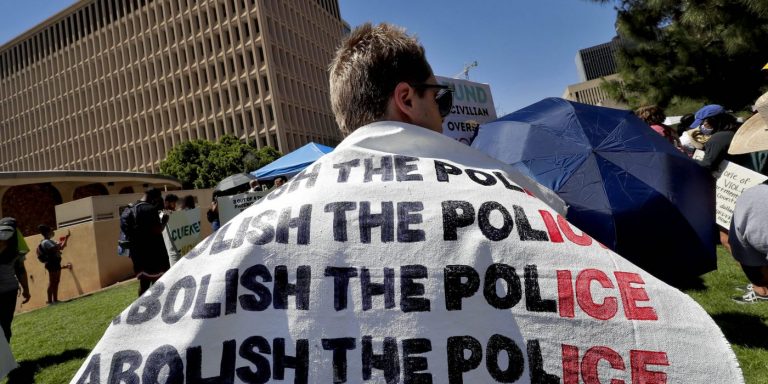
(Headline USA) The race riots following the death of George Floyd earlier this year prompted calls to “defund the police” in cities across the country.

Avowed Marxists and pro-anarchy activists who have led the ongoing riots claim that call has now become a central point in the presidential contest. But the actual policy-makers in those largely blue urban centers seem to differ.

Although they have continued to indulge the radical faction of the Left, they now claim that the true mission has always been to “re-imagine” law enforcement rather than eradicate them altogether.

A review by The Associated Press claimed that while local governments have trimmed police budgets over the past four months, the cuts have been mostly modest.

They have been driven as much by shrinking government revenue related to the coronavirus pandemic as from the calls to rethink public safety.

Advocates still say they want to overhaul a policing system that has repeatedly accused of brutality against black people.

But that generally means shifting money from law enforcement agencies to other efforts, they maintain.

They want social workers rather than police to respond to non-crime emergency calls and more money sent to community programs aimed at preventing crime. They want to take police officers out of schools and military gear away from departments.

“Police don’t really solve or prevent most of what is classified as criminal activity,” said Ash-Lee Woodard Henderson, a lead activist at the Movement for Black Lives.

But some remain skeptical that the rhetoric behind the shady social-justice groups does not have ulterior long-term motives to undermine democratic institutions from the inside by transferring tax dollars into programs that support their radical, partisan agenda.

Many point to the fact that prosecutors backed by mega-billionaire globalist George Soros in many parts of the country have refused to prosecute criminals for actions that support their leftist mission while targeting law-abiding citizens within their rights who are at odds with the politically correct dogma.

President Donald Trump has repeatedly said his Democratic rival, former Vice President Joe Biden, supports defunding police. Biden, however, has tacitly sought to downplay the controversial stance without risking the alienation of his radical base by overtly condemning it.

Democratic mayors across the U.S. also have pumped the brakes on major changes.

In Minneapolis, Seattle and Portland, Oregon, all hotspots for protests and counter protests, the calls for deep police cuts have been answered with modest ones, at least for now.

Even in liberal enclaves such as Berkeley, California—where officials have embraced sweeping changes to policing—implementation is slow-going and uncertain.

Some of the boldest proposals came in Minneapolis, where Floyd died in May while in police custody, triggering the first wave of lawlessness only days afterward. Soon afterward, the majority of the leftist City Council pledged to dismantle the police department.

But with crime rates in the city skyrocketing and public sentiment turning against the initiative, some council members have now backtracked on their pledges, and a ballot measure on the topic won’t go before voters this year.

In Seattle, activists have called for cutting police funding in half. The City Council approved something much more modest—cuts equal to less than 1% of the police budget and shifts of some money to community programs.

Mayor Jenny Durkan vetoed even that before the council overrode her in late September, with some calling the measure a down payment on future reductions.

In a statement, Durkan said the calls for budget cuts don’t come with solutions about how to offer many of the services police perform, including dealing with homeless encampments. The problem has long plagued Seattle—with some even proposing measures to force private businesses to provide shelter for the homeless.

But it came to a tipping point after radical activists occupied a six-block portion of the city’s downtown, expelling police and allowing crime to run rampant.

Durkan, who had initially dismissed the Capitol Hill Autonomous Zone as a “summer of love” experiment, found a political crisis on her hands after several deaths in the occupied zone that first responders were not able to reach.

“Part of my overwhelming concern about council’s approach on the 2020 budget was a lack of a plan,” said Durkan, who like most big-city mayors, is a Democrat.

In Portland, this year’s police budget is nearly $10 million less than last year’s, but that was far less than the $50 million cut activists had sought. It represents less than 4% of the police budget.

Austin, Texas—a liberal enclave in the otherwise deep-red state—has plans to reduce its police budget by one-third, but it’s not certain that will happen. The city transferred about $21.5 million of its $450 million police budget to areas such as homeless services.

The city is exploring bigger changes, including moving civilian duties such as forensic science and victim services out of the department.

Texas Gov. Greg Abbott, a Republican, has said he would consider having the state take over policing in the capital city in response.

In Berkeley, the council agreed in July to create a new traffic enforcement agency with the intent of eliminating racial profiling in traffic stops. But the switch will take time.

Some smaller left-leaning cities also are considering cuts to police.

Burlington, Vermont, adopted a plan to reduce the number of officers by 30% through attrition.

In North Carolina, the Asheville City Council this past summer gave police and other city departments only one-fourth of their annual funding. But in September, the council adopted a budget that repurposes only about 3% of the police budget.

Larger cities, including San Francisco and Los Angeles, have settled on relatively small police budget reductions and boosts to other programs. Philadelphia rolled back planned funding increases.

New York City announced a police budget cut, but a piece of that was moving school officers from the police department to the education department.

Some activists have been underwhelmed at the scope of the changes so far.

“It’s a positive that we were able to prevent increases in budgets,” said Scott Roberts, who leads criminal justice efforts for the racial justice group Color of Change. “But it’s not what we were looking for.”

Patrick Yoes, president of the Fraternal Order of Police, which has endorsed Trump, told the AP that the defunding talk is demoralizing officers and pushing good candidates away from police careers.

Adapted from reporting by the Associated Press