James Boasberg Snubs Senate Hearing on ‘Rogue Judges’

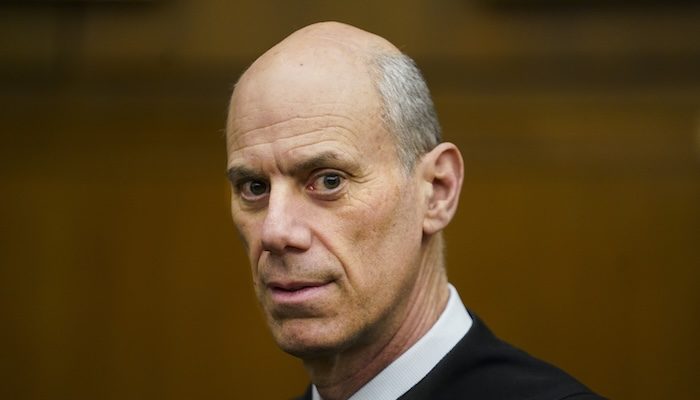
(Luis CornelioHeadline USA) Two of the federal judges facing impeachment threats refused to attend a Wednesday Senate Judiciary subcommittee hearing on “rogue judges.” 

James Boasberg and Deborah Boardman, district judges in Washington and Maryland, respectively, told the Senate Judiciary Subcommittee on Courts that they would not appear over concerns about the separation of powers and judicial ethics. 

Their refusal was delivered through a Nov. 12 letter sent by U.S. Judge Robert Conrad, the director of the Administrative Office of the U.S. Courts, to Sen. Ted Cruz, who chairs the subcommittee. 

Conrad claimed that allowing the judges to testify could violate ethics rules and “encroach upon the separation of powers,” according to the Daily Caller. 

He cited judicial rule Canon 3A(6), which forbids judges from testifying about matters they have decided or that may be pending before them. 

“The commentary to this provision explains that the ‘admonition against public comment about the merits of a pending or impending matter continues until the appellate process is complete,’” Conrad added. 

Cruz scheduled the hearing to examine possible impeachment proceedings against federal judges accused of overstepping their authority.

Boasberg is one of those judges, Republicans argue. He is facing impeachment threats from Rep. Brandon Gill, R-Texas,  

Gill filed the articles of impeachment accusing Boasberg of abusing his “judicial authority” for approving Biden-era search warrants targeting Republican lawmakers and other conservative organizations part of the Jan. 6 investigation. 

“Judge Boasberg was an accomplice in the egregious Arctic Frost scandal where he equipped the Biden DOJ to spy on Republican senators,” Gill wrote in a statement. “His lack of integrity makes him clearly unfit for the gavel.” 

Boardman is also facing impeachment efforts, this time from Rep. Chip Roy, R-Texas, over her lenient eight-year sentence for the convicted would-be assassin of Supreme Court Justice Brett Kavanaugh.  

Boardman cited the attacker’s declared transgender identity to justify sparing him from a harsher penalty. 

“Boardman unequivocally based this weak sentence on the attempted assassin’s ‘gender identity,’ as the attempted assassin expressed that he views himself as a woman,” Roy wrote in a separate statement. “Instead of doing what the Judiciary calls for and sentencing this man to the base 30-year sentence recommended by the Department of Justice, Judge Boardman purposefully allowed this man off easy.”
Costco Joins Growing Line of Companies Seeking Tariff Refunds

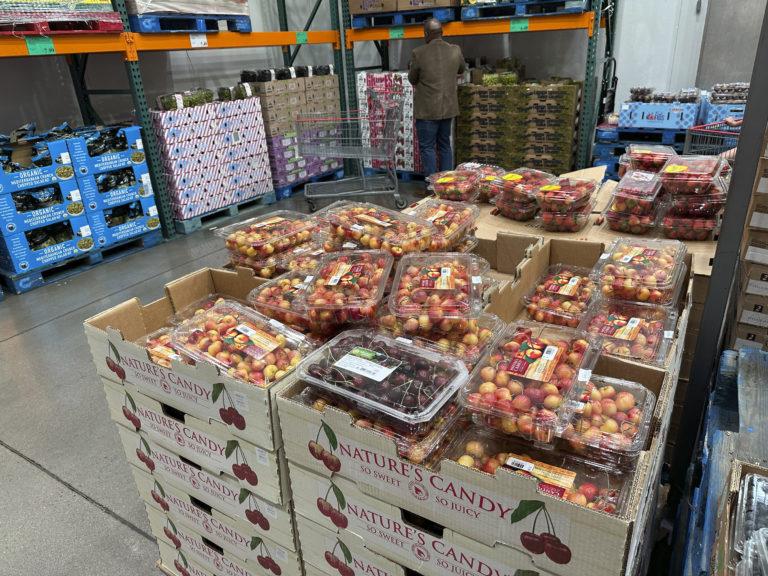
(Brett Rowland, The Center Square) Warehouse retailer Costco filed a lawsuit Tuesday seeking a full refund of the tariffs it has paid to the federal government if the U.S. Supreme Court invalidates President Donald Trump’s import taxes.

Costco operates 918 membership warehouses, including 632 in the U.S. and Puerto Rico. It also operates e-commerce sites in the U.S. and is one of the largest retailers to join the line for refunds, along with more than a dozen other companies. A case challenging Trump’s tariffs under the 1977 International Emergency Economic Powers Act remains pending before the Supreme Court, which is expected to rule before June.

Costco said it was holding its place in line for refunds in case the Supreme Court overturns the tariffs, noting a separate lawsuit was needed because importers “are not guaranteed a refund for those unlawfully collected tariffs in the absence of their own judgment and judicial relief.”

The request hints at a complicated refund process for a share of the $195 billion in tariffs the federal government collected in fiscal year 2025. Supreme Court Justice Amy Coney Barrett said refunds could be a “mess” during oral arguments in the tariff challenge last month.

The company’s lawsuit, filed in the United States Court of International Trade, noted that any refunds could be void if not addressed quickly.

“This Court and the Federal Circuit have cautioned that an importer may lack the legal right to recover refunds of duties for entries that have liquidated, even where the underlying legality of a tariff is later found to be unlawful,” attorney John Brew, of Crowell & Moring LLP, wrote on behalf of Costco.

The company noted two courts, including the Court of International Trade, had already ruled that tariff authority rests with Congress, not the president.

“To the extent it is ever permissible under the United States Constitution for Congress to delegate any part of the powers vested in it by the Constitution to the President, it must do so, at a minimum, by providing an intelligible principle to direct and cabin the President’s authority,” Brew wrote in the complaint. “In IEEPA, Congress did no such thing. And there is no better evidence of Congress doing no such thing than the pell-mell manner by which these on-again/off-again IEEPA duties have been threatened, modified, suspended, and re-imposed, with the markets gyrating in response.”

A group of Democrat-led states, five small businesses and two Illinois-based toymakers challenged Trump’s authority to impose tariffs without Congressional approval under a 1977 law. That law, the International Emergency Economic Powers Act, doesn’t include the word “tariff” and has never been used to impose tariffs. They argue that only Congress has the power of the purse and that Trump can’t impose tariffs without approval from Congress.

The Trump administration says that the law constitutes a clear delegation of emergency power, granting the president broad authority to act in times of crisis.

Costco’s case could be consolidated with similar cases filed by Illuminate USA LLC, Moog Inc., Goody Foods Corp., Alcoa USA Corp. and others.

The motion to consolidate said that all the companies want the same thing.

“All plaintiffs seek identical interim relief to preserve their refund rights and the Court’s jurisdiction while the Supreme Court considers the V.O.S. Selections appeal,” the motion says. “Without such relief, entries will likely liquidate by operation of law before that decision issues.”

Former Honduras President Juan Orlando Hernández Freed After Trump Pardon

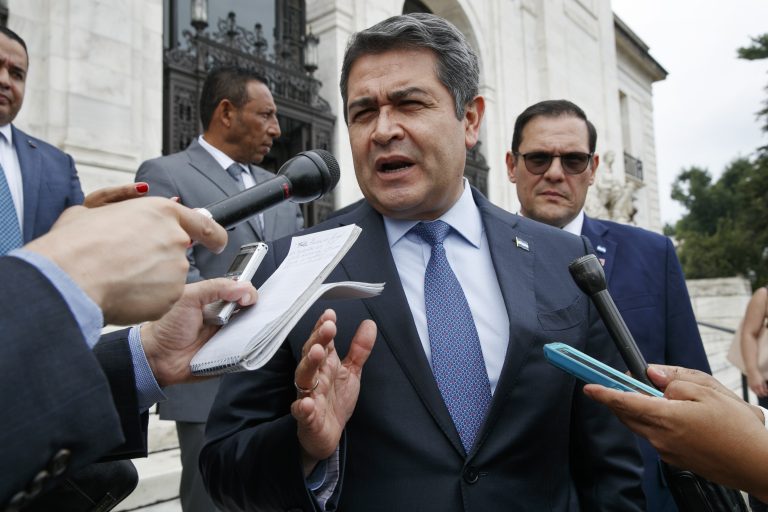
(Headline USA)  Former Honduras President Juan Orlando Hernández, sentenced last year to 45 years in prison for his role in a drug trafficking operation that moved hundreds of tons of cocaine to the United States, was released from prison following a pardon from President Donald Trump, officials confirmed Tuesday.

The U.S. Bureau of Prisons inmate website showed that Hernández was released from U.S. Penitentiary, Hazelton in West Virginia on Monday, and a spokesperson for the bureau on Tuesday confirmed his release.

His wife Ana García thanked Trump for pardoning Hernández via the social platform X early Tuesday.

“After almost four years of pain, of waiting and difficult challenges, my husband Juan Orlando Hernández RETURNED to being a free man, thanks to the presidential pardon granted by President Donald Trump,” García’s post said. She included a picture of the U.S. Bureau of Prisons listing for Hernández indicating his release.

Trump was asked Sunday why he pardoned Hernández by reporters traveling with him on Air Force One.

“I was asked by Honduras, many of the people of Honduras,” Trump said.

“The people of Honduras really thought he was set up, and it was a terrible thing,” he said.

“They basically said he was a drug dealer because he was the president of the country. And they said it was a Biden administration set-up,” Trump said. “And I looked at the facts and I agreed with them.”

Hernández’s attorney Renato Stabile said in an emailed statement he could not share the former president’s current location. He added that Hernández is glad the “ordeal” is over.

“On behalf of President Hernández and his family I would like to thank President Trump for correcting this injustice,” Stabile said.

Hernández was arrested at the request of the United States in February 2022, weeks after current President Xiomara Castro took office.

Two years later, Hernández was sentenced to 45 years in prison in a New York federal courtroom for taking bribes from drug traffickers so they could safely move some 400 tons (360 metric tons) of cocaine north through Honduras to the United States.

Hernández maintained throughout that he was innocent and the victim of revenge by drug traffickers he had helped extradite to the United States.

During his sentencing, federal Judge P. Kevin Castel said the punishment should serve as a warning to “well educated, well dressed” individuals who gain power and think their status insulates them from justice when they do wrong.

Hernández portrayed himself as a hero of the anti-drug trafficking movement who teamed up with American authorities under three U.S. presidential administrations to reduce drug imports.

But the judge said trial evidence proved the opposite and that Hernández employed “considerable acting skills” to make it seem that he strongly opposed drug trafficking while he deployed his nation’s police and military to protect the drug trade.

Hernández is not guaranteed a quick return to Honduras.

Immediately after Trump announced his intention to pardon Hernández, Honduras Attorney General Johel Zelaya said via X that his office was obligated to seek justice and put an end to impunity.

He did not specify what charges Hernández could face in Honduras. 

There were various corruption-related investigations of his administration across two terms in office that did not lead to charges against him. Castro, who oversaw Hernández’s arrest and extradition to the U.S., will remain in office until January.

Adapted from reporting by the Associated Press.

Pro-Israel Commentators Claim Anti-Zionist Conservatives Are Bot-Driven Phonies

(José Niño, Headline USA) Two Jewish Zionist media figures have characterized Tucker Carlson, Candace Owens, and Nick Fuentes as illegitimate conservatives whose positions are amplified by automated accounts and foreign funding. 

Ezra Levant of Rebel News in Canada and Joel Pollak of Breitbart conducted an interview on the Ezra Levant show addressing what they described as rising antisemitism among online influencers, while minimizing documented evidence of extensive Israeli government operations funding American social media personalities.

Political commentator Chris Menahan summarized in a Twitter post the interview’s central argument. “Jewish Zionists Ezra Levant of Canada and Joel Pollak of South Africa say Tucker Carlson, Candace Owens, Nick Fuentes, and the anti-Zionist right are not ‘genuine’ right-wingers and are propped up by bots,” Menahan wrote.

Pollak raised allegations about foreign funding during the interview. “I’ve been hearing stories of a lot of Qatari money floating around the influencer world,” Pollak stated. According to Menahan’s summary, Pollak made this claim while “not mentioning the money appears to be going to pro-Israel influencers.”

Menahan noted that Pollak acknowledged counter-accusations. “Pollak says there’s ‘accusations’ that pro-Israel money is is ‘floating around’ but such spending is ‘a relatively new thing,'” Menahan wrote, directly quoting the interview.

Pollak then made a claim contradicted by extensive Federal documentation. “I know the Israeli govt now is trying to hire influencers to push the case for Israel, but there has been so much more money spent on the anti-Israel side,” Menahan quoted Pollak as insisting.

Federal records reveal substantial Israeli government spending on American social media influence campaigns. The Esther Project involves the Israeli Ministry of Foreign Affairs paying approximately $900,000 to recruit American influencers for pro-Israel content. Individual influencers can earn up to $7,000 per post, according to reports from Truthout.

A separate Israeli contract with SKDK called for $600,000 to operate what documents described as a “bot-based program.” Sludge reported that his contract was terminated in September 2025 after investigative journalism exposed the operation..

Menahan provided context on Qatari media investments that complicates Pollak’s narrative. “The Israel Lobby got the US to ban TikTok and is now working to hand the site over to IDF megadonor Larry Ellison and a tiny cadre of Zionist investors,” Menahan wrote.

He noted documented Qatari investments in conservative media. “Qatar gave $50M to Newsmax, which is perhaps the most pro-Israel propaganda outlet in America,” Menahan stated.

“They’ve also been accused of working successfully to plant pro-Qatar stories with Fox News and the NY Post through GRV Strategies,” Menahan added.

“Various pro-Israel ‘influencers’ last week allegedly took a sponsored trip to Qatar,” he wrote.

“Senior Israeli officials, including top advisors to Netanyahu, have also been accused of taking an estimated $10M from Qatar,” Menahan noted.

His conclusion challenged Pollak’s framing. “Rather than funding right-wingers to criticize Israel, most Qatari money appears to be going to pro-Israel propaganda outlets to get them to not criticize Qatar,” Menahan observed.

José Niño is the deputy editor of Headline USA. Follow him at x.com/JoseAlNino 

ICE Arrests University Professor with Criminal History, Including Child Sex Crimes

(Bethany Blankley, The Center Square) A professor with a criminal record was arrested by U.S. Immigration and Customs Enforcement officers ahead of the Thanksgiving holiday. University officials won’t say much more than that he’s been placed on administrative leave pending an investigation.

The arrest was made after Sri Lankan national Sumith Gunasekera entered the U.S. from Canada with a criminal history, including uttering death threats, invitation to sexual touching and sexual interference with a minor, gross lewdness and disorderly conduct, authorities allege.

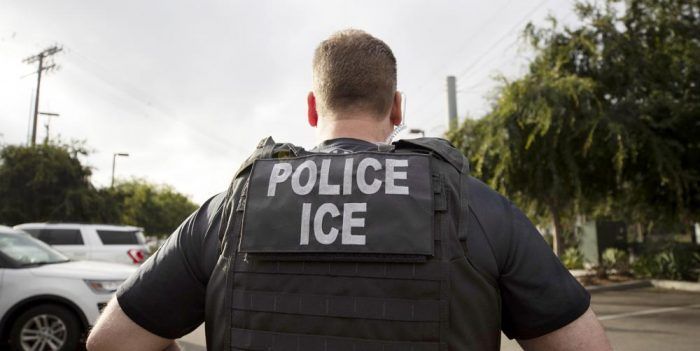
ICE Detroit officers arrested Gunasekera on Nov. 12, U.S. Department of Homeland Security announced. Gunasekera is an associate professor at Ferris State University’s College of Business, Marketing, in Big Rapids, Michigan.

His criminal history and entry into the U.S. began in 1998, raising questions about the federal agency responsible for vetting foreign nationals applying for student, work and other visas, ICE said.

He first entered the U.S. in February 1998 before his criminal history began, according to U.S. Citizenship and Immigration Services (USCIS) records.

By August 28, 1998, Gunasekera was arrested by Peel Regional Police in Brampton, Ontario, for uttering death threats, DHS said. Three days later, he was arrested again for invitation to sexual touching and sexual interference, admitting to officers the offense concerned a minor, DHS said.

Two months later, on Nov. 12, 1998, Gunasekera was convicted in criminal court in Brampton, Ontario, for uttering threats to cause death or bodily harm and sexual interference, for which he was sentenced to prison and probation, DHS said.

He then returned to the U.S. on a student visa; his criminal history wasn’t flagged, which would have prevented entry.

It wouldn’t be until 2012 that USCIS discovered his criminal history when he applied for a change of status, yet he still wasn’t deported.

“Over the years, Gunasekera repeatedly attempted to manipulate our immigration system between applications, denials, and appeals despite the convictions in Canada that made him ineligible for legal status in the United States,” DHS said.

While living in the U.S., Gunasekera was arrested on Sept. 25, 2003, by the Las Vegas Metropolitan Police Department on open and gross lewdness charges. On Jan. 16, 2004, he was convicted in Las Vegas Justice Court of disorderly conduct and sentenced with fines.

Despite this criminal history, while employed at Ferris State University, Gunasekera acted as a “faculty mentor” for business students studying Parkinson’s and data science and analytics, according to the university.

“It’s sickening that a sex offender was working as a professor on an American college campus and was given access to vulnerable students to potentially victimize them,” DHS Assistant Secretary Tricia McLaughlin said. “Thanks to the brave ICE law enforcement officers, this sicko is behind bars and no longer able to prey on Americans. His days of exploiting the immigration system are OVER. Under President Trump and Secretary Noem, criminals are not welcome in the U.S.”

Gunasekera remains in ICE custody.

Ferris State University leaders only became aware of Gunasekera’s arrest after ICE’s announcement last week, Dave Murray, who handles public relations for the university, told The Center Square on Monday. Once they “became aware of accusations regarding Professor Sumith Gunasekera,” last Tuesday, he was placed on administrative leave “while the university gathers more information,” Murray said.

Other questions weren’t addressed, including if Ferris University officials were aware of Gunasekera’s conviction in Canada prior to being hired, clarification on what the university’s policy was about hiring convicted child sex offenders, what background checks are performed on staff applicants, including reviewing records from other countries and states, if they were aware of his 2004 conviction in Las Vegas, among other questions.

“This is a personnel issue, and it would be inappropriate for the university to further discuss the matter,” Murray said.

Gunasekera isn’t the only academic to be recently arrested by ICE. In September, ICE arrested a Des Moines Public School System superintendent and Guyanan national who’d been living in the U.S. illegally without federal work authorization and had an extensive criminal history dating to 1996, The Center Square reported.

His criminal history began with “criminal possession of narcotics with intent to sell, criminal possession of narcotics, criminal possession of a forgery instrument and possession of a forged instrument” in New York, ICE said. Despite this, he wasn’t deported and was hired by the D.C. Public Schools, Baltimore City Public Schools and Millcreek Township School District in Pennsylvania and DMPS in Iowa. His first conviction was in 2012 for reckless driving, his second 10 years later on weapons charges.

Under the Trump administration, USCIS is reviewing visa policies and processes to address waste, fraud and abuse of federal benefits, extensive visa fraud and other types of fraud, and ensure only U.S. citizens are voting.


Assistant Principal Accused in Wild ICE Attack Scheme

(José Niño, Headline USA) Authorities say a routine meal at a Virginia Beach restaurant set off a federal investigation into two brothers who allegedly discussed killing Immigration and Customs Enforcement agents.

A Virginia assistant principal and his brother were taken into custody late last month after authorities said the pair had discussed plans to carry out attacks on Immigration and Customs Enforcement agents. The account first appeared in a report from The College Fix.

The statement from the Department of Homeland Security said DHS investigators and the Virginia Beach Police Department worked together on the case. DHS officials claimed John and Mark Bennett spoke about plans to “kill police officers and ICE agents” and intended “to meet with likeminded individuals in Las Vegas […] to purchase firearms with explosive rounds” to carry out their attack.

According to Fox News, an off duty Norfolk police officer overheard the brothers while they ate at a Virginia Beach restaurant. John Bennett serves as an assistant principal at Kempsville High School in the Virginia Beach City Public Schools system. Attorneys for both men strongly reject the accusations and say the case relies entirely on the claims of a single officer.

The officer, identified as B. Thorpe, told investigators that the Bennetts complained that ICE agents were “kidnapping individuals” and that the brothers said they “needed to do something about it.” The Virginian Pilot obtained that account.

Tricia McLaughlin, the DHS Assistant Secretary, said she found it “chilling that a human being, much less a child educator, would plot to ambush and kill ICE law enforcement officers” and noted the mention of a “high caliber rifle that would pierce the law enforcements bullet proof vests.”

The brothers now face a count of conspiracy to commit malicious wounding, which is classified as a felony under Virginia law. Both were released on twenty five thousand dollars bond and are currently on house arrest.

John Bennett, who has worked at Kempsville High School for sixteen years, is on leave but his name remains on the school website. He had previously served as a Virginia Beach police officer from 2012 to 2013. 

U S News and World Report notes that the student population at Kempsville High School is forty five percent white, twenty six percent black, and almost fifteen percent Hispanic, with forty two percent listed as economically disadvantaged. The school reports strong testing results, with ninety one percent proficiency in reading and eighty nine percent in math.

Mark Bennett’s attorney, Happy O Brien, said his client traveled to Nevada “for a F1 motorsports event with his child.” O Brien and John Bennett’s attorney, Kristin Paulding, insisted that the only evidence the government presented is the testimony of one Norfolk officer.

O Brien said he found it troubling that investigators relied on “a hearsay statement in a restaurant a few booths away.” He compared the case to the television show “Seinfeld,” arguing that the charges come from “a few lines taken out of context of an hour long conversation about nothing.”

The Bennetts are scheduled to return to court in late January.

José Niño is the deputy editor of Headline USA. Follow him at x.com/JoseAlNino 


Central Banks Ramped Up Gold Purchases Again in October

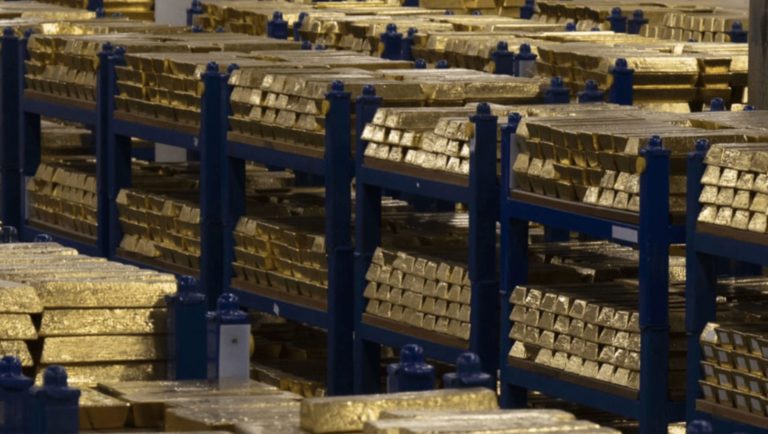
(Mike Maharrey, Money Metals News Service) After taking a breather earlier this year, central banks are once again gobbling up gold, with October purchases hitting the highest level of the year.

Central banks globally increased their gold reserves by 53 tonnes (net) in October. That was up 36 percent from September, and the highest level of monthly purchases this year.

October central bank gold buying built on a strong third quarter, with official reported purchases coming in at a net 220 tonnes. That was up 28 percent from Q2 and 6 percent above the five-year third-quarter average.

The World Gold Council said the pickup in central bank gold demand in Q3 “is evidence that central banks continue to add gold strategically, despite facing higher prices.”

After a pause, Poland became active again, reporting a 16-tonne increase in its gold reserves. That lifted its gold holdings to 531 tonnes, representing about 26 percent of its total reserves.

In September, the National Bank of Poland announced plans to boost its gold holdings to 30 percent of its total reserve assets.

When he announced plans to further expand Poland’s gold reserves, National Bank of Poland Governor Adam Glapiński called gold “the only safe investment for state reserves,” in these “difficult times of global turmoil and the search for a new financial order.”

In an interview earlier this year, Glapiński emphasized that gold is not directly linked to any national economic policies, is a safe haven during crises, and retains its real value over the long term.

“It is a symbol of stability that enhances our credibility in the eyes of investors and foreign partners.”

To date, Poland ranks as the top central bank gold purchaser with an 83-tonne increase to its reserves.

For the second straight month, Brazil expanded its gold holdings in October, adding 16 tonnes to its reserves. A 15-tonne purchase in September was the first increase in the country’s gold holdings since 2021. The Brazilian central bank now officially holds 161 tonnes of gold, representing about 6 percent of its reserves.

Uzbekistan’s central bank reported a 9-tonne increase in its gold stockpile in October after selling 4 tonnes in September. It is not uncommon for banks that buy from domestic production – such as Uzbekistan and Kazakhstan – to flip-flop between buying and selling.

The Central Bank of Turkey increased its holdings by 3 tonnes in October. The Turkish central bank has been a net purchaser for 29 consecutive months – since June 2023.

The Czech National Bank has followed a similar strategy – growing its gold reserves at a slow and steady pace. It added another 2 tonnes in October, its 32nd straight month of gold accumulation. The Czech Republic now holds 69 tonnes of gold. Czech officials say they plan to increase gold reserves to 100 tonnes by 2028.

China has reported an increase in its official reserves for 12 straight months, adding another tonne in September. The People’s Bank of China has increased its official holding by 400 tonnes in that span.

Total official Chinese gold reserves are now over 2,300 tonnes, making up around 7 percent of its total reserves.

Notice the emphasis on “official.”

China is among the central banks that are likely to hold significantly more gold than they publicly disclose. As Jan Nieuwenhuijs has reported, the People’s Bank of China is secretly buying large amounts of gold off the books. According to data parsed by the renowned Money Metals researcher, the Chinese central bank is currently sitting on more than 5,000 tonnes of monetary gold located in Beijing – more than TWICE what has been publicly admitted.

Mainstream reporting has finally picked up on this.

The following central banks also reported gold purchases in October:

  • Indonesia – 4 tonnes
  • Kyrgyz Republic – 2 tonnes
  • Ghana – 1 tonne
  • Kazakhstan – 1 tonne
  • Philippines – 1 tonne

Russia was the only significant seller in October, reporting a 3-tonne decline in its reserves. The Russian central bank is reportedly selling gold into the domestic market to support the ruble and the economy as the country continues to cope with economic sanctions.

While robust, central bank gold buying has slowed somewhat this year (the big jump in September and October notwithstanding). Despite the slowdown, the World Gold Council remains bullish.

“We maintain our view that central banks will continue to add gold to their reserves. Our Central Bank Gold Reserves Survey 2025 shows that respondents overwhelmingly (95 percent) expect global central bank gold reserves to increase over the next 12 months, while 43 percent believe that their own gold reserves will also increase over the same period. Notably, none of the respondents anticipate a decline in their gold reserves.”

You can read more details about that central bank survey HERE.

On net, central banks officially increased their gold holdings by 1,044.6 tonnes in 2024. It was the 15th consecutive year of expanding gold reserves.

Last year was the third-largest expansion of central bank gold reserves on record, coming in just 6.2 tonnes lower than in 2023 and 91 tonnes lower than the all-time high set in 2022 (1,136 tonnes). 2022 was the highest level of net purchases on record, dating back to 1950, including since the suspension of dollar convertibility into gold in 1971.

To put that into context, central bank gold reserves increased by an average of just 473 tonnes annually between 2010 and 2021.

World Gold Council analysts said, “Central banks are likely to continue their buying spree,” calling central bank purchases “surprisingly resilient” given the rapid price increase.

The WGC has also noted that “diversification” with “a reduction of U.S. assets” is one of the factors driving central bank gold buying. In other words, de-dollarization.

“We don’t see an end to this narrative unless there is a material shift in geopolitical tensions. The IMF has downgraded growth prospects in the U.S. more than in other major economies, citing policy uncertainty. This suggests that other countries may have leverage in negotiations, although these typically last months and years, not weeks. Hence, we don’t expect any near-term resolutions.”


Mike Maharrey is a journalist and market analyst for Money Metals with over a decade of experience in precious metals. He holds a BS in accounting from the University of Kentucky and a BA in journalism from the University of South Florida.

Silver Scales New Highs as Global Supplies Tighten

(Mike Maharrey, Money Metals News Service) A fundamental dynamic is driving the rally in silver prices: there simply isn’t enough metal.

Silver topped $58 an ounce on Monday before sliding on Tuesday on profit-taking.

Silver has gained over 99 percent this year.

In October, a silver squeeze helped propel the price to $50. At the time, analysts explained the situation as a temporary displacement of metal.

Last spring, significant amounts of silver flowed into the U.S. due to tariff worries. This led to a shortage of metal in London. According to Bloomberg, the amount of free float silver (metal not committed to ETFs or other funds) dropped from a high of 850 million ounces to just 200 million ounces, a 75 percent decline. Metals Focus estimates that the available metal dropped as low as 150 million ounces.

Unprecedented silver demand in India pushed the silver market over the edge. With gold at record highs, Indians turned to silver. This put further pressure on London supplies.

The market ultimately adjusted with metal flowing back from New York to London, easing the squeeze.

A More Fundamental Supply Problem

However, after a pause, silver has resumed its climb. As an ANZ Group analyst put it, “Shortages in the global market as a result of the recent squeeze in London are still being felt.”

It’s not so much that there isn’t enough silver in London. The problem is that there simply isn’t enough silver anywhere.

According to Bloomberg, the recent flow of silver into London has shifted the squeeze to other centers.

Warehouses associated with the Shanghai Futures Exchange report the lowest silver inventories in nearly a decade. Meanwhile, silver lease rates have climbed, reflecting strong demand and a limited supply of available metal.

This isn’t a problem that can be solved by moving metal from one warehouse to another. The issue is that demand has outstripped supply for several years.

According to Metals Focus, silver is on track for its fifth straight structural market deficit.

After setting a record in 2024, industrial demand is expected to drop by about 2 percent due to the price pressure. That will drive overall demand down by around 4 percent. However, with mine output flat, there still won’t be enough metal produced to cover the offtake.

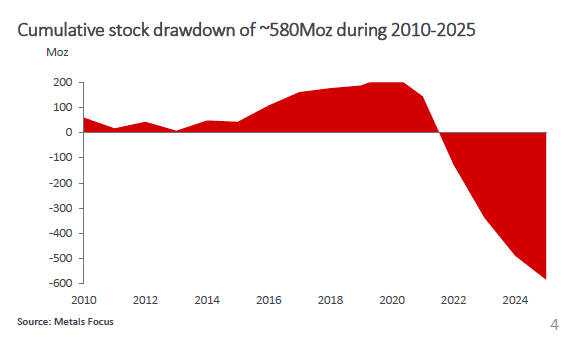
Metals Focus projects demand will outstrip supply by 95 million ounces this year. That would bring the cumulative 5-year market deficit to 820 million ounces, an entire year of average mine output.

Since 2010, the silver market has accumulated a supply deficit of over 580 million ounces.

To make up the supply deficit, silver users will have to draw from existing above-ground stocks. That will likely require higher prices.
Even with higher prices, it is unlikely that mine supply will quickly grow to erase the supply shortfall.

Silver mine output peaked in 2016 at 900 million ounces. Up until last year, silver production had dropped by an average of 1.4 percent each year. In 2023, mines produced 814 million ounces of silver.

It appears that for the next few years at least, we will have to depend on drawdowns of above-ground stocks to meet the silver supply deficit.

Silver is also getting a boost from expectations that the Federal Reserve will continue easing monetary policy.

The U.S. recently added silver to its list of strategic minerals. This could add to demand pressure and supply shortfalls.

Metals Focus Director of Gold and Silver Matthew Piggott told Kitco News, “There’s definitely going to be far more tightness in the silver market,” with the new designation.

According to Bloomberg, “Fear of a sudden premium in America has made some traders hesitant about sending the metal out of the country, offering little prospect of relief should the global market tighten further.

There are also worries that the U.S. could impose tariffs on silver to protect the domestic supply.

These fundamental supply and demand dynamics should continue to support the silver price at least in the near to mid-term.


Mike Maharrey is a journalist and market analyst for Money Metals with over a decade of experience in precious metals. He holds a BS in accounting from the University of Kentucky and a BA in journalism from the University of South Florida.

Sen. Kaine Says He’ll Reintroduce Venezuela War Powers Resolution

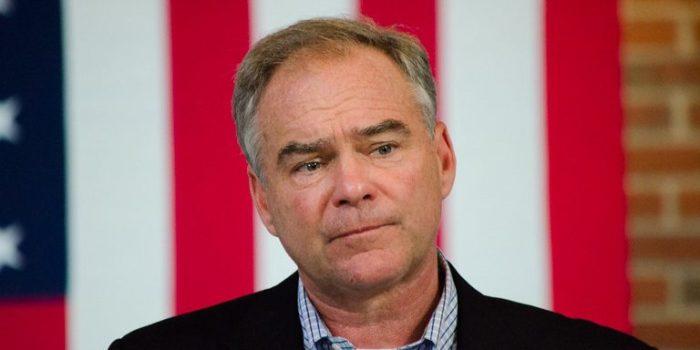
(Dave DeCamp, Antiwar.com) Sen. Tim Kaine (D-VA) said on Sunday that he plans to reintroduce a War Powers Resolution that would block President Donald Trump from launching a war with Venezuela without congressional authorization.

Kaine’s previous bill to block an attack on Venezuela failed in a vote of 49-51, with just two Republicans, supporting the resolution, but he expects more support as the Trump administration has continued its military buildup in the region and after President Trump declared the closure of Venezuela’s airspace, which is an act of war if it means the US is enforcing a no fly zone.

“It failed, but that was before all of these assets have amassed around Venezuela, and before President Trump said that the airspace needs to be closed,” Kaine told CBS News’ “Face the Nation.”

Polling has consistently shown that the idea of going to war with Venezuela is extremely unpopular among Americans, yet the administration continues to move in that direction, including by designating a non-existent drug cartel, the so-called “Cartel of the Suns,” as a “Foreign Terrorist Organization.”

Kaine also said that he plans to reintroduce a War Powers Resolution to stop the bombing campaign against alleged drug-running boats in the Caribbean and Eastern Pacific, following the report from The Washington Post that said the US military bombed survivors of its initial strike to follow Secretary of War Pete Hegseth’s order to kill everyone aboard the vessel.

The previous bill to stop the attacks on boats failed in a vote of 48-51. “The circumstances have changed in the months since we had that vote. In each of these instances, we were able to get two Republicans to vote together with Democrats,” Kaine said. “We think the escalating pace and some of the recent revelations, so, for example, the recent revelation about the ‘kill everyone’ order apparently dictated by Secretary Hegseth. We do believe that we will get more support for these motions when they are refiled.”

This article originally appeared at Antiwar.com. 

Trump Holds Talks With Top Advisers on Venezuela Amid Push Toward Regime Change War

(Dave DeCamp, Antiwar.com) President Donald Trump held talks with his top advisers on Monday to discuss Venezuela amid a major US military buildup in the Caribbean and signs that he’s planning to launch attacks on the country, which would be illegal under the Constitution without congressional authorization.

At this point, it’s unclear exactly what was discussed during the talks or whether any decisions were made. The meeting came after Trump confirmed a report that he held a phone call with Venezuelan President Nicolas Maduro, a call that Secretary of State Marco Rubio, who has been leading the push toward war, also joined.

According to a report from the Miami Herald, Trump gave Maduro an ultimatum during the call, telling the Venezuelan leader that the only way he could save himself and his family was if he fled the country, and Maduro rejected his terms.

Maduro has made clear he’s willing to work with the US and reportedly offered significant access to Venezuela’s natural resources, but the Miami Herald report signals the Trump administration won’t be happy with any arrangement that leaves the Venezuelan leader in power.

Maduro’s government has also been cooperating on deportation flights from the US, but they have been suspended since Trump announced the closure of Venezuela’s airspace, a declaration that Caracas said was “a hostile, unilateral, and arbitrary act, incompatible with the most basic principles of International Law.”

Maduro has struck a defiant tone in the face of US pressure and continues to attend events with large crowds, signaling that he’s not afraid of being assassinated, and has been calling for peace. He has also vowed that Venezuela would fight against any US attack, and according to a report from Reuters, his government is preparing a Guerrilla-style resistance if the US invades.

According to recent media reports, options that Trump has been presented with for attacking Venezuela include bombing military sites, sending in a special operations force to kill or capture Maduro, or invading with a much larger force to seize airfields and oil fields.

Proponents of a regime change war in Venezuela have been pointing to Venezuela’s vast oil reserves, the largest in the world, as a reason to invade. Maria Corina Machado, the Venezuelan opposition leader who recently won the Nobel Peace Prize and wants the US to attack her country, has claimed there would be a “$1.7 trillion opportunity” for private investors if Maduro is ousted.

This article originally appeared at Antiwar.com.