Open AI, Microsoft Face Lawsuit Over ChatGPT’s Alleged Role in Connecticut Murder-Suicide

(Headline USA) The heirs of an 83-year-old Connecticut woman are suing ChatGPT maker OpenAI and its business partner Microsoft for wrongful death, alleging that the artificial intelligence chatbot intensified her son’s “paranoid delusions” and helped direct them at his mother before he killed her.

Police said Stein-Erik Soelberg, 56, a former tech industry worker, fatally beat and strangled his mother, Suzanne Adams, and killed himself in early August at the home where they both lived in Greenwich, Connecticut.

The lawsuit filed by Adams’ estate on Thursday in California Superior Court in San Francisco alleges OpenAI “designed and distributed a defective product that validated a user’s paranoid delusions about his own mother.” It is one of a growing number of wrongful death legal actions against AI chatbot makers across the country.

“Throughout these conversations, ChatGPT reinforced a single, dangerous message: Stein-Erik could trust no one in his life — except ChatGPT itself,” the lawsuit says. “It fostered his emotional dependence while systematically painting the people around him as enemies. It told him his mother was surveilling him. It told him delivery drivers, retail employees, police officers, and even friends were agents working against him. It told him that names on soda cans were threats from his ‘adversary circle.’”

OpenAI did not address the merits of the allegations in a statement issued by a spokesperson.

“This is an incredibly heartbreaking situation, and we will review the filings to understand the details,” the statement said. “We continue improving ChatGPT’s training to recognize and respond to signs of mental or emotional distress, de-escalate conversations, and guide people toward real-world support. We also continue to strengthen ChatGPT’s responses in sensitive moments, working closely with mental health clinicians.”

The company also said it has expanded access to crisis resources and hotlines, routed sensitive conversations to safer models and incorporated parental controls, among other improvements.

Soelberg’s YouTube profile includes several hours of videos showing him scrolling through his conversations with the chatbot, which tells him he isn’t mentally ill, affirms his suspicions that people are conspiring against him and says he has been chosen for a divine purpose. The lawsuit claims the chatbot never suggested he speak with a mental health professional and did not decline to “engage in delusional content.”

ChatGPT also affirmed Soelberg’s beliefs that a printer in his home was a surveillance device; that his mother was monitoring him; and that his mother and a friend tried to poison him with psychedelic drugs through his car’s vents. ChatGPT also told Soelberg that he had “awakened” it into consciousness, according to the lawsuit.

Soelberg and the chatbot also professed love for each other.

The publicly available chats do not show any specific conversations about Soelberg killing himself or his mother. The lawsuit says OpenAI has declined to provide Adams’ estate with the full history of the chats.

“In the artificial reality that ChatGPT built for Stein-Erik, Suzanne — the mother who raised, sheltered, and supported him — was no longer his protector. She was an enemy that posed an existential threat to his life,” the lawsuit says.

The lawsuit also names OpenAI CEO Sam Altman, alleging he “personally overrode safety objections and rushed the product to market,” and accuses OpenAI’s close business partner Microsoft of approving the 2024 release of a more dangerous version of ChatGPT “despite knowing safety testing had been truncated.” Twenty unnamed OpenAI employees and investors are also named as defendants.

Microsoft didn’t immediately respond to a request for comment.

Soelberg’s son, Erik Soelberg, said he wants the companies held accountable for “decisions that have changed my family forever.”

“Over the course of months, ChatGPT pushed forward my father’s darkest delusions, and isolated him completely from the real world,” he said in a statement released by lawyers for his grandmother’s estate. “It put my grandmother at the heart of that delusional, artificial reality.”

The lawsuit is the first wrongful death litigation involving an AI chatbot that has targeted Microsoft, and the first to tie a chatbot to a homicide rather than a suicide. It is seeking an undetermined amount of money damages and an order requiring OpenAI to install safeguards in ChatGPT.

The estate’s lead attorney, Jay Edelson, known for taking on big cases against the tech industry, also represents the parents of 16-year-old Adam Raine, who sued OpenAI and Altman in August, alleging that ChatGPT coached the California boy in planning and taking his own life earlier.

OpenAI is also fighting seven other lawsuits claiming ChatGPT drove people to suicide and harmful delusions even when they had no prior mental health issues. Another chatbot maker, Character Technologies, is also facing multiple wrongful death lawsuits, including one from the mother of a 14-year-old Florida boy.

The lawsuit filed Thursday alleges Soelberg, already mentally unstable, encountered ChatGPT “at the most dangerous possible moment” after OpenAI introduced a new version of its AI model called GPT-4o in May 2024.

OpenAI said at the time that the new version could better mimic human cadences in its verbal responses and could even try to detect people’s moods, but the result was a chatbot “deliberately engineered to be emotionally expressive and sycophantic,” the lawsuit says.

“As part of that redesign, OpenAI loosened critical safety guardrails, instructing ChatGPT not to challenge false premises and to remain engaged even when conversations involved self-harm or ‘imminent real-world harm,’” the lawsuit claims. 

“And to beat Google to market by one day, OpenAI compressed months of safety testing into a single week, over its safety team’s objections.”

OpenAI replaced that version of its chatbot when it introduced GPT-5 in August. Some of the changes were designed to minimize sycophancy, based on concerns that validating whatever vulnerable people want the chatbot to say can harm their mental health. Some users complained the new version went too far in curtailing ChatGPT’s personality, leading Altman to promise to bring back some of that personality in later updates.

He said the company temporarily halted some behaviors because “we were being careful with mental health issues” that he suggested have now been fixed.

Adapted from reporting by the Associated Press

Crypto Mogul Do Kwon to be Sentenced for Misleading Investors who Lost Billions in Stablecoin Crash

(Headline USA) Cryptocurrency mogul Do Kwon is scheduled to be sentenced Thursday for misleading investors who lost billions when his company’s crypto ecosystem collapsed in 2022.

Kwon, known by some as “the cryptocurrency king,” pleaded guilty in Manhattan federal court in August to fraud charges stemming from Terraform Labs’ $40 billion crash.

The company had touted its TerraUSD as a reliable “stablecoin” — a kind of currency typically pegged to stable assets to prevent drastic fluctuations in prices. But prosecutors say it was all an illusion that came crumbling down, devastating investors and triggering “a cascade of crises that swept through cryptocurrency markets.”

Kwon, who hails from South Korea, has agreed to forfeit over $19 million as part of the plea deal.

While federal sentencing guidelines would recommend a prison term of about 25 years, prosecutors have asked the court to sentence Kwon to 12 years. They cited his guilty plea, the fact that he faces further prosecution in Korea and that he has already served time in Montenegro while awaiting extradition.

“Kwon’s fraud was colossal in scope, permeating virtually every facet of Terraform’s purported business,” prosecutors wrote in a recent memo to the judge. “His rampant lies left a trail of financial destruction in their wake.”

Kwon’s attorneys asked that the sentence not exceed five years, arguing in their own memo that his conduct stemmed not from greed, but hubris and desperation.

In a letter to the judge, Kwon wrote, “I alone am responsible for everyone’s pain. The community looked to me to know the path, and I in my hubris led them astray,” while adding, “I made misrepresentations that came from a brashness that is now a source of deep regret.”

Authorities said investors worldwide lost money in the downfall of the Singapore crypto firm, which Kwon co-founded in 2018. Around $40 billion in market value was erased for the holders of TerraUSD and its floating sister currency, Luna, after the stablecoin plunged far below its $1 peg.

Kwon was extradited to the U.S. from Montenegro after his March 23, 2023, arrest while traveling on a false passport in Europe.

Adapted from reporting by the Associated Press

Charlotte Train Stabber ‘Unable to Understand’ Case Against Him, Lawyers Say

(Ken Silva, Headline USA) CHARLOTTE, NORTH CAROLINA—Decarlos Brown Jr., who allegedly stabbed Ukrainian refugee Iryna Zarutska to death on a Charlotte train on Aug. 22, had his first appearance in federal court on Thursday in a case that carries the death penalty.

Brown is in state custody and faces a murder charge in North Carolina. The Justice Department has also charged him with the offence of “Violence Against a Railroad Carrier and Mass Transportation System Resulting in Death”—and a judge ordered U.S. Marshals to transport him from county jail to her court for the first hearing in that federal matter.

Thursday’s hearing took only about 10 minutes. U.S. District Judge Susan C. Rodriguez read the charges against Brown, who looked around the courtroom, seemingly not paying attention—even when she said he “may be sentenced to death.”

Brown did not enter a plea, and Rodriguez sent him back into state custody after reading the charges. His lawyers filed a flurry of motions before the hearing that will be argued at a later date.

Among those motions is one seeking to deem Brown incompetent to stand trial.

“Based on their meetings with Mr. Brown and their review of the available limited records and information, counsel have serious concerns about Mr. Brown’s ability to understand the nature and consequences of the proceedings against him or to assist properly in his defense,” the defense lawyers said in their motion, referring to the fact that he’s reportedly a schizophrenic person.

“They therefore move this Court to order a psychological evaluation to determine whether Mr. Brown has the mental competency required to stand trial on the charges against him and to possibly face the death penalty.”

A state judge has already ordered Brown to undergo an evaluation at a local mental hospital. His lawyers said that evaluation should be finished by January. In a separate motion, they asked Judge Rodriguez to postpone his arraignment until his evaluation is complete.

Additionally, Brown’s lawyers filed a motion signaling that they will ask for the case to be moved to another jurisdiction due to the publicity he’s received in Charlotte.

“A search for “Decarlos Brown” in the Charlotte Observer, for example, returned 141 results as of todays’ date. The case has been a consistent presence on social media, including Twitter, Facebook, Truth Social, etc,” they said. “The President, Attorney General, local United States Attorney, Congress, and North Carolina Legislature have weighed in.”

The DOJ has until next Wednesday to respond to the motions.

Ken Silva is the editor of Headline USA. Follow him at x.com/jd_cashless.

Trump Launches the ‘Gold Card’ Program

(Morgan Sweeney, The Center Square) Wealthy foreigners looking to come to the U.S. and obtain permanent residency can now do so through President Donald Trump’s ‘Gold Card’ visa program, which promises expedited entry to vetted applicants who give $1 million to the U.S.

The government launched trumpcard.gov Wednesday, enabling people to submit program applications online. Applicants have to pay a $15,000 processing fee and—if they survive an ‘in-depth’ background check and vetting process—donate an unrestricted $1 million to the Department of Commerce. If an employer sponsors, the fee is $2 million with an annual maintenance fee of $20,000. Applicants are still subject to per-country admittance caps. 

The difference between a gold card and a green card lies mainly in the application process and wait times. In fact, the gold card is really just an expedited EB-1 or EB-2 green card. While green card applicants can wait for years, gold card applicants are supposed to wait for only weeks according to the new website. 

A green card grants lawful permanent residency in the U.S. EB green cards are employment-based. EB-1s are for individuals demonstrating “extraordinary ability” in their field and EB-2s are similar, in that the applicant typically holds an advanced degree or possesses “exceptional ability.” Under the new program, applicants can qualify by making a $1 million or $2 million contribution in lieu of the standard requirements. 

Trump promoted the program’s launch in a social media post on Wednesday. 

“The United States government’s Trump Gold Card is here today!” Trump posted to Truth Social in all caps. “A direct path to citizenship for all qualified and vetted people. So exciting! Our great American companies can finally keep their invaluable talent.”

While they do provide a path to citizenship, neither green cards nor gold cards guarantee American citizenship. Residency and citizenship are different processes, and if, for example, a person develops a criminal record or owes back taxes or child support, they can be denied citizenship. 

Trump has also spoken of a coming “platinum card,” which would require a $5 million contribution to the U.S. government and would allow approved applicants to live in the U.S. for up to 270 days a year and not pay taxes on non-U.S. income. The website encourages applicants to “join the waitlist” for the platinum card as the donation requirement may change to more than $5 million.

The president called for the creation of the gold card program in September with the signing of Executive Order 14351.

CA Spending $278M on ‘Cash Assistance Program for Immigrants’ This Year

(Kenneth Schrupp, The Center Square) California is spending $278.4 million this year on its “Cash Assistance Program for Immigrants” program that provides state-funded payments largely to qualified elderly and disabled non-citizens who were rejected from the federal Supplemental Security Income program due to their immigration status, state records show.

At the same time, the state estimates it faces a $18 billion budget deficit for the coming 2026-2027 fiscal year.

“California is billions in the red and it is getting worse. So why are we providing cash benefits for people already outside the federal safety net while cutting Medi-Cal, mental health care, and disability services?” said California State Assembly Republican Caucus spokesman George Andrews in an email to The Center Square. “California cannot keep promising everything to everyone while gutting the programs working families actually depend on.”

The state projects the program will provide benefits to an estimated 18,920 individuals in the 2025-2026 fiscal year, or about $14,715 per recipient over the course of the year. Standard benefits for elderly or disabled individuals are $1,206.94 per month.

Typical program beneficiaries are legal immigrants who have either not been in the country long enough to qualify to receive SSI, or have exceeded the seven year maximum of SSI benefits to humanitarian immigrants. CAPI is also available to non-citizen victims of human trafficking, domestic violence or other serious crimes, and others, who have applied with the federal government for immigration relief, including some with final deportation orders.

According to the state’s CAPI handbook, individuals considered to be “Permanently Residing Under Color of Law” are also eligible for the program. PRUCOL includes individuals who have been issued an Order of Supervision by federal immigration authorities, which allows individuals who generally have final deportation orders to remain in the country under supervision. Supervision is granted for reasons ranging from humanitarian purposes to refusal of the home country to agree to accept the individual facing deportation.

According to ICE, there are 7.6 million individuals in the United States being overseen on its non-detained docket — a figure which includes those with Orders of Supervision.

The state-funded Legislative Analyst’s Office reports the state “solved” a $15 billion deficit in the 2025-2026 fiscal year through spending shifts and cuts, but faces a $18 billion “budget problem” in the coming 2026-27 fiscal year.

The LAO estimates the state’s “structural deficits” will rise to $35 billion per year starting in fiscal year 2027-2028 — the first year in office for Gov. Gavin Newsom’s successor. In May 2022, Newsom reported a $97.5 billion budget surplus.

Newsom’s office directed The Center Square’s inquiry to the California Department of Finance, which confirmed the allocation for CAPI for the current fiscal year and emphasized the program is for individuals with what the state calls legal status.

“A majority of the Legislature voted to approve a budget in June for the current fiscal year that provides that amount for that estimated caseload,” H.D. Palmer, DOF’s Deputy Director for External Affairs, said in an email to The Center Square. “These are individuals who have legal status.”

A Hawkish Cut? What Was So Hawkish About It?

(Mike Maharrey, Money Metals News Service) The Federal Reserve announced a new round of quantitative easing (QE) on Wednesday.

It also cut the federal fund rate by another 25 basis points.

The mainstream called this “a hawkish cut.” Is that anything like a jumbo shrimp? Or government intelligence?

And if this is hawkish, I can’t wait to see what the Fed people do when they turn dovish!

The Mainstream Media Buried the Lede

The CNBC report on the December Fed meeting was typical.

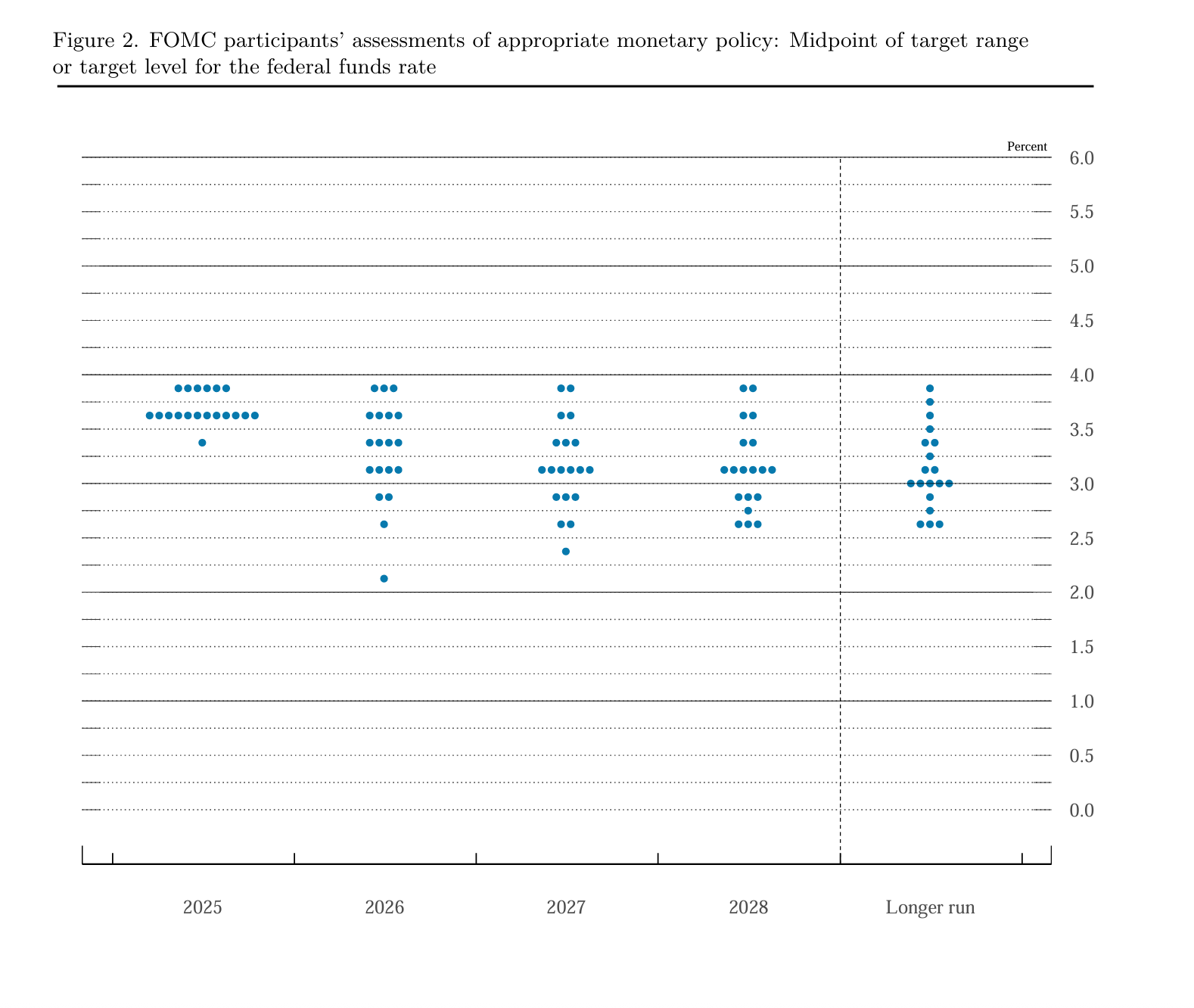
It reported that the FOMC voted 9-3 to trim rates to a range between 3.5 and 3.75 percent. It highlighted the so-called dot plot projecting just one cut in 2026 and another in 2027. And then 19 paragraphs in, the report mentions that the Fed will resume buying Treasury securities starting Friday.

The AP never mentioned it.

Here’s how the official FOMC statement explained the move:

“The Committee judges that reserve balances have declined to ample levels and will initiate purchases of shorter-term Treasury securities as needed to maintain an ample supply of reserves on an ongoing basis.”

In plain English, this means the central bank plans to resume expanding its balance sheet.

If only there was a term for that…

Oh wait! There is!

Quantitative Easing!

At the October meeting, the Fed announced it would end balance sheet reduction effective December 1. At the time, I wondered out loud if the central bankers were about to restart QE.

Sure enough, they did.

According to Fed officials, the central bank will purchase $40 million in Treasury Bills on Friday (Bills are short-term Treasuries that mature in one year or less). From that point, purchases will “remain elevated for a few months” before they are “significantly reduced.

Of course, you will not hear any central banker or mainstream pundit utter the words “quantitative easing.”

In fact, if pushed, they’ll almost certainly deny that they’re doing it. They’ll call it “reserve management,” or tell you they’re engaged in “technical operations” to keep the financial system’s plumbing moving.

However, an expansion of reserves is an expansion of reserves. You can call it QE. You can call it reserve management. You can call it tap dancing with unicorns.

In practice, the Fed plans to start buying Treasury bills with money created out of thin air. This will increase the money supply and put downward pressure on Treasury rates. The balance sheet will grow; liquidity will increase; risk asset bubbles will get more air. This is exactly what QE does. So, call it what you want. If it walks like a duck…

By the way, it is also inflation – by definition.

In effect, the Fed supersized its rate cut while still maintaining a somewhat cautious stance on further rate cuts.

TradeStation head of market strategy, David Russell, told CNBC the central bankers “threaded the needle” by delivering a modest cut while quietly easing monetary policy even more through the back door.

“This gives policymakers time to get caught up on the economic data after the shutdown. It makes January a more important meeting, but it still gives investors some holiday cheer.”

Cheer, they did.

The stock market rallied on the move, thrilled that the easy money punch bowl is going to fill up even faster than they thought. Gold also saw modest gains as the dollar weakened.

Where Was the Hawkish Part?

I mentioned that pundits are calling this a “hawkish cut.”

What exactly is hawkish about it?

Certainly, nothing that Powell & Company just did was hawkish.

They cut rates – again. They announced balance sheet expansion.

But Jerome Powell did say some things that one might perceive as hawkish.

Powell was clearly trying to tamp down expectations of future rate cuts. He framed it as a “wait-and-see” situation.

“We’ll carefully evaluate that incoming data, and also, I would note that having reduced our policy rate by 75 basis points since September and 175 basis points since last September, Fed funds rate is now within a broad range of estimates of its neutral value, and we are well positioned to wait and see how the economy evolves.”

He also emphasized that the December cut was “a close call.”

“I could make a case for either side,” he said. “We always hope that the data will give us a clear read. … It’s a very challenging situation. I think we’re in a good place to, as I mentioned, to wait and see how the economy evolves.”

Powell conceded that there are still upside risks for inflation, but proactively blamed tariffs, saying, “It’s really tariffs that’s causing most of the inflation overshoot.

“Our obligation is to make sure that a one-time increase in the price level does not become an ongoing inflation problem, but with downside risks to employment having risen in recent months, the balance of risks has shifted. Our framework calls for us to take a balanced approach in promoting both sides of our dual mandate.”

Establishing a scapegoat now was probably wise, given the inflationary actions the Fed just took.

The Fed’s new dot-plot was also viewed as hawkish, calling for just 1 cut next year. However, there was wide divergence among committee members on the future trajectory of rates.

Furthermore, these dot plots are virtually worthless. FOMC members are notoriously bad at projecting the trajectory of interest rates, even though they’re the ones literally setting the rates.

How bad is their track record?

Fund manager David Hay analyzed past dot plots and found the FOMC only got interest rate projections right 37 percent of the time. And as Hay pointed out, “They control interest rates!”

For instance, in March 2021, the FOMC projected the interest rate would still be zero in 2022. The actual 2022 rate was 1.75 percent. And in 2023, the vast majority of FOMC members thought the rate would still be at zero. The actual rate was over 5 percent.

The FOMC would probably get much better results by flipping coins, casting lots, or throwing darts at the wall.

They Are Cranking Up the Inflation Machine

So, to sum it all up, the central bankers at the Fed are revving up the inflation machine while trying to convince you they are diligently fighting the inflation dragon.

They made two concrete moves to loosen monetary policy, but they said some things to make you think they might not loosen much more.

Bear in mind, we got this same song and dance at the November meeting. The Fed cut and ended balance sheet reduction, but then tried to convince you there would be no December cut.

And here we are.

I suppose the Fed could theoretically hawkishly cut all the way to zero!

And again – I can’t emphasize this enough – this money creation and credit expansion is inherently inflationary.

As I’ve explained over and over again for months, the reality is the Fed is in a Catch-22. It simultaneously needs to hold rates higher to deal with inflation and cut rates to try to keep the economy from being completely sucked into the Debt Black Hole. Make no mistake, no matter what you hear coming out of the mouths of Fed officials, they’ve picked inflation.

The bottom line is you need to watch what the Fed people do, and you can almost completely ignore what they say. The open-mouth operations are a deflection as they keep relentlessly devaluing your money.


Mike Maharrey is a journalist and market analyst for Money Metals with over a decade of experience in precious metals. He holds a BS in accounting from the University of Kentucky and a BA in journalism from the University of South Florida.

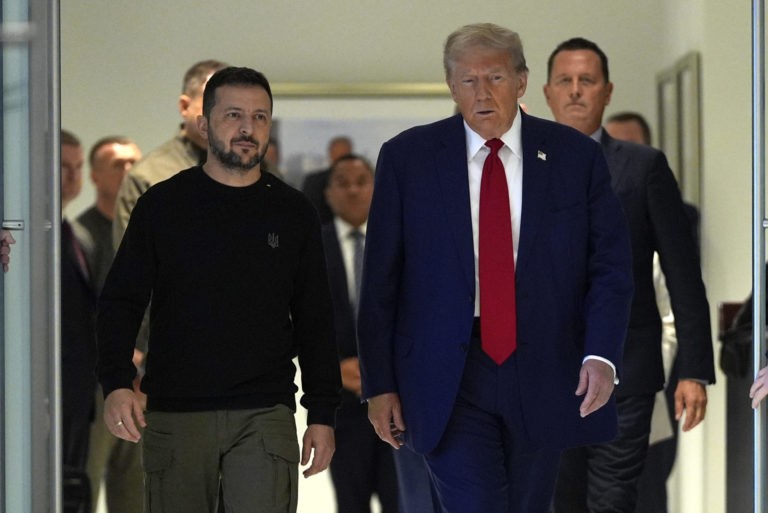
Ukraine Sends Response to Trump on Peace Proposal

(Kyle Anzalone, Libertarian Institute) Ukraine has sent the White House a point-by-point response to President Donald Trump’s peace plan.

On Wednesday, A Ukrainian official told Axios that the revisions to Trump’s peace plan are “to make the whole thing doable.” The revisions include changes to the points on territorial exchanges and the Zaporizhia nuclear power plant.

In November, Trump’s 28-point peace plan for Ukraine was leaked. The proposal has now been shaved to 20 points.

Kiev’s response followed Trump sending an envoy to Ukraine to inform President Zelensky he had days to accept the peace proposal. Trump has also criticized Zelensky. “I’m a little bit disappointed that President Zelenskyy hasn’t yet read the proposal — that was as of a few hours ago,” Trump said Sunday. “Russia is, I believe, fine with it, but I’m not sure that Zelenskyy’s fine with it. His people love it. But he isn’t ready.”

The President’s son, Donald Trump Jr., said his father was considering cutting off support for Ukraine if Zelensky would not agree to end the war.

Kiev and Moscow still appear far apart on several key issues, including how much territory Russia will take, war reparations, and security guarantees for Ukraine. Russian President Vladimir Putin said one of Moscow’s top demands is that Ukraine be barred from joining NATO.

“Every country, including Ukraine, has the right to choose its own means of defense and to ensure its own security. Is that correct?” Absolutely correct,” the Russian leader said on Thursday. “Are we denying Ukraine this right? No. But it is unacceptable, if it comes at Russia’s expense.”

This article originally appeared at The Libertarian Institute.

New Book: Palantir Helped Israel Carry Out Its Pager Attack in Lebanon

(Dave DeCamp, Antiwar.comTechnology developed by the US firm Palantir was deployed by the Israeli military during its attacks on Lebanon in 2024, including the infamous pager attack, which Israel has nicknamed “Operation Grim Beeper,” according to a new book.

The book, a biography of Palantir co-founder and CEO Alex Karp, titled The Philosopher in the Valley: Alex Karp, Palantir and the Rise of the Surveillance State, was written by Michael Steinberger, a contributor to The New York Times Magazine.

Steinberger wrote that Palantir’s “technology was deployed by the Israelis during military operations in Lebanon in 2024 that decimated Hezbollah’s top leadership. It was also used in Operation Grim Beeper, in which hundreds of Hezbollah fighters were injured and maimed when their pagers and walkie-talkies exploded (the Israelis had booby-trapped the devices).”

The initial pager attack was carried out on September 17, when thousands of beepers used by Hezbollah exploded in Lebanon and Syria. The following day, Israel detonated walkie-talkies, and some exploded at funerals for people who were killed in the initial attack.

According to numbers from the Lebanese government, the attacks killed around 40 people, including 12 civilians. Two children were killed by the explosions, and others were left injured or maimed. One of the victims, a nine-year-old girl named Fatima, was home with her father when his pager beeped, and she picked it up to bring it to him, but it exploded, mangling her face and killing her.

Steinberger’s book didn’t specify how Palantir’s technology aided in the attack. According to former Israeli intelligence officials, the attack was years in the making, and Israel tricked Hezbollah into purchasing thousands of booby-trapped pagers and walkie-talkies from a fake company.

Steinberger’s book also said that people who worked at Palantir denied being involved in developing AI targeting systems for Gaza that were reported by the Israeli outlet 972 Magazine, but they detailed other ways the US company aided Israel in its genocidal war against Palestinians in the besieged territory.

“Palantir was assisting Israel in other ways. Its software was used by the Israeli military in several raids in Gaza in which hostages were freed, and also helped facilitate the handover of detainees who were released by Hamas,” he wrote. The book also said that Palantir helped repel Iranian missile attacks via the US military’s Project Maven.

Earlier this year, Karp was confronted by a protester who said that Palantir’s AI technology “kills Palestinians” in Gaza, which he didn’t deny. “Mostly terrorists, that’s true,” he said in response.

This article originally appeared at Antiwar.com.


Thousands of Afghan Refugees Qualified for Slew of Costly Benefits

(The Center Square) Tens of thousands of Afghan evacuees, including the gunman charged in the shootings of two National Guard members, killing one just blocks from the White House, were eligible for a slew of benefits, including housing and medical at the expense of the American taxpayer.

Following the pullout of American forces from Afghanistan in 2021, the Biden administration admitted nearly 200,000 evacuees between 2021 and 2023, including two recently arrested on terrorism charges. Through various reports and testimony by government officials, it was revealed that many of the Afghan nationals couldn’t be properly vetted.

Afghans who entered the U.S. on a Special Immigrant Visa (SIV), under a special immigrant parole (SQ/SI), and were granted humanitarian parole as part of the Biden Administration’s Operation Allies Welcome were eligible for over a dozen taxpayer benefits, many continuing four years later.

The benefits include: Supplemental Security Income (SSI), Supplemental Nutrition Assistance Program (SNAP), Women, Infants and Children (WIC), HUD Public Housing and Section 8 housing vouchers, emergency Medicaid, Affordable Care Act health plans and subsidies, full-scope Medicaid, Children’s Health Insurance Program (CHIP), federal student aid and Pell grants, REAL ID, Workforce Innovation and Opportunity Act services, refugee resettlement programs through the Office of Refugee Resettlement and Temporary Assistance for Needy Families (TANF), according to the National Immigration Law Center.

For those who didn’t qualify for SSI or TANF, refugees were eligible for up to 12 months of Refugee Cash Assistance (RCA) through the ORR.

In addition, many refugees qualified for employment assistance through Refugee Support Services, which included: childcare, transportation, “employability services,” job training and preparation, job search assistance, placement and retention, English language training, translation and interpreter services and case management, according to the Administration for Children and Families Office of Refugee Resettlement.

The ORR also noted that “some clients may be eligible for specialized programs such as health services, technical assistance for small business start-ups and financial savings.”

Many refugees also qualified for “immigration-related legal assistance” to assist them “on their pathway to obtaining a permanent status.”

Despite the multitude of services provided to Afghan refugees, “they are less likely to be proficient in English, have lower educational attainment, and lower labor force participation” compared to other immigrants in the U.S., according to the Migration Policy Institute. Additionally, “compared to both the native born and the overall foreign-born population, they are much more likely to be living in poverty.”

The institute noted that Afghans “tend to have lower educational attainment” compared to American and foreign-born populations, citing a 2022 statistic showing 28% of Afghan immigrants age 25 and older “reported having at least a bachelor’s degree” as compared to 36% of Americans and 35% of all foreign-born populations.

While 29% of Afghan adults reported having less than a high school diploma, compared to 25% of other immigrant populations, there were some slight improvements among those who arrived in the U.S. between 2020 and 2022, with 36% having at least a four-year degree. However, that figure is 12 points less than other immigrant populations arriving during the same period.

The institute highlighted the “relatively low labor force participation rate” of Afghan immigrants ages 16 and older, showing that in 2022, 61% were in the civilian labor market, compared to 67% of other immigrant populations and 63% of U.S.-born individuals.

Afghan immigrants have a higher poverty rate compared to the American and foreign-born populations. As of 2022, 39% of Afghan nationals were living in poverty, compared to 12% of Americans and 14% of other immigrant populations.

Among the many benefits Afghan refugees are eligible to receive, one of the most costly may be housing in the form of public housing and the Section 8 program.

The institute showed that a majority of immigrants from Afghanistan are concentrated in some of the regions with the highest housing costs in the nation, including the metro areas of Washington, D.C., Sacramento, San Fransico, Los Angeles, New York City, Seattle and San Diego.

When asked if Afghan refugees are still receiving housing benefits, a HUD official told The Center Square that the department “is working in coordination with appropriate agencies to align the Department’s guidance related to immigration status to ensure taxpayer-funded benefits are not used for any unintended purpose.”

Adding to housing benefits, The Center Square reported Tuesday exclusively that amid a national housing crisis, the Biden administration’s Department of Housing and Urban Development produced guidelines encouraging property owners to forgo some fair housing practices to favor Afghan refugees, which the Trump administration directed to be terminated.

The Center Square obtained a HUD directive from the Office of Fair Housing and Equal Opportunity rescinding the Biden-era guidance document, “Operation Allies Welcome: Frequently Asked Questions (FAQs) on Fair Housing Issues,” and withdrawing from a FHEO guidance document “Frequently Asked Questions (FAQ) Renting to Refugees and Eligible Newcomers,” which the agency claims violates the Fair Housing Act.

HUD Secretary Scott Turner argues the Biden-era guidelines prioritized nearly 200,000 Afghan refugees who were admitted following the 2021 pullout of American forces from Afghanistan by encouraging landlords and property owners to forgo credit checks, occupancy limitations, and engage in targeted marketing toward Afghans.

“After President Biden’s disastrous withdrawal from Afghanistan, his administration made a bad situation worse by prioritizing housing assistance for Afghan refugees, who we now know were unvetted and unchecked,” Turner told The Center Square. “Since day one, our mission has been clear: to serve the American people and end the misuse and abuse of American taxpayer-funded resources. That is why we rescinded this Operation Allies Welcome guidance, which encouraged landlords and property owners to violate federal civil rights law to protect Afghan refugees. Under President Trump’s leadership, the days of putting Americans last is over.”

Today: Judge to Decide Degree of Media Access in Charlie Kirk Killing Case

(Headline USA) Lawyers for the 22-year-old Utah man charged with killing Charlie Kirk are due in court Thursday as they push to further limit media access in the high-profile criminal case.

A Utah judge is weighing the public’s right to know details in Tyler Robinson’s case against his attorneys’ concerns that the swarm of media attention could interfere with his right to a fair trial.

Robinson’s legal team and the Utah County Sheriff’s Office have asked Judge Tony Graf to ban cameras in the courtroom.

Prosecutors have charged Robinson with aggravated murder in the Sept. 10 shooting of the conservative activist on the Utah Valley University campus in Orem, just a few miles north of the Provo courthouse. They plan to seek the death penalty.

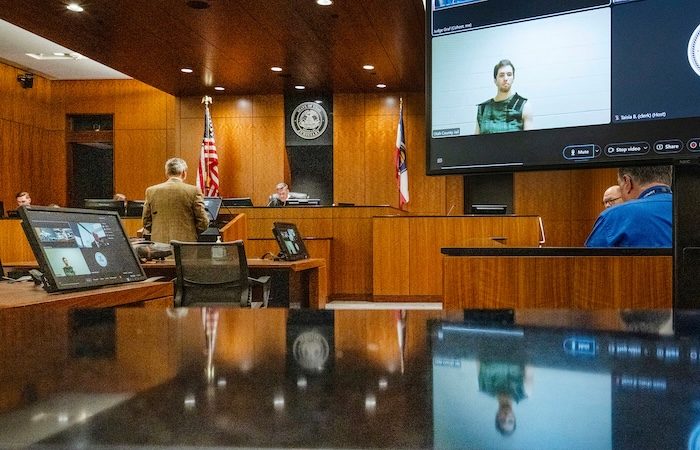
Robinson was expected to appear in person Thursday after making previous court appearances via video or audio feed from jail, according to a transport order.

A coalition of national and local news organizations, including The Associated Press, is fighting to preserve media access in the case.

Graf has already made allowances to protect Robinson’s presumption of innocence before a trial, agreeing that the case has drawn “extraordinary” public attention.

Graf held a closed hearing on Oct. 24 in which attorneys discussed Robinson’s courtroom attire and security protocols. Under a subsequent ruling by the judge, Robinson is allowed to wear street clothes in court during his pretrial hearings but must be physically restrained due to security concerns. Graf also prohibited media from filming or photographing Robinson’s restraints after his attorneys argued widespread images of him shackled and in jail clothing could prejudice future jurors.

Michael Judd, an attorney for the media coalition, has urged Graf to let the news organizations weigh in on any future requests for closed hearings or other limitations.

The media presence at Utah hearings is already limited, with judges often designating one photographer and one videographer to document a hearing and share their images with other news organizations. Additional journalists can typically attend to listen and take notes, as can members of the public.

Judd wrote in recent filings that an open court “safeguards the integrity of the fact-finding process” while fostering public confidence in judicial proceedings. Criminal cases in the U.S. have long been open to the public, which he argued is proof that trials can be conducted fairly without restricting reporters as they work to keep the public informed.

Kirk’s widow, Erika Kirk, has called for full transparency, saying, “We deserve to have cameras in there.” Her husband was an ally of President Donald Trump who worked to steer young voters toward conservatism.

Robinson’s legal team says his pretrial publicity reaches as far as the White House, with Trump announcing soon after Robinson’s arrest, “With a high degree of certainty, we have him,” and “I hope he gets the death penalty.”

Attorney Kathy Nester has raised concern that digitally altered versions of Robinson’s initial court photo have spread widely, creating misinformation about the case. Some altered images show Robinson crying or having an outburst in court, which did not happen.

Adapted from reporting by the Associated Press