Money Metals Podcast Year-End Roundtable: Gold, Silver, and Sound Money in 2025

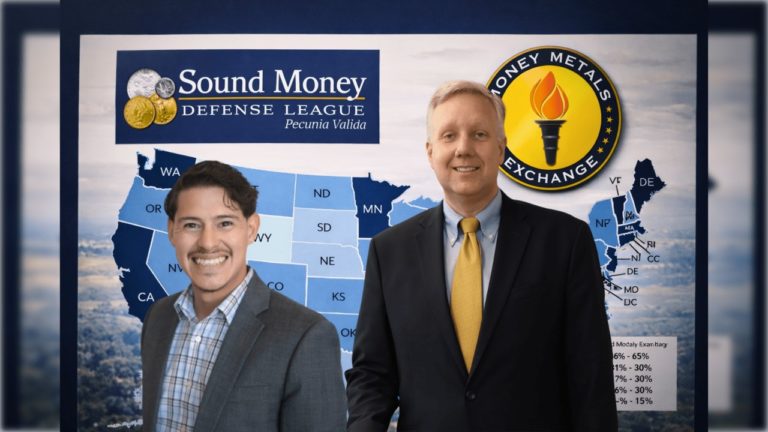
(Money Metals News Service) In a recent episode of the Money Metals podcast, host Mike Maharrey sits down with Money Metals CEO Stefan Gleason and Sound Money Defense League Executive Director Jp Cortez to look back on 2025’s explosive precious-metals market and the growing push to restore sound money policies across the United States.

Rather than treating rising prices as a simple story of “more buying,” the guests describe a market that changed character during the year. They argue the biggest story isn’t just what gold and silver did, but who drove the move, who lagged behind, and why the political and monetary consequences are now spilling into public policy.

(Interview Starts Around 4:51 Mark)

A Bull Market Driven by Asia and Central Banks

Stefan Gleason frames the last two years as a turbulent backdrop for gold and silver, citing dislocations, tariffs, war, bank runs, a change in administration, and even assassination attempts. In his view, the metal markets have been reacting to a world that keeps delivering fresh instability.

He describes gold’s move from $2,000 to $4,000 over the last two years as primarily an Asia-and-central-bank story. For much of that rise, he says the West was not the driver, and U.S. retail investors were not the main force pushing prices higher.

That dynamic mattered for dealers. Gleason says Money Metals saw an extraordinary amount of selling back to them compared to prior years, as disciplined holders took gains—especially during the period when gold was outpacing silver.

Dealer Reality: Selling, Inventory, and a Late-Summer Shift

Gleason draws a sharp contrast between online dealers and many local coin shops (LCS). He describes local shops as “choking on inventory,” overwhelmed by the volume of people unloading metal, forcing them to move product quickly and sometimes at discounts.

Money Metals, he says, experienced a more balanced flow, partly because some sellers prefer the immediacy of walking into a local shop, getting paid the same day, and leaving with cash—even if that convenience comes at a cost.

He argues that the tone changed around late summer. Over the last two to three months, he says, new demand began showing up in a significant way, with more first-time buyers calling in, asking basic questions, and seeking education rather than hype. In his telling, the U.S. public has started to recognize “serial devaluation,” and the retail market is finally waking up.

Mainstream Finance Starts to Talk About Gold Again

The conversation turns to a moment both Maharrey and Gleason see as an inflection point: the CIO of Morgan Stanley publicly criticizing the traditional 60/40 portfolio and recommending that investors shift 20% of their bond holdings to gold. Gleason calls that message “huge,” not because it is novel to precious-metals advocates, but because it arrived from an institutional voice that many investors take seriously.

Gleason emphasizes how underowned gold remains in the United States, saying only “one or 2% of US investors have any gold at all,” and that most Americans don’t have 10–20% exposure to gold, silver, or miners. That gap, he suggests, explains why even small shifts in institutional or retail behavior can matter.

He also shares a personal anecdote about a conservative financial advisor admitting he suffers from the same bias most institutional investors have against precious metals. The advisor’s hesitation, in Gleason’s view, reflects a broader Wall Street mindset that is now being challenged by clients who can no longer ignore price signals and currency realities.

What the Sound Money Defense League Does

Mike Maharrey asks Jp Cortez to explain the Sound Money Defense League’s purpose for listeners who may be unfamiliar with the organization. Cortez describes it as a project that began with Money Metals and, since 2014, has focused on “remonetizing gold and silver” through legislation, activism, and education.

Cortez says the strategy is to remove disincentives that make it harder for individuals to hold or use precious metals as money. He frames the effort as part of bringing state laws into better alignment with Article I, Section 10 of the Constitution, which references gold and silver as money.

He ties the policy push to the same macro forces Gleason discussed: geopolitical tension, central bank behavior, and what he calls perpetual dollar devaluation driven by politicians and monetary authorities. In that environment, Cortez argues, people and even governments are increasingly drawn to “inflation-proof” and “politically neutral” assets.

2025 Legislative Results and the 2026 Sound Money Index

Cortez calls 2025 a year that “completely changed the game.” He says more than 65 pieces of legislation were introduced in more than 31 states, which he interprets as more than 70% of the United States actively considering sound money-related policy changes.

He highlights several wins as examples of how far the movement has spread. Kentucky ended the sales tax on precious metals. Idaho passed what he calls the state’s largest sales or income tax cut in history, which included eliminating the capital gains tax on precious metals. Wyoming established a $10 million gold reserve held as physical gold stored within the state and carried on the state’s balance sheet.

Cortez points listeners to the newly released 2026 Sound Money Index, an annual 50-state scorecard ranking states by pro- or anti-sound-money policy. He notes that some states have climbed steadily over a decade, while others have fallen sharply after reversing course. He points to Washington and Maryland reimposing a sales tax on precious metals, saying those states dropped to 47th and 50th, respectively.

Federal Action: Auditing and Refining America’s Gold

Cortez shifts from state victories to federal efforts, pointing to Representative Thomas Massie introducing the Gold Reserve Transparency Act in June. He argues the nation’s gold has not been comprehensively audited in decades and criticizes what he characterizes as audits focused on seals and locks rather than verifying the contents of depositories.

He cites a figure of 261 million ounces of gold allegedly held by the United States and says the bill would require a full inventory, assaying, and disclosure of transactions, including any leases or encumbrances.

Cortez says Senator Mike Lee introduced an identical bill with an additional provision calling for the refinement of America’s gold. He claims much of the reserve consists of 90% melt bars produced during the FDR confiscation of 1933 and argues that this does not meet modern global market standards. In his view, refinement would improve liquidity and readiness, even if the ideal scenario is never needing to sell reserve gold.

A Warning About “Pro-Gold” Bills That Expand Surveillance

Cortez also warns that rising interest in precious metals has produced legislation that presents itself as pro-gold or pro sound money but, in practice, introduces anti-privacy regulations and surveillance structures. He argues that some proposals effectively create a government-mediated system that undermines gold’s core advantages, including privacy and the lack of counterparty risk.

He pushes back on the idea that precious-metals owners should route transactions through systems that can track, approve, or deny spending. He also expresses skepticism about state-run depositories, citing the historical precedent of government gold seizures and arguing that private options are often more secure and more trusted than government-run facilities.

In Cortez’s telling, many lawmakers are not acting out of malice so much as misunderstanding. He says the fix is education and a redirection toward reforms that empower individuals more directly, such as removing taxes and reducing friction rather than building new regulatory machinery.

Scholarships, Fellowships, and the Launch of Sound Money Review

Cortez describes the Sound Money Defense League as an education engine as well as a legislative organization. He says the League offers Sound Money Scholarships and Fellowships in coordination with Money Metals, providing thousands of dollars and even tens of thousands of dollars annually to students and researchers producing essays and analysis on gold, silver, and monetary history.

He also announces a new project: the prestigious Sound Money Review, a scholarly journal launched this year. Cortez says it will publish fellows’ work while also resurfacing older, “timeless” essays and writings that have been archived or forgotten, aiming to bring them back into circulation at a time when more people are paying attention to the weaknesses of fiat money.

Money Metals Depository and the “One-Stop Shop” Vision

Maharrey tees up a discussion of the company’s storage services, and Gleason details what he calls a major expansion in Money Metals’ Depository footprint. He says the company has been in the depository business since 2016 and built a smaller Idaho facility in 2017, but demand—especially around COVID and beyond—made it clear that a much larger buildout was necessary.

Gleason describes the new Idaho facility as the largest depository west of New York, claiming it is twice the size of Fort Knox, with 8,500 square feet of Class 3 vault space inside a 40,000 square foot facility that can expand to 70,000 square feet. He says the site is in a favorable jurisdiction, positioned near local law enforcement, supported by armed retired police and military personnel, and protected by layered physical and electronic security with dual controls.

He frames the depository as part of a broader platform: buying, selling, storing, and even lending against gold and silver. Gleason says Money Metals offers gold-backed loans at rates “well under 10%” in the single digits, positioning them as more comparable to conventional borrowing than pawn-style pricing.

He also highlights a monthly savings plan designed to automate purchases and make accumulating metals a default behavior rather than a sporadic decision. In his view, these services, combined with education and policy advocacy, distinguish Money Metals from firms he characterizes as merely selling “gold widgets.”

Looking Into 2026: Reorient the Lens and Engage the Fight

As the episode closes, Maharrey asks each guest for a single message heading into 2026. Gleason urges listeners to reorient the way they measure financial progress, arguing that viewing everything through the dollar lens is increasingly deceptive in an era of continual currency devaluation. He encourages people to think in terms of gold and silver as reference points and suggests silver may be entering a new pricing regime after being capped near the $50 level for 45 years.

Cortez closes with a political message: inflation and financial erosion are not accidents, he says, but intentional policy choices. He argues that people still have power—especially at the state level—and that grassroots participation has been the Sound Money Defense League’s most effective tool for a decade. He invokes Everett Dirksen’s line that politicians must “feel the heap before they can see the light,” urging listeners to make calls, send emails, and stay engaged rather than falling into resignation.

Maharrey wraps by directing listeners to soundmoneydefense.org for League updates and to moneymetals.com and moneymetals.com/news for products and coverage, ending on a forward-looking note for 2026.
Supreme Court Could Redefine 14th Amendment Application

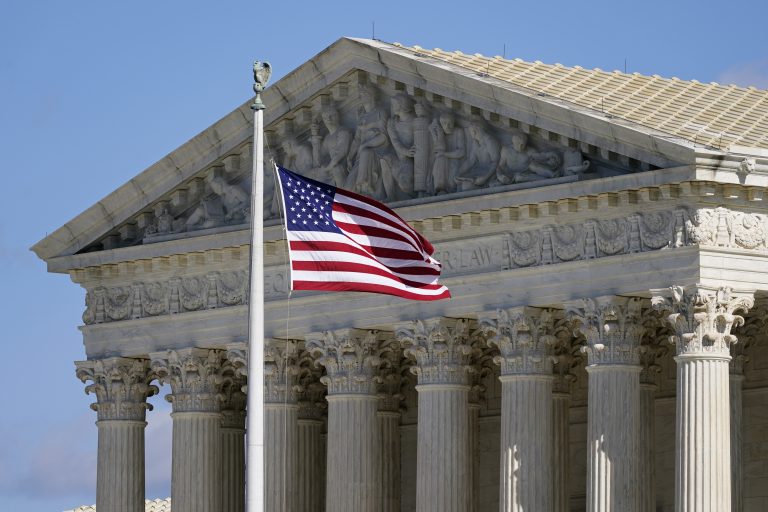
(The Center Square) The U.S. Supreme Court will decide a case in 2026 challenging President Donald Trump’s authority to end birthright citizenship.

Trump v. Barbara challenges Trump’s executive order that denies birthright citizenship to children born after Feb. 19, 2025, whose parents are either illegally present in or temporary residents of the United States.

The concept of birthright citizenship rests on a Supreme Court interpretation of the 14th Amendment to include children born in the United States to foreign parents. The 14th Amendment reads: “All persons born or naturalized in the United States, and subject to the jurisdiction thereof, are citizens of the United States and of the State wherein they reside.”

Legal experts said the justices’ interpretations of “subject to the jurisdiction thereof” will likely be the deciding factor in this case’s outcome.

Michael Ramsey, a law professor at the University of San Diego, said the 14th Amendment gave citizenship to children born in the United States whether their parents were in the country legally or illegally. He said jurisdiction refers to an individual who is under the lawmaking authority of a certain nation.

“You are a citizen if you or your parents are under the authority” Ramsey said, “of the United States at the time you are born.”

He said individuals belonging to Native American tribes would not be included in the 14th Amendment’s citizenship definition because they operated under separate legal jurisdictions.

Ilan Wurman, a law professor at the University of Minnesota, pointed out that children of ambassadors living in foreign countries are offered citizenship under the United States. He argued this is because the roots of American law come from English common law.

Wurman said the status of a parent under the protection of the nation is a necessary condition to citizenship.

“Parental status is what matters and whether they are under the protection and therefore within the allegiance of the sovereign,” Wurman said.

Wurman argued that English common law established protection under a sovereign as a necessary condition to citizenship. Therefore, without protection, citizenship can be rejected.

“Birthright subjectship only applied if your parents were under the protection of the sovereign, and if your parents had come unlawfully, without invitation, without permission, without safe conduct, they would not have been under the protection of the sovereign,” Wurman said.

Ramsey argued that even when people are unlawfully in the United States, they are subject to the country’s laws.

“The reason that [diplomats] are outside of jurisdiction is because, again, as a general matter, diplomats are not subject to the lawmaking and law execution authority of the United States, because they have sovereign immunity, or diplomatic immunity under international law,” Ramsey said.

Wurman said people who enter the country illegally do not have access to the courts, which marks a clear distinction between those in combat situations.

“It’s true that there’s no body of international law that applies to people who come here illegally, who are not enemy aliens, who are not, you know, prisoners of war,” Wurman said.

The Supreme Court is expected to hear oral arguments for Trump v. Barbara in early 2026. A date has yet to be set for the case to be heard.

Free Speech Under Fire Nearly 300 Times in 2025 on Campus

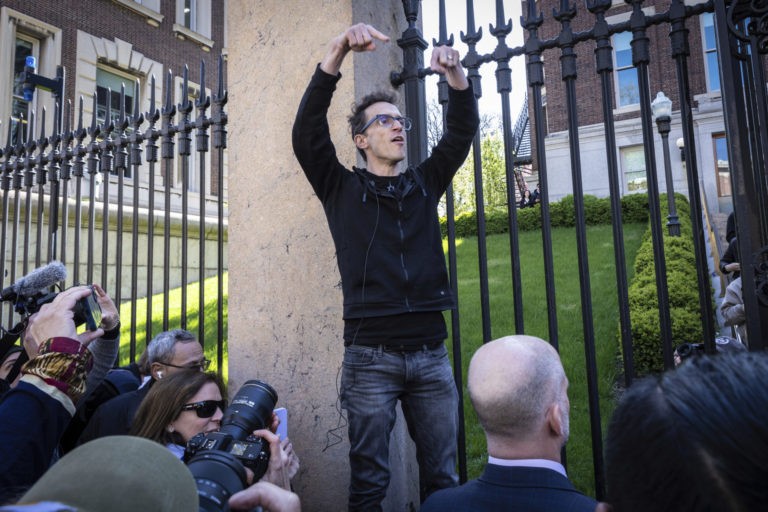
(The Center Square) Two hundred seventy-four incidents involving interference to free speech have taken place so far on college campuses in 2025, according to FIRE data, an increase from 2020’s high of 252 – with a free speech advocate stating college presidents have the ability to better protect the First Amendment rights of students and faculty in higher education.

The Foundation for Individual Rights and Expression’s (FIRE) director of research Ryne Weiss told The Center Square that “there is a lot that universities can do” to uphold constitutionally protected speech again.

FIRE is an organization dedicated to defending the right to free speech.

Weiss told The Center Square: “Our president Greg Lukianoff has a list of five ways college presidents can immediately improve their environments for free speech.”

“Ending restrictive speech codes and ceasing punishments of students for protected speech are the bare minimum,” Weiss said.

“Colleges should commit to the speech protective Chicago Statement and institutional neutrality before they’re in the midst of a free speech crisis — appealing to these principles only when under fire can seem disingenuous, but late is better than never,” Weiss said .

“Additionally, strong leadership is important,” Weiss stated. “When demands are made that students or faculty be punished for their speech, a leader making a wishy-washy statement trying to appease all sides is only going to invite more pressure to censor.”

“A strong restatement of commitment to free speech and non-punishment at the outset can defuse these situations,” Weiss said.

Weiss additionally said that “free speech orientation, and ongoing education can be critical.”

“Students often show up to campuses with no idea of what the First Amendment means in practice,” Weiss said.

“Their ignorance about their rights might mean that they don’t know that they can’t be punished for expressing an opinion, or it might mean that they wrongly think shouting down and shutting down an event that they disagree with is an exercise of their rights,” Weiss said.

“Finally, it’s important that universities make a real effort to understand whether their students feel free to express themselves on campus,” Weiss said.

“Our data shows that they often don’t,” Weiss said. “This data can provide actionable information, and an impetus to improve things.”

“You can’t solve a problem by ignoring it,” Weiss said.

According to FIRE data in the “Students Under Fire Database,” there have been 274 incidents in 2025 involving “attempts to investigate, censor, or otherwise punish students for protected expression,” as a FIRE media relations specialist put it.

One recent incident took place at Vanguard University of Southern California.

Citing a “newly adopted policy banning student organizations affiliated with political or ideological movements,” Vanguard denied a Students for Life chapter recognition as a registered student organization.

The students and an attorney sent a letter to a school official, met with administrators and eventually were approved to form an organization under the name Vanguard Lions Love Life, according to the database.

Another recent occasion collected by FIRE took place at private school California Lutheran University.

The Associated Students of California Lutheran University “voted down a proposal to re-establish a campus chapter of Turning Point USA” due to safety concerns, inclusivity conflicts, and a belief that the club’s alleged “rhetoric” could bring “controversy” to the campus, as stated by FIRE’s database.

In 2020 – amid COVID lockdowns and George Floyd chaos – there were 252 incidents attempting to interfere with free speech recorded by FIRE.

The Students Under Fire Database began in 2020, and has in total logged 1,327 incidents.

According to other FIRE data, half of the nation’s college students recently said they feel “less comfortable attending controversial public events on campus,” and nearly half “are less comfortable voicing opinions on controversial subjects in class,” The Center Square reported.

Recent violent incidents on college campuses include the Brown University shooting that killed 19-year-old Ella Cook – vice president of the Brown College Republicans club – and recent high school graduate Mukhammad Aziz Umurzokov.

2025 in Review: Historic Border Security Actions Taken by Trump

(The Center Square) On the first day of his second term in office, President Donald Trump issued multiple executive orders, followed by multiple policy changes, that in one year resulted in the “most secure border in U.S. history,” his administration claims.

On his first day in office, Trump issued a series of border security orders “to protect America from invasion.” He declared an invasion at the southwest border, suspending entry. He did so after 55 Texas counties were the first and only ones to declare an invasion during the Biden administration, changing the national conversation, The Center Square exclusively reported.

Trump next reinstated the Remain in Mexico policy, directed the U.S. military to implement border security and deployed an initial 1,500 troops to the southwest border. By February, he’d declared a national emergency at the northern border, designated multiple cartels, gangs and transnational criminal organizations as foreign terrorist organizations, launched an initiative for foreign nationals to self-deport, register with the federal government and be fined for noncompliance, The Center Square reported.

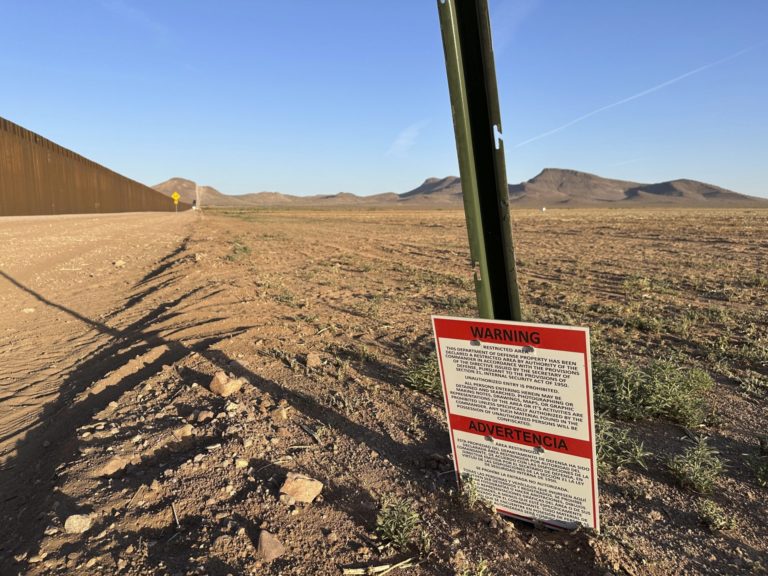
By March, Trump invoked the Alien Enemies Act to remove Venezuelan FTO-designated Tren de Aragua members from the country,  began construction on the border wall along the southwest border and deployed more than 10,000 troops to the southwest border.

Within months, regional federal joint task forces were aggressively targeting MS-13 and TdA members, making major busts in Texas cities and in rural areas like Nebraska, where an alleged MS-13 assassin was arrested. Federal authorities also apprehended major cartel traffickers, including a baby organ harvester, and human smugglers coming from Canada. By December, U.S. attorneys had brought charges against hundreds of TdA members nationwide, including its top leaders, charging them with terrorism for the first time in U.S. history.

In his first 100 days in office, Trump’s National Counterterrorism Center had identified nearly 1,200 alleged terrorists illegally in the U.S., The Center Square reported. By October, it said it had prevented6,525 known or suspected terrorists (KSTs) into the U.S. By December, the National Counterterrorism Center (NCTC) had identified at least 18,00 KSTs released into the U.S. by the Biden administration, The Center Square reported.

By April, the Trump administration began targeting sanctuary cities whose Democratic leaders refused to cooperate with federal immigration enforcement; by May, hundreds of sanctuary jurisdictions had been identified in 35 states.

Simultaneously, U.S. Immigration and Customs Enforcement ramped up removal operations, targeting violent criminals, the previously deported and those with removal orders from a federal judge. Deportations totaled more than 600,000, The Center Square reported. The deportation efforts sparked massive, sometimes violent protests targeting ICE agents across the country. Critics said the Trump administration’s deportation policies weren’t just targeting violent criminals, but individuals who had been in the country for years, held jobs, and were contributing to their communities.

Trump terminated Biden administration parole programs, including many “Temporary Protective Status” programs and most country specific programs, like CHNV (Cuba, Honduras, Nicaragua and Venezuela). Federal district judges’ attempts to halt new policies were largely overturned including by the U.S. Supreme Court, The Center Square reported. The Trump administration also implemented sweeping visa restrictions and reforms.

By July, policy results were apparent: illegal border crossings reached their lowest level in recorded U.S. history. By October, illegal entries at the southwest border reached the lowest level recorded since 1970, The Center Square reported.

By October, more than two million illegal foreign nationals had been removed, The Center Square reported. That number increased to more than 2.5 million in December. It includes 1.9 million who self-deported and more than 622,000 who ICE deported.

Illegal border crossings continued their historic downward trajectory into November, representing the lowest numbers ever reported at the beginning of a fiscal year in recorded U.S. history, The Center Square reported. Fiscal 2026 began Oct. 1.

Under the Trump administration, illegal border crossings were down 93% from the previous year.

By November, apprehensions of illegal foreign nationals at the southwest border were down to an average of 245 per day – a number Border Patrol agents apprehended in less than an hour – out of thousands a day – during the Biden administration.

Border Patrol apprehensions averaged under 10,000 every month since Trump’s been in office, “a level of sustained deterrence unmatched in modern border history,” DHS said.

U.S. Customs and Border Protection hiring increased by 42.5%, Border Patrol by 84%, in one year. This is a marked reversal from the low morale expressed during the Biden administration, including record high Border Patrol suicides, The Center Square reported.

This year, ICE received more than 220,000 applications and has hired 11,751 new law enforcement officers, criminal investigators, attorneys and support staff, ICE said. Border Patrol applications also reached their highest numbers in recorded history this year.

U.S. Citizenship and Immigration Services received more than 50,000 applications – the highest in agency history this year. That’s up from a record 35,000 as of Sept. 30, The Center Square reported. The U.S. Coast Guard also surpassed its recruiting goals among enlisted, officers and reservists, breaking multiple records this year.

Hundreds of Flights Disrupted Due to Snowstorms

(Headline USAMore than a thousand flights were canceled or delayed across the Northeast and Great Lakes regions due to snow as thousands took to U.S. roads and airports during the busy travel period between Christmas and New Year’s.

New York City received around four inches of snow Friday night into early Saturday — slightly under what some forecasts had predicted. At least 1,500 flights were canceled from Friday night, according to flight-tracking service FlightAware. But by Saturday morning, both the roads and skies were clearing.

“The storm is definitely winding down, a little bit of flurries across the Northeast this morning,” said Bob Oravec, a Maryland-based forecaster at the National Weather Service.

Oravec said the storm was quick-moving from the northwest toward the Southeast U.S., with the largest snowfall in the New York City area reaching over six inches in central eastern Long Island. Further to the north in the Catskills, communities saw as much as 10 inches of snowfall.

Newark Liberty International Airport, John F. Kennedy International Airport and LaGuardia Airport posted snow warnings on the social media platform X on Friday, cautioning that weather conditions could cause flight disruptions.

The National Weather Service warned of hazardous travel conditions from the Great Lakes through the northern mid-Atlantic and southern New England, with the potential for tree damage and power outages. Forecasters said the storm was expected to weaken by Saturday morning.

In Times Square on Saturday, workers in red jumpsuits worked to clear the sludge and powder-coated streets and sidewalks using shovels and snowblowers.

Jennifer Yokley, who was in Times Square on a holiday trip from North Carolina, said she was excited to see snow accumulating as it dusted buildings, trees and signs throughout the city.

“I think it was absolutely beautiful,” she said.

Payton Baker and Kolby Gray, who were visiting New York City from West Virginia on Saturday, said the snow was a Christmas surprise for their third anniversary trip.

“Well, it’s very cold and it was very unexpected,” Baker said, her breath visible in the winter air. “The city is working pretty well to get all the roads salted and everything, so it’s all right.”

Ahead of the storm, New York Gov. Kathy Hochul declared a state of emergency for more than half of the state. Acting New Jersey Gov. Tahesha Way declared a state of emergency for all of New Jersey, “due to a severe winter storm causing dangerous weather conditions, including heavy snow, sleet, and freezing rain.”

“This storm will cause dangerous road conditions and impact holiday travel,” Way said in a statement. “We are urging travelers to avoid travel during the storm and allow crews to tend to the roads. Drivers should plan their travel accordingly, monitor conditions and road closures, and follow all safety protocols.”

Adapted from reporting by the Associated Press


Harvey Weinstein Accuser Sued for Defamation

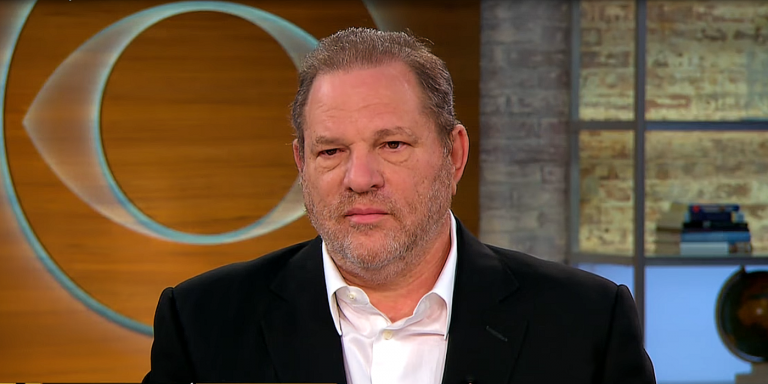
(Headline USATwo sisters testified at Harvey Weinstein’s most recent criminal trial. Kaja Sokola accused the disgraced movie mogul of sexual assault. Ewa Sokola was called as a witness to boost her claims, but ultimately ended up helping the defense.

Now, Ewa Sokola is suing Kaja for defamation, alleging in a lawsuit filed Tuesday in Manhattan federal court that the psychotherapist and ex-model’s public remarks amount to libel and are damaging Ewa’s reputation and business as a cardiologist in Poland.

Ewa Sokola says that her younger sister has made false statements subjecting her to public hatred, shame, contempt, ridicule, ostracism and disgrace in Wrocław, Poland. She seeks unspecified damages.

Messages seeking comment were left for Kaja Sokola’s lawyers and spokesperson on Thursday and Friday.

In a split verdict in June, Weinstein was convicted of forcibly performing oral sex on film and television production assistant and producer Miriam Haley and acquitted on a charge involving Kaja Sokola’s allegations of similar conduct. Both women said they were assaulted in 2006.

The judge declared a mistrial on the final charge, alleging Weinstein raped former actor Jessica Mann, after the jury foreperson declined to deliberate further.

Weinstein has not yet been sentenced as a judge weighs a defense request to throw out the verdict after two jurors told Weinstein’s lawyers that other jurors had bullied them into convicting him. Judge Curtis Farber is expected to rule on Jan. 8.

Kaja Sokola has said her sister’s testimony at Weinstein’s state court trial in New York earlier this year undermined her own testimony that he forced oral sex at a Manhattan hotel just before her 20th birthday.

Weinstein had arranged for Kaja Sokola to be an extra for a day in the film “The Nanny Diaries,” and separately agreed to meet her and Ewa. After they chatted, she testified, Weinstein told her he had a script to show her in his hotel room, and she went up with him. There, she said, Weinstein pushed her onto a bed and assaulted her.

After the trial, Kaja Sokola criticized her sister’s testimony, saying that though she was called as a prosecution witness, she ended up serving Weinstein’s cause by providing his lawyers with a journal in which she wrote about the men who had sexually assaulted her in her life but did not include Weinstein.

According to the lawsuit, Kaja Sokola repeatedly characterized her sister’s testimony as a personal “betrayal” and falsely accused her of omitting journals in which she described what happened with Weinstein.

The lawsuit also said Kaja Sokola had falsely accused Ewa Sokola of homicide, theft, falsification of medical records, sexual impropriety and immoral conduct, and of colluding with Weinstein’s defense team.

The lawsuit said Kaja Sokola’s false claims have cost Ewa Sokola referrals and led to a reduction in patients and employees for her medical practice while damaging her professional reputation and her standing within the medical community.

Adapted from reporting by the Associated Press


FBI to Scrap $5 Billion Move, Patel Says

(The Center Square) FBI boss Kash Patel announced on Friday the agency scrapped a $5 billion plan to build a new headquarters.

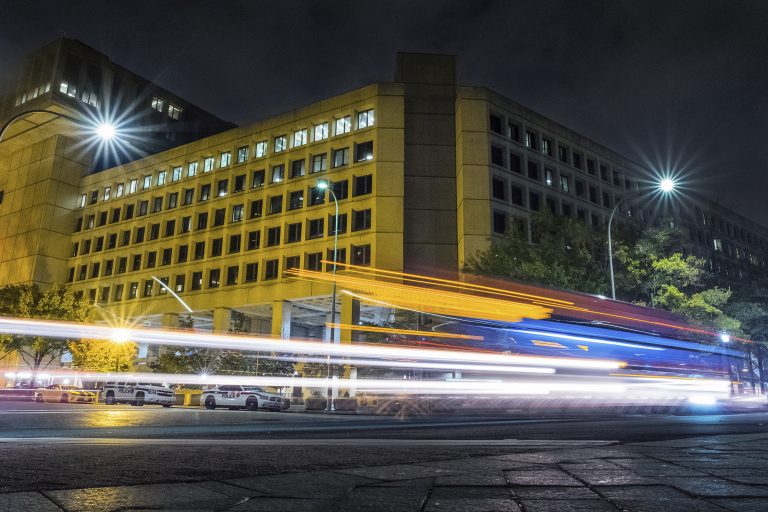
The FBI will permanently shut down the J. Edgar Hoover building in Washington D.C., and move into the Reagan building near the White House.

“After more than 20 years of failed attempts, we finalized a plan to permanently close the FBI’s Hoover headquarters and move the workforce into a safe, modern facility,” Patel wrote in a post on social media. “Working directly with President Trump and Congress, we accomplished what no one else could.”

Patel said the planned $5 billion renovation would not be complete until 2035. He said the FBI is already underway with making necessary safety and infrastructure upgrades to the Reagan building.

The U.S. Department of Commerce, U.S. Customs and Border Protection and U.S. Environmental Protection Agency already use spaces in the Reagan building.

The move follows FBI plans to disperse personnel throughout the country, Patel said.

“This decision puts resources where they belong: defending the homeland, crushing violent crime, and protecting national security,” Patel wrote. “It delivers better tools for today’s FBI workforce at a fraction of the cost.”

Dark Money Fuels $5 Million in Attacks on Trump-Endorsed Candidate

(Headline USAIt’s the biggest mystery in Georgia politics right now: Who’s paying for the attacks on Republican Lt. Gov. Burt Jones?

Someone operating under the name “Georgians for Integrity” has dumped around $5 million into television ads, mailers and texts. The attacks claim Jones, who already has President Donald Trump’s endorsement in his run for governor next year, has been using his office to enrich himself.

For any Georgian settling down to watch a football game, the ads have been nearly inescapable since Thanksgiving. They’re the opening shot in the public battle for the Republican nomination that will be settled in May’s primary election. But the ads also show how dark money is influencing politics not only at the national level but in the states, with secretive interests dropping big sums seeking to shift public opinion.

The Jones campaign is hopping mad, threatening legal action against television stations if they don’t stop airing ads that a lawyer calls “demonstrably false” and slanderous.

So far, the ads remain on air.

“They want to be anonymous, spend a lot of money, and create a lot of lies about myself and my family,” Jones told WSB-AM in an interview Dec. 16, calling the ads “fabricated trash.”

Attorney General Chris Carr and Secretary of State Brad Raffensperger, Jones’ top rivals for the Republican nomination, say they are not involved in the attacks. All three want to succeed Republican Gov. Brian Kemp, who can’t run again because of term limits. There are also multiple Democrats vying for the state’s top office.

Dark money marches on

The Georgia Republican Party has filed a complaint with the State Ethics Commission. The GOP claims the ads violate Georgia’s campaign finance law against spending on an election without registering and disclosing donors.

“I think there are far-reaching consequences to allowing this activity to go forward unchecked,” state Republican Party Chairman Josh McKoon told The Associated Press. “And the consequences are much broader than the outcome of the May primary.”

It’s a further filtering down of the U.S. Supreme Court’s 2010 Citizens United decision, which led to dramatic increases in independent spending in U.S. elections, said Shanna Ports, senior legal counsel for the Washington, D.C.-based Campaign Legal Center, which seeks to reduce the influence of money in politics.

“Dark money is becoming more and more the norm in races, up and down the ballot, and at early times,” Ports said.

Claims that Jones has been engaged in self-dealing are nothing new —- Carr has been making similar attacks for months. But things escalated after Georgians for Integrity was incorporated in Delaware on Nov. 24, according to that state’s corporation records. The entity identifies itself as a nonprofit social welfare organization under the federal tax code, a popular way to organize campaign spending that lets a group hide its donors.

The Jones campaign says the ad falsely leads viewers to believe that Jones enabled government to take land through eminent domain to help support his family’s interest in a massive data center development in Jones’ home county south of Atlanta. As a state senator, Jones did vote for a 2017 law that opened a narrow exception in Georgia’s law prohibiting governments from conveying property seized through condemnation proceedings to private developers. But eminent domain isn’t being used to benefit the $10 billion development that government filings show could include 11 million square feet (1 million square meters) of data centers.

Group’s records are a dead end

Georgians for Integrity lists its local address as a mailbox at an Atlanta office supply store east on some paperwork submitted to television stations. A media buyer named Alex Roberts, with a Park City, Utah, address, is also listed on those papers, but he hasn’t responded to an email from the AP. Neither has Kimberly Land, a Columbus, Ohio, lawyer listed on incorporation papers. After weeks of heavy spending, no one has proved who’s providing the cash.

The Republican Party contends Georgians for Integrity is an independent committee under Georgia law. That means it can raise and spend unlimited sums, but must register before accepting contributions and must disclose its donors.

But that law identifies such committees as expending “funds either for the purpose of affecting the outcome of an election for any elected office or to advocate the election or defeat of any particular candidate.” And the ads targeting Jones don’t ever identify him as running for governor or mention the 2026 elections, instead urging viewers to call Jones and “Tell Burt, stop profiting off taxpayers.”

But McKoon said those are “semantic games” and that regular voters would definitely think the ads are designed to influence them.

“If you are funding a message that is designed to impact an election — and I think it strains credulity to argue that that is not the case here — then you ought to have to comply with the campaign finance laws that the legislature has seen fit to pass,” McKoon said.

Adapted from reporting by the Associated Press


Trump’s Massive H-1B Fee Increase Survives Legal Challenge

(José Niño, Headline USA) American workers scored a win on Tuesday when a federal judge  authorized the Trump administration to proceed with imposing a $100,000 fee on companies seeking H-1B visas for foreigners. 

According to Bloomberg, U.S. District Judge Beryl Howell determined that President Donald Trump acted within his statutory powers when signing the proclamation that dramatically raises costs for the widely-used visa category. The decision advances the administration’s broader strategy to limit immigration and stimulate demand for American workers, though opponents retain the option to appeal.

The ruling rebuffed arguments from the U.S. Chamber of Commerce, which had challenged the fee as unlawful. Judge Howell concluded that Trump issued his proclamation under “an express statutory grant of authority to the President,” noting that Congress has provided the executive branch with expansive powers to address matters of economic and national security.

“We are disappointed in the court’s decision and are considering further legal options to ensure that the H-1B visa program can operate as Congress intended: to enable American businesses of all sizes to access the global talent they need to grow their operations,” stated Daryl Joseffer, the Chamber’s executive vice president, who characterized the fee as cost prohibitive.

The nation’s premier business lobbying organization filed suit in October, contending that the steep fee increase contradicts federal immigration statutes and exceeds congressional authorization for fee-setting.

Tuesday’s summary judgment affects only the Chamber’s lawsuit and leaves other pending legal challenges intact. 19 state attorneys general have mounted their own challenge emphasizing potential damage to public sector employment, particularly in healthcare and education fields that utilize H-1B visas. Additionally, a global nurse-staffing agency filed separate litigation in California.

Both remaining cases have been assigned to judges appointed during the Obama administration. A hearing in the California case is scheduled for February 12 in Oakland, with legal experts anticipating the Supreme Court will ultimately resolve the dispute.

The case is Chamber of Commerce vs. US Department of Homeland Security, 25-cv-03675, US District Court, District of Columbia.

José Niño is the deputy editor of Headline USA. Follow him at x.com/JoseAlNino 

Bill Maher Praises Donald Trump’s Bombing of Iran

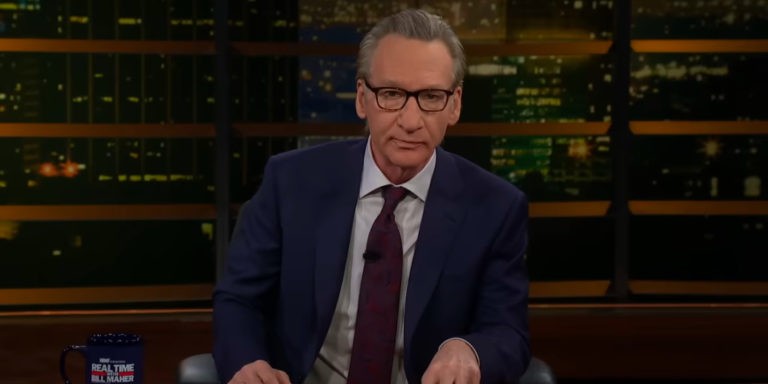
(José Niño, Headline USA) In a recent Free Press interview, comedian Bill Maher startled both fans and critics by naming Trump’s bombing of Iran his “best decision as president.”  

The Free Press reporter May Sulkin asked Maher what he thought Donald Trump’s best and worst presidential decisions were. His answer blindsided viewers: “Best thing he’s done was the Middle East deal — bombing Iran, backing Israel, and not pretending everybody in the Middle East has equal arguments.”  

Maher’s remarks referred to Trump’s recent U.S. strikes on Iranian nuclear facilities. The action, which also had backing from Israel, marked the most significant direct confrontation between the two nations in decades.  

Chris Menahan of Information Liberation shared this clip of Maher’s statement on Monday. 

Maher is an outspoken supporter of Israel. He has previously interviewed Israeli Prime Minister Benjamin Netanyahu and has routinely defended Israel’s punitive actions against Palestinians. 

In December 2023 following the October 7 attacks by Hamas, he delivered a blunt message to Palestinians: “Israel is one of the most powerful countries in the world, with a $500 billion economy, the world’s second-largest tech sector after Silicon Valley, and nuclear weapons. They’re here, they like their bagel with schmear, get used to it.”

During the Iran nuclear deal debate of the past decade, Maher expressed skepticism about Iran’s intentions. He noted that “Iran isn’t run by a normal government. It’s a radical Islamic theocracy, controlled by unelected clerics led by Ayatollah Ali Khamenei.” 

José Niño is the deputy editor of Headline USA. Follow him at x.com/JoseAlNino