Los Angeles Homeless Services CEO Charged with Defrauding Taxpayers to Pay for Luxury Lifestyle

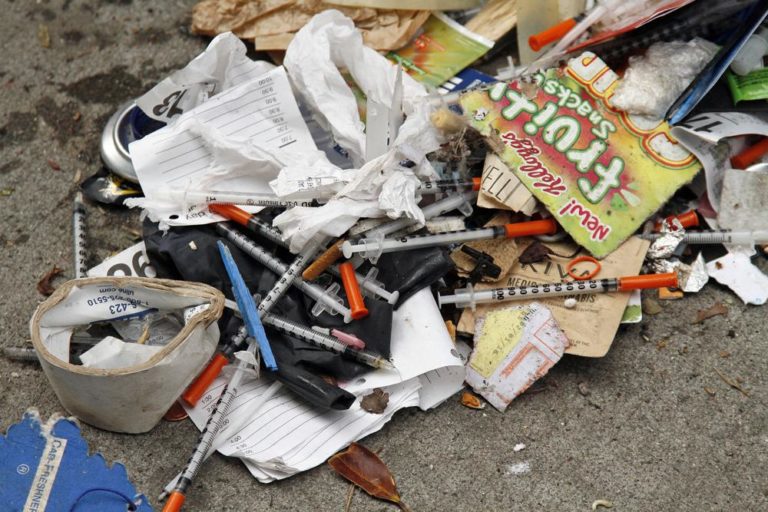
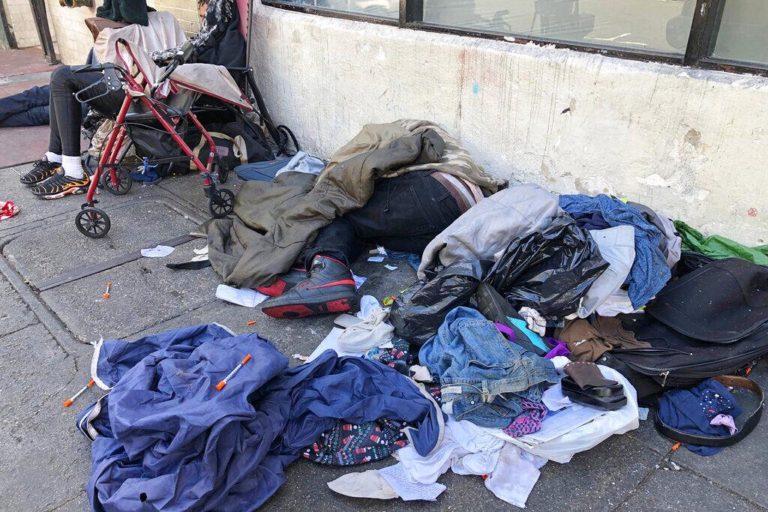
(Headline USA)  The CEO of a Los Angeles homeless services charity faces federal and state fraud charges after prosecutors said he lived a luxury lifestyle that included lavish vacations and designer clothes paid for with $23 million in public money meant to keep people off the streets.

Alexander Soofer, 42, was arrested Friday at his $7 million home that investigators believe he afforded using funds that were supposed to support his nonprofit Abundant Blessings, said First Assistant U.S. Attorney Bill Essayli.

The charitable group was contracted with the Los Angeles Homeless Services Authority, a county agency, to use taxpayer money to find shelter and provide three meals a day for more than 600 homeless residents.

Instead, prosecutors said Soofer bought a $125,000 Range Rover, a $2,450 Hermes jacket, a vacation home in Greece and a trip to Hawaii, where he stayed at the Four Seasons hotel that was famously the setting for the HBO TV show “The White Lotus.”

“He was living the high life while the people suffering, the homeless, lived on the streets with no shelter, no food,” Essayli said during a Friday news conference with Los Angeles County District Attorney Nathan Hochman.

If convicted as charged, Soofer could receive a sentence of up to 20 years in prison, Essayli said. An email was sent Monday seeking comment from Soofer’s attorney, Hilary Potashner.

According to the indictment, Soofer falsified invoices to claim he was serving fresh meals and renting out rooms while homeless people were instead fed canned beans and bulk packs of microwavable ramen noodles.

Investigators found Soofer falsified records to cover up the fact that he paid himself to “rent” properties for homeless people that he already owned, the indictment said.

“Mr. Soofer called his company Abundant Blessings, but the only abundant blessings were the blessings he gave himself,” Hochman said.

During the news conference, the prosecutors pointed to concerns that billions spent to combat homelessness haven’t brought enough people off the streets. The number of homeless residents across Los Angeles County dropped 4% last year, according to the annual count released last July. The tally estimated that some 72,000 people were living in shelters or in sidewalk encampments countywide.

Los Angeles County officials last March moved to take control of hundreds of millions of dollars in spending, citing two scathing audits that found that the homeless services authority spent it recklessly and without transparency.

Between 2018 and 2025, Soofer received more than $23 million in homeless housing funding. Of that, more than $5 million came directly from the county homeless services authority and more than $17 million came through a Los Angeles-based nonprofit called Special Service for Groups Inc., the U.S. Attorney’s Office said. None of the money came directly from the state.

Soofer is charged federally with wire fraud and the state charges include 11 felony counts of conflict of interest, two felony counts of offering false evidence and five felony counts of forgery.

Soofer appeared in court Friday but did not enter a plea. He was released on $1.5 million bond and is scheduled to be arraigned in federal court on Feb. 26. His arraignment on state charges was not yet scheduled.

The arrests became fodder for the ongoing war of words between President Donald Trump’s administration and California Gov. Gavin Newsom. After a conservative commentator placed blame for the fraud on Newsom, the Democratic governor’s press office pushed back.

“This case was uncovered by local investigators working with law enforcement — exactly the kind of accountability and oversight the state has pushed for,” Newsom’s office said.

That prompted a response by Essayli, who again blamed Newsom.

“You and the California legislature facilitated this fraud by handing out billions in tax dollars to these nonprofits with zero vetting and zero state oversight,” Essayli said Friday on social media.

Adapted from reporting by the Associated Press

30 People Dead From Effects of Winter Storm as More Freezing Cold Pummels US

(Headline USA)  Many in the U.S. faced another night of below-freezing temperatures and no electricity after a colossal winter storm heaped more snow Monday on the Northeast and kept parts of the South coated in ice. At least 30 deaths were reported in states afflicted with severe cold.

Deep snow — over a foot (30 centimeters) extending in a 1,300-mile (2,100-kilometer) swath from Arkansas to New England — halted traffic, canceled flights and triggered wide school closures Monday. The National Weather Service said areas north of Pittsburgh got up to 20 inches (50 centimeters) of snow and faced wind chills as low as minus 25 degrees Fahrenheit (minus 31 degrees Celsius) late Monday into Tuesday.

The bitter cold afflicting two-thirds of the U.S. wasn’t going away. The weather service said Monday that a fresh influx of artic air is expected to sustain freezing temperatures in places already covered in snow and ice. And forecasters said it’s possible another winter storm could hit parts of the East Coast this weekend.

A rising death toll included two people run over by snowplows in Massachusetts and Ohio, fatal sledding accidents that killed teenagers in Arkansas and Texas, and a woman whose body was found covered in snow by police with bloodhounds after she was last seen leaving a Kansas bar. In New York City, officials said eight people were found dead outdoors in the course of the frigid weekend.

There were still more than 630,000 power outages in the nation Monday evening, according to poweroutage.com. Most of them were in the South, where weekend blasts of freezing rain caused tree limbs and power lines to snap, inflicting crippling outages on northern Mississippi and parts of Tennessee.

In Mississippi, officials scrambled to get cots, blankets, bottled water and generators to warming stations in hard-hit areas in the aftermath of the state’s worst ice storm since 1994. At least 14 homes, one business and 20 public roads had major damage, Gov. Tate Reeves said Monday evening.

The University of Mississippi, where most students hunkered down without power Monday, canceled classes for the entire week as its Oxford campus remained coated in treacherous ice. Oxford Mayor Robyn Tannehill said on social media that so many trees, limbs and power lines had fallen that “it looks like a tornado went down every street.”

A pair of burly, falling tree branches damaged real estate agent Tim Phillips’ new garage, broke a window and cut off power to his home in Oxford.

“It’s just one of those things that you try to prepare for,” Phillips said, “but this one was just unreal.”

The U.S. had more than 12,000 flight delays or cancellations nationwide Monday, according to flight tracker flightaware.com. On Sunday, 45% of U.S. flights got cancelled, making it the highest day for cancellations since the COVID-19 pandemic, according to aviation analytics firm Cirium.

More light to moderate snow was forecast in New England through Monday evening.

New York City saw its snowiest day in years, with neighborhoods recording 8 to 15 inches (20 to 38 cm) of snow. Though public schools shut down, roughly 500,000 students were told to log in for online lessons Monday. The nation’s largest public school system saw snow days stripped away after remote learning gained traction during the coronavirus pandemic.

Meanwhile, bitter cold followed in the storm’s wake. Communities across the Midwest, South, and Northeast awakened Monday to subzero weather. The entire Lower 48 states were forecast to have their coldest average low temperature of minus 9.8 F (minus 12.3 C) since January 2014.

In the Nashville, Tennessee, area, electricity returned for thousands of homes and businesses Monday, while more than 170,000 others awoke bundled up in powerless homes after subfreezing temperatures overnight. Many hotels were sold out overnight to residents escaping dark and frigid homes.

Alex Murray booked a Nashville hotel room for his family to ensure they had a working freezer to preserve pumped breast milk to feed their 6-month-old daughter. Anticipating a long wait until power gets restored at his home, Murray planned to extend their hotel stay through Wednesday.

“I know there’s many people that may not be able to find a place or pay for a place or anything like that, or even travel,” Murray said Monday. “So, we were really fortunate.”

In Emporia, Kansas, police found a 28-year-old teacher dead in the snow after she was seen leaving a bar without her coat and phone.

Police said snowplows backed into two people who died in Norwood, Massachusetts, and Dayton, Ohio. Arkansas and Texas reported two deaths apiece.

The cause of deaths for the eight people found outside in New York City as temperatures plunged between Saturday and Monday morning remained under investigation.

Officials reported four deaths in Tennessee, three deaths apiece in Louisiana and Pennsylvania; two deaths in Mississippi; and one each in New Jersey, South Carolina and Kentucky.

Adapted from reporting by the Associated Press

Officer Placed on Modified Duty After Fatally Shooting Raccoon at a NYC Beach

(Headline USA) A New York police officer who fatally shot a raccoon at a New York City beach has been placed on modified duty while the matter is reviewed, according to officials.

The shooting occurred Thursday morning at Rockaway Beach, after someone called 911 to report a vicious animal, a police department spokesperson said in an emailed statement Monday.

Police said officers were trying to usher the raccoon to a safe location when the animal suddenly charged toward a group of people in “an aggressive manner” and the officer fired his weapon.

Bodycam footage published by the Daily News shows no group of people in sight when the animal walks out slowly onto the sand next to the beach’s boardwalk and is shot by an officer. The animal then limps along and the officer shoots twice more.

The officer’s name has not been released. The department’s Force Investigation Division, which reviews incidents when an officer discharges their weapon, is leading the department’s probe.

It wasn’t clear Monday if officials planned to test the raccoon for rabies.


Ex-Olympic Snowboarder Accused in Drug Smuggling Ring Heads to Court

(Headline USA)  A former Canadian Olympic snowboarder turned top FBI fugitive is expected to appear in federal court Monday on charges he allegedly ran a billion-dollar multinational drug trafficking ring and orchestrating multiple killings.

Ryan Wedding, 44, turned himself in at the U.S. Embassy in Mexico City last week and was flown to Southern California after a yearlong effort by authorities in the United States, Mexico, Canada, Colombia and the Dominican Republic to arrest him.

Wedding is scheduled to make an initial appearance in federal court in Santa Ana, California. No attorney was listed for him on the court docket Monday morning.

U.S. authorities believe the former Olympian, who competed in a single event for his home country in the 2002 Winter Olympics in Salt Lake City, had been hiding in Mexico for more than a decade. He was added to the FBI’s Ten Most Wanted Fugitives list last March when authorities offered a $15 million reward for information leading to his arrest and conviction.

Authorities say Wedding moved as much as 60 tons of cocaine between Colombia, Mexico, Canada and Southern California and believe he was working under the protection of the Sinaloa Cartel, one of Mexico’s most powerful drug rings.

He was indicted in 2024 on federal charges of running a criminal enterprise, murder, conspiring to distribute cocaine and other crimes.

The murder charges accuse Wedding of directing the 2023 killings of two members of a Canadian family in retaliation for a stolen drug shipment, and for ordering a killing over a drug debt in 2024. Last year, Wedding was indicted on new charges of orchestrating the killing of a witness in Colombia to help him avoid extradition to the U.S.

Wedding was previously convicted in the U.S. of conspiracy to distribute cocaine and sentenced to prison in 2010. Online records show he was released from Bureau of Prisons custody in 2011.

In Canada, Wedding faces separate drug charges dating back to 2015.

The 2024 indictment says Wedding ran a billion-dollar drug trafficking group that was the largest supplier of cocaine to Canada. The group obtained cocaine from Colombia and worked with Mexican cartels to move drugs by boat and plane to Mexico and then into the U.S. using semitrucks, the indictment said. It said the group stored cocaine in Southern California before sending it to Canada and other U.S. states.


Adapted from reporting by the Associated Press

NFL Owner’s Death Under Investigation

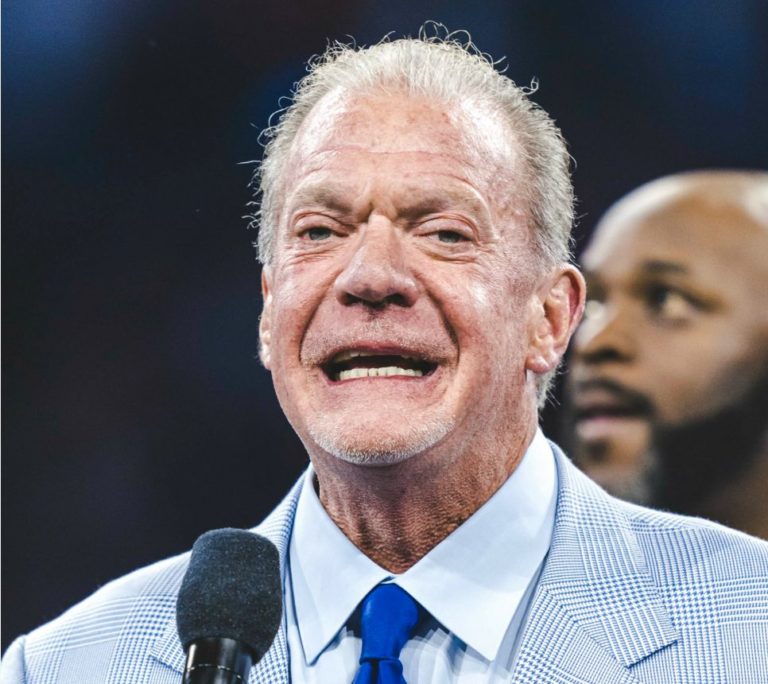
(Mark E. Johnson, Contributor) Indianapolis Colts owner Jim Irsay, 65, died suddenly in May at the posh Beverly Hills Hotel, 2,000 miles from his $12 million estate in Carmel, Indiana.

According to ABC News, the FBI and the DEA are investigating Irsay’s death, focussing on a California addiction specialist who had been prescribing him opioids and ketamine.

Dr. Harry Haroutunian, who signed Irsay’s death certificate, recorded the cause as a cardiac arrest due to pneumonia. There was no autopsy.

“Dr. Harry,” as he likes to be called, claims to have “helped individuals and families suffering from the disease of addiction for nearly 40 years via his role as doctor, author, lecturer, sponsor and friend.”

Haroutunian did not respond to a media request for comment. The FBI would not confirm or deny the investigation, first reported by the Washington Post.

Owner of the Colts for nearly 30 years, Irsay had an estimated net worth of $4.8 billion. He fought a public and life-long struggle with addiction, famously paying $2.4 million at auction for the original manuscript of “The Big Book,” the founding document of Alcoholics Anonymous.

What to know about ketamine therapy

Accoring to the Mayo Clinic, ketamine is being actively studied for treatment of treatment-resistant depression, or TRD. The drug is available in intravenous (IV) and nasal spray (esketamine) forms.

One recent study estimated that almost a third of the nearly 9 million people in the United States treated for depression each year have TRD, a substantial marketplace for prescription drug treatment.

Both ketamine and esketamine are given in a doctor’s office or a clinic, says Mayo, and each is typically used alongside another antidepressant. The antidepressant market is said to be worth $23.5 billion in 2026.

Ketamine is believed to have been responsible for the death of Matthew Perry. Five people were criminally charged in “Friends” actor’s case, with one doctor being sentenced to 30 months in federal prison for unlawfully distributing ketamine.

In a statement provided to ABC News, the Colts said: “We are aware of the investigation, but at this time, we’ve not been contacted by the FBI or been served with any subpoenas.”


USS Abraham Lincoln Aircraft Carrier Strike Group Arrives in the Middle East

(Kyle Anzalone, Antiwar.com) The USS Abraham Lincoln and its support ships have arrived in the Middle East as President Donald Trump is mulling strikes on Iran.

A US official told CBS News that the USS Lincoln aircraft carrier strike group had arrived in US Central Command’s (CENTCOM) area of control. On Tuesday, CENTCOM posted on X that the Lincoln was in the Indian Ocean and crews were performing routine maintenance.

The arrival of the fleet of warships in the Middle East comes as Trump has publicly threatened to attack Iran, and US officials say the White House is considering options to strike the Islamic Republic. Earlier this month, Trump decided against attacking Iran over concerns that the US did not have enough military power in the region to topple the government in Tehran and defeat Iranian counterattacks.

Over the past week, the US has engaged in a significant military buildup in the Middle East, including warships, fighter jets, and advanced air defense systems. The military equipment will give Trump larger strike operations for attacking Iran, and additional abilities to shoot down Iranian missiles targeting US bases and Israel.

Iran has said that it will respond to any attack by launching missiles at Israel and US bases in the region. Tens of thousands of American troops are positioned at over a dozen military facilities in the area.

The US force presence in the Middle East is now similar to the American military footprint in the region when Israel attacked Iran in June, starting a war that lasted 12 days. Trump said the USS Lincoln will give up operations to strike Iran, but the President left open the possibility for deescalation.

This article originally appeared at Antiwar.com.  

DOE Issues Emergency Orders to Mitigate Blackouts in New England, Texas

(Bethany Blankley, The Center Square)  U.S. Energy Secretary Chris Wright issued emergency orders to mitigate blackouts in New England and Texas as 24 states have declared an emergency due to an Arctic blast moving across the U.S. over the weekend.

More than 200 million people are in Storm Fern’s 2,300-mile path, stretching from New Mexico to Maine. The storm has led to roughly 12,000 flight cancellations, impacting airports stretching from Dallas to Boston. More than 31,000 flights were disrupted nationwide since Friday, according to FlightAware data.

Twelve states have reported more than a foot of snow so far, Fox Weather reported. Massachusetts, Maine and New Hampshire are expected to get more than a foot before the storm is over.

Southern states have been hit hard, including in northern Mississippi, where tens of thousands of residents are without power due to ice-laden trees downing power lines.

More than 900,000 electricity customers have lost power nationwide, according to multiple reports.

Wright issued the emergency orders pursuant to Section 202(c) of the Federal Power Act, authorizing ISO New England Inc. and the Electric Reliability Council of Texas (ERCOT) to run specified resources in their regions, overriding environmental permits or state law restrictions. He has issued two emergency orders in response to ERCOT requests to leverage backup generation at data centers and other industrial sites.

There are three major grids in the U.S. New England states fall under the Eastern Interconnection electric grid managed by the North American Electric Reliability Corporation’s Northeast Power Coordinating Council. Texas operates its own grid managed by ERCOT.

Wright argues the orders will help ISO-NE and ERCOT manage power generation, minimize blackouts and reduce electric costs. He also blames the Biden administration for increasing electricity costs and weakening the grids nationwide.

“The previous administration’s energy subtraction policies weakened the grid, leaving Americans more vulnerable during events like Winter Storm Fern,” Wright said. The Trump administration is “reversing those failures and using every available tool to keep the lights on and Americans safe through this storm,” he said in a news release.

On his first day in office, President Donald Trump declared a national energy emergency “after the Biden administration’s energy subtraction agenda left behind a grid increasingly vulnerable to blackouts,” Wright said. The Biden administration’s “premature forced closure of reliable generation such as coal and natural gas plants leaves American families vulnerable to power outages,” he added.

Wright cites a North American Electric Reliability Corporation (NERC) warning stating that “winter electricity demand is rising at the fastest rate in recent years” and a NERC 2025-2026 Winter Reliability Assessment warning about elevated blackouts risks nationwide during extreme weather conditions.

Power outages also cost Americans $44 billion a year, according to DOE Lawrence Berkeley National Laboratory analysis. It cites several extreme weather events in 2021 as examples, including Winter Storm Uri in Texas.

The storm caused wind turbines to freeze and natural gas pipelines were impacted by ice, preventing fuel delivery to many gas-powered plants, the report notes. Systemic failures impacted 40% of Texas’ power generation capacity; subsequent outages impacted roughly 4.5 million customers left without power for one week, the report notes.

State legislative hearings found that ERCOT failures weren’t attributed to Biden administration policies but ERCOT policies and failed state regulatory oversight, The Center Square reported. ERCOT board members didn’t even live in Texas, were using “phantom reserve margins” and systemic failures were identified within the state utility commission, The Center Square reported. Multiple people were fired and resigned.

The Texas legislature enacted a series of reforms that state regulators and the energy industry have since implemented, The Center Square reported.

As a result, electricity customers have seen their electricity rates and bills increase exponentially. They have also not experienced a repeat of the 2021 catastrophic failures.

During last January’s polar vortex, the Texas grid and energy companies set three all-time records for demand and supply and met energy needs during subfreezing temperatures, The Center Square reported.

Storm Fern ushered in thundersleet, snow and ice to most of Texas, including the oil and gas producing Permian Basin and Houston region where refineries are located. Ahead of the extreme weather, the Texas energy industry weatherized operations and says oil and natural gas production will continue to meet increased demand. ERCOT says Texas’ grid remains strong despite issuing the DOE requests, The Center Square reported.

Sen. Jacky Rosen Calls for Kristi Noem’s Impeachment

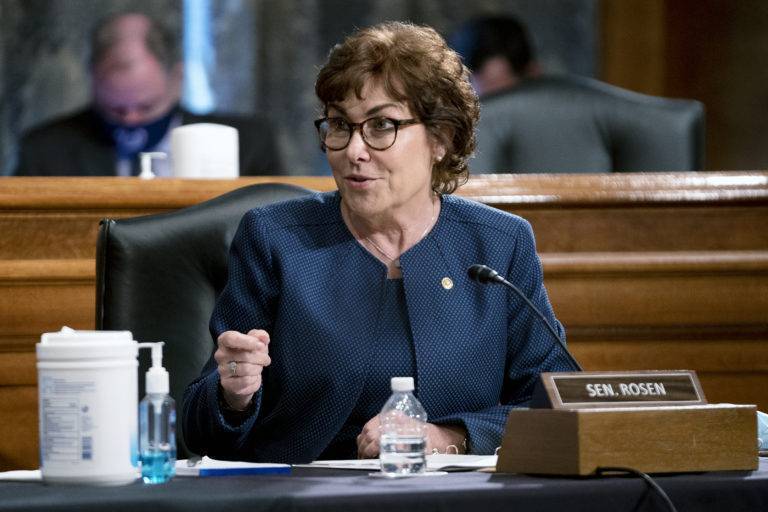
(Headline USA) Democratic Sen. Jacky Rosen is calling for the impeachment of Homeland Security Secretary Kristi Noem, saying that she believes Noem is attempting to “mislead the American public” about the fatal shooting of a 37 year-old protester in Minneapolis.

The call from Rosen, a moderate from Nevada who was part of the group that helped Republicans end the 43-day government shutdown last year, comes amid a growing fury from congressional Democrats who have also vowed to block funding for the Homeland Security Department. A House resolution to launch impeachment proceedings against Noem has the support of more than 100 Democrats, but few Senate Democrats have so far weighed in.

“Kristi Noem has been an abject failure leading the Department of Homeland Security for the last year — and the abuses of power we’re seeing from ICE are the latest proof that she has lost control over her own department and staff,” Rosen said in a statement to The Associated Press.

Rosen said Noem’s conduct is “deeply shameful” and she “must be impeached and removed from office immediately.”

Impeachment proceedings are unlikely in the GOP-controlled Congress, but mounting Democratic outrage over the violence in the streets of Minneapolis is certain to disrupt Senate Republican leaders’ hopes this week to quickly approve a wide-ranging spending bill and avoid a partial government shutdown on Jan. 30.

And while some moderate Democrats have been wary over the last year of criticizing the Trump administration on border and immigration issues, the fatal shootings in Minneapolis of Alex Pretti on Saturday and Renee Good on Jan. 7 have transformed the debate, even among moderates like Rosen.

The senator’s call for impeachment followed Noem’s quick defense, without a full investigation, of the fatal shooting of Pretti by a Border Patrol agent. Videos of the scene reviewed by The Associated Press appear to contradict statements by the Trump administration that the shots were fired “defensively” against Pretti as he “approached” them with a gun. Pretti was licensed to carry a concealed weapon, but he appears to be seen with only a phone in his hand in the videos.

During the scuffle, agents discovered that he was carrying a 9 mm semiautomatic handgun and opened fire with several shots, including into his back. Officials did not say if Pretti brandished the weapon.

Noem said Pretti showed up to “impede a law enforcement operation.”

“This looks like a situation where an individual arrived at the scene to inflict maximum damage on individuals and to kill law enforcement,” Noem said Sunday.

In her call for Noem’s impeachment, Rosen cited other issues beyond the current ICE operations. She said Noem has also “violated the public trust by wasting millions in taxpayer dollars” on self promotion and cited reports that the Coast Guard purchased her two luxury jets worth $172 million.

Rosen’s statement follows that of Massachusetts Sen. Ed Markey, who is one of the more left-leaning members of the Senate Democratic caucus. Markey said last week that Congress should begin impeachment proceedings against Noem, “who is right now actually orchestrating on the streets of our country this almost vigilantism on the part of ICE agents terrorizing cities all across the country.”

And while other senators stopped short of calling for Noem’s impeachment, several moderate Democrats who joined Rosen in voting to reopen the government last year said they would vote against Homeland Security funding this week even if it meant a government shutdown.

Nevada Sen. Catherine Cortez Masto said that DHS is “brutalizing U.S. citizens and law-abiding immigrants.” Virginia Sen. Tim Kaine said that “we are not living in normal times.”

As administration officials immediately defended the shooting, several Republicans have called for a thorough investigation, including Sens. Thom Tillis of North Carolina and Bill Cassidy of Louisiana.

Calls for Noem’s impeachment also grew louder in the House as the Democratic caucus had a phone call with Minnesota’s Gov. Tim Walz and the state’s Attorney General Keith Ellison, both former congressmen, according to a person familiar with the private call who requested anonymity to discuss it.

Most of the House Democratic lawmakers who spoke during the meeting called for Noem’s impeachment, said another person familiar with the call who insisted on anonymity to discuss it.

New York Rep. Laura Gillen, a Democrat who was one of only seven House Democrats who voted to fund the Homeland Security Department last week, said Sunday that “there must be accountability, which is why Secretary Noem must be impeached immediately.”

“She is not focused on safety or border security; she’s focused on chaos and self-promotion, undermining local law enforcement and stoking violence as a result,” Gillen said in a post on X.

Adapted from reporting by the Associated Press

German Officials Renew Calls to Bring Gold Home

(Mike Maharrey, Money Metals News Service) German officials are once again calling for the country’s central bank to bring its gold home.

Germany owns the second-largest gold reserves in the world at 3,352 tonnes. About 1,200 tonnes valued at around €164 billion ($194 billion) are stored at the Federal Reserve Bank of New York.

Germany also holds some of its gold reserves in London.

A leading German economist and former head of research at the Bundesbank says the central bank should move the gold stored in the U.S. back to Germany. Emanuel Mönch said it’s “too risky” to keep Germany’s gold reserves in the United States.

“Given the current geopolitical situation, it seems risky to store so much gold in the U.S. In the interest of greater strategic independence from the U.S., the Bundesbank would therefore be well-advised to consider repatriating the gold.”

The German central bank opted to store significant amounts of gold in New York to keep it far away from the Soviet Union during the Cold War. As an article in Fortune pointed out, “The country’s close ties with the U.S., which has historically held up the Western World order, made the Fed an obvious resting place for the commodity.”

With the U.S. weaponizing the dollar and aggressively using economic pressure as a foreign policy tool, the wisdom of storing German gold in New York no longer seems quite so obvious to many Germans.

European Taxpayers Association (TAE) head Michael Jäger said U.S. demands to control Greenland should “concentrate minds.”

“Trump is unpredictable and he does everything to generate revenue. That’s why our gold is no longer safe in the Fed’s vaults. What happens if the Greenland provocation continues? … The risk is increasing that the German Bundesbank will no longer be able to access its gold. Therefore, it should repatriate its reserves.”

Other notable figures in German economic and political circles have echoed the warning. Last summer, EU Parliament member Markus Ferber called for an audit of German gold.

“I demand regular checks of Germany’s gold reserves. Official representatives of the Bundesbank must personally count the bars and document their results.”

He later explained his position, saying, “Trump is erratic, and one cannot rule out that someday he will come up with creative ideas on how to treat foreign gold reserves. The Bundesbank’s policy for gold reserves has to reflect the new geopolitical realities.

There is also a drive to audit U.S. gold reserves stored at Fort Knox. Last year, four members of Congress introduced comprehensive legislation to audit gold.

Calls for German gold repatriation have primarily come from politically conservative figures. However, the idea is crossing the political divide. Green Party finance spokesperson Katharina Beck also expressed support for gold repatriation, calling the country’s gold reserves an “important anchor of stability and trust”, which “must not become pawns in geopolitical disputes.”

A spokesperson for Friedrich Merz’s coalition government recently said that moving gold out of the U.S. was not currently under consideration.

The Bundesbank has not made any official statements related to gold repatriation and continues to publicly back the Fed as the protector of its assets. However, that doesn’t mean the German central bankers are privately comfortable with the situation.

However, there are some prominent people who oppose moving German gold. Institute for Economic Research (Ifo) President Clemens Fuest advised against moving the gold out of the U.S., warning that it could lead to unintended consequences and would “only pour oil on the fire of the current situation.

Social Democrats parliamentary group spokesperson on financial policy, Frauke Heiligenstadt, said that while concerns were justified, the Bundesbank shouldn’t make any hasty moves because “Germany’s gold reserves are well diversified.” She argued that since about half of the country’s gold is already located in Frankfurt, “our ability to act is guaranteed.” She added that keeping some gold in New York still makes sense because “Germany, Europe, and the U.S. are closely linked in terms of financial policy.”

Talk of gold repatriation is part of a broader de-dollarization trend. A Danish pension fund recently announced plans to divest U.S. Treasuries, citing concerns about the U.S. government’s fiscal malfeasance.

“The decision is rooted in the poor U.S. government finances.”

While you might disagree with foreign concerns relating to U.S. foreign and economic policy, you can’t simply ignore the blowback potential from U.S. policy decisions. Right or wrong, you have to be aware of how people might respond. It’s easy to say, “Who cares what they think or what they do!” However, de-dollarization could create significant problems for the U.S. economy, given that it depends on foreign demand for dollars to absorb the incessant money creation necessary to support the federal government’s borrow and spend habit.

Germany isn’t alone in thinking its gold might be safer at home.

According to a World Gold Council survey in 2023, a “substantial share” of central banks expressed concern about potential sanctions after the U.S. and other Western countries froze almost half of Russia’s $650 billion gold and forex reserves in the wake of its invasion of Ukraine. According to the WGC, 68 percent of the banks surveyed said they plan to keep their gold reserve within their country’s borders. This was up from 50 percent in 2020.

One anonymously quoted central bank official told Reuters, “We did have it [gold] held in London… but now we’ve transferred it back to our country to hold as a safe haven asset and to keep it safe.”

In 2024, India repatriated 100 tonnes of its gold.

There has been speculation that other countries have been moving gold and other assets out of the U.S. in the wake of economic sanctions on Russia, but it’s been difficult to confirm because the Federal Reserve will not release information on the amount of gold in its vaults.

The gold repatriation trend started long before the West slapped sanctions on Russia. In 2019, Poland brought home 100 tons of gold. Hungary and Romania also repatriated some of their gold reserves around that same time. In the summer of 2017, Germany completed a project returning roughly half of its gold reserves back inside its borders. In 2015, Australia launched efforts to bring half of its reserves home. The Netherlands and Belgium have also initiated repatriation programs.

This gold repatriation trend underscores the importance of holding physical gold free from counterparty risk.

If you store your gold and silver with a third party, you could lose your metal through theft, fraud, or an act of God. Of course, you could lose silver and gold stored in your home the same way (except for fraud), so you have to weigh the risk of using third-party storage and keeping large amounts of silver and gold at home.

If you opt for third-party vaulting, it is important to choose a trusted company.

Money Metals offers secure precious metals storage in its state-of-the-art facility.

Here are just a few advantages of storing with Money Metals:

  • Money Metals Depository contents are fully insured by Lloyd’s of London.
  • Metals stored in your account are segregated and never commingled or rehypothecated  and cannot be used as collateral for a loan by anyone but you.
  • Depository holdings are independent and removed from any bank, Wall Street, or Washington, D.C.

Mike Maharrey is a journalist and market analyst for Money Metals with over a decade of experience in precious metals. He holds a BS in accounting from the University of Kentucky and a BA in journalism from the University of South Florida.

Bank of America Calls for $6,000 Gold in 2026

(Mike Maharrey, Money Metals News Service) In October, Bank of America raised its 2026 gold price forecast to $5,000.

Mission accomplished as of January 23.

Now the big bank has upped its projection again, calling for $6,000 gold this year.

BoA analyst Michael Hartnett said gold’s performance in past bull markets influenced his thinking.

“History is no guide to future, but avg gold jump past 4 bull markets ≈ 300% in 43 months which would imply gold reaching $6,000 by spring.”

Earlier this month, Bank of America’s Head of Metals Research, Michael Widmer, indicated he thought gold would become a key asset in investment portfolios this year.

Gold continues to stand out as a hedge and alpha source,” he wrote, adding that gold will serve as a key hedge and potential return driver in 2026.

In December, Widmer noted that bull markets don’t end simply because prices reach high levels. The bulls will fade when the fundamentals driving the market shift. At this point, there is no reason to think that de-dollarizationcentral bank gold buyinginflation pressuresFederal Reserve monetary easing, geopolitical tensions, and U.S. fiscal malfeasance will end any time soon.

“I’ve highlighted before that the gold market has been very overbought. But it’s actually still underinvested. There is still a lot of room for gold as a diversification tool in portfolios.”

Tight supplies have been a key driver of the silver market. Widmer said the thinks supply constraints may also impact the gold market, forecasting that the 13 major North American gold miners will produce 19.2 million ounces this year, a decline of 2 percent from 2025. He said he believes that most market forecasts for output are too optimistic.

Widmer also projects average all-in sustaining costs will rise 3 percent to about $1,600 per ounce, a level slightly above the market consensus.

There has been growing interest in gold as a portfolio diversifier. Last fall, Morgan Stanley CIO Michael Wilson said investors should consider abandoning the traditional 60/40 equity/bond portfolio allocation and adopt a 60/20/20 distribution with 20 percent allocated to precious metals.

Widmer said the 60/20/20 allocation makes sense.

“When you run the analysis since 2020, you can actually justify that retail investors should have a gold share of well above 20 percent. You can even justify 30 percent at the moment.”

On average, Western investors currently hold less than 1 percent of gold in their portfolios.

With the price touching $5,000, it’s getting increasingly more difficult to ignore gold. Widmer said this will likely incentivize more portfolio managers to consider both gold and silver.

“Just looking at benchmarks, gold has been one of the best-performing assets for the past few years. What we’ve heard a lot of the time is that ‘gold is a non-yielding asset; it costs to hold it; you don’t make any money from it, so what’s the point of actually holding it?’ But  just from a pure direction perspective, gold could have actually made a good contribution to a portfolio. I think the numbers speak for themselves.”


Mike Maharrey is a journalist and market analyst for Money Metals with over a decade of experience in precious metals. He holds a BS in accounting from the University of Kentucky and a BA in journalism from the University of South Florida.