

Dumbed-Down Nat’l Spelling Bee Now Offers Multiple-Choice Round

(Headline USA) The Scripps National Spelling Bee has become the latest conspirator in a woke movement to dumb down public education. The Bee was rolling smoothly through the second day of its first fully in-person competition in three years. Then it transformed into the SAT.

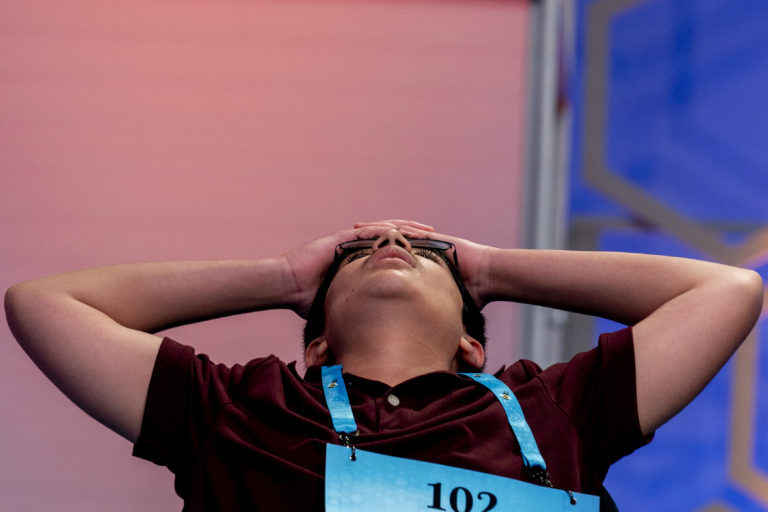
An onstage vocabulary round during Wednesday’s semifinals introduced an element of randomness into the venerable bee, forcing spellers to demonstrate a different skill set and knocking out some of the bee’s most accomplished competitors.

Vivinsha Veduru and Roy Seligman, who tied for fourth place in last year’s bee: gone. Deetya Vuppala and Yash Shelar, the co-champions of this year’s expert-level SpellPundit online bee: also gone. All denied a shot at Thursday’s finals without spelling a word incorrectly.

“I thought it was tragic,” said Grace Walters, a coach to multiple previous Scripps champions.

Walters’ only pupil this year, four-time bee participant Harini Logan, made it through the vocabulary round and was one of a dozen finalists. She’ll be joined on stage Thursday night by Sahasrad Satish, Ekansh Rastogi, Vikram Raju, Aliyah Alpert, Abhilash Patel, Sahana Srikath, Kirsten Santos, Nitya Kathiravan, Vihaan Sibal, Shijay Sivakumar and Saharsh Vuppala — Deetya’s twin brother.

For many spellers, the multiple-choice vocabulary questions took away their opportunity to use the skills they’ve honed over years of study: asking questions of the judges to help piece a word together; identifying roots; deducing which vowel makes the dreaded “uh” sound known as a schwa.

“The words that are sometimes asked may not necessarily be based on roots or easily decipherable, and so in that case it becomes a case of which kids are natural readers and have a lot of cultural capital, and which kids aren’t as culturally sophisticated,” said Scott Remer, a former speller who coached 21 competitors this year, including Saharsh and Deetya.

“Some words you’re only going to pick up by reading newspapers, by reading certain books, and are not necessarily guessable.”

Yash was knocked out on “Stockholm syndrome,” a phrase that can’t be parsed via a speller’s expert knowledge of how sounds are constructed in various languages. Vivinsha didn’t know “ragout” was a sauce. Deetya was given “ergogenic,” and Roy’s bid to become the first champion from The Bahamas ended when he was asked to define “rumbustical.”

“With the word meaning, it’s a crapshoot,” said Arthur Seligman, Roy’s father. “You and I know what ‘Stockholm syndrome’ means, but an 11- or 12-year-old?”

Chris Dominick, an excitable 14-year-old from Struthers, Ohio, illustrated the grab-bag quality of the vocabulary round when he was given “leitmotif” and exclaimed, “I know what this is!”

A reliable narrator, Chris didn’t make it through the next spelling round. He was given “sirtaki” — a Greek dance — and said, “OK, I think I’m going to get out on this one.” And he did, after guessing the word started with a “c.”

“Goodbye, cruel world,” Chris said after hearing the bell.

Vocabulary has long been part of the bee, but only on written tests. The bee’s new executive director, J. Michael Durnil, who took over in 2021, added it to the live spelling rounds when a test became impractical during last year’s mostly virtual, pandemic-altered competition.

“This is Scripps’ way of ensuring that the competition does not become about memorizing words like code,” Walters said. “Putting in a vocab segment, it almost forces intimacy with language because you have to know what those words mean.”

Although spellers had to answer a vocabulary question during Tuesday’s preliminary rounds, it was sandwiched between two words they had to spell. The semifinals, then, were the first time that so many spellers — 31 at the start of the vocabulary round — had to stand in front of the microphone and pick one of three possible answers on a screen in front of them.

Some knew the answers right away. Some didn’t, and had to guess — A, B or C. And that was that.

Vihaan, a 13-year-old from McGregor, Texas, who’s in the finals for the second time, was asked to define “vermillion” and noted that every multiple-choice option he was given was a color. He was shocked to see Roy knocked out.

“I know he’s a really strong speller. Probably stronger than me,” Vihaan said.

Harini, a 14-year-old from San Antonio, Texas, was one speller who kept her cool throughout, even when pronouncer Jacques Bailly made a rare flub, initially leaving a syllable out of “quinquefoliolate,” the word that got her into the finals.

Much like her mastery of language, Harini puts plenty of work into her onstage sangfroid.

“Even though I am stressed in the moments leading up to getting my word, as soon as I get my word, I just try to put myself into a thinking process where I can really feel calm,” she said.

Adapted from reporting by the Associated Press
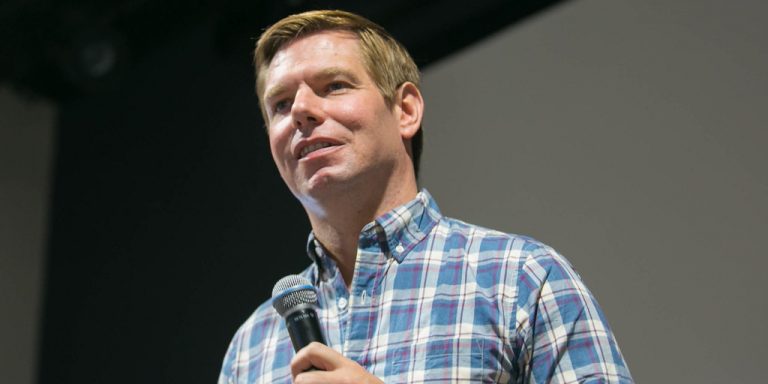
Swalwell Wants Campaign Cash to Cover Babysitting Costs

(Chris Parker, Headline USA) Rep. Eric Swalwell, D-Calif., wants to use campaign donations to cover babysitting expenses while he travels, in the latest example of Democrats trying to carve out rules for themselves that don’t apply to others. 

An attorney working for his legal team is requesting the Federal Election Commission to expand on a law that allows campaign funds to be used for childcare during campaign events, reported the Washington Free Beacon. If the request is approved, Swalwell will also be able to use campaign funds to cover childcare while he’s accepting invitations to travel overseas.

“Because of his status as a well-known member of Congress, he gets many invitations, including invitations from foreign governments for information visits, that may require him and his spouse to be away for multiple days,” said the letter filed with the FEC.

The letter also stated the commission previously “determined that childcare expenses that were a direct result of campaign activity would not exist irrespective of the campaign, so they could be paid for with campaign funds.” However, Swalwell’s overseas trips are not limited to his campaign activities.

Swalwell drew attention to his lavish travels overseas when a photo of him excitedly riding a camel while shirtless went viral. His attorney’s letter to the FEC details that and similar trips as part of his work as a politician. The expenses for those trips are typically covered by the inviting party. 

This isn’t the first time that Swalwell has drawn attention for his use of campaign funds. The American Accountability Foundation filed a complaint in 2021 after he used donations to spend over $20,000 on luxury hotels. He also used campaign funds to purchase alcohol and ride in limousines. 

The FEC forbids candidates from converting campaign foods to personal use. “Personal use” is defined as “the use of campaign funds to fulfill any commitment, obligation, or expense of a person that would exist irrespective of the candidate’s election campaign.” 

Typically, childcare is covered if its expense is “the direct result of campaign activity.” However, many of Swalwell’s trips are not used to promote his campaign or even related to its activities. He, like many politicians, is frequently invited to travel overseas regardless of whether it’s campaign season. 

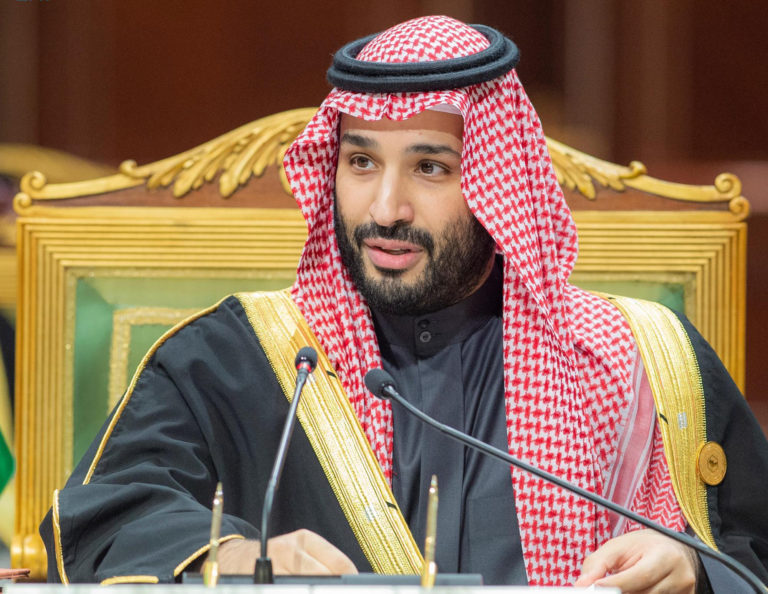
Biden Considers Begging Insulted Saudis for Gas-Crisis Relief

(Headline USA) As President Joe Biden’s domestic policies continue to lead the country on a crash course of soaring gas prices and inflation, the president is leaning towards making a visit to Saudi Arabia — a trip that would likely bring him face-to-face with the Saudi crown prince he once shunned as a killer.

The White House is weighing a visit that would also include a meeting of the leaders of the Gulf Cooperation Council countries (Bahrain, Kuwait, Oman, Qatar, Saudi Arabia and United Arab Emirates) as well as Egypt, Iraq and Jordan, according to a person familiar with White House planning, who spoke on the condition of anonymity to discuss the yet-to-be finalized plans.

It comes as overriding U.S. strategic interests in oil and security have pushed the administration to rethink the arms-length stance that Biden pledged to take with the Saudis as a candidate for the White House.

Any meeting between Biden and de facto Saudi ruler Prince Mohammed bin Salman during a Biden visit to the Middle East could offer hope of some relief for U.S. gasoline consumers, who are wincing as Biden’s policies and a squeaky-tight global oil supply drives up prices. Biden would be expected to meet with Prince Mohammed if the Saudi visit happens, according to the person familiar with the deliberations.

Such a meeting could also ease a fraught and uncertain period in the partnership between Saudi Arabia, the world’s top oil exporter, and the United States, the world’s top economic and military power, that has stood for more than three-quarters of a century.

But it also risks a public humbling for the U.S. leader, who in 2019 pledged to make a “pariah” of the Saudi royal family over the 2018 killing and dismemberment of U.S.-based journalist Jamal Khashoggi, a critic of Prince Mohammed’s brutal ways.

White House press secretary Karine Jean-Pierre on Wednesday declined to comment on whether Biden will travel to Saudi Arabia. He is expected to travel to Europe at the end of June and could tack on a stop in Saudi Arabia to meet with Prince Mohammed, Saudi King Salman and other leaders. If he does, Biden would also likely visit Israel.

Last week, the White House confirmed that Brett McGurk, the National Security Council Middle East coordinator, and Amos Hochstein, a senior adviser for energy security at the State Department, were recently in the region. Secretary of State Antony Blinken spoke by phone Monday with his Saudi counterpart.

McGurk and Hochstein, as well as Tim Lenderking, the U.S. special envoy for Yemen, have repeatedly visited Saudi Arabia for talks with Saudi officials about energy supplies, Biden administration efforts to revive the Iran nuclear deal and Saudi’s war in Yemen, recently calmed by a cease-fire.

For Biden, the political dangers of offering his hand to Prince Mohammed include the potential for an embarrassing last-minute public rebuff from a still-offended crown prince known for imperious, harsh actions. Since Prince Mohammed became crown prince in 2017, that has included detaining his own royal uncles and cousins as well as Saudi rights advocates, and, according to the U.S. intelligence community, directing Khashoggi’s killing. Saudi Arabia denies his involvement.

Still, Biden stood ready to greet the prince at last October’s meeting of leading rich and developing nations in Rome, but Prince Mohammed did not attend.

And any Biden climbdown from his passionate human-rights pledge during his campaign — that Saudi rulers would “pay the price” for Khashoggi’s killing — risks more disillusionment for Democrat voters. They have watched Biden struggle to accomplish his domestic agenda.

Democrats appear less vocal now in demands that the U.S. take a hard line with Saudi Arabia’s crown prince. Near-record gas prices are endangering their prospects in the November midterm election.

A leading congressional critic of the Saudi government, Rep. Gerald Connolly of Virginia, said in an email the United States “should reassess its unconditional support for Saudi Arabia.” But he and other Democrats are not publicly telling Biden he shouldn’t meet with Prince Mohammed.

Lawmakers point especially to Saudi Arabia’s refusal despite months of Western appeals to veer from an oil production cap brokered largely between the Saudi kingdom and oil-producer Russia. The production cap is adding to oil supply shortfalls stemming from Russia’s invasion of Ukraine.

At the same time, British Prime Minister Boris Johnson and French President Emmanuel Macron have privately urged Biden to work to soothe U.S.-Saudi relations as has Israel, which sees the kingdom as an essential player in countering Iran.

Besides helping to keep gas prices high for consumers globally, the tight supply helps Russia get better prices for the oil and gas it is selling to fund its invasion of Ukraine. Russian Foreign Minister Sergey Lavrov visited the Saudi kingdom Tuesday.

Frequent, warm visits among Saudi, Russian and Chinese officials during the freeze between Biden and the Saudi crown prince have heightened Western concern that Saudi Arabia is breaking from Western strategic interests.

The United States for decades has ensured U.S. or allied aircraft carriers, troops and trainers and missile batteries remain deployed in defense of Saudi Arabia and its oil fields, and in defense of other Gulf states. The military commitment recognizes that a stable global oil market and a Gulf counterbalance to Iran are in U.S. strategic interests.

From Saudi Arabia, the United States is looking “for real assurances that it is going to be firmly aligned with the United States internationally, and not drift toward or hedge by trying to have comparable relationships with Russia and China. That goes beyond just oil,” said Dan Shapiro, a former U.S. ambassador to Israel. Shapiro is an advocate of bilateral Abraham accords that have helped establish closer ties between some Arab states and Israel.

“The United States needs to have some assurance that it’s going to provide those security guarantees and it has a real partner that’s going to be like a partner,” said Shapiro, now a distinguished fellow at the Atlantic Council.

Blinken and White House national security adviser Jake Sullivan also met last month with the Saudi defense official. Sullivan said he talked energy. CIA Director William Burns visited Prince Mohammed in Saudi Arabia in April.

Biden administration officials bristle at the notion that a stepped-up engagement is simply about getting the Saudis to help ease gas prices. Jean-Pierre said that’s “a misunderstanding of both the complexity of that issue, as well as our multifaceted discussions with the Saudis.”

“The president’s words still stand,” she added Wednesday, of Biden’s pledge that the Saudis would “pay a price.”

Adapted from reporting by the Associated Press
Geriatric-in-Chief Biden Outpaces Predecessors in Vacation Time

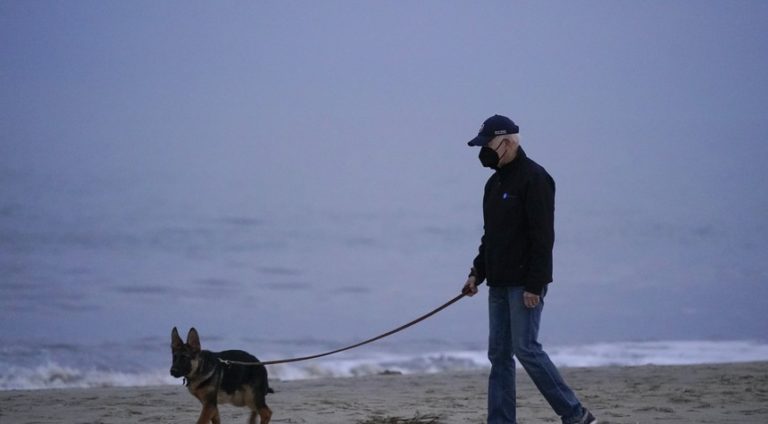
(Dmytro “Henry” Aleksandrov, Headline USA) President Joe Biden spent more time vacationing rather than working in the White House, having more absent days than any American contemporary president, as his jaunts to Delaware occur way more frequently than his press appearances.

Biden will go to Rehoboth Beach, Delaware, on Thursday evening to one of the homes he possesses there, reported the Washington Examiner. In Delaware, he spent more than a quarter of his time during his first year, and he wants to continue down that path during his second year in office.

“Every time I get a chance, I go home to Delaware. You think I’m joking. I’m not,” Biden said in February, The Examiner reported.

Biden spent more than 100 days outside of the White House, and if that pattern will continue, it will be more than 500 days, according to estimates.

“Ahead of this weekend’s trip, Biden has spent an estimated 188 full or partial days away from the White House, with 130 spent at his Delaware properties, 52 at Camp David, and six in Nantucket.” the Examiner said.

“If that pace holds, Biden will spend roughly 553 days away from the White House, which he has referred to as a ‘gilded cage,’ over his first term, or 1,106 days over two terms.”

In comparison, President Donald J. Trump spent 381 days outside of the White House over his term, and Barack Obama spent 328 days over his two terms.

George W. Bush was constantly criticized for his visits to his ranch in Crawford, Texas, [1,020 days outside of his office]. His predecessor, Bill Clinton, spent 345 days away from D.C.

In an attempt to save Biden’s collapsing reputation, White House spokesman Andrew Bates told CNN that even if a president of the United States is not physically in the office, it doesn’t mean he’s not doing his job.

“Presidents of the United States are constantly on the job, regardless of their location, whether they’re on a state visit overseas or just 100 miles from the White House for a short trip to Wilmington,” Bates said.

Even though Biden’s vacations brought a lot of complaints from people, it is his job performance that makes people especially mad, rather than his time away from the White House, according to David Greenberg, presidential historian and Rutgers University professor of history, journalism and media studies.

“It can be a kind of false causality to suggest people think a president is taking too much vacation and therefore they’re unhappy,” he said.

“It actually runs the other way. People are unhappy with the president, therefore, he’s taking too much vacation.”

Ex-Dem. Presidential Hopeful Sentenced to Prison for Fraud (It’s Not Hillary)

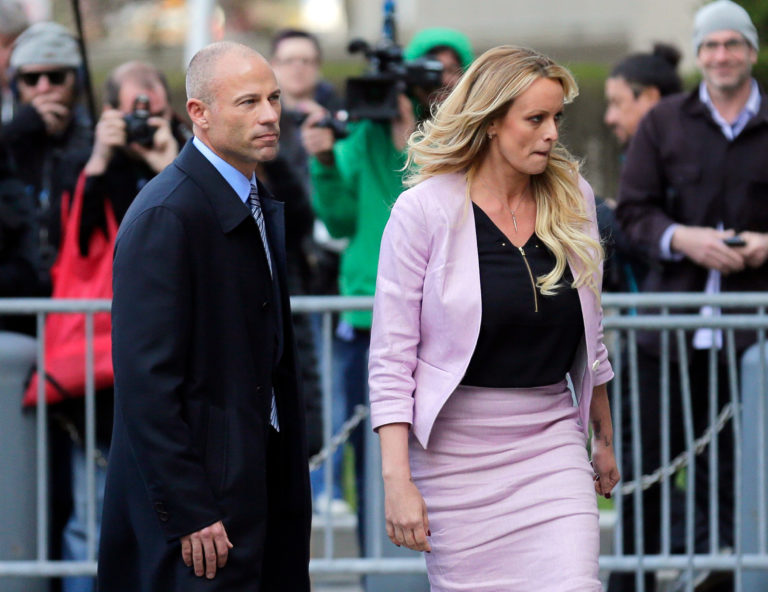
(Headline USA) Former Democrat presidential hopeful Michael Avenatti was sentenced Thursday to 2½ years in prison for cheating client Stormy Daniels, the porn actor who catapulted him to fame, of hundreds of thousands of dollars in book proceeds.

Once a darling of the leftist cable news media, Avenatti regularly attacked then-President Donald Trump, using Daniels’s lawsuit against Trump as his main cudgel.

Daniels and former Playboy bunny Karen McDougal both claimed to have been paid hush money during the 2016 campaign to remain quiet about trysts with the thrice-wed future president 10 years prior, shortly after his marriage to future First Lady Melania Trump.

Financial records and testimony from former Trump lawyer Michael Cohen both point to the two having been paid off by Cohen to remain quiet, although Trump has never expressly confirmed the affairs or acknowledged any direct role in the payoff.

Avenatti later attempted to cash in on the spurious rape allegations against Supreme Court nominee Brett Kavanaugh by representing a client who falsely claimed to have participated in wild orgies with the future justice.

At the peak of his fame, he openly mused about seeking the Democratic nomination to challenge Trump in the 2020 race. But Avenatti’s own hubris quickly undid him after he attempted to defraud Daniels and to extort the Nike athletic apparel company.

The California lawyer, currently incarcerated, learned his fate in Manhattan federal court, where Judge Jesse M. Furman said the sentence will mean that he will spend another 2½ years in prison in the Daniels case—on top of the 2½ years he is already serving in the Nike case for threatening to ruin the shoemaker’s reputation if it did not pay him up to $25 million.

And he faces a retrial in California on charges that he cheated clients and others of millions of dollars there.

The judge said Avenatti’s crime against Daniels was made “out of desperation” when his law firm was struggling. He called Avenatti’s behavior “craven and egregious” and blamed it on “blind ambition.”

Prior to sentencing being announced, Avenatti, wearing his prison uniform, choked up several times as he delivered a lengthy statement, saying he had “disappointed scores of people and failed in a cataclysmic way.”

At trial earlier this year, Avenatti represented himself, cross-examining his former client for hours about their experiences in early 2018, when she signed a book deal that provided an $800,000 payout. Prosecutors said he illegally pocketed about $300,000 of her advance on Full Disclosure, published in fall 2018.

Daniels was not in court. A lawyer spoke on her behalf, saying it was “truly shocking” that Avenatti tried to portray himself as a champion of his clients during his statement.

In a presentence submission, Avenatti’s lawyers cited an apology letter Avenatti recently wrote to Daniels in which he said: “I am truly sorry.”

But prosecutors in a sentencing submission last week urged that that he should face “substantial” additional time in prison for a wire fraud conviction and criticized his apology letter, saying the 51-year-old failed to apologize for his actual crime.

And they recalled that he had “berated his victim for lewd language and being a difficult client, questioned her invasively about marital and familial difficulties, and sought to cast her as crazy, much as he did during the course of his fraud to prevent her own agent and publisher from responding to her pleas for help” during “an extremely lengthy” cross-examination.

“The defendant certainly had every right to defend himself at trial,” prosecutors wrote. “But he is not entitled to a benefit for showing remorse, having done so only when convenient and only after seeking to humiliate his victim at a public trial, and denigrating and insulting her for months to her agent and publisher while holding himself out as taking up her cause against the powerful who might have taken advantage of her.”

Adapted from reporting by the Associated Press
Va. University Targets R.E. Lee’s Burial Grounds for Woke Makeover

(Dmytro “Henry” Aleksandrov, Headline USA) Washington and Lee University officials decided to make significant changes to push their woke agenda, launching a cultural snowflake storm to bury and blur history.

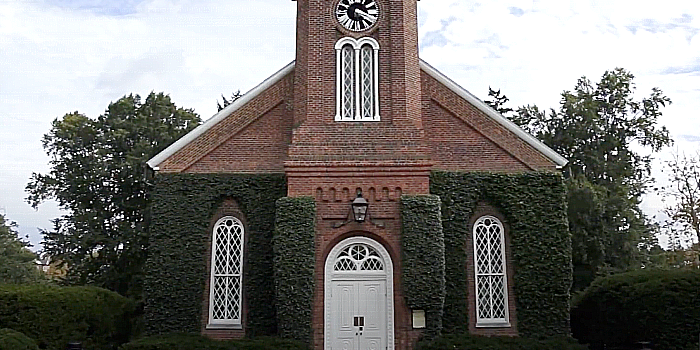
The administrators of the university have announced that they are planning to build a permanent wall this summer to separate the Robert E. Lee’s chapel’s main auditorium from a section of the building that features a statue of Lee, reported the College Fix. The statue is located directly behind the podium where students give speeches.

Last summer, the school officials got rid of George Washington and Lee, as well as plaques that were honoring the alumni of the institution and veterans from many wars, including the Civil War.

The official reason behind the changes was to make the campus environment more inclusive, and some students criticized the decision.

President of Students for Historical Preservation, junior Kamron Spivey has been opposing chapel changes since the last school year.

When the university accepted National Historic Landmark status for Lee Chapel in 1961, “they pledged to uphold the site and share its historical significance with those who visit it,” he said.

Therefore, he pointed out that making changes to the chapel will be a “complete breach of that responsibility.”

“Changing the [chapel] now is a complete breach of that responsibility, and it’s a major disgrace to historical sites everywhere,” Spivey told The College Fix via email.

Aside from the changes that were already implemented last summer, university trustees internally changed the name to “University Chapel.”

Spivey understands that not every student wants to attend Lee Chapel, so he proposed a different solution – to stop using the chapel for mandatory events and turn it into a museum.

“I understand that many students and faculty do not want to enter Lee Chapel. That’s their choice, and I do not intend to coerce people to [enter] the building,” Spivey said.

“I propose that the university stop using Lee Chapel for mandatory events and restore it to its former status as a museum, and only a museum. Then only those individuals wanting to learn about Lee, Washington College, and the Civil War will visit it.”

The General Redoubt, an alumni group dedicated to reestablishing university traditions, launched a “Save Lee Chapel” petition, which has 3,688 signatures as of June 2.

“[The administration] has gone too far,” the group stated on its website.

NYC Police Told to Halt Anti-Gay Sex Stings in Public Bathrooms

(Headline USA) Bowing to the altar of wokeness instead of serving public safety, the police agency that patrols New York City’s main bus terminal has agreed to stop sending plainclothes officers into its public bathrooms to try and catch people propositioning strangers for sex, a type of sting long criticized by activists as a discriminatory relic of an era of crackdowns predominantly aimed at gay men.

Not only will the agency start to allow gay men to sexually harass the public, officers will also be given training on ways to further cater to the criminals.

Under a legal settlement entered in federal court Tuesday, the Port Authority of New York and New Jersey will give its new police recruits LGBTQ+ sensitivity training for the next three years and only reinstate the so-called public lewdness patrols at the Port Authority Bus Terminal if approved at the highest levels.

The settlement, announced on the first day of Pride Month, resolves a lawsuit brought by people arrested as a result of the patrols by the Port Authority Police Department.

Many had claimed the charges were baseless, brought by officers who targeted men using the restrooms if they perceived them as gay, largely to inflate their arrest statistics.

The two named plaintiffs, Cornell Holden and Miguel Mejia, had similar experiences at the bus terminal in 2014, according to the lawsuit.

Both described standing at a urinal and having a plainclothes officer stand at the urinal next to them, then step back in an apparent attempt to see their hands and genitals.

Police arrested Holden and Mejia on charges of public lewdness, claiming they were spotted masturbating. Both men said they were falsely accused — and both were ultimately cleared.

The Manhattan district attorney’s office dismissed the charges against Holden. Mejia went to trial and was acquitted.

“This kind of blatant homophobia has no place in policing, and the reforms achieved in this lawsuit aim to safeguard against future abuses like the ones experienced and challenged by Mr. Holden and Mr. Mejia,” Molly Griffard, an attorney for The Legal Aid Society, which represented the plaintiffs, said in a statement.

Under terms of the settlement, Holden will receive $15,000. Mejia will receive $25,000.

Port Authority officials have denied any misconduct by officers. In an email, a spokesperson for the authority, which also runs area airports and seaports, said it hasn’t conducted the patrols in several years and is committed to proper standards of conduct at all its facilities.

The training for officers will be performed in conjunction with the Gay Officer’s Action League.

In addition, the Port Authority agreed to designate single-stall, gender-neutral restrooms at the bus terminal and make it easier for people to find complaint forms on the authority’s website.

Attorney Seth Spitzer, also representing the plaintiffs on behalf of the law firm Winston & Strawn, called it “a just outcome for which we simply should not have had to fight so hard.”

The Port Authority terminal serves roughly 200,000 riders per day at its location on 42nd Street, including commuters and people arriving in the city on long-distance trips from all parts of the U.S.

The city’s Pride Month culminates in a massive march marking the anniversary of the Stonewall uprising, when a crowd of hundreds of people fought back against a police raid on a gay bar in Manhattan.

Adapted from reporting by the Associated Press
GOP Hopes Calif. Wins Could Help Cushion Red-Wave House Majority

(Headline USA) California’s primary on Tuesday will set the stage for a November election where a handful of U.S. House seats in the Los Angeles area and Central Valley will help determine which party controls Congress.

Democrats dominate California politics, but the Republican Party retains pockets of strength in a sprinkle of House districts that will be among the country’s marquee elections.

Republicans need to capture only a handful of seats nationally to reclaim the majority from Democrats and Speaker Nancy Pelosi of San Francisco, who has held power since 2018, when her party used phony allegations of Russia collusion to campaign against then-President Donald Trump.

Midterm elections typically punish the party in the White House, and polls show plummeting popularity for Democratic President Joe Biden, who has the lowest approval ratings of any president in modern history. Voters have been rankled by inflation, rising crime, abortion rights and other cultural disputes at home and conflict overseas.

While no incumbents appear to be in dire trouble in California’s primary, it could be a different story in November. The main battlegrounds are Orange County, a one-time conservative stronghold southeast of Los Angeles that has become increasingly diverse and Democratic, and the Central Valley, a vast inland stretch sometimes called the nation’s salad bowl for its immense agricultural production.

House Republican leader Kevin McCarthy, from the Central Valley city of Bakersfield, could become the next speaker if the GOP flips enough seats.

Former President Donald Trump has been framing major contests in other states but has kept a distance from heavily Democratic California, though some GOP candidates have openly embraced him in hopes of tapping into remnants of his conservative base.

With newly redistricted maps, Democrats are looking to claw back four seats the party lost in California in 2020.

Also, a special election runoff is being held to fill the vacant seat of former Republican Rep. Devin Nunes, who resigned to lead Trump’s media company. The seat is expected to stay in Republican control.

Despite the troubling national climate for Democrats, the California Republican Party has been drifting toward obscurity for years.

The GOP holds only 10 of the state’s 53 House seats—with the Nunes vacancy—and accounts for less than 24% of registered voters statewide. California is dropping to 52 House seats next year because its once-soaring population growth has receded, with many of the state’s existing Republicans—and some traditionally liberal Democrats—fleeing the radical leftist takeover in cities like Los Angeles and San Francisco.

A snapshot of key races:

TRUMP IMPEACHMENT VOTE BRINGS UNCERTAINTY

Rep. David Valadao is a survivor. Despite running in a heavily Democratic, largely Latino district in the Central Valley, the Republican with a bipartisan streak held his seat from 2013 until January 2019, lost it for a term, then won it back in a 2020 rematch with Democrat T.J. Cox.

His newly drawn district, the 22nd, has a similar, strong Democratic tilt. An early challenge will be getting by lingering resentment among some conservatives over his vote to send articles of impeachment to the Senate that faulted Trump for the Jan. 6 Capitol uprising.

Rival Republican Chris Mathys, an ardent Trump supporter, is promising to oust Valadao for that vote. But Trump has not significantly engaged in the race—and Valadao, a dairy farmer, has the backing of McCarthy, who is close to Trump, as well as the state GOP endorsement.

If he survives the primary, Valadao is likely to face five-term Assemblyman Rudy Salas.

A REPUBLICAN LOOKING TO DEFY THE ODDS—AGAIN

Rep. Mike Garcia is an anomaly in the Los Angeles metropolitan area: a Republican congressman. He occupies the last GOP-held House seat anchored in heavily Democratic Los Angeles County, which he retained in 2020 by a mere 333 votes.

The former Navy fighter pilot was endorsed by Trump in 2020. He joined House Republicans who attempted to reject electoral votes from Arizona and Pennsylvania and opposed Trump’s impeachment after the Capitol uprising.

Garcia is seeking reelection in the new 27th District, which overlaps a chunk of his old terrain but has a stronger Democratic tilt. Several Democrats are on the ballot, including Christy Smith, a former legislator who lost to Garcia in 2020, and Quaye Quartey, a retired Navy intelligence officer.

Garcia points to his vote supporting $2,000 stimulus checks as one example of his political independence. Democrats have a nearly 12-point registration edge, but Garcia’s local roots, military service and Latino surname are formidable assets.

PROGRESSIVE STAR BATTLES IN FORMER ‘REAGAN COUNTRY’

Southern California’s 47th District, which includes Huntington Beach and other famous surf breaks, is an area once considered “Reagan Country” for its conservative leanings and ties to former Republican President Ronald Reagan.

But it’s changed, like much of California, and the Orange County district is about equally split between Democrats and Republicans.

The boundaries of the district reach inland to include Irvine, the hometown of Democratic Rep. Katie Porter, a star of the party’s far-left ‘progressive’ wing.

Her leading opponent is Republican Scott Baugh, a former state legislative leader and past head of the county GOP.

About two-thirds of the voters in the newly drawn district are new to Porter, and her challenge is enlisting them as supporters. She comes with an advantage: nearly $19 million in the bank, making her one of the most prolific fundraisers in Congress.

Baugh has been attacking her as a “radical” in the mold of Rep. Alexandria Ocasio–Cortez of New York, a self-described democratic socialist. Democrats can be expected to highlight a $47,900 civil fine Baugh agreed to pay in 1999 while in the Legislature for campaign finance violations.

A RIVALRY ON THE RIGHT

Rep. Young Kim, a South Korean immigrant and former legislator, was among four California Republicans who captured Democratic seats in 2020. Running in the GOP-leaning 40th District this year, it appeared she had a relatively open lane to reelection.

But her campaign and GOP allies recently invested over $1 million in ads to blunt the trajectory of rival Republican Greg Raths, a retired Marine colonel and Trump booster. It appeared to be a precautionary move, with Kim endorsed by the state GOP and holding a wide fundraising edge over Raths.

The ads also look like a counterweight to a move by the sole Democrat on the ballot, physician Asif Mahmood, who ran ads highlighting Raths’ conservative credentials. Mahmood appears to be following a common strategy in trying to elevate a primary rival—in this case Raths—who presumably would be easier to beat in the general election.

PULLING NO PUNCHES IN DIVERSE DISTRICT

The 45th District anchored in Orange County has a slight Democratic registration edge and includes the nation’s largest Vietnamese American community. The seat was specifically gerrymandered to give Asian Americans, who comprise the largest group in the district, a stronger voice in Congress.

It’s in this diverse district that Republican Rep. Michelle Steel, a South Korean immigrant, is hoping to win another term in Congress, although she lives in a neighboring district. It’s been a furious, at times nasty fight so far with Democrat Jay Chen, her likely opponent in a November runoff who also lives just outside the district.

Republicans accused Chen of “racism” after he told supporters an “interpreter” was needed to understand Steel’s remarks, arguing that Chen was mocking her accented English.

Chen, the son of immigrants from Taiwan, said his words were being twisted for political purposes and he was referring to “convoluted talking points” that he said Steel uses to sidestep issues, not her accent.

GOP SEES POTENTIAL PICKUP

The 49th District runs through Orange and San Diego counties and has only a slight Democratic registration edge. Rep. Mike Levin, a Democrat, is seeking another term after first capturing the seat in 2018.

As an incumbent he has an advantage, but Republicans see an opening with Democrats struggling nationally and many Californians unhappy with homelessness and crime.

Levin is expected to advance to the November runoff.

A handful of Republicans are fighting for the slot to challenge him in November, including several with political experience: Orange County Supervisor Lisa Bartlett; Oceanside Councilman Christopher Rodriguez; and former San Juan Capistrano Mayor and businessman Brian Maryott, who was defeated by Levin in 2020 and has the state GOP endorsement.

In a district that straddles Camp Pendleton, Levin has focused heavily on veterans affairs, as well as climate change and the environment.

Adapted from reporting by the Associated Press
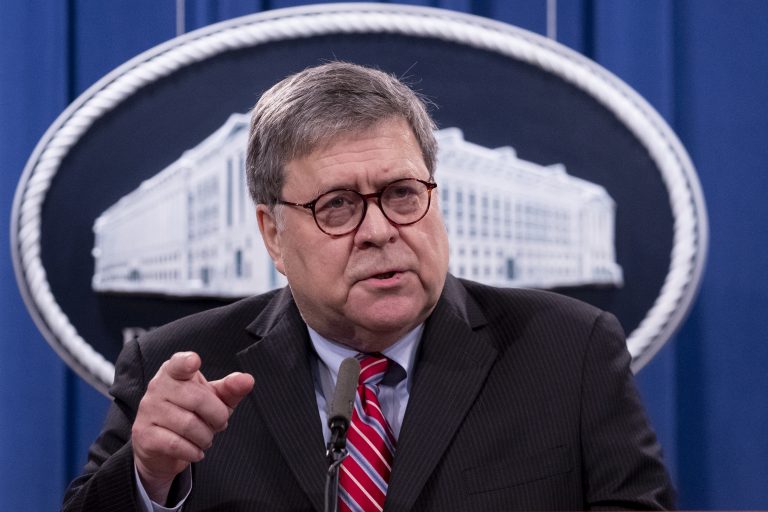
Barr: Sussmann Case a Success, Despite Legal Double-Standard

(Dmytro “Henry” Aleksandrov, Headline USA) Even though a leftist-tainted jury gave Democrat bagman Michael Sussmann a free pass in his trial for lying to federal agents, former Attorney General Bill Barr said it was a success because it exposed the inherent corruption of the Clintons and the FBI.

Barr praised special prosecutor John Durham, even though the legal fight was lost in court, because he uncovered the extent to which Clinton’s 2016 presidential campaign and its allies were spreading the Russian collusion narrative during the final months of the election, as well as the FBI’s conduct, Barr told Fox News.

“I’m very proud of John Durham. And I do take responsibility for his appointment,” Barr said.

“I think he and his team did an exceptionally able job both digging out very important facts and presenting a compelling case to the jury.”

In court, Sussmann was charged with lying to the FBI. Barr said that Durham “accomplished something more important” than putting Sussmann behind the bars by revealing the “truth” in two ways.

“First, I think he crystallized the central role played by the Hillary campaign and launching as a dirty trick the whole Russiagate collusion narrative and fanning the flames of it,” Barr said.

“And, second, I think he exposed really dreadful behavior by the supervisors in the FBI, the senior ranks of the FBI, who knowingly used this information to start an investigation of Trump and then duped their own agents by lying to them and refusing to tell them what the real source of that information was. And that was appalling.”

When Fox host Jesse Watters pointed out the frustration of regular people who “feel like they were cheated out of the accountability” when justice wasn’t served, Barr said that “there are two standards of the law” and that the prosecution team had done a really good job.

“People have done, I think, a very good job trying to develop this case in the face of very strong headwinds,” he said.

“If we can get [achievable] convictions, then John Durham will achieve them. But the other aspect of this is to get the story out. And I think the Danchenko prosecution is going to further amplify these themes and the role that the FBI leadership played in this, which is increasingly looking fishy and explicable.”

San Francisco Poised to Recall Radical District Attorney

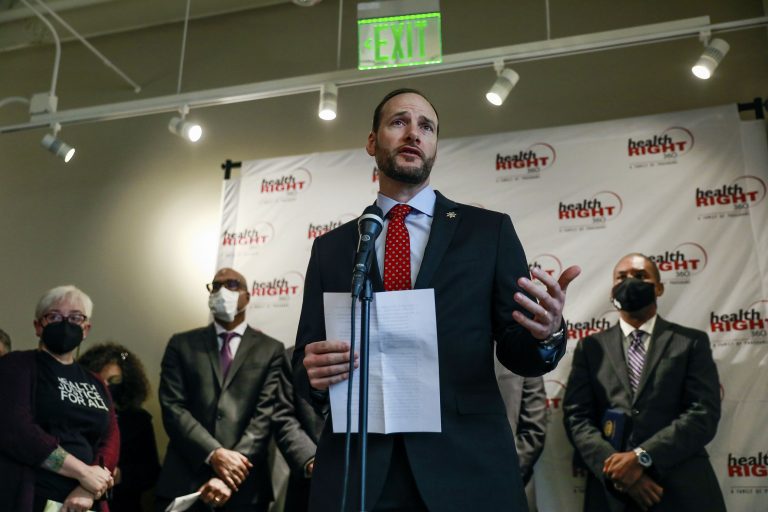
(John McCann, Headline USA) The leftist stronghold of San Francisco may be removing its soft-on-crime district attorney two years into his term.

Chesa Boudin, who was elected promising “radical change” to the cities criminal justice system, appears dead in the water among his constituents.

The recall effort against Boudin has been motivated by the city’s worsening crime and quality of life, according to Blaze Media. An activist group called San Franciscans for Public Safety gathered 50,000 signatures last year to put the beleaguered DA on the recall ballot.

Boudin was part of a wave of so-called progressive prosecutors elected in 2019 on the platform of social justice and minority protection. Within his first two days in office, he fired seven tough-on-crime prosecutors and vowed not to prosecute certain crimes. These crimes largely involved quality-of-life offenses such as public camping, prostitution and public urination. Repeat offenders were often allowed back on the streets.

This soft approach to criminal justice has contributed to rampant crime and homelessness, and many Bay Area residents have had enough. Mary Jung, chair of the recall campaign stated, “It’s clear that San Franciscans have had enough and want a new course for our city — one that doesn’t include Boudin as district attorney.”

One anti-Boudin volunteer summarized his reasons for opposing Boudin by stating, “All the victims, all the cases. We’re protecting the criminals. We’re not protecting the victims.”

A former city prosecutor who resigned in protest of Boudin’s leadership argued that the DA was “personally intervening in a number of cases, including our own cases which involved very serious and violent offenders in order to garner them lenient sentences.”

If Boudin is recalled, it could be a huge blow to socialist efforts to remake how America’s cities are litigated. If a rad-left DA is rejected in a place like San Francisco, it is hard to imagine them succeeding in far less fertile ground.

On Tuesday, June 7, Bay Area residents will decide Boudin’s fate, and how they vote could have a substantial impact on prosecutors across the land.