Johnny Depp’s Defamation Win Marks End of ‘#MeToo’ Era

(Molly Bruns, Headline USA) Claiming victory in the highly publicized and controversial defamation suit against his ex-wife, actor Johnny Depp has conservative commentators declaring this landmark win as the end of the #MeToo movement.

In the suit against his ex-wife, Amber Heard, Depp won $15 million in damages, debunking claims Heard made of spousal abuse, Breitbart reported.

Pundits flocked to Twitter, rejoicing at the win, congratulating Depp and declaring the death of #MeToo.

“Johnny Depp won in the court of public opinion and in the court of law,” tweeted Rich Zeoli, a Philadelphia Talk Radio host. “Pirates of the Carribbean: The End of #MeToo.”

“#MeToo is officially over,” said journalist Michelle Celarier.

“Amber Heard still saying he did it,” said commentator Carmine Sabia. “Ridiculous. She lied. She is a liar. #MeToo has been used as a weapon and finally women are learning that they will be held liable for false statements against innocent men.”

Fox News anchor Martha MacCallum said it “is interesting to watch this dynamic in the frame of these #MeToo stories,” and “there’s some pieces written that this puts a bit of a stake of the heart in the notion that you believe all women.”

House Dems Discuss Upping Legal Gun Age to 3 Yrs Beyond Draft, Voting Ages

(Headline USA) House Democrats were beginning to put their stamp on overreaching but long-coveted gun-control legislation, taking advantage of mass shootings in Texas and New York by 18-year-old assailants.

The House Judiciary Committee was set to hold a hearing Thursday to advance legislation that would raise the age limit for purchasing a semi-automatic centerfire rifle from 18 to 21.

If passed by Democrats, who control both chambers of Congress and the White House, the measure would effectively deny 2nd Amendment rights to legal adults, even three years after they would be eligible to be conscripted by a draft and are eligible to vote in US elections.

The bill also would make it a federal offense to import, manufacture or possess large-capacity magazines and would create a grant program to buy back such magazines.

It further builds on the executive branch’s ban on bump-stock devices and so-called ghost guns that are privately made without serial numbers.

The Democratic legislation, called the Protecting Our Kids Act, was quickly added to the legislative docket after last week’s school shooting in Uvalde, Texas. A vote by the full House could come as early as next week.

With Republicans nearly in lockstep in their opposition, the House action will mostly be symbolic, serving to put lawmakers on record about constitutionally protected gun rights ahead of this year’s elections.

Republicans are currently expected to prevail in the midterms with a possible red wave that could retake both chambers of Congress after two years of Democrat mismanagement and overreach that have led to unprecedented economic turmoil within the lifetimes of most Americans.

The evenly-split Senate was taking a different course, with a bipartisan group striving toward a compromise on gun safety legislation that might win enough GOP support to become law.

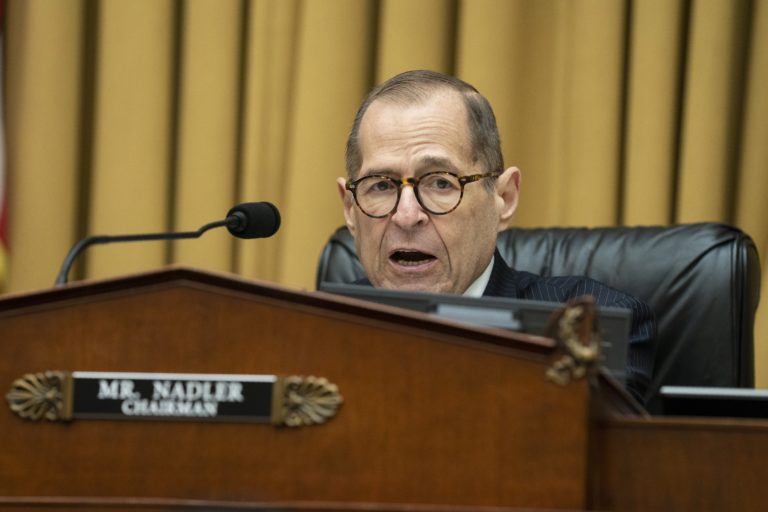
But Rep. Jerrold Nadler of New York, the Democratic chairman of the House Judiciary Committee, claimed the more radical proposals were popular with Americans.

“You say that it is too soon to take action? That we are ‘politicizing’ these tragedies to enact new policies?” Nadler said in prepared remarks for Thursday’s hearing obtained by The Associated Press.

He then listed off the litany of attacks since the Bill Clinton administration.

“It has been 23 years since Columbine,” he said. “Fifteen years since Virginia Tech. Ten years since Sandy Hook. Seven years since Charleston. Four years since Parkland and Santa Fe and Tree of Life Synagogue in Pittsburgh.”

He added: “Too soon? My friends, what the hell are you waiting for?”

But critics noted that existing gun laws failed to prevent many mass shootings from happening, including those in deep-blue states like New York and California. And violent crimes appeared to be running rampant in cities like Chicago, where only law-abiding citizens were reliqunishing their right to self-defense.

Rep. Jim Jordan of Ohio, the ranking Republican on the committee, told Fox News he’ll press his GOP colleagues to oppose the bill.

“I’m going to do everything I can to encourage my colleagues to oppose this … hodgepodge of bills that I don’t think would have made one difference in tragedies that we’ve seen recently,” Jordan said.

Any legislative response to the Uvalde and Buffalo, New York, shootings will have to win support from at least 10 Senate Republicans in order to advance the measure to a final vote.

Ideas under discussion include expanded background checks for gun purchases and incentivizing red-flag laws that allow family members, school officials and others to go into court and secure an order requiring the police to seize guns from people considered a threat to themselves or others.

The broader bipartisan group of almost 10 senators met again Wednesday—“a very productive call,” said far-left Sen. Richard Blumenthal, D-Conn., in an interview.

“There’s a tenor and tone, as well as real substantive discussion that seems different,” he said.

Blumenthal has been working with a Republican member of the group, Sen. Lindsey Graham of South Carolina, on a proposal to send resources to the states for red-flag laws. He said he was “excited and encouraged” by the response from the group.

“It really is time for our Republican colleagues to put up or shut up,” Blumenthal said. “We’ve been down this road before.”

President Joe Biden was asked Wednesday if he was confident Congress would take action on gun legislation.

“I served in Congress for 36 years. I’m never confident, totally,” Biden said. “It depends, and I don’t know. I’ve not been in on the negotiations as they’re going on right now.”

Adapted from reporting by the Associated Press

Rand Paul’s Dem. Opponent Immediately Stoops to Desperate Race-Baiting

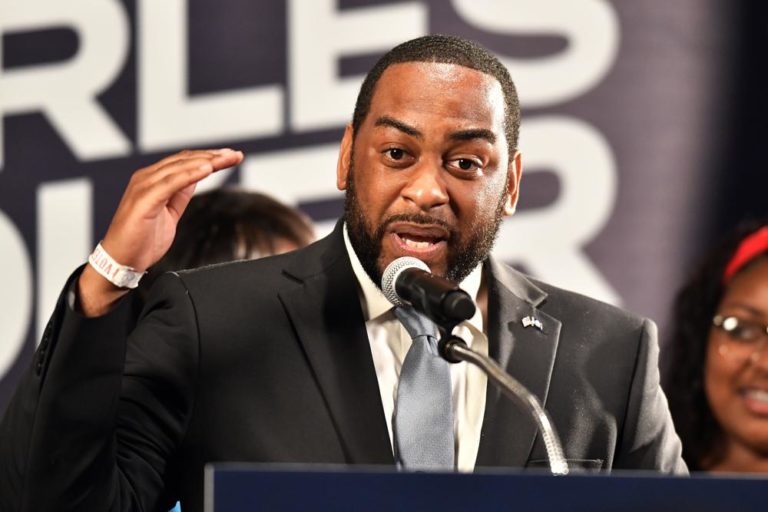
(Jacob Bruns, Headline USA) Charles Booker, the Democrat nominee challenging Sen. Rand Paul, R-Ky., released a political advertisement earlier this week depicting himself with a noose around his neck, resorting to the leftist tradition of playing the race card for political gain.

“Lynching is a tool of terror,” Booker tweeted. “It was used to kill hopes for freedom. In Kentucky, it was used to kill three of my uncles.”

“In this historic election, the choice is clear. Rand Paul may want to divide us, but hate won’t win this time,” he continued. “It’s time to move forward, together.”

Booker, who is black, blamed Rand Paul in the ad for backing racist laws which would support the lynching of blacks, Townhall reported.

“The pain of our past persists to this day,” the narrator says at the opening of the ad.

Booker also claimed that Paul blocked the Democrats’ so-called anti-lynching bill from becoming law.

Paul is “the person who single-handedly blocked an anti-lynching act from being federal law,” Booker’s ad says.

In the ad, the camera zooms in onto the noose, and Booker claims that “the choice couldn’t be clearer. Do we move forward together? Or do we let politicians like Rand Paul forever hold us back and drive us apart?”

At the end Booker attempts to rally Kentucky to come out to vote for him, and to get Paul out of office.

“In November, we will choose healing. We will choose Kentucky.”

Fauci Moves Goalposts on Retirement to 2024

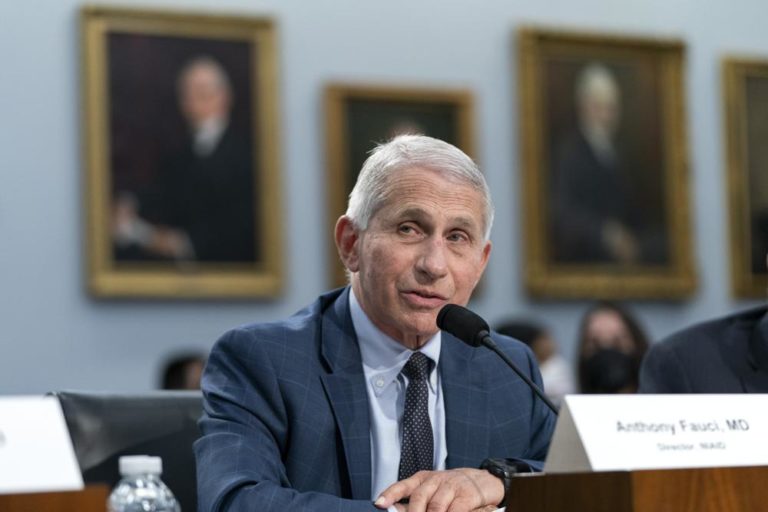
(Molly Bruns, Headline USA) COVID Czar Anthony Fauci has made a statement saying he will likely be stepping down from his leadership positions by 2024, marking yet another backtrack and switch of positions from the fickle medical bureaucrat.

Fauci made the announcement during an interview with Fox News anchor Neil Cavuto when asked if he would continue serving in the government if former President Donald Trump were to regain power, the New York Post reported.

“Well, I’m not going to get involved in any politics about who is or is not going in the White House,” he said.

“By the way, by the time that happens, I think I won’t be around, no matter who the president is,” he added.

Fauci is currently serving as the Chief Medical Advisor to the President, as well as the director of the National Institute of Allergy and Infectious Diseases.

The anchor asked if this meant he is “done.”

“No, I’m not done yet,” Fauci responded, chuckling. “But you’re talking about a few years from now. And I don’t foresee that I will be doing this a few years from now.”

“So, no matter who is president,” Cavuto asked, “whether it’s Joe Biden getting reelected or someone else, Donald Trump or anyone else, you would not continue?”

“That’s exactly correct,” Fauci said. “I have been doing this now for 38 years. It will be over 40 years if I wait that long.”

The 81-year-old has been the director if NIAID since 1984, and has advised seven presidents going back to Ronald Reagan.

He has previously said that if Trump were to return to office, he would not remain in the position of chief medical advisor.

Fauci has also previously stated that he would not be stepping down until the U.S. is “really out” of the pandemic.

Many of his public statements concerning COVID make it seem as if the pandemic will stretch on for quite some time, with the possible implementation of an annual vaccination against the virus.

Biden Admin Assumes $5.8B in Student-Loan Debt from 560K Scam Victims

(Headline USA) Hundreds of thousands of students who attended the for-profit Corinthian Colleges chain will automatically get their federal student loans canceled, the Biden administration announced Thursday.

The move aims to bring closure to one of the most notorious cases of fraud in American higher education. However, it ultimately shifts the burden from the victims to all American taxpayers, potentially encouraging more reckless decision-making among degree-seekers who might be willing to gamble on a too-good-to-be-true sales pitch and a federal government that assumes no risk or accountability in lending money it doesn’t have without any due diligence.

It is widely considered to be part of a broader effort for President Joe Biden and fellow Democrats to pander to elite, college-educated students and their parents while forcing fiscally responsible Americans and blue-collar individuals to pay the price.

Under the new action, anyone who attended the now-defunct chain from its founding in 1995 to its collapse in 2015 will get their federal student debt wiped clean. It will erase $5.8 billion in debt for more than 560,000 borrowers, the largest single loan discharge in Education Department history, according to the agency.

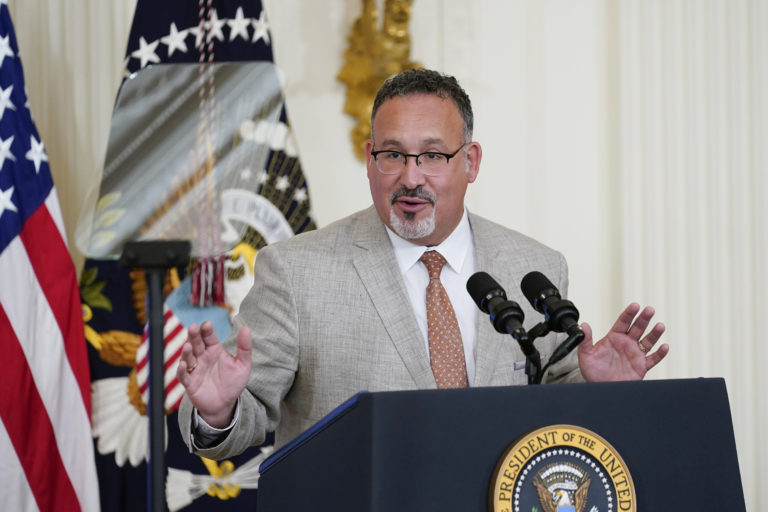
“As of today, every student deceived, defrauded and driven into debt by Corinthian Colleges can rest assured that the Biden-Harris Administration has their back and will discharge their federal student loans,” Education Secretary Miguel Cardona said Wednesday. “For far too long, Corinthian engaged in the wholesale financial exploitation of students, misleading them into taking on more and more debt to pay for promises they would never keep.”

Tens of thousands of former Corinthian students were already eligible for debt cancellation, but they had to file paperwork and navigate an application process that advocates say is confusing and not widely known about. Now, the relief will be made automatic and extended to additional borrowers.

Those who have a remaining balance on their Corinthian debt will also get refunds on payments they have already made, Education Department officials said. But the action does not apply to loans that have already been paid off in full.

At its peak, Corinthian was one of the nation’s largest for-profit college companies, with more than 100 campuses across the country and more than 110,000 students at its Everest, WyoTech and Heald schools.

But the company shut down in 2015 amid widespread findings of fraud.

The Obama administration—working with Kamala Harris, who was then California attorney general and later became vice president—found that scores of campuses were falsifying data on the success of their graduates.

In some cases, the schools reported that students had found jobs in their fields of study even though they were working at grocery stores or fast food chains.

Hundreds of students told investigators they were pressured to enroll with promises of lucrative employment, only to end up with huge sums of debt and few job prospects.

Federal officials also found that the company falsely told students their course credits could be transferred to other colleges.

The case inspired a federal crackdown on for-profit colleges, and the Obama administration promised to forgive loans for Corinthian students whose programs lied about job placement rates. The administration went on to expand a process known as borrower defense to repayment, which allows any defrauded student to apply for debt cancellation.

But an explosion in applications for debt forgiveness, along with political battles over the process, created a years-long backlog in the process, leaving many former Corinthian students still awaiting relief.

As of December, the Education Department reported it had more than 109,000 pending applications from students alleging fraud by their colleges, including many Corinthian students.

Borrowers and their advocates have been urging the government to erase all Corinthian debt, saying evidence of misconduct was so widespread that all the chain’s students were the victims of fraud.

The administration announced the action as Biden considers broader student loan forgiveness for millions of Americans. As a candidate, Biden said he supports forgiving $10,000 in student loans for all borrowers. He later indicated that such action should come through Congress, but the White House has said he is considering whether to pursue it through executive action.

“This is a tremendous student victory, and it belongs to the tens of thousands of borrowers who were cheated and abused by Corinthian Colleges,” claimed Eileen Connor, director of the Project on Predatory Student Lending, which has represented Corinthian students in lawsuits. “They never stopped fighting—over three administrations—for the justice they deserve under the law.”

Libby DeBlasio Webster, senior counsel for the advocacy group Student Defense, said the news gives a “fresh start” to former Corinthian students, but she noted that many defrauded students from other for-profit colleges are still awaiting help.

“We also hope today’s news is a sign that other decisions are on the horizon for thousands of similarly situated students who are waiting for this kind of relief,” she said.

Adapted from reporting by the Associated Press

Chase Bank CEO Warns of Impending Financial ‘Hurricane’

(Jacob Bruns, Headline USA) JP Morgan Chase CEO Jamie Dimon claimed at the Berstein conference that America is heading straight for a brutal recession, as the Biden administration’s domestic and foreign policies continue to produce dismal results.

Dimon cited massive inflation rates plus the skirmish between Russia and Ukraine as reasons for what he believes to be an impending crisis, the Daily Caller reported.

Americans have developed a false sense of security due to the protections attempted by the United States Federal Reserve, according to Dimon,

“Right now it’s kind of sunny, things are doing fine. Everyone thinks the Fed can handle this,” the big finance CEO said. “That hurricane is right out there down the road coming our way.”

Dimon did, however, express some doubt as to the degree of the coming economic storm.

“We just don’t know if it’s a minor one or Superstorm Sandy. You better brace yourself,” he said.

According to Dimon, he is preparing his bank for potentially “bad outcomes” despite the fact that the banking system, in his opinion, is in “great shape.”

National Economic Council Director Brian Deese appeared on CNN recently and refused to rule out a recession.

Deese claimed that the “economy is in a transition from what has been the strongest recovery in modern American history to what can be a period of more stable and resilient growth that works better for families.”

The director also noted that families have been hit especially hard by the challenges, namely inflation, but remained optimistic about the global economic position of the United States.

“There’s no doubt we face serious global challenges, inflation first and foremost among them, and it’s hitting families hard.

“But there’s also no doubt that the United States is in a better position than any other major country around the world to address inflation without giving up all the economic gains that we’ve had,” Deese said.

Ohio Senate Advances Bill to Support Arming Teachers

(, The Center Square) Ohio teachers would need less than a day of training before carrying a gun to school, rather than the currently required month if the House agrees with Senate changes to a bill it passed Wednesday.

House Bill 99, which passed the House nearly six months ago, would eliminate the need for teachers to pass the state’s peace officers training course, which includes more than 700 hours of instruction.

Instead, they would only need to complete 24 initial hours of training, along with four reoccurring hours of training established by the attorney general. School districts could require more training.

Staff members also would be required to meet certain range requirements, and school boards must notify the public if it elects to allow staff to be armed.

The bill, which added more required training than the House bill and includes $6 million for school safety, passed on party-line votes by Republicans in both the House and Senate.

“This bill is completely permissive and allows local school boards to either approve or disapprove of carrying weapons in the schoolhouse, thus providing another tool in the toolbox,” said Sen. Frank Hoagland, R-Mingo Junction.

“To me safety is paramount. Everything else is a plan and consideration,” he continued. “Our mission is to save lives. Ohio is taking ownership and the burden of assuring a safe education.”

A Democrat amendment to increase training to a minimum of 152 hours was defeated.

State Sen. Cecil Thomas, D-Avondale, called the 24 hours of training madness, despite the killing of 19 elementary school students in Texas a week ago.

“The biggest concern, not only from just myself by my colleagues, and not just parents and teachers, the biggest concern from law enforcement was the amount of training,” West said on the Senate floor.

“Folks, we are talking about putting guns in the hands of someone to be in charge of overseeing safety in our schools and the total amount of training required is 24 hours,” he added. “This is madness.”

The bill moved out of the Senate Veterans and Public Safety Committee on a party-line Republican vote Tuesday after just two hearings, despite a long line of individuals, teachers, the state teachers union, religious groups and other organizations testifying against it.

Elizabeth Overmier, with Brady United Against Gun Violence, testified more guns in schools would create issues for students.

“Adding armed staff will increase not decrease student anxiety,” Overmier said. “Ohio students deserve better than House Bill 99.”

In the House, the bill was opposed by law enforcement, teacher and education groups, churches and parental groups.

The Buckeye Firearm Association and Ohio Gun Owners testified in favor.

Rob Sexton, legislative affairs director at the Buckeye Firearm Association, said the bill protects students and gives school boards the right to make decisions.

“House Bill 99 has one purpose, which is to give our kids a fighting chance in the event the worst happens in their schools,” Sexton testified. “House Bill 99 restores the right of school boards to create school safety plans that include armed staff.”

SURVEY: Bidenflation Will Force 1 in 4 Americans to Delay Retirement

(The Center Square) Millions of Americans say the likely will have to push back their retirement because of rising inflation, newly released financial survey data found.

The BMO Real Financial Progress Index, a quarterly survey from BMO and Ipsos, showed that a quarter of Americans will likely need to delay their retirement because of higher prices.

“Nearly 60% of those surveyed said that inflation has adversely affected their personal finances, of which about one in four said that they have felt a major impact,” the group said.

“As a result of inflation, 36% of Americans have reduced their savings and 21% have reduced their retirement savings. A quarter of Americans will need to delay their retirement,” it added. “Younger Americans are feeling the most impact—over 60% of those aged 18-34 said they had to reduce contributions to their savings.”

This survey of more than 3,400 adults was conducted from March 30 to April 25.

Prices on a range of goods and services have soared since President Joe Biden took office, with energy costs leading the way.

The latest data on the consumer price index, a key marker of inflation produced by the Bureau of Labor Statistics, reported the highest inflation rate in four decades.

“The all items index increased 8.3 percent for the 12 months ending April, a smaller increase than the 8.5-percent figure for the period ending in March,” BLS said. “The all items less food and energy index rose 6.2 percent over the last 12 months. The energy index rose 30.3 percent over the last year, and the food index increased 9.4 percent, the largest 12-month increase since the period ending April 1981.”

Those price increases are forcing many Americans to change their spending habits. According to the BMO survey, ​​”80% of Americans surveyed plan to change their actions to offset the impact of inflation and rising costs of everyday essentials.”

That includes looking for cheaper groceries, eating out less, driving less, canceling vacations and more.

“Prices across the board – from cars and gasoline to groceries and other everyday essentials—are rising at the fastest pace since the 1980s,” said Paul Dilda, head of consumer strategy for BMO Harris Bank. “Consumers must think differently about their finances in this inflationary environment.”

In fact, the rate of inflation has been at its highest since the first fiscal quarter of 1981—the last one attributable to Democratic President Jimmy Carter, to whom Biden has frequently drawn comparisons.

The survey comes alongside recent polling that shows the majority of surveyed Americans blame Biden for inflation. Convention of States Action, along with the Trafalgar group, released polling this week that found that “59.9 percent of American voters believe that President Biden’s policies and spending are the leading contributor to rising inflation in the U.S.”

Biden has acknowledged rising prices but pointed to the invasion of Ukraine, blaming Russian President Vladimir Putin, though prices began rising well before the invasion.

According to the poll, many voters do blame Putin, but more hold Biden responsible, with only 31.6% saying that “Russia’s war with Ukraine is the leading contributor to rising inflation in the U.S.”

Dems Pool Resources in ‘Coordinated’ Campaign to Defeat Ron Johnson

(Headline USA) Wisconsin Democrats desperate for a win of any kind to help avert a looming Red Wave midterm, on Thursday announced a joint effort with national party leaders they are calling the largest midterm coordinated campaign in state history, with the goal of reelecting Gov. Tony Evers and defeating Republican U.S. Sen. Ron Johnson.

The effort dubbed Forward for Wisconsin is a partnership that includes the state and national Democrat parties, Evers’ campaign and the Democratic Senatorial Campaign Committee. Democrats promised to target rural parts of the state, which have been trending toward Republicans in recent elections.

The effort will also target communities of color, college students and tribal members. All of those voters traditionally side with Democrats, but turning them out in a midterm election will be particularly important for Democrats in the nearly evenly divided state.

President Joe Biden won Wisconsin by fewer than 21,000 votes in 2020, nearly the same margin that Donald Trump won it in 2016, in a state many contend was rotten with vote fraud. Evers won in 2018 by just over 29,000 votes. But history is not on Evers’ side. The candidate of the president’s party has lost the last eight races for Wisconsin governor.

Four Republicans are running in the Aug. 9 primary to take on Evers. They are former Lt. Gov. Rebecca Kleefisch, construction company co-owner Tim Michels, business consultant Kevin Nicholson and state Rep. Timothy Ramthun.

There’s also large field of Democrat candidates seeking to take on Johnson. The top candidates are Lt. Gov. Mandela Barnes, Milwaukee Bucks executive Alex Lasry, state Treasurer Sarah Godlewski, Outagamie County Executive Tom Nelson and Millennial Action Project founder Steven Olikara.

Both sides in each of those races are already dumping millions into television ads. Both races are high priorities for Republicans and Democrats nationally. Johnson’s race could determine which party controls the Senate. And if Evers loses, Republicans will be able to enact whatever laws they want given the large GOP majority in the state Legislature.

Democrat Attorney General Josh Kaul is also up for reelection, as is longtime Secretary of State Doug La Follette. Republicans running to take him on want to transfer election duties to that office and away from a bipartisan commission, increasing the stakes in what is normally a sleepy race because the office currently has almost no powers or responsibilities.

Adapted from reporting by the Associated Press

Uvalde Police Chief Insists He’s Still Cooperating w/ Investigators

(Headline USA) The school district police chief who served as on-site commander during last week’s deadly shooting in Uvalde, Texas, said Wednesday that he’s talking daily with investigators, contradicting claims from state law enforcement that he has stopped cooperating.

In a brief interview, Uvalde Consolidated Independent School District Police Chief Pete Arredondo told CNN that he’s speaking regularly with Texas Department of Public Safety investigators.

“I’ve been on the phone with them every day,” Arredondo said.

The chief has been the focus of ire in the community—and beyond—over allegations that he delayed sending officers into the school on May 24, believing that the gunman was barricaded inside adjoining classrooms and the shooting had morphed into a hostage situation.

Funerals began this week for the 19 children and two teachers died in the attack at Robb Elementary School, the deadliest school shooting in nearly a decade.

U.S. Education Secretary Miguel Cardona attended Wednesday’s services for teacher Irma Garcia, who was killed in the attack, and her husband, Joe Garcia, who died of a heart attack two days later.

The district announced Wednesday that students and staff would not return to that campus, though plans were still being finalized on where the less than 600 students would attend classes in the fall.

Texas state Sen. Roland Gutierrez said Wednesday that his office is working with state and federal agencies to request upwards of $45 million in federal funding for the school.

According to the U.S. Department of Education, its School Emergency Response to Violence, known as Project SERV, “funds short-term education-related services” to help educational facilities “recover from a violent or traumatic event in which the learning environment has been disrupted.”

Gutierrez said he is unaware of any plans to tear down Robb Elementary but that funds obtained through the program by other schools have traditionally been used to rebuild.

State officials have said police waited for more than an hour outside the classroom where Salvador Ramos, 18, opened fire, despite repeated pleas from children calling 911 for help.

At one point there were as many as 19 officers in the hallway, Steven McCraw, the head of the Texas Department of Public Safety, said.

Uvalde Mayor Don McLaughlin told media outlets in a Wednesday interview that he’d arrived at the funeral home across the street from the school about 15 minutes after “the first call” came that Ramos had crashed his truck nearby.

McLaughlin said that while at the funeral home, he was standing near an official he identified only as “the negotiator.” He said that person unsuccessfully tried to reach the gunman via cellphone.

“His main goal was to try to get this person on the phone,” McLaughlin said in the interview with Telemundo San Antonio and the Washington Post. “They tried every number they could find,” but the gunman did not pick up the phone.

Travis Considine, chief communications officer for the Texas Department of Public Safety, said Tuesday that Arredondo had not responded to DPS requests for two days, while other officers in the Uvalde city and schools police departments continue to sit for interviews and provide statements.

Arredondo has not responded to multiple requests for comment from the Associated Press. Considine told AP Wednesday that Arredondo had not responded to Texas Rangers’ requests for follow-up interviews as of Tuesday.

The Texas Rangers—the investigative arm of the Department of Public Safety that focuses on major crimes—have not commented on Arredondo’s insistence he was in regular touch with DPS.

The Combined Law Enforcement Association of Texas, which represents police officers, has urged its members to cooperate with “all government investigations” into the shooting and police response, and endorsed a federal probe by the Justice Department.

The confusing and sometimes contradictory information released in the week since the deadly shooting continued Tuesday with the revelation that the exterior door used by the gunman was not left propped open by a teacher, as police previously said.

They have now determined that the teacher, who has not been identified, propped the door open with a rock, but then removed the rock and closed the door when she realized there was a shooter on campus, Considine said. But, Considine said, the door that was designed to lock when shut did not lock.

Since the shooting, law enforcement and state officials have struggled to present an accurate timeline and details of the event and how police responded, sometimes providing conflicting information or withdrawing statements hours later. State police have said some accounts were preliminary and could change as more witnesses are interviewed.

On Wednesday, Gov. Greg Abbott ordered the state to conduct in-person school district security audits, including random, unannounced “intruder detection” visits to campuses “to find weak points and how quickly they can penetrate buildings without being stopped.”

“This will improve accountability and ensure school districts are following the plans they create,” Abbott said in a letter to the head of the Texas School Safety Center at Texas State University. Texas has more than 1,200 school districts, according to the Texas Education Agency.

Abbott also asked top lawmakers to convene a legislative committee to examine and make recommendations on “school safety, mental health, social media, police training, firearm safety and more.”

The next Texas legislative session is scheduled for January 2023, although some lawmakers have urged Abbott to call a special session in response to the shooting.

But Abbott and state lawmakers resisted calls for stricter gun ownership measures. In 2021, Abbott signed into law a measure that allows people 21 and older to carry handguns without a license or training.

In Uvalde on Wednesday, Ramos’s mother was denied service at the drive-thru. Adriana Reyes then walked into an adjacent convenience store where the cashier said she would not be served.

She declined to speak with an Associated Press reporter on the scene, saying: “I don’t want to be rude but I don’t want to say anything.”

Adapted from reporting by the Associated Press