


Amid Crypto Turmoil, Senators Propose Sweeping Oversight

(Headline USA) Wide-ranging bipartisan legislation unveiled Tuesday would regulate cryptocurrencies and other digital assets following a series of high-profile busts and failures.

It’s unclear, though, whether the bill proposed by Sens. Kirsten Gillibrand, D-N.Y., and Cynthia Lummis, R-Wyo., can clear Congress, especially at a time of heightened partisanship ahead of midterm elections.

The bill also comes as advocates for cryptocurrency have become bigger—and more free-spending—players in Washington.

The bill, called the Responsible Financial Innovation Act, proposes legal definitions of digital assets and virtual currencies; would require the IRS to adopt guidance on merchant acceptance of digital assets and charitable contributions; and would make a distinction between digital assets that are commodities or securities, which has not been done.

The bill “creates regulatory clarity for agencies charged with supervising digital asset markets, provides a strong, tailored regulatory framework for stablecoins, and integrates digital assets into our existing tax and banking laws,” Lummis said in an emailed statement.

Stablecoins are a type of cryptocurrency pegged to a specific value, usually the U.S. dollar, another currency or gold.

Lummis has been a vocal advocate for cryptocurrency development and has invested between $150,002 and $350,000 in bitcoin, according to her financial disclosure.

The legislation imposes disclosure requirements on digital asset firms to ensure that consumers can make informed decisions, delineates agency responsibilities over various digital assets—such as Commodity Futures Trading Commission jurisdiction over bitcoin—and requires a study on digital asset energy consumption, among many other proposals.

The bill comes at a tumultuous time for cryptocurrencies, including the May meltdown of the terraUSD stablecoin and luna, the coin meant to buy and sell assets, which traded at a value of less than one ten-thousandth of 1 cent.

Gillibrand said the bill establishes “a regulatory framework that spurs innovation, develops clear standards, defines appropriate jurisdictional boundaries and protects consumers.”

These developments have prompted lawmakers on both sides of the aisle to support legislation that more closely scrutinizes digital assets.

And crypto lobbying has followed suit. This year, for the first time, industry executives have flooded money into congressional races, spending $20 million, according to records and interviews.

Cryptocurrencies have their supporters in Congress. Sen. Cory Booker, D-N.J., said at the DC Blockchain Summit in Washington last month that he is drawn to “the exciting potential democratizing effect that can come from creating wider pathways of opportunity for marginalized communities.”

Despite the risks, surveys show that roughly 16% of adult Americans, or 40 million people, have invested in cryptocurrencies. And 43% of men age 18-29 have put money into cryptocurrency.

African Americans are also more likely to invest in cryptocurrencies than white consumers.

President Joe Biden signed an executive order in March, urging the Federal Reserve to explore whether the central bank should create its own digital currency and directed federal agencies, including the Treasury Department, to study the impact of cryptocurrency on financial stability and national security.

Treasury Secretary Janet Yellen said in an April speech at American University that more government regulation is needed to police the proliferation of cryptocurrency and ward off fraudulent or illicit transactions.

“We have a strong interest in ensuring that innovation does not lead to a fragmentation in international payment architectures,” she said, adding that the Treasury Department will work with the White House and other agencies to develop reports and recommendations on digital currencies.

Adapted from reporting by the Associated Press
LA Mayoral Primary Pits Ex-Republican Against Biden VP Contender

(Headline USA) The contest to become Los Angeles’ next mayor was supposed to be about homelessness, crime and soaring rents and home prices. But lately it’s taken a nasty turn.

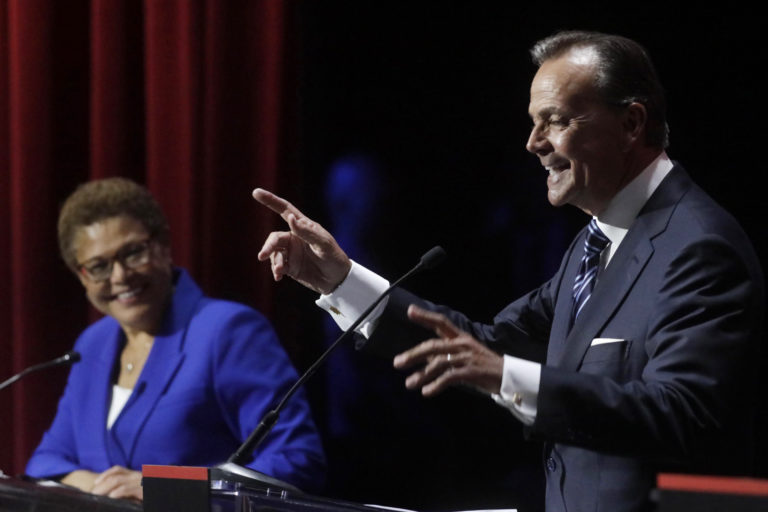
In ads run by Democratic U.S. Rep. Karen Bass and her allies, rival Republican-turned-Democrat billionaire Rick Caruso is depicted as a West coast version of former President Donald Trump, who is dodging taxes, blowing a “right wing dog whistle” and lying about Bass’ record.

In advertising from Caruso and his supporters, Bass emerges as an ethically compromised charlatan who missed key votes in Congress and counts an indicted city councilman in her circle of friends.

Voters will have their say Tuesday, when the primary election concludes in what has emerged as a mostly two-person fight between the congresswoman who was on then President-elect Joe Biden’s short list for vice president and the wealthy developer in his first run for public office.

Twelve names are on the ballot, though several candidates have dropped out. If no candidate clears 50%—which is likely with a crowded field—the top two finishers advance to a November runoff.

The race has largely focused on homelessness and crime. More than 40,000 people are living in trash-strewn homeless encampments and rusty RVs, and widely publicized smash-and-grab robberies and home invasions have unsettled residents.

A looming question in Los Angeles is who will show up. About 80% of voters didn’t cast ballots when outgoing Mayor Eric Garcetti was reelected in 2017.

The eventual outcome could have national implications.

Caruso, 63, who sits on the board of the Ronald Reagan Presidential Foundation and was endorsed by the police union, has positioned himself as a centrist outsider running against City Hall’s progressive establishment.

He blames Bass, 68, and other longtime incumbents for sprawling homeless encampments that have spread into virtually every neighborhood and concerns about unsafe streets.

If he performs strongly or even pulls off a surprising win, it would be an unwelcome sign for Democrats defending their fragile majorities in Congress and in other races around the country.

The last time City Hall veered to the political right was in 1993, when voters turned to Republican businessman Richard Riordan to lead the city in the aftermath of the deadly 1992 riots that erupted after four white police officers were acquitted of assault in the beating of black motorist Rodney King.

Los Angeles, however, is much changed since Riordan’s days. It’s more Latino, less white and more solidly Democratic. Only 13% of registered voters are Republicans.

Caruso’s estimated $4.3 billion fortune has allowed him to run a seemingly nonstop display of TV and online ads. His campaign’s spending—over $40 million as of early this week, most of it his money—has topped all other candidates combined.

By comparison, Bass’ spending has hit about $3.3 million, though both campaigns also have been supported by ads from outside groups.

There’s been competition over celebrity endorsements, as is typical in Los Angeles. Earvin “Magic” Johnson is backing Bass, while Caruso has Snoop Dogg and Gwyneth Paltrow behind him.

Adapted from reporting by the Associated Press
Dems Bring in Producer to Glitz Up Phony J6 Show Trial

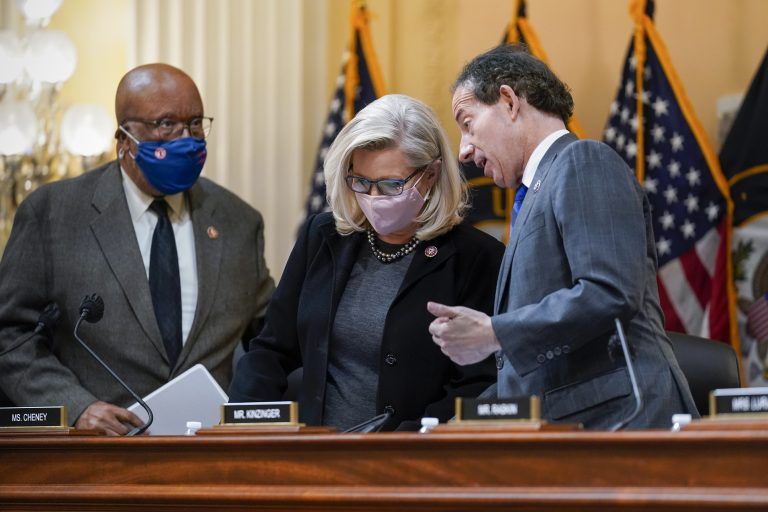
(Molly Bruns, Headline USA) Any notion that this week’s J6 Tribunal televised show trial is anything but pure political theater was put to rest with the announcement that former ABC News executive James Goldston has been brought in as an advisor and producer for the upcoming Jan. 6 Committee hearings.

Goldston’s involvement is expected to cover all of the hearings, but, according to Fox News, will be focusing on the televised prime time hearing on Thursday.

The former ABC News president wants the hearing to be big news for all Americans who have not been following the committee’s investigation. There will be live witnesses, pre-recorded footage, official photographs and surveillance footage from inside the Capitol, all presented with a purely partisan passion telling only one side of the J6 story.

Goldston was working as president of ABC News when the network allegedly stopped coverage of Jeffrey Epstein‘s accuser Virginia Roberts Giuffre in 2015. In 2019, audio of anchor Amy Robach claiming that the network killed the story after threats from Buckingham Palace.

Many left-wing news outlets are framing the televised J6 hearing as a rebranding opportunity for Democrats in the upcoming midterm elections.

CNN reported that the committee does not want these hearings to look like the traditional proceedings, and will instead be “multi-media presentations that weave a narrative.”

The hearings will show footage and photographs that have never been seen publicly, as well as some videotaped depositions from the committee members, all coming from a leftist viewpoint.

The committee itself has conducted more than 1,000 depositions and interviews, received 140,000 documents and is following up on several hundreds of tips.

It is unclear whether any of the public still cares about the Jan. 6 protests enough to tune in, with consumer prices hitting record highs, mayhem and chaos erupting on the southern border, and a war raging in Ukraine.

Many on social media questioned why someone in charge of production was necessary at all:

Raytheon to Establish Global Headquarters Near Washington, DC

(Headline USA) Aerospace and defense company Raytheon Technologies will establish a global headquarters in Arlington, Virginia, the company announced Tuesday.

The location just outside Washington “increases agility in supporting U.S. government and commercial aerospace customers and serves to reinforce partnerships that will progress innovative technologies to advance the industry,” the company said in a news release.

Each of the company’s four business units—Collins Aerospace, Pratt & Whitney, Raytheon Intelligence & Space and Raytheon Missiles & Defense—currently have operations in Virginia. The new office will be located Arlington’s Rosslyn neighborhood alongside the existing Intelligence and Space business.

The company currently employs about 130 corporate staffers at its Arlington location and does not expect that number to increase significantly, spokesman Chris Johnson said. Raytheon will maintain its presence in Massachusetts, including at its current headquarters in Waltham, he wrote in an email.

The company did not accept or seek any financial incentives from the state or any municipality in connection with the new office, according to the news release.

Raytheon’s announcement comes about a month after Boeing Co. disclosed plans to move its headquarters from Chicago to Arlington.

Republican Virginia Gov. Glenn Youngkin welcomed the announcement, saying it showed the state is “the best destination for the aerospace and defense community.”

Adapted from reporting by the Associated Press
Fmr. Kansas Schoolteacher Pleads Guilty to Leading All-Female ISIS Battalion

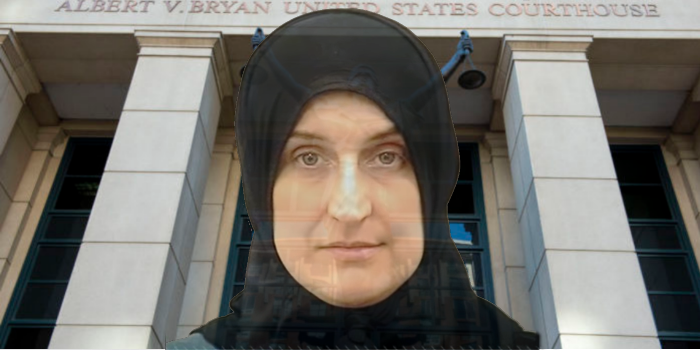
(Headline USA) An American woman is set to plead guilty Tuesday to leading an all-female battalion of Islamic State militants in Syria, court records show.

A plea hearing for Allison Fluke–Ekren is to take place in federal court in Alexandria, Virginia, according to a court notation. Her lawyer did not immediately return an email seeking comment.

Fluke–Ekren, who once lived in Kansas, was brought to the U.S. in January to face a criminal charge of providing material support to a foreign terrorist organization. She moved to Egypt in 2008 and starting in late 2016, according to prosecutors, she led an all-female Islamic State unit in the Syrian city of Raqqa that was trained in the use of AK-47 rifles, grenades and suicide belts.

A detention memo filed by First Assistant U.S. Attorney Raj Parekh says she trained children how to use assault rifles and at least one witness saw one of her children—approximately 6 or 7 years old—holding a machine gun in the family’s home in Syria.

Prosecutors have also said Fluke–Ekren wanted to recruit operatives to attack a college campus in the U.S. and discussed a terrorist attack on a shopping mall.

She told one witness that “she considered any attack that did not kill a large number of individuals to be a waste of resources,” according to an FBI affidavit.

A criminal complaint against Fluke–Ekren was filed under seal in 2019 but not made public until she was brought back to the U.S. to face charges.

Adapted from reporting by the Associated Press
US, Allies Fly Fighter Jets Amid North Korea Tensions

(Headline USA) The United States and its Asian allies flew dozens of fighter jets over waters surrounding the Korean Peninsula on Tuesday in a show of force as their diplomats discussed a coordinated response to a possibly imminent North Korean nuclear test.

The flights came as U.S. Deputy Secretary of State Wendy Sherman traveled to Seoul for discussions with South Korea and Japanese officials over the gathering North Korean threat and warned of a “swift and forceful” counterresponse if the North proceeds with a nuclear test explosion, which would be its first in nearly five years.

If staged, the test could be another leap forward in North Korean leader Kim Jong Un’s goal of building an arsenal that can viably threaten regional U.S. allies and the American homeland. The Biden administration, meanwhile, has floundered in finding a response to Kim Jon Un’s aggressiveness, seemingly more focused on the Ukraine crisis.

The Biden administration’s punitive actions over North Korea’s recent weapons tests have been limited to largely symbolic unilateral sanctions. Russia and China vetoed a U.S.-sponsored resolution in the Security Council that would have imposed additional sanctions on North Korea over its previous ballistic tests on May 25.

“We have called on members of the international community, certainly members of the U.N. Security Council’s permanent five, to be responsible stakeholders in the U.N. Security Council as a preeminent forum for addressing threats to international peace and security,” Price said.

“Unilateral actions are never going to be the most attractive or even the most effective response, and that is especially the case because we are gratified that we have close allies in the form of Japan and the ROK,” he said, referring to South Korea’s formal name, the Republic of Korea.

That would escalate a pressure campaign aimed at forcing the United States to accept North Korea as a nuclear power and negotiating economic and security concessions from a position of strength.

While the Biden administration has vowed to push for additional international sanctions if North Korea conducts a nuclear test, prospects for robust punitive measures are unclear because of divisions between permanent United Nations Security Council members.

“Any nuclear test would be in complete violation of U.N. Security Council resolutions. There would be a swift and forceful response to such a test,” Sherman said after meeting with South Korean Vice Foreign Minister Cho Hyun-dong. “We continue to urge Pyongyang to cease its destabilizing and provocative activities and choose the path of diplomacy.”

Sherman and Cho are planning a three-way meeting with Japanese Vice Foreign Minister Mori Takeo on Wednesday over the North Korean nuclear issue.

Extending the countries’ joint displays of military might, four U.S. F-16 fighter jets flew in formation with 16 South Korean planes—including F-35A stealth fighters—over waters off South Korea’s eastern coast, an exercise aimed at demonstrating an ability to quickly respond to North Korean provocations, South Korea’s Joint Chiefs of Staff said. The United States and Japan conducted a separate drill involving six aircraft—four Japanese F-15 fighters and two American F-16s—above waters between the Korean Peninsula and Japan, Japan’s Defense Ministry said.

The flights came a day after U.S. and South Korean forces fired eight surface-to-surface missiles into South Korea’s eastern waters to match a weekend missile display by North Korea, which fired the same number of weapons from multiple locations Sunday in what was likely its biggest single-day testing event.

North Korea has conducted 18 rounds of missile launches in 2022 alone—including its first demonstrations of intercontinental ballistic missiles since 2017—exploiting a favorable environment to push forward weapons development, with the Security Council effectively paralyzed over Russia’s war on Ukraine.

North Korea may soon up the ante as U.S. and South Korean officials say it is all but ready to conduct another detonation at its nuclear testing ground in the northeastern town of Punggye-ri. Its last such test and sixth overall was in September 2017, when it claimed to have detonated a thermonuclear bomb designed for its ICBMs.

Since taking power in 2011, Kim has accelerated nuclear weapons development despite limited resources and has shown no willingness to fully surrender an arsenal he sees as his strongest guarantee of survival.

Experts say with its next nuclear test, North Korea could claim an ability to build small bombs that could be placed on a multiwarhead ICBM or fit on short-range missiles that could reach South Korea and Japan.

Rafael Mariano Grossi, director general of the International Atomic Energy Agency, said Monday there are indications that one of the passages at the Punggye-ri testing ground has been reopened, possibly in preparation for a nuclear test.

Hours before Sherman’s meeting in Seoul, State Department spokesperson Ned Price told reporters in Washington that the United States believes North Korea could seek its seventh test “in the coming days.”

North Korea’s state media have yet to comment on Sunday’s launches. They came after the U.S. aircraft carrier Ronald Reagan concluded a three-day naval drill with South Korea in the Philippine Sea on Saturday, apparently their first joint drill involving a carrier since November 2017, as the countries move to upgrade their defense exercises in the face of growing North Korean threats.

North Korea has long condemned the allies’ combined military exercises as invasion rehearsals and has often countered with its own missile drills, including launches in 2016 and 2017 that simulated nuclear attacks on South Korean ports and U.S. military facilities in Japan.

Nuclear talks between the U.S. and North Korea have stalled since 2019 because of disagreements over an easing of crippling U.S.-led sanctions in exchange for North Korean disarmament steps.

Kim’s government has so far rejected the Biden administration’s offers of open-ended talks, and is clearly intent on converting the dormant denuclearization negotiations into a mutual arms-reduction process, experts say.

Kim’s pressure campaign hasn’t been slowed by a COVID-19 outbreak spreading across his largely unvaccinated populace of 26 million amid a lack of public health tools. North Korea has so far rejected U.S. and South Korean offers of help, but there are indications that it received at least some vaccines from ally China.

South Korean activist Park Sang-hak, a North Korean defector who for years has launched anti-Pyongyang propaganda leaflets by balloon across the border, said his group on Tuesday flew 20 balloons carrying medicine, masks and vitamin pills to help North Korean civilians.

Adapted from reporting by the Associated Press

CNN Prepares to Re-Evaluate Its Partisan On-Air ‘Talent’

(Molly Bruns, Headline USA) New CNN president Chris Licht has kickstarted the evaluation process of the network’s polarizing on-air personalities and programming in an attempt to become less partisan and reverse plummeting viewership.

Inside sources report that if talent is unable to adjust to a more bipartisan tone and strategy, they could be fired, Axios reported.

Licht is giving many talking heads an opportunity to prove their willingness to be flexible and meet the new standard “so they don’t tarnish CNN’s journalism brand.”

This would include not engaging in interviews that feel like PR stunts and booking interviews that are focused on nuance.

Under the former leadership of Jeff Zucker, CNN has become increasingly partisan. On-air personalities such as Jim Acosta, Brian Stelter and Don Lemon have become mascots for the network’s increasing Leftward lean.

According to an inside source, Licht is not totally against personality programming—particularly during prime time—but wants to make sure partisan voices do not harm CNN’s brand and, more importantly, their ratings.

Licht has only been acting president at CNN for a month, but rumors of his desire to clean house have been swirling even before he started in the position.

It is said by insiders that his priorities are aligned with CNN’s parent company, Warner Bros. Discovery.

CNN did not comment, but over the past few weeks, news of small changes have leaked.

For example, Licht released an internal memo describing a change to the stylebook to address the overuse of the breaking news banner across the network. Licht is in agreement with many that the banner is overused.

“We are truth-tellers, focused on informing, not alarming our viewers,” he said in the note.

Investor Johne Malone has made public statements regarding CNN’s increasing tilt, wishing they would step back from the aggressive progressive commentary.

“I would like to see CNN evolve back to the kind of journalism that it started with, and actually have journalists, which would be unique and refreshing,” Malone told CNBC last year.

Harris Hopes to Convey Competence at Central-America Summit

(Headline USA) With her US approval rating in the tank and speculation swirling about her habitual drug use, Vice President Kamala Harris will don her “border czar” cap to discuss the root causes of the Biden administration’s border failures and more with the leaders of several Central-American nations.

Harris will welcome the south-of-the-border dignitaries to her home state this week for the Summit of the Americas, where she hopes for a change not to be set up to fail by the aged white man in the White House. But whether she can demonstrate her clout at the hemisphere’s premier gathering—being held on U.S. soil for the first time since 1994—remains an open question.

Whether Harris can make it through a full press conference without breaking into her trademark cackle, also remains an open question.

Since Joe Biden’s days crisscrossing Latin America as vice president—funneling taxpayer money to investment ventures led by his brothers, Jim and Frank Biden—-the region’s leaders have come to expect direct access to powerful interlocutors inside the White House.

However, other than Harris having begrudgingly taken on the task of resolving the nation’s border crisis, for which progress has been slow, the region has seen little of her—a symptom, experts say, of larger U.S. neglect.

In recent days, she and the president have been working the phones to shore up attendance among leftist leaders who have been critical of the U.S. decision to exclude the authoritarian governments of Cuba, Nicaragua and Venezuela from the Los Angeles summit.

But the effort has yielded few results. Among those staying home are the presidents of Mexico, Guatemala and Honduras—the only three leaders Harris has met in her two quick trips to the region.

Brian Winter, vice president of the Council of the Americas, said Harris got off on the wrong foot as Biden’s point person assigned to address the root social and economic causes driving migrants to the U.S.

In a May 2021 policy speech delivered to Winter’s international business group from Washington, Harris, a former California prosecutor, mentioned corruption no fewer than 10 times, stirring resentment in a region where leaders are sensitive to taking lectures from U.S. policymakers.

“Corruption is a huge problem, but clearly there are more delicate ways to handle this,” said Winter. “A lot of doors closed even before she got on the ground.”

Harris’ biggest achievement in the region to date is having helped secure commitments from U.S. companies to invest $1.2 billion in Central America, where every year hundreds of thousands of mostly young adults flee gang violence and crushing poverty.

On Tuesday, she announced more than $1.9 billion in commitments, aimed at using the private sector to create jobs that foster economic growth and discourage young Central American adults from abandoning their homes.

New initiatives being announced include a $700 million expansion of cellular networks in Guatemala, Honduras and El Salvador by Miami-based Millicom; a $270 million commitment by Visa to promote digital payments; and a $150 million nearshoring investment by the Gap. Inc. that could see as many as 5,000 jobs created closer to the U.S.

But the Biden administration’s biggest policy proposal in the region—a $4 billion aid package for Central America—has stalled in Congress with little apparent effort to revive it. Meanwhile, the number of migrants at the U.S. border with Mexico has surged to its highest levels in decades, even as the Biden administration has little to show for the Democrat president’s promise as a candidate to introduce a “humane” asylum system that would break with Trump-era restrictions.

One challenge is finding partners in a region where institutions are weak, gang violence is prolific and corruption is rampant.

None of the countries Harris is to work with will be represented at the summit by its president, according to the list of delegations the White House released Tuesday. All three nations are sending their foreign ministers instead. And in recent months, the U.S. has taken a strident tone against El Salvador’s President Nayib Bukele, whom it accuses of using his popularity to amass power and ride roughshod over democratic checks and balances.

Meanwhile, Guatemala President Alejandro Giammettei said last month that he would not attend after the U.S. criticized his decision to reappoint an attorney general it alleged was involved in corruption.

Perhaps the biggest disappointment was Honduras’ President Xiomara Castro, who has won praise from U.S. officials for her decision to extradite her predecessor, Juan Orlando Hernández, to the U.S. to face federal drug charges. Harris, who attended Castro’s inauguration in January, in recent days spoke with Honduras’ first female president in a last-ditch effort to persuade her to travel to Los Angeles.

But in the end Castro sided with fellow leftist Andrés Manuel López Obrador of Mexico in boycotting the summit. Surely weighing on her decision was the U.S.’ quick recognition of a new government after Honduras’ military removed her husband, President Manuel Zelaya, from office in 2009.

“It’s a far tougher set of actors that the U.S. has to deal with even compared to what the Obama administration faced,” said Rebecca Bill Chavez, president of the Inter-American Dialogue.

Chavez, who advised Harris on foreign policy during her brief presidential run, welcomed the vice president’s focus on gender-based violence and female migrants, something that was missing from past administrations. She’s also hopeful that Harris’ familial ties to Jamaica—her immigrant father’s birthplace—could help her connect to leaders in the Caribbean who are overlooked even in Latin America policy circles.

“To succeed she and the Biden administration really needs to broaden their scope,” said Chavez. “Los Angeles is the perfect opportunity for them to show they are so. But it can’t be a one and done event. It requires follow through to become reality.”

Adapted from reporting by the Associated Press
J6 Political Prisoner Narrates New Documentary from Solitary Confinement

(Jacob Bruns, Headline USA) Jake Lang, a J6 political prisoner who has spent months in solitary confinement, co-produced and narrated a new documentary, “The Truth about January 6th”, detailing the injustices perpetrated by the state.

Lang’s opening lines attacked the mainstream media for its false narrative surrounding J6 and the subsequent events, the Gateway Pundit reported.

“America, you deserve the truth,” he began. “You deserve the full story. You deserve to view the historic event of January 6th beyond the censored lens of mainstream media.”

Instead, Lang said that he hopes to set the story straight by revealing the truth of those events.

“The footage you are about to witness has never before been seen by the public. It is the raw and uncut truth of January 6th. The day when free men and women stood unarmed against tyranny- who were brutalized, beat, and even murdered on the steps of our own Capitol,” Lang informed.

Filmmaker and executive producer Brittany Manheim praised Lang for his bravery in the face of the regime’s all-out attack on him.

“He is literally facing almost half a century in prison for January 6th and being harshly persecuted for speaking out against The Biden Regime from solitary confinement,” she said.

“Most human beings would just shut up in fear, but not Jake.

According to Manheim, the filmmakers wanted to make the material available to the American public, which has largely been lied to about the events of that day.

“Our goal was to condense the material and make it understandable to the general public, to those that may not be aware of the deaths of Trump supporters due to the police violence towards protesters on January 6th,” she said.

Many Americans, she suggested, “do not even know that we have political prisoners. It is important that we reach these people.”

It is “imperative for justice,” she concluded.

Corrupt Mayorkas Doubles Down on ‘Domestic Terrorism’ Boogeyman Ahead of Midterms

(Headline USA) A looming Supreme Court decision on abortion, an increase of illegal immigrants and drug cartels at the U.S.–Mexico border, and the midterm elections are potential triggers for extremist violence over the next six months, the Department of Homeland Security said Tuesday.

The agency and the FBI are working with state and local law enforcement to raise awareness of the threat, and DHS has increased grant funding to local governments and religious organizations to improve security, Homeland Security Secretary Alejandro N. Mayorkas said in a statement released with the bulletin.

The U.S. was in a “heightened threat environment” already, and these factors may worsen the situation, DHS said in the latest National Terrorism Advisory System bulletin.

“In the coming months, we expect the threat environment to become more dynamic as several high-profile events could be exploited to justify acts of violence against a range of possible targets,” DHS said.

It’s the latest attempt by Homeland Security to draw attention to the threat posed by domestic violent extremism, a shift from alerts about international terrorism that were a hallmark of the agency following its creation after the wake of the Sept. 11, 2001, attacks.

Alongside other examples of incompetance and malfeasance from top advisers of the Biden administration, it raises questions about Mayorkas’s motives and whether his attempt to scapegoat domestic citizens may be aimed at deflecting on his own failure to maintain border security—or worse, a scheme to use bogus claims of terror threats to interfere in the upcoming midterm elections.

What is clear is that the Biden administration’s open-borders policy has allowed many dangerous international terrorists to enter into the country, but Mayorkas admits that his department has failed in its charter purpose of tracking them and protecting American citizens.

Indeed, the threats from overseas rate only passing mentions in this bulletin. It notes that al-Qaida supporters celebrated the January standoff at a synagogue in Colleyville, Texas. And it mentions that the Islamic State group called on supporters to carry out attacks in the United States to avenge the killings of the group’s leader and spokesman.

DHS also warns that China, Russia, Iran and other nations seek to foment divisions within the U.S. to weaken the country and its standing in the world. In part, it claimed they do this by amplifying conspiracy theories and false reports that proliferate in American society. However, the report makes no mention of similar efforts domestically within the Biden administration to weaken America’s standing by pushing partisan disinformation and propaganda.

According to the report, domestic violent extremists, present the most pressing and potentially violent threat. The agency cited, for example, the racist attack in which a leftist gunman killed 10 people at a Buffalo, New York, supermarket in May.

The bulletin, which is scheduled to expire Nov. 30, said calls for violence by domestic extremists directed at government institutions, candidates and election workers will likely increase through the fall.

A senior DHS official, speaking to reporters ahead of the release of the bulletin, said it describes the situation as “dynamic” because authorities are seeing a wider variety of people motivated by a broader range of grievances and incidents than in the past.

That is largely because the administration has expanded its definition of terrorism to include anyone who asserts their First Amendment right to protest while disagreeing with the Democrat policies and radical ideologies pushed by the administration.

Under the oversight of Attorney General Merrick Garland, a partisan shill, the US Justice Department has enacted a two-tiered system of jurisprudence, allowing its own ideologues to escape with a pat on the wrist while going so far as to label concerned parents as terrorist for protesting against leftist school-board agendas.

The upcoming decision from the Supreme Court, which could overturn Roe v. Wade, could lead to violence from extremist supporters of abortion, as has already been evident, said the official, speaking on the condition of anonymity to discuss some factors that went into the preparation of the bulletin.

Others may be motivated by immigration enforcement or whether the government continues to rely on Title 42, the public health order that has been used since the start of the coronavirus pandemic to prevent people from seeking asylum at the southwest border, DHS said.

Adapted from reporting by the Associated Press