Two Colleges Deny Kyle Rittenhouse Will Be A Student This Fall

(Headline USA) Two universities have released statements denying that Kyle Rittenhouse will be a student on their campus this fall.

Shortly after Rittenhouse announced earlier this week that he would be attending Texas A&M University, a school official released a statement saying that he had not been admitted and would not be a student. Rittenhouse then clarified that he plans to attend Blinn College in preparation of transferring to Texas A&M.

A Blinn official confirmed that Rittenhouse had applied, but could not confirm if he would be attending the school this fall.

“Kyle Rittenhouse has applied but not yet enrolled for any classes,” the official said.

Rittenhouse became a national figure after he shot and killed two rioters who were pursuing him in Kenosha, Wisconsin, during the summer of 2020. He was acquitted of all criminal charges last year after the jury ruled he acted in self-defense.

He has since announced his intention to sue multiple media outlets and public figures who he said defamed him throughout his trial.

“We’re going to make the media pay for what they did to me. They made it hard for me to live a normal life,” Rittenhouse told Fox News.

“I cannot go out in public. I can’t go to the store. It’s hard for me to go anywhere without security. Doing basic things like taking my dog to the dog park is difficult. They made it really difficult to be normal. They affected future job opportunities to me.”

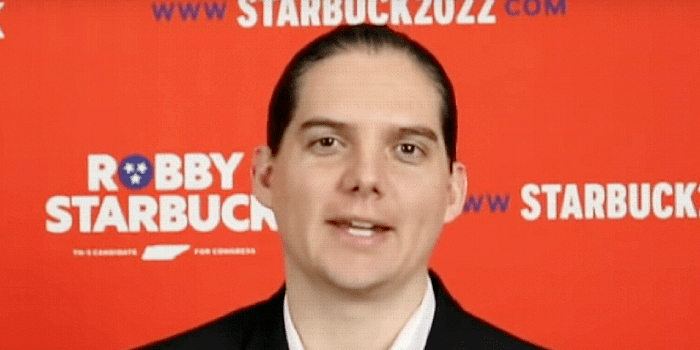
Robby Starbuck Reinstated to Tennessee Ballot

(Headline USA) Conservative candidate Robby Starbuck has been restored to the ballot in Tennessee’s 5th congressional district after a Nashville judge ruled the state party lacked the legal justification to disqualify him.

In April, the Tennessee GOP knocked him and another Republican candidate, Morgan Ortagus, off the ballot, claiming he did not fulfill a bylaw requirement mandating that candidates vote in three of the past four Republican primaries in order to be eligible to run. 

A state court ruled last Friday that the party flouted the state’s Open Meetings Act by holding the vote to remove him from the ballot in private, thereby preventing public discussion on the matter.

“I think it says everything about the situation that they held this meeting in secret because they knew that if it was in public, it would be filled with people who would have put a lot of pressure for them to do the right thing and give our voters their voice,” Starbuck said, according to the Washington Examiner.

“This is giving a voice back to the people in middle Tennessee and allowing them to do the most American thing — choose who you want to represent you.”

The party could appeal the court’s decision, but it faces a June 10 deadline for finalized ballots. The primary election is slated for Aug. 4.

Starbuck said he hopes to repair his relationship with the Tennessee GOP.

“Now that the decision has been made, do you know I’ve already put out there I have mercy for the people who did this?” Starbuck said.

“I’m willing to forgo that [damages suit] and just take a loss on that if it can bring everybody together and ensure that we can have a clean fight for the primary and then go to the general working together to win and to, you know, ultimately have a majority in Congress.”

Obama Judge Blocks Louisiana’s Congressional Map, Demands Racial Gerrymandering

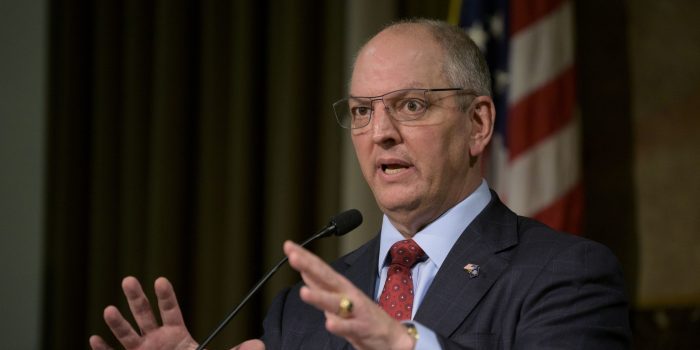
(Headline USA) Louisiana’s Democratic governor said Monday he will call the Republican-dominated Legislature into special session soon to draw up new congressional district boundaries, now that an activist federal judge has blocked use of maps that have only one majority-black district.

Gov. John Bel Edwards announced his plan at a news conference at the Capitol in Baton Rouge. He spoke to reporters minutes after the 2022 regular legislative session ended, and a few hours after U.S. District Judge Shelly Dick, a Barack Obama appointee, blocked the use of the new maps.

Her ruling included an order that the Legislature draw up with a remedial plan by June 20.

Edwards, whose veto of the maps was overridden by lawmakers earlier this year, said there should have been a second majority-black district among the six districts that were approved, noting that the state’s population is almost one-third black.

Edwards claimed redrawing the district lines is required by the court order, the Voting Rights Act and by “basic fairness and basic math.”

However, recent rulings on the subject—including one by the US Supreme Court—have indicated that factoring race into redistricting decisions is, in fact, a violation of the landmark civil rights law. By that token, the concept of a “black” district might be construed as illegal.

Lawyers for Republican Secretary of State Kyle Ardoin, the state’s top election official, swiftly filed a notice of appeal of Dick’s order.

Dick’s June 20 deadline for drawing new district lines is one month before the signup period for the Nov. 8 congressional election.

“If the Legislature is unable to pass a remedial plan by that date, the Court will issue additional orders to enact a remedial plan compliant with the laws and Constitution of the United States,” the judge wrote.

The district map was drawn up in a special session earlier this year during a legislative special session called to redraw government district lines to account for population shifts show in the 2020 census. Edwards vetoed the maps but his veto was overridden. That led to a lawsuit by pro-racial-gerrymandering activists.

Ardoin filed a notice of appeal with the 5th U.S. Circuit Court of Appeals in New Orleans. Ultimately, the case could wind up before the Supreme Court, which earlier this year put on hold a lower court ruling that Alabama must draw new, racially gerrymandered congressional districts before the 2022 elections to increase black voting power.

Ardoin’s office declined comment on the litigation.

In blocking the use of the map pending further elections, Dick said those filing the lawsuit were likely to prevail with their argument that the new districts violate the federal Voting Rights Act. She blocked Ardoin from conducting any elections using the new map.

The appeals court or the Supreme Court may issue an injunction agaist that order.

Adapted from reporting by the Associated Press

NY Dems’ Redistricting Musical Chairs Leads to Glorious Infighting Amongst Awful People

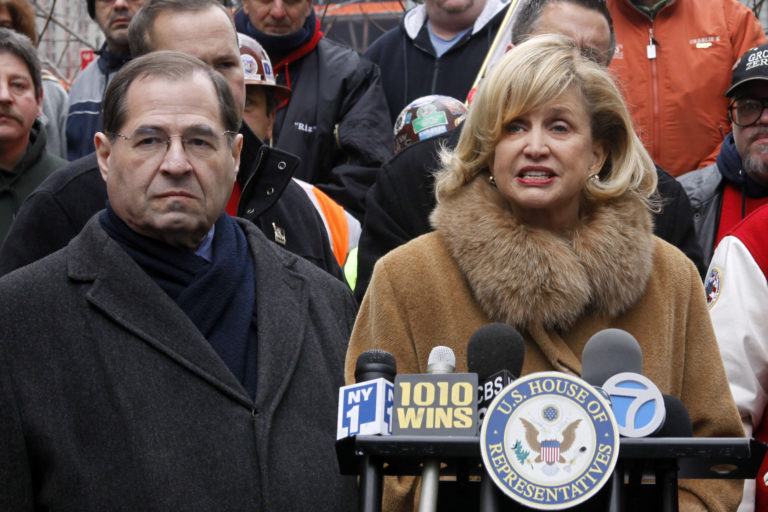
(Headline USA) Two of New York’s longest-serving members of Congress have turned from allies to rivals after a court redrew the state’s egregiously gerrymandered congressional maps, scrambling the favorable landscape Democrats hoped to set for themselves this election year.

U.S. Rep. Jerry Nadler and Rep. Carolyn Maloney are now running against each other in a Democratic primary to represent a reconfigured district in Manhattan.

The intra-party battle is not the result Democrats envisioned for the once-a-decade redistricting in a state where they control the governor’s mansion and the Legislature.

Nadler, 74, and Maloney, 76, each were first elected to Congress 30 years ago and have risen to chair the powerful House Judiciary and Oversight committees, respectively.

Nadler has long represented the Upper West Side and areas stretching down to Wall Street and parts of Brooklyn, while Maloney’s longtime turf was on the other side of Central Park: the Upper East Side, along with parts of Brooklyn and Queens.

But when a state court unveiled the new maps on May 16, merging the Upper East Side and Upper West Side into one congressional district—the 12th—the veteran lawmakers huddled on the House floor. Each tried to persuade the other to run somewhere else.

“I said that I thought that if we ran against each other in the 12th, I’d probably win, so she should run in the 10th. Why didn’t she run in the 10th? She would clear the field and no one else would run, in all likelihood,” Nadler recounted. “She said, ‘No, no, no.’ She thought she’d win, and why didn’t I run in the 10th? And I said no, I didn’t want to do that. And it was an impasse and we left it at that.”

“We’ve known each other for a long, long time and since that, we really haven’t talked,” Nadler said.

Maloney, whose campaign did not respond to multiple interview requests from the Associated Press, recounted their conversation similarly in an interview with the New York Post, saying she thought he wouldn’t have made the request if she were a man.

“My whole life people have told me I shouldn’t be where I am so I am not surprised he told me to step aside,” she said. “The time for women stepping aside is over.”

For Democrats, New York was supposed to be one of the party’s few opportunities across the states to draw new district lines in their favor and possibly limit losses in November’s elections.

But then the wheels came off.

After a successful legal challenge from Republicans produced new court-drawn congressional maps, Democrats were left with tougher battles against Republicans and among themselves.

Now that Nadler and Maloney are facing each other in the 12th District, along with Democrat Suraj Patel, there’s an open seat just to the south that wraps in parts of Manhattan and Brooklyn.

That’s drawn a crowded field of at least 10 Democrats, including former New York City Mayor Bill de Blasio and U.S. Rep. Mondaire Jones, who decided to leapfrog from his Hudson Valley district after the new maps put him on a collision path with another Democrat, U.S. Rep. Sean Patrick Maloney.

The lines of Maloney’s district, the 18th, were also changed under the court’s rewrite, cutting his home in Cold Spring into the reconfigured 17th District. He quickly declared he would run in the 17th. That move angered some other New York Democrats—including Rep. Alexandria Ocasio Cortez—who saw it as unfair to Jones, the current incumbent.

Maloney’s switch even drew him a primary challenge from progressive state Sen. Alessandra Biaggi, who announced she would take him on in the 17th, even though she does not live there.

Maloney defended his decision, noting that no other incumbent Democrat lived in the 17th District—because Jones’ home was swept into the new 16th District, much of which is held by another Democrat, U.S. Rep. Jamaal Bowman.

“From my point of view, I’m just running where I landed,” Maloney said at a news conference last month.

Jones told the AP he considered running in the 17th, “but at the end of the day, it was important to me, as someone in the leader of the fight to defend our democracy against the threats of the far right, not to be in a primary with either of my two colleagues in the Hudson Valley, and to focus on making my case in a district I feel a deep connection to.”

His case is that it’s time for an openly gay man to represent the new 10th District, which includes the West Village and the Stonewall Inn, an underground gay bar where a police raid in 1969 sparked a backlash that drove the LGBTQ rights movement.

“It was through my visits to the West Village that I summoned the courage to come out as an openly gay man,” Jones said. “It’s wild that the place where Stonewell happened, a movement for LGBTQ liberation, birthed by queer people of color, has never had a gay representative in congress.”

The new maps didn’t just upend political careers and collegial relationships for New York Democrats. They also upset national plans for the party to expand its chances of keeping power in the U.S. House of Representatives.

Before they were struck down by a state court, Congressional district maps initially drawn by the state Legislature would have given Democrats a strong majority in 22 of 26 congressional districts.

“Democrats decided to roll the dice and it didn’t come up their way,” said Brennan Center for Justice redistricting expert Michael Li, who called the Legislature’s maps “one of the more aggressive gerrymanders” among the states this year.

Democrats currently hold 19 of New York’s 27 districts, but the state is losing one as a result of the 2020 Census.

The new maps, drawn by a court-appointed expert, give Democrats an edge in 21 of 26 districts, but some of those will be much more competitive and could be won by Republicans.

Ultimately, they are fairer, Li said.

“If they’re unhappy with the maps,” he said of Democrats, “one of the places that they need look if they need to cast blame is with themselves.”

Adapted from reporting by the Associated Press

WaPo Media Critic Issues Mea Culpa for Paper’s Depp Defamation

(Molly Bruns, Headline USA) After the win by Johnny Depp in the defamation trial against his ex-wife Amber Heard, the Washington Post has issued an apology for publishing Heard’s op-ed describing Depp as abusive.

The op-ed, which was published in 2018, is pointed to as a starting point for the #MeToo movement, NewsBusters reported.

The apology issued by WaPo, titled “The Depp-Heard case hinged on the world’s worst #MeToo op-ed” and written by Eric Wemple, described the original as an “assault” against journalism.

“The op-ed underlying all this madness was an assault, too—against journalism,” Wemple wrote. “It embraced a cliched op-ed design, that of deploying public figures to braid their personal experiences with policy prescriptions.”

He described how Heard’s article raised more questions than it answered.

“In what way did she ‘represent’ domestic abuse? What were the specifics of the backlash to which she refers?” Wemple asked.

“What did it mean to see ‘in real time’ how institutions rally around accused men? The Post didn’t even include a link in the piece to fill in the context for readers.”

Unbeknownst to many, the article was initially written by the American Civil Liberties Union and its team of lawyers.

After winning $7 million in a divorce settlement, Heard pledged $3.5 million to the ACLU over 10 years.

A few months before her op-ed was published, Heard became an ambassador on behalf of ACLU for “women’s rights, with a focus on gender-based violence.”

“So Heard’s celebrity conferred standing at the ACLU, which then leveraged her name into a Post op-ed,” Wemple wrote.

“The byline was accurate only to the extent that the ACLU tried to craft a piece consistent with Heard’s spoken views. Which is to say, not very accurate.”

The Post stated that they were aware of the ACLU’s involvement in the piece, and Heard’s relationship with ACLU was disclosed in her op-ed.

Heard has not publicly responded to the piece from The Post.

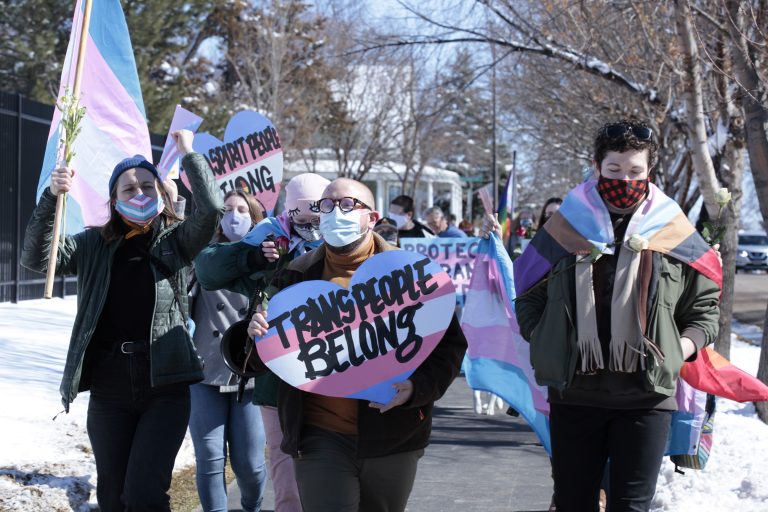
Transgender Activists Demand Cash Reparations from White People

(Dmytro “Henry” Aleksandrov, Headline USA) Taxpayer-funded transgender organizations want society to “decolonize the gender binary,” force white people to pay reparations to “gender-nonconforming people” and “affirm mustache[s] and big *ick[s]” as “authentic expression of womanhood,” in the latest round of woke lunacy to defy basic biology.

“Last year, a group of Washington State gender-identity nonprofits—all of which work with children and receive public funding—hosted a presentation series called ‘Decolonizing Gender,’ claiming that “the process of creating men and women actually is the process of genocide,” Rufo tweeted.

One of the participants was Ganesha Gold Buffalo, a “transgender sex worker,” who said that colonialism was the reason why he woke up to screams of his ancestors early in the morning and followed their voices into the woods where the spirits “decolonized [his] mind.”

“Ganesha Gold Buffalo, a male-to-female trans “sex worker,” said that colonialism caused him to “[wake] up at four in the morning … to sounds of my ancestors screaming from outside my window,” Rufo reported. “She followed the voices into the woods and the ‘nature spirits’ decolonized [his] mind.”

Forgetting about basic biology to not offend “transgenders” is critical, according to Gold Buffalo. He said that society should affirm her identity as a woman with a penis, according to Rufo’s tweet.

“I 100 percent want to still be able to look in the mirror and see every part of myself as a woman … my mustache, all of my facial hair, my untrimmed brows, my fat ass, my belly, my big *ick.”

These activists also noted that society should accept gender identities and pronouns such as “cyborg,” “Pokemon trainer,” “Wakanda” and “unicorn,” the tweet indicated.

Another panelist concluded that straight white people should pay reparations to “trans people.”

“If you’re white and your parents have a savings account, that is very much so connected to slavery and land theft, pay people,” she said.

“Pay that money to us now.”

Georgetown Law Prof. Who Questioned Biden’s SCOTUS Pick Forced Out

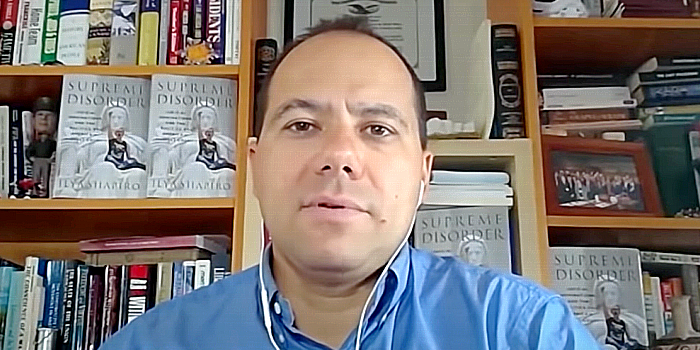
(Molly Bruns, Headline USA) Despite a recent announcement that he was returning to work at Georgetown Law School, Ilya Shapiro has resigned due to a “hostile work environment,” after coming under intense criticism and harassment for his tweets and political views.

Shaprio, who questioned President Joe Biden’s SCOTUS nominee, Ketanji Brown Jackson, expressed the belief that she was hired because of her race and sex. The tweet and subsequent reaction landed Shapiro on administrative leave pending an investigation, which was recently lifted, Legal Insurrection reported.

Georgetown’s dean, William Treanor, weaseled out and said that Shapiro was not “properly subject to discipline” for his tweets, as he was not technically an employee at the time he posted them.

However, the actions encouraged students to make complaints about Shapiro so he may be subject to further discipline or firing, and he was required to take a “cultural competence” program.

“Mr. Shapiro will also participate in programming on implicit bias, cultural competence, and non-discrimination, which the Law Center is requiring senior staff to attend,” Treanor statement reads. “Finally, I expressed my concern that his tweets would potentially have the effect of making some students feel unwelcome in any elective course he might teach.”

In response Shapiro handed in his resignation, as the bureaucrats decided to tie up his position in red tape and made it clear that anything he said would be scrutinized to the highest degree by the school’s Office of Institutional Diversity, Equity and Affirmative Action.

In an op-ed published in the Wall Street Journal, Shapiro laid out his rationale for not participating in the “slow motion firing” that likely would have taken place had he remained at Georgetown.

“Fundamentally, what Mr. Treanor has done—what he’s allowed IDEAA to do—is repeal the Speech and Expression Policy that he claims to hold dear,” Shapiro wrote.

“The freedom to speak is no freedom at all if it makes an exception for speech someone finds offensive or counter to some nebulous conception of equity.”

Concluding, Shapiro made clear that he will not be beholden to bureaucratic ideas of what speech should be at Georgetown:

“Proliferating IDEAA-style offices enforce an orthodoxy that stifles intellectual diversity, undermines equal opportunity, and excludes dissenting voices,” the piece concluded. “Even the dean of an elite law school bucks these bureaucrats at his peril… I won’t live this way.”


NY Gov. Hochul Signs Gun Laws Barring Some Legal Adults from 2nd Amendment Rights

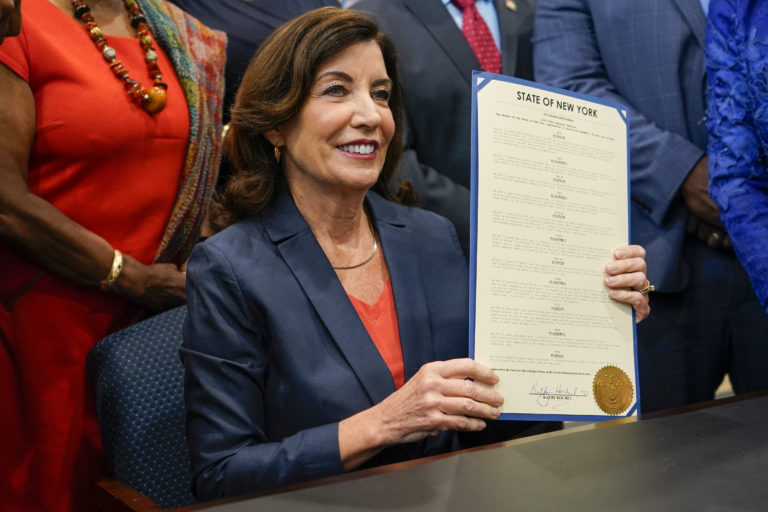
(Headline USA) New Yorkers under age 21 will be prohibited from buying semiautomatic rifles under a new law signed Monday by Gov. Kathy Hochul, making the state among the first to enact a major gun control initiative following a wave of deadly mass shootings.

The controversial move may block legal, law-abiding adult US citizens from a constitutionally protected right enumerated by the US Bill of Rights. It also may be a violation of the 14th Amendment’s Equal Protection clause due to the arbitrary and capricious age discrimination involved.

Hochul, a Democrat, signed 10 public safety-related bills, including one that will require microstamping in new firearms, which could help law enforcement solve gun-related crimes.

Another revised the state’s “red flag” law, which allows courts to temporarily take away guns from people whom it deems to be a threat to themselves or others.

“In New York, we are taking bold, strong action. We’re tightening red flag laws to keep guns away from dangerous people,” Hochul said at a press conference in the Bronx.

New York’s Legislature passed the bills last week, pushing the changes through after a pair of mass shootings involving 18-year-old gunmen using semiautomatic rifles.

Ten people died May 14 in a racially motivated attack on a Buffalo supermarket by an avowed leftist with mental health issues. A Texas school shooting took the lives of 19 children and two teachers 10 days later.

The hasty and overreaching reaction in New York further illustrated the sharp divide between Republican and Democratic leaders on how to respond to gun violence.

Texas Gov. Greg Abbott said after the massacre of children in Uvalde that government should increase security in schools and resources for mental health, but the Republican says stricter gun laws are ineffective.

Fellow Republican Gov. Tennessee Gov. Bill Lee echoed similar sentiments Monday, a day after gunfire near a Chattanooga nightclub left three people dead and multiple people wounded.

It also underscored the ineffectiveness of existing gun-control laws which are rarely enforced by corrupt prosecutors in places like New York City, where violent crime has run rampant in recent years. In New York, most people under age 21 had already been banned from owning handguns.

Under the new law, adult citizens ages 18-20 will still be allowed to own other types of long guns, including shotguns and bolt-action rifles.

Part of New York’s new law will also require all purchasers of semiautomatic rifles to get a license, something now required only for handguns.

Proposed federal legislation that would require buyers of semiautomatic weapons to be 21 is advancing in the U.S. House, but is seen as facing long odds in the Senate.

A handful of states require people to be 21 to purchase any firearms, including Florida, which raised the age for legally purchasing a rifle after a 19-year-old gunman killed 17 people at a high school.

Hochul also signed a bill Monday that will restrict sales of bullet-resistant vests and armor only to people in certain professions.

The governor said New York will continue to invest in prevention of gun-related crimes by partnering with local communities and continuing to strengthen laws by putting pressure on Congress.

“Today is the start, and it’s not the end,” said Hochul. “Thoughts and prayers won’t fix this, but taking strong action will. We will do that in the name of the lives that have been lost, for the parents who will no longer see their children stepping off the school bus.”

Adapted from reporting by the Associated Press

Polling Shows Most Americans Believe Preferred Pronouns Confuse Kids

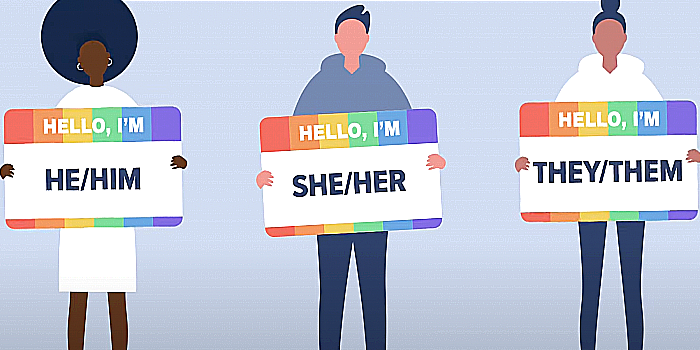
(Chris Parker, Headline USA) Despite widespread adoption of so-called “preferred pronouns” among public schools, a new poll shows that a majority of Americans are concerned about the confusion the woke language is causing for children.

The survey was conducted by Harvard Harris last month. Of the nearly 2,000 respondents, 59% believed that children should be referred by their birth gender, reported Just the News. According to the same survey, only 40% of Americans believe that it will help reduce discrimination, while 73% believed that it should not be illegal to refuse to use a child’s preferred pronoun.

Overall, Americans aren’t as concerned about education in light of soaring inflation and supply chain shortages, the survey indicated.

The federal government, under President Joe Biden, has been encouraging schools to incorporate gender identity ideologies into their lesson plans. With only 16% of Generation Z students identifying as LGBT, the federal government’s aim is to change lesson plans for all students in order to appease a minority of them.

Public schools across the nation have largely fallen into compliance. Some have been increasingly incorporating lesson plans that cause gender dysphoria among minors. Children are often encouraged to consider gender identities that differ from their birth gender or that aren’t even supported by biological science.

The state of Illinois went as far as to legally require all public schools – including preschools – to teach transgenderism. Public schools are also prohibited from buying any textbooks that do not actively teach LGBT topics. NPR has referred to critics of the move as “hate groups.”

Some states and educators have fought back against the curriculum. An elementary school teacher in Virginia was placed on administrative leave last year after calling transgender pronouns “child abuse.”

The state of Florida has challenged the science behind transgender procedures, especially for youth. Republican Gov. Bill Lee of Tennessee also removed legal protections for schools that allow students to use bathrooms that don’t correspond with their biological gender.

A growing number of schools are also seeking to ban children’s books that promote gender dysphoria. They are often called “offensive and sometimes needlessly graphic” after closer review by critics and experts.

Amid Crypto Turmoil, Senators Propose Sweeping Oversight

(Headline USA) Wide-ranging bipartisan legislation unveiled Tuesday would regulate cryptocurrencies and other digital assets following a series of high-profile busts and failures.

It’s unclear, though, whether the bill proposed by Sens. Kirsten Gillibrand, D-N.Y., and Cynthia Lummis, R-Wyo., can clear Congress, especially at a time of heightened partisanship ahead of midterm elections.

The bill also comes as advocates for cryptocurrency have become bigger—and more free-spending—players in Washington.

The bill, called the Responsible Financial Innovation Act, proposes legal definitions of digital assets and virtual currencies; would require the IRS to adopt guidance on merchant acceptance of digital assets and charitable contributions; and would make a distinction between digital assets that are commodities or securities, which has not been done.

The bill “creates regulatory clarity for agencies charged with supervising digital asset markets, provides a strong, tailored regulatory framework for stablecoins, and integrates digital assets into our existing tax and banking laws,” Lummis said in an emailed statement.

Stablecoins are a type of cryptocurrency pegged to a specific value, usually the U.S. dollar, another currency or gold.

Lummis has been a vocal advocate for cryptocurrency development and has invested between $150,002 and $350,000 in bitcoin, according to her financial disclosure.

The legislation imposes disclosure requirements on digital asset firms to ensure that consumers can make informed decisions, delineates agency responsibilities over various digital assets—such as Commodity Futures Trading Commission jurisdiction over bitcoin—and requires a study on digital asset energy consumption, among many other proposals.

The bill comes at a tumultuous time for cryptocurrencies, including the May meltdown of the terraUSD stablecoin and luna, the coin meant to buy and sell assets, which traded at a value of less than one ten-thousandth of 1 cent.

Gillibrand said the bill establishes “a regulatory framework that spurs innovation, develops clear standards, defines appropriate jurisdictional boundaries and protects consumers.”

These developments have prompted lawmakers on both sides of the aisle to support legislation that more closely scrutinizes digital assets.

And crypto lobbying has followed suit. This year, for the first time, industry executives have flooded money into congressional races, spending $20 million, according to records and interviews.

Cryptocurrencies have their supporters in Congress. Sen. Cory Booker, D-N.J., said at the DC Blockchain Summit in Washington last month that he is drawn to “the exciting potential democratizing effect that can come from creating wider pathways of opportunity for marginalized communities.”

Despite the risks, surveys show that roughly 16% of adult Americans, or 40 million people, have invested in cryptocurrencies. And 43% of men age 18-29 have put money into cryptocurrency.

African Americans are also more likely to invest in cryptocurrencies than white consumers.

President Joe Biden signed an executive order in March, urging the Federal Reserve to explore whether the central bank should create its own digital currency and directed federal agencies, including the Treasury Department, to study the impact of cryptocurrency on financial stability and national security.

Treasury Secretary Janet Yellen said in an April speech at American University that more government regulation is needed to police the proliferation of cryptocurrency and ward off fraudulent or illicit transactions.

“We have a strong interest in ensuring that innovation does not lead to a fragmentation in international payment architectures,” she said, adding that the Treasury Department will work with the White House and other agencies to develop reports and recommendations on digital currencies.

Adapted from reporting by the Associated Press