Biden’s Ultra-MAGA Rant Marred by Truth-Speaking Heckler

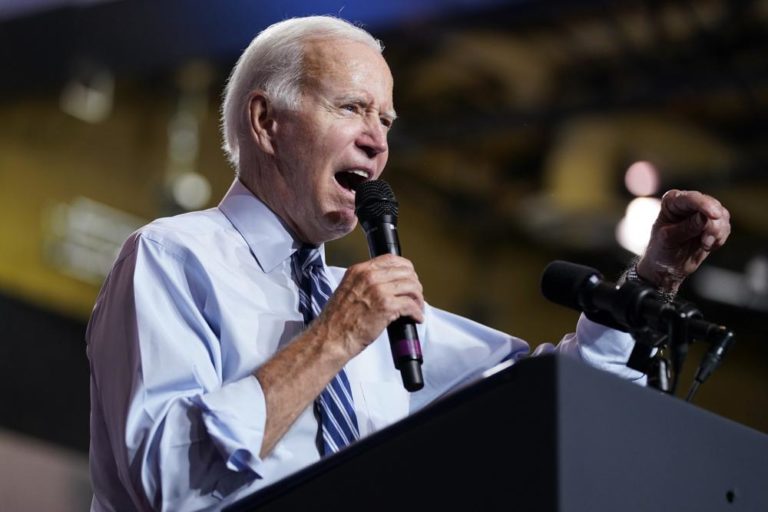
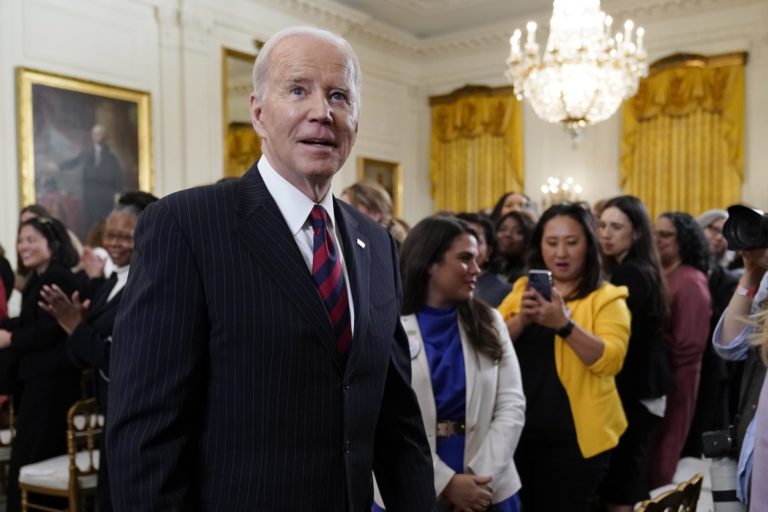
(Tony Sifert, Headline USA) During a fundraising speech in Rockville, Maryland, on Thursday, a barely coherent President Joe Biden railed against “MAGA Republicans,” describing ordinary American citizens and their representatives as a “threat to our very democracy,” according to The Hill.

In the midst of his speech, in which the president suggested that Trump supporters “embrace political violence,” Biden was interrupted by a truth-telling heckler who reminded him that he is an illegitimate president.

“You stole the election!” the man shouted, before being escorted of the premises. “You stole the election!”

“Ignorance knows no boundaries,” Sleepy Joe shouted after an awkward minute.

Perhaps the president is unaware that Facebook founder Mark Zuckerberg recently admitted to podcaster Joe Rogan that the FBI pressured social media companies to ban or limit distribution of the Hunter Biden “laptop from hell” story in advance of the 2020 election.

Zuckerberg‘s admission confirmed the infamous account of Time‘s Molly Ball, who spilled the beans on the “well-funded cabal of powerful people” who rigged the election by working “behind the scenes to influence perceptions, change rules and laws, steer media coverage and control the flow of information.”

Earlier that day, at another fundraiser, President Biden suggested that the Trump supporters formerly known as “ultra MAGA” should now be considered “semi-fascists,” Fox News reported.

“What we’re seeing now is the beginning or the death knell of an extreme MAGA philosophy,” Biden told supporters. “It’s not just Trump, it’s the entire philosophy that underpins the — I’m going to say something — it’s like semi-fascism.”

During an interview with Republican strategist Karl Rove, Fox anchor Jesse Waters called the speech Biden’s “deplorable moment,” referring to Hillary Clinton‘s infamous focus-grouped, election-losing “basket of deplorables” comment.

“Joe Biden had his own deplorable moment today when he came out and called the entire MAGA movement fascists,” Watters said.

Calif. Plans to Ban Sales of Gas-Powered Cars by 2035

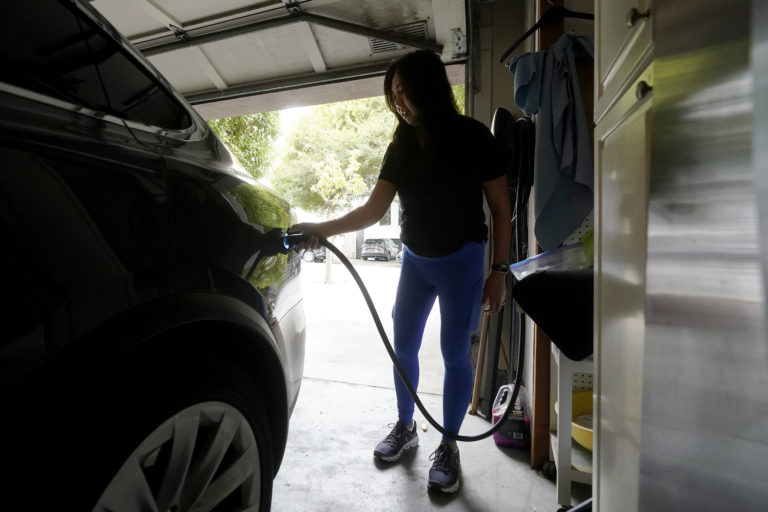
(Headline USA) California set itself on a path Thursday to end the era of gas-powered cars, with air regulators adopting the world’s most stringent rules for transitioning to zero-emission vehicles.

The move by the California Air Resources Board to have all new cars, pickup trucks and SUVs be electric or hydrogen by 2035 is likely to reshape the U.S. auto market, which gets 10% of its sales from the nation’s most populous state.

But such a radical transformation in what people drive will also require at least 15 times more vehicle chargers statewide, a more robust energy grid and vehicles that people of all income levels can afford.

“It’s going to be very hard getting to 100%,” said Daniel Sperling, a board member and founding director of the Institute of Transportation Studies at the University of California, Davis. “You can’t just wave your wand, you can’t just adopt a regulation—people actually have to buy them and use them.”

Democratic Gov. Gavin Newsom told state regulators two years ago to adopt a ban on gas-powered cars by 2035, one piece of California’s aggressive suite of policies designed to reduce pollution and fight climate change.

If the policy works as designed, California would cut emissions from vehicles in half by 2040.

Other states are expected to follow, further accelerating the production of zero-emissions vehicles.

But skepticisms abound—including the extreme costs of purchasing the vehicles and replacing the batteries (which alone can run around $30,000).

The charging time and the amount of energy (likely powered by fossil fuels) that the EV generators require also have proven to be problems for the green-energy push.

Nonetheless, Washington state and Massachusetts already have said they will follow California’s lead and many more are likely to—New York and Pennsylvania are among 17 states that have adopted some or all of California’s tailpipe emission standards that are stricter than federal rules.

The European Parliament in June backed a plan to effectively prohibit the sale of gas and diesel cars in the 27-nation European Union by 2035, and Canada has mandated the sale of zero-emission cars by the same year.

California’s policy doesn’t ban cars that run on gas—after 2035 people can keep their existing cars or buy used ones, and 20% of sales can be plug-in hybrids that run on batteries and gas.

Though hydrogen is a fuel option under the new regulations, cars that run on fuel cells have made up less than 1% of car sales in recent years.

California envisions powering most of the economy with electricity, not fossil fuels by 2045. A plan released by the air board earlier this year predicts electricity demand will shoot up by 68%.

Today, the state has about 80,000 public chargers. The California Energy Commission predicted that needs to jump to 1.2 million by 2030.

The commission says car charging will account for about 4% of energy by 2030 when use is highest, typically during hot summer evenings. That’s when California sometimes struggles to provide enough energy because the amount of solar power diminishes as the sun goes down.

In August 2020, hundreds of thousands of people briefly lost power due to high demand that outstripped supply.

To ensure it doesn’t going forward Newsom is pushing to keep open the state’s last-remaining nuclear plant beyond its planned closure in 2025, and the state may turn to diesel generators or natural gas plants as a backup when the electrical grid is strained.

If people’s charging habits stay the same, once 30% to 40% of cars are electric, the state would need to add more energy capacity overnight to meet demand.

The regulations adopted Thursday require 35% of vehicle sales to be electric by 2026, up from 16% now

Both the state and federal government are spending billions to build more chargers along public roadways, at apartment complexes and elsewhere to give people more charging options.

The oil industry believes California is going too far. It’s the seventh-largest oil-producing state and shouldn’t wrap its entire transportation strategy around a vehicle market powered by electricity, said Tanya DeRivi, vice president for climate policy with the Western States Petroleum Association, an industry group.

“Californians should be able to choose a vehicle technology, including electric vehicles, that best fits their needs based on availability, affordability, and personal necessity,” she said.

Many car companies, like Kia, Ford and General Motors, are already on the path to making more electric cars available for sale, but some have warned that factors outside of their control like supply chain and materials issues make Californians’ goals challenging.

“Automakers could have significant difficulties meeting this target given elements outside of the control of the industry,” Kia Corp.’s Laurie Holmes told the air board before its vote.

As the requirements ramp up over time, automakers could be fined up to $20,000 per vehicle sold that falls short of the goal, though they’ll have time to comply if they miss the target in a given year.

The new rules approved by the air board say that the vehicles need to be able to travel 150 miles on one charge.

Federal and state rebates are also available to people who buy electric cars, and the new rules have incentives for car companies to sell electric cars at a discount to low-income buyers.

But some representatives of business groups and rural areas said they fear electric cars will be too expensive or inconvenient.

“These regulations are a big step backwards for working families and small businesses,” said Gema Gonzalez Macias of the California Hispanic Chambers of Commerce.

Air board members said they are committed to keeping a close eye on equity provisions in the rules to make sure all California residents have access.

“We will not set Californians up to fail, we will not set up the other states who want to follow this regulation to fail,” said Tania Pacheco–Warner, a member of the board and co-director of the Central Valley Health Policy Institute at California State University, Fresno.

Adapted from reporting by the Associated Press

Calif. Highway Patrol Org. Revokes Paul Pelosi’s Membership After DUI

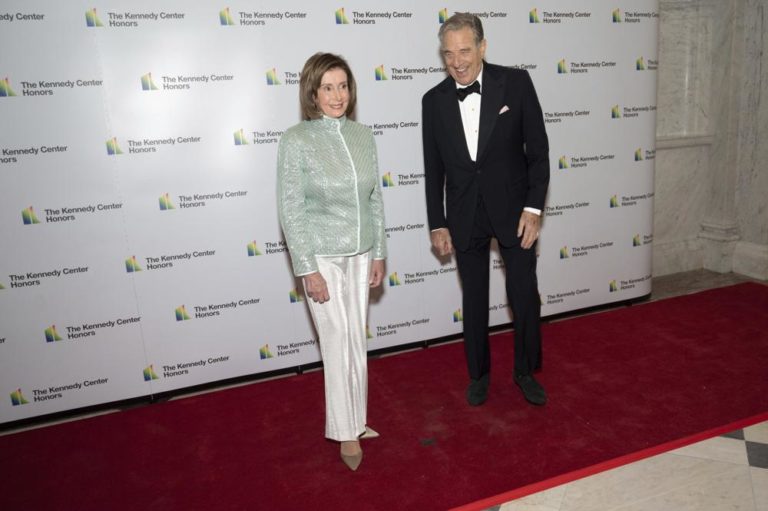
(Jacob Bruns, Headline USA) In the wake of his drunk driving escapade, a police association in California has distanced itself from Paul Pelosi, the shady husband of House Speaker and DC elite Nancy Pelosi, the Western Journal reported.

California Highway Patrol 11-99 Foundation ended Paul Pelosi’s lifetime membership when he pleaded guilty to a DUI earlier this week after injuring another driver “while under the influence of an alcoholic beverage and a drug and under their combined influence.”

“After evaluating the events that led to Mr. Pelosi’s arrest and conviction, we are revoking Mr. Pelosi’s lifetime membership with the CHP 11-99 Foundation effective immediately,” the law enforcement organization wrote in a statement released soon after the plea.

In particular, the organization took issue with the fact that Pelosi, whose family has long received preferential treatment, had attempted to get out of the arrest by citing his membership in the California Highway Patrol 11-99 Foundation.

“The mere presentation of his 11-99 Foundation identification credentials to law enforcement made it appear that he was presenting them for preferential treatment whether that was the case or not, which violates the terms and conditions he agreed to on his membership application,” they wrote.

“These actions reflected poorly on the 11-99 Foundation and undermined our important mission,” they continued.

Footage has emerged of Pelosi’s conduct after his drunken crash last May, revealing that he tried to use his status to receive special benefits from the local police.

According to Pelosi, who could hardly stand at the time, he merely had a “glass of champagne before dinner” and also “a glass of white,” while reminding police that he is “a high-profile person.”

Despite the fact that he nearly killed both himself and another driver when he totaled his 2021 Porsche and the other driver’s 2014 Jeep, he received merely three years probation and 5 days of jail time, which were waived.

GOP Demands Answers over Policy Allowing Illegals to Board Planes with Arrest Warrants

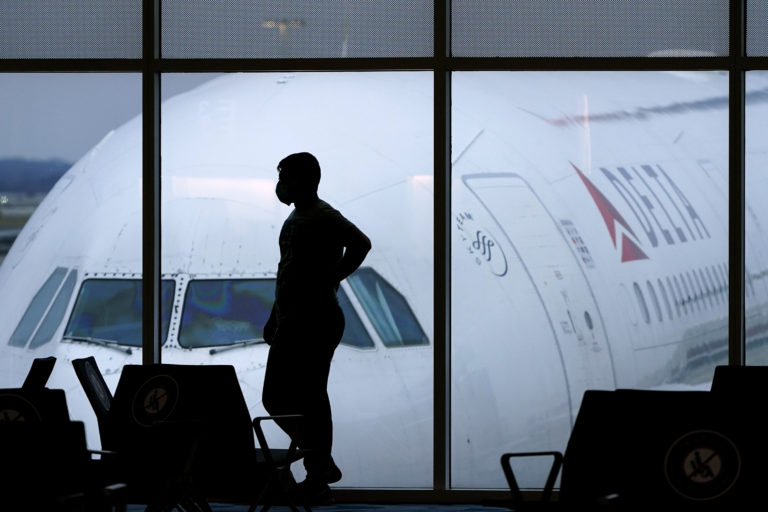
(Chris Parker, Headline USA) Rep. Pat Fallon, R-Texas, is among several Republicans demanding answers from the Transportation Security Administration after allowing illegal immigrants to use arrest warrants as a form of ID to board planes and public transport.

“The American taxpayers have been footing this bill for almost two years,” Fallon said during an interview with Fox News. “The situation has never literally been worse in our history.”

“If this administration didn’t have double standards, they’d have no standards at all,” he said. “Because this makes absolutely no sense…the border crisis isn’t even a crisis anymore – it’s beyond that. It is a catastrophe.”

Fallon joined dozens of other Republicans led by Rep. Andy Biggs, R-Ariz., in sending a letter to Homeland Security Secretary Alejandro Mayorkas demanding an explanation from the TSA.

According to the letter, illegal immigrants may use both warrants and deportation orders as forms of ID to board planes. However, these documents are not included on the TSA’s list of acceptable ID forms.

“These documents are not secure documents and can easily be forged, copied, or otherwise manipulated,” the letter, obtained by Fox News Digital, said.

“Given the fact that American citizens are constantly being reminded that their IDs will soon need to be REAL ID compliant to board an airplane, it is extremely troubling that TSA is allowing illegal aliens to use nonsecure documents as IDs to board planes.”

TSA administrator David Pekoske claimed that “under 1,000 illegal immigrants have boarded with arrest warrants this year.” Republicans remain skeptical of that number. They also argued that illegal immigrants should be deported rather than allowing to travel farther into the US.

“The fact that U.S. taxpayer dollars are being used directly or indirectly to pay for illegal aliens to be transported throughout the country is a slap in the face to all law-abiding, tax-paying Americans, they wrote.

“Instead of using taxpayer funds to transport illegal aliens, DHS should be using those funds to acquire additional detention space so that it may detain the illegal aliens as required by law.”


CNN, NYTimes Called Out for Anti-Semitism (Again)

(Jacob Bruns, Headline USA) A group called the Jewish Leadership Project has condemned CNN and the New York Times once again of antisemitism, this time following the corporate media’s coverage of Right-wing antisemitism while failing to address its rise on the Left as well, the Daily Caller reported.

In particular, the Jews are angry with CNN’s chief political correspondent Dana Bash for the content of her recent special, “Rising Hate: Antisemitism in America.”

According to Bash, the issue is “complicated and nuanced,” but “experts across the board caution antisemitism is growing on the left, but it is not equivalent to hate on the right.”

Anti-Defamation League CEO Jonathan Greenblatt, a former Obama staffer, called out Bash for ignoring antisemitism on the Left, comparing it to climate change.

“On the extreme Right, (antisemites) are the tornado that will tear apart your house and kill everyone inside in an instant,” Greenblatt told CNN. “The far Left is like climate change. Slowly, but surely the temperature is rising.”

The Jewish Leadership Project piled on, noting that the Left’s love of diversity has caused it to embrace and support groups that have antisemitic streaks.

“That’s because attacks on Jews are increasingly coming from the Left and they don’t want to admit it. They rightfully cite white supremacists, but when it comes to black supremacists, left-wing anti-Zionists, radicals and Islamists … it’s complicated and nuanced,” the Jewish Leadership project noted, rebuking CNN.

The New York Times has also come under fire for many of its writers opposing Zionism openly.

In 2020 and 2021, the Times’ freelance photographer Hosam Salem mourned the death of two Muslim terrorists, Mohammed Salem and Nabil Masoud, who led a suicide bombing which killed 10 Israelis.

One of the mainstream newspaper’s freelance writers also penned radically antisemitic posts, and has since been fired.

“Jews are the sons of the dogs and I am in favor of killing them and burning them like Hitler did to them,” wrote former NYT freelancer Fady Hanona.

“I don’t accept a Jew, Israeli or Zionist, or anyone else who speaks Hebrew. I’m with killing them wherever they are children, elderly people, and soldier.”

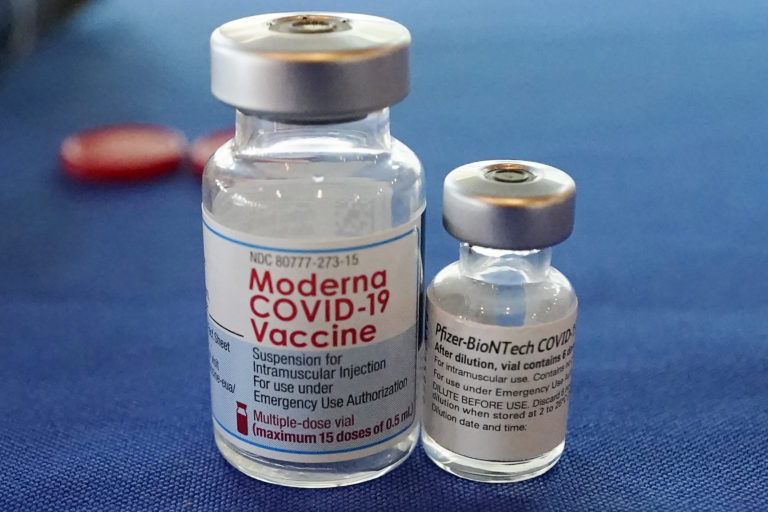
Moderna Sues Pfizer, Claims mRNA Vax Infringes on Its Patents

(Headline USA) COVID-19 vaccine maker Moderna is suing Pfizer and the German drugmaker BioNTech, accusing its main competitors of copying Moderna’s technology in order to make their own vaccine.

Moderna said Friday that Pfizer and BioNTech’s vaccine Comirnaty infringes on patents Moderna filed several years ago protecting the technology behind its preventive shot, Spikevax. The company filed patent infringement lawsuits in both U.S. federal court and a German court.

Pfizer spokeswoman Pam Eisele said the company had not fully reviewed Moderna’s lawsuit, but the drugmaker was surprised by it, given that their vaccine is based on proprietary technology developed by both BioNTech and Pfizer.

She said in an email that the company would “vigorously defend” against any allegations in the case.

BioNTech did not immediately respond to a request from the Associated Press seeking comment.

Moderna and Pfizer’s two-shot vaccines both use mRNA technology to help patients fight the coronavirus.

Both also have faced heavy criticism, however, for failing to actually create meaningful immunity to the virus, which has evolved through several recent variants into a far less virulent but more contagious form.

At the same time, issues like blood clotting and myocarditis in some patients have led to ongoing concerns that the experimental jabs may do more harm than good.

And concerns remain about any longterm impacts, including the risk of mutagenic defects transmitted from one generation to the next due to the vaccine’s genetic alterations.

The mRNA vaccines work by injecting a genetic code for the spike protein that coats the surface of the coronavirus. That code, the mRNA, is encased in a little ball of fat, and instructs the body’s cells to make some harmless spike copies that train the immune system to recognize the real virus.

That approach is radically different than how vaccines have traditionally been made.

Moderna said it started developing its mRNA technology platform in 2010, and that helped the company quickly produce its COVID-19 vaccine after the pandemic arrived in early 2020.

By the end of that year, U.S. regulators had cleared shots from both Pfizer and Moderna for use after clinical research showed that both were highly effective.

Moderna CEO Stephane Bancel said in a prepared statement that the vaccine developer pioneered that technology and invested billions of dollars in creating it.

The company said it believes its rivals’ vaccine infringes on patents Moderna filed between 2010 and 2016.

Moderna said it recognizes the importance of vaccine access and is not seeking to remove Comirnaty from the market. It also is not asking for an injunction to prevent future sales.

Moderna said in 2020 that it would not enforce its COVID-19 related patents while the pandemic continued. But the company said in March, with vaccine supplies improving globally, that it would update that pledge.

It said it still would not enforce its patients for vaccines used in low- and middle-income countries. But it expected companies like Pfizer and BioNTech to respect its intellectual property, and it would consider “a commercially reasonable license” in other markets if they requested one.

“Pfizer and BioNTech have failed to do so,” Moderna said in a statement.

Adapted from reporting by the Associated Press

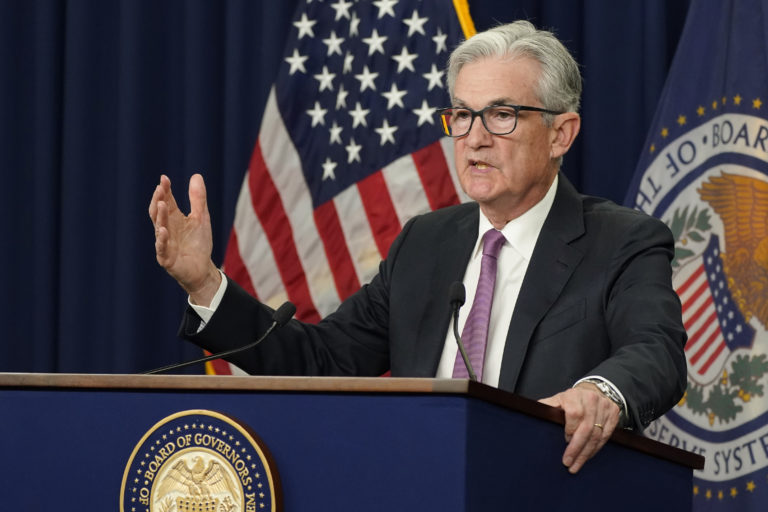
Fed Chief: No Plans to Slow Interest-Rate Hikes as Record Inflation Persists

(Headline USA) Federal Reserve Chair Jerome Powell delivered a stark message Friday: The Fed will likely impose more large interest rate hikes in coming months and is resolutely focused on taming the highest inflation in four decades.

Powell also warned more explicitly than he has in the past that the Fed’s continued tightening of credit will cause pain for many households and businesses as its higher rates further slow the economy and potentially lead to job losses.

“These are the unfortunate costs of reducing inflation,” he said in a high-profile speech at the Fed’s annual economic symposium in Jackson Hole. “But a failure to restore price stability would mean far greater pain.”

The announcement comes on the heels of President Joe Biden’s decree to shift the burden of some $300-500 billion in student-loan debt from the individual debtors to the taxpayers at large, giving additional disposable income to those who likely need it the least and exacerbating the very conditions that have created the historic inflationary surge.

Investors had been hoping for a signal that the Fed might soon moderate its rate increases later this year if inflation were to show further signs of easing. But the Fed chair indicated that that time may not be near.

After hiking its key short term rate by three-quarters of a point at each of its past two meetings—part of the Fed’s fastest series of rate increases since the early 1980s—Powell said the Fed might ease up on that pace “at some point”—suggesting that any such slowing isn’t near.

Powell said the size of the Fed’s rate increase at its next meeting in late September—whether one-half or three-quarters of a percentage point—will depend on inflation and jobs data. An increase of either size, though, would exceed the Fed’s traditional quarter-point hike, a reflection of how severe inflation has become.

The Fed chair said that while lower inflation readings that have been reported for July have been “welcome,” “a single month’s improvement falls far short of what the Committee will need to see before we are confident that inflation is moving down.”

Even if the rate of inflation lowers, that still means prices are increasing astronomically by the standards of most presidential administrations. Thus, there is little solace for consumers in the fact that they are increasing only by 6.5% compared with 9.5%.

Powell noted that the history of high inflation in the 1970s, when the central bank sought to counter high prices with only intermittent rate hikes, shows that the Fed must stay focused.

“The historical record cautions strongly against prematurely” lowering interest rates, he said. “We must keep at it until the job is done.”

Powell’s speech is the marquee event of the the Fed’s annual economic symposium at Jackson Hole, the first time the conference of central bankers is being held in person since 2019, after it went virtual for two years during the COVID-19 pandemic.

Since March, the Fed has implemented its fastest pace of rate increases in decades to try to curb inflation, which has punished households with soaring costs for food, gas, rent and other necessities. The central bank has lifted its benchmark rate by 2 full percentage points in just four meetings, to a range of 2.25% to 2.5%.

Those hikes have led to higher costs for mortgages, car loans and other consumer and business borrowing. Home sales have been plunging since the Fed first signaled it would raise borrowing costs.

In June, the Fed’s policymakers signaled that they expected their key rate to end 2022 in a range of 3.25% to 3.5% and then to rise further next year to between 3.75% and 4%. If rates reached their projected level at the end of this year, they would be at the highest point since 2008.

Powell is betting that he can engineer a high-risk outcome: Slow the economy enough to ease inflation pressures yet not so much as to trigger a recession.

However, recent economic data indicated that the economy is already in recession territory, with two full quarters of negative growth in the gross domestic product.

The Biden administration and its media allies responded by trying to change the definition of recession to something more abstract and nebulous that only they could explain.

Despite the economy’s contraction at a 0.6% annual rate in the April-June period, the Biden administration has continued to incentivize unemployment, resulting in a hiring crisis that continues to take its toll on consumer access to goods and services, creating ongoing supply-chain issues.

The Fed is not entirely blameless for the current economic dilemma. At last year’s Jackson Hole symposium, Powell listed five reasons why he thought inflation would be “transitory.” Yet instead it has persisted, and many economists have noted that those remarks haven’t aged well.

Powell indirectly acknowledged that history at the outset of his remarks Friday, when he said that, “at past Jackson Hole conferences, I have discussed broad topics such as the ever-changing structure of the economy and the challenges of conducting monetary policy.”

“Today,” he said, “my remarks will be shorter, my focus narrower and my message more direct.”

Adapted from reporting by the Associated Press

SURVEY: 56% of Companies Dropping COVID Vax Mandates to Solve Labor Shortages

(Bethany Blankley, The Center Square) According to PricewaterhouseCoopers’s 2022 Pulse survey, business leaders are implementing a range of measures to retain talent and grow their workforce, including dropping COVID-19 vaccine mandates as a condition of in-person employment.

The survey said 56% of companies were dropping COVID-19 vaccine mandates for on-site work. The findings, published Aug. 18, came after vaccine mandates continue to be challenged and overturned in courts and after it remains questionable that the COVID-19 vaccines were effective in preventing the spread of the coronavirus.

While inflation and high costs are posing challenges, the report found that 83% of businesses are focusing their strategy on growth, more than any other objective listed. Only 30% said they believe a recession is a serious risk to their business operations.

The report found that nearly two-thirds of businesses, 63%, have changed or are planning to change their policies to address labor shortages, up from 56% in January 2022.

“Ironically, as businesses pivot even more toward automation, it’s critical to find employees with the right combination of deep functional knowledge and technology know-how,” the report states. “Without the right talent, automations can fail to deliver on promised efficiencies and increase operational risk.”

In an effort to balance talent retention and acquisition in a changing labor market, 70% said they were expanding permanent remote-work options; 64% said they were increasing compensation for existing employees; 63% said they were changing processes to address labor shortages; 62% said they were expanding mental-health benefits; 61% said they were requiring employees to be physically on-site more often.

While finding the right talent continues to be a challenge for businesses, those surveyed also took proactive steps to streamline their workforce: 50% said they reduced their overall headcount; 46% said they dropped or were reducing signing bonuses; 44% rescinded job offers.

The analysis found that depending on the type of industry, companies are taking different approaches to address labor shortages. The healthcare industry, for example, is focused on rehiring employees who recently left or were forced to leave over vaccine mandates. The consumer markets, technology, media and telecommunications companies are investing in automation.

One key finding was that 22% of companies said they were scaling back on their investment in real estate. Declining interest in real estate is likely a response to hybrid and remote work, the report suggests. The majority, 70%, have either expanded or have plans to expand permanent remote work options, with 42% having already implemented such measures, up from 30% in its January Pulse survey.

Only 31% of respondents said they plan to increase their investment in real estate, with financial services and health industries doing so the most by 30% and 29%, respectively.

Roughly 15% of respondents said they would decrease their investment in facilities and general capex over the next 12 months. With fewer people physically working in offices, they found they can significantly downscale their physical footprint.

Instead, they are investing in other areas to expand their growth: 53% are increasing investments in digital transformation, 52% in IT, 49% in cybersecurity and privacy, 48% in investment in customer experience, and 40% in research and development.

Biden’s Loan Amnesty a $4.7M Windfall for 30 White House Staffers

() After announcing executive action to unilaterally and retroactively wipe away $300 billion in federal student debt, President Joe Biden looked over his shoulder to answer a question: Was this debt forgiveness fair to those who had sacrificed and saved to pay their way through college? Biden deflected.

“Is it fair to people who, in fact, do not own multibillion dollar businesses,” he replied. “Some of these guys want to give them all tax breaks,” he said, seemingly referring to unrelated Republican tax proposals. “Is that fair?” he asked the reporter. “What do you think?”

Then, the president left. The fundamental question of fairness, however, remains as millions of Americans now search the Department of Education’s website for guidance to see if they qualify for loan forgiveness. Or if they would have qualified had they not repaid their loans earlier.

According to the plan, the White House will cancel $10,000 in federal student debt loans for any individual making less than $125,000 a year and $20,000 for those with Pell grants.

Republicans quickly complained that the debt amnesty was “a slap in the face to working Americans.” For many working in Washington, D.C., however, it was a sigh of relief.

Student debt forgiveness is personal for the Biden administration. About one in five of the White House aides required to file a financial disclosure, as Bloomberg News previously noted, reported owing student debt. Collectively, those 30 senior White House staffers owe as much as $4.7 million. Those personal finances are not unusual in the nation’s capital.

There is more outstanding student debt in Washington than in any other city in the country. The average debtor in D.C., according to a 2021 breakdown by the small business analyst, AdvisorSmith, owes $54,982 in unpaid student loans. This includes many political staffers at the Department of Education, senior advisors as well as junior aides who moved to that agency from the Biden campaign.

Analysis of financial disclosures by the conservative-leaning American Accountability Foundation found that the political staff at the agency that oversees the student loan program stand to benefit.

The outstanding student loan debt balance among 41 education staffers evaluated could amount to between $2.8 and $6.5 million. According to the AAF estimate obtained by RealClearPolitics, the president may have wiped away as much as $512,646 of their debt.

More than 45 million Americans owe $1.6 trillion in federal student debt, a balance that the New York Times reports dwarfs what they owe in car loans, credit cards, and other consumer debt.

The White House insists that the administration’s plan will target low- to middle-income borrowers in particular, with 90% of relief going to earners who make less than $75,000 a year. As many as 43 million people can benefit, according to an administration infographic, and 20 million people “can have their loans fully cancelled.”

It is precisely the kind of relief, Biden said, that the country needs post-pandemic. “All of this means people can start finally to climb out from under that mountain of debt,” the president said. “To finally think about buying a home or starting a family or starting a business. And by the way, when this happens the whole economy is better off.”

Mitch McConnell called it “student loan socialism.” The Republican Senate minority leader accused the president of delivering “a slap in the face to every family who sacrificed to save for college, every graduate who paid their debt, and every American who chose a certain career path or volunteered to serve in our Armed Forces in order to avoid taking on debt. This policy is astonishingly unfair.”

Tom Jones echoed that criticism. The founder of AAF pointed to the “windfall” that political employees at the Education Department were set to receive, calling it “shameful” evidence of “the gap between the people and the ruling class in Washington, D.C.” Press spokesmen for the department did not respond to RCP requests for comment.

Susan Rice dismissed gripes about fairness as “inaccurate” and part of a “double standard.” The director of the White House domestic policy council, previously a visiting fellow at Harvard, an institution with an untaxed $53 billion endowment, told reporters that “Republicans didn’t complain when certain small businesses during the pandemic got extraordinary financial relief without having to pay back those loans.” The forgiven federal loans in question, from student loans and from the pandemic, were part of the same principle.

Rice said it “is fantastic” that some individuals were able to repay their loans already, but “that doesn’t mean that because some people were able to do so, nobody should help those that weren’t. By that logic, we wouldn’t help anybody in this country.”

Democrats repeatedly met Republican criticism with the same rebuttal: What about the GOP tax cut? But criticism wasn’t just coming from the right. Jason Furman, the chairman of Barack Obama’s White House Council of Economic Advisors, accused Biden of “recklessly” pouring “gasoline on the inflationary fire that is already burning.”

“Doing it while going well beyond one campaign promise ($10K of student loan relief) and breaking another (all proposals paid for) is even worse,” Furman tweeted.

The White House was eager to highlight the sympathetic cases on Wednesday, the “typical nurse” who brings home $77,000 a year and the “typical construction worker” who makes $38,000. “But then why design a policy that would provide up to $40,000 to a married couple making $249,000,” Furman asked.

When RealClearPolitics asked Bharat Ramamurti if forgiving a portion of the federal debt owed by law school and business school graduates was really building from “the bottom-up and middle-out,” the deputy director of the president’s National Economic Council replied, “Yeah, it is.”

“As we’ve made clear, nobody in the top 5% of incomes is going to get a single dollar under this proposal,” he said, adding that the administration had “good data” that high earners “near the top of the income cutoff are much more likely to be experiencing distress after repayment starts.”

Ramamurti again compared Democrat debt amnesty to the Republican tax cut. “It is basically the reverse,” he told RCP, where “15% of the benefits went to people making under $75,000 a year, and 85% went to people making over $75,000 a year.”

Education Secretary Miguel Cardona insisted that the aim of Biden’s executive action was to provide pandemic relief.

“Speaking to the fairness question,” he told Fox News, student debt relief was no different than pandemic small business loans. “It’s about making sure we’re taking care of Americans and investing in our economy and in our people.”

“But the people that already paid their student loans, they don’t get anything out of this deal,” asked Peter Doocy.


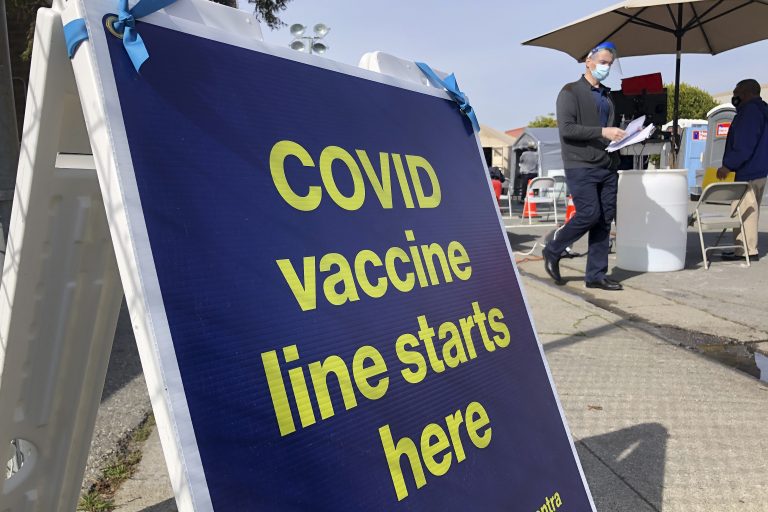
D.C. Democrat Mayor Holding Schools Hostage to Force Black Students to Get Vaxxed

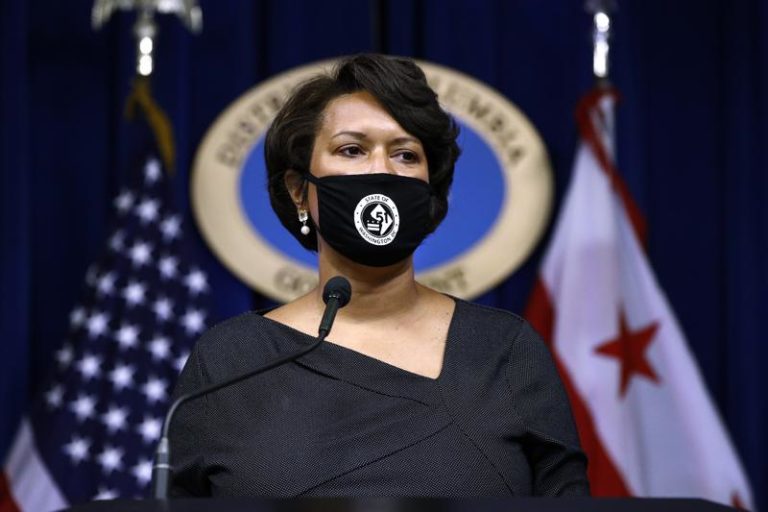
(Mark Pellin, Headline USA) In a disturbing display of what many are calling targeted discrimination, Washington, D.C., Mayor Muriel Bowser confirmed that students 12 and older must have a COVID vaccine passport if they want to participate with in-person learning at public and private schools.

Bowser, a Democrat, and the state superintendent of education for D.C. are providing a grace period of 20 days for un-vaccinated students to get their jabs, reported the Daily Signal. Nearly 50% of D.C. black students ages 12-17 are not vaccinated, according to city data.

There are no options currently planned to offer unvaxxed students remote or virtual learning instead of in-person, effectively holding their education hostage for a jab.

Government data showed 47% of black children in the district ages 12-15 had not completed the vaccination regimen required to go back to school in-person. Among black teens aged 16-17, 42% are unvaccinated.

“We’re not offering remote learning for children, and families will need to comply with what is necessary to come to school,”  Bowser told the Daily Signal.

While obstructing a huge percentage of D.C. black students from attending classes, Bowser announced this week that the school district is opening its doors to a sudden influx of illegal immigrants.

The migrant population has increased as busloads of illegal aliens have arrived from Texas and Arizona.

Ironically, it was Texas Republican Sen. Ted Cruz who tried to provide a pro-active solution that would have provided in-person learning for D.C. students.

Senate Democrats killed Cruz’s proposal that would have exempted students from the district’s vaccine mandate, which primarily blocks minority students 12 to 15 years of age from attending school.

“In D.C. the rate of vaccination for students 12 to 15 is 85 percent. For African American students, the rate drops to 60 percent, Cruz said before the Senate voted on his motion.

“The D.C. public schools have announced any student that is not vaccinated is not allowed to come to school,” he said.

“If Democrats vote no on this motion to commit, they will be voting to tell thousands of African American students in D.C. you’re not allowed to come to school, your education doesn’t matter.”