Huge Snowstorm in the Northeast Forces Millions to Stay Home

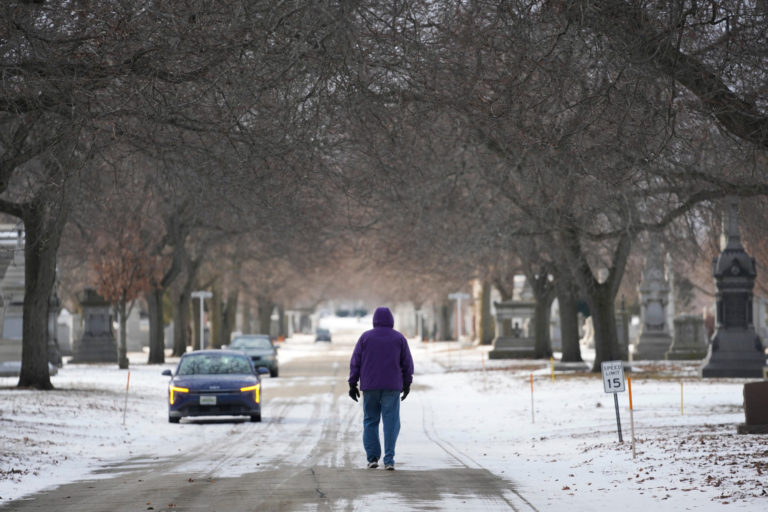
(Headline USA)  A massive snowstorm pummeled the northeastern United States from Maryland to Maine on Monday, forcing millions of people to stay home amid strong wind and blizzard warnings, transportation shutdowns, and school and business closures.

Meteorologists said the storm is the strongest in a decade, dumping more than 2 feet (60 centimeters) of snow in parts of the metropolitan Northeast, shattering accumulation records in places, immobilizing transit and even leading the United Nations to postpone a Security Council meeting. Officials declared emergencies, schools closed, including in New York City, which had its first “old-school” snow day in six years, and people grappled with power failures.

Even as the snow moved northward and tapered off in other areas, the National Weather Service said it is tracking another storm that could bring more snow to the region later this week.

The weather service referred to Monday’s storm as a “classic bomb cyclone/nor’easter off the Northeast coast.” A bomb cyclone happens when a storm’s pressure falls by a certain amount within a 24-hour period, occurring mainly in the fall and winter when frigid Arctic air can reach the south and clash with warmer temperatures.

While it was paralyzing and potentially dangerous for millions along the Eastern Seaboard, meteorologists found themselves rhapsodizing over the combination of power and beauty.

The storm hit the “Goldilocks situation” of just the right temperature for wet, heavy snow: Any warmer and its precipitation wouldn’t have fallen as snow, any colder and there wouldn’t have been as much moisture in the air to feed that snowfall, said Owen Shieh, warning coordination meteorologist at the National Weather Service’s Weather Prediction Center in Maryland.

In Lower Manhattan, snow shovelers appeared to outnumber commuting office workers, and pedestrians walked freely in streets normally blocked by morning traffic.

“It’s very quiet, except for the howling winds,” said Luis Valez, a concierge at a residential tower just off Wall Street, as he cleared the sidewalk. “A couple of residents have gone out to get their essentials. Other than that, there’s nothing.”

Matthew Wojtkowiak, 57, an attorney, was also shoveling in his Brooklyn neighborhood.

“I’m from the Midwest, so this is in the zone,” he said. “Not too bad, not too easy, either.”

Schools were closed, and he said he hoped people would get out and enjoy the snow.

“We have sleds at the ready,” he said.

Karen Smith and Adele Bawden are tourists visiting New York from the United Kingdom.

“We’ve been dancing in Times Square this morning in the middle of the road in rush hour,” Bawden said. “We’ve just been dancing and not believing we could do it.”

Ingrid Devita said she liked to patrol the Lower East Side on skis, checking on people who might need help.

“I find people fall in the snow and they can’t get up,” she said.

Central Park in New York City recorded 19 inches (48 centimeters) of snow. Warwick, Rhode Island, exceeded 3 feet (91 centimeters), topping the nation so far. The highest wind gust of 83 mph (133 kph) was recorded in Nantucket, with hurricane-force gusts seen all over Cape Cod.

In Connecticut, crews at the Mystic Seaport Museum prepared to clear snow from a fleet of historic ships, including the 113-foot-long Charles W. Morgan, a wooden whaling ship from the 19th century American merchant fleet.

Shannon McKenzie, vice president of watercraft operations and preservation, said shipyard staff will clear the snow by hand using rubber or plastic shovels because machinery or metal shovels could damage the boats.

New York, Philadelphia and other cities, as well as several states, declared emergencies.

More than 5,600 flights in and out of the United States were canceled Monday, and a further 2,000 flights scheduled for Tuesday were grounded, according to the flight tracking website FlightAware. Most of the cancelations involved airports in New York, New Jersey and Boston. Almost 2,500 flights were delayed.

Rhode Island’s T.F. Green International Airport announced Monday that it was temporarily ending all airport operations. The Weather Service reported that the facility got 32.8 inches (83.3 centimeters) of snow, breaking a record set in 1978.

Public transit ground to a halt in some areas, while DoorDash suspended deliveries in New York City overnight into Monday.

Storm-related power outages plunged more than 500,000 customers into darkness along the East Coast early Monday, according to PowerOutage.us, which tracks outages nationwide.

Commuters in and around New York felt the strain.

In New York City, several subway lines reported severe delays, while the Long Island Rail Road was fully suspended until further notice. Some Metro-North commuter trains between New York City and its suburbs were delayed by up to an hour. New Jersey Transit suspended bus and rail services “until further notice.”

The weather service said strong wind gusts could cause whiteout conditions and warned of a “Potentially Historic/Destructive Storm” southeast of the Boston-Providence corridor.

“Winds like that, combined with heavy, wet snow, are a recipe for damaged trees and prolonged power outages,” said Bryce Williams, a meteorologist with the weather service’s Boston office. “That’s what we’re most concerned with, is the combination of those extreme snow amounts with that wind.”

Outreach workers meanwhile tried to coax homeless New Yorkers into shelters and warming centers.

Various landmarks and cultural institutions were closed Monday, including New York’s Museum of Modern Art and the Arlington National Cemetery in Washington, D.C. Broadway shows were canceled Sunday evening.

New York City and Boston canceled public school classes for Monday, while Philadelphia switched to online learning. Districts on Long Island and elsewhere in the New York suburbs said they would cancel school for a second day on Tuesday.

New York Mayor Zohran Mamdani, a Democrat, said class would be back in person on Tuesday.

Officials in one of the city’s Republican strongholds criticized the move. Staten Island Borough President Vito Fossella said school should remain closed, saying roads are impassable and sidewalks are blocked. The teacher’s union, the United Federation of Teachers, advised its members to be cautious and put their safety first when deciding whether to report to work.

Spokespersons for Mamdani didn’t immediately respond to an email seeking comment. Earlier Monday when he announced classes would be back in session he quipped: “You can still pelt me with snowballs when you see me.”

For Monday, though, he had another mission for students: “Stay cozy.”

Adapted from reporting by the Associated Press

Feds Investigate Shooting at New Hampshire-Canada Border Crossing; Suspect Hospitalized

(Headline USA) A person was shot near the Canadian border in New Hampshire early Sunday by a U.S. Border Patrol agent who was returning fire, investigators said Monday.

The person was taken to a hospital, officials said.

The U.S. Federal Bureau of Investigation said the shots were fired around 1 a.m. Sunday in Pittsburg, a town of about 800 people at the border with Canada. The FBI did not provide a name of the suspect, but said the person was receiving medical attention at a hospital.

The border patrol agent, who the FBI also did not name, was unharmed, an agency spokesperson said. The shooting happened in a rural community that is home to the state’s sole border crossing with the Canadian province of Quebec.

The shots were fired near the port of entry, U.S. Customs and Border Protection Commissioner Rodney Scott said. The FBI’s Boston field office will be investigating the shooting along with the U.S. Attorney’s Office in the District of New Hampshire, authorities said.

“Initial reports indicate that the subject opened fire on the agent at which time the agent returned fire,” Scott said in a statement. “CBP is cooperating fully with investigators.”

Officials with the FBI, CBP and U.S. Attorney’s Office declined to provide more detail on the suspect or the circumstances that led to the exchange of gunfire. The U.S. Attorney’s Office said in a statement that information would be released if charges are brought against the person.

Pittsburg is about 150 miles (241 kilometers) north of the state capital of Concord. The town also borders Maine and Vermont as well as Canada. The shooting took place near a usually quiet crossing in the only town in New Hampshire that borders Canada. That international border stretches for close to 60 miles (97 kilometers).

Adapted from reporting by the Associated Press

Trump Orders Hospital Ship to Greenland

(Kyle Anzalone, Libertarian Institute) President Donald Trump said the US is sending a hospital ship to Greenland. Denmark responded that Greenlanders are not in need of additional medical assistance.

“Working with the fantastic Governor of Louisiana, Jeff Landry, we are going to send a great hospital boat to Greenland to take care of the many people who are sick, and not being taken care of there,” Trump wrote on Truth Social Saturday.

On Sunday, Denmark explained its colony was not in need of additional medical care support. “The Greenlandic population receives the healthcare it needs.” Defence Minister Troels Lund Poulsen continued, “They receive it either in Greenland, or, if they require specialised treatment, they receive it in Denmark. So it’s not as if there’s a need for a special healthcare initiative in Greenland.”

The Greenland government also rejected the assistance. “It’s a no thank you from here,” Greenland’s Prime Minister, Jens-Frederik Nielsen, said in a statement. “President Trump’s idea of sending an American hospital ship here to Greenland has been noted. But we have a public healthcare system where treatment is free for citizens.”

It’s unclear why Trump elected to dispatch one of America’s two hospital ships to Greenland. On Saturday, a US submariner was evacuated from Greenland and required immediate medical attention.

Lt. Col. Daniel Davis explained that the announcement could be cover to get the hospital ship closer to Europe to receive American casualties from a conflict with Iran. “Looking at a map, one imagines this hospital ship will pass Greenland and continue to Europe – in case there are large numbers of American casualties that exceeds our European facilities,” he wrote on X. “The Mercy definitely isn’t for Greenlanders who have no medical emergencies necessitating a floating hospital.”


This article originally appeared at The Libertarian Institute.

EXCLUSIVE: Plea Deal Allowed Epstein to Escape CSAM Investigation

(Ken Silva, Headline USA) In 2007, the Justice Department and Jeffrey Epstein agreed on what’s been widely criticized as a sweetheart plea deal to settle sex crime charges, including a charge for soliciting a minor. Epstein received a 13-month sentence in 2008 and 2009, serving much of it on work release.

According to newly unearthed documents, Epstein’s plea deal also allowed him to escape an investigation into possession of child pornography. The new documents, including an affidavit from an FBI agent who investigated Epstein, come from the “Epstein Files”—a trove of records released by the DOJ pursuant to congressional legislation passed last year.

The FBI agent’s July 2007 affidavit recounts how the Palm Beach Police Department first searched Epstein’s home in October 2005. Tipped off about the impending search, Epstein had already removed three computers and other electronic equipment by the time detectives arrived.

When the DOJ launched its own case into Epstein, FBI agents found that he had given the computers to the private investigative firm Riley Kiraly. Suspecting that the computers contained evidence of Epstein’s crimes, the DOJ subpoenaed both the devices and the owners of the firm, William Riley and Riley Kiraly.

Particularly, the FBI suspected that Epstein may have had child pornography on the computers. One FBI agent said in his affidavit that he suspected this because he found other sexually charge photos of minors at Epstein’s house.

“Exhibit A is a photograph which depicts a prepubescent female toddler exposing her genitalia. Attached hereto as Exhibit B is a photograph which depicts a prepubescent female pulling down her underwear exposing her left buttock. Attached hereto as Exhibit C is a photograph which depicts Mr. Epstein attempting to bite the clothed buttocks of a prepubescent female (the prepubescent female’s skirt is raised exposing her underwear),” the agent, whose name is redacted, said.

“Based upon this information, I believe a review of Mr. Epstein’s computers may reveal images depicting crime victims and/or child pornography.”

Epstein’s lawyers, for their part, opposed the DOJ’s subpoena for his computers. They filed a motion to quash the subpoenas on the grounds that they violated Epstein’s privacy rights.

The motion was set to be argued before a judge in September 2007. But at the last minute, the hearing was canceled. A DOJ lawyer said in a Sept. 17, 2007, email that if a plea deal could reached, then prosecutors would withdraw their subpoenas.

That’s exactly what happened. The parties signed the non-prosecution agreement on Sept. 24, 2007. While the deal wasn’t finalized until nine months later, it effectively sidelined the subpoenas.

Nearly 20 years later, the country is still dealing with the fallout of the Epstein scandal. The DOJ still has some 3 million files to release, and some members of Congress are now calling for the CIA to release its own set of Epstein files.

Ken Silva is the editor of Headline USA. Follow him at x.com/jd_cashless.

Los Angeles Reports Drop in Homicides; GOP Disputes Findings

(Chris Woodward, The Center Square) Elected leaders of Los Angeles have announced a decrease in homicides, but not everyone is buying it.

Los Angeles Mayor Karen Bass said that in 2025, the city experienced a 19% drop in homicides citywide and a 27% drop in homicides in neighborhoods most impacted by violence.

Bass, a Democrat, credited gang reduction and youth development zones across Los Angeles.

“What this work represents is bringing all aspects of our community together,” said Bass. “We come together in programs like Summer Night Lights, Fall Friday Nights and our Justice Fairs. That’s the way to prevent and reduce crime.”

Summer Night Lights is a program that runs from July to August and is designed to boost safety in communities affected by violence. Fall Friday Nights is an extension of the summer program. Justice Fairs provide access to jobs, education opportunities and legal resources.

Los Angeles City Council members Marqueece Harris-Dawson, Eunisses Hernandez and Tim McOsker joined the mayor recently for the announcement.

“As the Trump administration threatens cuts to these critical violence intervention programs, Los Angeles will continue to show the country that care-first approaches save lives,” said Hernandez at a news conference with Mayor Bass.

Roxanne Hoge, chairman of the LA GOP, said this latest attempt by Mayor Bass to boast about crime reduction is “another stunt with no actual record of success.”

Hoge told The Center Square that the city’s 2026 announcement is mostly a copy and paste of the message delivered in 2025.

“The real reasons we are seeing a drop in crime numbers is the commitment from federal law enforcement to law and order, combined with the sad truth that many residents have given up on reporting crimes that no one will ever pay for,” said Hoge

If city officials really wanted to make Los Angeles safe, Hoge said, they would repeal their “counterproductive sanctuary laws” and practice “broken windows” policing.

“Unfortunately, the word has gone out to visitors that Los Angeles is neither safe nor clean. And with the World Cup and the Olympics on the way, we have real concerns that tourists will see images of the graffiti towers and the 6th Street bridge takeovers and stay home,” said Hoge.

The Mayor’s Office stands by the remarks. In an email to The Center Square, the office said the 27% drop in homicides across gang reduction and youth development zones in 2025 reflects verified Los Angeles Police Department data for the neighborhoods most impacted by violence.

The Center Square reached out to the LAPD this week for comment and did not receive a response.

“This decrease is the result of the Mayor’s comprehensive approach to public safety, driven by community-based leadership and engagement,” the Mayor’s Office continued. “Her strategy addresses crime, ongoing cycles of retaliation, trauma to families and youth, while reducing the broader impact of violence on community stability.”

By combining “targeted enforcement with investments in prevention and supportive services,” the Mayor’s Office said Los Angeles remains committed to keeping all communities safe.

US Evacuates Non-Emergency Personnel from Embassy in Beirut as it Prepares Potential Attack on Iran

(Dave DeCamp, Antiwar.com) The US has ordered the evacuation of non-emergency personnel and family members from its embassy in Beirut, Lebanon, as it prepares for a potential attack on Iran, which could provoke a full-blown regional war.

A State Department official told The Hill that the evacuation was a “prudent” decision in response to the current security environment. The embassy previously ordered the evacuation of non-emergency personnel and family members on June 22, 2025, the same day the US bombed Iran’s nuclear facilities.

“The Embassy remains operational with core staff in place. This is a temporary measure intended to ensure the safety of our personnel while maintaining our ability to operate and assist US citizens,” the official said.

Israel recently escalated its strikes on Lebanon, which it has continued launching in violation of a November 2024 ceasefire deal, killing 12 people in attacks on the eastern Bekaa Valley on Friday and Saturday. Israeli sources recently told the Saudi outlet Al-Sharq al-Awsat that Israel could launch “massive and unprecedented” strikes on Lebanon, Iraq, and Yemen if Iran’s allies get involved in a potential US-Iran war.

Over the weekend, The New York Times reported that the US removed hundreds of troops from its bases in Qatar and Bahrain. The US made similar moves in the region in the lead-up to the 12-Day War in June 2025, which was launched by Israel.

During the war, the US supported Israel’s attacks by providing refueling and intercepting Iranian missiles fired at Israel, but the only direct US airstrikes were the ones that hit Iran’s nuclear facilities. In response, Iran attacked the US’s Al Udeid airbase in Qatar, but it provided notice of its plans to strike, giving the US time to evacuate and prepare to intercept the missiles.

All signs indicate that if the US launches a war against Iran, it will be leading the attacks, meaning Iranian retaliation will target US bases and warships across the region, putting tens of thousands of US troops at risk of being targeted.


This article originally appeared at Antiwar.com. 

US Stocks Drop After Trump Ramps Up His Tariffs and Worries Flare About Potential AI Losers

(Headline USA) U.S. stocks are falling Monday after President Donald Trump took little time to ramp up his newest tariffs, and as investors continue to punish companies that could be losers in the artificial-intelligence revolution.

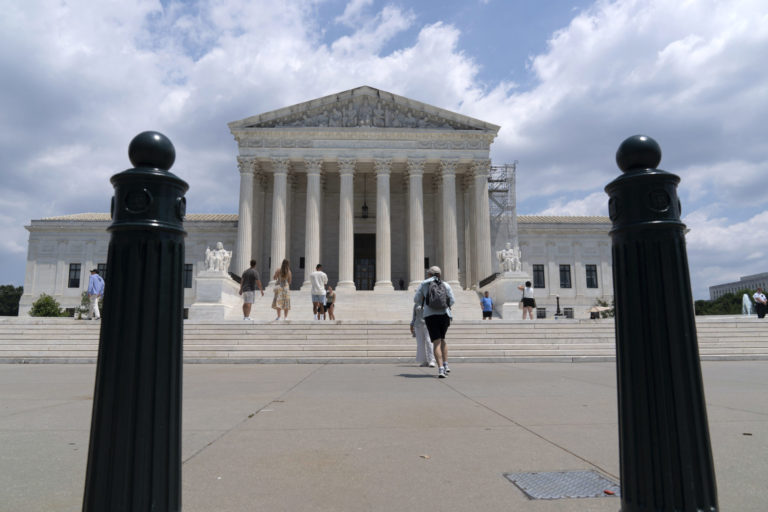
The S&P 500 sank 0.8% after Trump said on Saturday that he would place temporary 15% tariffs on other countries. That’s up from the 10% rate he had announced Friday in response to a Supreme Court ruling that struck down his sweeping “reciprocal” taxes on imports from around the world.

The Dow Jones Industrial Average was down 659 points, or 1.3%, as of 1:25 p.m. Eastern time, and the Nasdaq composite was 0.9% lower.

Trump’s quick shift toward more aggressive tariffs shows how much uncertainty still hangs over the global economy, even after the Supreme Court said the president lacked the legal authority to institute his sweeping “reciprocal” tariffs.

Beyond a 15% tariff that could last for up to 150 days, unless Congress extends it further, Trump is moving forward on other avenues to place more permanent tariffs on countries and industries. That has trading partners worldwide uneasy. South Korea’s trade minister, Kim Jung-kwan, said Monday that uncertainty may worsen if the Trump administration continues imposing new tariffs under alternative laws.

To be sure, Monday’s moves for markets weren’t close to as bad as the panic that swept the world in April, when Trump initially announced his “Liberation Day” tariffs.

The U.S. dollar’s value edged only a bit lower against other currencies on Monday, while bitcoin briefly fell below $65,000 but remained above its low point reached earlier this month. Gold continued to rise thanks to its reputation as something safer to own during uncertain times.

Investors may be sensing it will take a long time, as well as more court battles, before more clarity comes about how global trade will look.

“Stocks got a boost Friday from the Supreme Court’s tariff ruling, but it quickly became clear that the decision was simply going to open a new chapter in the trade saga, not end it,” according to Chris Larkin, managing director, trading and investing, at E-Trade from Morgan Stanley.

On Wall Street, big losses hit companies under suspicion of getting undercut by AI-powered rivals. Investors have been sharply and suddenly punishing stocks of such companies recently.

CrowdStrike fell 9.7% to widen its loss for the young year so far to 25%. A new tool from Anthropic that scans codebases for security vulnerabilities and suggests targeted software patches for human review is hitting stocks across the cybersecurity industry.

AppLovin sank 9%. It’s among the software companies hurt by worries that AI competition will steal customers and fundamentally reset their industries.

More big moves may still be ahead for Wall Street this week, particularly with a profit report from Nvidia looming on Wednesday.

Worries are rising that companies like Alphabet and Amazon may be spending so much on Nvidia’s chips that they’ll never be able to recoup their investments through higher productivity and future profits.

Elsewhere on Wall Street, stocks of airlines fell after heavy snow and high winds canceled thousands of flights across the busy Northeast.

United Airlines lost 4.3%, American Airlines fell 4.5% and Delta Air Lines sank 3.6%.

Novo Nordisk’s stock that trades in the United States tumbled 16.1% after the Danish drugmaker said a trial for its CagriSema drug showed people lost a smaller percentage of their weight than with a similar one made by rival Eli Lilly. Eli Lilly rose 4.7%.

In stock markets abroad, indexes fell in Europe. They stocks had risen on Friday after the Supreme Court’s ruling.

In Asia, where markets got their first chance to react to the court’s ruling, Hong Kong’s Hang Seng jumped 2.5%, while South Korea’s Kospi rose a more modest 0.6%. Markets in Japan and mainland China were closed for holidays.

In the bond market, the yield on the 10-year Treasury fell to 4.03% from 4.08% late Friday.

A top official at the Federal Reserve said Monday that it’s “a coin flip” on whether the Fed will cut its main interest rate at its next meeting in March or stand pat again.

The comments from Fed. Gov. Christopher Waller were a notable shift from January, when he was one of the two Fed governors to dissent against the central bank’s decision to hold its key rate steady after three rate cuts at the end of last year.

Lower rates would give the economy a boost, and Trump has been lobbying angrily for them. But they also could risk worsening inflation.

Adapted from reporting by the Associated Press

Nevada Gaming Commission Sues Predictive Markets Firm

(Liam Hibbert, The Center Square) The Nevada Gaming Commission this week sued a multi-billion dollar company as the latest predictions market drama unfolds on the national stage.

States across the country have been back-footed by the swift takeover of prediction markets in the gambling world. Nevada’s latest lawsuit positions the state among the most aggressive in search of regulations in the nation.

The lawsuit filed against Kalshi in Carson City District Court on Tuesday by the Nevada Gaming Commission is a civil enforcement action to legally block the company’s operations in the state. The document largely acted to further a federal decision from November to stop the company from offering sports contracts, but has since been appealed by the company.

“Despite conducting gaming accessible in the State of Nevada, Kalshi is not licensed in Nevada and does not comply with Nevada gaming law,” Jessica Whelan, chief deputy solicitor general for the attorney general’s office, wrote in support of a court emergency filing.

The Nevada lawsuit came just one day after the chairman of the Commodity Futures Trading Commission, which federally regulates Kalshi and other prediction markets, wrote an op-ed in support of prediction markets.

“The CFTC will no longer sit idly by while overzealous state governments undermine the agency’s exclusive jurisdiction over these markets by seeking to establish statewide prohibitions on these exciting products,” CFTC Chairman Michael Selig wrote in the Wall Street Journal Monday.

The gaming commission’s battle with prediction markets in Nevada started with a cease-and-desist letter in March, which sparked the ongoing series of legal actions over their place in Nevada’s more than $30 billion gaming industry.

Across the country, states are in court with prediction markets. Massachusetts has emerged as one of the early leaders in regulation of the new form of gambling, with an impending court order set to ban Kalshi, worth $11 billion according to its own website, from the state in March.

“A lot of states are bucking this because they say, ‘Well, this is actually not a financial market, it’s actually a gambling platform,’” Richard Warr, a finance professor at North Carolina State University, told The Center Square. “The states are claiming the right to regulate gambling within their state.”

Prediction markets are regulated by the CFTC because they qualify as financial markets, with Kalshi having successfully argued to the federal government that their users are not gambling, but staking investments.

But roughly 90% of Kalshi’s trading volume comes from sports bets, according to a New York Times report.

Back in Nevada, the state gaming commission disagreed with the CFTC, arguing Kalshi offers gambling on its site and should therefore follow state gaming regulations and taxes.

“Its continued operation harms the state and the public every day and poses an existential threat to the state’s gaming industry,” Whalen wrote in the court document.

Even if Nevada and its strong gaming industry succeed in keeping Kalshi and other prediction markets out of the state legally, some question how that would look in practice.

The relatively easy access to virtual private networks, or VPNs, mean online access to Kalshi and other prediction markets can happen outside of their legal boundaries.

“ With fairly simple technology you can bypass a geographical location,” said Warr. He added later, “It seems tricky how you can regulate it.”

Silver’s Breakout, Retail Pandemonium, and the Push for Sound Money

(Money Metals News Service) Charlotte McLeod of Investing News Network sat down with Stefan Gleason, President and CEO of Money Metals Exchange, for their first conversation of 2026.

The discussion covered silver’s historic breakout, extreme market dislocations, refining bottlenecks, COMEX inventories, Federal Reserve policy, and a surge in state and federal sound money legislation.

After six months of dramatic price action, Gleason’s message was straightforward.

Buckle up.

A Historic Silver Breakout — and Violent Correction

Since their previous conversation, silver has delivered one of the most dramatic moves in modern market history. The metal surged through its 45-year high near $50, briefly touching $54 as a breakout level before racing as high as $120 in December and January.

That explosive advance was followed by a severe correction. Gleason believes the drop on January 31, roughly 28 percent in a single session, was the largest one-day decline in silver’s history. Even the 2011 selloff unfolded over a longer stretch.

Silver later plunged to $64 before rebounding into the high-$70 range, where it currently trades. Gleason is watching technical levels in the low to mid-$70s to determine whether the correction has fully run its course. Despite the volatility, silver remains slightly higher on the year.

Gold has also corrected, though far less dramatically. The yellow metal has more than doubled over the past three years and continues to show structural strength. Gleason describes the current phase as a repair period and believes higher prices could return later in 2026, possibly by summer.

Volatility, however, is now firmly part of the picture.

Retail Market Awakening in the US — Dealer Perspective

From a dealer’s vantage point, the past few months have been extraordinary.

Gleason explains that US retail demand had been relatively quiet since the regional bank crisis of early 2023. Gold’s advance during that period was largely driven by central bank buying and demand outside the United States. In fact, US dealers saw significant gold selling as investors took advantage of higher prices, which compressed premiums and created local oversupply.

Silver changed the dynamic.

As the metal accelerated in late summer, September, and October, retail interest flipped dramatically. December and January became what Gleason described as total pandemonium. Major dealers, including Money Metals Exchange and its two or three similarly sized competitors, experienced intense pressure. Websites posted delay notices. Call volume surged into the hundreds or thousands per hour.

Importantly, the market was highly active in both directions. Investors were buying aggressively, particularly silver, while others were selling back metal at $80, $90, $110, and even $120 price levels. That created crushing two-way volume that required physical inspection, camera verification, testing, and large-scale shipping operations.

Gleason estimates that perhaps only 1 to 2 percent of the US public owns physical gold and silver. If that participation rises to 4, 6, or 8 percent, the existing retail infrastructure would struggle to keep up.

He believes an awakening has begun.

Refining Bottlenecks and Market Strain

A major driver of recent distortions has been severe refining backlogs.

More than 50 percent of global silver refining capacity is located in China. US refining capacity is limited, and most refiners have been heavily backlogged for at least a year. Many are restricting acceptance to long-standing or large customers. Some are declining certain types of scrap altogether.

Gold faces similar challenges, though to a lesser degree.

The surge in both price and volume has dramatically increased the value of metal sitting inside refinery pipelines. That has strained financing arrangements and hedging programs. Lease rates and hedging costs have spiked. At one point in October, silver lease rates reached approximately 30 cents per ounce per day. That put enormous pressure on short positions and those financing inventory.

The ripple effects have been significant. Scrap dealers and local coin shops, particularly undercapitalized ones, have struggled because refiners are delaying payment until the end of the refining process instead of advancing funds upon receipt.

This has created unusual pricing distortions. Ninety percent silver coins are trading at steep discounts, sometimes $10 to $15 below spot, because refiners cannot easily process them, and new retail buyers often prefer .999 fine silver. Gleason argues that 90 percent silver may be one of the most cost-effective ways to acquire silver in the current environment.

International Arbitrage and Physical Tightness

Global dislocations have intensified the strain.

In October, COMEX futures traded below London spot prices, creating rare arbitrage opportunities. At the same time, premiums in Dubai and India surged. Indian buyers were urgently seeking physical metal.

Money Metals shipped several hundred thousand ounces of silver to Dubai to meet Indian demand. Gleason describes that period as highly urgent and opportunistic for those positioned to move metal internationally.

Chinese demand has also played a visible role. For months, silver frequently moved higher as markets opened Sunday night in Asia. While Gleason cautions that online reports sometimes exaggerate Chinese premiums, he estimates they have often been in the $2 to $4 range. That is sufficient to draw metal eastward when transportation and financing costs are lower.

Economics ultimately drives the flow. When premiums in China or Dubai exceed logistics costs, silver leaves the United States.

COMEX Inventories Under Pressure

COMEX silver inventories rose from roughly 300 million ounces to more than 500 million ounces during earlier pricing distortions. They have since declined to under 400 million ounces.

The registered category, which represents metal available for delivery, recently dipped below 100 million ounces. That level has drawn considerable attention.

Gleason stops short of predicting an imminent default. Most futures contracts settle financially rather than physically. Still, he confirms that substantial metal is being removed from the exchange, including by Money Metals.

He describes the system as functioning but under pressure. Continued arbitrage toward Asia could accelerate the drain if premiums persist.

What Could Trigger the Next Leg Higher — Gold and Silver

Looking ahead, Gleason believes a stock market downturn could serve as a catalyst for gold.

Silver sometimes suffers during equity corrections, but he expects it to hold up better than in previous cycles due to strong physical demand and constrained supply. He would not want to be short either metal in the current environment.

Structural trends also support his view. Gold has become the number one reserve asset for central banks, surpassing the euro and now rivaling or exceeding the US dollar (Federal Reserve Notes). Dedollarization and deglobalization reduce the incentive for foreign governments to hold dollar reserves.

Those shifts are long-term and ongoing.

Federal Reserve Policy — A Hawkish Fed Is a Fiction

With Jerome Powell’s term ending and Kevin Warsh nominated as the next Federal Reserve chair, Gleason questions the narrative of a truly hawkish Fed.

He argues that the Federal Reserve is inherently inflationary due to the scale of debt embedded in the system. In his view, the institution is designed to create inflation rather than restrain it.

Gleason recounts asking Warsh directly whether the US government is involved in the gold market. Warsh’s response suggested involvement exists, though perhaps less than many assume. He emphasized currency stability and the role of the IMF.

As for interest rates in 2026, Gleason expects political pressure for lower rates to prevail.

Sound Money Momentum and Legislative Battles

Money Metals has supported the Sound Money Defense League for roughly 13 to 14 years. When the effort began, about 20 states imposed sales tax on bullion purchases. Today, only five states remain. Fourteen states have eliminated income taxes on gold and silver sales.

States including UtahWyoming, Ohio, Texas, and Idaho have advanced gold reserve initiatives. Texas public pension funds already hold gold.

At the federal level, Senator Mike Lee and Representative Thomas Massie have introduced legislation to audit US gold reserves. The proposal would require disclosure of any swaps, leases, pledges, or IMF-related encumbrances.

Gleason notes that 70 to 75 percent of US gold reserves are in 90 percent purity coin melt bars originating from the 1930s. These bars are not globally market-acceptable in their current form and would require refining into .9999 gold. Given present refining constraints, that could take years.

Another proposed measure, known as the SILVER Act, seeks to expand exchange-approved depositories beyond the roughly 150-mile radius around New York, where most exchange-backed gold and silver is currently concentrated. Gleason argues that geographic concentration increases systemic risk and reduces competition.

At the same time, he warns against certain state-level proposals that would place governments in the middle of gold custody, sales, or payment systems through public-private partnerships. In his view, more government involvement in the gold industry undermines the principles that attract investors to precious metals in the first place.

Not every gold bill, he cautions, is a good one.

Buckle Up — A New Reality for Silver

After silver breached the $50 level for the first time in 45 years, Gleason believes the market may be entering a new structural phase. He aligns with analysts such as Michael Oliver, who suggest silver could be moving into a different long-term reality.

The path forward will not be straight. Corrections will be sharp. Volatility will remain elevated.

But as central banks accumulate gold, physical demand tightens silver markets, and US retail participation grows beyond the current 1 to 2 percent ownership base, Gleason sees a broader realization taking shape.

The rest of the world may already understand what is happening. The United States, he suggests, is beginning to catch up.

The Dollar Is Losing Credibility; So What?

(Mike Maharrey, Money Metals News Service) Contrarians have been talking about the threat of de-dollarization for a long time. I was doing interviews about weaponizing the dollar in 2018 and the potential blowback, long before Russia invaded Ukraine. Back then, people mostly blew me off, assuring me that the dollar’s role as the global reserve currency would protect it.

Today, many in mainstream financial circles seem to be changing their tune and waking up to the fact that the dollar is in trouble. Just last month, the Guardian ran an article headlined, “The dollar is losing credibility.”

We see this de-dollarization trend most clearly in central banks’ scramble for gold.

Central bank gold buying moderated in 2025 but remained far above the recent historical average.

Last year was the fourth-largest expansion of central bank gold reserves on record. The all-time high was set in 2022 (1,136 tonnes). It was the highest level of net purchases on record, dating back to 1950, including since the suspension of dollar convertibility into gold in 1971.

As central banks expand their gold reserves, they are shedding U.S. Treasuries. As of last summer, central banks globally held more gold than Treasuries for the first time in nearly 30 years.

A JPMorgan note in August said this reveals the waning dependence on the U.S. dollar in trade that is being reflected in the gold market.

“The main de-dollarization trend in FX reserves, however, pertains to the growing demand for gold. … This increased demand has in turn partly driven the current bull market in gold, with prices forecast to climb toward $4,000/oz by mid-2026.”

Three policies have undermined global confidence in the dollar.

Central bank gold buying surged after the U.S. and its Western allies aggressively sanctioned Russia after the invasion of Ukraine.

Using dollars as weapons may seem like an effective way to keep the “bad guys” in line, but it comes with risk.

If you’re worried that the U.S. and its allies might cut off your access to dollars, what would you do?

Minimize your dependence on dollars.

In other words, if you are concerned that the U.S. could pull the “dollar rug” out from under you, why not pull out from the dollar system first? Or at least minimize your exposure to it?

This is exactly what’s happening.

U.S. tariff policies have also increased global wariness. As the Guardian article framed it, the Trump administration has “shattered the global rules-based order.

Again, you can argue that this is a good thing, but it also comes with potential blowback.

Finally, the world is increasingly wary of America’s fiscal malfeasance. Even with booming tariff revenues, the federal government continues to run massive budget deficits, driving the unsustainable national debt higher by the day.

As the Bipartisan Policy Center points out, the growing national debt and the mounting fiscal irresponsibility undermine the dollar.

“Confidence in U.S. creditworthiness may be undermined by a rapidly deteriorating fiscal situation, an increasing concern with federal debt set to grow substantially in the coming years.”

This is how the Guardian article summed it up.

“The dollar’s status is dwindling, reflecting Trump’s erratic policymaking – including interference at the Fed and the fragile U.S. public finances – as well as Washington’s readiness to deploy economic sanctions. This includes the targeting of Russian central bank reserves after Vladimir Putin’s invasion of Ukraine.”

It’s important to note that it doesn’t matter whether you agree with the assessment. The fact that many are coming to this conclusion has significant ramifications.

It’s easy to write off complaints about U.S. policy as foreign whining and adopt a “who cares what they think” mentality. This sentiment may even be justified. However, what the rest of the world thinks matters, whether Americans want to acknowledge it or not, and the world is increasingly thinking dollars aren’t worth holding on to.

Carmignac chief economist Raphaël Gallardo told the Guardian, “We have moved from Pax Americana to global discord, geopolitically. It is the law of the jungle when we see what the U.S. are doing.

“Investors – private and sovereign – believe their strategic reserves are no longer safe in dollar terms, as they can be confiscated overnight. The dollar is losing the credibility as the nominal anchor of the global monetary system because the Fed is losing credibility, and U.S. Congress is losing its credibility.”

Of course, other fiat currencies are no better. The dollar has its problems; however, it is still arguable the cleanest dirty shirt in the laundry. Gallardo conceded, “There is no one to replace the dollar.

“So gold is shining by default. People are returning to what [British economist John Maynard] Keynes called the ‘barbarous relic’, as it is nobody’s debt.”

Gallardo is referring to one of gold’s enduring qualities. It comes with no counterparty risk. On top of that, governments can’t print gold and devalue it as a matter of policy. To the contrary, gold reflects the constant devaluation of fiat currency.

Based on a survey of 50 central banks by Invesco, about half said they plan to increase their gold reserves. Two-thirds said they plan to repatriate their gold, bringing it safely back within their country’s borders.

Invesco’s head of official institutions called gold “the ultimate safe haven.”

“So, in times of political uncertainty and instability, you see gold spikes in terms of central banks. It’s a form of protection and a backstop if traditional fiat currencies fail.”

Even with this de-dollarization trend, the dollar isn’t in immediate danger of losing its reserve status. However, even a modest de-dollarization could spell big trouble for the U.S. economy.

The United States needs the world to need dollars. The global demand for dollars allows the Federal Reserve to expand the currency far faster than it otherwise could without serious inflationary problems. Money creation enables the federal government’s borrowing and spending habits.

If the world needs fewer dollars, they will begin to return to the U.S., causing a dollar glut. This will increase inflationary pressure domestically as the value of the U.S. currency further depreciates. In the worst-case scenario, the dollar could collapse completely, leading to hyperinflation.


Mike Maharrey is a journalist and market analyst for Money Metals with over a decade of experience in precious metals. He holds a BS in accounting from the University of Kentucky and a BA in journalism from the University of South Florida.