STDs Surged in 2021, CDC Says

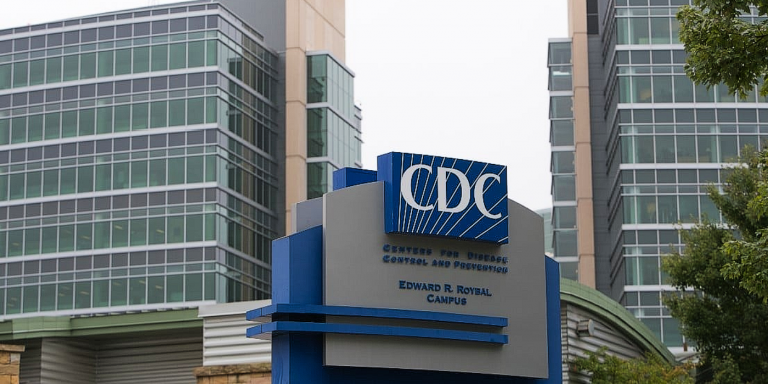
(Molly Bruns, Headline USA) Cases of sexually transmitted diseases in the United States increased in the tail end of the pandemic, with syphilis cases experiencing the greatest surge in 70 years.

According to The Daily Wire, cases for chlamydia, gonorrhea, syphilis and congenital syphilis increased across the board.

“STDs continued to increase during the second year of the COVID-19 pandemic, with no signs of slowing,” the report from the Centers for Disease Control and Prevention stated.

CDC Division of STD Prevention Director Leandro Mena blamed the spike on underfunded public health programs.

Increased opioid and meth usage has also lead to increased sharing of needles, Mena mentioned, along with decreased usage of condoms among younger Americans.

Overall the number of reported STDs rose from 2.4 million in 2020 to 2.5 million in 2021.

Cases of chlamydia dropped between 2017 and 2020, but rose by 1.6 million cases in the past year. Gonorrhea cases reached more than 696,000, an increase of over 100,000 since 2017.

Syphilis ranked the largest increase in the report, with an increase of 26% rise in one year.

“In 2020, the COVID-19 pandemic dramatically disrupted life as we knew it, and while there were moments in 2020 when it felt like the world was standing still, sexually transmitted diseases were not,” Jonathan Mermin, the director of the CDC’s National Center for HIV, Viral Hepatitis, STD, and TB Prevention, said.

“The unrelenting momentum of STDs continued, even as prevention and treatment services were disrupted. New data CDC data suggests STDs increased during the first year of the pandemic.”

The concerns in the spike have been complicated by the recent outbreak of monkeypox cases.

More than 15,400 cases of monkeypox have been confirmed across the U.S, accounting for nearly 36% of cases worldwide. New York, California, Florida, Texas, Georgia and Illinois ranked in the top five states in terms of number of cases.

Buttigieg Awards Grant to Tear Down Racist Highway in Detroit

(Headline USA) A long-delayed plan to dismantle Interstate 375, a 1-mile depressed freeway in Detroit that was built by demolishing black neighborhoods 60 years ago, was a big winner of federal money Thursday, the first Biden administration grant awarded to tear down an allegedly racially divisive roadway.

The $104.6 million is among $1.5 billion in transportation grants handed out to 26 projects nationwide gifted under the 2021 infrastructure law’s taxing-and-spending spree.

It allows Michigan to move forward on its $270 million effort to transform the stretch in Detroit into a street-level boulevard, reconnecting surrounding neighborhoods and adding amenities, such as bike lanes.

Transportation Secretary Pete Buttigieg has said he would make racial justice a priority in his department’s funding awards, pledging wide-ranging help to communities.

Still, some black residents worry the new boulevard could only create more problems.

Sam Riddle, political director of the Michigan National Action Network and a longtime resident of the area, says to truly address racial inequity, city officials need to take a more holistic approach to improving black livelihood, such as building affordable housing.

“They’re not going to right a historical wrong where black businesses were wiped out,” Riddle said. “What they’re going to do is repeat the same mistake that prices out majority-black Detroit.”

Black Bottom and Paradise Valley, two of the city’s predominantly African–American neighborhoods, were razed as part of the 1950s creation of an interstate highway system, displacing 100,000 black residents and erecting a decades-long barrier between the downtown and communities to the east.

Hailed by city and state leaders as helping rectify a past racial wrong, the federal money represents a key first step that advocacy groups say will inspire dozens of citizen-led efforts underway in other cities to dismantle highways.

Still, advocates cautioned that Michigan’s plan to build a six-lane city boulevard risks simply replacing one busy roadway with another. Some long-time black residents, meanwhile, worry they could be priced out of the city by new business development and shiny condo buildings that promise direct links to downtown.

After years of planning dating back to 2013, the highway removal is now estimated to begin as soon as 2025, two years earlier than expected, with construction finished by 2028.

“This stretch of I-375 cuts like a gash through the neighborhood, one of many examples I have seen in communities across the country where a piece of infrastructure has become a barrier,” Buttigieg told The Associated Press.

He joined Michigan Democrat Gov. Gretchen Whitmer and Detroit leftist Mayor Mike Duggan later Thursday in Detroit along with several black residents to highlight the grant.

“With these funds, we’re now partnering with the state and the community to transform it into a road that will connect rather than divide,” Buttigieg said.

Other winners Thursday of the Infrastructure for Rebuilding America, or INFRA, grants include $32.5 million for Flagstaff, Arizona, to build pedestrian underpasses to reconnect lower-income neighborhoods isolated by a 1-mile segment of railroad to downtown; $100 million to Clear Creek County, Colorado, for upgrades to 8 miles of the I-70 Mountain Corridor, including electric vehicle charging stations; $110 million to New York to expand refrigerated warehouse space at its Hunts Point food distribution center; and $70 million to improve rail track in Chicago.

Detroit’s project would create a slower-speed boulevard that aims to improve safety by removing a steep curve and adding LED lighting, while removing 15 old bridges and two stormwater runoff pump stations and building out wider sidewalks, protected bike lanes and pedestrian crossings.

Christopher Coes, assistant secretary for transportation policy, said the Detroit grant reflected Buttigieg’s pledge to make Reconnecting Communities a broad “principle” of his department — not just a single program — with many efforts underway. Money under that specific $1 billion pilot will be awarded late this year or early next.

Ben Crowther, advocacy manager for America Walks and coordinator for the Freeway Fighters Network, praised the new federal grant. While there are over 50 grassroots efforts around the country aimed at removing or repurposing highways, only three cities — Detroit, Syracuse, New York and Somerville, Massachusetts — have demolition plans that are shovel-ready, making them prime candidates for federal funding.

“The fact the Detroit project is now moving forward really speaks to the priorities that U.S. DOT has set for reconnecting communities that are trickling down to the state level,” Crowther said. While community debate will likely continue over the best design and whether a six-lane boulevard is a good approach, he said, the new federal focus on equity is “a lot of inspiration for local groups for that reason alone.”

Adapted from reporting by the Associated Press

Was Durham’s Latest Filing the End of His Investigation?

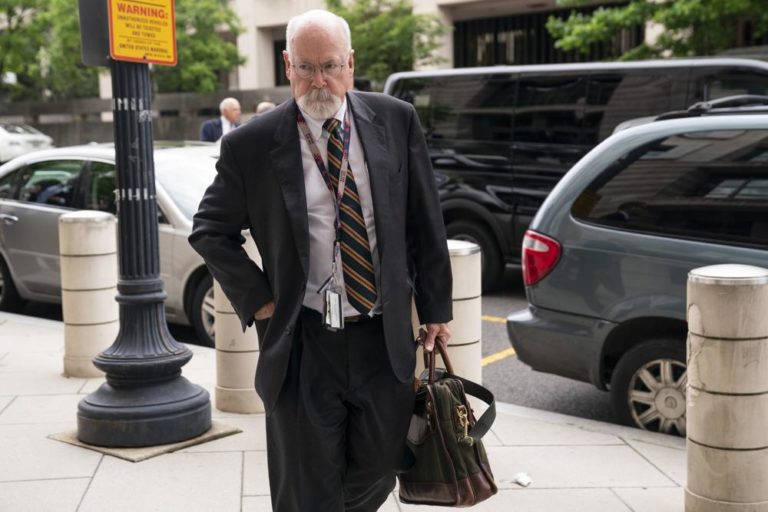
(Joshua Paladino, Headline USA) After more than three years, Special Prosecutor John Durham’s investigation into the origins of the Russia collusion hoax seems set to expire with few concrete results.

The grand jury that Durham has used to gather evidence has expired, and he has not announced plans to convene a new one.

Three major theories now surround Durham’s investigation: the mainstream, the optimistic conservative and the hopeless conservative.

The mainstream position, which defends the Deep State against accusations of treason, asserts that Durham conducted an honest and open inquiry that vindicates Hillary Clinton’s campaign and the federal government—barring a few small crimes (oversights, really) like doctoring state documents.

The New York Times expressed this view in a Sept. 14 article, “Durham Inquiry Appears to Wind Down as Grand Jury Expires.”

The NYT made a simple case: the federal government committed minor errors during the Russia collusion investigation but mostly acted appropriately.

Durham’s charges against Michael Sussmann fizzled, when it ran into a biased judge and jury stacked with Clinton acolytes. His settlement with FBI attorney Kevin Clinesmith, who doctored a wiretap warrant renewal to spy on Carter Page, did not include prison time. And the impending trial against Russian national Igor Danchenko seems poised to end with an acquital for the five charges of lying to the FBI.

Both the hopeful and hopeless conservatives claim that the Clinton campaign, the Obama administration, and the security state purposefully constructed and coordinated the Russia collusion hoax to spike then-candidate Donald Trump’s 2016 campaign.

The black-pilled conservatives over at the The Conservative Treehouse assert that Durham “is running a Deep State cover operation to protect the institutions of the DOJ and FBI from evidence of their prior activity.”

Under this theory, former Attorney General Bill Barr appointed Durham to cover the DOJ and FBI’s crimes while placating conservatives with a lengthy investigation.

The red-pilled conservatives at The Federalist believe that Durham’s upcoming trial against Danchenko, who provided false source material for Christopher Steele’s anti-Trump dossier, could implicate the FBI in criminal acts though Durham himself does not intend to expose them.

Durham’s most recent court filing showed that the FBI paid Danchenko to serve as a confidential human source after investigating him from 2009 to 2011 for being a possible Russian asset.

The FBI investigated him when a witness claimed that he sought to purchase classified information on the Russian government’s behalf. Then the FBI paid him to be a confidential human source from March 2017 to October 2020.

The FBI’s payments to Danchenko mean that the federal government purchased Russian disinformation to smear Trump. In other words, the Obama administration and Clinton campaign colluded with Russia to destroy Trump.

This fact, according to the most hopeful theory, would lead Durham to future criminal charges.

Danchenko faces five charges for lying to the FBI about his work with Steele.

He allegedly lied about having spoken with a Democratic National Committee and Hillary Clinton operative named Charles Dolan, Jr. about the Steele dossier. Then he lied about giving Dolan’s anti-Trump allegations to Steele.

When Dolan spoke with Danchenko, he thought he was “‘former FSB’ and a Russian ‘agent,'” according to Durham’s filing.

Durham argues that if the FBI had known of Dolan’s concerns about Danchenko, then it may have investigated Dolan and discovered the fraudulent Steele dossier before it became public.

These facts and many more led Durham to the conclusion that Danchenko orchestrated the entire Russia collusion hoax and that Steele and the FBI were unwilling participants.

To most Trump supporters, this interpretation has no plausible basis because it puts the FBI and the Clinton campaign in the position of innocent bystanders rather than interested conspirators with the motive and means to destroy Trump.

The best hope for those who want to see the anti-Trump conspirators brought to justice rests with Danchenko because “Durham does not intend to expose the FBI’s complicity” at the trial.

“While Durham may not want to put the FBI on trial, Danchenko has made clear that he intends to,” The Federalist reported.

But the hopefuleness at The Federalist may be misplaced, because Danchenko worked for the FBI for more than three years and helped Special Counsel Robert Mueller cover up the FBI and DOJ’s partisan attacks on Trump.

He has no reason to expose anyone at the FBI, and he may find himself suicided if he attempted to implicate the FBI in the anti-Trump conspiracy.

Assuming Durham’s interest in impartial justice, he may not feel safe conducting a frontal assault on the DOJ and FBI with the Biden adminisration in power. But if he lets the investigation die under the pretext that Danchenko duped Steele, the Clinton campaign and the FBI, then he probably never sought anything but a cover-up from the start.

Montana Judge Blocks Anti-Trans Birth Certificate Rule

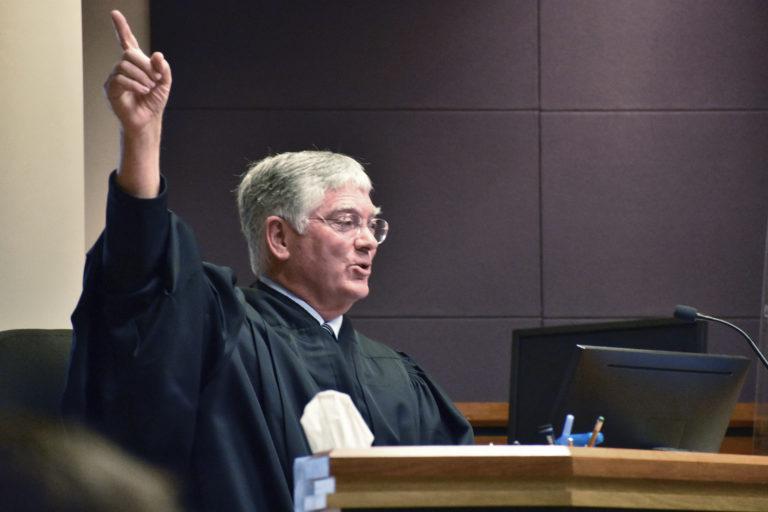
(Headline USA) A Montana judge on Thursday blocked health officials from enforcing a state rule that would prevent transgender people from changing the gender on their birth certificate.

District Court Judge Michael Moses chided attorneys for the state during a hearing in Billings for circumventing his April order that temporarily blocked a 2021 Montana law that made it harder to change birth certificates.

Moses said there was no question that state officials violated his earlier order by creating the new rule. The court’s action reinstates a 2017 Department of Public Health and Human Services rule that allowed people to update the gender on their birth certificate by filing an affidavit with the department.

The legal dispute comes as conservative lawmakers in numerous states have sought to counter aggressive and often damaging special rules for transgenders, including with bans on transgender girls competing in girls school sports.

The Montana law said people had to have a “surgical procedure” before they could change the sex listed on their birth certificate, something Moses found to be unconstitutional because it did not specify what type of procedure was required.

Gov. Greg Gianforte’s administration then created a new rule that blocked changes to birth certificates entirely, unless there was a clerical error.

“We knew from the beginning the Gianforte administration was going against the will of Montanans and the court’s orders. And we are very relieved trans people will be able to update their birth certificate while this court makes a final decision,” said Shawn Reagor, director of equality and economic justice with the Montana Human Rights Network and a member of the transgender community.

“Unfortunately, the harm and stress trans, nonbinary and Two Spirit community members experienced through this avoidable court process is not as easily undone,” Reagor said in a statement Thursday. Two Spirit is a Native American term for people who have both masculine and feminine spirits.

Moses said his April ruling had been “clear as a bell” and compared the state’s subsequent actions to a person twice convicted of assault who tries to change their name following a third accusation to avoid a harsher punishment.

“Isn’t that exactly what happened here?” Moses asked. “I’m a bit offended the department thinks they can do anything they want.”

Only Tennessee, Oklahoma and West Virginia have prohibitions against birth certificate changes similar to what Montana has pursued, advocates for transgender rights say. Bans in Idaho and Ohio were struck down in 2020.

A Republican lawmaker who voted in favor of the 2021 law suggested Moses was biased in favor of the plaintiffs in the case. Moses was appointed to the court by former Gov. Steve Bullock, a Democrat.

“Like clockwork, Judge Moses issued yet another predetermined order in favor of liberal plaintiffs without thoroughly engaging with the legal issues at hand,” Sen. Greg Hertz of Polson said in a statement.

The ACLU of Montana had asked Moses to clarify his order after the state health department enacted its new temporary rule effectively banning birth certificate changes a month after Moses handed down his temporary injunction in the case. That rule was made permanent last week.

The state argued the injunction did not prevent the health department from making rules, but Moses said under case law the injunction reinstated the 2017 rules and any other changes are on hold while the case is decided.

State officials denied that the new rule preventing birth certificate changes was adopted in bad faith. Montana Assistant Solicitor Kathleen Smithgall said the state came up with the new rule to fill a gap in regulations after the 2021 law was blocked.

“Judge Moses mischaracterized the words of his own order, the parties’ motives, and the state of the law,” said Kyler Nerison, a spokesperson for Attorney General Austin Knudsen.

The state health department did not immediately respond to a request for comment on when it might start processing applications for changing birth certificates.

Adapted from reporting by the Associated Press

Treasury Sec. Yellen Outlines Vision for ‘Modernized’ IRS amid Middle-Class Fears

(Headline USA) Treasury Secretary Janet Yellen laid out her vision for a modernized, responsive, tech-savvy tax collection agency equipped to manage 21st century challenges at an IRS office in New Carrollton, Maryland, on Thursday.

Yellen said the agency plans to hire 5,000 new customer service representatives to vastly improve taxpayer service before the next filing season, using part of the money from a recent $80 billion infusion of funds from the so-called Inflation Reduction Act.

Yellen gave her address amid widespread alarm that the newly militarized IRS will be targeting the taxes of working-class Americans with armed auditing agents.

“Especially amid the recent rise in deeply unfair and dangerous misinformation and threats, there is nothing more important to me than for you to be able to safely carry out your critical job for the American people,” she said.

Responding to an increasing number of threats in response to the growing alarm about the hiring of some 87,000 new auditors and armed tax-collectors, the IRS announced last month that it was conducting a review of safety at its facilities.

This was Yellen’s first visit to an IRS facility as treasury secretary. Her speech to several thousand employees also addressed the importance of their work at a pivotal time in the agency’s history.

“The Inflation Reduction Act finally provides the funding to transform the IRS into a 21st century agency,” she said. “For taxpayers, this means faster processing and faster refunds.”

Yellen said she wanted to focus on giving the IRS the ability to digitize paper tax returns as well as answering phones that have been ringing off the hook.

Getting the agency increased funding was even recently considered a pipe dream, as administration officials have long talked about how IRS computer systems run on outdated technology and getting adequate customer service has turned into a cottage industry.

In Maryland, Yellen talked about updating computer systems to help automate the scanning of millions of individual paper returns into a digital copy by next filing season, bolstering enforcement on high-wealth taxpayers and companies, and hiring thousands more people to answer the phones.

“For too long, IRS Tax Assistance Centers have been massively understaffed and under-resourced. No longer,” she said. “By next year, every single center will be fully staffed,” which will provide an estimated 2.7 million taxpayers with in-person assistance, she said.

Last month, shortly after the IRA funding was secured, Yellen directed the IRS to develop a plan within six months outlining how the tax agency will overhaul its technology, customer service and hiring processes.

In part, the improvements are meant to “end the two-tiered tax system, where most Americans pay what they owe, but those at the top of the distribution often do not,” Yellen said in an August memo to IRS Commissioner Chuck Rettig, whose term ends in November.

The White House said it has not yet chosen a successor for Rettig.

During her speech, Yellen said “by hiring 5,000 additional customer service representatives,” by next tax season “we will also cut phone wait times in half—from an average wait of nearly 30 minutes during the 2022 filing season to less than 15 minutes.”

Yellen is on a monthlong tour, which is part of a larger White House campaign, to highlight new laws intended to repair the economy, boost computer chip manufacturing, lower prescription drug prices, expand clean energy and revamp the country’s infrastructure.

Yellen said she wants to restore fairness to the tax code by ensuring wealthy Americans and big corporations pay the taxes they owe. “In sum, high earners are paying far less than they owe,” she said.

“The tax gap—the amount of unpaid taxes—has grown to enormous levels. It’s estimated at $7 trillion over the next decade,” she said.

In her address, she also commended IRS employees for stepping up during the pandemic and helping to deliver Advance Child Tax Credits and three rounds of stimulus checks.

“While all the improvements won’t be done overnight,” she said, “taxpayers can expect to feel real differences during the next filing season.”

Adapted from reporting by the Associated Press

N.C. Charter School Asks SCOTUS to Review Ban on Dress Code that Girls Must Wear Skirts

(Headline USA) A North Carolina charter school is petitioning the U.S. Supreme Court to reconsider an appeals court ruling that the school violated female students’ constitutional rights by requiring them to wear skirts.

In June, a majority of the full U.S. 4th Circuit Court of Appeals found that the dress code at Charter Day School in Leland violated female students’ equal protection rights.

The court’s majority concluded that since public charter schools receive public funds they’re “state actors” and subject to the Constitution’s equal protection clause.

In its petition, the school asks the Supreme Court to “review and reverse” the 4th Circuit’s decision, arguing that it’s a privately run school that receives public funding through its charter, and therefore it’s not a government-run entity, The StarNews reported.

School officials said in a news release Monday that the decision threatens the model.

“This holding undoes the central feature of charter schools by treating their private operators as the constitutional equivalent of government-run schools,” school officials said.

North Carolina state law protects charter schools as independent institutions exempt from rules and regulations applicable to public school districts, the school argued.

School founder Baker Mitchell has said the dress code was intended to create a “code of conduct where women are treated, they’re regarded as a fragile vessel that men are supposed to take care of and honor.”

For now, the dress code has been changed to allow girls to wear pants in line with the court ruling.

Adapted from reporting by the Associated Press

Biden Nominates New U.S. Attorney for South Fla. District, Including Mar-a-Lago

(Headline USA) President Joe Biden has nominated a Miami litigator and longtime government lawyer to serve as U.S. attorney for the Southern District of Florida, the office currently involved in the Justice Department’s investigation of classified records at former President Donald Trump’s Mar-a-Lago estate.

Markenzy Lapointe would replace Juan Antonio “Tony” Gonzalez, who has been a top prosecutor in Southern Florida involved in the investigation of the classified records and the debate over whether a judge should appoint a special master to review the documents taken by FBI in the search.

It was unclear why the Biden administration chose to announce the nomination for the position now, as the government’s case winds its way through the court system.

Gonzalez, who had previously served as a senior prosecutor in the office, had been appointed to the position by Attorney General Merrick Garland. He was never formally nominated for the position.

Gonzalez has served as a federal prosecutor in southern Florida since 1998 and served as the first assistant U.S. attorney and the acting U.S. attorney. He succeeded Ariana Fajardo Orshan, who had been nominated by Trump.

Lapointe will likely be in the spotlight for months to come as the investigation continues. He is currently with Pillsbury Winthrop Shaw Pittman, and before that he worked at Boies Schiller & Flexner. He worked in the Southern District of Florida as an assistant U.S. attorney from 2002 to 2006.

Biden also formally nominated Roger Handberg to be the United States attorney for the Middle District of Florida, which is handling a federal investigation into Republican Rep. Matt Gaetz. Handberg was appointed by Garland and has been serving in the role since 2021.

The president also nominated McLain Schneider to the District of North Dakota. He was in private practice and served in the North Dakota state Senate from 2008 to 2016.

All three nominees must be confirmed by the Senate.

The White House said the lawyers were chosen for their devotion to enforcing the law, “their professionalism, their experience and credentials, their dedication to pursuing equal justice for all, and their commitment to the independence of the Department of Justice.”

Adapted from reporting by the Associated Press

REPORT: Experts Knew Biden’s Afghan Strategy Would Result in ISIS Resurgence

(Headline USA) U.S. intelligence officials predicted two years ago that the Islamic State group would likely regain much of its former strength and global influence, particularly if American and other Western forces reduced their role in countering the extremist movement, according to a newly declassified report.

Analysts said many of the judgments in the 2020 report appear prescient today, particularly as the group is resurgent in Afghanistan following President Joe Biden’s catastrophic withdrawal of American forces last year.

The Islamic State group is no longer controlling huge swaths of territory or staging attacks in the United States as it did several years ago before a major U.S.-led offensive.

But it is now slowly rebuilding some core capabilities in Iraq and Syria and increasingly fighting local governments in places including Afghanistan, where an affiliate of the IS group, also known by the acronym ISIS, is fighting the ruling Taliban following the U.S. withdrawal.

“If the United States and our partners pull back or withdraw further from areas where ISIS is active, the group’s trajectory will increasingly depend on local governments’ will and capability to fill the resulting security voids,” says the report, originally published in classified form in May 2020, months after then-President Donald Trump’s administration reached an agreement with the Taliban to pull out American troops.

Trump, who successfuly eradicated the ISIS threat during his term as president, has maintained that his agreement would have allowed U.S. forces to retain a strong presence in the region, including the retention of the Kabul airbase, and would not have left billions of dollars in equipment at the hands of America’s longtime enemies.

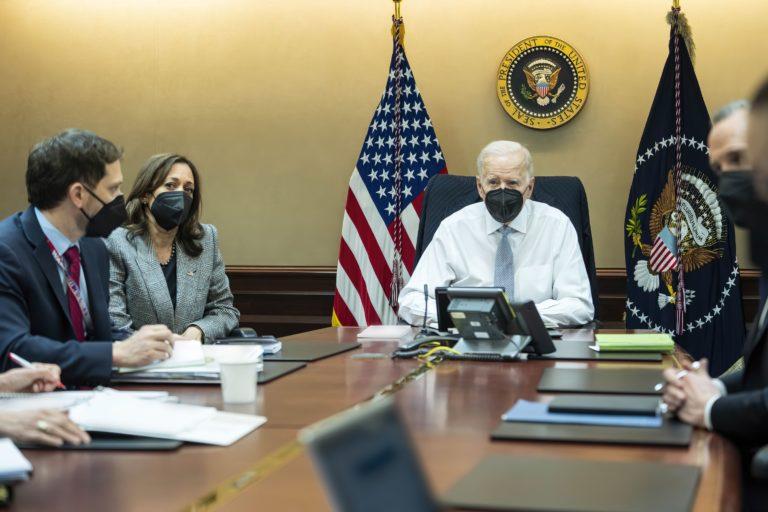
Biden and top national security officials have cited the recent strike killing al-Qaida head Ayman al-Zawahri as evidence that America maintains an “over-the-horizon” counterterrorism capacity in Afghanistan after the withdrawal. U.S. special forces also killed the head of the Islamic State group in a February raid in northwest Syria.

“The fact of those operations are, I think, reflective how serious this threat environment remains,” said Christy Abizaid, director of the National Counterterrorism Center, on Thursday. But she added that analysts believe the terrorist threat to the U.S. homeland is “less acute than we’ve seen it” at any time since the Sept. 11, 2001, attacks.

Analysts have recently seen growth in IS group branches around the world, particularly in Africa, said Abizaid, who spoke at the Intelligence and National Security Summit outside Washington.

“Afghanistan is a really interesting story along those lines about where the ISIS affiliate is and how we continue to be concerned about it,” she said.

Some outside analysts say al-Zawahri’s apparent presence in downtown Kabul suggests that extremist groups are more comfortable operating in Afghanistan — and that it will be tougher to counter the Islamic State group as it grows across the country.

Bruce Hoffman, senior fellow for counterterrorism at the Washington-based Council on Foreign Relations, called the May 2020 report “very clear-eyed and forthright.”

“It’s very different operating against ISIS in the isolated mountain redoubts or deep valleys of Afghanistan,” he said. “The advantages that enabled us to so brilliantly take out al-Zawahri, I would guess, are absent outside of Kabul.”

While the White House last month released declassified points from an intelligence assessment saying al-Qaida had not reconstituted in Afghanistan, the points did not address the Islamic State in Khorasan, the local IS group affiliate.

IS-K was responsible for killing 13 U.S. troops outside the Kabul airport during the withdrawal and has continued to mount an insurgency against the Taliban now in control of the country.

The National Security Council said in a statement that the U.S. is working to deny “ISIS-K access to financing, disrupt and deter foreign terrorist fighters from reaching Afghanistan and the region, and counter ISIS-K’s violent extremism.”

The May 2020 report was declassified this August and published online last week by the U.S. Office of the Director of National Intelligence.

The ODNI periodically declassifies and releases older intelligence assessments. A spokesperson for the ODNI’s National Counterterrorism Center declined to answer questions about the assessment or address the intelligence community’s current view on the Islamic State group.

The report predicts that the Islamic State group’s global branches are likely to increase its “capability to conduct attacks in many regions of the world, including the West.” The U.S. would more likely face attacks from people inspired by the group’s ideology than plots directed or supported by the group, the report said.

Pressure by local governments where the IS group is active and their international partners “almost certainly will shape the scale of ISIS’ resurgence in Iraq and Syria and its expansion worldwide,” the report said.

Experts commonly agree with the report’s predictions, said Colin Clarke, an expert on counterterrorism who is director of research for The Soufan Group, an intelligence and security consultancy.

But top intelligence analysts would have been involved in drafting and reviewing the assessment, formally known as a national intelligence estimate, he said.

Clarke noted several recent IS-linked attacks in Afghanistan, including an apparent suicide bombing outside the Russian embassy in Kabul that killed two diplomats, as well as ongoing fighting between militants and U.S.-backed forces at a sprawling camp in Syria.

“There are some things that have happened in the last few weeks,” he said, “that make you wonder if the situation is not more dire than is being presented.”

Adapted from reporting by the Associated Press

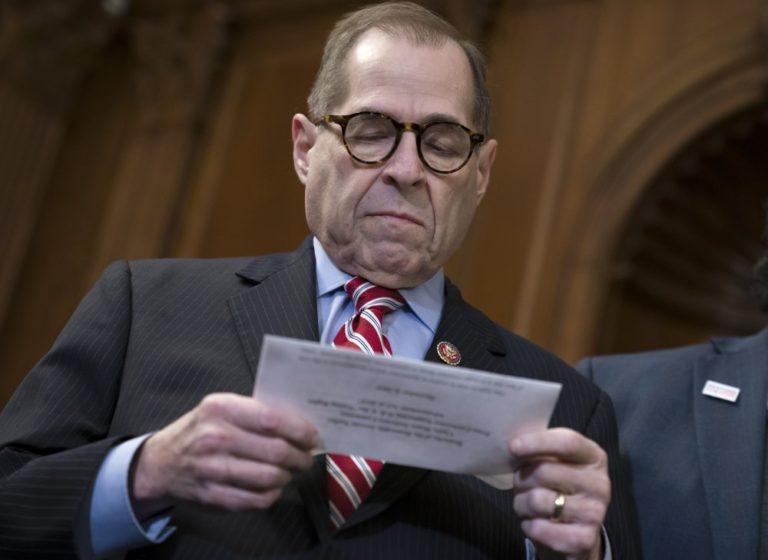
Napping Nadler Gets a New Nickname from House Colleagues

(Joshua Paladino, Headline USA) Napping Nadler—the nickname affectionately given to the sleepy House Judiciary Committee chairman—earned a new title from a fellow Democrat: Rock-A-Bye Baby.

Rep. Jerry Nadler, D-N.Y., caught the new nickname after the House Democrat committee chairs gathered for their regular Zoom conference, where those members who can remain awake discuss their plans for guiding the House and governing the nation, the New York Post reported.

But Nadler could not keep himself among the wakeful chairpersons, and he drifted into Jerryland.

A Democrat staffer who attended the Zoom meeting awarded Nadler with the upgraded diminutive.

“He was Rock-A-Bye Baby,” the staffer said. “The meetings are usually half an hour and he was out for about 15 minutes.”

The aide said that nobody cares about his sleeping habits anymore. No one tries to rouse him from his embarassing slumbers.

“It’s just a known thing,” the staffer said about Nadler’s sleeping on the job.

Nadler has many health problems in addition to a chronic drowsiness that sometimes seems to border on the narcoleptic.

A 75-year-old man who was morbidly obese for years, he received gastric bypass surgery in 2002. He decided on surgery when he could no longer use New York City’s subway system.

Also, his wife was diagnosed with pancreatic cancer—a virtual death sentence in old age—and the suffering from that can spiritually and physically drain a person.

Nadler’s long-standing health issues and aging body and mind should have led him to retirement a few years ago, meaning that Democrats will probably run him for another five terms.

He has only been in the House for 30 years, and he won a competitive primary this year that proved he can remain an immovable force in the House for years to come.

But the impromptu naps likely will not stop.

“Staff regularly have to wake him up during hearings,” said Rep. Matt Gaetz, R-Fla.

Though hard to believe, one Democrat staffer said that 89-year-old Sen. Dianne Feinstein does better in hearings than Nadler does.

“I don’t think it’s like Dianne Feinstein,” the staffer said. “You can just tell he’s not … as engaged with others.”

House GOP Launches Probe of Education Dept. for Using COVID Cash to Push CRT

(Headline USA) House Republicans announced this week that they are launching an investigation into the Department of Education for allegedly using COVID-19 relief funds to push critical race theory and other far-Left programs in public schools.

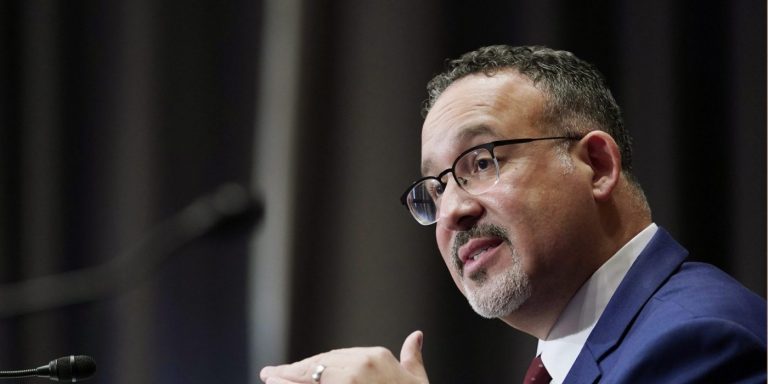
House Committee on Oversight and Reform ranking member James Comer, R-Ky., and Education and Labor Committee ranking member Virginia Foxx, R-N.C., said in a letter to Education Secretary Miguel Cardona that they and 30 other GOP lawmakers would be investigating the ways in which the Education Department spent its COVID-19 emergency funds.

“Based on recent reports, the Department of Education is allowing Coronavirus Aid, Relief, and Economic Security (CARES) Act and related COVID relief funds to pay for racially biased and other progressive leftist programs,” the Republicans wrote.

The lawmakers cited a recent report that revealed California used COVID-19 funds, which were meant to help students work through learning losses suffered during the pandemic, for “LGBTQ+ cultural competency trainings,” New York used $9 billion to fund “equity warriors” development, and Illinois used $5 billion to make “equity driven investments.”

At least 10 other states have similar plans that include “a proposal to use the [COVID-19] funds to implement racially biased curriculum and programs based on critical race theory,” the lawmakers said.

The House Republicans asked Cardona to turn over all documents and communications related to the use of COVID-19 funds.

When asked for comment, an Education Department spokesman dismissed Republicans’ demands as “an absurd partisan political attack.”

“COVID relief dollars were used to safely re-open schools and are currently being used to provide necessary academic and mental health supports and address equity issues to help students and families most impacted by the pandemic,” said the spokesperson.

“The Department of Education has encouraged states to use ESSER funds for these purposes, and states and schools have done so all across the country, including in these members’ districts, despite the fact they voted against these critical school re-opening and recovery funds,” the spokesperson added.