Jeffrey Epstein Foresaw Trump’s Iran Strikes

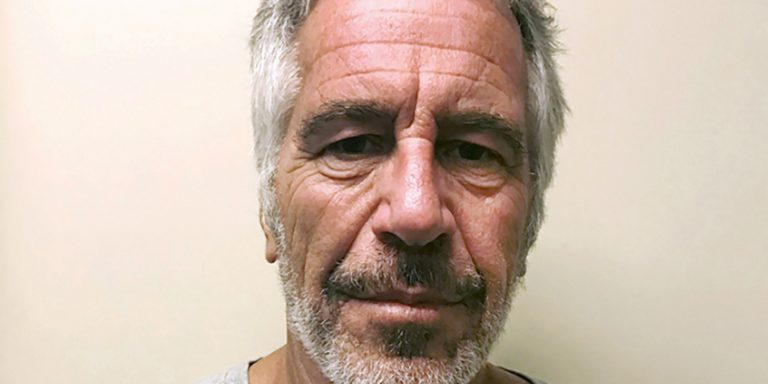
(José Niño, Headline USA) In December 2018, Jeffrey Epstein sent a series of private messages predicting that Donald Trump would bomb Iran if he ever felt politically cornered. Seven years later, Trump did exactly that.

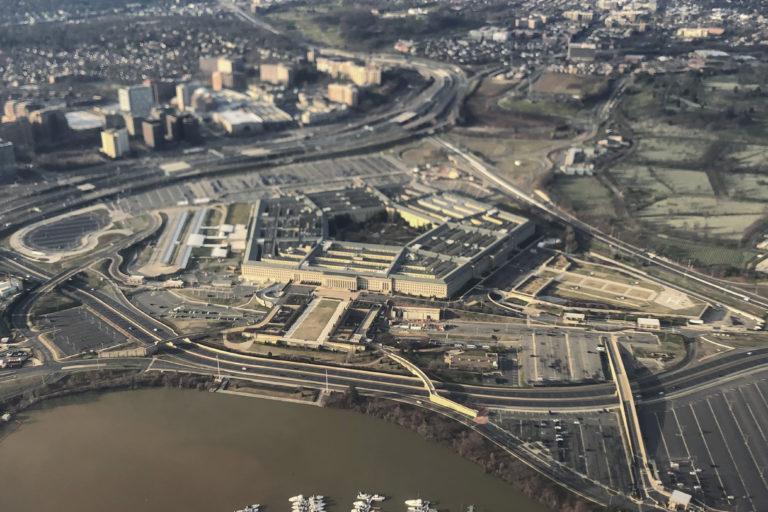
The messages, recovered from Epstein’s MacBook and released by the DOJ as part of the Epstein Files Transparency Act disclosures in Dataset 9, were sent on December 20, 2018, per a report by International Business Times UK. That was the same day Trump stunned the Pentagon and Congress by announcing a sudden withdrawal of American forces from Syria.

Over the span of roughly 40 minutes, Epstein laid out his theory to an unidentified contact. He opened by writing that “Trump pulling troops out of syria, is a bad sign. He is up to something. And it’s not good.” He called it “step one” and said Trump needed “a large diversion.”

Minutes later he escalated. “You guys need to understand that he is psychotic. And would not blink twice at encouraging an attack on us. So he can leap to the country’s defense… mindset. If I go down I’m taking everyone with.” Forty seconds after that he added, “Cornering a rat, never a good idea.”

Then came the Iran prediction. “We only had 2k troops there, if he were to bomb Iran, they would be slaughtered,” Epstein wrote, explaining the troop withdrawal as a precursor. The contact replied, “Oh! That would be crazy!!” Epstein answered simply, “Not from his perspective.”

The identity of the other party remains officially redacted, according to Justice Department disclosures. However, the identity of the other party in the exchange remains unknown. IBTimes UK reported that the redacted contact was on Red Square in Moscow that day, referenced “dinner with minister for economy tonight” and appeared to have recently received information from the White House that contradicted Trump’s public moves.

At the time Epstein sent these messages, Robert Mueller’s investigation had already secured guilty pleas from Michael Flynn and Paul Manafort. Epstein himself held no government role and was living under the terms of his contested 2008 nonprosecution agreement from Florida.

The messages went massively viral late last month after Trump authorized military strikes on Iran during the same period that the Epstein file releases were dominating public attention. Critics including Congressman Jamie Raskin accused Trump of using the strikes as a deliberate distraction. MeidasTouch host Ben Meiselas dubbed the operation the “Jeffrey Epstein War,” arguing Trump followed the exact playbook Epstein had described.

Headline USA previously reported that hacked emails from former Israeli Prime Minister Ehud Barak, obtained by the Iranian hacker group Handala and reported by Drop Site News, show Epstein advising Barak between 2013 and 2016 on messaging to the Kremlin about Syria and Iran, including language about chemical weapons and Iran’s nuclear program that commentators say closely mirrors the justification used for the 2026 strikes.

José Niño is the deputy editor of Headline USA. Follow him at x.com/JoseAlNino 
 

Georgia School Shooter’s Dad Found Guilty of 2nd-Degree Murder

(Headline USA) ​​A Georgia man who gave his teenage son the gun he’s accused of using to kill two students and two teachers at a high school was convicted Tuesday of second-degree murder and involuntary manslaughter.

Jurors took less than two hours to find Colin Gray guilty of all charges in the September 2024 shooting at Apalachee High School in Winder, northeast of Atlanta. Gray now joins a growing number of parents being held responsible in court after their children were accused in shootings.

Colin Gray was found guilty of second-degree murder in the deaths of two 14-year-old students, Mason Schermerhorn and Christian Angulo. Georgia law defines second-degree murder as causing the death of a child by committing the crime of cruelty to children. Gray was found guilty of involuntary manslaughter in the killings of teachers Richard Aspinwall, 39, and Cristina Irimie, 53.

Another teacher and eight other students were wounded. Gray was also convicted of multiple counts of reckless conduct and cruelty to children.

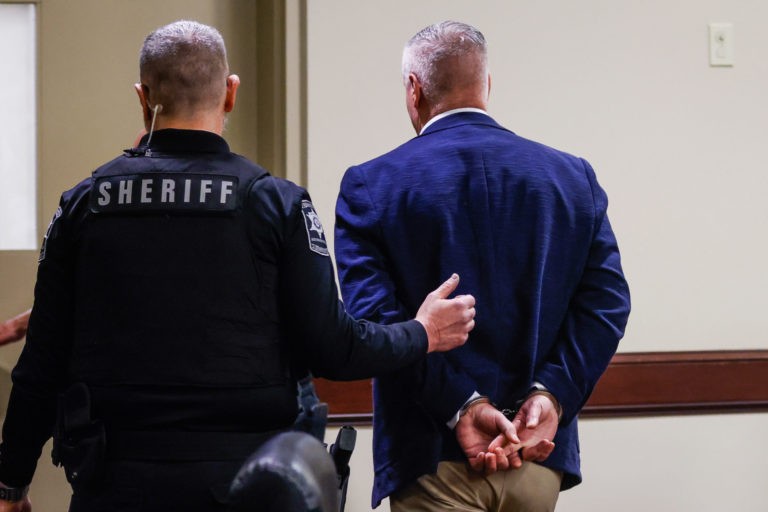
Gray showed little emotion as the verdict was read and each juror was polled by the judge. Deputies then cuffed his hands behind his back as he stood at the defense table, speaking with his lawyer. He will be sentenced at a later date. Second-degree murder is punishable by at least 10 but no more than 30 years in prison, while involuntary manslaughter carries a penalty of one to 10 years in prison.

Some relatives of victims wept as the verdicts were read. They declined to comment after court. Gray’s defense lawyers left without speaking to reporters.

“We talk a lot about rights in our country,” Barrow County District Attorney Brad Smith said after the verdict. “But God gave us a duty to protect our children, and I hope that we remember that, as parents, as community members, to protect our children because that is our God-given duty.”

The teen’s mother, Marcee Gray, wasn’t charged. She testified that she had urged her estranged husband to take any guns and lock them inside his truck so they would not be accessible to their son. She and Colin Gray were separated in the months leading up to the shooting, and Colt Gray lived mostly with his father during that time. She declined to comment when reached by phone after the verdict.

Prosecutors said Gray gave his son the gun as a Christmas gift and allowed him access to it along with ammunition despite the boy’s deteriorating mental health. They said he had “sufficient warning that Colt Gray would harm and endanger” other people.

Fourteen at the time of the shooting, Colt Gray has pleaded not guilty to a total of 55 counts, including murder. A judge has set a status hearing for mid-March.

Investigators said Colt Gray carefully planned the Sept. 4, 2024, shooting at the school attended by 1,900 students.

He boarded the school bus with a semiautomatic, assault-style rifle in his book bag, the barrel sticking out and wrapped in poster board, investigators said. He left his second-period class and emerged from a bathroom with the gun and shot people in a classroom and hallways, investigators said.

Colin Gray knew his son was obsessed with school shooters, even having a shrine in his bedroom to Nikolas Cruz, the shooter in the 2018 massacre at Florida’s Marjory Stoneman Douglas High School, prosecutors said.

“It wasn’t like one parent missed one warning,” Smith told reporters. “This was multiple warnings over a lengthy period of time and, like we said, you just had to do one thing — take that rifle away and this would have been prevented.”

Jennifer and James Crumbley, the first U.S. parents held criminally responsible for a mass school shooting committed by a child, are serving 10-year prison terms for involuntary manslaughter after their son Ethan killed four students and wounded others in Michigan in 2021.

Colin Gray was the first such parent to be charged in Georgia. Smith said Marcee Gray had seen what happened in Michigan and asked her husband to remove the weapons as a result. “So Michigan was able to move the needle to the point that it almost stopped this tragedy,” he said. “We hope we’ve moved the needle a little further.”

Georgia lawmakers last year passed a school safety bill in response to the shooting. It directs state officials to create an alert system, including the names of students who an investigation has found threatened violence or committed violence at schools.

It also requires law enforcement to notify schools when officers learn a child has threatened death or injury to someone at a school, the implementation of mobile panic alert buttons at schools, quicker transfers of records when students switch schools and mental health coordinators in each of the state’s 180 school districts.

Legislators also approved a request by Gov. Brian Kemp to spend an extra $50 million on school safety.

Adapted from reporting by the Associated Press


2 Men Arrested in Cincinnati Nightclub Shooting are Facing Federal Charges

(Headline USA) ​​Two men arrested Monday in connection with a weekend shooting that wounded nine people inside a Cincinnati nightclub now face federal charges, the U.S. Attorney’s Office for the southern district of Ohio said Tuesday.

Franeek Cobb, 24, and Derrick Long, 29, each face federal charges for illegally possessing a firearm or ammunition as an individual convicted of a felony.

Prosecutors said in a news release that surveillance footage from Riverfront Live, where the shooting took place, shows both men firing weapons early Sunday morning. Cobb observed Long inside the venue, pulled out a firearm and began firing at him, according to an affidavit the statement said. Long fell to the ground, then allegedly began firing at Cobb.

The attorney’s office said ballistic evidence collected from the scene showed only two firearms were discharged during the shooting.

“Our top priority is protecting our communities and holding accountable those who threaten them,” U.S. Attorney Dominick S. Gerace II said in the statement. “If you pull a trigger in an illegal act of violence or otherwise illegally possess a firearm or ammunition, rest assured we will do everything we can to send you to federal prison.”

Earlier Tuesday, Cobb was arraigned in Hamilton County Municipal Court on local charges of felonious assault in the shooting. He showed no emotion as he walked into the courtroom.

During the arraignment, Hamilton County Assistant Prosecutor Connor Wood said Cobb had a “long-standing grudge” against an unidentified victim in the case, and when Cobb saw the victim inside the venue, he “immediately” opened fire, causing injuries to multiple people.

“There was no interaction between the parties leading up to this,” Wood said.

Long, who also faces local charges in the shooting, did not appear in court on Tuesday. Records show he is charged with felonious assault and allege he “knowingly possessed and discharged a firearm” at Riverfront Live, where several people were injured as a result.

A phone message and email left for Anna Mallory, who is listed as Cobb’s attorney, were not immediately returned Tuesday. Court records did not list an attorney for Long, and phone calls to numbers listed under his name also were not immediately returned.

Sunday’s shooting happened around 1 a.m. inside Riverfront Live along the Ohio River in the city’s east end. Officers responding to reports of gunfire found nine people with gunshot wounds.

All were taken to hospitals and are in stable condition, officials said.

The gunfire erupted during a birthday celebration hosted by Jermaine Tandy, also known as DJ Fresh, according to a post on his Facebook page. Management representing Tandy said in a statement they were “devastated” by the violence, calling it a “senseless act.”

Witness Anton Canady told The Associated Press he heard what sounded like a fight before shots rang out. As people rushed toward the exits, Canady’s girlfriend fell, and he laid on top of her to prevent her from being trampled.

“I don’t think it was like they was doing it purposely or intentionally, I just think nobody wanted to die in there,” he said.

When he got outside, Canady learned his cousin was one of the people shot. He said he used cloth from a nearby car to apply pressure to her wounds until first responders arrived. He later spoke with her and said she was “doing good” but in shock.

The Cincinnati Police Department’s homicide unit, the FBI and the Bureau of Alcohol, Tobacco, Firearms and Explosives are working together on the investigation.

Though the shooting occurred almost simultaneously with a deadly bar shooting in Austin, Texas, an ATF spokesperson said earlier this week that it was not believed to be an act of terrorism.

Riverfront Live sits along the Ohio River, not far from the popular Riverbend Music Center, which is closed in winter. The property is best known as the former site of Annie’s, an iconic rock club that hosted well-known rock and heavy metal groups in the 1990s and early 2000s. It has had other names over the years and was rebranded Riverfront Live in 2018 after gaining attention for criminal activity.

Adapted from reporting by the Associated Press


Pentagon Personnel Injured by Iranian Drone Attack on Hotel in Bahrain

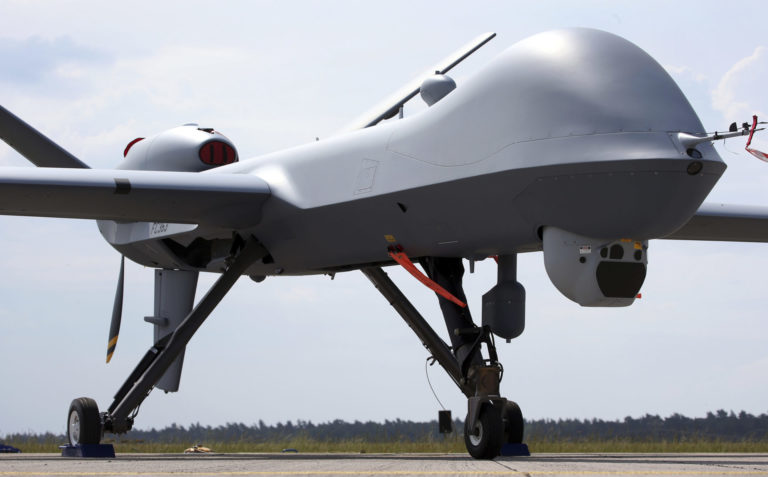
(Dave DeCamp, Antiwar.com) An Iranian drone attack on a hotel in Bahrain injured at least two US Department of War employees, The Washington Post reported on Monday, citing a State Department diplomatic cable.

“Two US DOW personnel were injured,” the cable said. No other details were included in the cable, and it’s unclear whether the personnel were military or civilians.

It’s also not clear what hotel the US personnel were in when the attack occurred, though the Crowne Plaza hotel, a luxury property in Bahrain’s capital Manama, was hit on Sunday morning.

Iranian attacks have also hit hotels in the UAE, and Iran has claimed that it was targeting US military personnel who were evacuated from US bases.

“We have started by attacking their military bases; they have evacuated the military bases, and they have gone to the hotels and have made human shields for themselves,” said Iranian Foreign Minister Abbas Araghchi.

Iranian attacks have also hit residential buildings and airports in Gulf countries, and according to a count from Al Jazeera, at least six people have been killed in attacks on Bahrain, the UAE, Kuwait, and Oman. Sixteen people were also wounded in an attack on Doha, Qatar.

This article originally appeared at Antiwar.com.

Rubio Says the US Launched a War With Iran Because Israel Was Planning To Attack

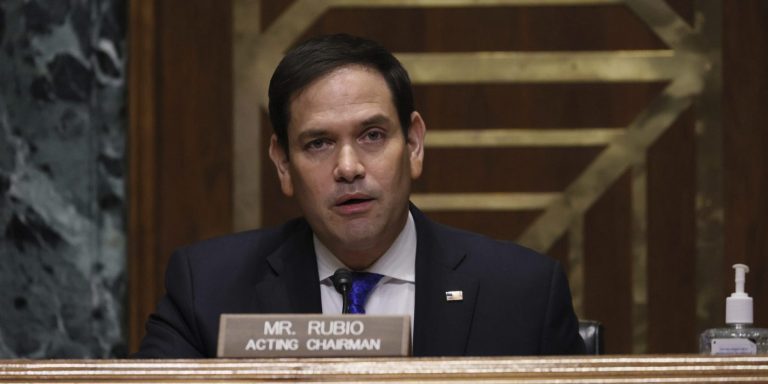
(Dave DeCamp, Antiwar.com) Secretary of State Marco Rubio on Monday said that the US launched a war against Iran because Israel was planning to attack, an admission that Israeli Prime Minister Benjamin Netanyahu steered the US into the conflict.

“It was abundantly clear that if Iran came under attack by anyone, the United States, Israel, or anyone, they were going to respond and respond against the United States,” Rubio told reporters.

“If we stood and waited for that attack to come first, before we hit them, we would have suffered much higher casualties. And so the president made the very wise decision — we knew that there was going to be an Israeli action, we knew that that would precipitate an attack against American forces,” he said.

Rubio’s comments align with reporting from The New York Times that said when Tucker Carlson recently met with President Trump and tried to convince him not to launch a war with Iran, the president said he had no choice but to join a strike that Israel would launch.

The Times report said that Netanyahu was determined to ensure that the negotiations between the US and Iran wouldn’t get in the way of planning for a joint US-Israeli attack on the Islamic Republic.

But Trump and his top officials tried to sell the war as being related to Iran’s nuclear program despite insisting that it was “obliterated” by the June 2025 US airstrikes on Iranian nuclear facilities. Vice President JD Vance even claimed that there was evidence Iran may be trying to build a nuclear weapon.

Now that the war has started, the Trump administration is sending mixed messages about the goal. President Trump suggested in his first statement that he is pursuing regime change, and the initial round of US-Israeli attacks killed Iranian Supreme Leader Ayatollah Ali Khamenei, but Rubio said on Monday that the goal was aimed at eliminating the “threat” posed by Iran’s missiles.

“The United States is conducting an operation to eliminate the threat of Iran’s short-range ballistic missiles and the threat posed by their navy, particularly to naval assets. That is what it is focused on doing right now, and it’s doing quite successfully,” he said.

When asked for a timeline, Rubio said the war will last “as long as it takes” for the US to achieve its objectives.

This article originally appeared at Antiwar.com.  


Central Bank Gold Buying Modest in January as New Players Enter the Market

(Mike Maharrey, Money Metals News Service) The pace of central bank gold buying slowed modestly in January in the midst of record-high prices.

We also saw the pace of selling pick up steam to kick off the year.

On net, central banks globally added five tonnes of gold to their reserves in January.

World Gold Council analysts say a couple of factors may have limited central bank buying in January, but they don’t see it as a developing trend.

“Volatile gold prices and the holiday season may have given some central banks pause, though geopolitical tensions, which have shown little sign of abating, are likely to keep accumulation going through 2026 and beyond.”

While buying volume slowed, the World Gold Council detects a broadening buying base developing as we enter a new year.

 “While we see continuation of gold buying from central bankers who purchased gold in the previous year, the broadening of the demand base could be an emerging theme.”

The Bank Negara Malaysia made its first gold purchase since 2018 in January, expanding its reserves by 3 tonnes. Meanwhile, the Bank of Korea announced a plan to resume gold investments for the first time since 2013.

Uzbekistan was the biggest buyer in January, adding 9 tonnes of gold to its holdings. The Uzbek central bank has been adding to its reserves since October. Since 2020, gold’s share of Uzbek reserves has increased from 57 to 86 percent.

The Czech Republic continued adding gold to its holdings, increasing its reserves by another 2 tonnes. The Czech central bank has adopted the slow, steady approach, buying gold for 35 straight months. The country added 20 tonnes to its holdings last year. The Czech Republic now holds 74 tonnes of gold. Czech officials say they plan to increase gold reserves to 100 tonnes by 2028.

China continued to buy gold, albeit at a slower pace, at least based on official numbers. The People’s Bank of China reported a 1-tonne increase in gold reserves in January, its 15th consecutive monthly purchase. It’s reported that gold reserves now stand at 2,307 tonnes, making up almost 10 percent of total official reserves.

Notice the emphasis on “official.”

China is among the central banks that are likely to hold significantly more gold than they publicly disclose. As Jan Nieuwenhuijs has reported, the People’s Bank of China is secretly buying large amounts of gold off the books. According to data parsed by the renowned Money Metals researcher, the Chinese central bank is currently sitting on more than 5,000 tonnes of monetary gold located in Beijing – more than TWICE what has been publicly admitted.

Mainstream reporting has finally picked up on this.

Two other countries reported an increase in official gold reserves in January.

  • Indonesia – 2 tonnes
  • Serbia – 1 tonne

Russia was the biggest seller in January with a 9-tonne decrease in its gold holdings. The country is reportedly liquidating some of its gold reserves to stabilize the economy as ongoing sanctions continue to wreak havoc.

Kazakhstan and the Kyrgyz Republic both reported 1-tonne sales.

It is not uncommon for banks that buy from domestic production – such as Uzbekistan and Kazakhstan – to flip-flop between buying and selling.

Looking at the broader trend, central bank gold buying moderated in 2025 but remained far above the recent historical average. Official net full-year buying came in at 863.3 tonnes. That was down 21 percent year-on-year, charting the lowest level since 2021.

However, while central bank gold purchases declined last year, they were still well above the 2010-2021 annual average of 473 tonnes.

Last year was the fourth-largest expansion of central bank gold reserves on record. The all-time high was set in 2022 (1,136 tonnes). It was the highest level of net purchases on record, dating back to 1950, including since the suspension of dollar convertibility into gold in 1971.

The surging gold price was likely a factor in slowing central bank gold accumulation. As the World Gold Council put it, the higher price prompted “a more cautious approach.”

“This highlights that central banks are not insensitive to price dynamics, even as their long-term strategic interest in gold remains firmly intact.”

Despite the modest slowdown in gold accumulation, the World Gold Council remains bullish, saying that “persistent economic and geopolitical uncertainty is likely to sustain demand for gold as a reserve asset.”

“We maintain our view that central banks will continue to add gold to their reserves. Our Central Bank Gold Reserves Survey 2025 shows that respondents overwhelmingly (95 percent) expect global central bank gold reserves to increase over the next 12 months, while 43 percent believe that their own gold reserves will also increase over the same period. Notably, none of the respondents anticipate a decline in their gold reserves.”

You can read more details about that central bank survey HERE.


Mike Maharrey is a journalist and market analyst for Money Metals with over a decade of experience in precious metals. He holds a BS in accounting from the University of Kentucky and a BA in journalism from the University of South Florida.

How Has War Impacted the Gold Price in the Modern Era?

(Mike Maharrey, Money Metals News Service) With the United States now in a shooting war with Iran, how might a protracted conflict impact gold prices?

The historical pattern since the 1980s suggests that, beyond an initial safe haven bump, a war alone doesn’t seem to significantly impact the trajectory of gold prices. As wars drag on, other factors tend to drive the market – particularly monetary policy.

We saw that safe haven bump on Monday, as markets digested the onset of hostilities, with gold briefly trading above $5,300. However, by Tuesday morning, the yellow metal was already giving up those gains due to dollar strength and a growing sense that the Federal Reserve will hold interest rates higher for longer.

Safe Haven Spikes

Since the 1980s, gold has typically gotten the biggest boost in the run-up to hostilities.

For instance, during the long buildup of forces in the Middle East during Operation Desert Shield beginning in 1989, gold gained 15 to 20 percent. There was another price spike of around 10 percent when the U.S. launched Desert Storm.

Similarly, gold got a brief haven boost in 2003 when the U.S. invaded Iraq for a second time to topple Saddam Hussein.

We saw a similar pattern when Russia invaded Ukraine. The yellow metal surged above $2,000 an ounce at the onset of the war.

But underscoring the fact that gold’s wartime performance is heavily influenced by other factors in the economy, the launch of the War on Terror drove a very different scenario. After 9/11, the gold price briefly collapsed as a liquidity crisis gripped the markets.

War Tends to Quickly Lose Its Grip on Markets

While wars and rumors of wars tend to cause the gold price to spike, war momentum has faded quickly in the modern era once hostilities commence and markets get a feel for the likely trajectory of the war. At that point, other factors such as inflation expectations, interest rate policy, dollar strength/weakness, and the general state of the economy tend to have more impact on the gold market.

This suggests it’s not so much war driving the markets, but the uncertainty that surrounds the possibility of war that sparks those initial gold rallies.

Once war is in play, other factors step to the forefront of the markets. Depending on those factors, the price of gold can move in either direction.

A year after Desert Storm, gold had given up all its pre-war and early safe-haven gains. However, during the wars in Afghanistan and Iraq War II, gold was in a 10-year bull market driven by Federal Reserve monetary easing leading up to the 2008 financial crisis and the zero percent rate era of the Great Recession. Between 2001 and 2011, gold surged from $250 to over $1,900 an ounce.

Russia’s invasion of Ukraine in February 2022 roughly corresponded with the Federal Reserve’s war on inflation. The Fed bumped interest rates up for the first time on March 16. With subsequent hikes, the gold price quickly unwound, erasing those early war gains. By October, the gold price was below $1,650 an ounce.

In Conclusion

In the modern era, the price of gold during wartime seems to be driven more by economic and monetary policy than battlefield headlines.

That’s not to say the gold price doesn’t react to war news at all. We will almost certainly see increased price volatility as markets digest the latest developments. However, these price swings, while sometimes deep, tend to be short-lived.

It’s clear that war alone didn’t solely drive gold’s largest wartime moves in the modern era. The biggest gains were due to a combination of war + monetary response.

Since the 1980s, gold has performed best during protracted conflicts coupled with aggressive monetary easing, negative real interest rates, and growing government debt.

Of course, these factors are all inherent in times of conflict.

War is expensive. It typically drives debt higher. Central banks are often forced to drop interest rates and run quantitative easing programs to support government borrowing and spending during drawn-out wars. This is, by definition, inflation.

The war with Iran doesn’t look like it will wind down any time soon (although war is hard to predict). Keep in mind, this conflict was launched as the economy is already being dominated by a Debt Black Hole. Despite recent bearishness on the possibility of rate cuts, this debt-riddled bubble economy can’t function in a normal interest rate environment. More cuts are almost certainly on the horizon, although we are already in an inflationary environment.

If the Iran conflict resolves quickly, it won’t likely impact the trajectory of gold. However, a long, drawn-out conflict could create a Vietnam scenario with impacts reverberating throughout the economy. War spending (coupled with the War on Poverty) in the 1960s drove borrowing and spending that set the stage for the stagflationary decade of the 1970s. The underlying economy is arguably shakier now than it was then. To borrow a phrase from Pink Floyd, Iran could be just another brick in the wall.


Mike Maharrey is a journalist and market analyst for Money Metals with over a decade of experience in precious metals. He holds a BS in accounting from the University of Kentucky and a BA in journalism from the University of South Florida.

EXCLUSIVE: Identity of Undercover FBI Officer Who Stung Epstein’s Ex-Butler Revealed

(Ken Silva, Headline USA) It’s well-known Jeffrey Epstein canon by now: His former butler took his address book, tried selling it for $50,000, and wound up being busted in an undercover FBI sting operation. The butler, Alfredo Rodriguez, was charged with obstruction of justice and infamously received the same sentence as Epstein did for sex crimes.

The address book, widely known as Epstein’s “black book,” was eventually leaked to journalist Nick Bryant and published on the now-defunct site Gawker.

Now, thanks to the Justice Department’s recent disclosure of 3 million new Epstein files, Headline USA can add a new element to this story: the likely identity of the undercover FBI officer who purchased the book from Rodriguez as part of the sting operation. According to the Epstein files, that person’s identity is likely Paul Bruno, an undercover Jupiter Police officer who worked on an FBI task force for more than a decade.

‘TFO Bruno’

Headline USA was able to piece together Bruno’s identity by comparing two identical FBI memos that have redactions in different places. One memo says that a “TFO [Task Force Officer] Bruno” was the undercover cop targeting Rodriguez, while a duplicate memo with different redactions says that the undercover cop worked with the Jupiter Police Department in Palm Beach.

When read together, the duplicate memos state: “[REDACTED] will contact Rodriguez to collect criminal conversation and to arrange for a face to face meeting where the evidence can be reviewed and the money can be given to Rodriguez. [REDACTED] and Rodriguez will meet face to face in a hotel room controlled by the FBI where the transaction will be completed.

“TFO Bruno has been Safeguarded and has applied for the Undercover Certification School. TFO [REDACTED] is a seasoned City of Jupiter Police Officer with many years of undercover experience.”

After reading the duplicate FBI memos, Headline USA conducted an online search, which shows that a Jupiter Police officer named Bruno worked undercover on an FBI task force for over a decade—including at the time Rodriguez was trying to sell Epstein’s black book.

For instance, a Palm Beach County law enforcement newsletter touts Bruno for participating in an undercover FBI operation in July 2009.

“Agent Paul Bruno, while assigned to the FBI task force, conducted an undercover operation posing as a narcotics dealer,” states the newsletter, which includes a photo of Bruno. “He was then introduced to a subject responsible for substantial narcotics distribution throughout the U.S. He was ultimately able to seize $50,000 cash and shut down a major U.S. supply chain between Connecticut and California.”

Another article shows that in August 2005, Bruno shot and killed someone during an undercover sting operation. The person shot, Donovan Brooks, was unarmed, but Bruno reportedly thought he was reaching for a weapon. Bruno was eventually cleared of any wrongdoing.

An FBI affidavit from 2023 shows that Bruno was still on the bureau’s “safe streets task force” at that time, though it’s unclear whether he was still doing undercover work.

Neither the FBI nor the Jupiter Police Department responded to Headline USA’s request for comment on the matter. The FBI memo identifying a “TFO Bruno” was removed after this publication emailed the bureau about it. Headline USA had already downloaded the memo, which can be found here.

Bruno, for his part, could not be reached for comment.

Sting Operation

As has been widely reported, Rodriguez was Epstein’s house manager until he was fired in 2005. He took Epstein’s black book, but held it for several years.

At one point, Rodriguez was contacted by Palm Beach law enforcement during its initial investigation of Epstein in the mid-2000s. He turned over some papers at the time, but still withheld the black book.

It wasn’t until he was subpoenaed in a civil lawsuit against Epstein in early 2009 that he decided to do something with the black book. Rodriguez contacted an attorney for the alleged victims, Bradley Edwards, and offered to sell the book to him for $50,000.

However, instead of accepting the offer, Edwards contacted the FBI and became a cooperating witness against Rodriguez. The FBI then set up the sting operation with the undercover cop, likely Bruno.

When the FBI arrested Rodriguez and interviewed him in November 2009, the former Epstein butler provided more details about his boss’s alleged crimes.

“RODRIGUEZ explained that there were photographs of naked underage girls arranged in collages in the hallway or stair case of EPSTEIN’s home and in EPSTEIN’s closet. He reported seeing naked girls he believed to be underage at the pool area of the home. In addition, RODRIGUEZ described seeing pornographic images of girls on computers in the house,” a Nov. 6, 2009, FBI memo states.

“RODRIGUEZ explained that JEAN LUC BRUNEL (ph)would also bring girls to the house and would sometimes arrange for girls to be flown in via commercial and private planes.”

Despite the info provided by Rodriguez, the DOJ decided to charge him with obstruction of justice.

He was sentenced to 18 months imprisonment in June 2010—the same sentence as Epstein, who only served 13 months—and given another 48-month concurrent sentence in August of that year. He reportedly died from cancer in 2015.

Ken Silva is the editor of Headline USA. Follow him at x.com/jd_cashless.

Feds Told New Mexico to Back Off Epstein. Then They Did Nothing.

(José Niño, Headline USA) In September 2019, federal prosecutors asked New Mexico to shut down its active investigation into Jeffrey Epstein’s desert compound. The state complied. The feds never held up their end of the deal.

According to a report by The Albuquerque Journal, former New Mexico Attorney General Hector Balderas revealed recently that prosecutors from the Southern District of New York pressured his office to cease its probe into sex trafficking at Epstein’s Zorro Ranch, a 7,500 acre estate south of Santa Fe that Epstein purchased from former Governor Bruce King’s family in 1993. 

The stated reason was that parallel investigations could produce conflicting witness statements that defense lawyers might exploit. In exchange, the feds promised to share their own findings. That promise was never fulfilled.

On September 8, 2019, assistant U.S. Attorney Maurene Comey, the daughter of former FBI Director James Comey, confirmed in an email that Balderas’s office had agreed to halt its work and turn over all materials, per a report by Time. Epstein had died in federal custody less than a month earlier. By September 17, New Mexico’s Chief Deputy Attorney General Clara Moran had sent police reports, recorded witness testimony, and documents about Epstein’s use of state lands to the SDNY.

By July 2020, having received nothing in return, Balderas sent a letter urging federal prosecutors to seize the ranch through civil forfeiture. “We believe that this ranch was utilized by Epstein and others to facilitate and conceal the ongoing trafficking of children,” the letter stated. The New York Times reported that he received no response. An internal federal email from December 2019 later confirmed that agents had “not searched the New Mexico property,” as the Times reported. 

When the DOJ released over three million pages of Epstein files on January 30, 2026, none of New Mexico’s investigative records appeared among them, according to NPR

The fallout has been swift. Reuters reported that Attorney General Raúl Torrez reopened the criminal investigation into Zorro Ranch on February 18. The state House unanimously created a bipartisan truth commission with subpoena power and a budget exceeding $2 million, per a report by the Albuquerque Journal. U.S. Rep. Melanie Stansbury, who has reviewed unredacted federal files, confirmed that multiple prominent New Mexicans are named in the investigation. Separately, Reuters New Mexico is now probing allegations from a redacted email claiming two foreign girls who died at the ranch were buried nearby at Epstein’s direction.

Comey, the prosecutor who brokered the original deal, was fired by the Trump DOJ in July 2025 without explanation. The ranch itself was sold in 2023 to a Texas developer planning to convert it into a Christian retreat.

“The inquiry should have been expanded, not restricted,” Balderas said.

José Niño is the deputy editor of Headline USA. Follow him at x.com/JoseAlNino 
Number of Service Members Killed in Action Rises to Six

(The Center Square) The number of American service members killed in action as part of Operation Epic Fury has climbed from four to six, as Secretary of State Marco Rubio vows “the hardest hits are yet to come from the U.S. military.”

CENTCOM announced that two additional service members had been killed in action who had been previously unaccounted for “from a facility that was struck during Iran’s initial attacks.”

In addition, CENTCOM is reporting that all 11 Iranian ships in the Gulf of Oman have been destroyed, as the U.S. struck more than 1,250 Iranian Targets since the operation was launched in the early morning hours on Saturday.

Rubio was on Capitol Hill Monday to brief the Gang of Eight, which includes House and Senate leadership and the chairs of House and Senate intelligence committees.

The secretary warned that the offensive against the Islamic regime is ramping up.

“The next phase will be even more punishing on Iran that it is now … The world will be a safer place when we’re done with this operation,” Rubio told reporters.

Rubio defended the Trump administration’s decision to launch strikes, even as the administration has come under fire from most Democrats and some Republicans. He indicated the strikes were preemptive, citing the Islamic Republic’s nuclear and ballistic threat.

“There was absolutely an imminent threat,” said Rubio. “We knew that if Iran was attacked – they knew they would immediately come after us, and we were not going to sit there and absorb a blow before we responded … We went proactively, in a defensive way, to prevent them from inflicting higher damage,” the secretary told reporters. “Had we not done so, there would have been hearings on Capitol Hill about how we knew that this was going to happen and we didn’t act preemptively to prevent more casualties and more loss of life.”

During a Medal of Honor Ceremony held in the East Room of the White House Monday morning, President Donald Trump delivered some remarks on the operation, defending the strikes.

“Our objectives are clear. First we’re destroying Iran’s missile capabilities…Second, we’re annihilating their navy…Third we’re ensuring that the world’s number one sponsor of terror can never obtain a nuclear weapon,” said the president during the somber White House ceremony.

Rubio echoed the president’s sentiments while addressing concerns about regime change in Iran.

“We hope that the Iranian people can overthrow this government. We would love for that to be possible—but the objective for this mission is the destruction of their ballistic capabilities and their naval capabilities,” Rubio made clear.

As the president and secretary of state continue to make the case for the operation, the Department of State has issued a “depart now” list for over a dozen Middle Eastern countries, where a majority have seen some attack from Iranian forces since the strikes began. The countries include: Bahrain, Egypt, Iran, Iraq, Israel (the West Bank and Gaza), Jordan, Kuwait, Lebanon, Oman, Qatar, Saudi Arabia, Syria, the United Arab Emirates and Yemen.