New York Democrats Join California in Push for Reparations

(Headline USA) New York Democrats are pushing for a state law that would require the government to pay reparations to black residents after a California taskforce revealed a similar plan earlier this month.

The California plan would force the Golden State to shell out $569 billion in reparations to slaves’s descendants, or $223,200 apiece, even though slavery was never institutionalized in the state. 

A similar measure to create a commission and study the impact of reparations was introduced in the New York legislature this summer, but never passed. Now, New York Democrats are working to revise this proposal and force it through.

“We saw what happened in California. We want to pass a bill that starts a conversation about reparations,” Assemblywoman Michaelle Solages, D-Nassau, chairwoman of the New York Black, Puerto Rican, Hispanic and Asian Legislative Caucus, told the New York Post.

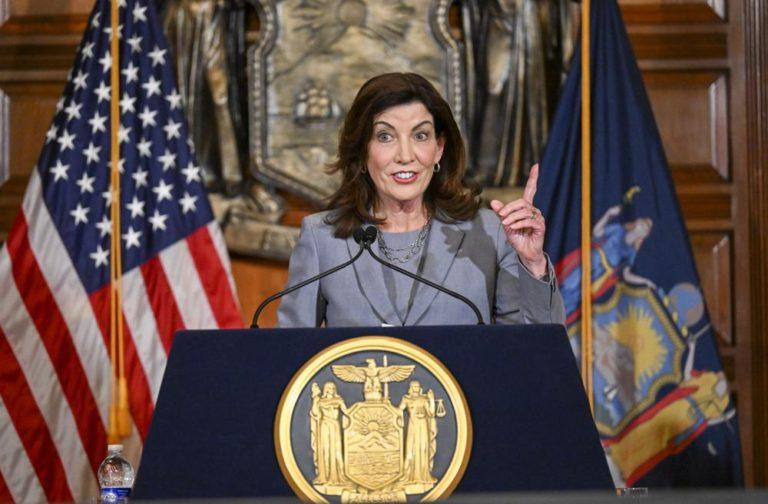
Assemblywoman Taylor Darling, D-Nassau, agreed that a reparations commission is necessary and argued it would be a “slap in the face” to the black community if Democrat Gov. Kathy Hochul refuses to green-light it.

“This country was built on the backs of enslaved people. It has impacted everything — housing, economic development, education,” she claimed.

California’s Reparations Task Force said it hopes to shrink the wealth gap between white and black Californians, citing housing inequality as a motivation for the proposed reparations payments.

“We are looking at reparations on a scale that is the largest since Reconstruction,” Jovan Scott Lewis, a professor at the University of California, Berkeley, who is one of the force’s nine members, said.

However, the Reparations Task Force can only make recommendations to the state. The California legislature must decide what to do with those recommendations and whether to pass a law providing financial reparations to black Californians.

Lame-Duck Senate Pushes Bipartisan Amnesty for 2M Illegals as DACA Sunsets

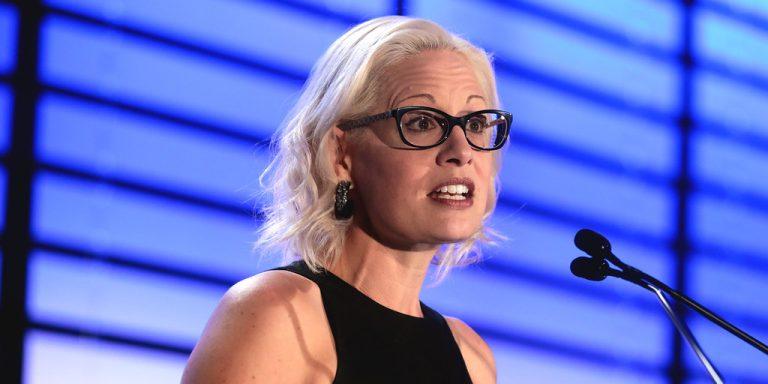
(Ezekiel Loseke, Headline USA) Sens. Kyrsten Sinema, D-Ariz., and Thom Tillis, R-N.C., have united to produce, and attempt to pass, a bipartisan immigration bill which includes amnesty for 2 million illegal immigrants before COVID-era protections expire and DACA is dismantled by the courts.

The senators also are scrambling to act quickly while Democrats retain the House majority and before Congress adjourns for the holidays.

According to Axios, the bill, as of now, includes “a pathway to citizenship” for 2 million illegal immigrants; a $25-40 billion funding bump for Border Patrol and border security; a review and amendment of the asylum system, “to prevent the abuse of the law”; and an extension of Title 42.

The bipartisan duo are seeking to cram the bill through the Senate by persuading 10 or more Senate Republicans in the lame-duck Congress to head off two important events.

The first event the bill is trying to head off is the expiration of Title 42, the COVID-era public-health measure that allows the federal government to refuse asylum-seekers entry into America citing health concerns. The program is set to die on Dec., 21, 2022.

Title 42 began being enforced during the Trump administration but thus far has been continued by the Biden White House. Government officials fear that the expiration of this policy will lead to even more illegal immigration, according to Axios.

The second big event is the judicial dismemberment of Obama’s executive order known as Deferred Action for Childhood Arrivals, which decreed that the government would not enforce immigration laws for anyone brought to the U.S. as minors, regardless of their current age.

The fiat, when first pronounced in 2014, helped spur a massive wave of unaccompanied minors at the border and later became a major campaign issue in the 2016 election as Republican candidate Donald Trump promised to restore immigration law and close the border.

Recently a justice on the 5th Circuit Court of Appeals ruled that the DACA policy, as written was unconstitutional. However, after a rule change, the policy was upheld but remanded back to the original judge, who is has called for more evidence and is reviewing the impact of the new rule.

DACA is slated to appear before the Supreme Court for the third time. The court famously deadlocked on the rule in 2016, as reported by Politico.

In 2020 the Court ruled that President Trump improperly ended DACA, in a ruling that PBS described as “for DREAMers” and “Against Trump.” However, even the mainstream media is projecting the dismantling of DACA after it was remanded.

Thus, the duo are seeking to cram amnesty for 2 million illegal immigrants through Congress while Democrats still hold a bicameral majority.

John Bolton Says He Would Run for President to Stop Trump 2024

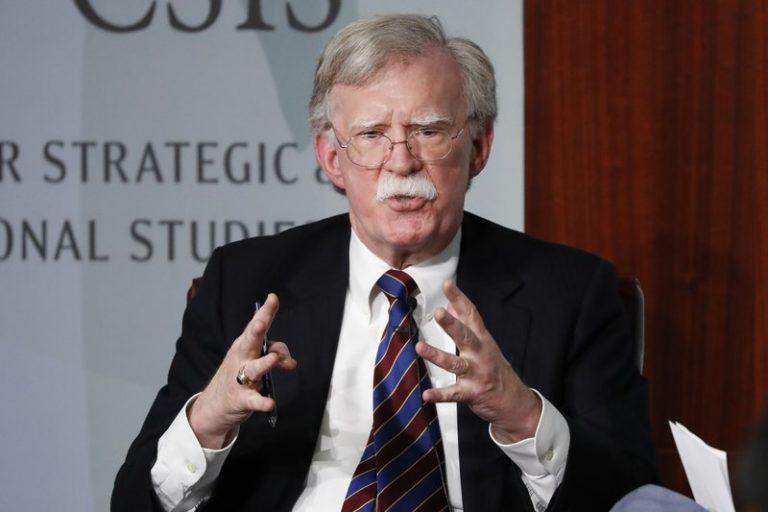
(Headline USA) Former national security adviser John Bolton hinted on Monday that he might launch a presidential bid in 2024 to stop former President Donald Trump.

Bolton made the comment during an interview with NBC’s Meet the Press Now. He was addressing comments Trump had made over the weekend about election fraud and the implications such fraud has for the U.S. Constitution.

“So, with the revelation of MASSIVE & WIDESPREAD FRAUD & DECEPTION in working closely with Big Tech Companies, the DNC, & the Democrat Party, do you throw the Presidential Election Results of 2020 OUT and declare the RIGHTFUL WINNER, or do you have a NEW ELECTION?” Trump wrote on Truth Social.

“A Massive Fraud of this type and magnitude allows for the termination of all rules, regulations, and articles, even those found in the Constitution,” he continued. “Our great ‘Founders’ did not want, and would not condone, False & Fraudulent Elections!”

Trump tried to clarify his original statement, but it didn’t do much for damage control. Bolton said every single Republican leader, especially those considering running for the GOP nomination in 2024, should release “Shermanesque statements” condemning Trump.

“If I don’t see that, I’m going to seriously consider getting in,” he added.

Bolton wouldn’t lay out a timeline for when he might join the 2024 race, but said, “It might be earlier than some would think.”

He went on to argue that Trump’s statement should be considered “disqualifying” for public office.

“I think to be a presidential candidate you can’t just say, ‘I support the Constitution.’ You have to say, ‘I would oppose people who would undercut it.’”

Several Republican leaders have already denounced Trump’s rant, urging the GOP to move on from him in 2024.

“I’m at a loss for words. We need to move on,” Sen. John Cornyn, R-Texas, said over the weekend.

Sen. John Thune, R-S.D., agreed: “It’s just one of those intuitively obvious things, whether a candidate for office has sort of a bedrock principle, ‘Are you going to support the Constitution?’” he explained.

“For [Trump], it’s not all that unusual. But it will be the grist and plenty of fodder for those that are looking to get into that race,” Thune added.

McConnell OKs Dems’ Journalism Bailout amid Uptick in MSM Job Cuts

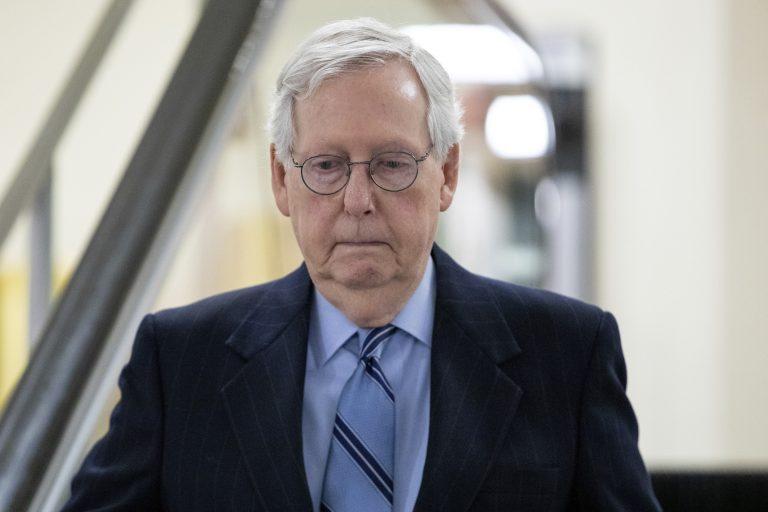
(Jacob Bruns, Headline USA) GOP Senate Minority Leader Mitch McConnell caved to his friends, outgoing House Speaker Nancy Pelosi, D-Calif., and Senate Majority Leader Chuck Schumer, D-N.Y., regarding the inclusion of a media cartel provision in the recently passed National Defense Authorization Act.

Such bills coming from the House often include numerous political favors handed out to each party, but this time the Left scored a major victory.

The media provision, called the Journalism Competition and Preservation Act, will effectively transfer wealth from Silicon Valley to the corporate media by allowing large media companies to construct  “joint negotiating entities,” Breitbart reported. It has absolutely nothing to do with national defense, which was shamelessly used by proponents as convenient cover.

The joint negotiating entities will oversee Big Tech companies in order to determine the type of content that they allow, and the type that they will ban. In short, the new addition will allow dying mainstream media companies to censor the American people and what they post and see on social media platforms.

The bill contains what will function as a bailout to prop up the legacy media, which many desperately need to stay relevant. The Washington Post, NPR and CNN announced this week that they were cutting staff and budgets in the face of falling audience shares and plunging revenues.

The heavily taxpayer-funded NPR, which is effectively the Left’s state-funded propaganda wing, reported that it needs to cut at least $10 million from its budget, with tanking ad revenue from sponsors.

NPR staffers were told in a memo from CEO John Lansing that he hoped to avoid layoffs, but would be implementing what he described as “close to a total hiring freeze.”

Chris Licht, who took over the helm at CNN in May in the face of multiple scandals and wretched ratings, described the cuts as a “gut punch,” which marked the deepest cuts to the network in years.

“It is incredibly hard to say goodbye to any one member of the CNN team, much less many,” Licht wrote in a company-wide memo.

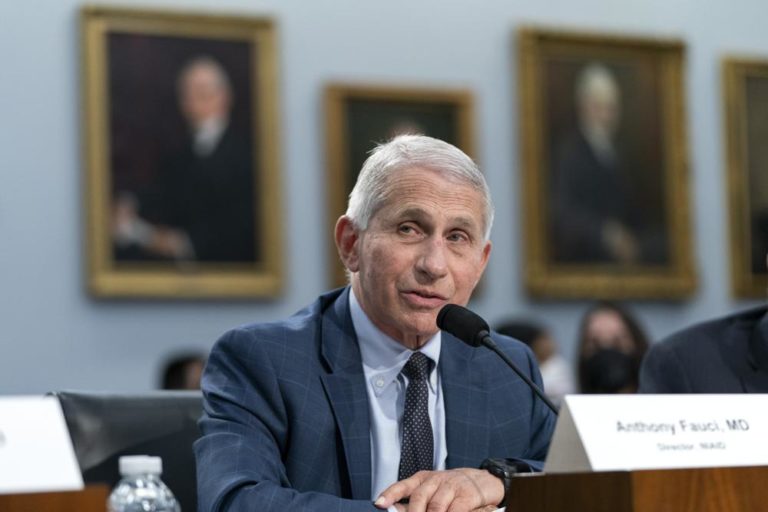
Fauci Appears to Suffer Amnesia in Deposition over Social Media Collusion

(Jacob Bruns, Headline USA) In a recent deposition, former COVID Czar Dr. Anthony Fauci appeared to forget many important details while being questioned about his involvement the coronavirus research in Wuhan, China.

The transcript of the conversation was released by Missouri Attorney General Eric Schmitt, and it contains the details of Fauci’s deposition hearing as a part of an ongoing lawsuit challenging the Biden Administration’s violations of the constitution, especially in respect to freedom of speech, during the COVID lockdowns.

More specifically, the investigation concerns Fauci’s relationship with EcoHealth Alliance, run by Peter Daszak, which was closely related to the possible outbreak in Wuhan, China, reported Zero Hedge.

And despite having spoken about and heard about EcoHealth Alliance perhaps hundreds of times, Fauci could only say that he was “vaguely familiar” with their work.

“I’m vaguely familiar with the fact that EcoHealth Alliance has been doing research on trying to understand the bat coronavirus emergence,” he said.

Later in the interview, Fauci also pretended to not know why he sent an article discussing gain-of-function research in China to one of his colleagues, advising that they speak about it via phone.

“Do you remember talking to [Fauci’s colleague] at all that day?” Fauci was asked.

“I might have, but I don’t recall,” he replied, later admitting that he “wanted to be briefed on the scope of what our collaborations were and the kind of work that we were funding in China.”

In another bombshell moment, Fauci was asked whether he recalled conversations with another colleague, Francis Collins, regarding whether or not NIAID may have funded coronavirus research in Wuhan.

“You know, I’m not sure exactly the point your making,” he said. “I don’t recall.”

After the transcript was released, Schmitt blasted Fauci on Twitter for his apparent amnesia.

“According to the transcript, Dr. Fauci said ‘I don’t recall’ 174 times, including when asked about emails that he sent, interviews that he gave, and other important information.”

Paul Pelosi Dressed Up as Michael Jackson in 1st Public Appearance Since Attack

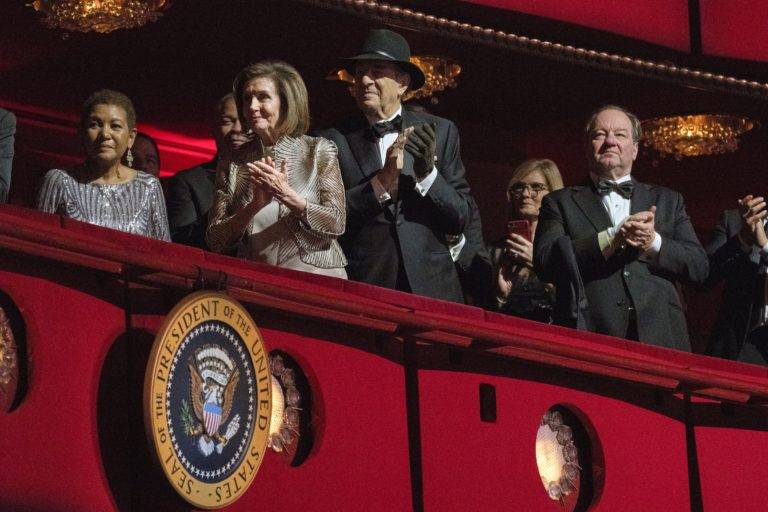
(Molly Bruns, Headline USA) Paul Pelosi, husband of retiring House Speaker Nancy Pelosi, D-Calif., made his first public appearance Sunday at the Kennedy Center Honors in Washington, D.C., just weeks after being attacked with a hammer in what appears to have been a domestic dispute with a mentally unstable “friend.”

According to the Post Millennial, Pelosi donned a hat and a single glove—an apparent homage to the fashion made iconic by the late Michael Jackson.

Like Pelosi, widespread speculation about Jackson’s eccentric lifestyle and choice of house guests ran rampant during his lifetime, although it is unclear whether the sartorial selection was purposely intended to be a nod to the King of Pop.

The event featured honorees who were contemporaries of Jackson’s, including soul great Gladys Knight and Irish rockers U2.

For a political spouse accustomed to staying behind the scenes, the Oct. 28 attack by David DePape, a well-known activist in the Bay Area, thrust the 82-year-old Paul Pelosi into the rare spotlight, coming just a week before the midterm election.

After the attack, Pelosi was hospitalized for almost a week. Doctors had to remove pieces of his skull, reshape it and fuse it back together.

“It’s going to take a while,” Nancy Pelosi told reporters last week regarding her husband’s recovery. “Head injuries … they have an impact beyond surgery. It’s a big thing.”

DePape was arrested for the attack and confessed, claiming that he was at the Pelosi house to confront Nancy.

He was charged with attempted murder, attempted kidnapping and assault.

However, there are still some unexplained details about the alleged break-in, largely due to the reluctance of law-enforcement to release body-camera footage and several contradictory reports by media outlets.

Court documents reveal that Pelosi was in no immediate danger when the police got to the scene, and even had a short conversation with them before being attacked by DePape.

Both men were initially reported to have been in their underwear.

As the story broke, there were also reports of a third man on the scene letting the police in who has yet to be identified.

Despite the media’s best attempts to cast DePape as a crazed right winger, it was revealed that he was an illegal immigrant from Canada, a Black Lives Matter supporter and nudist living in Berkeley.

Headline USA’s Ben Sellers contributed to this report.

Biden’s Alleged ‘Secret Deal’ w/ Saudi Arabia Oil Leaders Under Scrutiny

(The Center Square) President Joe Biden raised eyebrows for his decision to drain the Strategic Petroleum Reserve this year, but now lawmakers say Biden made a quid-pro-quo deal with Saudi Arabia “to lower gas prices before the election” only to implement Green New Deal policies once the election was over.

House Oversight committee Republicans are investigating, led by U.S. Rep. James Comer, R-Ky.

Comer sent letters to several Biden administration officials, demanding documents, records and communications on the the matter.

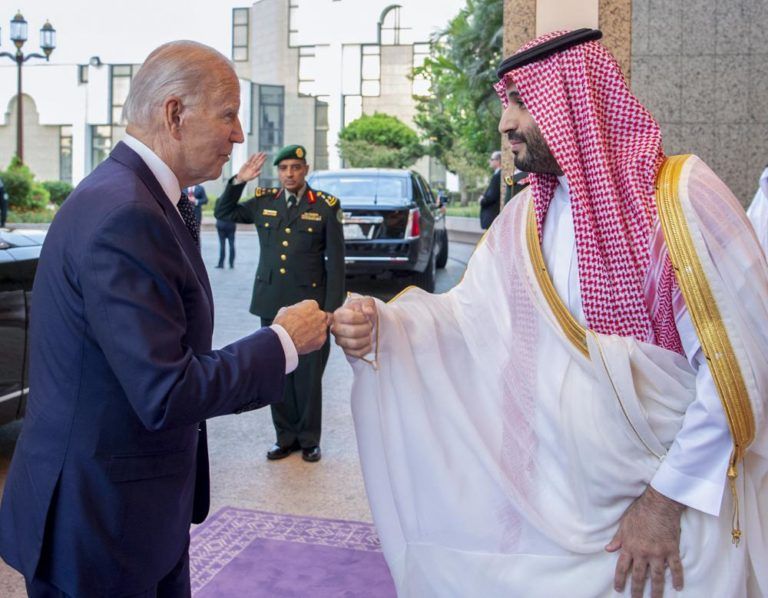
One of those letters, dated Dec. 4, went to Secretary of State Antony Blinken, raising questions about Biden’s Saudi Arabia trip over the summer.

“The New York Times reported that Biden Administration officials believed President Biden’s trip to Saudi Arabia in August 2022 ‘could shore up a Saudi commitment to convince OPEC to increase oil production,’” the letter said.

Instead, on Oct. 5, a month before the midterm election, Saudi Arabia and its affiliates in the Organization of the Petroleum Exporting Countries slashed production by 2 million barrels a day.

“According to press reports, this decision infuriated the Biden Administration officials who sought the deal to provide temporary fuel price reductions before the November midterm elections,” the letter noted. “If the Administration is brokering secret agreements to the detriment of American energy producers and for campaign purposes, the American people deserve to know.”

Gas prices hit record highs this summer, surpassing $5 per gallon for regular gasoline, before dipping down again.

The average price for regular gas nationwide is $3.40 per gallon, helped by about 200 million barrels of oil released from the Strategic Petroleum Reserve. Prices, though lower than the peak in June, are still much higher than when Biden took office.

Biden reportedly hoped those reserves and cooperation from OPEC would get prices down and help Democrats fend off midterm losses. OPEC announced it would cut production, which was expected to increase prices, but not until November. Whether intentional or not, this delayed most price increases until after election day.

Notably, gas prices have steadily dropped in recent weeks, regardless of OPEC’s decision, at least for now.

Biden officials are reportedly looking at buying oil to restock the reserves, though at a high cost to taxpayers given the elevated prices. Critics say Biden used foreign relationships and American tax dollars to artificially lower gas prices before the midterm elections.

“Joe Biden released millions of barrels from the strategic reserve because in his mind, there was a huge emergency: Democrats were at risk of losing the Senate,” said Daniel Turner, head of the energy workers advocacy group, Power the Future. “And now America has perilously low reserves, and Biden will have to refill them at a premium, but this all makes sense when you understand all Biden has ever cared about is power.”

Biden has defended his energy policies, pointing out he got gas prices down from record highs earlier this year.

“Gas prices have declined by an average of $1.60 a gallon over the past 173 days and are now back to the levels they were at in early February,” Biden said. “That’s great news.”

Republicans and the energy industry have been blasting Biden for his energy policies, but climate-change activists have praised Biden’s steps for the environment.

The investigation is one of several from Republican lawmakers emboldened by their new majority in the House of Representatives.

“Oversight Republicans have pushed senior Biden Administration officials for answers and will continue to seek their plans to reverse energy policies detrimental to the American people and our national security,” Comer said.

“With the power of the gavel, we will hold the Biden Administration responsible for recklessly attacking a critical industry that provides the American people affordable energy and good-paying job opportunities,” he added.


WEF Previews Its 2023 Agenda for Great Reset

(Jacob Bruns, Headline USA) The World Economic Forum recently released the agenda for its 2023 meeting, at which the world’s global elites will plan how to further enact the Great Reset to effect a new world order allowing them to exert hegemonic control over every facet of people’s lives, Infowars reported.

The Davos conference will be held in its traditional Switzerland locale, where political and economic powers gather on an annual basis to discuss their plans for everybody else. Next year’s conference is titled “Cooperation in a Fragmented World,” and will focus on addressing inflation, the war in Ukraine and the fallout from the COVID-19 pandemic.

“The world today is at a critical inflection point. The twin triggers of the COVID-19 pandemic and the war in Ukraine rattled an already brittle global system,” the WEF wrote, describing the forthcoming conference.

“Economic growth in the world’s largest economies is stalling, while navigating headwinds from rising food and energy prices, ” it continued. “For the first time since the 1970s, the world is facing a precarious disequilibrium with growth and inflation moving in oppositive directions.”

The WEF also noted that the crisis must be addressed by increased centralized controls, lest disaster strike.

“This is occurring alongside heightened geo-economic fragmentation, financial sector vulnerabilities, including stretched asset prices and high debt levels, and a climate crisis spiralling out of control, which could magnify any growth slowdown, particularly in emerging markets,” it said. “Unless these systemic and interconnected risks are addressed, the promise of a ‘decade of action’ may become a decade of uncertainty and fragility.”

More specifically, the WEF plans to create extensive regulations in relation to the following topics:

  • Climate change, especially related to food supply
  • Inflation and systems of investment
  • The creation of new social tracking technologies, boosted by global cooperation
  • The proliferation of digital currencies and vaccine passports
  • The final assault on private property

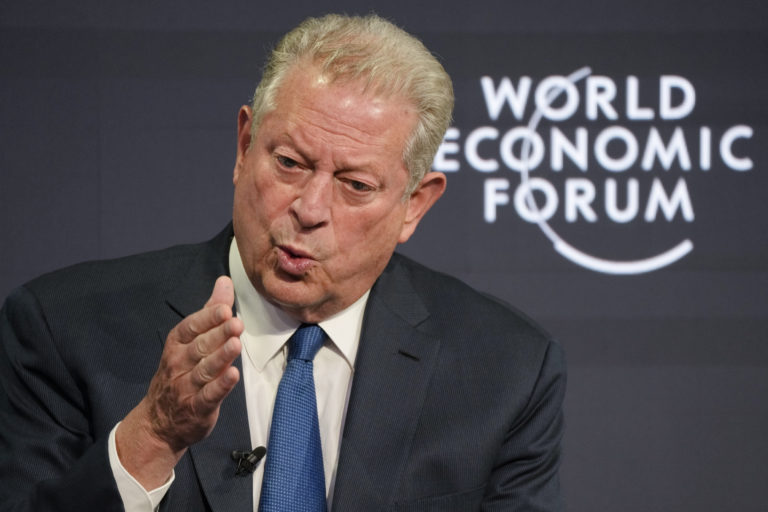
The list of 2,500 elites who have been invited includes notables such as BlackRock CEO Larry Fink, International Monetary Fund Director Kristalina Georgieva, former U.S. Vice President Al Gore, European Central Bank President Christine Lagarde, and Massachusetts Institute of Technology President L. Rafael Reif.

SCOTUS Hears Colorado Case over Free Speech, LGBT Rights

0

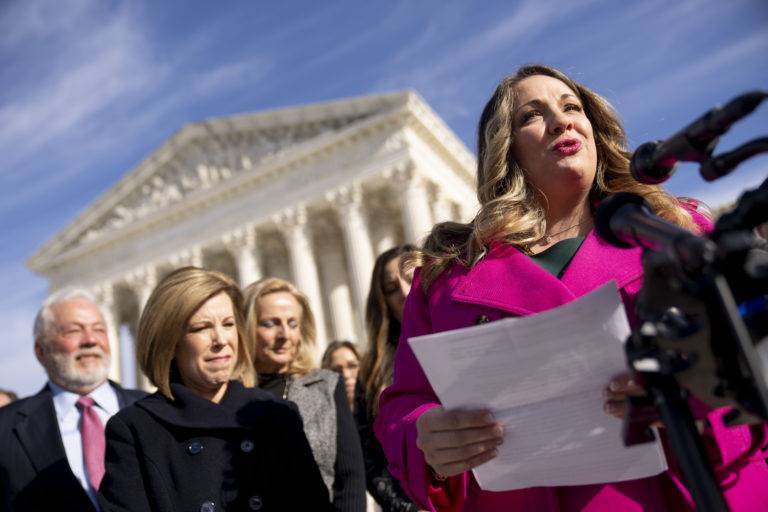
(The Center Square) Oral argument before the U.S. Supreme Court began on Monday in a Colorado-based case that pits free speech rights against LGBT rights.

Lorie Smith, a Christian and graphic designer, wants to create wedding websites only for straight couples but is barred from doing so by Colorado’s public-accommodation law.

The attorney for Smith argued before the court on Monday morning that the state compels Smith’s speech in a way that violates her religious beliefs.

“[Smith] serves all people deciding what to create based on the message, not who requests it,” Kristen Waggoner, general counsel for the Alliance Defending Freedom, which is representing Smith, told the justices. “But Colorado declares her speech a public accommodation and insists that she create and speak messages that violate her conscience.”

Justice Sonia Sotomayor questioned whether a website designer could deny making a marriage website for an interracial marriage or a marriage among disabled people.

“If I disagree with their personal characteristics like race or disability, I can choose not to sell to those people?” she asked.

Waggoner responded that the scenario would be “highly unlikely.”

“The line is that no one on any side of any debate has to be compelled to express a message that violates their core convictions,” she added.

Colorado Solicitor General Eric Olson, who presented arguments on behalf of the state, said Colorado’s public-accommodation law targets discriminatory sales and called the plaintiffs’ free speech exemption request “sweeping.”

“Granting such a license to discriminate would empower all businesses that offer what they believe to be expressive services – from architects, to photographers, to consultants – to refuse service to customers because of their disability, sexual orientation, religion, or race,” he told the justices.

Justice Samuel Alito questioned whether a business offering customized wedding vows or speeches can be forced to “write vows or speeches that espouse things they loath.”

Olson responded that they can’t be forced to “write vows or speeches that espouse things they loath because that’s not a protected characteristic.”

A decision in 303 Creative LLC v. Elenis is expected next summer.

Walker Needs Strong Election-Day Turnout to Save U.S. Senate

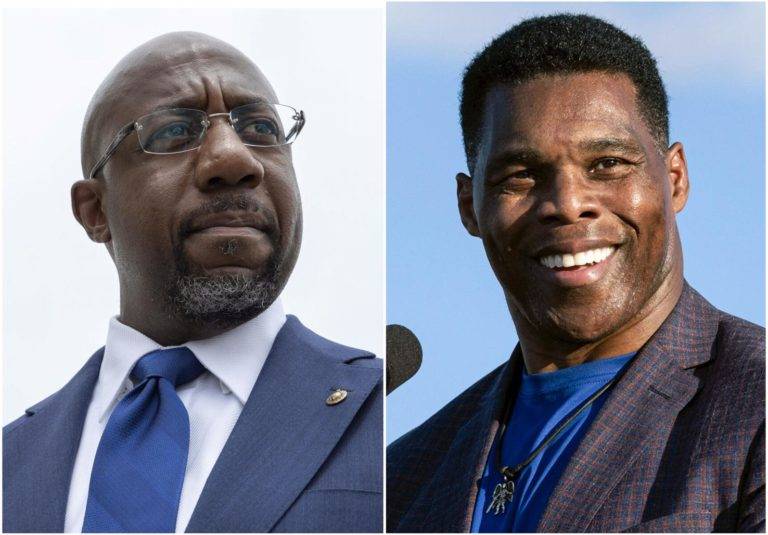
(T.A. DeFeo, The Center Square) With the fate of the filibuster and key judicial appointments among the many things hanging in the balance,  football great Herschel Walker needed a strong turnout in Georgia’s runoff election Tuesday as momentum appeared to favor his rival, incumbent Democrat Sen. Raphael Warnock.

More than a quarter of Georgia’s “active” voters had cast ballots early for Tuesday’s U.S. Senate runoff, state officials said.

While some analysts saw this as a good sign for Walker, given the older demographics involved in the early voting, mail-in ballots traditionally have favored Democrats in Georgia and elsewhere.

During the 2020 election, for example, ballot drop-offs in Fulton County and other densely populated areas were flooded with ballots dropped off by so-called mules—paid Democrat operatives who appeared to flout the state’s prohibitions on ballot-harvesting.

In the current runoff, as of Monday, more than 1.8 million Georgians had voted, including more than 1.7 million who cast ballots in person.

Additionally, the 352,953 Georgians who voted on Friday surpassed the previous one-day record of 252,715 voters for early voting, which the state recorded during the 2016 presidential election.

Neither candidate received more than 50% of the vote during the Nov. 8 election, setting up Tuesday’s showdown.

“Georgia has struck the perfect balance between accessibility and security,” Georgia Secretary of State Brad Raffensperger said in a statement.

“These historic turnout levels emphasize that any lawful voter who wants to cast a ballot can do so easily,” he continued. “Turnout and voter participation is excellent. Our elections division will continue working with county election directors to expand early voting opportunities in the future.”

Separately, Cobb County Superior Court Judge Kellie Hill ordered an extension of the deadline for some county voters to return their absentee ballots following a lawsuit filed by several parties, including the far-left ACLU of Georgia.

As part of the order, the county will accept absentee ballots from residents whose ballot request was accepted by Nov. 26 to be returned to the elections office by Dec. 9 and must be postmarked by Tuesday. These voters can also use a Federal Write-in Absentee Ballot.

“This order ensures that affected Cobb voters will be able to make their voices heard during this runoff election,” Rahul Garabadu, senior voting rights attorney at the ACLU of Georgia, said in an announcement. “But it shouldn’t take legal action to ensure that voters can participate in their democracy.”