


Silver Demand Expected to Outstrip Supply and Other Silver News

(Mike Maharrey, Money Metals News Service) The global silver market is expected to run another structural deficit in 2026 as silver investment remains strong.

This was one of several articles featured in the Silver Institute’s most recent Silver News report.

According to the Silver Institute, the underlying factors that drove silver to over $100 remain in place.

“These include tight physical supply in London, a volatile geopolitical backdrop, U.S. policy uncertainty, and concerns over the Federal Reserve’s independence. In addition, silver’s underlying supply-demand fundamentals remain supportive.”

Silver demand is forecast to outstrip supply for the sixth straight year, driven by a 20 percent increase in physical investment offtake.

Based on preliminary data compiled by the Silver Institute, silver demand outstripped supply by about 95 million ounces last year, leading to the fifth straight market deficit. Including last year’s shortfall, the 5-year market deficit will climb above 800 million ounces, an entire year of mining output.

The boost in investment demand will offset a modest decline in industrial offtake due to much higher prices. According to the Silver Institute, “While global solar installations are expected to continue rising, ongoing thrifting and substitution away from silver will result in falling silver PV demand.”

The Silver Institute expects the global economic and geopolitical environment to continue supporting precious metals this year.

“Furthermore, a still-supportive macroeconomic backdrop and forecasted strength in gold should help limit downside risks for the silver price, even though price volatility will remain a feature for the foreseeable future.”

The Silver Institute also reported some interesting technological developments in the world of silver.

  • Researchers at Stanford University have discovered that covering electrolytes in lithium-ion batteries with a layer of silver reduces the cracking, leading to longer battery life and a higher level of safety.
  • An inexpensive biosensor developed by Brazilian engineers can help detect a saliva protein linked to mental illness. Early detection allows doctors to get a jump on treatment, which increases positive outcomes. The device only costs about $2.
  • April 7th will mark the second anniversary of International Silver Day, a global observance dedicated to recognizing silver’s impact on civilization. The date was chosen because 47 (April is the 4th month of the year) is silver’s atomic number.
  • SMX has developed a molecular indicator that can be used to track silver from the mine to the consumer. The company develops invisible markers that can be embedded into materials on a molecular level, allowing them to be traced no matter what form they may take later in the supply chain. According to the Silver Institute, the technology “allows silver’s origin to be marked at the early production stage and remain in the company’s blockchain database even if the silver is refined, melted, or undergoes any process and is formed into coins, bars, ingots, jewelry, or any other configuration.
  • A Japanese team at the Institute of Science, in partnership with other researchers, has fabricated a silver-based atomic switch, which is just one molecule thick. The tiny switch can carry current stably and safely. Researchers say this technology could allow circuits in chips to be built much smaller, using less electricity and producing less heat.

Mike Maharrey is a journalist and market analyst for Money Metals with over a decade of experience in precious metals. He holds a BS in accounting from the University of Kentucky and a BA in journalism from the University of South Florida.

Iran War Creates Disruptions in Gold Market

(Mike Maharrey, Money Metals News Service) The war in Iran is already creating significant logistical disruptions to the gold market.

With its airspace closed and many flights grounded, gold stuck in Dubai is being sold at a discount.

The United Arab Emirates ranks among the world’s top gold refiners and bullion exporters, primarily serving the Asian market. It is also a conduit for gold shipments from Switzerland, the UK, and several African countries. In 2024, around 1,392 tonnes of gold flowed through the UAE.

The UAE serves as something of a middleman in global gold trade. Mining companies typically refine ore into doré bars. These bars contain anywhere from 60 to 90 percent gold mingled with other metals. Doré bars are shipped to refineries in the UAE, where they are formed into bullion bars and jewelry-grade gold that is then exported back to Asian markets.

The UAE grew into a significant refining hub due to its strategic location between Asia, Africa, and Europe, large free trade zones that lower import/export barriers, and a massive bullion and jewelry sector of its own.

The ongoing war is hampering transporters, stranding tons of gold in the Middle Eastern country.  Rather than holding on to it and paying storage fees, some dealers are opting to sell at discounts approaching $30 an ounce.

Gold is often shipped on commercial airline flights. With the war raging, officials have closed significant portions of the UAE’s airspace, and many flights have been cancelled. Even when planes are flying, a lot of dealers are reluctant to pay skyrocketing insurance rates and elevated shipping costs, especially given there is no guarantee of timely delivery. According to Bloomberg, dealers are also wary of moving gold overland to other airports in Saudi Arabia and Oman due to elevated risks and the complications of moving high-value cargo across other borders.

With gold bottled up in the UAE, other markets are reporting supply tightness. One of India’s largest gold dealers told Bloomberg, “Several cargo shipments have been delayed or stranded, leading to short-term tightness in the availability of physical bullion in India.

India ranks as the world’s second-largest gold market behind China.

Metals Focus analysts say that there is enough inventory in India to satisfy demand for the time being. Indian dealers imported large amounts of gold in January, boosting overall stocks. This is also typically a period of muted demand in India. However, a Metals Focus analyst told Bloomberg, “As of now, there is ample stock, but if this drags on for a few months, then there will be a problem.

There are also reports of refiners in other countries struggling to source doré. According to Bloomberg, India’s largest refiner gets about 10 percent of its doré from Middle Eastern mines. The company’s CEO said supplies have been significantly disrupted. He told Bloomberg that contracts for new supplies from other regions come with a 60 to 70 percent increase in logistics costs.

We saw how disruptions in the flow of metal can impact markets when tariff worries sent tonnes of silver from London to New York last spring. When Indian demand peaked in the fall, it set off a significant silver squeeze that continues to ripple through the market. 

While the gold supply isn’t as tight as silver (Silver demand has outstripped supply for five straight years), locking up tonnes of gold in the Middle East and the squeeze on refining capacity may well cause shortages in some markets, leading to local price spikes. The longer the war drags on, the higher the possibility of more serious disruptions. At best, we should probably expect elevated price volatility.


Mike Maharrey is a journalist and market analyst for Money Metals with over a decade of experience in precious metals. He holds a BS in accounting from the University of Kentucky and a BA in journalism from the University of South Florida.

Report: Iran’s New Supreme Leader is Already Wounded

(Headline USAIran named the hard-line Ayatollah Mojtaba Khamenei to succeed his late father as supreme leader on Monday, signaling no letup in the war launched by the United States and Israel. Oil prices surged as Iran attacked regional energy infrastructure and the U.S. and Israel bombed targets across Iran.

However, the younger Khamenei may already be seriously wounded, according to Iranian state TV.

“In one report on his ascension to Supreme Leader on Iranian state TV, it refers to him as being wounded in the war,” the Daily Mail reported Monday. “The anchor describes him as ‘janbaz’, or wounded by the enemy, in the ‘Ramadan war,’ which is how media in Iran refer to the current conflict.”

The Iranian outlet reportedly didn’t not elaborate on how he was injured.

With Iran’s theocracy under assault for more than a week, the country’s Assembly of Experts chose the secretive, 56-year-old cleric with close ties to the paramilitary Revolutionary Guard as the new supreme leader. The Guard has been firing missiles and drones at Israel and Gulf Arab states since Ayatollah Ali Khamenei, who had ruled Iran for 37 years, was killed during the war’s opening salvo.

The appointment marked a new sign of defiance by Iran’s embattled leadership after more than a week of heavy U.S. and Israeli bombardment, suggesting that Tehran is not close to giving up on what it considers a fight for the country’s existence.

World markets plummeted following the news, and Brent crude oil, the international standard, surged to nearly $120 a barrel on Monday, about 65% higher than when the war started, before retreating.

Iran’s attacks in the Strait of Hormuz have also all but stopped tankers from using the key shipping lane through which a fifth of the world’s oil is carried. Fire broke out at an oil facility that Iran attacked in the United Arab Emirates, Bahrain’s only oil refinery was apparently also hit, and Saudi Arabia said it had intercepted several drones attacking its Shaybah oil field.

In Israel, sirens blared multiple times on Monday as Iran’s drones and missiles were unrelenting. A man was killed in central Israel in a missile strike, the first such death in Israel in a week, and a woman was wounded.

Israel said it struck the Iranian city of Isfahan, hitting command centers for the Revolutionary Guard and its volunteer Basij force, as well as a rocket engine production facility and missile launch sites. There was no immediate confirmation from Iran.

Turkey meanwhile said NATO defenses had intercepted a ballistic missile that entered the country’s airspace for the second time since the start of the war.

New Iranian leader seen as even more hard-line than his father

The younger Khamenei, who has not been seen in public since the war started, was long considered a potential successor — even before the Israeli strike killed his father. His wife, Zahra Haddad Adel, was killed in the same Israeli strike that killed the 86-year-old Ayatollah Ali Khamenei.

Political figures within Iran have criticized handing over the supreme leader’s title based on heredity, comparing it to the monarchy overthrown in the 1979 Islamic Revolution. But top clerics in the Assembly of Experts apparently voted for continuity.

Khamenei, who is seen as even more hard-line than his late father, will now be in charge of Iran’s armed forces and any decision about Tehran’s nuclear program.

While Iran’s key nuclear sites are in tatters after the U.S. bombed them during the 12-day Israel-Iran war in June, it still has highly enriched uranium that’s a technical step away from weapons-grade levels. Khamenei could choose to do what his father never did — build a nuclear bomb.

Israel has already described him as a potential target, while U.S. President Donald Trump has called him “unacceptable” and dismissed him as a “lightweight.”

Both the Revolutionary Guard and the Iran-backed Lebanese militant group Hezbollah issued statements in support of Khamenei.

Top Iranian security official Ali Larijani, speaking to Iranian state television, praised the Assembly of Experts for “courageously” convening even as airstrikes continued in Tehran. He said the younger Khamenei had been trained by his father and “can handle this situation.”

Regional anger grows as energy infrastructure is hit and oil prices spike

Saudi Arabia lashed out at Iran following a thwarted drone attack on its massive Shaybah oil field, saying Tehran would be the “biggest loser” if it continues to attack Arab states.

In the UAE, authorities said two people were wounded by shrapnel from the interception of Iranian missiles over the capital, Abu Dhabi.

Iran also attacked Kuwait, Qatar and Bahrain, where it hit a residential area, wounding 32 people, including several children, according to authorities. Another attack appeared to have started a fire at Bahrain’s only oil refinery, sending thick plumes of smoke into the air.

Bahrain has also accused Iran of damaging one of its desalination plants, though its electricity and water authority said supplies remained online. Desalination plants supply water to millions of residents in the region, raising new fears of catastrophic risks in parched desert nations.

On Monday, Bahrain’s state oil company declared force majeure for its oil shipments, the state-run Bahrain News Agency reported, a legal maneuver releasing a company of its contractual obligations because of extraordinary circumstances. It insisted that local demand could still be met.

In Iraq, air defenses downed a drone as it attacked a U.S. military compound inside the Baghdad International Airport, a security source told The Associated Press, speaking on condition of anonymity because they were not authorized to speak to the press. No injuries or damage were reported. It was not immediately clear who was behind the attack, but Iran-backed militias have previously targeted the base.

Elsewhere, the U.S. military said a service member died of injuries from an Iranian attack on troops in Saudi Arabia on March 1. Seven U.S. soldiers have now been killed.

The U.S. State Department early Monday ordered nonessential personnel and families of all staff to leave Saudi Arabia following the escalation in attacks.

Eight other U.S. diplomatic missions have ordered all but key staff to leave: Bahrain, Iraq, Jordan, Kuwait, Lebanon, Qatar, the United Arab Emirates and the consulates in Karachi, Pakistan, and Adana, Turkey.

Israel launches new strikes on Lebanon

Smoke billowed over Beirut after Israel carried out airstrikes on its southern suburbs Monday.

Ahead of the strikes, the Israeli army said it would operate against targets associated with the Hezbollah-linked financial institution al-Qard Al-Hasan — which Israel said finances the militant group — and repeated its warning to residents of Beirut’s southern suburbs to flee.

The war has killed at least 1,230 people in Iran, at least 397 in Lebanon and 11 in Israel, according to officials. Another person died in Israel of an asthma attack on her way to a shelter. Israel reported its first soldier deaths on Sunday, saying two were killed in southern Lebanon, where it is fighting Hezbollah.

Adapted from reporting by the Associated Press

Man Convicted for Trying to Hire Undercover FBI Agents as Hitmen

(Headline USAA Pakistani business owner who tried to hire undercover FBI agents posing as hitmen to kill a U.S. politician was convicted Friday in a trial that showcased allegations of Iran-backed plotting on American soil.

As the Iran war unfolded in the Mideast, Asif Merchant testified in a U.S. court that he sought to put an assassination in motion during the 2024 presidential campaign — a plot that was quickly disrupted by American investigators before it had a chance to proceed.

A jury in Brooklyn convicted Merchant on terrorism and murder for hire charges. He faces up to life in prison.

The verdict after only a couple hours of deliberations followed a weeklong trial that included remarkable testimony from Merchant himself.

Merchant told the jury he was carrying out instructions from a contact in the Islamic Republic’s powerful paramilitary Revolutionary Guard. According to Merchant, the handler never specified a target but broached names including then-candidate Donald Trump, then-President Joe Biden and Nikki Haley, the former U.N. ambassador who was also in the race for a time.

The Iranian government has denied trying to kill U.S. officials.

The nascent plot fell apart after Merchant showed an acquaintance what he had in mind by using objects on a napkin to depict a shooting at a rally. He asked the man to help him hire assassins. Instead, he was introduced to undercover FBI agents who were secretly recording him, as had the acquaintance.

Merchant told the supposed hitmen he needed services that could include killing “some political person” and paid them $5,000 in cash in a parked car in Manhattan.

Merchant’s attorney, Avraham Moskowitz, didn’t immediately reply to a message seeking comment.

Merchant, 47, worked for Pakistani banks for decades before going into clothing and other businesses. He has two families, in Pakistan and Iran, and he sometimes visited the U.S. for his garment business.

Merchant testified that he met a Revolutionary Guard intelligence operative about three years ago. The contact gave him countersurveillance training and assignments including the assassination scheme, Merchant said.

He maintained that he had to do his handler’s bidding to protect loved ones in Iran. The defendant said he reluctantly went through the motions but thought he’d be arrested and explain his situation to authorities before anyone was killed.

“I was going along with it,” he said, speaking in Urdu through a court interpreter.

Prosecutors emphasized that Merchant admitted taking steps to enact the plan on behalf of the Revolutionary Guard, which the U.S. considers a foreign terrorist organization, and he didn’t proactively go to authorities.

Instead, he was packing for a flight to Pakistan when he was arrested on July 12, 2024, a day before an unrelated attempt on Trump’s life in Butler, Pennsylvania. Officials said it appeared the Butler gunman acted alone but that they had been tracking a threat on Trump’s life from Iran, a claim that the Islamic Republic called “unsubstantiated and malicious.”

When Merchant subsequently spoke to FBI agents to explore the possibility of a cooperation agreement, he didn’t say he had acted out of fear for his family.

Prosecutors argued that he didn’t back up a defense of acting under duress. Merchant sought to persuade jurors he simply didn’t think the agents would believe him because they seemed to “think that I am some type of super-spy,” which he said he was “absolutely not.”

However, Merchant’s actions can hardly be called an assassination attempt. Rather, the available evidence suggests that Merchant was the target of a highly controlled FBI sting operation, and that he never posed a threat to Trump.

Indeed, the U.S. was monitoring Merchant before he even entered the U.S. in April 2024, and officials let him into the country to track him and see where he’d go.

Moreover, an FBI informant drove Merchant around while he was here, and introduced him to two undercover agents posing as “hitmen.” Merchant allegedly paid those two agents $5,000 as a downpayment for his plot—which also included staging a protest and stealing documents—and he was arrested as he was attempting to leave the country.

FBI whistleblower Steve Friend described the case as manufactured terrorism.

“The FBI sponsored Merchant’s arrival to the US. He “planned” to recruit dozens of fake protesters, steal classified documents from politicians, and hire hit men from Manhattan night clubs for $5k that he had to borrow from a cousin,” Friend said. “Classic FBI entrapment of a retard.”

Adapted from reporting by the Associated Press


Oil Blasts Through $100 as Iran War Escalates

(Headline USAOil prices have eclipsed $100 per barrel for the first time in more than three and a half years as the Iran war hinders production and shipping in the Middle East.

The price for a barrel of Brent crude, the international standard, was at $101.19 shortly after trading resumed on the Chicago Mercantile Exchange, up 9.2% from its settlement price of $92.69 Friday.

West Texas Intermediate, the light, sweet crude oil produced in the United States, was selling for about $107.06 a barrel. That’s 16.2% higher than its Friday settlement price of $90.90.

Both could rise or fall as market trading continues.

The increases followed U.S. crude prices jumping by 36% and Brent crude prices rising 28% last week. Oil prices have surged as the war, now in its second week, ensnared countries and places that are critical to the production and movement of oil and gas from the Persian Gulf.

Roughly 15 million barrels of crude oil — about 20% of the world’s oil — typically are shipped every day through the Strait of Hormuz, according to independent research firm Rystad Energy. The threat of Iranian missile and drone attacks has all but stopped tankers from traveling through the strait, which is bordered in the north by Iran, carry oil and gas from Saudi Arabia, Kuwait, Iraq, Qatar, Bahrain, the United Arab Emirates and Iran.

Iraq, Kuwait and the UAE have cut their oil production as storage tanks fill due to the reduced ability to export crude. Iran, Israel and the United States also have attacked oil and gas facilities since the war started, exacerbating supply concerns.

The last time U.S. crude futures traded above $100 per barrel was June 30, 2022, when the price reached $105.76. For Brent, it was July 29, 2022, when the price hit $104 per barrel.

The global surge in oil prices since Israel and the U.S. attacked Iran on March 1 has rattled financial markets, sparking worries that higher energy costs will fuel inflation and lead to less spending by U.S. consumers, the main engine of the economy.

In the U.S., a gallon of regular gasoline rose to $3.45 on Sunday, about 47 cents more than a week earlier, according to AAA motor club. Diesel was selling for about $4.60 a gallon, a weekly increase of about 83 cents.

The price of natural gas has also climbed, though not as much as oil. It rose about 11% last week and ended Friday at $3.19 per 1,000 cubic feet.

If oil prices stay above $100 per barrel, some analysts and investors say it could be too much for the global economy to withstand.

Over the weekend, Israel’s military struck oil depots in Tehran and four oil storage tankers and a petroleum transfer terminal.

Mohammad Bagher Qalibaf, the speaker of Iran’s parliament, said the war’s impact on the oil industry would spiral, warning it soon could become harder to produce and sell oil.

Iran exports roughly 1.6 million barrels of oil a day, mostly to China, which may need to look elsewhere for supply if Iran’s exports are disrupted, another factor that could increase energy prices.

Adapted from reporting by the Associated Press

Report: Trump Has ‘Serious Interest’ in Sending Troops Into Iran

(Dave DeCamp, Antiwar.comPresident Trump has expressed “serious interest” in the idea of sending US troops into Iran, NBC Newsreported on Saturday, citing US officials.

The officials said that Trump has discussed the idea of deploying ground troops with aides and senior Republicans in Congress. Publicly, the president has refused to rule out the idea of putting “boots on the ground” in Iran.

The US has about 50,000 troops in the Middle East, nothing near the force that would be needed for a full-scale invasion, but sending in special operations teams is on the table.

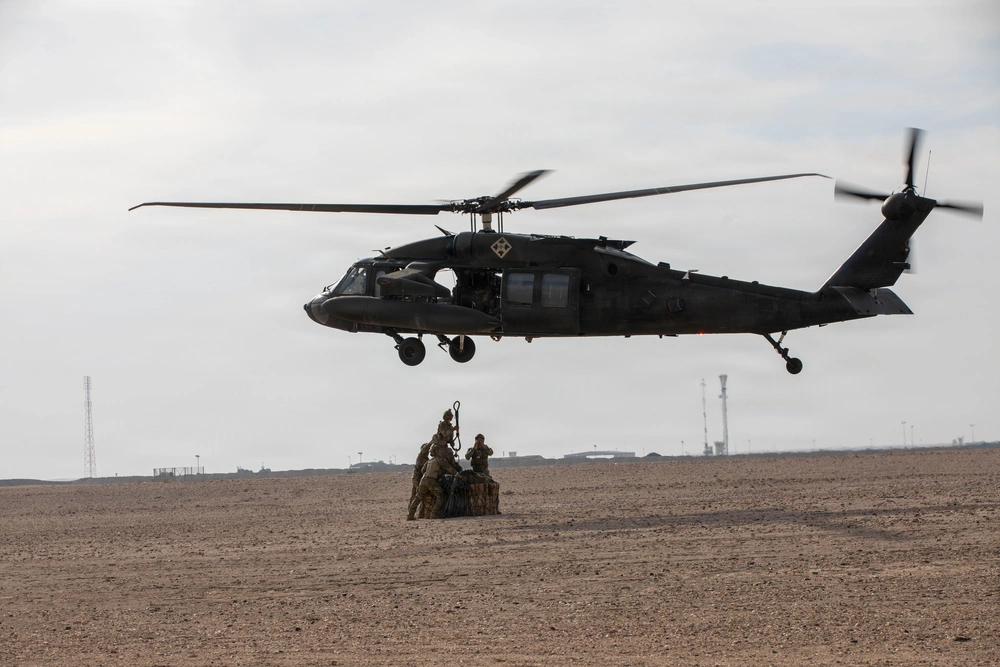
US soldiers conduct UH-60 Blackhawk sling-load training during a Pathfinder School field training exercise in Kuwait, January 27, 2026 (US Army photo)

According to a report from Axios, the US is considering sending in a team of special operations forces to secure Iran’s stockpiles of uranium that’s enriched at the 60% level, which is still below the 90% needed for weapons-grade. The night before the US and Israel began, Oman’s foreign minister said Tehran was willing to hand the uranium to the US as part of a diplomatic deal.

The Axios report said the potential special-operations raid to seize the uranium wouldn’t happen until a later stage of the war. One major issue with the plan is the fact that it’s believed the enriched uranium is still buried under the rubble as a result of the US airstrikes on Iran’s nuclear facilities in the June 2025 war.

Another option for a special operations raid would be attempting to seize Kharg Island, an Iranian island in the Persian Gulf where a major oil terminal that handles most of Iran’s oil exports is located.

Amid reports of potential US troops on the ground in Iran, Iranian Foreign Minister Abbas Araghchi said that the Iranian military was ready to face them. “No, we are waiting for them,” Araghchi said when asked if Iran was afraid of a US invasion. “Because we are confident that we can confront them, and that will be a big disaster for them.”

This article originally appeared at Antiwar.com.


US Military Confirms Death of 7th American Soldier in Iran War

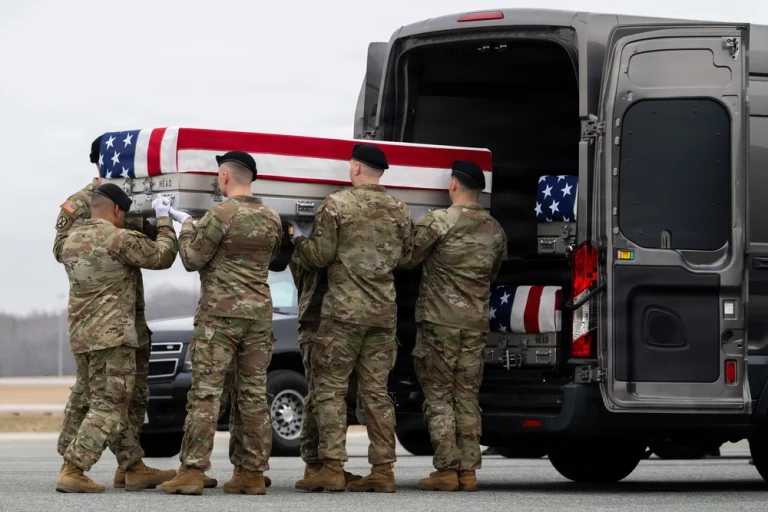
(Dave DeCamp, Antiwar.comUS Central Command on Sunday confirmed the death of a seventh US soldier in President Trump’s war with Iran, as Iranian missiles and drones have successfully struck US bases in the region.

CENTCOM said the soldier had died of wounds sustained by an earlier Iranian attack on US troops in Saudi Arabia. “Last night, a US service member passed away from injuries received during the Iranian regime’s initial attacks across the Middle East. The service member was seriously wounded at the scene of an attack on US troops in the Kingdom of Saudi Arabia on March 1,” the command said.

“This is the seventh service member killed in action during Operation Epic Fury. Major combat operations continue. The identity of the fallen warrior will be withheld until 24 hours after next of kin notification,” CENTCOM added.

The six other soldiers who have been confirmed to have died were killed by an Iranian drone attack on a make-shift operations center at a port in Kuwait. According to media reports, the six US troops had not been given any warning that the drone was approaching.

President Trump and his top officials have been warning that more Americans are likely to be killed as the war drags on, as the Pentagon has acknowledged that its forces are having trouble intercepting Iran’s Shahed drones.

According to a tally from Al Jazeera, Iranian attacks have also killed at least 11 people in Israel, and several people have been killed in Gulf states that host US military bases. After nine days, US-Israeli strikes on Iran have killed more than 1,300 people, according to the Iranian government’s figures. A US-based rights group has said that it has confirmed the death of more than 1,200 Iranian civilians.

Islamist Mass Shooter Worked at Tesla

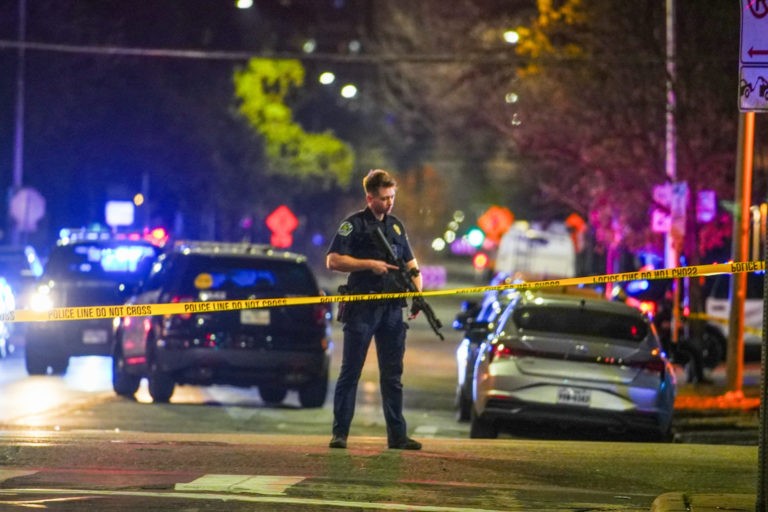
(Ken Silva, Headline USA) The gunman who opened fire outside a crowded Texas bar and killed two people in an attack that wounded 14 others was previously subject to an assault complaint at his place of employment: a Tesla factory in Austin.

The Austin American-Statesman reported the news about 53-year-old Ndiaga Diagne, revealing that he’s the subject of a co-worker’s lawsuit that accuses Tesla of failing to maintain a safe work environment. The plaintiff in the lawsuit, Lillian Mendoza Brady, reportedly said she only learned the identity of her assaulter after he appeared injured the news in connection to the March 1 shooting.

“If Tesla had information about Diagne’s violent behavior before he attacked Lillian Brady and failed to act, then not only might her assault have been prevented, it may have been an early warning sign of a far greater danger,” said Bob Hilliard, Brady’s attorney, as reported by the American-Statesman. “This lawsuit seeks to determine what Tesla knew and why this early incident wasn’t taken seriously.”

According to the lawsuit, the assault took place on a company-allowed prayer break.

“Brady repeatedly asked Tesla for her assailant’s name so she could press charges, but the company refused. She’d never seen Diagne before that day,” the American-Statesman reported.

Diagne is originally from Senegal, according to multiple people briefed on the investigation. He first entered the U.S in 2000 on a B-2 tourist visa and became a lawful permanent resident six years later after marrying a U.S. citizen, according to the Department of Homeland Security.

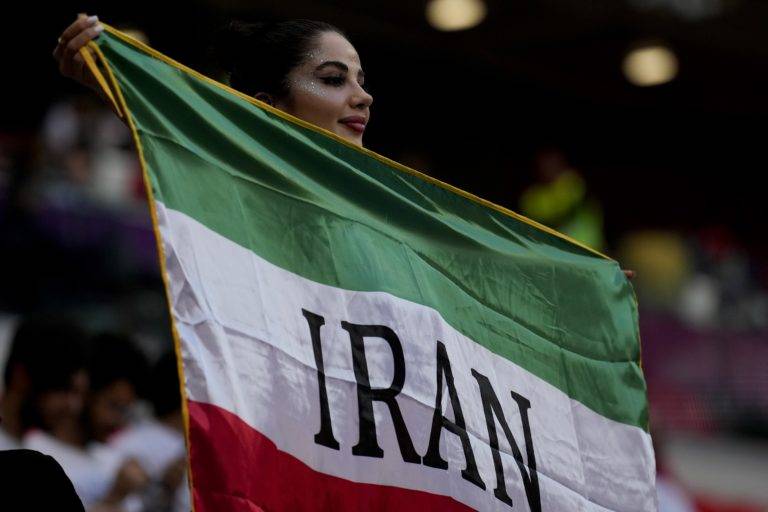
Officers in Austin shot and killed the gunman, who used both a pistol and a rifle to carry out the attack, police said. The FBI said the shooting was being investigated as a potential act of terrorism, due at least in part to the fact that he was wearing a sweatshirt that said “Property of Allah,” and another shirt with an Iranian flag design.

Federal authorities said that Diagne had not been on their radar.

The Associated Press contributed to this report.

Ken Silva is the editor of Headline USA. Follow him at x.com/jd_cashless.

US Intelligence Report: War Unlikely To Achieve Regime Change in Iran

(Dave DeCamp, Antiwar.comA classified report from the US’s National Intelligence Council has found that even a large-scale US assault on Iran is unlikely to oust the Islamic government and military establishment, The Washington Post reported on Saturday.

The intelligence report was completed about one week before the US and Israel launched the war on February 28 with major airstrikes, including Israeli strikes that killed Iranian Supreme Leader Ayatollah Ali Khamenei. Despite the slaying of Khamenei, the government remains intact, and Iran’s military continues to launch counterattacks against Israel and US bases in the region.

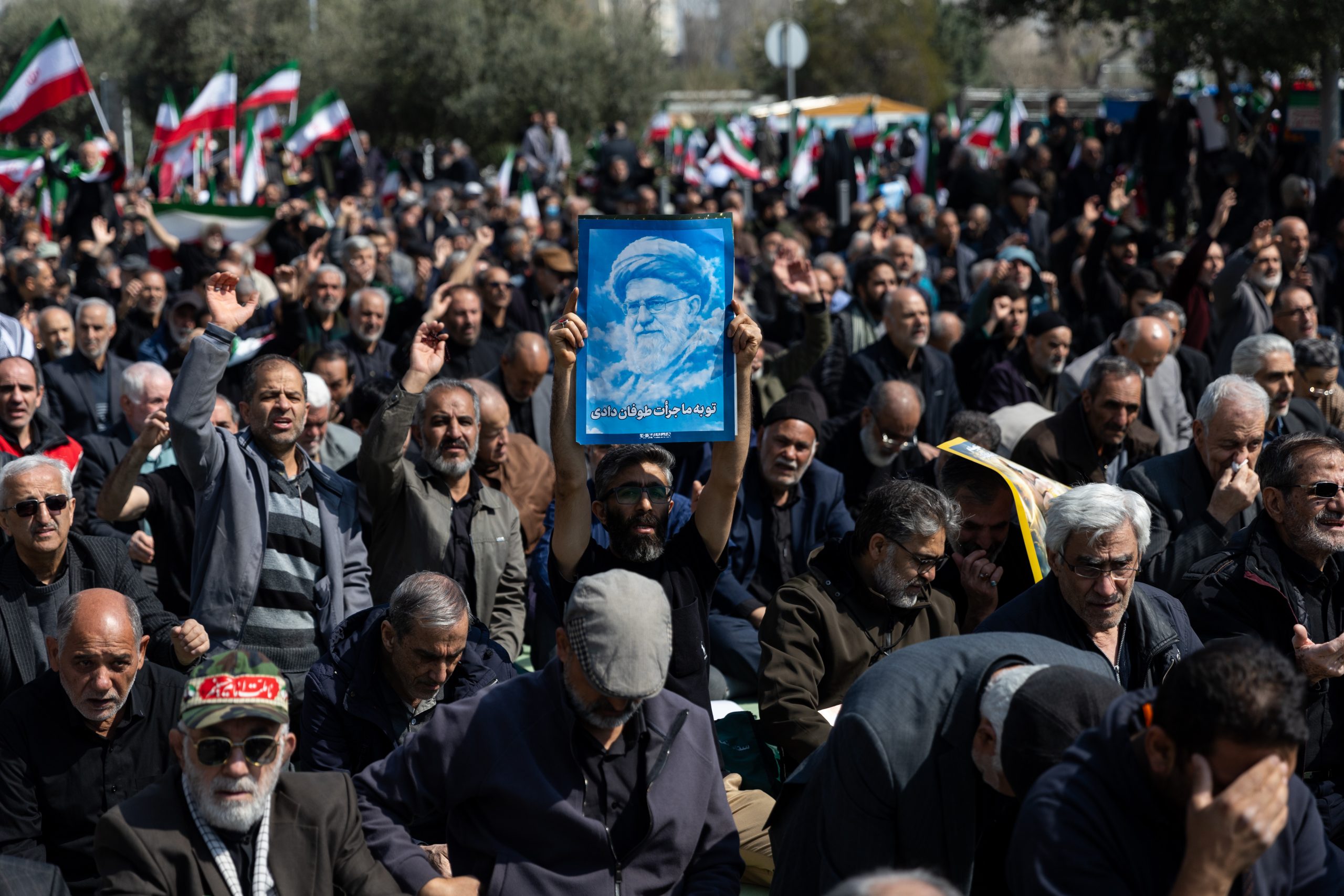
Thousands of pro-government Iranians attend Friday prayers in Tehran at Imam Khomeini prayer hall during US-Israeli attacks on Iran on March 6, 2026 (ZUMA Press Wire via Reuters Connect)

The report said that if Khamenei were killed, the Iranian government would undertake the process to replace him, which it has done by appointing a temporary council to oversee the transition until a new leader is chosen by the Assembly of Experts. A source told the Post that it was “unlikely” the fractured opposition in Iran would be able to take power.

While several Trump administration officials have denied that the US is seeking regime change, President Trump has made clear that it’s his ultimate goal. He said last week that he wanted a say in choosing Iran’s next leader and called for the country’s “unconditional surrender.”

US officials also told the Post that, so far, there’s no sign of an uprising against the Iranian government or of fissures within it that could result in a new regime. Israeli officials have also told Israeli media that there’s no sign of Iranian military collapse despite the heavy US-Israeli air campaign.

This article originally appeared at Antiwar.com.

Veteran Suicide Rate Remains High Despite Spending Millions

(The Center Square) Veterans die by suicide at roughly twice the civilian rate, despite the Department of Veterans Affairs spending more than $500 million a year to address the problem.

In 2023, the rate of suicide for veterans was 35.2 per 100,000, up from 34.7 per 100,000 in 2022, according to the most recent figures from the VA. By comparison, the national suicide rate was 14.1 per 100,000, according to the U.S. Centers for Disease Control and Prevention.

Jim Whaley, a retired U.S. Army Lieutenant Colonel and CEO of Mission Roll Call, told The Center Square that official government figures may not fully capture the problem, suggesting the data undercounts the true scope. He also said the government has spent a millions on prevention with lackluster results.

“A lot of money has gone into suicide prevention, and it really hasn’t worked,” he said.

Whaley called for a national summit of veterans groups to address the issue. He said that in addition to the big, national organizations, small local groups need to be a part of the solution.

He also said the goal should be zero veteran suicides.

“Let’s not just try to reduce it,” he told The Center Square. “Let’s have a bold goal.”

Younger veterans, men, those with mental health problems and substance abuse problems are among those with the highest risks. Whaley said another difficult time can be during the transition from the military to civilian life.

Homelessness is another factor, Whaley said. While the two issues may seem separate, they are often linked. Homelessness, Whaley said, can be a path to suicide.

VA Secretary Doug Collins noted that his department is focused on solutions.

“Veteran suicide has been a scourge on our nation for far too long,” he said. “Most Veterans who die by suicide were not in recent VA care, so making it easier for those who have worn the uniform to access the VA benefits they have earned is key.”

Collins also said the department will, for the first time, take a look at how well the programs it already has are working.

He said it was “a serious effort to track the efficacy of the hundreds of millions the department spends per year in this area to ensure we have real solutions, not just rhetoric.”