63 Christians Face Deportation Back to China

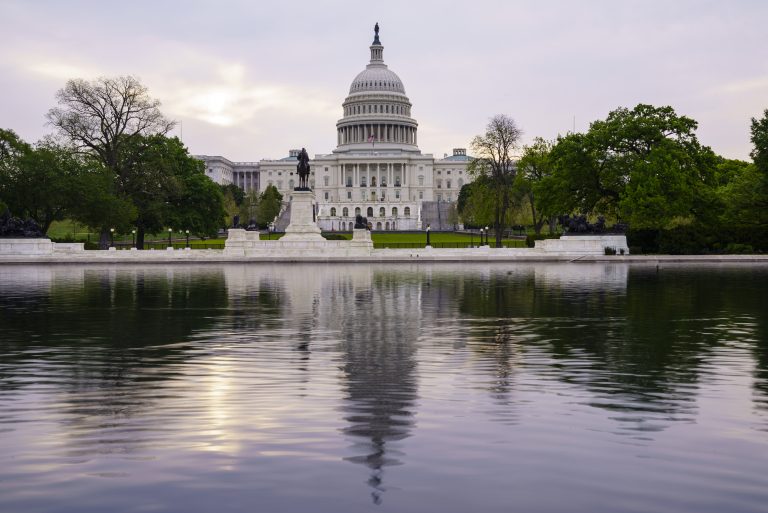
(Susan Crabtree, RealClearWire) Influential members of Congress and top human rights advocates in Washington are urging the Biden administration to take immediate action to ensure the safety of a group of Chinese Christian dissidents and two Americans detained by Thai authorities Thursday.

The group of refugees, including 35 children and 28 adults, fled China in 2019 to escape persecution. They initially sought refuge in South Korea and then Thailand while seeking emergency asylum in the United States. But the U.S. State Department and Department of Homeland Security have declined to grant the church members emergency asylum, as it has done for many others, including tens of thousands of Ukrainians fleeing their war-ravaged countries, and the first group of Afghans airlifted into the United States amid the chaotic U.S. evacuation in August 2021.

For months, human rights and religious freedom advocates have warned the State Department that Thai authorities have a history of working with the Chinese government to draw Chinese nationals out of hiding, arrest them, and send them back to their homeland, where they face imprisonment, torture, or worse.

Now the very scenario they warned about has taken place: On Thursday, Thai police raided the residence where the 63 refugees were staying and two Americans were visiting, arrested the group, fingerprinted them, and detained them in a holding facility.

The Chinese nationals face a deportation hearing Friday and could be sent back to China in a matter of days. Two American women from Tyler, Texas, Deana Brown and Stacy Nichols, are also being held, although it’s unclear whether they face charges. Brown is the founder and CEO of Freedom Seekers International, a nonprofit that helps Christians persecuted overseas to resettle in the United States.

Rep. Mike McCaul, a Texas Republican who chairs the House Foreign Affairs Committee, urged swift action by the Biden administration to help protect the group of Christian dissidents. The group of 63 are members of the Shenzhen Holy Reform Church, a Protestant Christian denomination founded in 2012 on the Chinese mainland bordering Hong Kong.

For several years, the Shenzhen Holy Reform Church existed relatively peacefully but faced increasing surveillance and intimidation tactics under President Xi Jinping’s crackdown on all religious organizations that don’t agree to state church registrations and the government’s heavy-handed rules. The church’s pastor, Pan Yongguang, was ordained by the Philadelphia Bible Reformed Church of the Presbyterian Church in America, the second-largest Presbyterian denomination in the U.S.

Most of the church members decided to flee China after state police quashed widespread protests in nearby Hong Kong amid Beijing’s tighter city control. The exiled Chinese Christian group is referred to by some advocates as the “Mayflower Church,” inspired by the Pilgrims who left their homeland for the New World four centuries ago.

“Religious freedom, and its protection abroad, are core tenets of America’s constitutional tradition,” McCaul told RealClearPolitics in a statement. “I strongly urge the administration to ensure the safety of those connected to the Mayflower Church who are threatened by the [Chinese Communist Party].”

A spokesman for Texas Sen. Ted Cruz said the senator has been closely tracking the crisis throughout the day. “It would be catastrophic and indefensible for Thai authorities to deliver these dissidents to the Chinese Communist Party,” the spokesman said. “They should be released immediately.”

The bipartisan U.S. Commission on Religious Freedom on Thursday expressed grave concern over the developing crisis and pressed the State Department to move quickly to help safeguard the group.

Levi’s Uses AI-Generated Non-White Models to Advance ‘Diversity,’ Faces Backlash

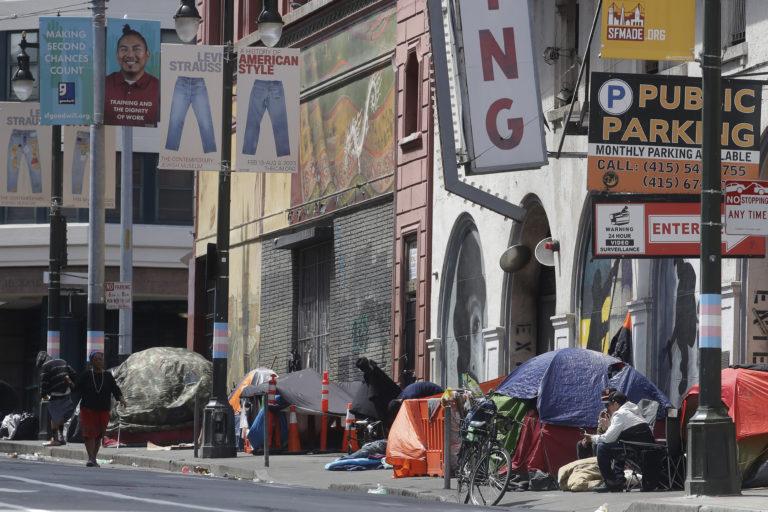
(Dmytro “Henry” Aleksandrov, Headline USA) Woke Levi Strauss & Co. recently announced a partnership with an AI company to create computer-generated fashion models to “advance diversity,” but received a backlash from the woke mob itself.

The company announced a partnership with Lalaland.ai, a digital fashion studio that curates computer-generated models on March 22.

“Later this year, we are planning tests of this technology using AI-generated models to supplement human models, increasing the number and diversity of our models for our products in a sustainable way,” a company statement stated.

“Lalaland.ai uses advanced artificial intelligence to enable fashion brands and retailers to create hyper-realistic models of every body type, age, size and skin tone. With these body-inclusive avatars, the company aims to create a more inclusive, personal and sustainable shopping experience for fashion brands, retailers and customers.”

Amy Gershkoff Bolles, Levi’s global head of digital and emergency technology strategy, doubled down on virtue signaling.

“We see fashion and technology as both an art and a science, and we’re thrilled to be partnering with Lalaland.ai, a company with such high-quality technology that can help us continue on our journey for a more diverse and inclusive customer experience.”

The decision, however, wasn’t well received by leftists and the San Francisco-based corporation went into damage-control mode this week, Blaze News reported.

In its Tuesday statement, the company said that replacing non-white models with AI fakes is not something Levi’s sees “as a substitute for the real action that must be taken to deliver on [its] diversity, equity and inclusion goals.”

“Our recent announcement of a partnership with Lalaland.ai did not properly represent certain aspects of the program. For that, we take responsibility,” the company stated.

“We do not see this pilot as a means to advance diversity or as a substitute for the real action that must be taken to deliver on our diversity, equity and inclusion goals and it should not have been portrayed as such.”

NYT: Republicans Don’t Care About Kids If They Don’t Push Leftist Agenda

(Dmytro “Henry” Aleksandrov, Headline USA) Jamelle Bouie of the New York Times published an opinion piece on Friday, in which he said Republicans don’t care about children because they won’t adopt leftist ideology.

In the beginning, Bouie stated that the Republican Party is ready to protect children by limiting the public performance of “drag and other gender-nonconforming behavior,” the “rainbow” and critical race theory propaganda in schools and social media.

Bouie then said that Republicans, however, don’t care about children because they only care about pushing their narrative.

One of his examples of Republicans prioritizing politics over children was Minnesota Republicans who didn’t support a leftist bill that would implement universal school lunch “to protect children from hunger.”

Bouie also wrote about Republicans in the United States Congress not supporting child allowance “to keep children, and their families, out of poverty.”

He also brought up health care by saying that Republicans don’t care about children if they don’t support socialist Medicaid.

Just like any other member of the corrupt mass media, Bouie talked about the recent school shooting that happened in Nashville, Tenn., without mentioning that the shooter who murdered six people — including three children — was a so-called “transgender.”

Instead, he said that the reason why these innocent people died was because of the so-called gun violence, citing the 2021 article from the Centers for Disease Control that says that firearms were the leading cause of death for children and adolescents in the United States.

“When you put all of this together, the picture is clear. The Republican Party will use the law and the state to shield as many children as possible from the knowledge, cultural influences and technologies deemed divisive or controversial or subversive by the voters, activists and apparatchiks that shape and guide its priorities,” he wrote.

“When Tucker Carlson, Christopher Rufo and Moms for Liberty say jump, their only question is: How high?”

“But when it comes to actual threats to the lives of American children — from poverty, from hunger, from sickness and from guns — then, well, the Republican Party wants us to slow down and consider the costs and consequences, and even possible futility, of taking any action to help,” he added.

Calif. Police Official Ran Fentanyl Operation from Home

(Dmytro “Henry” Aleksandrov, Headline USA) A California police union executive director allegedly ran a drug ring from her home, while using her office computer and UPS account to order and distribute drugs.

Joanne Marian Segovia, who has worked for the San Jose Police Officers Association for more than 20 years, was charged on Wednesday with attempting to unlawfully import Valeryl fentanyl, a synthetic opioid, according to the New York Post.

Authorities said that if she is convicted, Segovia faces a maximum sentence of 20 years in federal prison.

The 64-year-old allegedly received at least 61 packages at her San Jose home from countries like China, Canada and India between Oct. 2015 and Jan. 2023, the 13-page complaint stated.

Prosecutors said that the packages were marked as food supplements, wedding party favors, makeup, chocolates and other items to disguise the drugs, like deadly synthetic opioids and Tapentadol, which is normally used to treat severe pain from nerve damage caused by diabetes.

Segovia exchanged messages on WhatsApp between Jan. 2020 and March 2023 with someone who was using a country code from India, according to the prosecutors.

“I’m so sorry. I’m on a business trip because we had 2 officers that got shot! I should be home tomorrow night so ill [sic] get them shopped as soon as I can,” she wrote in one of the messages sent on May 2, 2022.

Segovia took a photo of a shipment she sent to a North Carolina woman and used the San Jose Police Officers’ Association UPS account, the complaint stated.

Homeland Security agents learned about the operation while it was investigating an Indian network that is known to ship drugs into the US.

According to the complaint, the investigators found messages from the network that mentioned “J Segovia” with an address in San Jose and the words, “180 pills SOMA 500mg.”

Segovia continued to order drugs even after she was interviewed by federal agents in Feb. 2023. She was eventually arrested on March 13 after investigators seized a parcel in Kentucky that was addressed to her, marked as containing a “clock” and came from China.

MURDOCK: Woke Leftists Counter Alleged Soft Bigotry with Good Ol’ Hardcore Racism

(Deroy Murdock, Headline USA) The Left loves to accuse whites of “implicit bias” and even “unconscious bias.”

White people, they claim, are prejudiced, largely without knowing it. Apparently, white racism is now so subliminal that one needs a CT scan to find it.

But for old-fashioned, out-in-the open racism, look Left. The same people who demand “Diversity! Equity! and Inclusion!” also scream the quiet part out loud.

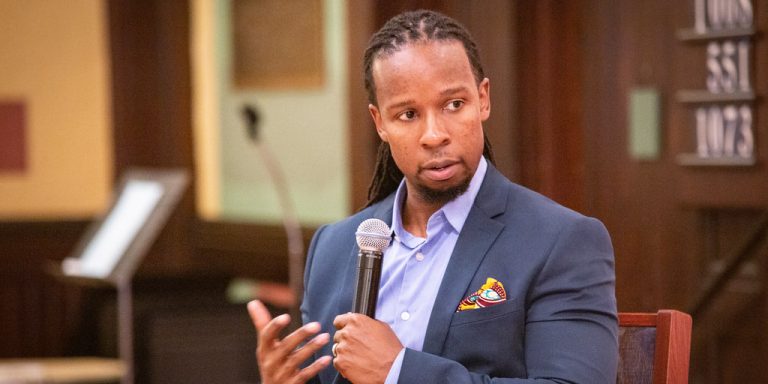
Ibram X. Kendi is the Pope of Critical Race Theory. His most famous words epitomize full-throated bigotry. “The only remedy to past discrimination is present discrimination,” Kendi wrote in June 2020. “The only remedy to present discrimination is future discrimination.”

In other words, the Left’s anti-white racism never will end.

Robin DiAngelo is a cardinal of CRT. On March 1, the author of White Fragility unveiled a policy of Jim Crow Jr.: “People of color need to get away from white people and have some community with each other,” she declared.

DiAngelo also argued that today’s employees must “see the ability to engage in these conversations” on race. She said she wants to “create a culture that actually spits out those who are resistant.”

“DiAngelo is a woke Bull Connor,” said podcast host Darrel B. Harrison, “only instead of dogs and fire hoses, she uses the divisive and factious tenets of Critical Race Theory to keep blacks in their place.”

DiAngelo’s remarks mirror those of Dilbert cartoonist Scott Adams. He said on Feb. 22: “The best advice I would give to white people is to get the hell away from black people.”

The reactions to DiAngelo’s and Adams’s words could not be more diverse. DiAngelo’s lecture fees pour in. Newspapers dumped Adams’s comic strip. He said he has lost “about 80% of my income.”

Kelisa Wing is a high priestess of CRT. The Pentagon named her chief of Diversity, Equity, and Inclusion for the 160 K-12 schools that serve military children.

Controversy erupted last September when Wing’s old, racist comments surfaced.

“I am exhausted by 99% of the white men in education and 95% of the white women,” she wrote via Twitter. “Where can I get a break from white nonsense for a while?”

“I’m so exhausted at these white folx in these PD [professional development] sessions this lady actually had the CAUdacity to say black people can be racist too,” Wing’s sentence ran on via Twitter in July 2020. “We are not the majority, we don’t have power.”

Defense Secretary Lloyd Austin—a black man and retired four-star general—annihilates this enfeebling lie.

The Pentagon announced last week that Wing will not be disciplined for these bigoted statements. Instead, she received a new, unnamed Defense post.

Even better, since she was hired, the military-base school libraries (which she oversaw) that carry her books have climbed from 11 to 49—up 445%. Their copies of her titles soared from 45 to 600 — up 1,333%.

This woman’s racism has cost her nothing. Rather than ostracism, the wind beneath Wing has lifted her to greater heights of fame and fortune.

The Left now resurrects segregation. Michigan’s Grand Valley State University just announced graduation ceremonies for “diverse identities and cultures” including “Asian,” “Black,” “Latino/a/x,” “Native,” and a “Lavender Gradation [sic] (celebrating LGBTQIA+ graduates).”

If one is white, heterosexual, or (God forbid!) both, then maybe just sleep in that day.

Meanwhile, Florida International University labors to Make Racism Great Again. FIU’s “Underrepresented Graduate Student Fellowship, for example, is openly advertised for ‘minority doctoral candidates’ only—whites, in other words, are barred from applying,” Manhattan Institute’s indispensable Chris Rufo explained in City Journal.

Standing before the Lincoln Memorial in August 1963, Dr. Martin Luther King Jr. dreamed that one day “little black boys and black girls will be able to join hands with little white boys and white girls as sisters and brothers.”

Sixty years later, the Left has devolved into the racists whom Dr. King once opposed.

Deroy Murdock is a Manhattan-based Fox News contributor. Michael Malarkey contributed research to this opinion piece.

Runaway Joe Dodges Questions on Soros-Funded Indictment of Trump

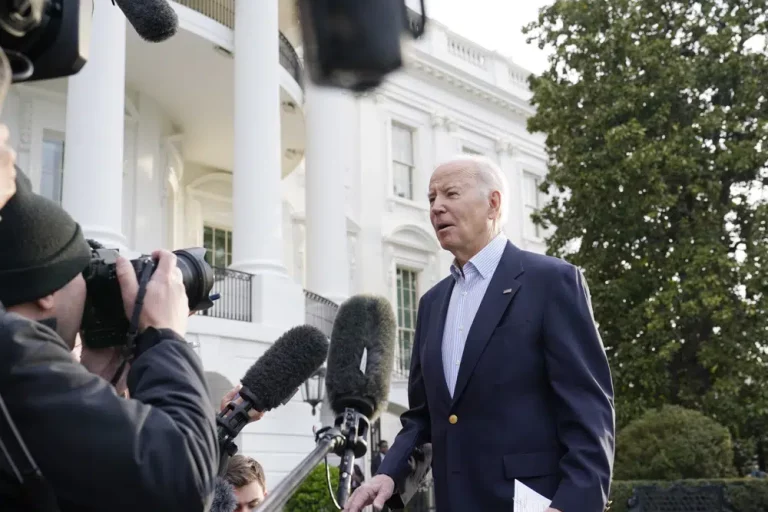
(Mark Pellin, Headline USA) As backlash continued to grow in response to the politically weaponized indictment of Donald Trump by a far-leftist Manhattan district attorney, President Joe Biden refused to comment on what many legal scholars have called an unprecedented abuse of power.

“I have no comment on that,” Biden said Friday concerning the prosecution of Trump for alleged hush-money payments made to porn star Story Daniels. When pressed if he was concerned about “possible protests in the wake of the indictment,” Biden again pleaded the Fifth.

“No, I’m not going to talk about the Trump indictment,” Biden dodged, shuffling away from reporters.

“I have no comment at all on Trump,” he said, when asked what the indictment of his chief political rival by Soros-funded DA Alvin Bragg meant for “the rule of law” in the country.

The rule of law has taken a beating in the latest Trump witch hunt, according to a growing number of legal scholars who have expressed disgust over the indictment.

“There are reports of 34 counts. But multiplying a flawed theory 34 times does not make it 34 times stronger,” wrote Jonathan Turley, Shapiro Chair of Public Interest Law at George Washington University. “Serial repetition is no substitute for viable criminal charges.”

William A. Jacobson, a Cornell law professor who runs Legal Insurrection, told the Daily Wire that “unless there is some surprise, this appears to be a politically-motivated legally-questionable resurrection of stale misdemeanor charges bootstrapped into a felony using a highly unusual legal theory.”

Rep. Matt Gaetz, R-Fla., ripped Biden for evading the indictment issue, while demonizing Republicans, further dividing the country and using the power of the White House to persecute political enemies and public dissent.

“Not only did Joe Biden not send out a message to bring the temperature down, he functionally gaslit this indictment by saying that extreme MAGA Republicans were dangerous,” Gaetz told Fox News.

“Remember, we are currently investigating Biden’s government for supercharging the notion that supporters of President Trump are ‘domestic violent extremists.’ This is a Total Witch Hunt!” Gaetz tweeted about the politicalized indictment.

Trump shared his thoughts on the matter.

“These Corrupt Democrat Prosecutors, all from poorly run and very dangerous Democrat run cities, are not going to choose the Republican Nominee, or the next President of the United States!” Trump posted on Truth Social.

Biden Thinks ‘Transgender’ Americans Shape Nation’s Soul

(Dmytro “Henry” Aleksandrov, Headline USA) In the wake of a transgender triggerman slaughtering six Christians, President Joe Biden said in his Thursday White House Proclamation on Transgender Day of Visibility that “transgender” Americans “shape [America’s] soul.”

“Transgender Americans shape our Nation’s soul — proudly serving in the military, curing deadly diseases, holding elected office, running thriving businesses, fighting for justice, raising families and much more,” Biden declared.

Biden then lamented about how “transgenders” face violence from society, while conveniently avoiding to mention the mass shooting that happened days ago in Nashville, Tenn., where a woman who “identifies” as a man entered a Christian school and murdered six people, among whom were three children.

“Just 2 days after six Christians get murdered in cold blood by a deranged trans terrorist, Joe Biden thinks it’s a good time to lecture America on the need to invest in and protect LGBTQ+ individuals,” Charlie Kirk, founder of Turning Point USA, wrote.

“What an utter disgrace this man is to America.”

While Rogan O’Handley shared the same criticism, William Wolfe, a former Defense Department deputy assistant secretary for Donald Trump, pointed out that it is not only Biden who took the side of the shooter but also his entire administration.

“There are six Christian families in TN mourning dead loved ones, killed by a transgender terrorist. There’s an entire Christian community shaken to its core,” he tweeted. “The Biden White House: ‘Our hearts go out to the trans community.'”

Tucker Carlson of Fox News correctly stated that the Biden administration would always blame the victim if the shooter is on their side.

“Trans Biden voters can execute Christian children, and the Biden White House will explain that actually… transgenderists are the real victim.”

While Biden concluded his remarks by proclaiming March 31, 2023, as Transgender Day of Visibility, normal people asked reasonable questions.

“What about a day for the victims of the Nashville mass shooting?” Ian Miles Cheong tweeted, sharing the photos of six people who were murdered in the school.

Biden’s Anti-Woman Labor Problem

(Patrice Onwuka, RealClear Wire) Female entrepreneurs are an undeniable force in the economy today. President Biden just highlighted that women own 12 million businesses during the kick-off of the Small Business Administration’s Women’s Summit.

Thanks to over a century of struggle, a woman’s place is anywhere she chooses to set her feet. For that reason, we must push back against efforts led by the president to drag women back into outdated models of work.

Earlier this month, the Senate Committee on Health, Education, Labor and Pensions held a hearing on unionization to cheerlead the overturning right-to-work laws in 27 states and boosting private-sector union participation nationwide by force.

The hearing came on the heels of the revival of Congress’s last failed attempt to unionize America. Democrat senators introduced the Richard L. Trumpka Protecting the Right to Organize Act along with a companion bill in the House of Representatives. In addition, President Biden’s nominee to head the Department of Labor, acting secretary Julie Su, has been a union ally (and business foe) dating back to her days as California’s labor secretary.

Union advocates tout a 2022 Gallup poll that found approval of labor unions reaching its highest level (71%) since 1965. However, an affinity for the idea of unions doesn’t translate into membership gains. According to the Bureau of Labor Statistics’ latest Union Membership Summary, only 10.1% of the U.S. workforce held a union job in 2022 — down from 10.3% in 2021.

Private sector workers have made their choice clear: They aren’t interested in joining unions. This is true for both sexes. Union membership for men and women plunged from highs of 24.7% and 14.6%, respectively, in 1983 to 10.5% and 9.6% in 2022.

If workers who opt not to join the union in their workplace do not want to be forced to pay dues, then they should oppose the PRO Act. If men and women bristle at the thought of union bosses collecting their private information—  including their personal cell phone numbers and home and email addresses — from their employers to later harass them for not joining the union, then they should oppose the PRO Act too.

Women who love the work-life balance they have achieved as independent contractors must loudly rebuke the PRO Act. Tucked into this bill is effectively a wholesale reclassification of the independent workforce with the goal of increased unionization in mind. The PRO Act starts from the position that all workers are employees and must prove otherwise. It would adopt a stringent “ABC test” to determine whether a worker is an independent contractor. Unfairly targeting independent work is anti-woman and anti-worker.

Independent contractors can’t be unionized. Forcing a change in their status, coupled with the overturning of right-to-work laws, would deliver a revenue bonanza for labor unions at the expense of flexible freelance and gig opportunities. At the same time, the Department of Labor has proposed its own job-destroying regulations to reclassify workers.

Has anyone asked women what they want? Women want bespoke careers: greater flexibility in hours and the ability to work from home, greater control over their financial future, and better work-life balance.

Of the 64 million people who freelanced last year, over half were women. Freelancing and gig work grant women full control over their time, talent, and treasure by freeing them from the traditional 9-to-5 model of work. Independent contracting — whether full-time, part-time, or occasionally — offers women the ability to raise children, care for aging or sick relatives, manage their own health challenges, and pursue fulfilling work. Freelancers enjoy greater income, more flexibility, greater satisfaction, better health outcomes and even more security than a traditional job.

Being reclassified as employees would rob women of these gains and lead to devastating impacts. The PRO Act is modeled after California’s reclassification legislation, Assembly Bill 5, engineered by DOL nominee Julie Su and passed in 2019. Immediately, professionals and gig workers across the state lost incomes, contracts, and clients.

Three years later, heartbreaking stories of lost businesses and livelihoods for entrepreneurs and small business owners continue to stack up as some freelancers fled the state in search of opportunity. As a national organization, Independent Women’s Forum hears from California women who have been devastated by AB5, and people nationwide who fear that the PRO Act will do the same to their careers.

Women have a right to worry that Congress and federal regulators may destroy the flexible, independent opportunities they have come to depend upon. This Women’s History Month, let’s not turn back the clock on women’s progress in the economy.

GOP Gov. Youngkin Targets Tweaks to Hemp Regulations

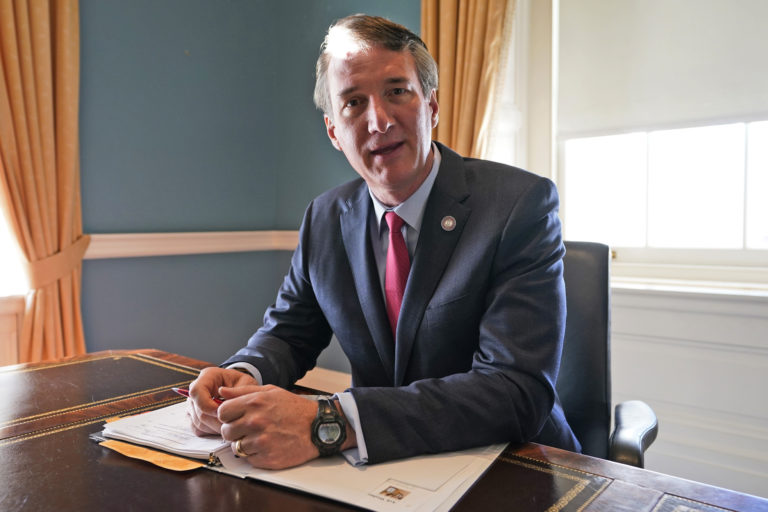
(Madison Hirneisen, The Center Square) Virginia Republican Gov. Glenn Youngkin is requesting changes to a pair of bills dealing with the regulation of hemp-derived products in the commonwealth, proposing an exemption that would allow some CBD products with THC to remain on store shelves.

After weeks of debate and several amendments, lawmakers in the General Assembly voted to pass a pair of bills that limits the amount of THC – a chemical found in the marijuana plant that can be intoxicating to consumers – included in a hemp product to a concentration of 0.3% and two milligrams per package. The bills also establish labeling, testing and packaging requirements for hemp-derived products.

Lawmakers in the General Assembly who brought the bills forward voiced concern about consumer safety, citing reports of children across the commonwealth consuming products containing THC and becoming ill from them. Products containing THC, including Delta-8 edibles, have been largely unregulated in the commonwealth.

Youngkin’s proposed changes to the bills would allow certain products containing both THC and CBD – a non-intoxicating chemical found in the marijuana plant – to be sold on store shelves. Specifically, the governor’s proposed substitute bill states products containing no more than two milligrams of THC per package or products with a 25-to-1 ratio of CBD to THC could be sold.

Macaulay Porter, Youngkin’s spokeswoman, said in a statement the governor’s amendment “continues his efforts to crack down on dangerous THC intoxicants, including synthetic products such as Delta 8.” Porter went on to explain the administration heard from individuals who have used CBD products as therapeutics.

“Following feedback from parents whose children have experienced positive benefits from CBD products, the substitute also includes a narrowly tailored exemption clarifying that the legislation will not outlaw those therapeutic products,” Porter said. “Governor Youngkin’s substitute takes into account these critically necessary products while going even further to clear store shelves of illegal products responsible for sending children to the hospital.”

Porter noted the governor’s bill will also require retailers to register with the enforcement agency to sell any consumable hemp-derived product.

The governor’s amendments come after a coalition of business groups that are part of the Virginia Cannabis Association sent a letter to Youngkin earlier this month voicing concern that the pair of pending laws “would have the unintended result of eliminating the thriving Virginia hemp industry.” The coalition argued the two milligram THC limit is “arbitrary” and would “needlessly eliminate the vast majority of non-intoxicating CBD products from the market.”

Youngkin’s amendments to the pair of bills appear to take several of the concerns voiced in the letter from the Virginia Cannabis Association into consideration.

Groups skeptical of the governor’s proposed amendments say the changes could result in products with higher amounts of THC being sold, so long as the products meet the 25-to-1 CBD to THC ratio rule.

“While Governor Youngkin’s proposed amendments would achieve his goal of prohibiting the sales of synthetic marijuana-like products in the Commonwealth, they would also allow for products which contain THC in potentially intoxicating amounts to remain on store shelves,” JM Pedini, executive director of Virginia NORML, a group that supports the legalization of marijuana, told The Center Square.

The governor’s proposed amendment to the bill also removes a provision requiring topical hemp products like lotions or oils to have a “bittering agent” that was intended to thwart individuals from consuming it. Youngkin’s amended bill, however, does maintain anyone who sells or manufactures an “industrial hemp extract” or food that contains an industrial hemp extract without a permit or sells a product that contains greater than the specified THC limit in the bill is subject to a $10,000 fine for each day a violation occurs.

Lawmakers will consider Youngkin’s proposed amendments to the bills during a one-day reconvened session April 12. The governor has sent recommendations for 78 bills back to the General Assembly for consideration.

Entrepreneur Sues USDA, FDA for Banning Truthful Labels on His Food Products

(Patrick Carroll, FEE) In 2019, Michelle Przybocki nearly died. She became ill from digestive complications, and later learned she had a severe case of irritable bowel syndrome. Michelle, a speech therapist from Las Vegas, managed to push through the illness, but her life would never be the same. From then on, she experienced debilitating pain every time she ate, sometimes immobilizing her for hours.

To reduce the pain to a manageable level, Michelle decided to adopt a special “low-FODMAP” diet. FODMAP is an acronym that stands for “fermentable oligosaccharides, disaccharides, monosaccharides, and polyols.” Essentially, FODMAPs are certain carbohydrates that are difficult to digest. Doctors often recommend low-FODMAP diets to people with IBS and other digestive disorders, and studies show most patients with IBS report significant improvement in their symptoms when they eliminate FODMAPs from their diet.

Michelle went looking for low-FODMAP foods, but found the search incredibly difficult because she couldn’t find any labels that mentioned whether a food was low in FODMAPs. She tried checking ingredient lists, but this also proved challenging, because different parts of the same ingredient can be high-FODMAP or low-FODMAP, and labels don’t normally specify which part was used. As a result, she would often spend hours in the grocery store scouring the shelves, desperate to find food she could digest more easily.

Michelle barely ate in the first few months because of this challenge, and experienced significant weight loss as a result. She was eventually able to piece together a low-FODMAP diet, but she and countless other people with IBS continue to face difficulty because of the lack of low-FODMAP labeling.

With 10-15% of the American population suffering from IBS, why are these labels practically non-existent?

Because they’re illegal.

Filling the Label Lacuna

Ketan Vakil found this out the hard way. Ketan is an entrepreneur in New York City, and he holds an MBA from New York University. Like Michelle, Ketan has a digestive disorder and follows a low-FODMAP diet to manage his symptoms.

Noticing the dearth of explicitly low-FODMAP foods in grocery stores, Ketan started his own business in 2018 to cater to this unmet demand. He called the business Gourmend Foods. When he started the business, Ketan had no idea about the ban, so he put labels on his products advertising the raison d’être of the whole product line, namely, the fact that the products were “digestible” and “gut loving.”

By the summer of 2022, Ketan was selling four low-FODMAP spice blends and a low-FODMAP chicken broth, mostly over the internet but also in a few retail stores. His products have all been certified by Monash University in Australia—a world leader in low-FODMAP foods—and he had no complaints or legal problems prior to last summer.

What changed last summer? Ketan wanted to expand his product line by introducing a low-FODMAP beef broth. Though the product and labeling would be very similar to his chicken broth, there was one key difference: his chicken broth and spice mixes were regulated by the Food and Drug Administration, but the beef broth falls under the US Department of Agriculture.

The reason this difference matters is not because there are different rules between the agencies, just different enforcement mechanisms. Whereas the FDA’s approach is to let businesses do their thing and then hand out warnings and fines if non-compliance is discovered, the USDA’s approach is to require pre-approval for things like product labels. Thus, when Ketan went to the USDA to get his low-FODMAP beef broth label approved, he was told he had to remove the low-FODMAP language. It was then that he learned about the ban.

When Ketan pushed back, officials at the USDA contacted their colleagues in the FDA to confirm the rule. On September 20, the USDA officials got back to Ketan. The FDA had agreed with the USDA and confirmed that these kinds of statements were categorically banned.

Seeing as the FDA is now aware of Ketan’s business—and all his other products violate the same rule—Ketan expects it’s only a matter of time before he receives a warning letter from the FDA. He faces up to a year in prison and a $1,000 fine if he doesn’t change his labels.

Banning the Truth

The law in question is a federal regulation that limits what kinds of nutrient content claims are allowed on food labels. Under the regulation, “implied” or “undefined” nutrient content claims are prohibited. “Defined” in this context means “defined in the federal regulations.” Essentially, the government has a list of pre-approved nutrient content claims that are allowed on food labels. Any claims not on the list are illegal, even if they are entirely, verifiably factual.

There is a process for updating this list to allow new claims on labels, but that process takes years, hundreds of thousands of dollars, and quite a few attorneys. Unsurprisingly, the list often fails to keep up with innovations in the food sector.

The terms Ketan is not allowed to use on his labels include “Low FODMAP,” “1 serving low in FODMAP,” “Low FODMAP certified,” “Digestible,” and “Gut-loving.” Notably, no one has suggested these claims are false or misleading. The only reason for prohibiting them is that they do not appear on the government’s list.

Exasperated with this censorious policy, Michelle and Ketan have teamed up with the Institute for Justice to file a federal lawsuit challenging the ban on the ground that it violates their First Amendment rights.

“The government does not get to decide which facts consumers are allowed to learn,” said IJ Senior Attorney Justin Pearson. “Businesses have the right to tell the truth, and customers have a right to hear that truthful information. Banning factual information isn’t just harmful, it’s unconstitutional.”

“The federal government is trying to make it even harder for people like me to find the foods that improve my quality of life,” said Michelle. “I just want businesses like Ketan’s to be able to provide me with accurate, important information so that I can make my own informed decisions regarding my health and these essential dietary choices.”

“Ketan and Gourmend attempted to do everything the right way and now they’re being punished for it,” said IJ Litigation Fellow Betsy Sanz. “It should not be against the law to tell the truth.”

The Case against Consumer Protection Laws

The reason this law exists comes down to concerns about fraud. Apprehension about false and misleading labels has prompted the government to not just ban false advertising, but to ban any labeling that doesn’t align with its carefully constructed white list of approved claims. The fear is that if producers can say whatever they want without government oversight they will make inaccurate and unreasonable claims about their products in an attempt to drive sales. Customers can sue for fraud, of course, but this threat may not be sufficient to deter producers from making misleading claims.

The broader issue underlying this regulation is the idea of consumer protection laws. These laws regulate not only labeling, but also product quality, standardization, size, and many other aspects of goods and services. Food items are a frequent target of these laws because they often come with more serious safety risks.

The argument in favor of consumer protection laws more generally is that there is often an imbalance in knowledge between buyers and sellers, known as asymmetric information. The seller usually knows a lot more about the product than the buyer, so the buyer is immediately at a disadvantage. If the seller claims a product has certain characteristics or benefits, how can the buyer know they are telling the truth? What if they are exaggerating?

The buyer, the argument goes, is simply helpless in these situations. As a result, sellers in a free market will take advantage of the buyer’s ignorance and rip them off. To protect consumers from these practices, the government needs to step in and regulate the quality and marketing of these products.

The above reasoning has proven persuasive to many, as evidenced by the ubiquity of these laws. But there are also arguments against these laws, and they are just as important to consider.

For one, detractors argue consumer protection laws are unnecessary. While information asymmetries exist, consumers have many ways to avoid being taken advantage of. One thing they can do is consult consumer reviews online to see what other customers are saying about the product. Another thing they can do is check to see if a product has been certified by a third party. In fact, many sellers seek out third-party certification precisely so they can increase trust with potential customers, just like Ketan did with Monash University. His buyers don’t have to take his word that his products are low-FODMAP. They can check to see if he’s telling the truth.

A second argument against consumer protection laws is simply that they are intrusive. It should go without saying, but these laws are an unjust infringement on the rights of buyers and sellers. It’s none of the government’s business how two people choose to make transactions, nor does the government have any place regulating oral or written speech. Threatening fines and jail time for peaceful interactions like these is hardly ethical behavior.

A third argument against consumer protection laws is that they take options away from consumers, including options that are desperately needed. As Michelle’s story illustrates, these laws prohibit perfectly harmless marketing that would be tremendously helpful if only it were allowed. In other cases, these laws hold back product differentiation and innovation because the standards are so strict. In both cases, the government is actively hurting consumers in the name of protecting them. It is harming the very people it set out to help.

Caveat Emptor

For these reasons and more, free-market proponents reject all such “protection” laws. Instead, we champion the principle of Caveat emptor: let the buyer beware. In short, it is the buyer’s responsibility to investigate what they buy before agreeing to a trade. It is not the government’s job to dictate the terms of trade to the seller on the buyer’s behalf.

“The expression caveat emptor is merely an effort to describe the broader doctrine of freedom of contract as it applies to the vendor-purchaser relationship,” wrote Bertel Sparks for FEE in 1975.

“The interventionist is opposed to letting the consumer examine the article and act on his own judgment. The consumer must not be allowed a freedom of choice. For if he is allowed such freedom, he might hurt himself. And to allow him to hurt himself, that is, to allow the doctrine of caveat emptor to operate, would be immoral. Unwittingly, the interventionist is striving toward a rather drab society where the introduction of new products will be delayed or prevented, and the variety of articles being offered will tend to decline.”

Sparks stresses that the ultimate impact of these laws is to undermine the wishes of consumers and instead have the market follow the wishes of bureaucrats.

“The choice between a caveat emptor, free market system and a consumer protection system is a matter of deciding whether the productive processes should be under consumer control or political control,” he writes. With regulations, “the consumer’s power of choice, and therefore his power to control, has been taken from him.”

Should consumers be allowed to choose what they buy, or should the government restrict their choices for their own good? This is the question we are forced to wrestle with.

The government restricted choices for Michelle and Ketan regarding food labeling, and this restriction has made both of their lives extremely difficult. Countless others have no doubt encountered similar frustrations, trying to find products only to learn that helpful labels are banned, or trying to sell those products only to run into the same stubborn rule.

The government may have meant well, but its attempt at benevolence has caused tremendous hardship.

Perhaps Ronald Reagan was on to something when he quipped, “The nine most terrifying words in the English language are ‘I’m from the government and I’m here to help.’”