Judiciary Committee Sues FBI Agent from Hunter Biden Laptop Scandal

(Ken Silva, Headline USA) The House Judiciary Committee has sued one of the key FBI agents in the Hunter Biden laptop scandal for refusing to comply with a subpoena over the matter—revealing that the Justice Department is directing the agent avoid testifying about how the government pressured social media companies to censor the Biden laptop story ahead of the 2020 election.

The Judiciary Committee’s lawsuit against Elvis Chan, the assistant special agent in charge of the FBI’s cyber branch in San Francisco, came on Tuesday after Chan repeatedly refused to be interviewed by the committee.

“Neither Chan nor DOJ has disputed that the Committee’s investigation is lawful. Nor have they disputed that Congress has the authority to pass legislation addressing the topic of the Committee’s investigation. Indeed, multiple other Executive Branch officials have appeared before the Committee as part of its inquiry,” the lawsuit said.

“Rather, DOJ has directed Chan to defy the Committee’s Subpoena only because, under House Rules, agency counsel (a lawyer who represents the Executive Branch’s interests, not Chan’s) cannot attend.”

According to the lawsuit, Chairman Jim Jordan, R-Ohio, first wrote to FBI Director Chris Wray in January 2023 to have Chan testify.

After numerous requests, the DOJ finally agreed last August to make Chan available for a voluntary transcribed interview on Sept. 15, 2023. However, the DOJ insisted that Chan be allowed to have both a personal attorney and an FBI attorney at the interview—a violation of the committee policy.

“Under the Committee’s protocol, Chan could appear with one or the other, not both, and Committee staff told FBI personnel that an exception to this practice was unlikely to be permitted,” the lawsuit said.

“Over the next two days, on September 13 and 14, 2023, Committee staff told both DOJ personnel and Chan’s personal counsel that the Committee’s standard practice would apply, and no exception would be made for Chan; he could bring agency counsel or personal counsel, but not both.”

The lawsuit further explained that the an FBI attorney won’t advocate for Chan’s personal interests the same way a personal attorney would.

The committee alleged that Chan made multiple contradictory statements when he was deposed in the Missouri v. Biden case—suggesting that the reason for his is because he was represented by an FBI attorney, not his personal one. Because Chan was represented by agency counsel there, Chairman Jordan explained, “it is reasonable for the Committee to believe that Mr. Chan will be more veracious outside the presence of agency counsel.”

The DOJ, for its part, contends that a subpoena compelling testimony about an agency employee’s official duties, without agency counsel present, is unconstitutional and thus unenforceable, according to the lawsuit.

The committee said it disagrees with the DOJ’s position, but offered accommodations such as allowing the FBI’s attorney to be present just outside the room where the deposition would be held, and to be available whenever Chan wanted to take a break and confer with him or her. The DOJ is still telling Chan to defy the subpoena, the lawsuit alleged.

The lawsuit seeks a court order for Chan to testify before the committee immediately.

Ken Silva is a staff writer at Headline USA. Follow him at twitter.com/jd_cashless.

MAHARREY: Good Economic News Is Bad News!

(Mike Maharrey, Money Metals News Service) We live in a strange world where good economic news is perceived as bad, and bad economic news is good.

In this episode of Midweek Money Metals’ Memo, host Mike Maharrey provides some examples of this strange phenomenon, and then explains why this is going on. It all boils down to the market’s addiction to the drug of easy money.

Mike starts the show by explaining how a prevalent Keynesian myth about the cause of inflation is one of the underlying reasons the markets currently respond to good economic news as if it were bad. 

He also explains how the government and its supporting cast in academia have redefined inflation adding to the confusion.

Mike cites the January jobs report as an example of the good news is bad phenomenon and makes the case that we probably shouldn’t put a lot of stock on these government numbers to begin with.

He then takes the conversation in a more macro direction, arguing that market response to economic news reveals exactly what is driving the economy. It’s not economic growth or fundamentals. It’s Federal Reserve monetary policy. He uses an analogy, comparing the markets to a drunk alcoholic at the bar.

Mike then pivots to talk about Jerome Powell’s recent 60 Minutes Interview, seizing on the Fed chair’s claim that problems in the commercial real estate market won’t significantly challenge the banking system. In a nutshell, Powell insisted everything is fine. 

Mike points out the parallels between Powell’s comments this week and Ben Bernanke’s claim that the subprime mortgage problems were “contained” back in 2007.

Mike closes out the show talking about last week’s Fed meeting and the market reaction to Powell’s relatively hawkish stance. He cites the market response as more proof that the economy is desperate for a return to easy money, and he once again made the case that this debt-riddled economy can’t function in a high-interest rate environment.

Mike ends the show with a call to action to prepare for what’s coming. He points out that silver is effectively on sale right now and suggests it might be a good option for protecting your wealth in the turmoil that’s on the horizon. 

Coke Hopes to Excite Younger Drinkers w/ New ‘Spiced’ Raspberry-Flavor

(Headline USA) From Flamin’ Hot Cheetos to Sweet Heat Starburst, America’s snacks are getting spicier. Now, Coca-Cola wants in on the trend.

On Wednesday, the Atlanta beverage giant introduced Coca-Cola Spiced, the first new permanent offering to its North American portfolio in three years. Coca-Cola Spiced and Coca-Cola Spiced Zero Sugar will go on sale in the U.S. and Canada on Feb. 19.

Coca-Cola Spiced doesn’t have a lot of heat. The main flavor drinkers will notice is a hint of raspberry. Coke won’t name the spices it added—it guards its recipes closely—but they taste like amped-up versions of the spices in regular Coke.

“If you go to the aisles, you’ll see the amount of spiciness has gone up because consumers’ taste palettes have evolved. We realized that could be an opportunity for us,” Shakir Moin, Coca-Cola’s North American marketing chief, told the Associated Press in a recent interview. “Can we dial up something which is already part of our formula and bring in a taste profile that is interesting, unique, and brings in the next generation of consumers?”

Coke has been exploring ways to get younger drinkers excited about its signature cola. In 2022, it launched Coca-Cola Creations, a series of eight limited-edition Coke flavors in colorful cans and bottles. Coke experimented with adding hints of coconut, strawberry, watermelon and other flavors to the drinks.

The latest example, Coca-Cola Happy Tears, contains salt and mineral flavors. It will be sold only through TikTok on Feb. 17 in the U.S. and Great Britain.

Moin said customer research for Coca-Cola Creations fed into the development of Coca-Cola Spiced.

It usually takes Coca-Cola at least a year to develop a new beverage, he said, but Coca-Cola Spiced took just seven weeks.

Moin said the company hopes to replicate that speed with future new products.

“Consumers are moving faster. The market is moving forward faster. We’ve got to be faster than the speed of the market,” he said.

Adapted from reporting by the Associated Press

IRS to Collect Billions More in Unpaid Taxes Thanks to New Funding

(Headline USA) The old axiom “You have to spend money to make money” seems to hold true not just for capitalist entrepreneurs but also for the federal government.

However, it is taxpayers’ money being spent in the government’s case, in order to enable the bloated and corrupt Internal Revenue Service to collect even more from tax delinquents—possibly at gunpoint.

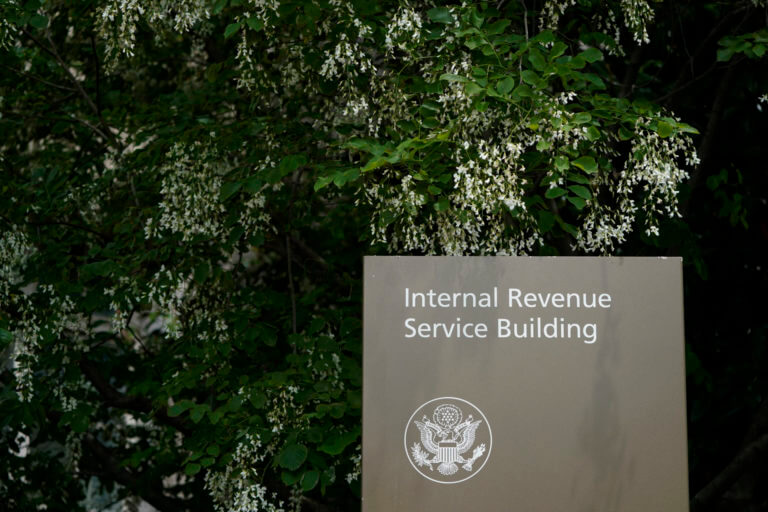
The IRS is poised to take in hundreds of billions of dollars more in overdue and unpaid taxes than previously anticipated, according to new analysis released Tuesday by the Treasury Department and the IRS.

Tax revenues are expected to rise by as much as $561 billion from 2024 to 2034, thanks to stepped-up enforcement made possible with money from the Democrats’ so-called Inflation Reduction Act, which became law in August 2022.

The news comes despite previous claims from House Republicans that they had succeeded in clawing back some of the spending during subsequent budget negotiations.

The allocation had become a flashpoint for debate in the massive bill, which does nothing to reduce inflation but funnels billions into green-energy causes that largely benefit Democrat donors.

Reports indicated that some of the funding would be used to militarize the federal tax-collection agency, alarming many over its expansion of powers amid concerns that unelected bureaucrats and covert intelligence operations have already played an outsize role in election meddling and undermining the will of the people.

The Congressional Budget Office in 2022 estimated that the tens of billions of new IRS funding provided by the IRA would increase revenues by $180.4 billion from 2022 to 2031.

The IRS now says that if IRA funding is restored, renewed and diversified, estimated revenues could reach as much as $851 billion from 2024 to 2034.

Administration officials were using the report to promote President Joe Biden’s economic agenda as he campaigns for reelection—and as the IRS continually faces threats to its funding.

“This analysis demonstrates that President Biden’s investment in rebuilding the IRS will reduce the deficit by hundreds of billions of dollars by making the wealthy and big corporations pay the taxes they owe,” National Economic Adviser Lael Brainard said in a statement.

“Congressional Republicans’ efforts to cut IRS funding show that they prioritize letting the wealthiest Americans and big corporations evade their taxes over cutting the deficit,” Brainard claimed.

Expert analyses—including testimony from at least one IRS whistleblower—indicated that the middle class would be disproportionately affected by the expanded tax-collection efforts, despite Biden officials’ claims to the contrary.

The Inflation Reduction Act gave the IRS an $80 billion infusion of funds. However, House Republicans built a $1.4 billion reduction to the IRS into the debt ceiling and budget cuts package passed by Congress last summer. A separate agreement took an additional $20 billion from the IRS over the next two years to divert to other non-defense programs.

Since then, the agency has tried to show how it is spending the money it has left, in hopes of stemming the cuts. New customer-service improvements rolled out as the tax season began Jan. 29, and earlier this month the IRS announced that it had recouped half a billion dollars in back taxes.

Rep. Jason Smith, the Republican chairman of the House Ways and Means Committee, said in a statement that the report “calls for even more IRS funding, uses pie-in-the-sky numbers, all without being straightforward about where the burdens of massive new enforcement efforts will fall.”

He said increased funding will inevitably result in hundreds of thousands of additional audits for taxpayers making less than $75,000.

After the IRA was signed into law, Treasury Secretary Janet Yellen directed IRS leadership not to increase audit rates on people making less than $400,000 a year annually.

Ensuring that people actually pay their taxes is one of the tax collection agency’s biggest challenges. The audit rate of millionaires fell by more than 70% from 2010 to 2019 and the audit rate on large corporations fell by more than 50%, Treasury’s Deputy Assistant Secretary for Tax Analysis Greg Leiserson told reporters.

IRA funding “is enabling the IRS to reverse this trend,” Leiserson said.

The tax gap—which is the difference between taxes owed and taxes paid—has grown to more than $600 billion annually, according to the IRS.

Adapted from reporting by the Associated Press

BREAKING: Judge Releases Violent Satanic Pedophile Cultist on Bond

(Ken Silva, Headline USA) On Jan. 31, the FBI arrested alleged Satanic pedophile Richard “Rabid” Densmore for running an online forum for users to create, distribute, and stream child pornography featuring self-harm.

The alleged crimes of Densmore, a member of the Satanic cult “764,” are unbelievably heinous. According to prosecutors, he groomed a 15-year-old girl to post sexual videos of herself, and had another girl cut his nickname, “Rabid,” on her forehead. Densmore, of Michigan, had a prior conviction from 1997 that he refused to disclose the details of, and the Justice Department argued that he was prone to violence.

Despite all of that, Judge Ray Kent released him Monday on a $10,000 unsecured bond.

The next day, the DOJ filed an emergency motion to revoke Densmore’s bond for all the obvious reasons. A hearing on the matter is set for Thursday.

The DOJ’s motion discloses new and disturbing details about Densmore and the 764 cult.

According to the DOJ’s motion, the FBI received a complaint in August 2022 that a Discord user named “Rabid” was grooming minors to create child pornography and engage in self-harm. The FBI quickly identified Rabid as being Densmore.

“A minor victim reported to investigators that she met Rabid on Discord in or around August 2022. She was 15 years old at the time and told Rabid that she was a minor. The girl knew that Rabid’s first name was ‘Richard.’ Rabid told her that he created a Discord server or chat room called ‘Sewer,’” the DOJ’s motion said.

“The primary purpose of Sewer was to stream child pornography and self-harm content. Rabid told the girl to solicit people to stream content on Sewer. The girl streamed a video of herself on Sewer in which she inserted an ice cube into her vagina.”

The FBI executed a search warrant on Densmore’s home last February, finding child porn and other material related to the 764 cult.

For some reason, Densmore was a free man for another 11 months.

Investigators finally executed a second search warrant at his home last month, allegedly finding two cell phones hidden in an air vent in his bedroom.

“Those phones have not yet been fully extracted or analyzed. However, an initial partial review yielded additional material that is consistent with the 764 group. Additionally, investigators found images on one of the phones that include a girl with ‘Rabid’ written on her forehead, and cutting (pictures of lines cut into a girl’s legs and the letter ‘R,’ bleeding, cut into a woman’s chest),” the DOJ’s motion said.

At his Monday preliminary hearing, prosecutors argued that Densmore should be held in pretrial detention because he demonstrated “violent proclivities,” including interests in child pornography and having people cut themselves—proclivities exacerbated by the fact that he keeps guns, ammunition, and other weapons in his house.

However, Judge Kent denied government’s request for pretrial detention on the grounds that there were no allegations that Densmore was a “hands on” offender.

The DOJ’s Tuesday motion explained why that was a mistaken decision.

“This, however, ignores the immeasurable harm that he can inflict, and has inflicted, over the internet. Probation cannot assure that Defendant does not use the internet. At best, an officer could seize a device after the fact if Probation discovers the violation,” the motion said.

“It is notable that even after law enforcement searched Defendant’s home in February 2023, and Defendant was therefore aware that he was being investigated, he still got new devices and used them to possess self-harm and ‘Rabid’ imagery, which was discovered in the January 2024 search.”

The DOJ’s motion further disclosed that Densmore is a U.S. military veteran with a history of mental illness. The DOJ hasn’t disclosed Densmore’s age nor when he left the military. The DOJ said he’s had one other job since leaving the military, which he started last August.

“Defendant ‘was formally diagnosed with schizophrenia and borderline personality disorder during his time in the military.’ He also ‘believes he suffers from manic depression but has not been formally diagnosed,’” the motion said, citing a pretrial services report.

Chief U.S. District Judge Hala Jarbou will be presiding over tomorrow’s hearing to revoke Densmore’s bond. Headline USA will report on the decision as soon as it is made public.

Densmore marks the latest 764 member to be arrested for heinous crimes against children.

In November 2021, the FBI arrested 23-year-old Angel Almeida on gun charges, and purported to discover his 764 connections soon thereafter. The Almeida case wasn’t unsealed until late last year.

More recently, the Justice Department filed charges in December against another 764 member, Kalana Limkin, for allegedly promoting child pornography, sexual extortion, and trafficking, animal cruelty and self-harm of minors.

And as Headline USA reported on Saturday, another 764 member, Kyle Spitze, is suspected by many of committing crimes against children. Spitze’s dark and bizarre story can be read here.

Ken Silva is a staff writer at Headline USA. Follow him at twitter.com/jd_cashless.

‘None of These Candidates’ Wins Irrelevant Nevada Primary That Cost Millions

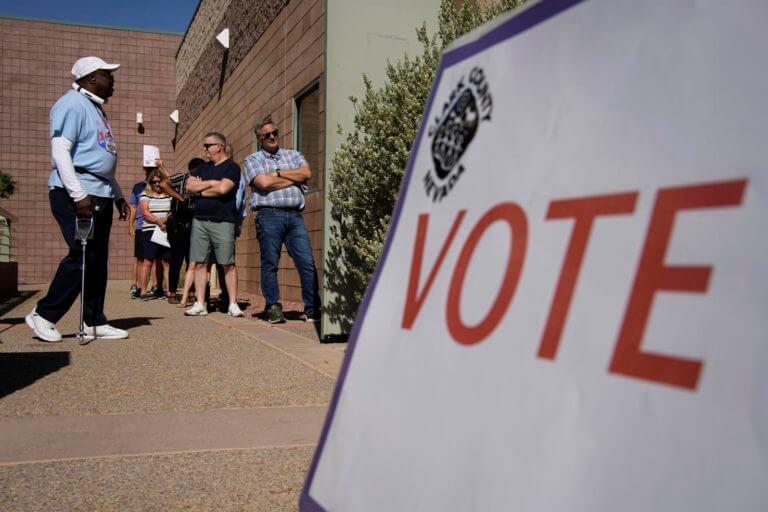
(Millions of taxpayer dollars were spent on Tuesday’s Republican presidential primary in Nevada, but front-runner Donald Trump wasn’t on the ballot and votes cast won’t give Nikki Haley any of the state’s 26 delegates to the national convention.

The option “none of these candidates” received over 60% of votes in the Republican primary, followed by Nikki Haley, who received 33%, according to unofficial election results.

Two Republicans who dropped out of the race, former Vice President Mike Pence (4%) and U.S. Sen. Tim Scott (1.26%), also appeared on the ballot.

To stop any confusion with caucus candidate selection, the Nevada legislature in 2021 established a presidential primary. The reason for the change was the 2020 Iowa Democratic Party caucus when then-South Bend, Ind. Mayor Pete Buttigieg and Sen. Bernie Sanders, I-Vt., wanted recounts.

Former Democrat Senate Majority Leader Harry Reid led the effort for the change and thought it would increase voter turnout.

The Republican Party filed a lawsuit last year to stop the primary. A judge ruled the Republicans could hold caucuses to select delegates, but the primary election would continue. This enabled the Republicans to prohibit any candidate on the primary ballot from participating in the caucuses.

The circumstances led the Haley campaign to avoid Nevada and focus on the Feb. 24 primary in South Carolina, where Haley served as governor, and its 50 delegates.

“In terms of Nevada, we have not spent a dime nor an ounce of energy on Nevada,” Betsy Ankney, Haley’s campaign manager, said in a call with reporters, The Hill reported.

“We made the decision early on that we were not going to pay $55,000 to a Trump entity … to participate in a process that was rigged for Trump,” Ankney added. “So Nevada is not and has never been our focus.”

Ankney continued to take shots at the GOP frontrunner, appearing to suggest that Nevada’s caucus on Thursday had some sort of nefarious purpose.

“Truly not sure what the Trump team is out to there, but they seem pretty spun up about it,” she said.

“But we are focused on South Carolina,” Ankney reiterated. “Nikki is the last one standing between the American people and the rematch that no one wants in Trump versus Biden.”

To win the Republican nomination, a presidential candidate must have a majority of candidates or approximately 1,215.

Biden Judges Shut Down Trump’s Presidential Immunity Appeal

(Headline USA) A three-person federal appeals panel featuring two Biden appointees ruled Tuesday that Donald Trump can face trial on charges that he plotted to overturn the results of the 2020 election, sharply rejecting the former president’s claims that he is immune from prosecution while setting the stage for additional challenges that could further delay the case.

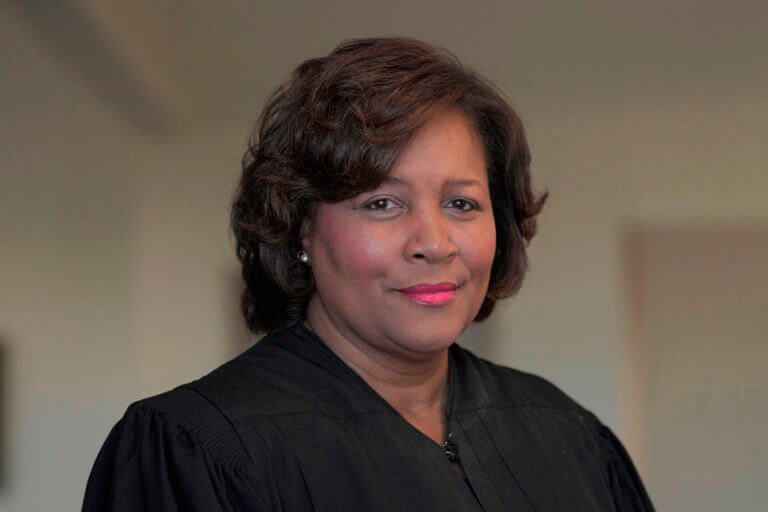
The judges in the case were Karen LeCraft Henderson, a 79-year-old appointee of former president George H. W. Bush, as well as J. Michelle Childs and Florence Y. Pan, both of whom were appointed by current President Joe Biden.

Childs, a black woman, notably was on Biden’s short list for the U.S. Supreme Court, although the nomination ultimately went to Justice Ketanji Brown Jackson.

The ruling comes as no surprise given the composition of the appellate court panel, but it is likely to be rendered moot if the Supreme Court rules on the case later this year.

Nonetheless, it breathes life back into a landmark prosecution that had been effectively frozen for weeks and could fast-track a trial should the higher court opt to punt on its decision in order to avoid the political fray.

Although it marks yet another legal hurdle for Trump, the one-month gap between when the court heard arguments and issued its ruling has already created uncertainty about the timing of a trial in a calendar-jammed election year, with district court Judge Tanya Chutkan, who is overseeing the case, canceling the initial March 4 date last week.

Trump’s team vowed to appeal, which could postpone the case by weeks or months—particularly if the Supreme Court agrees to take it up. The appeals panel gave Trump a week to ask the Supreme Court to get involved.

The eventual trial date carries enormous political ramifications, with special counsel Jack Smith’s team hoping to prosecute Trump this year and the Republican front-runner seeking to delay it until after the November election.

If Trump were to defeat Biden, he could presumably try to use his position as head of the executive branch to order a new attorney general to dismiss the federal cases he faces or potentially could seek a pardon for himself if convicted.

The opinion, which had been expected given the skepticism with which the panel greeted the Trump team’s arguments, was unsparing in its repudiation of Trump’s argument that former presidents enjoy absolute immunity for actions that fall within their official job duties.

“For the purpose of this criminal case, former President Trump has become citizen Trump, with all of the defenses of any other criminal defendant,” the court wrote. “But any executive immunity that may have protected him while he served as President no longer protects him against this prosecution.”

The judges said the public interest in criminal accountability “outweighs the potential risks of chilling Presidential action,” turning aside the claim that a president has “unbounded authority to commit crimes” that would prevent the recognition of election results or violate the rights of citizens to vote.

“We cannot accept that the office of the Presidency places its former occupants above the law for all time thereafter,” the judges wrote.

Trump’s supporters contend that there was no insurrection during the Jan. 6 uprising, and that the president’s calls to protest peacefully during a “Save America” rally beforehand were entirely detached from any subsequent criminal activity at the U.S. Capitol as citizens exercised their First Amendment rights to voice disapproval of the highly disputed Electoral College outcome.

Growing evidence has suggested that undercover federal agents and plain-clothed officers with the D.C. Metropolitan Police Department had infiltrated right-wing groups and may have been responsible for instigating violence against the U.S. Capitol Police.

A Trump spokesman said Tuesday that Trump would appeal the ruling “in order to safeguard the Presidency and the Constitution.”

In a post on Truth Social after the ruling was issued, Trump insisted that a president “must have Full Immunity in order to properly function and do what has to be done for the good of our Country.”

The U.S. Court of Appeals for the District of Columbia Circuit took center stage in the immunity dispute after the Supreme Court in December said it was at least temporarily staying out, rejecting a request from Smith’s team to take up the matter quickly and issue a speedy ruling. But the high court could yet decide to act on a Trump appeal.

There is no timetable for the Supreme Court to act, but the justices are likely to seek Smith’s input before deciding whether to keep the legal rulings against the former president in place. If the court declines to consider the appeal, Chutkan would be able to restart the trial proceedings.

If, on the other hand, the Supreme Court accedes to Trump’s request, any timetable it establishes would determine how much longer the trial might be delayed.

If the court grants Trump’s request without speeding up the appeals process, Trump would likely have until early May before he would need to file his full appeal. But the justices could set much quicker deadlines for reaching a final decision.

The Supreme Court has previously held that presidents are immune from civil liability for official acts, and Trump’s lawyers have for months argued that that protection should be extended to criminal prosecution as well.

They said Trump’s actions—including his calls for then Vice President Mike Pence to refuse to certify the results of the election—fell within the “outer perimeters” of a president’s official acts.

But Smith’s team has claimed that no such immunity exists in the U.S. Constitution or in prior cases and that, in any event, Trump’s actions weren’t part of his official duties.

Chutkan, who is presiding over the case, rejected Trump’s arguments in a December opinion that said the office of the president “does not confer a lifelong ‘get-out-of-jail-free’ pass.”

Trump’s lawyers then turned to the D.C. appeals court, but Smith asked the Supreme Court to weigh in first, in hopes of securing a fast and definitive ruling and preserving the March 4 trial date. The high court declined the request, leaving the matter with the appeals court.

The judges made clear their skepticism of Trump’s claims during arguments last month, when they peppered his lawyer with questions and posed a series of extreme hypotheticals to test his legal theory of immunity—including whether a president who directed Navy commandos to assassinate a political rival could be prosecuted.

Trump’s lawyer, D. John Sauer, answered yes—but only if a president had first been impeached and convicted by Congress. That view was in keeping with the team’s position that the Constitution did not permit the prosecution of ex-presidents who had been impeached but then acquitted, like Trump.

The case in Washington is one of four prosecutions Trump faces as he seeks to reclaim the White House. He faces federal charges in Florida that he illegally retained classified documents at his Mar-a-Lago estate, a case that was also brought by Smith and is set for trial in May.

A parallel investigation involving Biden, led by special counsel Robert Hur, was reported to have concluded on Tuesday with no charges expected to be filed, despite the fact that Trump’s actions were arguably protected under the Presidential Records Act and Biden’s were not.

Trump is also charged in state court in Georgia with scheming to subvert that state’s 2020 election and in New York in connection with hush money payments made to porn actor Stormy Daniels. He has denied any wrongdoing.

Both of the district attorneys pressing those cases have been under public scrutiny of their own, which could throw the cases into disarray if not end them altogether.

Fulton County DA Fani Willis faces a storm of controversy over her relationship with a subordinate prosecutor, Nathan Wade. Willis allegedly overpaid Wade, who was dubiously qualified for the role of special prosecutor, and the two then used the money to go on a series of lavish vacations. Willis claims she is the victim of a racist conspiracy.

Manhattan DA Alvin Bragg has faced calls to be fired after releasing the illegal immigrants who viciously attacked two police officers in New York City’s Times Square last week.

Both prosecutors received funding from leftist billionaire George Soros and campaigned on promises to prosecute Trump as part of a coordinated lawfare campaign being waged by Democrats.

Before filing charges, Willis consulted with Vice President Kamala Harris and with Rep. Bennie Thompson, D-Miss., who led the partisan House Jan. 6 committee. The committee, whose work provided the basis for Smith’s case as well, was discovered to have illegally deleted troves of evidence prior to the Republicans taking power in January 2023.

Adapted from reporting by the Associated Press

Three ‘RINOs’ Draw Ire for Rescuing Mayorkas from Impeachment

(Luis Cornelio, Headline USA) Three Republicans are under scrutiny for aligning with Democrats to block the impeachment vote against DHS Secretary Alejandro Mayorkas. 

In a 216-214 vote, four Republicans—Reps. Ken Buck, Colo.; Mike Gallagher, Wis.; Tom McClintock, Calif.; and Rep. Blake Moore, Utah—joined 212 Democrats to vote no on the impeachment.

Moore switched his vote to ‘no’ to allow Republicans a second vote on the motion. In contrast, Buck, Gallagher and McClintock cited a lack of evidence in the impeachment proceedings, sparking a wave of criticism on Twitter.

“TIME TO NAME AND SHAME!” tweeted Libs of TikTok. “The 3 RINOS who voted with Democrats against impeaching Mayorkas,” the account added, providing their office phone numbers. 

“Shameful!” posted conservative commentator Leo Terrell, labeling the Republicans as “RINOS.” Similarly, Twitter personality Gunther Eagleman chimed in: “RINOs mess up everything.”

Mayorkas faced an impeachment vote over unprecedented illegal immigration stemming from his alleged refusal to enforce immigration laws. However, Buck stated he did not see evidence of high crimes and misdemeanors, both required for an impeachment. Similarly, Gallagher, in an op-ed for the Wall Street Journal, argued that the impeachment vote wouldn’t solve the border crisis.

In response, conservative TV host Lou Dobbs called on House Speaker Mike Johnson to remove Gallagher from his position as the chair of the House Select Committee on the Chinese Communist Party. “Gallagher aligned himself in one vote with the Mexican drug cartels, the Biden Regime, and the deaths of more than a 100,000 Americans,” Dobbs said.

A spokesperson for Johnson stated on Twitter that House Republicans “fully intend” to bring the impeachment vote for a second time once the votes for passage are confirmed.

Majority Leader Steve Scalise, R-La., couldn’t vote for impeachment as he was receiving cancer treatment. However, Rep. Marjorie Taylor Greene, R-Ga., a strong proponent of impeachment, affirmed that the vote would be reintroduced.

House Republicans were only able to afford loosing three votes as their majority has slimmed since 2022.

Rep. Matt Gaetz, R-Fla., drew attention to former House Speaker Kevin McCarthy, R-Calif., who left the House after being removed as speaker. “Wouldn’t it have been nice to still have Kevin McCarthy in the House of Representatives?” Gaetz asked during a Newsmax interview. “Never thought you’d hear me say that.” 

At the time of his resignation, McCarthy was criticized as selfish for quitting and thus reducing the Republican majority.

NYC Mayor Accuses Biden Admin of Racism, Compares Himself to Jesus

(Luis Cornelio, Headline USA) Embattled New York City Mayor Eric Adams blamed his plummeting poll numbers and potential legal challenges on racism, drawing a parallel between his troubles to the trials faced by Jesus.

“We are moving the needle forward,” Adams declared at a Tuesday town hall meeting, according to Fox News. “Is there more to do? You’re darn right there is, but this committed team is getting it done.”

The mayor went on to praise his deputy mayors—Sheena Wright, Anne Williams-Isom, Meera Joshi, Ana Almanzar and Maria Torres-Springer—all of whom belong to racial minorities. 

“Stand up, stand up, they need to see you. Have you ever seen this much chocolate lead in the city of New York?” Adams remarked to the crowd, prompting applause.

“And then go down the line, look who’s here,” Adams pleaded, before adding: “This is representative of the city. That’s why people hate me. You’re trying to figure out, why the hating on me?”

As recounted by Fox, Adams then incorporated a Biblical reference into his speech. “How many of you go to church?” Adams inquired.

“This is a Matthew 21 and 12 moment. Jesus walked into the temple, he saw them doing wrong in the temple. He did what?” he continued, before answering his own question: “I went to city hall to turn the table over.” 

The mayor’s remarks come amid mounting criticism and low poll ratings for his handling of the illegal immigration crisis in the city. Moreover, the Adams campaign is under FBI investigation for alleged campaign finance violations. 

Adams drew a comparison between his current situation and the challenges faced by former New York City Mayor David Dinkins. Dinkins, who became the city’s mayor in 1990, lost his re-election bid in 1993 to Rudy Giuliani. 

Adams questioned, “And you know what happened with David Dinkins? They wore him down so much that black folks didn’t come out to vote. They said, ‘You know what, we’re not coming out.’ They just beat him and wore him down over and over and over again.”

Fla. House OKs Anti-Grooming Bill; Pedophiles to Be ‘Hunted’

(Dmytro “Henry” Aleksandrov, Headline USA) On Feb. 5, 2024, legislation creating offenses for child grooming in the state of Florida passed its second committee assignment.

Reps. Taylor Yarkosky, R-Montverde, and Douglas Bankson, R-Apopka, were the sponsors for HB 1135 and Sen. Jonathan Martin, R-Fort Myers, was the sponsor for the Senate version, SB 1238.

The Florida House Justice Appropriations Subcommittee unanimously passed the bill, Florida’s Voice reported.

According to the text of the anti-grooming bill, it would make it a third-degree felony for any person above the age of 18 to use sexually inappropriate communication and conduct with someone under the age of 16 to entice, excite or compel them to participate in sexual activity that would automatically be considered illegal.

The bill comes “full circle” with the legislation from the previous session that allowed for the death penalty for individuals who raped a child under 12, Yarksosky said.

“In Florida, we’re taking a stand. You do this in the grooming world, all the way to raping a child under 12, and you are going to be hunted, you are going to be arrested, you are going to be prosecuted to the full extent of the law,” he stated.

As expected, Democratic members of the committee and speakers from the public became very concerned about the legislation, saying that it would make telling minors how to have sex (also known as “sex education“) in schools more difficult.

For example, John Maurer, the public policy director for Equality Florida, said that the bill is too broad and will impact public school curriculums.

“As written, it sweeps too broadly and risks banning, or at the very least, chilling important conversations where there is no harmful intent,” Maurer said.

Dr. Paul Arons, a retired physician from the Florida Department of Health, also expressed his concerns about the bill, saying that it would oppress LGBT people.

“Words have consequences. This bill could achieve its purported purpose if it simply stated, ‘a person 18 or over who maneuvers a person less than 16 into unlawful sexual activity commits a felony.’ Lewd and lascivious behaviors are already prohibited in Florida law and the word ‘grooming’ has taken on a purposeful and specifically anti-LGBTQ connotation,” he said.