Federal Spending Remains on ‘Unsustainable Long-Term Fiscal Path’

() A Ccongressional watchdog told President Joe Biden and Congress on Thursday that the federal government is on an “unsustainable long-term fiscal path.”

The report from the U.S Government Accountability Office comes a week after a Congressional Budget Office report found federal spending is projected to remain unsustainable in the decades to come.

“The federal government faces an unsustainable long-term fiscal path,” according to the U.S Government Accountability Office report.

“We project that debt held by the public as a share of the economy will more than double over the next 30 years and will grow faster than the economy over the long term if current revenue and spending policies are not changed,” it said.

U.S. Comptroller General Gene Dodaro said Congress must take action.

“Congress and the administration must act to move the nation off the untenable long-term fiscal course on which it is currently operating,” said Dodaro, who leads the GAO.

“The federal debt level is growing at a rate that could threaten the vitality of our nation’s economy and the safety and well-being of the American people,” he continued. “Both spending and revenue issues need to be addressed as part of a comprehensive long-term plan.”

The GAO report noted that the nation’s “unsustainable long-term fiscal path poses serious economic, security, and social challenges if not addressed.”

The report notes that the federal government faces growing interest costs on its debt, a factor Marc Goldwein, the senior vice president and senior policy director for the Committee for a Responsible Federal Budget, said deserved attention.

“The interest is going to be our second largest line item,” he told the Center Square. “And that’s partially because we have so much debt, but it’s partially because the interest rates are so high and so we’re paying a lot of money for that money. And we’re not raising taxes or cutting spending to afford that interest.”

The CBO projected interest payments would exceed $1 trillion a year by 2026 and grow to $1.6 trillion by 2034. Over the next decade, interest will total $12.4 trillion – roughly enough money to run the entire federal government for two years. The federal government spent a total of $6.13 trillion in fiscal year 2023.

The GAO report also found that the growing debt could have wide-ranging implications for the nation and the U.S. economy.

“Many of the negative effects of growing debt could intensify over time and create additional challenges for fiscal management,” according to the GAO. “Risks to economic growth and lower investment in the private sector could lead to lower wages due to losses in productivity.”

The GAO has repeatedly asked Congress to come up with a plan to address the government’s fiscal condition.

“Elements of a plan could incorporate well-designed fiscal rules and targets to help manage debt; consider alternative approaches to the current debt limit; assess the drivers or the primary deficit, such as mandatory and discretionary spending and revenue; address financing gaps for Medicare and Social Security; and pursue opportunities to improve fiscal responsibility that do not require major changes to spending and revenue policies,” according to the report.

Congress has taken some steps to try to address the debt, Goldwein said. He pointed to the Fiscal Responsibility Act as a step in the right direction. However, he said more needs to be done.

“Something that I’m encouraged about is there’s a lot of support from both parties for some kind of fiscal commission,” Goldwein said. “And that commission I think, offers a clear-headed opportunity for the parties to come together and try to look at this issue seriously and negotiate it seriously.”

Former CEO: High Interest Rates ‘Killing’ Companies as Layoffs Continue

() President Joe Biden is blaming corporations for high prices and “shrinkflation.”

Business executives and many economists disagree, arguing the real problem is inflation created by federal deficit spending policies.

Ahead of the Super Bowl, Biden tweeted a video saying, “While you were Super Bowl shopping, did you notice smaller-than-usual products where the price stays the same? Folks are calling it Shrinkflation and it means companies are giving you less for every dollar you spend. I’m calling on the big consumer brands to put a stop to it.”

The Center Square first reported on shrinkflation in May 2022 noting that consumers were paying more for less on everything from food to toiletries to services they purchase.

The president is nearly two years behind on understanding the consequences of his administration’s own policies, critics argue. Inflation skyrocketed to 40-year highs after continued deficit spending led to higher costs.

“The general population will not be duped by this aversion to try and blame inflation on corporate America,” Bob Nardell, former CEO of Home Depot and Chrysler, told Fox Business.

Inflation has led to high costs of materials, goods and services, and higher wages. However, businesses say they cannot afford high interest rates, which is why “we’re seeing a tremendous shift in employment out there where people are being laid off,” Nardell said, raising concerns about recent auto and tech industry layoffs.

According to Layoffs.fyi, which tracks layoffs in the technology sector, 149 companies have laid off nearly 39,000 employees so far this year, as the Wall Street Journal warned last month that a tech rally in the stock market was “a worrying sign.”

Tech companies reporting the greatest number of layoffs appear to be headquartered in the San Francisco and Seattle areas, including Cisco (4,250), PayPal (2,500), Microsoft (1,900), eBay (1,000), VMware (2,837), Qualcomm (1,258), Wayfair (1,650), among others.

Since 2020, four companies that appear to have laid off the most employees are Google (12,000), Meta (21,000), Microsoft (10,000), and Amazon (27,000), according to the tracker.

In the last two weeks, Ford Motors, GM, UPS, Citigroup, Paramount Global, Estée Lauder and others announced massive layoffs. This is after major chains announced store closures and layoffs last year, including Tuesday Morning, David’s Bridal, Sears, Foot Locker, CVS, Walgreens, Pizza Hut, Boston Market and Macy’s.

Shrinkflation is a consequence of high interest rates and deficit spending, Nardell said. Biden’s comments were about “trying to buy votes. This is all about an administration that is out of control,” he said, referring to deficit spending. “We have a strong bias towards spending versus having a conservative policy or a sustainable future.”

A new Economic Policy Innovation Center brief argues that Americans’ purchasing power has decreased because of high budget deficits driving inflation.

The federal government “borrowed heavily to meet its spending needs in 2020 and 2021, and that borrowing was converted by the banking system into funds that fueled the rise in prices.”

Deficits totaled $8.8 trillion in fiscal years 2020 through 2023, the brief notes, adding, “Outside of wartime, no four years in U.S. history has seen deficits this large, either in nominal terms or as a percent of GDP.”

Deficit costs drove up consumer loans by more than 19%, real estate loans by over 12% and banking system loans to nearly 14%.

“The last time there was such a jump in lending was in the run-up to the Great Recession, 2005 and 2006,” the report states.

Nardelli said he wasn’t sure if the general public understands that high interest rates “are killing” middle and lower-market companies.

The Federal Reserve raised the Fed funds rate 11 times between March 2022 and July 2023, claiming it would curtail inflation.

At a Council on Foreign Relations discussion Thursday, Austan Goolsbee, president and CEO of the Federal Reserve Bank of Chicago, said that 50 to 100 years of central bank policy has held that “to significantly get inflation down more than 3% you have to have a deep recession.”

When the Fed said it would get inflation back to 2%, he said, “the world believed that.”

While the latest Consumer Price Index states inflation is at 3.1%, consumers remain skeptical with grocery and other costs still nearly double what they were a few years ago.

The U.S. Federal Reserve on Thursday also released its annual “stress test” scenario of how large lenders would fare in a severe economic shock.

It states the U.S. dollar would depreciate and nonprecious metal and other commodities, including oil and natural gas, would face large price increase from inflationary pressures under its hypothetical scenario.

Law-Enforcement Officials Warn That Terrorists Are Targeting Small-Town America

(Gwendolyn Sims, Headline USA) Country-music superstar Jason Aldean may have intended his recent hit “Try That in a Small Town” as a warning to big-city interlopers.

But now, it seems, some terrorists may view it as an invitation. And just as the song suggests, one local law-enforcement official is advising that citizens should to be ready to take matters into their own hands when the spit hits the fan.

On Wednesday, Butler County, Ohio, Sheriff Richard K. Jones sounded the alarm for the safety of all Americans after attending the National Sheriffs’ Association’s Winter Conference in Washington, D.C., where FBI Director Christopher Wray had delivered a grave warning about the latest terrorists threat.

This time, he revealed, America’s heartland was the target.

“I don’t want you to think I’m Doomsday Jones or Chicken Little,” Jones said in a recent interview with Glenn Beck. But “these are people that are wanting to do us harm. This is why we were told more red flags [are] going off now.”

A tiny town in western Pennsylvania was shocked to discover in January that Iranian hackers had targeted its water utilities for cyberattack, all because a piece of equipment had been manufactured in Israel.

“Hackers are targeting our critical infrastructure, our water treatment plants, our electrical grid, our oil and natural gas pipelines, our transportation systems,” Wray said during the sheriffs’ conference.

“The risk that poses to every American requires our attention,” he added. “Now, China’s hackers are positioning on American infrastructure in preparation to wreak havoc and cause real-world harm to American citizens and communities.”

Wray’s warning to the sheriffs’ conference echoed his recent congressional testimony.

“They’re not focused just on political and military targets,” he said.

“We can see from where they position themselves across civilian infrastructure that low blows aren’t just a possibility,” he continued. “The amount of conflict low blows against civilians are part of China’s plan.”

Anecdotally, there has been an uptick in random acts of chaos, such as last year’s train derailment in Palestine, Ohio.

A series of food-plant explosions has also seemed to fit the pattern, even as Chinese investors actively seek to purchase American farmland.

Although these events cannot specifically be traced back to terrorism, soft attacks like these could begin to have a cumulative impact—a sort of “death by a thousand cuts” approach to warfare—made all the worse by the confusion surrounding their origin and intent.

“They want to get in the heartland because they know that will create chaos,” Jones told Beck.

“If you can get into New York, they expect that,” he said. “… But to get into rural America, [that’s a] different story. That will send a shockwave.”

The threats, however, may not come from outside the country—particularly in light of the millions of illegal aliens who have crossed our borders with little to no vetting during the Biden administration.

“We’ve got 10 million people here in the United States that we don’t know who the hell they are [or] where they’re at,” Jones said.

“Twenty-thousand Chinese military-age adults [illegally came in] to the United States just in California, he continued. “Twenty-thousand so far this year … that’s just one sector. And, that’s just the ones we know about.”

Jones urged, communities to plan ahead for any eventuality and not to take for granted that terrorists will only target high-density areas. Protect “your communications, universities, your water, your sewer, your election process,” he said.

He noted that, per Wray’s estimate, for every FBI cybersecurity expert, there were 50 Chinese hackers whose objective was “to cause disruption in America.”

Jones said he had learned a valuable lesson from the October attack on Israel, when Hamas terrorists surprised and overwhelmed the security forces.

“The same people that came in [to Israel], they’re the same people that are here in our country,” he said. “It’s not a matter of if [there’s a terror attack], it’s a matter of when. These people are here.”

Despite living so close to a hostile neighbor, many of the Israeli victims were sitting ducks because they were unarmed and unprepared to fight back themselves when their homes were invaded.

But depending on the nature of the threat and the person in power at the time, Americans who are relying on the state or federal government for protection could find themselves in an even worse predicament.

“The police [are] all we have, your local police,” Jones said.

“The National Guard’s not coming. The military’s not coming,” he added. “People think, well, the military, the National Guard, they won’t let this happen. They’re not coming. You’re on your own.”

Jones urged law-enforcement agencies across the country to prepare. He’s sending citizen volunteers to a Citizens on Patrol Academy to learn to work the radio and utilize other first-responder tools.

“They can be our eyes and our ears and talk to the community,” said Jones.

“We’re training our trainers so we can train more people,” he added. “We can’t train 400,000, but we’re going to let people know. … We want our citizenry to be aware.”

In addition to awareness, Jones ordered AR-15 rifles for every Sheriff’s Department vehicle, as well as more ammunition and magazines for his deputies. He also ordered additional hazmat equipment for Butler County. Jones said communication and preparation are key.

Neither lawman said he wanted Americans to think they can’t protect themselves.

“But I do want the American people to know that we cannot afford to sleep on this danger,” Wray said. “As a government and a society, we’ve got to remain vigilant and actively defend against the threat.”

Follow Gwendolyn Sims at twitter.com/gwendolynmsims

Fed Bank Bailout Program Ends in March… Then What?

(Mike Maharrey, Money Metals News Service) The bank bailout program established by the Federal Reserve in the wake of last spring’s banking crisis is scheduled to shut down on March 11.

Then what?

There are a lot more questions than answers.

For instance, will the Fed blink?

And if it doesn’t, how will the end of the bailout ripple through the financial system?

The Federal Reserve created the  Bank Term Funding Program (BTFP) after the collapse of Silicon Valley Bank and Signature Bank last March, allowing banks to easily access cash “to help assure banks have the ability to meet the needs of all their depositors.”

As one would expect, the balance in the program surged initially as banks tapped into the bailout. But borrowing never stopped. As you can see from the chart, borrowing leveled off in August before the sudden spike in November. Keep in mind that banks were still tapping into the bailout even as the total balance in the program plateaued. Some banks were paying off loans as others borrowed.

Were banks borrowing from the BTFP because a financial crisis was still bubbling under the surface, and they needed a bailout? Or were they taking advantage of a sweetheart deal inadvertently created by the Fed?

That’s hard to tell.

The Fed Offers Sick Banks a Sweetheart Deal

The BTFP was a sweetheart deal for cash-strapped banks struggling to cope with crashing bond portfolios as interest rates rose.

Through this lending facility, banks, savings associations, credit unions, and other eligible depository institutions can take out short-term loans (up to one year) using U.S. Treasuries, agency debt and mortgage-backed securities, and other qualifying assets as collateral.

That’s where the sweetheart deal comes in. Instead of valuing these collateral assets at their market value, banks can borrow against them “at par” (Face value).

When the Fed started raising interest rates, bond prices dropped precipitously (Bond yields and bond prices are inversely correlated.) As bond prices fell, the value of bank asset portfolios crashed along with them. Typically, the amount banks can borrow is based on the current market value of their bond portfolios. As bonds tanked their borrowing ability shrank. But by valuing collateral at par, the Fed allowed banks to borrow as if the value of the assets never dropped. Simply put, the BTFP allows banks to borrow more than they otherwise could.

Imagine if there was a tornado in your area that damaged your house. The home would suddenly be worth a lot less than it was before the storm, right? Now imagine going to the bank and asking for a second mortgage based on the value of your home before the tornado. Do you think that bank would make that loan?

Of course not.

The bank probably wouldn’t loan you money based on the lower value of your storm-damaged house, much less on what your home was worth before the tornado. Banks simply don’t accept collateral that is worth less than the amount of the loan.

That is unless you’re a bank in trouble.

The problems at Silicon Valley Bank (SVB) that led to its demise reveal the reason for the bailout.

SVB went under because it tried to sell undervalued bonds to raise cash. The plan was to sell the longer-term, lower-interest-rate bonds and reinvest the money into shorter-duration bonds with a higher yield. Instead, the sale dented the bank’s balance sheet with a $1.8 billion loss driving worried depositors to pull funds out of the bank.

The BTFP gave banks an alternative. They could quickly raise capital against their bond portfolios without realizing big losses in an outright sale. It gives banks a way out, or at least the opportunity to kick the can down the road for a year. 

In effect, the bailout papered over significant problems in the banking system.

What Happens When the Bailout Shuts Down?

That remains unclear what will happen when the BTFP locks its doors on March 11.

In the first week of the BTFP, banks borrowed $11.9 billion from the program, along with more than $300 billion from the already-established Fed Discount Window. By April 5, the balance in the BTFP rose to just over $79 billion. By June, banks had borrowed around $100 billion. Borrowing plateaued before taking off again in November.

Troubled banks almost certainly accounted for the bulk of the borrowing in the early months of the bailout. Those early loans will start coming due in March. (Banks had one year from the loan date to repay.)

There are several unanswered questions. Have these banks improved their financial position since getting bailed out? Do they have the cash to pay back the loans? Will the end of the BTFP force them to liquidate their devalued bonds like SVB did?

If banks didn’t address their underlying problems over the last year, we may well see more small and regional banks go under in the coming months.

And If that happens, will the Fed blink and reopen the BTFP?

This is something to keep our eyes on.

Fed Sweetheart Deal 2.0

The Fed inadvertently offered a second sweetheart deal through the BTFP, and the central bank just took it away.

When the Fed announced the imminent shutdown of the “emergency” lending facility,  it said it would continue making loans until March 11. But at the same time, it announced it would raise the interest rate it charged on those loans so it at least equals the rate paid on reserve balances parked at the Fed the day of the loan.

Why did it have to make this move?

The lower interest rate charged by BTFP created a profitable arbitrage opportunity. Banks could borrow money from the BTFP at a relatively low interest rate (using undervalued bonds as collateral) and then deposit the money in its reserve account at the Fed to earn a higher interest rate than it was paying on the loan.

For instance, the Fed charged a 4.93 percent interest rate on a BTFP loan as of Jan. 23. At the same time, the central bank was paying 5.4 percent on reserves. This allowed banks to earn nearly 50 basis points by borrowing money and then depositing it in their account at the Fed. 

It would be like you taking a 7 percent second mortgage from ABC Bank and then depositing the money into an ABC Bank account that paid you 8 percent interest. Of course, you would never find that kind of deal in the real world. 

As an analyst told Reuters, the interest rate discrepancy “gave banks free profits, which is not a good look.”

 Yale School of Management’s Program on Financial Stability associate director of research Steven Kelly told Reuters the Fed was “not happy” with the situation.

But these are the types of unintended consequences programs like the BTFP always create. The question is how could the Ph.D. economists and bankers at the Fed not see this coming?

Regardless, increasing the interest rate appears to have put the brakes on additional borrowing from the program. The balance in the BTFP started falling after that announcement on Jan. 24 and has dropped by about $3 billion since.

Once the BTFP shuts down, that will end all the bailout borrowing. Struggling banks will no longer have that particular lifeline.

Do they still need it?

That remains unclear. Profit-seeking banks muddied the water. But there is a strong possibility that the bailout kept a lot of banks afloat. The big jump in BTFP borrowing in November could have been profit-seekers. But some could have been banks sincerely needing a bailout.

Only time will tell.

But it is almost certain that some of the banks that took out loans in the early days of the bailout will struggle to pay them back. That raises another question: will the Fed blink? Will it reopen the BTFP? Will it extend repayment terms? Or will the entire banking system crack under the strain?

Pop some popcorn and pull up a chair. Things are about to get interesting.


Mike Maharrey is a writer for Money Metals News Service and national communications director of the 10th Amendment Center. Follow him at twitter.com/mmaharrey10th.


Why Rising Shipping Costs Won’t Cause Inflation

(Mike Maharrey, Money Metals News Service) Defining inflation as “rising prices” creates all kinds of confusion. As I explained in-depth, historically, inflation meant an increase in the amount of money and credit in the economy, or more succinctly, an expansion in the money supply. Rising consumer prices – price inflation – is one symptom of this monetary inflation. 

 By redefining “inflation” as “rising prices” government people can muddy the water and shift the blame.

I found the perfect example of this in a recent email from Seeking Alpha. It highlighted shipping disruptions in the Middle East and speculated that rising shipping costs could be “inflationary.”

In effect, they are speculating that rising prices might cause rising prices.

It’s fair to worry that higher shipping costs could be passed on to consumers, causing prices of many things to rise.  But even if higher shipping costs eventually do get passed along to consumers, that isn’t “inflation” in the true sense of the word. 

An increase in the money supply – inflation – causes all prices to rise more than they otherwise would. Price shocks such as higher shipping rates can certainly reverberate broadly through the economy causing a lot of prices to go up. But they won’t cause all prices to rise. Some will actually fall. 

Tom Woods did a good job of explaining the impact of price shocks in contrast to inflationary price increases in his email newsletter. He uses rising energy prices as an example, but the same would apply to elevated shipping costs.

Some sectors of the economy can see their prices rise because of changes in taste, or sudden disruptions (caused by war, natural disaster, etc.), or other such factors.

But the only explanation (barring a sudden fall in money demand, which would itself require an explanation) for rising prices across the board is an increase in the amount of money in the system.

 And this is why some of the MAGA people are also getting it wrong. Rising energy prices cannot cause price inflation across the board. Rising energy prices leave less money to spend on other things, so prices are a wash. Only more money overall can raise prices everywhere.

 The regime would like you to think that you are suffering because of every reason in the world EXCEPT the central bank it created and endowed with a monopoly. It’s evil companies, it’s ‘greed,’ it’s ‘cost-push,’ whatever. It’s all b.s.

As Woods points out, the political class wants you to believe higher shipping costs, or rising oil prices, or greedy corporations, or “Putin’s price hikes,” or perhaps Vodoo is causing price inflation. That lets them off the hook. Economist Ludwig von Mises summed it up this way.

The result of this deplorable confusion is that there is no term left to signify the cause of this rise in prices and wages. There is no longer any word available to signify the phenomenon that has been, up to now, called inflation… As you cannot talk about something that has no name, you cannot fight it.

Of course, the government and the central bankers at the Fed don’t really want to fight inflation. They want inflation. Increasing the money supply allows politicians to continue borrowing and spending. They just don’t want you to notice the inflation they are creating as a matter of policy. If they can convince you it’s because of shipping costs, all the better.

Don’t be fooled.


Mike Maharrey is a writer for Money Metals News Service and national communications director of the 10th Amendment Center. Follow him at twitter.com/mmaharrey10th.

Epstein Victims Sue FBI for Allowing Sex-Trafficking Network to Operate w/ Impunity

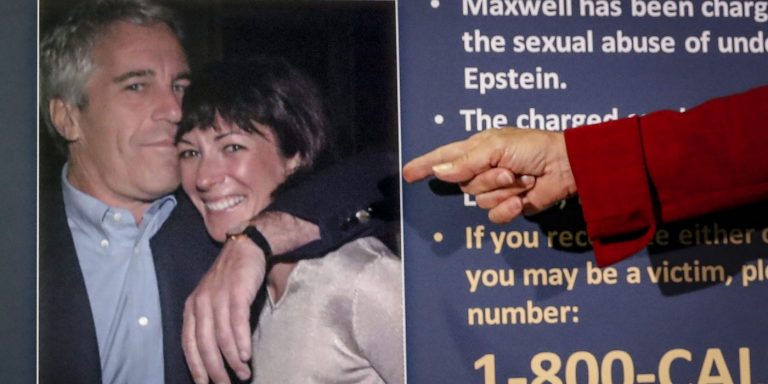
(Ken Silva, Headline USA) Twelve anonymous victims of Jeffrey Epstein sued the FBI this week for allowing Epstein’s sex-trafficking network to operate with impunity for years.

The lawsuit comes nearly a year after victims filed a complaint with the Justice Department over the matter. The lawsuit suggested that the victims were particularly insulted by FBI Director Chris Wray’s statements at a December congressional hearing, where he told Sen. Marsha Blackburn, R-Tenn., that he hasn’t looked at the Epstein case in years.

“While Senator Blackburn told Director Wray that he would ‘need to right that wrong,’ Director Wray and the FBI have done nothing to ‘right that wrong.’ The FBI has again turned its back on survivor-victims of Jeffrey Epstein’s sex trafficking ring,” said the lawsuit, filed Wednesday in the Southern District of New York.

The lawsuit further recounted the FBI’s long, sorry track record on the Epstein case, starting when the bureau ignored a complaint from Epstein victim Maria Farmer in 1996.

“Between 1996 and 2006, the FBI continued to receive reports, complaints and tips concerning the illegal sex trafficking of women and underage minors, sex abuse and human rights violations committed by Jeffrey Epstein and associates. In March of 2005, the FBI was alerted by the Palm Beach Police Department of child prostitution. In fact, there was a 14-year-old girl who was solicited to Epstein’s mansion for sex,” the lawsuit said.

Even when the FBI opened an investigation into Epstein in 2006, the result was a sweetheart deal, where he pleaded guilty to solicitation of a minor in exchange for non-prosecution. Epstein served 13 months in jail, during which time he was allowed to leave for work release during the day. The FBI then closed its investigation in 2008, allowing Epstein to again run amok for another decade.

After Epstein’s 2008 unusual plea deal, more reports, tips and complaints were received by the FBI concerning sex with teenagers, minors, sex trafficking and abuse, the lawsuit continued.

“The FBI was aware of Epstein’s sex trafficking ring between New York, Palm Beach, New Mexico, Paris and the U.S. Virgin Islands which continued after Epstein was a registered sex offender,” the lawsuit said.

“It was not until 11 years later, Epstein was arrested on July 6, 2019, and charged with sex trafficking of minors and conspiracy. Epstein died in jail before the case could be prosecuted for these heinous crimes.”

The victims are asking the court to award them damages for the FBI’s negligence.

Ken Silva is a staff writer at Headline USA. Follow him at twitter.com/jd_cashless.

House Intel Chief Faces Probe over Dubious National Security Alert

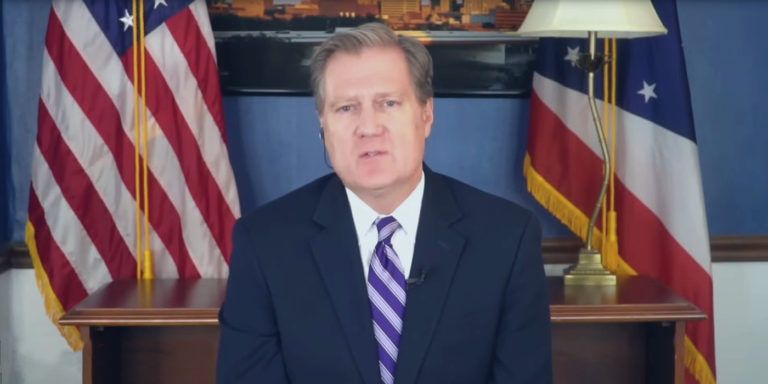
(Luis Cornelio, Headline USA) House Intelligence Committee Chairman Mike Turner, R-Ohio, is under fire for what many perceive as a fearmongering alert regarding a national security threat arising from Russian nuclear capabilities in space. 

The backlash has been so intense that Turner is now confronted with calls from Rep. Angy Ogles, R-Tenn., urging House Speaker Mike Johnson, R-La., to initiate a formal investigation into the dubious claims initially made on Wednesday.

Specifically, Turner claimed that the U.S. faces an imminent threat but did not offer detail about the alleged information, claiming that much of it remained classified. Such an alarmist declaration prompted an Ogles letter to Johnson.

“This revelation by the Chairman was done with a reckless disregard of the implications and consequences said information would have on geopolitics, domestic and foreign markets, or well-being and psyche of the American people,” Ogles said. 

Critics accused Turner of making these allegations in a desperate attempt to pressure House Republicans into supporting a Senate bill on funding for Ukraine and its conflict with Russia. 

Ogles echoed these sentiments, declaring in the letter: “In hindsight, it has become clear that the intent was not to ensure the safety of our homeland and the American people, but rather to ensure additional funding for Ukraine and passage of an unreformed Foreign Intelligence Surveillance Act (FISA).” 

On Wednesday, Turner released a somewhat vague statement regarding the alleged threat. 

“Today, the House Permanent Select Committee on Intelligence has made available to all Members of Congress information concerning a serious national security threat,” Turner said in a statement. 

“I am requesting that President Biden declassify all information relating to this threat so that Congress, the Administration, and our allies can openly discuss the actions necessary to respond to this threat,” he added. 

Johnson promptly dispelled such concerns when speaking to reporters in the U.S. Capitol. “I saw Chairman Turner’s statement on the issue and I want to assure the American people, there is no need for public alarm,” Johnson clarified. “We are going to work together to address this matter, as we do all sensitive matters that are classified.”

AOC, Progressives Worried Other Dems Will Abandon Open-Borders Agenda

(Headline USA) Rep. Alexandria Ocasio-Cortez, D-N.Y., said this week she was worried Democrats would become less progressive on immigration as the border crisis continues to take a toll on American cities.

Speaking with Politico on Wednesday after Democrat Tom Suozzi won a special election in New York, Ocasio–Cortez claimed that Suozzi sounded a lot like the Republicans on immigration.

“We need to be very careful,” Ocasio–Cortez said. “You’re never going to out-Republican a Republican. I actually don’t think that it’s necessarily the playbook that would apply to the rest of the country.”

Suozzi was running to reclaim his former congressional seat after deciding not to run in the 2022 election, when he instead sought the Democratic nomination for governor. In his absence, the seat was successfully flipped Republican by former Rep. George Santos, who was subsequently expelled from Congress amid allegations of fraud.

Many, however, believe the once deep-blue New York may be turning a slightly more purplish hue, with the Biden administration’s controversial open-border policies being a prime factor.

“Nobody can believe what’s happened to New York,” former President Donald Trump observed in a recent interview, suggesting he could potentially flip it in the November election. “The people of New York are angry—people that would have never voted for me because I’m a Republican.”

In his campaign, Suozzi expressed support for immigration restrictions—including a border wall—stricter asylum policies and deportations.

His ads also promised to “secure the border” and praised Immigration and Customs Enforcement as a “vital” agency.

“There’s a solution that’s been proposed in the United States Senate that would actually build more wall, would get more border agents, would deal with asylum seekers, would reform the laws to make it better, and would give money to the state of New York and the city of New York to deal with the migrant crisis that we currently have,” Suozzi said on the campaign trail.

Several other congressional progressives blasted Suozzi for abandoning the Left’s open borders agenda.

“His position is not necessarily the mandate for the future,” said Rep. Raúl Grijalva, D-Ariz. “Those of us that live, work and represent the border need to be heard as much as the congressman from New York.”

House Progressive Caucus Chair Pramila Jayapal, D-Wash., agreed that Suozzi’s “rhetoric got a little more extreme” on immigration than she would have liked.

Others, however, saw Suozzi’s win as an example to follow in November’s election.

“Democrats should learn a lesson from NY-03,” Sen. Chris Murphy, D-Conn., wrote in a memo Wednesday to fellow Democrats. “Quite simply, we risk losing the 2024 election if we do not seize this opportunity to go on offense on the issue of the border and turn the tables on Republicans.”

Biden Gets Big Endorsement from Putin: ‘More Experienced,’ ‘Predictable’

(Dmytro “Henry” Aleksandrov, Headline USA) During the Feb. 14, 2024, interview, Vladimir Putin said that it would be “better” for Russia if Joe Biden won the 2024 election instead of Donald Trump and expressed his dissatisfaction with the recent interview with Tucker Carlson.

“He is more experienced, more predictable. He is an old-school politician,” Putin said without hesitation.

That was the first time when Putin commented on the upcoming 2024 U.S. presidential election, which many people consider a rematch between Trump and Biden, according to Trending Politics.

In addition to that, he also talked about Biden’s mental fitness.

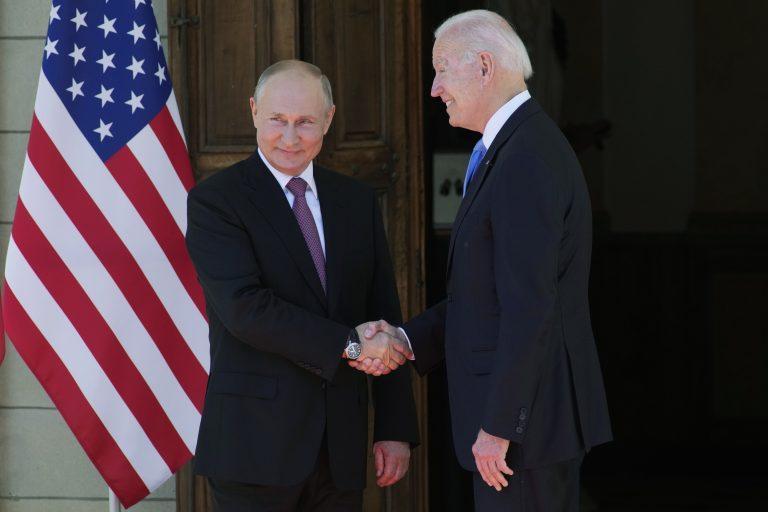
“When I met with Biden in Switzerland – true, that was several years, three years ago – people were already saying he wasn’t up to it. I didn’t see anything of the kind,” Putin said.

He also defended Biden by referencing an incident where Biden banged his head while exiting a helicopter in June 2023.

“Well, which of us hasn’t banged his head somewhere?” Putin said.

He also talked about Trump, calling him a “non-systemic politician” who “has his own view on the topic of how the United States should develop relations with its allies.”

During the interview, Putin also talked about what he thought about the interview from last week with Carlson that took place at the Kremlin, revealing that Carlson, instead of doing his job, was just sitting there and occasionally asking soft-ball questions, Trending Politics reported.

“To be honest, I thought he would be more aggressive and ask tough questions. I was just not prepared for that. I wanted that because it would have given me the opportunity to respond sharply. Which, in my opinion, would have added certain specificity to the conversation, but he chose a different tactic,” he said.

Throughout the interview, Putin made a lot of false claims, like that Ukraine is an “artificial state,” Adolf Hitler was “forced” to invade Poland and Volodymyr Zelenskyy’s father was fighting during the Second World War, even though he was born on Dec. 23, 1947. Carlson never pushed back against any of the claims.

“He attempted to interrupt me several times, yet surprisingly, for a Western journalist, he proved patient. Listening to my lengthy replies, especially about history,” Putin said, adding that he, “honestly speaking,” didn’t “fully enjoy that interview.”

Tlaib Was the Only Lawmaker Not to Support Resolution Condemning Hamas Rapists

(Headline USA) Rep. Rashida Tlaib, D-Minn., was the sole lawmaker in the House this week to abstain from voting in favor of a bipartisan resolution condemning Hamas’s sexual violence against Israeli women.

The resolution, introduced by Rep. Lois Frankel, D-Fla., “condemn[ed] all rape and forms of sexual violence as weapons of war, including those acts committed by Hamas terrorists” and called on “all nations to criminalize rape and sexual assault, and hold accountable all perpetrators of sexual violence, including state and non-state armed groups.” 

The resolution also called on all international bodies to “unequivocally condemn the barbaric murder, rape, sexual assault, and kidnapping by Hamas and other terrorists on and since Oct. 7 and hold accountable all perpetrators.”

It passed in a vote of 418-0, with 12 members not voting at all. Tlaib voted “present.”

Though Frankel didn’t directly name Tlaib, she took aim at progressives who have dismissed allegations of sexual violence against Israeli women during the Oct. 7 terrorist attack, according to Newsweek.

“Hamas’s actions on Oct. 7 and continuing [are] almost too difficult to speak about—raping, mutilating and burning to inflict psychological pain and unleashing trauma that continues to plague a grieving Israel,” she said. “Shockingly and alarmingly, Hamas’s violence has been met with a shrug from many corners in the world, and many deny it.”

When asked why she didn’t support the resolution, Tlaib deflected by attempting to paint a false equivalence, saying she was “disturbed” that it “completely ignores and erases any sexual violence committed” allegedly by Israeli forces. There is no evidence to support such allegations.

“War crimes cannot justify more war crimes,” Tlaib said on the House floor.

“We must stand up for everyone’s safety and human rights no matter their faith, no matter their ethnicity,” she continued. “There are numerous well-documented reports of sexual violence, including rape, committed by Israeli forces against Palestinians in their custody.”

Tlaib was censured by the House of Representatives in November following a 234-188 vote in response to her use of anti-Semitic slogans.

A recent report by the Israeli outlet Walla addressed the concern that many of the young female hostages among the roughly 250 individuals taken by Hamas on Oct. 7 may have been impregnated as the result of rape during their captivity.

Some of the rescued hostages who bore witness to the atrocities recalled that the captors were merciless, often dressing up females, including young girls and boys, in “doll clothes” to fulfill their sexual fetishes.

“The terrorists bring inappropriate clothes—doll clothes—and turned the girls into their dolls—dolls on a string with which you can do whatever you want and whenever you want,” recalled Aviva Siegel, a former hostage who was released after 50 days.

“… There wasn’t a minute that we didn’t go through some form of abuse. And they’re still there, surviving, barely,” Siegel continued. “I’m still there, my body is there. The boys are also abused, what the girls are going through. Maybe they don’t go in for pregnancy, [but] they are also a puppet on a string.”

Among the horrific atrocities that Hamas terrorist were reported to have committed during their Oct. 7 ambush in Israel was to rape the corpses of many of their murder victims.

“The terrorists, people from Gaza, raped girls. And after they raped them, they killed them, murdered them with knives, or the opposite, killed—and after they raped, they—they did that,” Raz Cohen, a survivor of the Nova music festival massacre told PBS.