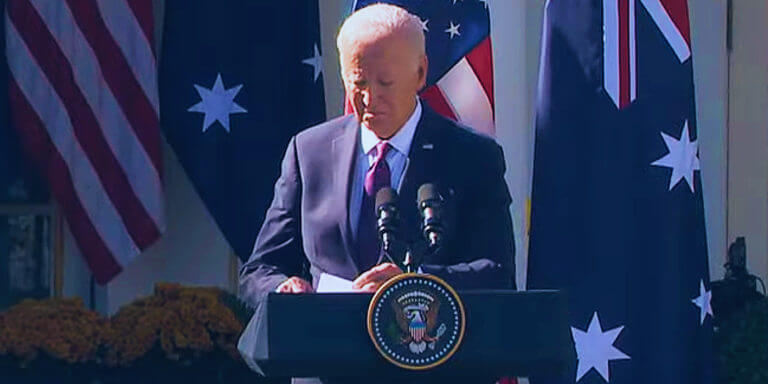
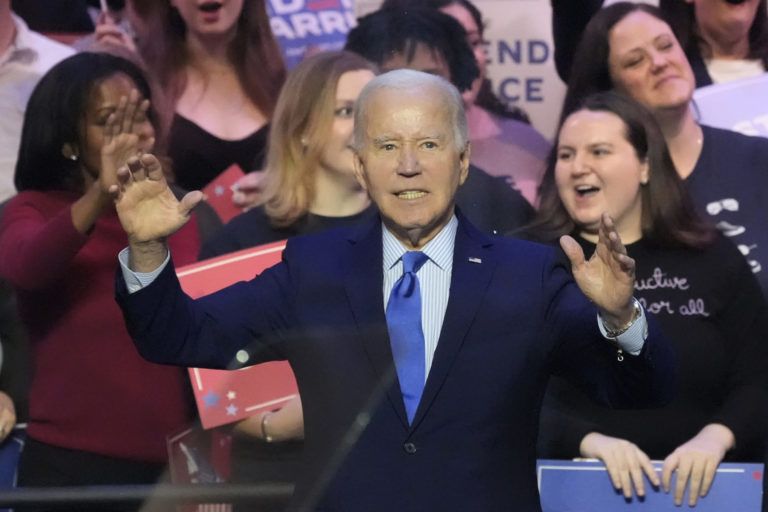
Biden Admin. Sues Red State for Penalizing Hookers who Knowingly Spread HIV

(Dmytro “Henry” Aleksandrov, Headline USA) On Feb. 15, 2024, the Department of Justice filed a lawsuit against the state of Tennessee, arguing that a law that penalizes hookers for knowingly spreading the Human Immunodeficiency Virus (HIV) is a prohibited form of discrimination under the Americans with Disabilities Act (ADA).

“Aggravated prostitution,” which is a felony, is defined by a Tennessee law as when an individual knowingly “engages in sexual activity as a business or is an inmate in a house of prostitution or loiters in a public place for the purpose of being hired to engage in sexual activity,” even though the individual is aware of having HIV.

According to the DOJ complaint, the law violates the ADA because prostitutes should not be charged with “more severe criminal sanctions because of their disability.”

“The enforcement of state criminal laws that treat people differently based on HIV status alone and that are not based on actual risks of harm, discriminate against people living with HIV,” Assistant Attorney General Kristen Clarke of the DOJ’s Civil Rights Division said.

Clarke then continued defending hookers who spread the disease by blaming “outdated” science and “misguided” assumptions.

“People living with HIV should not be subjected to a different system of justice based on outdated science and misguided assumptions. This lawsuit reflects the Justice Department’s commitment to ensuring that people living with HIV are not targeted because of their disability,” she added.

Those who were convicted of aggravated prostitution are also required by law to register as a sex offender. The DOJ complained that it would restrict where those convicted can “live, work, and go in public.”

According to the DOJ’s complaint, those who are convicted “may not live or accept employment within 1,000 feet of any school, daycare center, other childcare facility or public park, playground, recreation center or athletic field.”

Leaked Letters Expose Biden’s Attempts to Conceal Hur Findings

(Luis Cornelio, Headline USA) Leaked letters appear to confirm earlier revelations that the White House carried out multiple attempts to interfere in the damning release of Special Counsel Robert Hur’s final report that delved into President Joe Biden’s mishandling of classified documents, multiple outlets reported on Thursday.

A day before the release of the Hur report, White House Counsel Ed Siskel and Biden’s personnel counsel Bob Bauer issued a letter to Attorney General Merrick Garland, accusing Hur of “openly, obviously, and blatantly violating” the DOJ’s policies and practices on special counsel reports.

Similar complaints were expressed in a letter dated Feb. 5 and addressed to Hur. However, the DOJ ignored the complaints and went ahead with the release on Feb. 8.

Specifically, Hur detailed how Biden acquired classified documents but recommended against pressing charges, arguing that Biden would likely have presented himself as a “sympathetic, well-meaning, elderly man with a poor memory,” during a hypothetical trial.

The White House complaints began after Hur allowed the Biden team to review the report for potential executive privilege over the letter’s content. However, according to Politico, this incident wasn’t isolated.

The White House, through Biden’s Special Counsel Richard Sauber, directly approached the special counsel on an Oct. 31 letter, seeking to compel Hur to produce an “economical” report, meaning limited in content, Politico reported. 

On Sept. 11, Sauber again claimed that former vice presidents had previously retained personal diaries, similar to those owned by Biden, which were not required to be held in classified material compartments. 

Associate Deputy Attorney General Bradley Weinsheimer pushed back on Feb. 8, stating that the contents of the letters were within the DOJ’s standard for release, as reported by the New York Times. 

“Having carefully considered your argument, the Department concludes that the report as submitted to the Attorney General, and its release, are consistent with legal requirements and Department policy,” Weinsheimer wrote. 

“The report will be provided to Congress and released publicly, consistent with Department practice and the Attorney General’s committee to transparency,” he added. 

Santos Trolls Ex-House Colleagues in Group Chat after Seat Flip

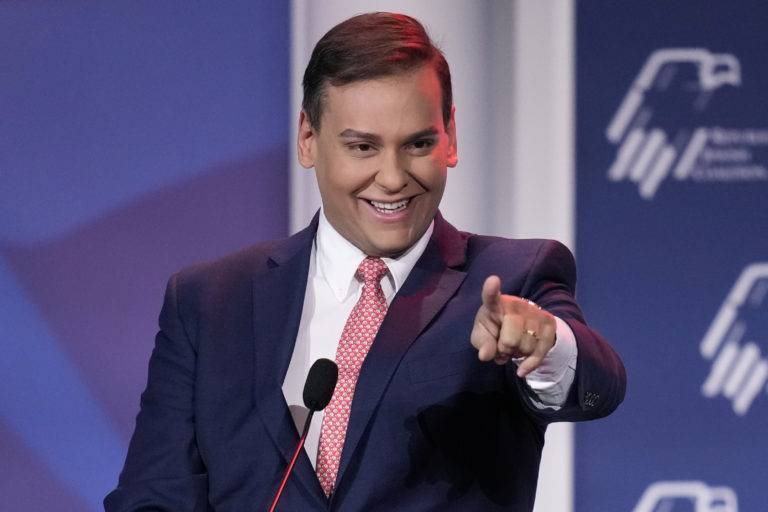
(Molly Bruns, Headline USA) Ousted ex-Rep. George Santos, R-N.Y., lambasted several former House colleagues after Democrats regained control of his old seat this week in a special election, tightening the GOP’s already razor-thin majority.

“I hope you guys are happy with this dismal performance and the 10 million dollars your futile Bull S**t cost the party,” Santos wrote in a text message that reportedly went out to  nine current GOP lawmakers in New York’s congressional delegation, with the only exception being Rep. Brandon Williams, according to Semafor.

“I look very forward to most of you losing due to your absolute hate filled campaign to remove me from Congress arbitrarily,” Santos added. “Now go tell the Republicans Base what you f**king idiots did and good luck raising money next quarter.”

Only one recipient responded to the group-text.

“Sorry, new phone, who dis?” replied Rep. Andrew Garbarino.

Another, Rep. Marc Molinaro, responded via text to Semafor’s request for comment with a single word: “NOPE.”

The House voted to expel Santos from his seat in December after an Ethics Committee report accused him of theft, fraud and making false statements about his finances. Investigators also discovered several inconsistencies in statements about his personal life.

Santos’s expulsion led to a special election between former Democrat Rep. Tom Suozzi—whom Santos had defeated in 2022—and RINO candidate Mazi Pilip, who, according to some reports, is a registered Democrat. Suozzi won the race and flipped the seat blue on Tuesday.

Suozzi’s swearing in will take place on Feb. 28.

The special election left House Republicans with a less-than-comfortable majority of 219 to 213 Democrats, including Suozzi, and three vacancies to fill.

Reps. Kevin McCarthy, R-Calif.; Bill Johnson, R-Ohio; and Brian Higgins, D-N.Y., all resigned in the the last few months.

Higgins’s surprise retirement came as some relief, albeit temporary, to the beleaguered GOP when he recently announced plans to take over as the head of Buffalo’s Shea’s Performing Arts Center.

Gov. Kathy Hochul set a special election to elect Higgins’s replacement for April 30. The area’s Democratic Committee nominated state Sen. Tim Kennedy, who is also running in the primary for the November general election; the local GOP has yet to announce a candidate.

Either way, the seat in the 26th District is likely to be a lock for Democrats, having backed Higgins by nearly 64% in 2022.

McCarthy’s seat for the 20th District of California looks to be a reasonably secure Republican win, with the population of the Central Valley having voted for former President Donald Trump by 25 points in the 2020 election.

Nine candidates filed to compete for the open seat, including three Democrats, three Republicans and three under “no party preference.” McCarthy endorsed Vince Fong, a state-level representative in California, as his replacement.

A primary for the special election will take place on March 19, which is exactly two weeks after the state’s nonpartisan primary for the general election. In both cases, the top two candidates, regardless of party, will advance.

The special election itself will occur on May 21, likely giving the victor just half a year to fill the balance of McCarthy’s term, which abruptly ended last year following his ouster as House speaker in October. As with Santos, it was fellow Republicans who were to blame, although they were arguably justified in seeking to replace the weak and ineffective leader.

A special election to replace Johnson will take place in Ohio’s 6th district on June 11, the same day as the state’s primary elections.

Projections show the district, nestled in the far northeast corner of Ohio, will bring in another Republican. Johnson held the seat for a decade, and the region seems to have increasingly Republican tendencies over the last several presidential elections.

Three Republican candidates have filed to compete for the seat in both the primary and the special election, including two former state-level legislators: Rep. Michael Rulli of Salem, Rep. Reggie Stoltzfus of Paris Township, and chiropractor Rick Tsai.

The House GOP needs to hold on to at least 218 seats in order to maintain its majority vote. Winning a simple majority vote allows Republican bills to move on to the Senate.

Unlike the Senate, the House does not have a mechanism to break tie votes.

Fla. Cop Resigns after Unloading Gun on Patrol Vehicle Due to Falling Acorn

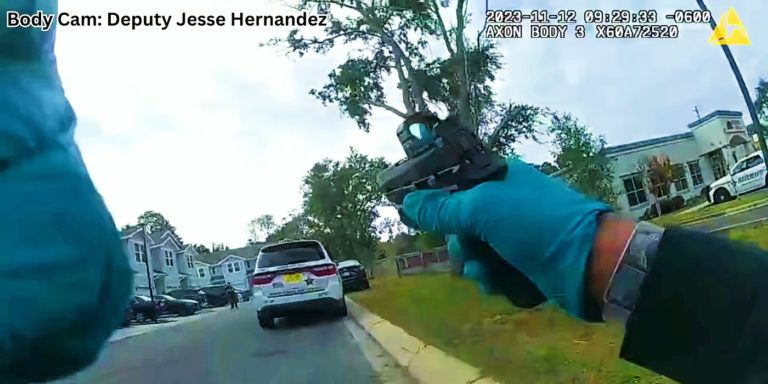
(Jacob Bruns, Headline USA) A Florida police officer resigned in December after unloading his firearm into his own patrol car after an acorn fell on his car and scared him, according to a Feb. 9 press release from the Okaloosa County Sheriff’s Office.

The incident took place on Nov. 12 in Fort Walton Beach, Florida.

Deputy Jesse Hernandez was responding to a call from a woman who said her boyfriend, Marquis Jackson, had stolen her car and “had been calling and texting her threats,” Reason reported.

The woman said Jackson owned a firearm that may be equipped with a silencer.

During the course of the visit, Hernandez was spooked when an acorn from a nearby oak tree fell on top of a police vehicle, making a popping noise, which he perceived to be gunfire.

Fearing the worst, Hernandez shouted “Shots fired! Shots fired! Shots fired!” before dropping into a roll and firing 17 shots into it, emptying his clip in the suburban neighborhood.

Jackson, the handcuffed suspect was sitting in the back of the car at the time, but was miraculously unharmed by the spray.

When the firing began, “[a]ll I could do was lean over and play dead to prevent getting shot in the head,” Jackson recalled in a lengthy Facebook post.

“I was scared to death and I knew all I could depend on was God!” he added.

While Jackson acknowledged being physically unharmed, “mentally, I’m not ok,” he said, adding that “I truly believe I’m damaged for life.”

According to Okaloosa County Sheriff Eric Aden, Hernandez violated the department’s firearm policy, and had agreed to resign from the police force, effective Dec. 4. of last year.

“Deputy Hernandez resigned during the course of our investigation but was ultimately found to have violated policy” because his use of deadly force was not “objectively reasonable.”

The sheriff added that investigators “have no reason to think former Deputy Hernandez acted with any malice.”

Although his actions ultimately were “not warranted,” Aden noted, Hernandez “felt his life was in immediate peril and his response was based off the totality of circumstances surrounding this fear.”

The First Judicial Circuit State Attorney’s Office also reviewed the case and discovered “no probable cause for criminal charges.”

Jack Smith Frets Trump Case Might Not Interfere w/ Election, Begs SCOTUS to Hurry Up

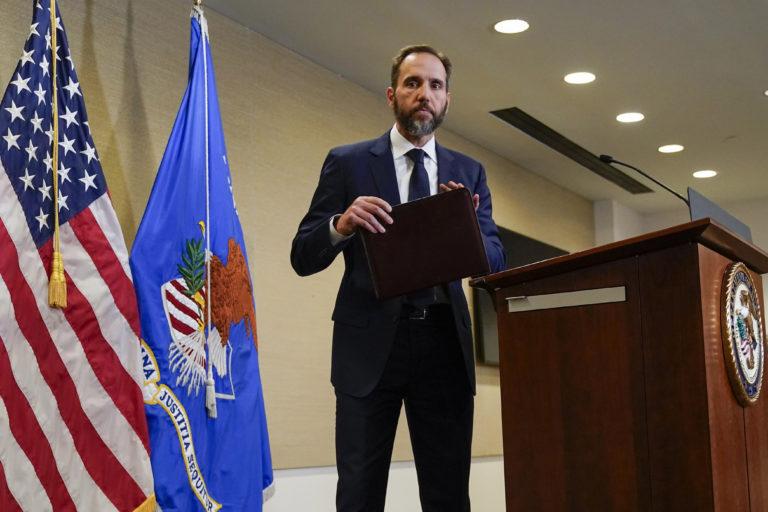
(Headline USA) Special counsel Jack Smith urged the U.S. Supreme Court on Wednesday to move quickly in allowing former President Donald Trump’s 2020 election interference case to proceed to trial.

“The national interest in resolving those charges without further delay is compelling,” Smith and his legal team wrote.

Prosecutors were responding to a Trump team request from earlier in the week asking for a continued pause in the case as the court considers whether to take up the question of whether the former president is immune from prosecution for official acts in the White House. Two lower courts in Washington, D.C., have already rejected that position, prompting Trump to ask the high court to intervene.

The Supreme Court’s next step will likely determine whether Trump stands trial before the November election.

Smith himself has attempted at other times to claim that Trump should be treated no differently than any other civilian trial defendant, but is now eager to deny his due process because of the political pressures bearing down.

If the proceedings are going to be postponed by weeks or months of additional arguments, the trial would likely be set for after the election to avoid any appearance of political interference. That may well mean it is up to the American people to determine Trump’s innocence by re-electing him to the same position that he stands accused of trying to steal.

If Trump were to be elected with the case pending, he could presumably use his authority as head of the executive branch to order the Justice Department to dismiss it, or could potentially seek to pardon himself.

Reflecting their desire to proceed quickly, prosecutors responded to Trump’s appeal within two days, even though the court had given them until next Tuesday.

Though their filing does not explicitly mention the upcoming November election or Trump’s status as the Republican primary front-runner, prosecutors described the case as having “unique national importance” and said that “delay in the resolution of these charges threatens to frustrate the public interest in a speedy and fair verdict.”

Smith’s team charged Trump in August with plotting to overturn the results of the 2020 presidential election, including by participating in a scheme to disrupt the counting of electoral votes in the run-up to the Jan. 6, 2021, riot at the U.S. Capitol, when his supporters stormed the building in a violent clash with police.

“The charged crimes strike at the heart of our democracy,” they wrote. “A President’s alleged criminal scheme to overturn an election and thwart the peaceful transfer of power to his successor should be the last place to recognize a novel form of absolute immunity from federal criminal law.”

Trump’s lawyers have argued that he is shielded from prosecution for acts that fell within his official duties as president—a legally untested argument since no other former president has been indicted.

The trial judge and then a federal appeals court rejected those arguments, with a three-judge appeals panel last week saying, “We cannot accept that the office of the Presidency places its former occupants above the law for all time thereafter.”

The proceedings have been effectively frozen by Trump’s immunity appeal, with U.S. District Judge Tanya Chutkan canceling a March 4 trial date while the appeals court considered the matter. No new date has been set.

Trump’s appeal and request for the Supreme Court to get involved could cause further delays depending on what the justices decide. In December, Smith and his team had urged the justices to take up and decide the immunity issue, even before the appeals court weighed in. But the court declined.

The Supreme Court’s options include rejecting the emergency appeal, which would enable Chutkan to restart the trial proceedings in Washington’s federal court. The court also could extend the delay while it hears arguments on the immunity issue. In that event, the schedule the justices set could determine how soon a trial might begin, if indeed they agree with lower court rulings that Trump is not immune from prosecution.

On Wednesday, prosecutors urged the court to reject Trump’s petition to hear the case, saying that lower court opinions rejecting immunity for the former president “underscore how remote the possibility is that this Court will agree with his unprecedented legal position.”

But if the court does want to decide the matter, Smith said, the justices should hear arguments in March and issue a final ruling by late June.

Prosecutors also pushed back against Trump’s argument that allowing the case to proceed could chill future presidents’ actions for fear they could be criminally charged once they leave office and open the door to politically motivated cases against former commanders-in-chief.

“That dystopian vision runs contrary to the checks and balances built into our institutions and the framework of the Constitution,” they wrote. “Those guardrails ensure that the legal process for determining criminal liability will not be captive to ‘political forces,’ as applicant forecasts.”

Recent evidence has come to light that President Joe Biden and the CIA may have been coordinating on the egregious lawfare attacks against Trump, part of a two-tiered justice system that has resulted in 91 felony charges in four different states for the GOP frontrunner.

Despite the political brinksmanship, Trump has continuously polled ahead of Biden and is gaining ground in key demographics, including independent voters, younger voters and minorities.

Trump also has led Biden in most of the key battleground states that played crucial roles for both men in their respective 2016 and 2020 election victories.

Adapted from reporting by the Associated Press

‘Intel Bros’ Sabotage Attempt to Reform Domestic Spying Law

(Ken Silva, Headline USA) The House was set to hold votes this week on the reauthorization of Section 702 of the Foreign Intelligence Surveillance Act, but Speaker Mike Johnson abruptly delayed that process Wednesday afternoon—much to the dismay of FISA reformers, who want agencies such as the FBI to have to obtain warrants before spying on Americans.

Raj Shah, a spokesperson for Speaker Johnson, announced the delay just as the House Rules Committee was debating a FISA reform bill.

“In order to allow Congress more time to reach consensus on how best to reform FISA and Section 702 while maintaining the integrity of our critical national security programs, the House will consider the reform and reauthorization bill at a later date,” Shah said.

Civil libertarians such as Rep. Thomas Massie, R-Ky., and Sen. Mike Lee, R-Utah, expressed their displeasure at the development.

“UNBELIEVABLE,” Massie wrote on Twitter. “Just as we were winning the debate on requiring warrants for domestic spying in the FISA 702 reauthorization, the Speaker yanked the bill and cancelled the rest of Congress this week.”

Lee blamed the pro-spying Republican lawmakers for the delay, referring to them as “intel bros.”

“Just as the House was making progress on FISA reforms, the GOP “Intel Bros” demanded that the House adjourn—without reforming FISA 702 or even prohibiting warrantless “backdoor” searches of American citizens under FISA 702,” he said.

Section 702 of FISA, which allows U.S. government agencies to target foreigners outside the U.S. for intelligence purposes, will sunset on April 19 unless reauthorized by Congress. Reformers have been pushing to require U.S. agencies to obtain warrants in order to spy on Americans caught in the Section 702 dragnet, but agencies such as the FBI argue that such requirements would jeopardize national security.

The Project for Privacy and Surveillance Accountability, which is in favor of warrant requirements, released a scathing statement after Wednesday’s delay.

“For months, the House Intelligence Committee warned that failure to reauthorize Section 702 would subject the American homeland to unprecedented danger. Now the Intelligence Committee has caused the bill to be pulled rather than allow the House to work its will and vote on a few reasonable and important reform amendments,” said PPSA general counsel Gene Schaerr.

“They are now willing to endanger Section 702 in its entirety unless they get everything they want. Think about it – the intelligence community and deep state are so determined to maintain the ability to spy on Americans that they are willing to put at risk the very authority they claim they need to protect us against foreign threats.”

Ken Silva is a staff writer at Headline USA. Follow him at twitter.com/jd_cashless.

Disastrous Court Hearing on Affair Likely Spells Doom for Fani Willis and Lovebird

(Attorneys grilled the paramour of Fulton County District Attorney Fani Willis for several hours Thursday over the couple’s relationship and when it started as defense attorneys worked to get Willis thrown off the prosecution of Donald Trump’s election interference case.

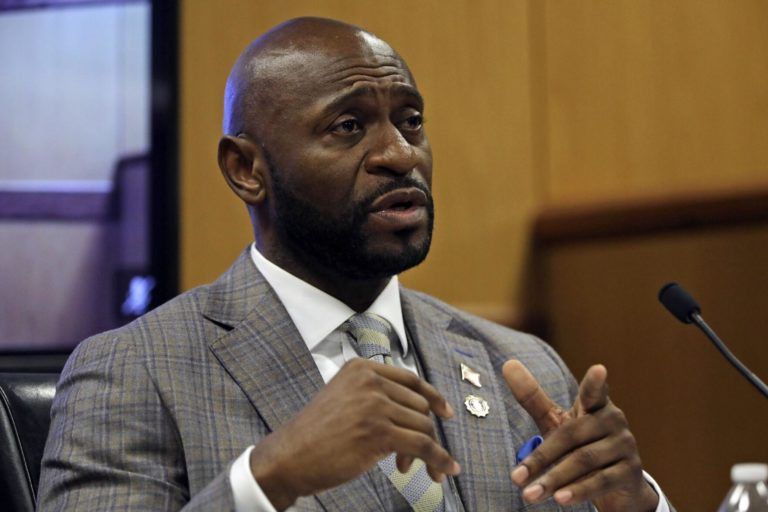
Special prosecutor Nathan Wade’s testimony followed earlier testimony by Robin Bryant–Yeartie, Wade’s college friend and a former Fulton County District Attorney’s Office employee, who said that Willis began a romantic relationship with Wade in 2019, shortly after they met at a judicial conference.

Bryant–Yeartie testified that she had a falling out with Willis when she resigned from the Fulton County District Attorney’s Office.

In his subsequent testimony, however, Wade said the relationship with Willis started in March 2022, after he had been hired in November 2021.

The questioning was intense and often interrupted by objections from attorneys representing several different parties.

Sometimes Wade answered questions; other times he scampered around them, especially questions about whether he lied under oath during his divorce from his former wife about his relationship with Willis.

Wade said that Willis reimbursed him in cash for trips they took, except for a trip to Belize for his birthday, which Willis covered as a gift.

He said he only had one receipt from those trips and that he didn’t deposit the cash Willis gave him as reimbursement. He said he used his business card for such purchases and then had his accountant determine which were business and which were personal.

Attorney Craig Gillen, who represents one of Trump’s co-defendants in the case, asked Wade questions about the cash payments and his relationship with Willis.

“You don’t have a single solitary deposit slip to corroborate?” Gillen asked.

Wade said he did not.

The hearing Thursday comes as Judge Scott McAfee looks to determine if Willis should be removed from the politically charged case.

Several prominent pundits weighed in that Wade’s testimony likely sealed the deal.

Willis, who has been rebuked previously for ethical transgressions, campaigned on the platform of indicting the then-sitting Republican president.

However, the actual basis for the charges did not come until a day after she took office, in a January 2021 phone call between Trump and Georgia Secretary of State Brad Raffensperger, as he sought to challenge the highly dubious 2020 election results in Fulton County and elsewhere.

In August 2023, a Fulton County grand jury indicted Trump and 18 others, including former New York City Mayor Rudy Giuliani and former state Republican Party Chair David Shafer, on allegations of a racketeering conspiracy related to the unsuccessful election challenges.

Trump has pleaded not guilty.

Willis was discovered to have colluded with Vice President Kamala Harris and Rep. Bennie Thompson, D-Miss., the former chair of the partisan Jan. 6 committee, prior to filing her charges, and she has resisted several requests to provide information to House Republicans over the role federal funding and resources contributed to her probe.

However, a bombshell legal filing from Ashley Merchant, the lawyer representing defendant Michael Roman, exposed Willis’s adultery with Wade, a subordinate attorney whom she allegedly hired for the case despite his lack of qualifications and then went with on lavish trips after overbilling for his services.

Willis was expected to take the stand this afternoon.

Headline USA’s Ben Sellers contributed to this report.

12 Federal Prison Inmates Died under Mysterious Circumstances in 8 Years, IG Finds

(Ken Silva, Headline USA) It turns out, Jeffrey Epstein’s alleged suicide at the Metropolitan Correctional Center wasn’t the only mysterious death to take place relatively recently within the Bureau of Prisons, or BOP.

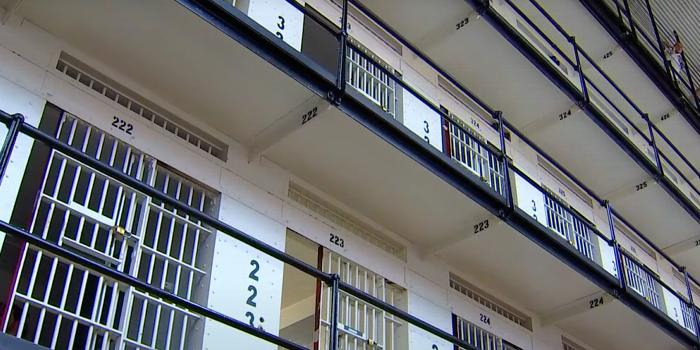
The Justice Department’s Office of the Inspector General released a report Thursday on the 344 inmate deaths to take place in the federal prisons system from 2014 to 2021—finding that at least 12 inmates died under mysterious circumstances.

According to the DOJ-IG’s report, 187 inmates committed suicide, 89 died by homicide, 56 died by an accident and 12 died from unknown causes.

“In 12 of the 344 deaths (less than 4 percent), there was not sufficient information to definitively determine the manner of death, even after autopsies were conducted in most cases,” the DOJ-IG report said. “Accordingly, the manner of these deaths is categorized as ‘Unknown.’”

Epstein wasn’t one of the 12 unknown deaths, as the BOP ruled his death a suicide.

The Inspector General attributed some of the unknown deaths to drug overdoses, explaining that certain abused substances can cause death but cannot be detected by standard toxicological analytic methods. However, that only explained eight of the unknown deaths, leaving four unexplained.

The Inspector General blamed the BOP for only investigating suicides. The DOJ-IG report recommended that prison officials investigate all deaths, as opposed to only suicides.

“By not requiring the completion of After Action Reviews for homicides, accidental deaths, and deaths under unknown circumstances, the BOP is missing an opportunity to identify factors that may have contributed to these deaths, especially because autopsies are discretionary and not required for inmate deaths,” the report said.

“For example, during our evaluation period there was a total of 70 deaths involving drug overdose, including 17 ruled as suicides, with the remaining 53 categorized as accidental or unknown.”

As for the suicides, homicides and other deaths, the BOP largely blamed staffing shortages and resource constraints.

“Operational challenges include staffing shortages; an outdated security camera system; staff failure to follow BOP policies and procedures; and an ineffective, untimely staff disciplinary process. One or more of these challenges was a contributing factor in many of the inmate deaths in our scope,” the report said.

Responding to the report, the BOP insisted that it’s been taking steps to reduce inmate deaths, and that it will follow the report’s recommendations for more stringent policies.

“BOP has recently undertaken several initiatives to reduce deaths by suicide, including issuing guidance for employees to carry cutdown tools on their person; reducing the incidence of celling individuals in custody alone;. and conducting specialized reviews at institutions that have higher incidence of suicide deaths,” BOP Director Colette Peters said in a letter to the DOJ-IG.

“When our best efforts are not successful and death does occur, we conduct a vigorous review of homicides through our After-Action and mortality review process.”

Ken Silva is a staff writer at Headline USA. Follow him at twitter.com/jd_cashless.

Biden Allies, Critics Both Call for Release of Special Counsel Interview

(Headline USA) Although special counsel Robert Hur undoubtedly faced pressure from the White House and Justice Department to come up with a reason not to charge President Joe Biden criminally for his mishandling of classified documents, the U.S. Attorney nonetheless released a searing report that condemned Biden’s responses during a lengthy interview.

It is unlikely that Biden would have been charged regardless, with Attorney General Merrick Garland exercising final discretion in the matter, and Garland ultimately answering to Biden himself. There remains, for now, legal debate as to whether it is even possible to criminally indict a sitting U.S. president, due to the chilling effect that this could have on executive decision-making.

Nonetheless, Hur’s report opened Biden up to fresh scrutiny over his age and memory, and both Biden allies and critics are seeking the public release of a transcript or recording of that discussion to better understand the extent of the red flags raised by the bombshell.

Hur’s report confirmed longstanding concerns based on Biden’s visible decline in cognitive function but hinted at a far worse problem than the public had been made aware of.

It suggested, for example, that the president couldn’t remember when his own son had died.

The White House has the ultimate say over whether to make public the transcript or audio recording of the interview or to claim executive privilege and keep the interview private. There’s precedent for documents related to White House investigations to ultimately become public—but also to be withheld.

A transcript of President Bill Clinton’s 1998 grand jury appearance related to allegations of a sexual relationship with intern Monica Lewinsky was included as part of Independent Counsel Ken Starr’s massive report, which was delivered to the House and subsequently released to the public by Congress following a vote.

The Starr team debated extensively how much to disclose in the report, mindful of the graphic and sensitive nature of the findings, said Robert Bittman, who served as a Starr deputy during the investigation. Recognizing that it was ultimately up to the House to decide what to make public, the team gave “all the information [to Congress] that we had so they can make their own decisions.”

President George W. Bush, on the other hand, invoked executive privilege to block Congress from seeing the FBI report of an interview with Vice President Dick Cheney and other records related to the administration’s leak of CIA operative Valerie Plame’s identity in 2003. The move angered Congress.

Bittman said he did not think it was “necessarily a good thing” for investigative reports to be made public.

But now that the Hur report has been disclosed, it would be helpful to release the transcript of Biden’s interview “so that people can judge for themselves about whether Hur’s opinions about what President Biden said and what he remembered and what he didn’t remember is justified,” he added.

“If you see that the White House objects to it, it probably suggests that the transcripts are not good for the White House,” Bittman said, “and if they support release of it, then I suspect that that suggests the transcripts are good for the White House or President Biden.”

It is also possible that the White House may doctor or partially release the transcripts to create a distorted perception—which would likely placate the leftist media. But it would be much less likely that they release the actual recording of the interview.

Ironically, Biden’s interview text and the audio recording are classified because they include a discussion of the highly sensitive documents that Biden kept lying around his garage, where his drug-addict son Hunter and other family members who were doing business with hostile foreign nations might have had access to them over a period of several years.

Any potential release could happen either by a decision of the White House or through the Justice Department working to comply with congressional oversight requests. Both would follow nearly identical procedures.

Once a decision to pursue release of the interview was made, the sensitive parts of the document would be sent to the intelligence community to assess what could be declassified and what would need to be redacted. A further review would be warranted to determine if anything discussed about the security of the president’s home might impact protective measures.

Finally, the White House would need to weigh in, with the advice of the Justice Department’s Office of Legal Counsel, on whether to recommend that Biden invoke executive privilege over what others had cleared for publication.

Though Biden didn’t invoke executive privilege over the full report, the transcript could well be a different story. Among the documents found in Biden’s home were records of deliberations over a potential U.S. troop surge during the Afghanistan war and other conversations within the White House—an area that presidents are particularly loath to have publicly discussed.

The interview with Biden was conducted over two days last October, right after Hamas’s brutal attack on Israel.

Hur and his deputy, Marc Krickbaum, a former Trump-appointed U.S. attorney from Iowa, asked all of the questions.

Biden was joined by White House Counsel Ed Siskel; the counsel’s office investigations leader, Richard Sauber; and the president’s personal lawyer, Bob Bauer. Several other individuals from both sides were in the room as well, according to a person familiar with the interviews who spoke to the Associated Press on condition of anonymity to discuss them.

Separately, House Republicans have reached out to Hur and his representatives on the possibility of Hur testifying before Congress, and he has expressed a willingness to do so, according to two people who were not authorized to speak publicly about the request and spoke on condition of anonymity.

Republicans and Democrats alike are interested in more complete details about what went into the report. Biden and his allies claim a full transcript would show the president is mentally sharp and would prove that Hur cherry-picked moments solely to make him seem feeble. Biden’s attorneys raised their concerns to Garland, who nonetheless decided to keep the report as is and made it public.

Bauer, speaking on CBS’s Face the Nation over the weekend, offered an anecdote that didn’t make it into the report but that would be in a transcript. He said Hur acknowledged that sometimes he asked imprecise questions—ones that Biden picked apart.

“Now, everybody in the room recognized that was the case, that showed the president was listening carefully and understood precisely what was wrong with those questions,” Bauer said. “I didn’t come away from the special counsel’s failure to ask precise questions and think to myself, ‘he has mental acuity problems,’ I just thought he was asking bad questions.”

Republicans, meanwhile, have also requested that the audio of the interviews be made public and want to know more on why Hur chose not to prosecute Biden, particularly when they noted in their report that some evidence showed he held onto and shared with a ghostwriter highly classified information.

Hur said in his report that he did find evidence that Biden had willfully mishandled classified records but not enough evidence for a criminal prosecution like the one against former President Donald Trump.

Unlike Biden, whose purloined documents span from his time as a U.S. senator and vice president, Trump’s right to maintain archives from his term in office is covered under the Presidential Records Act.

A partisan official with the National Archives complained to the Justice Department that Trump had not delivered certain files, including a private letter written to him by former President Barack Obama.

That triggered an FBI probe, during which they instructed Trump to secure the documents being held at his Mar-a-Lago resort, which the former president says he agreed to do. Nonetheless, the FBI launched a raid of the property shortly before the 2022 midterm election and later indicted Trump for several counts including obstruction.

Trump has pled not guilty, and is likely to use the case against Biden in his defense, as well as a prior case in which former President Bill Clinton was allowed to keep classified recordings in his sock drawer.

Adapted from reporting by the Associated Press

Top NCAA Official Resigns over Trans Policy: ‘Massive, Authorized Cheating’

(Headline USA) A top NCAA official resigned this week over the organization’s policy allowing transgender athletes to compete in women’s sports, slamming the policy as unfair and discriminatory toward female athletes, the Washington Examiner reported.

William Bock III, who has served on the NCAA’s Committee on Infractions since 2016, said transgender athletes should not be allowed to compete in events specifically created and set aside for women.

The NCAA’s policy allowing them to do so as long as they can prove their testosterone levels are below the maximum allowable levels for any given sport undermines fair competition, Bock argued.

“Although I may not have agreed with the wisdom of every rule in the NCAA rulebook, I believed the intent behind the NCAA’s rules was competitive fairness and protection of equal opportunities for student–athletes,” Bock wrote in his resignation letter. “This conviction has changed as I have watched the NCAA double down on regressive policies which discriminate against female student–athletes.”

Even if transgender athletes can prove their testosterone levels are below the maximum level allowed, they still would have massive biological benefits over female competitors simply because they were born male, he explained.

“There’s a lot of biological development that starts at birth that allows you to maximize testosterone, and those changes that you get through development—they don’t go away,” Bock said.

“And you’re going to reduce performance by a small amount if you reduce testosterone levels, but you’re never going to bridge the gap between men and women,” he continued. “And so it’s a ruse to say that testosterone suppression, it’s a level playing field, so it’s not true.”

Bock, who also served as the general counsel for the U.S. Anti-Doping Agency, said his experience with doping cases and his conversations with experts in sports physiology led him to come out against the NCAA’s policy.

“If I’m there in a sport integrity role when there’s massive, essentially authorized, cheating taking place and dramatically harming women—it’s just a contradiction,” he said. “I just felt like I couldn’t seem to do that any longer and needed to resign with the hope that maybe [it] will cause other people to look at the issue more closely.”