Specifically, New Mexico election officials violated the National Voter Registration Act according to U.S. District Court Judge James Browning.
In his ruling, Browning reportedly sided largely with the Voter Reference Foundation, a conservative election watchdog group, asserting that New Mexico failed to uphold its responsibility to run transparent elections by hiding vital information from the public.
According to the judge, New Mexico’s current practice “severely burdens the circulation of voter data among the public,” adding that unless such information can be seen by the public, voter rolls will have to be hidden away.
“The data sharing ban largely deprives individuals and entities of the ability to engage with disclosed records in such a way that facilitates identification of voter registration-related irregularities,” Browning continued.
Browning’s ruling has support from conservatives.
Gina Swoboda, a leader of the Voter Reference Foundation and Arizona Republican Party chair, said that she and the Republican Party are “very gratified” that the court has “upheld the right of the public to have meaningful access to vote rolls.”
For Swoboda, there is no doubt that the NVRA is meant to promote the transparency of voter rolls–rolls hidden away particularly in swing states that engaged in suspect election practices in 2020.
“The intent of the public disclosure provision of the National Voter Registration Act is clear,” she wrote. “Namely, to allow the public to view the voter lists and associated list maintenance records to ensure proper voter list maintenance is being conducted.”
On the other hand, John Davisson, director of litigation at the Washington-based Electronic Privacy Information Center, argued that such rulings violate the privacy rights of individual voters.
According to Davisson, “states have until now adopted confidentiality safeguards around voter data that vary in their details,” leading to breaches in privacy protections.
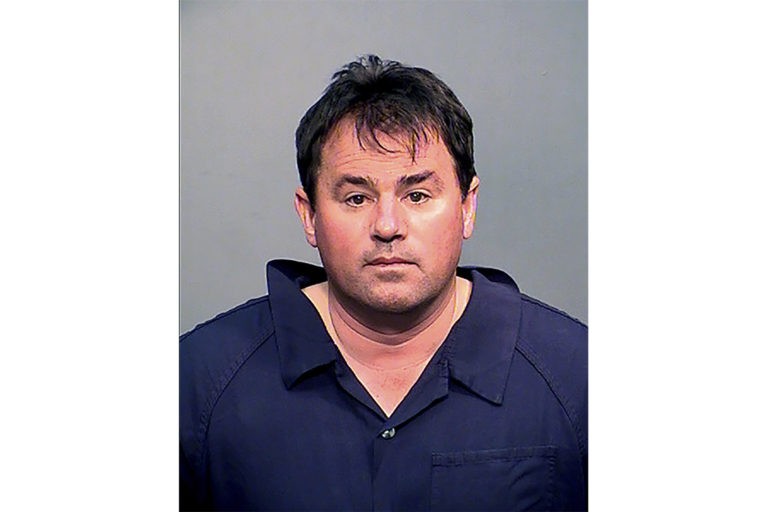
(Headline USA) The leader of an offshoot polygamous sect near the Arizona-Utah border has pleaded guilty to conspiring to transport underage girls across state lines in what authorities say was a yearslong scheme to orchestrate sexual acts involving children.
Samuel Bateman also pleaded guilty on Monday in U.S. District Court in Phoenix to conspiring to commit kidnapping in a plan to “free” underage girls who had been taken into Arizona state custody. His plea agreement recommends a sentence of 20 to 50 years in prison, though one of his convictions carries a possible maximum sentence of life in prison.
In pleading guilty, Bateman, 48, acknowledged taking underage brides, having sex activity with them and arranging group sex, sometimes involving child brides. Myles Schneider, Bateman’s attorney, didn’t return a phone call and email seeking comment on his client’s behalf.
Authorities say Bateman, a self-proclaimed prophet who had taken more than 20 wives, including 10 girls under the age of 18, created a sprawling network spanning at least four states as he tried to start an offshoot of the Fundamentalist Church of Jesus Christ of Latter-Day Saints, which historically has been based in the neighboring communities of Colorado City, Arizona, and Hildale, Utah.
He and his followers practice polygamy, a legacy of the early teachings of the mainstream Church of Jesus Christ of Latter-day Saints, which abandoned the practice in 1890 and now strictly prohibits it. Bateman and his followers believe polygamy brings exaltation in heaven.
Bateman was arrested in August 2022 by Arizona state police in Flagstaff after someone spotted small fingers in a door gap on an enclosed trailer. Authorities found three girls — between the ages of 11 and 14 — in the trailer, which had a makeshift toilet, a sofa, camping chairs and no ventilation.
Bateman posted bond, but he was arrested again the next month and charged with obstructing justice in a federal investigation into whether children were being transported across state lines for sexual activity.
At the time of the second arrest, authorities removed nine children from Bateman’s home in Colorado City and placed them in foster care. Eight of the children later escaped, and the FBI alleged that three of Bateman’s adult wives played a part in getting them out of Arizona. The girls were later found hundreds of miles away in Washington state in a vehicle driven by one of the adult wives.
Bateman is accused of giving wives as gifts to his male followers and claiming to do so on orders from the “Heavenly Father.” Investigators say Bateman traveled extensively between Arizona, Utah, Colorado and Nebraska and had sex with minor girls on a regular basis. Some of the sexual activity involving Bateman was recorded and transmitted across state lines via electronic devices.
He is the second man to be convicted as part of the scheme. Businessman Moroni Johnson of Colorado City pleaded guilty last month to a charge of conspiring with Bateman to transport underage girls over state lines.
Four of Bateman’s wives also previously pleaded guilty to a charge of conspiracy to commit tampering with an official proceeding, acknowledging that they witnessed Bateman engage in sexual acts with his child brides and that they participated in the plot to kidnap the eight girls from state custody.
Charges also are pending against four other women identified as Bateman’s wives and two of his male followers, both of whom are charged with using a means of interstate commerce to persuade or coerce a minor to engage in sexual activity, among other charges. The four women and two men have pleaded not guilty to the charges.
The FBI said Bateman demanded that his followers confess publicly for any indiscretions and share those confessions widely. He claimed that punishments, which ranged from a time-out to public shaming and sexual activity, came from the Lord, the federal law enforcement agency said. Authorities say Bateman instructed some of his male followers to engage in sex with some of Bateman’s wives to atone for the men’s purported sins against the sect leader.
Authorities said Johnson was pressured by Bateman to give up three of his wives as atonement because Johnson wasn’t treating Bateman as a prophet.
Two men charged in the case bought luxury vehicles for Bateman, authorities said. One bought Bateman two Bentleys, while another male co-defendant purchased a Range Rover for Bateman.
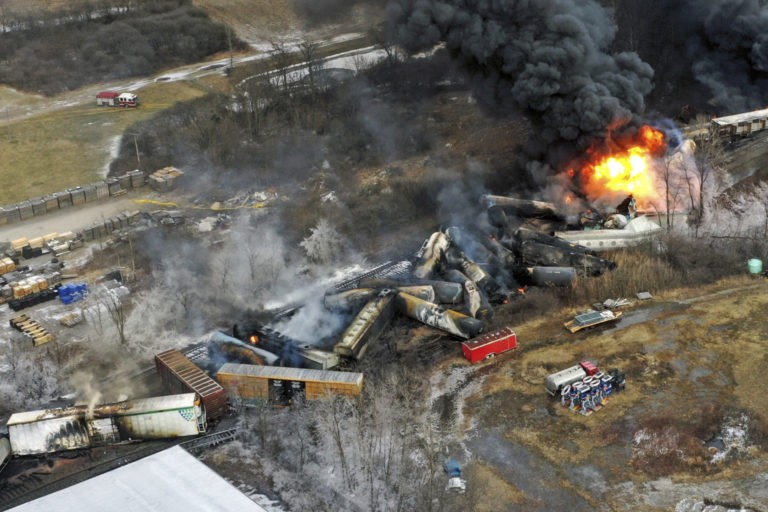
(Headline USA) The aftermath of last year’s fiery train derailment in eastern Ohio doesn’t qualify as a public health emergency because widespread health problems and ongoing chemical exposures haven’t been documented, federal officials said.
A public health emergency declaration would have given the people of East Palestine, Ohio more access to aid from the federal government.
However, the Environmental Protection Agency never approved that designation after the February 2023 Norfolk Southern derailment even though the disaster forced the evacuation of half East Palestine and generated many fears about potential long-term health consequences of the chemicals that spilled and burned. The contamination concerns were exacerbated by the decision to blow open five tank cars filled with vinyl chloride and burn that toxic chemical three days after the derailment.
The topic of a public health emergency came up in emails obtained by the Government Accountability Project watchdog group through a public records request.
But EPA Response Coordinator Mark Durno said the label, which the agency has only used once before in Libby, Montana — where hundreds of people died and thousands were sickened from widespread asbestos exposure — doesn’t fit East Palestine even though some residents still complain about respiratory problems and unexplained rashes. Officials also believed the agency had enough authority to respond to the derailment without declaring an emergency.
Durno said the reason a public health emergency isn’t being considered is that “we have not had any environmental data” about ongoing chemical exposures in the extensive air, water and soil testing program.
The EPA said in a statement that the order it did issue telling Norfolk Southern it was responsible for the damage declared that “the conditions at the derailment site ‘may constitute an imminent and substantial endangerment to the public health or welfare or the environment.’” So the agency said it didn’t see a need for a public health emergency because it had the legal authority it needed to respond.
But area residents like Jami Wallace see plenty of evidence that their hometown has become a disaster every time they open Facebook and see posts about their friends’ kids covered with rashes or struggling with chronic nosebleeds. Other posts talk about the smell of chemicals returning after heavy rains.
“They keep saying it’s a coincidence, but if this was your family, wouldn’t you get tired of it being a coincidence?” Wallace said.
Lesley Pacey, who is an environmental investigator with the watchdog group, said she wants to make sure that East Palestine residents get the help that they need to recover from the derailment.
“I talk to residents all the time and they’re having new seizures pop up, cancers. I mean, a lot of the damage has already been done to these people,” Pacey said.
Federal and state officials continue monitoring for additional problems in the small community near the Pennsylvania border, according to Durno. The EPA also keeps testing the air and water in the area as it oversees the railroad’s work to clean up the mess.
He reiterated that none of the agency’s more than 100 million tests of air, water and soil ever showed concerning levels of chemicals apart from the soil immediately around the derailment that was dug up and disposed of last year.
In the recently disclosed emails, an EPA lawyer tells one of its PR people it was “best not to get into this” when he was asked whether a document explaining the agency’s order telling Norfolk Southern to clean up the contamination from the derailment should include anything about medical benefits. That kind of aid, which could include Medicare coverage, is only available if EPA declares a public health emergency.
“But again there was no data suggesting that that was necessary. And to this date, there is no data that suggests that that’s necessary,” Durno said
The railroad has already spent more than $1.1 billion on its response to the derailment, including more than $104 million in direct aid to East Palestine and its residents. Partly because Norfolk Southern is paying for the cleanup, President Joe Biden has never declared a disaster in East Palestine, which is a sore point for many residents. The railroad has promised to create a fund to help pay for the long-term health needs of the community, but that hasn’t happened yet.
The emails also provide a reminder that the EPA was aware of the potential dangers of releasing and burning the vinyl chloride. But that was already made clear when the EPA advised officials on scene that phosgene — which was used as a chemical weapon in World War I — and hydrogen chloride would likely be created when vinyl chloride is burned and warned the public about that possibility.
The officials who made the decision to release the vinyl chloride — Ohio’s governor and the local fire chief leading the response — decided that releasing and burning it was safer than risking a tank car or more exploding.
Ultimately, Durno said the EPA found only low levels of hydrogen chloride in the plume of thick black smoke and no phosgene. And he said the agency took extensive samples throughout the area to monitor for those chemicals during the burn and evacuation even though weather conditions kept its specialized plane with additional testing equipment grounded on the day of the burn.
The head of the National Transportation Safety Board said recently that her agency’s investigation showed that the vent and burn of the vinyl chloride was unnecessary because the company that produced that chemical was sure no dangerous chemical reaction was happening inside the tank cars. But the officials who made the decision have said they were never told that.
The NTSB’s full investigation into the cause of the derailment won’t be complete until June, though that agency has said that an overheating wheel bearing on one of the railcars that wasn’t detected in time by a trackside sensor likely caused the crash.
The EPA has said the cleanup in East Palestine is expected to be complete sometime later this year.
Rick Tsai, a chiropractor who ran in the March primary for the U.S. congressional seat on the derailment, sees a dismal future for the small township the longer that it goes without the resources it needs to make it safe again — resources the public health emergency designation could help provide.
“People are just about to give up,” he lamented. “I don’t think people have much hope anymore.”
(Molly Bruns, Headline USA) Democrats are apparently worried that their “get-out-the-vote” campaigns might actually be helping Republicans, according to a confidential memo reported on by the Washington Post.
Democrats and several adjacent non-profit voter organizations have reportedly noticed that younger demographics are moving in a more conservative direction.
An estimated 1 in 5 young, unregistered voters currently lean Republican, leading the DNC and their allies to believe that blindly registering people could result in their loss of the 2024 presidential election.
“Indeed, if we were to blindly register nonvoters and get them on the rolls, we would be distinctly aiding Trump’s quest for a personal dictatorship,” said data scientist and progressive Aaron Strauss in the memo.
Strauss argued that Democrat donors should be encouraged to give funding to groups that focus on registering voters in “specific, heavily pro-Biden populations,” such as black Americans, in order to avoid accidentally registering Trump voters.
This caused a ruckus in the Democrat camp, as minority voters typically register in lower numbers than white people.
Maria Teresa Kumar, president and CEO of Voto Latino, argued that Strauss overestimated the increase in conservative voters.
“If you’d ask me what keeps me up at night, it’s not that young people of color are going to defect to the Republican Camp,” she said. “My worst-case scenario is that memos like this creates a disinvestment–and that makes our job very hard. It does a disservice because its trying to put communities against each other in ways that are not helpful.”
Meanwhile, support for presumptive Republican candidate Donald Trump continues to grow.
Several right-wing movements to protect election integrity and draw votes away from incumbent candidate Joe Biden are fighting back.
Scott Presler with The Persistence worked in several key states such as Wisconsin, Arizona, North Carolina, Nevada and Pennsylvania to encourage people to vote early to avoid election day shenanigans.
In 2022, Luzerne County, PA ran out of paper ballots
AND
Harris County, TX, ran out of paper ballots.
This is one reason why I’ve been pushing for early voting.
There is a history of things happening on Election Day.
Republicans hope to beat Democrats at their own game by making use of the now-legal tools they put in place, such as early voting and ballot harvesting.
The measure asks the company to investigate its discriminatory pay and benefits policies— specifically addressing where employees affected by gender-switching advocacy have been psychologically or medically harmed, without providing remedial care—and reporting to shareholders why such compensation gaps exist at an allegedly tolerant company according to a press release issued via NewsDirect.
Speaking at the Disney meeting in support of the proposal was Chloe Cole, a patient advocate for Do No Harm, who has testified before legislative bodies nationwide in opposition to gender ideology and its destructive health consequences.
Cole addressed the company’s board of directors, including CEO Robert Iger, and told her story about her difficulties in finding medical care and insurance coverage in her efforts to “de-transition,” after trying earlier in her life to switch from the biological sex she was born with.
“Disney has become the Ursula that is stealing the voices of thousands of little Ariel’s across the world, by telling us we can be something that we can never become,” Cole said in the phone call, referencing the entertainment giant’s beloved Little Mermaid film.
“The lawsuits are coming, sir,” she continued, warning fellow shareholders as much as its beleaguered CEO. “It’s only a matter of time before current or past employees, whose bodies and lives have been irreversibly harmed, will show up at your door looking for justice and restitution.”
Ahead of the Disney meeting, NLPC released a one-minute video to highlight the shareholder proposal.
The corporate and government watchdog also filed a white paper with the Securities and Exchange Commission to more fully explain the necessity for the company to investigate its discriminatory policies.
“Disney has been so proud about its 100-percent score on the Corporate Equality Index, designed by the pro-LGBTQIA+ Human Rights Campaign, which requires companies to cover sex change treatments in their health insurance offerings,” said Paul Chesser, director of NLPC’s Corporate Integrity Project.
“Now we call upon Mr. Iger to lead the way for Corporate America to provide equal care for those who have suffered physical harm as a result, and who want bodily restoration,” he added. “Besides the damage they have suffered, they are also discriminated against.”
As NLPC pointed out in its proposal, the Equal Employment Opportunity Commission considers failure to provide equivalent pay and benefits based on categories including “gender identity” and “sexual orientation” as discriminatory.
Even the Securities and Exchange Commission agreed with NLPC that de-transitioning individuals fit under such classifications when considering unfairness in corporate compensation practices.
In its opposition statement (p. 104 at link) to the proposal, Disney alleged that NLPC was just trying to “generate attention” with a “narrow focus … to advance a limited agenda.”
Cole countered that it was the virtue-signalling Disney that appeared to have the narrow focus and limited agenda, opting to treat one class differently based on political ideology and the positive attention it might receive, while ignoring an equivalent category.
“Disney acts as if people like me don’t exist,” said Chloe Cole in advance of the meeting
“I intend to make sure the board and Mr. Iger hear that the company’s irrational gender ideology policies are actually destructive, and that I am a victim of policies like it,” she added. “De-transitioners like me are not going away. With the numbers of LGBTQIA+ workers at the company who have sought ill-advised sex changes, you can bet that litigation over deception, and discriminatory benefits policies, won’t be far behind.”
(Money Metals News Service) Reflecting on his childhood in this episode of Money Metals’ Midweek Memo, host Mike Maharrey recalls those playground disputes where challenges were met with the retort, “Oh yeah? What are you going to do about it?!”
This question isn’t merely child’s play; it’s fundamentally about accountability. If one cannot back up their words with actions, then they’re merely making noise. This realization becomes more poignant when considering the habitual critique of the powers-that-be for their mishandling of various issues.
Merely pointing out problems is insufficient; real solutions are necessary. That’s why he recently emphasized the importance of local grassroots activism in supporting sound money through Money Metals Exchange and the Sound Money Defense League, offering a tangible response to systemic issues.
The Urgency of Solutions: Beyond Critique: The Call for Actionable Solutions
The matter of the national debt, however, presents a colossal challenge. Frankly, it’s unlikely that the current leadership is prepared or even capable of adopting the radical measures needed to address this crisis.
Yet, even in acknowledging the daunting nature of this task, it’s instructive to look back at historical figures like Thomas Jefferson, who demonstrated that with sufficient political will, significant reductions in national debt are possible through disciplined fiscal policies.
Analyzing Market Anomalies: Unusual Trends in Gold Prices and Treasury Yields
Turning our attention to the gold and silver markets, we observe an unusual trend: both gold prices and bond yields are rising, which traditionally do not occur in tandem. This anomaly can be attributed to a mix of factors, including inflation expectations and geopolitical tensions.
Driving Forces Behind Economic Indicators: Inflation, Global Dynamics, and Supply Concerns
Mike identifies three primary factors he believes are driving Treasury yields higher alongside the price of gold:
Inflation Realization: The market might be coming to terms with the fact that inflation is not as under control as previously thought. This awakening could be driving real buying in the gold market as an inflation hedge. Suppose investors start to believe that the Federal Reserve’s measures have not been sufficient to tackle price inflation effectively. In that case, this realization can prompt a move towards gold, and simultaneously, expectations of inflation could push Treasury yields higher as investors demand higher yields to compensate for reduced purchasing power over time.
Global Influence and De-Dollarization Efforts: Mike points out that the American and Western perspectives are not the only ones that matter in the gold market. With a significant portion of gold buying concentrated in emerging markets and the East, particularly in China, these investors could be responding to different dynamics, such as efforts to move away from the U.S. dollar. This shift could support the price of gold independently of Western investment trends. Simultaneously, if these investors are also moving away from U.S. Treasury bonds, this could contribute to the rise in Treasury yields due to reduced demand.
Supply and Demand Dynamics in the Treasury Market: The federal government’s continued issuance of Treasury bonds to finance its spending is creating an oversupply, leading to lower prices and higher yields. Mike suggests that this dynamic is a primary reason for the rising yields, exacerbated by the Fed’s tapering actions which have reduced its bond purchases. This imbalance between supply and demand in the Treasury market is a critical factor contributing to the higher yields.
Implications of Fiscal and Monetary Policies: Challenges and Potential Strategies
Mike also underscores the broader fiscal and monetary policy implications of these dynamics, noting the challenges posed by the federal government’s spending habits and the potential for the Federal Reserve to return to quantitative easing to support the Treasury market.
Mike highlights the complex interplay between fiscal policy, central bank actions, and market forces in influencing the movements of both gold prices and Treasury yields.
The expectation of Federal Reserve interest rate cuts, driven by market speculation and investor confidence, is another factor propelling the gold rally.
Yet, the simultaneous rise in treasury bond yields suggests a deeper undercurrent of market dynamics, possibly hinting at the market’s awakening to the reality of persistent inflation and the limitations of the Fed’s conventional monetary tools in addressing the burgeoning debt crisis.
Jefferson’s Enduring Wisdom: Fiscal Responsibility Through Historical Lenses
Thomas Jefferson in the Modern Age
The enduring solution to the national debt problem, much like the answer to a child’s challenge on the playground, lies in actionable strategies rather than mere criticism.
The example set by Jefferson during his presidency offers a blueprint for fiscal prudence: significant government spending cuts and a steadfast commitment to using surplus revenues for debt reduction.
It was Jefferson’s rigorous frugality and simplification of government that facilitated a substantial decrease in the national debt, despite the financial burdens of the Louisiana Purchase.
Thomas Jefferson articulated his vision for a lean and efficient government in a letter to Elbridge Gerry in 1799, where he wrote, “I am for a government rigorously frugal and simple, applying all the possible savings of the public revenue to the discharge of the national debt, and not for a multiplication of officers and salaries merely to make partisans, and for increasing, by every device, the public debt, on the principle of its being a public blessing.”
This quote encapsulates Jefferson’s approach to fiscal policy, emphasizing the importance of frugality, the reduction of unnecessary government expenditures, and the prioritization of debt reduction over the expansion of government and its debt.
Jefferson’s principles reflect a stark contrast to contemporary fiscal practices, advocating for a government that lives within its means and focuses on the long-term financial health of the nation.
Yet, the political landscape today seems bereft of the will to embrace such stringent measures. Modern fiscal policies have increasingly favored the expansion of government reach and expenditures, exacerbating the debt crisis rather than addressing it.
This departure from Jeffersonian principles highlights a dire need for a return to fiscal conservatism, characterized by a government that lives within its means and prioritizes the reduction of its debt burden.
“A rigid economy of the public contributions and an absolute interdiction of all useless expenses will go far toward keeping the government honest and unoppressive.”
This communication to Lafayette encapsulates Jefferson’s enduring belief in the necessity of strict fiscal discipline and the avoidance of unnecessary government spending.
Jefferson regarded such principles as essential for maintaining a government that is both trustworthy and not burdensome to its citizens, highlighting his vision for a government that maximizes efficiency and minimizes its financial and regulatory impact on the lives of the people.
As the national debt continues its upward trajectory, the wisdom of diversifying one’s portfolio with precious metals becomes increasingly apparent. Gold and silver stand as bastions of real value in an era of fiscal irresponsibility and monetary inflation.
Investing in these precious metals is not merely a strategic financial decision; it’s a prudent safeguard against the eventual repercussions of unchecked government spending and debt accumulation.
In this episode, Mike Maharrey addresses several key questions related to fiscal policy, the national debt, and the dynamics of the gold and silver markets, along with potential solutions and implications.
Key Questions and Answers
1. What can be done about the issues the “powers that be” are causing?
Answer: “I spend a lot of time identifying problems and pointing out how the powers that be are mucking stuff up. I really don’t want to be that guy just running my mouth pontificating with no real solutions. That’s why last week I talked about the power of local activism to support sound money. That’s a real workable solution to a real problem.”
2. How can the national debt problem be addressed?
Answer: “The blueprint that I’m going to suggest is one that Thomas Jefferson used to pay down the debt when he was president… it would at least stop these fools in Washington DC from digging America deeper and deeper into the hole.”
3. Why are both Treasury yields and the price of gold rising simultaneously?
Answer: “The fact that monetary policy still really isn’t tight right, it’s actually loose… inflation is an increase in the money supply… Maybe some people in the markets are waking up to reality and the reality is the Fed hasn’t done enough to slay price inflation.”
4. What does the rising price of gold and silver indicate?
Answer: “Gold actually closed yesterday at about $2,290 an ounce… silver was up about 4% on Tuesday back over $26 an ounce. Silver charted four times the percentage gain as gold… this continues the Bull Run that’s been ongoing for several weeks now.”
5. Is the current fiscal and monetary policy sustainable?
Answer: “If they do not get the spending under control, the entire thing is going to collapse because they can’t keep borrowing money indefinitely… the bond Market’s not going to let that happen.”
6. What solutions exist for the national debt and fiscal irresponsibility?
Answer: “The government can do two things: it can raise taxes or it can cut spending… the real situation, even if it raises taxes, there’s no way it can raise taxes to the level that it’s spending. There has to be significant spending cuts.”
7. What role do gold and silver play in this context?
Answer: “When you look at the trajectory of the debt and the spending and big government, you’re going to need to have some real money… makes now the perfect time to talk to a Money Metals precious metal specialist.”
8. What’s the future outlook for fiscal policy and the economy?
Answer: “The sad reality is the politicians in DC don’t have the political will to follow Jefferson’s blueprint… their idea of spending cuts is to increase the budget by a little less than they had originally planned and then they literally call that a cut.”
In conclusion, while the challenges we face are formidable, history provides us with lessons and strategies for navigating these troubled waters. Fiscal discipline, government spending cuts, and judicious investment in precious metals such as through Money Metals Exchange are essential components of a comprehensive approach to safeguarding economic stability and ensuring a prosperous future.
(Headline USA) Google has agreed to purge billions of records containing personal information collected from more than 136 million people in the U.S. surfing the internet through its Chrome web browser.
The massive housecleaning comes as part of a settlement in a lawsuit accusing the search giant of illegal surveillance.
The details of the deal emerged in a court filing Monday, more than three months after Google and the attorneys handling the class-action case disclosed they had resolved a June 2020 lawsuit targeting Chrome’s privacy controls.
Among other allegations, the lawsuit accused Google of tracking Chrome users’ internet activity even when they had switched the browser to the “Incognito” setting that is supposed to shield them from being shadowed by the Mountain View, California, company.
Google vigorously fought the lawsuit until U.S. District Judge Yvonne Gonzalez Rogers rejected a request to dismiss the case last August, setting up a potential trial.
The settlement was negotiated during the next four months, culminating in Monday’s disclosure of the terms, which Rogers still must approve during a hearing scheduled for July 30 in Oakland, California, federal court.
The settlement requires Google to expunge billions of personal records stored in its data centers and make more prominent privacy disclosures about Chrome’s Incognito option when it is activated. It also imposes other controls designed to limit Google’s collection of personal information.
Consumers represented in the class-action lawsuit won’t receive any damages or any other payments in the settlement, a point that Google emphasized in a Monday statement about the deal.
“We are pleased to settle this lawsuit, which we always believed was meritless,” Google said.
The company asserted it is only being required to “delete old personal technical data that was never associated with an individual and was never used for any form of personalization.”
In court papers, the attorneys representing Chrome users painted a much different picture, depicting the settlement as a major victory for personal privacy in an age of ever-increasing digital surveillance.
The lawyers valued the settlement at $4.75 billion to $7.8 billion, relying on calculations based primarily on the potential ad sales that the personal information collected through Chrome could have generated in the past and future without the new restrictions.
The settlement also doesn’t shield Google from more lawsuits revolving around the same issues covered in the class-action case. That means individual consumers can still pursue damages against the company by filing their own civil complaints in state courts around the U.S.
Investors apparently aren’t too worried about the settlement terms affecting the digital ad sales that account for the bulk of the more than $300 billion in annual revenue pouring into Google’s corporate parent, Alphabet Inc. Shares in Alphabet rose 3% to close Monday at $155.49, giving the company a market value of $1.9 trillion.
Austin Chambers, a lawyer specializing in data privacy issues at the firm Dorsey & Whitney, described the settlement terms in the Chrome case as a “welcome development” that could affect the way personal information is collected online in the future.
“This prevents companies from profiting off of that data, and also requires them to undertake complex and costly data deletion efforts,” Chambers said. “In some cases, this could have a dramatic impact on products built around those datasets.”
Google is still facing legal threats on the regulatory frontier that could have a far bigger impact on its business, depending on the outcomes.
After the U.S. Justice Department outlined its allegations that the company is abusing the dominance of its search engine to thwart competition and innovation during a trial last fall, a federal judge is scheduled to hear closing arguments in the case May 1 before issuing a ruling anticipated in the autumn.
Google is also facing potential changes to its app store for smartphones powered by its Android software that could undercut its revenue from commissions after a federal jury last year concluded the company was running an illegal monopoly.
A hearing examining possible revisions that Google may have to make to its Play Store is scheduled for late May.
(Headline USA) Ron Eller won a Republican primary runoff Tuesday in Mississippi’s 2nd Congressional District and will face longtime Democratic Rep. Bennie Thompson in the Nov. 5 general election.
Eller, who is a military veteran and physician assistant, defeated Andrew Scott Smith, who has worked in farming and commercial real estate. They had advanced to the Republican runoff as the top candidates in a three-person primary March 12.
After winning the runoff Tuesday, Eller told the Associated Press that he believes all Americans want good places to raise their families, with strong schools and clean air and water.
“It’s time to put that party nonsense behind us,” Eller said. “We need to work as a people and a nation together.”
The race also gives Republicans in the red state an opportunity to exact revenge on the ethically challenged Thompson, the former chair of the Nancy Pelosi-led House’s partisan Jan. 6 Committee.
The heavily produced and televised inquisitions helped support the stunning federal prosecutions of more than 1,000 political dissidents who peacefully protested inside the U.S. Capitol in opposition to the congressional certification of Democrat Joe Biden’s Electoral College victory.
Since retaking the House majority, Republicans, led by Rep. Barry Loudermilk, R-Ga., have exposed flagrant abuses and attempts by the J6 committee to cover its tracks while cherrypicking data.
Thompson attempted to delete several terrabytes of data and grossly violated protocol by refusing to give GOP leaders the encryption codes to other materials, which ultimately painted a damning picture of how the committee coached so-called star witness Cassidy Hutchinson and others to lie on the stand and refused to release the ample testimony from private depositions that contradicted their predetermined claims.
It is unclear to what extent Eller will campaign on Thompson’s corrupt track-record, however, as he likely faces an uphill battle to win voters in the majority-black district.
The district stretches along the Mississippi River on the western side of the state, through the flatlands of the Delta and into the capital of Jackson.
Thompson has represented the district since winning a special election in 1993.
Voters in the 2nd District supported Democrat Joe Biden over Republican Donald Trump in the 2020 presidential election, 63% to 36%.
However, former President Donald Trump, the presumptive GOP nominee, has stunned many with the remarkable inroads he has made within the black community, and he is likely to select a black man as his running mate. Former HUD Secretary Ben Carson, Sen. Tim Scott of South Carolina and Rep. Byron Donalds of Florida are all top contenders.
Eller may be able to sway the electorate by hitching his own wagon to the Trump Train while seeking to hammer home Thompson’s stature as a party-line Biden Democrat who represents the interests of wealthy elites over the working class.
Thompson, the ranking Democrat on the House Homeland Security Committee, was unopposed for his party’s nomination in the district this year. He has claimed he wants to decrease prescription drug costs, invest in historically black colleges and universities (an issue that Trump previously acted upon), reduce student loan debt and build the middle class “by making sure the wealthy pay their fair share.”
Biden’s student-loan amnesty program in particular could be a vulnerability among working-class blacks if Eller can make the case that it benefited wealthy college attendees while forcing those who opted not to attend—or were unable to attend college—to foot the bill.
The Biden administration’s open-border policies have also become a touchy topic among black voters who see illegals sapping both government resources and blue-collar employment from America’s own financially destitute population.
Eller, who ran unsuccessfully for the 2nd District Republican nomination in 2022, has said he supports construction of a U.S.–Mexico border wall and expansion of domestic energy production, two of Trump’s top priorities.
(Headline USA) Anti-smoking groups sued the U.S. government Tuesday over a long-awaited ban on menthol cigarettes, which has been idling at the White House for months.
The lawsuit is the latest effort to force the government to ban menthols, which are disproportionately used by black smokers and young people—two groups that have increasingly flocked to presumptive GOP nominee Donald Trump, much to Democrats’ consternation.
Young black men are waking up to the fact the Democrat Party is a racist death cult destroying their communities. pic.twitter.com/soWnH969jh
The party’s utter reliance on identity politics over sound policy means that even while Democrats might otherwise jump at the opportunity to impose new industry regulations on Big Tobacco, it is increasingly likely that election-year politics will derail the effort.
Health officials under President Joe Biden initially targeted last August to publish the rule eliminating the minty flavor. Late last year, White House officials said they would take until March to review the rule. Three nonprofit groups, including Action on Smoking and Health, filed their lawsuit in a federal court in California after the March deadline passed.
“Because of defendants’ inaction, tobacco companies have continued to use menthol cigarettes to target youth, women, and the Black community—all to the detriment of public health,” the groups state in their complaint.
A spokesperson for the White House declined to comment on the lawsuit Tuesday.
The Food and Drug Administration has spent years developing the plan to eliminate menthol, estimating it could prevent 300,000 to 650,000 smoking deaths over several decades. Most of those preventable deaths would be among black Americans.
Like all major federal regulations, the plan must get final approval from the White House.
Previous FDA efforts on menthol have been scuttled by tobacco-industry pushback or competing political priorities across several administrations. The latest delay comes as Democrats voice worries about Biden’s prospects in a rematch against Trump.
White House officials have held dozens of meetings with groups opposing the menthol ban, including civil-rights advocates, business owners and law enforcement officials.
Some suggested a rule targeting menthols could suppress Biden’s turnout among black voters. In almost all cases, groups opposing the ban receive financial support from tobacco companies.
In recent months, supporters of the plan have tried to assure the White House that banning menthol will not hurt Biden’s re-election chances.
“If Black lives truly matter, then we must end the sale of menthol cigarettes and do it now,” said Dr. Carol McGruder, of the African American Tobacco Control Leadership, in a statement.
A lawyer who helped file the lawsuit said the government will have about two months to respond.
A 2020 lawsuit by the same groups jump-started FDA’s work on menthol, alleging that the agency had “unreasonably delayed” action against the flavor.
Menthol is the only cigarette flavor that was not banned under the 2009 law that gave the FDA authority over tobacco products, an exemption negotiated by industry lobbyists. The act did, though, instruct the agency to continue to weigh whether to ban menthol.
The flavor’s persistence has infuriated anti-smoking advocates, who point to research that menthol’s numbing effect masks the harshness of smoking, making it easier to start and harder to quit.
More than 11% of U.S. adults smoke, with rates roughly even between white and Black populations. About 80% of black smokers—and most teenagers who smoke—use menthol.
(Headline USA) The Biden administration and its leftist allies have used a shell-game tactic to claim crime rates have drastically declined in recent years, despite the fact that the opposite is true.
In reality, blue-run cities like Houston, Texas—many of which have been hijacked by George Soros-backed prosecutors, judges and law-enforcement officials—are simply refusing to do their jobs with the same degree of thoroughness and letting many crimes, instead, slip through the cracks.
CRIME IN AMERICA🧵: The Democrats claim you're crazy if you think crime is out of control as they claim Biden reduced crime significantly. I decided to start digging into the data. If we look at cities like Chicago crime has gotten much worse under Biden. For example: pic.twitter.com/EQDMehjPIB
Media outlets in 2023 claimed Houston had seen a sharp decline in crime, due in large part to press releases touting th bogus statistics from the Houston Police Department.
“The reductions are a direct result of Mayor Sylvester Turner, Houston City Council, and the dedication and hard work of the Houston Police officers, and HPD’s commitment to public safety and maintaining the quality of life for all Houstonians,” the department claimed in an August 2023 release.
It touted Turner’s “holistic approach” to crime-fighting, a euphemistic way of saying that it was following the “defund the police” model of building police trust in minority communities by failing to prosecute routine crimes, focusing only on areas where the crime was creating a serious public-safety threat.
“HPD was able to increase officers on the street for increased visibility, address specific crime trends, and focus on high crime areas,” said the release. “HPD increased officers on the street for increased visibility, addressed specific crime trends, and focused on high-crime areas.”
However, public trust is now plummeting after the department’s malpractice was exposed by recent revelations that it had dropped more than 264,000 cases filed in the past eight years, including some 4,017 serious sexual assaults.
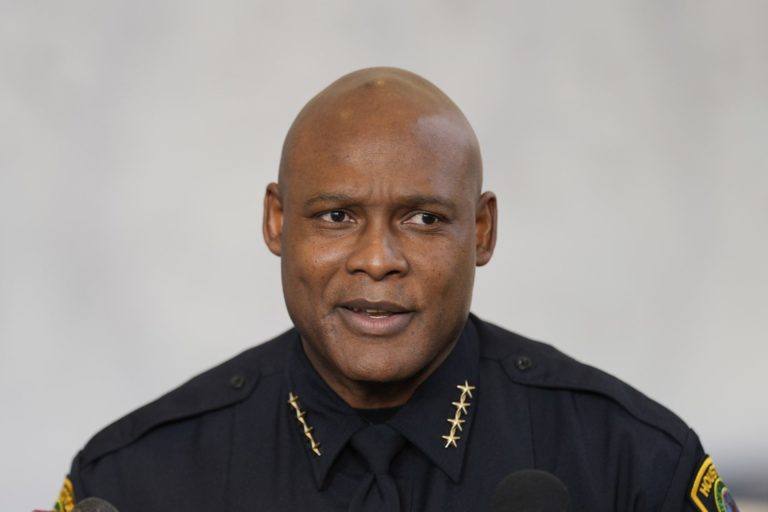
Houston’s police chief on Tuesday declined to say whether the scandal spoke to broader problems within his agency that needed to be fixed.
During a nearly two-hour meeting at police headquarters in downtown Houston with reporters and local community leaders, Chief Troy Finner acknowledged his department has lost some trust with the public because of the ongoing scandal.
In February, Finner announced that hundreds of thousands of incident reports, including for sexual assaults and property crimes, were never submitted for investigation as officers assigned them an internal code that cited a lack of available personnel.
But Finner said he wasn’t ready to declare that the mishandling of these incident reports was an example of bigger cultural problems within the police department and how officers perform their duties.
After a deadly drug raid in 2019, an audit found multiple problems with the Houston police narcotics unit behind the raid, including a lack of supervision and officers making hundreds of errors in cases.
“It’s ugly. It don’t feel good. It’s a part of that process that we brought upon ourselves,” Finner said during the meeting, which reporters were not allowed to record.
Finner said there would be accountability but declined to provide more details on this, citing an internal affairs investigation set to be completed by the end of April.
Last month, Mayor John Whitmire announced the creation of an independent panel to review police handling of the dropped cases.
Two assistant chiefs have already been demoted over their roles in the matter.
The police department has so far reviewed 67,533 of the 264,000 incident reports, Finner said Tuesday.
The department’s top priority has been reaching out to people who filed more than 4,000 sexual assault reports that were suspended, with 3,883 having been reviewed as of Tuesday, Finner said.
The internal code, part of the department’s record management system, was created in 2016, years before Finner became chief in April 2021.
Finner said he first found out officers were using the code during a meeting on Nov. 4, 2021, and gave an order for it to stop. But then he learned on Feb. 7 of this year that it was still being used to dismiss a significant number of adult sexual assault cases.
Finner suggested he and others in his department might have failed to follow up on whether the internal code was no longer being used because they were dealing with various issues, including a dramatic spike in crime during the pandemic, a shortage of officers and the deaths of 10 people at the Astroworld music festival, which happened a day after the meeting where he told his staff to stop using the code.
“I don’t make any excuses. When you are the chief, you are responsible,” Finner said.
One of the community activists who attended Tuesday’s meeting, Cesar Espinosa, executive director of FIEL, a Houston-based civil rights group, said there needs to be full transparency with the ongoing investigation and with any punishment so that people don’t think “this is business as usual.”
“We just want to know the facts about what happened and how we’re going to keep it from happening again,” Espinosa said.