The Gold Guru: Interview with Greg Weldon

(Money Metals News Service) In this episode of the Money Metals Exchange podcast, host Mike Maharrey speaks with Greg Weldon, CEO of Weldon Financial.

Weldon is known for his in-depth financial analysis and publications, including the Global Macro Strategy report and the Gold Guru report. Greg Weldon’s extensive experience, authoritative publications, and active involvement in market analysis and managed futures trading make him a respected figure in the financial industry. His insights are highly valued by those looking to understand and capitalize on market movements, particularly in the realms of macroeconomic strategy, commodities, and precious metals.

Together, Maharrey and Weldon dissect the recent economic data and Federal Reserve actions, offering insights for investors in precious metals.

(Interview Begins Around 4:42 Mark)

Headline Economic Data

The discussion begins with two significant reports released the previous day: the Consumer Price Index (CPI) and the Federal Open Market Committee (FOMC) meeting.

Maharrey notes the seemingly conflicting nature of the reports—a dovish CPI report indicating cooler-than-expected inflation and a hawkish Fed report maintaining a restrictive stance.

Weldon emphasizes the polarized nature of economic data, which often provides fodder for both monetary hawks and doves.

Employment Report Analysis

Weldon critiques the recent employment report, highlighting discrepancies between the headline numbers and underlying data. While the headline suggested a strong job market, a deeper analysis reveals a rise in unemployment and a significant number of people dropping out of the labor force.

Weldon argues that these details indicate a softening labor market, contrary to the optimistic headline figures.

CPI Report Insights

The CPI report showed a zero monthly change, driven primarily by a drop in gasoline prices.

However, Weldon points out that energy prices are rebounding, which could lead to higher inflation in the future. He also notes that food prices are increasing again, with specific sectors showing signs of inflationary pressure.

This complexity underscores the challenge of interpreting economic data and predicting future trends.

Federal Reserve Policy

Weldon discusses the Fed’s current restrictive policy, noting that despite opportunities to ease rates, the Fed remains cautious.

He suggests that the Fed might be waiting for maximum impact before cutting rates, which could occur once inflation is firmly under control. He also highlights the potential impact of continued Fed tightening on the stock market and commodity prices.

Gold and Silver Market Dynamics

Turning to gold and silver, Weldon expresses a cautious yet optimistic outlook. He believes that gold’s recent price movements reflect underlying economic uncertainties and Fed policy. Despite a strong dollar, gold has performed well, signaling robust demand, particularly from China. Silver, while underperforming relative to gold, shows potential for future gains due to its industrial demand and supply constraints.

China’s Role in the Gold Market

Weldon elaborates on China’s significant gold purchases over the past 18 months and its strategic approach to accumulating the precious metal.

He dismisses concerns about a recent pause in Chinese buying, suggesting that it could be a tactic to lower prices and buy more gold at favorable rates.

Long-Term Perspectives

Weldon and Maharrey agree on the importance of taking a long-term view of financial markets. Short-term headlines can be misleading, and it’s crucial to dig deeper into the data to understand the broader economic context.

They discuss the potential for a significant economic shift similar to the 2008 financial crisis, where underlying issues eventually surfaced, leading to major market corrections.

Silver’s Future Prospects

Weldon sees silver as having strong potential, driven by both monetary and industrial demand. He notes that the gold/silver ratio is starting to break down, indicating a possible bullish phase for silver. The metal’s supply constraints and increasing industrial use, particularly in solar energy, suggest that it could see significant price increases in the future.

Key Questions and Insights:

What’s your take on the conflicting news from the CPI report and the FOMC meeting, and how should gold and silver investors play this?

Weldon highlights the polarized nature of economic data, which often has elements supporting both monetary hawks and doves. He emphasizes the importance of separating Fed policy from economic data and notes discrepancies in employment reports, suggesting a softening labor market contrary to optimistic headlines.

He also points out that while the monthly CPI change was zero due to falling gasoline prices, rising food prices, and energy inflation are concerns.

According to Weldon, “It’s as polarized as ever, and every economic data report has something for everyone. I mean, it has something for the monetary hawks, it has something for the monetary doves. There is no doubt about that.”

What is your analysis of the recent employment report?

Weldon criticizes the employment report, stating that despite a headline gain, the underlying data shows a rise in unemployment and a significant number of people leaving the labor force. This indicates a trend towards a weaker labor market, contrary to the strong report narrative.

Weldon stated, “This was not a strong report. And you have seen consistently now that the headline survey, whether it’s immigration or whether it’s outright data massaging, is totally different than the headline reports.”

How do you interpret the recent CPI numbers?

Weldon explains that the positive monthly CPI change was driven by a drop in gasoline prices, but energy prices are rebounding, which could lead to higher inflation. He also mentions that food prices are rising again, adding to inflationary pressures.

Greg Weldon said, “The CPI number, yes, was positive in the sense that the monthly change in CPI was zero… The problem here is that that number monthly was because gasoline prices fell by 3.2%.”

How do you view the Fed’s current policy and its impact on the markets?

Weldon believes the Fed is more than sufficiently restrictive and might be waiting for maximum impact before easing rates. He discusses the potential effects of Fed tightening on the stock market and commodity prices, suggesting that the Fed might remain restrictive to declare victory over inflation.

When asked, Mr. Weldon replied, “They had an opportunity here, if you want to say at 5.5% of Fed funds, and at 3.3 CPI and below three PCE, they are more than just sufficiently restrictive. They might be punitively restrictive.”

Do you think the “sell in May, come back Labor Day” adage applies to gold and silver this year?

Weldon feels the market is heavy due to restrictive Fed policy and economic realities yet to surface. He anticipates an economic reality check and suggests that while stocks might run, metals will present a significant buying opportunity, especially if the dollar remains strong.

What do you make of China’s announcement that it didn’t buy any gold in May?

Weldon views this as a strategic move by China to lower gold prices for future purchases. He believes China’s substantial gold buying over the past months signals a long-term accumulation strategy, not a cessation of interest.

Weldon replied, “No, it’s the reaction exactly China wanted. Are you kidding me? I mean, this is perfect… Why? Because gold’s at 2,400. They want to knock it down so they can buy more.”

How do you see the longer-term outlook for the economy and precious metals?

Weldon emphasizes the need to look beyond short-term headlines and focus on deeper data analysis. He suggests the economy might face a significant shift similar to 2008, with underlying issues eventually leading to market corrections.

Why hasn’t silver responded more strongly given its supply and demand dynamics and the rally in gold?

Weldon notes that the gold/silver ratio is breaking down, indicating potential for silver. He attributes silver’s underperformance to a lack of dollar depreciation and accumulation. He remains optimistic about silver’s future due to its industrial demand and supply constraints.

“The gold/silver ratio has just started breaking down in a big way. So I think that’s changing… It’s not being accumulated the way you might expect. And I think that part of that reason is you just don’t have the dollar in play.”

How should investors approach the current market conditions?

Weldon advises focusing on the long-term macroeconomic picture and potential buying opportunities in metals. He also discusses the importance of understanding the broader economic context and the potential for a significant shift in market dynamics.

Weldon invited the audience for more information:

“We’d be happy to send that to any of your people. They can contact me by email. [email protected]. We also do the global macro strategy report… So anyone can get those reports from me as well.”

Weldononline.com is Greg Weldon’s website.

How can listeners follow your work and get more involved?

Weldon invites listeners to contact him via email for reports and information on his managed futures account program. He also offers insights from his recent analyses of employment, CPI, and FOMC reports.

“They can contact me by email. We also do the global macro strategy report… So anyone [from around the world] can get those reports from me, as well.”

Conclusion

Weldon wraps up by emphasizing the need for a nuanced understanding of economic indicators and market trends. He invites listeners to access his detailed reports and consider his managed futures account program for more in-depth analysis and investment opportunities.
Federal Reserve Wants to Cut Rates, Appears Trapped by Inflation

(Stefan Gleason, Money Metals News Service) As the Fed keeps hopes alive for at least one rate cut this year, metals investors are weighing the inflation outlook. 

Gold and silver markets have recently been giving back some of their impressive gains this year. So far, it looks like a normal correction after a big rally.  

The summer months often deliver choppy chart patterns for gold and silver, but that isn’t always the case. The rally could resume at any moment. 

This week gold prices are up 1.5% to trade at $2,340 an ounce. Silver is roughly flat, with spot prices here on Friday morning near $24.40 an ounce. 

On Wednesday, the Federal Reserve left interest rates unchanged as expected. Despite the latest Consumer Price Index data showing price pressures easing slightly for the first time in months, Fed policymakers acknowledged that inflation remains too high. 

Some in the financial media celebrated the fact that the CPI showed no monthly increase in May. That doesn’t mean consumer prices have stopped rising, of course. On an annual basis, the CPI is still running at 3.3%.  

That doesn’t exactly show the Fed is on its way toward meeting its price stability mandate. It shows that inflation remains somewhat sticky. Nevertheless, Fed officials continue to project progress on the inflation front and expect to be able to cut rates once, maybe twice, later this year.  

Inflation pressures appear to be easing slightly according to official measures. By alternative measures, general price levels are rising by much more than 3.3% — as millions of people who are facing soaring costs for housing, food, healthcare, and insurance can attest.

Behind the backward-looking numbers on prices, oil, metals, and other commodities are showing signs of strain that could lead to big price increases down the road. 

One of the most psychologically significant and politically sensitive inflation indicators is the price of gasoline at the pump. 

Gas prices have yet to see a summer driving surge. In fact, they came down a bit in late Spring.

Still, motorists in high-tax states such as California are having to fork over as much as $7 per gallon in order to fill up their vehicles.

Crude oil prices have managed to avoid hitting the headline-inducing $100 per barrel level over the past two years. Supply has been artificially boosted by the Biden administration’s curious decision to drain unprecedented volumes from the strategic petroleum reserve. Nearly 300 million barrels of oil have been lost, bringing the SPR to its lowest level since 1983.

Republicans accuse President Biden of raiding the SPR for political purposes. They say he is trying to manipulate energy prices ahead of the election, leaving America vulnerable in the event of an actual emergency.

Unfortunately, inventory depletion isn’t unique to the oil market. Across a broad basket of commodities, we are seeing available supplies either shrinking or not growing fast enough to keep pace with demand.

In the agricultural sector, drought, flooding, and other extreme weather conditions are threatening farm harvests. Meanwhile, diminished cattle herds mean beef prices won’t be coming down anytime soon.

In the metals space, major supply deficits loom for copper, silver, platinum, palladium, and other scarce elements that are difficult and expensive to extract from the earth. 

Those who believe inflation is headed lower could be in for a nasty surprise — one that gets delivered by strained commodities markets in the months ahead.


Stefan Gleason is President of Money Metals Exchange, the national precious metals company named 2015 “Dealer of the Year” in the United States by an independent global ratings group. A graduate of the University of Florida, Gleason is a seasoned business leader, investor, political strategist, and grassroots activist. Gleason has frequently appeared on national television networks such as CNN, FoxNews, and CNBC, and his writings have appeared in hundreds of publications such as the Wall Street Journal, Detroit News, Washington Times, and National Review.

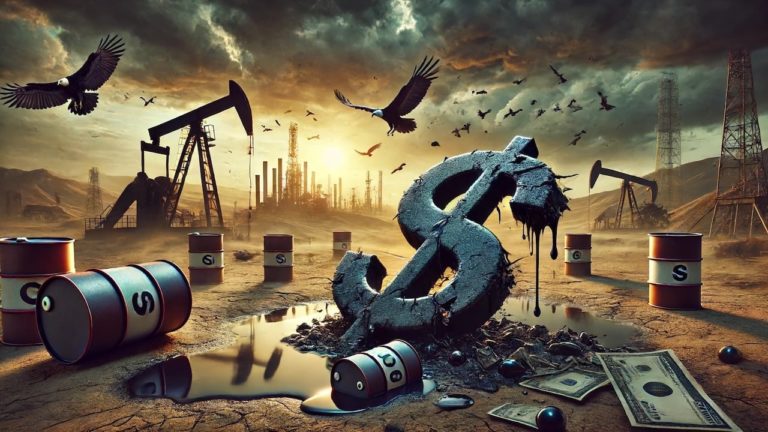
The Petrodollar Is Dead and That’s a Big Deal

(Mike Maharrey, Money Metals News Service) The petrodollar quietly died this week. While it didn’t get big headlines, the demise of the petrodollar could mean big trouble for a U.S. government that depends on dollar dominance to support its borrowing and spending.

“Petrodollar” refers to the dollar’s role in crude oil transactions. 

In the wake of the 1973 oil crisis, Saudi Arabia agreed to conduct all oil transactions in dollars and invest its oil surplus funds in U.S. Treasuries in exchange for U.S. military support.

The agreement was a boon for the dollar and was key in cementing the greenback as the world reserve currency. Due to Saudi Arabia’s prominent role in the global oil trade, the agreement had a far-reaching effect. As a result, virtually all of the world’s global oil transactions were priced in dollars. 

This ensured a constant demand for dollars. Every country needed them to buy oil. This demand for dollars supported the U.S. government’s “borrow and spend” policies, along with its massive deficits. As long as the world needed dollars for oil, it guaranteed demand for the greenback. That meant the Federal Reserve could print more dollars and issue more Treasuries than it could have otherwise. As an article published by Nasdaq.com reported, the agreement created a “captive market” for U.S. government debt.

ZeroHedge explained how the process works:

One of the core staples of the past 50 years, and an anchor propping up the dollar’s reserve status, was a global financial system based on the petrodollar – this was a world in which oil producers would sell their product to the U.S. (and the rest of the world) for dollars, which they would then recycle the proceeds in dollar-denominated assets and while investing in dollar-denominated markets, explicitly prop up the USD as the world reserve currency, and in the process backstop the standing of the US as the world’s undisputed financial superpower.”

On June 9, the agreement expired, and it doesn’t appear it will be renewed. This opens the door for the Saudis to sell oil in currencies other than the dollar.

The end of the agreement doesn’t mean Saudi Arabia will stop accepting dollars for oil, and there are plenty of other influential players in the mix that will likely continue to rely on the greenback.  But the expiration of the agreement opens the door for oil sales in other currencies, including the Chinese yuan. And if the Saudis move away from the dollar, other countries will likely follow suit. 

According to Russia’s Sputnik news service, “Nearly 80 percent of global oil sales are priced in dollars. However, Russia, Iran, Saudi Arabia, China, and others are increasingly shifting to local currencies in energy trade. In 2023, 20 percent of global oil was bought in other currencies, as per the Wall Street Journal.”

China has been pushing Saudi Arabia to accept yuan for oil, and the Saudi government has reportedly expressed openness to the idea. Saudia Arabia’s membership in the BRICS bloc this year will likely strengthen the two countries’ economic ties. 

BRICS is an economic cooperation bloc originally made up of Brazil, Russia, India, China, and South Africa. As of Jan. 1, 2024, the bloc expanded to include Saudi Arabia, Egypt, the UAE, Iran, and Ethiopia. More than 40 other nations have expressed interest in BRICS membership.

The expanded BRICS has a combined population of about 3.5 billion people. The economies of the BRICS nations are worth over $28.5 trillion and make up roughly 28 percent of the global economy. BRICS nations also account for about 42 percent of global crude oil output.

The petrodollar was getting ragged before the expiration of the Saudi-U.S. agreement. Late last summer, the UAE settled an oil trade without converting local currencies to dollars for the first time when India’s top refiner paid for crude in rupees. India has also bought oil from Russia without using dollars. India ranks as the world’s third-largest oil importer. 

As India Today reported, “This move by Saudi Arabia marks the beginning of a major shift in global economic dynamics, though its full implications on international trade and finance remain to be seen.”

Potential Ramifications of the Petrodollar’s Demise

The end of the petrodollar could accelerate global de-dollarization and that would be a disaster for the U.S. economy.

While the current de-dollarization trend doesn’t directly threaten the dollar’s role as the world reserve currency — yet — it could foreshadow bigger problems down the road, especially if it accelerates.

The dollar is already on shaky ground. Many countries are looking for ways to minimize dependence on the greenback due to growing concerns over America’s use of the dollar as a foreign policy weapon.

After the Russian invasion of Ukraine, IMF Managing Director Gita Gopinath warned that sanctions on Russia could erode the dollar’s dominance by encouraging smaller trading blocs using other currencies. That’s exactly what we’re seeing.

Without the petrodollar supporting the greenback, we could see more rapid de-dollarization. 

Even those who minimize any threat to the dollar’s status as the global reserve currency concede the expiration of the petrodollar agreement could weaken the dollar over the long term. That would spill over into U.S. financial markets, particularly the bond market. It would also lead to more price inflation for American consumers. 

Sputnik explained it this way:

“If world players significantly reduce the use of U.S. dollars, the U.S.’s ability to issue dollar debt and earn dollars for exports will diminish and the nation’s economy will shrink, according to international economists.” 

In effect, if other nations no longer need dollars to conduct trade, the demand for dollars could plunge significantly. That would create a dollar glut and a rapid devaluation of the greenback. Interest rates on US Treasury bonds would soar. This would be an untenable situation for a government servicing more than $34.5 trillion in debt.

Modest interest rate hikes by the Federal Reserve have already driven interest payments sky-high. The U.S. government now spends more on servicing the debt than it does on national defense or Medicare. 

In a nutshell, you should be wary of counting on global petrodollar dominance to prop up the U.S. house of cards economy.


Mike Maharrey is a journalist and market analyst for MoneyMetals.com with over a decade of experience in precious metals. He holds a BS in accounting from the University of Kentucky and a BA in journalism from the University of South Florida.

Singapore Set to Be World’s Gold Hub as Gold Shifts from West to East

(Mike Maharrey, Money Metals News Service) Singapore is set to usurp London and New York as the world’s gold hub as the yellow metal shifts from West to East.

According to the World Gold Council head of Asia-Pacific and global head of central banks Shaokai Fan, the “center of gravity” of the gold market has shifted to the East. Gold consumption by emerging market economies is rapidly rising and the majority are concentrated in Asia. Singapore’s proximity to this growing market sets the city up to become the “fulcrum of this new balance.”

“Singapore is poised to lead the gold market in the future,” Fan said at the Asia Pacific Precious Metals Conference

Singapore is also close to 25 percent of the world’s gold mining supply. China, Australia, Indonesia, the Philippines, Papua New Guinea, and Laos are all significant gold producers.

Fan said there is a need for an official gold reserve center in the East, especially with growing concern over geopolitical tensions and the West’s propensity to use economic sanctions as a weapon. This makes some countries wary of storing their gold in New York or London where it could be frozen or seized if their governments raise the ire of Western leaders. Fan said Singapore could become a “truly viable alternative” to those cities as a hub for gold vaulting.

Singapore has a stable government and a friendly tax environment. Fan said it has also taken several steps that increase its attractiveness as a gold hub including tax reforms. 

“The removal of GST on investment gold in Singapore, the establishment of good delivery refineries here have bolstered Singapore as a leading hub for gold trading.” 

The Asian Gold Rush

Asians have been gobbling up gold despite prices at record levels in many currencies. As a recent Reuters report noted, price sensitivity has all but disappeared in many Asian markets.

Interestingly, the article originated in – Singapore.

According to the report, Asian buyers are snapping up gold “to hedge against geopolitical and economic uncertainty.” The report also cites lower confidence in other investment options including real estate and equities.  

“The trend in the market has been that if the consumer wants to buy gold, they will. The price doesn’t matter,” Singapore Bullion Market Association CEO Albert Cheng told Reuters.

Demand for gold coins and bars surged 27 percent in China during the first quarter despite record-high prices in yuan terms. China is dealing with high price inflation and a deteriorating real estate market. Trade tensions have also made Chinese investors wary.

China consistently ranks as the world’s leading gold consumer, but surging demand isn’t isolated to that country.

According to Japan Bullion Market Association chief director Bruce Ikemizu, there are more gold bulls than bears in Japan, despite record-high prices in yen terms. 

MTS Gold Group CEO Nuttapong Hirunyasiri told Reuters customers lined up outside stores in Thailand to buy gold when headlines reporting higher prices hit the news. 

South Koreans have also caught the gold bug. Korea’s largest convenience store chain, CU, recently teamed up with Korea Minting and Security Printing Corporation (KOMSCO) to offer customers fingernail-sized gold bars. CU reported that it had sold 60 percent of its inventory within the first three weeks.

Demand for the small bars dovetails with a more general trend of increased gold demand in Korea. According to the World Gold Council, demand for gold coins and bars increased by 27 percent year-on-year in the first quarter of 2024.

The product is similar to gold beans popular in China. 

And in Vietnam, investors queued up at banks when the government released gold for sale to the public in an effort to push down record prices in dong terms. 

India ranks as the world’s second-largest gold consumer. Buyers there have been more price sensitive, but even with record prices in rupee terms, Indian gold demand rebounded during an important May festival.

Meanwhile, gold demand has remained tepid in the West. 

According to the World Gold Council, profit-taking by Western investors in the first quarter of 2024 contrasted with largely one-way investment demand in Asia. Bar and coin demand in China surged by 68 percent year-on-year to 110 tons. Gold bar and coin investment in India jumped by 19 percent year-on-year. Meanwhile, physical gold demand fell modestly in U.S. and European markets.

The rise of Singapore as a gold hub makes sense in the context of this shift of gold from West to East.


Mike Maharrey is a journalist and market analyst for MoneyMetals.com with over a decade of experience in precious metals. He holds a BS in accounting from the University of Kentucky and a BA in journalism from the University of South Florida.

Judge Pressures Newspaper to Reveal Source of Trans Shooter’s Leaked Writings

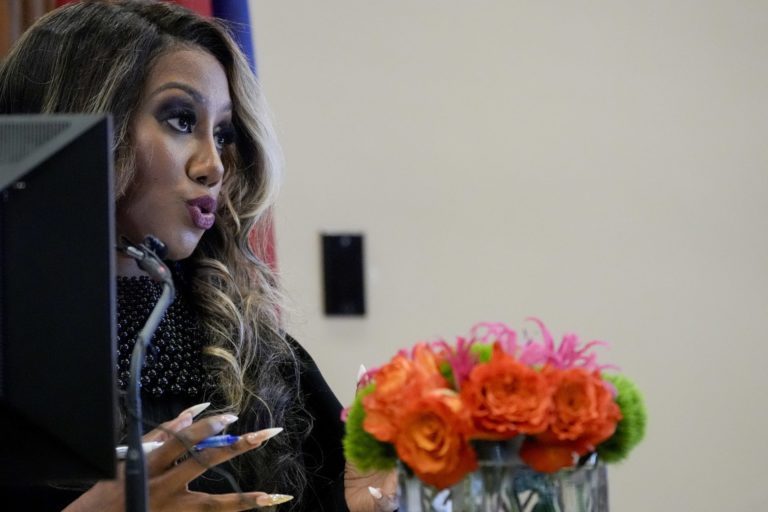
(Ken Silva, Headline USA) Nashville Judge I’Ashea Myles continues to pressure The Tennessee Star to reveal the source who apparently leaked excerpts of Nashville school shooter Audrey Hale’s “manifesto,” where Hale describes violent fantasies and discusses being transgender.

Earlier this week, Judge Myles ordered The Star’s editor-in-chief to appear before her this Monday to consider whether she’ll hold him in contempt for publishing excerpts of Hale’s writings.

The Star filed a motion to stay the impending hearing, but Judge Myles denied that motion Thursday. The judge signaled her intent to get to the bottom of who leaked Hale’s writings—even if it means trampling on the free press.

“Should this Court determine that an alleged leak did in fact occur by any party to this case and that such action was in violation of the Orders of this Court … this Court may then … initiate and prosecute a contempt citation,” she said.

The Star has appealed Myles’s ruling, but Monday’s hearing is still a go as of the publication of this article.

However, Republican state lawmaker Jeremy Faison has promised sanctions against Myles if she moves forward with holding The Star in contempt.

“The TN legislature will not stand for an activist judge who weaponizes their courtroom [The Star’s editor] is the press and does not have to prove to any courtroom that he is innocent. I will file the proper resolutions to remove judges engaging in abuse like this,” Faison said.

Judge Myles’s threats against The Star comes after the newspaper reported last week that it obtained 80 pages of Hale’s writings from a journal discovered by the Metro Nashville Police Department. Since then, the newspaper has been dropping bombshell articles on a near-daily basis, as Headline USA has covered.

The newspaper is also a party to a lawsuit seeking Judge Myles to compel the MNPD to release Hale’s writings. As part of that lawsuit, Judge Myles ordered in February that if any of the parties in the lawsuit obtain Hale’s writings, they should submit them to her for review—and it’s that order that The Star may have violated.

Police have said the writings that they collected as part of their investigation into the March 27, 2023, shooting at the Covenant School that killed three 9-year-old children and three adult staff members are public records. However, they have said they cannot be released until their investigation is concluded.

Despite law enforcement’s attempts to keep the manifesto secret, the first three pages the purported manifesto were leaked to conservative broadcaster Steven Crowder last November. The Nashville Police Department reportedly suspended seven detectives over the leak.

Ken Silva is a staff writer at Headline USA. Follow him at twitter.com/jd_cashless.

Reps. Jordan and Gaetz Clash over Subpoenaing Alvin Bragg

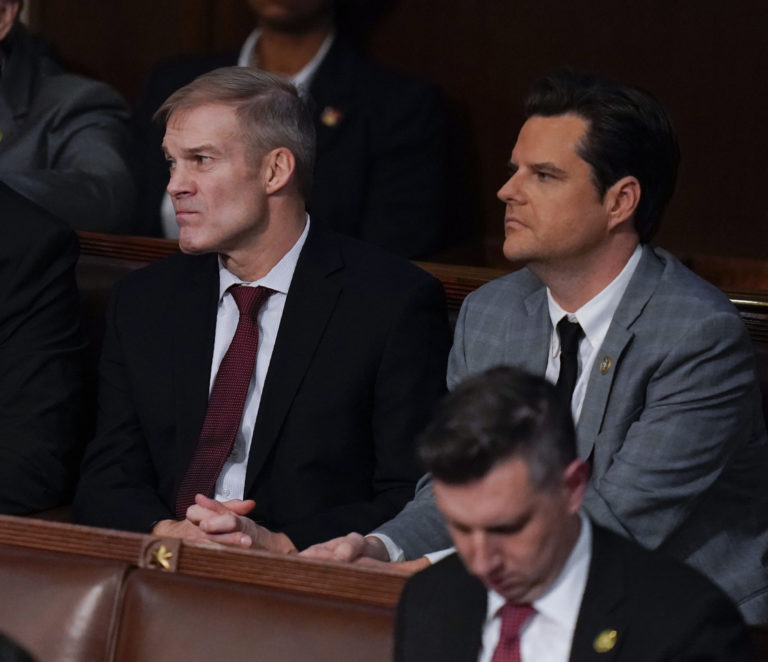
(Ken Silva, Headline USA) Reps. Jim Jordan, R-Ohio, and Matt Gaetz, R-Fla., butted heads at a Judiciary Committee hearing Thursday over whether to subpoena Manhattan DA Alvin Bragg and former Justice Department lawyer Matthew Colangelo to testify before them after their controversial prosecution of former President Donald Trump.

According to Republicans, there is reason to believe that the DOJ colluded with Bragg in a coordinated political attack on Trump. Namely, Republicans have alleged that one of the DOJ’s top ranking officials, Colangelo, transferred to aid the Manhattan DA’s office specifically to help a federal effort against Trump.

Gaetz moved Thursday to subpoena Bragg and Colangelo, but Jordan said it was unnecessary because the two lawyers have already promised to testify on July 12. Jordan said he’d issue subpoenas if they change their minds. Ranking member Jerry Nadler, D-NY, also insisted that Bragg and Colangelo will appear on their own accord.

Gaetz disagreed. He said the Judiciary Committee should issue subpoenas now instead of waiting a month to see if they voluntarily appear.

“They’re not going to come because we ask, and they’re not going to come because we say so. We may end up in July after sentencing with empty seats and nameplates for Bragg and Colangelo,” Gaetz said.

“This is all professional wrestling. There’s no real effort to bring these people,” he added.

The committee then went into recess for about 10 minutes as Jordan and Gaetz apparently debated the matter. When they returned to session, Gaetz withdrew his motion “based on Jordan and Nadler’s representations,” he said.

Thursday’s hearing focused on how Bragg’s case was illegal because he prosecuted a federal crime that the DOJ declined to charge.

Among those who said the case is illegal was Federal Elections Commissioner James Trainor, a former Trump campaign lawyer.

“Clearly, the DOJ knows a great deal about the federal campaign finance issues that Alvin Bragg has prosecuted. DOJ counsel knew the extent to which they themselves had exercised federal jurisdiction, investigated, and found no illegal activity by anyone other than Michael Cohen,” Trainor testified.

“This encroachment on federal jurisdiction should raise serious concern that qualified candidates will be deterred from seeking public office, fearing that their political activities, past and present, might be subjected to disparate legal standards depending on the locality.”

Ken Silva is a staff writer at Headline USA. Follow him at twitter.com/jd_cashless.

Federal Reserve Monetary Policy: Speculation and Wild Guesses

(Mike Maharrey, Money Metals News Service) It’s almost as if the central bankers at the Federal Reserve are throwing darts at the wall to determine the trajectory of monetary policy.

And I’m not convinced there is even a dartboard on the wall.

And yet, people keep selling gold and silver based on what these people say!

The Fed wrapped up its June FOMC meeting yesterday (June 12). Once again, it didn’t do anything. Interest rates remain unchanged in a range between 5.25 and 5.5 percent. 

The official FOMC statement remained mildly hawkish, giving no hint that rates will come down anytime soon.

“The Committee does not expect it will be appropriate to reduce the target range until it has gained greater confidence that inflation is moving sustainably toward 2 percent.”

In his post-meeting press conference, Federal Reserve Chairman Jerome Powell continued the hawkish tone, even as the mainstream trumpeted a May CPI report that hinted at cooling price inflation (maybe). 

“We see today’s report as progress and as, you know, building confidence. But we don’t see ourselves as having the confidence that would warrant beginning to loosen policy at this time.”

Powell even refused to take another rate hike off the table, although he downplayed the possibility more than he did after the last meeting.

“Not to eliminate the possibility of hikes, but no one has that as their base case. No one on the committee does.”

Dot Plot Speculation

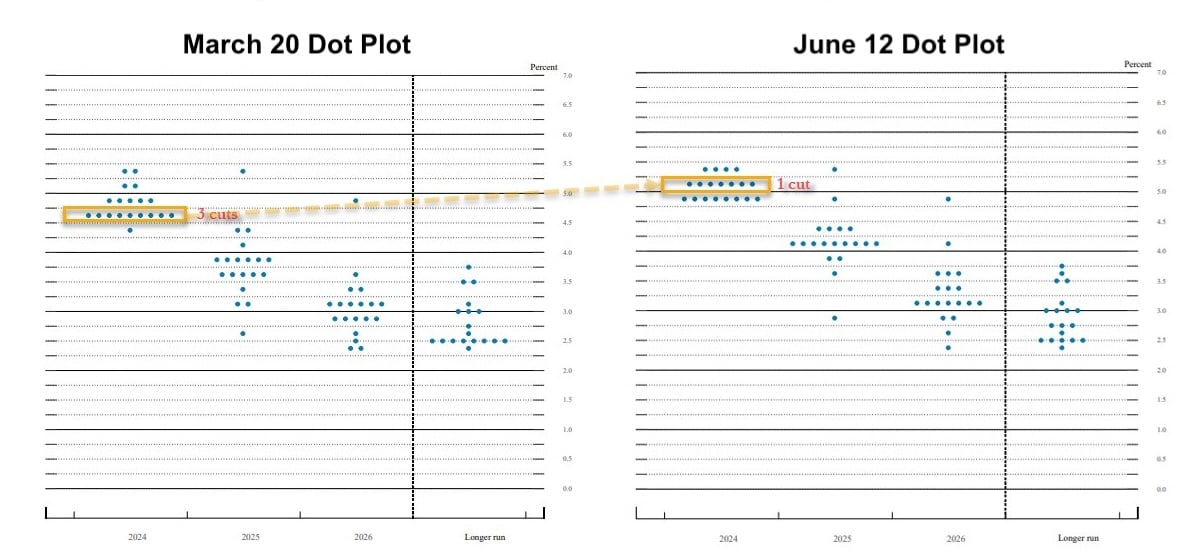
The big news was the release of a new set of dot plots projecting the trajectory of interest rate policy. They looked quite different than they did just a few months ago.

In late March, 10 FOMC members projected rates at 4.625 percent by the end of the year. Now there are none. In other words, nobody expects three cuts this year and a growing number of committee members don’t think they will cut at all. The rest are almost equally split between one and two cuts. 

Stop and think about this just a few months ago, the FOMC was convinced that three rate cuts were the appropriate trajectory of monetary policy.

What a difference two and a half months make.

Of course, this should come as no surprise. The Federal Reserve members are notoriously bad a projecting the trajectory of interest rates, even though they’re the ones literally setting the rates.

How bad is their track record?

Fund manager David Hay analyzed past dot plots and found the FOMC only got interest rate projections right 37 percent of the time. And as Hay pointed out, “They control interest rates!”

For instance, in March 2021, the FOMC projected the interest rate would still be zero in 2022. The actual 2022 rate was 1.75 percent. And in 2023, the vast majority of FOMC members thought the rate would still be at zero. The actual rate was over 5 percent.

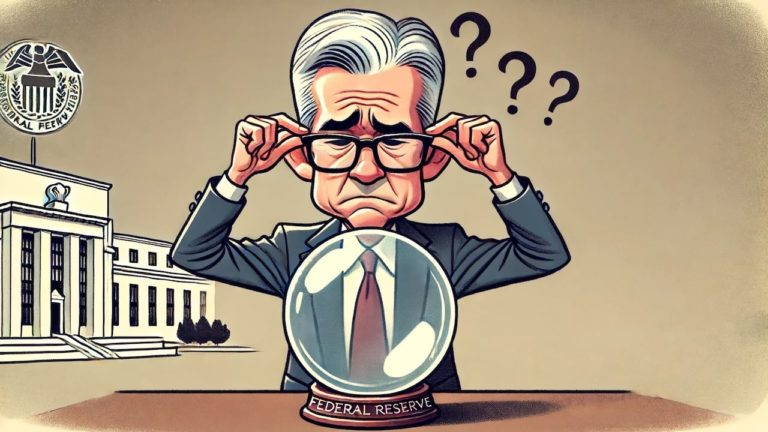
The FOMC would probably get much better results by flipping coins or gazing into crystal balls.

This doesn’t exactly inspire confidence that these people know what they’re doing, does it?

Now, you might say, “Well, Mike, monetary policy is a complex business. You can’t expect them to get it right every time.” And that might be a fair assessment. The problem is it doesn’t seem like they ever get it right.

What Is an Investor to Do?

So, what is a gold and silver investor to do with this info? 

The mainstream consensus has been to sell gold and silver anytime Powell & Company comes out hawkish, or good economic data indicates the economy is still rolling along. (This is because there is a misguided notion that a strong economy creates inflation. It doesn’t. Money creation causes price inflation.) The mainstream buys gold and silver when the Fed gets doveish or CPI data indicates price inflation might be cooling. This raises hope that interest rate cuts are in the pipeline.

Yesterday, we got both kinds of news! 

The Fed was hawkish, but the May CPI report indicated (or at least seemed to on the surface) that price inflation is in retreat. 

This seems to have put mainstream investors in a bind. The price of gold and silver reflects that, whipsawing back and forth. There was very little change on Wednesday. Thursday morning, the price of gold and silver were tanking. Gold was down about $15 an ounce. Then news broke that producer prices rose far less than expected in May, putting the brakes on the sell-off. 

I’m just going to throw this out there. Instead of making knee-jerk moves based on the last thing on X (formerly known as Twitter), folks might be wise to look at the underlying dynamics.

The reality is the Fed is stuck between a rock and a hard place. The central bank has not done enough to slay price inflation. But the Fed has made monetary policy “sufficiently tight” to break things in this debt-riddled, bubble economy. It has already sparked a financial crisis that continues to bubble under the surface. The world is still buried in debt. Governments continue to borrow and spend. There are still all kinds of malinvestments in the economy.

It’s only a matter of time before the economy unravels. That’s when the markets will get the rate cuts they desperately want – even though inflation still has a heartbeat.

Of course, that means more price inflation.

The fundamentals right now are supportive of gold and silver, no matter how many dots Fed people put on a plot.


Mike Maharrey is a journalist and market analyst for MoneyMetals.com with over a decade of experience in precious metals. He holds a BS in accounting from the University of Kentucky and a BA in journalism from the University of South Florida.

Pro-Hamas Radicals Hurl Paint at Homes of Brooklyn Museum Leaders, Incl. Jewish Director

(Headline USA) People purporting to be pro-Palestinian activists hurled red paint at the homes of top leaders at the Brooklyn Museum, including its Jewish director, and also splashed paint across the front of diplomatic buildings for Germany and the Palestinian Authority, prompting a police investigation and condemnation from city authorities.

New York Mayor Eric Adams, in a post on the social platform X, shared images of a brick building splashed with red paint with a banner hung in front of the door that called the museum’s director, Anne Pasternak, a “white-supremacist Zionist.”

“This is not peaceful protest or free speech. This is a crime, and it’s overt, unacceptable antisemitism,” Adams wrote of the paint attacks early Wednesday. Adams sent sympathy to Pasternak and other museum board members whose homes were defaced.

Senate Majority Leader Chuck Schumer, D-N.Y., who lives close to the Brooklyn Museum, praised it on the Senate floor as an institution whose leaders are “deeply concerned with issues of social justice,” and said the pictures of the director’s home filled him with grief and anger.

“Every single American needs to see this. This is the face of hatred. Jewish Americans made to feel unsafe in their own home—just because they are Jewish.”

Four museum officials were targeted. Not all are Jewish, Brooklyn Museum spokesperson Taylor Maatman said. A report was filed with police.

Red paint was also splashed early Wednesday across the front of a Manhattan building that houses Germany’s consulate and its United Nations mission, and another building that is a headquarters for Palestinian diplomats.

Flyers critical of the Palestinian Authority and its president, Mahmoud Abbas, were scattered outside the building.

It wasn’t immediately clear who was responsible or whether the acts of vandalism were all related.

The paint attacks came the same week that pro-Palestinian groups held a large demonstration outside a New York City exhibition memorializing victims of the Oct. 7 Hamas attack on the Tribe of Nova music festival.

The group Within Our Lifetime called the tribute to the victims “Zionist propaganda” and dismissed the music festival, where hundreds died, as “a rave next to a concentration camp.”

That protest also drew condemnations from across the political spectrum.

“The callousness, dehumanization, and targeting of Jews on display at last night’s protest outside the Nova Festival exhibit was atrocious antisemitism—plain and simple,” U.S. Rep. Alexandria Ocasio-Cortez said Tuesday on X.

One group of protesters riding a subway train to the demonstration outside the Nova exhibit chanted “Raise your hands if you’re a Zionist,” at their fellow passengers, followed by “This is your chance to get out.”

Leaders of Jewish organizations said a widely shared video of the subway episode was horrifying.

“Essentially it’s a call for separating Jews from everybody else on the subway and somehow kicking them off,” said Scott Richman, regional director of the Anti-Defamation League for New York and New Jersey.

“Every Jew is looking at that and saying ‘What if I were on the subway?’ or ‘What if I were standing at the Nova exhibit and hearing that awful rhetoric and seeing Hamas flags being waved?’” Richman said.

Richman said hateful words can lead to anti-Semitic violence like the 2018 massacre at Pittsburgh’s Tree of Life synagogue.

“You just need one unhinged person to hear all of this hateful rhetoric and decide that they’re going to take action,” he said.

Logan Levkoff–Cortes, who heads a Jewish National Fund program to send non-Jewish college students to Israel, said the use of “Zionist” as a derogatory term was “a blatant display of anti-Semitism.”

“There is no distinction between asking Zionists to get off the train car and asking for Jews to get off,” she said. “It has become this legitimized buzzword for people to talk about Jews without using the word Jews,” she said.

Videos posted on social media also showed demonstrators spraying the side of a subway train at the Union Square station with graffiti.

A spokesperson for the New York Police Department said it was investigating the vandalism aimed at the Brooklyn Museum leaders and the diplomatic buildings. The German mission said its security staff was in close contact with New York authorities. A message seeking comment was also sent to Palestinian diplomats.

Hundreds of protesters marched on the Brooklyn Museum late last month, briefly setting up tents in the lobby and unfurling a “Free Palestine” banner from the roof before police moved in to make dozens of arrests. Similar protests have happened since October at other New York City museums.

Within Our Lifetime and other organizers of that demonstration said in a statement that it did not coordinate the paint attacks, but “we commend” any such actions.

The group has said the museum is “deeply invested in and complicit” in Israel’s military actions in Gaza through its leadership, trustees, corporate sponsors and donors—a claim museum officials have denied.

“Earlier today, the homes of people connected to the Brooklyn Museum were vandalized in an attempt to threaten and intimidate them,” the museum spokesperson, Maatman, said in a statement.

“For two centuries, the Brooklyn Museum has worked to foster mutual understanding through art and culture, and we have always supported peaceful protest and open, respectful dialogue,” it continued. “Violence, vandalism, and intimidation have no place in that discourse.”

City Comptroller Brad Lander, who was among the New York politicians to speak out against the protests, said the Brooklyn Museum has done more to grapple with questions of “power, colonialism, racism & the role of art” than many other museums.

“The cowards who did this are way over the line into antisemitism, harming the cause they claim to care about, and making everyone less safe,” he wrote on X.

The grand beaux arts museum, the city’s second largest, sits at the edge of Crown Heights, home to one of the city’s largest communities of Orthodox Jews.

It is no stranger to ideological confrontations.

Then-Mayor Rudy Giuliani threatened to close the museum in 1999 over artwork he considered disrespectful of Catholics.

Protesters have staged demonstrations inside, outside, and on top of the building repeatedly over the years. And in 2016, pro-Palestinian activists demonstrated against a photo exhibit on life in Israel and the West Bank, saying it did not take a strong enough stance against Israeli “colonization.”

Leftist politicians, including Schumer and Ocasio–Cortez have struggled to find the right balance in messaging as the attempt to placate the pro-Hamas extremists and the Jewish liberals, both of whom they consider to be key voting constituencies.

However, that effort seems to have backfired, with the tepid response to the anti-Semitism and Hamas terrorism having outraged many Jewish residents to the point that a majority of New York Jews, according to some polls, now say they support Republican Donald Trump.

Meanwhile, anti-Israeli Muslims have also been outraged over the Biden administration’s failure to rein in Israel’s military response in Gaza and are threatening to withhold their political support as a result.

Adapted from reporting by the Associated Press

Trump Gets a United, Energized and Highly Focused GOP as His 78th Birthday Gift

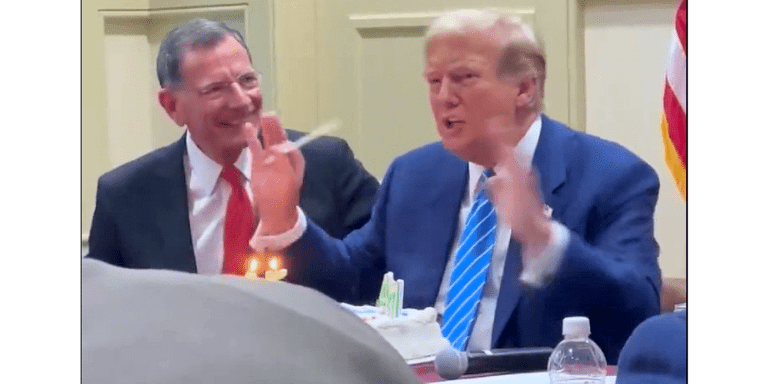
(Headline USA) Donald Trump spent the day before his 78th birthday being feted by Republicans in Congress who sang “Happy Birthday” and presented him with a cake and gifts.

It was a remarkable show of loyalty for a former president who was shunned by many of the same lawmakers after Jan. 6, 2021—a point that his longtime ex-nemesis Nancy Pelosi was quick to make.

On Friday, Trump will get another birthday celebration, this time with thousands of supporters in his adopted home state of Florida.

Members of the “Club 47” fan group will hear from Trump in West Palm Beach, a short drive from his Mar-a-Lago residence.

The event sold out of 5,000 tickets at about $35 apiece, with closer spots to the stage costing $60, according to Club 47 President Larry Snowden.

Weeks after his felony convictions on highly dubious charges that have only resulted in supporters rallying around him to fight the corrupt two-tiered justice system Trump sees his support in the party, which has often been a bumpy ride, back in peak form.

Scores of supporters flooded social media with well wishes on Friday to mark the occasion of his birthday—including Vanessa Trump, the ex-wife of Donald Trump Jr. and mother to five of Trump’s grandchildren.

It was a fitting symbol of the Trump magnetism—even those who appear to leave its orbit find themselves not only drawn back into it but able to put aside any personal differences to embrace the fact that Trump represents something much bigger than the individual.

Trump’s promise is that of a legacy even greater than himself, conveying a sort of optimism that stands in stark contrast to the dark, cynical scaremongering of 81-year-old President Joe Biden, whose central campaign message is that failing to re-elect him will be the end of democracy.

That may help explain why Trump has resonated in particular this election season with minorities and younger voters, key Democrat constituencies whose defection could prove pivotal in the race.

Next month, Trump is scheduled to accept his party’s presidential nomination for the third time.

Trump was in Washington Thursday to meet with House and Senate Republicans in his first visit to Capitol Hill since the Jan. 6 uprising. A room of House Republicans sang “Happy Birthday” to Trump and gifted him with a baseball and bat from the annual congressional game the night prior.

Trump hinted that his pick for vice president was “probably” in the room after having last week revealed a list of eight individuals whom he was vetting that included two House members and three senators.

Senators later presented an American flag cake with 45 candles, referencing that Trump was the 45th president. Sen. John Barrasso of Wyoming then added two more candles with the numerals 4 and 7.

“We’re all committed to make sure he becomes the 47th president,” Barrasso told reporters later, adding: “As he was sitting there, I pull them out, put them on. He loved it. And that was the last big applause at the end when you heard that.”

Among the senators who attended the gathering was Senate Republican Leader Mitch McConnell of Kentucky, who endorsed Trump earlier this year despite not having spoken since 2020. Barrasso told reporters that Trump and McConnell spoke and exchanged a fist bump.

Snowden, Club 47’s president, and others said they expect Trump to talk about the verdict in New York as part of his regular campaign message, although he remains under a gag order imposed by judge Juan Merchan that prohibits him from addressing certain topics. Trump will be sentenced July 11.

“Our people are anxious to hear his expression of his commitment to move ahead. I know that he is committed to continue to move ahead no matter what the left-wing side of our country throws at him,” Snowden said.

Club 47 is based in Palm Beach County and says on its website that the club’s goal is to keep Trump’s supporters “in our area connected and engaged.” Trump most recently spoke to the club in October, days after the Oct. 7 Hamas attacks on Israel.

Lydia Maldonado, a local Hispanic activist who plans to attend Friday, said she’s frequently attended events at Club 47 and been surrounded by a crowd adorned in U.S. flag shirts, Trump 2024 gear and U.S.-themed costumes.

Maldonado said this event is unique compared to any rally or event nationwide with the former president. Maldonado said she’s excited to be at an event for Trump’s birthday, but she also thinks Trump feels comfortable and familiar with this crowd since it’s his hometown.

“The purpose of having this event is pretty much to let him know how much the community here loves him and how much the community supports him,” Maldonado said.

Adapted from reporting by the Associated Press

Biden Picks Successor for FDIC Chair Who Resigned Due to Toxic Workplace

(Headline USA) President Joe Biden will nominate Christy Goldsmith Romero to replace Martin Gruenberg as head of the Federal Deposit Insurance Corporation.

The announcement from the White House on Thursday came after Gruenberg’s tenure became marred by allegations of workplace abuse that led to him to resign.

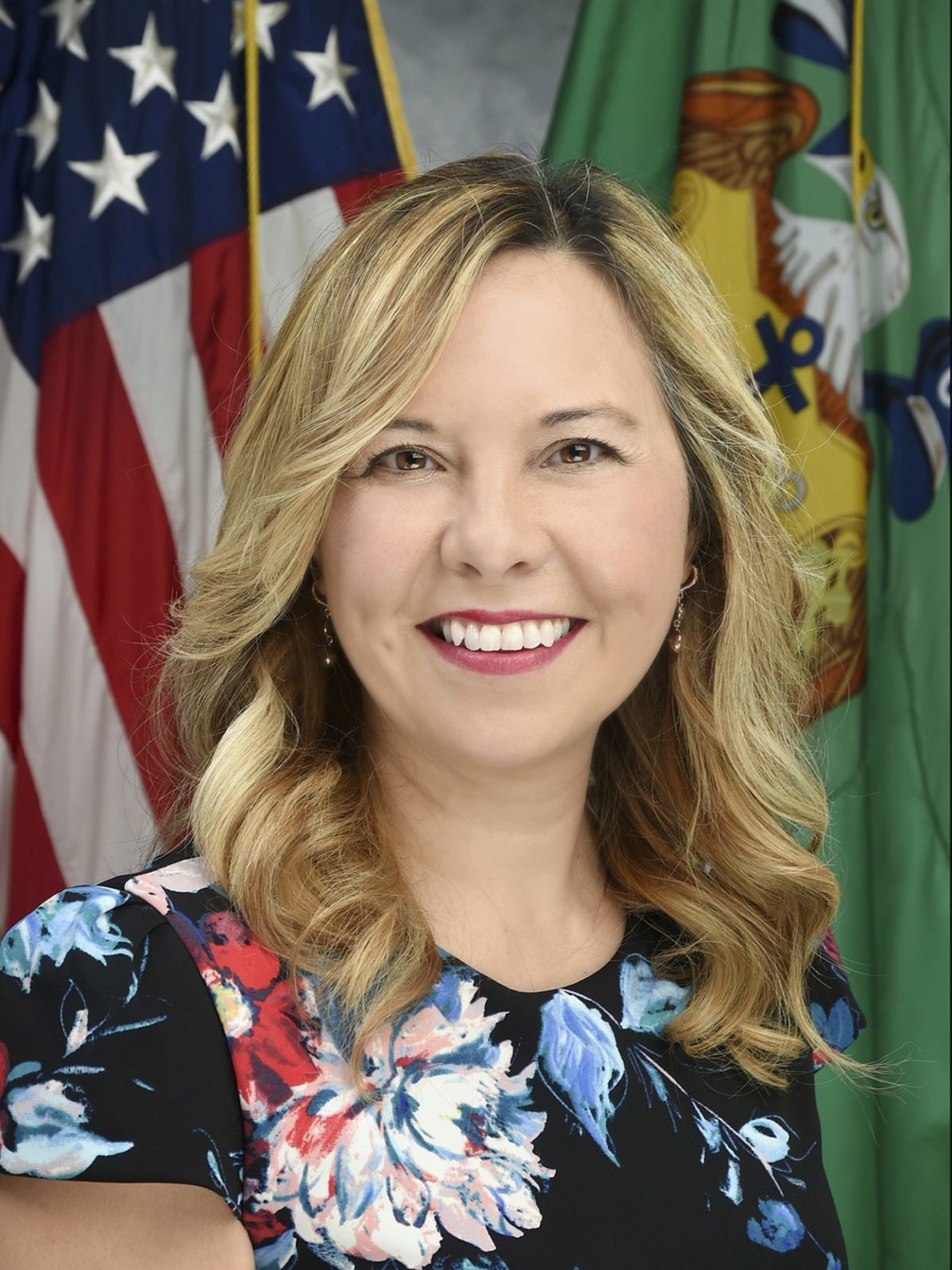
Christy Goldsmith Romero
Christy Goldsmith Romero / PHOTO: Treasury Dept via AP

A longtime financial regulator, Goldsmith Romero is currently a commissioner at the Commodity Futures Trading Commission, the nation’s financial derivatives regulator.

She previously worked with the Department of Treasury and was part of the team that handled the Obama-era Troubled Asset Relief Program, which lent $700 billion to troubled banks during the 2008 financial crisis. She also is a law professor at Georgetown University.

Her previous nominations to the nation’s financial regulators were unanimously confirmed by the Senate.

“She has proven herself to be a strong, independent, and fair regulator who is not afraid to do what’s right,” said Sen. Sherrod Brown, D-Ohio and chair of the Senate Banking Committee, in a statement.

Gruenberg last month said he would resign from the FDIC after an independent report by law firm Cleary Gottlieb Steen & Hamilton found incidents of stalking, harassment, homophobia and other violations of employment regulations, based on more than 500 complaints from employees.

Complaints included a woman who said she was stalked by a coworker and continually harassed even after complaining about his behavior; a field office supervisor referring to gay men as “little girls”; and a female field examiner who described receiving a picture of an FDIC senior examiner’s private parts.

Republicans have been calling for Gruenberg to step down since the allegations emerged late last year.

The White House and Gruenberg resisted those calls partly because the FDIC is led by a five member board, and his resignation would pass control of the agency to the FDIC’s vice chair, who is a Republican. Gruenberg’s resignation would not be official until Goldsmith Romero nomination is finalized.

“FDIC employees deserve a safe workplace that allows them to focus on their important mission to safeguard our country’s financial security,” said Sen. Tim Scott, the ranking Republican on the Banking Committee, in a statement. “Unfortunately, under the leadership of Chairman Gruenberg, that hasn’t been the case.”

The FDIC is one of several U.S. banking system regulators. The Great Depression-era agency is best known for running the nation’s deposit insurance program, which insures Americans’ deposits up to $250,000 in case their bank fails.

Adapted from reporting by the Associated Press