LinkedIn, Google Openly Censor Conservatives (Again) after SCOTUS’s Murthy Decision

(Ben Sellers, Headline USA) Tech companies are once again colluding with Democrats to push disinformation and censor legitimate conservative opinions, this time with the imprimatur of legitimacy conferred by the U.S. Supreme Court that allows them to do so more shamelessly and aggressively than ever.

Today’s censorship is being made possible by the letters A, C and B—as in Justice Amy Coney Barrett.

While the court’s two other centrists, Justice Brett Kavanaugh and Chief Justice John Roberts, are equally culpable (along with its leftist bloc) in allowing the atrocity that is Murthy v. Missouri, it was Barrett’s name on the majority opinion.

And, indeed, her support for the wrong side in several of the court’s other recent landmark cases has raised serious red flags.

Pundit Mark Levin speculated recently that Barrrett has already gone the way of Harry Blackmun and David Souter—two Republican-appointed justices who had, by the end of their terms, become some of its most unabashedly left-leaning, likely due to what is sometimes dubbed the “Greenhouse effect” in honor of a former New York Times reporter fond of haranguing the court’s conservatives.

“I’m telling you that Barrett has decided she’s a politician, not a Justice,” Levin noted on a recent podcast, according to Newsweek. By the end of her term, the 52-year-old justice “will have flipped all the way to the left,” he added.

With Democrats in Congress and the media exerting immense pressure on conservative justices like Clarence Thomas and Samuel Alito, perhaps Barrett, the court’s youngest jurist—who replaced liberal icon Ruth Bader Ginsberg—remains in survival mode, opting to pick her battles carefully.

But in the process, she is throwing essential civil liberties, such as First Amendment free-speech rights, under the bus and severely undermining the safeguards that help preserve America’s democratic institutions.

CHILLING IMPLICATIONS

Barrett’s maverick streak made no difference in the recent Fischer and Trump rulings—which sided in favor of conservatives by, respectively, tossing the Justice Department’s overreach on Jan. 6 “obstruction” cases and forcing the D.C. district court to adjudicate whether former President Donald Trump’s 2020 election challenges qualify for presidential immunity.

However, the Murthy decision—which found the court’s “wet noodle” wing delivering a win for Big Tech and the Deep State by deciding that the plaintiffs lacked sufficient standing after years of alarming anti-conservative censorship and government collusion on social-media platforms—will continue to have chilling implications for free speech until the right case comes along to overturn it.

It effectively gave sites like Google (and YouTube), Facebook (and Instagram), LinkedIn and countless other leftist dominated tech companies carte blanche to continue the sort of egregious suppression of views that many noted in the lead-up to the 2020 election, with Hunter Biden’s laptop becoming the most ignominious example.

In addition to the laptop, the case dealt with the aggressive suppression of COVID skepticism—much of which has borne out as valid, but which continues to be mischaracterized due to the stigma attached by government-backed propaganda that was designed to clear the paths for Big Pharma’s mRNA “vaccines” to get their emergency approval from the Food and Drug Administration.

Then there are the questions surrounding the irregularities in the 2020 election—questions that have fueled ongoing suspicions of massive vote fraud and a stolen election, since all of the major public and private institutions colluded to prevent any sort of meaningful presentation of evidence.

‘AN IN-KIND CONTRIBUTION FROM BIG TECH’

The silencing of this pivotal component in democracy emboldened the Biden administration to continue pushing lie after lie, culminating in President Joe Biden’s recent debate performance, when the house of cards came tumbling down.

But luckily for the gaslighting leftist establishment, SCOTUS had come to its rescue just days before.

A three-word post from Biden’s personal account on Tuesday made clear that Democrats are fully aware of the Murthy decision’s implications and have every intention of leveraging them to their fullest advantage.

Even as the main storyline dominating the news cycle continues to be Biden’s own mental and physical decline, and the existential crisis within his party over whether to replace him or double-down on laying cover for his obvious infirmities, Democrat operatives are hoping to use an otherwise mundane collection of whitepapers from a conservative think-tank as a boogeyman to redirect mainstream media attention toward a shiny new object.

Anybody who heeded the president’s call to “Google” the Heritage Foundation’s Project 2025 would receive little, if any, substantive information regarding the policies themselves; nor would they learn that its experts developed the proposals independent of—and, indeed, to some extent, in spite of—Trump’s ongoing role as the de-facto party leader.

The main objective of the initiative was to offer expert analysis and research that was “candidate agnostic,” in the words of Project 2025 director Paul Dans.

However, Biden’s campaign appears to have launched and promoted its own fake Project 2025 website—an alarmingly brazen tactic, especially coming from the party that has so frequently panic-mongered about the spread of disinformation interfering with the electoral process.

Meanwhile, the top search results for Google—and other engines, such as Yahoo and Duck Duck Go—are laden with Democrat talking points from sources like Media Matters and the Marc Elias-backed blog “Democracy Docket.”

While Headline USA’s own story debunking some of these lies was prominently featured over the weekend on ZeroHedge, garnering more than 133,000 views, there is no trace of any conservative media coverage of Project 2025 several pages deep into the search engines.

COMMUNITY DOUBLE-STANDARDS AT LINKEDIN

Search engines like Google are not the only ones likely to relish in their newfound freedom to censor dissenting or disagreeable viewpoints with impunity.

Social-media users can expect platforms traditionally hostile to conservative views to begin ratcheting up those efforts yet again, likely under duress from the federal intelligence apparatus.

LinkedIn, founded by notorious lawfare financier Reid Hoffman, has long been suspected of being one of the worst offenders.

Because the site is oriented toward professional networking, it is understandable that it might have some tightly enforced community standards not found on other sites. Unfortunately, those standards are inconsistently applied and often have appeared to target conservative viewpoints.

And we have the receipts to prove it.

On Tuesday night, this editor responded to a post from Michael Cohen, the former Trump lawyer turned antagonist and key witness in his Manhattan porn-star trial.
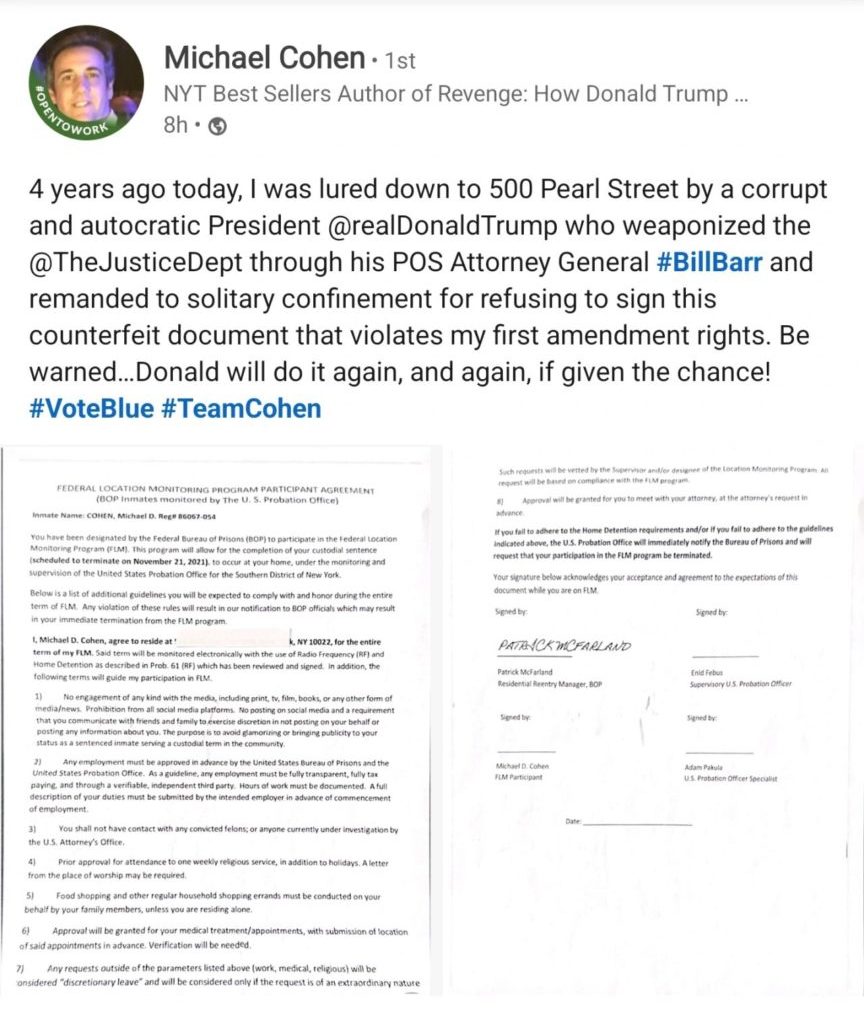
Michael Cohen post
Screenshot via Linkedin

Cohen notably referred to former Trump Administration Attorney General William Barr as the “POS [piece of s**t] Attorney General #BillBarr.”

The response simply pointed out the irony over the fact that Trump and his supporters likely shared Cohen’s disdain for Barr, who ultimately revealed himself to be just as disloyal to the president as Cohen.

But unlike Cohen’s original post, the response was promptly flagged as “hate speech” by LinkedIn’s automatic artificial-intelligence thoughtcrime scanners.
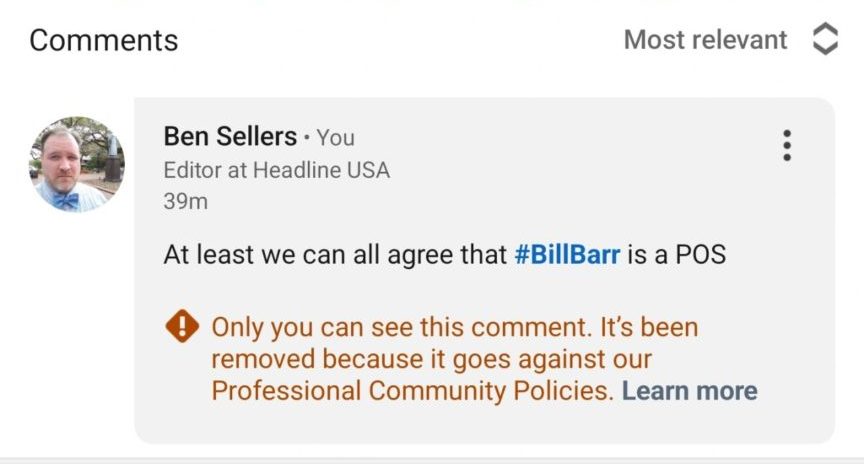
LinkedIn Barr comment
Screenshot via Linkedin

An effort to appeal the censorship was, likewise, swiftly shut down.
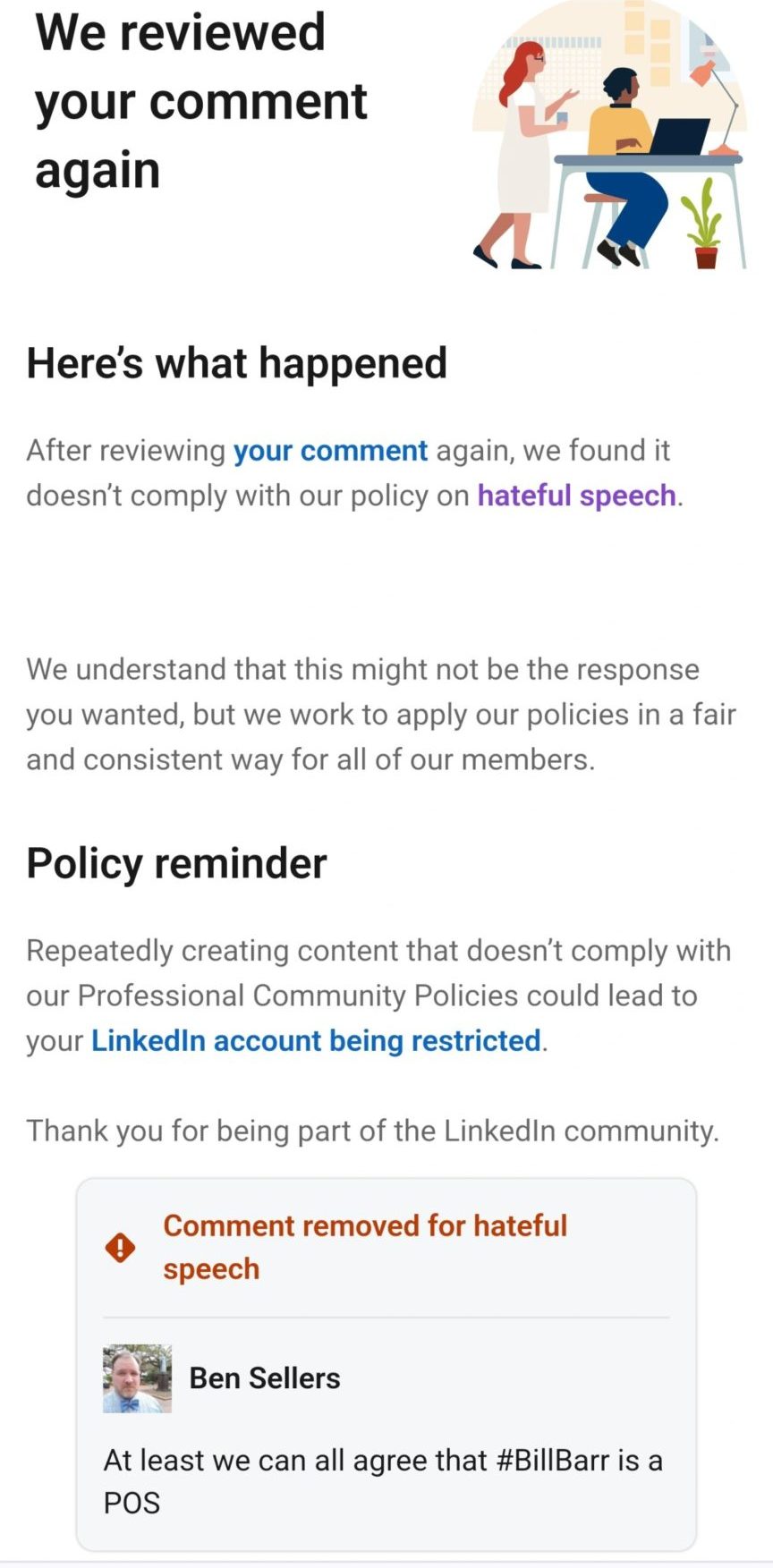
LinkedIn appeal
Screenshot via Linkedin

Although I filed a report on Cohen’s comment, that appears to have gone unaddressed, apart from hiding it from my personal feed.

The complaint over the censorship double-standard has now been escalated to a higher level of LinkedIn’s customer service team and is pending response.

In addition to having any negative marks cleared from my account (which I have long suspected may be causing posts to be suppressed), I demanded a formal apology from LinkedIn and an acknowledgment that its enforcement of its standards were inconsistent and possibly politically motivated.

A PATTERN OF CENSORSHIP

On at least two other occasions I have been suspended for spurious reasons, one of which, in May 2023 appeared to be linked to a post I made about the John Durham report, although LinkedIn subsequently claimed I had used mild profanity in a separate post earlier that day.

Another suspension last fall stemmed from criticism of a British Hamas apologist—purportedly a professor at Cambridge University—whose intellectual acumen I questioned.

In response to the May 2023 censorship incident, Rep. Dan Bishop, R-N.C.—a member of the House weaponization subcommittee who is currently running for attorney general of North Carolina—said that House Republicans’ efforts to hold social-media companies accountable had been slow but steady.

“Although I am not satisfied with the pace, the staff has a broad swath of subpoenas outstanding to social media operators, INCLUDING LinkedIn,” Bishop told me at the time.

It is unclear how the recent Murthy decision may have impacted legislative efforts to conduct oversight and hold bad actors accountable under statutes such as Section 230 of the Communications Decency Act.

A separate Supreme Court case in the recent session shot down efforts by Florida and Texas to enact their own anti-censorship laws, remanding them back to the lower courts.

It is possible that by gaining control of the White House and Congress, Republicans could enact legislation to hold companies accountable at the federal level. But doing so requires that they first win elections—and the Big Tech censorship industrial complex will be hell bent, once again, on preventing that.

Ben Sellers is the editor of Headline USA. Follow him at twitter.com/realbensellers.

Will Debt Sink the American Empire?

(Peter St. Onge, PhD. Money Metals News Service) “Will Debt Sink the American Empire? So asks the Wall Street Journal, in an uncharacteristically gloomy article for the bull market’s paper of record.

Collapse of an Empire

They kick off with the problem: America is “cruising” into an uncharted sea of federal debt, with a government seemingly incapable of turning it around.

In other words, the uniparty has set its course, and there’s no cavalry coming.

The Runaway Train of Deficits

We’re currently adding a fresh trillion of debt every hundred days, on our way to $35 trillion.

Meanwhile, the deficit is about to break $2 trillion – for perspective, all federal revenue under George W Bush averaged around $2 trillion.

Debt interest *alone is set to cross $1 trillion, eclipsing even our bloated military budget that beaches quarter-billion dollar piers in Gaza for sport.

The next milestone after that is Medicare spending, which together with Social Security has its own $78 trillion unfunded liability, according to its own Board of Trustees – outside estimates are higher.

Governments Are Rabid by Nature

Now, none of this is shocking: governments by nature try to spend too much – indeed, much of economic history is made up of governments desperately trying to finance their mountains of debt.

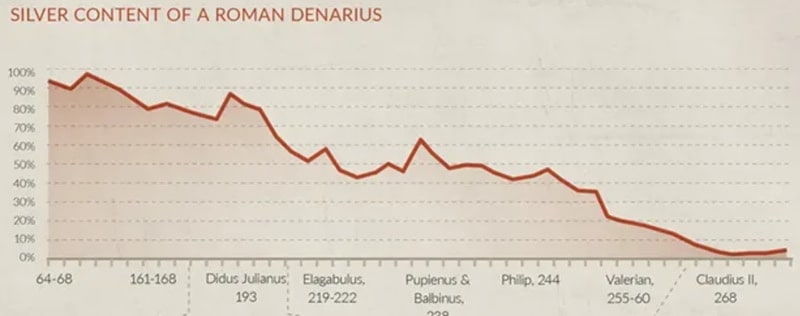
Debt brought down Rome, first with hyperinflation then with a gutted military that barbarians walked right over.

It brought down Spain, as New World gold finances an effective government takeover of the private sector. And France, bankrupted by financing foreign wars – in this case, the American Revolution. The Qing collapsed under debt and even Great Britain who owned half the earth for nearly a hundred years.

Silver Content of a Roman Denarius (Chart)

It’s why we got the Magna Carta – indeed, Constitutions – as kings pleaded for more money. It’s how we got central banks, as first Britain then the rest of the world licensed money printers in exchange for debt finance.

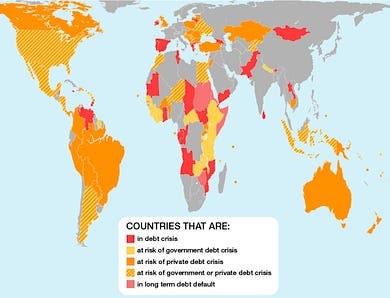
To this day government debt crashes countries – countries from Turkey to Venezuela to Nigeria are currently undergoing debt crises, with Argentina desperately trying to pull out of one.

Contries that are in Various Forms of Debt (Heatmap)

How Does It End?

And, with so many historical cases, we know exactly how this ends: investors stop buying government debt, shutting out governments and leading to massive austerity and soaring inflation as the government retrenches.

Going by history, the government will cancel the trillions it promised — starting with Social Security and Medicare — then pull back to where it can pay the Praetorian Guard and not much else.

In short, once debt hits the magic line, Washington goes from Sugar Daddy to wild animal. And, historically, it happens much faster than people imagine — in Hemingway’s famous phrase, countries go bankrupt gradually then all at once.

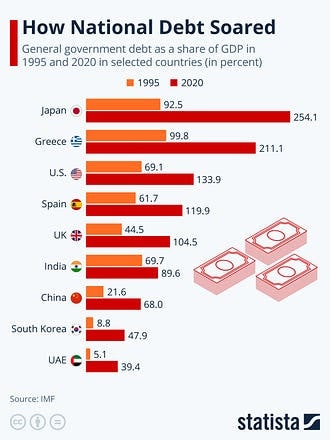
How National Debt Soared (Chart)

There Is a Ray of Hope

Washington’s spending freight train can be stopped – in fact, we did stop it in the ’90s under Clinton and Gingrich: From 1997 to 2000 we ran budget surpluses totaling nearly $600 billion.

The key was gridlock – two parties that despised each other so much that the only thing they could agree on was to sabotage each other’s plans.

Unfortunately, whether it was corporate donors or golden parachutes for politicians, both parties have long since folded and are now eager to cooperate so long as they both get everything they want. So Democrats feed their activist army at taxpayer expense, while Republicans instead give ammo to Ukraine.

This all means there is a ray of fiscal hope.

If, say, President Trump were to face a democrat Congress that hates him so much it blocks everything he does – not an impossible thing to imagine.

Or, if you swing that way, a President Biden – or Harris – is subjected to similar antipathy from a GOP Congress.

Or, dare we dream, a GOP that actually stands up on the debt ceiling, damn the media torpedos., or wait a couple of years and it’s a crisis in the entire country.

We know which one Washington will pick. But it’s ultimately the voters who run the joint.


Peter St. Onge writes articles about Economics and Freedom. He’s an economist at the Heritage Foundation, a Fellow at the Mises Institute, and a former professor at Taiwan’s Feng Chia University. His website is www.ProfStOnge.com.

BLS Quietly Erases Thousands of Jobs From Past Reports

(Mike Maharrey, Money Metals News Service) If you believe the headlines, the employment situation in the U.S. is still solid. Maybe you shouldn’t believe the headlines. They tend to bury the lead.

We got the June jobs report from the Bureau of Labor Statistics (BLS) on Friday. The economy added 206,000 jobs. That sounds pretty good, even though the unemployment rate ticked up to 4.1 percent. 

The rise in unemployment seems to have tripped some warning buzzers in the mainstream. The New York Times tells us “job growth extends streak” but cautions that “signs of concern emerged.”

“Halfway through the year, and four years removed from the downturn set off by the coronavirus pandemic, the U.S. job engine is still cruising — even if it shows increased signs of downshifting. Employers delivered another solid month of hiring in June…”

Even with the caveat, the report still sounds pretty good, doesn’t it?

In the fourth paragraph, the reporter mentions in passing that the job numbers in the previous two months were revised downward. He never says how much they were revised downward. In fact, he never mentions it again. You might think that little bit of news wasn’t significant.

It was.

The downward revisions were quite significant.

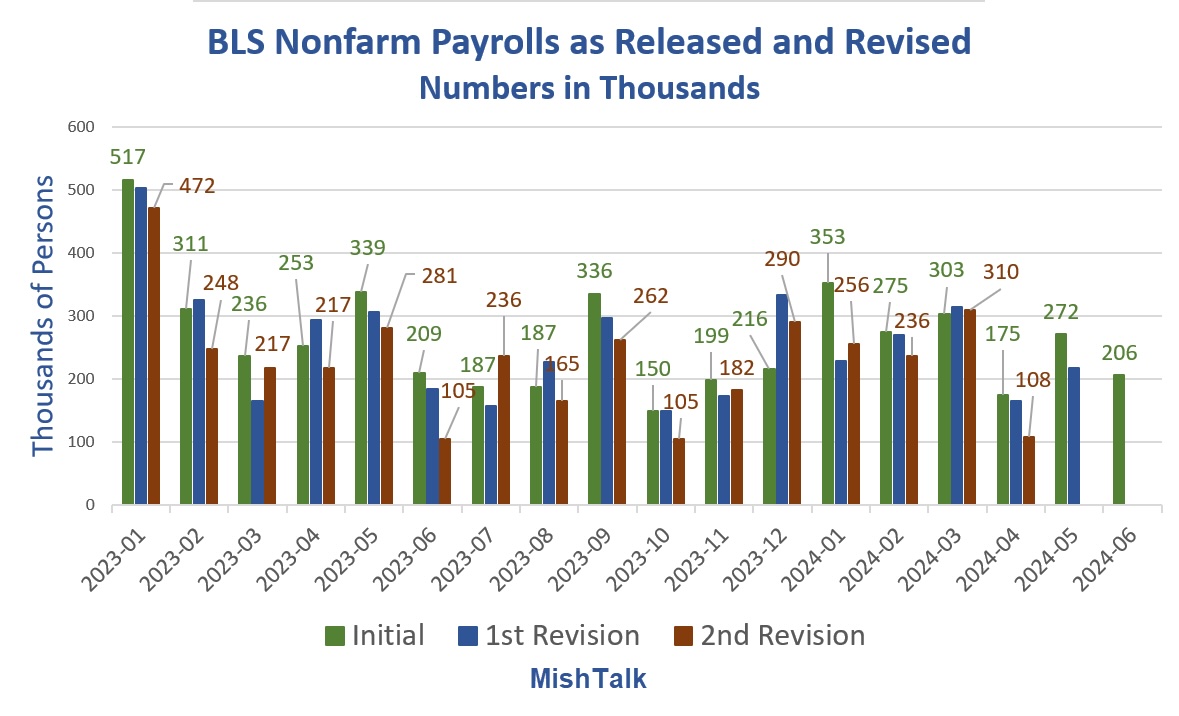
In May, the BLS reported 272,000 new jobs. That number was revised downward to 218,000.

In April, the BLS reported 165,000 new jobs. That number was revised downward to 108,000. 

In other words, 111,000 jobs just vanished from the books.

Poof.

That dropped the six-month average from 253,000 jobs to 222,000 jobs.

Remember, this is just a function of math. Those 111,000 jobs were apparently just a figment of the collective imaginations over at the BLS.

This has been an ongoing pattern. The BLS releases a report. The media trumpets the greatness of the labor market. And then the BLS quietly revises the numbers down a month or two later and you hardly hear a peep.

Mishmash.com created a graph showing the revisions compared to the initial reports going back to January 2023. As you can see, nearly every revision was downward.

We can debate whether or not the revised numbers tell a different story than the initial data. But at the least, it should make you question the veracity of the data. 

And it raises a big question: can we put any faith in this data at all?

Some people are paying attention. In May, Rep. Mary Miller (R-Ill.), questioned Acting Labor Secretary Julie Su about the constant revisions.

“Either you’re putting out fake numbers to give Joe Biden good headlines—and then quietly revising the job numbers down—or the BLS is failing to accurately report the numbers.”

While it is fair to say that the BLS has always revised data after the initial reports, one still has to wonder why the lion’s share of revisions is down.

It’s notable that markets only react to the initial numbers. You never see a gold rally because the BLS erased a bunch of jobs from the economy with a few clicks of its calculator. The revisions happen quietly in the back alleys. Nobody pays any attention to them. That creates the illusion that the labor market is much stronger than it is.

So, again, I have to ask the question: why should we trust any of these numbers, much less make decisions based on them?


Mike Maharrey is a journalist and market analyst for MoneyMetals.com with over a decade of experience in precious metals. He holds a BS in accounting from the University of Kentucky and a BA in journalism from the University of South Florida.

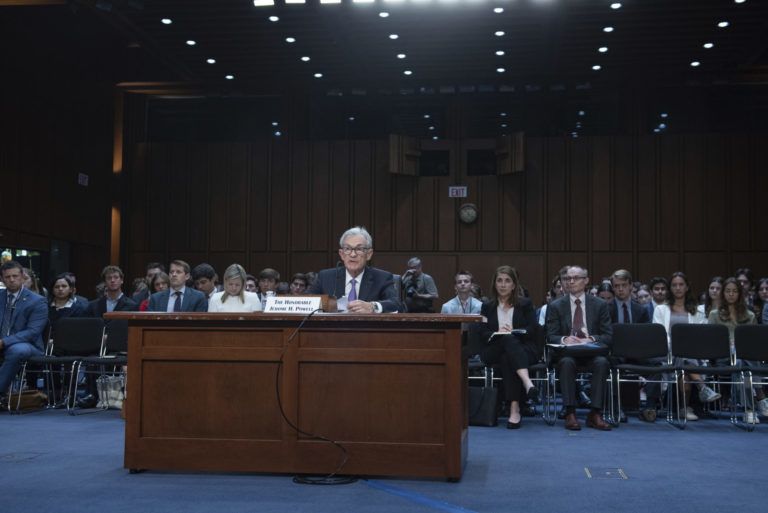
Powell Preps for Interest-Rate Reductions as Dems Get Election Jitters

(Headline USA) The Federal Reserve faces a cooling job market as well as persistently high prices, Chair Jerome Powell said in testimony Tuesday to Congress, a shift in emphasis away from the Fed’s single-minded fight against inflation of the past two years that suggests it is moving closer to cutting interest rates.

The Fed has made “considerable progress” toward its goal of defeating the worst inflation spike in four decades, Powell told the Senate Banking Committee.

“Inflation has eased notably” in the past two years, he added, though it still remains above the central bank’s 2% target.

Powell pointedly noted that “elevated inflation is not the only risk we face.”

Cutting interest rates “too late or too little could unduly weaken economic activity and employment,” he said.

The Fed chair addressed the Senate panel on the first of two days of semi-annual testimony to Congress. On Wednesday, he testified before the House Financial Services Committee.

From March 2022 to July 2023, the Fed raised its benchmark interest rate 11 times to a two-decade high of 5.3% to fight inflation, which peaked at 9.1% two years ago.

Those hikes increased the cost of consumer borrowing by raising rates for mortgages, auto loans and credit cards, among other forms of borrowing. The goal was to slow borrowing and spending and cool the economy.

On Tuesday, Powell noted that inflation reports covering the first three months of this year did not boost Fed officials’ confidence that inflation was coming under control.

“The most recent inflation readings, though, have shown some modest further progress,” Powell told the Senate committee, “and more good data would strengthen our confidence that inflation is moving sustainably toward 2%.”

Gregory Daco, chief economist at the consulting firm EY, said he thought Powell’s “greater focus on the two-sided risks to the outlook is welcome, albeit a little late.”

Daco added that he thinks the Fed ought to cut its benchmark rate at its July meeting. Otherwise, he suggested, businesses might soon step up layoffs as the economy slows.

In the past, Powell and other Fed policymakers have repeatedly stressed that the economy’s strength and low unemployment rate meant they could be patient about cutting rates and wait to ensure that inflation was truly in check.

But on Tuesday, Powell said the job market has “cooled considerably.” And he added that the economy’s growth has moderated after a strong expansion in the second half of last year.

Last week, the government reported that hiring remained solid in June, though the unemployment rate rose for a third straight month to 4.1%.

The job market “is not a source of broad inflationary pressures for the economy,” the Fed chair said under questioning.

Powell did not provide what Wall Street investors are watching for most closely: Any clear indication of the timing for when the Fed might make its first rate cut. But his testimony will likely harden investors’ and economists’ expectations that the first reduction will come at the central bank’s September meeting.

“It doesn’t seem likely that the next policy move would be a rate increase,” Powell said in response to a question from Sen. Jack Reed, a Rhode Island Democrat. “As we make more progress on inflation … we begin to loosen policy at the right moment.”

Powell also told the senators that the Fed and other financial regulators will revamp a proposal from last year that would have significantly increased the amount of capital that banks would be required to hold to offset potential losses.

The largest U.S. banks strenuously objected to the proposal. They argued that the stricter capital requirements would have forced them to reduce lending to consumers and businesses.

U.S. financial institutions ran TV ads against the proposal, known as the “Basel III endgame,” which reflected the results of international talks on financial oversight that emerged from the 2007-2008 financial crisis.

Powell said the three main financial regulators—the Fed, the Federal Deposit Insurance Corp. and the Office of the Comptroller of the Currency—were close to agreeing on a new proposal that would be subject to public comment.

In his testimony, Powell also underscored the Fed’s status as an independent institution, which he said “is needed to take a longer-term perspective” on interest rate policy and inflation.

Raising borrowing costs to try to slow price increases is often politically unpopular, and economists have long believed that insulating central banks from political pressures is necessary to enable them to take such steps.

“One gets the idea that the Federal Reserve is laying down a marker ahead of the upcoming presidential election,” said Joe Brusuelas, an economist at the tax advisory firm RSM.

Presumptive GOP nominee Donald Trump has already indicated that he wouldn’t renominate Powell if he is elected president again.

Last week, Powell said at a monetary policy conference in Portugal that there had been “quite a bit of progress on inflation,” something that Fed officials have said they need to see consistently before they would feel confident enough to cut rates.

In May, year-over-year inflation fell to just 2.6%, according to the Fed’s preferred measure, not far above its 2% target and down sharply from a peak of 7.1% two years ago.

On Thursday, the government will issue the latest reading of the better-known consumer price index. The CPI is expected to show a yearly increase of just 3.1% in June, down from 3.3% in May.

Such signs of cooling inflation, along with evidence that the economy and job market are slowing, have intensified calls for the Fed to cut it benchmark rate.

Several Democratic senators, including Sherrod Brown of Ohio, chair of the Senate Banking Committee, and Elizabeth Warren of Massachusetts, have written letters to Powell, urging him to start reducing rates in time to have a meaningful impact on the economy ahead of the November election, where Democrats are currently trailing in the polls.

Adapted from reporting by the Associated Press

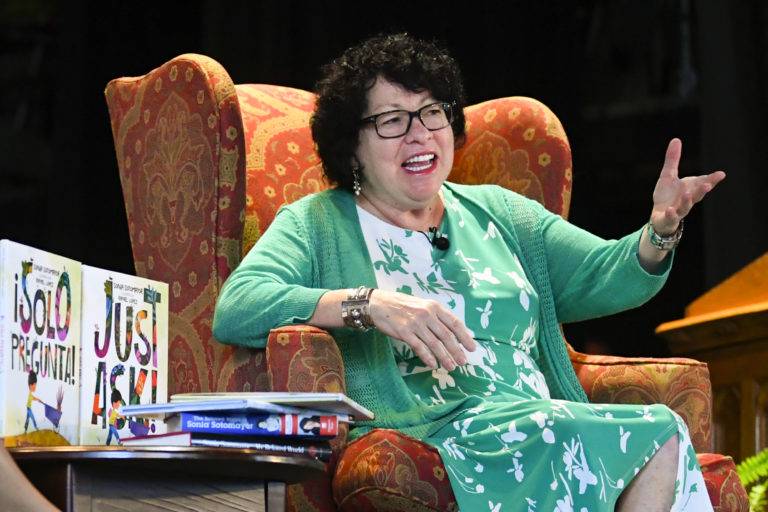
Anti-Gun Sotomayor’s Bodyguards Shoot Alleged Carjacker

(Luis Cornelio, Headline USA) An 18-year-old man was shot by U.S. marshals protecting the D.C. home of Supreme Court Justice Sonia Sotomayor, an incident that starkly contrasts with the justice’s notorious anti-gun takes. 

The Metropolitan Police Department announced the shooting occurred around 1:15 a.m. on Friday when Kentrell Flowers, a D.C. man, attempted to carjack a vehicle occupied by one of Sotomayor’s security detail.

Flowers exited his vehicle, approached the marshal’s car and pointed a gun at the marshal, the MPD announced in a press statement. 

In response, the marshal drew his service weapon and fired several shots at Flowers. A second marshal exited a separate vehicle and began shooting at the suspect. 

Flowers was transported to a hospital with non-life-threatening injuries after the shooting, police said. The marshals were not harmed, and Sotomayor was not in her residence during the incident. 

Flowers is facing charges of armed carjacking, carrying a pistol without a license and possession of a large capacity ammunition feeding device.

Observers have pointed out the irony that the marshals thwarted the carjacking attempt using firearms, despite Sotomayor’s staunch opposition to the Second Amendment and gun rights. 

In the Supreme Court case McDonald v. City of Chicago, Sotomayor joined then-Justice Stephen Breyer in dissenting against the majority opinion that affirmed the right to armed self-defense under the Second Amendment. 

“The carrying of arms for [self-defense] often puts others’ lives at risk,” Breyer, with Sotomayor joining, argued. “In sum, the Framers did not write the Second Amendment in order to protect a private right of armed self defense.” 

Similarly, in New York State Rifle & Pistol Association, Inc. v. Bruen, Sotomayor dissented against the majority decision that struck down a New York law requiring residents to demonstrate “proper cause” to obtain a concealed carry pistol license. 

“In my view, when courts interpret the Second Amendment, it is constitutionally proper, indeed often necessary, for them to consider the serious dangers and consequences of gun violence that lead States to regulate firearms,” Breyer with Sotomayor concurring, claimed. 

‘China’s Negligence’ on COVID-19 Resulted in $18T in Damage to U.S. Economy

(Dmytro “Henry” Aleksandrov, Headline USA) The COVID-19 hysteria and pandemic-related policies led to damages of $18 trillion in the American economy — the result of China creating the virus inside of its country.

The news came a few years after tyrannical lockdown policies and other measures damaged small businesses all across the United States.

The Heritage Foundation’s Nonpartisan Commission on China and COVID-19 found that the pandemic’s total cost added up to around $18 trillion and included that information in its report that was viewed by Fox Business.

The number represents over $8.6 trillion due to excess deaths, over $1.825 trillion in income lost, $6 trillion from chronic conditions from “long COVID”, as well as mental health loss at about $1 trillion, the news source wrote.

“The COVID-19 pandemic has exacted a staggering toll on the United States, both in human lives and in economic terms. The total estimated cost of $18.007 trillion is a stark reminder of the profound impact this global health crisis has had on the nation. By understanding and acknowledging these costs, we can lay the groundwork for holding accountable those whose negligence or overt actions exacerbated the pandemic’s severity,” the report said.

From 2020 to 2022, the excess deaths totaled 1,476,457 in the United States. Real GDP took a hit and was 2.5% below what it had been projected to be during that time.

The commission also confirmed the widely-known information that the virus “very likely stemmed from a research-related incident in Wuhan, China.”

“Although it remains theoretically possible that COVID-19 emerged via zoonosis in the wild or spillover in a wet market (spillover is a virus originating in animals before it passes to humans), there is no evidentiary basis for either of these hypotheses despite extensive testing over four years,” the commission stated.

In the report, the commission also suggested that Congress should conduct “a review of China’s negligence and cover-up as well as an evaluation of domestic policies that were implemented,” create a task force that can help with claims against the Chinese government, facilitate the filing of lawsuits against the communist regime, decouple American and Chinese commercial supply chains and audit all American funding for any biomedical research that is taking place in China.

Left-Wing Propagandist Michael Moore Decries Biden Family’s ‘Elder Abuse’

(Jacob Bruns, Headline USA) Propagandist filmmaker Michael Moore has accused the Biden family and the Democratic Party of “elder abuse” by making the faltering President Joe Biden run for re-election while clearly unfit to lead the nation, Mediaite reported.

Moore, in what appears to be an attempt to help the left force Biden out of the 2024 presidential race, claimed on the Rumble podcast that he was “gobsmacked” watching Biden’s pitiful debate performance last month.

“This is about whether he should serve another four days,” Moore said before railing against those who are allowing Biden to continue campaigning.

According to the director, he is “the only one to stand up for Joe Biden” by calling out “the cruelest form of elder abuse” that he has ever seen.

The abuse received by Biden was apparent in his “epic distress” the night of the debate, Moore continued. “Every cognitive default in his mind seemed to be shutting down.”

For Moore, even letting Biden on stage for the debate was irresponsible, and a sign that those around him are more interested in their own power than in what is best for Biden.

In other remarks during the interview, Moore even did the unthinkable–admit that former President Donald Trump was correct about Biden’s mental unfitness for office.

“Trump was right—I know, there’s words I’ve never spoken—Trump was right when he turned to Biden to ask him what his problem was as to why he never fires anybody,” he said.

For Moore, the only way for Biden to save his legacy is to resign, giving over the reins of the country to Vice President Kamala Harris.

“Be the one who not only stopped Trump but also the brave man who gave us our first woman in the Oval Office,” Moore said, addressing the president and praising Harris.

“She will complete your mission—and we will stand beside her,” he said. “This is your moment in history. Let the doctors examine you. Then do the right thing.”

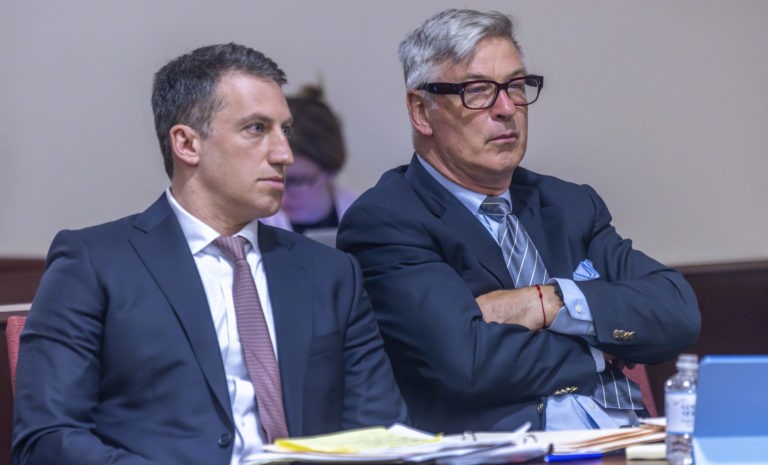
Alec Baldwin’s Involuntary Manslaughter Trial Begins w/ Jury Selection

0

(Headline USA) Alec Baldwin’s trial in the shooting of a cinematographer begins Tuesday with the selection of jurors who will decide whether the actor is guilty of involuntary manslaughter.

Getting chosen to serve in a trial of such a major star accused of such a major crime would be unusual even in Los Angeles or Baldwin’s hometown of New York. But it will be essentially an unheard-of experience for those who are picked as jurors in Santa Fe, New Mexico, though in recent years the state has increasingly become a hub of Hollywood production.

The hotheaded leftist actor and his wife, Hilaria, arrived at the courthouse Tuesday with their youngest child, Ilaria Catalina Irena Baldwin. The couple have seven children, ranging in ages from 1 to 10.

Baldwin, 66, could get up to 18 months in prison if jurors unanimously decide to convict him.

The jurors are tasked with deciding whether Baldwin committed the felony when, during a rehearsal in October 2021, a revolver went off while he was pointing it at cinematographer Halyna Hutchins, killing her and wounding director Joel Souza.

They were on the set of the Western film Rust, at Bonanza Creek Ranch some 18 miles from where the trial is being held.

Baldwin has said the gun fired accidentally after he followed instructions to point it toward Hutchins, who was behind the camera. Unaware that the gun contained a live round, Baldwin said he pulled back the hammer—not the trigger—and it fired.

The star of 30 Rock and The Hunt for Red October made his first appearance in the courtroom on Monday, when Judge Mary Marlowe Sommer, in a significant victory for the defense, ruled at a pretrial hearing that Baldwin’s role as a co-producer on Rust isn’t relevant to the trial.

The judge has said that the special circumstances of a celebrity trial shouldn’t keep jury selection from moving quickly, and that opening statements should begin Wednesday.

“I’m not worried about being able to pick a jury in one day,” Marlowe Sommer said. “I think we’re going to pick a jury by the afternoon.”

Special prosecutor Kari Morrissey, however, was dubious that Baldwin’s lawyers, with whom she has clashed in the run-up to the trial, would make that possible.

“It is my guess that with this group of defense attorneys, that’s not gonna happen,” Morrissey said at the hearing.

Baldwin attorney Alex Spiro replied, “I’ve never not picked a jury in one day. I can’t imagine that this would be the first time.”

Dozens of prospective jurors were shuffled into the courtroom for questioning Tuesday morning.

Notable attendees Tuesday included Stephen Baldwin, the defendant’s brother and a star of the film The Usual Suspects. Cameras capturing the rest of the proceedings will be turned off to protect jurors’ privacy. The jury is expected to get the case after a nine-day trial.

Attorneys will be able to request to dismiss them for conflicts or other reasons. The defense under state law can dismiss up to five jurors without giving a reason, and the prosecution can dismiss three. More challenges will be allowed when four alternates are chosen.

Before Marlowe Sommer’s ruling Monday, prosecutors had hoped to highlight Baldwin’s safety obligations on the set as co-producer to bolster an alternative theory of guilt beyond his alleged negligent use of a firearm. They aimed to link Baldwin’s behavior to “total disregard or indifference for the safety of others” under the involuntary manslaughter law.

But the prosecution managed other wins Monday. They successfully argued for the exclusion of summary findings from a state workplace safety investigation that placed much of the blame on the film’s assistant director, shifting fault away from Baldwin.

And the judge ruled that they could show graphic images from Hutchins’ autopsy, and from police lapel cameras during the treatment of her injuries.

Adapted from reporting by the Associated Press

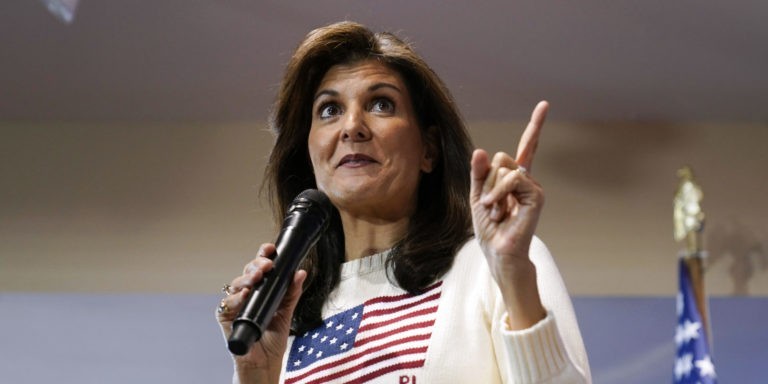
Nikki Haley Releases Delegates so They Can Back Trump at RNC Next Week

(Headline USA) Nikki Haley is releasing the delegates she won during this year’s Republican primary so that they’re free to support Donald Trump at next week’s convention, a move that goes toward solidifying GOP support around the party’s presumptive nominee.

Haley on Tuesday opted to release her 97 delegates won across a dozen primaries and caucuses earlier this year, according to her former campaign.

In a statement, the former South Carolina governor and United Nations ambassador called for party unity at the upcoming Republican National Convention in Milwaukee, also calling Democratic President Joe Biden “not competent to serve a second term” and saying that Vice President Kamala Harris—whom Haley repeatedly intimated would end up as president in Biden’s stead—“would be a disaster for America.”

“We need a president who will hold our enemies to account, secure our border, cut our debt, and get our economy back on track,” Haley said. “I encourage my delegates to support Donald Trump next week in Milwaukee.”

Haley won’t be in attendance in Milwaukee next week, according to spokesperson Chaney Denton.

“She was not invited, and she’s fine with that,” Denton said. “Trump deserves the convention he wants. She’s made it clear she’s voting for him and wishes him the best.”

Haley was the last major GOP rival standing against Trump when she shuttered her own campaign following Trump’s Super Tuesday romp, having accused him of causing chaos and disregarding the importance of U.S. alliances abroad.

Trump, in turn, repeatedly mocked her with the nickname “Birdbrain,” though he curtailed those attacks after securing enough delegates in March to become the presumptive Republican nominee.

Trump’s campaign did not immediately return a message seeking comment on Haley’s move, which was first reported by Politico.

Biden’s campaign has been working to win over her supporters, whom they view as true swing voters. But Haley said in May that she’d be casting her vote for Trump and left it up to the former president to work toward winning over support from her backers.

Adapted from reporting by the Associated Press

Federal Judge: Protesters Can’t March through GOP Convention’s Security Zone

(Headline USA) A federal judge ruled Monday that protesters can’t march through a security zone at the Republican National Convention, handing a defeat to left-wing activists who had pushed to have closer access to where delegates will be gathering next week in Milwaukee.

The American Civil Liberties Union and the Coalition to March on the RNC 2024 filed a lawsuit last month against the city of Milwaukee, alleging that the city’s plans for protesters violated their free speech rights.

They had asked the judge to order that the city design a protest parade route that is within sight and hearing of the Fiserv Forum where thousands of Republicans will be gathering starting Monday to nominate Donald Trump for president.

U.S. District Judge Brett Ludwig said in his order that protesters have a right to march in protest of the RNC, “but the First Amendment does not allow them to protest or parade in any way they choose.”

Ludwig said that Milwaukee city officials and the U.S. Secret Service have worked to balance protesters’ right to express themselves and “legitimate security and other governmental interests.”

“The vast majority of the resulting security plan is a reasonable and valid time, place, and manner regulation on speech,” the judge said in denying the protesters’ request for closer access to the convention site.

The judge sided with the ACLU on one issue, ruling that the city and the Commissioner of Public Works Jerrel Kruschke could not approve speaker and demonstration applications on the basis of an applicant’s criminal history.

Ludwig said the city “overstepped their authority in reserving their ability to deny protest permits based on” a past criminal conviction.

Both sides have until Wednesday if they wish to pursue other legal options.

Protesters have complained that the city is keeping them too far away from the convention site, which is inside a security perimeter where credentials are required to gain access.

Protesters have wanted to march inside that security zone. However, the security plan establishes a parade route about five blocks from the arena, with a stage for speakers within the route.

Omar Flores, chairman of the March on the RNC Coalition, told reporters at a news conference early Tuesday afternoon that protesters will march where they want to march.

He distributed a map of the protesters’ route, which runs inside an outer security perimeter along the edge of the credentialed inner security zone about a block east of the arena.

Flores repeatedly described the march as “family-friendly” but acknowledged protesters will likely encounter police. He said protest organizers have experience de-escalating such confrontations short of arrests.

Adapted from reporting by the Associated Press