(Headline USA) Gunfire erupted Saturday near a busy street festival in Ohio, wounding at least 12 people and sending some eventgoers scrambling for cover while others rushed to help the victims.
No suspects were in custody hours afterward, Toledo Deputy Police Chief Joe Heffernan said, and officials urged people who were at the festival to come forward with any photos or videos on their phones for possible leads.
The shooting happened near the Old West End Festival, an annual gathering of live music and home tours.
DOZENS of SHOTS fired at Ohio fest
Crowds FLEE in panic as gunfire erupts
Shaky footage shows people running for their lives
Heffernan said it appeared that at least two people fired weapons and they were “probably shooting at each other.”
Two of the victims were in critical condition, Heffernan added. The ages of the victims ranged from 14 to 61, with most of them in their early 20s.
“I am deeply concerned about the situation in Toledo tonight,” Ohio Gov. Mike DeWine said in a statement. “Summer festivals should be safe spaces for families to spend time together without fear of violence.”
Multiple videos posted to social media showed people running amid the sound of gunshots and emergency officials tending to others who appeared wounded.
Fire Chief Allison Armstrong said it was difficult to get to the hospital due to closed roads and traffic from people leaving the festival, but emergency responders were able to transport all patients from the scene within an hour.
Kevin Berry was sitting in the neighborhood arboretum listening to live music with friends when he heard a handful of gunshots ring out.
“Everybody hit the deck,” he said.
When Berry looked back up, he saw a gun being tossed to the ground less than 50 feet away from him. Officers who were already on site for the festival responded immediately.
Berry, who has medical training and served in the Navy, walked around looking for anyone who might need help and saw at least five people with gunshot wounds.
“The folks who were hit were spread out around the arboretum area,” he said.
The Old West End Festival is a two-day celebration in Toledo’s historic district that includes live music, food vendors, home tours and shopping. Berry described it as the “kick-off to Toledo’s summer festival season.”
George Kral, safety director for the city, said officials were discussing with organizers whether it would continue through the weekend.
“This is one of the most iconic festivals in Toledo,” he said, “and it’s a shame that something like this had to ruin it.”
(Bethany Blankley, The Center Square) After months of Congress stalling on funding for U.S. Immigration and Customs Enforcement and administrative changes, Pennsylvania state constables who’ve signed agreements to support federal law enforcement and potentially thousands of missing noncitizen children are ready to get to work.
On Friday, the U.S. Senate passed a $70 billion funding bill to support ICE and others border security operations, which includes funding to find hundreds of thousands of missing children.
“Pennsylvania State Constables are the best asset in the commonwealth to assist Immigration and Customs Enforcement with warrants and find missing children,” Damascus Township Constable Chris Lee told The Center Square. “Approximately 700 constables serve 250,000 warrants a year with the overwhelming majority of warrant executions completed without incident. As elected officers we have developed community contacts that enable us to find wanted individuals better than any other agency.”
Under the Biden administration, nearly 400,000 unaccompanied alien children, or UACs, were released into the country after they’d been smuggled to the border and were sent to live with sponsors by federal officials. The program overseeing their care has been marred by decades of allegations of abuse. During the Biden administration, multiple investigations found a worsening crisis: sponsors were unvetted, UACs were sent to non-relatives, child traffickers, sex abusers and residences that didn’t exist, The Center Square reported.
The number of human trafficking aid requests, including for children, surged. The Trump administration began welfare checks of unaccompanied minors through Homeland Security Investigations and ICE, searching for more than 350,000 “missing UACs” it claims the Biden administration couldn’t account for.
Since 2015, Pennsylvania has received nearly 13,000 UACs, according to the latest federal data, The Center Square reported. That number excludes children in forced labor and sex trafficking schemes.
Unlike other states where no constables have signed up, 18 constables in Pennsylvania have signed ICE’s 287(g) agreements to participate in immigration enforcement and help find missing children. The program authorizes state and local law enforcement officers to perform specified immigration functions only under ICE’s direction and supervision. It includes three models: a Jail Enforcement Model (JEM), Task Force Model (TFM) and Warrant Service Officer (WSO) model, The Center Square reported.
Among them is Lee, who was among the first to undergo 287(g) training and receive certification. He says his ICE liaison said there are 300 UACs in his tri-county area that need welfare checks.However, due to issues in Washington, D.C., he and other constables haven’t been able to get out into the field. They are hoping with renewed support from Congress and a new DHS secretary, they will be soon.
There are slightly more than 100 287(g) agreements signed with varying law enforcement agencies statewide. Constables comprise roughly 20%, according to the latest ICE data as of June 4.
“Pennsylvania State Constables are best suited to participate in 287(g) and especially the TFM “because of the close ties we have to the communities we serve. Constables are elected and trusted by their constituents, and because we live and work with them, we have a level of local knowledge and connection that is difficult to replicate. We understand the issues affecting our neighborhoods, our schools, and the families who live there,” he told The Center Square.
“According to public records, Pennsylvania State Constables are responsible for serving the lion’s share of warrants across the commonwealth, handling a workload that exceeds many other agencies combined.
“One of the biggest motivations for many officers within our group is protecting our communities from the dangers associated with illegal drugs, child exploitation, human trafficking, and sex trafficking,” he added. “Many of our officers have already completed the required ICE training and are eager to work alongside the new administration moving forward.”
ICE and HSI are working with local law enforcement to help find missing children. In Florida, for example, a recent operation led to finding 400 UACs, The Center Square reported. In another multi-agency operation in Florida, an additional 200 children were found, The Center Square reported.
In Minnesota during Operation Metro Surge, ICE located 3,364 missing UACs, “children the last administration lost and weren’t even looking for,” President Donald Trump’s border czar Tom Homan saidin a news conference in February.
William Penn established constables, sheriffs and magistrates in 1664; they’ve “been in continuous operation since the founding of Pennsylvania,” the Pennsylvania Police Alliance explains. Other law enforcement agencies were established on this model. “When Pennsylvania created its state police in 1905, the legislature explicitly granted them ‘the powers and prerogatives conferred by law upon … constables of this Commonwealth’ — acknowledging that constable authority is the original baseline from which the rest of Pennsylvania law enforcement derives,” Constables Matter explains.
Constables are locally elected but have statewide jurisdiction. They have arresting authority, including for felonies and misdemeanors, execute arrest warrants, make warrantless arrests, use county and local jails, and perform other duties. Unlike other law enforcement agencies that rely on taxpayer money to pay salaries and pensions, constables pay all of their costs, including vehicles, uniforms, K9s, training, costing taxpayers nothing.
Constables raise revenue by receiving fees from contracts with municipalities, private entities and private citizens. Constables that choose to work for the courts receive fees that are incurred by defendants, Lee explained to The Center Square. Many constables also receive free training available through state and federal law enforcement agencies like the Institute of Law Enforcement Education, NCTC and county public safety offices.
Because constables are elected officials, they answer directly to voters, Constables Matter explains. Their community involvement “fosters transparency. Independent from rigid hierarchies, political agendas, and special interests, constables avoid the bureaucratic shielding that can obscure accountability and lead to distrust of law enforcement. Constables are a direct, visible, and responsive link between the public and justice.”
(Merrilee Gasser, The Center Square) Florida became the first state this week to sue OpenAI.
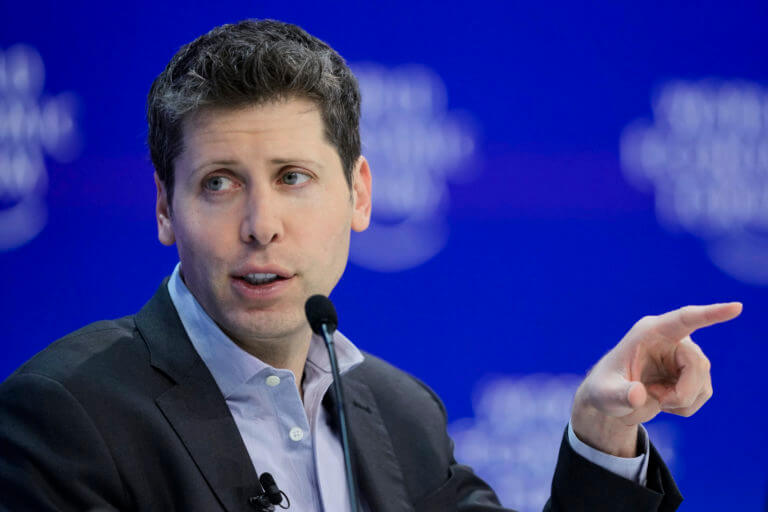
The civil complaint against OpenAI and Chief Executive Officer Sam Altman accuses the company of deceptive practices and harms to Floridians. Specifically, the lawsuit alleges Altman prioritized commercial gain and ignored warnings that OpenAI’s products could encourage self-harm and violence.
Attorney General James Uthmeier highlighted the case of Joshua Enneking, who died by suicide in 2025.
“ChatGPT never stopped engaging with Joshua, even though he often discussed suicide. ChatGPT even affirmed Joshua’s lack of self-worth,” Uthmeier said. “OpenAI never alerted authorities of Joshua’s imminent and specific plans to take his own life.”
Uthmeier said Enneking’s story is one of the reasons his office filed the lawsuit
The complaint accuses ChatGPT of collecting data from minors without parental oversight and causes “behavioral addiction and cognitive harm.”
“OpenAI and Altman ignored internal and external safety warnings, put children at great risk, and allowed a dangerous product to reach millions of Floridians,” Uthmeier said.
It’s not the first time Florida has pushed back against AI platforms. Last month, the Office of Statewide Prosecution launched a criminal investigation into OpenAI and ChatGPT after prosecutors reviewed chat logs between ChatGPT and a gunman who killed two people and injured several others when he fired shots on the campus of Florida State University last year.
OpenAI was subpoenaed for information on the company’s policies and internal training materials regarding user threats of harm to self or others.
“Today’s AI companies have largely assisted with the evolution of the digital playground. Protecting our children means teaching them to navigate not just the real people behind the screens, but the artificial minds engineered to mimic them,” said FDLE Special Agent in Charge Mike Duffey. “Parental vigilance must shift from simply monitoring who our children talk to, to ensuring they understand what they are talking to—because a machine programmed to please can never replace the safety of human boundaries.”
Gov. Ron DeSantis has been another outspoken voice on artificial intelligence. His proposed AI Bill of Rights would have required parental controls and privacy protections for users, among other things.However, the proposal failed to pass the Legislature.
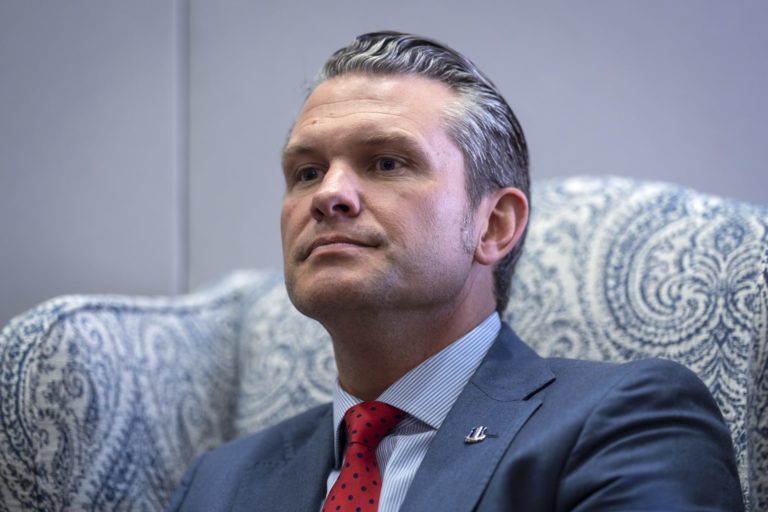
(Headline USA) U.S. Defense Secretary Pete Hegseth used a D-Day anniversary speech on Saturday to appear to link illegal immigration by sea to the wartime liberation of Europe, warning that the freedom won by Allied troops could prove temporary if leaders failed to defend it.
Hegseth, speaking at the Normandy American Cemetery in Colleville-sur-Mer in northwestern France during commemorations for the 82nd anniversary of the June 6, 1944, landings, said that today, “different European beaches are stormed by different dangerous ideologies.”
Pete Hegseth in Normandy:
Sadly, today different European beaches are stormed by different dangerous ideologies.
In Spain and Italy and Greece and Bulgaria, boats and men arrive.
When will European capitals do something about that invasion? Or is it too late? pic.twitter.com/NHyB3sjMsh
“Beaches in Spain and Italy and Greece and Bulgaria. Boats and men arrive,” he said.
“When will European capitals do something about that invasion? Or is it too late?” he added. “I pray not, and I believe not.”
Hegseth did not use the word immigration, but his remarks echoed broader Trump administration criticism of Europe over illegal migration, borders and what U.S. officials have described as censorship of nationalist and far-right voices.
On Saturday, British Prime Minister Keir Starmer’s office condemned U.S. Vice President JD Vance for blaming immigration for the killing of Henry Nowak, an 18-year-old British student stabbed to death in Southampton by a blade-wielding Sikh man.
In December, the Trump administration’s national security strategy warned that Europe faced the “prospect of civilizational erasure” and could become “unrecognizable” within 20 years.
(Ken Silva, Headline USA) Several FBI analysts who drafted a 2023 memo that cited Southern Poverty Law Center information to justify targeting “radical-traditionalist Catholics” as potential violent domestic extremists were fired Friday, according to their lawyer, the latest wave of terminations under the leadership of its director Kash Patel.
The fired employees included four intelligence analysts and a supervisory analyst. The FBI declined to comment.
The January 2023 intelligence product produced by analysts in the FBI’s Richmond, Virginia, field office emerged as a political flashpoint after it was issued, with Republicans in Congress repeatedly citing it as part of their broader contention that the FBI during the Biden administration was targeting conservatives.
The FBI quickly backtracked from the memo at the time, saying it had been drafted in error. Then-director Chris Wray repeatedly denied that charge and the FBI has said the document was quickly retracted and an internal review was launched. Merrick Garland, the attorney general under President Joe Biden, has said he was “appalled” by the memo.
🚨BREAKING🚨 The FBI's controversial memo targeting Catholics was inspired by an investigation into a schizophrenic man
As Headline USA exclusively revealed in April 2024, the FBI’s troubling memo was crafted by analysts involved in an investigation into a schizophrenic man who began attending a traditional Catholic church in early 2022. That schizophrenic man, 24-year-old Xavier Lopez, was arrested in November 2022 on a slew of domestic extremism-related charges. His mental health diagnosis was revealed during criminal proceedings.
According to records from his case, Lopez was on law enforcement’s radar since September 2018, when he attempted suicide. Lopez was 18 years old at the time. The FBI opened an assessment into Lopez about a year later after he allegedly made online statements advocating civil war and the murder of politicians.
Law enforcement continued to monitor Lopez—including while he served a stint in jail for felony vandalism—into early 2022, when he began attending Our Lady of Fatima Catholic Chapel in Richmond, Virginia. Our Lady of Fatima is one of the Catholic chapel’s listed in the FBI’s memo.
Shortly after Lopez started attending Our Lady of Fatima, the FBI decided to run an informant at him inside the church.
Infiltrating a Catholic church with an informant was supposedly necessary because “the only times [Lopez] left the house alone were to attend events at [Our Lady of Fatima Catholic Chapel] and it therefore provided the only potential opportunity for [an informant] to establish regular contact with him,” a 2024 DOJ Inspector General’s report said.
The FBI insisted that the informant was only used to monitor Lopez—and wasn’t used against any of the church’s other members, according to the DOJ-IG report.
The existence of the FBI informant is not disclosed in any of Lopez’s criminal records.
Lopez was arrested in November 2022 on a slew of state charges, including prohibited paramilitary activity, soliciting someone for a terrorist act and possessing firearms as a felon.
After his arrest, an FBI analyst with knowledge of the investigation worked with another analyst to craft the FBI’s memo about Catholics.
According to the DOJ-IG report, the FBI analysts wanted help conduct outreach to faith communities, “to make them aware of what we would call warning signs to radicalization, for the protection of everybody.”
“There was ample information in [Lopez’s] chats and in online chatter suggesting a potential link between white supremacist ideology and an attraction to certain religious beliefs and organizations, including [Our Lady of Fatima Catholic Chapel], but that the two analysts were searching for more definite substantiation,” the DOJ-IG report said, citing interviews with the FBI analysts.
One FBI analyst told the DOJ-IG that he found it “completely incongruous” that Lopez was attempting “to find common ground or find a community with this particular faith community.” He also said that there was no evidence that Lopez was being radicalized at Lady of Fatima Catholic Chapel, because he had been on the FBI’s radar “as an unstable, dangerous individual” before “any association with any Catholic related entity whatsoever.”
Rather, the FBI expressed concerns to the DOJ-IG that Lopez may have been recruiting other Lady of Fatima members to carry out an attack.
There is nothing in the charging documents against Lopez to suggest that he was recruiting other Catholics for an attack. Rather, the available evidence suggests that Lopez was interested in Catholic church to find a girlfriend.
“One place you will find [white women] is at a traditional church … I found a girl there that checked off every box on my list, but she’s 17 and I’m 22 so that’s not happening,” he said in an August 2022 post on Gab, according to charging documents.
Ken Silva is the editor of Headline USA. Follow him at x.com/jd_cashless.
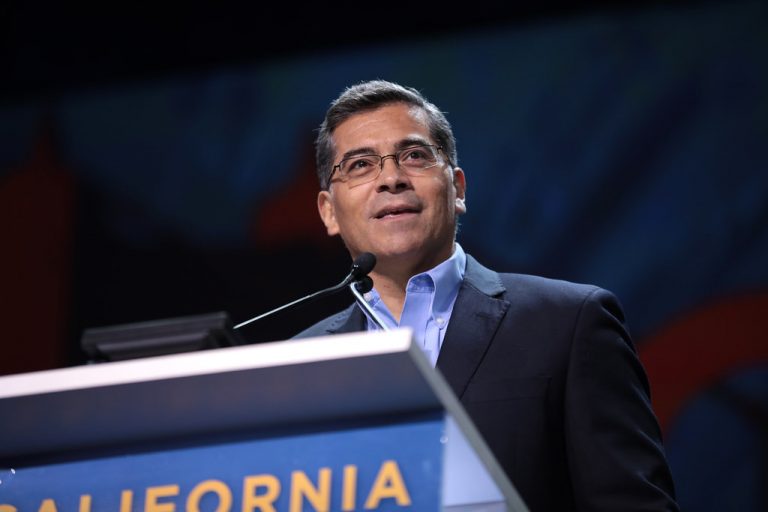
(Headline USA) Democrat Xavier Becerra advanced to the general election for California governor Friday after pitching himself as an experienced choice to lead the nation’s most populous state and succeed Democratic Gov. Gavin Newsom.
Becerra leaned on his more than 35 years in public office, including as state attorney general and U.S. health secretary, to argue that he was the most qualified candidate in a crowded field.
He and his fellow Democrats all battled public scandals—with ex-Rep. Katie Porter abusing her staff and Eric Swalwell being dogged by sexual misconduct allegations—but Becerra came out of it the most unscathed. Becerra’s biggest public controversy was the fact that a former staffer, Dana Williamson, was later caught diverting campaign funds for personal use between 2022 and 2024. Becerra has claimed he was unaware of the scheme
It was not yet clear who Becerra would face in the general election. His top rivals came down to Republican Steve Hilton, a former Fox News commentator backed by President Donald Trump, and Democrat Tom Steyer, a billionaire climate activist who poured $215 million of his own money into his campaign.
Born and raised in Sacramento by Mexican immigrant parents, Becerra has a wife and three daughters. He has said his family’s immigrant background mirrored his “underdog” gubernatorial campaign, in which he initially failed to garner substantial support before surging in the final months.
After one of the top Democratic contenders, Rep. Eric Swalwell, was accused of sexual assault and dropped out of the race, Becerra benefited from an opening to coalesce Democratic support. He quickly racked up key endorsements from labor groups and Latino legislative leaders.
Becerra has vowed to maintain the state’s mantle as a chief antagonist to President Donald Trump. As attorney general, he filed more than 120 legal actions against the first Trump administration on everything from immigration to climate policy.
During the campaign, Becerra’s rivals scrutinized his leadership as health secretary during the COVID-19 pandemic and the unaccompanied migrant children crisis in 2021, when Becerra’s Department of Health and Human Services was responsible for shelters where they were housed. Some of them were criticized as having inadequate living conditions, and there were also concerns about authorities failing to thoroughly vet sponsors with whom some children were placed.
If elected, Becerra said, he would declare states of emergency to address high energy costs and housing shortages and to freeze home insurance rates.
Though California is one of the nation’s most diverse states, Becerra would be the first Latino to hold the office since the late 1800s.
Newsom was barred by term limits from seeking a third stint in office.
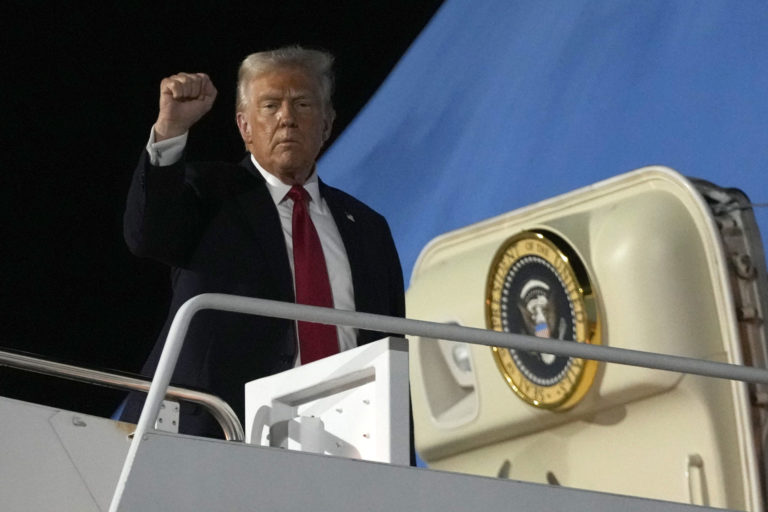
(Headline USA) President Donald Trump has issued a pardon to Stephen Buyer, a former Republican congressman from Indiana who served nearly two years in prison for making illegal stock trades based on inside information after he left office.
Buyer was sentenced to 22 months in prison in 2023 for trades made while working as a consultant and lobbyist. He was ordered to forfeit more than $350,000, representing the amount of the illegal gains, and pay a $10,000 fine. He was released in 2025.
In granting “a full, complete, and unconditional pardon,” Trump cited Buyer’s career as a judge advocate general in the Army and in the House that was “distinguished and highly productive.” The pardon was dated Thursday and released by the White House late Friday.
Buyer said the pardon “corrects a politically motivated prosecution” and that it was “horrific to be imprisoned for a crime that I did not commit.” He maintains that he is innocent.
Trump used his Truth Social media platform on May 31 to share a pair of letters requesting a presidential pardon for Buyer, a lawyer and Gulf War veteran who left office in 2011. He was a House prosecutor at Democratic President Bill Clinton’s 1998 impeachment trial and in 2016 he served on Trump’s transition team focusing on veterans’ issues.
A letter signed by more than 40 former Republicans in Congress said Buyer was “targeted by the deep state” because of his involvement in Clinton’s trial.
“Like you, Mr. President, Steve has been the victim of lawfare conducted by the Biden Administration,” they wrote in the April 2025 letter.
A second letter, from five current House Republicans, said pardoning Buyer would bring justice to his case. The June 2025 letter was signed by Tom Cole of Oklahoma, Ken Calvert of California, Marlin Stutzman of Indiana, Jack Bergman of Michigan and Pete Sessions of Texas.
Buyer, 67, was convicted in connection with insider trading involving the $26.5 billion merger of T-Mobile and Sprint, announced in April 2018, and illegal trades in the management consulting company Navigant when his client Guidehouse was set to acquire it in a deal publicly disclosed weeks later.
The Constitution gives a president broad power to grant pardons for federal crimes. The pardons do not erase a recipient’s criminal record but can be seen as act of mercy or justice.
(Money Metals News Service) In a wide-ranging conversation on the Money Metals Podcast, host Mike Maharrey sat down with Axel Merk, founder, president, and chief investment officer of Merk Investments, to discuss how investors should interpret the ongoing conflict involving Iran, what is driving gold prices, and why maintaining a disciplined investment process matters more than reacting to headlines.
Merk also shared his views on government debt, market psychology, and the importance of understanding how markets actually function.
(Interview Starts Around 5:27 Mark)
Why Gold Hasn’t Reacted the Way Many Investors Expected
The discussion opened with the recent escalation in the Middle East following U.S. military action against Iran. While many investors have viewed the conflict as a major catalyst for precious metals, Merk argued that markets are currently treating the situation as a temporary shock rather than a lasting structural change.
According to Merk, this distinction is critical because it affects how bond markets, inflation expectations, and ultimately gold prices respond. He explained that although bonds have sold off amid fears surrounding the conflict, long-term inflation expectations have remained relatively stable. As a result, real interest rates have moved higher, creating a headwind for gold.
Merk emphasized that gold ultimately competes against the long-term purchasing power of currencies. Because markets still largely believe the Federal Reserve retains the ability to control inflation over time, long-term inflation expectations have not dramatically shifted. That confidence, in turn, has helped support higher real interest rates, which can weigh on gold prices even during periods of geopolitical uncertainty.
He also noted that after briefly decoupling from real interest rates during 2024, gold has recently resumed its traditional relationship with those rates. While some observers have suggested gold may be losing its safe-haven status, Merk argued that current price action is better explained by standard market mechanics than by any fundamental change in gold’s role.
Long-Term Precious Metals Investors Remain Buyers
Despite short-term volatility, Merk said one encouraging sign is that long-term precious metals investors continue to exhibit a net buying bias. His firm manages more than $4 billion in precious metals assets, giving him a unique perspective on investor behavior.
According to Merk, the willingness of long-term investors to continue accumulating precious metals supports the view that markets see the Iran conflict as a temporary disruption rather than a transformational geopolitical event. While he stopped short of declaring those investors correct, he believes their actions are consistent with the broader market narrative.
He also pointed out that many investors entered the current environment heavily leveraged after an extended period of optimism. When unexpected shocks occur, leveraged investors often reduce risk quickly, creating additional selling pressure that can temporarily suppress gold prices.
When Does a Shock Become a Structural Change?
Maharrey asked an important question: At what point does a temporary geopolitical shock evolve into a lasting structural problem for markets? Merk’s answer focused on the remarkable adaptability of market systems.
Drawing on examples from energy markets, he explained that markets naturally price in some degree of normalization over time. Whether dealing with oil supply disruptions, interest rate shocks, or geopolitical conflicts, investors generally assume conditions will eventually stabilize.
Even in a scenario where Iran gained greater control over shipping routes or imposed fees on vessels moving through the Strait of Hormuz, Merk argued that global markets would adapt. Producers, consumers, and governments would find alternative solutions through infrastructure investments, transportation changes, or energy diversification.
For Merk, the greater threat comes not from the conflict itself but from policy responses. Historically, governments have often reacted to supply shocks with interventions such as price controls, stimulus spending, or trade restrictions. Those actions can create longer-lasting distortions and potentially transform a temporary disruption into a structural economic problem.
The Importance of Having an Investment Process
One of Merk’s strongest messages centered on investment discipline. He argued that the most important thing an investor can possess is not a perfect strategy, but a consistent process.
In his view, investors should avoid making dramatic portfolio changes based on individual headlines, market commentary, or even conversations like the one he was having on the podcast. Instead, new information should be used to challenge assumptions, stress-test existing positions, and refine decision-making frameworks.
Merk highlighted an important distinction between professional investors and retail investors. Professionals often describe their actions as “risk management,” while retail investors may think of similar behavior as “panic.” In reality, both groups frequently reduce exposure when volatility rises and risks exceed their original expectations.
He stressed the value of periodic portfolio rebalancing during good times, noting that investors who fail to rebalance often become overexposed to risk assets. When markets decline sharply, they may find themselves facing losses far larger than they can comfortably tolerate.
A Simple Test for Excessive Risk
Merk offered a practical rule of thumb for determining whether an investor is taking too much risk: sleep quality. If market positions are causing anxiety, restlessness, or constant monitoring of prices, the portfolio may be larger or riskier than appropriate.
He also emphasized the importance of controlling personal expenses. Investors who consistently spend less than they earn possess greater flexibility and can generally withstand more market volatility. In uncertain times, he suggested that maintaining healthy personal finances may be one of the most effective forms of risk management available.
Understanding Why Markets Price Assets the Way They Do
Maharrey raised the idea that investors often believe markets are “wrong.” Merk agreed that skepticism can be healthy, but he cautioned that investors must understand why markets are behaving the way they are before betting against consensus views.
He encouraged investors to approach markets with humility. While opportunities certainly exist when prices diverge from fundamentals, investors should first assume markets may have valid reasons for their pricing decisions. Only after conducting significant research should they commit capital based on a contrarian view.
Merk also argued that some market segments have become less efficient because of the rise of passive investing. During years of quantitative easing and broadly rising asset prices, active management lost favor. As a result, certain specialized sectors—including mining and precious metals—may offer greater opportunities for investors willing to do the necessary research.
He emphasized that successful investing in niche markets requires understanding details that many participants overlook. As an example, he noted that the commonly quoted gold price represents a London bullion market price for a specific type of gold bar located in London. During periods of market stress, prices for gold in other locations or forms may diverge significantly.
Why Debt Matters Even When Markets Ignore It
The conversation eventually turned to federal debt and its relationship with interest rates. While many investors focus on central bank policy, Maharrey noted that debt levels often receive less attention.
Merk acknowledged that government debt is critically important but explained that debt levels do not produce simple trading signals. Unlike cash-flow variables that can directly affect markets in the short term, debt tends to influence economic conditions gradually over time.
Referencing economist Friedrich Hayek, Merk noted that excessive government debt can undermine the independence of monetary policy. However, he cautioned that investors have been warning about debt problems for decades. The challenge lies not in identifying the problem but in determining when and how it will influence markets.
Rather than expecting a dramatic financial reset, Merk believes governments and societies typically adapt gradually. Inflation erodes purchasing power, households adjust, labor participation changes, and political pressures evolve. The result is usually a long period of increasing instability rather than a single defining moment of reckoning.
Hayek’s “The Constitution of Liberty” Offers Timely Lessons
When asked what he was reading, Merk highlighted Friedrich Hayek’s classic work, The Constitution of Liberty. Although he first read the book roughly a dozen years ago, he said it feels even more relevant today.
One theme that particularly resonated with him is Hayek’s argument that liberty requires clear rules and shared societal values. Merk suggested that in an increasingly polarized political environment, Hayek’s observations offer valuable insights into the balance between freedom, governance, and social cohesion.
As the interview concluded, Merk encouraged listeners to follow his work through Merk Investments and his account on X, where he regularly shares market commentary and investment insights.
(Dave DeCamp, Antiwar.com) The US House of Representatives on Thursday passed a bill to provide Ukraine with billions in additional military aid and increase sanctions on Russia, a move that comes as the more than four-year-old war between Russia and Ukraine is escalating.
The Ukraine Support Act passed in a vote of 226-195, with 18 Republicans joining Democrats in supporting the effort. Just one Democrat, Rep. Ilhan Omar (MN), voted against the bill.
The legislation was introduced last year by Rep. Gregory Meeks (D-NY), the top Democrat on the House Foreign Affairs Committee, and, according to media reports, would provide Ukraine with over $1 billion in military and reconstruction aid. The legislation states that it will make up to $8 billion in direct loans available for Ukraine and the US’s NATO allies.
A US airman on a C-17 Globemaster III loaded with munitions bound for Ukraine at Joint Base McGuire-Dix-Lakehurst, New Jersey, on April 30, 2024 (US Air Force photo)
The bill also includes $250 million for Radio Free Europe/Radio Liberty, a US state-funded media outlet, and authorizes it to open “new bureaus to help expand its ability to reach audiences on the periphery of the Russian Federation.”
The bill was able to be brought to the floor after enough Republicans signed a discharge petition, and the passage of the legislation is seen as a rebuke of President Trump, who has continued fueling the proxy war in Ukraine, but mostly through a new NATO initiative, under which US allies pay for US weapons being shipped to Ukraine.
The passage of the bill comes after Russia launched a major drone and missile attack across Ukraine on Tuesday, killing at least 22 people. Russia said the strikes were a response to the increase in civilian casualties in Ukraine’s drone attacks, which included a recent attack on a college in Luhansk that killed 21 students. Ukraine hit back on Wednesday with a massive drone swarm that killed at least two emergency workers in Russia and included attacks on St. Petersburg as the city was starting its annual economic forum.
(Dave DeCamp, Antiwar.com) US Secretary of State Marco Rubio on Wednesday was asked whether Israel has nuclear weapons and acknowledged that “most of the world assesses that they do,” but also reaffirmed the US policy of not acknowledging the existence of Israel’s nuclear stockpile and secret weapons program.
Rubio made the comments when being questioned by Rep. Joaquin Castro (D-TX), who recently led a letter to the State Department asking for answers about Israel’s nuclear weapons program. Rubio’s State Department responded by referring the group of Democratic lawmakers to the government of Israel.
“I have to say, Mr. Secretary, that’s a very bizarre response,” Castro told Rubio at a congressional hearing. Castro then asked Rubio if he could tell the American people whether or not Israel has nukes.
The stakes are too high to stay in the dark on Israel’s nuclear capabilities.
Today, I asked Secretary Rubio if Israel has a nuclear program. He said "most of the world assesses that they do" and committed to providing more information. pic.twitter.com/TOPiCmq7h5
“You know that that’s a question we don’t, they’ve never acknowledged to have a nuclear program, people can have, as you know, an open source and other reporting suspicions about what they possess. If we’re speaking frankly, I think most of the world asseses that they do,” Rubio said.
“But they’ve never acknowledged that publicly, and as a feature of our foreign policy, for a variety of reasons, we don’t discuss it that way either,” he added.
Castro expressed concern over what Israel’s “red lines” could be when it comes to using its nuclear weapons and said he was “shocked that our government wouldn’t make an effort to know, to understand and then to give our oversight body the information that we need to make decisions about the war. Rubio said Castro’s concerns were “fair” and that he’d be willing to answer more questions in a classified briefing.
Every US presidential administration since President Nixon has maintained an understanding with Israel under which the US and Israel do not acknowledge Israel’s nuclear weapons program, and the US doesn’t pressure Israel to sign the Non-Proliferation Treaty. The ambiguity has allowed the US presidents to provide military assistance without worrying about the 1976 Symington Amendment, a foreign assistance law that prohibits aid to countries that traffic in or receive nuclear enrichment equipment or technology outside of international safeguards.
Israel’s nuclear arsenal, which is estimated to be somewhere between 70 and 300 nuclear warheads, is almost always missing from the conversation in US media coverage and political discussions surrounding Iran’s nuclear program, which has never been used to develop weapons. Unlike Israel, Iran is a signatory to the NPT, and Ayatollah Ali Khamenei, the Iranian supreme leader, who was killed by an Israeli strike on February 28, had issued a Fatwa banning the development of nuclear weapons.