Top Biden Economic Advisor Leaves White House amid Stock-Market Plummet

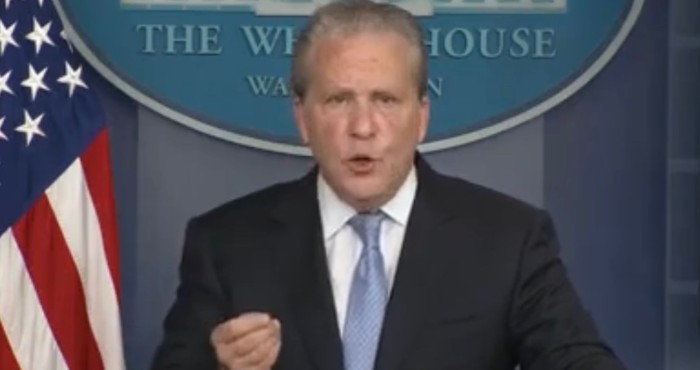
(Casey Harper, The Center Square) President Joe Biden released a statement Monday morning thanking Gene Sperling, a top economic advisor, as he left his position the same morning that fears of a U.S. recession sent the U.S. stock market tumbling.

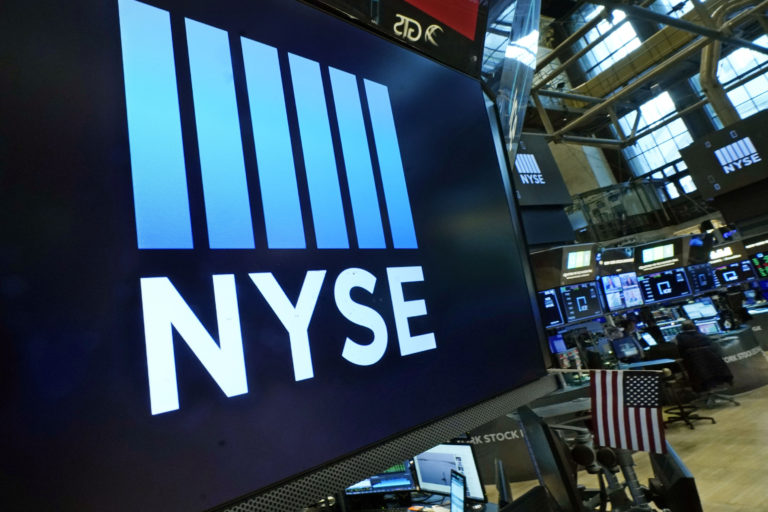
As of Monday morning, the Dow had dropped 900 points and the Nasdaq by 4%, as The Center Square previously reported.

The Associated Press reported Monday that Sperling is going to work as the senior economic advisor for the presidential campaign of Vice President Kamala Harris.

“They should know our nation is stronger and more just because of the families that Gene has spent every day fighting for over the past three-and-a-half years,” Biden said in a statement.

Whether Sperling’s decision to leave is tied to the economic downturn or not is unclear, though the timing raised eyebrows Monday morning.

While Biden’s campaign previously touted the economic recovery and “Bidenomics” frequently, the campaign has backed off the phrase as inflation remains elevated and polls show voters are very concerned about the economy.

It remains unclear whether being responsible for the Biden economy will help with voters this November, but if Monday’s downturn becomes a recession, Harris could be saddled with the blame given her time in the White House and previous boasting of “Bidenomics.”

Sperling, who also served in the Clinton and Obama administrations, helped Biden navigate the post-COVID recovery. While jobs returned to pre-COVID levels and grew from there, prices soared during Biden’s first years in office.

Prices have risen more than 20% since Biden took office. In an effort to get inflation under control, the Federal Reserve has hiked the federal interest rate range to 5.25% to 5.5%.

Inflation has since slowed, though prices have not gone down. Job creation had remained in a decent place, but unemployment hit 4% over the summer.

Many experts expected a downturn Monday after the latest U.S. jobs data released on Friday showed far less job creation than expected.

Results of Mike Johnson’s Trump Shooting Investigation Aren’t Due Until after Election

(Ken Silva, Headline USA) When House Speaker Mike Johnson announced last week a Bipartisan House Task Force to investigate the attempted assassination of presidential frontrunner Donald Trump, he said he has the “utmost confidence” that the group will “move quickly to find the facts.”

But according to a report from the Butler Eagle, the deadline for the task force’s report isn’t until after the 2024 presidential election.

“The task force has set a deadline of Dec. 13 to submit a final report on its findings,” reported the Butler Eagle, which is the local newspaper for the community where the July 13 deadly Trump rally took place.

The Butler Eagle also reported that the task force hasn’t met in person.

“As of the start of August, the task force members are scattered across the country and meeting virtually, as Congress is currently in recess,” the newspaper reported.

Task Force Chair Rep. Mark Kelly R-Penn., whose district covers Butler, reportedly said he’s working to organize online conference calls.

Neither Johnson nor Kelly mentioned the Dec. 13 deadline in their press releases. Instead, they focued on the Task Force’s membership, which is comprised of six Democrats and seven Republicans—a mix of RINOs and MAGA-leaning lawmakers.

The Democrats on the Task Force are Reps. Jason Crow, D-Co., Lou Correa, D-Calif., Madeleine Dean, D-Penn., Chrissy Houlahan, D-Penn., Glenn Ivey, D-Md., and Jared Moskowitz, D-Fla.

Along with Kelly, the Republicans are Reps. Mark Green, R-Tenn., David Joyce, R-Ohio, Laurel Lee, R-Fla., Michael Waltz, R-Fla., Clay Higgins, R-La., and Pat Fallon, R-Texas. Notably absent are Army combat veteran Rep. Cory Mills, R-Fla., and former Navy Seals sniper Rep. Eli Crane, R-Ariz.

Mills reportedly has promised a “parallel independent investigation.”

“It’s very unfortunate but not surprising for anyone familiar with how DC works. I’m not a politician, leadership, or a ‘yes man,’” Mills reportedly said last week in response to the Task Force appointments.

“I will be speaking with other members, and although I won’t have subpoena powers, I will personally fund whatever is required for additional staff to further investigation and expose the truth.”

Ken Silva is a staff writer at Headline USA. Follow him at twitter.com/jd_cashless.

Stocks Start Crashing: Will the Fed Pivot or Panic?

(Stefan Gleason, Money Metals News Service) It’s no longer a question of whether the Federal Reserve will cut interest rates. It’s a question of how soon central bankers will cut and how big they will go.

Last week’s ugly economic reports on manufacturing and employment helped trigger a mini-meltdown in the stock market – one that continues today. Instead of a soft landing, the economy may be careening toward recession.

The Bureau of Labor Statistics reported that the U.S. economy created 114,000 jobs last month versus expectations of 176,000. Meanwhile, the unemployment rate jumped from 4.1% to 4.3%.

Those who are savvy about government statistics know that the real jobs numbers are likely even worse than reported. That’s because the total jobs that were reportedly created are estimates derived not from actual counting but from the so-called “birth-death model.”

When employment growth is declining, this statistical model tends to be well behind the curve in accounting for job losses.

The official economic reports were still disappointing enough to virtually guarantee a Fed rate cut by September.

But nervous traders on Wall Street and panicked politicians in Washington, D.C. want central bankers to cut by 50 basis points instead of the forecasted 25 – and to do so before their next scheduled policy meeting in September.

“Jobs Data Is Flashing Red”

Ultra-liberal Senator Elizabeth Warren (D-MA) threw a fit on social media aimed directly at Chairman Jerome Powell.

“Fed Chair Powell made a serious mistake not cutting interest rates,” she posted. “He’s been warned over and over again that waiting too long risks driving the economy into a ditch.”

“The jobs data is flashing red,” she continued. “Powell needs to cancel his summer vacation and cut rates now — not wait 6 weeks.”

Senator Warren knows that a small cut in September would be too little too late to change voters’ perceptions of the Biden/Harris economy before the election takes place.

It may not be the smartest political strategy for Democrats to admit that a declining jobs market is raising alarms about the economy. After all, they have been trying to convince voters that Joe Biden’s policies have given us strong growth, falling inflation, and low unemployment.

But now, apparently, the Biden economy is so fragile that it requires an emergency stimulus injection from the Federal Reserve.

Were the Fed to make extraordinary policy moves before the election, it would raise a whole other set of alarms.

Even though Fed policymakers swear up and down that their decisions aren’t influenced by political considerations, their decisions can in fact influence political outcomes.

Fed officials can claim it’s not their intent to sway voter sentiment just as they claim they don’t aim to move asset markets. But the very act of rigging interest rates distorts markets and the economy, creating winners and losers of the Fed’s choosing.

Let’s hope the Fed doesn’t choose the winner of the presidential election.


Stefan Gleason is CEO of Money Metals Exchange, the company recently named “Best Overall Online Precious Metals Dealer” by Investopedia. A graduate of the University of Florida, Gleason is a seasoned business leader, investor, political strategist, and grassroots activist. Gleason has frequently appeared on national television networks such as CNN, FoxNews, and CNBC and in hundreds of publications such as the Wall Street Journal, TheStreet, and Seeking Alpha.

Central Bank Gold Buying Through First Half of 2024 Sets Record

(Mike Maharrey, Money Metals News Service) Despite central bank gold buying slowing moderately in the second quarter, it set a record through the first half of 2024.

Central banks globally added a net 483 tons of gold through the first six months of the year,  5 percent above the record of 460 tons in H1 2023.

In the second quarter, central bank gold demand totaled 183 tons, according to the latest data compiled by the World Gold Council. That was up 6 percent year-on-year, but about 39 percent lower than the Q1 buying pace.  

With gold at or near record price levels in most currencies, it’s unsurprising that central bank buying slowed in the second quarter.

China primarily drove the Q2 slowdown in central bank demand. The People’s Bank of China reported no additions to its gold reserves in May or June and only officially added 2 tons in April.

Prior to the pause in May, China had increased its gold holding for 18 straight months.

Many analysts believed the Chinese paused officially adding gold to their reserves in an effort to push gold prices lower.

When the Chinese reported no changes to their official reserves in May, it precipitated a panicked gold selloff. Despite the kneejerk reaction, it seems unlikely that the Chinese are finished adding gold to their reserves. There is also some speculation that China is adding a significant amount of gold to its reserves off the books.

Even with the pause, China still added nearly 30 tons of gold to its reserves through the first half of 2024.

Turkey was the biggest buyer through the first half of the year, adding 45 tons to its gold hoard. The bulk of its buying was in Q1, with the pace slowing to 15 tons in the second quarter.

 The Turkish central bank has bought gold for 12 straight months after liquidating 160 tons of gold in the spring of 2023.

India ranks as the second-biggest gold buyer through the first half of the year. The Reserve Bank of India has added gold to its reserves every month this year totaling 37 tons.

In 2022, the Indian central bank added 33 tons of gold to its reserves followed by a 16-ton increase last year.

The Reserve Bank of India has been buying gold since 2017. Over that period, the RBI has increased its gold holding by over 260 tons. 

An Indian economist told the Times of India that the push to accumulate gold was based on both political and economic reasons. He said that the “reliability” of the U.S. dollar has “diminished.” He noted the “noticeable decline” in the confidence in U.S. dollar assets.

Another economist told the Times, “It makes a lot of sense (to invest in gold), given the increased volatility in the FX market, elevated interest rates in the U.S., and, of course, also as the central banks in each economy would like to diversify the asset classes in which they are parking their reserves.”

India recently transported 100 tons of its gold from the UK back into India.

Poland was the biggest gold buyer in the second quarter, increasing its holding by 19 tons. The country currently holds about 13 percent of its reserves in gold. At a news conference in early June, National Bank of Poland Governor Adam Glapiński reiterated his plan to increase gold’s share of total reserves to 20 percent.

Poland was the second-biggest gold buyer in 2023. The Polish central bank bought 130 tons of gold last year, increasing its holdings by 57 percent, to 359 tons. 

In 2021, Glapiński announced a plan to expand the country’s gold reserves by 100 tons. The central bank reached that goal in September of ’23 and kept buying.

When he announced the plan to expand its gold reserves, Glapiński said holding gold was a matter of financial security and stability.

“Gold will retain its value even when someone cuts off the power to the global financial system, destroying traditional assets based on electronic accounting records. Of course, we do not assume that this will happen. But as the saying goes – forewarned is always insured.

And the central bank is required to be prepared for even the most unfavorable circumstances. That is why we see a special place for gold in our foreign exchange management process.”

Other notable buyers in the second quarter included:

  • Uzbekistan – 7 tons
  • Czech Republic – 6 tons
  • Qatar – 4 tons
  • Singapore – 4 tons
  • Russia – 3 tons
  • Iraq – 3 tons
  • Jordan – 1 ton
  • Kyrgyz Republic – 1 ton

 Notably, Singapore had been a consistent buyer this year before selling 12 tons of gold in June.

Uzbekistan has also been a frequent seller this year, turning back to buying in May. It is not uncommon for banks that buy from domestic production – such as Uzbekistan and Kazakhstan – to switch between buying and selling.

The Philippines has been the biggest seller through the first half of the year, decreasing its gold reserves by about 25 tons. Thailand was another notable seller, decreasing its holdings by just under 10 tons.

Despite the modest colling of central bank gold demand in Q2, there is no indication that they are souring on the yellow metal. According to the most recent World Gold Council survey, 29 percent of central banks plan to add more gold to their reserves in the next 12 months. The WGC said it was the highest level since the survey began in 2018.

Only 3 percent said they had plans to decrease gold reserves.

Earlier this year, the World Gold Council said the continuation of gold buying supports its expectation that “2024 will be another solid year of central bank gold demand.”

“Last year central banks placed great emphasis on gold’s value in crisis response, diversification attributes, and store-of-value credentials. A few months into 2024 the world seems no less uncertain meaning those reasons for owning gold are as relevant as ever.”

Last year, central bank gold buying fell just 45 tons short of 2022’s multi-decade record.

According to the World Gold Council, central banks net gold purchases totaled 1,037 tons in 2023. It was the second straight year central banks added more than 1,000 tons to their total reserves.

Central bank gold buying in 2023 built on the prior record year. Total central bank gold buying in 2022 came in at 1,136 tons. It was the highest level of net purchases on record dating back to 1950, including since the suspension of dollar convertibility into gold in 1971.

China was the biggest buyer in 2023.

Analysts at ANZ Bank recently said they expect central bank gold buying to remain hot for at least the next six years.

According to these analysts, “Depleted trust in the U.S. fixed-income assets and the rise of non-reserve currencies are other themes that could support central bank gold buying.”


Mike Maharrey is a journalist and market analyst for MoneyMetals.com with over a decade of experience in precious metals. He holds a BS in accounting from the University of Kentucky and a BA in journalism from the University of South Florida.


Ky. Gov. Plans to Collect Sales Tax on Gold and Silver, Despite New Law

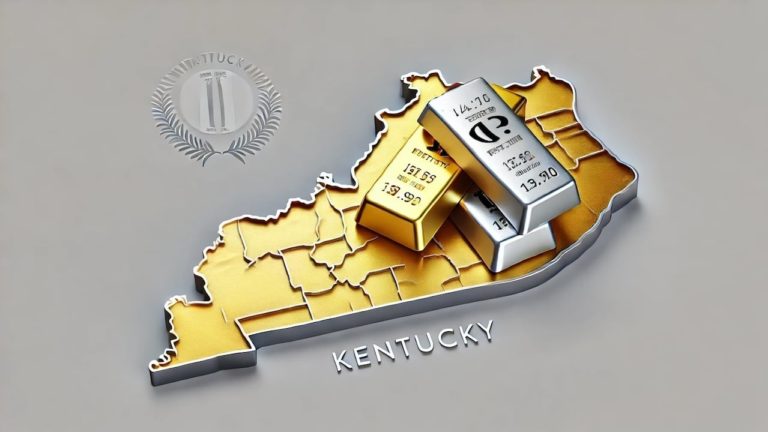
(Mike Maharrey, Money Metals News Service) Kentucky Governor Andy Beshear has decided he’s going to continue collecting sales tax on the sale of gold and silver despite a new law repealing the levy and an attorney general opinion calling his line-item veto of the provision unconstitutional.

Only five other states levy a sales tax on gold and silver.

Initially, Rep. Steven Doan and Rep. John Hodgson introduced a standalone bill to repeal the sales and use tax on gold and silver bullion. The provisions were later inserted into House Bill 8 (HB8), an omnibus revenue and tax bill. 

The provisions in HB8 define “bullion” as “bars, ingots, or coins, which are made of gold, silver, platinum, palladium, or a combination of these metals, valued based on the content of the metal and not its form and used, or have been used, as a medium of exchange, security, or commodity by any state, the United States government, or a foreign nation.” Currency is defined as “a coin or currency made of gold, silver, platinum, palladium, or other metal or paper money that is or has been used as legal tender and is sold based on its value as a collectible item rather than the value as a medium of exchange.”

The House passed the bill 87-9 and the Senate approved the measure 34-0.

Gov. Beshear signed the bill but used a line-item veto to strike out the sales tax exemption for gold and silver. 

“If you own gold, you can afford to pay sales tax,” Beshear wrote in his veto message. “Tangible goods are the primary basis of the sales tax.”

Unconstitutional Veto

House and Senate leadership deemed the veto unconstitutional. Under Sec. 88 of the Kentucky Constitution, “The Governor shall have the power to disapprove any part or parts of appropriation bills embracing distinct items, and the part or parts disapproved shall not become a law unless reconsidered and passed, as in case of a bill.”

In other words, the governor only has line-item veto power on appropriation (spending) bills.  A line-item veto power does not exist for revenue bills.

Instead of simply overriding the veto, Republican leadership decided to make a political statement and try to give Beshear a black eye. It asked Attorney General Russell Coleman to issue an opinion on the constitutionality of the veto, and he agreed with the legislature’s assessment.

“Because the Governor’s veto power must be strictly construed, and because House Bill 8 is not an ‘appropriation bill,’ Section 88 does not empower the Governor to use his line-item veto on it. The Governor’s attempted line-item vetoes of House Bill 8 were nullities, as they exceeded his constitutional authority.”

Based on the AG’s opinion, the legislature directed the secretary of state to ignore the veto and enroll the statute. It went into effect on August 1.

Beshear Begs to Differ

Gov. Beshear rejected the AG’s opinion and has directed the Department of Revenue to collect the sales tax despite the law technically being on the books.

Beshear spokesman James Hatchett called the AG’s opinion “incorrect.”

“The very title of the bill at issue says it makes an appropriation. The governor properly exercised his constitutional authority to veto parts of the bill, and previous legal opinions have upheld similar line-item vetoes.”

Hatchett was referring to the first line of HB8:  “AN ACT relating to fiscal matters, making an appropriation therefor, and declaring an emergency.” [Emphasis added]

The National Coin and Bullion Association issued a statement highlighting the dilemma for gold and silver sellers and buyers in Kentucky.

“Retailers are now faced with a challenging decision. Collecting sales tax could result in consumer backlash and potential class action lawsuits for overcharging, while not collecting it might lead to penalties or interest from the Kentucky Department of Revenue. Given the rapidly evolving situation, each dealer must decide whether to charge sales tax on transactions involving bullion and currency starting August 1.”

Until there is a legal resolution, which will likely require a lawsuit, Money Metals plans to charge sales tax to Kentucky customers. 

Here is the official position from Money Metals:

“Despite the new tax exemption in state law, the Democrat Kentucky governor and his Department of Revenue are threatening dealers and citizens with legal action if they refuse to pay/remit sales taxes on gold and silver purchases. However, you can avoid taxes if your order is delivered to a state without sales taxes OR when you store your precious metals in your secure account at the Idaho-based Money Metals Depository.”


Mike Maharrey is a journalist and market analyst for MoneyMetals.com with over a decade of experience in precious metals. He holds a BS in accounting from the University of Kentucky and a BA in journalism from the University of South Florida.

Tennessee Statehouse Insurrectionist Tapped to Challenge Blackburn in Senate Race

(Headline USA) A left-wing insurrectionist who disrupted the Tennessee state legislature last year to grandstand in the aftermath of a transgender terrorist’s mass shooting at at Nashville Christian school is hoping her notoriety could help her flip a red-state seat in the U.S. Senate.

Democratic state Rep. Gloria Johnson, whose progressive profile rose nationally when her GOP colleagues tried to boot her from office over a gun control protest on the chamber floor, will challenge Sen. Marsha Blackburn, a top Republican ally of former President Donald Trump.

Both women fended off primary challenges Thursday, setting up a distinctly different general election than Blackburn faced when she first won her office in 2018 while she was in the U.S. House.

After her primary win, Johnson said in a fundraising pitch that “the real fight begins now.”

“Imagine a better future for Tennessee: Extremism? We’ll reject it. Reproductive rights? We’ll defend them. Our democracy? We’ll fight for it. Better opportunities for working families? You bet we’ll make it happen,” Johnson claimed.

Blackburn won six years ago by beating Democratic former Gov. Phil Bredesen by almost 11 percentage points—despite the intervention of pop star Taylor Swift, who sought to carry the Democrat across the finish line in her first foray into political activism.

Tennessee has now only elected GOP statewide candidates for nearly two decades, and Blackburn again is touting an endorsement by Trump, who beat President Joe Biden by 23 percentage points in Tennessee in 2020.

She helped craft the GOP’s policy platform for Trump this year and touted his candidacy in her Republican National Convention speech. One of her first TV ads highlighted her opposition to transgender athletes in women’s sports, now part of that GOP platform.

“In the U.S. Senate, I will continue to champion conservative, America First policies by working to lower taxes, secure the border, support our veterans, hold Big Tech accountable, and ensure our adversaries fear us again,” she said in a statement Thursday. “This November, Republicans must unite to take control of the U.S. Senate, keep the House of Representatives, and elect President Donald Trump to the White House.”

Johnson, meanwhile, won her Senate Democratic primary after an act of defiance against the GOP supermajority propelled her into the spotlight last year, days after a school shooting that killed three children and three adults.

At the time, she joined fellow Democratic Reps. Justin Pearson and Justin Jones as they walked to the front of the state House floor with a bullhorn. They joined the chants and cries for gun control legislation by protesters in the public galleries and outside of the chamber.

The staged event drew adoration from the far-left media outlets. Depite the parallels between their actions and the Jan. 6 political dissidents who faced prosecution at the federal level for allegedly disrupting legislature at the U.S. Capitol, they were instead touted as civil rights activists engaged in “good trouble.”

The scene was broadcast worldwide, and the three have made guest appearances on TV and at Democratic events nationally since.

The trio were dubbed the “Tennessee Three” as they faced expulsion hearings for violating House rules. Pearson and Jones were expelled, while Johnson was spared by one vote for her tagalong involvement.

Johnson claimed that she avoided expulsion likely because she was white. Republicans denied race was a factor, noting her defense argued her role was lesser, such as not using the megaphone.

Johnson, 62, has been a critic of Blackburn’s policy positions, arguing that most Tennesseans want “common sense gun legislation” and the ability to perform abortions.

Faced with Tennessee’s recent abortion ban, she testified about the abortion she had at age 21 due to an aortic aneurysm that likely would have killed her if she did nothing but might have harmed the baby if Johnson got the treatment she needed to save her own life.

Blackburn, 71, has supported gun rights throughout her political career and has said she supports the U.S. Supreme Court’s decision to overturn the federal abortion mandate established by Roe v. Wade, letting voters decide at the state level whether to allow it. Before Roe was overturned, in 2020 and prior years she voted to advance a bill that would have banned abortion at 20 weeks.

During her speech at the GOP convention, Blackburn harkened back to her time in the spotlight during protests at the statehouse. She touted her advocacy as a state senator in 2001 against a Tennessee income tax proposal that ultimately failed.

Trump’s endorsement helped another Tennessee incumbent Thursday—Republican Rep. Andy Ogles managed to defeat a well-funded opponent, Nashville council member Courtney Johnston, as he pursues a second term in the 5th Congressional District. In the fall, he faces Democrat Maryam Abolfazli, who was unopposed in her party’s primary.

In the 5th District race, Johnston had hoped that Ogles had irked enough Republicans by creating headaches over questions about his resume, inaccurate campaign finance reporting and a headline-grabbing approach to lawmaking.

Ogles first won the congressional seat in 2022 after Tennessee Republicans redrew the district to include a part of left-leaning Nashville.

Leaders representing the growing city sharply criticized the redistricting, saying it diluted Nashville’s interests by dividing it into three congressional districts that include wide swaths of rural Tennessee. The concerns grew with the election of Ogles, a former mayor of Maury County two counties south of Nashville.

Adapted from reporting by the Associated Press

BLACK MONDAY: Dow Drops 900 Pts; Japan Faces Worst Crash Since 1987

(Headline USA) Nearly everything on Wall Street is tumbling Monday as fear about a slowing U.S. economy worsens and sets off another sell-off for financial markets worldwide.

The S&P 500 was down by 3.1% in morning trading, coming off its worst week in more than three months. The Dow Jones Industrial Average was down 956 points, or 2.4%, as of 10:10 a.m. Eastern time, and the Nasdaq composite slid 4%.

The drops were just the latest in a sell-off that swept the Earth. Japan’s Nikkei 225 helped start Monday by plunging 12.4% for its worst day since the Black Monday crash of 1987.

It was the first chance for traders in Tokyo to react to Friday’s report showing U.S. employers slowed their hiring last month by much more than economists expected. That was the latest piece of data on the U.S. economy to come in weaker than expected, and it’s all raised fear the Federal Reserve has pressed the brakes on the U.S. economy by too much for too long through high interest rates in hopes of stifling inflation.

President Joe Biden’s top economic advisor, Gene Sperling, announced his separation from the White House during the aftermath of the economic losses but said he would be working on the campaign of Vice President Kamala Harris instead.

Losses elsewhere in the world were nearly as neck-snapping. South Korea’s Kospi index careened 8.8% lower, stock markets across Europe sank more than 2% and bitcoin dropped 9.5%.

Even gold, which has a reputation for offering safety during tumultuous times, slipped 1.4%.

That’s in part because traders are wondering if the damage has been so severe that the Federal Reserve will have to cut interest rates in an emergency meeting, before its next scheduled decision on Sept. 18. The yield on the two-year Treasury, which closely tracks expectations for the Fed, fell to 3.81% from 3.88% late Friday and from 5% in April.

“The Fed could ride in on a white horse to save the day with a big rate cut, but the case for an inter-meeting cut seems flimsy,” said Brian Jacobsen, chief economist at Annex Wealth Management. “Those are usually reserved for emergencies, like COVID, and an unemployment rate of 4.3% doesn’t really seem like an emergency.”

“The Fed could respond by stopping” the shrinking of its holdings of Treasurys and other bonds, he said. “That could at least by a symbolic action that they’re not blind to what’s going on.”

After leaving the federal funds rate steady last week, before several discouraging economic reports hit, Fed Chair Jerome Powell said officials “have a lot of room to respond if we were to see weakness” in the job market after raising their main rate to the highest level in more than two decades.

Goldman Sachs economist David Mericle sees a higher chance of a recession following Friday’s jobs report. He sees only a 25% probability of that, up from 15%.

Some of Wall Street’s recent declines may simply be air coming out of a stock market that romped to dozens of all-time highs this year, in part on a frenzy around artificial-intelligence technology and hopes for coming cuts to interest rates. Critics have been saying for a while that the stock market looked expensive after prices rose faster than corporate profits.

U.S. stocks pared their losses a bit Monday morning after a report said growth for U.S. services businesses was a touch stronger than expected. Growth was led by businesses in the arts, entertainment and recreation businesses, along with accommodations and food services, according to the Institute for Supply Management.

Still, stocks of companies whose profits are most closely tied to the economy’s strength took heavy losses on the fears about a slowdown. The small companies in the Russell 2000 index dropped 4.4%, further dousing what had been a revival for it and other beaten-down areas of the market.

Making things worse for Wall Street, Big Tech stocks also tumbled sharply as the market’s most popular trade for much of this year continued to unravel. Apple, Nvidia and a handful of other Big Tech stocks known as the “Magnificent Seven” had propelled the S&P 500 to records this year, even as high interest rates weighed down much of the rest of the stock market.

But Big Tech’s momentum turned last month on worries investors had taken their prices too high and expectations for future growth are becoming too difficult to meet. A set of underwhelming profit reports that began with updates from Tesla and Alphabet added to the pessimism and accelerated the declines.

Apple fell 5% Monday after Warren Buffett’s Berkshire Hathaway disclosed that it had slashed its ownership stake in the iPhone maker.

Nvidia, the chip company that’s become the poster child of Wall Street’s AI bonanza, fell even more, 9.1%. Analysts cut their profit forecasts over the weekend for the company after a report from The Information said Nvidia’s new AI chip is delayed. It has trimmed its gain for the year to 97% from 170% in the middle of June.

Because the Magnificent Seven companies have grown to be the market’s biggest by market value, the movements for their stocks carry much more weight on the S&P 500 and other indexes.

Worries outside corporate profits, interest rates and the economy are also weighing on the market. The Israel-Hamas war may be worsening, which beyond its human toll could also cause sharp swings for the price of oil. That’s adding to broader worries about potential hotspots around the world, while upcoming U.S. elections could further scramble things.

Wall Street has been concerned about how policies coming out of November could impact markets, but the sharp swings for stock prices could also affect the 2024 election itself.

Adapted from reporting by the Associated Press

Report: Local Sniper Wrongly Warned Trump Shooter Was Headed to Gas Station Instead of Rooftop

(Ken Silva, Headline USA) On July 13 at 5:38 p.m., Beaver County ESU sniper Greg Nicol spotted Thomas Crooks using a rangefinder around the ARG building he’d use about 33 minutes later to shoot at presidential frontrunner Donald Trump.

Nicol would eventually leave his post in a failed attempt to find Crooks before he opened fire at 6:11 p.m. Had Nicol stayed in his post, he arguably could have seen Crooks on the rooftop and prevented a tragedy.

How Nicol lost Crooks has been one of the most controversial issues stemming from the July 13 Trump rally in Butler, Pennsylvania. The Washington Post has reportedly obtained a time-stamped transcript of encrypted radio communications, which explains how the deadly blunder transpired.

According to the Post, after initially seeing him at 5:38 p.m., officers “lost track” of him for about 20 minutes. Then, Nicol again spotted Crooks at 6:02 p.m.—this time on the side of the building facing away from the Trump rally.

Crooks was walking northeast, and Nicol apparently thought he was headed to a Sheetz gas station about a quarter-mile outside the rally site.

“He just went towards the Sheetz,” Nicol reportedly said.

Nicol, who shot himself in a “freak accident” last December, was wrong. Instead of going all the way around the AGR building to the Sheetz gas station, he instead made his way to an HVAC unit next to the AGR building—using that equipment to gain access to the roof of the building, according to the Post.

But Nicol’s information had already circulated to local law enforcement.

“All units be advised also that individual is headed towards Sheetz,” a sheriff’s deputy reportedly radioed to his colleagues at 6:04 p.m.

Nicol, for his part, moved through the building trying to shadow Crooks, who was outside, and keep eyes on him, according to his recent interview with ABC News. But Nicol reportedly lost sight of Crooks as the counter sniper made his way down to the building’s first level.

It wasn’t until 6:08 p.m. that Crooks was finally spotted on the roof. That led to another ongoing controversy: Questions remain as to how and why Secret Service and other counter snipers didn’t stop Crooks in the three minutes from when he was reported on the rooftop to when he opened fire. Questions also remain about why the Secret Service waited 15 seconds before returning fire.

Ken Silva is a staff writer at Headline USA. Follow him at twitter.com/jd_cashless.

Trump Shooting Witness: Secret Service Watched Gunman on Roof before Firing Began

(Ken Silva, Headline USA) Last week, Secret Service Acting Director Ronald Rowe told Congress that his agents had no idea there was a gunman on the rooftop about to shoot at Donald Trump at his July 13 campaign rally in Butler, Pennsylvania.

“Neither the Secret Service counter sniper teams, nor members of the former President’s security detail, had any knowledge that there was a man on the roof of the AGR building with a firearm,” Rowe told lawmakers. “It is my understanding those personnel were not aware the assailant had a firearm until they heard gunshots.”

But witnesses and call logs suggest that Rowe’s statement to Congress was misleading, and perhaps an outright lie.

According to rallygoer Jon Malis, the Secret Service was monitoring the rooftop used by alleged shooter Thomas Crooks for at least 20 seconds before he opened fire.

“My wife was actually filming the area where Donald Trump was speaking, and she could see the Secret Service were talking to each other, and they started moving quickly towards the building. And the Secret Service snipers changed their focus from us to the rooftop,” Malis told News Nation in an interview published Thursday. “Maybe 20 seconds after that is when the first shots rang out.”

Malis’s claim was further supported by a Sunday article in the Washington Post, which reported that the Secret Service’s command post was notified by 6:09 p.m.—two minutes before the shooting—that Crooks was on the rooftop.

According to the Post, a local Butler officer radioed Sgt. Ed Lenz, the tactical commander for the Butler County mobile unit, command at 6:08 p.m.

“Someone’s on the roof,” a local officer radioed at 6:08 p.m., according to the Post, which said it’s obtained a time-stamped transcript of encrypted radio communications. “I have someone on the roof with white shorts.”

Lenz then reportedly relayed that information to a state trooper in the separate Secret Service command center a minute later. Crooks began firing two minutes after that at 6:11 p.m.

As Headline USA has reported, the Secret Service’s failures didn’t stop at the leadup to the shooting. For some reason, Secret Service counter snipers waited a whole 15 seconds to return fire. They allowed Crooks to get off eight shots before a local cop shot him. It was nearly 10 seconds after that when a Secret Service sniper reportedly fired the final shot into Crooks’s neck.

Neither lawmakers nor reporters at a press conference have asked the Secret Service why it waited so long to return fire.

Ken Silva is a staff writer at Headline USA. Follow him at twitter.com/jd_cashless.

Dems Launch Vicious Probe of Musk-Backed PAC Supporting Trump

(Luis Cornelio, Headline USA) Michigan Secretary of State Jocelyn Benson, a Democrat, has conveniently initiated an investigation into America PAC, a political action committee created and funded by tech mogul Elon Musk to support President Donald Trump. 

The investigation was triggered by efforts to collect voter data in Michigan, a key battleground ahead of the 2024 election, reported CNBC on Sunday.

A spokesperson for Benson claimed any wrongdoing would be referred to Attorney General Dana Nessel, a Democrat and staunch Biden ally. 

“Every citizen should know exactly how their personal information is being used by PACs, especially if an entity is claiming it will help people register to vote in Michigan or any other state,” the spokesperson told CNBC. 

The spokesperson continued, “While the America PAC is a federal political action committee, the Department is reviewing their activities to determine if there have been any violations of state law. We will refer potential violations to the Michigan Attorney General’s office as appropriate.” 

Two legal experts could not identify any laws the Musk-backed super PAC may have violated, raising concerns about Democrats weaponizing investigations ahead of the 2024 election. 

“I am not aware of any laws being broken,” said Barbara McQuade, a former U.S. attorney for the Eastern District of Michigan. Echoing these remarks, Mary Massaron, an attorney at Plunkett Cooney, did not identify any wrongdoing. 

“It is very troubling for any candidate or PAC funded project to deliberately fail to provide information or a link to register to vote when someone asks because they would potentially vote for the opposing candidates,” Massaron said. 

With Michigan being a battleground state that both Harris and Trump are vying to win, several conservative personalities sounded the alarm about Democrats attempting to block a potential Trump victory.

“When they can’t beat you, they try and rig the game,” said Collin Rugg, the co-owner of Trending Politics, a news organization.

In 2023, Biden awarded Benson the Presidential Citizens Medal for certifying the state’s election for Biden, the then-Democratic candidate. 

Benson has not endorsed Biden or Harris’s presidency but had nothing but flattering words for the one-term president in a July 21 Instagram post. 

“I am grateful to President Biden for his lifetime of service and fierce defense of democracy – both in the United States and around the world,” she wrote. 

“His decision to focus his time fully on serving as the American president is a noble and gracious one, and I am deeply thankful for everything he has done and will continue to do to lead our country,” Benson concluded.


View this post on Instagram


A post shared by Jocelyn Benson (@jocelynbenson)

On Nov. 29, 2021, Benson said she was “proud” and “honored” to host an election roundtable with Harris.