Fed. Judge Slams New Mexico Officials for Discriminating against Election Watchdog

(Headline USA) A federal judge said far-left New Mexico election regulators and prosecutors had discriminated against a nonprofit group in refusing access to voter registration rolls.

Albuquerque-based U.S. District Court Judge James Browning ruled that state election regulators engaged in viewpoint-based discrimination and free speech violations in denying the Voter Reference Foundation access to voter data and by referring the matter to state prosecutors.

Browning previously ruled that New Mexico authorities violated public disclosure provisions of the National Voter Registration Act by refusing to provide voter rolls to the same foundation, overriding a provision of a state law that restricts the use of voter registration data.

The Friday ruling barred the state from refusing to turn over voter data, bolstering the VRF’s efforts to expand a free database of registered voters in order to assist election-integrity watchdogs in rooting out potential irregularities or fraud.

State prosecutors planned to appeal the court ruling, said Lauren Rodriguez, a spokesperson for the New Mexico Department of Justice.

Democrats inexplicably have fought tooth and nail against all efforts by activists and lawmakers to ensure the sanctity of the ballot, despite the presence of an estimated 10 to 15 million new illegal immigrants courtesy of the Biden–Harris open border policies. Many are automatically added to voter rolls when applying for drivers licenses and other government services unless they pro-actively affirm that they are ineligible to vote.

The VoteRef.com website recently restored New Mexico listings to its searchable database of registered voters—including street addresses, party affiliations and whether voters participated in recent elections.

Democrats have claimed that by granting conservative watchdog groups access to state voter rolls, the lists could find their way into the hands of malicious actors and voters could be disenfranchised through intimidation, possibly by canceling their registrations to avoid public disclosure of their home addresses and party affiliation.

There is no evidence that greater transparency regarding voter registration has resulted in intimidation, and in many states Democrats have registered as Republicans in order to cast votes against GOP nominee Donald Trump.

The foundation’s VoteRef.com site doesn’t list whom people voted for. It preserves confidentiality under a program that shields victims of domestic violence or stalking.

Addresses also remain confidential for more than 100 publicly elected or appointed officials in New Mexico, including Democrats and Republicans, enrolled in a separate safety program enacted in the aftermath of drive-by shootings on the homes of local lawmakers in Albuquerque in December 2022 and January 2023.

The data may, however, assist election-canvassers in tracking the locations of invalid mail-in ballots, particularly in swing states where a narrow margin could impact the outcome.

The VoteRef.com database includes voter information spanning more than 32 states and the District of Columbia. It is run by Gina Swoboda, chair of the Arizona Republican Party and organizer of former President Donald Trump’s 2020 reelection campaign in Arizona.

An audit of Arizona’s 2020 election, commissioned by the state Senate, revealed that substantially more mail-in ballots had been returned in Maricopa County than were documented as having been sent out.

The total number of irregularities identified by the Cyber Ninjas forensic auditing team outstripped the 10,457-vote margin by which state officials claimed Democrat Joe Biden had won the election in Arizona.

Adapted from reporting by the Associated Press

Biden-Harris Admin Celebrates Labor Day w/ 200K More Job Losses

(Headline USA) Two days after the federal holiday celebrating the American worker, the Biden–Harris Labor Department sheepishly acknowledged that there were about 200,000 fewer of them than at the start of the summer.

The Labor Department reported Wednesday that there were 7.7 million open jobs in July, down from 7.9 million in June and the fewest since January 2021. Openings have fallen steadily this year, from nearly 8.8 million in January.

On the heels of the department’s staggering announcement last month that it had vastly overestimated the employment figures for the preceding year, sparking recessionary concerns, the new loss estimates may raise additional anxieties about a hard-landing to the Federal Reserve’s interest-rate hikes being artificially bolstered by additional government spending in a vicious cycle of inflation, taxation and unemployment.

Layoffs in July rose from 1.56 million to 1.76 million, the most since March 2023, though that level of job cuts is roughly consistent with pre-pandemic levels, when the unemployment rate was historically low.

Overall, Wednesday’s report painted a mixed picture of the job market. On the positive side, total hiring rose in July, to 5.5 million, after it had fallen to a four-year low of 5.2 million in June. And the number of people who quit their jobs ticked up slightly, to about 3.3 million. The number of quits is seen as a measure of the job market’s health: Workers typically quit when they already have a new job or when they’re confident they can find one.

The current lower level of quits suggests that wage increases will likely remain modest, which should help further cool inflation.

The number peaked at 4.5 million in 2022, when many workers shifted jobs as the pandemic recovery let many businesses that had shuttered their storefronts or gone remote to reopen.

Many workers, however, opted instead to drop out of the job market and continue receiving government benefits. The spike in quits at that time helped drive up wage gains as companies jacked up pay to try to find or keep employees—which, in turn led the inflation driven by short term supply shortages and energy cost increases to calcify into something more permanent.

Left-wing economists sought to downplay the severity of the current job losses, hoping that they will be just enough to pressure the Fed into lowering its benchmark rates before the November election, but not enough to create a public backlash over the weakened economy.

“Labor demand is still solid, albeit moderating,” claimed Stephen Stanley, an economist at Santander. He noted that July’s job openings were still about 7% above 2019 levels, when hiring was healthy before the pandemic.

In July, job openings fell sharply in health care and state and local government—two of the top areas where the government previously cited grown, and both of which are heavily—if not exclusively—subsidized by U.S. taxpayers.

Job totals also dropped in warehousing and transportation. Openings rose in manufacturing and professional and business services—a category that includes legal services and engineering and accounting.

Even as openings have fallen for the past two years, there are still roughly 1.1 job openings for every unemployed person, Wednesday’s report showed. That reflects the economy’s continuing need for workers and marks a reversal from before the pandemic, when there were always more unemployed people than available jobs.

The July report on job openings was the first of several measures this week of the labor market’s health that the Federal Reserve will be watching closely.

If clear evidence emerges that hiring is faltering, the Fed might decide at its next meeting Sept. 17-18 to start cutting its benchmark interest rate by a relatively aggressive half-percentage point. If hiring remains mostly solid, however, a more typical quarter-point rate cut would be likelier.

On Thursday, the government will report how many laid-off workers sought unemployment benefits last week. So far, most employers are largely holding onto their workers, rather than imposing layoffs, even though they have been slower to add jobs than they were earlier this year.

On Friday, the week’s highest-profile economic report—the monthly jobs data—will be released. The consensus estimate of economists is that employers added 163,000 jobs in August and that the unemployment rate ticked down from 4.3% to 4.2%.

Last month, the government reported that job gains slowed in July to just 114,000—far fewer than expected and that the second-smallest total in 3½ years—and the unemployment rate rose for a fourth straight month.

Those figures sparked fears that the economy was seriously weakening and contributed to a plunge in stock prices. Late last month, Fed Chair Jerome Powell underscored the central bank’s increasing focus on the job market, with inflations steadily fading.

In a speech at an annual economic symposium in Jackson Hole, Wyoming, Powell said that hiring has “cooled considerably” and that the Fed does not “seek or welcome further cooling” in the job market.

Economists saw those comments as evidence that the Fed may accelerate its rate cuts if it decides it is needed to offset a slowdown in hiring.

Adapted from reporting by the Associated Press
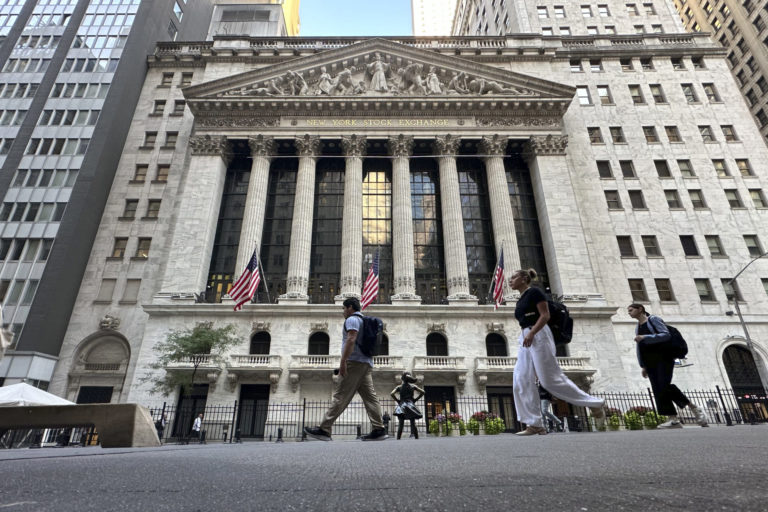
DOJ Declares War on U.S. Economy: Stocks Tumble after Nvidia Antitrust Probe Announced

(Headline USA) Attorney General Merrick Garland’s dubious declaration that the Justice Department was launching yet another Russia, Russia, Russia election-interference probe undoubtedly left conservatives suspecting more partisan shenanigans after the endless stream of lawfare attacks on GOP presidential nominee Donald Trump and his allies.

However, the DOJ also seemed hell-bent on undermining the current Biden–Harris administration by tanking the stock market and, with it, any hope of entering the final stretch toward the November election with a robust economy.

In its latest antitrust attack targeting Big Tech, the department set its sights on Nvidia, which has seen two years of incredible grown and innovation in the artificial intelligence community catapult it into a spot as one of the nation’s wealthiest companies.

Critics have said the DOJ’s aggressive trust-busting shakedowns, which oftentimes resolve with little more than a financial penalty, were stymying innovation. Google, Apple and Microsoft—all three of which are among Nvidia’s leading competitors in AI research—have all been targeted by prior antitrust lawsuits.

The announcement of the lawfare attack against Nvidia on Tuesday led to major market losses for the company—which broke a record for the biggest indivudual one-day stock tumble—and sent the rest of Wall Street cascading with it, amid mounting fears that the U.S. may be entering or already in a recession, paired with the pernicious inflationary economy that continues to keep prices sky high on basic goods such as groceries.

U.S. stock indexes were modestly lower in afternoon trading Wednesday as Wall Street added to its losses a day after the market’s worst skid in a month.

The S&P 500 was down 0.2% following a 2.1% drop a day earlier. The Dow Jones Industrial Average was down 79 points, or 0.2%, to 40,858. The Nasdaq was down 0.1% as of 2:03 p.m. Eastern.

Health care stocks and banks were among the biggest weights on the market. Molina Healthcare fell 7.6% and Centene slid 8.4%. American Express was 1% lower, while Citigroup fell 1.1%.

Technology sector stocks bounced back after declining in the early going and were holding up better than the rest of the market.

Nvidia, with its $2.65 trillion market value, rose 0.9% after earlier falling and dragging the major indexes lower, with speculators now hoping to buy the dip.

Other chipmakers also rose. Advanced Micro Devices climbed 3.6% and Broadcom added 1.4%.

Job openings in the U.S. fell unexpectedly in July, a sign that hiring could cool in the coming months.

The Labor Department reported that there were 7.7 million open jobs in July, down from 7.9 million in June and the fewest since January 2021.

Openings have fallen steadily this year, from nearly 8.8 million in January.

Last month, the department admitted that it had vastly overestimated its projected job-growth figures for the past year, suggesting that the Federal Reverve’s intended “soft landing” on interest-rate hikes may have hit harder than expected.

For the Biden-Harris administration, a rate cut might provide a much welcomed economic jolt. However, the appearance that the Labor or Justice Department has been meddling in the market to manipulate economic factors influencing the Fed’s decision could prompt backlash—particularly if casual stock-market investors feel the pinch on their portfolios.

The Fed is expected to start cutting its benchmark interest rate at its meeting later in September after raising rates to a two-decade high in an effort to cool inflation.

Despite strong indicators of a recession, left-wing economic “experts” continued to deny that the troubled economy was too hot or too cold, insisting that the current climate was just bad enough for the Fed to lend an assist to Vice President Kamala Harris’s campaign effort.

“Job vacancies declined, hires rose and quits were steady,” said Carl Weinberg and Rubeela Farooqi, economists at High Frequency Economics, in a note. “There is no signal here of any sudden collapse of the labor market here or any imminent recession.”

Several other reports this week will help give a clearer picture of the economy for the Fed and Wall Street.

The Institute for Supply Management will release its services sector index for August on Thursday. The services sector is the biggest component of the U.S. economy.

The U.S. will release its monthly jobs report for August on Friday. Economists polled by FactSet expect that report to show that the U.S. added 160,000 jobs, up from 114,000 in July and the unemployment rate edged lower to 4.2% from 4.3%. The report’s strength, or weakness, will likely influence the Fed’s plans for how it trims its benchmark interest rate.

Wall Street expects the central bank to begin trimming interest rates at its meeting later in September. Traders are forecasting that it will cut the benchmark rate by 1% by the end of 2024. Such a move would require it to cut the rate by more than the traditional quarter of a percentage point at one of its meetings in the next few months.

Dollar Tree slumped 23.4% after the discount retailer slashed its full-year earnings forecast. Hormel Foods fell 6.9% after the maker of Spam trimmed its revenue forecast for the year.

Department store operator Nordstrom was flat. Members of the Nordstrom family offered to take the company private for $3.76 billion per share cash, months after first expressing interest in a buyout.

In the bond market, the yield on the 10-year Treasury fell to 3.78% from 3.83% late Friday. That’s down from 4.70% in late April, a significant move for the bond market. The yield on the 2-year Treasury, which more closely tracks potential action from the Fed, fell to 3.78% from 3.87%.

The 10-year Treasury and 2-year Treasury are at their least inverted levels in more than two years. An inversion occurs when the shorter duration yield is higher than the longer duration yield. It has historically signaled a recession, though the current inversion has stood for more than two years amid a growing economy.

Markets in Europe and Asia fell.

Adapted from reporting by the Associated Press
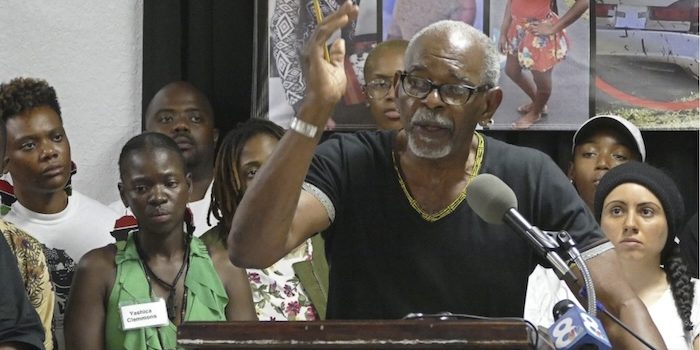
Trial of African Activist Accused of Aiding Russia Puts Tucker Carlson on Same Side as Socialists

(Headline USA) In a case with grave implications for the First Amendment, the trial began Tuesday in Florida for four activists accused of illegally acting as Russian agents to help the Kremlin sow political discord and interfere in U.S. elections.

All four are or were affiliated with the African People’s Socialist Party and Uhuru Movement, which has locations in St. Petersburg, Florida, and St. Louis.

Among those charged is Omali Yeshitela, the 82-year-old chairman of the U.S.-based organization focused on Black empowerment and the effort to obtain reparations for slavery and what it considers the past genocide of Africans.

While the defendants are left-wing socialists, free-speech advocates such as Tucker Carlson have come to their defense.

“If you told me that could happen here, I would have laughed at you. We have a First Amendment. That can’t happen here. But it has,” he said at an event last year.

Yeshitela’s defense attorney, Ade Griffin, said the group shared many goals of a Russian organization called the Anti-Globalization Movement of Russia but was not acting under control of that nation’s government.

“Ladies and gentlemen, that simply is not true,” Griffin told a racially mixed jury. “This is a case about censorship.”

Yeshitela and two others face charges of conspiracy to defraud the U.S. and failing to register with the Justice Department as agents of a foreign government. The fourth defendant, who later founded a separate group in Atlanta called Black Hammer, faces only the conspiracy charge. They have all pleaded not guilty.

Three Russians, two of whom prosecutors say are Russian intelligence agents, are also charged in the case but have not been arrested.

Although there are some echoes of claims that Russia meddled in the 2016 U.S. presidential election, U.S. District Judge William Jung said those issues are not part of this case.

“This trial will not address Russian interference in the 2016 U.S. Presidential election,” Jung said in an order dated Monday.

In his opening statement, Justice Department attorney Menno Goedman said the group’s members acted under Russian direction to stage protests in 2016 claiming Black people have been victims of genocide in the U.S. and took other actions for the following six years that would benefit Russia, including opposition to U.S. policy in the Ukraine war.

“This is about dividing Americans, dividing communities, turning neighbor against neighbor,” Goedman told jurors. “The defendants acted at the direction of the Russian government to sow division right here in the U.S.”

That included support for a St. Petersburg City Council candidate in 2019 that the Russians claimed to “supervise,” according to the criminal indictment. The candidate lost that race and has not been charged in the case.

Much of the alleged cooperation involved support for Russian’s invasion of Ukraine. In March 2022, Yeshitela held a news conference in which he said the “African People’s Socialist Party calls for unity with Russia in its defensive war in Ukraine against the world colonial powers.” He also called for the independence of the Russian-occupied Donetsk region in eastern Ukraine.

The defense attorneys, however, said despite their connections to the Russian organization, the actions taken by the African People’s Socialist Party and Uhuru Movement were aligned precisely with what they have advocated for more than 50 years. Yeshitela founded the organization in 1972 as a Black empowerment group opposed to vestiges of colonialism around the world.

“They shared some common beliefs,” said attorney Leonard Goodman, who represents defendant Penny Hess. “That makes them threatening.”

Yeshitela, Hess and fellow defendant Jesse Nevel face up to 15 years in prison if convicted of the conspiracy and foreign agent registration charge. The fourth defendant, Augustus Romain, could get a maximum of five years if convicted of the registration count.

The trial is expected to last up to four weeks.

Adapted from reporting by the Associated Press
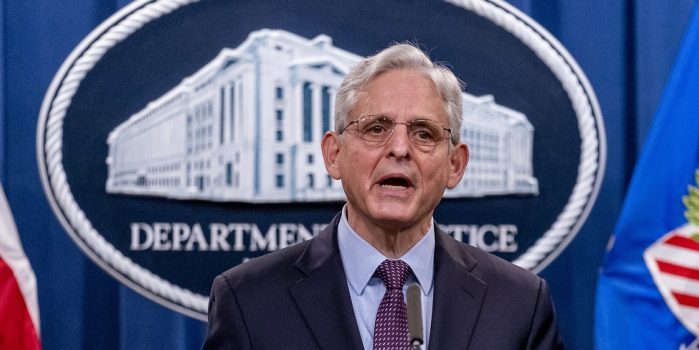
Biden’s DOJ Charges Russian Media Figures, Claiming Election Interference—Again

(Ken Silva, Headline USA) It’s election season, so you know what that means.

The Biden Justice Department held a press conference Wednesday about Russian influence in the upcoming U.S. presidential election, unsealing criminal charges against two employees of a Russian state-run media company and seizing internet domains used by the Kremlin to purportedly spread disinformation.

The measures represented a U.S. government effort were immediately recognized by conservatives as a repeat of the same tired “Justice Democrat” talking points that have been repeated since 2016. That’s despite fact that Special Counsel John Durham found last year that the FBI for launched a baseless and politically charged probe into possible links between the Russian government and Donald Trump’s 2016 presidential campaign—despite having no evidence of any such links.

One criminal case announced Wednesday accuses two employees of RT, a Russian-state funded media organization that was forced by the Justice Department to register as a foreign agent, of covertly funding a Tennessee-based content creation company to publish nearly 2,000 videos containing Russian propaganda. The defendants, who remain at large, used fake identities and the company was unaware it was being used by Russia, the DOJ claimed.

“Russian state broadcaster RT and its employees, including the charged defendants, co-opted online commentators by funneling them nearly $10 million to pump pro-Russia propaganda and disinformation across social media to U.S. audiences,” Deputy Attorney General Lisa Monaco said Wednesday in a press release.

“The Russian state broadcaster RT orchestrated a massive scheme to influence the American public by secretly planting and financing a content creation company on U.S. soil,” added U.S. Attorney Damian Williams for the Southern District of New York.

“The instruments of the scheme were RT employees Kostiantyn Kalashnikov and Elena Afanasyeva, who managed the operation from Moscow using fake personas and shell companies, and the victims of the scheme were the American people, who received Russian messaging without knowing it,” he said.

In the other action, officials announced the seizure of 32 internet domains that were used by the Kremlin to spread Russian propaganda and weaken global support for Ukraine.

Attorney General Merrick Garland said the actions relate to Russia’s use of state media to enlist unwitting American influencers to “spread propaganda and disinformation.”

RT Editor-in-Chief Margarita Simonyan reportedly responded to the DOJ’s charges by telling her colleagues on Telegram: “great job, team!”

“If they kick us out completely, how will they conduct the next elections?” she wrote in a follow-up post on Telegram, according to RT.com. “They don’t have any other strategies except to scaremonger about the almighty RT.”

The Associated Press contributed to this report.

Ken Silva is a staff writer at Headline USA. Follow him at twitter.com/jd_cashless.

Half a House for Half a Mil: L.A. Area Home Destroyed by Tree Hits Market for $500K

0

(Headline USA) Newly listed for sale in Southern California’s notoriously pricey realty market: half a house for half a million dollars.

The one-bedroom, one-bathroom bungalow in suburban Monrovia, northeast of Los Angeles, was crushed by a tree in May with two renters and two dogs inside. There were no injuries, but a fence and most of the roof were mangled.

Now what’s left of the property—with missing walls, hanging wires and no ceilings—is for sale at $499,999.

Listing agent Kevin Wheeler quipped to the Los Angeles Times that it’s an “open-concept floor plan.”

The listed size of 645 square feet is based on measurements taken before the tree fell. Wheeler said the electricity is turned off, but the plumbing still works.

Monrovia regulations state that demolitions on properties more than 50 years old, which the house is, require a review. But since it was destroyed by what’s known as an act of God, a review isn’t required, according to Wheeler. So house-hunters can buy what’s left of the home and fix it up without dealing with some of the red tape typically required during rebuilds.

“There’s been a lot of interest so far because demand is so high and inventory, especially at this price, is so low,” Wheeler told the Times.

Adapted from reporting by the Associated Press

Central Bank Gold-Buying Trends and the Fed’s Inflation Strategy

(Money Metals News Service) In the latest episode of Money Metals’ Midweek Memo, host Mike Maharrey explored two key financial topics: the surge in central bank gold purchases and the historical perspective of the Federal Reserve’s balance sheet activities, with a focus on inflation.

Central Bank Gold Purchases Surge

Maharrey discussed the most recent data released by the World Gold Council, which showed a significant increase in gold purchases by central banks. In July, global central banks added 37 tons of gold to their reserves—a staggering 206% increase from the previous month.

This surge marks the highest level of gold buying since January 2024. Countries like Poland and Uzbekistan led the way, with Poland adding 14 tons, bringing its total to 392 tons. The National Bank of Poland aims to increase gold holdings to 20% of its reserves, currently at 15%.

Maharrey emphasized the underlying reason for this trend: “The whole theme of central bank gold buying has been minimizing exposure to the dollar, diversifying reserves, and minimizing exposure to fiat currencies, particularly the dollar.”

Emerging markets and nations in Asia, Eastern Europe, and the Middle East continue to lead the charge in diversifying away from the U.S. dollar. Central banks have added a record amount of gold in the first half of 2024—the highest on record since the World Gold Council began tracking this data. This increase aligns with global concerns over fiat currency, particularly the U.S. dollar, as many nations seek to hedge against currency risks and U.S. monetary policy.

The Federal Reserve’s Balance Sheet: A Historical Perspective

Maharrey shifted to discuss the Federal Reserve’s balance sheet, placing recent reductions in a broader historical context. While the Fed has reduced its balance sheet by 20% since its peak in April 2022, this reduction pales in comparison to the massive expansion it underwent since the 2008 financial crisis.

Between 2008 and 2020, the Fed’s balance sheet ballooned from around $910 billion to nearly $9 trillion, an 889% increase. Although the balance sheet has shrunk by $1.76 trillion, the current level remains 680% higher than before the 2008 crisis, standing at over $7.1 trillion.

“You can say, ‘Ooh, a 20% reduction,’ but we’re still 680% above the level of 2008. Put it in perspective,” Maharrey pointed out, emphasizing the importance of historical context in understanding the Fed’s actions.

Quantitative Easing vs. Tightening

quantitative easing vs tightening federal reserve

Maharrey explained the impact of Quantitative Easing (QE) on inflation and the economy. QE, which allows the Fed to buy assets like U.S. Treasuries and mortgage-backed securities using money created from thin air, has been a key driver of inflationary pressures.

In contrast, the recent quantitative tightening (QT) is meant to draw dollars out of the economy.

However, Maharrey noted that the QT process is tapering, meaning the balance sheet reduction will likely halt before undoing much of the pandemic-era stimulus.

Inflation: A Policy, Not a Problem

Maharrey concluded by reinforcing his view that inflation is not something the Fed is fighting, but rather, an intentional policy tool.

He stated, “They’re not fighting inflation—inflation is the policy. It’s the goal. They just hope you don’t notice.”

He also stressed the importance of protecting wealth against inflation by investing in sound money like gold and silver. “If you want to preserve your wealth, you always have to assume massive levels of inflation and currency devaluation are coming down the pipe… You need real money—you need gold and silver.”

Key Takeaways:
  • Central banks added 37 tons of gold in July 2024, a 206% increase from June, led by Poland and Uzbekistan.
  • Central bank gold buying has reached record levels in 2024, driven by countries seeking to reduce reliance on the U.S. dollar.
  • The Federal Reserve’s balance sheet is still 680% higher than pre-2008 crisis levels, despite a 20% reduction since 2022.
  • Quantitative easing, more than interest rates, is driving inflation, and the recent balance sheet reduction is far from reversing pandemic-era stimulus.
  • Inflation remains a key policy tool, not something the Fed is actively trying to eliminate.

In conclusion, Maharrey emphasized the importance of holding real money—gold and silver—as protection against inflationary monetary policy.

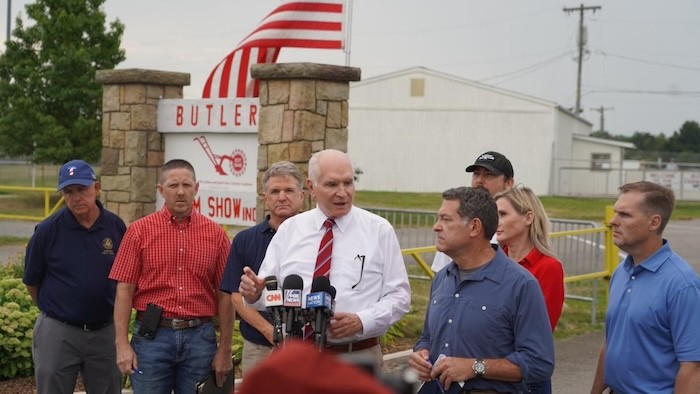
Trump Shooting Task Force Demands Thomas Crooks’ Autopsy Records by Friday

(Ken Silva, Headline USA) The House Task Force investigating the Trump assassination attempt wrote to the Butler and Alleghany County coroners on Wednesday, demand to receive by Friday the autopsy records for alleged shooter Thomas Matthew Crooks.

The Task Force’s demand comes amidst controversy about Crooks’s autopsy.

As Headline USA has reported, the FBI released Crooks’s body for cremation just 10 days after the July 13 shooting, before it could be examined by Congress or other independent investigators.

According to Task Force member Rep. Clay Higgins, no one—including the county Coroner, law enforcement, and county sheriff—knew Crooks’s body had gone missing until he tried examining it on Aug. 5. Higgins also said in a preliminary report last month that the FBI scrubbed the crime scene of biological evidence.

Furthermore, Crooks’s body was reportedly kept on the rooftop until 6 a.m. the day after the shooting. There, Butler County coroner William F. Young III allegedly examined Crooks’s body before sending him to the Allegheny County Medical Examiner for the autopsy.

The coroner, Young, released a one-page report on Aug. 2, but has suppressed the underpinning records—including exam photos, toxicology reports and scene images.

Headline USA has two outstanding records requests for Crooks’s autopsy records: one against Butler County and one against Alleghany County. And now, the Task Force wants those same records.

Specifically, the Task Force has requested the coroner’s report, the autopsy report, the toxicology report for Crooks, as well as all notes, photographs, and recordings of the coroner’s initial investigation of the scene of death and Crooks’ body. The Task Force also requested a list of entities and officials who examined Crooks, and all documents referring or relating to the recovery of Crook’s body from the roof of the American Glass Research building.

Finally, the Task Force wants all documents referring or relating to the release of Crooks’ body from the coroner’s jurisdiction. In Headline USA’s records request, Butler County coroner Young said no records exist of the decision to send Crooks to Alleghany County—but the House Task Force, to its credit, asked for a description of any oral decision that was made about the transfer.

Along with the autopsy records, the House Task Force also sent letters on Wednesday to Butler Township Police Department, the Butler County Sheriff’s Department, and both the Butler County and Beaver County Emergency Services Units—asking for transcribed interviews with the personnel involved in the July 13 deadly Trump rally. The names of the people the Task Force wants to interview are redacted.

FBI Response

Meanwhile, the FBI has pushed back against the accusations that its handling of Crooks’s body and the crime scene was nefarious.

“The FBI did release the crime scene at the Butler Farm grounds, as well as the AGR complex to the property owners in a timely fashion.

In fact, we released these sites on a rolling basis—but only after completing a thorough processing of each location, exhausting all efforts to collect any items of evidentiary value,” Kevin Rojek, the special agent in charge of the FBI Pittsburgh Field Office, said at a press conference last week.

“Regarding the cleaning of the AGR roof, the FBI followed established evidentiary policies and procedures for the return of crime scenes to the property owner. This included cleaning the biological material from the AGR roof, only after ensuring we collected all relevant evidence,” he added.

As for the autopsy, Rojek said releasing the body before Congress could examine it was also standard operating procedure.

“The FBI and Pennsylvania State Police then concurred with the Butler County Coroner’s Office decision to release the remains to the subject’s family,” he said.

“I want to stress that it is not standard procedure or practice for the FBI or any law enforcement agency to request that the coroner or medical examiner maintain indefinite custody of a deceased subject’s body once the investigative purposes of our agency and our partner agencies are completed.”

Additionally, Rojek said Crooks’s toxicology report revealed negative results “for alcohol and drugs of abuse”—he didn’t mention psychotropics or other potential drugs.

Higgins responded to the FBI’s press conference immediately last week, reiterating his criticisms against the bureau.

“Once again, the FBI is lying. It is 100% NOT ‘standard procedure’ to cremate a body at the center of a major criminal investigation BEFORE a following investigative authority has had an opportunity to examine that body, when the FBI is VERY MUCH AWARE that a following investigative authority is coming right behind them. Same thing with a crime scene,” he said.

“The FBI is acting like they’re royalty. They. Are. Not. But that’s all right, it’s cool. Best served cold, actually. I’ll have these oppressors of truth before Congress.”

Ken Silva is a staff writer at Headline USA. Follow him at twitter.com/jd_cashless.

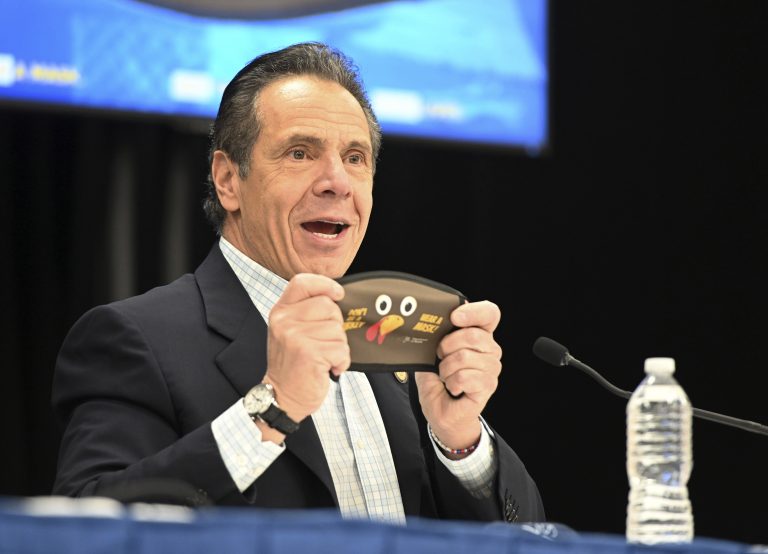
Andrew Cuomo to Testify Next Week to Congress

(Ken Silva, Headline USA) Select Subcommittee on the Coronavirus Pandemic Chairman Brad Wenstrup, R-Ohio, has announced that former New York Governor Andrew Cuomo will testify publicly before Congress for the first time about his COVID-19 policies next Tuesday.

“Andrew Cuomo owes answers to the 15,000 families who lost loved ones in New York’s nursing homes during the COVID-19 pandemic,” Wenstrup said in his Tuesday announcement.

Cuomo’s appearance follows closed-door testimony Cuomo gave earlier this year, which Wensrup called “shockingly callous.”

“When pressed to explain discrepancies in nursing home death counts, [Cuomo] repeatedly deflected responsibility for the nursing home directive, and most egregiously, showed little remorse for the thousands of lives lost,” Wensrtup said.

“A true leader owns up to his mistakes and takes responsibility for wrongdoing. That is not what we saw from Mr. Cuomo during his term as governor nor during his transcribed interview. We hope that during his public hearing next week, Mr. Cuomo will stop dodging accountability and honestly answer the American people,” the congressman added.

The Cuomo administration came under significant scrutiny for a policy that at first required nursing homes to readmit recovering COVID-19 patients in an effort to avoid hospitals from becoming overwhelmed. That was on top of state fatality figures that significantly undercounted the deaths.

In June, an investigation into New York’s handling of the COVID-19 pandemic found former Gov. Cuomo’s “top down” approach of dictating public health policy through his office—rather than coordinating with state and local agencies—sewed confusion during the crisis.

In the state’s nursing homes, where some 15,000 people died, the administration’s lack of communication with agencies and facilities resulted in wasted resources and mistrust — not to mention anxiety for residents’ loved ones, according to the independent probe commissioned by current Gov. Kathy Hochul in 2022.

Cuomo resigned from office in August 2021, amid sexual harassment allegations, which he denies. Hochul, a fellow Democrat who had been Cuomo’s lieutenant, inherited the job and was reelected the follow year.

The Associated Press contributed to this report.

Ken Silva is a staff writer at Headline USA. Follow him at twitter.com/jd_cashless.

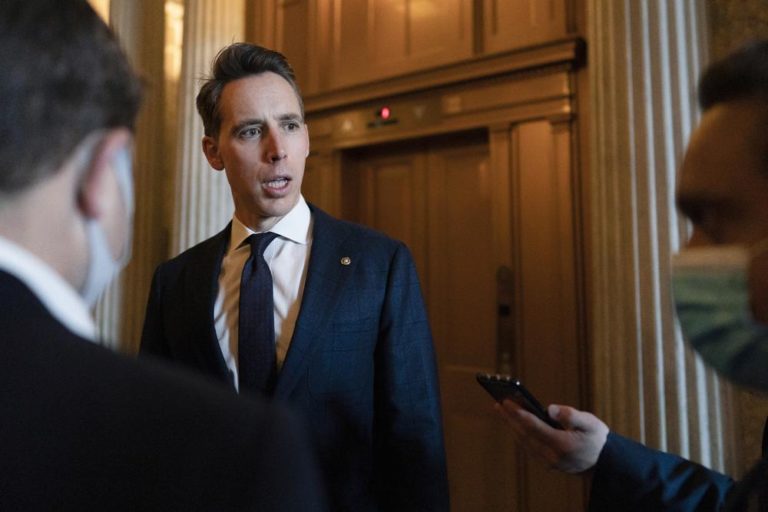
Whistleblower: Inexperienced DHS Agents Trained w/ 2-Hr. Webinar before Trump Shooting

(Ken Silva, Headline USA) Sen. Josh Hawley, R-Mo., revealed whistleblower allegations Tuesday about the lack of training of the DHS Homeland Security Investigations agents assigned to guard Donald Trump at the deadly July 13 rally in Butler Pennsylvania.

According to Hawley, a whistleblower told him that the only training received by many HSI agents was a single two-hour webinar on Microsoft Teams featuring pre-recorded videos.

“The whistleblower alleged that these videos were not substantive and their playback was frequently riddled with technical mishaps, leaving the HSI agents ill-prepared for the protective mission to which they were newly assigned,” Hawley said Tuesday in a letter to Homeland Security Secretary Alejandro Mayorkas.

“To quote the whistleblower directly: ‘Imagine 1,000 people logging onto Microsoft Teams at the same time after being informed at the last minute that everyone needed to login individually. Once it got rolling, the Secret Service instructor couldn’t figure out how to get the audio working on the prerecorded videos (which I’m told are the same videos as last year). All told, they restarted the videos approximately six times …. The content was not helpful,’” Hawley said.

Ever worse, the senator added, is the fact that DHS hasn’t changed its training methods in the wake of the July 13 assassination attempt.

Finally, Hawley noted that some HSI agents were pulled from child sexual-exploitation cases to serve as security for Trump.

Hawley asked Mayorkas a series of questions about the matter, including the number of HSI agents at the July 13 Trump rally, the number of those who received webinar training, and the number reassigned from child exploitation cases.

Hawley’s office was the one to reveal on July 19 that the majority of Trump’s security detail allegedly weren’t actual Secret Service agents—but instead the HSI agents discussed above.

“This is especially concerning given that HSI agents were unfamiliar with standard protocols typically used at these types of events, according to the allegations,” Hawley noted in July.

Ken Silva is a staff writer at Headline USA. Follow him at twitter.com/jd_cashless.