Trump Shooting Task Force Turns Focus to Agency Involved in Response to Mysterious Van

(Ken Silva, Headline USA) The House Task Force investigating the Trump assassination attempt wrote to the Pennsylvania State Police on Monday, seeking its records about its role in and subsequent of the deadly July 13 rally in Butler.

Along with all its investigatory records, the Task Force seeks body cam videos, recordings of radio comms, and other footage from the state troopers. That includes footage from “mobile video recorder footage from Trooper Neugebauer’s squad car on July 13, 2024, as well as any other recorded audio or video related to the July 13 event.”

At this point, Headline USA is unsure as to the significance of Trooper Neugebauer’s squad car’s footage.

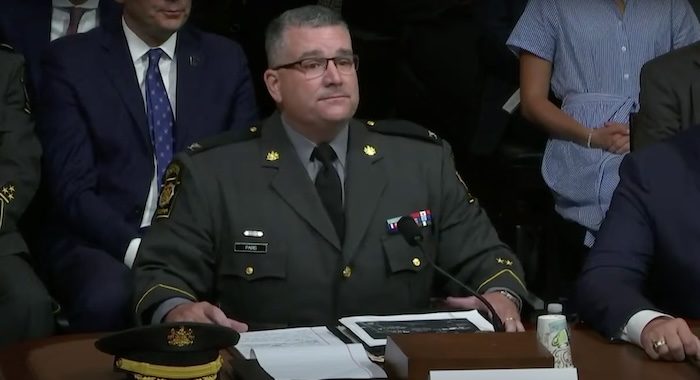
In its Monday letter to Pennsylvania State Police Commissioner Christopher L. Paris, the House Task Force requested the aforementioned information by Sept. 16.

Among untold other revelations, the Pennsylvania State Police records may shine a light on unexplained reports linking an explosives-laden van to shooter Thomas Matthew Crooks. Those reports were generated based on footage from Butler resident Billy Thomas, who took video of PSP responding to the van.

“I came home a little bit before 5 and saw it parked there, and didn’t think too much of it because it was the only spot in the whole road that wasn’t blocked off. Later that night after everything happened, we got home and we were sitting there and saw cops lined along the street,” Thoma told Fox News.

“We walked outside and saw them opening up his vehicle. When the cop opened it, everyone else jumped back and tried to stay out of the way,” said Thoma, who added that the van had an Arizona license plate.

Thoma’s footage shows a PSP cruiser following the truck that towed the van away. Accordingly, Headline USA asked the PSP last Wednesday whether the van had anything to do with Crooks or the assassination attempt. PSP didn’t respond, and so this reporter has filed a Pennsylvania Right to Know Request for records about the agency’s response to the van.

Meanwhile, the Task Force’s letter followed demands last week for the autopsy records of Crooks. The Task Force demanded to have those records by last Friday, but legislators haven’t indicated whether they’ve obtained them.

Ken Silva is a staff writer at Headline USA. Follow him at twitter.com/jd_cashless.

EXCLUSIVE: Police Refuse to Release Call from Trump Shooter’s Parents, Despite Public Interest Clause

(Ken Silva, Headline USA) The Bethel Park Police Department has refused to release the phone call alleged Trump shooter Thomas Crooks’ parents made to law enforcement on the day of his July 13 assassination attempt—deeming it not in the public interest to do so.

Information about the phone call made by the parents, Matthew and Mary Crooks, was first reported on July 17 by Fox News, which said they called police before the attack with a warning. But CBS and other outlets later reported that the father made that phone call after the attack.

It still hasn’t been confirmed when the Crookses called or what they said—and Bethel Park Police apparently doesn’t think the public has the right to know.

Bethel Park Police made their position on the matter clear in response to Headline USA’s Aug. 12 Pennsylvania Right-To-Know Law request for “recordings of any and all calls made by the parent or parents of Thomas Crooks . . . on the day that Crooks shot at Donald Trump … [and] any other documentation Bethel Police have of any calls, including reports or internal communications as a result of the calls.”

Bethel Police denied the request on Aug. 21, citing Section 708(b)(18) of the RTKL, which exempts 911 recordings from public disclosure.

However, the exact same RTKL paragraph cited by Bethel Police also states that law enforcement can release 911 recordings that are in the public interest. “This paragraph shall not apply to a 911 recording, or a transcript of a 911 recording, if the agency or a court determines that the public interest in disclosure outweighs the interest in nondisclosure,” Section 708(b)(18)(ii) states.

Headline USA appealed the denial to the Pennsylvania Office of Open Records, and made the argument to Appeals Officer Kathleen Higgins that it’s in the public interest to release the parents’ phone call.

“Disclosing the audio of the phone call would remove this ambiguity [of when the parents called]—and shed further light on law enforcement’s response to the threat Crooks posed on July 13,” this reporter wrote in his submission last Thursday. “Furthermore, it’s in the public interest to know the contents of the phone call—i.e. what the parents told law enforcement.”

Surprisingly, Bethel Park Police nor Alleghany County didn’t make any submissions in the appeals case. In Headline USA’s appeals for Crooks’s autopsy records, Alleghany County and Butler County have submitted briefs and affidavits arguing against disclosure.

Since Bethel Park made no argument in the appeals case, Headline USA sent a follow-up email on Friday—asking police to reconsider disclosing the phone call in the public interest. Officials did not respond.

The Office of Open Records is set to make a final determination on the parents’ call by Oct. 23.

Ken Silva is a staff writer at Headline USA. Follow him at twitter.com/jd_cashless.

New Scandal: Watch for These Dealer and Depository Red Flags

(Clint Siegner, Money Metals News Service) One of the best tips anyone can offer when it comes to investing in physical bullion is to choose your dealer well.

The wrong choice can mean a total loss for clients who are caught as an unreputable dealer took their money and disappeared before delivering their metal.

This is, of course, also true for people putting bullion into their self-directed IRA accounts.

Due Diligence

But these investors have an additional imperative; they must also choose well when deciding where their IRA metal will be stored.

First State Depository in Delaware recently failed after it was discovered the vault owner had absconded with much of the metal that was supposed to be held for safekeeping.

When it comes to IRAs, the term “self-directed” has an important legal connotation. The account holders will be responsible for the choices they make.

Up until now at least, IRA custodians have generally tried to be hands off and avoid making recommendations as to which dealers or depositories might be best. They have interpreted IRS guidelines to mean they should be neutral and simply serve as a record keeper. After all, these IRAs are “self-directed.”

Oxford Gold Group Scandal Tars IRA Provider

Equity Trust Company, a provider of self-directed IRAs, was named in a class-action lawsuit last month. An unscrupulous metals dealer, Oxford Gold Group, had utilized Equity Trust as the custodian when clients purchased metal for their retirement accounts.

When Oxford collapsed, news reports indicated a great number of orders had been paid for from client IRA funds held at Equity Trust. But the precious metals purchased were never delivered to the IRA holders’ chosen depository.

Oxford Gold Group’s unfortunate victims seek to hold Equity Trust liable too, specifically for not warning them about Oxford’s failures to deliver.

Northwest Territorial Scam

It will be some time before a resolution is reached. Regardless of the lawsuit’s outcome, however, one thing is clear for self-directed investors…

Nobody should rely on a dealer list or depository list provided by the IRA custodian as anything more than a starting point.

The fact that an IRA custodian has listed a particular dealer or depository as “approved” does not mean the dealer or depository has been fully vetted by the custodian. It does not mean the dealer or depository provide fast delivery or great customer service.

These lists just mean some minimal setup has been completed. Conducting additional due diligence makes sense.

One way is to look at customer reviews online.

The reality, though, is that shady precious metals dealers have managed to create seemingly good reputations online using fake or paid reviews. (And bad reviews can also be fake, planted by a company’s unethical competitors.)

In our estimation, the Better Business Bureau (BBB) is the only reasonably credible review site out there. Buyers should watch out for BBB reports of delivery delays – just as they should carefully monitor delivery speed, communication, and service as to their own orders.

Dealer Delivery Delays Are a Red Flag

Rising numbers of complaints about delays receiving delivery of orders have been a reliable indication of trouble ahead for a dealer. It was for Oxford Gold Group and for many others in the past several years.

Trouble delivering on time is a sign that the dealer might be in financial trouble.

Delayed Delivery Stamp

It could even be running a Ponzi scheme; i.e., money coming from most recent orders is being used to purchase the inventory needed to fulfill other orders placed weeks earlier.

The depository you select should be able to provide independent audits of the company’s financials and the metal they store. They should also be able to furnish a Cover Note of Insurance or similar document showing that stored metals are fully insured.

Money Metals Exchange has an A+ rating with BBB and lots of happy clients leaving reviews. Meanwhile, Money Metals Depository readily provides disclosures, audits, and insurance information.

Investors who choose Money Metals when buying, selling, or storing their gold and silver can have peace of mind.


Clint Siegner is a Director at Money Metals Exchange, the national precious metals company named 2015 “Dealer of the Year” in the United States by an independent global ratings group. A graduate of Linfield College in Oregon, Siegner puts his experience in business management along with his passion for personal liberty, limited government, and honest money into the development of Money Metals’ brand and reach. This includes writing extensively on the bullion markets and their intersection with policy and world affairs.

Shell Game: How America’s Money Devolved from Gold to Fiat

(Joshua D Glawson, Money Metals News Service) Imagine a street performer standing behind a small table, moving three shells around at lightning speed, concealing a pea beneath one of them. As the audience watches closely, they try to follow the pea’s location, only to realize that no matter how well they track it, they’ve been fooled. 

Now, replace that street performer with the Federal Reserve and the U.S. government, the shells with gold, silver, and paper money, and the pea with real value. 

This, dear reader, is how the public got tricked into believing in fiat currency—a shell game of epic proportions.

Gold and Silver as Money

Before the game began, money was simple and trustworthy. Gold and silver possessed universally accepted value across time and culture. The U.S. Constitution formally reaffirmed their role as money. 

Coins made from these metals weren’t just tokens; they were actual wealth. 

But as commerce expanded, many people found carrying gold and silver cumbersome, and paper money—backed by gold and silver—became seen as more practical. This paper was essentially a receipt that could be exchanged for real gold or silver at the bank.

1913: The Federal Reserve Is Born

Here’s where the shells started moving. 

In 1913, Congress set up the Federal Reserve Bank cartel. The government and the Fed promised to manage the money supply, and paper money issued by the U.S. Treasury was slowly swapped out for Federal Reserve Notes. 

While these notes were still technically backed by gold, it was the first step in separating real money from its paper stand-in. The Federal Reserve now controlled the money supply and could expand or contract it at will, laying the groundwork for the game ahead.

The Sleight of Hand: Commodity-Backed Currency

As the years passed, the U.S. government and the Federal Reserve started playing a clever game. They continued to print more paper than they had gold to back it. But they reassured the public that everything was still fine: “Your dollars are still backed by gold!” 

They weren’t technically lying, but fewer people were actually able to redeem their dollars for gold. The shells started moving faster. 

1933: FDR’s Gold Expropriation

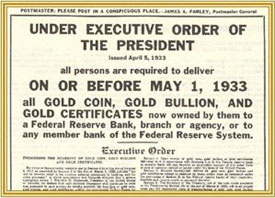
In 1933, President Franklin D. Roosevelt signed Executive Order 6102, which made it illegal for private citizens to own more than five ounces of gold. 

Americans were required to turn in their gold coins, bullion, and certificates to the government in exchange for paper dollars at the current exchange rate of $20.67 per ounce. The government, of course, kept the gold.

FDR's Banned Gold Via EO 6102

Suddenly, the public couldn’t even own the very thing that gave their paper dollars value. FDR justified this by saying it was necessary to stabilize the economy during the Great Depression, but it was a pivotal moment in removing real money from the equation.

The Gold Reserve Act of 1934 then raised the price of gold from $20.67 to $35 per ounce, effectively devaluing the dollar by about 40%. The dollar’s link to gold was further weakened, allowing for greater government control over monetary policy.

1944: The Bretton Woods Agreement

At the Bretton Woods Conference in 1944, the U.S. persuaded central banks across the globe to effectively make the dollar the world’s reserve currency. 

Other nations could exchange their currencies for U.S. dollars, which were still formally redeemable for gold. However, only foreign governments—not regular people—could make this exchange.

While this limited gold standard was intended to appear like a strong guarantee of value, the U.S. government kept printing more money than it had gold to back it, especially during the 1960s. 

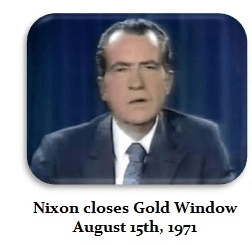
1971: The Nixon Shock

Nixon Shock

In 1971, the performer’s sleight of hand was revealed. Other nations were turning in their dollars for gold, causing U.S. gold reserves to dwindle. 

President Richard Nixon announced that the U.S. would “temporarily” stop allowing foreign governments to exchange their dollars for gold, effectively ending the Bretton Woods system. This event, known as the Nixon Shock, was the moment the pea completely disappeared from the table.

From then on, the U.S. dollar had no tie to gold. It became purely a fiat currency, meaning it was only worth what the government said it was—and what the public and the markets at large believed it was. 

The shells kept moving, but there was no pea to find anymore. The game had changed: money was now purely a matter of trust, not tangible value.

1973: Floating Exchange Rates

Two years after Nixon’s move, the world embraced floating exchange rates. Currencies were no longer pegged to a commodity like gold, but their value fluctuated based on market forces and official interventions. The shell game became a global phenomenon, with every major currency unanchored from real value.

The Endless Game: Fiat Currency

Since the 1970s, we’ve been living in the world of fiat money—backed by nothing more than trust in governments and central banks. Central banks, like the Federal Reserve, print money whenever they need to stimulate the economy or bail out failing institutions. 

Inflation is a key feature of this shell game. When central banks print more money, the value of each dollar in circulation decreases.

alt_here

2008 and Beyond: The Modern Shell Game

The shell game hit a new level in 2008 during the financial crisis. 

Central banks around the world, including the Federal Reserve, engaged in quantitative easing—a fancy term for creating money out of thin air to buy government bonds and other securities. This massive money-printing effort was meant to stabilize the economy, but it also demonstrated just how disconnected modern money is from any real value.

Today, we live in an era where central banks can create trillions of dollars with the stroke of a keyboard. The shells move at a dizzying speed, and the public keeps watching, hoping the pea is still there somewhere. But is it?

The Trick Revealed: Fiat Money Exposed

Money Shell Game

What started as real, tangible value—gold and silver—slowly evolved into paper backed by those metals, and then, finally, into fiat currency backed by nothing but trust.

So next time you reach into your wallet and pull out a Federal Reserve note dollar, remember: it’s a piece of paper, part of a shell game that’s been going on for over a century. And like all shell games, it works best when you don’t look too closely for the pea.


Joshua D. Glawson is the Content Manager for Money Metals Exchange and is a writer on such topics as politics, economics, philosophy, finance, and personal development. He has a Bachelor’s in Political Science from the University of California Irvine. 

Apple’s Upcoming iPhone Will Catapult Tech Trendsetter into the Age of AI

0

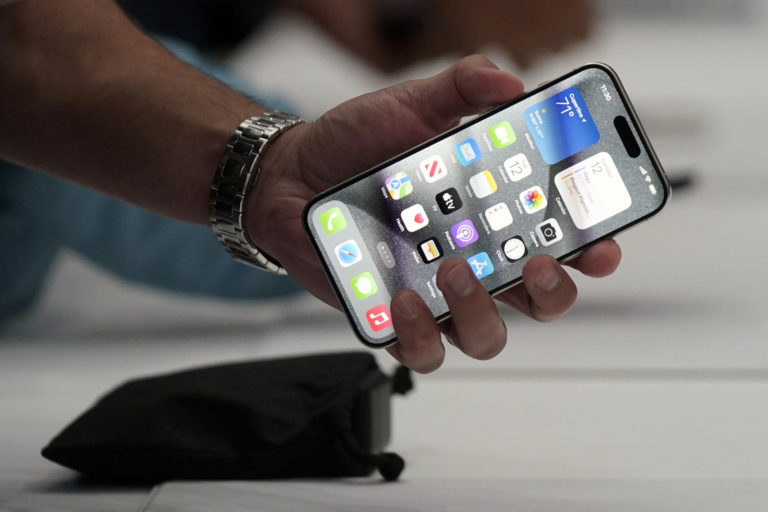
(Headline USA) Apple’s ubiquitous iPhone is about to break new ground with a shift into artificial intelligence that will do everything from smartening up its frequently dim-witted assistant Siri to creating customized emojis on the fly.

The new era will dawn Monday with the unveiling of the hotly anticipated iPhone 16 in a Cupertino, California, auditorium named after Apple co-founder Steve Jobs, who pulled out the first iPhone in 2007 and waved it like a magic wand while predicting it would reshape society.

Apple has sold billions of iPhones since then, helping to create about $3 trillion in shareholder wealth. But in the past decade, there have been mostly minor upgrades from one model to the next—a factor that has caused people to hold off on buying a new iPhone and led to a recent slump in sales of Apple’s marquee product.

The iPhone 16 is generating a bigger buzz because it is the first model to be tailored specifically for AI, a technology that is expected to trigger the biggest revolution in the industry since Jobs thrust Apple into the smartphone market 17 years ago.

The advances included in the iPhone 16 could set up Apple to be “the gatekeeper of the consumer AI revolution,” Wedbush Securities analyst Dan Ives wrote in a research note.

Apple’s pivot began three months ago with a preview of its new approach during a developers conference, helping to build anticipation for Monday’s showcase.

Since that June conference, competitors such as Samsung and Google have made even more strides in AI. Google even took the unusual step of introducing its latest Pixel phones packed with their own AI magic last month instead of hewing to its traditional October timetable in an effort to upstage Apple’s release of the iPhone 16.

In an attempt to set itself apart from the early leaders in AI, the technology being baked into the iPhone 16 is being promoted as “Apple Intelligence.” Even so, Apple Intelligence is similar to the generically named AI already available on Google’s Pixel 9 and the Samsung Galaxy S24 released in January.

Most of Apple’s AI tasks will be performed on the iPhone itself instead of remote data centers—a distinction that requires a special processor within the forthcoming models and the high-end iPhone 15s that came out a year ago.

That’s why investors anticipate hot demand for the iPhone 16, spurring a surge in sales that has caused Apple’s stock price to climb by 13% since Apple previewed its AI strategy in June. That spike has increased the company’s market value by nearly $400 billion.

Adapted from reporting by the Associated Press

DirecTV Files FCC Complaint against Disney as Carrier Impasse Ruins Big Sports Weekend

(Headline USA) The impasse between DirecTV and Disney over a new carriage agreement has become more heated as it entered its second week.

DirecTV filed a complaint with the Federal Communications Commission on Saturday night accusing Disney of negotiating in bad faith.

Disney channels, including ESPN and ABC-owned stations in nine markets, have been off DirecTV since the evening of Sept. 1. That meant DirecTV customers were blacked out from viewing most college football games and the final week of the U.S. Open tennis tournament, including the women’s and men’s finals.

DirecTV has 11.3 million subscribers, according to Leichtman Research Group, making it the nation’s third-largest pay TV provider.

ABC and ESPN will have the “Monday Night Football” opener between the New York Jets and San Francisco 49ers.

ABC will also produce and carry a presidential debate between former President Donald Trump and current Vice President Kamala Harris on Tuesday in Philadelphia.

ABC-owned stations in Los Angeles; the San Francisco Bay Area; Fresno, California; New York; Chicago; Philadelphia; Houston; and Raleigh, North Carolina, are off DirecTV.

Besides all ESPN network channels and ABC-owned stations, Disney-branded channels Freeform, FX and National Geographic channel are dark.

DirecTV says in its 10-page complaint that Disney is violating the FCC’s good faith mandates by asking it to waive any legal claims on any anticompetitive actions, including its ongoing packaging and minimum penetration demands.

DirecTV has asked Disney for the option to provide consumers with cheaper and skinnier bundles of programming, instead of bigger bundles that carry programming some viewers might not be interested in watching.

The complaint states: “Along with these anticompetitive demands, Disney has also insisted that DirecTV agree to a ‘clean slate’ provision and a covenant not to sue, both of which are intended to prevent DirecTV from taking legal action regarding Disney’s anticompetitive demands, which would include filing good faith complaints at the Commission. Not three months ago, however, the Media Bureau made clear that such a demand itself constitutes bad faith.”

DirecTV CEO Ray Carpenter said during a conference call with business and media analysts on Tuesday that they would not agree to a new carriage deal with Disney without bundling changes.

“We’re not playing a short-term game,” Carpenter said. “We need something that is going to work for the long-term sustainability of our video customers. The resolve is there.”

Disney has claimed since the blackout began that mutual release of claims is standard practice after licensing agreements are negotiated and agreed upon by the parties. It has also had one with DirecTV under its past renewals.

“We continue to negotiate with DirecTV to restore access to our content as quickly as possible,” a Disney spokesperson said. “We urge DirecTV to stop creating diversions and instead prioritize their customers by finalizing a deal that would allow their subscribers to watch our strong upcoming lineup of sports, news and entertainment programming, starting with the return of Monday Night Football.”

Last year, Disney and Charter Spectrum—the nation’s second-largest cable TV provider—were involved in a nearly 12-day impasse until coming to an agreement hours before the first Monday night NFL game of the season.

Adapted from reporting by the Associated Press

Sen. Grassley Removes ‘Sensitive’ FBI Records from Website after Bureau Complains

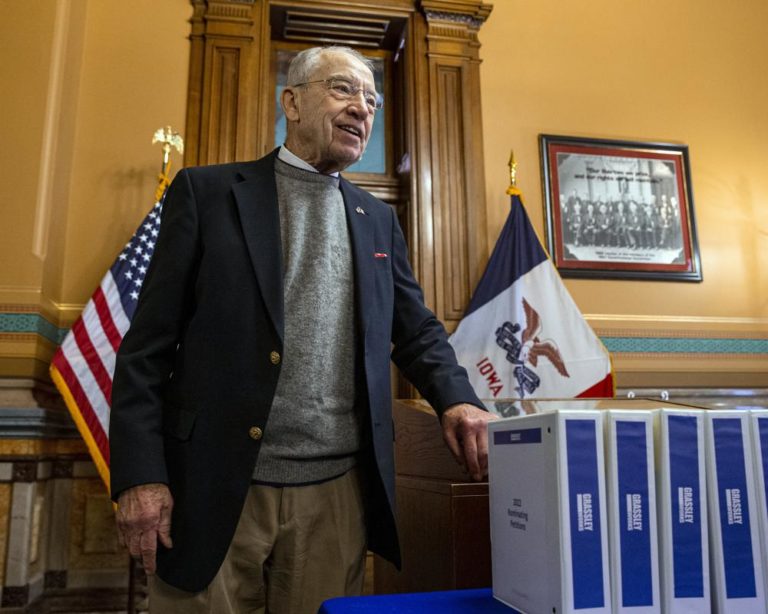
(Ken Silva, Headline USA) Sen. Chuck Grassley, R-Iowa, has removed leaked FBI whistleblower documents from his website after the bureau accused him of disclosing sensitive national security information.

Grassley initially released the FBI records in question last Thursday, revealing new information about the Pakistani man arrested on July 12 for allegedly trying to hire undercover FBI agents to assassinate Donald Trump.

Though the entire case appears to have been a controlled FBI sting operation, the internal FBI documents leaked to Grassley included new information about the Pakistani terrorist’s alleged Iranian handler, as well as his movements and interactions in the U.S.

Grassley wrote to the FBI with several questions about the documents he released, including when the bureau knew the Pakistani defendant, Asif Merchant, entered the U.S. But instead of answering Grassley’s questions, the FBI released a scathing reply—accusing the senator of putting lives at risk with his disclosures.

“Public disclosure about sensitive, ongoing national security investigations and potential cooperation from subjects is irresponsible and undermines the FBI’s ability to conduct thorough investigations and enforcement actions that keep Americans safe. It also puts lives at risk, especially when you are dealing with an adversary like Iran,” the FBI reportedly said.

Shortly after the FBI issued its statements, the FBI documents were removed from Grassley’s website—as were the letters he wrote about the documents to FBI Director Chris Wray and Homeland Security Director Alejandro Mayorkas.

Headline USA wrote to Grassley’s office, asking why the documents were removed. Grassley’s spokesperson pushed back against the FBI’s accusations about putting lives at risk—but didn’t explain why the documents were removed.

“Senator Grassley welcomes agency engagement on this issue and awaits legitimate explanation from DOJ and the FBI as to how the document’s publication impacts their investigation, which DOJ itself publicized over a month ago in a 15-page indictment and corresponding press release,” a Grassley spokesperson said.

“The document at issue is marked unclassified by the FBI, was never marked by the FBI as ‘For Official Use Only’ or ‘law enforcement sensitive,’ and contained redactions made by Senator Grassley’s office to protect potential sensitivities. Senator Grassley’s disclosure of the unclassified document is in keeping with Congress’s independent constitutional authority to conduct oversight, a fact which DOJ has directly acknowledged to Senator Grassley’s staff,” the spokesperson said.

“This is Grassley oversight at work. The FBI failed to be fully transparent when it briefed Congress on election year threats; now, as a result of Grassley’s oversight, DOJ and the FBI have been forced to come to the table and answer questions directly.”

Grassley’s office also noted that the information in the controversial FBI documents has been reported by major outlets such as the New York Post, Fox News and Daily Mail. However, those outlets didn’t share the actual documents, but instead linked to Grassley’s website, which has removed them.

Headline USA is the only outlet this writer is aware of that still has the documents.

Ken Silva is a staff writer at Headline USA. Follow him at twitter.com/jd_cashless.

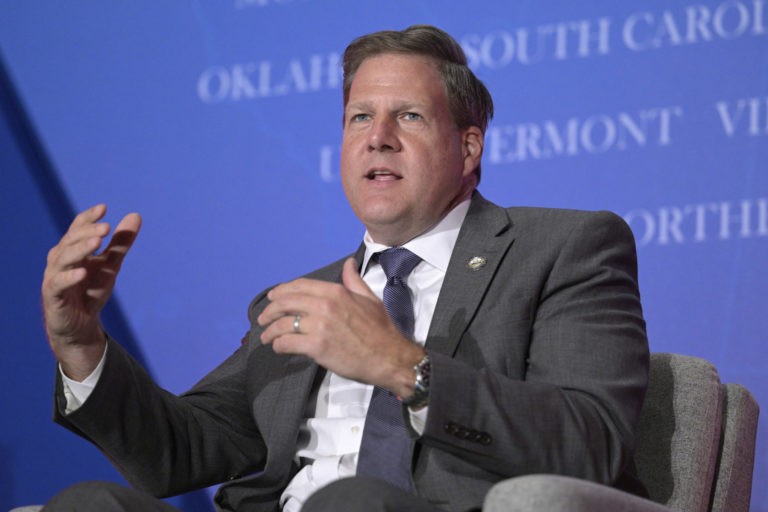
GOP Gov. Rescues Choking Man in Lobster-Roll Competition at N.H. Seafood Festival

(Headline USA) New Hampshire Gov. Chris Sununu came to the aid of a contestant choking on a lobster roll at a seafood festival eating contest, using the Heimlich maneuver after the man signaled for help.

The contestant, Christian Moreno, recovered and resumed eating at the competition on stage Sunday.

Moreno was one of six participants at the Hampton Beach Seafood Festival contest. They had 10 minutes to eat as many lobster rolls as they could. The New England sandwich is traditionally stuffed with lobster, celery and mayonnaise and served on a hot dog-style bun.

“I’m shooting for at least 20,” Moreno, of Nashua, said in a video account before the contest started, saying he studied competitive eater Joey Chestnut of hot dog-contest eating fame.

Moreno was at the end of a long table, close to where Sununu was watching on the side of the stage after speaking to the crowd a bit earlier.

Standing, Moreno had downed about two lobster rolls when he started choking and tapped his chest, video showed.

Sununu rushed out a short time later, put his arms around Moreno and started abdominal thrusts. He got in several before first responders took over, WMUR-TV reported.

Messages seeking comment Monday were sent to Sununu’s office and to Moreno.

“It was crazy because it wasn’t so much the jumping in and doing it—I mean, that was wild in itself—but there was so much commotion,” Sununu, a popular Republican governor who isn’t seeking reelection for fifth term, told the station.

Moreno, who didn’t have his glasses on, wasn’t aware it was the governor who had helped save him.

“My counter came up to me and, like, made a joke. And was like, ‘Oh, like, I bet nobody else can say that they’ve gotten the Heimlich from the governor before.’ And I looked at him, was just like, that was, that was the governor?” Moreno said.

Moreno recovered and went back to the contest. He didn’t win, but he did consume nine lobster rolls in all.

Adapted from reporting by the Associated Press

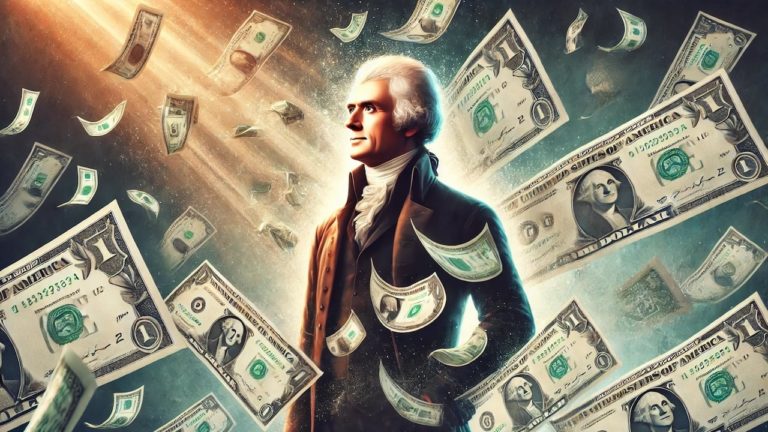
The Dangers of Money Printing: Thomas Jefferson and the Financial Panic of 1819

(Mike Maharrey, Money Metals News Service) To steal a phrase from Thomas Jefferson, the Federal Reserve and the U.S. government have buried us under a “deluge of paper money.” 

We deal with the consequences of this monetary malfeasance every time we go to the grocery store or the gas station. Our rapidly deprecating money buys less and less every single day.

Central bankers and politicos claim to be fighting this inflationary monster, but the ugly truth is that inflation is by design. The political class is destroying your money as a matter of policy. 

This is nothing new. Government people have been ruining our money for their gain since the Republic’s earliest days. Sadly, most people don’t realize what’s happening. They believe price inflation is due to greedy corporations, Putin’s price hikes, or voodoo.

As Thomas Jefferson warned, “The evils of this deluge of paper money are not to be removed until our citizens are generally and radically instructed in their cause & consequences.”

Looking at the past can inform us about the present. As the saying goes, history doesn’t necessarily repeat. But it often rhymes. With that in mind, the first American boom-bust crisis in the early 19th century is informative.

During this period. Jefferson’s chilling warnings about unchecked fiat, paper money proved prophetic.

In an 1814 letter to Thomas Cooper, Jefferson wrote, “Every thing predicted by the enemies of banks, in the beginning, is now coming to pass. we are to be ruined now by the deluge of bank paper as we were formerly by the old Continental paper.”

Just one year later, a depression gripped the United States kicked off by financial panic. This economic downturn lasted until 1821 and is widely viewed as the first boom-bust period in U.S. history. 

It was exactly what Jefferson predicted. 

The depression was rooted in an all-too-familiar problem – excessive money printing.

The economic downturn came on the heels of the War of 1812, which officially ended with the signing of the Treaty of Ghent on Feb. 18, 1815. After the war, banknotes began to rapidly depreciate due to the exponential increase in the amount of paper in circulation. 

The First Bank of the United States charter ended in 1811 and was not renewed. The Second Bank of the United States (SBUS) wasn’t created until 1816. This led to a proliferation of state-chartered banks.

As economist Murray Rothbard explained in his book, The Panic of 1819, to fund the war, the federal government turned to these state-chartered banks, and they issued large numbers of paper money banknotes far exceeding the amount of gold to back them. 

This caused gold to drain from these banks. To keep the money flowing, the U.S. government agreed to a suspension of specie payments from state banks and the situation persisted after the war ended. This allowed banks to make loans with little to no regard for gold reserves to bank them.

It was a formula for disaster.

Jefferson understood this all too well, making his views clear in his letter to Cooper. 

“I am an enemy to all banks discounting bills or notes for any thing but coin. but our whole country is so fascinated with this Jack lanthern wealth, that they will not stop short of its total and fatal explosion”

On March 23, 1815, the U.S. entered a period of financial panic. It was followed by several years of mild depression culminating in a sharp economic downturn known as the Panic of 1819.

The panic was exacerbated by financial conditions in Europe in the wake of the Napoleonic wars, but it was fundamentally a domestic problem caused by money printing.

Whenever the money supply rapidly expands, as it did during the war years, it creates all kinds of malinvestments in the economy. The expansion of credit fueled land speculation in the West, that likely would not have happened in a more sound monetary environment. Historian George Dangerfield argued that the entire postwar American economy was “based on a land boom.”

Since the U.S. Treasury accepted payments for land in the form of state-issued bank notes, state-chartered banks helped fund this land boom. The problem was most of them lacked sufficient specie to back their paper. 

After it opened for business in 1817, the Second Bank of the United States (SBUS) jumped right in to further expand money and credit.

The SBUS had 18 branches. They were supposed to operate with oversight by the main bank in Philadelphia, but the oversight was lax. Meanwhile, the SBUS was supposed to regulate state banks. This oversight was also lax. 

Meanwhile, western branches of the national bank got caught up in the land boom mania and began issuing SBUS banknotes at a dizzying pace. In his book The Awakening of American Nationalism, Dangerfield noted that SBUS banks tried to restock their insufficient gold reserves by redeeming their notes for hard money at eastern and northern SBUS branches.

The result was, as Jefferson called it, “a deluge of bank paper” without sufficient gold backing.

According to Rothbard, by 1818, the Second Bank of the United States had demand liabilities exceeding $22.4 million. Its specie fund stood at a mere $2.4 million – a 10:1 ratio. A 5:1 ratio was considered sustainable. 

That year, the SBUS tried to rein in the problem by curtailing loans by its western branches. When state banks began presenting their banknotes for redemption at the Second Bank of the United States, it refused to provide gold specie from its reserves. There was simply too much paper and not enough gold. The state banks did the only thing they could do; they began foreclosing on heavily mortgaged farms and business properties. 

This led to widespread bankruptcies, bank failures, a collapse in real estate prices, and spiking unemployment. 

It was just what Jefferson predicted. 

In an 1819 letter to John Adams, Jefferson lamented that the situation would never change or even improve until people understood the root cause of the economic malaise – paper money.

“The evils of this deluge of paper money are not to be removed until our citizens are generally and radically instructed in their cause & consequences.”

Jefferson went on to pinpoint the root of the problem with paper money, “want of a stable, common measure of value, that now in use being less fixed than the beads & wampum of the Indian.”

Jefferson was responding to a letter penned by Adams discussing Chapter 6 of the 1817 Treatise on Political Economy by Destutt de Tracy. Adams cited a passage calling the printing of paper money more ruinous and a greater theft than empires of old shaving off a little gold from their coins and passing them off as full-weight. In other words, Tracy called it stealing.

“A theft of greater magnitude & still more ruinous is the making of paper. It is greater because in this money there is absolutely no real value. It is more ruinous because by its gradual depreciation during all the time of its existence it produces the effect which would be produced by an infinity of successive deteriorations of the coin.”

Adams put it in even harsher terms, writing to Jefferson:

“That is to say an infinity of successive felonious larcenies. If this is true as I believe it is we Americans are the most thievish people that ever existed, we have been stealing from each other for an hundred & fifty years.” [emphasis added]

How much worse are things today?

We can accurately predict another economic meltdown in the future because, after more than 200 years, the problem of paper money remains. The people still have not become radically instructed as to the cause and consequences of the boom-bust cycle that’s fueled by printing massive amounts of paper (and today, electronic) money.

The government continues to print it at a dizzying pace. Just consider that the Federal Reserve created nearly $9 trillion out of thin air since the 2008 financial crisis through quantitative easing alone. That was on top of the expansion of money and credit due to more than a decade of artificially low interest rates

Economic principles don’t change with the times. In 1788, Jefferson wrote, “Paper is poverty … it is only the ghost of money, and not money itself.”

It’s still true today.

In other words, Jefferson called it.

His foresight underscores the enduring danger of paper money and government excess, echoing through history’s economic crises.

The Tenth Amendment Center contributed to this report.


Mike Maharrey is a journalist and market analyst for MoneyMetals.com with over a decade of experience in precious metals. He holds a BS in accounting from the University of Kentucky and a BA in journalism from the University of South Florida.


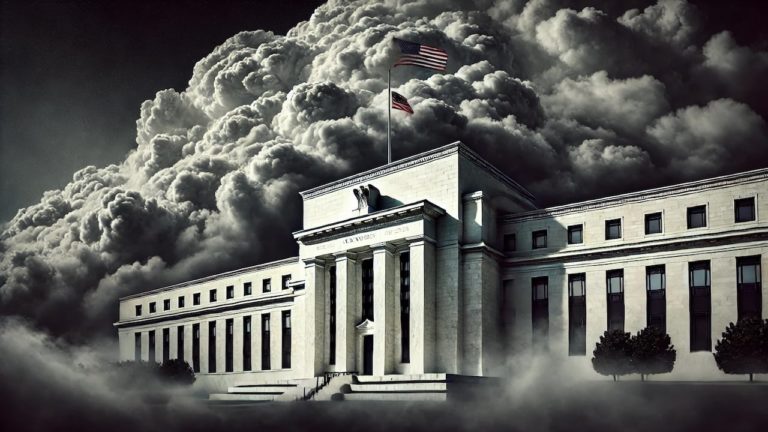
Plugging Bad Data into a Bad Model: Why Should We Have Confidence in the Federal Reserve?

(Mike Maharrey, Money Metals News Service) The Federal Reserve boasts of its data dependence. But what if it’s relying on bad data?

Even worse, what if it’s plugging that bad data into a faulty model?

In July, the Bureau of Labor Statistics (BLS) made massive downward revisions to the job numbers. Poof – the agency simply erased 111,000 jobs from existence.

This has been an ongoing pattern. The BLS releases a report. The media trumpets the greatness of the labor market. And then the BLS quietly revises the numbers down a month or two later and you hardly hear a peep.

The BLS struck again last week when it released revisions to its June Job Openings and Labor Turnover Survey (JOLTS) report. It initially reported 8.18 million job openings. The media reported this as great news — better than expected. The revised number came in at 7.910 million job openings.

That was a miss. 

But as a post on X by ZeroHedge put it, “Of course, nobody cares one month later. This is how the Kamala/Biden Department of Labor has operated for the past 4 years.”

You might be tempted to laugh this off as “politics as usual,” but when you consider that the central bankers at the Federal Reserve use this data to make monetary policy decisions, it’s not funny.

Federal Reserve Chairman Jerome Powell and his fellow central bankers constantly talk about their “data dependence.” Kansas City Fed president Jeff Schmid recently said he wants to see “more data,” before deciding on a rate cut.

They wear data dependence like a badge of honor. After all, it does sound “sciency.” But given the reliability of the data, maybe they should rethink the approach.

Prior to Jerome Powell’s speech at Jackson Hole, Independent Institute Senior Fellow Judy Shelton appeared on Fox Business to talk about Fed monetary policy. Shelton is an economist and the author of several books, including Good as Gold How to Unleash the Power of Sound Money.

Shelton made a strong case against this data-dependent approach at the Fed. After all, bad data is going to lead to bad decision-making. As Shelton said, “There’s good reason for all of us to be skeptical about that data, especially when it gives us conflicting results,” pointing out that “there have long been discrepancies between the payroll jobs numbers and the household survey.” 

“You end up getting these conflicting numbers that on the one hand said that we had tremendous job growth, and now we’re wondering if that was all a mirage.”

That leads to the logical conclusion.

“The fact that the Fed is so data-dependent should not give us confidence.”

During his Jackson Hole speech, Powell effectively surrendered to inflation, saying that the “balance of risk” has moved away from inflationary pressures to shakiness in the jobs market. But given the revisions to the data, it appears the Fed is behind the curve. The job market has been shakier than advertised for quite a while.

It gets worse.

Not only is the Fed using bad data, it plugging it into a bad model.

Shelton pointed out, “It’s ironic that on its own website, the Fed admits it can’t have much impact on the labor market and that it tends to be driven more by structural variables.”

The Federal Reserve primarily relies on curtailing demand. That’s the whole point of rate hikes. But as Shelton noted, the Fed can only impact demand on the consumer side of the economy. It has little to no impact on government spending, and that’s a big part of the equation. 

“I sometimes wonder – how is the Fed going to explain why inflation came down at all? Is it just because they made the cost of capital so expensive for private business that they couldn’t hire people? They couldn’t expand?”

Meanwhile, government spending has gone on unabated. The Biden administration is blowing through half a trillion dollars every single month and running massive budget shortfalls in the process. But Powell refuses to even talk about it, instead insisting that the central bank just takes the fiscal situation “as given.”

Shelton drove home an important point. The central bank should at least acknowledge the contribution of government debt and spending to the inflation situation.

“It’s not clear that they’re really accomplishing their goal, and yet they stick with that model and claim that they have responsibility for price stability no matter what the government does.”

At least some people at the Federal Reserve know they can’t control inflation alone. A paper co-authored by Leonardo Melosi of the Federal Reserve Bank of Chicago and John Hopkins University economist Francesco Bianchi and published by the Kansas City Federal Reserve argues that central bank monetary policy alone can’t control inflation. U.S. government fiscal policy contributes to inflationary pressure and makes it impossible for the Fed to do its job.

“Trend inflation is fully controlled by the monetary authority only when public debt can be successfully stabilized by credible future fiscal plans. When the fiscal authority is not perceived as fully responsible for covering the existing fiscal imbalances, the private sector expects that inflation will rise to ensure sustainability of national debt. As a result, a large fiscal imbalance combined with a weakening fiscal credibility may lead trend inflation to drift away from the long-run target chosen by the monetary authority.”

If the monetary policy alone can’t control inflation, and the government has no intention of getting its fiscal house in order, why should we have any confidence that the Fed really has beaten inflation?

As Shelton pointed out, this also raises questions about the future.

“What if inflation starts ramping up again because of the government spending? Won’t the Fed have to go back to its model and its only tool to curtail demand is to raise interest rate?”

When you put it all together, it’s clear we shouldn’t have any confidence in the Federal Reserve. It is plugging bad data into a faulty model. This isn’t exactly a recipe for success.


Mike Maharrey is a journalist and market analyst for MoneyMetals.com with over a decade of experience in precious metals. He holds a BS in accounting from the University of Kentucky and a BA in journalism from the University of South Florida.