Ariz. Sec. of State: 218K Unconfirmed Citizens to Have Full Ballot Access

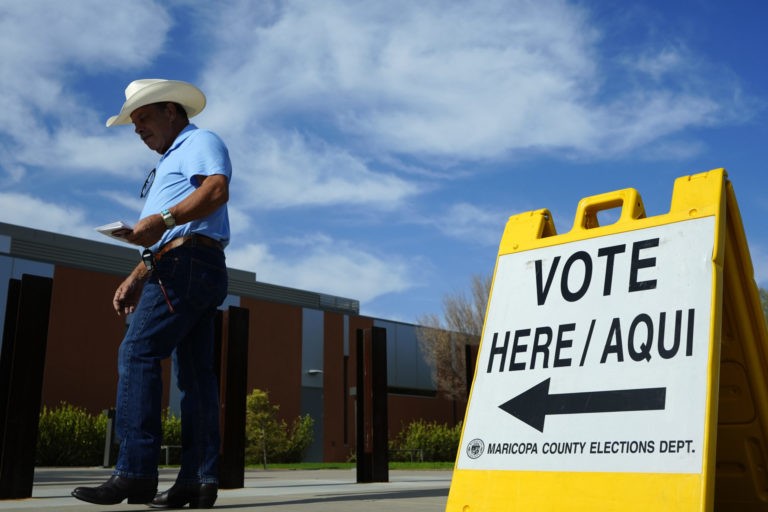
(Headline USA) The number of voters in the battleground state of Arizona classified as having full access to the ballot without confirmation they are citizens has more than doubled to 218,000, Secretary of State Adrian Fontes said.

That number represents 5.3% of all registered voters.

While the error won’t change who is eligible to vote for president or Congress, that amount of voters could sway tight local and state races, and hotly contested ballot measures on abortion and immigration.

Arizona is unique in that it requires residents to prove citizenship to vote a full ballot—a requirement dating back to 2004.

If they don’t do that but attest under penalty of perjury to being citizens, they can vote in federal races only.

Driver’s licenses issued after 1996 are considered valid documented proof of citizenship, but the system error marked the original batch of voters who had pre-1996 licenses as eligible to vote in state and local races.

Fontes announced Monday that the number of misclassified voters jumped from about 98,000 last month to around 218,000.

It’s unclear how officials missed the additional bloc of voters after saying two weeks ago that an error between the state’s voter registration database and the Motor Vehicle Division, or MVD, had been fixed.

Aaron Thacker, a spokesperson for Fontes’ office said Tuesday that the fix that MVD put in place didn’t solve the problem.

The Arizona Department of Transportation, which oversees the MVD, said in an email that it created a coding update in its system but didn’t specify when it was implemented.

Arizona’s GOP Chairwoman Gina Swoboda stated that the party, which initially supported Fontes, is now criticizing him for causing voters to lose “total confidence” in him.

“Now we find out that he hasn’t been as forthcoming with Arizonans as we would have hoped, ” she told The Associated Press. “We find that troubling and will be taking additional action in the coming days.”

She did not specify what the additional action would be.

Around Arizona, a relatively small number of votes could tip the scales in competitive races for the Legislature, where Republicans hold a slim majority in both chambers.

The Arizona Supreme Court ruled last month that the original batch of voters can cast a full ballot in this year’s election because they registered long ago and attested under the penalty of perjury that they are citizens.

The justices said the voters were not at fault for the error and shouldn’t be disenfranchised so close to the Nov. 5 general election.

Adapted from reporting by the Associated Press

IRS Worker Involved w/ Global Pedophile Ring to Stand Trial in February

(Ken Silva, Headline USA) An IRS worker arrested in August on his way to the Philippines is set to stand trial in February for possessing child pornography.

Tyler Scott Minegar, who was indicted last month for possessing child pornography, was arrested at the Detroit Metropolitan Wayne County Airport on his way home from the Philippines. The Detroit News reported that Minegar was an IRS contractor since 2022.

According to Justice Department, Minegar bragged about sexually assaulting a 13-year-old Filipina, which is what put him on law enforcement’s radar in late 2023.

“On or about August 11, 2023, an account user later associated with MINEGAR was using an internet-based chat application to communicate with another user who purported to be an adult female in the Philippines. During the chat, MINEGAR stated that he was traveling to the Philippines for work and asked the female if she would be his housewife and have sex with him,” the DOJ’s complaint stated.

“The female asked MINEGAR if he had a lot of Filipino girls. MINEGAR replied, ‘Just 1 / She’s 13 / She love my big cock.’ The female responded, ‘She’s 13 … It’s Filipino?’ MINEGAR then confirmed, ‘Yes / She love big cock / She suck me every day she live with me / I buy her.’”

In July, the Somerset County Prosecutor’s Office in New Jersey contacted DHS’s Homeland Security Investigations for assistance in the investigation. Minegar had already departed the country the month before, the complaint said.

When Minegar returned, he was referred to the HSI for secondary inspection by Customs and Border Patrol agents.

When seaerching his phone, “an HSI agent and a CBP officer observed an image of a nude prepubescent female in the photo gallery of the iPhone, but the screen of the device subsequently timed out, locked and was unable to be opened without the password,” the complaint said.

A search of the IRS contractor’s laptop also yielded child porn, the complaint said.

Minegar was ordered to remain behind bars pending his trial, which is now scheduled for Feb. 4.

Ken Silva is a staff writer at Headline USA. Follow him at x.com/jd_cashless.

Hurricane Helene Throws N.C.’s Razor-Thin Political Race into Further Disarray

(Alan Wooten, The Center Square) In western North Carolina where a fatal flood of historic proportion has torn apart normal, the 2024 election will go on and a razor-thin difference is watched between Democratic Vice President Kamala Harris and Republican former President Donald Trump.

Asheville in Buncombe County is known for a liberal bent, many counties along the Blue Ridge Mountains are red, though it was less than two decades ago Democratic Congressman Heath Shuler carried the area.

Election Day is five weeks away. And the State Board of Elections, as has been done for hurricanes and other unplanned occurrences before, is forging ahead. So, too, will everyone else.

“It would be an ironic shame if the people who most need strong representation in the national and state legislatures play no part in selecting those representatives,” Dallas Woodhouse, North Carolina executive director for American Majority-Action, wrote in an email to The Center Square.

Every effort will be made, the state board said Monday and again Tuesday at a morning presser.

“When disasters strike elections, we use this mantra: ‘We do not stop an election; we figure out how to proceed,’” said Karen Brinson Bell, executive director of the State Board of Elections.

History agrees. Four years ago, it was COVID-19. Primarily in the southeastern part of the state, the 2018 midterms were preceded by Hurricane Florence the first week of September and the 2016 presidential cycle overcame Hurricane Matthew’s landfall on Oct. 8.

Laws, including for state elections, are set by the General Assembly. The state board and its executive director, however, do have emergency powers granted.

“We had emergency powers of the executive director during the pandemic,” Andy Jackson, director of the Civitas Center for Public Integrity, told The Center Square in a telephone interview on Monday. “There was a lot of words back and forth on that.”

“With emergency authorization under regulations for the executive director, one of the things you have to consider is how much time does the General Assembly have to act?” Jackson added.

“I’d imagine the General Assembly, after evaluation of what is going on and what is needed, they can go ahead and pass a bill like they did for Florence in ’18,” he noted. “If deadlines come before, the executive director will have authority.”

The Center Square was unsuccessful getting comment from Anderson Clayton, chairwoman of the North Carolina Democratic Party. The party issued a statement of concern for the area, and added, “We take care of our neighbors. We will grieve and rebuild.”

Matt Mercer, spokesman for the state Republican Party, said, “We want the focus for the next few days to be on relief efforts.”

Invariably, debate is coming on how the challenges to even cast votes will impact races. Neither presidential candidate is exceeding the margin of error in polling, making North Carolina a toss-up. Many downballot statewide races have polled close, too.

For context, Trump won the state four years ago by 1.3% (74,483 votes) and eight years ago by 3.6% (173,315 votes). That’s fewer than the 372,000-plus customers out of power at 10 a.m. Tuesday morning.

The state, with winner-take-all 16 electoral college votes, is up to more than 7.6 million registered voters. A 75% turnout rate, as was the case in 2020, would produce more than 5.7 million voters and mean a 4% difference is fewer than 230,000 votes.

“The mountain area of North Carolina is very heavily Republican in most elections,” said Dr. Tom Eamon, associate professor of political science at East Carolina University, wrote in an email to The Center Square. “Exceptions are the city of Asheville and Boone. Too early to predict overall impact.”

Dr. Steven Greene, political science professor at N.C. State, agreed.

“Furthermore, on a partisan basis, yes Asheville is a liberal hub, but a liberal hub within a sea of red,” he wrote in an email to The Center Square. “The 11th Congressional District, in which Asheville sits, is reliably Republican and has been affected throughout by flooding, which suggests that if there is any partisan impact it is more likely to affect Republicans.”

If anything, the region since the turn of the century may well illustrate why the state is called purple—the mix of red Republican and blue Democrat.

“There were counties still voting Democratic in the 20-oughts,” Jackson said. “Heath Shuler won it. In the ’90s and 20-oughts, the 11th District was back and forth. There are some residual Democrats. It’s generally Repbulican-leaning.

“If raw numbers, if both sides are equally motivated, it would be a net loss for Republicans statewide. Considering how close the races are looking, that could be the difference.”

Prognosticators nationwide have seven consensus battleground states. And from them, few if any are acknowledging a pathway to 270 electoral college votes without at least one if not both of North Carolina and Pennsylvania (19 votes).

Seventeen days before early in-person voting is to start, Tuesday morning’s 10 a.m. road closure report had 401 statewide because of Helene. The recovery work is paramount and mourning the lives lost is first.

As Bell said, the election will come and go on schedule.

“As our neighbors, friends and family in western North Carolina, deal with horrific losses of life, property, income and security, it’s important that we make sure these citizens don’t lose their voice in the political process,” Woodhouse said.

“We at American Majority-Action are already having conversations with people across the political spectrum on how to guarantee citizens the ability to vote in the flood disaster areas,” he continued. “We don’t know exactly what that looks like, but it will be a monumental effort.”

“As far as what side may or may not benefit from the changes in the electorate, we don’t know, and we don’t care. We are all citizens, neighbors and friends,” Woodhouse added.

“This is so beyond partisan politics,” he said. “One area American Majority Action will focus on is making sure displaced residents know how and where they can vote once those arrangements are made.”

Poll: Republicans More Likely than Dems to See Israel as an Ally

(Headline USA) After a year of war between Israel and Hamas, U.S. public opinion on the conflict remains polarized, a new survey by the Pearson Institute and The Associated Press-NORC Center for Public Affairs Research finds, with Democrats more likely to be critical of Israel, while Republicans remain more supportive.

There are a few points of relative consensus—about half of U.S. adults, for example, say Hamas bears “a lot” of responsibility for the continuation of the war, while about one quarter says it has “some” responsibility and about 2 in 10 say it has “not much” responsibility or “none at all.”

But U.S. adults remain divided on the extent to which the Israeli government is responsible for the conflict continuing. And the findings indicate that the past year of war hasn’t done much to widen or narrow the partisan gulf that existed early in the conflict.

Democrats remain more sympathetic toward the Palestinians than Republicans and more critical of Israel, while Republicans are more likely to sympathize with the Israelis and view Israel as a U.S. ally that shares the United States’ values and interests.

However, it’s unclear from this survey if public opinion will shift as the war in the Middle East expands beyond Gaza.

It was conducted from Sept. 12 to 16, before Israel’s military significantly escalated its operations against Hezbollah in Lebanon and before Iran launched missiles at Israel on Tuesday. Hamas, based in Gaza, and Hezbollah, based in Lebanon, are militant groups allied with Iran.

Americans are most likely to place “a lot” of blame on Hamas for the continuation of the war between Israel and the militant group, followed by the Israeli government, and the Iranian government and groups backed by Iran.

They place much less responsibility on their own country. Only about 1 in 10 Americans say the U.S. government bears “a lot” of responsibility for the continuation of the war between Israel and Hamas, while about 4 in 10 say it bears “some” responsibility, and 45% say the U.S. bears “not much” or no responsibility at all.

Democrats are slightly more likely than Republicans to say the U.S. has “some” responsibility, but overall the partisan differences on this question are small.

Brian Grider, a 48-year-old Republican from Moscow, Ohio, isn’t sure how the U.S. could defuse the conflict.

“I don’t know if there’s anything we can do,” he said. “It would be nice if we could and we might want to try, but is it going to work? Probably not.”

The year of fighting appears to have calcified the partisan divide on the war and the U.S. relationship with Israel.

About half of Republicans view Israel as an ally of the U.S. that shares its values and interests, while about half of Democrats think Israel is a partner that the U.S. should cooperate with but that doesn’t share American values and interests.

More than half of Democrats also say the Israeli government bears “a lot” of responsibility for the continuation of the war, compared to about 4 in 10 Republicans.

Brian Becker, a 49-year-old Democrat in Colorado, says his views of the war shifted after hearing more on social media about Palestinians and Palestinian Americans who were harmed by the war.

“I didn’t feel like that was fair for them,” Becker said. “So that did start to change my mind a little bit, started to give that waver of support to Palestine,” he said. “Where before I probably would have been just, ‘Yeah, go Israel.”‘

On the other hand, about half of Republicans say they sympathize more with the Israelis than the Palestinians, while Democrats are more likely to say they sympathize with both groups equally.

Grider, the Ohio Republican, thinks Israel responded appropriately to the Oct. 7 attack, comparing it to the Sept. 11, 2001 attacks in the U.S.

“I definitely don’t think Israel is doing too much in response to what happened to them,” he said.

Views of the Israel-Hamas conflict, and the U.S. role in mediating it, haven’t shifted much over the course of the year.

Support for the establishment of an independent Palestinian state rose slightly, from around 2 in 10 in August 2023 to about 3 in 10 now. (About half of Americans currently say they neither favor nor oppose an independent Palestinian state, and about 2 in 10 are opposed.) There was also a slight uptick in the share of Americans who think the U.S. is too supportive of Israel.

But about 4 in 10 U.S. adults continue to say the U.S. is spending “too much” on military aid to Israel in the war, while a similar share say the U.S. is spending “the right amount.”

About 1 in 10 say the U.S. is spending “too little,” which is in line with an AP-NORC poll conducted in early 2024.

Adapted from reporting by the Associated Press

Pa. Senatorial Candidate Dave McCormick: Military Needed to Fight Fentanyl War

(Headline USA) The Republican challenger trying to flip the U.S. Senate seat in swing-state Pennsylvania said he’ll press for U.S. military action in Mexico to target fentanyl trafficking networks.

David McCormick, who is challenging third-term Democratic Sen. Bob Casey of Pennsylvania, is making the idea part of his plan for fighting the fentanyl scourge, which is playing a big role in the campaign and has been central to dueling TV ads in the race

But now, McCormick—a decorated Army combat veteran and ex- hedge fund CEO who served on Trump’s Defense Advisory Board—is testing the message of unilateral U.S. military action in Mexico in a state that could be decisive in determining which party wins the White House and a Senate majority in November’s election.

McCormick envisions using the U.S. military’s drones and special operations teams in Mexico to destroy fentanyl trafficking cartels, though he stresses that the military should be used “selectively and thoughtfully.”

“I’m not saying we’re going to send the 82nd Airborne Division to do a jump into Mexico,” McCormick said. “What I’m saying is the combination of special operations and drones, I think, could eradicate the manufacturing facilities, kill the distribution networks and do a real dent in what is a terrorist activity.”

Military action is justified, McCormick says, by what he calls “the biggest killer in our country.” The U.S. shouldn’t wait for a blessing from a Mexican government that has failed to address its problem with fentanyl production and trafficking, he said.

“So the time for negotiating with the Mexican government to get their DEA on this is gone,” McCormick told one audience in September. “We’ve got to get tough on it. And that’s what I would do.”

Casey has neither criticized nor backed the idea of using the U.S. military in Mexico. Instead, he has pointed to his support for measures in Congress to strengthen screening at border checkpoints.

McCormick and other Republicans compare fentanyl deaths to combat losses in the Vietnam War: Roughly 110,000 drug overdose deaths each of the last two years in which fentanyl was the primary culprit two-thirds of the time, compared to 58,000 reported U.S. casualties in the war.

“What we’re in is unprecedented,” he said. “The numbers are beyond imagination in terms of what we’re experiencing right now.”

McCormick says the closest model for what he has in mind is the U.S. military’s cocaine interdiction work with the cooperation of the Colombian government against the Revolutionary Armed Forces of Colombia. McCormick called that effort “incredibly successful.”

Adapted from reporting by the Associated Press

Activists Sue Pa. County Official over Decision to Stop Using Unsecure Ballot Dropboxes

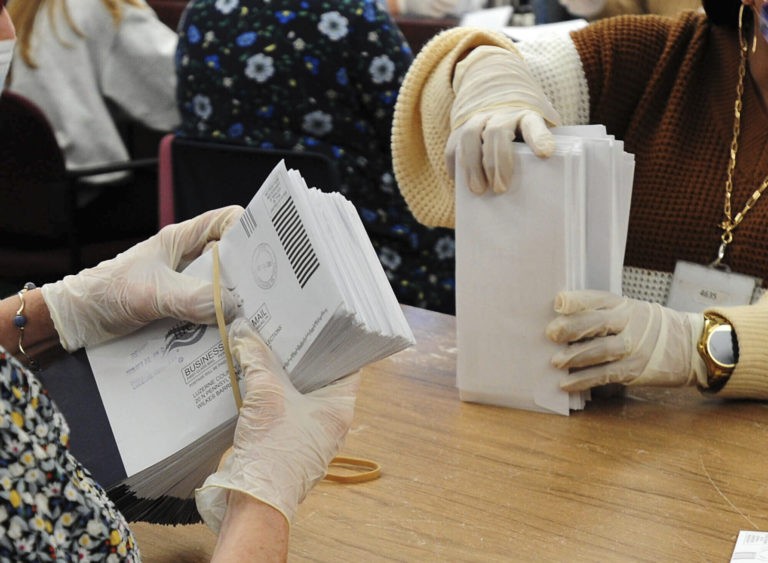
(Headline USA) Three far-left anti-integrity activists in northeastern Pennsylvania county launched a lawfare suit on Tuesday to overturn a local official’s announcement that she will prevent all four of its dropboxes from being deployed for use by those voting by mail and absentee ballot in the Nov. 5 election.

The lawsuit in Luzerne County argues county manager Romilda Crocamo lacks authority for statements made last month that the county would not use dropboxes “because of purported safety and security concerns.”

The plaintiffs who sued said the Luzerne County Board of Elections and Registration planned to deploy four dropboxes, as it has in other recent elections. The board in February voted down a proposal to eliminate all dropboxes, their lawsuit stated

The lawsuit accused Crocamo of violating state election law and claimed her policy would “lead to irreparable harm to the voting rights” in Luzerne.

The activists want a county judge to stop Crocamo from implementing her decision.

In an email seeking comment, Crocamo wrote Tuesday: “I do not engage in public comment during litigation.”

Messages seeking comment were left with two of the five members of the Elections and Registration Board, which also is a defendant in the case.

Witold Walczak, legal director of the ACLU of Pennsylvania, said in a statement Crocamo had no authority for what he called an “end run around the board of elections’ decision to continue offering Luzerne County county voters a safe and easy option to vote by mail, and we hope the court will quickly restore the four drop boxes.”

The plaintiffs, including the activist group In This Together NEPA Inc., claimed there were no substantiated cases of abuse or fraud involving dropboxes in Luzerne County. They said the dropboxes have been monitored by camera.

The Times Leader of Wilkes–Barre reported Tuesday that Crocamo has said she does have the authority—as part of her duty to oversee personnel and the security of county-owned properties.

Many see the Keystone State as being, perhaps, the most important battleground of the 2024 race. In order to secure the Electoral College, former President Donald Trump would need only to retain the states he won in 2020, as well as regain Pennsylvania and Georgia from his 2016 victory map.

Georgia, which closed many of the election loopholes that Democrats exploited in 2020 to upend the election process there and flip the state, is a more certain victory for Republicans.

According to the RealClearPolitics average as of Wednesday, Pennsylvania appeared to be a dead heat, with both candidates polling at 48.2% on average. However, the state is likely to see election night shenanigans, as it did in 2020, that will reverse a substantial Trump victory through the use of mail-in ballots received after deadline.

Many of those were reported to have come under suspicious circumstances, including Jesse Morgan, a postal worker who swore under oath to having transported a shipment of completed ballots from New York to Philadelphia, only to see his freight mysteriously vanish.

Adapted from reporting by the Associated Press

Boss of Secret Service’s Buffalo Office Ran the Command Center at Deadly Butler Rally

(Ken Silva, Headline USA) Jeffery Burr has been the special agent in charge of the Secret Service’s Buffalo field office since March 2021—making him responsible for protecting dignitaries and conducting a variety of criminal investigations in a wide swath of western New York.

But on July 13, Burr was in another jurisdiction: Butler, Pennsylvania, where former President Donald Trump was almost assassinated. Specifically, Burr was running the Secret Service’s command center, which made him responsible for passing communications between the various law enforcement agencies.

As has been widely documented, the command center is where some of the key security failures occurred. Those failures included not notifying Secret Service snipers about gunman Thomas Crooks being on the AGR rooftop—despite having that information for at least two minutes before he opened fire.

Burr’s presence at Butler was revealed in a recently released transcript of an interview the Senate Homeland Security Committee conducted with Timothy Burke, the special agent in charge of the Secret Service’s Pittsburgh office. Burr’s name is redacted, but he is repeatedly referred to as the special agent in charge of Buffalo—making his identity easy to uncover.

In the Senate’s interview, Burke told lawmakers that he was the one who assigned Burr—who served five years on former President Bill Clinton’s security detail—as the “command post supervisor” at Butler.

Lawmakers expressed surprise at Burke’s disclosure, and the Pittsburgh field office boss admitted that it wasn’t typical for a special agent in charge to assist in a campaign rally in another jurisdiction.

“He’s a friend of mine. He called me on July 10th, at some point during the day, to tell me that he received notification that he was going to be working the First Lady’s visit to Pittsburgh on the 13th,” Burke said.

“I asked him if he didn’t mind if I switched him to the Trump visit because I wanted a more senior agent in the—it’s listed as command post supervisor here but it’s actually a Security Room, is what we refer to it as at the site. [Burr] is a special agent in charge the Buffalo Field Office, so he’s got extensive experience, as well.”

Later in the interview, Burke admitted to lawmakers that he didn’t know whether Burr had experience overseeing command centers. He also admitted that he didn’t ask Burr whether he had experience in that role.

Regardless of Burr’s experience, his failures nearly resulted in Trump’s death—and did result in the death of a firefighter and the hospitalization of two other rallygoers.

One of Burr’s key failures was not notifying the Secret Service’s snipers about Crooks being on the rooftop he used as his perch, despite having that information for more than two minutes before shooting started. That failure was discussed in the Senate committee’s interview with Secret Service agent John Marciniak—who was the lead counter-sniper at the rally—as well as in the interview with another unnamed Secret Service sniper.

Marciniak and the other sniper both said in separate interviews no one told them about Crooks being on the rooftop.

When asked what he would have done differently if he knew Crooks was on the rooftop, Marciniak said the following: “We would probably—at this point we don’t know what he’s doing—but individual on the roof is definitely suspicious, borderline that’s a hazard. We don’t know what’s happening.

“We’re probably going to send local units—not [counter sniper] response—but we’re going to send local police up there to figure out what’s happening, what’s his intentions. If he’s just trying to get a better view of the event that’s happening, is he’s trying to take pictures, or does he have nefarious actions in mind,” Marciniak added.

Marciniak’s remark about not sending a counter sniper response is noteworthy because the Secret Service did, in fact, notify a counter sniper response agent—who was on the ground and not one of the snipers on the barns behind Trump—about Crooks on the rooftop. Another agent in the command center—not Burr—called that counter sniper response agent on the cell phone minutes before shooting began.

It’s not clear why the agent used the cell phone instead of the radio, and why the snipers weren’t notified when their response agent was.

While Burr may not have told the snipers about Crooks on the rooftop, he did put out a radio notification more than 20 minutes earlier about Crooks having a rangefinder—making it unclear as to why Trump’s protective detail allowed him to take the stage.

The Secret Service did not respond to an email seeking comment on Burr’s presence and actions at the Butler rally.

Burr’s role is not discussed in the Senate’s recent report on the Trump shooting. The Senate committee said in its report, however, that it’s still seeking to interview Burr.

Ken Silva is a staff writer at Headline USA. Follow him at x.com/jd_cashless.

Death Toll Surpasses 160 as Helene Cleanup Continues w/ Cadaver Dogs

0

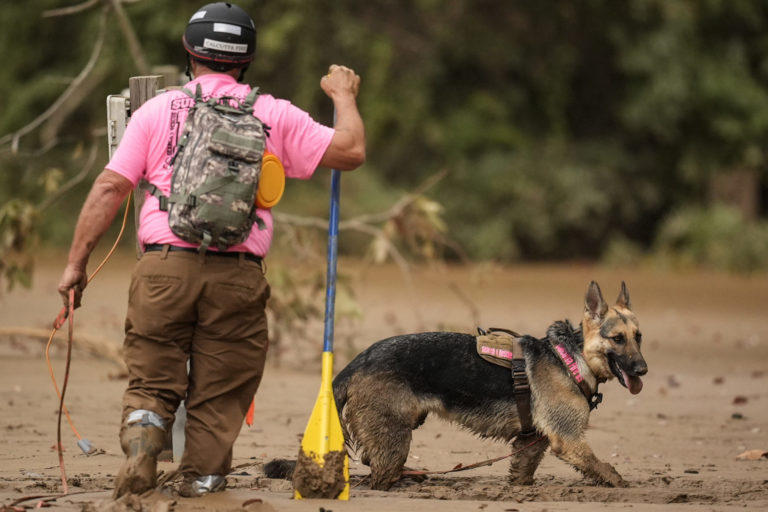
(Headline USA) Cadaver dogs and search crews trudged through knee-deep muck and debris in the mountains of western North Carolina on Tuesday looking for more victims of Hurricane Helene days after the storm carved a deadly and destructive path through the Southeast.

Meanwhile, across the border in east Tennessee, a caravan including Gov. Bill Lee that was surveying damage outside the town of Erwin drove by a crew pulling two bodies from the wreckage, a grim reminder that the rescue and recovery operations are still very much ongoing and the death toll—already surpassing 160—is likely to rise.

The storm, which was one of the deadliest in U.S. history, knocked out power and cellular service in some towns and cities, leaving many people frustrated, hot and increasingly worried days into the ordeal. Some cooked food on charcoal grills or hiked to high ground in the hopes of finding a signal to let loved ones know they are alive.

In Augusta, Georgia, Sherry Brown was converting power from the alternator of her car to keep her refrigerator running and taking “bird baths” with water she collected in coolers.

In another part of the city, people waited in line more than three hours to try to get water from one of five centers set up to serve more than 200,000 people.

The devastation was especially bad in the Blue Ridge Mountains, where at least 57 people died in and around Asheville, North Carolina, a tourism haven known for its art galleries, breweries and outdoor activities.

“Communities were wiped off the map,” North Carolina’s governor, Roy Cooper, said at a news conference Tuesday.

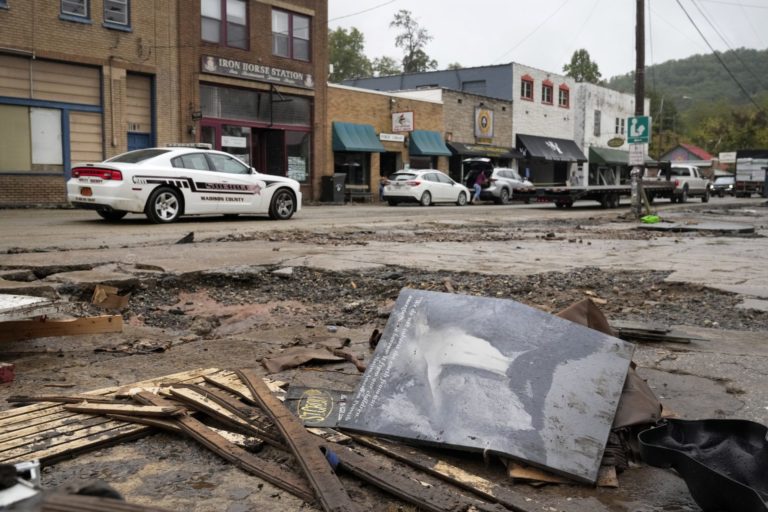
In Swannanoa, a small community outside Asheville, receding floodwaters revealed cars stacked on top of others and trailer homes that had floated away during the storm. Roads were caked with mud and debris and pockmarked by sinkholes.

Cliff Stewart survived two feet of water that poured into his home, topping the wheels on his wheelchair and sending his medicine bottles floating from room to room. Left without electricity and reliant on food drop-offs from friends, he has refused offers to help him leave.

“Where am I going to go?” the Marine Corps veteran said Tuesday. “This is all I’ve got. I just don’t want to give it up, because what am I going to do? Be homeless? I’d rather die right here than live homeless.”

Exhausted emergency crews worked around the clock to clear roads, restore power and phone service, and reach those still stranded by the storm, which killed at least 166 people in six states, including many who were hit by falling trees or trapped in flooded cars and homes.

Nearly half of the deaths were in North Carolina, while dozens of others were in South Carolina and Georgia.

More than 150,000 households have registered for assistance with the Federal Emergency Management Agency, and that number is expected to rise rapidly in the coming days, said Frank Matranga, an agency representative.

Nearly 2 million ready-to-eat meals and more than a million liters of water have been sent to the hardest-hit areas, he said.

The storm unleashed the worst flooding in a century in North Carolina, dumping more than an estimated 2 feet of rain in places.

Cooper’s administration said Tuesday that more than two dozen water plants remained closed and were not producing water.

Active-duty U.S. military units may be needed to assist the long-term recovery, he said, adding that President Joe Biden had given “the green light” to mobilizing military assets in the near future.

A section of one of the region’s main arteries, Interstate 40, reopened Tuesday after a mudslide was cleared, but a collapsed stretch near North Carolina’s border with Tennessee remained closed.

Residents and business owners wore masks and gloves while clearing debris Tuesday in Hot Springs, North Carolina, where almost every building along the tiny town’s main street was heavily damaged.

Sarah Calloway, who owns the deli and gourmet grocery Vaste Riviere Provisions, said the storm arrived in town frighteningly quickly. She helped fill sandbags the day the night before, but they turned out to be useless.

The water rose so rapidly that even though she and others were in an apartment on an upper floor, she feared they would not be safe. They called to request a rescue from a swift water team.

“They tried to get to us, and at that point they couldn’t,” she said. “Luckily, that was when the water started to recede.”

“It was really challenging to watch how quickly it rose up and then just to watch whole buildings floating down the river. It was something I can’t even describe,” she said.

In the Black Mountain Mobile Home Park in Swannanoa on Tuesday, Carina Ramos and Ezekiel Bianchi were overwhelmed by the damage. The couple, their children and dog fled in the predawn darkness on Friday as the Swannanoa River’s rapidly rising waters began flooding the bottom end of the mobile home park.

By then, trees were blocking the roads and the couple abandoned their three vehicles, all of which flooded.

“We left everything because we were panicking,” Ramos said.

Their children were staying with Ramos’ parents and did not want to even see the devastated trailer.

“My daughter was crying, panicking,” Ramos said. “She says she doesn’t want to see her room full of toys, all thrown everywhere.”

The widespread damage and outages affecting key communications infrastructure left many people without stable access to the internet and cellular service, the Federal Communications Commission said.

Mayor Zeb Smathers of Canton, North Carolina, expressed frustration Tuesday that so many of his constituents were still without cellphone service with no clear timetable for when it would be restored.

“People are walking the streets of Canton with their phones up in the air trying to catch a cellphone signal like it’s a butterfly,” he told The Associated Press. “Every single aspect of this response has been extremely crippled by lack of cellphone communication. The one time we absolutely needed our cellphones to work they failed.”

Teams from Verizon were working to repair downed cell towers, damaged fiber cables and provide alternative forms of connectivity across the region, the company said in a statement.

AT&T, meanwhile, said it launched “one of the largest mobilizations of our disaster recovery assets for emergency connectivity support.”

The efforts to restore service was made more challenging by the region’s terrain and spread-out population, said David Zumwalt, president and CEO of the Association for Broadband Without Boundaries.

Helene blew ashore in Florida late Thursday as a Category 4 hurricane and upended life throughout the Southeast, where deaths were also reported in Florida, Tennessee and Virginia.

Across Georgia, Helene’s inland path knocked out power and shattered lives from Valdosta to Augusta, where a line of cars waiting to get water Tuesday stretched at least a half-mile down the road.

“It’s been rough,” said Kristie Nelson, who had no idea when her electricity would be restored. “I’m just dying for a hot shower.”

With at least 36 killed in South Carolina, Helene passed the 35 people who were killed in the state after Hurricane Hugo made landfall north of Charleston in 1989.

When Tennessee Gov. Lee flew to the eastern part of the state to survey damage on Tuesday, residents said the governor and his entourage were the first help they had seen since the storm hit.

“Where has everyone been?” one frustrated local asked. “We have been here alone.”

Adapted from reporting by the Associated Press

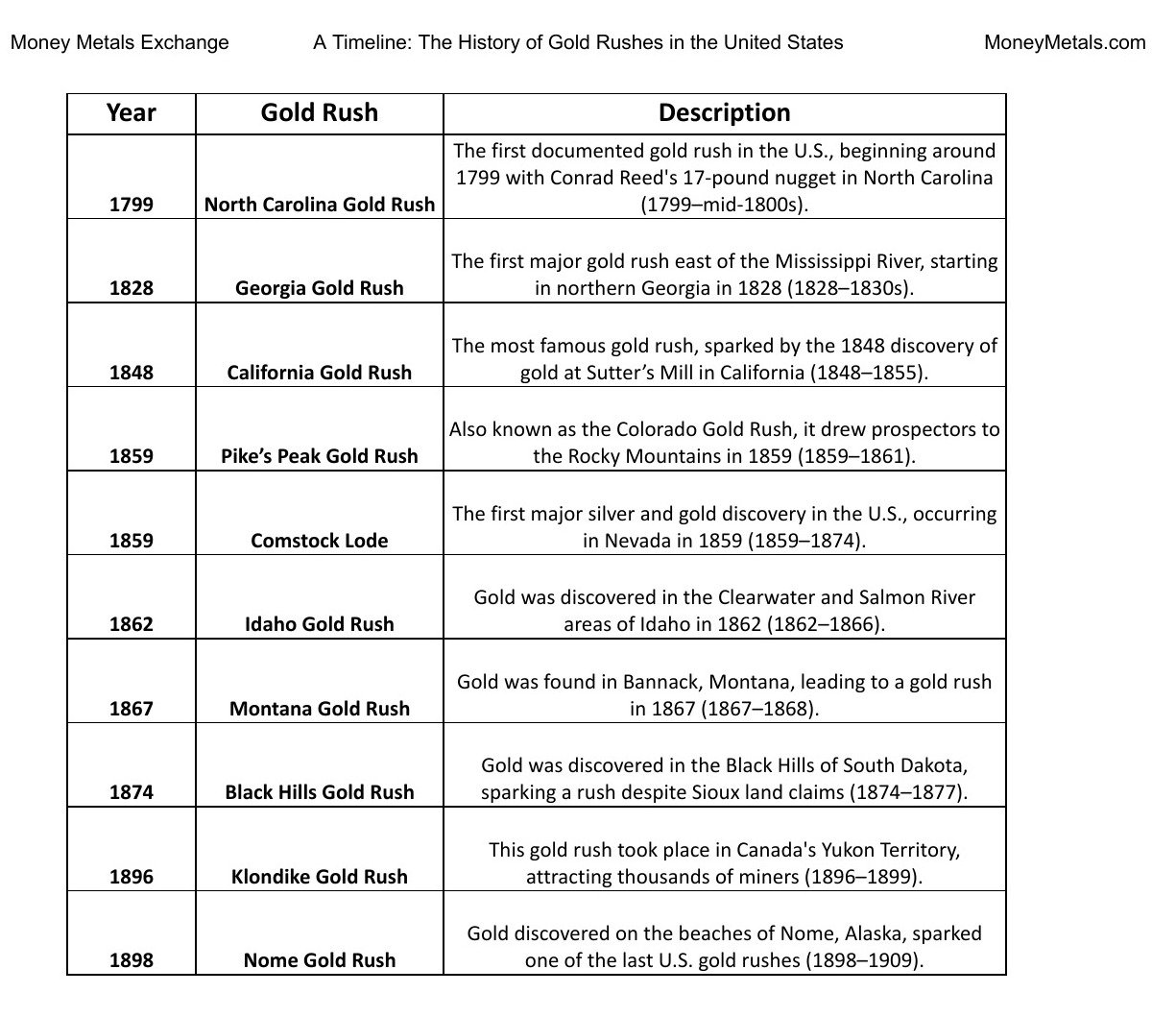
The Untold History of Gold Rushes in the United States

(Joshua D Glawson, Money Metals News Service) The discovery of gold in the United States profoundly shaped the nation’s economic and social development, especially during the 19th century.

These gold rushes transformed regional economies, spurred massive population movements, led to the establishment of new towns, and influenced U.S. territorial expansion.

While the California Gold Rush is the most famous, other significant gold discoveries across the country played an equally vital role in the nation’s history. This article explores the key gold rushes and the famous figures that emerged from them.

North Carolina Gold Rush (1799)

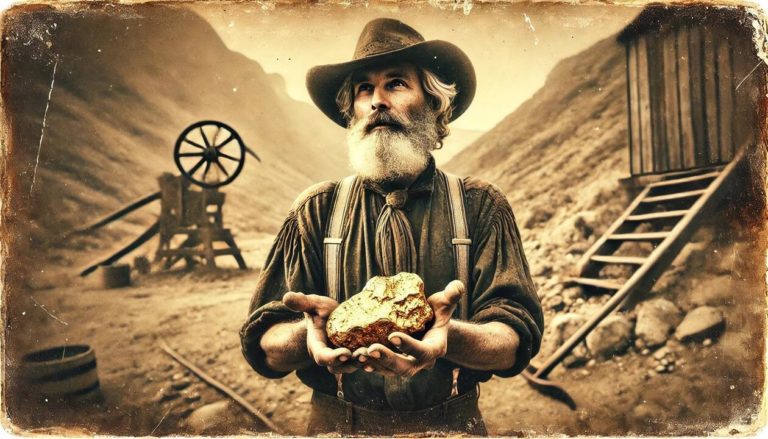
The first documented gold discovery in the United States occurred in North Carolina in 1799 when Conrad Reed, a young farmer, found a 17-pound gold nugget on his family’s property in Cabarrus County.

This discovery ignited the nation’s first gold rush and led to the establishment of America’s first gold mine, the Reed Gold Mine.

Throughout the 1820s, gold mining thrived in the state, and by the mid-1830s, North Carolina was the leading gold producer in the U.S. The rush also led to the creation of the Charlotte Mint, designed to turn the mined gold into U.S. legal currency.

Famous Figures:

  • Conrad Reed: His discovery of the first gold nugget in the U.S. made him a notable figure in North Carolina history, sparking America’s first gold rush.
  • Joseph Bechtler: He established a private mint (the Bechtler Mint) in Rutherfordton, North Carolina in the 1830s, producing the first gold dollar coin in the U.S. and other trusted gold coins that were widely circulated in the Southeast during the Carolina Gold Rush. His mint provided a reliable local currency long before the U.S. government established official mints in the region.

Georgia Gold Rush (1828)

Georgia Gold Rush

Following North Carolina’s example, the second major U.S. gold rush took place in Georgia. Gold was discovered near Dahlonega in 1828, attracting thousands of prospectors to the southern Appalachian region.

According to Lawrence Reed, this rush led to the creation of the Dahlonega Mint in 1838 to facilitate coin production from local gold deposits.

The Georgia Gold Rush also played a part in the displacement of the Cherokee Nation through the Trail of Tears, as white settlers encroached on Native American lands in search of gold.

Famous Figures:

  • Jesse Hogan: His early discovery of gold in Georgia sparked the rush.
  • Franklin Calhoun: A powerful figure during the Georgia Gold Rush, Calhoun expanded his wealth and influence through land and gold mining operations.

California Gold Rush (1848)

The most famous gold rush in U.S. history began in 1848 when James W. Marshall discovered gold at Sutter’s Mill in Coloma, California. News of the find spread rapidly, leading to a mass migration of fortune seekers, known as “forty-niners.”

According to Dr. Albert Camarillo, professor of history at Stanford University, the population of California surged as thousands of prospectors flocked to the state. The economic impact of the gold rush helped California become a state by 1850, and cities such as San Francisco grew rapidly as centers of commerce and trade.

The California Gold Rush is often considered a turning point in U.S. history due to its significant contributions to the nation’s expansion and economy.

Famous Figures:

  • Samuel Brannan: California’s first millionaire, Brannan capitalized on the rush by selling supplies to miners.
  • Claude Chana: A French immigrant and prospector who played a key role in the California Gold Rush. In 1848, he discovered gold along the banks of the American River in what is now Auburn, California, shortly after the famous discovery at Sutter’s Mill. Chana’s discovery helped ignite the massive influx of gold seekers to California, contributing to the rapid expansion of the region. He is often remembered as one of the first significant figures in the gold rush era, and he is the main inspiration for gold panners depicted on coins, rounds, bars, statues, and various artworks.
  • John Sutter: The owner of Sutter’s Mill, Sutter played a pivotal role in the start of the rush but lost much of his wealth and land to the miners.
  • Levi Strauss: Founder of Levi Strauss & Co., he made his fortune selling durable denim to miners.
  • Leland Stanford: Stanford made a fortune from gold rush-related businesses and went on to found Stanford University.

Pike’s Peak Gold Rush (1859)

In 1859, gold was discovered in the Rocky Mountains near what is now Denver, Colorado, spurring a rush of nearly 100,000 prospectors known as “Fifty-Niners,” according to research conducted by Aaron Walton at Western Mining History.

This event, commonly called the Pike’s Peak Gold Rush, resulted in the rapid settlement of Colorado and the founding of Denver as a major economic hub.

Although not all prospectors struck it rich, the influx of people and resources led to the creation of the Colorado Territory, playing a crucial role in westward expansion.

Famous Figures:

  • Horace Tabor: Initially a prospector, Tabor became one of the wealthiest men in Colorado, known for his success in silver mining.
  • Augusta Tabor: Horace Tabor’s wife, who played a key role in their business ventures during the gold rush.

Comstock Lode (1859)

The Comstock Lode, discovered in 1859 near Virginia City, Nevada, was primarily known for its silver, but it also yielded significant amounts of gold. The discovery of this massive lode became one of the largest and most lucrative mining booms in American history, financing much of Nevada’s early development.

The wealth generated from the Comstock Lode helped fund the Union during the Civil War and contributed to Nevada’s admission as a state in 1864. The Comstock’s importance lies in its dual impact on silver and gold mining in the American West.

Famous Figures:

  • Henry Comstock: The namesake of the Comstock Lode, though he did not profit significantly from the discovery.
  • John Mackay: One of the “Bonanza Kings,” Mackay became a mining magnate and one of the wealthiest men in the U.S. through the Comstock Lode.

Idaho Gold Rush (1862)

A Family of Gold Prospectors Gold Panning Idaho

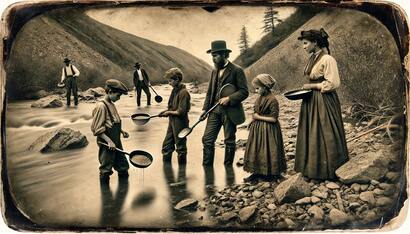
In 1862, prospectors discovered gold in the remote wilderness of Idaho, specifically in the Clearwater and Salmon River regions. This discovery attracted miners to the Idaho Territory, leading to the rapid development of mining towns like Pierce and Florence.

The Idaho Gold Rush contributed significantly to the settlement of the Pacific Northwest and played a crucial role in establishing Idaho as a key gold-producing region.

Famous Figures:

  • Elias Davidson Pierce: The discoverer of gold in Idaho’s Clearwater region, his find launched the rush in Idaho.
  • Henry Spalding: A missionary, Spalding helped maintain relations between miners and Native American tribes during the rush.

Montana Gold Rush (1867)

Montana became another important gold-producing state following significant discoveries in Bannack and Virginia City.

The Montana Gold Rush helped populate the Montana Territory, especially after the discovery of gold in Alder Gulch in 1863, one of the richest strikes in U.S. history.

Bannack and Virginia City became major mining hubs, and thousands of miners and settlers flocked to the area, helping Montana thrive.

Famous Figures:

  • Henry Plummer: A lawman-turned-outlaw, Plummer became notorious for leading a gang while serving as sheriff of Bannack.
  • Granville Stuart: A successful prospector, rancher, and author, Stuart was also a key figure in Montana’s Vigilance Committee.

Black Hills Gold Rush (1874)

Gold was discovered in the Black Hills of South Dakota in 1874 during an expedition led by General George Custer.

This discovery triggered the Black Hills Gold Rush, which drew thousands of miners to the region. The town of Deadwood was established as a result of this rush, becoming synonymous with frontier mining life.

However, the gold rush also fueled conflicts with the Lakota Sioux, as the Black Hills were sacred to them and were supposed to remain in their possession under the Treaty of Fort Laramie.

Famous Figures:

  • Wild Bill Hickok: A legendary figure of the Old West, Hickok moved to Deadwood during the Black Hills Gold Rush and was famously killed while playing poker.
  • Calamity Jane: A famous frontierswoman, she gained renown for her adventures and association with Wild Bill Hickok.
  • George Custer: While better known for his military career, Custer’s expedition discovered gold in the Black Hills, triggering the rush.

Klondike Gold Rush (1896)

Although the Klondike Gold Rush occurred in Canada’s Yukon Territory, it significantly impacted the United States, particularly Alaska. Thousands of prospectors passed through Alaska on their way to the Klondike region after gold was discovered in 1896.

The difficult conditions of the journey, along with the harsh wilderness of the Yukon, made the rush perilous, but the promise of riches enticed many.

Towns like Skagway in Alaska became crucial gateways to the goldfields. The Klondike Gold Rush helped develop Alaska as a key frontier and resource hub.

Famous Figures:

  • Jack London: The famed author participated in the Klondike Gold Rush, which inspired much of his writing, including The Call of the Wild.
  • Skookum Jim Mason: A member of the Tagish First Nation, Mason is credited with discovering the gold that triggered the Klondike rush.
  • George Carmack: Along with Skookum Jim, Carmack played a key role in the Klondike discovery.

Nome Gold Rush (1898)

Shortly after the Klondike rush, another gold discovery occurred on the beaches of Nome, Alaska, in 1898.

According to researchers at the Smithsonian National Postal Museum, the ease of access to the beach gold led to a rapid influx of miners, and the town of Nome quickly became a bustling hub for prospectors.

The Nome Gold Rush marked the last significant gold rush in U.S. history, contributing to Alaska’s development and solidifying its reputation as a gold-rich territory.

Famous Figures:

  • John Brynteson: A Swedish immigrant, Brynteson’s discovery of beach gold in Nome set off the rush.
  • Wyatt Earp: The famed lawman opened the Dexter Saloon in Nome during the gold rush, adding to his colorful legacy.
Additional Figures from Lesser-Known Gold Rushes
  • William Greeneberry Russell: A prospector during the early Colorado Gold Rush, Russell’s discovery in Cherry Creek set the stage for the larger Pike’s Peak rush.
  • Felix Pedro: His discovery of gold near Fairbanks, Alaska, in 1902 triggered the Fairbanks Gold Rush, helping to develop the Alaska Territory.
  • Levi Bootes: An entrepreneur who made his fortune during the Juneau Gold Rush, Bootes became a leading figure in Alaska’s early gold mining industry.

The Legacy of U.S. Gold Rushes

A Timeline The History of Gold Rushes in the United States Money Metals Exchange

The individuals who rose to prominence during these gold rushes were as diverse as the rushes themselves. Some became wealthy entrepreneurs and political figures, while others are remembered for their colorful lives in the wild frontier.

The gold rushes in the United States did more than enrich a few lucky prospectors—they fundamentally altered the landscape of the nation. These events spurred massive migrations, fostered the development of new territories and states, and played a critical role in westward expansion.

The wealth generated by these gold rushes helped finance the growth of the American economy and contributed to its status as a global power.

Though the days of massive gold rushes have passed, the legacy of these events remains in the towns, industries, and legends they left behind, shaping the history of the United States for generations to come.

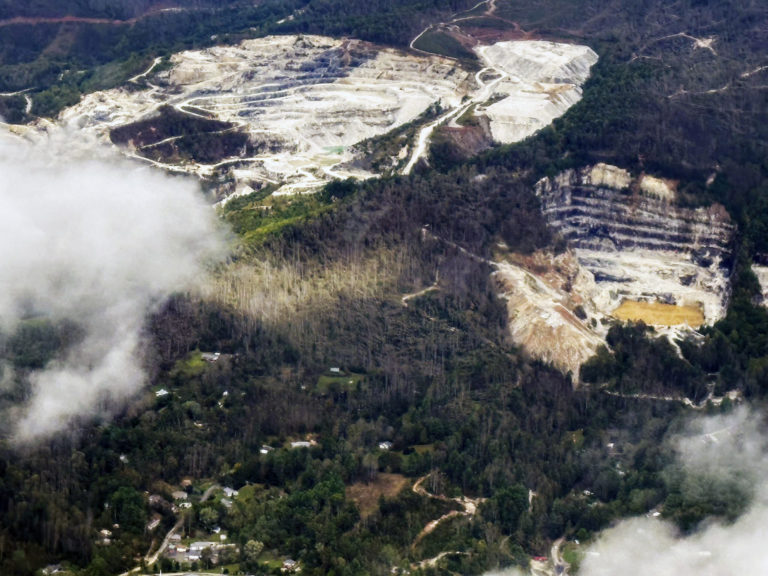
Shutdown of N.C. Quartz-Mining Facilities Could Bring Tech Industry to a Standstill

(Headline USA) Two North Carolina facilities that manufacture the high-purity quartz used for making semiconductors, solar panels and fiber-optic cables have been shut down by Hurricane Helene with no reopening date in sight.

Sibelco and The Quartz Corp both shut down operations in the Appalachian town of Spruce Pine on Thursday ahead of the storm that swept away whole communities in the western part of the state and across the border in East Tennessee.

The town is home to mines that produce some of the world’s highest quality quartz.

With increasing global demand, Sibelco announced last year that it would invest $200 million to double capacity at Spruce Pine.

Since the storm, the company has simply been working to confirm that all of its employees are safe and accounted for, as some were “unreachable due to ongoing power outages and communication challenges,” according to a statement.

“Please rest assured that Sibelco is actively collaborating with government agencies and third-party rescue and recovery operations to mitigate the impact of this event and to resume operations as soon as possible,” the company wrote.

The Quartz Corp wrote that restarting operations is a “second order of priority.”

“Our top priority remains the health and safety of our employees and their families,” the company wrote.

Adapted from reporting by the Associated Press