

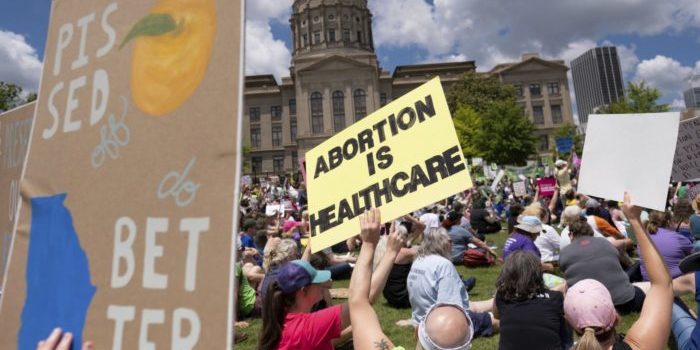
(José Niño, Headline USA) A website that markets itself as editorially independent has published abortion content that overwhelmingly supports abortion rights, according to an investigation by The College Fix.
The review, which took place between October 2024 and October 2025, discovered that virtually every article addressing abortion presented the topic in ways that supported ending the lives of unborn babies.
This investigation builds on earlier College Fix reporting that revealed the platform collects no less than $2 million annually from public universities via membership payments. Private institutions also contribute membership fees. Previous analysis showed most coverage of President Donald Trump tilted against him.
The investigation examined 25 articles about abortion published over 12 months. 22 articles promoted pro-abortion viewpoints, two maintained neutrality, and one leaned toward pro-life positions.
Most examined articles portrayed limits on killing preborn babies as harmful policy changes. Writers deployed terminology including “reproductive health care,” “reproductive justice advocates,” “restrict access,” and “reproductive freedom.”
One article connected “stricter abortion laws” with “increased infant mortality.” Researchers at the Lozier Institute have disputed this assertion. The article’s language included claims that abortion access faced “severe restriction” and that post-Dobbs prohibitions contributed to “anti-abortion sentiment that has led America” toward declining medical and legal circumstances.
A Catholic University of America professor who frequently covers abortion topics for national outlets offered additional perspective.
“I really have not considered writing for the Conversation,” Professor Michael New stated in email comments to The Fix. “The Conversation is not part of my consistent reading consumption and they have not made an effort to reach out to me to offer a pro-life commentary.”
He added, “since I am often reacting to polls, studies, and research, it is important that I am able to publish commentary and analysis quickly. Outlets like National Review Online nearly always publish my submissions and reach a large audience. I am often not inclined to try a new publication where I might run into delays or problems.”
The professor characterized the broader scholarly publishing environment as predominantly hostile to pro-life research. “Academic publications are almost always hostile to pro-life viewpoints,” he stated. “Editors often do not wish to publish articles that present pro-life arguments or have pro-life policy implications.”
Even editors who remain personally neutral toward pro-life scholarship and possess fairness, he explained, encounter workplace obstacles. “They realize they will receive pushback and criticism from colleagues if they publish an article with a pro-life viewpoint,” he noted. “This also makes them reluctant to publish submissions from pro-life researchers and scholars.”
He emphasized that “journal editors have total control over what gets published in their journals. Even if a pro-life article receives favorable reviews from other academics, the editor is within his rights to reject the article.”
“Since most academic journal editors are political liberals, they often seek to publish articles that present liberal arguments or have liberal policy implications,” he observed.
“Now it is possible for a conservative article to get published in an academic outlet. However, it is much more difficult,” New stated. “Conservative submissions will be treated with more scrutiny and will likely have to go through more rounds of revisions before they are published.”
New recommended that scholars pursuing publication of conservative articles in academic venues should “seek employment at either a conservative think tank or a conservative university.”
He explained, “getting a conservative submission published at a liberal academic journal can be very time consuming.”
“That makes it more difficult for conservative scholars to have enough publications to qualify for promotion and tenure at many universities.”
José Niño is the deputy editor of Headline USA. Follow him at x.com/JoseAlNino
